


| Year | Total Recorded Incidents |
|---|---|
| 2024 | 6395 |
| 2025 | 9251 |
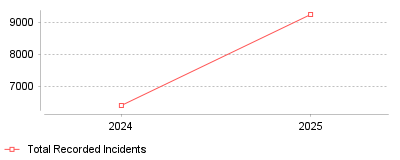
The data illustrates a sharp inverse correlation between ransomware attack frequency and cyber extortion success rates over the past few years. While global ransomware incidents soared by 45 percent—from 6,395 cases in 2024 to 9,251 in 2025 [source]—the percentage of victims who actually paid the ransom dropped precipitously to an all-time low of roughly 28 percent [source].
At a macro industry level, this trend signifies a structural shift in how organizations respond to cyber extortion. Companies are increasingly refusing to negotiate with threat actors because they no longer rely on the attackers' decryption keys to restore their systems [source]. On a micro level, it demonstrates that IT Backup and Business Continuity software is delivering a verifiable return on investment by protecting organizations from multi-million-dollar extortion demands. Consequently, the global Backup-as-a-Service market is experiencing massive growth, driven heavily by organizations transitioning from viewing backups as an operational afterthought to treating them as active, critical security defenses [source].
This paradigm shift is critically important because it proves that strategic investments in robust data protection can effectively neutralize even the most aggressive cyber threats. With median ransom demands skyrocketing by 368 percent to nearly $60,000 for mid-market victims and reaching into the millions for enterprises [source], the financial implications of a breach without a recovery plan are catastrophic. Furthermore, the decreasing success rate of encryption-based extortion is forcing cybercriminals to adopt encryptionless data-exfiltration tactics, which will push the backup industry to innovate even further in data privacy and access controls [source].
The primary catalyst for this plummeting payment rate is the rapid enterprise adoption of immutable storage and cloud-native, logically air-gapped backups. In 2025, approximately 62 percent of organizations reported using immutable backups, which are systems designed to prevent data from being altered or deleted even during an active cyberattack [source]. Additionally, comprehensive incident response planning and the integration of automated recovery testing within Business Continuity software have dramatically reduced the prolonged downtime that usually forces a business to pay. Regulatory scrutiny, international law enforcement actions, and stricter requirements from cyber insurance providers have also created immense pressure on organizations to harden their backup architectures rather than fund cybercriminals [source].
The data clearly indicates that while cybercriminals are intensifying their attack volumes, the fundamental economics of ransomware are being entirely disrupted by advanced business continuity technologies. Organizations that heavily invest in managed IT backups and Zero Trust data resilience are successfully weathering these sophisticated attacks. Ultimately, the prominent takeaway is that immutable backups are no longer just an IT best practice, but an indispensable financial shield that is single-handedly destroying the success rate of global cyber extortion.
Securities regulators dictate backup schedules. The US Securities and Exchange Commission charged four technology companies in October 2024 for misleading investors about cyber intrusions [1]. Unisys paid a $4 million penalty. Avaya, Check Point, and Mimecast paid roughly $1 million each. Investigators found these organizations knew attackers exfiltrated data but minimized the severity in public filings [1]. Unisys described its cyber risk as hypothetical despite knowing unauthorized users had accessed cloud accounts and stolen gigabytes of information [1]. Avaya stated hackers accessed a limited number of emails, but regulators proved the company knew attackers breached at least 145 files in a cloud sharing environment [1].
Corporate leaders face strict reporting timelines. Public companies must disclose cybersecurity incidents within four business days under SEC rules [2]. This mandate transforms data recovery from an IT function into a governance liability. Response teams must assess system damage, contain the threat, and determine financial materiality within 96 hours. Slower backup restoration guarantees reporting delays. Prolonged downtime directly impacts stock valuations. Organizations depend on reliable business continuity platforms to restore operations before disclosure deadlines force executives to admit system failure. Regulators define materiality broadly. An incident is material if a reasonable investor would consider it important when buying shares. This encompasses financial loss, reputational damage, and operational disruption. Legal teams struggle to quantify reputational damage within four days. Companies often file Form 8-K amendments as new facts emerge [2].
Revenues in the data protection sector will reach $158.8 billion in 2024 [3]. Analysts project the market will expand to $499.5 billion by 2032, representing a 15.4% annual growth rate [3]. This capital influx drives vendor consolidation. Buyers demand unified solutions rather than isolated tools. Veeam secured the top market position in 2024. The company captured 15.1% of the enterprise backup market, reporting $1.5 billion in annual revenue [4]. Competitors answered this dominance with acquisitions. Cohesity announced an agreement in February 2024 to acquire the data protection business of Veritas for $7 billion [5]. The combined entity serves 10,000 customers and commands $1.3 billion in recurring revenue [5].
Public markets reward subscription transitions. Rubrik filed its S-1 registration statement in April 2024, revealing $784 million in subscription revenue [6]. This marked a 47% increase over the prior year. Rubrik achieved a 133% net retention rate by shifting customers from perpetual licenses to cloud subscriptions [6]. The company operates at substantial losses despite its revenue growth. It reported a net loss of $354.2 million for fiscal 2024, widening from $277.7 million the prior year [6]. Commvault executed a similar pivot. The software provider reported revenues of $223.3 million in its fourth quarter of 2024 [7]. Its subscription revenue grew 27% year over year, pushing its recurring revenue to $597 million [7]. Commvault highlights its identity resilience features, noting that Active Directory protection accounted for 33% of its new recurring revenue. Enterprise buyers now consume backup infrastructure purely as an operating expense.

Paying extortionists increases incident expenses. The average ransomware attack costs $5.75 million as of 2025 [8]. IBM calculated the average for a data breach at $4.88 million in 2024 [9]. Business disruption and post-breach response efforts drive these figures. Lost business accounts for nearly $2.8 million of the average breach cost [9]. Ransom payments represent a fraction of the economic damage. System recovery, legal fees, and downtime eclipse the extortion demand. Victims who pay the ransom face recovery costs of $1.82 million, while those who refuse and restore from backups spend $1.62 million [8]. Attackers routinely exfiltrate data before encrypting local drives. Restoring server access does not solve the confidentiality breach. Involving law enforcement reduces breach costs. Victims who engaged authorities saved an average of $1 million in breach expenses compared to those who handled incidents privately [9]. Most ransomware victims who involved law enforcement avoided paying the ransom entirely [9].
Data recovery outcomes remain poor. Veeam surveyed 1,200 technology leaders and found that attackers compromise 41% of production data during an average incident [10]. Organizations only recover 57% of that affected data [10]. Nearly half of the compromised information vanishes permanently. Companies lack secondary environments. Investigators prohibit organizations from wiping and reusing infected hardware immediately. Incident response protocols quarantine roughly 31% of physical infrastructure for evidence collection. IT teams must provision cloud instances to restore clean backups. Stolen credentials serve as the entry point for attackers. IBM found compromised credentials caused 16% of all breaches [9]. These specific incidents took an average of 292 days to identify and contain [9]. Employees reuse passwords across external websites. Hackers locate the backup administrative console after gaining network access. They delete backup repositories before launching encryption malware against production servers.
Kubernetes adoption outpaces protection strategies. Software engineering teams deploy microservices to accelerate product updates. Veeam data shows 59% of enterprises run containers in production [10]. However, only 25% of organizations use backup tools designed specifically for container architectures [10]. Most administrators rely on legacy systems to copy storage repositories. This approach creates restoration flaws. Container clusters maintain routing rules. Copying the database files ignores the application state. When a cluster fails, engineers cannot rebuild the service using storage volumes. They need configuration metadata to resume operations.
Cloud architectures introduce vulnerabilities. Evaluating cloud backup platforms for software developers requires assessing state snapshot capabilities. An effective platform captures the cluster configuration alongside the persistent data. Kubernetes clusters operate ephemerally. Pods spin up and terminate based on traffic loads. Backup agents require operating systems to run scheduled tasks. Installing heavy agents on container nodes causes performance degradation. Engineers must implement storage integrations via the Container Storage Interface. This allows the backup software to communicate directly with the storage fabric without disrupting application performance. Administrators must map volumes to specific nodes. If a node crashes, the orchestrator schedules the pod on a different server. A traditional backup cannot follow this dynamic scheduling. Storage operators must use container-attached storage. This binds the lifecycle of the storage volume to the application rather than the host server. State preservation requires taking simultaneous snapshots of the application configuration, the secrets, and the persistent volume claims. Human error accounts for a large portion of container outages. A developer typing a malformed command can delete a production namespace instantly. Without configuration backups, rebuilding routing tables takes hours of manual coding.
Data visibility gaps complicate multicloud protection. Forty percent of breaches involve data stored across multiple environments [11]. Administrators struggle to map information as it moves between data centers and cloud hosts. Breaches involving cloud environments cost $5.17 million on average [11]. Security teams cannot protect assets they cannot see. Hybrid architectures demand unified visibility. Companies maintain legacy servers alongside modern cloud deployments. Backup administrators juggle multiple disjointed tools to protect these distinct environments. The resulting complexity creates protection gaps. An administrator might verify the database backup successfully but forget to protect the associated cloud storage bucket.
January 2025 brought the Digital Operational Resilience Act into enforcement across the European Union [12]. The regulation forces financial institutions to prove they can withstand network disruptions. Regulators shifted their focus from financial solvency to technical continuity. Banks must maintain business functions during active cyberattacks. Penalties command executive attention. Lead overseers can fine service providers up to 1% of their daily turnover for non-compliance [12]. The legislation possesses broad extraterritorial reach. Technology vendors based in North America must establish European subsidiaries if they service EU financial institutions [12]. The European Banking Authority previously issued guidelines on outsourcing. DORA upgrades these guidelines into hard law.
Third-party risk management requires contract controls. Financial entities must secure the legal right to audit and terminate vendor services if resilience standards fall short [13]. Covered entities include banks, insurance companies, crypto-asset service providers, and crowdfunding platforms. The regulation identifies critical technology vendors. Cloud service providers fall under regulatory supervision. Financial firms must perform resilience testing annually. They conduct penetration testing every three years. Auditors expect to see documented evidence of data restoration. A theoretical recovery plan fails the compliance audit. IT departments must provision sandbox environments to test their backups without disrupting trading systems. The act mandates incident reporting and penetration testing. These mandates blur the lines between backup operations and broader security management software platforms. Banks now integrate their backup storage logs directly into compliance reporting dashboards.
Retail operations require failover capabilities. High-volume merchants process transaction streams. Employing dedicated continuity tools for storefront administrators ensures order histories remain intact during server outages. A 30-minute database failure during a peak sales window destroys thousands of dollars in revenue. Administrators configure transaction logs to replicate in real time to cloud environments. E-commerce databases execute millions of row changes hourly. Restoring a database from a nightly backup erases a full day of customer purchases. Engineers deploy log shipping to maintain secondary databases. This streams transaction records to an isolated cluster. If the primary database corrupts, the standby system takes over instantly with zero data loss. Retailers must balance storage costs against recovery point objectives.
Marketplace vendors face distinct architectural constraints. Third-party sellers rely on platform APIs to manage logistics. Specific recovery configurations for Amazon merchants prioritize inventory database replication over file storage. If an API synchronization fails, merchants risk overselling out-of-stock items. This triggers account suspension penalties. Backup software must capture inventory state changes every five minutes to prevent catalog discrepancies.
Media files consume vast storage volumes. Implementing data recovery solutions for creative firms requires tiered archiving to manage video assets economically. Agencies cannot afford to keep petabytes of historical campaign footage on solid-state drives. They configure backup policies to move inactive projects to cold storage automatically. If a client requests a revision months later, the software retrieves the file segment without restoring the archive volume. Hospitals operate under regulatory constraints. Patient records require absolute confidentiality under federal mandates. Ransomware groups specifically target medical facilities because patient care depends on system access. The average cost of a healthcare data breach reached $9.77 million in 2024 [9]. Medical administrators must implement immutable storage arrays. Immutability prevents any user from altering or deleting data for a retention period. Even if a hacker steals the administrator credentials, they cannot erase the patient archives.
Gartner projects 75% of enterprises will adopt backup as a service by 2028 [14]. This represents a massive leap from 15% adoption in 2024. The Backup as a Service market will expand by $73.68 billion between 2025 and 2030, driven by a 38.8% annual growth rate [15]. Organizations want control planes hosted by the vendor. This eliminates the burden of maintaining backup servers. Staffing deficits exacerbate recovery failures. More than half of breached organizations faced staffing deficits in 2024 [9]. Companies lacking security personnel suffered $1.76 million in breach costs [9]. Software vendors automate routine tasks to bridge this talent gap.
Artificial intelligence accelerates incident remediation. Two-thirds of breached organizations now deploy security tools across their networks. Companies using extensive automation incurred $2.2 million less in breach costs compared to organizations relying on manual operations [9]. By 2028, 90% of enterprise backup products will include technology to detect cyberthreats [14]. Furthermore, 75% of backup products will integrate artificial intelligence to improve management operations [14]. Chat interfaces allow administrators to query their storage environment using natural language.
Modern storage platforms actively hunt for anomalies. Legacy backups sat dormant until a disaster occurred. Today, software inspects data streams for encryption patterns. If an employee's laptop suddenly writes thousands of encrypted files to a shared drive, the backup system severs the connection automatically. Machine learning algorithms analyze usage patterns to identify unusual network traffic. If the algorithm detects anomalous behavior, it initiates an isolated backup snapshot immediately. This ensures the company possesses a recovery point seconds before the malware executes. Vendors merge backup and security into a single workflow.
Executives demand proof of restorability. Board members no longer accept green checkmarks on backup dashboards as evidence of preparedness. They require simulated recovery exercises. IT teams must demonstrate they can rebuild application infrastructure from scratch within specified recovery time objectives. The market favors vendors offering automated testing capabilities. Software spins up isolated sandbox networks, restores the data, runs integrity checks, and destroys the sandbox automatically. This generates audit reports proving the organization can recover from an attack. Insurance carriers mandate strict controls. Underwriters refuse to issue cyber liability policies unless organizations deploy immutable storage. They require multifactor authentication for all administrative access. Premiums rise for companies exhibiting poor data governance. Actuaries calculate risk based on backup frequency and retention policies. The insurance industry effectively enforces security standards previously considered optional. Businesses failing to modernize their storage infrastructure face uninsurable risk.
| Year | Total Recorded Incidents |
|---|---|
| 2024 | 6395 |
| 2025 | 9251 |
The data illustrates a sharp inverse correlation between ransomware attack frequency and cyber extortion success rates over the past few years. While global ransomware incidents soared by 45 percent—from 6,395 cases in 2024 to 9,251 in 2025 [source]—the percentage of victims who actually paid the ransom dropped precipitously to an all-time low of roughly 28 percent [source].
At a macro industry level, this trend signifies a structural shift in how organizations respond to cyber extortion. Companies are increasingly refusing to negotiate with threat actors because they no longer rely on the attackers' decryption keys to restore their systems [source]. On a micro level, it demonstrates that IT Backup and Business Continuity software is delivering a verifiable return on investment by protecting organizations from multi-million-dollar extortion demands. Consequently, the global Backup-as-a-Service market is experiencing massive growth, driven heavily by organizations transitioning from viewing backups as an operational afterthought to treating them as active, critical security defenses [source].
This paradigm shift is critically important because it proves that strategic investments in robust data protection can effectively neutralize even the most aggressive cyber threats. With median ransom demands skyrocketing by 368 percent to nearly $60,000 for mid-market victims and reaching into the millions for enterprises [source], the financial implications of a breach without a recovery plan are catastrophic. Furthermore, the decreasing success rate of encryption-based extortion is forcing cybercriminals to adopt encryptionless data-exfiltration tactics, which will push the backup industry to innovate even further in data privacy and access controls [source].
The primary catalyst for this plummeting payment rate is the rapid enterprise adoption of immutable storage and cloud-native, logically air-gapped backups. In 2025, approximately 62 percent of organizations reported using immutable backups, which are systems designed to prevent data from being altered or deleted even during an active cyberattack [source]. Additionally, comprehensive incident response planning and the integration of automated recovery testing within Business Continuity software have dramatically reduced the prolonged downtime that usually forces a business to pay. Regulatory scrutiny, international law enforcement actions, and stricter requirements from cyber insurance providers have also created immense pressure on organizations to harden their backup architectures rather than fund cybercriminals [source].
The data clearly indicates that while cybercriminals are intensifying their attack volumes, the fundamental economics of ransomware are being entirely disrupted by advanced business continuity technologies. Organizations that heavily invest in managed IT backups and Zero Trust data resilience are successfully weathering these sophisticated attacks. Ultimately, the prominent takeaway is that immutable backups are no longer just an IT best practice, but an indispensable financial shield that is single-handedly destroying the success rate of global cyber extortion.