AI-driven onboarding adoption jumped from 26% to 45% of HR professionals in one year
Global Employee Onboarding Software Market Size (USD Billions)
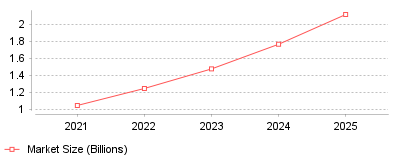
| Year | Market Size (Billions) |
|---|
| 2021 | 1.05 |
| 2022 | 1.25 |
| 2023 | 1.48 |
| 2024 | 1.77 |
| 2025 | 2.12 |
The AI and Automation Revolution in Employee Onboarding
What is this showing
The data illustrates a rapid escalation in the implementation of Artificial Intelligence within human resources, specifically targeting the employee onboarding lifecycle. Over the last few years, the market size for employee onboarding software has grown significantly, projected to reach $2.12 billion in 2025 [source], while the percentage of HR professionals utilizing AI-driven onboarding systems has nearly doubled, jumping from roughly 26% in 2024 to 45% in 2025 [source][source].
What this means
On a micro level, this trend signifies that individual HR teams are successfully offloading heavy administrative burdens, such as document digitization, policy dissemination, and repetitive questions, to intelligent chatbots and automated workflows. Organizations utilizing these AI-enhanced platforms are experiencing remarkable efficiency gains, frequently cutting their traditional onboarding times by up to 53% and saving upwards of $18,000 annually per company on administrative costs [source]. On a macro level, the employee onboarding software industry is transitioning from simple digital filing cabinets into sophisticated talent intelligence platforms. This shift is driving aggressive venture capital investment and vendor competition, effectively making AI a baseline expectation rather than a premium feature for HR technology stacks in the modern enterprise.
Why is this important
The stakes for effective onboarding have never been higher, as approximately 33% of new hires leave their jobs within the first 90 days due to poor integration, role confusion, or lack of engagement [source]. By implementing structured, AI-backed onboarding processes, companies are seeing up to an 82% improvement in new hire retention and a 70% boost in initial productivity [source]. Consequently, the adoption of these platforms is no longer just an HR initiative but a critical business strategy that directly protects the thousands of dollars spent on recruiting each individual candidate.
What might have caused this
The explosive growth of remote and hybrid work models over the past few years is likely the primary catalyst, as distributed teams require robust digital-first experiences to replace traditional, in-person orientations. Furthermore, the broader talent shortages and retention crises have forced executives to prioritize new-hire satisfaction from day one, pushing HR departments to seek highly scalable technological solutions. We can also speculate that the sudden democratization of Generative AI drastically lowered the barrier to entry for HR software vendors to integrate intelligent, conversational agents into their existing platforms. As these tools became highly accessible and demonstrably effective at reducing HR burnout, early adopters quickly proved the financial returns, prompting a massive wave of mainstream market adoption by 2025.
Conclusion
The intersection of artificial intelligence capabilities and employee onboarding platforms represents one of the most impactful digital transformations currently happening in the corporate workspace. Organizations that fail to adopt intelligent, automated onboarding experiences risk not only administrative inefficiency but severe competitive disadvantages in talent retention and early employee productivity. Ultimately, the prominent takeaway is that leveraging AI in onboarding is fundamentally about augmenting the human connection; by automating the paperwork, HR professionals are freed to focus on the cultural integration and mentorship that truly keep employees from leaving.
Market Expansion and Macroeconomic Pressures
Workday posted $2.085 billion in fiscal second-quarter revenue for 2025. This 16.7% year-over-year revenue growth signals sustained corporate technology spending despite broader economic crosscurrents
[1]. United States employers maintained 7.7 million job openings in October 2025, keeping intense pressure on talent acquisition departments
[2]. The national quits rate hovered near 2.0% throughout late 2025, meaning roughly three million workers voluntarily leave their positions every month
[3].
Organizations continue replacing physical manuals with dedicated digital systems to manage this constant churn. Workday's financial momentum mirrors broader expansion across the
HR and people management software category. A core driver of this investment is the urgent need to accelerate worker productivity. Turnover costs drain operating margins quickly. New hires demand immediate digital access. This intersection of financial pressure and operational reality pushes human resources departments toward specialized software.
Human resources teams cannot rely on manual paper trails to process thousands of incoming workers. Hiring remains relatively flat, with 4.8 million monthly hires recorded in late 2025
[2]. Processing this volume requires automated workflows that handle tax forms, direct deposit routing, and corporate policy signatures before the employee's first official day. Administrators separate basic administrative orientation from actual role-based skill development, requiring software that bridges both functions smoothly.
Capital Allocation and Implementation Deficits
Global software buyers will push the orientation technology market to $1.34 billion by 2025, according to data from research firm Gartner compiled by Deel
[4]. Another projection from MarketsandMarkets places the sector valuation at $1.7 billion by 2026
[5]. Organizations allocate 26% of their learning budgets specifically to new hire training
[4].
This capital outlay reflects the direct mathematical link between early integration and worker retention. The Society for Human Resource Management benchmarks the fixed cost per hire at $4,700
[4]. Companies spend an additional $1,100 per new arrival on training materials and supervision
[4]. Glassdoor research gathered by Brandon Hall Group shows a structured induction process boosts new hire retention by 82% while improving productivity by 70%
[5]. Furthermore, technology-enabled learning sequences are 33% more likely to yield improvements in time to proficiency
[6].
Despite these financial commitments, execution failures remain common across the corporate landscape. Gallup data indicates just 12% of United States workers believe their employer manages new arrivals well
[5]. Half of newly selected candidates express doubts about their decision before their start date
[4]. This persistent operational void forces enterprise technology buyers to implement targeted
onboarding and employee orientation platforms to standardize the early employment experience. Managers track module completion rates through visual dashboards, intervening only when a new hire falls behind the expected technical progression.
Healthcare Margin Compression and Clinical Vacancies
Hospitals cannot recruit their way out of clinical staff shortages. The mathematical reality of nursing turnover defeats basic replacement strategies. NSI Nursing Solutions reported the average turnover cost for a single bedside registered nurse reached $60,090 in 2025
[7].
The national registered nurse turnover rate rose to 17.6% in 2025
[7]. The average hospital loses between $4.2 million and $6.2 million annually to this continuous attrition
[7]. Every single percentage point change in registered nurse turnover costs or saves a facility $295,000 per year
[7]. Filling an empty clinical role takes an average of 83 days, leaving facilities severely understaffed during transition periods
[8]. Hospitals carry approximately 43 vacancies at any given time, maintaining immense stress on active floor workers
[7].
Prolonged vacancies force administrators to rely on expensive contract labor. The average travel nurse fee runs $91.23 per hour, compared to $59.46 for employed staff
[7]. This $66,000 annual wage gap per worker forces chief nursing officers to scrutinize early employment stages. Clinical environments face unique compliance hurdles that generic software cannot solve. Administrators deploy
software configured specifically for medical and hospital staff to manage medical credentialing tracks securely.
These systems ensure new nurses complete bloodborne pathogen training and electronic health record certifications before accessing patient floors. Certain specialties suffer worse attrition than others. Behavioral health, emergency, and telemetry departments turn over their entire staff roughly every four years
[7]. Proper software deployment tracks competency verification milestones during the critical first 90 days, reducing the procedural frustration that drives early departures.
Manufacturing Hazards and Regulatory Scrutiny
Federal compliance changes dictate factory floor operations. The Occupational Safety and Health Administration enacted new rules regarding personal protective equipment in 2025, mandating proper fit verification for all body types
[9]. The agency also expanded electronic submission requirements for workplace injury data
[9].
Violations carry severe financial penalties. A single federal infraction costs employers up to $16,550
[10]. This regulatory risk places intense pressure on initial worker training programs. Industrial workers in their first 90 days suffer serious injuries more frequently than tenured peers
[11]. Effective software platforms map distinct hazards to required instructional courses, scheduling hands-on practice before a worker faces physical exposure.
Factory managers use
software built for industrial and warehouse workers to document safety protocol completion before an operator touches heavy machinery. Standard corporate learning systems often fail in these environments. Shift-based operations create logistical barriers for traditional classroom orientation
[12]. Deskless workers require mobile access to review hazardous material guidelines or machinery lockout procedures directly from the production floor.
The manufacturing sector maintained a 1.0% quits rate through late 2025
[3]. While lower than retail or healthcare figures, this moderate churn creates an endless retraining cycle. Without digitized records, site directors face immense legal liability during unexpected safety audits. Automated digital workflows prevent shift supervisors from skipping essential evacuation briefings during peak production periods.
Artificial Intelligence in Customer Support
Generative artificial intelligence directly alters skill acquisition timelines. Customer support agents normally endure long training periods before handling live complaints. A McKinsey report highlights that artificial intelligence simulation tools reduce agent time to proficiency by 20% to 30%
[13].
Call center representatives typically require four to six months to reach peak efficiency, consuming up to 10% of total operational cost allocations
[14]. The traditional ramp period costs between $12,000 and $35,000 per hire
[15]. Standard classroom environments fail to prepare workers for hostile callers or complex database queries. Modern systems solve this by generating simulated customer scenarios. These digital tools evaluate handling time, script adherence, and empathy without risking actual client relationships
[14].
Technology buyers increasingly procure
digital systems built for call center staff that feature these native capabilities. Rather than shadowing veteran employees for weeks, new hires practice against language models programmed to mimic common billing disputes. The software grades responses instantly, allowing new workers to correct phrasing mistakes before interacting with actual consumers.
McKinsey found that deploying digital assistants alongside human operators yielded a 14% productivity gain
[15]. The software surfaces relevant policy articles instantly based on the caller's text or speech. This eliminates frantic manual database searches by inexperienced staff. Contact center executives view this technology as a mandatory operational upgrade rather than an experimental feature.
Retail Volatility and Mobile Micro-Learning
Consumer-facing markets suffer the highest worker velocity. The Bureau of Labor Statistics reported a 2.9% quits rate for retail trade in December 2025, pacing well above the national average
[3]. The leisure and hospitality sector tracked even higher at 3.8%
[3].
Annual turnover among frontline retail workers frequently reaches 60% to 80%
[16]. Replacing a single retail associate costs between $2,000 and $10,000 in recruitment expenses and lost floor productivity
[17]. For a national retailer with 50,000 employees and a 60% turnover rate, this attrition drains up to $300 million annually
[17]. By 2030, younger demographics will make up approximately 30% of the global workforce, bringing explicit expectations for interactive mobile software
[16].
Speed dictates software selection in this category. Store managers cannot pull associates off the sales floor for three-day classroom sessions. They deploy
mobile applications designed for retail store personnel to deliver immediate micro-learning. Workers access brief training modules on point-of-sale operations directly via smartphones during slow periods.
Early churn devastates store operations. Approximately 30% of new hires depart before completing their third month
[16]. A formal induction protocol increases the likelihood of a worker staying three years by 58%
[18]. Without standard digital processes, local store managers bear the entire training burden manually. This causes inconsistent customer service and rapid burnout among tenured shift supervisors who constantly retrain replacements.
Decentralized Network Challenges in Franchising
Geographic separation breaks standard corporate protocols. Regional managers at multi-unit brands struggle to enforce uniform hiring procedures across hundreds of independent owners. A local restaurant operator might skip essential tax document collection or trademark usage briefings to put a cashier on the register faster during a lunch rush.
High-turnover industries compound this administrative burden. Corporate compliance officers find themselves retraining local managers continuously on audit procedures. Implementing
tools configured for multi-unit franchise operators locks the critical workflow steps. An operator cannot schedule a worker until the central system verifies employment eligibility documents and food safety module completion
[19]. The software physically blocks system access for any employee missing mandated corporate agreements.
International expansion multiplies the complexity. A brand opening units overseas faces varying currency fluctuations, labor laws, and data privacy regulations. Initial training modules require direct translation and cultural adaptation. United States franchisors must assess their internal technical infrastructure before forcing domestic software platforms onto foreign operators
[20]. Centralized systems allow corporate headquarters to distribute region-specific legal paperwork automatically based on the new hire's location.
Training budgets reflect these structural hurdles. Restaurant general managers now spend an average of 196 hours training for their new roles
[21]. Corporate technology buyers must distribute software that supports this prolonged development period without requiring constant physical oversight from headquarters. Ongoing learning frameworks replace basic orientation checklists, ensuring unit managers understand complex inventory ordering algorithms and seasonal promotional strategies.
Future Outlook and Platform Consolidation
Major technology vendors execute aggressive acquisition strategies to build complete product suites. Workday completed its acquisition of HiredScore in early 2024, absorbing an artificial intelligence product into its primary human capital management platform
[22]. UKG executed a similar strategy by acquiring Immedis to embed global payroll capability directly into its service offering
[23].
These corporate moves signal a deliberate shift away from fragmented tools. Enterprise buyers want unified software architectures. They resist managing separate logins for recruitment, orientation, and benefits enrollment. Seamless data transfer between the applicant tracking system and the payroll processor eliminates duplicate data entry, reducing human error during peak hiring seasons.
Looking ahead, technology research firm IDC predicts 80% of massive global organizations will deploy digital adoption platforms by 2027 to mitigate technical skills shortages
[24]. Furthermore, IDC forecasts that personalized technology skills development will drive $1 trillion in productivity gains by 2026
[24].
Virtual reality acts as an emerging training mechanism. Surveys show 46.4% of corporate decision makers currently use augmented reality and 54.0% use virtual reality for employee development
[24]. Hardware costs continue falling, making virtual hazard identification exercises practical for warehouse operators. As demographic shifts push experienced workers into retirement, capturing institutional knowledge becomes paramount. Companies rely on machine learning models to analyze top-performing employees and automatically generate customized training pathways for their replacements. The software transitions from a static document repository into an active coaching mechanism that pushes continuous improvement tasks directly to the worker's device.