Cloud-based MRM platforms flipped from 42.6% to 66.1% market share in just 2 years
Global MRM Software Market Size (USD Billions)
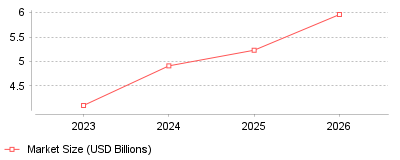
| Year | Market Size (USD Billions) |
|---|
| 2023 | 4.1 |
| 2024 | 4.91 |
| 2025 | 5.23 |
| 2026 | 5.96 |
The Cloud-Driven Evolution of Creative Workflow Tools
What is this showing
The data illustrates two interconnected trends within the creative workflow and Marketing Resource Management (MRM) software category. First, the global market size is experiencing robust growth, expanding from $4.1 billion in 2023 to an estimated $5.96 billion by 2026 [source], [source]. Second, and more strikingly, there has been a massive flip in deployment models: while on-premise solutions dominated with a 57.4% share in 2023, cloud-based platforms rapidly overtook them, claiming 66.1% of the market by 2025 [source], [source].
What this means
On a micro level, this shift means creative and marketing teams are prioritizing accessibility and real-time collaboration over localized data storage. Professionals are no longer constrained by physical office networks, allowing distributed teams to review, annotate, and approve creative assets simultaneously [source]. On a macro industry level, it signals the obsolescence of fragmented, manual approval processes in favor of unified, API-first software stacks. Agencies and enterprise marketing departments are consolidating their tech ecosystems, moving toward platforms that offer end-to-end visibility from budgeting to final asset distribution [source]. This transition strongly correlates with the rising demand for software capable of supporting dynamic, high-volume content production across global teams.
Why is this important
This structural shift is crucial because the modern marketing landscape demands shorter production cycles and higher volumes of localized, multi-format content. Without agile, cloud-based workflow tools, organizations face severe bottlenecks, duplicate efforts, and brand compliance risks [source]. Furthermore, the migration to the cloud acts as a prerequisite for adopting next-generation technologies like generative AI and automated template-driven production, which are heavily embedded in modern SaaS offerings [source].
What might have caused this
Several intersecting factors likely catalyzed this rapid evolution in the creative workflow sector. The permanent shift toward remote and hybrid work models following the global pandemic exposed the severe limitations of on-premise, email-based review processes, forcing a rapid digitization of approvals [source]. Simultaneously, the explosion of digital marketing channels forced brands to produce exponentially more content, straining traditional workflows to their breaking point. To cope, organizations aggressively sought out cloud-based platforms that could automate repetitive tasks, route approvals automatically, and provide robust version control without heavy IT infrastructure overhead. Additionally, software vendors have heavily incentivized cloud adoption by restricting powerful new features—such as automated AI content tagging and predictive analytics—exclusively to their cloud deployments [source].
Conclusion
The creative workflow and MRM software market is undergoing a rapid maturation, characterized by strong financial growth and a decisive pivot toward cloud infrastructure. As content demands increase, the ability to orchestrate people, budgets, and digital assets in real-time has become a board-level priority for enterprises [source]. The most prominent takeaway is that adopting cloud-based creative workflow software is no longer a luxury for efficiency, but a fundamental necessity for surviving the pace of modern, multi-channel marketing.
Financial Contractions and Technology Investments
Marketing departments face severe financial restrictions across all major industries. Budgets fell to 7.7% of total company revenue in 2024, representing a sharp decline from 9.1% the previous year
[1]. Allocation varies significantly by sector, with business-to-business product companies spending 8.4% of revenue, while business-to-consumer services spend 5.7%
[1]. Sixty-four percent of chief marketing officers report they lack sufficient funds to execute their annual strategies
[2].
Labor costs and agency retainers bear the brunt of these reductions. Companies decreased their external agency spending as they shifted production tasks to internal staff. Media investment grew to 27.9% of total budgets, reflecting a strict focus on channels that directly drive sales
[2]. Digital channels now consume 57.1% of that media spend, with search advertising displacing social media as the primary digital vehicle
[2].
Despite broader budget cuts, software investments maintain steady growth. Forrester projects worldwide spending on marketing technology will surpass $215 billion by 2027, driven by a 13.3% annual growth rate
[3]. According to Forrester surveys, 66% of decision-makers plan to increase their technology spending, which currently accounts for 18% of their total departmental budgets
[3].
The marketing resource management software category achieved a $7.26 billion valuation in 2024
[4]. Analysts expect this specific sector to expand to $17.36 billion by 2033
[4]. Organizations purchase these systems to track production schedules and manage remote staff. Cloud-based deployments dominate new purchases due to their scalability and lower initial deployment costs.
Executives require measurable returns on every software purchase. Financial directors scrutinize individual tool subscriptions, forcing managers to consolidate their technology stacks. Forrester notes that 52% of marketing leaders actively seek to integrate their procurement systems directly with their resource management platforms
[5]. By connecting these systems, directors maintain strict financial oversight across the entire production lifecycle.
The Cost of Fragmented Production Systems
Sixty-five percent of marketing assets go completely unused by sales teams
[6]. This asset waste creates a massive financial drain. Original equipment manufacturers spend between $50 million and $75 million annually on their content supply chains
[7]. Large technology firms spend up to $300 million on these same processes
[7]. Aprimo data shows that large organizations waste an average of $2.5 million every year strictly due to inefficient operational procedures
[8].
Creative professionals spend 70% of their work hours managing manual tasks across disconnected software platforms
[9]. Thirty-one percent of these workers cite difficulty sharing files with stakeholders as their primary operational hurdle
[9]. Replacing legacy software with dedicated
tools that manage marketing workflows allows organizations to recover thousands of lost hours.
Companies integrating artificial intelligence into their production routines save 32 hours annually per employee during the ideation phase
[10]. Adobe research indicates that marketing teams using artificial intelligence save 114 minutes weekly on content creation, leading to yearly savings of $3,520 per employee
[10]. Fifty-six percent of marketers report receiving artificial intelligence training from their employers
[10].
Visibility remains a critical issue for executive leadership. Eighty percent of large companies admit they cannot see their campaign production cycles from end to end
[11]. Creatives report spending over 20 hours per week on repetitive design tasks that modern systems could easily automate
[11]. This operational dysfunction culminates in an inability to measure the financial impact of specific campaigns accurately.
Eighty-nine percent of enterprises expect their demand for content to double over the next two years
[6]. Current manual processes cannot support this increased volume. Brands deploying structured content foundations report exceptional returns. Organizations using Adobe Experience Manager Guides achieved a 287% return on investment with a 13.9-month payback period
[12]. These financial gains stem directly from centralized asset reuse and automated validation steps.
Vendor Expansion and Corporate Acquisitions
Software developers recognize the profitability of enterprise creative teams. Canva acquired Serif, the developer behind the Affinity design suite, in March 2024
[13]. The cash and stock transaction cost approximately $380 million
[14]. Canva previously focused on casual users and knowledge workers, growing its base to 175 million active monthly participants across 190 countries
[13]. By purchasing Affinity, the company directly challenges Adobe in the professional graphics sector.
Affinity software currently serves three million creative professionals
[13]. The product lineup includes vector graphics software, photo editors, and desktop publishing applications. Canva absorbed the 90-person Serif staff to accelerate enterprise product development
[14]. Chief Operating Officer Cliff Obrecht stated the acquisition accelerates the company's business-to-business ambitions across sales and marketing divisions
[13]. Rather than forcing immediate subscriptions, Canva maintained Affinity's perpetual license model, offering a universal license for $164.99
[14].
Adobe maintains dominant financial performance across the creative software category. The company reported $23.77 billion in total fiscal 2025 revenue, representing an 11% year-over-year increase
[15]. Its Digital Media segment revenue reached $17.65 billion, while the Digital Experience segment generated $5.86 billion during the same period
[15]. GAAP net income reached $7.13 billion, up 28% compared to fiscal 2024
[16].
The company repurchased 30.8 million shares during the year, spending $11.28 billion to return value to shareholders
[15]. Adobe released GenStudio to help brands coordinate their high-volume output. Adopting
systems for marketing campaign approvals reduces compliance risks associated with this rapid asset generation. Adobe also entered a definitive agreement to acquire Semrush Holdings for approximately $1.9 billion to expand its brand visibility capabilities
[16].
Enterprise Work Management Financial Performance
Project management platforms continue absorbing specialized creative functions. Smartsheet achieved $1.03 billion in annualized recurring revenue by the end of fiscal year 2024, up 21% from the prior year
[17]. Total revenue for the year reached $958.3 million, an increase of 25%
[17]. Subscription revenue accounted for $904.0 million of that total
[17].
The company expanded its base of large clients significantly. Smartsheet reported a 28% increase in customers spending over $100,000 annually, totaling 1,904 enterprise accounts
[17]. Customers spending over $50,000 grew by 22% to 3,924 accounts
[17]. Non-GAAP operating income hit $100.9 million, compared to a non-GAAP operating loss of $36.0 million in fiscal 2023
[17]. The company ended the year with $628.8 million in cash and cash equivalents
[17]. As these general platforms add specialized marketing templates, they compete directly with dedicated
approval platforms for ad teams.
Asana reported similar financial success during its recent earnings call. The company generated $188.3 million in fourth-quarter fiscal 2025 revenue, a 10% increase year over year
[18]. Full-year revenue reached $723.9 million, an 11% increase
[18]. Non-GAAP operating loss narrowed to $1.7 million, improving from a $15.6 million loss in the fourth quarter of fiscal 2024
[18].
Asana achieved positive free cash flow for the entire fiscal year, marking a significant operational milestone. Free cash flow hit $2.6 million, compared to negative $31.1 million in fiscal 2024
[18]. The platform serves 24,062 core customers spending $5,000 or more annually
[18]. Customers spending over $100,000 grew by 20% year over year to 726 accounts
[19].
Remaining performance obligations reached $430.8 million, up 23% year over year
[19]. Chief Executive Officer Dustin Moskovitz noted that early adoption of Asana AI Studio exceeded internal expectations
[18]. The tool provides a structured framework for human and computer coordination at scale. Organizations use these intelligent frameworks to automate routing assignments and deadline notifications without manual intervention.
Regulatory Enforcement Against Artificial Intelligence Claims
Government agencies penalize software vendors for deceptive promotional tactics. The Federal Trade Commission launched Operation AI Comply in September 2024
[20]. This enforcement sweep targeted five businesses for misleading claims regarding artificial intelligence capabilities. Chair Lina Khan stated that using automated tools to defraud consumers violates existing federal laws
[20].
The agency filed a complaint against Rytr, a generative writing assistant company. The FTC alleged that Rytr provided tools enabling users to generate fake consumer reviews rapidly
[21]. The final settlement prohibits the company from advertising any service promoted as generating consumer testimonials. The agency also targeted Evolv, alleging the company made inaccurate statements about its sensor technology distinguishing personal items from weapons
[22]. The settlement banned Evolv from making unsubstantiated claims and forced the company to offer contract cancellations to specific school districts
[22].
In a separate action, the agency settled with DoNotPay for $193,000
[22]. The FTC found the company made false claims about its automated legal services acting as a complete substitute for human lawyers
[20]. DoNotPay claimed its product was trained in over 200 areas of law, but the agency found the system lacked sufficient training on federal and state regulations
[22].
Ascend Ecom faced charges for operating a fraudulent business opportunity scheme. The FTC alleged the company falsely claimed its automated tools would help consumers earn passive income through online storefronts
[20]. The scheme reportedly defrauded consumers of at least $25 million
[20]. FBA Machine faced similar charges regarding guaranteed income promises, costing consumers more than $15.9 million before a federal court halted the operation
[20].
European Compliance Standards and Global Implications
International regulatory frameworks force software developers to build transparent audit trails. European regulators adopted the EU Artificial Intelligence Act in 2024