


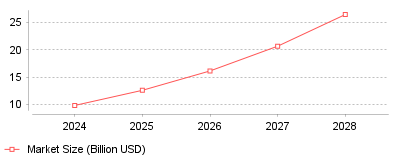
| Year | Market Size (Billion USD) |
|---|---|
| 2024 | 9.89 |
| 2025 | 12.65 |
| 2026 | 16.18 |
| 2027 | 20.69 |
| 2028 | 26.46 |
This trend demonstrates a rapid evolution from basic time tracking to AI-driven productivity enhancement and workstyle analytics. Recent industry data reveals that 75% of knowledge workers are now using AI, and 78% of those individuals are bringing their own tools to work without official company guidance [source]. Meanwhile, the global market for AI productivity tools is projected to surge from $9.89 billion in 2024 to over $115 billion by 2034, expanding at a massive compound annual growth rate of 27.9% [source].
At a micro level, employees are profoundly overwhelmed, spending an average of 60% of their workday communicating across emails, chats, and meetings, leaving only 40% of their time for actual creative output [source]. To combat this digital fatigue and reclaim uninterrupted focus time, workers are independently adopting AI to automate email triage, summarize meetings, and draft communications [source]. At a macro industry level, this grassroots adoption is forcing a massive pivot within the software market, causing vendors to shift away from rudimentary keystroke logging and hour tracking in favor of sophisticated generative AI assistants. Consequently, companies must rapidly adapt to this technological integration to maintain visibility, or they risk significant shadow IT vulnerabilities as employees bypass sanctioned corporate software.
This trend is critical because it highlights a fundamental disconnect between employee technological needs and enterprise readiness, with 60% of leaders lacking a clear vision for AI implementation [source]. Furthermore, the heavy reliance on unauthorized AI tools creates severe data privacy and security risks, potentially exposing proprietary company information to public language models [source]. Finally, it demonstrates that true productivity measurement has permanently moved beyond merely counting "hours worked" to proactively optimizing the quality of human attention and output efficiency.
The primary catalyst for this shift is the persistent "infinite workday" left in the wake of the post-pandemic hybrid work era, where excessive digital collaboration has made deep, uninterrupted focus time incredibly scarce. Additionally, the explosive advancement and democratization of Large Language Models (LLMs) over the past two years have made highly capable virtual assistants instantly accessible to the average consumer. Frustration with clunky, legacy enterprise software has pushed employees to seek out consumer-grade AI solutions that offer immediate relief from administrative drudgery. The slow procurement and compliance processes typical of large organizations have inadvertently encouraged this behavior, as workers prioritize immediate productivity gains over strict organizational security protocols.
The productivity landscape has irreversibly shifted from reactive time tracking to proactive, AI-assisted workstyle optimization driven directly by the end-user. As the AI productivity tools market hurtles toward unprecedented valuations, organizations can no longer afford to ignore this grassroots technological revolution. The most prominent takeaway is that business leaders must move quickly from passive observation to actively provisioning secure, sanctioned AI tools, thereby transforming the severe risks of "Shadow AI" into a protected competitive advantage.
Enterprise software buyers face escalating pressure to justify capital expenditures while managing distributed workforces. Financial results from leading vendors demonstrate that corporations continue to fund digital workplace upgrades despite macroeconomic headwinds. Workday posted $7.3 billion in total revenue for its 2024 fiscal year, achieving a 17% annual increase [1]. The company recorded operating cash flows of $2.1 billion and accumulated a total subscription revenue backlog of $20.9 billion during the same period [1]. Workday generated $5.46 billion in the United States and $1.8 billion internationally, indicating widespread global demand for workforce administration tools [2]. This momentum continued into the third quarter of fiscal 2025, where the company reported $1.95 billion in subscription revenue and expanded its backlog to $22.2 billion [3].
Work management platforms maintain high retention rates across large accounts. Monday.com reported a 32% jump in fourth-quarter revenue in 2024, reaching $268 million [4]. The vendor achieved a 112% net dollar retention rate and expanded its enterprise base, counting 1,207 customers that spend over $100,000 annually [4]. By the end of fiscal 2025, Monday.com reached $1.23 billion in total revenue while maintaining a stable 110% net retention rate [5]. Asana experienced similar enterprise growth, ending its 2024 fiscal year with 607 accounts in the $100,000 tier, marking a 20% annual increase [6]. Asana expanded this base to 23,609 core customers by the third quarter of fiscal 2025 [7].
Procuring project management suites requires substantial capital commitment. Corporate finance departments accept these expenses to maintain operational visibility across physical and remote locations. Vendors push to achieve profitability by controlling their own internal costs. Asana narrowed its non-GAAP operating loss to $58.1 million in fiscal 2024, down from $207.3 million the previous year [6]. Software providers recognize that excessive spending damages their valuations, forcing them to operate efficiently while selling efficiency tools to clients. Monday.com accelerated its timeline to profitability by generating $89.9 million in free cash flow during the first quarter of 2024 [8].
Global technology budgets reflect this prioritization. Information technology spending will grow 9.5% in 2024 to reach $3.7 trillion [9]. Chief financial officers demand clear returns on these investments. Forrester analysts recommend companies decrease investment in redundant cloud environments and redirect funds toward artificial intelligence strategies that deliver concrete customer value [10]. Operations directors face a mandate to consolidate overlapping subscriptions into single vendor contracts.
High financial retention masks underlying adoption challenges among end users. Employees often reject strict monitoring protocols. Gartner researchers found that 71% of employees face digital surveillance, representing a 30% increase from early 2023 [11]. Regulators now target employers who deploy these systems recklessly, shifting the legal risk onto the technology buyers rather than just the software publishers.
Federal agencies in the United States take a hostile stance toward continuous worker observation. National Labor Relations Board General Counsel Jennifer Abruzzo issued a formal memo targeting automated management systems. She announced an intention to enforce labor laws against employers using intrusive electronic tracking [12]. Abruzzo warned that continuous surveillance could "interfere with the exercise of Section 7 rights under the National Labor Relations Act" by preventing confidential union activity [12]. The National Labor Relations Board subsequently signed information-sharing agreements with the Federal Trade Commission and the Department of Labor to coordinate enforcement actions.
European regulators issue severe financial penalties against technology companies violating biometric privacy rules. The Dutch Data Protection Authority fined Clearview AI €30.5 million in September 2024 for building an illegal biometric database [13]. Clearview AI scraped billions of photos from public internet sources and converted them into unique biometric codes. The Dutch regulator determined this processing lacked a legal basis under the General Data Protection Regulation [13]. Regulators escalated their enforcement actions significantly. Member states issued more than €3.8 billion in fines since January 2023 [14].
The European Union recently implemented the Artificial Intelligence Act to regulate algorithmic management. This legislation prohibits systems that deploy subliminal manipulation or exploit vulnerabilities. Violations carry maximum penalties of €35 million or 7% of total annual turnover [15]. Evaluating time tracking platforms now requires rigorous legal review to ensure compliance with shifting global privacy mandates. Human resources departments cannot blindly purchase software that logs every screen movement without consulting external counsel.
Constant observation degrades mental health and physical safety. The American Psychological Association surveyed workers in 2023 and found that 56% of monitored employees feel tense at work, compared to 40% of unmonitored staff [16]. Micromanagement directly correlates with psychological distress. The survey revealed that 42% of workers feel micromanaged, and 64% of that specific group experience workday tension [16].
Washington Center for Equitable Growth researchers determined that 68% of workers experience some form of electronic surveillance [17]. Workers under continuous observation reported higher physical injury rates. Specifically, 7% of constantly monitored employees sought medical attention for workplace injuries, compared to 2% of unmonitored workers [17]. Employees subjected to continuous monitoring rush their physical tasks to satisfy algorithmic quotas, leading to preventable accidents.

Counting keystrokes rarely improves output. Engineering departments pioneered the shift away from raw activity metrics. McKinsey researchers published a framework proving managers can measure developer productivity by analyzing system friction rather than code volume [18]. Identifying operational bottlenecks yields higher returns than tracking individual idle time. Misused metrics, such as counting daily code commits, incentivize developers to submit smaller changes to inflate their statistics [18]. Quality suffers when teams optimize for speed over stability.
Software vendors respond to this demand by building outcome-focused analytics. Asana launched AI Studio to automate complex workflows and expand its addressable market [7]. Buyers want software that highlights blocked tasks rather than software that punishes slow employees. Modern tools aggregate data to show average completion times for specific project types, allowing managers to allocate resources based on historical reality rather than hopeful estimations.
Corporate leaders face immense pressure to justify payroll expenses. Productivity growth dictates economic survival. McKinsey analysts classify productivity as a 2024 imperative, citing high capital costs and demographic shifts [19]. Businesses prioritizing top-line output per worker outperform their competitors. Software providers capitalize on this urgency by raising prices for advanced reporting tiers. Companies willingly pay premium rates for dashboards that calculate return on investment for individual departments.
The Bureau of Labor Statistics reported that 34 million Americans teleworked in early 2024 [20]. Millions more perform physical labor in distributed locations. Educational attainment dictates remote access. In the first quarter of 2024, 43.6% of workers with advanced degrees teleworked, compared to just 8.5% of workers whose highest education was a high school diploma [20]. Telework rates also vary by race. Asian workers recorded a 32.8% telework rate, followed by White workers at 23.2%, Black workers at 17.1%, and Hispanic workers at 12.4% [21].
Gender dynamics further fragment the workforce management market. In the first quarter of 2024, women recorded a telework rate of 24.9%, compared to a 21.1% rate for men [22]. Organizations with high percentages of female employees demand greater scheduling flexibility from their software providers. Rigid timekeeping applications fail in environments where workers split their shifts to accommodate childcare schedules. Developers respond by adding asynchronous modules that allow employees to pause and resume tasks across non-traditional hours without penalizing their performance scores.
This demographic split forces software vendors to build distinct products. Knowledge workers use desktop applications that integrate with calendar clients and video conferencing software. Field workers require mobile applications with offline capabilities and battery optimization. Desk-based software fails to serve field technicians adequately. Trade businesses require mobile solutions to manage dispatching, travel time, and site compliance. Internet connectivity drops frequently in rural locations, making offline synchronization a mandatory feature.
Managing plumbing service crews demands precise location tracking to differentiate between driving intervals and billable repair hours. Dispatchers must route technicians dynamically based on emergency call volume. Without mobile verification, revenue leaks through inaccurate invoicing. Technicians frequently forget to log their start times when arriving at chaotic residential emergencies. Geofencing solves this problem by initiating a timer when a company vehicle breaches the property perimeter.
Physical trades face distinct liability concerns. Administrators organizing roofing contractors must verify that crews arrive at the correct site before authorizing hazardous work. GPS-enabled clock-ins prevent workers from logging hours while offsite. This precision protects profit margins while providing verifiable records for workers' compensation claims. Weather delays frequently force supervisors to alter schedules mid-day, requiring real-time broadcast capabilities within the application. Fall protection protocols demand documented safety checks, which foremen execute directly within the mobile application before starting the clock.
Variable workforces introduce another layer of complexity. Firms running staffing agency placements face unique payroll hurdles. They must reconcile timesheets across dozens of client facilities, each requiring different approval hierarchies. The United Kingdom information technology workforce reached 1.3 million workers in 2023 [9]. Managing thousands of temporary placements requires software that can export clean data formats to external accounting software. Discrepancies between an agency database and a client enterprise system cause payment delays and worker attrition.
Independent professionals present similar hurdles. Companies hiring freelance contractors need tools that segregate project data from internal human resources systems to avoid co-employment classification risks. Blurring the line between direct employees and independent vendors invites audit scrutiny from federal tax authorities. Proper software configuration establishes a clear boundary by limiting freelancer access to specific project boards rather than the broader corporate directory.
Isolated software programs create operational bottlenecks. Business analysts struggle to calculate project profitability when time tracking data lives in a separate database from accounting records. Resolving this requires native software integrations or custom application programming interfaces connecting diverse tools. Application sprawl forces employees to switch contexts repeatedly throughout the workday, reducing cognitive focus and increasing errors.
Security risks multiply when organizations deploy disparate tracking tools. The proliferation of connected field devices creates new attack vectors. Forrester highlights internet of things security as a top emerging priority, noting that device expansion drives an exponential increase in security attacks [23]. Time tracking mobile applications collect highly sensitive location data on thousands of employees. A single database breach exposes home addresses, daily routines, and client facility locations.
Enterprise software buyers now mandate security certifications before signing procurement contracts. Vendors must demonstrate compliance with strict processing rules. Startups lacking these security credentials fail to pass corporate compliance reviews, effectively locking them out of enterprise contracts. Market consolidation accelerates as larger platform providers acquire niche tracking applications to absorb their functionality and eliminate them as standalone security risks.
Forrester predicts that generative artificial intelligence will augment employee problem-solving time by up to 50% [24]. Software platforms now embed machine learning models directly into time entry screens. These algorithms predict task durations and auto-fill timesheets based on calendar events. Automating administrative tasks reduces payroll errors and reclaims billable hours.
Agencies invest heavily in custom integrations. Forrester analysts note that top advertising agencies will spend $50 million building specialized AI tools to scale their campaigns [24]. Similar investments occur in the operations sector. Vendors develop tools that analyze historical project data to forecast future labor requirements. If a plumbing installation historically requires six hours, the software prevents dispatchers from allocating only four hours to the task. Predictive modeling smooths the friction between aggressive sales estimates and actual field execution.
Developers use specialized coding assistants to accelerate feature delivery. Forrester identifies TuringBots as an emerging technology that delivers significant returns. These software robots help programmers build applications faster, surpassing basic code generation to assist with architecture and testing [23]. By accelerating the development cycle, software companies can deploy compliance updates and interface improvements to their users more rapidly. Faster deployment cycles allow platform administrators to maintain security standards without disrupting client operations.
Autonomous agents will manage routine scheduling by 2026. Forrester lists AI agents as a midterm emerging technology that will handle customer-facing automation and employee assistance [23]. Systems will soon approve standard timesheets automatically, flagging only anomalous entries for human review. This shift allows operations directors to focus on capacity forecasting rather than administrative enforcement. Managers spend fewer hours chasing unsubmitted hours and more time coaching their subordinates.
Regulation will constrain aggressive software deployments. The European Union AI Act strictly regulates biometric categorization and emotion recognition technologies. State-level privacy laws in the United States force vendors to build consent frameworks into their products. Companies that ignore these privacy mandates risk financial penalties and employee turnover. Software buyers must audit their technology stacks to eliminate tools that rely on continuous surveillance. Trust remains the critical variable in workplace productivity.
| Year | Market Size (Billion USD) |
|---|---|
| 2024 | 9.89 |
| 2025 | 12.65 |
| 2026 | 16.18 |
| 2027 | 20.69 |
| 2028 | 26.46 |
This trend demonstrates a rapid evolution from basic time tracking to AI-driven productivity enhancement and workstyle analytics. Recent industry data reveals that 75% of knowledge workers are now using AI, and 78% of those individuals are bringing their own tools to work without official company guidance [source]. Meanwhile, the global market for AI productivity tools is projected to surge from $9.89 billion in 2024 to over $115 billion by 2034, expanding at a massive compound annual growth rate of 27.9% [source].
At a micro level, employees are profoundly overwhelmed, spending an average of 60% of their workday communicating across emails, chats, and meetings, leaving only 40% of their time for actual creative output [source]. To combat this digital fatigue and reclaim uninterrupted focus time, workers are independently adopting AI to automate email triage, summarize meetings, and draft communications [source]. At a macro industry level, this grassroots adoption is forcing a massive pivot within the software market, causing vendors to shift away from rudimentary keystroke logging and hour tracking in favor of sophisticated generative AI assistants. Consequently, companies must rapidly adapt to this technological integration to maintain visibility, or they risk significant shadow IT vulnerabilities as employees bypass sanctioned corporate software.
This trend is critical because it highlights a fundamental disconnect between employee technological needs and enterprise readiness, with 60% of leaders lacking a clear vision for AI implementation [source]. Furthermore, the heavy reliance on unauthorized AI tools creates severe data privacy and security risks, potentially exposing proprietary company information to public language models [source]. Finally, it demonstrates that true productivity measurement has permanently moved beyond merely counting "hours worked" to proactively optimizing the quality of human attention and output efficiency.
The primary catalyst for this shift is the persistent "infinite workday" left in the wake of the post-pandemic hybrid work era, where excessive digital collaboration has made deep, uninterrupted focus time incredibly scarce. Additionally, the explosive advancement and democratization of Large Language Models (LLMs) over the past two years have made highly capable virtual assistants instantly accessible to the average consumer. Frustration with clunky, legacy enterprise software has pushed employees to seek out consumer-grade AI solutions that offer immediate relief from administrative drudgery. The slow procurement and compliance processes typical of large organizations have inadvertently encouraged this behavior, as workers prioritize immediate productivity gains over strict organizational security protocols.
The productivity landscape has irreversibly shifted from reactive time tracking to proactive, AI-assisted workstyle optimization driven directly by the end-user. As the AI productivity tools market hurtles toward unprecedented valuations, organizations can no longer afford to ignore this grassroots technological revolution. The most prominent takeaway is that business leaders must move quickly from passive observation to actively provisioning secure, sanctioned AI tools, thereby transforming the severe risks of "Shadow AI" into a protected competitive advantage.