


3..
| Year | Global PM Software Market (Billion USD) | Continuous PM Software Market (Billion USD) |
|---|---|---|
| 2021 | 4.6 | 1.7 |
| 2023 | 5.7 | 2.1 |
| 2024 | 6.2 | 2.35 |
| 2025 | 6.8 | 2.56 |
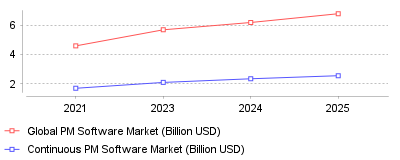
The data reveals a dramatic structural pivot in how organizations evaluate and nurture talent, moving decisively away from the dreaded annual performance review toward continuous, AI-assisted feedback loops. Specifically, enterprise adoption of continuous feedback mechanisms surged from 52% in 2022 to 71% in 2024 [source], while the broader integration of AI within HR functions leaped from 55% in 2023 to 78% in 2024 [source]. Parallel to these adoption metrics, the financial footprint of the global performance management software market has expanded robustly, projected to reach an estimated $6.8 billion in 2025 [source].
On a micro level, this trend signifies a fundamental change in the day-to-day employee experience, where performance is evaluated in real-time rather than retrospectively. Employees are now receiving actionable insights and personalized development paths driven by AI algorithms that analyze work patterns, communication frequency, and goal progression [source]. On a macro industry scale, legacy human capital management (HCM) providers are being forced to aggressively innovate or face obsolescence, as agile, cloud-based Continuous Performance Management (CPM) solutions capture a growing share of the market, valued at $2.35 billion in 2024 alone [source]. This shift is also reshaping HR budget allocations, with investments moving from administrative tracking software toward predictive analytics and agentic AI platforms that can autonomously identify skill gaps and assign learning modules. Furthermore, as 82% of HR leaders previously felt traditional performance management was ineffective [source], this technological evolution represents the HR industry's strategic attempt to finally align employee enablement directly with bottom-line business outcomes.
This transition is critical because traditional performance management has historically suffered from severe trust deficits and inefficiencies, often negatively impacting employee morale and retention. Organizations that successfully implement continuous performance management and feedback processes report a 39% higher success rate in attracting top talent and a 44% improvement in talent retention compared to those relying on legacy systems [source]. Moreover, the integration of AI is actively removing unconscious biases—such as recency bias—from the evaluation process, fostering a fairer workplace culture where data-driven metrics supersede subjective managerial opinions. Ultimately, this ensures that companies can maintain agility and workforce alignment in an increasingly complex, remote, and hybrid global economy.
The most immediate catalyst for this trend was the global shift toward remote and hybrid work models, which completely dismantled the viability of traditional, proximity-based management and forced organizations to adopt digital productivity tracking [source]. Without daily face-to-face interactions, managers required sophisticated software to maintain visibility over distributed teams, setting the stage for cloud-based continuous feedback platforms. Simultaneously, the explosive mainstream breakthrough of generative AI provided the necessary technological capability to analyze vast, unstructured datasets—such as messaging platform data and collaborative documents—making real-time performance intelligence feasible [source]. We can also speculate that a tightening labor market and the rising costs of employee turnover elevated talent retention to a C-suite priority, compelling organizations to invest heavily in software that actively engages and develops employees rather than merely rating them once a year.
The performance management software category has irrevocably moved past the era of the static annual appraisal, evolving into a dynamic, AI-powered ecosystem designed to foster continuous employee growth. By leveraging predictive analytics and real-time feedback mechanisms, these platforms are bridging the gap between individual performance and overarching corporate strategy, turning HR from an administrative function into a critical driver of revenue. The prominent takeaway for business leaders is clear: adopting continuous, AI-assisted performance management is no longer a forward-looking competitive advantage, but a foundational requirement for retaining talent and maintaining operational efficiency in the modern workplace.
Employee morale no longer dominates the human resources agenda. Workforce evaluation outpaced general satisfaction to become the top priority for 40% of global corporate teams going into 2026 [1]. This represents a distinct reversal from previous years, driven by executives demanding measurable productivity outcomes. A recent Lattice survey tracking 1,002 professionals confirmed that staff engagement fell to second place at 39%, while diversity initiatives plummeted to just 16% [1]. Organizations now face intense pressure to justify their labor costs with objective output data.
Zion Market Research valued the global performance management software market at $10.83 billion in 2023. Analysts project the sector will expand to $30.52 billion by 2032, advancing at a 12.2% annual growth rate [2]. Buyers seeking broader human resources and people management applications currently demand specialized modules for behavioral tracking over simple pulse surveys. High-performing business units deploy four or more specialized talent applications, while average units rely on three [1].
Sixty-one percent of professionals struggle to distinguish acceptable outputs from exceptional work [3]. This uncertainty creates serious standardization issues. When supervisors lack clear evaluation criteria, they introduce bias into promotion schedules and compensation calibrations. Organizations with fewer than 100 employees find this challenge particularly severe due to unstructured processes [3]. Administrators must implement data-driven systems to remove subjectivity from the review cycle.
Workday generated $2.54 billion in total revenue during the first quarter of fiscal 2027. This represents a 13.5% increase from the prior year [4]. Subscription revenue accounted for $2.35 billion of that total. Operating income reached $338 million. The software provider achieved a 31.8% non-GAAP operating margin while simultaneously repurchasing $1.6 billion in common stock [4].
The financial results demonstrate a massive shift toward automated evaluation tasks. Over 4,000 customers actively use at least one Workday-built artificial intelligence agent [5]. The vendor supported 14 million distinct hiring processes with its automated assistant in a single quarter [5]. Chief Executive Officer Aneel Bhusri noted that new contract value growth hit a five-year high, anchored heavily by automated agent adoption [5].
When selecting enterprise-grade evaluation platforms, technology buyers prioritize synthesis capabilities. Administrators expect software to read twelve months of peer feedback and summarize it instantly. Vendors that fail to offer generative text features face immediate competitive disadvantages. Workday maintained a 97% gross revenue retention rate, proving that embedded automation keeps corporate clients locked into existing contracts [5].

The Securities and Exchange Commission amended Regulation S-K to require explicit workforce disclosures. Publicly traded companies must now describe their labor resources if those details influence general business understanding [6]. Prior rules only required a raw headcount. Regulators purposefully left the new mandates flexible, expecting executives to tailor reports to their specific industries.
Gibson Dunn surveyed 451 companies listed on the S&P 500 index. Researchers found 84% provided quantitative evaluation data in 2024, rising from 67% in 2021 [6]. Despite this increase, the formats remain inconsistent. Only 13% of surveyed organizations quantified their workforce turnover rates [6]. Just 16% provided a mathematical breakdown separating full-time personnel from part-time staff [6].
Harvard Law School analyzed the first 100 corporate filings following the initial rule change. They discovered 57% of firms provided zero quantitative metrics initially [7]. When companies did share numbers, they focused strictly on diversity. Gender statistics appeared in 24% of filings, while racial demographics appeared in 14% [7]. The SEC Investor Advisory Committee recently proposed stricter guidelines. They want mandatory reporting for turnover figures and detailed compensation costs.
Fact.MR estimated the enterprise performance software market at $3.94 billion in 2024. Analysts expect the sector to hit $6.18 billion by 2034 [8]. This specific software category historically handled budgeting and financial consolidation. Vendors now integrate labor metrics directly into financial models. Consulting services dominate this deployment process, holding a 76.3% market share compared to actual software licensing at 23.7% [8].
On-premises installations still control 77.3% of the enterprise sector [8]. Large organizations require total control over sensitive compensation records. Cloud adoption grows among mid-market buyers, but strict data compliance laws keep multinational corporations tethered to local servers. The United States accounts for 81.5% of the North American deployment volume [8].
Sales divisions run parallel tracking systems. AppsRunTheWorld reported that global sales evaluation software reached $2.4 billion in 2024, marking an 11.5% annual increase [9]. SAP controls 12.5% of the sales tracking market, followed closely by Salesforce and PROS Holdings [9]. Integrating revenue data with individual employee profiles remains a primary technical challenge for system administrators.
Sixty-five percent of hourly workers want to advance within their current company. Unfortunately, fewer than one in four achieve upward mobility [10]. Operations directors evaluate warehouse logistics teams and retail associates using synchronous metrics. Success depends entirely on team coordination and output volume rather than individual project milestones. Office-based evaluation tools fail completely in these environments.
Mobile communication platforms address this structural gap. Short message service surveys achieve 40% to 50% response rates [11]. Traditional email distribution only secures 5% to 30% participation from shift workers [11]. Manufacturing and hospitality sectors employ labor pools where 30% to 50% of staff speak English as a second language [11]. Effective software instantly translates questions and answers across 135 dialects without requiring external application downloads.
Managers evaluating deskless workers cannot rely on annual written documents. Operators buying appraisal systems built for deskless staff demand productivity scoring tied to point-of-sale registers or assembly line sensors. When managers tie recognition to clear mathematical criteria, shift workers stay longer. Companies that ignore mobile deployment suffer extreme turnover penalties in tight labor markets.
Employees using generative algorithms are resigning at concerning rates. Betterworks discovered that 78% of highly engaged artificial intelligence users actively seek outside employment opportunities [12]. Conversely, 65% of algorithm-resistant employees plan to stay at their current jobs indefinitely [12]. Power users understand their market value and aggressively pursue higher compensation elsewhere.
Corporate executives completely misunderstand this dynamic. Ninety-two percent of executives feel ready to implement automated processes, but only 51% of ground-level staff agree [13]. Forty-nine percent of leadership teams rank algorithm proficiency as a top performance metric [13]. Meanwhile, just 9% of employees believe these skills affect their individual success [13]. Only 8% of workers say their employer communicated a clear digital strategy [13].
Gartner research indicates managers save an average of four hours per evaluation cycle when applying generative models to review drafting [14]. Seventy-six percent of department directors fear falling behind if they delay software upgrades. Supervisors deploying platforms designed for frequent supervisor check-ins must review all automated summaries manually. Unchecked algorithms frequently introduce biased language into permanent personnel files.
Grand View Research tracked the global application performance management sector at $4.36 billion in 2023. They expect the industry to hit $9.90 billion by 2030, advancing at a 13.4% compound annual rate [15]. Web-based access tools generated 66% of that revenue [15]. This distinct software category historically measured server latency and database uptime.
Modern developers now merge machine monitoring with human evaluation. Platforms extract background telemetry data to determine active working hours. Software detects anomalies in typing speed, application switching, and idle time. This provides objective behavioral evidence rather than relying entirely on subjective supervisor opinions. Engineering teams use these dashboards to troubleshoot bottlenecks, while operations managers use the exact same data to rank staff efficiency.
Privacy concerns limit adoption in highly unionized environments. Workers resent background tracking and view keystroke logging as an invasion of trust. Administrators must balance technical visibility against employee morale. Transparent communication regarding exactly what background data influences compensation remains the only effective mitigation strategy.
Companies prioritizing staff development outpace competitors by a factor of 4.2 [16]. McKinsey tracked corporate growth trajectories across multiple global sectors. Organizations with documented evaluation frameworks realize 30% higher revenue growth than industry peers [16]. Additionally, attrition drops by five percentage points in firms that focus on ongoing capability building [16].
Frequent coaching drives these specific financial gains. Adobe replaced its annual appraisal process with informal check-ins in 2012, completely eliminating numerical ratings. Gallup data shows that staff receiving continuous input from managers feel 3.6 times more engaged than workers awaiting an annual review. Despite this evidence, 58% of organizations still track individual goals using basic spreadsheet files.
Implementation succeeds when administrators secure executive participation. Leaders purchasing multi-rater assessment platforms for mid-sized organizations must force department heads to log into the software weekly. If directors view the platform as an administrative burden rather than a strategic asset, usage rates collapse within six months.
Linking pay directly to behavioral evaluations increases workplace productivity by 17% [14]. A Gartner survey of 1,622 respondents confirmed that financial motivation remains the strongest driver of behavioral change [14]. As automated software alters how daily tasks get finished, compensation structures must update to reflect actual human contribution rather than machine output.
Algorithms help financial officers model complex bonus pools. Software can flag unintended salary compression before executives finalize annual raises. It highlights minor reallocations that create outsized motivational impacts across entire divisions. Planners use predictive modeling to distribute merit increases without exceeding strict departmental budgets.
Vague automated decisions destroy staff trust immediately. Workers demand clear explanations for their final rating. If a machine dictates a smaller bonus, the human supervisor must explain the mathematical reasoning behind the calculation. Organizations risk severe legal penalties if black-box algorithms inadvertently punish protected demographic classes during annual salary calibrations.
Software developers continue expanding their native functionalities to capture enterprise budgets. Gartner analysts evaluated 14 top vendors in the 2025 Magic Quadrant for financial planning software [17]. Providers like OneStream and Wolters Kluwer added anomaly detection and variance analysis to their core reporting engines [17]. This allows financial controllers to cross-reference operational costs against individual department outputs seamlessly.
Jedox tripled its machine learning research funding between 2023 and 2025 [18]. The company applies a strict architectural approach to data isolation. Customers receive separated generation environments, preventing cross-client exposure during model training [18]. This specific security feature appeals directly to heavily regulated banking and healthcare clients who cannot transmit sensitive personnel records through public language models.
Future iterations will feature autonomous modeling agents. These embedded assistants will pull data from discrete legacy systems, construct initial evaluation matrices, and write the first draft of the executive narrative. Human administrators will transition from data entry clerks to final editors, spending their time verifying system outputs rather than collecting raw statistics.
3..
| Year | Global PM Software Market (Billion USD) | Continuous PM Software Market (Billion USD) |
|---|---|---|
| 2021 | 4.6 | 1.7 |
| 2023 | 5.7 | 2.1 |
| 2024 | 6.2 | 2.35 |
| 2025 | 6.8 | 2.56 |
The data reveals a dramatic structural pivot in how organizations evaluate and nurture talent, moving decisively away from the dreaded annual performance review toward continuous, AI-assisted feedback loops. Specifically, enterprise adoption of continuous feedback mechanisms surged from 52% in 2022 to 71% in 2024 [source], while the broader integration of AI within HR functions leaped from 55% in 2023 to 78% in 2024 [source]. Parallel to these adoption metrics, the financial footprint of the global performance management software market has expanded robustly, projected to reach an estimated $6.8 billion in 2025 [source].
On a micro level, this trend signifies a fundamental change in the day-to-day employee experience, where performance is evaluated in real-time rather than retrospectively. Employees are now receiving actionable insights and personalized development paths driven by AI algorithms that analyze work patterns, communication frequency, and goal progression [source]. On a macro industry scale, legacy human capital management (HCM) providers are being forced to aggressively innovate or face obsolescence, as agile, cloud-based Continuous Performance Management (CPM) solutions capture a growing share of the market, valued at $2.35 billion in 2024 alone [source]. This shift is also reshaping HR budget allocations, with investments moving from administrative tracking software toward predictive analytics and agentic AI platforms that can autonomously identify skill gaps and assign learning modules. Furthermore, as 82% of HR leaders previously felt traditional performance management was ineffective [source], this technological evolution represents the HR industry's strategic attempt to finally align employee enablement directly with bottom-line business outcomes.
This transition is critical because traditional performance management has historically suffered from severe trust deficits and inefficiencies, often negatively impacting employee morale and retention. Organizations that successfully implement continuous performance management and feedback processes report a 39% higher success rate in attracting top talent and a 44% improvement in talent retention compared to those relying on legacy systems [source]. Moreover, the integration of AI is actively removing unconscious biases—such as recency bias—from the evaluation process, fostering a fairer workplace culture where data-driven metrics supersede subjective managerial opinions. Ultimately, this ensures that companies can maintain agility and workforce alignment in an increasingly complex, remote, and hybrid global economy.
The most immediate catalyst for this trend was the global shift toward remote and hybrid work models, which completely dismantled the viability of traditional, proximity-based management and forced organizations to adopt digital productivity tracking [source]. Without daily face-to-face interactions, managers required sophisticated software to maintain visibility over distributed teams, setting the stage for cloud-based continuous feedback platforms. Simultaneously, the explosive mainstream breakthrough of generative AI provided the necessary technological capability to analyze vast, unstructured datasets—such as messaging platform data and collaborative documents—making real-time performance intelligence feasible [source]. We can also speculate that a tightening labor market and the rising costs of employee turnover elevated talent retention to a C-suite priority, compelling organizations to invest heavily in software that actively engages and develops employees rather than merely rating them once a year.
The performance management software category has irrevocably moved past the era of the static annual appraisal, evolving into a dynamic, AI-powered ecosystem designed to foster continuous employee growth. By leveraging predictive analytics and real-time feedback mechanisms, these platforms are bridging the gap between individual performance and overarching corporate strategy, turning HR from an administrative function into a critical driver of revenue. The prominent takeaway for business leaders is clear: adopting continuous, AI-assisted performance management is no longer a forward-looking competitive advantage, but a foundational requirement for retaining talent and maintaining operational efficiency in the modern workplace.