


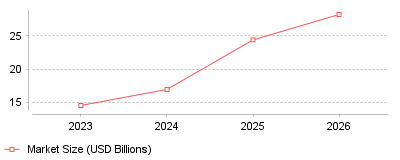
| Year | Market Size (USD Billions) |
|---|---|
| 2023 | 14.57 |
| 2024 | 16.97 |
| 2025 | 24.4 |
| 2026 | 28.2 |
The data demonstrates a dual trajectory: steady double-digit growth in the broader customer analytics market and a parabolic surge in the adoption of open-source, developer-first product analytics platforms. While the total market valuation practically doubled between 2023 and 2026 to reach $28.2 billion, developer-first platforms like PostHog saw active domains explode from approximately 3,600 in early 2024 to nearly 21,000 by March 2026 [source].
On a macro level, the customer cohort analytics software industry is expanding rapidly, driven by global digital transformation, increased e-commerce penetration, and AI-driven predictive insights [source]. On a micro level, this exposes a massive shift in how organizations procure and implement analytics tools across their product ecosystems. Historically, marketing and growth teams purchased siloed, point-solution tools to measure retention and behaviors. Today, engineering and product teams are consolidating the stack, heavily favoring developer-first, warehouse-native tools that bundle product analytics, cohort analysis, A/B testing, session replays, and feature flags into a single deployment [source]. This aligns with broader macro-industry trends where the average company software stack has begun aggressively consolidating, dropping from 130 applications down to roughly 106 apps, thereby forcing point solutions to bundle capabilities to survive [source].
This transition fundamentally alters the power dynamics of software procurement, transferring budget authority from marketing executives to technical founders and developers [source]. It reflects a growing recognition that true product-led growth requires cohort analytics to be deeply integrated into the codebase rather than existing as an external dashboard solely for business stakeholders. Furthermore, the massive shift toward open-source or self-hosted analytics platforms underscores the rising importance of data sovereignty, privacy compliance, and granular control over user data in the modern regulatory environment [source].
The primary catalyst for this trend is the software tool sprawl crisis and the associated engineering burden it creates for internal teams. As companies scaled over the last few years, they found themselves juggling overlapping analytics solutions, requiring developers to constantly maintain brittle integrations between disparate data silos just to track basic user cohorts [source]. This widespread inefficiency paved the way for all-in-one engineering-focused tools to thrive, as they eliminate context switching and streamline data ingestion. Additionally, the proliferation of generative AI tools has drastically accelerated product development cycles, meaning teams are shipping code faster than ever and desperately need unified, real-time feedback loops to monitor user interactions [source]. Finally, the industry-wide shift from traditional marketing-led sales to product-led growth naturally necessitates tooling that empowers developers to measure cohort feature adoption instantly [source].
The exponential growth of developer-first analytics within the broader $28.2 billion customer intelligence market marks the definitive end of isolated, marketing-only behavioral tracking. Platforms that fail to cater to engineering workflows or refuse to bundle complementary features like session replay and experimentation are likely to face severe churn as companies aggressively consolidate their SaaS portfolios [source]. For modern organizations seeking sustainable growth, the prominent takeaway is clear: the future of customer and cohort analytics belongs to flexible, developer-friendly platforms that unify the entire product feedback loop.
Buyers will spend $14.82 billion on customer analytics this year [1]. Growth tracks upward to $41.28 billion by 2031. Organizations deploy these systems to track user actions across websites and mobile applications. Buyers demand specific operational metrics. They integrate these specialized systems into broader business intelligence and analytics software to understand consumer behavior. Data Bridge Market Research sizes the related data platform market at $8.34 billion for 2024 [2].
Large enterprises controlled 63.2% of category revenue in 2025. Small businesses are expanding adoption at 19.2% annually as cloud deployment lowers infrastructure costs [1]. North America holds roughly 44% of the global share [2]. Companies purchase these tools to solve immediate operational problems rather than abstract transformation goals. Marketers struggle with fragmented audience profiles. Support leaders cannot identify interface friction points. Product managers lack visibility into feature adoption.
Cloud deployment accounted for 61.35% of industry revenue in 2025 [1]. Firms prefer flexible scaling over rigid hardware installations. On-premises environments remain relevant primarily in regulated sectors like finance. These institutions enforce strict residency controls. Investment in those verticals shifts toward hybrid approaches that keep sensitive information local while offloading computation to external servers.
Healthcare providers represent a rapidly expanding customer base. This vertical will grow at a 21.9% annual rate through 2031 as hospitals analyze patient engagement data [1]. Implementing customer analytics and cohort analysis platforms allows healthcare administrators to track portal usage and appointment scheduling efficiency. Budgets reflect this operational urgency. Executives approve software purchases when vendors demonstrate clear paths to reducing operational friction.
Google reversed its plan to force third-party cookie deprecation in Chrome in July 2024. The search provider opted instead to let users choose their privacy settings [3]. This policy shift effectively accomplishes the same outcome as a forced removal. Users routinely opt for enhanced privacy. Marketers face a shrinking audience of trackable visitors.
Prior to the reversal, 61% of marketing executives told Forrester they did not believe Google would actually deprecate the tracking cookie [3]. Advertisers now face a data governance crisis. Third-party cookies historically powered cross-site tracking and attribution models. Brands must shift to direct data collection models. This transition transfers the burden of legal compliance directly to the organization [4].
Consent management introduces infrastructure hurdles. Browsers capture user preferences locally. Those signals often fail to synchronize across downstream marketing systems. The Federal Trade Commission fined GoodRx $25 million in 2023 for sharing health data without proper consent [4]. To avoid similar penalties, organizations need strict enforcement mechanisms. They must guarantee that an opt-out request registers across all integrated applications instantly.
Regulatory scrutiny extends beyond single enforcement actions. European regulators continue investigating technology providers for anti-competitive practices. They worry that tracking protection features give major advertising networks an unfair advantage [5]. Independent publishers lose their ability to sell targeted advertising. Brands lose their visibility into cross-site user behavior. Dedicated audience infrastructure is the only viable defense against this regulatory pressure.

First-party data relies on direct consumer interactions. Website visits, mobile app usage, and purchase history form the foundation of this strategy. Collecting this information requires a clear value exchange. Deloitte found that 22% of consumers will share data in exchange for a personalized product [6].
Brands are adapting their technology stacks. A 2022 Forrester survey showed 76% of consumer marketers collecting more first-party data due to browser privacy changes [7]. Acquiring the information represents only the initial step. Managing data quality remains difficult. A 2023 Braze report noted that 36% of marketers rank data collection and integration as their top engagement challenge [7].
Identity resolution solves the fragmentation problem. A single user might browse a website on a laptop, open a promotional email on a phone, and purchase an item through a tablet. Without identity resolution, the tracking system records three distinct visitors. Modern data platforms use deterministic matching to merge these events into a single profile. Deterministic matching links profiles using hard identifiers like email addresses or account login credentials.
To activate this information, companies use specialized software to group users by behavior. Implementing customer analytics platforms with segmentation enables marketers to trigger specific campaigns based on recent user actions. For example, a retailer can automatically email users who abandoned a shopping cart. This precision replaces outdated mass marketing tactics. Consumers receive promotions tailored to their actual browsing history.
Retaining a buyer often requires understanding exactly when they lose interest. Growth leaders use specific analytical models to track distinct user groups over time. A cohort groups customers who share a characteristic, such as signing up during the same week. Analysts observe these groups to pinpoint where engagement drops.
Industry retention rates vary. Retail achieves 60% to 80% retention. Banking reports 89% [8]. Losing users damages revenue growth. If a software company loses 3% of its customers monthly, it must grow 43% annually just to maintain flat revenue [9]. Fixing early drop-off points is cheaper than acquiring replacement buyers.
Product teams rely heavily on these methodologies. Software developers prioritize deploying analytics tools for retention teams to measure the impact of interface updates. Spotify uses these models extensively. In 2022, Spotify reported 205 million premium subscribers, a 14% increase from 2021 [10]. By analyzing past filings, analysts estimate Spotify's annual churn rate near 30.9% [10]. The company offsets this attrition by converting free users and reactivating canceled accounts.
Zendesk data shows 50% of customers will switch to a competitor after a single bad experience [6]. This figure jumps to 80% after multiple bad experiences [6]. Tracking individual touchpoints helps support teams intervene. When a user repeatedly clicks an error message, behavioral tracking platforms alert the technical staff. Proactive outreach turns a frustrating moment into a positive service interaction.
Two primary methods dominate cohort analysis. Acquisition cohorts group users by when they first interacted with a brand. Behavioral cohorts group users by specific actions they took within an application. Comparing these two frameworks yields distinct operational insights.
Acquisition cohorts measure marketing effectiveness. Analysts chart these groups in triangular tables displaying retention percentages over time. If users who signed up in March retain at a higher rate than users who signed up in April, the marketing team investigates the discrepancy. The April promotional campaign might have attracted lower-quality leads. A minor website bug might have hindered the April onboarding process. Identifying the exact timeframe narrows the scope of the investigation.
Behavioral cohorts measure product value. Product managers compare the retention rate of users who completed a tutorial against those who skipped it. If the tutorial group retains significantly better, the design team makes the tutorial mandatory. This data-driven approach removes subjective opinions from product development. Decisions rely on observed user actions rather than internal assumptions.
Mixpanel specializes in this specific type of event tracking. The platform excels at showing what users do within an application rather than just recording their final purchases [11]. Teams use this software to map the entire user journey. They identify the exact sequence of events that leads to a conversion or a cancellation. Engineers structure their tracking plans around these core events to ensure accurate data collection.
Salesforce launched its Data Cloud engine to harmonize enterprise data into a unified model [12]. This infrastructure supports predictive intelligence. Adobe similarly integrated generative features across its Digital Experience suite, generating $5.37 billion in 2024 [1]. Vendors are rushing to embed artificial intelligence directly into their tracking platforms.
Machine learning shifts analysis from descriptive to predictive. Traditional dashboards show what happened yesterday. Predictive models highlight what will happen tomorrow. A 2023 Forrester Research study found that businesses using predictive analytics inside their data platforms experienced a 40% increase in marketing ROI [2]. Algorithms analyze historical usage patterns to assign probability scores to individual accounts.
Amplitude includes predictive scoring to flag users likely to abandon an application [11]. Identifying at-risk accounts allows companies to intervene before a cancellation occurs. Integration of churn analytics tools gives support agents a warning system. They can offer discounts or targeted help documentation to save the relationship. Interventions happen automatically through triggered email sequences.
These predictive engines automate feature engineering. They test thousands of variables simultaneously to identify hidden correlations. A human analyst might miss the fact that users who log in on Tuesdays and use a specific integration are 15% more likely to renew their contracts. Machine learning models identify these micro-trends instantly. Analysts spend less time querying databases and more time designing retention experiments based on AI-generated recommendations.
Personalization drives measurable financial returns. McKinsey reports that customized marketing reduces customer acquisition costs by up to 50% [13]. Revenue lifts between 5% and 15% when companies tailor their outreach. Furthermore, fast-growing companies derive 40% more revenue from personalization than slower-growing peers [13].
Buyer expectations force this operational shift. Seventy-one percent of consumers expect personalized interactions, and 76% get frustrated when companies fail to deliver them [13]. Generic messaging alienates modern buyers. They expect brands to remember past purchases and service inquiries. Providing a consistent experience across channels increases satisfaction by 20% and lowers service costs by 15% to 20% [14].
Data infrastructure makes this customization possible. Retailers use purchase history to recommend complementary products. Streaming services use viewing history to suggest new content. These recommendations increase average order value and session duration. Epsilon research indicates that 80% of consumers are more likely to purchase from a brand that provides personalized experiences [15]. Personalized product recommendations generate immediate revenue spikes for consumer brands.
Implementation remains challenging for many organizations. Most companies lack the necessary technical foundations. They rely on siloed databases that prevent real-time data activation. Building a centralized data repository requires significant capital investment and cross-departmental coordination. Legacy retail brands struggle to merge in-store purchase records with online browsing behavior. Overcoming these technical barriers is mandatory for maintaining market share against digitally native competitors.
Gartner found that 61% of B2B buyers prefer a rep-free buying experience [16]. Prospects research software on their own. They read reviews and test free trials before speaking to sales. Forrester reports that 86% of B2B purchases stall during the buying process [16]. Behavioral signals offer the only visibility into these stalled deals.
Marketing departments use this behavioral data to optimize ad spend. They funnel high-intent user profiles directly to sales teams. Employing customer analytics tools for growth teams ensures that representatives only contact accounts showing active interest. This prevents wasted effort and accelerates deal velocity. Growth managers track exactly which content pieces drive the highest conversion rates.
Sales cycles in enterprise environments span several months and involve multiple stakeholders. Tracking account-level behavior is mandatory. If a marketing director downloads a whitepaper and a technical lead views the API documentation, the vendor must link those actions to the same corporate account. Analytics tools aggregate these individual signals to generate an overall account health score.
Representatives prioritize their outreach based on these scores. They call the accounts showing the highest engagement levels. This operational efficiency lowers customer acquisition costs and increases win rates. McKinsey found that intensive users of customer analytics are 23 times more likely to outperform competitors in customer acquisition [16]. Profitability metrics scale directly alongside analytic maturity in B2B organizations.
Market consolidation will define the next three years. Standalone web reporting applications are converging into unified data platforms. Buyers refuse to maintain separate software for product tracking, email marketing, and web analytics. They demand integrated systems that resolve user identities across all touchpoints. Vendors will acquire niche competitors to build broader software suites. Cloud data warehouses like Snowflake and BigQuery will increasingly serve as the central repository for these consolidated tracking systems.
Regulatory scrutiny will simultaneously intensify. Companies face a strict enforcement climate regarding data privacy. Managing consent is no longer an optional feature. Systems must automate real-time compliance across the entire technology stack. Brands that master ethical data collection will secure a lasting competitive advantage. Those relying on opaque tracking methods will face severe legal penalties and eroding consumer trust. Future platforms will rely entirely on zero-party and first-party data intentionally provided by the consumer.
| Year | Market Size (USD Billions) |
|---|---|
| 2023 | 14.57 |
| 2024 | 16.97 |
| 2025 | 24.4 |
| 2026 | 28.2 |
The data demonstrates a dual trajectory: steady double-digit growth in the broader customer analytics market and a parabolic surge in the adoption of open-source, developer-first product analytics platforms. While the total market valuation practically doubled between 2023 and 2026 to reach $28.2 billion, developer-first platforms like PostHog saw active domains explode from approximately 3,600 in early 2024 to nearly 21,000 by March 2026 [source].
On a macro level, the customer cohort analytics software industry is expanding rapidly, driven by global digital transformation, increased e-commerce penetration, and AI-driven predictive insights [source]. On a micro level, this exposes a massive shift in how organizations procure and implement analytics tools across their product ecosystems. Historically, marketing and growth teams purchased siloed, point-solution tools to measure retention and behaviors. Today, engineering and product teams are consolidating the stack, heavily favoring developer-first, warehouse-native tools that bundle product analytics, cohort analysis, A/B testing, session replays, and feature flags into a single deployment [source]. This aligns with broader macro-industry trends where the average company software stack has begun aggressively consolidating, dropping from 130 applications down to roughly 106 apps, thereby forcing point solutions to bundle capabilities to survive [source].
This transition fundamentally alters the power dynamics of software procurement, transferring budget authority from marketing executives to technical founders and developers [source]. It reflects a growing recognition that true product-led growth requires cohort analytics to be deeply integrated into the codebase rather than existing as an external dashboard solely for business stakeholders. Furthermore, the massive shift toward open-source or self-hosted analytics platforms underscores the rising importance of data sovereignty, privacy compliance, and granular control over user data in the modern regulatory environment [source].
The primary catalyst for this trend is the software tool sprawl crisis and the associated engineering burden it creates for internal teams. As companies scaled over the last few years, they found themselves juggling overlapping analytics solutions, requiring developers to constantly maintain brittle integrations between disparate data silos just to track basic user cohorts [source]. This widespread inefficiency paved the way for all-in-one engineering-focused tools to thrive, as they eliminate context switching and streamline data ingestion. Additionally, the proliferation of generative AI tools has drastically accelerated product development cycles, meaning teams are shipping code faster than ever and desperately need unified, real-time feedback loops to monitor user interactions [source]. Finally, the industry-wide shift from traditional marketing-led sales to product-led growth naturally necessitates tooling that empowers developers to measure cohort feature adoption instantly [source].
The exponential growth of developer-first analytics within the broader $28.2 billion customer intelligence market marks the definitive end of isolated, marketing-only behavioral tracking. Platforms that fail to cater to engineering workflows or refuse to bundle complementary features like session replay and experimentation are likely to face severe churn as companies aggressively consolidate their SaaS portfolios [source]. For modern organizations seeking sustainable growth, the prominent takeaway is clear: the future of customer and cohort analytics belongs to flexible, developer-friendly platforms that unify the entire product feedback loop.