


3..
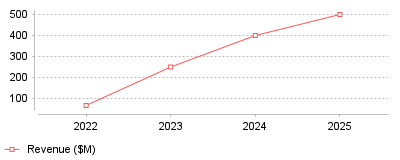
| Year | Revenue ($M) |
|---|---|
| 2022 | 67 |
| 2023 | 250 |
| 2024 | 400 |
| 2025 | 500 |
The data illustrates a stark divergence in the knowledge management software market, where AI-native and highly flexible platforms like Notion are experiencing explosive, exponential revenue and user growth [source]. Conversely, legacy systems such as Evernote are facing stagnant user acquisition, drastically declining app downloads, and severe user backlash due to aggressively restrictive free tiers [source].
On a micro level, individual users and enterprise teams are prioritizing all-in-one productivity solutions that effectively reduce app-switching, cognitive load, and workflow fragmentation [source]. Features like generative AI integrations, collaborative real-time editing, and customizable block-based workflows have become baseline industry standards rather than premium, optional add-ons [source]. On a macro level, this signals a massive shift in the $5.7 billion knowledge management software market toward product-led growth (PLG) strategies and networked thought architectures [source]. Companies that fail to innovate and instead resort to aggressively monetizing their declining user bases—as seen with Evernote's recent 50-note free tier limit—risk severely alienating their core audience and accelerating market churn [source].
This trend is critical for business leaders and IT decision-makers who are currently evaluating their organizational technology stacks for operational efficiency and cost-effectiveness. With 54% of organizations currently using more than five different platforms to document processes, the consolidation of tools into unified "second brain" wikis can lead to massive software licensing cost savings and a reported 20 to 25% gain in organizational productivity [source]. Furthermore, it underscores the paramount importance of AI integration; platforms that successfully embed generative AI agents into their core workflows are capturing the lion's share of new enterprise investments and driving unprecedented revenue multiples [source].
The divergence in platform success was likely catalyzed by the sudden global shift to remote and hybrid work models in 2020, which ruthlessly exposed the functional limitations of traditional, rigid folder-based note-taking applications [source]. Notion capitalized heavily on this cultural moment by offering a highly flexible, modular software architecture that appealed to a younger, digital-native demographic, driving massive organic adoption through community evangelism on social platforms like TikTok and YouTube [source]. In contrast, legacy platforms like Evernote suffered from years of compounding technical debt, a noticeable lack of major product innovation, and a failure to quickly integrate native artificial intelligence capabilities before their competitors did [source]. Additionally, Notion's strategic freemium model successfully built a massive top-of-funnel user base, whereas Evernote's increasingly restrictive paywalls actively drove long-time users directly into the arms of its more agile competitors [source].
The knowledge management and enterprise wiki market is undergoing a fundamental changing of the guard, with Notion's rapid climb to over 100 million global users firmly establishing it as the new de facto industry standard [source]. Legacy knowledge platforms must urgently reinvent their technical architectures and fully embrace seamless AI integration if they hope to survive this hyper-competitive, fast-moving landscape. The prominent takeaway is clear: in the modern digital productivity era, seamless workflow consolidation and integrated artificial intelligence are no longer optional conveniences—they are the absolute baseline requirements for product survival and enterprise growth.
Employees spend 1.8 hours every day searching for internal information [1]. This metric translates to 9.3 hours per week. Businesses effectively pay for five workers but receive the output of four. Workers conduct up to eight separate searches to find a single correct document [2]. Such inefficiency defines the operational baseline for many modern enterprises. Freelancers also suffer from this friction, spending almost 30 minutes each day simply searching through email attachments. Information overload continues worsening across all business sizes.
International Data Corporation measured similar productivity losses across large organizations. Knowledge workers waste roughly 30% of their workday hunting for specific files [1]. Fortune 500 companies lose $31.5 billion annually due to failed information sharing [3]. Fixing this problem requires specialized software architecture. Organizations purchase applications from the task tracking and output software category to manage daily work assignments. They then deploy internal information and corporate database platforms to store the underlying company rules.
Lost productivity costs average $47 million annually for a typical large business [4]. Enterprises with 50,000 employees lose upwards of $130 million each year due to inefficient file retrieval. This capital drain forces chief information officers to evaluate software purchases with greater scrutiny. They must connect disparate repositories into a single searchable interface. If workers cannot find policy updates quickly, they make costly operational errors.
Fortune Business Insights valued the sector at $23.2 billion in 2025 [5]. Analysts project sector revenue will reach $74.22 billion by 2034. This expansion represents a 13.8% compound annual growth rate. Telecommunications companies account for 24% of current usage. These firms maintain strict documentation standards for their network hardware. They buy specialized software to centralize technical manuals and procedural workflows.
Different research firms publish varying baseline metrics due to methodology differences. Grand View Research estimated sector value at $20.15 billion in 2024 [6]. They forecast $62.15 billion by 2033. North America accounts for 38% of total spending. The Asia-Pacific region shows the fastest adoption speed with a 22.98% growth rate. Buyers clearly prioritize search capabilities over static storage. Platforms lacking artificial intelligence retrieval features face declining renewal rates across all geographic regions.
Purchasing decisions favor specialized tools over generalized platforms. Engineering teams require strict version control. Sales departments need instant pricing updates. Procuring solutions built for technical writing allows research departments to track feature changes over time. When hardware components change on the factory floor, the corresponding manuals must update immediately across the entire corporate network.

Consumer behavior provides a clear proxy for employee frustration. Electronic commerce platforms lose $2 trillion annually when shoppers cannot find desired items [7]. Google Cloud reports that 81% of American consumers abandon retail websites after a failed search attempt. These users purchase the item from a competitor instead. Internal employees face identical friction daily. They simply abandon their internal search and recreate the missing document from scratch.
High abandonment rates plague poor checkout experiences across the wider internet. Global shopping cart abandonment reached 70.19% recently [8]. Social media traffic experiences 91.4% abandonment. Organic search traffic converts better but still suffers a 74.8% abandonment rate. Dynamic Yield reports that 55% of shoppers abandon carts due to unexpected fees [9]. Employees exhibit identical abandonment patterns when navigating corporate intranets. They encounter a complicated interface and give up. They interrupt a coworker instead of reading the provided manual.
Software buyers must minimize this user friction at the departmental level. Selecting platforms optimized for service desk agents reduces call handling times significantly. When a customer calls with a billing issue, the agent needs an exact answer within seconds. If the internal search fails, the customer experience degrades rapidly. Support agents cannot wait for a clunky page to load while a frustrated client waits on hold.
Venture capital flows heavily toward search optimization startups. Glean Technologies raised $150 million in Series F financing during June 2025 [10]. This funding round pushed the company valuation to $7.2 billion. Wellington Management led the investment. Previous rounds included Sequoia Capital and Lightspeed Venture Partners. Investors clearly see intense demand for unified search products.
Revenue growth matches the private funding hype. Glean surpassed $100 million in annual recurring revenue in early 2025 [11]. Nine months later, the company reported $200 million in recurring revenue. This aggressive scaling requires vast server infrastructure. The company employs over 1,000 workers across 27 countries. Contracts exceeding $1 million tripled over a single year. Their user conference drew 10,000 participants.
Pricing structures reflect an explicit enterprise focus. Enterprise search costs generally range from $15 to $75 per user each month [12]. Organizations with over 500 employees usually negotiate custom volume discounts. Vendors charge extra fees for specific application connectors. Integrating Slack, Jira, or Salesforce databases often requires premium subscription tiers. Buyers who want repositories featuring generative search capability must pay these higher rates. Semantic queries require expensive computing power.
Technical architecture determines platform success in this specific category. Glean operates as both a server and a host using the Model Context Protocol. The platform coordinates external services like Canva and Box without synchronizing the raw data. This exact approach reduces cloud hosting costs. The software retrieves answers in real time without duplicating the underlying file structure.
Public markets demand continuous subscription growth from legacy software providers. Atlassian Corporation generated $5.2 billion in total revenue during fiscal year 2025 [13]. This figure represents a 20% increase from their 2024 results. Cloud revenue alone reached $928 million in the fourth quarter. The company successfully terminated support for its legacy server products. Customers migrated to cloud alternatives faster than executives originally predicted.
Profitability remains elusive despite high revenue totals. The company posted an operating loss of $130.4 million for fiscal year 2025. This loss widened from $117.1 million in the previous year. Research and development expenses consume a massive portion of gross profits. Net loss reached $256.7 million, though this marked a slight improvement from 2024. The firm repurchased 4 million shares of stock for $780.7 million. Cash equivalents totaled $2.9 billion at the end of the fourth quarter.
Confluence remains a primary revenue driver alongside Jira. Atlassian ended the fiscal year with over 300,000 global customers [14]. The Atlassian Marketplace generated over $1.1 billion in third-party application purchases. This platform reliance creates high switching costs for enterprise buyers. Once a corporation stores thousands of documents in Confluence, migrating to a competitor requires months of manual labor.
Executives view artificial intelligence as a primary growth mechanism. The Rovo software release added native search capabilities across the entire Atlassian portfolio. The company reported 2.3 million monthly active users interacting with these new features. Integrating artificial intelligence directly into Jira and Confluence prevents customers from buying third-party search tools. Keeping users inside the primary application preserves subscription revenue.
Strategic acquisitions accelerate market penetration for private software vendors. Notion purchased Skiff in February 2024 [15]. Skiff provided encrypted email and secure document storage. Notion shut down the standalone Skiff product to integrate its privacy features natively. The company previously acquired Automate.io, Cron, and Flowdash. Each acquisition filled a specific product gap.
Financial results justify this rapid expansion strategy. Notion generated $400 million in annual revenue during 2024 [16]. This total represents a 60% increase over 2023. The platform surpassed 100 million total users globally. Over four million customers pay for premium subscriptions. Eighty percent of these users reside outside the United States. Fifty percent of Fortune 500 companies now use the platform for daily operations.
Valuation metrics place Notion in the top tier of private software firms. The company reached a $10 billion valuation during its 2021 Series D funding round [17]. Recent secondary market trades imply a slightly lower current valuation. The core challenge involves balancing interface simplicity with complex enterprise requirements. Heavy software loads slowly. Long-time users complain about performance degradation.
Deploying software built for startup documentation works well for ten employees. Scaling that exact software architecture for 10,000 employees breaks the interface. Data volume inside Notion grew tenfold between 2021 and 2024. The company must rebuild its database foundation continually to handle this massive load without crashing user browsers.
Lost files cause expensive downstream consequences for manufacturing and science teams. United States patent infringement verdicts totaled $4.19 billion in 2024 [4]. One single verdict against Verizon reached $857 million. When research teams cannot access prior company data, they accidentally infringe on competitor patents. They also waste expensive time repeating failed experiments.
Employee turnover exacerbates this specific problem. Approximately 42% of institutional knowledge belongs exclusively to individual employees [3]. When a senior engineer resigns, their coworkers cannot perform 42% of that specific job function. The technical knowledge simply vanishes. Training a replacement takes months. Without a centralized database, the new hire starts from zero.
Managers struggle to capture this tacit information. Employees fear sharing their specific expertise. They believe hoarding information guarantees personal job security. Creating a transparent culture requires significant management effort. Software alone cannot force an unwilling employee to document their workflow. The tool must integrate directly into the daily routine.
Financial costs compound rapidly across large engineering teams. The fully loaded cost of an experienced research professional often exceeds $150,000 annually. When these highly paid employees spend hours hunting for historical test results, the business bleeds cash. Centralized search limits this specific financial exposure.
Technology researchers advise extreme caution regarding artificial intelligence deployments. Gartner states that a knowledge base operates as either a solid foundation or a single point of failure [18]. Large language models require clean input data. Feeding outdated documents to an algorithm produces incorrect answers. Employees who receive wrong answers immediately lose trust in the system.
Structuring documents correctly reduces long-term maintenance costs. Analysts recommend assuming that 80% of internal questions find answers in just 20% of available documents. Companies must identify this high-value content immediately. They should delete or archive the remaining 80% of files. Cluttered databases confuse both human readers and search algorithms. Clean data prevents hallucinations.
Generative tools blur the lines between distinct software categories. Customer service platforms now include native document management features [19]. Dedicated software vendors must justify their standalone subscriptions. If Salesforce offers adequate internal search, buyers will cancel their specialized wiki subscriptions. Differentiation requires superior search accuracy.
Retrieval-augmented generation solves some immediate accuracy problems. This specific technology restricts the artificial intelligence model to approved company documents. The model cannot invent facts based on external training data. It must cite the specific internal file used to generate the answer. This transparency satisfies corporate compliance officers.
Passive repositories no longer satisfy enterprise software demands. The industry shifts rapidly toward agentic software models. Tools like Glean now offer autonomous agents capable of executing multi-step tasks. An employee can instruct the software to find a specific policy, summarize the changes, and email the summary to a specific department. The software performs these exact actions without further human intervention.
Governance features define the new competitive boundary. Salesforce and ServiceNow claim similar autonomous capabilities. Buyers evaluate these tools based on strict security controls. Administrators must restrict the artificial intelligence from accessing sensitive payroll data. The software must obey existing file permissions. A tool that accidentally leaks executive compensation details fails the enterprise security audit immediately.
Adoption will continue expanding despite broader economic pressures. Organizations must extract financial value from their existing data. The transition from static text pages to dynamic answer engines fundamentally alters daily workflows. Employees expect internal software to match the speed of consumer search engines. Vendors who fail to meet this latency standard will lose market share rapidly.
Software budgets reflect this operational urgency. Chief financial officers approve purchases that demonstrate immediate labor savings. If a new search tool saves each employee one hour per week, the subscription pays for itself within a month. This clear return metric ensures continued investment in the sector.
3..
| Year | Revenue ($M) |
|---|---|
| 2022 | 67 |
| 2023 | 250 |
| 2024 | 400 |
| 2025 | 500 |
The data illustrates a stark divergence in the knowledge management software market, where AI-native and highly flexible platforms like Notion are experiencing explosive, exponential revenue and user growth [source]. Conversely, legacy systems such as Evernote are facing stagnant user acquisition, drastically declining app downloads, and severe user backlash due to aggressively restrictive free tiers [source].
On a micro level, individual users and enterprise teams are prioritizing all-in-one productivity solutions that effectively reduce app-switching, cognitive load, and workflow fragmentation [source]. Features like generative AI integrations, collaborative real-time editing, and customizable block-based workflows have become baseline industry standards rather than premium, optional add-ons [source]. On a macro level, this signals a massive shift in the $5.7 billion knowledge management software market toward product-led growth (PLG) strategies and networked thought architectures [source]. Companies that fail to innovate and instead resort to aggressively monetizing their declining user bases—as seen with Evernote's recent 50-note free tier limit—risk severely alienating their core audience and accelerating market churn [source].
This trend is critical for business leaders and IT decision-makers who are currently evaluating their organizational technology stacks for operational efficiency and cost-effectiveness. With 54% of organizations currently using more than five different platforms to document processes, the consolidation of tools into unified "second brain" wikis can lead to massive software licensing cost savings and a reported 20 to 25% gain in organizational productivity [source]. Furthermore, it underscores the paramount importance of AI integration; platforms that successfully embed generative AI agents into their core workflows are capturing the lion's share of new enterprise investments and driving unprecedented revenue multiples [source].
The divergence in platform success was likely catalyzed by the sudden global shift to remote and hybrid work models in 2020, which ruthlessly exposed the functional limitations of traditional, rigid folder-based note-taking applications [source]. Notion capitalized heavily on this cultural moment by offering a highly flexible, modular software architecture that appealed to a younger, digital-native demographic, driving massive organic adoption through community evangelism on social platforms like TikTok and YouTube [source]. In contrast, legacy platforms like Evernote suffered from years of compounding technical debt, a noticeable lack of major product innovation, and a failure to quickly integrate native artificial intelligence capabilities before their competitors did [source]. Additionally, Notion's strategic freemium model successfully built a massive top-of-funnel user base, whereas Evernote's increasingly restrictive paywalls actively drove long-time users directly into the arms of its more agile competitors [source].
The knowledge management and enterprise wiki market is undergoing a fundamental changing of the guard, with Notion's rapid climb to over 100 million global users firmly establishing it as the new de facto industry standard [source]. Legacy knowledge platforms must urgently reinvent their technical architectures and fully embrace seamless AI integration if they hope to survive this hyper-competitive, fast-moving landscape. The prominent takeaway is clear: in the modern digital productivity era, seamless workflow consolidation and integrated artificial intelligence are no longer optional conveniences—they are the absolute baseline requirements for product survival and enterprise growth.