


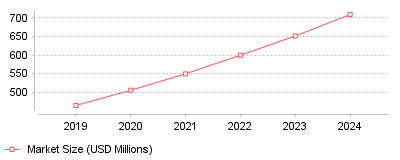
| Year | Market Size (USD Millions) |
|---|---|
| 2019 | 465.2 |
| 2020 | 506 |
| 2021 | 550 |
| 2022 | 600 |
| 2023 | 651.6 |
| 2024 | 709 |
This trend demonstrates a definitive pivot away from vendor-controlled sales narratives toward independent, peer-driven research within B2B buying groups. The data indicates that only a minuscule fraction—specifically 9%—of buyers now consider vendor websites to be reliable sources of information [source]. Simultaneously, customer advocacy software adoption is growing rapidly to bridge this critical trust deficit, with the market on track to surpass $1.6 billion by 2034 [source].
On a micro level, this means sales and marketing teams can no longer rely on traditional playbooks of gated content and cold outreach; they must fundamentally reorganize their operations around customer success and reference management. Individual sellers are increasingly being sidelined, with modern buyers choosing to independently navigate the majority of their purchasing journey before ever initiating formal contact. On a macro industry level, we are seeing the explosive maturation of the Customer Advocacy and Reference Management Software market, which is evolving from a niche sales enablement function into a strategic revenue operations necessity. Companies are recognizing that their most valuable marketing asset is not their branded collateral, but the authentic, verifiable voices of their successful customers, prompting massive capital reallocation into automated reference platforms.
This shift is incredibly important because failing to adapt to it is directly resulting in plummeting close rates and extended sales cycles across the B2B sector. Data shows that up to 86% of B2B deals currently stall during the buying process, largely due to friction, lack of trust, and an inability to build consensus within the purchasing group [source]. Furthermore, as buying committees expand to an average of 13 internal stakeholders [source], providing structured, easily accessible peer reviews and case studies via reference platforms is the only scalable way to de-risk decisions and drive pipeline velocity.
This profound market realignment appears to be primarily driven by a generational changing of the guard, with Millennials and Gen Z now accounting for 71% of all B2B buyers, up from 64% in just a few years prior [source]. These digital-native demographics grew up heavily reliant on consumer review ecosystems and inherently expect that same transparent, peer-reviewed experience in their professional software evaluations. Additionally, the sheer complexity of modern B2B tech stacks and the high organizational cost of failure have made executives highly risk-averse, forcing them to demand proven use cases over theoretical vendor promises. We can also reasonably speculate that the flood of AI-generated content and automated sales spam has severely degraded the credibility of outbound marketing, leaving authentic human advocacy as the last remaining bastion of B2B trust.
The era of the rep-led sales cycle is effectively over, replaced firmly by the era of the customer advocate. As B2B buyers continue to demand verifiable peer proof over biased vendor pitches, companies must invest heavily in Customer Advocacy and Reference Management platforms to remain competitive and prevent active deals from stalling. The prominent takeaway for revenue leaders is that building a systemic, software-driven approach to mobilizing your happiest customers is no longer a marketing luxury—it is a foundational requirement for closing enterprise deals today.
Win rates in commercial sales fell to 21% last year [1]. Buyers actively avoid sales representatives during early research. They prefer independent validation. Forrester found that 82% of business buyers trust recommendations from industry peers, while only 29% trust vendor salespeople [2]. This trust deficit forces companies to rethink how they present external proof. Corporate purchasing committees rely heavily on external verification before signing contracts. Millennials will constitute 70% of business buyers by 2025 [3]. This demographic defaults to digital channels and independent review sites over vendor presentations. Enterprise transactions show an even higher reliance on peer feedback. Data from TrustRadius shows that 71% of enterprise buyers speak directly with a product user before making a purchase [4]. Organizations failing to provide peer access lose deals to transparent competitors.
Software vendors are capturing this market demand. The sector for business customer advocacy software reached $4.2 billion and grows at an 18% compound annual rate [5]. Organizations purchase these tools to formalize positive client sentiment. Advocacy software often sits adjacent to customer support and success software, pulling deployment data into sales collateral. Support platforms register high satisfaction scores, which advocacy tools then convert into reference requests. The total addressable market expands to $12 billion when including associated services [5]. Companies prioritize these investments because customer success initiatives drive valuation multiples. Post-sale retention dictates market caps for subscription businesses. Referral revenue provides the cheapest acquisition channel, converting at rates two to five times higher than outbound marketing [5]. Sales leaders recognize that verified client voices shorten transaction cycles. They allocate budget toward software that automates evidence collection.
UserEvidence acquired Zealot in August 2025 [6]. This merger combined an evidence generator with a reference application. UserEvidence simultaneously closed a $7 million funding round to expand its product footprint [6]. Total funding for the company reached $21 million following this capital injection. Competitors face a tightening market that demands broader functionality. Point solutions struggle to maintain renewal rates when enterprise clients seek unified customer advocacy and reference management platforms. Marketing departments consolidate their vendor lists to reduce integration costs. Platform providers acquire specialized startups to fill feature gaps rapidly. Zealot brought active advocate tracking and reference matchmaking capabilities to UserEvidence. This acquisition pattern mirrors broader software trends where category leaders absorb niche competitors to build complete product suites.
Legacy vendors show signs of structural fatigue. Upland Software reported fourth-quarter 2024 total revenue of $68.0 million [7]. This figure represented a 6% decrease from the prior year. Subscription and support revenue specifically fell 6% to $64.3 million during that same period [7]. By the first quarter of 2026, Upland's revenue dropped to $48.7 million following strategic divestitures [8]. The company carried $227.7 million in term loan debt alongside $30.4 million in cash reserves [8]. Newer entrants use agile development to capture market share from debt-burdened incumbents. Trusted secured a £1 million investment to develop its advocacy application specifically for corporate accounts [9]. Financial pressure forces legacy providers to cut research budgets. Innovation slows within older platforms. Buyers migrate toward platforms offering predictive scoring and automated outreach. Consolidation continues as buyers demand measurable revenue influence from their technology investments.

Companies lack references because they lack infrastructure, not because they lack satisfied clients. Sales teams routinely barrage a small group of vocal advocates with reference requests. Unmanaged requests burn out advocates and jeopardize renewal negotiations. Clients decline future requests after answering too many inquiries. They request removal from reference lists entirely [10]. Manual reference searches consume two to three hours of labor per request [10]. Sales representatives message success managers for names. Success managers dig through account files to find candidates. Administrators coordinate schedules through lengthy email chains. Multiply that labor across dozens of quarterly deals, and the administrative cost becomes substantial. A full-time equivalent salary disappears into coordination overhead.
Deal momentum dies when sellers cannot supply peer contacts quickly. Peer conversations accelerate transaction velocity by 20% to 30% [10]. An unfulfilled request halts the purchasing cycle. Prospects expect relevant contacts within 48 hours. Buyers move to competing suppliers when vendors fail to meet this timeline. They review competing software when momentum stalls. Marketing leaders mitigate this risk by deploying software that automates reference recruitment workflows. These systems track interaction frequency and enforce cooling-off periods to protect relationships. They automatically flag clients who submit positive feedback scores. Administrators route requests based on account metrics rather than personal memory. Software guarantees that no single client receives consecutive outreach requests.
Privacy regulations govern personally identifiable information within reference databases. The General Data Protection Regulation complicates peer reference programs globally. An advocate's name, employer, and contact details constitute regulated data. Organizations face maximum fines of 20 million euros or 4% of global turnover for compliance breaches [11]. Spreadsheets cannot adequately track consent expirations or fulfill deletion requests. A global retailer faced severe exposure when managing 600 applications containing unprotected personal information [11]. They required extensive data mapping and process diagrams to identify information flows. Auditors demand strict documentation for processing activities. Companies lose deals during procurement if their reference database fails security evaluations. Internal compliance teams reject software without automated retention policies.
Regulators actively penalize data mismanagement. The Swedish Data Protection Authority fined Google $8 million for unlawful processing of protected information [12]. The agency finalized an audit concerning compliance with GDPR articles 5, 6, and 17 [12]. Regulators found fault with how the company processed information and handled deletion requests. This enforcement action illustrates the danger of retaining client details without strict audit trails. Reference managers limit their liability by adopting systems that integrate closely with CRM tools. Synchronized records ensure that an advocate's withdrawal of consent immediately propagates across all marketing databases. Integration prevents sales representatives from contacting clients who opted out of reference programs. Centralized control mechanisms provide compliance officers with immediate visibility into data processing operations.
Marketing budgets average 7.7% of company revenue [13]. Chief financial officers heavily scrutinize this allocation. Paid media consumes roughly 30.6% of that budget [13]. Content marketing and search engine optimization receive 10% to 15% [13]. Paid channels face declining returns, forcing teams to justify their software investments with strict payback metrics. Customer advocacy programs must demonstrate direct revenue influence rather than relying on vanity engagement scores. Administrators calculate customer acquisition costs for referral leads to prove efficiency. Marketing technology absorbs roughly 26% of overall departmental budgets [13]. Underutilized software faces elimination during annual review cycles. Platform vendors respond by building direct attribution models into their dashboards. These models tie specific reference interactions to closed won revenue.
Formal advocacy systems generate measurable financial returns. A Forrester Total Economic Impact study examined PostBeyond and calculated a 202% return on investment [14]. The studied organization achieved profitability within six months. They realized $454,000 in net present value over three years [14]. Specific benefits included $2 million in revenue from increased web reach and 687 hours saved annually through streamlined content management [14]. Practitioners capture these returns by deploying platforms designed for case study and story capture. Documenting specific business outcomes creates a library of reusable assets that offset advertising campaigns. Written studies provide data depth for formal evaluations. Video testimonials build emotional connections during sales presentations. Sales representatives insert recorded client quotes into email sequences to boost response rates. Software quantifies the exact pipeline generated from these deployed assets.
Business purchasing suffers from severe friction. Approximately 86% of commercial purchases stall before completion [15]. Forrester found that 81% of buyers express dissatisfaction with their chosen provider [15]. This frustration stems from disjointed evaluation processes. Internal buying committees now average 13 members [15]. Each stakeholder requires distinct proof points to authorize a transaction. A technical lead demands security references, while a finance director expects return calculations. Gartner research indicates that the average buying decision involves 6 to 10 people, each armed with more than four pieces of independently gathered information [3]. Committee members research independently before convening to vote. Unresolved concerns from a single stakeholder routinely kill software deployments.
Suppliers must orchestrate consensus across these disparate roles. They achieve this by delivering peer validation exactly when committees raise objections. Vendors serving technology markets turn to advocacy products built specifically for B2B SaaS firms. These tools match prospect profiles against client databases to surface highly relevant testimonials. Buyers complete 70% of their research before contacting a seller [16]. Furthermore, 95% of buyers establish their vendor shortlist before initiating sales contact [17]. The pre-contact favorite wins the deal 80% of the time [17]. Organizations that publicly surface verified client experiences secure shortlist positions early. Companies that hide their references behind sales gates forfeit revenue to transparent competitors. Future sales motions require asynchronous proof delivery. Platforms that serve the right reference asset at the right time will dominate market share.
| Year | Market Size (USD Millions) |
|---|---|
| 2019 | 465.2 |
| 2020 | 506 |
| 2021 | 550 |
| 2022 | 600 |
| 2023 | 651.6 |
| 2024 | 709 |
This trend demonstrates a definitive pivot away from vendor-controlled sales narratives toward independent, peer-driven research within B2B buying groups. The data indicates that only a minuscule fraction—specifically 9%—of buyers now consider vendor websites to be reliable sources of information [source]. Simultaneously, customer advocacy software adoption is growing rapidly to bridge this critical trust deficit, with the market on track to surpass $1.6 billion by 2034 [source].
On a micro level, this means sales and marketing teams can no longer rely on traditional playbooks of gated content and cold outreach; they must fundamentally reorganize their operations around customer success and reference management. Individual sellers are increasingly being sidelined, with modern buyers choosing to independently navigate the majority of their purchasing journey before ever initiating formal contact. On a macro industry level, we are seeing the explosive maturation of the Customer Advocacy and Reference Management Software market, which is evolving from a niche sales enablement function into a strategic revenue operations necessity. Companies are recognizing that their most valuable marketing asset is not their branded collateral, but the authentic, verifiable voices of their successful customers, prompting massive capital reallocation into automated reference platforms.
This shift is incredibly important because failing to adapt to it is directly resulting in plummeting close rates and extended sales cycles across the B2B sector. Data shows that up to 86% of B2B deals currently stall during the buying process, largely due to friction, lack of trust, and an inability to build consensus within the purchasing group [source]. Furthermore, as buying committees expand to an average of 13 internal stakeholders [source], providing structured, easily accessible peer reviews and case studies via reference platforms is the only scalable way to de-risk decisions and drive pipeline velocity.
This profound market realignment appears to be primarily driven by a generational changing of the guard, with Millennials and Gen Z now accounting for 71% of all B2B buyers, up from 64% in just a few years prior [source]. These digital-native demographics grew up heavily reliant on consumer review ecosystems and inherently expect that same transparent, peer-reviewed experience in their professional software evaluations. Additionally, the sheer complexity of modern B2B tech stacks and the high organizational cost of failure have made executives highly risk-averse, forcing them to demand proven use cases over theoretical vendor promises. We can also reasonably speculate that the flood of AI-generated content and automated sales spam has severely degraded the credibility of outbound marketing, leaving authentic human advocacy as the last remaining bastion of B2B trust.
The era of the rep-led sales cycle is effectively over, replaced firmly by the era of the customer advocate. As B2B buyers continue to demand verifiable peer proof over biased vendor pitches, companies must invest heavily in Customer Advocacy and Reference Management platforms to remain competitive and prevent active deals from stalling. The prominent takeaway for revenue leaders is that building a systemic, software-driven approach to mobilizing your happiest customers is no longer a marketing luxury—it is a foundational requirement for closing enterprise deals today.