1. Home
  2. Customer Support & Success
  3. Customer Advocacy & Reference Management Platforms

Category · Customer Support & Success Software

Customer Advocacy & Reference Management Platforms

Customer Advocacy & Reference Management Platforms are essential tools for organizations aiming to enhance customer engagement, retention, and satisfaction. This category is specifically designed for business and professional buyers, such as customer success managers and marketing teams, who seek to leverage customer feedback and testimonials effectively.

4 rankings36 products scored6 criteria eachUpdated Sep 4, 2026
01

Top picks across Customer Advocacy & Reference Management Platforms

The highest scorer from each vendor across all 4 rankings. Six little boxes show each one against its ranking average, and the full review sits under each card.

1

ReferenceEdge

point-of-reference.com #1 of 9 in Customer Advocacy Platforms Integrated with CRM Systems

ReferenceEdge lives entirely inside Salesforce, publishes exact pricing

Best forB2B enterprises using Salesforce needing native reference management

From $4 per user/mo Salesforce integrationpublished pricingenterprise
Top of its ranking

Salesforce-native customer advocacy platform automating reference recruitment and content sharing.

Standout factReferenceEdge holds a 4.96 out of 5 rating on Salesforce AppExchange from 79 reviews. appexchange.salesforce.com
Biggest catchImplementation can be time-consuming, and some workflows still need manual data entry. g2.com
4.96/5AppExchange ratingappexchange.salesforce.com
$4/user/moLarge Enterprise priceappexchange.salesforce.com

What reviewers say

Salesforce AppExchange
4.96/5 · 79

Source: appexchange.salesforce.com

Plans

Medium Business$9/user/mo
Small Business$16/user/mo

Source: appexchange.salesforce.com

Upside

  • 100% Salesforce-native architecture
  • 4.96 of 5 on AppExchange
  • Public per-user pricing

Catch

  • Implementation can be time-consuming
  • Manual entry for some tasks
  • Requires Salesforce licenses
Pick it ifB2B enterprises using Salesforce needing native reference management
Skip it ifCompanies that do not use Salesforce as their primary CRM
PricingFrom $4 a user a month for Large Enterprise plans

Editor's takeReferenceEdge scores 9.6 out of 10 for Salesforce-native architecture, the top mark among advocacy platforms rated here. It holds a 4.96 out of 5 rating on Salesforce AppExchange from 79 reviews. Pricing is public and starts at $4 per user a month for Large Enterprise plans.

Does ReferenceEdge require a separate login outside Salesforce?

No. It installs directly inside Salesforce, so all data and workflows stay within your existing CRM instance.

How much does ReferenceEdge cost?

Published pricing runs $4 per user a month for Large Enterprise, up to $16 for Small Business plans.

The evidence: 6 criteria, 3 penalties
9.0
Product Capability & DepthLooked for: We evaluate the breadth of features for recruiting, managing, and utilizing customer references and advocacy content.ReferenceEdge offers a comprehensive suite including 'Reference Prospector' for recruitment campaigns, 'Reference Lead Finder' for automated discovery from closed deals, and 'Profile Update Minder' for data freshness. It includes 'Calendar Coordinator' for scheduling and utilizes Salesforce Agentforce AI for search and automation.point-of-reference.compoint-of-reference.comreferentialinc.com
9.3
Market Credibility & Trust SignalsLooked for: We assess user ratings, platform certification, and market presence to gauge reliability and trust.The product holds a stellar 4.96/5 rating on the Salesforce AppExchange with 79 reviews and a 4.5/5 on G2. It is marketed as the 'original Salesforce-native customer advocacy platform' and has been in the market since 2003 (Point of Reference).appexchange.salesforce.comappexchange.salesforce.com
8.7
Usability & Customer ExperienceLooked for: We examine user feedback regarding ease of use, interface design, and the quality of support.Users generally find the native Salesforce UI familiar and 'straightforward'. However, some reviews note that implementation can be time-consuming and certain workflows require manual effort. Support is highly praised, with specific mentions of helpful CSMs.point-of-reference.comg2.comg2.com
9.5
Value, Pricing & TransparencyLooked for: We look for public pricing availability, clear tier structures, and competitive value propositions.ReferenceEdge offers exceptional transparency with public pricing on AppExchange: $4/user/month for Large Enterprise, $9 for Medium, and $16 for Small Business. This is significantly more transparent and affordable than many enterprise SaaS competitors.point-of-reference.comappexchange.salesforce.com
9.6
Salesforce Native ArchitectureLooked for: We evaluate how deeply the product integrates with the Salesforce ecosystem, given its positioning.ReferenceEdge is 100% native to Salesforce, meaning it lives entirely within the CRM environment. It integrates with Slack for notifications and uses standard Salesforce reports and dashboards, eliminating data sync issues common with external platforms.point-of-reference.comappexchange.salesforce.com
9.4
Security & Data SovereigntyLooked for: We assess data residency, compliance certifications, and security protocols.Because it is native, ReferenceEdge stores no data outside of the customer's Salesforce instance. There is no third-party cloud to secure; it inherits Salesforce's security infrastructure. It undergoes annual security reviews mandated by Salesforce.point-of-reference.compoint-of-reference.com

Score adjustments−0.16 points in total

−0.05Users report that the implementation process can be time-consuming and complex.g2.com · severity 50/100
−0.06Some users find manual aspects of the system frustrating and desire greater automation for certain workflows.g2.com · severity 45/100
−0.05Reporting logic has limitations, such as requests not counting toward metrics if they remain 'unspecified' without an associated account.g2.com · severity 35/100
2

SAP

sap.com · SAP Customer Experience and CRM #2 of 9 in Customer Advocacy Platforms Integrated with CRM Systems

11-year Gartner leader, dated interface frustrates reps

Best forLarge enterprises already deeply integrated into the SAP ecosystem

Quote only ISO 27001enterpriseAI features
#2 in its ranking

Enterprise CX suite unifying commerce, sales, and service with native SAP S/4HANA integration and Joule AI.

Standout factNamed a Gartner Digital Commerce Leader for 11 consecutive years news.sap.com
Biggest catchPricing involves up to 50 different engine metrics that can change annually. youtube.com
11 yearsGartner Leader streaknews.sap.com
2,500+Prebuilt connectionsalokai.com
~50Pricing metricsyoutube.com

Standout number

11 yearsstraight as Gartner Digital Commerce Leader

Source: news.sap.com

In their words

“Compared to modern CRMs like HubSpot or Salesforce, the UI of SAP Sales Cloud feels a bit clunky and dated.”

g2.com

Upside

  • Native SAP S/4HANA ERP integration
  • Joule AI copilot for automation
  • 2,500+ prebuilt connections

Catch

  • Steep learning curve for new users
  • Interface feels dated vs rivals
  • Complex, metric-based pricing
Pick it ifLarge enterprises already deeply integrated into the SAP ecosystem
Skip it ifSMBs or startups needing a lightweight, low-cost CRM
PricingContact for pricing, complex metric-based licensing

Editor's takeSAP Customer Experience ranks first among 9 customer advocacy platforms integrated with CRM with a 9.1 overall score. Its 11-year run as a Gartner Digital Commerce Leader and 2,500-plus prebuilt connections stand out. Reps describe the interface as clunky next to HubSpot or Salesforce, and pricing spans up to 50 separate metrics.

How is SAP CX priced?

Pricing is quote-based and can involve up to 50 different engine metrics that change quarterly or annually, according to a third-party pricing breakdown.

Is SAP CX easy to learn?

Not for beginners. G2 reviewers describe it as powerful but not user-friendly for new sales reps, who often find it overwhelming at first.

The evidence: 6 criteria, 3 penalties
9.5
Product Capability & DepthLooked for: We evaluate the breadth of features across sales, service, and commerce, specifically looking for AI automation and enterprise-grade functionality.The suite offers comprehensive modules for Commerce, Sales, Service, and Marketing, underpinned by the Joule AI copilot which automates tasks and generates insights across the portfolio.alokai.comsap.comnews.sap.com
9.9
Market Credibility & Trust SignalsLooked for: We look for consistent recognition from major industry analysts and adoption by global enterprise brands.SAP is a dominant market leader, recognized as a Leader in the Gartner Magic Quadrant for Digital Commerce for 11 consecutive years and trusted by global brands like Carhartt and Nestle.news.sap.comnews.sap.comemarsys.com
8.3
Usability & Customer ExperienceLooked for: We assess the ease of use, learning curve, and interface design for daily users.Users frequently report a steep learning curve and a complex, sometimes 'clunky' interface that requires significant training compared to more modern, lightweight CRMs.g2.comg2.comtrustradius.com
8.7
Value, Pricing & TransparencyLooked for: We evaluate the pricing structure, transparency, and return on investment for the target enterprise market.While the solution offers high ROI for complex enterprises through consolidation, the pricing is described as 'expensive' and 'complex', often requiring opaque engine-based calculations.trustradius.comyoutube.comtrustradius.com
9.6
Integrations & Ecosystem StrengthLooked for: We examine the depth of connectivity with ERP systems and the availability of third-party connectors.The platform offers unmatched native integration with SAP S/4HANA and a vast library of over 2,500 prebuilt connections, making it the premier choice for SAP-centric environments.sapi-tech.comalokai.commedium.com
9.7
Security, Compliance & Data ProtectionLooked for: We verify the presence of enterprise-grade security certifications and compliance with global data regulations.SAP maintains an extensive portfolio of certifications including ISO 27001, SOC 1/2, and GDPR compliance tools, ensuring robust protection for sensitive enterprise data.sap.comuserapps.support.sap.comonapsis.com

Score adjustments−0.17 points in total

−0.08Users consistently report a steep learning curve and a user interface that feels 'clunky' and 'dated' compared to modern SaaS competitors, requiring extensive training for new staff.g2.com · severity 70/100
−0.04The product is frequently cited as expensive with a complex licensing model involving numerous metrics, making it financially challenging for small to mid-sized businesses.trustradius.com · severity 60/100
−0.05The mobile application is reported to have limited functionality and a poor user experience compared to the desktop version.trustradius.com · severity 45/100
3

Advocacy Maven

advocacymaven.com · Advocacy Maven Customer Programs #1 of 10 in Customer Advocacy Platforms with Reference Recruitment Workflows

Advocacy Maven rates 4.9 on G2, isn't self-serve software

Best forTeams needing expert strategy and managed services for customer advocacy programs.

From $1,500 per month managed serviceInfluitive experttransparent pricing
Top of its ranking

Managed customer advocacy agency running the CARE, SPEAK, SCALE framework on Influitive or Base.

Standout factHolds a 4.9 out of 5 rating on G2 g2.com
Biggest catchReliance on a small core team may limit capacity for large concurrent projects. g2.com
4.9/5G2 ratingg2.com
$1,500/moStrategy starting priceg2.com

What reviewers say

G2
4.9/5 · Not published

Source: g2.com

Starting price

$1,500/moCustomer Programs Strategy starting rate

Upside

  • Proprietary CARE, SPEAK, SCALE framework
  • Deep expertise in Influitive and Base
  • Published pricing starting at $1,500/month

Catch

  • Small core team limits capacity
  • Hourly rates can add up
  • Not a standalone software platform
Pick it ifTeams needing expert strategy and managed services for customer advocacy programs.
Skip it ifBusinesses wanting a standalone software tool to buy and self-manage.
PricingStrategy from $1,500/month, platform work at $190/hour

Editor's takeAdvocacy Maven sells the strategy and execution layer on top of platforms like Influitive and Base, not software itself, guided by its CARE, SPEAK, SCALE framework. Clients rate it 4.9 out of 5 on G2 and describe the team as a true partner rather than a vendor. That high-touch model runs on a small core team, and hourly platform work at $190 an hour can add up on larger projects.

Does Advocacy Maven sell software?

No. It is a managed service that provides strategy, implementation and content for advocacy platforms like Influitive and Base, not a standalone tool.

How is Advocacy Maven priced?

Customer Programs Strategy starts at $1,500 a month, with platform configuration and optimization billed at $190 an hour, per its published rates.

The evidence: 6 criteria, 3 penalties
8.9
Product Capability & DepthLooked for: We look for comprehensive services or features that cover the entire advocacy lifecycle, from strategy and recruitment to content creation and measurement.Advocacy Maven offers a complete service suite including strategy design, platform implementation (Influitive, Base), and content production, anchored by their proprietary CARE ? SPEAK ? SCALE™ framework.advocacymaven.comadvocacymaven.comadvocacymaven.com
9.5
Market Credibility & Trust SignalsLooked for: We look for high ratings on independent review platforms, verified client testimonials, and a strong reputation within the industry.The agency holds a near-perfect 4.9/5 star rating on G2 with verified reviews from enterprise clients, indicating exceptional market trust and client satisfaction.g2.comadvocacymaven.com
9.7
Usability & Customer ExperienceLooked for: We look for ease of engagement, responsiveness of the team, and a frictionless experience for clients managing complex programs.Clients consistently describe the experience as 'exceptionally user-friendly' and praise the team's responsiveness, professionalism, and ability to act as a true partner.advocacymaven.comg2.comg2.com
8.8
Value, Pricing & TransparencyLooked for: We look for transparent public pricing, flexible engagement models, and clear ROI justification for the investment.Pricing is unusually transparent for an agency, with published starting rates for strategy and hourly rates for optimization, allowing for clear budget forecasting.advocacymaven.comg2.comadvocacymaven.com
9.2
Strategic Framework & MethodologyLooked for: We look for a structured, proprietary approach that guides advocacy strategy beyond simple ad-hoc tactics.Advocacy Maven employs the 'CARE ? SPEAK ? SCALE' framework, providing a structured maturity model for moving customers from onboarding to active advocacy.appexchange.salesforce.comadvocacymaven.com
9.0
Platform Expertise & OptimizationLooked for: We look for deep technical proficiency in the specific software tools (like Influitive or Base) that power the advocacy program.The agency demonstrates deep technical expertise in configuring and migrating major advocacy platforms, offering specialized support for tools like Influitive and Base.advocacymaven.comadvocacymaven.comadvocacymaven.com

Score adjustments−0.17 points in total

−0.07Reliance on a small core team may limit scalability for large concurrent projects, as noted by some reviewers.g2.com · severity 50/100
−0.06Some clients have expressed a desire for more comparative benchmarking data to see how their program stacks up against others.g2.com · severity 45/100
−0.04Time zone differences can lead to early meeting times for clients in certain regions (e.g., US West Coast).g2.com · severity 40/100
4

Userpilot

userpilot.com · Userpilot Customer Advocacy #1 of 9 in Customer Advocacy Platforms for B2B SaaS Companies

Userpilot starts at $299/mo, and mobile costs extra

Best forProduct teams using in-app NPS to identify promoters

From $299 per month SOC 2HIPAAISO 27001
Top of its ranking

No-code NPS and in-app engagement platform that triggers advocacy flows for users who score as promoters.

Standout factUserpilot holds SOC 2 Type II, HIPAA, and ISO 27001 certification together, a rare combination. userpilot.com
Biggest catchThe Starter plan costs $299/month, and mobile engagement is a separate paid add-on. userpilot.com
$299/monthStarter plan priceuserpilot.com
14 daysFree trial lengthuserpilot.com

Starting price

$299/mobilled annually; mobile engagement sold separately

Compliance

✓ SOC 2 Type II✓ HIPAA✓ ISO 27001✓ GDPR

Source: userpilot.com

Upside

  • SOC 2, HIPAA, and ISO 27001 certified
  • If-else logic in NPS surveys
  • Highly rated customer support

Catch

  • Starter plan starts at $299/mo
  • Mobile engagement is a paid add-on
  • Some users find the UI confusing
Pick it ifProduct teams using in-app NPS to identify promoters
Skip it ifEarly-stage startups that find the $299/mo entry price steep
PricingStarter plan from $299/month, billed annually. Mobile engagement costs extra.

Editor's takeUserpilot ties NPS surveys directly to automated action, using if-else logic to route promoters into advocacy flows like review requests. It holds the rare trifecta of SOC 2 Type II, HIPAA, and ISO 27001 certification. Pricing starts at $299 a month, higher than many rivals, and mobile engagement is sold as a separate add-on rather than included.

How much does Userpilot cost?

The entry-level Starter plan costs $299 a month, billed annually. Mobile engagement features cost extra as an add-on, not included in the base price.

Is Userpilot secure enough for healthcare companies?

Yes. It holds SOC 2 Type II, HIPAA, and ISO 27001 certification together, along with GDPR compliance, according to Userpilot's own security and pricing pages.

The evidence: 6 criteria, 3 penalties
9.0
Product Capability & DepthLooked for: Features specifically designed to capture customer sentiment, automate feedback loops, and drive advocacy through segmentation.Userpilot offers robust NPS and microsurvey tools with advanced logic (if-else), allowing teams to tag responses and trigger automated flows based on scores (e.g., asking promoters for reviews).userpilot.comuserpilot.comdocs.userpilot.com
9.3
Market Credibility & Trust SignalsLooked for: Evidence of industry standard security certifications, reliable uptime, and positive user sentiment from verified reviews.Userpilot holds top-tier security certifications including SOC 2 Type II, HIPAA, and ISO 27001, and maintains a strong reputation on review platforms like G2.userpilot.comuserpilot.comuserpilot.com
8.8
Usability & Customer ExperienceLooked for: Ease of implementation, quality of the user interface, and responsiveness of customer support.The platform offers a no-code builder that is generally praised for ease of use, though some users report UI confusion and lag; customer support is frequently highlighted as excellent.userpilot.comg2.comtrustradius.com
8.2
Value, Pricing & TransparencyLooked for: Clear pricing structures, accessible entry points for smaller teams, and transparent feature inclusion.Pricing is transparent for the entry tier but starts high at $299/mo, and key features like mobile support are gated as add-ons or higher tiers.userpilot.comuserpilot.comuserpilot.com
9.1
Analytics & User SegmentationLooked for: Granular data analysis capabilities that allow for precise targeting based on user behavior and feedback.The platform enables deep segmentation by NPS score, survey responses, and user attributes, allowing for highly targeted advocacy campaigns.userpilot.comuserpilot.comdocs.userpilot.com
9.6
Security, Compliance & Data ProtectionLooked for: Comprehensive security measures, data encryption, and compliance with major regulations.Userpilot demonstrates exceptional security standards with SOC 2 Type II, HIPAA, ISO 27001, and GDPR compliance, along with end-to-end encryption.userpilot.comuserpilot.comuserpilot.com

Score adjustments−0.11 points in total

−0.04The starting price of $299/month is significantly higher than some competitors, creating a barrier to entry for early-stage startups.userguiding.com · severity 60/100
−0.04Mobile engagement features are gated as a paid add-on and are not available in the standard Starter plan, limiting access for entry-level users.userpilot.com · severity 50/100
−0.03Some users report the user interface can be confusing and experience lag, impacting the administrative experience.trustradius.com · severity 30/100
5

Zealot

joinzealot.com · Zealot Customer Advocacy Platform #2 of 9 in Customer Advocacy Platforms for B2B SaaS Companies

Zealot's CEO customer gave its UI a perfect 10/10

Best forB2B SaaS teams wanting to automate customer reference management.

From $40 per month SOC 2AI-drivenacquired by UserEvidence
#2 in its ranking

An AI-driven customer advocacy platform that automates reference matching and content creation.

Standout factEntry-level pricing starts at $40 a month under a beta launch special. zealotapp.com
Biggest catchG2 reports too few reviews yet to provide reliable buying insights. g2.com
$40/moEntry pricezealotapp.com
200+Integrationsjoinzealot.com

In their words

“our CEO gave the UI/UX 10 outta 10 (which I have literally NEVER seen him do”

joinzealot.com

Starting price

$40/mobeta launch special, up to 200 feedback requests

Upside

  • AI Autopilot automates reference matching
  • Automated rewards system saves manual work
  • SOC 2 enterprise-grade security

Catch

  • Low public review volume on G2
  • Self-serve features still in beta
  • DIY integration on lower tiers
Pick it ifB2B SaaS teams wanting to automate customer reference management.
Skip it ifB2C brands or companies without a structured CRM process.
PricingFrom $40/mo (beta special), custom RFP for enterprise

Editor's takeZealot automates two manual advocacy tasks, matching references to requests and turning call quotes into approved marketing content. One customer's CEO reportedly rated the UI a perfect 10 out of 10. The platform is young though, with a 2025 acquisition by UserEvidence and still-thin review volume on G2.

What does Zealot's Reference Autopilot do?

It automatically matches the right customer to a reference request and handles the introduction directly in Slack, email, or the CRM, without manual searching.

How much does Zealot cost?

A beta launch special runs $40 a month for smaller teams with up to 200 feedback requests. Larger teams need a custom quote via RFP.

The evidence: 5 criteria, 2 penalties
8.9
Product Capability & DepthLooked for: We evaluate the platform's ability to automate advocacy workflows, segment users intelligently, and generate usable content from customer interactions.Zealot functions as a 'Command Center' for advocacy, featuring an 'Instant Content Engine' that uses AI to pull quotes from calls and an 'Autopilot for References' that automates matching.joinzealot.comjoinzealot.comjoinzealot.com
9.2
Market Credibility & Trust SignalsLooked for: We look for acquisition history, backing by reputable firms, and adoption by recognizable enterprise brands to validate market standing.Zealot was acquired by UserEvidence in 2025, backed by Ripple Ventures, and is used by companies like ClickUp, validating its enterprise readiness.businesswire.comrippleventures.comjoinzealot.com
9.4
Usability & Customer ExperienceLooked for: We assess user interface design, ease of setup, and qualitative feedback from users regarding their daily experience with the tool.Users report exceptional UI/UX, with specific praise for the 'automatic rewards system' saving hours of manual work and a '10/10' rating from a customer CEO.joinzealot.comjoinzealot.comg2.com
8.8
Value, Pricing & TransparencyLooked for: We check for publicly available pricing, flexible tier options, and clear deliverables for the cost.Zealot offers a highly transparent 'BETA launch special' at $40/month for smaller teams, alongside custom enterprise RFP options.joinzealot.comzealotapp.comzealotapp.com
8.8
Security, Compliance & Data ProtectionLooked for: We evaluate the breadth and depth of native integrations with key tools like CRM, communication platforms, and marketing automation systems.Zealot integrates with over 200 tools including Salesforce, Slack, Gong, and Zapier, facilitating a unified workflow.joinzealot.comjoinzealot.comjoinzealot.com

Score adjustments−0.11 points in total

−0.05G2 reports insufficient review volume to provide buying insights, indicating the platform is still in an early market stage compared to legacy competitors.g2.com · severity 50/100
−0.06Self-serve subscription plans are currently labeled as 'Beta' and rely on 'DIY CRM integration,' suggesting a lack of native, plug-and-play depth for entry-level users.zealotapp.com · severity 45/100
6

Deeto

deeto.com · Deeto AI Customer Advocacy #3 of 9 in Customer Advocacy Platforms Integrated with CRM Systems

15-25% higher win rates, but pricing stays hidden

Best forB2B sales teams wanting to automate and scale customer reference matching.

Quote only SOC 2HIPAAAI-powered
#3 in its ranking

AI-native customer advocacy platform automating reference matching, content generation, and revenue attribution for B2B sales.

Standout factDeals with Deeto active see 15% to 25% higher win rates, per Deeto's own data. deeto.com
Biggest catchPricing is not public. All four plan tiers require contacting sales for a quote. g2.com
15-25%Win rate lift when activedeeto.com
$17MTotal funding raisedbusinesswire.com
4 (seat-based)Pricing tiersg2.com

Standout number

15-25%higher win rates when Deeto is active

Source: deeto.com

Compliance

✓ SOC 2 Type II✓ ISO 27001✓ HIPAA? GDPR

Source: deeto.com

Upside

  • AI-native content generation and matching
  • Deep Salesforce and HubSpot integrations
  • SOC 2, ISO 27001, and HIPAA compliant

Catch

  • Interface changes frequently without notice
  • Pricing not publicly transparent
  • Smaller user community than legacy tools
Pick it ifB2B sales teams wanting to automate and scale customer reference matching.
Skip it ifB2C brands focused on mass influencer or affiliate marketing.
PricingContact for pricing, seat-based across four tiers

Editor's takeDeeto reports 15% to 25% higher win rates on deals where it is active, a concrete ROI figure most advocacy tools do not publish. It has raised $17 million, including a $12.5 million Series A, and counts Atlassian and Dropbox as customers. Pricing sits behind a sales quote across all four tiers, and G2 reviewers note the interface changes without warning.

What ROI does Deeto claim?

Deeto reports 15% to 25% higher win rates on deals where its advocacy platform is active, according to its own blog post about its Series A funding round. This is one of the more specific ROI figures published in the customer advocacy category.

How much does Deeto cost?

Deeto does not publish pricing. It offers four seat-based tiers, Starter, Starter+, Growth, and Enterprise, and all require contacting sales for a quote, according to G2's pricing page for the product.

The evidence: 6 criteria, 2 penalties
9.1
Product Capability & DepthLooked for: We evaluate the platform's ability to automate advocacy workflows, generate content via AI, and manage references at scale.Deeto offers an AI-native platform that unifies customer signals, stories, and references, featuring "Smart Matching" to connect prospects with advocates and automated content generation for case studies and videos.deeto.comdeeto.comdeeto.com
8.8
Market Credibility & Trust SignalsLooked for: We assess the company's funding stability, customer roster, and reputation within the B2B SaaS market.Deeto has raised $17M in funding and serves major enterprise clients like Atlassian and Dropbox, though its public review count is lower than established legacy competitors.businesswire.combusinesswire.com
8.7
Usability & Customer ExperienceLooked for: We analyze user feedback regarding the interface design, ease of implementation, and ongoing support quality.Users consistently praise the modern, sleek interface and ease of use, though some report that frequent unannounced interface updates can disrupt workflows.deeto.comg2.comg2.com
8.5
Value, Pricing & TransparencyLooked for: We examine the pricing model, transparency of costs, and the reported return on investment for customers.Deeto uses a seat-based pricing model with four tiers but does not publicly list costs; however, it demonstrates clear ROI with reported win rate increases of 15-25%.deeto.comg2.comdeeto.com
9.0
Integrations & Ecosystem StrengthLooked for: We evaluate the depth and breadth of integrations with key GTM tools like CRMs, sales engagement platforms, and review sites.The platform integrates deeply with the core GTM stack (Salesforce, HubSpot, Slack) and features a unique partnership with G2 to activate review content.skywork.aipartnerhub.g2.com
9.5
Security, Compliance & Data ProtectionLooked for: We verify the presence of critical security certifications and data protection standards required for enterprise software.Deeto maintains a robust security posture with SOC 2 Type II, ISO 27001, and HIPAA compliance, along with AES-256 encryption for data at rest.deeto.comdeeto.com

Score adjustments−0.08 points in total

−0.05Users have reported that the interface changes frequently without prior announcement, which can negatively impact the user experience and design consistency.g2.com · severity 45/100
−0.03Pricing information is not publicly transparent; all plans require contacting the sales team for a quote, which obscures the true cost of ownership.g2.com · severity 40/100
7

Forescout

forescout.com · Forescout Customer Advocacy Program #1 of 8 in Customer Advocacy Platforms with Case Study and Story Capture

Forescout's advocacy program offers $3,600 in free training

Best forExisting Forescout customers wanting career visibility and networking

Free plan free programenterprisecommunity
Top of its ranking

A customer advocacy program turning Forescout cybersecurity customers into paid speakers and certified experts.

Standout factForescout's Product Champion program has offered an FSCA Certification Course valued at $3,600. westconcomstor.com
Biggest catchTechnical support (TAC) response times are described as slow or unresponsive by multiple reviewers. g2.com
$3,600Certification course valuewestconcomstor.com
7 of top 10Fortune 500 banks servedforescout.com

In their words

“Being a Forescout Advocate can help you strengthen your professional network, increase your visibility, even get a promotion.”

forescout.com

Starting price

$0Free for existing Forescout customers to join

Upside

  • Explicit focus on advocate career growth
  • Conference speaking and media opportunities
  • Vendor handles content production

Catch

  • Core product implementation is complex
  • Support response times vary
  • Monetary rewards limited to partners
Pick it ifExisting Forescout customers wanting career visibility and networking
Skip it ifCompanies looking to buy a standalone advocacy management tool
PricingFree to join for existing Forescout customers

Editor's takeForescout frames its advocacy program as a career move, not just a loyalty perk, offering conference speaking slots, media interviews and a certification course valued at $3,600. The company backs this with real credibility, serving 7 of the top 10 US Fortune 500 banks and holding Gartner Peer Insights Customers' Choice recognition. The catch is that this program is only open to existing Forescout customers, and the underlying cybersecurity platform draws complaints about slow technical support and complex implementation.

Who can join Forescout's Customer Advocacy Program?

It is open to existing Forescout cybersecurity customers who want to network with peers, gain visibility, and access training and speaking opportunities.

Does the advocacy program pay cash rewards?

Direct monetary rewards are limited mainly to partners. Most advocates are compensated through non-monetary value like certification training, speaking slots and media exposure.

The evidence: 6 criteria, 3 penalties
9.0
Product Capability & DepthLooked for: We look for the variety of engagement channels available to advocates, such as case studies, speaking opportunities, and beta access.Forescout offers a comprehensive suite of advocacy options including written case studies, video testimonials, media/analyst interviews, conference speaking, and webcast presentations.forescout.comforescout.comforescout.com
9.5
Market Credibility & Trust SignalsLooked for: We look for third-party validation, high-profile customer participation, and industry awards that establish the program's prestige.The program is bolstered by Forescout's recognition as a Gartner Peer Insights Customers' Choice and participation from Fortune 500 clients in banking and energy.securitymagazine.comforescout.comforescout.com
8.8
Usability & Customer ExperienceLooked for: We look for ease of participation, flexibility in commitment levels, and the quality of the user interface for community interaction.The program emphasizes flexibility, allowing advocates to choose activities that suit them, supported by a 'user driven' online community for peer interaction.forescout.comforescout.comforescoutcommunity.com
8.9
Value, Pricing & TransparencyLooked for: We look for clear benefits to the advocate, such as free training, swag, or monetary incentives, relative to the effort required.Advocates receive significant non-monetary value including career advancement and visibility; the 'Champion' track has included training valued at over $3,000.forescout.comwestconcomstor.comforescout.com
9.3
Professional Development & Thought LeadershipLooked for: We look for opportunities that directly enhance the advocate's career, such as speaking engagements, publishing, and personal branding.Forescout explicitly markets the program as a career accelerator, offering opportunities to speak at industry tradeshows and be featured in business media.forescout.comforescout.com
8.9
Community Ecosystem & Peer CollaborationLooked for: We look for a vibrant community where advocates can network, share technical solutions, and influence product direction.The ecosystem includes a dedicated user community for technical exchange and direct channels to provide 'real-world insights' that shape product development.securitymagazine.comforescoutcommunity.comforescout.com

Score adjustments−0.19 points in total

−0.07Multiple reviews cite dissatisfaction with Technical Assistance Center (TAC) support, describing it as slow or unresponsive.g2.com · severity 65/100
−0.06Users report that the core product implementation is complex and time-consuming, which can delay the 'success' required to become an advocate.g2.com · severity 55/100
−0.06Some users note that documentation for third-party integrations and APIs is difficult to use or lacking.g2.com · severity 45/100
8

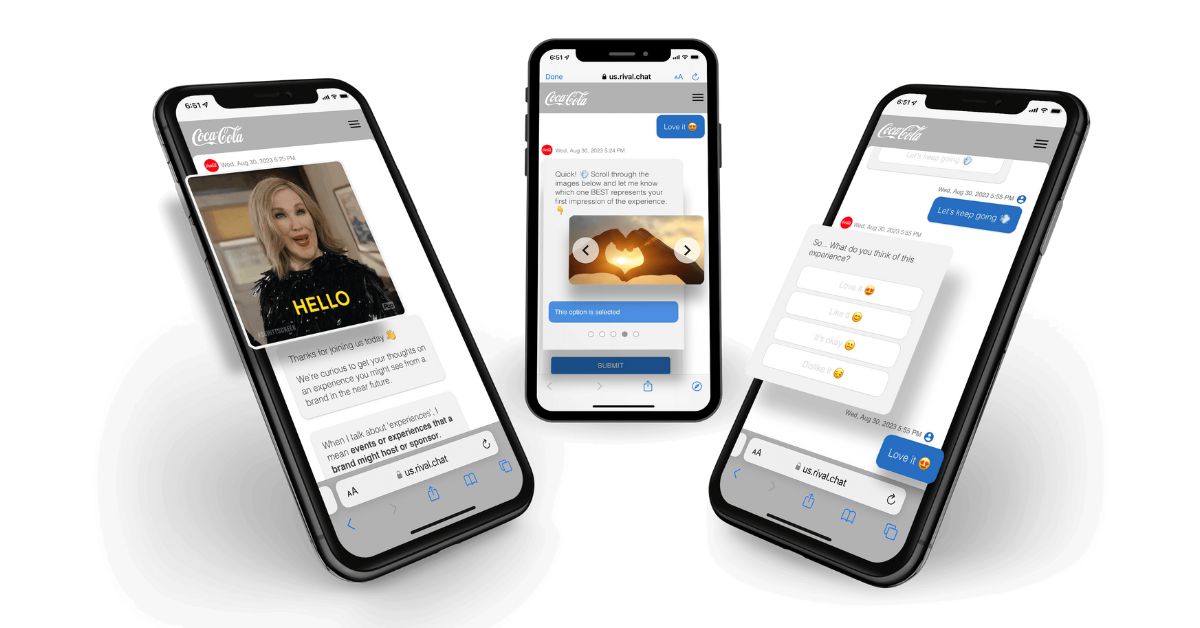
Rival

rivaltech.com · Rival Customer Stories #2 of 8 in Customer Advocacy Platforms with Case Study and Story Capture

Rival's chat surveys run 87% completion, from $29k a year

Best forMarket research teams seeking authentic consumer insights via mobile-first surveys

From $29,000 per year SOC 2ISO 27001HIPAA
#2 in its ranking

Enterprise conversational research platform using mobile-first chat and video surveys to gather deeper consumer insights.

Standout factConversational surveys average an 87% completion rate reach3insights.com
Biggest catchPricing starts at $29,000 a year, creating a barrier for smaller research budgets. rivaltech.com
87%Survey completion ratereach3insights.com
$29,000/yrStarting pricerivaltech.com
~8xResponse length increase with videorivaltech.com

Standout number

87%average completion rate for conversational surveys

Source: reach3insights.com

Starting price

$29,000/yrStarting price, volume-dependent

Upside

  • 87% average survey completion rate
  • SOC 2, ISO 27001 and HIPAA certified
  • Video responses run up to 8x longer

Catch

  • Starts at $29,000 a year
  • Reporting workflow can be fragmented
  • Steep learning curve for advanced features
Pick it ifMarket research teams seeking authentic consumer insights via mobile-first surveys
Skip it ifB2B teams needing dedicated reference management or traditional case study writing
PricingFrom $29,000/year, volume-dependent, add-ons for email and API access

Editor's takeRival swaps static forms for mobile chat and video surveys, and its Thoughtfulness Score shows the approach pulling longer, richer answers than typical surveys. Clients like Coca-Cola and Warner Bros. Discovery back the platform, backed by SOC 2, ISO 27001 and HIPAA certification. Entry pricing starts at $29,000 a year, out of reach for smaller research budgets.

How much does Rival cost?

Pricing starts at $29,000 a year, depending on expected survey volume, plus optional add-ons like email delivery and API access.

Does chat-based research actually get richer answers?

Yes. Open-ended answers ran 2.5x longer in chat surveys, 5x longer with AI-driven probes, and nearly 8x longer when video was used.

The evidence: 6 criteria, 3 penalties
8.9
Product Capability & DepthLooked for: We evaluate the platform's ability to conduct complex market research through conversational interfaces, including qualitative and quantitative data collection features.Rival Technologies offers a mobile-first conversational research platform that integrates chat-based surveys, video feedback, and AI-driven sentiment analysis to capture deeper insights than traditional forms.rivaltech.comg2.comrivaltech.com
9.4
Market Credibility & Trust SignalsLooked for: We assess the vendor's reputation through client roster quality, industry awards, and third-party validations appropriate for enterprise SaaS.Rival Technologies demonstrates exceptional credibility with a roster of blue-chip clients like Coca-Cola and Warner Bros. Discovery, alongside rigorous enterprise-grade security certifications.rivaltech.comrivaltech.comrivaltech.com
8.8
Usability & Customer ExperienceLooked for: We analyze user feedback regarding the ease of use for researchers and the engagement experience for survey respondents.Users report a highly engaging respondent experience with high completion rates, though some administrative backend functions like reporting can be cumbersome.rivaltech.comreach3insights.comg2.com
8.2
Value, Pricing & TransparencyLooked for: We examine pricing structures, entry costs, and public availability of cost information relative to market norms.Rival positions itself as a premium enterprise solution with a high entry price point, which may exclude smaller businesses despite the high value provided.rivaltech.comrivaltech.comrivaltech.com
9.1
Conversational Methodology & AI InnovationLooked for: We evaluate the effectiveness of the vendor's specific 'conversational' approach and AI integration in improving research quality.Rival's chat-based methodology is scientifically validated to produce richer data, with AI features that actively enhance response depth during the survey process.rivaltech.comg2.comrivaltech.com
9.5
Security, Compliance & Data ProtectionLooked for: We assess the platform's adherence to strict data privacy standards required for handling sensitive consumer insights and PII.Rival Technologies maintains an industry-leading security posture with comprehensive certifications rarely seen in smaller research platforms.industryawards.comrivaltech.comrivaltech.com

Score adjustments−0.13 points in total

−0.04The high starting price ($29,000/year) creates a significant barrier to entry for small-to-medium businesses compared to self-serve competitors.rivaltech.com · severity 60/100
−0.05Users report that the reporting interface can be disjointed, requiring data to be pulled from multiple sources (e.g., AI findings separate from Topline reports).g2.com · severity 45/100
−0.04Some users note a steep learning curve and complexity for advanced features, describing the extensive feature set as potentially overwhelming.g2.com · severity 40/100
9

Testimonial Hero

testimonialhero.com #3 of 8 in Customer Advocacy Platforms with Case Study and Story Capture

Testimonial Hero holds a 4.9/5 rating on G2

Best forMarketing teams wanting broadcast-quality video testimonials without production work

From $6,510 per year video productionenterprisedone-for-you service
#3 in its ranking

Done-for-you B2B video testimonial service with a global videographer network and dedicated project managers.

Standout factTestimonial Hero holds a 4.9 out of 5 rating on G2 from 67 reviews. g2.com
Biggest catchAnnual packages start around $6,510 to $7,800, and unused credits can expire. elemmir.com
4.9/5G2 ratingg2.com
67G2 reviewsg2.com
$6,510/yrStarter tier priceelemmir.com

In their words

“Their film crew? Total pros—felt like I was on a Hollywood set!”

g2.com

Starting price

$6,510/yrstarter tier, 35-59 credits per year

Upside

  • 100% done-for-you filming and editing
  • Global videographer network for on-site shoots
  • Dedicated project manager per account

Catch

  • Starts around $6,500 per year
  • Service credits may expire unused
  • Less creative control than in-house editing
Pick it ifMarketing teams wanting broadcast-quality video testimonials without production work
Skip it ifSmall businesses wanting a low-cost, software-only subscription
PricingFrom roughly $6,510 per year (starter tier, 35-59 credits)

Editor's takeTestimonial Hero handles the full logistics of B2B video testimonials, from remote producer-guided shoots to a worldwide videographer network for on-site filming. It holds a 4.9 rating on G2 and counts Google and UiPath among its clients. The tradeoff is price: starter packages begin around $6,510 a year, and credits carry expiration dates that can pressure clients with slower customer pipelines.

How much does Testimonial Hero cost?

Annual packages start around $6,510 for the starter tier, which includes 35-59 credits per year. Pricing is credit-based and scales with the tier selected.

Does Testimonial Hero offer written case studies too?

Yes. Testimonial Hero acquired Case Study Buddy to expand into written case studies, adding that format alongside its core video testimonial production service.

The evidence: 6 criteria, 3 penalties
8.9
Product Capability & DepthLooked for: We look for a balance of software automation and service delivery that simplifies capturing high-quality B2B testimonials.Testimonial Hero operates as a tech-enabled service rather than pure SaaS, offering end-to-end production for remote, on-site, and employee testimonials with a global videographer network.testimonialhero.comtestimonialhero.comb2bsaasreviews.com
9.2
Market Credibility & Trust SignalsLooked for: We look for verified user reviews, high-profile client rosters, and established industry presence.The company holds a near-perfect rating on G2 and boasts an impressive roster of enterprise clients like Google and UiPath, signaling strong market trust.g2.comleanb2bbook.com
9.4
Usability & Customer ExperienceLooked for: We look for a frictionless process that minimizes effort for both the vendor and their end-customers.Reviews consistently highlight the 'hands-off' nature of the service, with dedicated project managers handling coordination, interviewing, and editing.testimonialhero.comsmbguide.comg2.com
8.1
Value, Pricing & TransparencyLooked for: We look for clear pricing structures and fair terms that align cost with the value of the final deliverables.Pricing is premium and credit-based, which can be a barrier for smaller firms; unused credits risking expiration is a noted friction point.testimonialhero.comelemmir.comg2.com
9.5
Production Quality & OutputLooked for: We look for evidence of professional-grade video and audio quality that surpasses standard webcam recordings.The service delivers 'Hollywood set' quality even for remote shoots by using expert producers and professional editors to polish the footage.g2.comelemmir.com
8.8
Strategic Support & Project ManagementLooked for: We look for dedicated support that goes beyond technical troubleshooting to help with strategy and execution.Includes dedicated project managers and strategy sessions to ensure the right questions are asked and the right stories are told.b2bsaasreviews.comsmbguide.com

Score adjustments−0.13 points in total

−0.04Service credits have expiration dates, creating a 'use it or lose it' pressure that some customers find stressful if they cannot line up interviewees in time.g2.com · severity 60/100
−0.04High minimum annual cost (starting ~$6,500-$7,800) makes the service inaccessible for small businesses compared to DIY alternatives.elemmir.com · severity 50/100
−0.05Users report less control over the creative process compared to in-house production, as the editing is handled entirely by the agency.b2bsaasreviews.com · severity 40/100
10

Base AI

base.ai · Base AI - Customer Marketing Platform #3 of 10 in Customer Advocacy Platforms with Reference Recruitment Workflows

Base AI passed $10M ARR without publishing prices.

Best forB2B marketing teams automating reference requests and revenue-influence tracking.

Quote only SOC 2ISO certifiedAI agents
#3 in its ranking

An AI platform that unifies customer advocacy, reference management, and community engagement.

Standout factClaims a 300% higher average ACV for customers. base.ai
Biggest catchBase AI does not publish public pricing. base.ai
300+connectorsbase.ai
300%higher average ACVbase.ai

Compliance

✓ SOC 2 Type 2✓ ISO✓ GDPR✓ CCPA? HIPAA

Source: base.ai

Connects to

SalesforceHubSpotSlack300+ total

Source: base.ai

Upside

  • SOC 2 Type 2 and ISO certified
  • 300+ integrations including Salesforce, HubSpot
  • AI agents automate reference matching

Catch

  • No public pricing published
  • No native Snowflake integration
  • Ask workflow has technical hiccups
Pick it ifB2B marketing teams automating reference requests and revenue-influence tracking.
Skip it ifTeams needing native Snowflake integration or non-standard API data flows.
PricingContact for pricing, no public tiers

Editor's takeBase AI combines advocacy, reference management, and community tools in one system. Enterprise clients like Adobe, Okta, and Zendesk use it, and vendor data claims a 300% higher average ACV. Buyers should confirm Snowflake connectivity before signing, since it is not native.

Does Base AI publish pricing?

No. Base AI uses custom enterprise quotes instead of published tiers. Vendor data claims a 300% higher average ACV. It also claims program management in under 2 hours per week. Contact sales for exact costs.

Is Base AI SOC 2 certified?

Yes. Base AI holds SOC 2 Type 2 and ISO certification. It also complies with GDPR and CCPA, using a multi-tenant spaces approach for data isolation and independent penetration testing.

The evidence: 6 criteria, 3 penalties
9.1
Product Capability & DepthLooked for: We evaluate the platform's ability to unify customer marketing functions like advocacy, references, and community into a single, automated workflow.Base AI offers a comprehensive 'Engagement OS' that consolidates advocacy, reference management, and community. The recent acquisition of EverAfter AI expands its capabilities into digital customer success and onboarding. It features specialized AI Agents for tasks like reference matching and campaign generation.base.aibase.aibase.ai
9.3
Market Credibility & Trust SignalsLooked for: We look for adoption by enterprise-tier companies, verified funding or revenue milestones, and industry recognition.Base AI demonstrates strong market traction with a client roster including Adobe, Okta, and Zendesk. The company has surpassed $10M in ARR and is backed by reputable investors like Wing Ventures and Vertex Ventures. It is frequently cited as a modern alternative to legacy players like Influitive.calcalistech.comcalcalistech.com
8.8
Usability & Customer ExperienceLooked for: We assess user interface design, ease of setup, and the quality of the migration experience from competitor platforms.Users praise the platform for its clean, intuitive interface and ease of navigation compared to competitors. The company has a documented track record of rapid migrations (2-3 weeks) from Influitive. However, some users have reported technical instability in specific workflows.base.aig2.combase.ai
8.7
Value, Pricing & TransparencyLooked for: We evaluate public pricing availability, ROI claims backed by data, and contractual transparency.Base AI does not publish public pricing, which is standard for enterprise SaaS but reduces transparency. However, they provide strong evidence of value, including claims of 300% higher average ACV and significant time savings (results in <2 hours/week). Users describe it as a 'solid package' for the cost.base.aibase.aig2.com
8.8
Integrations & Ecosystem StrengthLooked for: We examine the breadth of native integrations with CRM, marketing automation, and data tools.The platform boasts over 300 connectors, including deep integrations with Salesforce and HubSpot. It supports workflows across Slack and other digital channels. However, users have noted specific gaps, such as the lack of a native Snowflake integration for advanced data reporting.base.aig2.com
9.4
Security, Compliance & Data ProtectionLooked for: We verify the presence of critical enterprise security certifications like SOC 2, ISO, and GDPR compliance.Base AI maintains a robust security posture with SOC 2 Type 2 certification, ISO certification, and compliance with GDPR and CCPA. They utilize a multi-tenant spaces approach for data isolation and conduct independent penetration testing.base.aibase.ai

Score adjustments−0.15 points in total

−0.05Users have reported 'technical hiccups' specifically with the 'Ask' workflow and API management, requiring time-consuming workarounds.g2.com · severity 50/100
−0.05A verified user noted a lack of Snowflake integration and limitations in the API for external reporting, which restricts advanced data analysis.g2.com · severity 45/100
−0.05Some users migrating from competitors initially felt the platform was 'oversold' regarding feature parity, though they noted improvements over time.g2.com · severity 40/100
02

Every ranking in Customer Advocacy & Reference Management Platforms

Each card shows the top three. The eye opens a quick look. Open a ranking for every product, the evidence and the comparison table.

1 UserpilotUserpilot starts at $299/mo, and mobile costs extra 8.9/10
Visit ↗
2 ZealotZealot's CEO customer gave its UI a perfect 10/10 8.9/10
Visit ↗
3 DeetoDeeto raised $17M, but its interface changes often 8.8/10
Visit ↗
See all 9 ranked
1 ReferenceEdgeReferenceEdge lives entirely inside Salesforce, publishes exact pricing 9.1/10
Visit ↗
2 SAP11-year Gartner leader, dated interface frustrates reps 9.1/10
Visit ↗
3 Deeto15-25% higher win rates, but pricing stays hidden 8.9/10
Visit ↗
See all 9 ranked
1 ForescoutForescout's advocacy program offers $3,600 in free training 8.9/10
Visit ↗
2 RivalRival's chat surveys run 87% completion, from $29k a year 8.9/10
Visit ↗
3 Testimonial HeroTestimonial Hero holds a 4.9/5 rating on G2 8.9/10
Visit ↗
See all 8 ranked
1 Advocacy MavenAdvocacy Maven rates 4.9 on G2, isn't self-serve software 9.0/10
Visit ↗
2 ReferenceEdgeReferenceEdge starts at $4, but the interface feels intimidating 9.0/10
Visit ↗
3 Base AIBase AI passed $10M ARR without publishing prices. 8.9/10
Visit ↗
See all 10 ranked
03

About Customer Advocacy & Reference Management Platforms

What the category is, how it developed, and what to look for. Two minutes, or the long read.

This category covers software used to identify, mobilize, and manage satisfied customers to support sales and marketing efforts across the buyer's journey: sourcing references, automating testimonial capture, managing advocate communities, and tracking the revenue impact of customer-led growth. It sits downstream of Customer Success platforms (which focus on retention and health) and feeds directly into CRM and Marketing Automation systems (which focus on acquisition). It includes both general-purpose advocacy hubs that gamify engagement and vertical-specific reference management databases designed for complex B2B sales cycles.

Read the full category guide

What Are Customer Advocacy & Reference Management Platforms?

At its core, this software solves the "favors bank" problem. In the absence of a dedicated platform, customer references are managed via chaotic spreadsheets, ad-hoc emails ("Does anyone know a customer in fintech who uses our reporting module?"), and political maneuvering between sales reps who hoard their best relationships. This manual approach leads to advocate burnout, where the same three "friendly" clients are asked to speak to every prospect, while hundreds of other potential advocates remain silent and unengaged. Customer Advocacy & Reference Management Platforms operationalize this process, turning random acts of advocacy into a scalable revenue engine.

These platforms are primarily used by Customer Marketing, Reference Managers, and Sales Enablement teams. For enterprise organizations, they provide a governance layer that ensures compliance and prevents reference overuse. For high-growth SaaS companies, they function as a content engine, automating the generation of reviews, case studies, and social proof that grease the wheels of the sales cycle. The value lies in speed and trust: giving buyers the peer validation they crave without the administrative burden of manually brokering every connection.

History of the Category

The origins of Customer Advocacy & Reference Management Platforms can be traced back to the late 1990s and early 2000s, emerging as a necessary patch for the limitations of early Customer Relationship Management (CRM) systems. While the CRM boom, led by Siebel and later Salesforce, digitized the rolodex and tracked the sales pipeline, it created a significant blind spot: it tracked who bought, but not who was willing to speak. As databases grew, marketing and sales teams found themselves data-rich but insight-poor, unable to easily identify which customers were happy, referenceable, or relevant to a specific prospect's use case.

In the 2000s, the "reference gap" was largely filled by manual processes—spreadsheets and favors. Dedicated "Reference Managers" in large IT hardware and software firms acted as human librarians, manually vetting requests to protect key accounts. The first wave of software in this category appeared as glorified databases—on-premise or early hosted solutions designed simply to log reference activity and prevent burnout. These tools were reactive, static repositories that relied heavily on manual data entry.

The market shifted dramatically around 2010-2012 with the rise of the Subscription Economy and the transition to cloud. As retention became as critical as acquisition, the passive "reference database" model evolved into the proactive "advocacy" model. Companies like Influitive pioneered the idea of "Advocate Marketing," introducing gamification to keep customers engaged continuously, not just when a favor was needed. This marked a philosophical shift from "extracting value" (asking for a reference) to "exchanging value" (offering status, education, and community). Forrester Research noted this pivot in 2014, advising marketers to "tip the balance" from purely reactive reference management to proactive advocacy [1].

The late 2010s saw a wave of consolidation and verticalization. Generalist platforms began to acquire or build features for specific workflows like user-generated content (UGC) and video testimonials. The market bifurcated into two distinct streams that exist today: heavy-duty B2B reference management for complex enterprise sales (focused on governance and sales mapping) and broader advocacy platforms for volume-based businesses (focused on reviews, social shares, and community). Today, the category is undergoing another transformation driven by AI, moving from "managing lists" to "mining intelligence"—automatically surfacing potential advocates based on usage data and sentiment analysis rather than manual nomination.

What to Look For

Evaluating this software requires looking beyond the "shiny" features of gamification and focusing on workflow integration and data governance. The most common failure mode in this category is buying a platform that Sales refuses to check and Marketing forgets to update.

Critical Evaluation Criteria:

  • Integration Depth: Does the platform write back to your CRM in real-time? Sales reps will not log into a separate portal to find a reference. The "Request a Reference" button must live inside the Opportunity record in Salesforce, HubSpot, or Microsoft Dynamics.
  • Nomination Workflow: How easy is it for a Customer Success Manager (CSM) to nominate a new advocate? Look for tools that automate this via triggers (e.g., a high NPS score or renewal event) rather than relying on manual data entry.
  • Burnout Protection: The system must have automated "cool-down" periods. If a customer does a reference call today, the system should automatically block them from being requested again for a set period (e.g., 90 days). This governance is non-negotiable for enterprise teams.
  • Content Flexibility: Can the platform handle various forms of advocacy? You need a tool that can manage high-touch activities (reference calls, speaking slots) alongside low-touch activities (G2 reviews, social shares) within a single customer profile.

Red Flags and Warning Signs:

  • No "Closed-Loop" Reporting: If the vendor cannot demonstrate how to attribute revenue influence to specific advocacy acts (e.g., "Reference Call X influenced Deal Y"), walk away. ROI reporting is essential for preserving budget.
  • Manual Reward Fulfillment: Avoid platforms that require you to manually purchase and email gift cards or swag. Look for integrated fulfillment centers that handle the logistics of rewards globally.
  • Over-reliance on Gamification: While points and badges work for some audiences, they can alienate executive-level buyers. Ensure the platform allows for "white-glove" advocacy tracks that don't look like a video game.

Key Questions to Ask Vendors:

  • "How does your platform handle 'gatekeepers' or account managers who want to approve every request before it goes to their client?"
  • "Can we segment advocacy challenges so that C-level executives see different asks than end-users?"
  • "Show me the exact workflow a sales rep follows to request a reference. Count the clicks."

Industry-Specific Use Cases

Retail & E-commerce

In the retail and e-commerce sector, the "reference call" is virtually non-existent. Instead, the focus is entirely on volume and User-Generated Content (UGC). Platforms here must operate at massive scale, automating the collection of photo reviews, unboxing videos, and social media mentions. The critical evaluation priority is the "authenticity" engine—how the software verifies that a reviewer actually purchased the item to prevent fraud.

Retailers should look for advocacy tools that integrate directly with the shopping cart and email service providers (ESPs) to trigger requests post-purchase. Unlike B2B tools that gate access, e-commerce advocacy platforms must be open and indexable by search engines to drive SEO. A unique consideration here is the legal right to use content; the platform must have robust Digital Rights Management (DRM) workflows that automate the "permission to repost" process for Instagram or TikTok content [2].

Healthcare

Healthcare organizations face a unique paradox: patient stories are their most powerful marketing asset, yet they are governed by the strictest privacy regulations (HIPAA in the US, GDPR in Europe). Customer advocacy platforms in this space must prioritize consent management and data segregation above all else. You are not just managing a "reference"; you are managing Protected Health Information (PHI).

Evaluation must focus on security compliance. Does the platform offer "blind" references where prospects can see aggregated data without PII? Can it manage complex release forms for video testimonials that expire after a certain date? Case studies in healthcare often require multi-stage approval workflows involving legal and compliance teams; the software must support these rigid governance structures rather than bypassing them [3]. Security breaches here are not just embarrassing; they are illegal.

Financial Services

Similar to healthcare, Financial Services (FinServ) operates under intense regulatory scrutiny (SEC, FINRA, FCA). However, the added layer here is "competitive intelligence" protection. A bank or hedge fund may be willing to be a reference, but never publicly. FinServ buyers need platforms that excel in "anonymized advocacy"—creating assets that verify results without naming the client explicitly (e.g., "Top 5 Global Bank saves $50M").

The "trust" factor is paramount. Advocacy tools for FinServ must include features for managing "Inner Circles" or Customer Advisory Boards (CABs) where secure, private peer-to-peer exchange happens. Public gamification is often culturally mismatched here; instead, look for platforms that facilitate exclusive networking and high-value educational content access. Compliance logging is critical—every interaction between a customer and a prospect must be auditable [4].

Manufacturing

Manufacturing sales cycles are long, capital-intensive, and involve multiple stakeholders (procurement, engineering, plant management). Advocacy in this sector is not about a quick review; it is about facilitating site visits and deep-dive technical reference calls. The software must be able to map references by specific machinery, configuration, or use case. A prospect looking at a $5M assembly line needs to speak to a customer with that exact configuration, not just a generic user.

Unique considerations include "Site Visit Management." Does the platform have workflows to schedule, manage, and reimburse logistics for physical reference visits? Furthermore, because manufacturers often sell through distributors, the platform may need to support a "partner portal" view, allowing dealers to access approved references without giving them full access to the customer database [5].

Professional Services

In law firms, consultancies, and agencies, the "product" is the people, and clients are often guarded jealously by partners. The biggest hurdle here is the "Partner Gatekeeper" dynamic. Partners often hoard client relationships, refusing to enter them into a central system for fear of overuse or poaching. Advocacy software for this sector must offer " mediated access"—allowing partners to approve or deny a reference request before the client is ever contacted.

The evaluation priority is internal permissioning. Can the system send a "request to contact" email to the relationship partner first? If this step is missing or clunky, the software will be rejected by the partnership. Additionally, the focus is often on producing high-quality written case studies and "tombstones" (deal announcements) rather than gamified community engagement [6].

Subcategory Overview

Customer Advocacy Platforms with Reference Recruitment Workflows This subcategory is distinct because it focuses specifically on the *supply chain* of advocacy. While general tools focus on what to do with an advocate (e.g., rewards), these tools focus on finding them in the first place. They differ from generic platforms by offering deep integrations with survey tools (like Qualtrics or Medallia) and CS platforms (like Gainsight) to automatically trigger recruitment invitations based on "moments of delight" (e.g., a 9/10 NPS score or a successful implementation milestone). The specific workflow that only these tools handle well is the "nomination-to-approval" loop, where a CSM nominates a client, the relationship manager approves it, and the system automates the invitation sequence. This addresses the pain point of "database decay," where reference lists become stale because no fresh names are being added. For a deeper look at these recruitment-centric tools, explore our guide to Customer Advocacy Platforms with Reference Recruitment Workflows.

Customer Advocacy Platforms with Case Study and Story Capture General advocacy platforms treat content as a byproduct; this niche treats it as the primary output. These tools are built to solve the "blank page problem" marketing teams face when trying to write case studies. They differentiate themselves through automated interview bots, video capture capabilities, and templated story builders that structure raw customer feedback into polished marketing assets. A unique workflow they handle is the "approval chain"—automating the tedious back-and-forth legal review process required to get a case study signed off for public use. Buyers choose this niche when their primary pain point is a content bottleneck—sales needs stories faster than marketing can interview, write, and approve them. To learn more about tools that automate this production, read our analysis of Customer Advocacy Platforms with Case Study and Story Capture.

Customer Advocacy Platforms for B2B SaaS Companies This subcategory is tailored to the high-velocity, subscription-based model of B2B SaaS. Unlike general tools, these platforms are designed to integrate with product telemetry (usage data). They allow you to segment advocates not just by industry, but by "features used" or "login frequency." The workflow that only these tools master is "in-app recruitment"—triggering advocacy challenges (e.g., "Write a review on G2") directly inside the SaaS application while the user is active. The driving pain point here is "review volume"—SaaS companies live and die by their presence on third-party review sites (G2, Capterra), and these tools are purpose-built to drive that traffic at scale. For SaaS-specific solutions, see our guide to Customer Advocacy Platforms for B2B SaaS Companies.

Customer Advocacy Platforms Integrated with CRM Systems While most platforms claim integration, this niche refers to tools that are often "native" or deeply embedded within ecosystems like Salesforce or Microsoft Dynamics. They differ by allowing sales reps to search, request, and fulfill references without ever leaving the CRM interface. The distinct workflow here is "Opportunity Mapping"—automatically suggesting the best reference for a specific deal based on matching criteria (e.g., same industry, same competitor being displaced) directly on the Opportunity record. Buyers flock to this niche when their sales adoption of external portals is near zero; if it's not in Salesforce, it doesn't exist. To see platforms that live where your sales team lives, visit Customer Advocacy Platforms Integrated with CRM Systems.

Deep Dive: Integration & API Ecosystem

In the modern tech stack, an advocacy platform on an island is a dead platform. The value of reference management is realized only when data flows seamlessly between the system of record (CRM), the system of action (Marketing Automation), and the system of sentiment (CS/Survey tools). Gartner notes that lack of integration is a primary cause of failure for advocacy initiatives, with data silos leading to "advocate fatigue" where customers are solicited inappropriately [7].

Real-World Scenario: Consider a mid-sized professional services firm with 50 partners using Salesforce for CRM and Marketo for marketing. They purchase a standalone advocacy tool. Without a bi-directional sync, a Partner might mark a client as "At Risk" in Salesforce after a botched project delivery. However, the advocacy platform doesn't "see" this update. The marketing team, using the advocacy tool, automatically sends a "Refer a Friend" campaign to that same client the next day. The result is not just an awkward email; it is a damaged client relationship that could cost the firm millions in renewal revenue. A properly integrated system would check the "Health Score" or "Sentiment Status" field in the CRM via API before triggering any advocacy request, automatically suppressing the campaign for the at-risk client.

When evaluating integration, demand to see the API documentation. Look for pre-built connectors for your specific stack (e.g., a native Salesforce AppExchange app vs. a generic Zapier connection). Ask specifically about field mapping: can the system pull custom fields (like "Product Version" or "Contract Value") from your CRM to use for reference matching? If the answer is "we can build that for you," it means it doesn't exist yet.

Deep Dive: Security & Compliance

As advocacy platforms effectively become databases of Personal Identifiable Information (PII)—containing names, contact info, and often detailed behavioral data of your best customers—security is not a "nice to have." The rise of data privacy regulations like GDPR and CCPA has turned reference management into a compliance minefield. According to IBM's research, the global average cost of a data breach reached $4.44 million in 2025, highlighting the catastrophic financial risk of insecure third-party platforms [8].

Real-World Scenario: A HealthTech company wants to launch a video testimonial campaign. They use a general-purpose advocacy tool to collect videos from doctors discussing patient outcomes. The platform stores these videos on a standard cloud server that is SOC 2 compliant but not HIPAA compliant. A breach exposes these videos, which inadvertently reveal patient names on a computer screen in the background of a doctor's video. The HealthTech company is now liable for a HIPAA violation, facing massive fines and reputational ruin. A security-first evaluation would have identified the need for a platform that offers specific "Private/Public" toggle controls, data residency options (keeping EU data in the EU), and HIPAA-compliant storage buckets.

Expert Quote: "SOC 2 mandates audit trails and evidence to show control effectiveness... The best compliance strategies don't separate them, they align them." [9]. When evaluating vendors, ask for their SOC 2 Type II report (not just Type I) and specifically query their data retention policies. Can you "forget" a user instantly upon request? If the platform cannot automate a GDPR "Right to be Forgotten" request, it is a liability waiting to explode.

Deep Dive: Pricing Models & TCO

Pricing in this category generally falls into two camps: Flat-Rate Platform Fees (common for enterprise reference databases) and User-Based/Seat-Based Pricing (common for advocacy hubs). Understanding the Total Cost of Ownership (TCO) requires looking beyond the license fee to implementation and administration costs. Forrester research highlights that organizations typically invest 3 to 5 times the software cost in implementation and training, meaning a $50k license could really cost $200k to deploy effectively [10].

Real-World Scenario: A SaaS scale-up with a 25-person marketing and sales team evaluates two vendors. Vendor A offers a flat rate of $30,000/year for unlimited users. Vendor B charges $100/user/month. * Vendor A Calculation: $30,000 fixed. * Vendor B Calculation: $100 * 25 users * 12 months = $30,000. On paper, they look identical. However, the company plans to double its sales team next year. * Year 2 Vendor A: $30,000. * Year 2 Vendor B (50 users): $60,000. Suddenly, the per-seat model becomes a penalty on growth. Furthermore, Vendor A includes a dedicated Customer Success Manager (CSM) for setup, while Vendor B charges $5,000 for an "onboarding package." The true TCO analysis must account for headcount growth and support costs over a 3-year horizon, not just the Year 1 contract.

Be wary of "hidden" costs such as reward fulfillment fees (some vendors charge a % markup on every gift card sent) and storage fees for video-heavy libraries. Always negotiate a "price cap" on renewal increases to protect against your own success.

Deep Dive: Implementation & Change Management

The most sophisticated software cannot fix a broken culture. The failure rate for CRM and adjacent implementation projects hovers around 50-55%, primarily due to poor user adoption rather than technical flaws [10]. In the context of advocacy, "adoption" means two things: Sales reps using the tool to find references, and Customers logging in to participate.

Real-World Scenario: A global manufacturing firm buys a top-tier Reference Management Platform. The marketing team spends months populating it with data. They launch it to the sales team with a single email: "Here is the new tool, please use this for all reference requests." The sales team, under pressure to close deals at quarter-end, ignores the new login and continues to email the product manager for "favors." The platform sits empty of activity. Marketing blames Sales for being "lazy," while Sales blames Marketing for creating "admin work." The implementation failed because it lacked a WIIFM (What's In It For Me) strategy for Sales. A successful rollout would have integrated the tool into the CRM (so no new login was needed) and gamified usage (e.g., "The rep who uses the tool gets double points for President's Club").

Expert Insight: "Strategy before software" is a mantra echoed by industry leaders. Nataly Kelly emphasizes that automating a broken process just makes you inefficient faster [11]. Implementation must be treated as a change management project, not an IT install. Identify "Reference Champions" within the sales team early—reps who carry weight with their peers—and involve them in the vendor selection process. If they build it, they will use it.

Deep Dive: Vendor Evaluation Criteria

When creating a scorecard for vendors, weight your criteria based on your "Must-Haves" versus "Nice-to-Haves." Forrester suggests dividing the landscape into four distinct approaches: Advocate Management, Community Management, Reference Management, and CRM-based monitoring [12].

Real-World Scenario: An enterprise software company evaluates Vendor X and Vendor Y. * Vendor X: Has a beautiful, mobile-friendly app for advocates and unparalleled gamification features. * Vendor Y: Has a clunky UI but offers granular "governance" controls that allow mapping references to specific SKU-level purchases and enforcing "cool-down" periods. The buying committee, dazzled by the UI, chooses Vendor X. Six months later, they realize Vendor X cannot handle their complex product hierarchy. Sales reps are finding "happy customers" but for the wrong products (e.g., a customer happy with Module A is being asked to reference for Module B, which they don't own). The project stalls. The evaluation criteria failed to prioritize *data structure* over *user interface*.

Expert Quote: Forrester's research advises that "Purpose-built reference platforms have a tighter focus than advocate management," and mixing the two without clarity leads to failure [12]. Your scorecard must ask: "Are we trying to generate volume (reviews) or precision (deal support)?" You rarely get both in one tool at equal excellence.

Emerging Trends and Contrarian Take

Emerging Trends (2025-2026): The category is rapidly moving toward Agentic AI. We are moving past "predictive" suggestions (e.g., "This customer might be a good reference") to "autonomous" action. Expect to see AI agents that not only identify potential advocates based on usage patterns and support ticket sentiment but also autonomously draft and send the recruitment email, schedule the briefing call, and even generate the first draft of the case study from the transcript [13]. Another shift is the Video-First workflow, where platforms are pivoting from text-based testimonials to automated video capture as the primary unit of social proof [14].

Contrarian Take: Most mid-market companies should not buy a standalone Reference Management Platform. The "hard truth" is that until you have over 500 customers and 50+ sales reps, a dedicated platform is overkill. The overhead of populating and maintaining a standalone reference database often exceeds the value it provides. For the mid-market, the future is likely CRM-native functionality. As Salesforce and HubSpot improve their own internal tagging and "relationship intelligence" features, the standalone reference platform category may hollow out, leaving only high-end enterprise governance tools at the top and lightweight plugin widgets at the bottom. If you are a $20M ARR company, you likely need a better CRM process, not another software contract.

Common Mistakes

1. The "Empty Party" Syndrome: Buying a platform and expecting advocates to just show up. An advocacy program is a community, not a vending machine. If you don't have a dedicated resource (Community Manager) to feed the beast with content, rewards, and engagement, your expensive software will become a digital ghost town.

2. Over-Gating References: Implementing such strict governance that sales reps find it easier to go "rogue" than to use the system. If it takes 4 days and 3 approvals to get a reference name, a rep will just text their favorite client instead. Governance must balance protection with speed.

3. Confusing Satisfaction with Advocacy: Just because a customer has a high NPS score doesn't mean they want to do a webinar for you. A common mistake is bulk-uploading all "Promoters" into the advocacy platform without an opt-in step. This leads to awkward interactions where customers feel spammed rather than valued.

Questions to Ask in a Demo

  • "Show me the admin view for 'Reference Burnout'." Don't just ask if they have it. Ask to see how the system flags a customer who has been used too often. Is it a hard block or a soft warning?
  • "How does the data get IN to the system initially?" If the answer involves "CSV upload," be careful. You want to see a live connector that pulls contacts from Salesforce/CRM based on criteria (e.g., "Status = Active" AND "NPS > 8").
  • "Can I customize the 'Ask' workflow based on the customer's seniority?" You should not treat a CIO the same way you treat a SysAdmin. Ask if the platform supports different "tracks" or experiences for different personas.
  • "What happens to the data if we leave?" Ask about data portability. Can you export your entire history of reference activities and rewards data easily, or is it locked in a proprietary format?

Before Signing the Contract

Final Decision Checklist:

  • CRM Admin Sign-off: Has your CRM administrator vetted the integration? Do not sign until they confirm the API won't break your existing workflows.
  • Content Audit: Do you have enough "exclusive" content to offer advocates in exchange for their time? If your "Rewards" catalog is empty, delay the purchase until you have assets to share.
  • Pilot Group Commitment: Have you identified 5-10 sales reps who agree to beta test the reference request workflow? Do not launch to the whole team on day one.

Negotiation Points:

04

Research

Original reporting on this corner of the market.

All research

Commercial sales win rates fell to 21% last year as buyers avoid sales reps

May 16, 2026

Administrators reversed 30% of 165 million contested moderation decisions under EU law

May 24, 2026

Medallia's debt service costs hit $300 million against just $200 million in earnings

May 3, 2026
05

Questions people ask

Which Customer Advocacy & Reference Management Platforms is best?

ReferenceEdge holds the highest score in the category at 9.1, in Customer Advocacy Platforms Integrated with CRM Systems. The right pick depends on the ranking that matches your use case, so start with the ranking list above.

Why are there 4 separate rankings?

Buyers in Customer Advocacy & Reference Management Platforms have different jobs, so each ranking is scoped to one of them and weights the six criteria for that job. The same product can hold different ranks in different rankings.

How are the scores produced?

Documentation, pricing pages, security pages and third-party reviews are reviewed against six criteria. Each criterion records what was found and links its sources. Penalties pull the score down and are shown with their evidence. Rank follows the score. Full methodology.

06

More in Customer Support & Success

The whole group