Customer Community & Forum Platforms

Updated July 21, 2026

These are the specialized categories within Customer Community & Forum Platforms. Looking for something broader? See all Customer Support & Success Software categories.

Not sure which one is right for you?

Answer 4 quick questions and we'll match you with your best options

Find Your Best Match

How big is your team?

Just me
2 - 10
11 - 50
51 - 200
201 - 1,000
1,000+

What's your budget situation?

Free or open-source only
Free to start, pay later
Best value for money
Price isn't the main factor

What's your team's technical comfort level?

We want it to just work
We can handle some setup
We have developers who'll customize it

What's the ONE thing this tool must do well?

Step 1 of 4
Benevity for Nonprofits

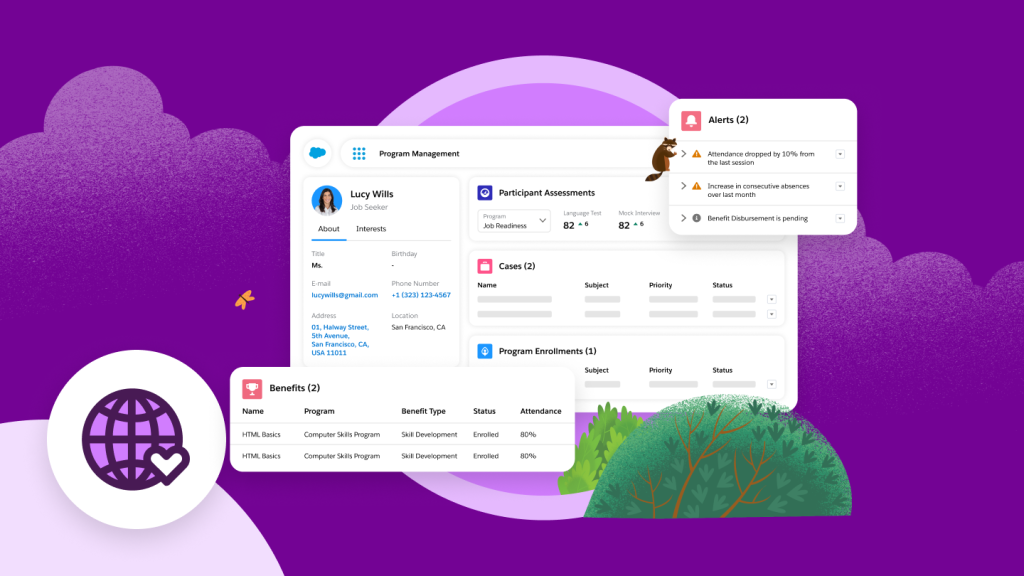
Benevity offers a specialized platform to connect nonprofits with potential supporters and donors. It addresses industry-specific needs by integrating workplace giving, volunteering, and granting programs from purpose-driven companies, thus broadening the reach of nonprofits and helping them to achieve their missions.

Best for Customer Community Platforms for Nonprofits and Member Organizations

Expert Take

Benevity for Nonprofits excels in connecting nonprofits with corporate giving programs, offering significant value through its specialized features and integrations. It is recognized for its market credibility and usability, despite some customization limitations. The platform's strategic partnerships enhance its ecosystem strength, making it a top choice for nonprofit organizations.

Pros

  • Free registration and profile creation
  • Volunteer rewards convert time into cash donations
  • Automated tax receipting reduces admin work
  • Consolidated monthly payments simplify accounting

Cons

  • Funds disbursed with 30-60 day delay
  • No direct access to donor contact info
  • Strict verification process can be hurdles
  • Interface described as clunky by some

Best for teams that are

  • Organizations wanting to receive matching gifts and grants from Fortune 1000 companies.
  • Charities looking to increase visibility among corporate employees for fundraising.

Skip if

  • Nonprofits looking for a CRM or community platform to manage their own individual members.
  • Groups seeking a tool to host their own private member forums or discussions.

Best for teams that are

  • Organizations wanting to receive matching gifts and grants from Fortune 1000 companies.
  • Charities looking to increase visibility among corporate employees for fundraising.

Skip if

  • Nonprofits looking for a CRM or community platform to manage their own individual members.
  • Groups seeking a tool to host their own private member forums or discussions.

Pros

  • Access to 900+ corporate partner giving programs
  • Free registration and profile creation
  • Volunteer rewards convert time into cash donations
  • Automated tax receipting reduces admin work
  • Consolidated monthly payments simplify accounting

Cons

  • Funds disbursed with 30-60 day delay
  • Cause support fees deducted from donations
  • No direct access to donor contact info
  • Strict verification process can be hurdles
  • Interface described as clunky by some

Expert Take

Benevity for Nonprofits excels in connecting nonprofits with corporate giving programs, offering significant value through its specialized features and integrations. It is recognized for its market credibility and usability, despite some customization limitations. The platform's strategic partnerships enhance its ecosystem strength, making it a top choice for nonprofit organizations.

Circle Community Platform

Circle is an AI-powered community platform designed specifically for education and student groups. With features like branded website creation, course and event management, payment processing, and email marketing, it effectively addresses the needs of educators, administrators, and student leaders alike.

Best for Customer Community Platforms for Education and Student Groups

Expert Take

Circle Community Platform excels in providing a comprehensive solution tailored for education and student groups. Its AI-powered features, including branded website creation and integrated marketing tools, make it a standout choice. The platform's ability to manage events and courses while offering payment processing and AI-driven insights further solidifies its position as a best-of-the-best product.

Pros

  • All-in-one courses, community, and events
  • Native live streaming and video hosting
  • Robust Headless and Data APIs
  • Trusted by top industry creators

Cons

  • Transaction fees on all plans
  • Email marketing is a paid add-on
  • Branded app requires expensive Plus plan
  • API access gated to Business plan

Best for teams that are

  • Established brands and creators requiring deep customization and white-labeling
  • Communities prioritizing a polished, branded mobile experience

Skip if

  • Beginners or hobbyists seeking a low-cost, simple setup
  • Users who prefer a simple, gamified feed over structured spaces

Best for teams that are

  • Established brands and creators requiring deep customization and white-labeling
  • Communities prioritizing a polished, branded mobile experience

Skip if

  • Beginners or hobbyists seeking a low-cost, simple setup
  • Users who prefer a simple, gamified feed over structured spaces

Pros

  • All-in-one courses, community, and events
  • Clean, intuitive 'Apple-like' interface
  • Native live streaming and video hosting
  • Robust Headless and Data APIs
  • Trusted by top industry creators

Cons

  • Transaction fees on all plans
  • Email marketing is a paid add-on
  • Rigid single-feature space structure
  • Branded app requires expensive Plus plan
  • API access gated to Business plan

Expert Take

Circle Community Platform excels in providing a comprehensive solution tailored for education and student groups. Its AI-powered features, including branded website creation and integrated marketing tools, make it a standout choice. The platform's ability to manage events and courses while offering payment processing and AI-driven insights further solidifies its position as a best-of-the-best product.

3
8.9 / 10
WebinarNinja

WebinarNinja is an all-in-one software solution, especially relevant for professionals in customer support, marketing, and sales. It offers robust features like automated reminders, analytics, and interactive tools that specifically meet the needs of the industry, enabling efficient customer community management and seamless webinar executions.

Best for Customer Community Platforms with Event and Webinar Management

Expert Take

WebinarNinja stands out as a leading platform in the customer community and webinar management space due to its comprehensive feature set, including interactive tools and analytics. While it requires high bandwidth and offers limited customization, its strengths in user engagement and data insights make it a top choice for professionals in marketing and sales.

Pros

  • Includes full 'CourseNinja' platform
  • No software download required
  • Built-in landing pages & email
  • Transparent per-attendee pricing

Cons

  • Low user ratings on G2
  • Reports of technical instability
  • No native mobile app
  • Limited networking features

Best for teams that are

  • Coaches, teachers, and creators selling courses or training online
  • Small businesses needing built-in marketing tools like landing pages

Skip if

  • Enterprise teams needing complex breakout rooms or advanced networking
  • Large-scale conferences requiring deep custom CSS or white-labeling

Best for teams that are

  • Coaches, teachers, and creators selling courses or training online
  • Small businesses needing built-in marketing tools like landing pages

Skip if

  • Enterprise teams needing complex breakout rooms or advanced networking
  • Large-scale conferences requiring deep custom CSS or white-labeling

Pros

  • Includes full 'CourseNinja' platform
  • Zero transaction fees on payments
  • No software download required
  • Built-in landing pages & email
  • Transparent per-attendee pricing

Cons

  • Low user ratings on G2
  • Reports of technical instability
  • Strict no-refund policy complaints
  • No native mobile app
  • Limited networking features

Expert Take

WebinarNinja stands out as a leading platform in the customer community and webinar management space due to its comprehensive feature set, including interactive tools and analytics. While it requires high bandwidth and offers limited customization, its strengths in user engagement and data insights make it a top choice for professionals in marketing and sales.

Khoros Community Gamification

Khoros Community Gamification software is specifically designed for customer community platforms to improve engagement and participation. It incentivizes user interaction through the assignment of badges, ranks, and rewards, fostering a vibrant and active community that ultimately drives customer success and loyalty.

Best for Customer Community Platforms with Gamification and Reputation Systems

Expert Take

Khoros Community Gamification excels in enhancing user engagement through its comprehensive gamification features. It is recognized for its scalability and customization options, making it suitable for various community sizes. While the pricing model requires custom quotes, the platform's capabilities and market credibility justify its premium positioning.

Pros

  • Scores 80+ different user activities
  • Bi-directional Salesforce and Zendesk integrations
  • ISO 27001 and SOC 2 Type II certified
  • Patented rank and reputation engine

Cons

  • No public pricing transparency
  • Strict 90-day auto-renewal policy
  • High cost barrier for small businesses
  • Implementation often requires professional services

Best for teams that are

  • Large enterprises (Telco, Tech) with massive support volumes
  • Teams with dedicated community managers and developer resources

Skip if

  • Startups and SMBs due to high cost and complexity
  • Organizations wanting a simple, out-of-the-box solution

Best for teams that are

  • Large enterprises (Telco, Tech) with massive support volumes
  • Teams with dedicated community managers and developer resources

Skip if

  • Startups and SMBs due to high cost and complexity
  • Organizations wanting a simple, out-of-the-box solution

Pros

  • Scores 80+ different user activities
  • Enterprise-grade scalability for millions of users
  • Bi-directional Salesforce and Zendesk integrations
  • ISO 27001 and SOC 2 Type II certified
  • Patented rank and reputation engine

Cons

  • No public pricing transparency
  • Strict 90-day auto-renewal policy
  • Steep learning curve for administrators
  • High cost barrier for small businesses
  • Implementation often requires professional services

Expert Take

Khoros Community Gamification excels in enhancing user engagement through its comprehensive gamification features. It is recognized for its scalability and customization options, making it suitable for various community sizes. While the pricing model requires custom quotes, the platform's capabilities and market credibility justify its premium positioning.

Mambo.IO Community Gamification

Mambo.IO is a gamification platform designed specifically for customer community platforms. It provides a playful, engaging environment to reward online community members with levels, badges, and other incentives. This not only fosters interaction and engagement within the community, but also helps incentivize customer loyalty and increases the overall user experience.

Best for Customer Community Platforms with Gamification and Reputation Systems

Expert Take

Mambo.IO excels in providing a gamification platform tailored for customer community engagement. Its capabilities in offering customizable reward systems and integration options make it a standout choice. While it lacks a free plan, its enterprise features and detailed analytics justify its premium positioning.

Pros

  • ISO27001 certified & GDPR compliant
  • Comprehensive REST APIs & SDKs
  • Scalable Java & MongoDB architecture
  • Customizable behavior tracking engine

Cons

  • High starting price ($499/mo)
  • Low volume of public reviews
  • Requires developer resources for full potential
  • Not ideal for small businesses

Best for teams that are

  • Enterprises requiring on-premise deployment for data security
  • Organizations needing a flexible, API-first gamification engine

Skip if

  • Small businesses wanting a plug-and-play community site
  • Non-technical teams unable to manage API integrations

Best for teams that are

  • Enterprises requiring on-premise deployment for data security
  • Organizations needing a flexible, API-first gamification engine

Skip if

  • Small businesses wanting a plug-and-play community site
  • Non-technical teams unable to manage API integrations

Pros

  • ISO27001 certified & GDPR compliant
  • Rare on-premise deployment option
  • Comprehensive REST APIs & SDKs
  • Scalable Java & MongoDB architecture
  • Customizable behavior tracking engine

Cons

  • High starting price ($499/mo)
  • Low volume of public reviews
  • CRM integration can be complex
  • Requires developer resources for full potential
  • Not ideal for small businesses

Expert Take

Mambo.IO excels in providing a gamification platform tailored for customer community engagement. Its capabilities in offering customizable reward systems and integration options make it a standout choice. While it lacks a free plan, its enterprise features and detailed analytics justify its premium positioning.

Higher Logic Community Software

Higher Logic is an AI-powered online community platform designed specifically for associations and B2B/B2C companies. It offers powerful engagement tools, such as event and webinar management, that cater to the unique needs of this industry by fostering interaction and connection among members.

Best for Customer Community Platforms with Event and Webinar Management

Expert Take

Higher Logic Community Software excels in providing AI-driven engagement tools and event management capabilities tailored for associations and B2B/B2C companies. Its strong market credibility and usability make it a top choice for fostering online communities, despite the need for technical expertise and custom pricing.

Pros

  • Deep AMS and CRM integrations
  • ISO 27001 and SOC 2 certified
  • Integrated event management features
  • Comprehensive resource library capabilities

Cons

  • Steep learning curve for admins
  • Interface described as clunky
  • Mixed customer support reviews
  • Search functionality limitations

Best for teams that are

  • Associations and non-profits needing member management and retention tools
  • Groups needing deep integration with AMS (Association Management Systems)

Skip if

  • Small businesses or creators wanting a simple, modern community feel
  • Teams needing a quick launch; implementation can be complex and lengthy

Best for teams that are

  • Associations and non-profits needing member management and retention tools
  • Groups needing deep integration with AMS (Association Management Systems)

Skip if

  • Small businesses or creators wanting a simple, modern community feel
  • Teams needing a quick launch; implementation can be complex and lengthy

Pros

  • Deep AMS and CRM integrations
  • Robust automation rules for engagement
  • ISO 27001 and SOC 2 certified
  • Integrated event management features
  • Comprehensive resource library capabilities

Cons

  • Steep learning curve for admins
  • Interface described as clunky
  • Pricing not publicly transparent
  • Mixed customer support reviews
  • Search functionality limitations

Expert Take

Higher Logic Community Software excels in providing AI-driven engagement tools and event management capabilities tailored for associations and B2B/B2C companies. Its strong market credibility and usability make it a top choice for fostering online communities, despite the need for technical expertise and custom pricing.

7
8.8 / 10
Membership Toolkit

Membership Toolkit is an all-in-one software suite designed specifically for nonprofits and member organizations. It provides tools for managing membership, communications, volunteers, and fundraising, addressing the specific needs of these organizations to streamline operations, increase efficiency, and maximize outreach efforts.

Best for Customer Community Platforms for Nonprofits and Member Organizations

Expert Take

Membership Toolkit excels as a comprehensive solution for nonprofits and member organizations, offering a wide range of tools to manage memberships, communications, and fundraising. Its focus on this niche market, combined with a flexible pricing model and strong customer support, positions it as a top choice in its category.

Pros

  • Integrated accounting and financial reporting tools
  • Self-building directory reduces data entry
  • Excellent and responsive customer support
  • Transparent flat-rate annual pricing

Cons

  • Mobile app suffers from bugs and low ratings
  • Interface described as clunky by some users
  • Communication tools feel outdated to some
  • Limited external integrations outside internal suite

Best for teams that are

  • Volunteer-led groups needing simple tools for directories, dues, and volunteer sign-ups.
  • Organizations requiring an easy-to-use mobile app for parents and members.

Skip if

  • Professional trade associations requiring complex continuing education (CE) tracking.
  • Groups needing complex API integrations with other enterprise software.

Best for teams that are

  • Volunteer-led groups needing simple tools for directories, dues, and volunteer sign-ups.
  • Organizations requiring an easy-to-use mobile app for parents and members.

Skip if

  • Professional trade associations requiring complex continuing education (CE) tracking.
  • Groups needing complex API integrations with other enterprise software.

Pros

  • Comprehensive all-in-one nonprofit management suite
  • Integrated accounting and financial reporting tools
  • Self-building directory reduces data entry
  • Excellent and responsive customer support
  • Transparent flat-rate annual pricing

Cons

  • Mobile app suffers from bugs and low ratings
  • Steep learning curve for new administrators
  • Interface described as clunky by some users
  • Communication tools feel outdated to some
  • Limited external integrations outside internal suite

Expert Take

Membership Toolkit excels as a comprehensive solution for nonprofits and member organizations, offering a wide range of tools to manage memberships, communications, and fundraising. Its focus on this niche market, combined with a flexible pricing model and strong customer support, positions it as a top choice in its category.

Orgo Community Gamification Platform

Orgo's Community Gamification Platform is a solution specifically designed to aid organizations in creating engaging, motivation-driven systems. It caters to the unique industry need for tracking achievements and recognizing contributions, thus fostering an environment of enhanced collaboration and engagement amongst community members.

Best for Customer Community Platforms with Gamification and Reputation Systems

Expert Take

Orgo Community Gamification Platform excels in creating engaging and motivation-driven systems for community platforms. Its capabilities in tracking achievements and recognizing contributions are well-documented, making it a top choice for organizations seeking to enhance community collaboration. However, the lack of pricing transparency and potential setup complexity are noted tradeoffs.

Pros

  • Integrated e-voting and digital signatures
  • Multi-chapter management for large orgs
  • GDPR compliant data protection
  • Consolidates CRM, LMS, and events

Cons

  • Pricing is quotation-based (opaque)
  • Low third-party review volume
  • Niche focus may limit general use
  • Mobile app has few ratings

Best for teams that are

  • Nonprofits, associations, and scout organizations
  • Multi-chapter organizations requiring decentralized management

Skip if

  • B2B SaaS companies seeking technical support communities
  • Retail brands looking for purchase-based loyalty programs

Best for teams that are

  • Nonprofits, associations, and scout organizations
  • Multi-chapter organizations requiring decentralized management

Skip if

  • B2B SaaS companies seeking technical support communities
  • Retail brands looking for purchase-based loyalty programs

Pros

  • Integrated e-voting and digital signatures
  • Built-in volunteer hour tracking
  • Multi-chapter management for large orgs
  • GDPR compliant data protection
  • Consolidates CRM, LMS, and events

Cons

  • Pricing is quotation-based (opaque)
  • Low third-party review volume
  • Brand confusion with 'Orgo' sports app
  • Niche focus may limit general use
  • Mobile app has few ratings

Expert Take

Orgo Community Gamification Platform excels in creating engaging and motivation-driven systems for community platforms. Its capabilities in tracking achievements and recognizing contributions are well-documented, making it a top choice for organizations seeking to enhance community collaboration. However, the lack of pricing transparency and potential setup complexity are noted tradeoffs.

9
8.7 / 10
CiviCRM

CiviCRM is a powerful open-source CRM purpose-built for nonprofits and member-based organizations. Its comprehensive suite of tools assists with management of donor base, memberships, and communications. The software's seamless integration with WordPress, Drupal, Joomla, and Backdrop further amplifies its efficiency for this industry.

Best for Customer Community Platforms for Nonprofits and Member Organizations

Expert Take

CiviCRM stands out as a leading open-source CRM tailored for nonprofits, offering a comprehensive suite of tools and seamless integration with popular CMS platforms. Its open-source nature allows for significant customization, although it requires technical expertise for installation and customization. The product's nonprofit-specific features and free plan enhance its value proposition.

Pros

  • Deep integration with Drupal/WordPress
  • Comprehensive nonprofit feature set
  • Full ownership of data
  • Highly customizable via extensions

Cons

  • Steep learning curve
  • Requires technical maintenance
  • Resource-intensive hosting needed
  • Complex setup process

Best for teams that are

  • Organizations wanting a highly customizable, open-source solution without licensing fees.
  • Groups needing deep integration with CMS platforms like Drupal, WordPress, or Joomla.

Skip if

  • Small organizations with no technical expertise or budget for third-party hosting/support.
  • Users who prefer modern, polished user interfaces over functional flexibility.

Best for teams that are

  • Organizations wanting a highly customizable, open-source solution without licensing fees.
  • Groups needing deep integration with CMS platforms like Drupal, WordPress, or Joomla.

Skip if

  • Small organizations with no technical expertise or budget for third-party hosting/support.
  • Users who prefer modern, polished user interfaces over functional flexibility.

Pros

  • No licensing fees (Open Source)
  • Deep integration with Drupal/WordPress
  • Comprehensive nonprofit feature set
  • Full ownership of data
  • Highly customizable via extensions

Cons

  • Steep learning curve
  • Outdated user interface
  • Requires technical maintenance
  • Resource-intensive hosting needed
  • Complex setup process

Expert Take

CiviCRM stands out as a leading open-source CRM tailored for nonprofits, offering a comprehensive suite of tools and seamless integration with popular CMS platforms. Its open-source nature allows for significant customization, although it requires technical expertise for installation and customization. The product's nonprofit-specific features and free plan enhance its value proposition.

Gainsight Customer Community Software

Gainsight's customer community software is a comprehensive platform designed specifically for brands aiming to build user engagement and gather customer insights. Its suite of features, including knowledge bases, discussion boards, messaging, and event management tools, addresses the industry's need for a centralized platform to facilitate customer interaction and engagement.

Best for Customer Community Platforms with Event and Webinar Management

Expert Take

Gainsight Customer Community Software excels in providing comprehensive engagement tools and insightful analytics, making it a top choice for brands aiming to build strong customer communities. Its robust event management capabilities and integrated messaging functions further enhance its value, despite some limitations in pricing transparency.

Pros

  • Deep native integration with Gainsight CS
  • AI-powered content and summary tools
  • Federated search across multiple resources
  • Strong gamification with badges and leaderboards

Cons

  • High entry price (approx. $20k/year)
  • No conversation threading (reply-to-reply)
  • Limited advanced customization options
  • Opaque pricing on main website

Best for teams that are

  • B2B SaaS companies focusing on customer success and product adoption
  • Product teams gathering user feedback and ideation

Skip if

  • Associations or non-profits (better suited for Higher Logic or Glue Up)
  • B2C brands needing high visual customization outside of SaaS structures

Best for teams that are

  • B2B SaaS companies focusing on customer success and product adoption
  • Product teams gathering user feedback and ideation

Skip if

  • Associations or non-profits (better suited for Higher Logic or Glue Up)
  • B2C brands needing high visual customization outside of SaaS structures

Pros

  • Deep native integration with Gainsight CS
  • Easy out-of-the-box setup and usability
  • AI-powered content and summary tools
  • Federated search across multiple resources
  • Strong gamification with badges and leaderboards

Cons

  • High entry price (approx. $20k/year)
  • No conversation threading (reply-to-reply)
  • Search relevance sometimes lacks accuracy
  • Limited advanced customization options
  • Opaque pricing on main website

Expert Take

Gainsight Customer Community Software excels in providing comprehensive engagement tools and insightful analytics, making it a top choice for brands aiming to build strong customer communities. Its robust event management capabilities and integrated messaging functions further enhance its value, despite some limitations in pricing transparency.

Loading comparison data…

How We Rank Products

Our Evaluation Process

Products in the Customer Community & Forum Platforms category are evaluated based on their feature sets, such as moderation tools and engagement analytics. Pricing transparency is also considered, allowing businesses to assess cost-effectiveness. Compatibility with existing software and integration capabilities are crucial for seamless workflow integration. Feedback from third-party customers provides insights into real-world performance and user satisfaction.

Verification

  • Products evaluated through comprehensive research and analysis of customer feedback and expert insights.
  • Rankings based on a thorough assessment of platform features, user satisfaction, and community engagement metrics.
  • Selection criteria focus on user experience, support options, and customization capabilities specific to community and forum platforms.

Score Breakdown

0.0 / 10

About Customer Community & Forum Platforms

What Are Customer Community & Forum Platforms?

This category covers software enabling organizations to create, manage, and scale branded online destinations where customers, partners, and employees interact with one another and the brand. These platforms facilitate peer-to-peer support, knowledge sharing, product ideation, and engagement outside of traditional transactional channels. Unlike social media (rented land), these are owned assets where the organization controls the data, moderation policies, and user experience. It sits distinctly apart from CRM (which records static customer data) and Help Desk Software (which manages one-to-one support tickets). While it often integrates with both, its primary function is to host many-to-many interactions that deflect support costs and drive retention. The category includes both general-purpose enterprise suites and specialized tools tailored for verticals like nonprofits or education.

Organizations use these platforms to solve the "scale problem" of customer success: it is financially impossible to assign a dedicated success manager to every customer. By creating a centralized hub, businesses unlock a "one-to-many" support model where power users answer questions for newer users, reducing the burden on support teams while building brand loyalty. The strategic value lies in shifting customers from passive consumers of a product to active participants in the brand's ecosystem.

History of the Category

The lineage of modern community platforms traces back to the bulletin board systems (BBS) and Usenet groups of the 1980s, but the commercial software category truly coalesced in the late 1990s and early 2000s. As the internet matured, businesses realized that the chaotic, anonymous nature of open web forums was unsuitable for corporate brands. They needed governance, branding, and integration with their emerging tech stacks. This gap birthed the "Social Business Software" market.

The 2000s were defined by the on-premise to cloud transition. Early market leaders like Jive Software dominated the enterprise space with heavy, feature-rich platforms that often required significant IT resources to maintain. Jive’s dominance was challenged as the market shifted toward agile, cloud-native solutions. A major consolidation wave reshaped the landscape in the 2010s. Notably, Lithium Technologies (now Khoros) acquired Jive’s external community business in 2017, effectively merging two of the fiercest competitors into a single entity focused on digital customer engagement [1]. Similarly, Higher Logic, initially focused on the association market, acquired Vanilla Forums in 2021 to aggressively expand into the B2B corporate sector [2].

Today, the market has moved beyond simple "forums." Buyer expectations have evolved from requesting a "database of threads" to demanding "actionable intelligence." Modern platforms are expected to use AI to surface product insights from user discussions, automatically route unanswered questions to support agents, and prove ROI through complex attribution models that link community activity to customer retention rates.

What to Look For

When evaluating Customer Community & Forum Platforms, technical feature lists are often less important than structural fit. The most critical evaluation criterion is the platform's ability to support your specific governance model. Can you assign different permission levels (e.g., read-only, moderator, super-admin) granularly across different sub-forums? A platform that treats all users equally is a liability for enterprise teams.

Red Flags and Warning Signs:

  • Proprietary Templating Languages: If the vendor requires you to learn a niche coding language to customize the look and feel, you will be dependent on their professional services team for every minor change. Look for standard HTML/CSS/JavaScript customization capabilities.
  • Opaque Data Export Policies: Ask specifically about "exit costs." Some vendors make it easy to import data but charge exorbitant fees or provide unstructured "data dumps" (like raw JSON files without relationship mapping) when you try to leave.
  • "Roadmap" Features: Never buy based on a feature promised in the "next quarter." In the software world, roadmaps are marketing documents, not legal contracts.

Key Questions to Ask Vendors:

  • "How does your platform handle single sign-on (SSO) with our specific identity provider (e.g., Okta, Azure AD), and is this included in the base price?"
  • "Can you show me the exact workflow for a community manager to identify and merge duplicate threads?"
  • "What is the ratio of API calls allowed per user tier, and what happens to the integration if we spike in traffic during a product launch?"

Industry-Specific Use Cases

Retail & E-commerce

In retail, the community platform serves primarily as a trusted source of social proof and pre-sales reassurance. Unlike B2B buyers who need technical documentation, retail shoppers look for authenticity. Research indicates that 87% of consumers consider user reviews and ratings to be the most authentic interaction they have with brands [3]. Consequently, retail-focused platforms must prioritize visual-heavy user-generated content (UGC), such as "style galleries" where customers post photos of products in use. Evaluation priorities should focus on mobile responsiveness (as retail traffic is predominantly mobile) and seamless integration with the e-commerce cart—users should be able to click "Buy Now" directly from a forum post without losing session data.

Healthcare

For healthcare organizations, the critical differentiator is compliance with HIPAA and other privacy regulations. A general-purpose forum is insufficient; the platform must support Business Associate Agreements (BAA) and robust data encryption. Use cases often revolve around patient support groups where anonymity is key. A unique consideration here is "reactive moderation"—the ability to flag specific medical keywords (e.g., "suicide," "overdose") for immediate human intervention. The goal is to create a safe space for peer support while strictly managing the liability of medical advice being dispensed by non-professionals [4].

Financial Services

Financial institutions face stringent regulatory requirements regarding communications with the public, specifically FINRA Rule 2210 in the United States, which governs fair and balanced communication [5]. A community platform in this sector must include immutable audit trails, meaning every edit or deletion of a post is archived and retrievable for auditors. The use case often shifts from "open support" to "advisor networks" or private client groups. Security is the top evaluation priority; buyers must verify if the vendor supports "WORM" (Write Once, Read Many) compliant storage to satisfy record-keeping rules.

Manufacturing

Manufacturing buyers use community platforms to bridge the gap between their engineering teams and their dealer/distributor networks. The rise of the Internet of Things (IoT) has introduced a new workflow: integrating machine data into the community. For example, predictive maintenance alerts can trigger private discussion threads between the manufacturer and the dealer servicing that specific machine [6]. Evaluation priorities include the ability to host large technical files (CAD drawings, firmware updates) and complex permission structures that allow dealers to see only the sub-forums relevant to the products they are certified to repair [7].

Professional Services

For law firms, consultancies, and agencies, the community platform acts as a "Client Extranet" or knowledge hub. The goal is to demonstrate thought leadership and retain clients by giving them exclusive access to proprietary research and peer networks. Unlike retail, the user base is low-volume but high-value. A unique consideration is "alumni management"—using the platform to maintain relationships with former employees who often become future clients. Key features to look for include premium content gating (allowing access only to specific client tiers) and directory functionalities that allow members to network professionally [8].

Subcategory Overview

Customer Community Platforms with Event and Webinar Management

This niche differs from generic platforms by treating "time-based interactions" as first-class citizens. While a standard forum handles asynchronous text well, these tools specialize in the synchronous lifecycle: registration, live interaction, and post-event discussion. A workflow unique to this tool is the "hybrid event loop," where a webinar registration automatically grants access to a private discussion group for attendees to network before the event starts, continuing the conversation in the same space afterward. Buyers are driven to our guide to Customer Community Platforms with Event and Webinar Management when they realize their disparate event apps (like Zoom or Cvent) are creating data silos, leaving them with no way to retain attendee engagement once the video stream ends.

Customer Community Platforms with Gamification and Reputation Systems

Generic platforms often include basic "post counts," but specialized gamification tools use behavioral psychology to drive specific business outcomes. These platforms differ by offering complex logic engines—for example, awarding a "Product Expert" badge not just for posting frequently, but for having 10 answers marked as "Correct" by other users. This workflow automates the identification of brand advocates. The pain point driving buyers to Customer Community Platforms with Gamification and Reputation Systems is the "empty room problem"—launching a community where no one participates because there are no intrinsic or extrinsic loops to motivate user contribution.

Customer Community Platforms for Nonprofits and Member Organizations

The differentiator here is the focus on "dues and donations" rather than "sales and support." These platforms integrate membership management (AMS) directly with the community features. A unique workflow is the "renewal gate," where access to premium community boards is automatically revoked if a member's annual dues expire. Generic platforms rarely handle these financial-conditional access rights natively. Buyers migrate to Customer Community Platforms for Nonprofits and Member Organizations because they are tired of manually reconciling their donor database with their email list and forum user list [9].

Customer Community Platforms for Education and Student Groups

This niche is distinct because it must serve two disparate lifecycles: the "student" (highly active, social, short-term) and the "alumni" (career-focused, donation-potential, long-term). Generic tools struggle to transition a user from one role to the other without losing their data history. A specialized workflow involves "mentorship matching," where the platform algorithmically pairs current students with alumni based on career interests. The specific pain point driving buyers to Customer Community Platforms for Education and Student Groups is the inability of standard tools to handle the complex, multi-year relationship transition from tuition-payer to donor [10].

Pricing Models & TCO

Pricing in this category is currently undergoing a schism between "Seat-Based" and "Monthly Active User (MAU)" models. Research from Paddle indicates that companies utilizing usage-based pricing models grew revenue 38% faster than those sticking to rigid seat-based models [11]. For buyers, this choice determines scalability.

Example Scenario: Consider a mid-market B2B software company with a 25-person customer success team and a customer base of 5,000 users. Seat-Based Model: The vendor charges $50/month per admin seat. The cost is low ($1,250/month), but the vendor may gate features or limit the number of end-users to 1,000, forcing a massive price jump to an "Enterprise" tier once the community succeeds. MAU Model: The vendor charges based on unique logins. If only 500 customers log in monthly, costs are low. But if a viral marketing campaign drives 4,000 users to the forum in one month, the bill could quadruple unexpectedly. Reality Check: Buyers must calculate TCO based on success, not current state. If the community succeeds, which model penalizes you? Usually, the MAU model aligns better with value, provided there are volume tiers to prevent "bill shock."

Integration & API Ecosystem

A community platform that doesn't talk to your CRM is a data silo, not a business asset. Gartner analysts have noted that "marketplaces and community platforms are transforming digital commerce," with spending growing at 22% year over year, driven by the need for interconnected operations [12].

Example Scenario: A professional services firm with 50 consultants uses Salesforce for CRM and Jira for project management. They implement a community platform for client feedback. Poor Design: The community is standalone. When a client posts a complaint about a project delay, the consultants don't see it because they live in Jira. The client feels ignored, and churn risk increases. Good Design: A bi-directional API integration is established. A "Negative Sentiment" tag in the community automatically creates a Jira ticket. When the consultant resolves the ticket in Jira, the community thread is updated via API with a "Resolved" status. This requires a platform with robust webhooks and REST APIs, not just "native" connectors which often lack depth.

Security & Compliance

Security is no longer just about passwords; it is about content governance and regulatory adherence. With the rise of AI, moderation has become a security feature. 70% of online communities fail, often due to a lack of trust or safety, making automated moderation critical [13].

Example Scenario: A healthcare startup launches a patient community. A user posts a message containing their full insurance policy number and a photo of a prescription bottle (PHI - Protected Health Information). Standard Security: The post goes live. The community manager sees it 4 hours later and deletes it. The company is now liable for a HIPAA breach because the data existed on the server and was viewable. Advanced Security: The platform utilizes AI-driven pre-moderation. The image recognition layer detects text on the bottle and the regex filter identifies the policy number pattern. The post is quarantined before publication. The user receives an automated message explaining why. This capability is the difference between a thriving community and a lawsuit.

Implementation & Change Management

The statistic that "70% of online communities are destined to fail" is a sobering reality check for buyers [13]. The failure is rarely technical; it is almost always social and operational.

Example Scenario: A large manufacturing firm buys a top-tier community platform. IT installs it perfectly. Marketing sends an email blast to 10,000 customers on Day 1 inviting them to join. The Result: Customers arrive to find 50 empty discussion boards. They post a few questions ("Is anyone here?"), get no response, and never return. The "Ghost Town" effect kills the project in 3 months. Correct Approach: The firm should have spent 2 months in a "Soft Launch" phase, seeding content with a group of 50 "Beta" customers and employees. When the doors open to the public, the shelves must already be stocked. Implementation plans must include a content calendar, not just a technical deployment schedule.

Vendor Evaluation Criteria

When selecting a vendor, you are choosing a partner for a long-term journey. Forrester's research emphasizes that buyers now prioritize "value" and "outcomes" over simple feature lists, with a focus on platforms that can prove revenue impact [14].

Example Scenario: An enterprise buyer is choosing between Vendor A (feature-rich, older code base) and Vendor B (newer, fewer features, better analytics). The Decision: The buyer asks both vendors for a "Sandbox" environment to test the analytics dashboard. Vendor A provides a PDF of what the report looks like. Vendor B provides a login to a dummy instance where the buyer can build a custom report showing "Community members who submitted a support ticket vs. those who didn't." The buyer chooses Vendor B. The ability to demonstrate attribution (proving the community saves money) is the single most important criterion for ensuring executive buy-in during renewal years.

Emerging Trends and Contrarian Take

Emerging Trends 2025-2026

The most significant shift is the move toward Agentic AI. We are moving past simple chatbots that answer FAQs to autonomous AI agents that act as community facilitators. These agents can identify a lull in conversation and proactively post a relevant discussion prompt based on trending industry news, or identify a "super user" who hasn't logged in for a week and send a personalized re-engagement note. McKinsey highlights "agentic AI" as a major trend, noting its ability to autonomously plan and execute workflows [15]. Additionally, we are seeing a "de-platforming" trend where community features are being broken apart and embedded directly into the product interface, rather than forcing users to visit a separate destination site.

Contrarian Take

The "destination community" is dying. Most businesses are burning capital trying to build a "social network" for their brand when their customers simply want a better product experience. The most successful "communities" of the next decade won't look like forums at all; they will be annotated layers on top of the product itself. If you are trying to drive traffic away from your product to a separate URL to talk about the product, you are introducing friction that 99% of your users will not overcome. The future is embedded, contextual community, not a standalone town square.

Common Mistakes

Over-segmenting at Launch: A common error is creating 20 different sub-forums (e.g., "Product A," "Product B," "Off-Topic," "Introductions") right out of the gate. This dilutes activity. It is better to have one busy "General Discussion" board than 20 empty specific ones. Split categories only when the volume of posts necessitates it.

Ignoring the "Lurker" Value: Many teams panic when they see that only 10% of users are posting. They try to force engagement. This is a mistake. In any community, 90% of users are "lurkers" (readers). They derive immense value from reading solutions without ever typing a word. Measuring success solely by "posts per day" ignores the deflection value provided to the silent majority.

The "Field of Dreams" Strategy: Assuming "if we build it, they will come" is fatal. A community requires a dedicated Community Manager (at least part-time) to seed content, welcome new members, and tag experts in threads. Software cannot fix a lack of human leadership.

Questions to Ask in a Demo

  • "Can you demonstrate the mobile experience for a user trying to upload an image from their phone? (Watch for friction/lag)."
  • "Show me the backend moderation queue. How many clicks does it take to ban a spammer and delete all their recent posts simultaneously?"
  • "Does the search engine index PDF attachments and content inside images (OCR), or just text fields?"
  • "If we decide to leave your platform in 3 years, in what format do we get our data? Can we get a sample export file today?"
  • "How does your platform handle 'gamification inflation'? Can we reset leaderboards quarterly?"

Before Signing the Contract

Final Decision Checklist:

  • Data Sovereignty: Ensure you know exactly where your data is hosted (US vs. EU servers), especially if you have GDPR obligations.
  • Uptime SLAs: Negotiate service level agreements. A community outage during a product crisis is a disaster. Aim for 99.9% uptime with financial penalties for breaches.
  • Sandbox Access: Ensure your contract includes a permanent "staging" environment so you can test updates or design changes without breaking the live site.

Deal-Breakers:

  • Lack of SSO: If users have to create a new username/password separate from their main account with you, adoption will be near zero.
  • No API Access: If you cannot programmatically extract user data, you cannot calculate the ROI of the community against your CRM data.

Closing

Building a customer community is one of the highest-leverage investments a modern organization can make, but it is also one of the easiest to mishandle. Success requires looking past the shiny features of the software to the unglamorous realities of governance, integration, and daily management. If you have questions about which platform fits your specific regulatory or technical constraints, I’m here to help.

For further guidance, reach out to me at albert@whatarethebest.com.

Quick one question survey

Thanks for your input!
Your response has been recorded.