
Customer Analytics & Cohort Analysis Platforms
These are the specialized categories within Customer Analytics & Cohort Analysis Platforms. Looking for something broader? See all Business Intelligence & Analytics Software categories.

How big is your team?
What's your budget situation?
What's your team's technical comfort level?
What's the ONE thing this tool must do well?

Activity Data empowers email marketers with precise engagement metrics, tracking subscriber interactions over the past 30 to 365 days. It aids in crafting targeted re-engagement campaigns, ensuring high ROI and sender reputation protection with its 96%+ accuracy and robust security certifications.
Best for Customer Analytics Tools with Segmentation
Expert Take
ZeroBounce's Activity Data stands out by going beyond basic validation to provide deep, actionable engagement metrics. By identifying exactly which subscribers have opened, clicked, or forwarded emails within the last 30 to 365 days, it enables highly targeted re-engagement campaigns. Its enterprise-grade security, proven 96%+ accuracy, and impressive integration ecosystem make it a robust choice for serious email marketers looking to protect their sender reputation and boost ROI.
Pros
- 96-98% documented verification accuracy
- SOC 2, ISO 27001, and HIPAA certified
- Extensive native integrations and SDKs
Cons
- Requires minimum purchase of 2,000 credits
- Pricing structure can be confusing
Pros
- 96-98% documented verification accuracy
- SOC 2, ISO 27001, and HIPAA certified
- Tracks user engagement up to 365+ days
- Extensive native integrations and SDKs
Cons
- Expensive at higher sending volumes
- Requires minimum purchase of 2,000 credits
- Pricing structure can be confusing
Expert Take
ZeroBounce's Activity Data stands out by going beyond basic validation to provide deep, actionable engagement metrics. By identifying exactly which subscribers have opened, clicked, or forwarded emails within the last 30 to 365 days, it enables highly targeted re-engagement campaigns. Its enterprise-grade security, proven 96%+ accuracy, and impressive integration ecosystem make it a robust choice for serious email marketers looking to protect their sender reputation and boost ROI.
Adobe Analytics is a comprehensive customer analytics platform that empowers marketing, product, and business teams with in-depth insights into customer behaviors. Its advanced analysis capabilities, real-time data, and unified view of customer journeys make it an excellent solution for growth teams in any industry looking to understand and optimize the customer experience.
Best for Customer Analytics Tools for Growth Teams
Expert Take
Adobe Analytics is a leading customer analytics tool known for its real-time data tracking, advanced segmentation, and AI-powered insights. It excels in providing growth teams with comprehensive insights into customer behaviors, supported by a robust set of features and industry recognition.
Pros
- Seamless Adobe Experience Cloud ecosystem integration
- Powerful predictive analytics and machine learning
- Highly customizable segmentation and calculated metrics
- Real-time data reporting capabilities
Cons
- Steep learning curve for new users
- Standard version is not HIPAA-compliant
- Implementation requires technical development resources
- Complex interface compared to basic tools
Best for teams that are
- Organizations already deeply integrated into the Adobe Experience Cloud
- Teams needing highly granular, customizable reporting and predictive analytics
Skip if
- Small to mid-sized businesses with limited budgets and resources
- Users wanting a quick, out-of-the-box setup with minimal configuration
Best for teams that are
- Organizations already deeply integrated into the Adobe Experience Cloud
- Teams needing highly granular, customizable reporting and predictive analytics
Skip if
- Small to mid-sized businesses with limited budgets and resources
- Users wanting a quick, out-of-the-box setup with minimal configuration
Pros
- Advanced Analysis Workspace for deep ad-hoc reporting
- Seamless Adobe Experience Cloud ecosystem integration
- Powerful predictive analytics and machine learning
- Highly customizable segmentation and calculated metrics
- Real-time data reporting capabilities
Cons
- Steep learning curve for new users
- High annual cost ($100k+) for enterprise
- Standard version is not HIPAA-compliant
- Implementation requires technical development resources
- Complex interface compared to basic tools
Expert Take
Adobe Analytics is a leading customer analytics tool known for its real-time data tracking, advanced segmentation, and AI-powered insights. It excels in providing growth teams with comprehensive insights into customer behaviors, supported by a robust set of features and industry recognition.

Gainsight's software is specifically tailored to the needs of businesses seeking to enhance customer retention. It provides advanced customer churn analysis, a critical element in understanding customer behavior and mitigating losses. This SaaS solution offers predictive analytics, enabling proactive measures against potential churn and promoting customer satisfaction and loyalty.
Best for Churn Analytics Tools
Expert Take
Gainsight Customer Churn Analytics is recognized for its advanced capabilities in predictive analytics and customer retention strategies. The product is well-regarded in the industry for its ability to provide actionable insights and customizable dashboards, making it a top choice for businesses aiming to reduce churn and enhance customer loyalty.
Pros
- Advanced AI churn prediction (Horizon/Staircase)
- Market-leading enterprise credibility
- Extensive integration ecosystem (Salesforce, S3)
- Robust 'Customer 360' unified view
Cons
- Steep learning curve for new users
- High cost and opaque pricing
- Requires dedicated admin resources
- Overkill for small/mid-sized teams
Best for teams that are
- Large enterprises with high-touch Customer Success models
- Organizations requiring a comprehensive CS platform beyond just analytics
Skip if
- Early-stage startups or small teams (high complexity and cost)
- Companies looking for a simple, plug-and-play tool
Best for teams that are
- Large enterprises with high-touch Customer Success models
- Organizations requiring a comprehensive CS platform beyond just analytics
Skip if
- Early-stage startups or small teams (high complexity and cost)
- Companies looking for a simple, plug-and-play tool
Pros
- Advanced AI churn prediction (Horizon/Staircase)
- Deeply customizable health scoring models
- Market-leading enterprise credibility
- Extensive integration ecosystem (Salesforce, S3)
- Robust 'Customer 360' unified view
Cons
- Steep learning curve for new users
- High cost and opaque pricing
- Long implementation timelines
- Requires dedicated admin resources
- Overkill for small/mid-sized teams
Expert Take
Gainsight Customer Churn Analytics is recognized for its advanced capabilities in predictive analytics and customer retention strategies. The product is well-regarded in the industry for its ability to provide actionable insights and customizable dashboards, making it a top choice for businesses aiming to reduce churn and enhance customer loyalty.

Amplitude is a robust and dynamic product analytics platform that facilitates growth teams by turning their user data into actionable insights. It is designed specifically for this industry, providing efficient tools for digital analytics, event tracking, and experimentation, which are crucial for understanding customer behavior and optimizing product performance.
Best for Customer Analytics Tools for Growth Teams
Expert Take
Amplitude Analytics Platform is recognized for its comprehensive capabilities in customer and cohort analytics, making it a top choice for growth teams. It offers robust tools for digital analytics and experimentation, supported by strong market credibility and user-friendly design. While it may present a learning curve for beginners, its overall value and feature set justify its premium positioning.
Pros
- Generous free plan (50K MTUs)
- Advanced behavioral analytics (Compass)
- Integrated Session Replay
- HIPAA compliant (BAA available)
Cons
- Steep learning curve for beginners
- Opaque enterprise pricing
- Support slow on lower tiers
- Complex event taxonomy setup
Best for teams that are
- Data-savvy teams requiring complex behavioral insights beyond basic traffic
- Organizations with engineering resources to implement custom event tracking
Skip if
- Simple marketing websites or blogs with basic traffic tracking needs
- Users looking for a simple, plug-and-play Google Analytics alternative
Best for teams that are
- Data-savvy teams requiring complex behavioral insights beyond basic traffic
- Organizations with engineering resources to implement custom event tracking
Skip if
- Simple marketing websites or blogs with basic traffic tracking needs
- Users looking for a simple, plug-and-play Google Analytics alternative
Pros
- Warehouse-native architecture (Snowflake)
- Generous free plan (50K MTUs)
- Advanced behavioral analytics (Compass)
- Integrated Session Replay
- HIPAA compliant (BAA available)
Cons
- Steep learning curve for beginners
- Expensive scaling for paid plans
- Opaque enterprise pricing
- Support slow on lower tiers
- Complex event taxonomy setup
Expert Take
Amplitude Analytics Platform is recognized for its comprehensive capabilities in customer and cohort analytics, making it a top choice for growth teams. It offers robust tools for digital analytics and experimentation, supported by strong market credibility and user-friendly design. While it may present a learning curve for beginners, its overall value and feature set justify its premium positioning.
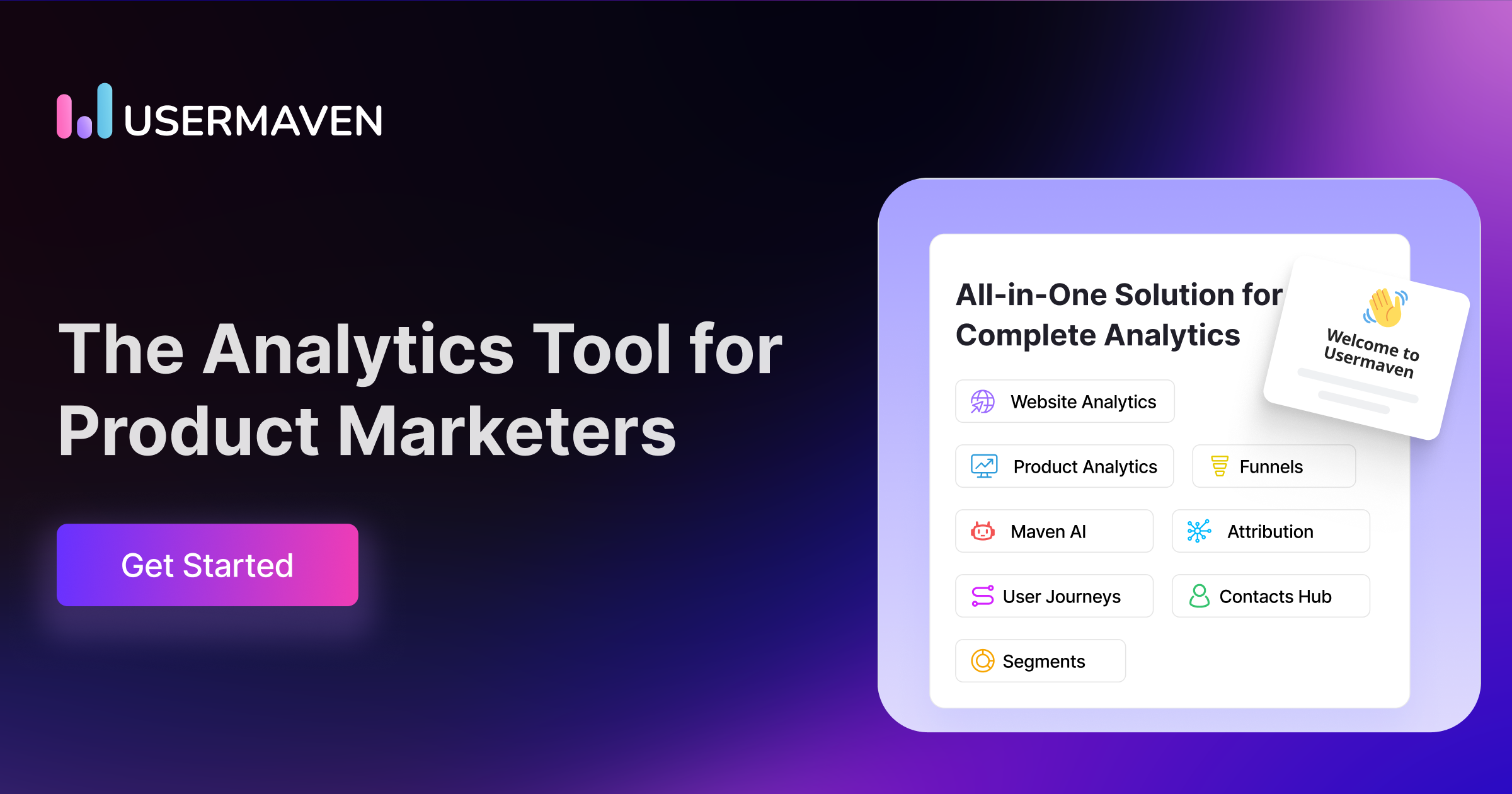
Usermaven is a comprehensive analytics platform designed specifically for growth teams looking to leverage data-driven insights to fuel their strategies. Its real-time reporting, precise attribution, and intuitive interface make it ideal for teams that need to understand customer behavior, track performance metrics, and make quick, informed decisions.
Best for Customer Analytics Tools for Growth Teams
Expert Take
Usermaven excels as a customer analytics tool with its real-time insights and precise attribution capabilities, tailored for growth teams. Its user-friendly interface and robust reporting are well-documented, supporting its premium positioning. While pricing transparency is limited to custom quotes, its feature depth justifies its value.
Pros
- Privacy-first cookie-less tracking (GDPR compliant)
- Unifies website and product analytics
- Auto-capture events without coding
- Generous free tier for startups
Cons
- Limited e-commerce analytics depth
- Report customization can be restrictive
- Fewer integrations than mature rivals
- Trends tool locked to premium plans
Best for teams that are
- Growth teams wanting a privacy-friendly, easy-to-use GA4 alternative
- SaaS companies requiring both web and product analytics in one view
Skip if
- Enterprises requiring complex SQL querying or raw data access
- Teams needing deep predictive modeling or data science capabilities
Best for teams that are
- Growth teams wanting a privacy-friendly, easy-to-use GA4 alternative
- SaaS companies requiring both web and product analytics in one view
Skip if
- Enterprises requiring complex SQL querying or raw data access
- Teams needing deep predictive modeling or data science capabilities
Pros
- Privacy-first cookie-less tracking (GDPR compliant)
- Bypasses ad-blockers via white-labeling
- Unifies website and product analytics
- Auto-capture events without coding
- Generous free tier for startups
Cons
- Limited e-commerce analytics depth
- Report customization can be restrictive
- Documentation lacks advanced use cases
- Fewer integrations than mature rivals
- Trends tool locked to premium plans
Expert Take
Usermaven excels as a customer analytics tool with its real-time insights and precise attribution capabilities, tailored for growth teams. Its user-friendly interface and robust reporting are well-documented, supporting its premium positioning. While pricing transparency is limited to custom quotes, its feature depth justifies its value.

Mixpanel is a powerful SaaS solution for businesses that want to understand and act on user behavior. It offers detailed product analytics and robust event tracking capabilities, enabling businesses to drive acquisition, growth, and retention. For professionals in the customer analytics industry, Mixpanel provides the tools necessary to segment customers and analyze their behavior in a comprehensive, data-driven manner.
Best for Customer Analytics Tools with Segmentation
Expert Take
Mixpanel excels in providing detailed user analytics and segmentation capabilities, making it a top choice for customer analytics professionals. Its robust event tracking and real-time data features are well-documented, and it maintains strong market credibility through third-party recognition. While it requires some technical expertise, its comprehensive features justify its premium positioning.
Pros
- Powerful event-based analytics
- Direct Data Warehouse sync
- SOC 2 & HIPAA compliant
- Generous startup program (1yr free)
Cons
- Steep learning curve
- Expensive at high volume
- Complex initial implementation
- Free plan capped at 1M events
Best for teams that are
- Product teams and SaaS companies needing deep user behavior and retention analysis
- Companies focused on understanding specific user journeys within apps or websites
Skip if
- Marketers primarily seeking high-level traffic source and acquisition metrics
- Non-technical users who struggle with steep learning curves for event-based tracking
Best for teams that are
- Product teams and SaaS companies needing deep user behavior and retention analysis
- Companies focused on understanding specific user journeys within apps or websites
Skip if
- Marketers primarily seeking high-level traffic source and acquisition metrics
- Non-technical users who struggle with steep learning curves for event-based tracking
Pros
- Powerful event-based analytics
- Generative AI 'Spark' reporting
- Direct Data Warehouse sync
- SOC 2 & HIPAA compliant
- Generous startup program (1yr free)
Cons
- Steep learning curve
- Expensive at high volume
- A/B testing is Enterprise-only
- Complex initial implementation
- Free plan capped at 1M events
Expert Take
Mixpanel excels in providing detailed user analytics and segmentation capabilities, making it a top choice for customer analytics professionals. Its robust event tracking and real-time data features are well-documented, and it maintains strong market credibility through third-party recognition. While it requires some technical expertise, its comprehensive features justify its premium positioning.

DriveTrain offers an advanced cohort analysis tool that is designed to address the needs of retention teams. By grouping customers based on shared traits and tracking their behavior over time, it helps uncover growth opportunities and identify patterns, which are critical for businesses focused on customer retention and loyalty.
Best for Cohort Analytics Tools for Retention Teams
Expert Take
DriveTrain Cohort Analysis excels in providing deep insights into customer behavior, which is crucial for retention teams. Its intuitive interface and data-driven approach make it a valuable tool for developing personalized retention strategies. While it requires initial data gathering and has custom pricing, its capabilities justify its premium positioning.
Pros
- 800+ native integrations for data consolidation
- Real-time cohort analysis and segmentation
- Fast 5.7-month average ROI
- Highly responsive customer support team
Cons
- Temperamental data syncs reported by users
- Steep learning curve for initial setup
- No transparent pricing available online
- Limited self-service data linking options
Best for teams that are
- B2B SaaS Finance and FP&A teams forecasting revenue and churn
- Companies needing to model future cash flow based on customer cohorts
Skip if
- Product managers seeking behavioral UX insights like clicks or heatmaps
- Teams needing mobile app performance or crash tracking
Best for teams that are
- B2B SaaS Finance and FP&A teams forecasting revenue and churn
- Companies needing to model future cash flow based on customer cohorts
Skip if
- Product managers seeking behavioral UX insights like clicks or heatmaps
- Teams needing mobile app performance or crash tracking
Pros
- 800+ native integrations for data consolidation
- Plain English formulas for non-finance users
- Real-time cohort analysis and segmentation
- Fast 5.7-month average ROI
- Highly responsive customer support team
Cons
- Temperamental data syncs reported by users
- Steep learning curve for initial setup
- Reliance on support for complex data transforms
- No transparent pricing available online
- Limited self-service data linking options
Expert Take
DriveTrain Cohort Analysis excels in providing deep insights into customer behavior, which is crucial for retention teams. Its intuitive interface and data-driven approach make it a valuable tool for developing personalized retention strategies. While it requires initial data gathering and has custom pricing, its capabilities justify its premium positioning.
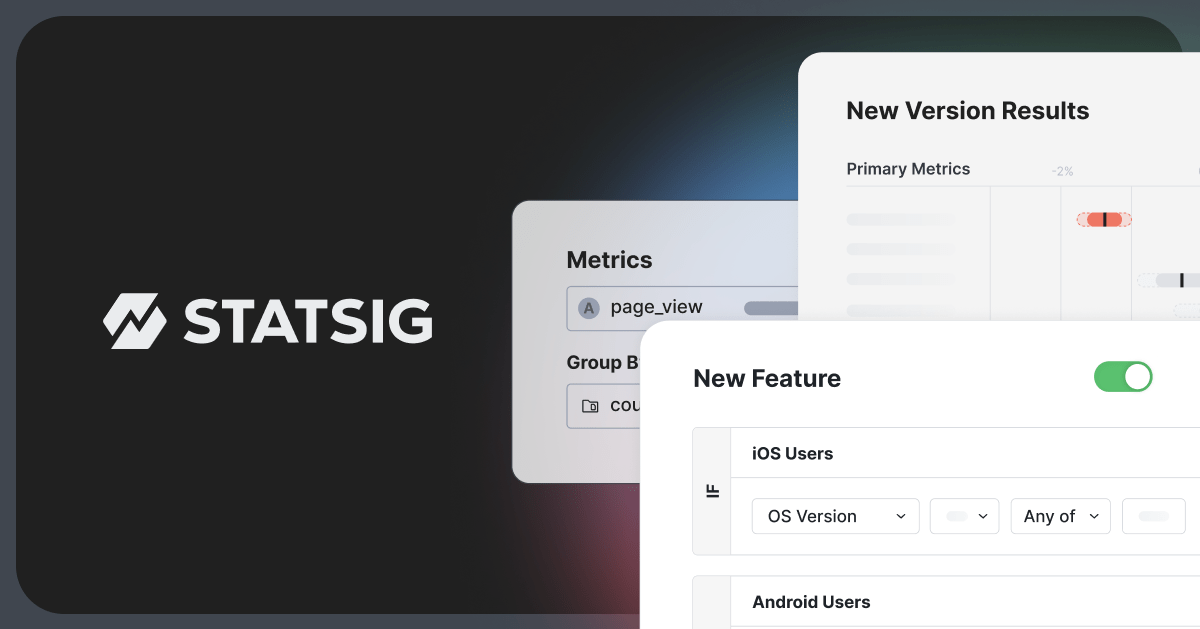
Statsig's Retention Cohort Analysis software is a cutting-edge tool designed specifically to help retention teams segment loyal and fickle users, thereby unlocking valuable insights into user behavior. The platform provides powerful strategies to boost engagement and reduce churn, addressing the key needs of businesses seeking to maximize customer retention.
Best for Cohort Analytics Tools for Retention Teams
Expert Take
Statsig Retention Cohort Analysis excels in providing retention teams with the ability to segment and analyze user behavior effectively. The platform's real-time insights and data visualization tools are well-documented, contributing to its strong usability and product capability. However, the lack of explicit pricing and limited integrations are notable tradeoffs.
Pros
- Unlimited free feature flags
- Native integration of experiments & retention
- Warehouse-native deployment option
- Trusted by OpenAI and Notion
Cons
- Lifecycle analysis is 'Coming Soon'
- Limited funnel exploration depth
- Newer ecosystem than Amplitude
- Less specialized for pure analytics
Best for teams that are
- Engineering-led product teams combining analytics with A/B testing
- Teams wanting to tie cohort performance directly to experiment results
Skip if
- Marketing teams needing simple visual analytics without engineering context
- Organizations not utilizing feature flags or experimentation workflows
Best for teams that are
- Engineering-led product teams combining analytics with A/B testing
- Teams wanting to tie cohort performance directly to experiment results
Skip if
- Marketing teams needing simple visual analytics without engineering context
- Organizations not utilizing feature flags or experimentation workflows
Pros
- Unlimited free feature flags
- Generous free tier (2M events)
- Native integration of experiments & retention
- Warehouse-native deployment option
- Trusted by OpenAI and Notion
Cons
- Lifecycle analysis is 'Coming Soon'
- Limited funnel exploration depth
- Session replays capped at 1MB
- Newer ecosystem than Amplitude
- Less specialized for pure analytics
Expert Take
Statsig Retention Cohort Analysis excels in providing retention teams with the ability to segment and analyze user behavior effectively. The platform's real-time insights and data visualization tools are well-documented, contributing to its strong usability and product capability. However, the lack of explicit pricing and limited integrations are notable tradeoffs.

Alteryx Designer Cloud, a churn analytics tool, empowers businesses to manage and analyze customer data more effectively. Its advanced capabilities help in predicting customer churn, thereby enabling companies to develop proactive strategies to retain their customers, which is vital in today's competitive business environment.
Best for Churn Analytics Tools
Expert Take
Alteryx Designer Cloud excels in providing advanced analytics and data management capabilities tailored for churn analysis. Its integration with cloud environments and recognition in the industry support its position as a leading tool in churn analytics. However, the requirement for technical knowledge and lack of transparent pricing are noted tradeoffs.
Pros
- Intuitive drag-and-drop visual interface
- AI/ML-based transformation suggestions
- No-code environment for non-technical users
- SOC 2 Type II and ISO 27001 certified
Cons
- Significantly fewer tools than Desktop version
- High cost per user license (~$4,950/yr)
- Reliance on data sampling for views
- No direct 'Browse' tool like Desktop
Best for teams that are
- Teams needing to blend complex data from fragmented sources
- Organizations requiring explainable AI and governance
Skip if
- Business users seeking a pre-built, turnkey churn dashboard
- Small businesses looking for a simple, single-purpose tool
Best for teams that are
- Teams needing to blend complex data from fragmented sources
- Organizations requiring explainable AI and governance
Skip if
- Business users seeking a pre-built, turnkey churn dashboard
- Small businesses looking for a simple, single-purpose tool
Pros
- Pushdown processing for Snowflake/Databricks
- Intuitive drag-and-drop visual interface
- AI/ML-based transformation suggestions
- No-code environment for non-technical users
- SOC 2 Type II and ISO 27001 certified
Cons
- Significantly fewer tools than Desktop version
- 1GB limit on direct file uploads
- High cost per user license (~$4,950/yr)
- Reliance on data sampling for views
- No direct 'Browse' tool like Desktop
Expert Take
Alteryx Designer Cloud excels in providing advanced analytics and data management capabilities tailored for churn analysis. Its integration with cloud environments and recognition in the industry support its position as a leading tool in churn analytics. However, the requirement for technical knowledge and lack of transparent pricing are noted tradeoffs.

Heap's Cohort Analysis is a powerful tool designed specifically for Retention Teams. It uses behavioral data to identify groups of users, allowing teams to pinpoint patterns, improve engagement and reduce churn. Its in-depth analysis provides actionable insights, directly addressing the needs of businesses seeking data-driven decision making.
Best for Cohort Analytics Tools for Retention Teams
Expert Take
Heap's Cohort Analysis excels in providing detailed insights into user behavior, making it a valuable tool for retention teams. Its customizable cohort definitions and data-driven approach are well-documented, though pricing transparency could be improved. Overall, it stands out as a top-tier solution in its category.
Pros
- Autocapture requires no initial code
- SOC 2 and ISO 27001 certified
- Generous free tier (10k sessions)
- Acquired by market leader Contentsquare
Cons
- Opaque, custom-only paid pricing
- Data management can become messy
- Significant cost jump from free tier
- Limited data retention on lower plans
Best for teams that are
- Non-technical users needing retroactive analysis of historical user behavior
- SaaS companies requiring deep behavioral segmentation for retention
Skip if
- Teams needing real-time data for immediate marketing automation triggers
- Developers preferring explicit manual instrumentation over auto-capture
Best for teams that are
- Non-technical users needing retroactive analysis of historical user behavior
- SaaS companies requiring deep behavioral segmentation for retention
Skip if
- Teams needing real-time data for immediate marketing automation triggers
- Developers preferring explicit manual instrumentation over auto-capture
Pros
- Retroactive analysis of historical data
- Autocapture requires no initial code
- SOC 2 and ISO 27001 certified
- Generous free tier (10k sessions)
- Acquired by market leader Contentsquare
Cons
- Opaque, custom-only paid pricing
- Steep learning curve for advanced reports
- Data management can become messy
- Significant cost jump from free tier
- Limited data retention on lower plans
Expert Take
Heap's Cohort Analysis excels in providing detailed insights into user behavior, making it a valuable tool for retention teams. Its customizable cohort definitions and data-driven approach are well-documented, though pricing transparency could be improved. Overall, it stands out as a top-tier solution in its category.




Loading comparison data…