1. Home
  2. Project Management & Productivity
  3. Time Tracking & Productivity Tools

Category · Project Management & Productivity Tools

Time Tracking & Productivity Tools

Time Tracking & Productivity Tools are essential for business and professional buyers seeking to optimize workflows and enhance efficiency within their organizations. These tools are typically used to monitor employee work hours, manage project timelines, track productivity metrics, and ensure compliance with company policies.

4 rankings38 products scored6 criteria eachUpdated Sep 4, 2026
01

Top picks across Time Tracking & Productivity Tools

The highest scorer from each vendor across all 4 rankings. Six little boxes show each one against its ranking average, and the full review sits under each card.

1

8am

8am.com · 8am Billing #1 of 11 in Time Tracking & Productivity Tools for Staffing Agencies

8am billing is endorsed by all 50 state bars.

Best forLaw firms needing secure, IOLTA-compliant payment processing.

From $19 per month ISO 27001IOLTA compliantPCI Level 1
Top of its ranking

Billing and payment platform for legal and accounting firms, built around IOLTA compliance.

Standout fact8am is trusted by 260,000-plus professionals and endorsed by all 50 state bars. 8am.com
Biggest catchMandatory password changes and security codes can disrupt daily access. capterra.com
260,000+Professionals using 8am8am.com
$19/moStarting pricetrustradius.com
up to 10Billing hours saved monthlylawpay.com

Standout number

260,000+professionals using 8am

Source: 8am.com

Starting price

$19/moLawPay starting price

Upside

  • Endorsed by all 50 state bars
  • Next-day payment deposits
  • Saves up to 10 hrs/mo

Catch

  • Mandatory password resets disrupt use
  • Some price hikes reported
  • Limited invoice customization
Pick it ifLaw firms needing secure, IOLTA-compliant payment processing.
Skip it ifGeneric retail or e-commerce businesses without legal billing needs.
PricingLawPay starts at $19/mo.

Editor's take8am, which spans LawPay and MyCase, is endorsed by all 50 state bars and used by over 260,000 professionals. Firms report saving up to 10 billing hours a month, though frequent mandatory security prompts and occasional price increases draw complaints.

How much does 8am Billing cost?

The LawPay product starts at $19 a month. Some users report unannounced price increases over time, alongside standard card processing fees.

Is 8am Billing endorsed by bar associations?

Yes. LawPay is available through all 50 state bars, more than 60 local and specialty bars, and the American Bar Association.

The evidence: 6 criteria, 2 penalties
9.1
Product Capability & DepthLooked for: Comprehensive billing workflows, time tracking, and payment collection tools tailored to professional services.8am Billing (via LawPay and MyCase) offers end-to-end capabilities, including secure online payments, scheduled billing, flexible Pay Later options, and new tap-to-phone in-person payments.trustradius.com8am.com
9.4
Market Credibility & Trust SignalsLooked for: Widespread industry adoption, official endorsements, and proven track records in the legal and professional sectors.The platform possesses unmatched credibility, trusted by hundreds of thousands of professionals and officially vetted by every state bar association in the US.8am.comlawpay.com
9.2
Usability & Customer ExperienceLooked for: Intuitive interfaces, ease of setup, reliable client portals, and overall user satisfaction.Users consistently praise the platform's user-friendly interface and streamlined invoicing. However, some complain about rigid security measures disrupting daily access.lawpay.com
9.0
Value, Pricing & TransparencyLooked for: Clear, competitive pricing models and demonstrable return on investment through time savings and cash flow improvement.With base pricing starting at $19/month, the platform delivers strong ROI by reducing administrative tasks, though some users note frustration with unexpected price hikes and processing fees.trustradius.comlawpay.com
9.5
Security, Compliance & Data ProtectionLooked for: Strict adherence to industry regulations, data encryption, and specific protections for trust and operating accounts.8am maintains enterprise-grade security, featuring PCI Level 1 compliance and built-in safeguards to strictly separate earned fees from unearned trust account funds.lawpay.comwisbar.org
9.3
Integrations & Ecosystem StrengthLooked for: Seamless connectivity with third-party tools and synergy within the provider's own suite of products.8am Billing operates within a powerful, unified ecosystem (LawPay, MyCase, CPACharge, DocketWise) that centralizes fragmented operations, alongside key third-party connections like QuickBooks.8am.comtrustradius.com

Score adjustments−0.08 points in total

−0.05Users report excessive and disruptive security measures, including random mandatory password changes and recurring security codes, which occasionally hinder platform access.capterra.com · severity 45/100
−0.03Some long-term users have cited frustration with sudden, unannounced subscription price increases and compounding credit card processing fees.capterra.com · severity 35/100
2

Clockify

clockify.me · Clockify Time Tracking Software #1 of 10 in Time Tracking & Productivity Tools for Contractors

Clockify's free plan covers unlimited users, mobile app has bugs

Best forFreelancers and small businesses seeking a free, unlimited-user solution

Free tier free planISO 27001SOC 2
Top of its ranking

Free time tracking app with unlimited users and projects, plus 80+ integrations for contractors.

Standout factThe free plan includes unlimited users, projects and time tracking clockify.me
Biggest catchThe mobile app is frequently reported to crash and lose sync. jibble.io
80+Native integrationsreddit.com
$3.99/user/moPaid plan starting priceclockify.me
$11.99/user/moEnterprise plan priceclockify.me

Free vs paid

Free forever

$0
  • Unlimited users and projects
  • Unlimited time tracking

Paid from

$3.99/user/mo
  • Advanced reporting
  • Time audits and approvals

Source: clockify.me

Compliance

✓ ISO 27001✓ SOC 2 Type II

Source: clockify.me

Upside

  • Free plan includes unlimited users and projects
  • ISO 27001 and SOC 2 Type II certified
  • 80+ native integrations including QuickBooks and Jira

Catch

  • Mobile app prone to crashes and sync bugs
  • Advanced reporting gated behind paid plans
  • No native invoice generation
Pick it ifFreelancers and small businesses seeking a free, unlimited-user solution
Skip it ifField teams requiring advanced geofencing or strict GPS anti-theft features
PricingFree forever plan, paid tiers from $3.99 to $11.99/user/month

Editor's takeClockify's free tier is genuinely unlimited, users and projects included, which is rare among time trackers that cap free accounts at a handful of seats. That accessibility is backed by real security certification, both ISO 27001 and SOC 2 Type II. The mobile app is the weak link, with users on Jibble and Clockify's own forum reporting crashes and sync failures.

Is Clockify really free?

Yes, for core time tracking. The free plan includes unlimited users, unlimited projects and unlimited tracking. Paid plans start at $3.99 per user per month for advanced reporting and features.

Does Clockify have security certifications?

Yes. Clockify is ISO/IEC 27001:2022 certified and SOC 2 Type II compliant, with data hosted on AWS using 256-bit SSL encryption.

The evidence: 2 criteria, 3 penalties
9.3
Security, Compliance & Data ProtectionLooked for: We verify security certifications, data hosting standards, and compliance with regulations like GDPR and SOC 2.The product maintains enterprise-grade security standards with verified ISO 27001 certification, SOC 2 Type II compliance, and GDPR adherence, hosted on AWS infrastructure.clockify.meclockify.me
9.0
Integrations & Ecosystem StrengthLooked for: We evaluate the number of native integrations, API availability, and compatibility with common business tools.Clockify boasts over 80 native integrations with major tools like Jira, QuickBooks, and Trello, supported by a robust API for custom connections.reddit.comclockify.me

Score adjustments−0.20 points in total

−0.07Users frequently report that the mobile application suffers from bugs, crashes, and synchronization issues, making on-the-go tracking unreliable.jibble.io · severity 65/100
−0.07Some users have reported instances where the auto-tracker history was wiped or data failed to sync correctly after updates.forum.clockify.me · severity 50/100
−0.06Reporting features in the free and lower-tier plans are described by some users as limited or requiring export to Excel for deep analysis.trackingtime.co · severity 45/100
3

busybusy

busybusy.com · BusyBusy GPS Time Tracker #2 of 10 in Time Tracking & Productivity Tools for Contractors

busybusy serves 75,000+ contractors, but adds a $40 admin fee

Best forCrews needing to track both employee time and equipment on site.

Free tier From $20 per user/mo free planGPS trackingequipment tracking
#2 in its ranking

A GPS time tracker built for construction crews, with equipment tracking and offline mode.

Standout factSurpassed 75,000 active contractors using busybusy daily. busybusy.com
Biggest catchPaid plans add a mandatory $40 monthly admin fee on top of per-user pricing. connecteam.com
75,000+Active contractorsbusybusy.com
4.8/5G2 ratingg2.com

Adoption

75,000+active contractors

Source: busybusy.com

True monthly cost

Monthly cost example, 5 users

5 users at $20$100
Admin license fee$40
Total$140

Per-user plus mandatory admin fee

Upside

  • Fair Billing skips inactive seasonal users
  • Offline mode syncs once reconnected
  • Native equipment tracking and assignment

Catch

  • Mandatory $40 monthly admin fee
  • Interface called cluttered by some users
  • GPS use drains phone battery faster
Pick it ifCrews needing to track both employee time and equipment on site.
Skip it ifOffice-only businesses that do not need location or equipment tracking.
PricingFrom $20/user/mo plus a $40 admin fee

Editor's takebusybusy built Fair Billing around seasonal crews, so bills adjust automatically when workers go inactive. Equipment tracking and offline mode, standard rather than an add-on, set it apart from general-purpose trackers. The catch is a flat $40 monthly admin fee on top of per-user pricing.

Does busybusy charge extra fees beyond per-user pricing?

Yes. Paid plans add a mandatory $40 monthly admin license fee on top of per-user costs.

Can busybusy track equipment as well as time?

Yes. It shows which employees used each piece of equipment and reports operator versus machine performance.

The evidence: 6 criteria, 3 penalties
9.1
Product Capability & DepthLooked for: We evaluate features specifically designed for construction workflows, such as GPS accuracy, offline capabilities, and equipment management.BusyBusy offers specialized construction features including GPS breadcrumbing, geofencing, and a robust offline mode that syncs data once connectivity returns. It distinguishes itself with native equipment tracking that monitors machine location and operator usage, alongside job costing that supports complex cost codes.research.comapps.apple.combusybusy.com
9.3
Market Credibility & Trust SignalsLooked for: We assess the product's adoption rate, user ratings on major platforms, and company stability within the construction tech market.The platform serves over 75,000 active contractors and has been acquired by Align Technologies (formerly ToolWatch), indicating strong market stability. It maintains high user ratings across review platforms, including a 4.8/5 on G2 and 9/10 on TrustRadius.busybusy.comg2.combusybusy.com
8.7
Usability & Customer ExperienceLooked for: We analyze user feedback regarding the mobile app interface, ease of adoption for field crews, and technical support quality.While the mobile app is praised for field utility, users frequently cite a cluttered user interface (UI) with too many tabs as a drawback. Customer support is highly rated, but there are documented complaints regarding battery drain on personal devices due to GPS usage.jibble.iojibble.iosoftwarefinder.com
8.6
Value, Pricing & TransparencyLooked for: We examine pricing structures, hidden fees, contract terms, and policies regarding seasonal workforce fluctuations.BusyBusy offers a unique 'Fair Billing Policy' that automatically adjusts bills based on active usage, ideal for seasonal crews. However, paid plans require a mandatory $40/month admin license fee in addition to per-user costs, which significantly increases the effective cost for small teams.connecteam.combusybusy.combusybusy.com
9.2
Compliance & Liability ProtectionLooked for: We look for features that protect employers from labor lawsuits, such as break enforcement, injury sign-offs, and audit trails.The product excels in liability protection with features like daily sign-offs where employees confirm they were not injured. It also includes specific tools for California break compliance, such as a break scanner and required break attestations.youtube.comapps.apple.comyoutube.com
8.9
Integrations & Ecosystem StrengthLooked for: We evaluate the depth of integrations with construction-specific ERPs, payroll systems, and accounting software.BusyBusy offers deep integrations with major construction software including Procore, Sage (100 & 300), Foundation, and Viewpoint. It also connects with QuickBooks and supports Zapier for broader automation.busybusy.comsourceforge.netbusybusy.com

Score adjustments−0.11 points in total

−0.04Paid plans require a mandatory $40/month 'Admin License Fee' in addition to the per-user subscription cost, which significantly raises the entry price for small teams.connecteam.com · severity 60/100
−0.04Users have reported that the user interface is cluttered with too many tabs, making navigation difficult.jibble.io · severity 35/100
−0.03There are documented user complaints regarding the mobile app draining personal device batteries faster than expected.jibble.io · severity 30/100
4

Knowify

knowify.com · Knowify Construction Time Tracker #3 of 10 in Time Tracking & Productivity Tools for Contractors

Knowify syncs deeply with QuickBooks, but the mobile app glitches

Best forTrade contractors relying heavily on QuickBooks Online for accounting.

From $99 per month QuickBooks integrationfree trialconstruction
#3 in its ranking

Construction time tracker turning field hours into real-time labor costs and job costing.

Standout factHolds Intuit's 'Accountant Approved' badge for its QuickBooks integration. knowify.com
Biggest catchThe mobile app has documented stability issues, including crashes and unreliable offline mode. apps.apple.com
4.5/5G2 ratingg2.com
$99/moStarting priceknowify.com
300% over 5 yearsReported business growth (case example)g2.com

In their words

“A real-time 2-way sync means contractors can work in Knowify, and accountants can work in QuickBooks.”

quickbooks.intuit.com

Standout number

4.5/5G2 rating

Source: g2.com

Upside

  • Bi-directional QuickBooks sync
  • Real-time labor burden costing
  • Unlimited jobs on every plan

Catch

  • Mobile app crashes reported
  • Offline mode called unreliable
  • Steep learning curve for advanced tools
Pick it ifTrade contractors relying heavily on QuickBooks Online for accounting.
Skip it ifLarge enterprises or contractors not using QuickBooks.
PricingFrom $99/month (Core plan), unlimited jobs included.

Editor's takeKnowify turns clocked hours into real labor cost, factoring in burden, benefits, and insurance the moment a worker clocks out. Its two-way QuickBooks sync carries Intuit's 'Accountant Approved' badge, letting contractors and accountants work in either system. The base Core plan starts at $99 a month with unlimited jobs. Field use is the rough edge. Multiple reviewers report the mobile app crashing and offline mode failing to hold data reliably.

Does Knowify integrate with QuickBooks?

Yes, with a real-time, two-way sync for invoices, expenses, and time that carries Intuit's Accountant Approved badge.

Is Knowify's mobile app reliable?

Reviewers report stability issues, including crashes and unreliable offline mode, according to App Store reviews, even though the web platform and support are rated highly.

The evidence: 6 criteria, 2 penalties
8.8
Product Capability & DepthLooked for: We evaluate the breadth of construction-specific features like GPS tracking, labor burden calculations, and project management tools.Knowify offers robust time tracking with GPS geofencing, foreman views, and deep project management features like AIA billing and change orders, though mobile stability varies.knowify.comknowify.com
9.2
Market Credibility & Trust SignalsLooked for: We look for industry certifications, partnerships, and consistent user ratings across major review platforms.The product holds 'Accountant Approved' status from Intuit and maintains high ratings (4.5/5) on major review sites like G2 and Capterra.knowify.comg2.com
8.5
Usability & Customer ExperienceLooked for: We assess the ease of use for both office and field teams, as well as the quality of customer support.While office users praise the web interface and US-based support, field users report significant friction and bugs with the mobile application.g2.comapps.apple.com
9.0
Value, Pricing & TransparencyLooked for: We evaluate pricing transparency, contract terms, and feature inclusion relative to cost.Pricing is fully transparent starting at $99/month with unlimited jobs included, offering significant value compared to higher-priced competitors.knowify.comsoftwareconnect.com
9.4
Job Costing & Financial AccuracyLooked for: We examine the precision of financial tracking, including labor burden, WIP reporting, and budget-to-actual analysis.Knowify excels here, converting time logs into real-time labor costs that include burden, benefits, and insurance for precise profitability tracking.knowify.comknowify.com
9.5
Integrations & Ecosystem StrengthLooked for: We analyze the depth and quality of connections with accounting, payroll, and other construction software.The platform offers a 'best-in-class' bi-directional sync with QuickBooks (Online & Desktop) and integrates with Zapier, CompanyCam, and Billd.quickbooks.intuit.comknowify.com

Score adjustments−0.14 points in total

−0.08Numerous user reviews cite significant stability issues with the mobile app, including crashes, sync failures, and poor offline mode performance.apps.apple.com · severity 75/100
−0.06Users report limitations in reporting customization, specifically regarding sales tax dropdowns and pagination in document templates.g2.com · severity 45/100
5

Replicon

replicon.com · Replicon Time Tracking Software #2 of 11 in Time Tracking & Productivity Tools for Staffing Agencies

Replicon covers 145+ jurisdictions, but needs 10 users minimum

Best forEnterprises with complex global workforce and compliance needs.

From $6 per user/mo FedRAMPenterpriseAI features
#2 in its ranking

Replicon is an enterprise time tracking platform with FedRAMP security and global labor compliance.

Standout factReplicon holds FedRAMP Moderate authorization, rare for time tracking software. community.replicon.com
Biggest catchThe mobile app is described as clunky, buggy, and behind the web version. jibble.io
145+Jurisdictions covereddeltek.com
7,800+Organizations servedreplicon.com
$6/user/moStarting pricesoftwareconnect.com

Standout number

145+jurisdictions in compliance library

Source: deltek.com

Learning curve

AfternoonWeeks

Mobile app called clunky and buggy by users

Upside

  • FedRAMP Moderate authorized security
  • Compliance library for 145+ jurisdictions
  • ZeroTime AI auto-tracks from 100+ apps

Catch

  • Mobile app called clunky, buggy
  • Outdated interface design
  • Requires a minimum of 10 users
Pick it ifEnterprises with complex global workforce and compliance needs.
Skip it ifSmall teams or freelancers wanting simple, budget tracking.
PricingFrom $6/user/mo (Time & Attendance), 10-user minimum

Editor's takeReplicon holds FedRAMP Moderate authorization, uncommon for time tracking software and a strong signal for government buyers. Its compliance library covers labor rules across 145-plus jurisdictions, automatically applying local overtime and break rules. Day to day usability lags behind though, since the mobile app is described as clunky and buggy.

Is Replicon good for global compliance?

Yes. It maintains a compliance library covering 145-plus jurisdictions in 75-plus countries, applying local overtime and break rules automatically.

Does Replicon have a minimum user requirement?

Yes. Replicon requires a minimum of 10 users, which makes it less accessible for very small teams or freelancers.

The evidence: 6 criteria, 3 penalties
9.0
Product Capability & DepthLooked for: We evaluate the breadth of time tracking features, including automation, project costing, and workforce management capabilities.Replicon offers a comprehensive 'Time Intelligence' platform with AI-powered ZeroTime™ automation, project costing, and shift scheduling.replicon.comreplicon.comdeltek.com
9.4
Market Credibility & Trust SignalsLooked for: We assess the vendor's industry standing, security certifications, and customer base size.Replicon is a highly established player with FedRAMP authorization, acquired by Deltek, serving over 7,800 large enterprise customers globally.community.replicon.comreplicon.com
8.3
Usability & Customer ExperienceLooked for: We analyze user feedback regarding interface design, ease of use, and mobile app performance.While powerful, the platform faces criticism for an outdated user interface and a mobile app described as 'clunky' and prone to glitches.replicon.comjibble.iooutsail.co
8.5
Value, Pricing & TransparencyLooked for: We examine pricing structures, transparency of costs, and value for money relative to features.Pricing is modular starting at $6/user/month, but complex enterprise needs require custom quotes and there is a 10-user minimum.replicon.comsoftwareconnect.comsoftwareconnect.com
9.7
Global Labor Compliance & Pay RulesLooked for: We evaluate the software's ability to handle complex international labor laws and pay rule calculations.Replicon leads the market with a pre-built compliance library covering 145+ jurisdictions, automatically applying local overtime and break rules.replicon.comdeltek.comtimecamp.com
9.5
Security & GovernanceLooked for: We look for enterprise-grade security certifications like FedRAMP, SOC 2, and ISO standards.Replicon holds FedRAMP Moderate authorization, a rare and high-level security validation for time tracking software, alongside SOC 2 compliance.replicon.comcommunity.replicon.comdeltek.com

Score adjustments−0.15 points in total

−0.07Users consistently report the mobile app is 'clunky', buggy, and lacks features found in the web version.jibble.io · severity 65/100
−0.05The user interface is frequently described as outdated and less intuitive compared to modern competitors.outsail.co · severity 50/100
−0.03There is a documented minimum requirement of 10 users, restricting access for smaller teams.softwareconnect.com · severity 40/100
6

Toggl Track

toggl.com #3 of 11 in Time Tracking & Productivity Tools for Staffing Agencies

Toggl Track bans screenshots, serves 600,000 active users

Best forTeams that prioritize privacy and want no screenshot monitoring.

Free tier free planISO 27001privacy-first
#3 in its ranking

A privacy-first time tracker with a strict anti-surveillance policy, ISO 27001 security, and 100+ integrations.

Standout factToggl Track serves more than 600,000 active users with 99.99% uptime. toggl.com
Biggest catchThere is no GPS tracking or geofencing, limiting use for field-based teams. connecteam.com
600,000+Active userstoggl.com
99.99%Uptimetoggl.com
100+Integrationstoggl.com

Standout number

600,000+active users

Source: toggl.com

Free vs paid

Free plan

$0
  • Up to 5 users
  • Unlimited time tracking

Paid from

$18/user/mo
  • Fixed fee project tracking
  • Labor cost profitability

Source: toggl.com

Upside

  • Explicit anti-surveillance policy
  • ISO 27001 and SOC 2 Type 1 certified
  • Free plan covers up to 5 users

Catch

  • No GPS or geofencing
  • Premium plan costs $18/user/mo
  • Lacks native employee scheduling
Pick it ifTeams that prioritize privacy and want no screenshot monitoring.
Skip it ifField teams needing GPS tracking or built-in employee scheduling.
PricingFree for up to 5 users, Premium $18/user/month

Editor's takeToggl Track publicly commits to never adding screen recording, keystroke tracking, or webcam monitoring, a rare stance in employee time tracking. That policy pairs with ISO 27001 and SOC 2 Type 1 certification and 99.99% uptime across its 600,000+ active users. The free plan covers up to 5 users, but Premium runs $18 per user monthly, and there is no GPS or geofencing for field teams.

Does Toggl Track monitor screens or keystrokes?

No. Toggl Track has a documented policy against screen recording, keystroke tracking, and webcam monitoring.

Is Toggl Track free?

Yes, for up to 5 users. The Premium plan costs $18 per user per month billed annually.

The evidence: 5 criteria, 3 penalties
8.8
Product Capability & DepthLooked for: We evaluate the breadth of time-tracking features, reporting granularity, and project management utilities available without third-party add-ons.Toggl Track offers robust automated and manual time tracking, offline functionality, and idle detection, but lacks built-in employee scheduling and field workforce features like GPS tracking.toggl.comtoggl.comtoggl.com
9.5
Market Credibility & Trust SignalsLooked for: We assess the product's adoption rate, uptime reliability, and third-party certifications that demonstrate industry standing.Toggl Track serves over 600,000 active users and maintains rigorous compliance standards including ISO 27001 and SOC 2 Type 1 certifications.toggl.comtoggl.comtoggl.com
9.3
Usability & Customer ExperienceLooked for: We analyze user feedback regarding interface design, ease of adoption, and the learning curve for non-technical staff.Users consistently praise the 'unprecedented' ease of use and clean UI, though some note that navigating deep reporting features can be less intuitive.toggl.comtoggl.comprojectmanagers.net
8.6
Value, Pricing & TransparencyLooked for: We compare the feature-to-cost ratio against competitors and evaluate the transparency of pricing tiers.The free plan is exceptionally generous for small teams, but the Premium plan ($18/user/mo) is significantly more expensive than competitors like Clockify.toggl.comtoggl.comhubstaff.com
9.0
Security, Compliance & Data ProtectionLooked for: We evaluate the availability of native integrations, API quality, and browser extensions that facilitate workflow automation.The platform offers over 100 native integrations and browser extensions, plus a well-documented API, allowing seamless connection with tools like Jira and Slack.toggl.comtoggl.comtoggl.com

Score adjustments−0.18 points in total

−0.09Lacks GPS tracking and geofencing features, making it unsuitable for field service management compared to competitors.connecteam.com · severity 65/100
−0.04The Premium plan ($18/user/month) is priced significantly higher than similar tools, which users cite as a barrier for larger teams.hubstaff.com · severity 55/100
−0.05Users report limited project hierarchy and a lack of sub-task depth compared to dedicated project management tools.projectmanagers.net · severity 40/100
7

FieldServicely

fieldservicely.com · FieldServicely Plumbing Software #1 of 10 in Time Tracking & Productivity Tools for Plumbers

FieldServicely charges $9/user, but has zero G2 reviews

Best forSmall plumbing businesses wanting affordable, mobile-first tools

Free tier From $9 per user/mo free planlow costgeofencing
Top of its ranking

Mobile-first plumbing field service software with geofenced, selfie-verified attendance and a free forever plan.

Standout factThe Standard plan costs $9 per user a month, well under the $150-$300 industry average. fieldservicely.com
Biggest catchFieldServicely currently has zero reviews on G2, a major software review platform. g2.com
$9/user/monthStandard plan pricefieldservicely.com
0G2 review countg2.com
$150-$300/user/monthIndustry average comparisonfieldservicely.com

Starting price

$9/user/moStandard plan; Free Forever plan also available

In their words

“FieldServicely Reviews (0)”

g2.com

Upside

  • Free Forever plan for small teams
  • $9/user/month, undercutting rivals
  • Geofenced attendance with selfie verification

Catch

  • Zero reviews on G2
  • Basic reporting and analytics
  • Free plan support is email-only
Pick it ifSmall plumbing businesses wanting affordable, mobile-first tools
Skip it ifLarge enterprises needing complex ERP integrations
PricingFree Forever plan available. Standard plan $9/user/month.

Editor's takeFieldServicely prices its Standard plan at $9 per user a month, far below the $150 to $300 competitors like ServiceTitan typically charge, and backs it with a genuinely free forever tier. Its geofenced attendance uses selfie verification to confirm technicians are actually on-site, and the mobile app works offline for remote job locations. The tradeoff for that low price is unproven credibility. The product has zero reviews on G2, and free-plan support is limited to email.

How much does FieldServicely cost?

The Standard plan runs $9 per user a month, well under the industry average, and there is also a Free Forever plan for small teams.

Is FieldServicely a well-reviewed product?

Not yet independently verified at scale. It has zero reviews on G2 as of this writing, so buyers should weigh vendor claims against that limited third-party validation.

The evidence: 6 criteria, 2 penalties
8.8
Product Capability & DepthLooked for: We evaluate the breadth of plumbing-specific features like job scheduling, dispatching, and work order management.FieldServicely provides comprehensive job management, real-time scheduling, and dispatching with unique features like geofenced attendance using selfie verification. It supports recurring schedules for inspections and includes built-in invoicing and payroll automation.fieldservicely.comfieldservicely.comsoftwaresuggest.com
8.2
Market Credibility & Trust SignalsLooked for: We assess the product's reputation through verified user reviews, market presence, and industry adoption.While the product is actively maintained and claimed on review sites, it lacks a significant volume of verified reviews on major platforms like G2 and Capterra compared to established competitors.g2.comsoftwaresuggest.com
9.0
Usability & Customer ExperienceLooked for: We analyze the ease of use, mobile accessibility, and interface design for field technicians.The platform is designed with a 'least amount of taps' approach, featuring a mobile-first interface that works offline and requires minimal training for technicians.crozdesk.comslashdot.org
9.8
Value, Pricing & TransparencyLooked for: We examine pricing structures, free tier availability, and hidden costs relative to market standards.FieldServicely offers an industry-disrupting price point of $9/user/month and a 'Free Forever' plan for small teams, significantly undercutting competitors like ServiceTitan.fieldservicely.comfieldservicely.comfieldservicely.com
9.1
Mobile Field OperationsLooked for: We evaluate specific mobile capabilities such as GPS tracking, geofencing, and route optimization.The software excels in field accountability with real-time GPS tracking, route history playback, and geofenced clock-ins that require photographic evidence.fieldservicely.comgetapp.comfieldservicely.com
8.7
Support & ImplementationLooked for: We assess the quality of customer support, onboarding speed, and available training resources.Implementation is rapid, often taking less than a day, with dedicated support for paid plans, though support for the free plan is limited to email.fieldservicely.comtimecamp.com

Score adjustments−0.14 points in total

−0.07The product has a very low volume of verified reviews on major third-party platforms like G2 (0 reviews), making independent validation of claims difficult.g2.com · severity 65/100
−0.07Reporting and analytics capabilities are described as basic with limited customization options, which may hinder data-driven decision making for larger firms.apploye.com · severity 50/100
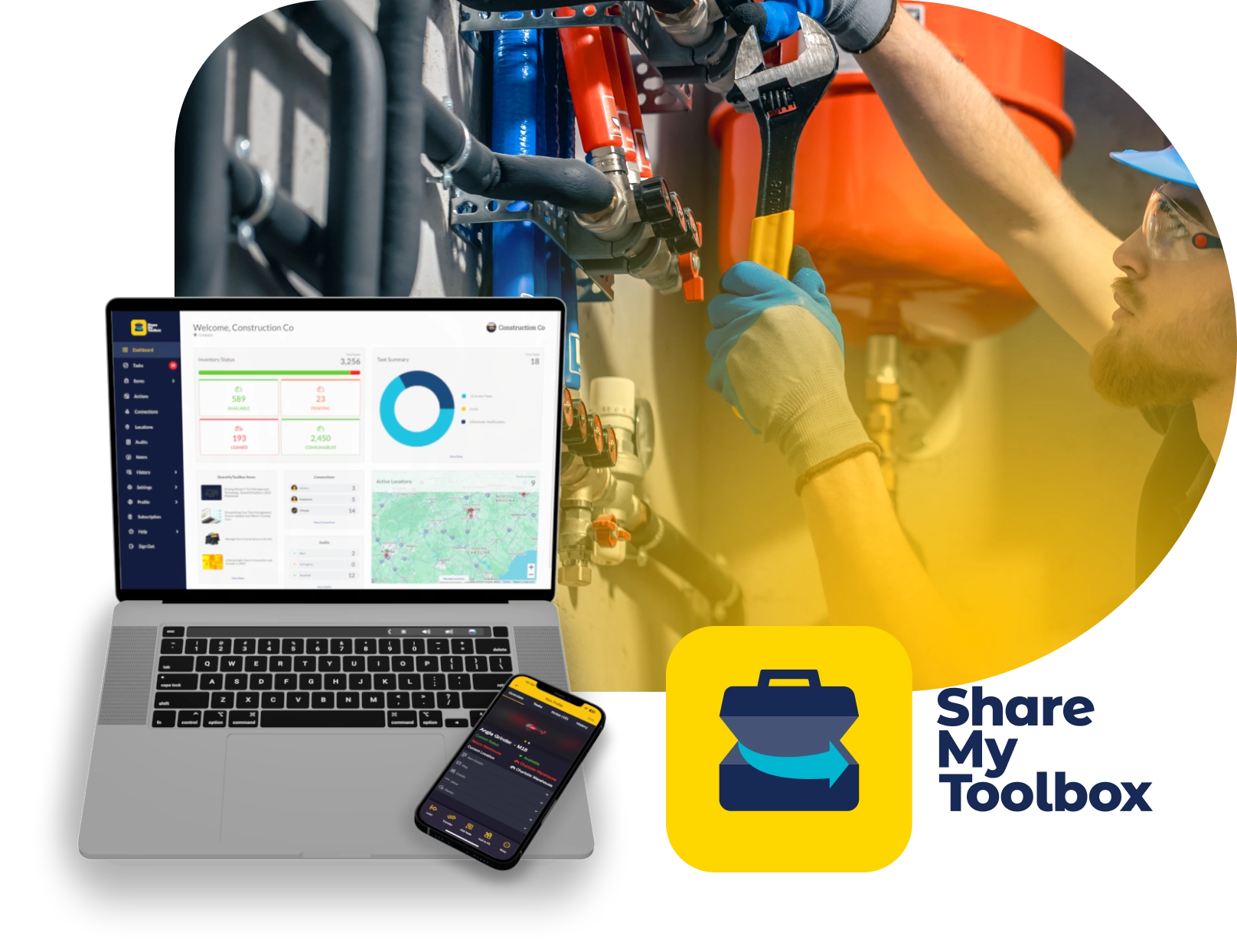
8

ShareMyToolbox

sharemytoolbox.com · ShareMyToolbox for Plumbers #2 of 10 in Time Tracking & Productivity Tools for Plumbers

ShareMyToolbox sells extra users only in blocks of 5

Best forPlumbers wanting simple accountability for shared tools and equipment.

From $100 per month ISO/IEC 27018barcode scanningoffline capable
#2 in its ranking

A mobile-first tool tracking app that uses barcode scans to track who has what.

Standout factSetup and staff training reportedly take about 20 and 5 minutes. sourceforge.net
Biggest catchAdditional users can only be purchased in blocks of 5, not individually. sharemytoolbox.com
$100/moStarting pricesharemytoolbox.com
4.8/5App store ratingapps.apple.com

What reviewers say

App Store
4.8/5 · 287
GetApp
4.8/5 · 39

Source: apps.apple.com

The thing people get wrong

ShareMyToolbox tracks tool location live, like a GPS tracker

Location only updates passively when someone scans a tool's barcode

Source: help.sharemytoolbox.com

Upside

  • Unlimited tools on paid plans
  • Setup takes about 20 minutes
  • ISO/IEC 27018 certified security

Catch

  • Extra users sold in blocks of 5
  • No active real-time GPS tracking
  • Rigid feature set, limited customization
Pick it ifPlumbers wanting simple accountability for shared tools and equipment.
Skip it ifBusinesses needing live real-time GPS or employee time tracking.
PricingFrom about $100/mo, extra users in blocks of 5

Editor's takeShareMyToolbox solves one narrow problem well, knowing which plumber has which tool. Setup reportedly takes about 20 minutes, and staff need only 5 minutes of training each. The tradeoff is flexibility, since GPS only updates on scan and extra seats come in blocks of 5.

Does ShareMyToolbox track tools in real time?

Not continuously. It uses passive GPS, capturing a tool's location only when someone scans its barcode, rather than live tracking hardware.

How does ShareMyToolbox pricing work?

Plans start around $100 a month with unlimited tools included. Additional users must be purchased in blocks of 5 at $10 each, not individually.

The evidence: 6 criteria, 3 penalties
8.9
Product Capability & DepthLooked for: Mobile-first inventory management features specifically designed for tracking tool assignments, transfers, and audits in plumbing workflows.ShareMyToolbox offers a cloud-based platform with native iOS and Android apps that enable barcode/QR scanning, tool check-in/check-out, and field transfers. It supports unlimited items on paid plans, maintenance scheduling, and 'scan to accept' workflows that establish chain of custody without requiring expensive hardware trackers.sharemytoolbox.comsharemytoolbox.comsharemytoolbox.com
9.2
Market Credibility & Trust SignalsLooked for: Verified user reviews, app store ratings, and adoption evidence within the construction and plumbing industries.The product maintains high ratings across major platforms, including a 4.8/5 on Capterra and 4.6-5.0 on App Stores. It is actively used by thousands of field-based users, with reviews consistently praising its reliability and support responsiveness.apps.apple.comgetapp.complay.google.com
9.4
Usability & Customer ExperienceLooked for: Interface simplicity and ease of adoption for field technicians who may not be technically proficient.Usability is the product's primary differentiator, with multiple sources citing 'simplicity' as the main benefit. The mobile-first design allows non-technical field workers to easily search, scan, and transfer tools with minimal training.sharemytoolbox.comapps.apple.comsourceforge.net
8.7
Value, Pricing & TransparencyLooked for: Clear, public pricing structures and flexible terms suitable for small to mid-sized plumbing businesses.Pricing is transparently listed at ~$100/month for the base plan, which includes unlimited tools. However, additional users must be purchased in 'blocks of 5', which may force smaller teams to buy more seats than needed.sharemytoolbox.comsharemytoolbox.comsharemytoolbox.com
8.2
Integrations & Ecosystem StrengthLooked for: API availability and ability to connect with common construction software or export data for reporting.The platform offers API access on Business and Enterprise plans and supports Excel/CSV import/export. While it integrates with workflows (e.g., passing billing info to Sage 300 is mentioned in reviews), it relies more on API/Export than a vast marketplace of pre-built native plugins.sharemytoolbox.comsharemytoolbox.comsharemytoolbox.com
9.0
Security, Compliance & Data ProtectionLooked for: Documented security certifications and data protection standards relevant to business inventory data.ShareMyToolbox utilizes infrastructure that is ISO/IEC 27018 certified, a specific standard for cloud privacy. Data is encrypted in transit, and the company has clear policies regarding data ownership and privacy.sharemytoolbox.comsharemytoolbox.complay.google.com

Score adjustments−0.15 points in total

−0.07The system relies on 'passive' GPS tracking (capturing location only upon scan) rather than active real-time GPS tracking, which may not meet the needs of users expecting live asset monitoring.help.sharemytoolbox.com · severity 50/100
−0.03Additional users must be purchased in 'blocks of 5', which limits flexibility for companies needing to add just one or two employees.sharemytoolbox.com · severity 45/100
−0.05The software is designed with a very defined feature set, and reviews note that requests for features outside this scope may not be accommodated.g2.com · severity 40/100
9

ExakTime

arcoro.com #1 of 7 in Time Tracking & Productivity Tools for Roofing Companies

ExakTime tracks certified payroll, GPS drains phone battery

Best forConstruction firms needing rugged time clocks and certified payroll reporting.

From $9 per user/mo certified payrollGPS trackingFaceFront biometrics
Top of its ranking

GPS time tracking for construction crews with automated certified payroll and 100+ integrations.

Standout factExakTime connects with more than 100 payroll and accounting systems, including Procore and Sage. info.exaktime.com
Biggest catchA mandatory monthly base fee of about $50 applies on top of the per-user cost, and it is not clearly listed upfront. workyard.com
$9/employee/moStarting priceconnecteam.com
100+Integrationsinfo.exaktime.com
7,000+Contractors servedgo.arcoro.com

Standout number

100+payroll and ERP integrations

Source: info.exaktime.com

True monthly cost

True monthly cost per employee

Per-employee rate$9
Monthly base fee~$50 total
Total$9/employee + $50 base

Base fee applies regardless of team size

Upside

  • Automated Certified Payroll (WH-347)
  • FaceFront biometrics stop buddy punching
  • 100+ ERP and payroll integrations

Catch

  • Mandatory ~$50 monthly base fee
  • GPS tracking drains phone battery
  • No native mileage tracking
Pick it ifConstruction firms needing rugged time clocks and certified payroll reporting.
Skip it ifSmall businesses on tight budgets facing high base and per-user fees.
PricingFrom $9/employee/mo plus a monthly base fee around $50

Editor's takeExakTime ranks first among time tracking tools built for roofing companies. Its 9.3 compliance score comes from automated Certified Payroll support for Federal Form WH-347, rare among generic time trackers. Reviewers praise the 100-plus integrations, but note the GeoTrakker GPS feature is a notable battery hog.

How much does ExakTime cost?

The standard plan starts at $9 per employee per month when billed annually. A separate monthly base fee of around $50 also applies, on top of per-user costs.

Does ExakTime help with certified payroll?

Yes. It supports Certified Payroll reporting, helping contractors populate Federal Form WH-347 for government construction projects automatically.

The evidence: 6 criteria, 3 penalties
9.1
Product Capability & DepthLooked for: We evaluate features specifically designed for the roofing and construction workflow, such as geofencing, job costing, and offline capabilities.ExakTime delivers specialized tools including FaceFront biometrics for identity verification, robust geofencing to track crew locations, and job costing codes that map labor to specific roofing projects.arcoro.comarcoro.comarcoro.com
9.2
Market Credibility & Trust SignalsLooked for: We assess the vendor's longevity, user base size, and reputation within the construction industry.With over 20 years in the market and a user base of more than 7,000 contractors, ExakTime is a deeply established player with strong industry trust.roofingcontractor.comgo.arcoro.comworkyard.com
8.8
Usability & Customer ExperienceLooked for: We look for ease of use for field workers, mobile app stability, and the quality of administrative interfaces.While the interface is generally user-friendly for field crews, users report occasional syncing delays and significant battery drain from the GPS features.arcoro.comconnecteam.comtimeero.com
8.5
Value, Pricing & TransparencyLooked for: We analyze the pricing model, hidden fees, and overall cost-to-value ratio for small to mid-sized roofing businesses.Pricing starts at $9/user/month, but the requirement for an undisclosed monthly base fee (approx. $50) and annual billing reduces transparency and accessibility for smaller firms.arcoro.comworkyard.comconnecteam.com
9.0
Integrations & Ecosystem StrengthLooked for: We evaluate the breadth and depth of connections with construction-specific ERPs, payroll systems, and project management tools.The platform boasts over 100 integrations, including deep connections with industry standards like Procore, Sage, Foundation, and QuickBooks.info.exaktime.comarcoro.com
9.3
Security, Compliance & Data ProtectionLooked for: We examine features that ensure adherence to labor laws, certified payroll requirements, and data security standards.ExakTime excels with built-in support for Certified Payroll (Form WH-347) and SOC 2 Type II certification, making it highly secure and compliant for government contracts.arcoro.comdynamic.xyz

Score adjustments−0.15 points in total

−0.06The GeoTrakker GPS feature significantly drains mobile battery life, leading to employee complaints and resistance to using the app on personal devices.timeero.com · severity 60/100
−0.04A mandatory monthly base fee (approximately $50) is charged on top of per-user fees but is not transparently listed on the main pricing page.workyard.com · severity 50/100
−0.05Users report occasional delays in data synchronization between the mobile app and the web dashboard, particularly in areas with spotty connectivity.connecteam.com · severity 45/100
10

Jibble

jibble.io · Jibble Roofer Timesheet App #2 of 7 in Time Tracking & Productivity Tools for Roofing Companies

Jibble stays free forever, but skips mileage tracking

Best forStartups and small roofing teams wanting a permanently free tool.

Free tier free planmobile appGPS tracking
#2 in its ranking

Free time tracking app for roofers with GPS geofencing, facial recognition and offline mode.

Standout factJibble is free forever for unlimited users, including GPS and facial recognition. jibble.io
Biggest catchJibble has no built-in mileage tracking feature. timeero.com
4.8/5Capterra ratingjibble.io
$2.49/user/moPaid plan starting pricejibble.io

Free vs paid

Free forever plan

$0
  • Unlimited users
  • GPS tracking and geofencing
  • Facial recognition verification

Premium from

$2.49/user/mo
  • Advanced reporting
  • Live location tracking

Source: jibble.io

What reviewers say

Capterra
4.8/5
G2
4.6/5

Source: jibble.io

Upside

  • Free forever plan for unlimited users
  • GPS geofencing for on-site clock-ins
  • Facial recognition prevents buddy punching

Catch

  • No built-in mileage tracking
  • Limited advanced shift scheduling
  • Occasional mobile-to-web sync delays
Pick it ifStartups and small roofing teams wanting a permanently free tool.
Skip it ifTeams needing built-in mileage tracking or advanced shift scheduling.
PricingFree forever for unlimited users, paid plans from $2.49/user/mo

Editor's takeJibble's free plan includes GPS geofencing and facial recognition, features many rivals charge for even on paid tiers. That value drives a 9.6 score, its highest of any category. The tradeoff is coverage, since Jibble has no built-in mileage tracking for crews driving between job sites.

Is Jibble really free?

Yes. The free plan is free forever for unlimited users and includes GPS tracking, geofencing and facial recognition verification, features many competitors reserve for paid tiers.

Does Jibble track mileage?

No. Jibble has no built-in mileage tracking feature, so roofing companies needing travel reimbursement data will need a separate tool or workaround.

The evidence: 6 criteria, 3 penalties
8.7
Product Capability & DepthLooked for: We evaluate the breadth of time-tracking features, specifically offline capabilities and job costing tools essential for roofing workflows.Jibble offers robust time tracking with facial recognition, GPS geofencing, and offline mode, but lacks native mileage tracking and advanced scheduling features.jibble.iojibble.iojibble.io
9.3
Market Credibility & Trust SignalsLooked for: We look for consistent high ratings across independent review platforms and a transparent business model that builds user trust.Jibble maintains exceptional ratings across major review sites and clearly communicates its 'free forever' value proposition without hidden catches.jibble.iojibble.io
8.9
Usability & Customer ExperienceLooked for: We assess the ease of onboarding for field crews and the reliability of the mobile interface under real-world conditions.Users report the interface is intuitive and easy to set up, though some experience synchronization delays between the mobile app and web dashboard.jibble.ioreddit.comconnecteam.com
9.6
Value, Pricing & TransparencyLooked for: We analyze the cost-to-feature ratio, specifically looking for hidden fees or restrictive limits on free plans.Jibble offers an industry-leading free plan with unlimited users and GPS features, providing immense value compared to competitors.jibble.iojibble.iojibble.io
9.1
Field Operations & GPS ReliabilityLooked for: We examine the accuracy of geofencing and the reliability of location tracking for distributed roofing crews.The app provides precise geofencing that restricts clock-ins to specific job sites and includes live location tracking on higher tiers.jibble.iojibble.iojibble.io
8.8
Payroll & Compliance IntegrationsLooked for: We verify the depth of integrations with accounting software and the ease of exporting data for payroll processing.Jibble integrates seamlessly with Xero and QuickBooks, though report exports are limited to CSV/XLS formats without a direct PDF option.jibble.iotimeero.com

Score adjustments−0.19 points in total

−0.08The application lacks a built-in mileage tracking feature, which is a significant limitation for roofing companies that need to reimburse travel.timeero.com · severity 60/100
−0.07Shift scheduling capabilities are limited; the software does not support advanced shift swapping or complex rostering needs.connecteam.com · severity 50/100
−0.04Users have reported delays in synchronization between the mobile app and the web dashboard, requiring manual refreshes.reddit.com · severity 40/100
02

Every ranking in Time Tracking & Productivity Tools

Each card shows the top three. The eye opens a quick look. Open a ranking for every product, the evidence and the comparison table.

1 ClockifyClockify's free plan covers unlimited users, mobile app has bugs 9.0/10
Visit ↗
2 busybusybusybusy serves 75,000+ contractors, but adds a $40 admin fee 8.9/10
Visit ↗
3 KnowifyKnowify syncs deeply with QuickBooks, but the mobile app glitches 8.9/10
Visit ↗
See all 10 ranked
1 FieldServicelyFieldServicely charges $9/user, but has zero G2 reviews 8.8/10
Visit ↗
2 ShareMyToolboxShareMyToolbox sells extra users only in blocks of 5 8.8/10
Visit ↗
3 AttoOne-tap GPS time tracker, but web dashboard lacks features 8.7/10
Visit ↗
See all 10 ranked
1 ExakTimeExakTime tracks certified payroll, GPS drains phone battery 8.8/10
Visit ↗
2 JibbleJibble stays free forever, but skips mileage tracking 8.8/10
Visit ↗
3 AttoAtto's web app has no scheduling or chat, mobile does 8.7/10
Visit ↗
See all 7 ranked
1 8am8am billing is endorsed by all 50 state bars. 9.2/10
Visit ↗
2 RepliconReplicon covers 145+ jurisdictions, but needs 10 users minimum 8.9/10
Visit ↗
3 Toggl TrackToggl Track bans screenshots, serves 600,000 active users 8.9/10
Visit ↗
See all 11 ranked
03

About Time Tracking & Productivity Tools

What the category is, how it developed, and what to look for. Two minutes, or the long read.

Time Tracking & Productivity Tools cover the digital capture, classification, and analysis of workforce hours and activity across the employee lifecycle: from recording billable increments and shift attendance to analyzing work patterns and ensuring labor law compliance. This category sits between Human Capital Management (HCM), which manages the broad administrative record of employment, and Project Management, which focuses on task completion and forward-looking planning. It includes both general-purpose platforms used for basic timesheets and specialized, vertical-specific solutions built for complex regulatory environments like government contracting, healthcare, and field services.

Read the full category guide

What Is Time Tracking & Productivity Software?

The core problem this software solves is the "blind spot" between payroll and operations. Without it, organizations pay for labor without visibility into how that labor translates into output, revenue, or compliance risk. For a law firm, it is the cash register; for a manufacturer, it is the instrument of efficiency; and for a healthcare provider, it is the shield against federal audits. Usage spans from freelancers logging minutes for invoices to enterprise COOs monitoring global utilization rates across thousands of employees.

History of the Category

While the mechanical time clock dates back to 1888, the modern software category emerged in the 1990s as businesses sought to move away from error-prone physical punch cards and mainframe dependencies. In the early 90s, on-premise solutions appeared, designed primarily to digitize the "punch" and feed data into payroll systems. These early tools were essentially digital databases—electronic versions of paper timesheets that reduced calculation errors but offered little insight. [1]

The rise of the cloud in the mid-2000s marked the second major wave. The shift from on-premise servers to SaaS (Software as a Service) democratized access, allowing small businesses to track time without heavy IT infrastructure. This era saw the birth of mobile time tracking, driven by the ubiquity of smartphones, which allowed field workers to clock in from job sites rather than returning to a central depot. The "anywhere access" model solved the logistical gap for decentralized workforces but created a new challenge: data volume.

By the 2010s, the market began to consolidate and specialize. Generalist tools could no longer satisfy the complex needs of vertical industries. This led to the rise of vertical SaaS—platforms built specifically for construction (integrating with blueprints), IT (integrating with tickets), or healthcare (integrating with patient records). Simultaneously, buyer expectations shifted from "give me a database" to "give me actionable intelligence." It was no longer enough to know when someone worked; businesses needed to know what they worked on and how efficient they were. Today, the category is defined by this demand for intelligence, utilizing AI to categorize work automatically and predict burnout before it happens. [2] [3]

What to Look For

When evaluating Time Tracking & Productivity Tools, the primary differentiator is the mechanism of capture. Does the tool require active manual entry (start/stop timers), or does it use passive monitoring (background activity logging)? High-trust environments like creative agencies typically favor manual entry to preserve culture, while high-security or high-volume transaction environments often require passive logging to ensure audit trails. A critical evaluation criterion is granularity vs. friction. The more detailed the data requirement (e.g., tracking down to the 6-minute increment per task), the higher the friction for the end-user. The best tools automate this categorization to provide granularity without the administrative burden.

Red flags in this category often appear in the data export capabilities. Many vendors make it easy to ingest data but difficult to extract it in a format compatible with ERPs or payroll engines. Watch out for "proprietary data formats" that lock you into their ecosystem. Another warning sign is a lack of "offline mode" for mobile apps. For field services, internet connectivity is never guaranteed; a tool that cannot queue data offline and sync later is functionally useless in remote areas.

Key questions to ask vendors include: "How does your system handle time zone crossings for overnight shifts?" (critical for global teams), "Can we configure different overtime rules for employees in different states/countries within the same tenant?" (essential for compliance), and "What is the exact latency between a user logging time and that data appearing in the reporting dashboard?" Real-time visibility is often a marketing claim that falls short in practice.

Industry-Specific Use Cases

Retail & E-commerce

In retail, time tracking is less about billable hours and more about labor law compliance and optimizing coverage. A massive pain point here is "clopening"—scheduling an employee to close the store late at night and open it early the next morning. Several jurisdictions have enacted predictive scheduling laws that penalize this practice without adequate rest periods or premium pay. [4] Retail-specific tools must include automated "clopening" alerts that block managers from accidentally scheduling these shifts or flag them for penalty pay. Additionally, they often integrate with Point of Sale (POS) data to overlay sales peaks with staffing levels, ensuring the floor is staffed not just by headcount, but by revenue potential. [5]

Healthcare

Healthcare providers, particularly in long-term care, face a unique federal mandate: Payroll-Based Journal (PBJ) reporting. The Centers for Medicare & Medicaid Services (CMS) requires facilities to submit staffing data that proves they are meeting care standards. This is not just a timesheet; it requires mapping hours to specific job codes (e.g., RN vs. LPN) and ensuring data consistency between payroll and the clinical record. [6] General-purpose tools rarely handle these codes correctly, leading to rejected submissions and potential fines. Healthcare time tracking must also handle complex shift differentials (e.g., weekend night pay) and cross-department floating, where a nurse might work two hours in the ER and six in the ICU, billed to different cost centers.

Financial Services

For broker-dealers and investment firms, time tracking is a regulatory safeguard. Under FINRA rules, firms must maintain rigorous supervision of their associated persons, a challenge compounded by remote work. [7] The priority here is the audit trail. Regulators may demand proof that supervisors are actively reviewing the activities of traders and advisors. Tools in this sector often focus on "digital exhaust"—tracking login times, active windows, and communication logs to prove that oversight is happening. The evaluation priority is immutability; can a record be altered after the fact without a trace? If yes, the tool is a compliance liability.

Manufacturing

Manufacturing time tracking happens on the shop floor, often integrated with Machine Execution Systems (MES). The critical metric here is Overall Equipment Effectiveness (OEE), which combines availability, performance, and quality. [8] Time tracking tools must capture "downtime reason codes" (e.g., machine jam vs. operator break) to distinguish between human and mechanical inefficiency. [9] Unlike office environments, data collection often occurs via ruggedized kiosks or tablets where workers punch in against specific work orders. A unique consideration is the "gang punch," allowing a supervisor to clock in an entire crew at once to a specific production line.

Professional Services

Firms selling time (lawyers, consultants, architects) live and die by the Realization Rate—the percentage of recorded billable time that actually gets paid by the client. [10] If an employee logs 10 hours but the partner writes off 2 hours before invoicing, the realization drops. Tools for this industry must support complex billing workflows: "Work In Progress" (WIP) aging, retainer management, and split billing (dividing one invoice among multiple clients). The evaluation priority is the "leakage" prevention—features that prompt users to log time for emails and calls that often go unbilled in generic systems.

Subcategory Overview

Time Tracking & Productivity Tools for Plumbers

Plumbing businesses operate in a high-velocity, dispatch-driven environment where the "office" is a moving van. Generic time tools fail here because they lack the geospatial context required for emergency service calls. Specialized tools for plumbers integrate time tracking directly with dispatching and inventory. They handle the "windshield time" dilemma—tracking travel time separately from billable job time, which is critical for accurate profitability analysis. A unique workflow these tools handle is the "emergency call-out" where a technician must be clocked into a job immediately upon accepting a dispatch notification, often in the middle of the night. The specific pain point driving buyers to this niche is the disconnect between the invoice and the timesheet; generic tools don't prompt the plumber to associate used parts with the labor hours, leading to lost revenue. For a deeper look at these specialized features, read our guide to Time Tracking & Productivity Tools for Plumbers.

Time Tracking & Productivity Tools for Staffing Agencies

Staffing agencies face a massive reconciliation problem. They pay workers based on one set of rules (W2/1099) and bill clients based on another (contract rates), often managing hundreds of placements across dozens of client sites. Generic tools crumble under the weight of "multi-client/multi-rate" complexity. Specialized staffing software integrates with Vendor Management Systems (VMS) to reconcile the hours the worker claims versus the hours the client approves. [11] The workflow that only these tools handle well is the "split week" calculation, where a worker might cross overtime thresholds mid-week while working for two different clients, requiring complex logic to determine who pays the premium. The pain point driving this purchase is billing leakage—agencies losing 1-2% of revenue simply because they cannot match timesheets to client approvals fast enough. Learn more about navigating these VMS challenges in our guide to Time Tracking & Productivity Tools for Staffing Agencies.

Time Tracking & Productivity Tools for Roofing Companies

Roofing is a weather-dependent, insurance-heavy trade. Crews often move between multiple sites in a single day based on rain or material availability. Specialized roofing tools include features like weather-stamped clock-ins and photo verification, where a worker must snap a photo of the completed roof section to clock out. [12] This creates an indisputable record for insurance claims and project milestones. Generic tools rarely offer image-based validation. The specific workflow unique to this niche is the "production rate" tracking—calculating labor hours per square of shingle installed, rather than just hours worked. The driving pain point is liability and fraud; roofing owners buy these tools to prove exactly who was on the roof and when, protecting themselves against injury claims and disputes. Explore these field-specific solutions in our guide to Time Tracking & Productivity Tools for Roofing Companies.

Time Tracking & Productivity Tools for Contractors

For general contractors, especially those working on government projects, the stakes are legal compliance. The Davis-Bacon Act requires contractors to pay prevailing wages and submit Certified Payroll reports (Form WH-347). [13] Generic tools do not track the intricate "work classification" data needed for these reports (e.g., tracking an employee as a carpenter for 4 hours and a laborer for 4 hours, each with different mandated pay rates). Specialized contractor tools automate the generation of these federal forms. The workflow that only these tools handle is the "fringe benefit" calculation credit, ensuring that contributions to health plans are correctly deducted from the prevailing wage obligation. The pain point is the risk of debarment—contractors move to this niche software because a single manual error on a federal payroll report can ban them from government contracts for three years. Detail on these compliance features is available in our guide to Time Tracking & Productivity Tools for Contractors.

Deep Dive: Integration & API Ecosystem

In the modern stack, a time tracking tool that stands alone is a data silo. The strength of an integration ecosystem is often the deciding factor for enterprise buyers. The most critical integration point is usually the ERP or General Ledger, followed closely by Project Management and CRM systems. However, buyers often overlook the quality of the API. A common limitation is API rate limiting. For example, Salesforce APIs can impose strict limits (e.g., 100,000 calls per day), which sounds high until a bulk sync of 5,000 timesheets triggers a cascade of individual updates that hits the ceiling, causing the sync to fail silently. [14]

Scenario: Consider a 50-person professional services firm using a generic time tool connected to Jira (for project management) and QuickBooks (for invoicing). The firm relies on a "bi-directional" sync. An employee updates a task status in Jira, which should theoretically update the time log. However, if the integration is poorly designed, it might overwrite the "billable" flag in the time tool with a default value from Jira, accidentally changing $5,000 worth of billable senior consultant time to "non-billable." The finance team only catches this month-end, requiring days of manual reconciliation. This "data overwriting" risk is a classic failure mode of shallow integrations.

Expert insight reinforces the need for robust connectivity. As noted by analysts at Gartner, organizations that fail to integrate time and attendance with broader workforce management ecosystems often face "margin leakage" due to data transfer errors. [15] When evaluating vendors, ask for their API documentation and specifically look for "webhooks" support. Webhooks allow the system to push updates in real-time, rather than relying on periodic polling that can miss data or hit rate limits.

Deep Dive: Security & Compliance

Security in time tracking has moved beyond basic password protection to become a central issue of employee privacy and regulatory adherence. The rise of biometric clocks (fingerprint, facial recognition) has triggered a wave of legal challenges under laws like Illinois' BIPA (Biometric Information Privacy Act). Furthermore, GDPR in Europe has set a high bar for "employee monitoring." It is no longer legal in many jurisdictions to indefinitely store screenshots or keystroke logs without a specific, documented business purpose.

Scenario: A logistics company operates a warehouse in France. To boost efficiency, they implement a time tracking system that uses handheld scanners to log every minute of worker inactivity. The data is stored on a US-based server. This setup is a compliance time bomb. In fact, in 2024, the French Data Protection Authority (CNIL) fined Amazon France Logistique €32 million for an "excessively intrusive" monitoring system that measured interruptions as short as one minute. [16] The regulator ruled that such granular tracking was disproportionate to the business need. Buyers must ensure their tools allow for "data minimization"—configuring the system to not collect data that isn't strictly necessary.

According to Forrester, privacy regulations are increasingly targeting employee data, treating it with the same sensitivity as consumer data. [17] When evaluating security, look for SOC 2 Type II certification, which validates that the vendor's security controls have been tested over time, not just at a single point. Also, verify "data residency" options—can the vendor guarantee that your EU employee data never leaves EU servers? For multinational companies, this is often a non-negotiable requirement.

Deep Dive: Pricing Models & TCO

Pricing in this category is deceptively complex. The headline price is usually a "per user/per month" fee, typically ranging from $5 to $20. However, the Total Cost of Ownership (TCO) often includes hidden layers: "base fees" for the platform, extra costs for advanced features like "scheduling" or "GPS tracking," and implementation fees. A significant hidden cost is the "archived user" fee. Many vendors charge to keep the data of former employees accessible, which is legally required for audit purposes.

Scenario: Let's calculate the TCO for a hypothetical 25-person consulting team. Vendor A offers $8/user/month. Vendor B offers $12/user/month. On the surface, Vendor A is cheaper ($200 vs. $300/month). However, Vendor A charges an additional $50/month base fee and requires a $5/user add-on for "client invoicing" and "expense tracking," which are included in Vendor B. Vendor A also charges full price for "archived" users. If the firm turns over 5 employees a year, after 3 years, they are paying for 15 ghost users just to keep their records. Real Calculation Year 3 Monthly Cost: Vendor A: $200 (active) + $50 (base) + $125 (add-ons) + $120 (15 archived users @ $8) = $495/month. Vendor B: $300 (active) + $0 (base) + $0 (add-ons) + $30 (nominal storage fee) = $330/month. The "cheaper" option is actually 50% more expensive in the long run.

Research from G2 indicates that hidden costs are a primary driver of dissatisfaction in software purchases, with buyers often exceeding their initial budget by over 25% due to unforeseen add-ons. [18] Always ask for the "fully loaded" price sheet and negotiate the "archived user" rate upfront. A fair vendor will charge a nominal storage fee for inactive users, not a full license.

Deep Dive: Implementation & Change Management

The technical implementation of time tracking software is rarely the failure point; the failure point is almost always human adoption. Employees naturally view time tracking with suspicion, fearing micromanagement or "big brother" surveillance. Without a structured change management strategy, resistance will manifest as "malicious compliance"—logging hours inaccurately or delaying entry until the last possible moment, rendering the data useless.

Scenario: A mid-sized marketing agency rolls out a new time tracking tool with passive screenshot monitoring to "boost productivity." They announce it via email on a Monday morning. The result? Mutiny. Senior creatives feel distrusted and morale plummets. Within two months, three top performers resign. The agency is forced to roll back the screenshot feature, but the cultural damage is done. A better approach would have been a pilot program with a "champions group" of employees who help configure the tool, focusing the messaging on "fairness in workload distribution" and "preventing burnout" rather than "monitoring."

According to Prosci, a leader in change management research, projects with excellent change management effectiveness are six times more likely to meet objectives than those with poor change management. [19] Furthermore, Gartner estimates that 55% to 75% of ERP and major software projects fail to meet their original objectives, often due to poor user adoption. [20] Implementation plans must include a "Why" narrative for the staff, not just a "How" manual.

Deep Dive: Vendor Evaluation Criteria

Evaluating vendors requires looking past the glossy demo. A critical criterion is Support & SLA (Service Level Agreement). Time tracking is mission-critical for payroll; if the system goes down on payroll Tuesday, can you afford to wait 24 hours for an email response? Enterprise buyers should demand a guaranteed uptime SLA (e.g., 99.9%) with financial penalties for breaches.

Scenario: A construction firm evaluates two vendors. Vendor X has a sleek mobile app but only offers email support during business hours (EST). Vendor Y has a slightly dated interface but offers 24/7 phone support and a dedicated account manager. The firm chooses Vendor X. Six months later, a server update by Vendor X glitches on a Monday morning, locking out 200 crew members on the West Coast who cannot clock in. The support team is offline. The firm loses thousands of dollars in disputed hours and administrative chaos. Vendor Y's "dated" reliable service would have been the superior choice.

McKinsey research highlights that the "customer experience" and post-sales support are increasingly becoming the primary differentiators in B2B software satisfaction, outpacing feature sets. [21] Buyers should test the support channel before buying—submit a technical ticket during the trial and measure the response time and quality.

Emerging Trends and Contrarian Take

Looking toward 2025-2026, the dominant trend is the shift from "tracking" to "AI-driven Agency." We are seeing the emergence of AI Agents that don't just record time but actively manage it—blocking out focus time on calendars, auto-drafting timesheets based on email activity, and flagging "meeting fatigue" risks to HR. [22] Another trend is Consolidation. Large holding companies (like Bending Spoons or private equity firms) are aggressively acquiring standalone productivity tools, suggesting a future where time tracking is just a feature within a larger "Work OS" rather than a standalone category. [23]

Contrarian Take: The obsession with "utilization rates" is backfiring. While most firms aim for 80%+ utilization, data suggests that maximizing billable hours is actually compressing margins in the long run. By squeezing out non-billable time (training, innovation, rest), firms are eroding their "intellectual capital," leading to higher churn and lower quality work. The smartest firms in 2025 will likely optimize for lower utilization (e.g., 70%) to preserve the capacity for high-value strategic thinking that AI cannot replicate. As SPI Research notes, billable utilization has actually dropped to 68.9% in recent benchmarks, hinting that the market is already correcting itself away from the burnout-inducing 80% standard. [24]

Common Mistakes

The most frequent buying mistake is overbuying complexity. Small agencies often purchase enterprise-grade tools with complex resource planning features they don't need, creating friction that kills adoption. They pay for a Ferrari to drive to the grocery store. Conversely, growing firms often underestimate data migration. They stay on a "free" or basic tool too long, and when they finally switch, they realize they cannot export their historical project data, losing years of benchmarking insights.

Another critical mistake is ignoring the "approver" workflow. Buyers focus on how easy it is for employees to enter time, but forget to test how easy it is for managers to approve it. If a manager has to open 50 individual tabs to approve 50 timesheets, they will rubber-stamp them without review, defeating the purpose of tracking. "Rubber-stamping" is a leading cause of billing errors and revenue leakage. [25]

Questions to Ask in a Demo

  • "Show me the exact steps a manager takes to reject a timesheet and the notification the employee receives. Is it seamless or clunky?"
  • "Can I backdate a pay rate change? If an employee gets a raise mid-month, will the system recalculate project costs retroactively or only forward?" (Critical for accurate job costing).
  • "How do you handle 'unaccounted time'? Does the system highlight gaps in the workday, or only track what is entered?"
  • "Show me your API documentation for 'Rate Limits' and 'Webhooks'. Do not just tell me you have an API; show me the constraints."
  • "What happens to my data if I cancel? Can I export the raw SQL/CSV file with all historical metadata, or just a PDF summary?"

Before Signing the Contract

Before committing, run a "Pilot with Skeptics." Do not pilot the software with your most tech-savvy enthusiasts. Pilot it with the grumpy senior partner or the resistant field foreman. If they can use it, the rollout will succeed. Check the contract for "Data Retention" clauses—ensure you own your data in perpetuity. Negotiate the "Implementation Support" package; ask for a dedicated onboarding specialist rather than a generic webinar. Finally, verify the "Exit Clause." Ensure you are not locked into a multi-year auto-renewal without a performance-out clause. The software landscape changes fast; you need the agility to switch if the vendor is acquired or sunsets the product.

Closing

This guide aims to arm you with the nuance required to navigate a crowded and critical software market. If you have specific questions about your unique use case or need a sounding board for your vendor shortlist, I invite you to reach out.

Email: albert@whatarethebest.com

04

Research

Original reporting on this corner of the market.

All research

Monitored employees seek medical attention for workplace injuries 3.5x more than unmonitored workers

Apr 21, 2026

Project Management & Productivity Tools and Transcription & Meeting Notes Tools

May 27, 2026

Workers conduct up to 8 separate searches to find a single correct document

May 18, 2026
05

Questions people ask

Which Time Tracking & Productivity Tools is best?

8am holds the highest score in the category at 9.2, in Time Tracking & Productivity Tools for Staffing Agencies. The right pick depends on the ranking that matches your use case, so start with the ranking list above.

Why are there 4 separate rankings?

Buyers in Time Tracking & Productivity Tools have different jobs, so each ranking is scoped to one of them and weights the six criteria for that job. The same product can hold different ranks in different rankings.

How are the scores produced?

Documentation, pricing pages, security pages and third-party reviews are reviewed against six criteria. Each criterion records what was found and links its sources. Penalties pull the score down and are shown with their evidence. Rank follows the score. Full methodology.

06

More in Project Management & Productivity

The whole group