


| Year | Market Size (USD Millions) |
|---|---|
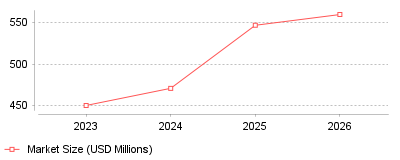
| 2023 | 450.2 |
| 2024 | 470.8 |
| 2025 | 546.6 |
| 2026 | 559.5 |
This trend demonstrates a widespread industry shift from basic digital calendars to intelligent, AI-powered appointment scheduling and workforce management platforms. Driven by the need to streamline operations and meet consumer demand, the market is expanding at a compound annual growth rate of over 16%, with enterprise AI adoption in scheduling skyrocketing to 75% in 2025 [source] [source].
On a micro level, individual service providers and healthcare clinics are fundamentally transforming how they manage daily operations. By implementing conversational AI assistants and automated self-scheduling tools, businesses are cutting administrative tasks by up to 8 hours per week while enabling booking outside of traditional business hours [source]. At a macro industry level, this signifies the obsolescence of manual, phone-based scheduling, with data showing that 82% of consumers now prefer online booking formats over calling [source]. The scheduling software market itself is evolving from a niche administrative tool into a critical, multi-billion-dollar enterprise infrastructure component. Consequently, organizations that fail to adopt these intelligent booking systems risk severe competitive disadvantages and ongoing revenue leakage.
The financial implications of scheduling inefficiencies are staggering, with patient no-shows alone costing the U.S. healthcare system an estimated $150 billion annually [source]. Every missed appointment translates to an average direct loss of $200 per unused time slot, compounding into massive daily revenue drains for medical practices and service businesses alike. Integrating automated, AI-driven reminders and one-tap rescheduling capabilities reduces these no-show rates by up to 30%, directly recovering lost revenue and immediately boosting a company's bottom line [source].
The acceleration of this trend is likely rooted in the drastic change in consumer behavior following the COVID-19 pandemic, where digital-first interactions became the baseline expectation across all demographics. Furthermore, extreme burnout and staffing shortages in sectors like healthcare and customer service have forced management to seek automation as a survival mechanism, replacing manual phone calls with smart bots capable of 24/7 operation [source]. The widespread rollout of 5G networks and mobile-first consumer habits have also made cloud-based, real-time booking interfaces more accessible and reliable than ever before. Lastly, the rapid maturation of generative AI and natural language processing has finally made conversational booking bots highly accurate and trustworthy, overcoming previous technological limitations that historically frustrated users.
The era of manual appointment booking is rapidly coming to a close, replaced by intelligent, autonomous scheduling systems that act as round-the-clock digital receptionists. Businesses that embrace these AI-driven platforms are not only recovering critical lost revenue from no-shows but are also significantly elevating their overall customer experience. The prominent takeaway is clear: investing in advanced online scheduling tools is no longer a mere operational upgrade, but an absolute necessity for survival and growth in a highly competitive, digital-first economy.
Global revenue for appointment booking software reached $447.7 million in 2025 [1]. Market analysts project this sector will grow at a compound annual growth rate of 10.43% through 2034 [1]. Adoption rates remain highest in North America, which controls 43.2% of the global market share due to heavy corporate sector investments and high baseline digital literacy [1].
Corporate technology buyers increasingly view these applications not as standalone calendar utilities, but as critical workflow engines. Modern organizations deploy digital booking platforms to reduce administrative overhead and accelerate revenue capture. These specific functions often serve as the external-facing layer for broader workplace productivity solutions, linking external client intent directly to internal resource availability.
Software vendors have responded to this demand by fragmenting the market into highly specialized vertical solutions. Medical facilities require software compliant with federal privacy regulations. Trades businesses need mobile dispatch features tied to GPS hardware. Enterprise sales teams require complex routing algorithms that cross-reference incoming web forms with customer relationship management data. This extreme specialization drives continuous growth across the software category.
Missed appointments cost the United States healthcare sector $150 billion annually [2]. Administrators refer to this operational failure as a no-show. The average open timeslot costs a medical provider $200 in uncaptured revenue [3]. When patients fail to appear, clinics lose immediate billing opportunities while continuing to carry fixed overhead costs for staffing and facility operation.
Financial damage scales aggressively at the hospital level. An average hospital records 62 missed appointments daily, resulting in an estimated annual loss of $3 million per facility [4]. Primary care clinics face acute pressure, with some reporting no-show rates reaching 43% [3]. This attrition creates secondary operational consequences. Empty slots prevent other patients from accessing preventive care, leading to delayed diagnoses and increased emergency room visits.
Implementation of digital scheduling infrastructure directly correlates with improved attendance metrics. A 2025 study analyzing ophthalmology clinics found that unused appointment rates dropped from 22.7% to 10.3% following the implementation of online booking platforms [5]. The ability to autonomously reschedule appointments without calling a receptionist significantly lowered the barrier to proper cancellation. The same study revealed that the no-show rate for online-booked appointments sat at 1.8%, compared to 5.9% for offline bookings [5].
Artificial intelligence integration offers further operational improvements. Emirates Health Services deployed a predictive model across primary care centers to identify patients with high probability of missing appointments [6]. The organization achieved a 50.7% reduction in missed visits and decreased average patient wait times by 5.7 minutes [6]. Grand View Research projects that the artificial intelligence medical scheduling software market will expand from $159.7 million in 2024 to $1.45 billion by 2033 [7].

Speed dictates sales outcomes. Buyers evaluate multiple vendors simultaneously, and the first company to secure a meeting often wins the contract. Sales teams use specific software to eliminate the manual email coordination that historically delayed initial consultations.
Companies deploying immediate form-to-meeting scheduling tools see significant conversion improvements. According to an analysis of four million demo requests by Chili Piper, organizations that allow prospects to book a meeting immediately after submitting a web form convert 66.7% of those leads into scheduled calls [8]. The window for engagement is incredibly narrow. If an inbound lead waits for manual triage and a subsequent email containing a calendar link, conversion rates plummet. Implementing inbound routing platforms deployed by software vendors ensures that high-value prospects bypass standard waiting periods and enter the sales pipeline instantly.
Calendly exemplifies the massive commercial demand for these tools. Sacra reported that Calendly achieved $270 million in annual recurring revenue at the end of 2023 [9]. This represents a 46% year-over-year increase from its $185 million revenue mark in 2022 [9]. The company built its initial user base through individual product adoption before expanding into enterprise deployments. By 2024, 86% of Fortune 500 companies actively used Calendly [10].
Enterprise sales environments require strict lead distribution logic. Basic calendar links fail in these settings because they cannot reference CRM data. Advanced platforms evaluate incoming form data against established CRM records to execute round-robin distribution, enforce territory rules, and route existing clients to their assigned account executives. This automation prevents internal conflicts over commission and ensures prospects speak with the correct regional representative.
Gartner noted in its 2023 Market Guide for Field Service Management that the workforce composition for service providers is shifting [11]. Labor shortages force companies to blend internal employees with independent contractors. This mixed labor pool complicates scheduling logistics. Dispatchers must align specific technical skills, geographical proximity, and varying contractor availability to resolve service tickets.
Pricing structures vary wildly across the field service software market. Enterprise platforms like ServiceTitan charge between $250 and $500 per user monthly, while smaller market entrants like KaamCam offer flat-rate access at $12 per user [12]. For administrators managing calendar software designed for plumbing operations, high per-seat licensing costs create friction when onboarding temporary contractors. Companies need software that grants third-party technicians access to dispatch portals without requiring expensive software seats.
Route optimization features directly impact profit margins. Scheduling software uses real-time traffic data and job duration estimates to compress travel time between site visits. Operations managers deploying dispatch tools used by roofing crews rely on these algorithms to fit one additional service call into each technician's daily route. Furthermore, these platforms automate the credentialing process for third-party workers, tracking insurance expiration dates and background check status to maintain compliance prior to dispatch [13].
Recruiters spend enormous portions of their week managing calendar conflicts. Interview coordination involves aligning the availability of candidates, hiring managers, and technical assessment panels. Manual scheduling extends the hiring timeline, increases administrative costs, and frequently results in candidate abandonment.
Human resources departments track operational efficiency using two distinct metrics. Time-to-fill measures the days elapsed between formal job requisition approval and the candidate's offer acceptance. Time-to-hire measures the days elapsed between the candidate submitting an application and accepting the offer [14]. The Society for Human Resource Management reports that the global average time-to-hire sits at 44 days, while time-to-fill averages 54 days [14]. Extended timelines cost companies top talent, as 29% of hiring managers attribute lost candidates to slow internal processes [15].
Role complexity influences scheduling delays. Ashby data from 2024 shows the median time to hire for business roles is 30 days, while technical roles require 40 days [16]. Technical positions involve multi-stage panel interviews that strain standard scheduling methods. To mitigate this, firms implement interview coordination software tailored for staffing firms. These tools scan the calendars of multiple internal employees simultaneously, identifying overlapping free blocks and presenting candidates with definitive meeting options.
Adoption of modern recruitment technology appears to be shortening broad hiring timelines. A 2024 report by Employ revealed that the average time to fill open requisitions dropped from 48 days in 2023 to 41 days in 2024 [17]. By automating interview scheduling and candidate communication sequences, talent acquisition teams eliminate the dead time previously spent waiting for email replies.
Financial institutions increasingly rely on automated scheduling to accelerate client acquisition and manage proprietary networks. Calendly announced a 73% increase in annual recurring revenue from financial services clients between the first and second halves of 2023 [18]. Within the broader finance sector, investment firms operate distinct software stacks tailored to their unique acquisition models.
Firms execute deal origination by mapping specific markets, identifying target companies, and engaging founders before those companies run formal sales processes. Generic calendar tools fail to capture the context of these high-value interactions. Associates deploying scheduling applications built for private equity teams require strict integration with specialized relationship databases. Platforms like Meridian and 4Degrees automatically log meeting metadata against firm-wide relationship scores, ensuring that partners know exactly when and how a founder was last contacted [19].
Security and compliance regulations govern software selection in this vertical. Wealth management firms and private equity funds must adhere to Securities and Exchange Commission communication rules. Software administrators must verify that scheduling platforms support secure data transmission, audit logging, and restricted permission sets prior to deployment.
Machine learning models alter basic capacity planning. Early scheduling software operated strictly on availability constraints. A time block was either open or closed. Modern applications analyze historical data to forecast future demand and dynamically adjust staffing levels before volume spikes occur [20].
Retail operators and medical clinics use predictive tools to optimize resource allocation. If historical data shows a consistent 20% cancellation rate on Friday afternoons, predictive software automatically overbooks those specific time slots to guarantee full utilization. Conversely, if weather data suggests severe conditions, the system can automatically text patients to transition physical appointments into telehealth sessions.
Voice-enabled scheduling assistants represent the next immediate phase of market development. These tools allow clients to book, cancel, or modify appointments via natural language telephone conversations, requiring zero human intervention from clinic staff. As these capabilities mature, appointment scheduling software will evolve from a passive calendar interface into an active operational controller.
| Year | Market Size (USD Millions) |
|---|---|
| 2023 | 450.2 |
| 2024 | 470.8 |
| 2025 | 546.6 |
| 2026 | 559.5 |
This trend demonstrates a widespread industry shift from basic digital calendars to intelligent, AI-powered appointment scheduling and workforce management platforms. Driven by the need to streamline operations and meet consumer demand, the market is expanding at a compound annual growth rate of over 16%, with enterprise AI adoption in scheduling skyrocketing to 75% in 2025 [source] [source].
On a micro level, individual service providers and healthcare clinics are fundamentally transforming how they manage daily operations. By implementing conversational AI assistants and automated self-scheduling tools, businesses are cutting administrative tasks by up to 8 hours per week while enabling booking outside of traditional business hours [source]. At a macro industry level, this signifies the obsolescence of manual, phone-based scheduling, with data showing that 82% of consumers now prefer online booking formats over calling [source]. The scheduling software market itself is evolving from a niche administrative tool into a critical, multi-billion-dollar enterprise infrastructure component. Consequently, organizations that fail to adopt these intelligent booking systems risk severe competitive disadvantages and ongoing revenue leakage.
The financial implications of scheduling inefficiencies are staggering, with patient no-shows alone costing the U.S. healthcare system an estimated $150 billion annually [source]. Every missed appointment translates to an average direct loss of $200 per unused time slot, compounding into massive daily revenue drains for medical practices and service businesses alike. Integrating automated, AI-driven reminders and one-tap rescheduling capabilities reduces these no-show rates by up to 30%, directly recovering lost revenue and immediately boosting a company's bottom line [source].
The acceleration of this trend is likely rooted in the drastic change in consumer behavior following the COVID-19 pandemic, where digital-first interactions became the baseline expectation across all demographics. Furthermore, extreme burnout and staffing shortages in sectors like healthcare and customer service have forced management to seek automation as a survival mechanism, replacing manual phone calls with smart bots capable of 24/7 operation [source]. The widespread rollout of 5G networks and mobile-first consumer habits have also made cloud-based, real-time booking interfaces more accessible and reliable than ever before. Lastly, the rapid maturation of generative AI and natural language processing has finally made conversational booking bots highly accurate and trustworthy, overcoming previous technological limitations that historically frustrated users.
The era of manual appointment booking is rapidly coming to a close, replaced by intelligent, autonomous scheduling systems that act as round-the-clock digital receptionists. Businesses that embrace these AI-driven platforms are not only recovering critical lost revenue from no-shows but are also significantly elevating their overall customer experience. The prominent takeaway is clear: investing in advanced online scheduling tools is no longer a mere operational upgrade, but an absolute necessity for survival and growth in a highly competitive, digital-first economy.