1. Home
  2. Field Service & Operations
  3. Route Planning & Optimization Software

Category · Field Service & Operations Software

Route Planning & Optimization Software

Route planning and optimization software helps logistics teams, delivery services, field technicians, and transportation fleets design efficient routes that minimize mileage, reduce fuel costs, improve on time performance, and increase driver productivity.

6 rankings56 products scored6 criteria eachUpdated Sep 2, 2026
01

Top picks across Route Planning & Optimization Software

The highest scorer from each vendor across all 6 rankings. Six little boxes show each one against its ranking average, and the full review sits under each card.

1

Qmove

qmove2025.com · Qmove Freight Management Platform #1 of 8 in Multi-Stop Route Planning Tools for Drivers

Qmove cuts freight costs 30% using empty return trips

Best forShippers and logistics SMEs in Egypt, Turkey, UAE and Indonesia

Quote only freightmobile appemerging markets
Top of its ranking

AI freight matching app from Full Truck Alliance, pairing shippers with drivers on return routes.

Standout factQmove cuts shipping costs 15% to 30% by using empty-return vehicles apkpure.net
Biggest catchSome users report driver delays despite a 10-minute arrival promise. appbrain.com
15-30%Cost reductionapkpure.net
3.28MParent company monthly shippersseekingalpha.com
1 of 8Category rank

What changed

15% to -30%shipping cost vs market average using empty-return trips

Source: apkpure.net

Standout number

3.28Mmonthly active shippers on parent network Full Truck Alliance

Source: seekingalpha.com

Upside

  • Backed by publicly traded Full Truck Alliance
  • Cuts costs 15-30% via empty-return trips
  • Fixed price shown before you book

Catch

  • Driver arrival times reported as inconsistent
  • Needs high local driver density to work
  • Some delayed app notifications reported
Pick it ifShippers and logistics SMEs in Egypt, Turkey, UAE and Indonesia
Skip it ifBusinesses operating outside its supported regional markets
PricingCustom quote, fixed price shown before booking

Editor's takeQmove's backing matters here. It runs as the overseas brand of Full Truck Alliance, a publicly traded freight network with over 3 million monthly active shippers. The empty-return matching model genuinely lowers costs, 15% to 30% by the vendor's own numbers, but app store reviews show real variance in driver punctuality depending on the region.

How does Qmove lower shipping costs?

It matches shippers with drivers already making empty return trips, cutting transport costs by 15% to 30% below market average rates.

Who owns Qmove?

Qmove is the overseas expansion brand of Full Truck Alliance (NYSE: YMM), a publicly traded digital freight network with millions of monthly active shippers.

The evidence: 6 criteria, 1 penalty
9.0
Product Capability & DepthLooked for: Comprehensive freight matching capabilities, diverse vehicle support, and robust tracking for shippers and drivers.Qmove provides a robust digital freight platform matching shippers with a wide range of vehicles using AI-driven dispatching for same-day, B2B, and long-haul transport.apkpure.netqmove.com
9.4
Market Credibility & Trust SignalsLooked for: Backing from established industry leaders, verified corporate structure, and verifiable market presence.Qmove operates as the international expansion brand for Full Truck Alliance (NYSE: YMM), a massive and highly profitable publicly traded digital freight network.marketbeat.comseekingalpha.com
8.8
Usability & Customer ExperienceLooked for: Intuitive mobile applications, positive user feedback, and reliable customer support channels.While the app boasts features like one-tap booking and live GPS tracking, user reviews are mixed, with some praising its convenience and others citing driver delays.apps.apple.comappbrain.com
9.6
Value, Pricing & TransparencyLooked for: Clear upfront pricing, competitive rates, and cost-saving mechanisms for shippers.Qmove emphasizes transparent, upfront pricing with no hidden fees and reduces shipping costs by 15% to 30% by utilizing empty-return vehicles.apkpure.netplay.google.com
9.1
Global Localization & Market AdaptabilityLooked for: Active adaptation to regional logistics needs, multilingual support, and strategic geographic expansion.The platform is aggressively expanding into emerging markets like Turkey, Egypt, UAE, and Indonesia, offering localized vehicle types and app interfaces in multiple languages.apps.apple.complay.google.com
9.3
Driver Ecosystem & IncentivesLooked for: Tools that empower carriers, maximize vehicle utilization, and provide financial incentives to retain drivers.Qmove offers a dedicated Driver app that promotes taking return-trip loads to increase earnings by 30%, alongside sign-up bonuses and flexible scheduling.apps.apple.comqmove-driver.en.aptoide.com

Score adjustments−0.05 points in total

−0.05Reports of driver delays and fake order notifications in regional app store reviews.apps.apple.com · severity 45/100
2

Route4Me

route4me.com · Route4Me Route Optimization #1 of 10 in Route Optimization Tools for Delivery Fleets

Built for HIPAA and Hazmat routing, not budget fleets

Best forLast-mile fleets needing HIPAA, Hazmat or telematics integrations.

From $149 per month free trialAPI accesstelematics integration
Top of its ranking

A route optimization platform for delivery fleets with a modular marketplace for compliance and telematics add-ons.

Standout factTelematics Gateway connects to Geotab, Verizon Connect and Samsara support.route4me.com
Biggest catchVoice navigation and SMS notifications cost extra on top of the base plan. upperinc.com
$149/moStarting priceroute4me.com
7 daysFree trialroute4me.com

Connects to

GeotabVerizon ConnectSamsaraSalesforceQuickBooksNot published total

Source: support.route4me.com

Starting price

$149/mo7-day free trial, custom enterprise quotes available

Upside

  • Native Geotab and Samsara integrations
  • Modular marketplace of add-ons
  • RESTful API with many SDKs

Catch

  • Voice navigation costs extra
  • Mobile app stability issues reported
  • Interface described as dated
Pick it ifLast-mile fleets needing HIPAA, Hazmat or telematics integrations.
Skip it ifLong-haul 3PL shippers or teams wanting a simple tool.
PricingFrom $149/mo, 7-day free trial

Editor's takeRoute4Me connects directly to Geotab, Verizon Connect and Samsara through a Telematics Gateway. A RESTful API with SDKs in C#, Python, Java and more supports custom builds. Voice navigation and SMS alerts are paid add-ons, and some users report the interface feels dated.

What does Route4Me cost?

Plans start at $149 a month with a 7-day free trial. Enterprise features require a custom quote, according to the vendor's pricing page.

Does Route4Me integrate with telematics providers?

Yes. Its Telematics Gateway connects with Geotab, Verizon Connect and Samsara to unify fleet data, plus integrations with Salesforce and QuickBooks.

3

RouteSmart

routesmart.com · RouteSmart Waste Collection Routing #1 of 9 in Route Planning Tools for Waste & Recycling Fleets

RouteSmart saved Franklin, TN over $1 million a year.

Best forMunicipalities and haulers needing precise side-of-street routing

Quote only enterpriseGIS integrationno free plan
Top of its ranking

A GIS-based route optimization tool built for high-density waste and recycling collection fleets.

Standout factCity of Franklin, TN saved $1,083,812 a year, a 37% reduction in operating expenses routesmart.com
Biggest catchThe system's GIS roots create a steep learning curve, often requiring specialized training. routesmart.com
$1,083,812Franklin, TN annual savingsroutesmart.com
40+years in operationroutesmart.com

Standout number

$1.08Mannual savings for City of Franklin, TN

Source: routesmart.com

Good fit if you need

  • High-density residential routing
  • Esri ArcGIS integration
  • Simple point-to-point routing only

Upside

  • Documented $1M+ municipal savings
  • Deep Esri ArcGIS integration
  • Safety-focused, avoids U-turns

Catch

  • No public pricing
  • Steep learning curve for non-GIS users
  • Needs high-quality map data
Pick it ifMunicipalities and haulers needing precise side-of-street routing
Skip it ifSmall operations needing simple point-to-point routing
PricingCustom pricing, contact for a quote

Editor's takeRouteSmart's 'One Side at a Time' collection logic and turn-restriction rules address specific waste-collection problems that generic routing tools skip entirely. The results show up in municipal case studies. Franklin, Tennessee cut annual operating expenses by 37 percent, saving over $1 million. FedEx acquired RouteSmart in February 2025, a strong validation signal, though the platform's GIS foundation still means a real learning curve for teams without prior ArcGIS experience.

What kind of savings has RouteSmart delivered for cities?

The City of Franklin, Tennessee saved over $1 million a year, a 37% reduction in operating expenses, after implementing RouteSmart, according to the company's client success stories.

Who owns RouteSmart now?

FedEx Corporation acquired RouteSmart Technologies in February 2025 to strengthen its global pickup and delivery optimization capabilities, according to FedEx's own newsroom announcement.

The evidence: 6 criteria, 3 penalties
9.4
Product Capability & DepthLooked for: We evaluate the software's ability to handle complex, high-density routing scenarios specific to waste collection, such as side-of-street service and vehicle constraints.RouteSmart offers specialized algorithms for high-density residential and commercial waste routing, featuring unique capabilities like 'One Side at a Time' collection modes and specific vehicle maneuver restrictions.routesmart.comroutesmart.compro.arcgis.com
9.8
Market Credibility & Trust SignalsLooked for: We assess the vendor's industry tenure, client base, and financial stability to ensure long-term reliability.RouteSmart has over 40 years of experience and was acquired by FedEx in February 2025, signaling immense market validation and financial backing.wastetodaymagazine.comnewsroom.fedex.comroutesmart.com
8.6
Usability & Customer ExperienceLooked for: We look for user interfaces that balance complex GIS capabilities with accessibility for daily operators and dispatchers.While powerful, the system has a steep learning curve due to its GIS roots, often requiring specialized training or personnel to manage the implementation effectively.routesmart.comroutesmart.comyoutube.com
8.8
Value, Pricing & TransparencyLooked for: We analyze public pricing availability and documented return on investment (ROI) for existing clients.Pricing is not public, but documented case studies show massive financial savings for municipalities, proving high value despite the likely enterprise-level cost.routesmart.comroutesmart.comroutesmart.com
9.5
GIS & Technical Ecosystem IntegrationLooked for: We examine how well the software integrates with industry-standard Geographic Information Systems (GIS) like Esri.RouteSmart is deeply integrated with the Esri ecosystem, offering a specific 'RouteSmart for ArcGIS Pro' solution that leverages standard GIS data for routing.routesmart.comtereshenkov.wordpress.com
9.2
Safety & Operational ComplianceLooked for: We evaluate features specifically designed to enhance driver safety and comply with municipal waste collection regulations.The software prioritizes safety by optimizing for right-side service and minimizing dangerous maneuvers like U-turns and left turns across traffic.routesmart.comroutesmart.com

Score adjustments−0.15 points in total

−0.06Implementation requires significant change management and employee buy-in to be effective, which is a documented hurdle.routesmart.com · severity 55/100
−0.06The system is heavily dependent on high-quality data; errors in street data or geocoding can significantly affect route precision.here.com · severity 45/100
−0.03Pricing is not publicly available, requiring a consultation process typical of enterprise software but lacking transparency for quick evaluation.softwareworld.co · severity 40/100
4

Descartes

descartes.com · Descartes Route Planning & Dispatch #2 of 10 in Route Optimization Tools for Delivery Fleets

Descartes scales to 400+ trucks, dated interface holds it back

Best forLarge enterprise fleets needing continuous route optimization and NetSuite integration.

From $100 per month route optimizationreal-time dispatchGeotab integration
#2 in its ranking

Enterprise route optimization with a continuous real-time engine, deep Geotab and NetSuite integrations for large delivery fleets.

Standout factThe continuous optimization engine adjusts routes in real time as new orders arrive, not just in batches. descartes.com
Biggest catchImplementation fees range from $5,000 to $50,000 depending on fleet size and customization. itqlick.com
10,000+Customers serveden.wikipedia.org
$5,000-$50,000Implementation cost rangeitqlick.com

Plans

1 user$100/mo

Entry tier

Source: itqlick.com

Six criteria vs category average

Product Capability & Depth
9.4
Market Credibility & Trust Signals
9.6
Usability & Customer Experience
8.6
Value, Pricing & Transparency
8.5
Integrations & Ecosystem Strength
9.2
Scalability & Performance
9.3

Dark tick = category average

Upside

  • Continuous real-time route optimization
  • Deep Geotab and NetSuite integration
  • Proven at 400+ vehicle fleets

Catch

  • Interface described as dated by users
  • Implementation fees up to $50,000
  • Steep learning curve for new users
Pick it ifLarge enterprise fleets needing continuous route optimization and NetSuite integration.
Skip it ifSmall fleets wanting simple, low-cost routing without complex setup.
PricingFrom $100/user monthly for 1 user, scaling to $10,000 monthly for 1,000-user enterprises

Editor's takeDescartes leads on market credibility with a 9.6 score, backed by 10,000+ logistics customers and a Nasdaq listing. Its continuous optimization engine updates routes as new orders arrive, a step beyond standard batch processing used by rivals. Setup costs run $5,000 to $50,000, and reviewers on Gartner call the interface dated despite strong reliability.

How much does Descartes Route Planning & Dispatch cost?

Descartes does not publish standard pricing. Monthly subscriptions start around $100 per user and scale to about $10,000 for global enterprises with 1,000 users. Implementation adds $5,000 to $50,000 depending on business size and customization.

Does Descartes integrate with Geotab and NetSuite?

Yes. Descartes has a verified Built for NetSuite SuiteApp for automated ERP integration and pulls real-time vehicle tracking and ELD data from Geotab for route planning.

The evidence: 6 criteria, 3 penalties
9.4
Product Capability & DepthLooked for: We evaluate the breadth of routing features, including optimization algorithms, real-time adjustments, and support for complex constraints.Descartes offers a sophisticated 'continuous optimization' engine that adjusts routes in real-time as orders arrive, rather than relying solely on traditional batch processing.descartes.comdescartes.comdescartes.com
9.6
Market Credibility & Trust SignalsLooked for: We assess the vendor's financial stability, customer base size, public status, and industry recognition.Descartes is a publicly traded company (Nasdaq: DSGX) with over 10,000 customers including major enterprises like The Home Depot and Coca-Cola.en.wikipedia.orgdescartes.com
8.6
Usability & Customer ExperienceLooked for: We look for user interface design, ease of navigation, and the quality of the user experience for dispatchers and drivers.While the software is powerful and reliable, users frequently cite the user interface as 'dated' and the setup process as complex.descartes.comgartner.comgartner.com
8.5
Value, Pricing & TransparencyLooked for: We analyze pricing structures, transparency, and the balance between cost and enterprise-grade features.Pricing is tiered and enterprise-focused, with implementation fees ranging from $5,000 to $50,000, which may be cost-prohibitive for smaller fleets.descartes.comitqlick.comitqlick.com
9.2
Integrations & Ecosystem StrengthLooked for: We evaluate the availability of APIs, pre-built connectors, and partnerships with major telematics and ERP providers.Descartes features deep integrations with Geotab for telematics and NetSuite for ERP, along with a broad API suite for custom connectivity.descartes.comassuredtelematics.comkoreabizwire.com
9.3
Scalability & PerformanceLooked for: We examine the system's ability to handle large fleet sizes, high order volumes, and complex multi-region operations.The platform is proven to manage large-scale operations, such as Supergasbras with 400+ trucks, using cloud-based elastic scaling.descartes.comquiverquant.comdescartes.com

Score adjustments−0.16 points in total

−0.06Users consistently report that the user interface feels dated and navigation can be challenging compared to modern competitors.gartner.com · severity 60/100
−0.06The setup and configuration process is described as complex, often requiring specialized knowledge or vendor assistance.gartner.com · severity 55/100
−0.04Implementation costs are significant, with reports of fees up to $50,000 for larger deployments, making it less accessible for smaller businesses.itqlick.com · severity 50/100
5

Geotab

geotab.com · Geotab Fleet Dispatch Software #3 of 10 in Route Optimization Tools for Delivery Fleets

Geotab's Drive app rates just 2.2 out of 5 stars.

Best forLarge fleets needing FedRAMP security and economic route optimization.

From $30 per vehicle/mo FedRAMP authorizedeconomic routinglow mobile app rating
#3 in its ranking

A FedRAMP-authorized fleet routing platform used by over 5 million connected vehicles.

Standout factSurpassed 5 million connected vehicle subscriptions worldwide in late 2025. geotab.com
Biggest catchThe Geotab Drive iOS app rates only 2.0 to 2.2 out of 5 stars. apps.apple.com
5M+connected vehicle subscriptionsgeotab.com
250+marketplace integrationsmarketplace.geotab.com
2.2/5iOS app ratingapps.apple.com

Adoption

5M+connected vehicle subscriptions

Source: geotab.com

What reviewers say

Apple App Store
2.2/5

Source: apps.apple.com

Upside

  • FedRAMP authorized platform
  • Economic-based route optimization
  • Marketplace with 250+ integrations

Catch

  • Mobile app rated 2.2 out of 5
  • Pricing hidden behind resellers
  • Interface called clunky by users
Pick it ifLarge fleets needing FedRAMP security and economic route optimization.
Skip it ifSmall operations wanting simple routing without hardware installs.
PricingContact for pricing, reportedly $30-$40/vehicle/mo

Editor's takeGeotab's Routing and Optimization module weighs fuel costs and maintenance, not just distance, when planning stops. It holds FedRAMP authorization and FIPS 140-3 validation, security few telematics rivals match. The Geotab Drive mobile app rates only 2.2 out of 5 stars, due to battery and sync issues.

How much does Geotab cost?

Pricing is set by resellers, not published directly. Estimated costs run $30 to $40 per vehicle monthly, plus $80 to $120 in upfront hardware.

Is the Geotab Drive mobile app reliable?

Reviews are mixed. The iOS app rates around 2.0 to 2.2 out of 5 stars, citing battery drain and sync delays.

The evidence: 6 criteria, 3 penalties
9.2
Product Capability & DepthLooked for: We evaluate the sophistication of routing algorithms, real-time dispatching features, and the integration of fleet data into operational decisions.Geotab's Routing and Optimization solution (launched Feb 2024) distinguishes itself by integrating economic factors like fuel costs and vehicle maintenance into route planning, rather than just distance or time. It supports complex scheduling, territory planning, and real-time dispatching for light-duty and enterprise fleets.geotab.comgpstrackingamerica.com
9.8
Market Credibility & Trust SignalsLooked for: We assess market share, years in operation, government contracts, and adoption rates among major enterprise fleets.Geotab is a dominant market leader with over 5 million connected vehicle subscriptions globally. It holds the world's largest single-source telematics contract with the GSA (US Federal Government) and has been in business for 25 years, signaling immense stability and trust.ww2.frost.comgeotab.comgeotab.com
8.3
Usability & Customer ExperienceLooked for: We analyze user interface design, mobile app performance, and the quality of customer support channels.While the desktop dashboard is powerful, the mobile experience is a significant weak point. The Geotab Drive app suffers from low ratings (approx. 2.0-2.2 stars) due to battery drain and sync issues. Users also describe the software interface as 'clunky' with a steep learning curve.apps.apple.comtrustradius.com
8.2
Value, Pricing & TransparencyLooked for: We evaluate pricing visibility, contract flexibility, and the total cost of ownership including hardware and add-ons.Geotab does not publish direct pricing, relying entirely on a reseller network. Estimated costs are $30-$40/month per vehicle plus $80-$120 upfront hardware, but the final price and support quality vary by reseller. Advanced routing is often an additional paid add-on.tech.comarketplace.geotab.com
9.4
Integrations & Ecosystem StrengthLooked for: We look for the breadth of third-party apps, API availability, and the ease of connecting with other fleet systems.The Geotab Marketplace is extensive, featuring over 250 integrated hardware and software solutions. Its open API and SDK allow for deep customization, and the 'Order Now' program simplifies the procurement of third-party integrations directly within the platform.marketplace.geotab.comgeotab.comgeotab.com
9.9
Security, Compliance & Data ProtectionLooked for: We examine security certifications, encryption standards, and compliance with government regulations.Geotab sets the industry standard for security, being the first telematics company to achieve FIPS 140-3 validation for cryptographic modules. It is FedRAMP Authorized, allowing it to serve US federal agencies, and maintains ISO 27001 certification.geotab.comgeotab.com

Score adjustments−0.17 points in total

−0.08The Geotab Drive mobile app has consistently low user ratings (approx. 2.0-2.2 stars) on app stores due to battery drain, sync delays, and UI glitches.apps.apple.com · severity 75/100
−0.04Geotab utilizes a reseller-only sales model, which results in a lack of transparent public pricing and variable customer support experiences depending on the reseller chosen.tech.co · severity 60/100
−0.05Users report a steep learning curve and 'clunky' interface compared to more modern, user-friendly competitors like Samsara.trustradius.com · severity 45/100
6

NextBillion.ai

nextbillion.ai · Nextbillion.ai Waste Collection Software #2 of 9 in Route Planning Tools for Waste & Recycling Fleets

NextBillion.ai handles 5000x5000 route matrices, 200x the standard

Best forDevelopers building custom waste routing with complex constraints at scale.

From $20 per month SOC 2ISO 27001API-first
#2 in its ranking

Route optimization API built for waste fleets, with return-to-dump logic and 10,000-stop routing.

Standout factDistance Matrix API supports matrices up to 5000x5000, versus 25x25 on some competitor APIs. nextbillion.ai
Biggest catchDefault API rate limit is 300 queries per minute (5/second), a bottleneck for high-frequency use without a negotiated increase. docs.nextbillion.ai
5000x5000Distance matrix sizenextbillion.ai
10,000Max stops per requestnextbillion.ai
9.7/10G2 support scoreg2.com

Standout number

5000x5000max distance matrix size

Source: nextbillion.ai

Compliance

✓ SOC 2✓ ISO 27001

Source: nextbillion.ai

Upside

  • 5000x5000 distance matrix, 200x rivals
  • Return-to-dump logic for waste routes
  • Handles 10,000 stops per request

Catch

  • Default rate limit 5 queries/sec
  • Console has reported limitations
  • No live chat support
Pick it ifDevelopers building custom waste routing with complex constraints at scale.
Skip it ifNon-technical fleet managers wanting a ready-to-use app, not an API.
PricingCustom per-order, per-asset, or per-call pricing; separate dispatch app from $20/mo per driver

Editor's takeNextBillion.ai targets developers building custom waste-collection routing, not fleet managers wanting an out-of-box app. Its distance matrix API scales to 5000x5000, well past the 25x25 ceiling some competitors ship, and it adds return-to-dump logic that forces trucks back to a landfill or transfer station at capacity. G2 reviewers rate its support 9.7 out of 10, though some flag console limits and a default rate cap of 5 queries per second.

What makes NextBillion.ai different for waste collection?

It adds waste-specific return-to-dump logic that routes trucks back to a landfill or transfer station once full, plus a 5000x5000 distance matrix and support for up to 10,000 stops per optimization request.

Does NextBillion.ai have a free plan?

No published free plan. Pricing is custom, billed per order, per asset, or per API call, though its separate dispatch app starts at $20 per driver per month.

The evidence: 6 criteria, 3 penalties
9.4
Product Capability & DepthLooked for: We evaluate the software's ability to handle complex waste-specific constraints like disposal site trips and vehicle capacities.The platform supports specialized 'return-to-dump' logic, multi-compartment vehicles, and up to 10,000 stops per optimization request.nextbillion.ainextbillion.ainextbillion.ai
8.9
Market Credibility & Trust SignalsLooked for: We look for security certifications, verifiable case studies, and established customer trust in the logistics sector.The company holds SOC2 and ISO 27001 certifications and publishes detailed case studies with waste management firms like SIR.nextbillion.ainextbillion.ai
8.8
Usability & Customer ExperienceLooked for: We assess the ease of integration, quality of documentation, and responsiveness of customer support teams.Users report high satisfaction with support quality, though some reviews note limitations in the console interface and occasional language barriers.nextbillion.aig2.comnextbillion.ai
9.2
Value, Pricing & TransparencyLooked for: We look for flexible pricing models that align with business usage rather than just API call volume.The company offers highly flexible pricing (per-order, per-asset, or per-call) and transparently lists base pricing for its dispatch app.nextbillion.ainextbillion.ainextbillion.ai
9.1
Developer Experience & API QualityLooked for: We look for robust SDKs, interactive tools, and clear documentation that simplifies complex integration.Developers have access to SDKs, 'one API' for multiple constraints, and interactive Observable notebooks for testing.nextbillion.ainextbillion.ainextbillion.ai
9.5
Scalability & PerformanceLooked for: We evaluate the system's capacity to handle massive datasets and high-frequency routing requests typical of municipal waste.The API supports an industry-leading 5000x5000 distance matrix size, significantly larger than standard competitors.nextbillion.ainextbillion.ainextbillion.ai

Score adjustments−0.15 points in total

−0.05Users have reported feature limitations within the console interface, specifically regarding coordinate restrictions and missing features.g2.com · severity 50/100
−0.05Some users noted communication barriers and a need for better understanding of foreign customer requirements.g2.com · severity 45/100
−0.05The default API rate limit is set to 300 queries per minute (5 queries/second), which may be a bottleneck for high-frequency real-time applications without negotiating a quota increase.docs.nextbillion.ai · severity 40/100
7

Geoapify

geoapify.com · Geoapify Route Optimization #1 of 11 in Route Optimization for Service and Repair Teams

Geoapify gives 3,000 free credits daily, skips live traffic

Best forDevelopers building delivery or logistics apps needing an affordable API.

Free tier free planGDPRAPI access
Top of its ranking

GDPR-compliant route optimization API solving complex vehicle routing problems, with data caching allowed.

Standout factFree tier includes 3,000 credits per day, no credit card required. geoapify.com
Biggest catchTraffic data is approximated from road classification, not real-time congestion feeds. geoapify.com
3,000Free credits per daygeoapify.com
4.9/5G2 ratingg2.com
300Synchronous API location limitgeoapify.com

Standout number

3,000free credits per day

Source: geoapify.com

In their words

“Google provides real-time traffic models, while Geoapify offers traffic approximation using road load estimation, suitable for planning and estimation.”

geoapify.com

Upside

  • 3,000 free credits daily
  • Allows caching and storing data
  • GDPR compliant, German servers

Catch

  • No real-time live traffic
  • Sync API capped at 300 stops
  • Smaller ecosystem than Google Maps
Pick it ifDevelopers building delivery or logistics apps needing an affordable API.
Skip it ifNon-technical teams wanting a ready-to-use mobile app.
PricingFree tier at 3,000 credits/day; paid plans from ~$59/mo.

Editor's takeGeoapify's free tier includes 3,000 credits a day, well above what most competitors offer, and its license permits caching and storing route data, something Google Maps restricts. It solves advanced routing problems like capacitated VRP and pickup-and-delivery with time windows, and hosts data on German, GDPR-compliant servers. The tradeoff is traffic accuracy. It uses approximated traffic based on road type rather than live congestion data.

How generous is Geoapify's free tier?

It includes 3,000 credits per day with no credit card required, higher than many competing route optimization APIs.

Does Geoapify use real-time traffic?

No. It uses approximated traffic based on road classification rather than live congestion feeds, which the vendor says is suitable for planning rather than real-time ETAs.

The evidence: 6 criteria, 3 penalties
8.7
Product Capability & DepthLooked for: We evaluate the engine's ability to handle complex routing constraints like time windows, vehicle capacities, and multi-stop sequencing.The API solves advanced Vehicle Routing Problems (VRP), including Capacitated VRP, Pickup and Delivery (PDPTW), and skills-based routing for multiple agents. It supports custom constraints like avoiding tolls or specific areas and handles mixed fleets (trucks, cars, bicycles). However, it relies on 'approximated' traffic data based on road classification rather than real-time live congestion feeds.geoapify.comgeoapify.com
9.1
Market Credibility & Trust SignalsLooked for: We look for evidence of reliability, user trust, and established presence in the geospatial market.Geoapify is a German-based company adhering to strict GDPR standards, a significant trust signal for European and privacy-conscious markets. It holds a high 4.9/5 rating on G2, though with a smaller review volume (17 reviews) compared to market giants. It is frequently cited in developer communities as a reliable, cost-effective alternative to Google Maps.g2.comgeoapify.com
8.9
Usability & Customer ExperienceLooked for: We assess how easy it is for developers to test, integrate, and manage the API.The platform offers an interactive 'Playground' for no-code testing and a lightweight, dependency-free SDK for TypeScript/Node.js. Users consistently praise the 'straightforward' setup and lack of technical jargon. However, some users have noted occasional mapping inaccuracies where addresses are difficult to locate compared to Google's database.g2.comgithub.com
9.6
Value, Pricing & TransparencyLooked for: We evaluate the cost-effectiveness, free tier generosity, and transparency of the pricing model.Geoapify offers an exceptionally generous free tier (3,000 credits/day), significantly higher than competitors. Its pricing model is transparent, credit-based, and allows for data caching and storage—a major value add compared to Google's restrictive terms. Paid plans are affordable, starting around $59/month, making it highly accessible for SMEs.geoapify.comgeoapify.com
9.0
Developer Experience & API QualityLooked for: We examine the quality of documentation, SDK availability, and API response formats.The API returns standard GeoJSON responses, facilitating easy integration with mapping libraries like Leaflet or MapLibre. Documentation is comprehensive, covering specific use cases like TSP and VRP with code samples. The availability of a dedicated Playground allows developers to visualize optimization logic before writing code.geoapify.comgeoapify.com
9.3
Security, Compliance & Data ProtectionLooked for: We assess data sovereignty, GDPR compliance, and enterprise security features.As a German company, Geoapify is natively GDPR-compliant with servers located in Europe. It offers options for dedicated endpoints and even intranet/on-premise usage for high-volume or sensitive enterprise use cases, providing a level of data sovereignty that US-based cloud providers often lack.geoapify.comgeoapify.com

Score adjustments−0.18 points in total

−0.09The API uses 'approximated' traffic models based on historical data and road classification rather than real-time live traffic feeds, which may reduce ETA accuracy compared to Google Maps.geoapify.com · severity 65/100
−0.05Some users have reported mapping issues where the service struggled to accurately locate specific addresses compared to competitors.g2.com · severity 50/100
−0.04The Route Planner API has a limit of 300 locations for synchronous API calls, requiring batch/async processing for larger datasets.geoapify.com · severity 30/100
8

Badger Maps

badgermapping.com · Badger Maps - Route Planner #1 of 8 in Route Planning Tools for Field Technicians

Badger Maps updates your CRM from the field map

Best forField sales reps needing route optimization tied to their CRM

From $58 per user/mo HIPAACRM syncroute optimization
Top of its ranking

Route planning app for field sales with bi-directional CRM sync, 120-stop optimization, and HIPAA compliance.

Standout factRoutes cover up to 120 stops per trip. badgermapping.com
Biggest catchNo free version, and mobile app crashes are reported on Android. spotio.com
120Max stops per routebadgermapping.com
4.5/5App Store ratingapps.apple.com
$58/user/moStarting pricebadgermapping.com

Standout number

120stops per route, fastest order

Source: badgermapping.com

What reviewers say

Apple App Store
4.5/5 · 1,000+

Source: apps.apple.com

Upside

  • Optimizes routes up to 120 stops
  • Bi-directional CRM sync (Salesforce, HubSpot)
  • HIPAA compliant for healthcare sales

Catch

  • No free plan available
  • High starting price ($58/user/mo)
  • Mobile app crashes reported
Pick it ifField sales reps needing route optimization tied to their CRM
Skip it ifDelivery fleets needing proof-of-delivery features instead of sales routing
PricingFrom $58/user/month (Business), Enterprise $95/user/month

Editor's takeBadger Maps updates CRM records directly from the field, syncing bi-directionally with Salesforce, HubSpot, Microsoft Dynamics, and Zoho. Its Lasso tool lets reps circle accounts on the map to build routes or reassign territory in seconds. Plans start at $58 a user per month with no free tier, and some users report mobile app crashes on Android.

How much does Badger Maps cost?

The Business plan costs $58 per user per month billed annually, and Enterprise runs $95 per user per month, according to Badger Maps' pricing page. There is no permanent free plan, only a 7-day free trial.

Is Badger Maps HIPAA compliant?

Yes. Badger Maps states it is fully HIPAA compliant and will sign Business Associate Agreements with customers, making it a fit for medical device and healthcare sales teams handling protected data.

The evidence: 6 criteria, 3 penalties
8.9
Product Capability & DepthLooked for: We evaluate the software's ability to handle complex multi-stop routing, territory management, and lead generation specifically for field sales workflows.Badger Maps offers robust route optimization for up to 120 stops, a unique 'Lasso' tool for territory selection, and built-in lead generation features, though it lacks the advanced AI coaching tools found in some enterprise competitors.badgermapping.combadgermapping.combadgermapping.com
9.3
Market Credibility & Trust SignalsLooked for: We assess the product's reputation, user base size, review sentiment across major platforms, and adoption by established companies.Badger Maps holds a strong market position as a leader in field sales software, evidenced by high ratings on the Apple App Store and usage by major companies like Cutter & Buck and NCR Aloha.apps.apple.comsoftwarefinder.com
8.8
Usability & Customer ExperienceLooked for: We examine the intuitiveness of the interface, mobile app performance, and the quality of customer support resources.The web interface is widely praised for its ease of use and the 'Lasso' feature, though some users report stability issues and crashes with the mobile application on Android and iOS.badgermapping.combadgermapping.comg2.com
8.5
Value, Pricing & TransparencyLooked for: We analyze pricing structures, transparency of costs, and the return on investment relative to competitors in the route planning space.Pricing is transparent but premium, starting at $58/user/month, which is significantly higher than standalone routing tools but justified by deep CRM integrations.badgermapping.combadgermapping.comspotio.com
9.2
Integrations & Ecosystem StrengthLooked for: We evaluate the depth and breadth of native integrations with major CRM platforms and other sales tools.Badger Maps offers impressive bi-directional, native integrations with major CRMs like Salesforce, HubSpot, Microsoft Dynamics, and Zoho, allowing real-time data syncing.badgermapping.combadgermapping.com
9.4
Security, Compliance & Data ProtectionLooked for: We verify compliance with industry standards like HIPAA and GDPR, which are critical for field sales in healthcare and sensitive industries.Badger Maps is fully HIPAA compliant and offers Business Associate Agreements (BAA), making it suitable for medical device sales and healthcare industries.badgermapping.combadgermapping.combadgermapping.com

Score adjustments−0.17 points in total

−0.07Users have reported frequent mobile app crashes, freezing, and slow loading times, particularly on Android devices.spotio.com · severity 65/100
−0.04The pricing model is significantly higher than many competitors, with no free tier available beyond the trial period.upperinc.com · severity 50/100
−0.06Reporting and analytics capabilities are described as basic compared to comprehensive sales engagement platforms, lacking deep insights into sales performance.spotio.com · severity 45/100
9

FieldRoutes

fieldroutes.com · FieldRoutes Pest Control Routing #2 of 8 in Route Planning Tools for Field Technicians

FieldRoutes prices by customer count, not user seats

Best forPest control, lawn care, and pool service businesses scaling fast.

From $199 per month ServiceTitan backedmobile sales appQuickBooks integration
#2 in its ranking

A ServiceTitan-backed routing and mobile sales platform built for pest control and lawn care.

Standout factIntelligent Routing has cut drive time and fuel use by 15-20% for some customers. fieldroutes.com
Biggest catchSupport response times have slowed, and the cancellation process draws complaints. bbb.org
$199/moStarting priceg2.com
15-20%Routing efficiency gainfieldroutes.com

Starting price

$199/moup to 1,000 active customers

What changed

15-20%drive time and fuel efficiency improvement

Source: fieldroutes.com

Upside

  • Priced by active customers, not seats
  • Mobile app handles sales and service
  • Backed by ServiceTitan's stability

Catch

  • Support response times have slowed
  • Cancellation process can be difficult
  • Occasional mobile app sync glitches
Pick it ifPest control, lawn care, and pool service businesses scaling fast.
Skip it ifGeneral logistics fleets or businesses outside field services.
PricingFrom $199/mo for 1,000 active customers

Editor's takeFieldRoutes prices by active customer count instead of user seats, a model that scales well for growing teams. Its mobile app lets technicians close sales and manage service in one place, with offline caching for low-signal areas. Since the 2022 ServiceTitan acquisition, some users report slower support response and friction canceling contracts.

How does FieldRoutes pricing work?

It bills by the number of active customers rather than user seats, starting around $199 a month for up to 1,000 active customers.

Can FieldRoutes techs sell in the field?

Yes. The mobile app lets technicians close deals, create upsells, and manage routes on-site, with offline data caching for areas with poor cell service.

The evidence: 6 criteria, 3 penalties
9.3
Product Capability & DepthLooked for: We evaluate the software's ability to handle complex routing, scheduling, and pest-specific workflows like chemical tracking and termite inspections.FieldRoutes offers robust 'Intelligent Routing' that optimizes for drive time and fuel, alongside specialized features for termite inspections (Sentricon integration) and chemical usage tracking.fieldroutes.comfieldroutes.comfieldroutes.com
9.5
Market Credibility & Trust SignalsLooked for: We look for industry adoption by major players, parent company stability, and long-term market presence.Acquired by ServiceTitan in 2022, FieldRoutes is used by industry giants like Aptive and Fox Pest Control, signaling immense enterprise-grade trust.pctonline.comfieldroutes.comfieldroutes.com
8.6
Usability & Customer ExperienceLooked for: We assess the user interface design, ease of adoption for technicians, and the quality of ongoing customer support.While the interface is widely praised for being user-friendly, recent reports indicate a decline in customer support responsiveness following the company's growth.fieldroutes.comselecthub.combbb.org
8.8
Value, Pricing & TransparencyLooked for: We analyze the pricing model's scalability, transparency of costs, and contract terms relative to features provided.FieldRoutes uses a scalable 'active customer' pricing model rather than per-user fees, which is highly advantageous for growing teams, though entry costs are significant.fieldroutes.comfieldroutes.comg2.com
8.9
Mobile Field OperationsLooked for: We examine the mobile app's ability to handle sales, service execution, and offline data synchronization for field techs.The mobile app uniquely combines sales and service capabilities, allowing techs to upsell in the field, with offline data caching for low-service areas.fieldroutes.comfieldroutes.comgetapp.com
9.0
Integrations & EcosystemLooked for: We investigate the API quality and breadth of native integrations with accounting, marketing, and other business tools.FieldRoutes offers a robust open API and deep native integrations with QuickBooks Online and ServiceTitan Marketing Pro, facilitating seamless data flow.pctonline.comfieldroutes.comfieldroutes.com

Score adjustments−0.16 points in total

−0.05Documented complaints exist regarding strict contract enforcement and difficulties with the cancellation process.bbb.org · severity 65/100
−0.06Multiple users report a decline in customer support responsiveness and difficulty resolving technical issues promptly.bbb.org · severity 60/100
−0.05Some technicians report occasional app crashes or sync delays when operating in areas with poor cellular service.getapp.com · severity 45/100
10

Elite EXTRA

eliteextra.com · Elite EXTRA Multi-Stop Route Planner #2 of 8 in Multi-Stop Route Planning Tools for Drivers

Elite EXTRA can dispatch to DoorDash when drivers run out

Best forEnterprises requiring complex multi-stop routing and dispatch

From $99 per month SOC 2no free planthird-party fleets
#2 in its ranking

Last-mile logistics platform with automated dispatch, returns management, and third-party fleet access.

Standout factElite EXTRA has served over 325,000 users since 2008 and was acquired by Epicor in 2023. eliteextra.com
Biggest catchThe driver mobile app causes significant battery drain from constant background GPS tracking. apps.apple.com
325,000+Users served since 2008eliteextra.com
$99/moStarting priceitqlick.com
$1,000-$10,000Implementation fee rangeitqlick.com

Standout number

325,000+users served since 2008

Source: eliteextra.com

Starting price

$99/moup to 5 users; implementation fee $1,000-$10,000 extra

Upside

  • Access to third-party fleets (DoorDash, Uber)
  • Automated returns policy enforcement
  • Deep Epicor and CDK integration

Catch

  • Driver app drains battery quickly
  • Implementation fees start at $1,000
  • Steep learning curve for new users
Pick it ifEnterprises requiring complex multi-stop routing and dispatch
Skip it ifSmall businesses with simple, daily routing needs
PricingFrom $99/mo (5 users), implementation fees $1,000-$10,000

Editor's takeElite EXTRA's Delivery Network can route stops to third-party fleets like DoorDash and Uber when internal drivers run out, a flexibility few dedicated route planners offer. Its Returns Automation module adds full-cycle reverse logistics with chain-of-custody tracking, backed by deep integrations with Epicor and CDK Global following the 2023 Epicor acquisition. Reviewers consistently flag the driver app's battery drain from constant background GPS tracking as the clearest usability tradeoff.

Can Elite EXTRA use outside delivery drivers?

Yes. Its Delivery Network module can dispatch to third-party fleets like DoorDash and Uber when internal drivers are unavailable.

Are there setup fees for Elite EXTRA?

Yes. Implementation fees range from about $1,000 for small businesses to over $5,000-$10,000 for larger enterprise deployments.

The evidence: 6 criteria, 3 penalties
9.1
Product Capability & DepthLooked for: We look for comprehensive routing features including optimization, real-time tracking, and specialized modules like returns management.Elite EXTRA offers advanced multi-stop routing, a unique 'Delivery Network' for third-party fleets (Uber, DoorDash), and a specialized 'Returns Automation' module.eliteextra.comeliteextra.comeliteextra.com
9.4
Market Credibility & Trust SignalsLooked for: We look for established market presence, ownership by reputable entities, and a large verified user base.Elite EXTRA was acquired by Epicor in 2023, serves over 325,000 users, and has been in operation since 2008.epicor.comeliteextra.com
8.4
Usability & Customer ExperienceLooked for: We look for intuitive interfaces and reliable mobile applications for drivers, backed by responsive support.While customer support is highly rated, the driver mobile app suffers from documented stability issues and battery drain.eliteextra.comapps.apple.complay.google.com
8.5
Value, Pricing & TransparencyLooked for: We look for clear, accessible pricing models and transparent implementation fees.Pricing starts at $99/month, but implementation fees can range from $1,000 to $10,000 depending on company size.eliteextra.comitqlick.comitqlick.com
9.2
Integrations & Ecosystem StrengthLooked for: We look for deep connectivity with ERPs, DMS, and telematics providers relevant to the logistics niche.Elite EXTRA offers an extensive library of integrations including Epicor, NetSuite, CDK Global, and Samsara.slashdot.orgkb.samsara.com
9.3
Returns Automation & Reverse LogisticsLooked for: We look for specialized features that handle the complex process of product returns and reverse logistics.The platform includes a dedicated 'Returns Automation' suite with policy enforcement, chain of custody tracking, and a customer portal.eliteextra.comeliteextra.comeliteextra.com

Score adjustments−0.17 points in total

−0.08The driver mobile application is reported to cause significant battery drain due to constant background GPS usage.apps.apple.com · severity 75/100
−0.04Implementation fees are mandatory and significant, ranging from $1,000 to over $10,000 depending on business size.itqlick.com · severity 60/100
−0.05Users report that the desktop interface can become cluttered, opening multiple browser tabs during standard workflows.softwarefinder.com · severity 45/100
02

Every ranking in Route Planning & Optimization Software

Each card shows the top three. The eye opens a quick look. Open a ranking for every product, the evidence and the comparison table.

1 QmoveQmove cuts freight costs 30% using empty return trips 9.1/10
Visit ↗
2 Elite EXTRAElite EXTRA can dispatch to DoorDash when drivers run out 8.8/10
Visit ↗
3 OptimoRouteOptimoRoute handles Hazmat routes, drivers can't reroute themselves 8.7/10
Visit ↗
See all 8 ranked
1 GeoapifyGeoapify gives 3,000 free credits daily, skips live traffic 8.9/10
Visit ↗
2 Route4MeHIPAA-compliant routing, but 5 seats cost $200/month minimum. 8.9/10
Visit ↗
3 eSpatialShares maps free with non-Salesforce users 8.8/10
Visit ↗
See all 11 ranked
1 Route4MeBuilt for HIPAA and Hazmat routing, not budget fleets 9.1/10
Visit ↗
2 DescartesDescartes scales to 400+ trucks, dated interface holds it back 9.0/10
Visit ↗
3 GeotabGeotab's Drive app rates just 2.2 out of 5 stars. 9.0/10
Visit ↗
See all 10 ranked
1 CXT SoftwareCXT Software freezes sometimes, but publishes real pricing 8.8/10
Visit ↗
2 OnfleetOnfleet signs HIPAA BAAs, but starts at $550/month. 8.8/10
Visit ↗
3 OptimoRoutePlans up to 5 weeks ahead, but interface feels dated 8.7/10
Visit ↗
See all 10 ranked
1 Badger MapsBadger Maps updates your CRM from the field map 8.9/10
Visit ↗
2 FieldRoutesFieldRoutes prices by customer count, not user seats 8.9/10
Visit ↗
3 eSpatialeSpatial caps route optimization at 100 stops per batch 8.8/10
Visit ↗
See all 8 ranked
1 RouteSmartRouteSmart saved Franklin, TN over $1 million a year. 9.1/10
Visit ↗
2 NextBillion.aiNextBillion.ai handles 5000x5000 route matrices, 200x the standard 9.0/10
Visit ↗
3 Route4MeRoute4Me charges $500/mo extra for curbside routing 9.0/10
Visit ↗
See all 9 ranked
03

About Route Planning & Optimization Software

What the category is, how it developed, and what to look for. Two minutes, or the long read.

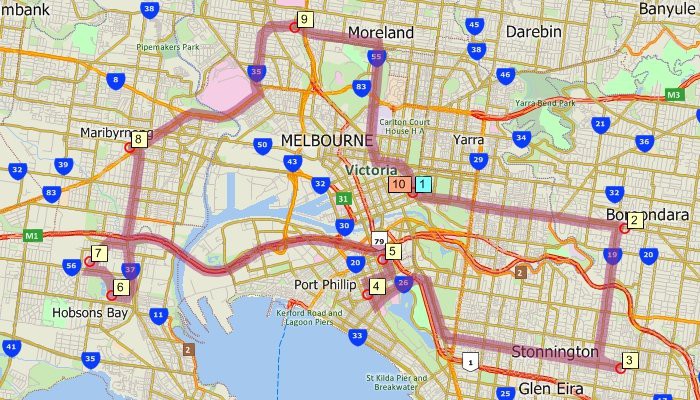
Route Planning & Optimization Software encompasses advanced algorithmic platforms designed to determine the most efficient paths for mobile workforces to service multiple locations. This category covers the operational execution phase of logistics, sitting downstream from Order Management Systems (OMS) and Customer Relationship Management (CRM) platforms, and upstream of Telematics and Proof of Delivery tools. Unlike simple navigation applications that direct a single vehicle from point A to point B, these systems solve the combinatorial complexity of the "Vehicle Routing Problem" (VRP)—managing N stops across M vehicles while adhering to strict constraints such as delivery time windows, vehicle load capacities, driver schedules, and service level agreements (SLAs).

Read the full category guide

What Is Route Planning & Optimization Software?

The scope of this software extends beyond mere mileage reduction. It includes strategic territory balancing, dynamic daily dispatching, and real-time route adjustments based on traffic or cancellations. It distinguishes itself from broader Supply Chain Management (SCM) suites by its intense focus on the "last mile" and field execution, and from standard GPS navigation by its ability to sequence hundreds of stops rather than just provide turn-by-turn directions. The category includes both general-purpose platforms suitable for varied fleets and vertical-specific tools tailored for industries like waste management, field services, and non-emergency medical transportation (NEMT).

History of Route Planning & Optimization Software

The evolution of route optimization software reflects the broader shift from static, constraint-heavy computing to dynamic, cloud-native intelligence. In the 1990s, route planning was largely a digitization of manual "pigeonhole" systems. Early desktop-based solutions replaced physical wall maps with Windows applications, allowing planners to visualize stops on digital maps. However, these systems relied on static data and basic heuristics; they required expensive on-premise hardware and often took hours to "batch process" a night's worth of routes. The focus was primarily on digitizing the database rather than generating actionable intelligence, with planners still performing significant manual sequencing [1], [2].

The 2000s introduced web-based mapping APIs and the first wave of telematics integration. As GPS tracking became commercially viable, software providers began comparing "planned vs. actual" routes, though real-time optimization remained computationally prohibitive for most. This era saw the rise of vertical-specific solutions, particularly in long-haul trucking and service fleets, where the cost of fuel and labor justified the heavy investment in early optimization suites [3].

The 2010s marked the decisive shift to Software-as-a-Service (SaaS) and the cloud. Infinite computing power allowed algorithms to solve complex VRP variations in minutes rather than hours. The proliferation of smartphones enabled the "bring your own device" (BYOD) model, connecting drivers directly to the dispatch engine without proprietary hardware. This democratized access, allowing small-to-mid-sized fleets to adopt tools previously reserved for enterprise logistics giants. Market consolidation accelerated during this period, with large telematics providers acquiring pure-play routing software companies to offer unified fleet management platforms [4], [4].

Today, in the 2020s, the market has evolved from "optimization" to "orchestration." Modern platforms leverage Machine Learning (ML) to predict service times based on historical data rather than static averages. The focus has shifted toward dynamic, continuous optimization that can ingest real-time orders and traffic data to adjust routes on the fly. As noted by Gartner, the market is maturing into specialized niches, with vendors increasingly distinguishing themselves through AI-driven constraint management rather than just raw routing speed [5], [6].

What to Look For

Evaluating Route Planning & Optimization Software requires peeling back the marketing layer to inspect the algorithmic engine and constraint handling capabilities. Buyers should prioritize the following critical criteria:

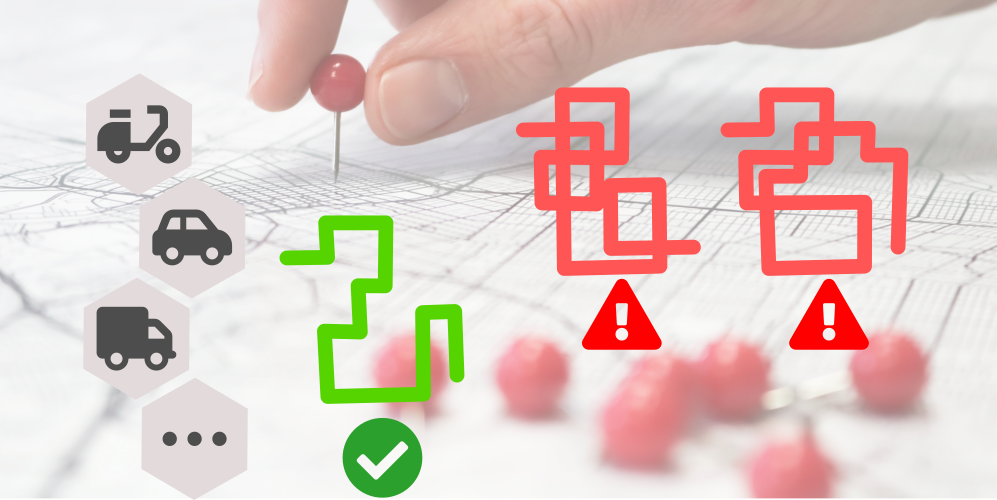
Constraint Flexibility and Granularity: The most common point of failure is a system's inability to model real-world constraints. Look for software that handles "hard" constraints (e.g., vehicle weight limits, strict time windows) versus "soft" constraints (e.g., preferred driver, minimize left turns). Ask specifically about mixed-fleet capabilities—can the system route a bicycle, a refrigerated van, and an 18-wheeler in the same optimization run while respecting the unique road restrictions for each? [7].

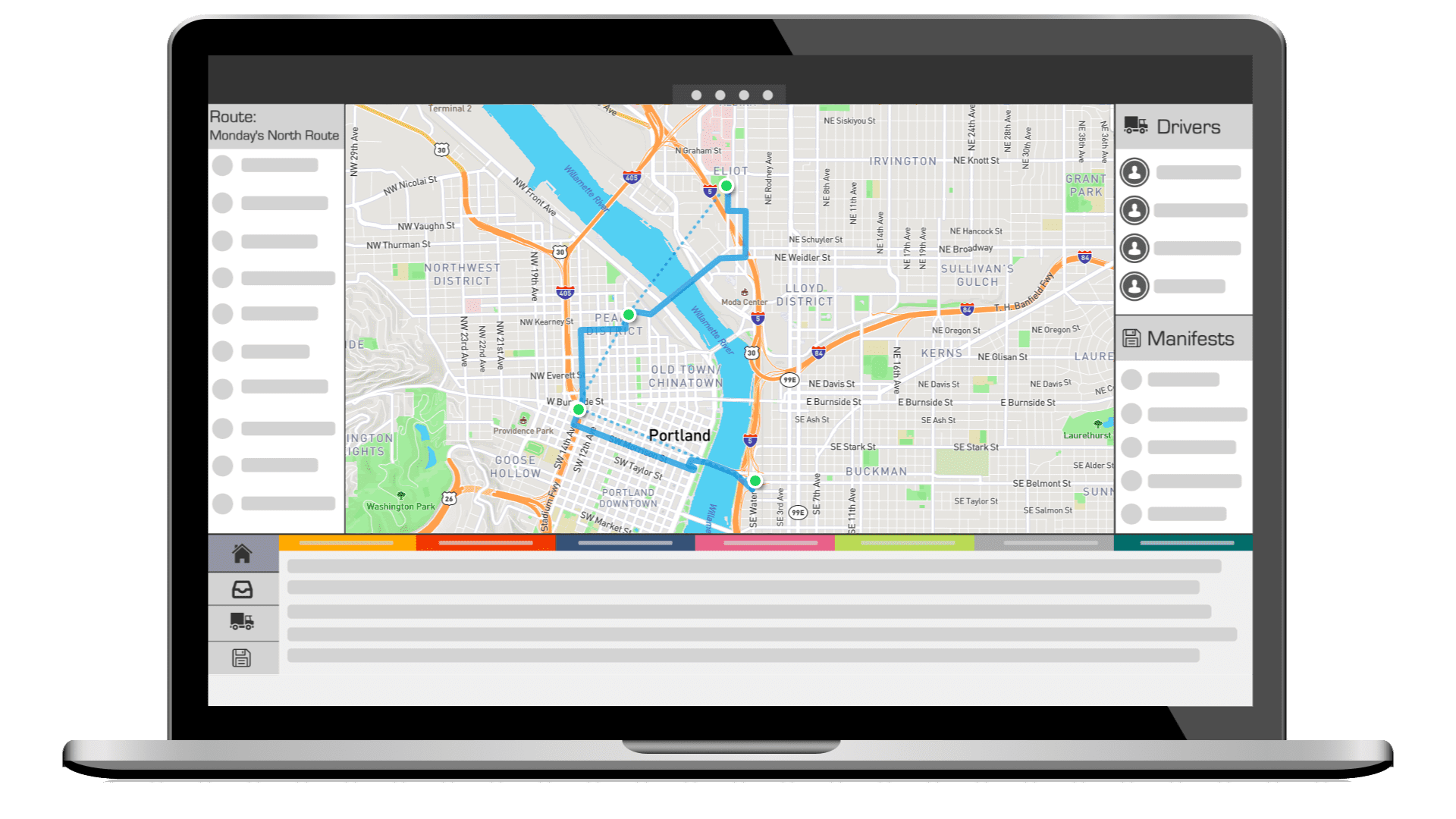
Dynamic vs. Static Optimization: Determine if your operation requires "batch" planning (optimizing all routes the night before) or "dynamic" replanning (inserting new orders into active routes). Many legacy systems struggle with true dynamic re-optimization, often requiring a full system reset to add a single stop. A true dynamic engine can adjust a driver's manifest in real-time without disrupting the entire fleet's schedule [8].

Red Flags and Warning Signs: Be wary of vendors who claim "real-time optimization" without defining latency. If the system takes 15 minutes to recalculate a route after a cancellation, it is not real-time. Another red flag is a lack of "infeasibility diagnostics." If the software cannot find a solution, it should explain why (e.g., "Stop A cannot be met due to time window constraint at Stop B"), rather than simply failing or leaving the stop unassigned.

Key Questions to Ask Vendors:

  • "How does your solver handle time window violations? Does it penalize them or treat them as impossible?"
  • "Can the system optimize for 'same-side-of-street' routing to ensure driver safety?"
  • "Do you offer geocoding correction features for addresses that do not resolve on standard maps?"

Industry-Specific Use Cases

Retail & E-commerce

For retail and e-commerce, the primary drivers are speed and customer visibility. The explosion of same-day delivery has shifted the focus from pure efficiency to "Delivery Promise" accuracy. Retailers need software that integrates tightly with Point of Sale (POS) and inventory systems to promise accurate ETAs at checkout. Key evaluation priorities include dynamic time-slotting (offering customers specific windows based on real-time capacity) and customer communication loops (SMS/email updates). According to Capgemini, last-mile delivery now accounts for 53% of total shipping costs, making route density critical for margin preservation. Retailers must look for tools that excel at "batching" nearby orders to minimize cost-per-stop [9], [10].

Healthcare

Healthcare routing splits into two distinct needs: Home Health and Non-Emergency Medical Transportation (NEMT). Unlike parcel delivery, "efficiency" here cannot compromise patient care. Critical constraints include continuity of care (ensuring the same nurse visits the same patient) and qualification matching (assigning a phlebotomist, not a physical therapist, to a blood draw). Security is paramount; the software must be HIPAA-compliant, ensuring Patient Health Information (PHI) is encrypted both in transit and at rest. IBM reports that the average cost of a healthcare data breach reached nearly $10 million in 2024, the highest of any industry, underscoring the need for rigorous security audits of any potential software vendor [11], [12].

Financial Services

In the Cash-in-Transit (CIT) sector, the optimization objective function is unique: risk minimization often trumps mileage minimization. Software for this industry must support risk-constrained routing, which deliberately varies routes and schedules to prevent predictability and thwart robbery attempts. It must also handle strict "custody transfer" workflows and integrate with secure vehicle telematics (e.g., armored truck sensors). The ability to limit total value on board per vehicle to meet insurance requirements is a non-negotiable feature. Time windows are often hard constraints due to bank vault opening hours, requiring precise SLAs [13], [14].

Manufacturing

Manufacturers use route optimization primarily for inbound logistics (milk runs) and inter-facility transfers. The focus is on dock scheduling and asset utilization. Software must align truck arrivals with warehouse receiving capacity to avoid demurrage charges. Unlike B2C delivery, routes are often consistent but subject to volume volatility. Evaluation priorities include the ability to handle multi-compartment vehicles (e.g., separating chemicals) and complex weight/volume load balancing to ensure vehicles are legally compliant and maximally utilized before leaving the facility [15].

Professional Services

For field technicians (HVAC, telecom, pest control), routing is secondary to skill-based scheduling. The software must ensure that the technician assigned to a job has the right certification, parts, and tools. "Service time variability" is a major challenge; a repair might take 30 minutes or 4 hours. Therefore, the software must support predictive job duration analytics and allow for easy drag-and-drop schedule adjustments. A key differentiator here is mobile functionality—technicians need offline access to job details and the ability to capture proof of service (photos, signatures) directly in the routing app [16], [17].

Subcategory Overview

Multi-Stop Route Planning Tools for Drivers

This niche serves individual contractors, gig economy workers, and real estate agents who use their own vehicles. Unlike enterprise fleet management, these tools focus heavily on mobile user experience (UX) and speed of entry. A generic route optimization suite is often too complex and expensive for a solopreneur. The specific workflow that only this tool handles well is "on-the-fly optimization" from a mobile device—scanning 50 package barcodes with a smartphone camera and generating an optimized sequence in seconds without a dispatcher. The pain point driving buyers here is the inability of consumer navigation apps (Google Maps, Waze) to handle more than 10 stops or optimize stop sequence. Readers seeking this functionality should consult our guide to Multi-Stop Route Planning Tools for Drivers.

Route Optimization Tools for Delivery Fleets

This subcategory targets B2B distributors and B2C last-mile logistics providers managing centralized fleets (5 to 500+ vehicles). These tools distinguish themselves through "hub-and-spoke" modeling and load balancing across multiple drivers. A workflow unique to this niche is "territory planning," where planners statically assign zones to drivers but dynamically optimize stops within those zones. Buyers migrate here from general tools because they need to manage vehicle capacity limits (weight/volume) and require dispatcher-level visibility into the entire fleet's progress. For a deeper analysis, refer to our guide to Route Optimization Tools for Delivery Fleets.

Route Planning Tools for Field Technicians

While delivery tools focus on "drops," these tools focus on "jobs." They are genuinely different because they prioritize duration and skill constraints over pure travel time. A specific workflow handled well here is "pairing," where an apprentice is automatically routed with a senior technician for specific job types. The pain point driving buyers to this niche is the high rate of "first-time fix" failures caused by sending the closest technician rather than the most qualified one. General routing tools often fail to account for the variable duration of service calls. Learn more in our guide to Route Planning Tools for Field Technicians.

Route Planning Tools for Waste & Recycling Fleets

This is the most mathematically distinct category, dealing with "Arc Routing" (servicing every street segment) rather than "Node Routing" (visiting specific points). Generic software fails here because it optimizes travel between points, whereas waste trucks must traverse entire street networks. A unique workflow is "side-of-street routing," ensuring trucks only collect bins on the right side to prevent dangerous street crossings. The specific pain point is "turn restrictions" for heavy vehicles—standard tools may route a garbage truck down a narrow alley it cannot physically navigate. Detailed insights are available in our guide to Route Planning Tools for Waste & Recycling Fleets.

Route Planning Tools for Courier and Parcel Delivery

This subcategory is built for high-density, low-service-time operations. It differs from general fleet tools by handling thousands of stops per day with extreme speed. A unique workflow is "zone skipping" and "multi-wave dispatching," where couriers return to the depot multiple times a day. The pain point driving buyers here is the need for "sub-minute accuracy" in ETAs and the ability to handle barcode scanning workflows natively within the driver app. Enterprise tools often lack the agility required for on-demand courier work. See our guide to Route Planning Tools for Courier and Parcel Delivery.

Integration & API Ecosystem

In the modern stack, route optimization software cannot exist as an island; it must function as the "brain" connected to the "body" of the ERP, WMS, and CRM. The primary challenge is not just connectivity, but data latency and synchronization. A robust API ecosystem allows for bi-directional data flow: orders flow in from the ERP, and status updates (delivery completion, GPS coordinates) flow back.

Scenario: Consider a mid-sized furniture distributor using a legacy on-premise ERP. If they choose a routing tool with poor integration capabilities, they may be forced to export orders to CSV files and manually upload them to the routing software each morning. This "air gap" means any order cancellation that happens after 8:00 AM is missed by the driver, leading to a wasted trip. In contrast, a well-integrated system using RESTful APIs would push that cancellation to the driver's tablet instantly, re-optimizing the route to fill the gap.

Expert Insight: Gartner research highlights that integration challenges are a primary cause of project failure. They note that "76% of logistics transformations never fully succeed," often due to failing to meet critical KPI metrics linked to data integration and process alignment [18]. Buyers must verify API rate limits and documentation quality before purchase.

Security & Compliance

As route optimization software increasingly handles sensitive customer data—addresses, phone numbers, and sometimes gate codes or medical info—security has moved from a checklist item to a deal-breaker. Compliance requirements vary strictly by industry, but SOC 2 Type II certification is the baseline standard for any reputable SaaS provider handling enterprise data.

Scenario: A home health agency utilizes a routing platform to schedule nurse visits. The software stores patient names, addresses, and ailment codes. If this platform is not HIPAA compliant and suffers a breach, the agency faces massive fines and reputational ruin. A secure system would encrypt this data, offer role-based access control (RBAC) so dispatchers only see what they need, and maintain a rigorous audit log of who accessed which route.

Statistic: The stakes are financial as well as regulatory. According to IBM's 2024 Cost of a Data Breach Report, the average cost of a data breach in the healthcare sector reached nearly $10 million, the highest of any industry [12]. This underscores that "cheap" routing software lacking enterprise-grade security is a liability, not a saving.

Pricing Models & TCO

Pricing in this category has shifted from perpetual licenses to SaaS models, typically structured around per-vehicle/driver per month or per-task/stop. Understanding the Total Cost of Ownership (TCO) requires analyzing your fleet's utilization patterns. "Per-vehicle" pricing offers predictability for stable fleets, while "per-task" pricing is superior for gig-economy models where driver count fluctuates wildy.

Scenario: A courier company with 25 drivers considers two vendors. Vendor A charges $50 per vehicle/month ($15,000/year). Vendor B charges $0.15 per stop. If each driver does 80 stops a day, 20 days a month, the fleet makes 480,000 stops a year. Vendor B would cost $72,000/year—nearly 5x the cost of Vendor A. However, if the fleet is seasonal and only operates at capacity for 2 months, the math changes drastically. Buyers must calculate TCO based on peak vs. average volume.

Statistic: Market analysis suggests that basic per-vehicle SaaS plans typically range from $30 to $60 per month, while enterprise-grade solutions with advanced telematics and analytics integration can range from $50 to $100+ per vehicle per month [19], [20].

Implementation & Change Management

The technical deployment of routing software is often easier than the cultural shift it requires. Drivers, accustomed to planning their own routes based on tribal knowledge, often view optimization software as a loss of autonomy or a "big brother" surveillance tool. Successful implementation hinges on Change Management—positioning the tool as a way to reduce driver fatigue and finish shifts earlier, rather than just a productivity whip.

Scenario: A beverage distributor implements a new dynamic routing tool. Experienced drivers reject the routes, claiming "the machine doesn't know the loading dock is around the back." Without a feedback mechanism where drivers can mark "bad data" that updates the system, trust erodes, and drivers revert to manual routing. A successful rollout involves a pilot group of senior drivers who help "train" the algorithm before a full rollout.

Expert Insight: A study by Gartner emphasizes that effective change management is critical, noting that leaders who actively manage team resistance and incorporate feedback can improve the odds of transformation success by 62% [21]. Implementation is not just installing software; it is re-engineering the workflow.

Vendor Evaluation Criteria

Beyond features and price, the long-term viability of the vendor is a critical evaluation metric. The market is consolidating, and smaller players are frequently acquired. Buyers should evaluate the vendor's product roadmap (Are they investing in AI? EV routing?) and support SLAs. Support is often the differentiator; when a server goes down at 6:00 AM, you need an immediate response, not a chat bot.

Scenario: A national logistics provider evaluates a startup vendor offering cutting-edge AI features. While the tech is superior, the vendor lacks 24/7 support. During a Black Friday peak, a system glitch halts dispatching for 4 hours. The cost of those missed deliveries far outweighs the feature benefits. Buyers must stress-test the vendor's support infrastructure during the RFP process.

Statistic: Forrester predicts that in 2025, trust and stability will become dominant themes in enterprise software selection, driven by high-profile outages and security concerns, leading buyers to scrutinize vendor reliability more than ever [22].

Emerging Trends and Contrarian Take

Emerging Trends 2025-2026: The next frontier is Agentic AI—autonomous software agents that don't just optimize routes but actively negotiate with other systems (e.g., re-booking a dock appointment automatically when a truck is delayed). We also see a convergence of Video Telematics and routing, where camera data updates map constraints (e.g., detecting a new "No Left Turn" sign) in real-time [23].

Contrarian Take: Real-time optimization is often a liability, not an asset. For 90% of businesses, stability trumps dynamic efficiency. Constant re-optimization creates "route churn," where a driver's schedule changes mid-shift, leading to confusion, loading errors, and decreased morale. Most fleets would see higher ROI from stabilizing their master data (correct addresses, accurate time windows) than from investing in sub-second dynamic re-routing capabilities. A perfectly optimized route based on bad data is just a faster way to miss a delivery.

Common Mistakes

Over-Constraining the System: A frequent error is configuring the software with too many strict rules (e.g., 15-minute time windows for every stop). This "chokes" the algorithm, leading to inefficient routes or a high number of unassigned stops. It is often better to use soft time windows and allow the solver some flexibility.

Ignoring "Tribal Knowledge": Failing to digitize the insights of veteran drivers (e.g., "this school zone is impassable at 3 PM") leads to theoretically perfect but practically impossible routes. This disconnect is the primary cause of adoption failure.

Neglecting Data Hygiene: Garbage in, garbage out. Implementing sophisticated optimization software without first cleaning customer address data results in frustration. If "123 Main St" is geocoded to the wrong zip code, the optimization is worthless [24].

Questions to Ask in a Demo

  • "Can you demonstrate how the system handles an infeasible route? Show me the specific error messages and resolution workflows."
  • "What is the exact latency between an order being placed in our ERP and it appearing on the driver's device?"
  • "Show me how a driver can reject a route or flag a map error, and how that feedback loops back to the planner."
  • "Does your geocoding engine charge extra for correcting bad addresses, and which map data provider (Google, HERE, TomTom) do you use?"
  • "Can we configure different vehicle profiles (e.g., height, weight, hazmat) for different parts of the fleet, and how does the solver respect those?"

Before Signing the Contract

Final Decision Checklist: Ensure you have validated the API documentation with your technical team. Confirm that the "Customer Success" manager assigned to you has experience in your specific industry. Verify data ownership clauses—if you leave, can you easily export your optimized territory data?

Negotiation Points: Focus on "active driver" definitions. If you have 50 drivers but only 40 work on any given day, negotiate to pay for 40 active licenses rather than 50 named users. Push for a "sandbox" environment to be included in the price, allowing you to test changes without disrupting operations.

Deal-Breakers: Lack of Single Sign-On (SSO) for enterprise environments. Any vendor that cannot provide a clear, documented SLA for uptime (e.g., 99.9%) and support response times (e.g., < 1 hour for critical severity) should be disqualified.

Closing

Selecting the right route optimization software is a balance between algorithmic power and operational reality. If you have specific questions about your fleet's needs or want a second opinion on your shortlist, feel free to reach out.

Email: albert@whatarethebest.com

04

Research

Original reporting on this corner of the market.

All research

Last-mile delivery costs now consume 53% of total transportation costs, up from 41%

Feb 21, 2026

41% of the maintenance workforce becomes eligible for retirement by 2028

May 10, 2026

U.S. higher education faces a $112 billion maintenance backlog costing $140 per square foot

Apr 17, 2026
05

Questions people ask

Which Route Planning & Optimization Software is best?

Qmove holds the highest score in the category at 9.1, in Multi-Stop Route Planning Tools for Drivers. The right pick depends on the ranking that matches your use case, so start with the ranking list above.

Why are there 6 separate rankings?

Buyers in Route Planning & Optimization Software have different jobs, so each ranking is scoped to one of them and weights the six criteria for that job. The same product can hold different ranks in different rankings.

How are the scores produced?

Documentation, pricing pages, security pages and third-party reviews are reviewed against six criteria. Each criterion records what was found and links its sources. Penalties pull the score down and are shown with their evidence. Rank follows the score. Full methodology.

06

More in Field Service & Operations

The whole group