1. Home
  2. Field Service & Operations
  3. Mobile Workforce & Field Team Management Tools

Category · Field Service & Operations Software

Mobile Workforce & Field Team Management Tools

Mobile Workforce Management Tools are essential for businesses that rely on field-based employees to execute tasks effectively. This category caters to professional buyers seeking SaaS solutions that enhance operational efficiency, streamline workflows, and facilitate compliance with industry regulations.

5 rankings43 products scored6 criteria eachUpdated Sep 7, 2026
01

Top picks across Mobile Workforce & Field Team Management Tools

The highest scorer from each vendor across all 5 rankings. Six little boxes show each one against its ranking average, and the full review sits under each card.

1

IFS

ifs.com · IFS Mobile Workforce Management #1 of 10 in Mobile Workforce Tools for Construction Crews

500,000 activities scheduled hourly, entry near £250k.

Best forLarge enterprise utilities and energy companies with huge fleets.

Quote only AI scheduling414% ROIISO 27001
Top of its ranking

AI-powered field service platform delivering a documented 414% three-year ROI for large enterprises.

Standout factAn IDC Business Value Study found organizations achieved a 414% three-year ROI with IFS Cloud, averaging $5.5 million in annual benefits. ifs.com
Biggest catchImplementation costs start around £250,000, with deployment timelines averaging 10 months. comparesoft.com
414%3-year ROIifs.com
500,000/hrScheduling capacityifs.com
~£250,000Entry pricingcomparesoft.com

Standout number

414%3-year ROI, per IDC study

Source: ifs.com

True monthly cost

Average annual benefit vs entry cost

Entry implementation cost£250,000+
Average annual benefit$5,500,000
Total414% 3-yr ROI

IDC Business Value Study

Upside

  • Schedules 500,000 activities per hour
  • Documented 414% three-year ROI
  • ISO 27001 and SOC 2 Type II certified

Catch

  • Implementation starts near £250,000
  • Steep learning curve to master
  • Mobile app crashes on attachments
Pick it ifLarge enterprise utilities and energy companies with huge fleets.
Skip it ifSmall to mid-sized construction contractors with simple needs.
PricingCustom quote, implementation from £250,000

Editor's takeIFS's Planning & Scheduling Optimization engine can schedule 500,000 activities in under an hour with no artificial territory limits, the strongest capability score in the category. An independent IDC study found a 414% three-year ROI and $5.5 million in average annual benefits. The costs match the scale: implementation starts near £250,000 and takes roughly 10 months, and users report a steep learning curve plus occasional mobile app crashes when adding attachments.

How much does IFS Mobile Workforce Management cost?

Pricing is enterprise-grade and custom-quoted. Third-party sources put entry pricing from £250,000 for organizations with 200+ users, according to Comparesoft's field service pricing guide.

What ROI does IFS deliver?

An IDC Business Value Study found organizations achieved a 414% three-year return on investment and $5.5 million in average annual benefits, alongside 50% faster equipment outage resolution.

The evidence: 6 criteria, 3 penalties
9.4
Product Capability & DepthLooked for: We look for comprehensive field service features including dynamic scheduling, offline mobility, and full lifecycle management.IFS offers an AI-driven dynamic scheduling engine (PSO) capable of handling 500,000 activities per hour and robust offline mobile synchronization.ifs.comifs.comifs.com
9.5
Market Credibility & Trust SignalsLooked for: We look for industry recognition, analyst validation, and adoption by major enterprise clients in asset-intensive sectors.IFS is recognized as a Gartner Peer Insights Customers' Choice for 2025 and holds a strong position in asset-intensive industries like utilities and aerospace.prnewswire.comthetechintel.com
8.3
Usability & Customer ExperienceLooked for: We look for intuitive user interfaces, ease of adoption, and stability in mobile field applications.While powerful, users report a steep learning curve and occasional technical issues with mobile app synchronization and crashes.gomocha.comcommunity.ifs.com
8.6
Value, Pricing & TransparencyLooked for: We look for clear pricing structures and demonstrated return on investment for enterprise buyers.Pricing is enterprise-grade and opaque, but the solution delivers a high documented ROI of 414% over three years.ifs.comcomparesoft.comifs.com
9.7
AI-Driven Scheduling & OptimizationLooked for: We look for advanced algorithms that automate complex workforce planning and route optimization in real-time.The Planning & Scheduling Optimization (PSO) engine uses AI to optimize schedules dynamically, handling massive transaction volumes.ifs.commarketplace.microsoft.com
9.3
Security, Compliance & Data ProtectionLooked for: We look for enterprise-grade security certifications like ISO 27001, SOC 2, and industry-specific compliance.IFS maintains rigorous security standards including ISO 27001 and SOC 2 Type II certifications, with options for ITAR compliance.ifs.comifs-p-001.sitecorecontenthub.cloud

Score adjustments−0.17 points in total

−0.07Users consistently report a steep learning curve and complex interface that requires significant training to master.thecfoclub.com · severity 65/100
−0.06Documented reports exist of mobile app crashes and synchronization timeouts, particularly when handling attachments or offline sync.community.ifs.com · severity 55/100
−0.04High entry barrier with implementation costs starting around £250,000 and long deployment timelines averaging 10 months.comparesoft.com · severity 50/100
2

Salesforce Field Service

salesforce.com · Salesforce Mobile Workforce Management #1 of 6 in Mobile Workforce Tools for Multi-Location Businesses

Salesforce works offline first, but security add-ons cost extra

Best forEnterprises already on Salesforce needing offline field service tools

From $25 per user/mo ISO 27001enterpriseAI features
Top of its ranking

Enterprise field service platform with offline mobile tools and AI driven scheduling.

Standout factPricing ranges from $25 to $330 per user monthly across plan tiers. saasworthy.com
Biggest catchEnhanced Mobile App Security is sold as a separate paid add-on. resources.docs.salesforce.com
$25-$330/user/moPricing rangesaasworthy.com
19 yearsGartner MQ streak (Sales Cloud)salesforce.com

Plans

Unlimited$330/user/mo

Source: saasworthy.com

The thing people get wrong

Top tier Salesforce security features come included in every plan

Enhanced Mobile App Security is a separate paid add-on

Source: resources.docs.salesforce.com

Upside

  • Offline first mobile architecture
  • AI scheduling via Agentforce
  • Deep Salesforce CRM integration

Catch

  • Steep learning curve for admins
  • Advanced security costs extra
  • High total cost of ownership
Pick it ifEnterprises already on Salesforce needing offline field service tools
Skip it ifSmall businesses with simple retail shift scheduling needs
PricingFrom $25/user/month (Starter) to $330/user/month (Unlimited)

Editor's takeSalesforce Field Service caches data so technicians keep working without a signal. Pricing spans a wide range, from $25 a user monthly up to $330 for Unlimited. Setup is not simple though, and reviewers on G2 say it often needs outside consultants.

How much does Salesforce Field Service cost?

Plans range from $25 per user monthly for Starter up to $330 for Unlimited, according to a third party pricing breakdown. Contractor licenses run about $50 per user monthly.

Does Salesforce Field Service work offline?

Yes. The mobile app is built offline first, caching records so technicians can keep working without a connection, according to Salesforce's own documentation.

The evidence: 6 criteria, 3 penalties
9.6
Product Capability & DepthLooked for: We evaluate the breadth of field service features, including scheduling automation, asset management, and mobile execution tools.Salesforce Field Service offers a comprehensive suite including AI-driven scheduling (Einstein), asset tracking, and complex work order management. It supports advanced scenarios like multi-day appointments, crew scheduling, and predictive maintenance integration.salesforce.comsalesforce.comrockitdata.com
9.8
Market Credibility & Trust SignalsLooked for: We assess market presence, analyst ratings, and the vendor's stability and history in the industry.Salesforce is a dominant market leader, consistently recognized in Gartner Magic Quadrants for related CRM and SFA categories. It has a massive user base and extensive partner ecosystem, signaling immense stability.salesforce.comtechtarget.com
8.4
Usability & Customer ExperienceLooked for: We examine user feedback regarding ease of use, implementation speed, and interface intuitiveness.While powerful, the platform is frequently cited for a steep learning curve and complex setup. Users often require dedicated administrators or consultants to configure the system effectively.salesforce.comg2.comg2.com
8.7
Value, Pricing & TransparencyLooked for: We analyze pricing structures, transparency of costs, and the balance of features versus expense.Pricing is tiered from $25 to $330+ per user/month, but total cost of ownership can be high due to add-ons and implementation fees. However, the ROI for complex enterprise operations is well-documented.salesforce.comsaasworthy.comrockitdata.com
9.0
Offline Capabilities & Mobile PerformanceLooked for: We verify the app's ability to function without internet, including data caching and sync conflict resolution.The mobile app is designed as 'offline-first,' allowing technicians to view and edit records without connectivity. It uses a caching mechanism (priming) to store data, though sync conflicts can occur.appexchange.salesforce.comceptes.comhelp.salesforce.com
9.5
Security, Compliance & Data ProtectionLooked for: We review security certifications, data encryption, and compliance features relevant to enterprise field service.Salesforce offers enterprise-grade security, including MDM integration and an 'Enhanced Mobile App Security' add-on. It supports strict compliance standards (SOC, HIPAA) inherent to the Salesforce platform.compliance.salesforce.comresources.docs.salesforce.comhelp.salesforce.com

Score adjustments−0.16 points in total

−0.07Users consistently report a steep learning curve and complex setup process, often requiring external consultants.g2.com · severity 65/100
−0.04Critical security features like 'Enhanced Mobile App Security' and certain advanced scheduling tools are paid add-ons, increasing TCO.resources.docs.salesforce.com · severity 50/100
−0.05Mobile sync conflicts and the need for proper 'data priming' (caching) configuration can cause operational friction.help.salesforce.com · severity 45/100
3

OverIT

overit.ai · OverIT Mobile Workforce Management #2 of 8 in Mobile Workforce Tools for Utility Operations

OverIT is a 4-time Gartner Visionary for field service

Best forUtilities managing linear assets like pipelines and transmission lines

Quote only enterpriseno free planoffline GIS
#2 in its ranking

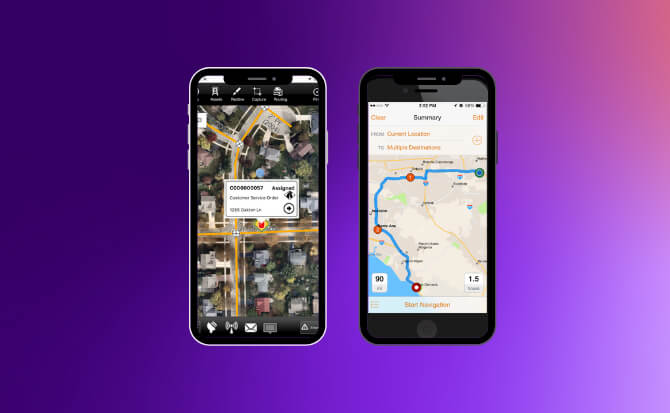

Mobile workforce platform combining offline GIS redlining and augmented reality for utility technicians.

Standout factOverIT has been named a Visionary in Gartner's Magic Quadrant for Field Service Management four times in a row. fieldservicenews.com
Biggest catchImplementation is complex and resource-intensive, often requiring significant consultant time, adding to total cost of ownership. flowster.app
4 consecutiveGartner Visionary placementsfieldservicenews.com

Standout number

4xconsecutive Gartner Visionary placement for FSM

Source: fieldservicenews.com

In their words

“Technicians love our mobile app. It's intuitive, works offline, and unifies multiple apps on one screen.”

overit.ai

Upside

  • Advanced offline GIS redlining and mapping
  • AR-enabled remote expert collaboration
  • AI-driven scheduling and predictive dispatch

Catch

  • Complex, resource-intensive implementation
  • Mobile app customization limitations
  • Opaque, enterprise-tier pricing
Pick it ifUtilities managing linear assets like pipelines and transmission lines
Skip it ifService businesses not managing complex linear infrastructure
PricingCustom quote, described as higher-cost enterprise tier

Editor's takeOverIT's offline mobile GIS redlining lets technicians mark map inaccuracies and continue annotating infrastructure maps with zero internet connection, a rare capability for linear-asset industries like utilities and energy. Its augmented reality tools add remote expert guidance on real-world network assets, backed by four consecutive Gartner Visionary placements and an IDC Leader ranking for utilities. Implementation is genuinely complex, reviewers note it as resource-intensive, and pricing stays behind a custom quote with reportedly high total cost of ownership.

Does OverIT work without an internet connection?

Yes. Its mobile app supports mission-critical offline operations, including GIS map annotation and data capture, without a live connection.

How is OverIT recognized by industry analysts?

It has been named a Visionary in Gartner's Magic Quadrant for Field Service Management four times running and a Leader in the 2023-2024 IDC MarketScape for Utilities.

The evidence: 6 criteria, 3 penalties
9.2
Product Capability & DepthLooked for: Comprehensive field service features including scheduling, dispatch, and asset management tailored for linear assets.Offers end-to-end FSM with specialized modules for linear assets, including AI-driven scheduling, predictive job duration, and deep GIS integration for utilities.overit.aioverit.aigartner.com
9.4
Market Credibility & Trust SignalsLooked for: Industry recognition, analyst rankings, and a proven track record with major enterprise clients.Recognized as a Visionary in the Gartner Magic Quadrant for FSM four consecutive times and named a Leader in the IDC MarketScape for Utilities.fieldservicenews.comoverit.ai
8.8
Usability & Customer ExperienceLooked for: Intuitive mobile interfaces for technicians and effective support for complex deployments.Technicians report the mobile app is intuitive and unifies multiple tools, though some users note implementation complexity and customization limits.overit.aigartner.com
8.2
Value, Pricing & TransparencyLooked for: Clear pricing structures and transparent ROI indicators for enterprise buyers.Pricing is not publicly available and is described as 'higher overall cost' suitable for large enterprises, with complex implementation adding to TCO.overit.aiflowster.appflowster.app
9.5
GIS & Augmented Reality InnovationLooked for: Advanced geospatial capabilities and AR tools integrated directly into the field service workflow.Delivers market-leading GIS capabilities like offline redlining and network tracing, combined with AR for remote expert guidance and hands-free debriefing.overit.aioverit.aioverit.ai
9.1
Offline & Mobile ExecutionLooked for: Reliable performance in remote environments with limited or no connectivity.The mobile app is engineered for 'mission-critical' offline operations, allowing full data capture, map access, and debriefing without internet connection.overit.aioverit.ai

Score adjustments−0.13 points in total

−0.05Implementation is described as complex and resource-intensive, often requiring significant time and reliance on consultants, contributing to a higher total cost of ownership.flowster.app · severity 65/100
−0.05Users report that the mobile application has limitations regarding customization, specifically for embedding images or HTML content.gartner.com · severity 50/100
−0.03Pricing is not publicly disclosed and is noted to be on the higher end, making it potentially out of reach for smaller or mid-sized organizations.flowster.app · severity 45/100
4

LastMinute

elion.health · LastMinute Workforce Management #1 of 10 in Mobile Workforce Management for Healthcare Staff

LastMinute offers all features free before paid plans launch

Best forHealthcare teams struggling with frequent call-outs and open shifts

Free plan HIPAASOC 2free plan
Top of its ranking

AI-powered healthcare scheduling platform with a predictive 'AI CNO' feature and a command palette interface.

Standout factThe company has 1-10 employees and roughly $250,000 in pre-seed funding. elion.health
Biggest catchThe company is very early-stage, with a small team and limited funding versus established rivals. elion.health
1-10Employeeselion.health
$250kFunding raisedelion.health
$0Current pricetrylastminute.com

Free vs paid

Free today

$0
  • All current features
  • AI CNO predictive staffing
  • UKG, ADP, Workday integrations

Future pricing

  • Based on Monthly Active Users
  • No minimum commitment

Source: trylastminute.com

By the numbers

1-10employees
$250kpre-seed funding
$0cost today

Source: elion.health

Upside

  • Currently free access to all features
  • AI CNO feature for predictive staffing
  • No long-term contract commitments

Catch

  • Very early stage (1-10 employees)
  • Long-term pricing model unproven
  • Limited third-party verified reviews
Pick it ifHealthcare teams struggling with frequent call-outs and open shifts
Skip it ifEnterprises requiring a long-established vendor with extensive history
PricingCurrently free for all features, future pricing based on Monthly Active Users

Editor's takeLastMinute pairs healthcare scheduling with an AI CNO feature that forecasts staffing gaps and a command-palette interface rare in this industry. All features are free while the company builds toward a future Monthly Active User pricing model with no minimum commitment. The catch is company maturity: LastMinute has 1-10 employees and about $250,000 in pre-seed funding, well behind incumbents like UKG.

Does LastMinute cost anything right now?

No. All features are currently free until the company launches paid plans. Future pricing will be based on Monthly Active Users with no minimum commitment required.

What is LastMinute's AI CNO feature?

AI CNO provides predictive analytics aimed at optimal staffing and better patient care outcomes, forecasting scheduling gaps before they happen rather than just filling shifts reactively.

The evidence: 6 criteria, 3 penalties
9.1
Product Capability & DepthLooked for: We evaluate the sophistication of scheduling automation, predictive analytics, and specific tools designed for healthcare workflows.LastMinute offers AI-driven scheduling with a unique 'AI CNO' (Chief Nursing Officer) feature for predictive staffing analytics and a developer-style 'Command Palette' for rapid navigation.trylastminute.comtrylastminute.comelion.health
8.4
Market Credibility & Trust SignalsLooked for: We assess the company's maturity, funding status, leadership experience, and market presence relative to established competitors.The company is early-stage (founded ~2023 as software, 1-10 employees) and unfunded, though led by founders with personal healthcare experience and advisory backing.healthcareitnews.comelion.healthtrylastminute.com
9.3
Usability & Customer ExperienceLooked for: We analyze the user interface design, ease of navigation, and specific features that reduce friction for daily users.The interface is exceptionally modern, featuring 'speed of thought' scheduling via keyboard shortcuts and command palettes, distinct from clunky legacy healthcare software.trylastminute.comtrylastminute.com
9.5
Value, Pricing & TransparencyLooked for: We examine pricing models, hidden fees, contract terms, and the availability of free tiers or transparent costs.LastMinute currently offers all features for free until paid plans launch, with a future model based on Monthly Active Users (MAU) and no long-term contracts.trylastminute.comtrylastminute.com
8.8
Integrations & Ecosystem StrengthLooked for: We check for seamless connections with major HRIS, payroll, and EHR systems used in healthcare.LastMinute integrates with major workforce platforms like UKG, ADP, and Workday, allowing it to fit into existing enterprise ecosystems.ehrintelligence.comelion.healthtrylastminute.com
9.0
Security, Compliance & Data ProtectionLooked for: We verify certifications like HIPAA, SOC 2, and data governance standards essential for healthcare software.The platform holds key healthcare compliance certifications including HIPAA and SOC 2 Type 2, ensuring enterprise-grade data protection.hipaajournal.comelion.healthlastminutehealthcare.com

Score adjustments−0.14 points in total

−0.06The company is very early-stage with a small team (1-10 employees) and limited funding compared to established competitors.elion.health · severity 60/100
−0.05Significant brand confusion exists with 'lastminute.com' (travel) and 'Lastminute Care & Nursing' (staffing agency), complicating search and brand recognition.lastminutehealthcare.com · severity 45/100
−0.03While currently free, the long-term pricing model is not yet live, introducing uncertainty for organizations planning long-term budgets.trylastminute.com · severity 40/100
5

Deputy

deputy.com · Deputy Workforce Management #2 of 6 in Mobile Workforce Tools for Multi-Location Businesses

Deputy pairs Fair Workweek compliance with dual certifications

Best forShift-based multi-location businesses needing labor law compliance tools.

From $3 per user/mo SOC 2mobile appFair Workweek compliance
#2 in its ranking

Multi-location workforce platform with AI scheduling, Fair Workweek compliance and POS and payroll integrations.

Standout factOver 330,000 workplaces use Deputy for 1.4 million scheduled workers. news.deputy.com
Biggest catchA minimum monthly spend of $25 to $30 raises the effective price for very small teams. help.deputy.com
330,000+Workplaces using Deputynews.deputy.com
1.4MScheduled workers globallynews.deputy.com

Compliance

✓ SOC 2 Type II✓ ISO 27001

Source: deputy.com

Before you sign up

  • Multiple locations or shift-based team
  • Budget for $25-$30 monthly minimum
  • Need Fair Workweek compliance tools

Upside

  • AI-driven auto-scheduling and demand forecasting
  • Dedicated Fair Workweek compliance engine
  • SOC 2 Type II and ISO 27001 certified

Catch

  • $25-$30 minimum monthly spend applies
  • Support response times can be slow
  • Learning curve for admin setup
Pick it ifShift-based multi-location businesses needing labor law compliance tools.
Skip it ifVery small teams wanting a plan with no minimum spend.
PricingFrom $2.50/user/month, plus a $25-$30 monthly minimum

Editor's takeDeputy stands out on labor compliance depth. Its Fair Workweek engine automates predictability pay and California break rules most rivals leave manual. Per-user pricing looks cheap, but the mandatory monthly minimum raises real cost for very small teams.

What is Deputy's Fair Workweek feature?

It tracks schedule change history, employee consent and predictability pay calculations automatically, helping multi-location employers meet Fair Workweek laws without manual tracking.

Does Deputy have a minimum cost?

Yes. Monthly Premium, Scheduling and Time & Attendance plans carry a minimum spend of about $25 to $30, on top of the per-user rate.

The evidence: 6 criteria, 3 penalties
9.0
Product Capability & DepthLooked for: We evaluate the breadth of scheduling features, time tracking precision, and workforce management tools available for shift-based industries.Deputy offers robust AI-driven auto-scheduling, biometric time clocks, and task management, though some advanced reporting is reserved for higher tiers.deputy.comdeputy.comdeputy.com
9.3
Market Credibility & Trust SignalsLooked for: We assess the vendor's industry standing, security certifications, and adoption rates among major enterprises.Deputy is a highly trusted platform used by over 330,000 workplaces globally, including major brands like Amazon and McDonald's, backed by top-tier security certifications.deputy.comnews.deputy.com
8.8
Usability & Customer ExperienceLooked for: We analyze user feedback regarding interface design, mobile app performance, and ease of implementation.Users consistently praise the intuitive mobile app and drag-and-drop scheduler, though some administrators report a learning curve during initial setup.getapp.comoutsail.co
8.5
Value, Pricing & TransparencyLooked for: We examine pricing structures, hidden fees, and contract flexibility compared to market averages.Pricing is competitive starting at ~$4.50/user, but a minimum monthly spend requirement impacts affordability for very small teams.deputy.comhelp.deputy.comdeputy.com
9.0
Integrations & Ecosystem StrengthLooked for: We evaluate the quality and breadth of pre-built connectors with payroll, POS, and HR systems.The platform boasts a vast marketplace of seamless integrations with major payroll (ADP, Xero) and POS systems (Square, Lightspeed), enabling real-time data sync.deputy.comdeputy.comhelp.deputy.com
9.5
Security, Compliance & Data ProtectionLooked for: We investigate specific labor law compliance features, data privacy measures, and audit capabilities.Deputy excels with a dedicated Fair Workweek compliance engine, automated break enforcement for states like California, and comprehensive audit trails.deputy.comdeputy.comdeputy.com

Score adjustments−0.14 points in total

−0.04Deputy enforces a minimum monthly spend (approx. $25-$30), which effectively raises the price for businesses with very few employees (e.g., fewer than 5 users).help.deputy.com · severity 50/100
−0.05User reviews indicate that customer support response times can be slow, and some users report difficulties resolving complex technical issues.outsail.co · severity 45/100
−0.05Some advanced features like labor forecasting and specific reporting tools are restricted to higher-tier or Enterprise plans.jibble.io · severity 40/100
6

Dynamics 365 Field Service

microsoft.com #1 of 9 in Mobile Workforce Tools for Repair & Maintenance Teams

Dynamics 365 leads mobile workforce tools, setup costs add up

Best forLarge enterprises with complex, multi-layered field operations already on Microsoft 365.

From $105 per user/mo Azure IoTCopilot AIoffline mobile
Top of its ranking

Enterprise field service platform with offline mobile access, Azure IoT, and Copilot AI.

Standout factOffline mode lets technicians work without internet, but profiles cap out at 15 linked tables. learn.microsoft.com
Biggest catchFull implementations typically cost between $25,000 and $250,000, depending on complexity. randgroup.com
$105/user/moBase licenselevelshift.com
$25k-$250k+Implementation costrandgroup.com
15 tablesOffline table limitlearn.microsoft.com

Standout number

9.6/10market credibility score, built on repeat Gartner Leader wins

Source: microsoft.com

What it costs as you grow

$105/moPer user license
$25,000-$250,000+Typical implementation

Source: randgroup.com

Upside

  • Native Azure IoT predictive maintenance
  • Copilot AI for work order updates
  • Named a Gartner Leader for years running

Catch

  • Complex, costly implementation process
  • Offline mode capped at 15 linked tables
  • Occasional lag reported at peak usage
Pick it ifLarge enterprises with complex, multi-layered field operations already on Microsoft 365.
Skip it ifSmall businesses lacking dedicated IT resources for implementation.
PricingFrom $105/user/mo, implementation runs $25,000-$250,000+

Editor's takeDynamics 365 Field Service ranks first among mobile workforce tools for repair and maintenance teams. Its 9.6 market credibility score reflects repeated Leader placements in Gartner's Magic Quadrant. Azure IoT integration triggers work orders automatically from device alerts, but implementation can run past $250,000 for complex deployments.

How much does Dynamics 365 Field Service cost to implement?

Licensing starts at $105 per user per month. Full implementation typically costs between $25,000 and $250,000 or more, depending on how complex the deployment is.

Does Dynamics 365 Field Service work offline?

Yes. Technicians can download data and sync later, but offline profiles are limited to 15 linked tables, and field mapping is not supported offline.

The evidence: 6 criteria, 3 penalties
9.4
Product Capability & DepthLooked for: Comprehensive features for work order management, scheduling, and asset maintenance tailored for enterprise field operations.Dynamics 365 Field Service offers an exhaustive suite including AI-driven scheduling, asset management, and mixed reality integration, though some advanced features require add-ons.allmysystems.co.uklearn.microsoft.comkdpsolutions.ca
9.6
Market Credibility & Trust SignalsLooked for: Industry recognition, analyst rankings, and adoption by major enterprises in the field service sector.Microsoft is consistently named a Leader in Gartner Magic Quadrants for Field Service Management and related ERP categories, validating its dominance and reliability.microsoft.commicrosoft.commicrosoft.com
8.2
Usability & Customer ExperienceLooked for: Intuitive interfaces, ease of setup, and responsive performance for dispatchers and field technicians.While integration with Outlook and Teams is highly praised, users report complex setup processes, steep learning curves, and occasional performance lags.support.microsoft.comdocs.microsoft.comg2.com
8.5
Value, Pricing & TransparencyLooked for: Clear pricing structures, competitive licensing costs, and transparent total cost of ownership.Pricing is transparent ($105/user/mo) but sits at a premium price point, and implementation costs can be substantial ($25k-$250k+).microsoft.comlevelshift.comrandgroup.com
9.5
Connected Field Service & IoTLooked for: Capabilities for remote monitoring, predictive maintenance, and integration with IoT devices.The platform excels with native Azure IoT integration, enabling predictive maintenance where device anomalies automatically trigger work orders.microsoft.comalphabold.comalphabold.com
8.7
Mobile Workforce EnablementLooked for: Offline capabilities, mobile app features, and tools for field technicians to execute tasks remotely.Strong mobile features including offline profiles and barcode scanning, though there are documented technical limitations on data sync and table links.westerncomputer.comtechnologyblog.rsmus.comlearn.microsoft.com

Score adjustments−0.15 points in total

−0.07Users report complex setup, steep learning curves, and occasional laggy performance during peak hours.g2.com · severity 65/100
−0.05The offline mobile mode has strict technical limitations, including a maximum of 15 linked tables and no support for field mapping.learn.microsoft.com · severity 50/100
−0.03Implementation costs are high, typically ranging from $25,000 to over $250,000 depending on complexity.randgroup.com · severity 45/100
7

CGI OpenGrid360

cgi.com #3 of 8 in Mobile Workforce Tools for Utility Operations

CGI OpenGrid360 unifies utility IT and OT data

Best forGrid operators focused on data integration and modernization

Quote only CIM compliantutility IT/OT integrationDERMS
#3 in its ranking

Modular utility software suite using the Common Information Model to unify grid data.

Standout factCGI OpenGrid360 was built on smart grid work with Western Power Distribution and SP Energy Networks. cgi.com
Biggest catchData discrepancies often require manual intervention by data stewards rather than full automation. cgi.com
8.9/10Overall score
3 of 8Category rank

Company size fit

SoloSmallMidEnterprise

Sweet spot: grid operators unifying legacy OT and modern IT systems

What OpenGrid360 covers

  • Asset, network, and work management modules
  • IT/OT unification via Common Information Model
  • Fully automated data error resolution

Upside

  • Unifies IT and OT data via CIM
  • Offline-capable mobile field tools
  • Modular rollout lowers upfront risk

Catch

  • Pricing needs a sales engagement
  • Data errors need manual stewardship
  • Complex to integrate with legacy systems
Pick it ifGrid operators focused on data integration and modernization
Skip it ifSmall utilities looking for a simple, standalone dispatch app
PricingContact for pricing, modular deployment reduces upfront cost

Editor's takeCGI OpenGrid360 uses the IEC Common Information Model to give utilities a single reference view across operational technology and information technology systems that usually stay siloed. It was shaped by real deployments with Western Power Distribution and SP Energy Networks, and includes a DERMS module for managing solar and EV load volatility. Pricing is not public and requires a sales engagement, and data discrepancies still need manual review by data stewards rather than full automation.

What does CGI OpenGrid360's Foundation layer do?

It uses the Common Information Model to create a single reference view of a utility's network across both operational technology and information technology systems, according to CGI's own documentation.

Does OpenGrid360 support offline field work?

Yes. Its mobile workforce tools support offline operation regardless of location or network coverage, with a zero-install, BYOD-friendly design, per CGI's solution page.

The evidence: 6 criteria, 3 penalties
9.1
Product Capability & DepthLooked for: We look for a comprehensive suite covering the entire utility value chain from asset management to outage resolution and field operations.CGI OpenGrid360 offers a modular suite including Asset, Network, Workforce, and DERMS, underpinned by a 'Foundation' layer that integrates IT and OT data.cgi.comcgi.comcgi.com
9.3
Market Credibility & Trust SignalsLooked for: We look for adoption by major utility operators and proven deployment in critical infrastructure environments.The platform is used by major entities like Western Power Distribution and SP Energy Networks, and CGI is a long-standing global IT consultancy.cgi.comcgi.com
8.8
Usability & Customer ExperienceLooked for: We look for features that support field workers in disconnected environments and minimize disruption during deployment.The platform supports offline field operations, BYOD flexibility, and a 'low impact' implementation approach that overlays existing systems.cgi.comcgi.comcgi.com
8.2
Value, Pricing & TransparencyLooked for: We look for transparent pricing models or modular structures that allow utilities to pay only for what they use.While pricing is not public, the modular architecture allows incremental investment, reducing upfront risk compared to 'big bang' replacements.cgi.comcgi.com
9.4
Data Integration & InteroperabilityLooked for: We look for the ability to unify siloed IT and OT data streams using industry-standard models rather than proprietary formats.OpenGrid360 excels here by using the IEC Common Information Model (CIM) to create a single reference view across disparate legacy systems.cgi.comcgi.comcgi.com
9.0
Grid Modernization & DER ManagementLooked for: We look for specific capabilities to manage distributed energy resources (DERs) and support Net Zero transitions.The suite includes dedicated DERMS modules to orchestrate renewables and manage the volatility of low-carbon technologies.cgi.comcgi.comcgi.com

Score adjustments−0.16 points in total

−0.06Implementation is complex, requiring integration with numerous legacy systems (Payroll, HR, GIS, SCADA) and extensive training.cgi.com · severity 60/100
−0.07Data discrepancies often require manual intervention by data stewards rather than being fully automated.cgi.com · severity 50/100
−0.03Pricing is not publicly available, requiring a sales engagement for any cost estimation.cgi.com · severity 45/100
8

OnShift

onshift.com · OnShift: Senior Care Workforce Manager #2 of 10 in Mobile Workforce Management for Healthcare Staff

OnShift's mobile app rates 1.4 out of 5 stars

Best forSenior living and skilled nursing facilities needing PBJ compliance.

Quote only PBJ compliancemobile appsenior care
#2 in its ranking

Senior care workforce platform automating PBJ reporting, scheduling and gig-worker shift filling.

Standout factOnShift's SAMI integration cut unfilled shifts by 83% for facilities using it. shiftkey.com
Biggest catchThe employee mobile app holds just a 1.4 out of 5 rating, with reports of crashes and slow logins. apps.apple.com
83%Reduction in unfilled shifts via SAMIshiftkey.com
$111M+Annualized revenue from SAMI census growthonshift.com

Standout number

83%reduction in unfilled shifts through the SAMI marketplace

Source: shiftkey.com

What reviewers say

App Store
1.4/5 · 222

Source: apps.apple.com

Upside

  • Automated CMS PBJ reporting
  • SAMI fills shifts with gig workers
  • Earned wage access via OnShift Wallet

Catch

  • Mobile app rated 1.4 out of 5
  • No public pricing available
  • Support responsiveness complaints reported
Pick it ifSenior living and skilled nursing facilities needing PBJ compliance.
Skip it ifAcute care hospitals or general medical clinics.
PricingCustom quote only, no public pricing

Editor's takeOnShift turns a complex CMS compliance task, Payroll-Based Journal reporting, into a reported 10-minute job for skilled nursing facilities. Its SAMI integration adds another edge, cutting unfilled shifts by 83% by routing them to a gig marketplace. The frontline experience lags behind, since the employee mobile app holds just a 1.4 out of 5 rating.

How does OnShift handle PBJ reporting?

It generates pre-formatted, submission-ready reports that meet CMS standards. Users report downloading and submitting a full quarter's PBJ file in under 10 minutes.

Is OnShift's mobile app reliable?

Not consistently. The employee-facing app holds a 1.4 out of 5 rating on the App Store, with users citing crashes and login failures.

The evidence: 6 criteria, 3 penalties
8.9
Product Capability & DepthLooked for: We evaluate the breadth of workforce management features specifically tailored for the complexities of long-term post-acute care (LTPAC).OnShift offers a comprehensive suite covering the entire employee lifecycle, from applicant tracking (OnShift Employ) to scheduling (Schedule X), timekeeping, and PBJ reporting, now enhanced by the ShiftKey marketplace integration.onshift.comshiftkey.com
9.3
Market Credibility & Trust SignalsLooked for: We assess the vendor's standing in the senior care industry, including user base size, awards, and corporate stability.OnShift is a dominant player in senior care, validated by its acquisition by ShiftKey and recognition as the 2023 McKnight's Tech Partner of the Year.onshift.comg2.com
8.2
Usability & Customer ExperienceLooked for: We analyze user feedback regarding ease of use for both administrators and frontline staff, paying close attention to mobile accessibility.While schedulers praise the web interface's flexibility, the mobile app experience for frontline staff is heavily criticized for bugs and login issues, creating a significant disparity in user experience.onshift.comapps.apple.com
8.7
Value, Pricing & TransparencyLooked for: We look for clear ROI evidence and transparent pricing models suitable for the senior care budget constraints.Pricing is not publicly available, which is common in enterprise software, but the documented ROI—specifically revenue gains from census growth—is substantial and verifiable.onshift.comconnecteam.com
9.5
Compliance & PBJ ReportingLooked for: We evaluate the software's ability to handle CMS-mandated Payroll-Based Journal (PBJ) reporting and labor compliance.OnShift is a market leader in PBJ compliance, offering automated, submission-ready reports that significantly reduce administrative burden and risk for skilled nursing facilities.onshift.comonshift.com
9.1
Staffing Integration & EngagementLooked for: We assess features designed to combat staffing shortages, such as gig-workforce integrations and financial wellness tools.The SAMI integration uniquely combines internal scheduling with an external gig marketplace, and features like OnShift Wallet provide earned wage access to improve retention.shiftkey.comonshift.com

Score adjustments−0.17 points in total

−0.09The mobile app for employees has critically low ratings (1.4/5 stars on App Store), with users reporting frequent crashes, login failures, and slowness.apps.apple.com · severity 80/100
−0.05Some users report unresponsive customer support, with difficulties in getting timely assistance for technical issues.connecteam.com · severity 50/100
−0.03Pricing is opaque with no public tiers or starting costs available, requiring a mandatory sales contact process.connecteam.com · severity 45/100
9

Prometheus

prometheusgroup.com · Prometheus Mobile Workforce Management #3 of 10 in Mobile Workforce Management for Healthcare Staff

Prometheus skips middleware to plug into SAP, Maximo

Best forFacilities teams running SAP, Oracle or IBM Maximo for asset management.

From $100,000 per year SAP integrationIBM Maximooffline mobile
#3 in its ranking

Mobile workforce software that integrates natively with SAP, Oracle and IBM Maximo for offline asset maintenance.

Standout factPrometheus Group is an SAP Solution Extension Partner, meaning SAP validates and resells the software. prometheusgroup.com
Biggest catchPricing is estimated to start around $100,000 annually, and separate modules require separate purchases. selecthub.com
$100,000/yearEstimated starting priceselecthub.com
SAP, Maximo, OracleNative ERP integrationsprometheusgroup.com

Connects to

SAPIBM MaximoOracle3 native ERP integrations, no middleware total

Source: prometheusgroup.com

Starting price

$100,000/yearEstimated starting price, quote-based

Upside

  • Native SAP, Maximo and Oracle integration
  • Offline capture with automatic sync
  • SOC 2 Type 2 certified security

Catch

  • Estimated to start near $100k/year
  • Separate modules need separate purchases
  • Steep learning curve for new users
Pick it ifFacilities teams running SAP, Oracle or IBM Maximo for asset management.
Skip it ifClinical leaders scheduling doctors or nurses for patient care.
PricingCustom quote, estimated to start around $100,000/year

Editor's takePrometheus earns its integrations score by plugging directly into SAP, Maximo and Oracle without middleware, a rare setup among mobile workforce tools. That depth targets asset-heavy operations rather than clinical scheduling, and the roughly six-figure entry price reflects that enterprise focus.

Does Prometheus require SAP or Maximo to work?

It is built to extend those systems directly. Prometheus functions within SAP without extra middleware or hardware and also integrates natively with IBM Maximo and Oracle.

How much does Prometheus Mobile Workforce Management cost?

Pricing is not published. One industry estimate puts the starting cost around $100,000 annually on a quote basis, with separate modules sold separately.

The evidence: 6 criteria, 3 penalties
9.1
Product Capability & DepthLooked for: We evaluate the breadth of mobile features, specifically offline capabilities and support for complex maintenance workflows in heavy industries.Prometheus Mobility offers deep functionality for Plant Maintenance, Operator Rounds, and Inventory, featuring robust offline caching that syncs automatically when connectivity is restored.prometheusgroup.comsap.comprometheusgroup.com
9.4
Market Credibility & Trust SignalsLooked for: We look for tier-1 partnerships, industry awards, and validation from major ERP vendors like SAP or IBM.Prometheus Group is an SAP Solution Extension (SOLEX) Partner, a high-level partnership indicating SAP resells and supports the solution, and is ranked as a Leader by Verdantix.prometheusgroup.comg2.com
8.6
Usability & Customer ExperienceLooked for: We assess the user interface design, ease of adoption for field workers, and the learning curve associated with the software.While the mobile app is designed for role-based simplicity, user reviews indicate a steep learning curve and a complex interface that can be overwhelming for new users.prometheusgroup.comselecthub.comprometheusgroup.com
8.2
Value, Pricing & TransparencyLooked for: We analyze pricing models, transparency of costs, and the balance between investment and operational ROI.Pricing is quote-based and opaque, with estimates starting around $100,000 annually, and users note that separate modules require separate purchases.prometheusgroup.comselecthub.comg2.com
9.5
Integrations & Ecosystem StrengthLooked for: We evaluate the depth of native integrations with major ERP systems like SAP, IBM Maximo, and Oracle without middleware.The solution offers native, certified integrations with SAP (ECC & S/4HANA), IBM Maximo, and Oracle, functioning as a direct extension of these systems.prometheusgroup.comreliabilityweb.com
9.3
Security, Compliance & Data ProtectionLooked for: We check for enterprise-grade security certifications like SOC 2, ISO, and data encryption standards suitable for regulated industries.Prometheus Group maintains SOC 2 Type 2 compliance, utilizes encryption for data at rest and in transit, and adheres to ISO standards.trust.prometheusgroup.comsap.com

Score adjustments−0.16 points in total

−0.06Users report a steep learning curve and complex interface, which can be challenging for new users compared to simpler platforms.selecthub.com · severity 60/100
−0.07Some users have noted that the mobile app functionality can lag behind the desktop version or lack full feature parity.selecthub.com · severity 50/100
−0.03The modular nature of the platform means specific features often require separate purchases, potentially increasing total cost of ownership.g2.com · severity 45/100
10

Busybusy

busybusy.com · Busybusy Time Tracking App #3 of 10 in Mobile Workforce Tools for Construction Crews

Free plan for unlimited users, but admins pay $40/mo extra

Best forSmall to medium construction businesses needing GPS-verified time tracking.

Free tier From $10 per user/mo free planGPS trackingconstruction-specific
#3 in its ranking

GPS time tracking and job costing app built specifically for construction crews.

Standout factData at rest is protected with AES 256-bit encryption connecteam.com
Biggest catchPaid plans require an additional $40 monthly admin license fee on top of the per-user subscription cost. connecteam.com
4.8/5G2 ratingconnecteam.com
$40/moAdmin license feeconnecteam.com
$9.99/user/moPro plan pricebusybusy.com

What reviewers say

G2
4.8/5
Capterra
4.5/5

Source: connecteam.com

True monthly cost

True monthly cost for a paid plan

Per-user (Pro)$9.99
Admin license fee$40
Total$49.99+

Admin fee applies regardless of team size

Upside

  • GPS breadcrumbing and geofencing
  • Reliable offline mode for field use
  • Free plan for unlimited users

Catch

  • Mandatory $40/mo admin fee
  • Manual entry can bypass job codes
  • Sync delays reported on mobile
Pick it ifSmall to medium construction businesses needing GPS-verified time tracking.
Skip it ifLarge enterprises needing complex ERP integrations.
PricingFree plan available, Pro $9.99/user/mo plus $40/mo admin fee

Editor's takeBusybusy tracks construction crews and equipment by GPS, verifies clock-ins with photos to prevent buddy punching, and works offline when job sites lack signal. It was acquired by ToolWatch, now AlignOps, in December 2023 and holds a 4.8 out of 5 rating on G2. Paid plans start at $9.99 per user monthly, but every paid tier also carries a separate $40 monthly admin license fee, an unusual add-on in this category.

Is Busybusy free to use?

Yes, a free plan is available for unlimited users. Paid plans start at $9.99 per user monthly plus a separate $40 monthly admin license fee.

Does Busybusy work without cell service on job sites?

Yes. Its offline mode lets field employees clock in and out and track data without an internet connection, syncing once a connection is restored.

The evidence: 6 criteria, 3 penalties
9.0
Product Capability & DepthLooked for: We evaluate features specifically designed for construction workflows, such as job costing, equipment tracking, and offline capabilities.Busybusy offers robust construction-centric features including GPS breadcrumbing, equipment location tracking, and real-time job costing that syncs with field data.busybusy.combusybusy.comapps.apple.com
9.3
Market Credibility & Trust SignalsLooked for: We look for industry adoption, verified user reviews, and backing by established entities in the construction software space.The product was acquired by ToolWatch (AlignOps) in 2023, solidifying its market position, and maintains high ratings across major review platforms.prnewswire.comconnecteam.com
8.9
Usability & Customer ExperienceLooked for: We assess ease of use for non-technical field workers and the quality of mobile interfaces.Field workers report the mobile app is intuitive for daily clock-ins, though some administrative users note sync delays or UI clutter.timeero.comworkyard.com
8.2
Value, Pricing & TransparencyLooked for: We evaluate pricing structures for hidden fees and the balance of features versus cost for small to mid-sized contractors.While per-user pricing is competitive, a mandatory monthly 'admin license fee' significantly increases costs for smaller teams.busybusy.comconnecteam.combusybusy.com
9.1
Integrations & Ecosystem StrengthLooked for: We assess the depth of integrations with construction-specific ERPs, payroll systems, and project management tools.Busybusy offers deep, native integrations with industry standards like Procore, QuickBooks, and Sage, plus Zapier support.busybusy.combusybusy.combusybusy.com
8.8
Security, Compliance & Data ProtectionLooked for: We examine data encryption standards, compliance with labor laws (like California breaks), and fraud prevention tools.The platform uses AES 256-bit encryption and includes specific tools for California break compliance and photo verification.connecteam.comalignops.com

Score adjustments−0.17 points in total

−0.05Hidden Cost: Paid plans require a mandatory $40/month 'Admin License' fee in addition to the per-user subscription price, which significantly raises the effective cost for small teams.connecteam.com · severity 65/100
−0.07Job Costing Loophole: Users can bypass job costing accuracy by skipping project/cost code selection during clock-in, which tracks time without attributing it to a specific budget item.timeero.com · severity 55/100
−0.05Sync Latency: Users report that the mobile app can be slow to update status, sometimes showing employees as clocked in when they are not until the sync completes.workyard.com · severity 45/100
02

Every ranking in Mobile Workforce & Field Team Management Tools

Each card shows the top three. The eye opens a quick look. Open a ranking for every product, the evidence and the comparison table.

1 LastMinuteLastMinute offers all features free before paid plans launch 8.9/10
Visit ↗
2 OnShiftOnShift's mobile app rates 1.4 out of 5 stars 8.8/10
Visit ↗
3 PrometheusPrometheus skips middleware to plug into SAP, Maximo 8.8/10
Visit ↗
See all 10 ranked
1 IFS500,000 activities scheduled hourly, entry near £250k. 9.0/10
Visit ↗
2 SalesforceSalesforce Field Service can't run formulas while offline 8.9/10
Visit ↗
3 BusybusyFree plan for unlimited users, but admins pay $40/mo extra 8.8/10
Visit ↗
See all 10 ranked
1 Salesforce Field ServiceSalesforce works offline first, but security add-ons cost extra 9.0/10
Visit ↗
2 DeputyDeputy pairs Fair Workweek compliance with dual certifications 8.9/10
Visit ↗
3 When I WorkStaff move between sites for $5 per user 8.8/10
Visit ↗
See all 6 ranked
1 Dynamics 365 Field ServiceDynamics 365 leads mobile workforce tools, setup costs add up 8.9/10
Visit ↗
2 IFSIFS schedules 15x more jobs than rival tools 8.8/10
Visit ↗
3 TotalmobileTotalmobile works fully offline, key for utility field crews 8.8/10
Visit ↗
See all 9 ranked
1 IFS99% schedule automation possible, but setup can top $100k. 9.0/10
Visit ↗
2 OverITOverIT is a 4-time Gartner Visionary for field service 9.0/10
Visit ↗
3 CGI OpenGrid360CGI OpenGrid360 unifies utility IT and OT data 8.9/10
Visit ↗
See all 8 ranked
03

About Mobile Workforce & Field Team Management Tools

What the category is, how it developed, and what to look for. Two minutes, or the long read.

Mobile Workforce & Field Team Management Tools represent the operational nervous system for organizations with "deskless" employees. This category covers software used to coordinate, dispatch, track, and support staff who operate outside the traditional office environment. Its functional scope spans the full lifecycle of a field task: from intelligent scheduling and route optimization to mobile data capture, real-time status updates, and post-job reporting. It serves as the bridge between the centralized back-office strategy and decentralized frontline execution.

Read the full category guide

What Are Mobile Workforce & Field Team Management Tools?

This category sits between CRM (which manages the customer relationship data) and ERP (which handles the financial and inventory implications). While it shares DNA with Human Capital Management (HCM), it is distinct because it focuses on task execution and logistics rather than payroll or benefits. It is broader than "Field Service Management" (which implies break/fix repair) as it also encompasses mobile sales, home healthcare, inspections, and logistics. The category includes both general-purpose platforms suitable for diverse fleets and highly vertical-specific tools built for the unique regulatory requirements of industries like healthcare, utilities, and insurance.

The core problem these tools solve is the "visibility gap." Without them, operations managers are blind to what happens the moment an employee leaves the depot, and field workers are cut off from the intelligence needed to solve problems on-site. They are utilized by organizations ranging from small HVAC contractors to enterprise-level telecommunications and utility providers to maximize utilization rates and ensure service level agreement (SLA) compliance.

History of the Category

The evolution of Mobile Workforce Management (MWM) is a timeline of moving intelligence from the office to the edge. In the 1990s, "management" of mobile teams was largely retrospective, relying on paper carbon copies, whiteboard schedules, and radio dispatch. The introduction of early specialized software in this era was focused purely on the back-office dispatcher; field data was entered manually after the fact, creating a permanent lag in operational reality. These early systems were essentially digital filing cabinets—databases that recorded what happened, rather than systems that influenced what should happen.

The pivot point arrived in the mid-2000s with the convergence of two factors: the rise of widespread cellular broadband and the advent of the smartphone. This closed the gap between the ERP and the field. Suddenly, the "database" could travel. However, early mobile solutions were often "ruggedized" proprietary hardware—expensive and clunky Windows CE devices that limited adoption to enterprise giants. The market saw a significant shift as the "Bring Your Device" (BYOD) trend normalized the use of consumer-grade iOS and Android devices for critical work, lowering the barrier to entry for mid-market buyers.

Consolidation waves in the 2010s shaped the current landscape, moving the category from point solutions to platform plays. Major acquisitions, such as Salesforce's acquisition of ClickSoftware, signaled the market's realization that field service is a customer experience function, not just a logistical cost center. Today, the expectation has evolved from "give me a dot on a map" to "give me actionable intelligence." Buyers no longer pay for simple tracking; they pay for predictive optimization—software that knows a technician will be late before the technician does.

What to Look For

When evaluating Mobile Workforce Management tools, buyers must look beyond feature checklists to the underlying architecture that supports field reality. The most critical criterion is offline-first architecture. A tool that requires a constant cellular connection is useless in a basement boiler room or a remote wind farm. The software must cache data locally and resolve conflict syncs intelligently when connectivity is restored. If a vendor cannot explain their conflict resolution logic (e.g., what happens if two dispatchers edit the same job while one is offline), treat it as a red flag.

Another non-negotiable is configurability vs. customization. Look for platforms that allow you to modify workflows, forms, and required fields without writing code or paying the vendor for professional services. The operational needs of a field team change faster than software development cycles; you need the agility to add a "COVID-19 Safety Check" or a "New Part Serial Number" field instantly. Warning signs include vendors who promise "custom builds" for basic workflow changes, which often leads to "version lock" where you cannot upgrade the software without breaking your custom code.

Finally, interrogate the mobile user experience (UX). Adoption is the primary failure point for these deployments. If the mobile app is a shrunken version of the desktop web browser, field workers will resist using it. The interface must be thumb-friendly, high-contrast, and designed for distracted users. During demos, ask vendors: "Show me the exact number of clicks it takes for a technician to close a job and log a part." If the answer is more than five, efficiency will suffer.

Industry-Specific Use Cases

Retail & E-commerce

In retail, Mobile Workforce Management tools are less about "dispatching" and more about compliance and merchandising verification. The unique need here is managing brand standards across thousands of distributed locations without a direct managerial presence at every site. Retailers use these tools to push "planograms" (visual merchandising guides) to field teams and require photo verification of displays. A critical evaluation priority is image recognition capability—can the tool automatically analyze a photo of a shelf to verify stock levels, or does a human need to review it? Retailers also face high turnover, meaning the tool must be intuitive enough for a gig-worker or new hire to use with zero training.

Healthcare

For healthcare, specifically home health and hospice, the category is defined by Electronic Visit Verification (EVV). This is not just an operational need but a federal mandate in the US under the 21st Century Cures Act. Tools here must capture GPS coordinates, date, and time to prove a provider was physically present with the patient to prevent Medicaid fraud. Unlike other industries, privacy compliance (HIPAA) is paramount. The software must secure patient data (PHI) on personal devices, often requiring sophisticated "containerization" that separates work data from personal data on a nurse's phone. Evaluation priorities include seamless integration with state-run EVV aggregators to ensure claims are paid.

Financial Services

Financial services use these tools for mobile advisory and insurance adjustment. For insurance claims adjusters, the workflow is heavily document-centric. The tool must handle high-resolution photo uploads, sketch tools for accident diagrams, and digital signature capture for settlements. A unique consideration is "store-and-forward" security; data collected on a tablet regarding a sensitive claim must be encrypted at rest and wiped from the device immediately upon upload to prevent liability if the device is lost. Evaluation should focus on the speed of the sync engine, as adjusters often upload massive media files from the field.

Manufacturing

In manufacturing, these tools manage field maintenance and audit workflows. The focus shifts from "people management" to "asset management." The software acts as the mobile interface for the complex Enterprise Asset Management (EAM) system. Technicians need access to deep asset history, schematics, and 3D explode-views of machinery on their tablets. A specific need is "lockout-tagout" (LOTO) digital workflows to ensure safety compliance before machinery is serviced. Buyers must verify the tool's ability to handle complex parent-child asset hierarchies, as a technician isn't just servicing a "factory" but a specific "pump" within a "cooling system" at that factory.

Professional Services

For IT consultants, auditors, and inspectors, the priority is utilization and billable hours. Unlike a repair technician who fixes a break, professional services workflows are often project-based and multi-day. These tools must track time against specific project codes and integrate tightly with invoicing systems. A unique consideration is "skill-based routing" for complex projects—ensuring that the person sent to a client site has the specific certification required for the audit. Evaluation should focus on the "Time & Expense" entry interface; if it is cumbersome, high-billable consultants will neglect it, leading to revenue leakage.

Subcategory Overview

Mobile Workforce Tools for Repair & Maintenance Teams

This subcategory is distinct because it centers on the asset rather than the customer. While generic tools schedule a human to a location, repair-focused tools schedule a human to a machine. They are differentiated by deep inventory management capabilities—tracking parts in the van, parts required for the job, and initiating RMA (Return Merchandise Authorization) processes from the driveway. One workflow that ONLY this niche handles well is "predictive maintenance triangulation," where IoT sensor data triggers a work order automatically, appending the specific error code and recommended repair manual to the dispatch. Buyers are driven to our guide to mobile workforce tools for repair and maintenance teams by the pain point of "first-time fix rate" failure—generic tools get the tech there, but don't ensure they have the right part or knowledge to fix it.

Mobile Workforce Tools for Utility Operations

Utility operations require a scale and safety focus that generic tools cannot match. This niche is different because it must handle "linear assets" (miles of pipeline or wire) rather than point addresses. A workflow unique to this group is "outage swarming," where a massive influx of trouble tickets (e.g., during a storm) must be grouped geographically and assigned to crews based on grid topology, not just travel distance. The pain point driving buyers to mobile workforce tools for utility operations is safety compliance; generic tools rarely have the rigid, mandatory safety checklists and crew-check-in workflows required to work on high-voltage lines or pressurized gas mains.

Mobile Workforce Tools for Multi-Location Businesses

This subcategory serves franchises and retail chains where the "workforce" is distributed across hundreds of fixed storefronts. It differs from field service because the workers don't travel between jobs; they travel to a location and stay there. The specialized workflow here is "shift swapping and pooling," allowing employees from one franchise location to pick up shifts at a nearby location to cover absences. The pain point sending buyers to mobile workforce tools for multi-location businesses is the administrative burden of scheduling. Generic tools treat every employee as a free-floating agent, whereas these tools respect the hierarchy of "Home Store" vs. "District" labor pools.

Mobile Workforce Tools for Construction Crews

Construction tools are project-centric, not ticket-centric. Generic tools treat a job as a discrete event (e.g., "Fix AC unit"), whereas construction tools view a job as a months-long timeline of dependencies. The unique workflow here is the "Daily Log" or "Site Diary," where a foreman records weather, headcount, and progress for the entire crew, rather than individuals clocking in/out. The specific pain point driving buyers to mobile workforce tools for construction crews is the disconnect between the field and the General Contractor's master schedule (often in Procore or P6). These tools bridge that gap, ensuring field progress updates the master Gantt chart.

Mobile Workforce Management for Healthcare Staff

This niche is entirely defined by patient care plans and regulatory compliance. It differs from generic tools because a "task" is not just a checkbox; it is a clinical intervention that requires specific documentation (e.g., measuring vitals). The workflow only this tool handles well is "Care Plan Adherence," where the mobile app dynamically changes the required form fields based on the specific patient's diagnosis and doctor's orders. The driving pain point for mobile workforce management for healthcare staff is claim denial. Using a generic time-tracking app often leads to millions in lost revenue because the data collected doesn't meet the strict proof-of-service requirements of insurers and Medicaid.

Integration & API Ecosystem

The strength of a Mobile Workforce Management system is often determined not by what it does, but by how well it talks to what you already have. In a mature IT ecosystem, these tools act as the "legs" for the "brain" (ERP/CRM). A critical evaluation metric is the robustness of the API—specifically, the ability to handle high-volume, asynchronous data transfer. According to Gartner, integration difficulties remain a top reason for project delays in field service deployments [26].

Consider the scenario of a 50-person professional services firm. They use Salesforce for client records, QuickBooks for invoicing, and a separate project management tool. If they implement a mobile workforce tool with a weak, batch-based API, a technician might close a job at 10:00 AM, but the invoice won't be generated until the "nightly sync" occurs. This delays cash flow by 24 hours. Worse, if the integration is one-way (office to field), the technician cannot see if a client has an outstanding balance, potentially performing work for a non-paying customer. A robust, bi-directional API allows for "invoice-on-completion," where the signature captured in the field triggers the invoice in QuickBooks instantly, reducing Days Sales Outstanding (DSO).

Experts warn against "black box" integrations. As noted by analysts at firms like Forrester, the most successful deployments utilize "middleware" or iPaaS (Integration Platform as a Service) layers rather than direct point-to-point hard coding. This insulates the core ERP from breaking whenever the mobile app updates.

Security & Compliance

Security in mobile workforce management is unique because the "threat surface" is physically moving through the world, often on networks you don't control. The stakes are incredibly high. According to the 2024 IBM Cost of a Data Breach Report, the average cost of a data breach in the healthcare sector alone has reached approximately $10 million [67]. This is not abstract money; it represents fines, remediation, and lost trust.

A concrete example of where this breaks down is the "cached data" vulnerability. Imagine a home health nurse using a tablet to view patient records. To work offline, the app downloads the day's schedule and medical histories to the device's local storage. If that tablet is left in a car and stolen, and the drive is not encrypted at rest, that data is accessible. Compliant tools utilize "containerization" (like Samsung Knox or Apple’s MDM protocols) to sandbox the app. If the device is reported lost, IT can issue a "remote wipe" command that destroys only the corporate data container without deleting the employee's personal photos—a crucial feature for BYOD environments.

Furthermore, SOC 2 Type II compliance is the baseline requirement for any vendor hosting your data. But don't just ask for the badge; ask for the report. You need to verify that their "Availability" controls match your operating hours. If they maintain servers during "off-hours," but your field team works 24/7 emergency response, their maintenance window is your downtime.

Pricing Models & TCO

Pricing in this category is notoriously opaque, often hiding the Total Cost of Ownership (TCO) behind attractive "per user" sticker prices. Research indicates that the average license cost for field service management software typically ranges from $60 to $350 per user per month for enterprise-grade solutions [87]. However, the licensing model can drastically alter TCO.

Let's walk through a TCO calculation for a hypothetical 25-person HVAC team. Vendor A offers a "Per Named User" model at $50/month. Vendor B offers a "concurrent user" or "usage-based" model. On the surface, Vendor A costs $1,250/month. But if your team has seasonal contractors who only work 3 months a year, you are paying for shelfware for 9 months. Vendor B might charge $0.50 per completed job. If the team does 2,000 jobs a month, the cost is $1,000. However, if business booms to 3,000 jobs, costs scale up.

The hidden killer in TCO is implementation and storage fees. Many vendors charge for data storage over a certain limit. For a claims adjustment firm uploading 50 high-res photos per job, the "free" storage tier might run out in month three, triggering massive overage charges. Always negotiate "active archive" pricing upfront—ask, "What will this cost me in Year 3 when I have 5 terabytes of historical photos?"

Implementation & Change Management

The adage that "software is easy, people are hard" is never truer than in mobile workforce management. McKinsey research has long highlighted that approximately 70% of digital transformations fail to meet their goals, largely due to cultural resistance rather than technical failure [26]. The people using these tools are often independent-minded tradespeople who view "tracking" as surveillance.

Consider a scenario where a construction firm introduces a new app that requires foremen to log site safety checks digitally instead of on paper. The office celebrates the data visibility. But on-site, the buttons are too small for gloved hands, and the app times out every 5 minutes, requiring a password re-entry. The foremen, frustrated, stop using it or enter "garbage data" just to bypass the screens. The implementation fails not because the software was buggy, but because the physical reality of the user was ignored.

Successful implementation requires a "Pilot and Champion" strategy. Do not roll out to the entire fleet on Day 1. Select a small group of influential field workers (the "Champions") to test the mobile app. Their feedback allows you to fix workflow annoyances before the wider rollout. When the tool launches, these Champions defend it to their peers, shifting the narrative from "Management is tracking us" to "This tool saves us paperwork."

Vendor Evaluation Criteria

When selecting a vendor, you are marrying their roadmap. Industry analysts at Gartner emphasize looking at "Vendor Viability" and "Vertical Depth." A generalist vendor might have a larger R&D budget, but a specialist vendor understands why a "reschedule" is different from a "re-dispatch."

A critical evaluation test is the "Support SLA Drill." Ask the vendor: "It is 2:00 AM on a Sunday, and the server is down, halting my emergency response team. Who do I call, and how long until a human answers?" Many SaaS vendors offer "Gold" support that is actually just an email ticketing system with a 4-hour response time. For mission-critical field operations, this is unacceptable. You need a guaranteed phone line to a Level 2 engineer.

Also, evaluate the "Offline Sync" logic during the demo. Ask to see the conflict log. If the system simply overwrites the server data with the mobile data (or vice versa) without flagging a conflict, you risk data loss. A robust system will present the conflict to an administrator to resolve manually.

Emerging Trends and Contrarian Take

Emerging Trends 2025-2026: The dominant trend is the shift from "passive data entry" to Agentic AI. Instead of a technician manually searching for a repair manual, AI agents within the mobile app will proactively surface the correct schematic based on the error code scanned [30]. We are also seeing "Ambient Spatial Computing," where measurements are taken via AR on the phone camera rather than a tape measure, automatically populating the field report.

Contrarian Take: Most buying decisions fail because they solve for the manager's visibility, not the worker's reality. The industry obsesses over "dashboarding" and "command centers." Vendors sell executives on beautiful heat maps of their workforce. But the contrarian truth is that no amount of software can optimize a workforce that hates the tool. The smartest buyers in 2025 will be those who buy the tool with the least features for the back office and the best UX for the field worker. If the app saves the technician 10 minutes a day, the data will be accurate. If it costs them 10 minutes, the data on your beautiful dashboard will be a lie. ROI is found in the thumb-zone of the mobile app, not the pie charts of the desktop admin.

Common Mistakes

One of the most frequent errors is overbuying complexity. Buyers often select the platform with the most sophisticated routing engine (e.g., "genetic algorithms for route optimization"), only to realize their dispatchers prefer to assign jobs manually because they know that "Bob doesn't get along with the client at 123 Main St." You pay for a Ferrari and drive it like a golf cart. Start with the simplest tool that covers 80% of your workflows.

Another critical mistake is ignoring "Change Management" for the back office. We focus on the field workers, but dispatchers are often the most resistant to change. They have built mental maps and spreadsheet workarounds over decades. If the new software makes their job slower (e.g., requiring 10 clicks to assign a job instead of one drag-and-drop), they will sabotage the adoption. Involve dispatchers in the very first demo.

Questions to Ask in a Demo

  • "Can you turn on 'Airplane Mode' right now and show me exactly what the technician can and cannot do?" (Verify offline capabilities instantly).
  • "Show me the conflict resolution log. What happens if two dispatchers edit the same job at the same time?" (Test data integrity logic).
  • "How do you handle 'store-and-forward' for large media files? Does the app freeze while uploading?" (Test sync engine performance).
  • "What is the average battery drain of your app over an 8-hour shift with GPS tracking on?" (Practical usability check).
  • "Is your pricing based on 'named users' or 'concurrent users'? How do you handle seasonal contractors?" (Uncover hidden TCO spikes).
  • "Can I add a custom field to the mobile form right now, and how long does it take to appear on the app?" (Test configurability agility).

Before Signing the Contract

Before you commit, perform a Data Ownership Audit. Ensure the contract explicitly states that you own the data generated by your fleet. Some vendors aggregate your data to train their AI models; you should know if you are opting into this. Check the "Exit Clause"—in what format will you get your data back if you leave? A CSV dump of millions of rows is useless if the photos aren't linked to the job records.

Negotiate the API Call Limit. Many contracts include a standard number of API calls per day. If you plan to sync with your ERP every 5 minutes, you might hit this cap in the first week, triggering overage fees. Ask for a "soft cap" or a higher tier upfront.

Finally, identify the "shelfware" protection. Ask for a ramp-up period in billing. If you are buying 100 licenses but it takes 3 months to roll out, you shouldn't pay for all 100 on Day 1. Negotiate a tiered billing schedule that matches your deployment timeline.

Closing

Mastering Mobile Workforce & Field Team Management is about more than technology; it's about respecting the complexity of work that happens in the real world. The right tool acts as a force multiplier for your team, removing friction and enabling them to focus on the job at hand. The wrong tool becomes just another obstacle in their day.

If you have specific questions about your fleet's needs or want an unbiased second opinion on a vendor contract, I am here to help.

Reach out at: albert@whatarethebest.com

04

Research

Original reporting on this corner of the market.

All research

41% of the maintenance workforce becomes eligible for retirement by 2028

May 10, 2026

U.S. higher education faces a $112 billion maintenance backlog costing $140 per square foot

Apr 17, 2026

ServiceTitan loses money on professional services in 2024 despite $685M revenue

Apr 8, 2026
05

Questions people ask

Which Mobile Workforce & Field Team Management Tools is best?

IFS holds the highest score in the category at 9.0, in Mobile Workforce Tools for Construction Crews. The right pick depends on the ranking that matches your use case, so start with the ranking list above.

Why are there 5 separate rankings?

Buyers in Mobile Workforce & Field Team Management Tools have different jobs, so each ranking is scoped to one of them and weights the six criteria for that job. The same product can hold different ranks in different rankings.

How are the scores produced?

Documentation, pricing pages, security pages and third-party reviews are reviewed against six criteria. Each criterion records what was found and links its sources. Penalties pull the score down and are shown with their evidence. Rank follows the score. Full methodology.

06

More in Field Service & Operations

The whole group