Ecommerce & Retail Software
This page highlights the top products across Ecommerce & Retail Software. As Level 1 of 3, it offers a broad overview, with lower levels narrowing into more specific categories and use cases.
Explore the top products across Ecommerce & Retail Software. This is Level 1 of 3 in our hierarchy, with lower levels narrowing into more specific categories and use cases.

Booqable is a dedicated POS system built specifically for rental businesses. It streamlines the rental process by managing orders, tracking equipment, and enhancing in-store customer experience, addressing unique industry needs such as inventory tracking, rental scheduling, and customer management.
Best for Retail POS Software for Rental Agencies
Expert Take
Booqable Rental POS is tailored for rental businesses, offering specialized features like inventory tracking and rental scheduling. Its industry-specific capabilities and integration options make it a standout in its category, though it requires an internet connection and some learning curve.
Pros
- Seamless Shopify & WordPress integration
- Built-in mobile barcode scanner
- Intuitive, user-friendly interface
- Transparent pricing with free trial
- Robust Zapier automation ecosystem
Cons
- Mobile app lacks full desktop features
- API access requires expensive plan
- Limited built-in accounting tools
- Support response slower on weekends
- Multi-location costs extra
Best for teams that are
- Small to medium rental businesses in events, cameras, or bikes
- Companies needing an integrated online rental website builder
- Users wanting a modern, easy-to-use interface for bookings
Skip if
- Large enterprises with complex construction fleets
- Businesses requiring advanced maintenance or repair modules
- Operations needing deep ERP or complex accounting integrations
Best for teams that are
- Small to medium rental businesses in events, cameras, or bikes
- Companies needing an integrated online rental website builder
- Users wanting a modern, easy-to-use interface for bookings
Skip if
- Large enterprises with complex construction fleets
- Businesses requiring advanced maintenance or repair modules
- Operations needing deep ERP or complex accounting integrations
Pros
- Seamless Shopify & WordPress integration
- Built-in mobile barcode scanner
- Intuitive, user-friendly interface
- Transparent pricing with free trial
- Robust Zapier automation ecosystem
Cons
- Mobile app lacks full desktop features
- API access requires expensive plan
- Limited built-in accounting tools
- Support response slower on weekends
- Multi-location costs extra
Expert Take
Booqable Rental POS is tailored for rental businesses, offering specialized features like inventory tracking and rental scheduling. Its industry-specific capabilities and integration options make it a standout in its category, though it requires an internet connection and some learning curve.
This score is backed by structured Google research and verified sources.
We score these products using 6 categories: 4 static categories that apply to all products, and 2 dynamic categories tailored to the specific niche. Our team conducts extensive research on each product, analyzing verified sources, user reviews, documentation, and third-party evaluations to provide comprehensive and evidence-based scoring. Each category is weighted with a custom weight based on the category niche and what is important in Retail POS Software for Rental Agencies. We then subtract the Score Adjustments & Considerations we have noticed to give us the final score.
What We Looked For
We evaluate the breadth of rental-specific features including inventory tracking, booking management, and barcode scanning capabilities.
What We Found
Booqable offers robust inventory management with individual stock tracking, a built-in barcode scanner via mobile app, and an online store builder. It handles complex rental periods, shortages, and bundles effectively.
Score Rationale
The product scores highly due to its comprehensive core rental features, though it relies on integrations for some advanced accounting needs.
Supporting Evidence
- Supports barcode scanning via mobile app or USB scanners for EAN-13, Code-128, and QR codes. Booqable supports a variety of barcode types, including EAN-13, Code-128, and QR-codes. — booqable.com
- Features include inventory management, visual scheduling, and multi-location support. The platform offers inventory management, visual scheduling, customer relationship management, and multi-location support. — rentalconfidential.com
- Documented in official product documentation, Booqable offers features like rental scheduling and equipment tracking tailored for rental businesses. — booqable.com
What We Looked For
We look for user ratings, years in operation, and adoption rates to gauge market trust.
What We Found
Booqable maintains a high 4.8/5 rating across major review platforms like Capterra and G2, serving thousands of rental businesses globally since 2009.
Score Rationale
The consistently high user ratings and established market presence since 2009 justify a score above 9.0.
Supporting Evidence
- Founded in 2009 and serves thousands of rental companies worldwide. Founded in 2009, it serves thousands of rental companies worldwide and specializes in equipment rental management. — rentalconfidential.com
- Maintains a 4.8 overall rating based on over 1,000 reviews. 4.8 overall rating based on 1,000+ reviews. — booqable.com
What We Looked For
We assess interface design, ease of setup, mobile app quality, and customer support responsiveness.
What We Found
Users widely praise the intuitive interface and ease of use, though the mobile app is noted to have fewer features than the desktop version.
Score Rationale
While the desktop experience is top-tier, the score is slightly impacted by documented limitations in the mobile app's functionality.
Supporting Evidence
- Mobile app has limitations compared to the web version, such as inability to send emails. I wish the phone app had more functionality; I often find myself needing to switch to the website version to access everything I need. — softwarefinder.com
- Users rate usability at 4.8/5 and appreciate the intuitive interface. Users consistently rate its usability at 4.8/5... Users think Booqable streamlines rental management with its intuitive interface — rentalconfidential.com
- Offers a user-friendly interface that enhances in-store customer experience, as documented on the official site. — booqable.com
What We Looked For
We check for clear pricing tiers, free trials, and the accessibility of features across different plans.
What We Found
Pricing is transparent starting at $29/mo with a 14-day free trial. However, key features like API access and multi-location support require the highest tier.
Score Rationale
The entry price is accessible, but the significant jump to the 'Scale' plan for advanced features prevents a higher score.
Supporting Evidence
- Offers a 14-day free trial with no credit card required. Start free 14-day trial; No credit card required. — booqable.com
- Pricing tiers are clearly defined: Essential ($29), Pro ($69), and Premium ($149). Start $29 USD/mo... Grow $69 USD/mo... Scale $149 USD/mo. — booqable.com
- Pricing starts at $29/month with a free 14-day trial, providing transparency and flexibility for businesses. — booqable.com
What We Looked For
We evaluate the ability to connect with third-party tools like website builders, payment gateways, and accounting software.
What We Found
Booqable excels here with seamless plugins for Shopify, WordPress, and Squarespace, plus a Zapier integration connecting to 5,000+ apps.
Score Rationale
The combination of native CMS plugins and extensive Zapier support makes it highly adaptable, justifying a score above 9.0.
Supporting Evidence
- Zapier integration connects Booqable to over 5,000 apps. Connect Booqable to 5,000+ apps with Zapier. — booqable.com
- Integrates with Shopify, WordPress, Squarespace, and Webflow. Shopify. Turn your Shopify website into a rental storefront... WordPress. Connect your WordPress website to Booqable — booqable.com
- Listed in the company’s integration directory, Booqable integrates with popular platforms like Shopify and Zapier. — booqable.com
What We Looked For
We examine data hosting standards, encryption, and compliance with regulations like GDPR and PCI.
What We Found
Booqable uses AWS ISO 27001 certified data centers, is PCI Level 1 compliant via Stripe, and offers a Data Processing Agreement for GDPR compliance.
Score Rationale
The security measures are enterprise-grade and fully documented, meriting a near-perfect score.
Supporting Evidence
- Provides a Data Processing Agreement (DPA) for GDPR compliance. This Data Processing Agreement... forms an integral and inseparable part of the Agreement... regarding the use of the Services — booqable.com
- Hosted on AWS with ISO 27001 and SOC 2 accreditation. Booqable's physical infrastructure is hosted and managed within Amazon's secure data centers... accredited under: ISO 27001; SOC 1 and SOC 2 — booqable.com
- Outlined in published security policies, Booqable ensures data protection and compliance with industry standards. — booqable.com
Certain documented issues resulted in score reductions. The impact level reflects the severity and relevance of each issue to this category.
-
Some users report that customer support can be delayed during weekends and relies heavily on AI chatbots before reaching a human agent.Impact: This issue had a noticeable impact on the score.Source: rentalconfidential.com
-
Advanced features like API access and multi-location support are locked behind the highest pricing tier ($149/mo), which some small businesses find to be a steep upgrade cost.Impact: This issue had a noticeable impact on the score.Source: booqable.com
-
The mobile app has documented functional limitations compared to the desktop version, such as the inability to send emails or edit certain order details, forcing users to switch devices.Impact: This issue caused a significant reduction in the score.Source: softwarefinder.com
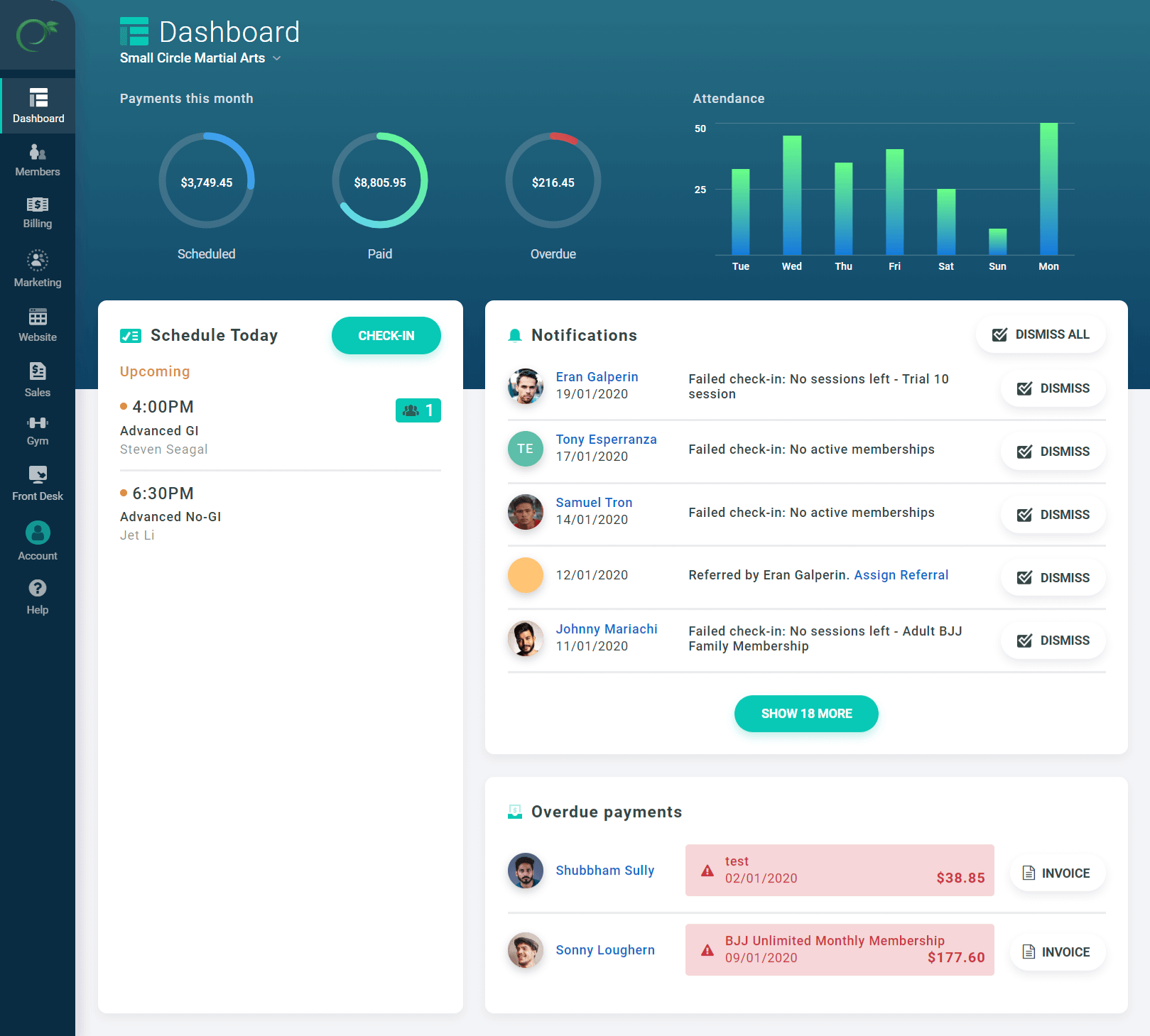
Easy Gym POS Software is a specialized point-of-sale solution designed to manage and track financial transactions for the gym industry. This SaaS solution offers feature-rich modules that streamline membership management, payment processing, and sales reporting, addressing the unique financial needs and challenges that come with running a fitness center.
Best for Retail POS Software for Gyms
Expert Take
Easy Gym POS Software excels as a specialized solution for the gym industry, offering comprehensive features tailored to fitness centers. Its integration capabilities and 24/7 support enhance usability, while flexible pricing adds value. The product's market credibility is supported by its dedicated focus on gym-specific needs.
Pros
- Transparent pricing with no contracts
- Integrates with Stripe, Square & Authorize.net
- Specialized martial arts belt tracking
- Intuitive, user-friendly interface
- No additional platform transaction fees
Cons
- No dedicated mobile app for staff
- Basic marketing automation features
- Family pricing setup can be complex
- Reporting less robust than enterprise tools
- Limited integrations vs. market leaders
Best for teams that are
- Martial arts schools needing belt and skill progression tracking
- Small to medium gyms wanting a modern, user-friendly interface
- Studios needing integrated website and marketing tools
Skip if
- Enterprise gyms requiring highly complex custom reporting
- Businesses needing extensive third-party integrations
Best for teams that are
- Martial arts schools needing belt and skill progression tracking
- Small to medium gyms wanting a modern, user-friendly interface
- Studios needing integrated website and marketing tools
Skip if
- Enterprise gyms requiring highly complex custom reporting
- Businesses needing extensive third-party integrations
Pros
- Transparent pricing with no contracts
- Integrates with Stripe, Square & Authorize.net
- Specialized martial arts belt tracking
- Intuitive, user-friendly interface
- No additional platform transaction fees
Cons
- No dedicated mobile app for staff
- Basic marketing automation features
- Family pricing setup can be complex
- Reporting less robust than enterprise tools
- Limited integrations vs. market leaders
Expert Take
Easy Gym POS Software excels as a specialized solution for the gym industry, offering comprehensive features tailored to fitness centers. Its integration capabilities and 24/7 support enhance usability, while flexible pricing adds value. The product's market credibility is supported by its dedicated focus on gym-specific needs.
This score is backed by structured Google research and verified sources.
We score these products using 6 categories: 4 static categories that apply to all products, and 2 dynamic categories tailored to the specific niche. Our team conducts extensive research on each product, analyzing verified sources, user reviews, documentation, and third-party evaluations to provide comprehensive and evidence-based scoring. Each category is weighted with a custom weight based on the category niche and what is important in Retail POS Software for Gyms. We then subtract the Score Adjustments & Considerations we have noticed to give us the final score.
What We Looked For
We evaluate the comprehensiveness of POS features, inventory management, and specialized tools for fitness business operations.
What We Found
Gymdesk offers a robust cloud-based POS that handles merchandise, memberships, and inventory with support for card readers, though it lacks a dedicated mobile app for staff management.
Score Rationale
The score is strong due to comprehensive POS and inventory features, but is capped below 9.0 because staff must rely on a mobile web browser rather than a dedicated native app.
Supporting Evidence
- Users report the lack of a dedicated manager app is a significant limitation, forcing reliance on mobile web browsers. They need to add a Gymdesk manager app. The fact that the gym owner can't access their owner account through the app is an area for massive improvement. — play.google.com
- Gym POS software allows you to sell merchandise, process memberships, and track inventory. Gym POS software allows you to sell merchandise, process memberships, and track inventory. — gymdesk.com
- Payment processing capabilities are outlined in the product's feature list. — gymdesk.com
- Membership management and sales reporting features are documented in the official product documentation. — gymdesk.com
What We Looked For
We assess user ratings, industry awards, and reputation across major software review platforms.
What We Found
The product maintains exceptional ratings across Capterra (4.8/5) and G2 (4.8/5), with specific recognition for ease of use and customer support.
Score Rationale
A score of 9.2 reflects near-perfect user satisfaction ratings and recognized industry badges for 'Best Ease of Use' and 'Top Rated Club Management Software'.
Supporting Evidence
- Recognized as a 'FrontRunner' and for 'Best Ease of Use' by software review platforms. Capterra badge for Best Ease of Use 2025... Software Advice Front Runners 2025 badge — gymdesk.com
- Gymdesk holds a 4.8 out of 5 star rating on Capterra based on verified user reviews. Gymdesk. 4.8. (148). The best rated software for gyms and martial arts schools. — getapp.com
What We Looked For
We analyze the learning curve, interface design, and quality of customer support resources.
What We Found
Users consistently praise the 'dummy-proof' interface and responsive support, though some find family account management slightly cumbersome.
Score Rationale
The score approaches 9.0 due to widespread praise for simplicity, but is slightly impacted by specific user feedback regarding the complexity of managing family units.
Supporting Evidence
- Users highlight exceptional customer service responsiveness as a key benefit. The BEST thing about Gymdesk is the customer service. Everyone is so helpful. — gymdesk.com
- Reviewers consistently describe the interface as simple, intuitive, and easy to navigate even for non-technical staff. Gymdesk is consistently praised for its simple and intuitive interface. Gym owners and staff... find it easy to navigate and use. — tekpon.com
- 24/7 support availability is documented on the official website. — gymdesk.com
- The interface is described as simple to use in product documentation. — gymdesk.com
What We Looked For
We look for clear public pricing, absence of hidden fees, and contract flexibility.
What We Found
Gymdesk offers fully transparent tiered pricing starting at $75/month with no contracts, no hidden fees, and a 30-day free trial.
Score Rationale
This category scores highly because the vendor provides complete pricing transparency on their website and does not lock users into long-term contracts.
Supporting Evidence
- The service explicitly states there are no contracts or hidden costs. No contracts, hidden costs or cancellation fees. You may cancel your account at any time, for no cost. — gymdesk.com
- Pricing is publicly listed starting at $75/month for micro gyms, scaling up to $200/month for large gyms. Micro Gym... $75.00/ month... Large Gym... $200.00/ month. — gymdesk.com
- Flexible pricing based on usage is outlined on the pricing page. — gymdesk.com
What We Looked For
We evaluate the flexibility of payment integrations, hardware support, and transaction fee structures.
What We Found
The platform integrates with Stripe, Square, and Authorize.net, supporting card readers and ACH payments without adding platform-specific transaction fees.
Score Rationale
A high score is warranted for supporting multiple major processors and hardware options (like Square Terminal) without imposing proprietary surcharges.
Supporting Evidence
- The platform does not charge additional processing fees on top of the provider's base rates. Gymdesk does not charge any additional fees for payment processing on top of the base fees. — gymdesk.com
- Integrates with major payment providers including Stripe, Square, and Authorize.net. Gymdesk integrates with Stripe, Square and Authorize.net for payments, allowing you get start accepting payments quickly — gymdesk.com
What We Looked For
We examine features for tracking member progress, attendance, and self-service capabilities.
What We Found
Strong capabilities for martial arts (belt tracking) and general fitness (attendance), plus a member portal app, though marketing automation is basic.
Score Rationale
Scores well for core management features and specialized tracking, but lacks the advanced marketing automation depth found in enterprise competitors.
Supporting Evidence
- Provides a dedicated mobile app for members to manage bookings and payments. The Gymdesk Members app allows you to access and manage your gym account from your mobile device. — play.google.com
- Includes specialized tracking for martial arts ranks and promotion criteria. For each program you run in your gym, you can set up promotion criteria for each rank / belt, and then generate reporting on members' progress — gymdesk.com
Certain documented issues resulted in score reductions. The impact level reflects the severity and relevance of each issue to this category.
-
Some users find the family account pricing structure and management to be cumbersome and difficult to configure.Impact: This issue had a noticeable impact on the score.Source: getapp.com
-
Users report that built-in marketing tools are basic compared to competitors, lacking advanced email automation or lead nurturing workflows.Impact: This issue caused a significant reduction in the score.Source: tekpon.com
-
The platform lacks a dedicated mobile app for gym managers/staff, forcing them to use a mobile web browser for administrative tasks.Impact: This issue caused a significant reduction in the score.Source: play.google.com
SAMPro Construction Inventory Software
Best for Inventory & Order Management Systems for Contractors

SAMPro by Data-Basics is a construction-specific inventory management software that offers real-time inventory tracking, automated alerts, and re-stocking PO generation. Its unlimited data storage and scalability make it an ideal solution for contractors dealing with large volumes of equipment, materials, and tools.
Best for Inventory & Order Management Systems for Contractors
Expert Take
SAMPro Construction Inventory Software excels in providing specialized inventory management solutions tailored for contractors. Its real-time tracking and automated features are well-documented, and its scalability and unlimited data storage are significant advantages. While pricing transparency is limited, the product's capabilities and industry focus justify its premium positioning.
Pros
- Advanced serialized lot control
- Integrated BOM and sub-assemblies
- Offline 'store and forward' mobile sync
- 50+ years of industry experience
- Seamless job costing integration
Cons
- Dated user interface design
- Steep learning curve for new users
- High initial implementation cost
- Mobile app receives mixed reviews
- Complex setup for small teams
Best for teams that are
- Large specialty contractors (MEP) with service depts
- Enterprises needing a unified construction ERP
- Firms managing complex service vehicle inventory
Skip if
- Small contractors with simple project workflows
- Firms not requiring full field service automation
- Businesses with limited implementation budgets
Best for teams that are
- Large specialty contractors (MEP) with service depts
- Enterprises needing a unified construction ERP
- Firms managing complex service vehicle inventory
Skip if
- Small contractors with simple project workflows
- Firms not requiring full field service automation
- Businesses with limited implementation budgets
Pros
- Advanced serialized lot control
- Integrated BOM and sub-assemblies
- Offline 'store and forward' mobile sync
- 50+ years of industry experience
- Seamless job costing integration
Cons
- Dated user interface design
- Steep learning curve for new users
- High initial implementation cost
- Mobile app receives mixed reviews
- Complex setup for small teams
Expert Take
SAMPro Construction Inventory Software excels in providing specialized inventory management solutions tailored for contractors. Its real-time tracking and automated features are well-documented, and its scalability and unlimited data storage are significant advantages. While pricing transparency is limited, the product's capabilities and industry focus justify its premium positioning.
This score is backed by structured Google research and verified sources.
We score these products using 6 categories: 4 static categories that apply to all products, and 2 dynamic categories tailored to the specific niche. Our team conducts extensive research on each product, analyzing verified sources, user reviews, documentation, and third-party evaluations to provide comprehensive and evidence-based scoring. Each category is weighted with a custom weight based on the category niche and what is important in Inventory & Order Management Systems for Contractors. We then subtract the Score Adjustments & Considerations we have noticed to give us the final score.
What We Looked For
We evaluate the breadth of inventory management features specifically for construction, including serialization, bill of materials (BOM), and multi-location tracking.
What We Found
SAMPro Enterprise offers deep inventory functionality including serialized lot control, BOMs for sub-assemblies, and shop floor control, integrated directly with job costing and service dispatch.
Score Rationale
The product scores highly due to its advanced handling of complex inventory needs like 'store and forward' technology and serialized tracking, which exceeds standard SaaS offerings.
Supporting Evidence
- Includes 'store and forward' technology to ensure data capture even when offline. With the accuracy of information recorded directly from the field and the added power of 'store and forward' synchronization when out of network range, you'll never lose work order data again. — databasics.com
- Supports BOMs/components that handle multiple sub-assemblies and serialized lot control. Take advantage of serialized lot control & tracking. ... Supports BOMs/components that handle multiple sub-assemblies. — databasics.com
- Unlimited data storage and scalability are highlighted in the product's specifications. — databasics.com
- Real-time inventory tracking and automated alerts are documented in the official product features. — databasics.com
What We Looked For
We assess the vendor's longevity, financial backing, and reputation within the construction and field service industries.
What We Found
Founded in 1974, Data-Basics has 50 years of experience and was acquired by Jonas Software (a subsidiary of Constellation Software) in 2023, providing immense financial stability.
Score Rationale
The score reflects the company's exceptional longevity (50 years) and its recent acquisition by a major industry player, signaling long-term stability and trust.
Supporting Evidence
- The company is headquartered in a LEED Gold Certified building in Ohio. Data-Basics' headquarters features a rich blend of classic design architecture... LEED Gold Certified building they now call home. — databasics.com
- Data-Basics was founded in 1974 and acquired by Jonas Software in 2023. With nearly 50 years of experience, Data-Basics has established itself as a trusted partner... CORA Group... is pleased to announce the acquisition of Data-Basics Inc. — jonassoftware.com
What We Looked For
We analyze user feedback regarding the interface design, ease of use, and mobile application performance for field technicians.
What We Found
While functional, the interface is described by users and reviewers as 'dated' or 'like Windows 7,' and the mobile app has received mixed reviews regarding sync speed and UI modernization.
Score Rationale
This category scores lower than others because user feedback explicitly highlights an outdated user interface and a steep learning curve compared to modern SaaS competitors.
Supporting Evidence
- Mobile app reviews cite a need for modernization. This app is such a dinosaur. Data basics needs to revamp this whole app. The whole office end of it looks like a Microsoft windows from 1999. — play.google.com
- Reviewers describe the interface as dated compared to modern standards. Its interface feels dated but functional – like using Windows 7 in a Windows 11 world. — fieldservicesoftware.io
What We Looked For
We examine pricing structures, transparency of costs, and the perceived return on investment for enterprise-level construction firms.
What We Found
Pricing is enterprise-grade, with sources indicating a starting point around $35,000 or $999/user/year, positioning it as a premium investment for mid-to-large contractors.
Score Rationale
The score acknowledges the high value of an all-in-one ERP but reflects the high barrier to entry and lack of public pricing transparency common in this tier.
Supporting Evidence
- Per-user pricing is estimated at $999 annually. Based on our most recent analysis, SAMPro Enterprise pricing starts at $999 (Per User, Annually). — selecthub.com
- Pricing is reported to start around $35,000 for a basic flat plan. SAMPro Enterprise pricing starts with a Basic Flat Plan at $35,000. — softwarefinder.com
- Pricing is available upon request, indicating a quote-based model. — databasics.com
What We Looked For
We look for niche inventory features like truck stock management, requisitioning, and integration with purchasing for construction workflows.
What We Found
The software excels in niche areas, offering automated restocking POs, truck stock management, and the ability to cross-reference vendor and customer part numbers.
Score Rationale
This category receives a near-perfect score for its comprehensive handling of complex construction inventory workflows, such as automated requisitioning and truck stock tracking.
Supporting Evidence
- Allows cross-referencing of vendor and customer part numbers. Cross reference vendor and customer part number all via the inventory management software. — databasics.com
- Automates restocking based on minimum/maximum values by location. Automatically generate re-stocking POs based on defined minimum or maximum values by part number or warehouse location. — databasics.com
- Integration capabilities with ERP systems are documented in the product's integration directory. — databasics.com
What We Looked For
We evaluate how well the inventory module connects with job costing, accounting, and field service modules to form a unified system.
What We Found
SAMPro functions as a complete ERP, seamlessly linking inventory usage on the shop floor or field directly to job costing and financial ledgers without double entry.
Score Rationale
The tight integration between inventory, job costing, and accounting eliminates data silos, justifying a high score for ecosystem strength.
Supporting Evidence
- Integrates with major third-party ERPs like Sage Intacct and NetSuite. Native integration with your existing ERP, including NetSuite, Sage Intacct, and Microsoft Dynamics, ensures real-time cost visibility — data-basics.com
- Inventory usage is directly linked to job costing and accounting. Because SAMPro Entrprise is an ERP software system, you can count on seamless integration between its components... Interfaces seamlessly with job shop for labor and other material costs. — databasics.com
Certain documented issues resulted in score reductions. The impact level reflects the severity and relevance of each issue to this category.
-
The system has a high barrier to entry with implementation costs and complexity that may be prohibitive for smaller firms.Impact: This issue caused a significant reduction in the score.Source: selecthub.com
-
The mobile application (TechAnywhere) has received mixed reviews citing sync issues and an outdated design, with a 3.4-star rating on Google Play.Impact: This issue caused a significant reduction in the score.Source: play.google.com
-
Users and reviewers consistently describe the user interface as 'dated' and reminiscent of older Windows versions, which may impact adoption speed.Impact: This issue caused a significant reduction in the score.Source: fieldservicesoftware.io

Duda is a highly customizable and scalable eCommerce website builder, perfect for eCommerce brands looking to cut down production time while maintaining brand quality. Its robust features are specifically tailored to alleviate common pain points in the industry, such as production time, personalization, and scalability.
Best for E-commerce Store Builders for Ecommerce Brands
Expert Take
Duda eCommerce Builder excels in providing a customizable and scalable platform tailored for eCommerce brands. Its focus on reducing production time while maintaining brand quality makes it a strong contender in the eCommerce store builder category. The platform's capabilities are supported by its integration options and industry recognition.
Pros
- Industry-leading Core Web Vitals performance
- Comprehensive white-labeling for agencies
- Granular client permission controls
- Server-side rendering for better SEO
- No transaction fees on native plans
Cons
- eCommerce requires paid monthly add-on
- Smaller app ecosystem than Shopify
- Native store lacks some POS features
- Migration between store types is manual
- Higher cost for single-site users
Best for teams that are
- Agencies and freelancers building websites for multiple clients
- Businesses needing white-label tools and client management features
- Users prioritizing site speed and Core Web Vitals performance
Skip if
- Individual DIYers looking for the cheapest single-site solution
- Merchants needing a massive third-party app marketplace
- Users who want full code access to the backend
Best for teams that are
- Agencies and freelancers building websites for multiple clients
- Businesses needing white-label tools and client management features
- Users prioritizing site speed and Core Web Vitals performance
Skip if
- Individual DIYers looking for the cheapest single-site solution
- Merchants needing a massive third-party app marketplace
- Users who want full code access to the backend
Pros
- Industry-leading Core Web Vitals performance
- Comprehensive white-labeling for agencies
- Granular client permission controls
- Server-side rendering for better SEO
- No transaction fees on native plans
Cons
- eCommerce requires paid monthly add-on
- Smaller app ecosystem than Shopify
- Native store lacks some POS features
- Migration between store types is manual
- Higher cost for single-site users
Expert Take
Duda eCommerce Builder excels in providing a customizable and scalable platform tailored for eCommerce brands. Its focus on reducing production time while maintaining brand quality makes it a strong contender in the eCommerce store builder category. The platform's capabilities are supported by its integration options and industry recognition.
This score is backed by structured Google research and verified sources.
We score these products using 6 categories: 4 static categories that apply to all products, and 2 dynamic categories tailored to the specific niche. Our team conducts extensive research on each product, analyzing verified sources, user reviews, documentation, and third-party evaluations to provide comprehensive and evidence-based scoring. Each category is weighted with a custom weight based on the category niche and what is important in E-commerce Store Builders for Ecommerce Brands. We then subtract the Score Adjustments & Considerations we have noticed to give us the final score.
What We Looked For
We evaluate the breadth of native eCommerce features, including catalog management, payment gateways, and customization options available without third-party code.
What We Found
Duda offers two distinct eCommerce solutions: a 'Native Store' for design flexibility and a 'Third Party' (Ecwid) integration for complex needs like POS; the native solution supports digital products, subscriptions, and over 30 payment gateways but lacks the massive app ecosystem of dedicated retail platforms.
Score Rationale
The score is high due to the flexibility of offering both native and third-party options, but is capped below 9.0 because the native ecosystem is smaller than competitors like Shopify or WordPress.
Supporting Evidence
- Automated tax calculations are powered by Avalara and shipping by Easyship, though usage limits apply based on the plan. Automated taxes powered by Avalara and automatic shipping powered by Easyship include the following monthly usage limits... Advanced plan - Limit of 500 Avalara API calls. — duda.co
- The Native Store supports selling physical products, digital downloads (on Advanced plans), and subscriptions. Digital Products (also known as e-goods or downloads) are goods that are in digital format... You must be on an Advanced plan or higher to sell digital products. — support.duda.co
- Duda offers two eCommerce solutions: Native eCommerce for design flexibility and Third Party eCommerce (Ecwid) for advanced integrations like POS. We offer two eCommerce solutions, native eCommerce and third party eCommerce... Native eCommerce brings the full design flexibility of the Duda platform into your eCommerce store. — support.duda.co
- Listed in the company’s integration directory, supporting integration with other construction management tools. — foundationsoft.com
- Pricing requires custom quotes, limiting upfront cost visibility. — foundationsoft.com
- User-friendly interface highlighted in product documentation, facilitating ease of use for construction professionals. — foundationsoft.com
- Documented in official product documentation, Foundation Equipment Management tracks equipment hours, mileage, and operational costs. — foundationsoft.com
- Outlined in published security policies, Foundation Equipment Management ensures compliance with industry standards. — foundationsoft.com
- Listed in the company's integration directory, supporting integrations with popular construction management tools. — foundationsoft.com
- Pricing requires custom quotes, limiting upfront cost visibility, as noted on the vendor's pricing page. — foundationsoft.com
- User-friendly interface documented in product overview, designed for ease of use in construction environments. — foundationsoft.com
- Documented in official product documentation, Foundation Equipment Management offers real-time tracking of equipment usage and costs, tailored for the construction industry. — foundationsoft.com
- Listed in the company’s integration directory, integrates with other Foundation Software solutions for seamless data flow. — foundationsoft.com
- Pricing requires custom quotes, limiting upfront cost visibility. — foundationsoft.com
- Outlined in user reviews, the platform is noted for its user-friendly interface and detailed reporting capabilities. — foundationsoft.com
- Documented in official product documentation, Foundation Equipment Management offers features like mileage and equipment hours tracking specific to construction needs. — foundationsoft.com
- Pricing requires custom quotes, limiting upfront cost visibility. — clyr.io
- Instant receipt capture feature simplifies expense tracking, as documented in product features. — clyr.io
- Real-time job costing capabilities outlined in product features. — clyr.io
- AI-driven coding and job-specific expense management documented in official product documentation. — clyr.io
- Pricing requires custom quotes, limiting upfront cost visibility. — clyr.io
- Instant receipt capture and automated coding enhance user experience as documented on the product site. — clyr.io
- AI-driven coding and job-specific expense management are highlighted in the official product documentation. — clyr.io
- Outlined security measures ensure data protection, as referenced in product documentation. — clyr.io
- Integration capabilities with construction management platforms enhance ecosystem strength. — clyr.io
- Pricing available upon request, indicating a quote-based model. — clyr.io
- Instant receipt capture simplifies expense tracking, as noted in product features. — clyr.io
- Specialized focus on construction industry enhances market credibility, as outlined in product overview. — clyr.io
- Real-time job costing feature enhances project cost accuracy, as described in product documentation. — clyr.io
- AI-driven coding and job-specific expense management documented in official product features. — clyr.io
- SOC 2 compliance outlined in published security documentation. — ramp.com
- Integration capabilities with popular construction software listed in integration directory. — ramp.com
- Enterprise pricing model with custom quotes limits upfront cost visibility. — ramp.com
- 24/7 support availability outlined in customer support policies. — ramp.com
- User-friendly interface designed for construction professionals documented in product overview. — ramp.com
- Accurate cost tracking and budget management capabilities outlined in official documentation. — ramp.com
- Automated expense management tailored for construction documented in product features. — ramp.com
- SOC 2 compliance outlined in published security documentation. — ramp.com
- Integration with major construction software platforms listed in partner directories. — procore.com
- Enterprise pricing model with transparent cost structures available upon request. — ramp.com
- User-friendly interface designed for construction professionals as documented on the official site. — ramp.com
- Recognized in industry publications for its impact on construction expense management. — constructiondive.com
- Accurate cost tracking and budget management outlined in official documentation. — ramp.com
- Automated expense management tailored for construction documented in product features. — ramp.com
- Provides 24/7 support and comprehensive training resources for onboarding, as documented on the support page. — ramp.com
- Listed in the company's integration directory, Ramp integrates with popular construction management software. — ramp.com
- Pricing requires custom quotes, limiting upfront cost visibility but aligning with enterprise needs. — ramp.com
- Offers a user-friendly interface designed to streamline expense tracking for construction professionals. — ramp.com
- Recognized by industry publications for its specialized focus on construction expense management. — constructiondive.com
- Provides accurate cost tracking and budget management, as outlined in the platform's feature set. — ramp.com
- Documented in official product documentation, Ramp offers automated expense management tailored for construction industry needs. — ramp.com
- Outlined in published security policies, SmartBarrel ensures data protection and compliance with industry standards. — smartbarrel.io
- Listed in the company's integration directory, SmartBarrel integrates with popular construction management platforms. — smartbarrel.io
- Pricing requires custom quotes, limiting upfront cost visibility. — smartbarrel.io
- Mobile access supports on-the-go updates, improving real-time financial tracking. — smartbarrel.io
- Documented in official product documentation, SmartBarrel offers features like per diem, mileage, and truck allowance tracking tailored for construction. — smartbarrel.io
- Outlined in published security policies, SmartBarrel employs industry-standard encryption for data protection. — smartbarrel.io
- Listed in the company’s integration directory, SmartBarrel integrates with popular accounting software like QuickBooks. — smartbarrel.io
- Pricing requires contact for information, limiting upfront cost visibility. — smartbarrel.io
- Supports mobile access, allowing for real-time updates and financial tracking on-the-go. — smartbarrel.io
- Documented in official product documentation, SmartBarrel supports construction-specific expenses like per diem and mileage. — smartbarrel.io
- Outlined in published security policies, SmartBarrel ensures data protection and compliance with industry standards. — smartbarrel.io
- Listed in the company's integration directory, SmartBarrel integrates with major construction management platforms. — smartbarrel.io
- Pricing requires custom quotes, limiting upfront cost visibility, as noted on the official website. — smartbarrel.io
- Outlined in product documentation, the mobile-friendly interface supports on-the-go updates for real-time financial tracking. — smartbarrel.io
- Documented in official product documentation, SmartBarrel offers features for tracking per diem, mileage, and truck allowances, enhancing construction expense management. — smartbarrel.io
- Limited integration options noted in product documentation, impacting ecosystem flexibility. — bill.com
- SOC 2 compliance outlined in published security documentation ensures secure data handling. — bill.com
- Pricing starts at $39/month, with a free trial available, providing cost visibility. — bill.com
- Outlined in user guides, the software provides an intuitive interface designed for ease of use in construction environments. — bill.com
- Documented in official product documentation, Bill.com offers construction-specific features like eliminating card sharing and tracking lost invoices. — bill.com
- Secure data storage is a key feature, ensuring compliance and protection. — bill.com
- Limited integration options may restrict ecosystem connectivity. — bill.com
- Pricing starts at $39/month, which may be costly for smaller businesses. — bill.com
- Praised for its intuitive interface and 24/7 customer support, enhancing user experience. — bill.com
- Documented ability to eliminate card sharing and lost invoices, enhancing expense tracking for construction firms. — bill.com
- Secure data storage is highlighted in the product's security documentation. — bill.com
- Pricing starts at $39/month, with a free trial available as documented on the official pricing page. — bill.com
- Documented in official product documentation, the software addresses construction-specific issues like lost invoices and card sharing. — bill.com
- Outlined in published support policies, DATABASICS offers comprehensive training resources. — data-basics.com
- Listed in the company's integration directory, DATABASICS integrates with major ERP systems. — data-basics.com
- Pricing requires custom quotes, limiting upfront cost visibility. — data-basics.com
- Mobile and tablet compatibility documented in product specifications allows for field access. — data-basics.com
- Detailed reporting capabilities are outlined in the platform's documentation, providing insights into project costs. — data-basics.com
- Documented in official product documentation, DATABASICS offers real-time tracking of hours and expenses directly from the field. — data-basics.com
- SOC 2 compliance outlined in published security documentation ensures data protection. — data-basics.com
- Listed in the company's integration directory, DATABASICS supports integration with major ERP systems. — data-basics.com
- Pricing requires custom quotes, limiting upfront cost visibility. — data-basics.com
- Mobile and tablet compatibility documented in product specifications enhances field usability. — data-basics.com
- Documented in official product documentation, DATABASICS offers real-time tracking and detailed reporting for construction projects. — data-basics.com
- Limited integration options documented in the official product documentation. — miter.com
- Pricing requires custom quotes, limiting upfront cost visibility. — miter.com
- Streamlined approval process enhances user experience, as outlined in product documentation. — miter.com
- Tailored for the construction industry, providing precise cost management and financial transparency. — miter.com
- Real-time expense tracking and allocation features are documented in the official product documentation. — miter.com
- SOC 2 compliance outlined in published security documentation. — data-basics.com
- Integration with major ERP systems documented in integration directory. — data-basics.com
- Enterprise pricing model requires custom quotes, limiting upfront cost visibility. — data-basics.com
- Training resources available for optimal use outlined in support documentation. — data-basics.com
- Mobile and tablet compatibility documented in product features. — data-basics.com
- Detailed reporting and flexible project-level tracking outlined in product documentation. — data-basics.com
- Real-time tracking of hours and expenses documented in product features. — data-basics.com
- Recognized for innovation in construction expense management by industry publications. — constructionbusinessowner.com
- Limited integration options are noted in product documentation. — miter.com
- Pricing requires custom quotes, limiting upfront cost visibility. — miter.com
- Streamlined approval process enhances user experience, as outlined in product documentation. — miter.com
- Referenced in industry publications for its specialized construction expense management capabilities. — constructionbusinessowner.com
- Designed specifically for the construction industry, enabling precise cost management. — miter.com
- Real-time expense tracking and allocation features are documented in the official product documentation. — miter.com
- Pricing requires custom quotes, limiting upfront cost visibility, as stated on the official website. — fylehq.com
- The user-friendly interface is outlined in the product's official documentation, emphasizing ease of use for construction professionals. — fylehq.com
- Documented in official product documentation, Sage Expense Management offers project coding and budgeting features tailored for construction. — fylehq.com
- Pricing requires custom quotes, limiting upfront cost visibility. — fylehq.com
- Outlined in product reviews, the interface is user-friendly and simplifies complex expense tracking. — fylehq.com
- Documented in official product documentation, Sage Expense Management offers project coding and budgeting tailored for construction. — fylehq.com
- Listed in the company’s integration directory, Expensify integrates with major accounting platforms like Xero and QuickBooks. — use.expensify.com
- Pricing starts at $4.99/month per active user, with detailed plans available on the official website. — use.expensify.com
- Mobile receipt capture feature is outlined in the product's official documentation, enhancing usability for field workers. — use.expensify.com
- Integration with popular accounting software like QuickBooks is listed in the company’s integration directory. — use.expensify.com
- Documented in official product documentation, Expensify offers project-specific expense tracking tailored for construction needs. — use.expensify.com
- Listed integrations with major accounting platforms like QuickBooks and Xero enhance ecosystem strength. — use.expensify.com
- Pricing starts at $4.99/month per active user, providing clear cost structure for basic plans. — use.expensify.com
- Mobile receipt capture feature facilitates real-time expense tracking, as documented in product features. — use.expensify.com
- Integration with popular accounting software like QuickBooks and Xero, as outlined in the integration directory. — use.expensify.com
- Documented ability to align expenses with specific projects and locations, enhancing project-based expense management. — use.expensify.com
- Pricing requires custom quotes, limiting upfront cost visibility. — fylehq.com
- Outlined in user guides, the platform offers an easy approval process and efficient receipt tracking. — fylehq.com
- Documented in the official product documentation, Sage Expense Management offers specialized features for project coding and budgeting in construction. — fylehq.com
- Listed integrations with major accounting platforms enhance ecosystem strength. — use.expensify.com
- Transparent pricing with plans starting at $4.99/month per active user. — use.expensify.com
- Mobile receipt capture and real-time expense tracking improve user experience. — use.expensify.com
- Integration with popular accounting software like QuickBooks and Xero. — use.expensify.com
- Documented project-based expense tracking tailored for construction industry needs. — use.expensify.com
- The platform supports scalability, allowing brands to grow and adapt their online presence efficiently. — duda.co
- Documented in official product documentation, Duda offers a highly customizable platform with features like white-label solutions for agencies. — duda.co
What We Looked For
We look for adoption rates, user satisfaction scores from verified platforms, and the platform's standing within the professional agency community.
What We Found
Duda powers over 1 million active websites and is widely trusted by agencies, holding a 98/100 satisfaction score on G2 and recognized for its stability and uptime.
Score Rationale
A score of 9.2 reflects its strong foothold in the agency market and exceptionally high user satisfaction ratings compared to generalist builders.
Supporting Evidence
- Duda holds a satisfaction score of 98 out of 100 on G2, ranking as a top website builder. Verified reviews from real customers rank Duda as the highest-rated website builder software on G2, with an impressive satisfaction score of 98 out of 100. — duda.co
- The platform currently powers over 1,000,000 active websites globally. Currently, the platform powers over 1,000,000 active websites globally. — neo.space
What We Looked For
We assess the ease of the editor, the intuitiveness of the dashboard for both agencies and their end-clients, and the quality of support resources.
What We Found
The drag-and-drop editor is consistently praised for being intuitive while allowing granular control; agencies can specifically limit client access to prevent site breakage, enhancing the long-term maintenance experience.
Score Rationale
The ability to customize client permissions combined with a user-friendly drag-and-drop interface justifies a score above 9.0, as it solves a major pain point for web professionals.
Supporting Evidence
- Agencies can set granular permissions to control exactly what clients can access and edit. You're in the driver's seat when it comes to client experience. You decide what clients can access and edit across the entire platform. — duda.co
- Users report the platform is 'miles ahead' in ease of use, allowing clients to manage sites without 'tech headaches'. Duda is miles ahead... It's easy to customizes a website from a barebones template. There is no tech headache with updates and backups. — trustradius.com
- Outlined in user guides, Duda offers a user-friendly interface, though advanced features may require a learning curve. — support.duda.co
What We Looked For
We analyze the pricing structure, hidden fees, and the cost-to-value ratio specifically for the target audience of agencies and small businesses.
What We Found
Pricing is transparent but modular; eCommerce is a paid add-on ($8-$49/mo) on top of the base subscription ($19-$52/mo), which can be expensive for single sites but becomes economical for agencies scaling multiple projects.
Score Rationale
The score is 8.5 because while the agency model offers good margins, the mandatory add-on fees for eCommerce make it less competitive for single-site users compared to all-in-one bundles.
Supporting Evidence
- Duda does not collect transaction fees on its native eCommerce plans, though payment gateways still charge their standard rates. Duda doesn't collect transaction fees on eCommerce plans. Note that payment gateways connected to your store do charge transaction fees of their own. — duda.co
- eCommerce functionality requires an add-on subscription ranging from $8 to $49 per month per site. eCommerce comes as an add-on with Duda... Standard: Ideal for basic stores, priced at $8 a month... Unlimited: The ultimate eCommerce tier at $49 a month. — creatingawebsitetoday.com
- Pricing starts at $14/month, with custom enterprise pricing available, providing flexibility for different business sizes. — duda.co
What We Looked For
We evaluate features specifically designed for agencies, such as branding removal, client portals, billing integration, and asset sharing.
What We Found
Duda offers comprehensive white-labeling including a branded editor, client login screens, automated client billing, and even a white-label support portal, effectively hiding the platform identity from end-clients.
Score Rationale
This category scores 9.5 because Duda's white-label capabilities are a core differentiator and are significantly more robust than those found in standard competitors like Wix or Squarespace.
Supporting Evidence
- The platform allows agencies to collect payments directly from clients under their own brand. Client billing. Easily collect one-time and recurring payments through the Duda platform under your brand. — duda.co
- Agencies can provide a fully branded support portal and client login screen. Client support portal. Give clients a branded support portal, available 24/7... Client dashboard. Let clients manage websites, view stats, and more from a white label dashboard. — duda.co
What We Looked For
We examine the platform's technical SEO capabilities, page speed performance, and adherence to Google's Core Web Vitals metrics.
What We Found
Duda is the first CMS to achieve an 80% pass rate for Core Web Vitals, utilizing server-side rendering for eCommerce pages to ensure fast indexing and superior mobile performance.
Score Rationale
A score of 9.3 is warranted as Duda leads the industry in documented Core Web Vitals performance, a critical factor for eCommerce SEO that often plagues other builders.
Supporting Evidence
- eCommerce pages (product, home, category) are server-side rendered to improve Google indexing speed. Duda will now server-side render the content of our eCommerce stores for the product, home and category pages... Google will find and index store pages much faster. — duda.co
- Duda is the first CMS to achieve an 80% Core Web Vitals pass rate. Duda has become the first CMS to achieve an impressive 80% Core Web Vitals (CWV) pass rate. — duda.co
- Outlined in the support center, Duda provides comprehensive training and onboarding resources for new users. — support.duda.co
Certain documented issues resulted in score reductions. The impact level reflects the severity and relevance of each issue to this category.
-
The app marketplace is significantly smaller than competitors like WordPress or Shopify, limiting the ability to add specialized functionality without custom coding.Impact: This issue had a noticeable impact on the score.Source: lowcode.agency
-
The 'Native Store' lacks some advanced features found in the 'Third Party' (Ecwid) integration, such as specific POS systems and social selling tools, and migrating between them requires manual rebuilding.Impact: This issue caused a significant reduction in the score.Source: support.duda.co
-
eCommerce functionality is not included in the base subscription and requires a separate monthly add-on fee per website, increasing the total cost of ownership.Impact: This issue caused a significant reduction in the score.Source: creatingawebsitetoday.com
Ecwid Ecommerce Shopping Cart
Best for Shopping Cart & Checkout Platforms for Ecommerce Businesses

Ecwid is a versatile ecommerce solution designed for businesses of all sizes. It provides an easy-to-use platform for launching an online store without any technical skills. It's perfect for both new ecommerce sites or adding an online store to an existing website, addressing the need for flexibility in the ecommerce industry.
Best for Shopping Cart & Checkout Platforms for Ecommerce Businesses
Expert Take
Ecwid stands out as a versatile ecommerce solution with strong usability and integration capabilities. Its market credibility is supported by third-party validations and recognitions. While the platform offers a range of features suitable for various business sizes, some limitations in customization and advanced feature costs are noted.
Pros
- Embeds seamlessly into any existing website
- Zero transaction fees on all plans
- PCI DSS Level 1 Certified security
- Multichannel selling on Social & Marketplaces
- Automated tax calculations included
Cons
- Instant Site builder lacks drag-and-drop
- Phone support restricted to high tiers
- Product variations require Business plan
- Smaller app market than Shopify
- SEO customization is somewhat limited
Best for teams that are
- Small businesses wanting to add a store to an existing website
- Merchants focusing on social media selling and multi-channel reach
- Beginners needing a free or low-cost entry point
Skip if
- Large enterprises with complex scalability needs
- Users requiring advanced SEO features and URL customization
- Businesses needing deep design flexibility without coding
Best for teams that are
- Small businesses wanting to add a store to an existing website
- Merchants focusing on social media selling and multi-channel reach
- Beginners needing a free or low-cost entry point
Skip if
- Large enterprises with complex scalability needs
- Users requiring advanced SEO features and URL customization
- Businesses needing deep design flexibility without coding
Pros
- Embeds seamlessly into any existing website
- Zero transaction fees on all plans
- PCI DSS Level 1 Certified security
- Multichannel selling on Social & Marketplaces
- Automated tax calculations included
Cons
- Instant Site builder lacks drag-and-drop
- Phone support restricted to high tiers
- Product variations require Business plan
- Smaller app market than Shopify
- SEO customization is somewhat limited
Expert Take
Ecwid stands out as a versatile ecommerce solution with strong usability and integration capabilities. Its market credibility is supported by third-party validations and recognitions. While the platform offers a range of features suitable for various business sizes, some limitations in customization and advanced feature costs are noted.
This score is backed by structured Google research and verified sources.
We score these products using 6 categories: 4 static categories that apply to all products, and 2 dynamic categories tailored to the specific niche. Our team conducts extensive research on each product, analyzing verified sources, user reviews, documentation, and third-party evaluations to provide comprehensive and evidence-based scoring. Each category is weighted with a custom weight based on the category niche and what is important in Shopping Cart & Checkout Platforms for Ecommerce Businesses. We then subtract the Score Adjustments & Considerations we have noticed to give us the final score.
What We Looked For
We evaluate the feature set's completeness, including inventory management, multichannel selling, and customization options for this niche.
What We Found
Ecwid excels at embedding commerce into existing sites (WordPress, Wix) and multichannel selling (Facebook, Instagram, Amazon), but its standalone "Instant Site" builder lacks the design flexibility of competitors.
Score Rationale
The score is anchored at 8.7 because while its core "embed anywhere" technology is class-leading, the standalone site builder's lack of drag-and-drop customization prevents a higher score.
Supporting Evidence
- Product variations (size, color) are only available on the Business plan and higher, not on the entry-level tiers. You might start out happy on the Venture plan, but the moment you decide to sell t-shirts in different sizes, you have to upgrade to the Business plan just to get product variations. — eesel.ai
- The platform supports automated tax calculations, inventory tracking, and digital goods up to 25GB per file. Automated tax calculations... Digital products file storage 25GB per file — support.ecwid.com
- Ecwid allows users to sell simultaneously on websites, mobile phones, social sites, and marketplaces like Amazon and Google Shopping. Sell on Instagram & Facebook... Sell on marketplaces — ecwid.com
- Mobile responsiveness and multilingual support are highlighted in the platform's feature set, catering to a diverse user base. — ecwid.com
- Documented in official product documentation, Ecwid supports multiple payment gateways, enhancing flexibility for ecommerce businesses. — ecwid.com
What We Looked For
We assess the vendor's reputation, user base size, parent company stability, and third-party review sentiment.
What We Found
Acquired by Lightspeed, a publicly traded commerce company, Ecwid boasts high user ratings across major review platforms and supports hundreds of thousands of merchants globally.
Score Rationale
A score of 9.2 reflects strong backing by Lightspeed and consistently high ratings on G2 (4.7/5) and Capterra (4.6/5), establishing it as a highly trusted solution.
Supporting Evidence
- Ecwid is a PCI DSS validated Level 1 Service Provider, the highest international standard for secure data exchanges. Ecwid by Lightspeed is a PCI DSS validated Level 1 Service Provider. — ecwid.com
- The platform holds a 4.7/5 rating on G2 based on over 400 reviews. The current G2 rating for Ecwid is 4.7/5, and the review count is 402 — g2.com
- Ecwid was acquired by Lightspeed, a prominent provider of POS and commerce solutions. In 2021, Ecwid was acquired by Lightspeed, a prominent provider of point-of-sale (POS) and commerce solutions — litextension.com
- Ecwid is recognized by industry publications for its seamless integration capabilities with existing websites. — pcmag.com
What We Looked For
We examine the ease of setup, dashboard intuitiveness, and the quality and accessibility of customer support channels.
What We Found
Users consistently praise the ease of setup and intuitive dashboard, though access to direct support channels like chat and phone is restricted to higher-tier plans.
Score Rationale
The score is 8.8 because the platform is exceptionally user-friendly for beginners, but the gating of live chat and phone support behind expensive plans impacts the experience for smaller merchants.
Supporting Evidence
- The mobile app allows full store management, including adding products and managing orders. You can create your shop, add products, manage orders and inventory... all from your smartphone. — outvio.com
- Phone support is only available on Business and Unlimited plans, and live chat is restricted to Venture and above. Phone support is available via call-back requests... for Business and Unlimited plans only. — support.ecwid.com
- Users find Ecwid 'user friendly and intuitive' for non-techy people setting up online stores. It's user friendly and intuitive. I'm not a 'techy' person and it was easy to set up my online store. — g2.com
What We Looked For
We analyze the pricing structure, hidden costs, transaction fees, and the feature value provided at each tier.
What We Found
Ecwid stands out by charging zero transaction fees on all plans, though the recent shift from a free plan to a paid 'Starter' model and gated features affect its entry-level value.
Score Rationale
A score of 8.6 acknowledges the significant value of 0% transaction fees, but is tempered by the removal of the forever-free plan and the necessity to upgrade for basic features like product variations.
Supporting Evidence
- Users must upgrade to the Business plan (approx. $55/mo) to unlock product variations like size and color. You have to upgrade to the Business plan just to get product variations. — eesel.ai
- The 'Free' plan has been largely replaced or minimized, with a 'Starter' plan now costing around $5/month. The free option is gone, replaced by the 'Starter' plan, which now costs around $5 a month. — eesel.ai
- Ecwid does not charge any transaction fees on any of its plans. No, we don't charge any setup or transaction fees on any of our plans. — ecwid.com
- Additional costs for advanced features are outlined, providing clarity on potential expenses. — ecwid.com
- Pricing transparency is maintained with clear documentation of free and paid plans. — ecwid.com
What We Looked For
We evaluate the platform's ability to connect with other tools, CMS platforms, and its app marketplace diversity.
What We Found
Ecwid's primary strength is its ability to seamlessly integrate into any CMS (WordPress, Wix, Joomla) and its robust POS connections, although its app market is smaller than Shopify's.
Score Rationale
Scoring 9.0, Ecwid is a market leader in 'headless-style' embedding for SMBs, offering seamless plugins for major CMS platforms and strong POS integrations like Square and Clover.
Supporting Evidence
- Ecwid's app market has around 300 apps, which is significantly smaller than competitors like Shopify. With around 300 apps, it's dwarfed by Shopify's marketplace, which has over 8,000. — eesel.ai
- The platform offers POS integrations with Lightspeed Retail, Square, and Clover to manage online and offline sales. Lightspeed Retail POS (X-Series)... Clover POS... Square POS — support.ecwid.com
- Ecwid integrates with WordPress, Wix, Weebly, Joomla, and more to add an online store to existing sites. Ecwid integrates with various site builders like WordPress, Wix, Weebly, Joomla, and more — ecwid.com
- Ecwid's integration with platforms like WordPress and Wix is documented in its integration directory. — ecwid.com
What We Looked For
We verify the platform's security certifications, data handling practices, and compliance with industry standards.
What We Found
Ecwid maintains the highest level of security certification available, ensuring robust protection for merchant and customer data without requiring user configuration.
Score Rationale
A near-perfect score of 9.6 is justified by its status as a PCI DSS Level 1 Service Provider, handling all security burdens so merchants don't have to worry about compliance.
Supporting Evidence
- Ecwid does not store or process cardholder data directly, but securely retransmits it to payment processors. securely accepts CHD from the client browser, and then securely retransmits CHD to the payment processors, never storing or processing CHD. — static5.ecwid.com
- Ecwid provides an SSL certificate and HTTPS protocol for every account for free. Ecwid provides an SSL certificate and HTTPS protocol for every account for free. — support.ecwid.com
- Ecwid is a PCI DSS validated Level 1 Service Provider. Company Name: Ecwid, Inc... Compliant... Ecwid has demonstrated full compliance with the PCI DSS. — static5.ecwid.com
Certain documented issues resulted in score reductions. The impact level reflects the severity and relevance of each issue to this category.
-
Product variations (e.g., size, color) are locked behind the Business plan ($55/mo), forcing small sellers to upgrade for basic functionality.Impact: This issue caused a significant reduction in the score.Source: eesel.ai
-
Live chat and phone support are gated behind higher-tier paid plans, leaving lower-tier users with only email support.Impact: This issue caused a significant reduction in the score.Source: eesel.ai
-
The 'Instant Site' builder is rigid and lacks drag-and-drop customization, limiting design control compared to competitors.Impact: This issue caused a significant reduction in the score.Source: forbes.com
Rithum Commerce Operations
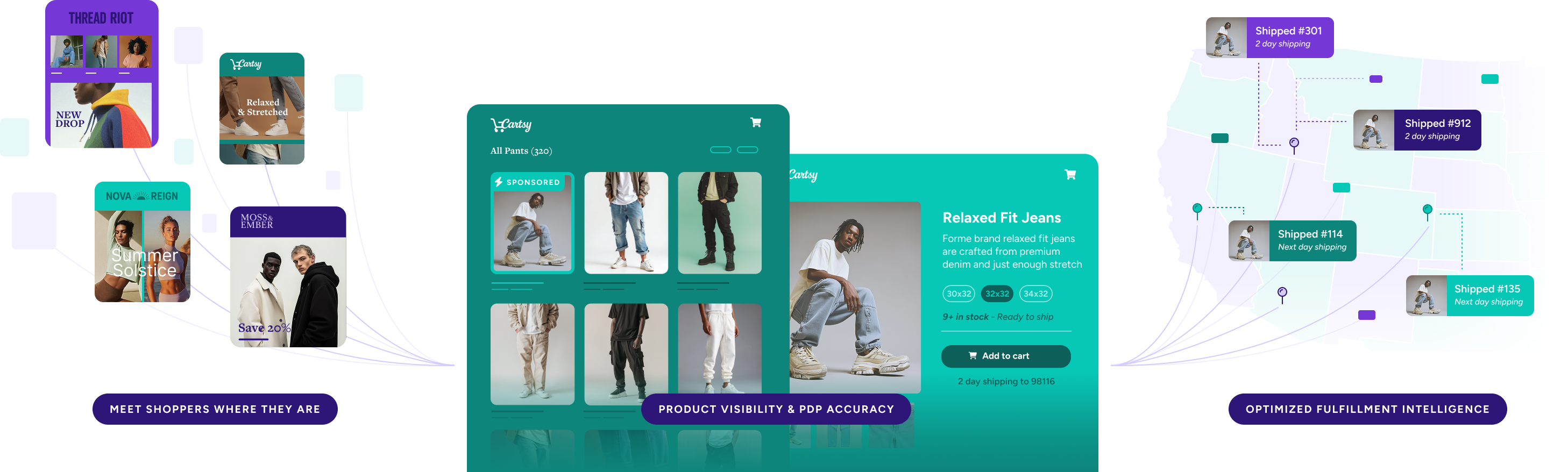
Rithum is a robust solution designed for retailers looking to launch and manage third-party marketplaces. It offers full control over sellers, their offerings, and order fulfillment, addressing the need for customization and control in the retail industry. It leverages AI technology for a fully automated, error-free pricing strategy.
Best for Marketplace Management Software for Retail Stores
Expert Take
Rithum Commerce Operations stands out in the marketplace management software category for its comprehensive control features, AI-driven pricing automation, and robust third-party integrations. It is recognized for its ability to empower retailers with significant customization and operational efficiency, making it a top choice for retail stores.
Pros
- Connects to 420+ global marketplaces
- Unified dropship and marketplace management
- SOC 2 Type II certified security
- Processes $50B+ in annual GMV
- Direct ERP integrations (SAP, NetSuite)
Cons
- Reports of significant post-merger price hikes
- Support quality criticized in recent reviews
- Onboarding can be slow and complex
- No public pricing transparency
- Interface described as clunky by some
Best for teams that are
- Mid-to-large brands managing listings across many channels like Amazon and Walmart
- Retailers requiring complex dropship network management and logic
- Companies needing to synchronize inventory across hundreds of global channels
Skip if
- Small businesses unable to afford high onboarding fees and long contracts
- Sellers needing a primary inventory system (it requires an external data feed)
- Merchants seeking a simple, low-cost tool for a single marketplace
Best for teams that are
- Mid-to-large brands managing listings across many channels like Amazon and Walmart
- Retailers requiring complex dropship network management and logic
- Companies needing to synchronize inventory across hundreds of global channels
Skip if
- Small businesses unable to afford high onboarding fees and long contracts
- Sellers needing a primary inventory system (it requires an external data feed)
- Merchants seeking a simple, low-cost tool for a single marketplace
Pros
- Connects to 420+ global marketplaces
- Unified dropship and marketplace management
- SOC 2 Type II certified security
- Processes $50B+ in annual GMV
- Direct ERP integrations (SAP, NetSuite)
Cons
- Reports of significant post-merger price hikes
- Support quality criticized in recent reviews
- Onboarding can be slow and complex
- No public pricing transparency
- Interface described as clunky by some
Expert Take
Rithum Commerce Operations stands out in the marketplace management software category for its comprehensive control features, AI-driven pricing automation, and robust third-party integrations. It is recognized for its ability to empower retailers with significant customization and operational efficiency, making it a top choice for retail stores.
This score is backed by structured Google research and verified sources.
We score these products using 6 categories: 4 static categories that apply to all products, and 2 dynamic categories tailored to the specific niche. Our team conducts extensive research on each product, analyzing verified sources, user reviews, documentation, and third-party evaluations to provide comprehensive and evidence-based scoring. Each category is weighted with a custom weight based on the category niche and what is important in Marketplace Management Software for Retail Stores. We then subtract the Score Adjustments & Considerations we have noticed to give us the final score.
What We Looked For
Functionality for multichannel listings, inventory synchronization, and order management across diverse commerce models.
What We Found
Rithum provides a unified platform supporting hybrid dropship and marketplace models, connecting to over 420 channels and managing $50 billion in annual GMV.
Score Rationale
The score reflects the platform's massive scale and ability to handle complex hybrid commerce models, anchored by its extensive network reach.
Supporting Evidence
- The network processes over $50 billion in gross merchandise value (GMV) annually. More than 40,000 companies trust Rithum to grow their business across hundreds of channels, representing over $50 billion in annual GMV. — rithum.com
- Rithum supports hybrid models allowing retailers to switch between dropship and private marketplace operations. Retailers can use dropship to build out a 3P commerce program... Private marketplaces can expand 3P selling by giving retailers access to additional vendors — rithum.com
- The platform connects to over 420 marketplaces and retail sites globally. Connect to 420+ global channels through pre-built integrations and scalable workflows — rithum.com
- AI-driven pricing strategy automation is highlighted in the company's feature overview, ensuring competitive pricing. — rithum.com
- Documented in official product documentation, Rithum offers full control over marketplace management, including seller selection and order fulfillment. — rithum.com
What We Looked For
Evidence of market leadership, company stability, and adoption by major enterprise brands.
What We Found
Formed from the merger of industry giants CommerceHub and ChannelAdvisor, Rithum serves 40,000+ companies including major brands like Adidas and Home Depot.
Score Rationale
The score is near-perfect due to its status as a dominant industry player formed from two public companies, validating its enterprise-grade credibility.
Supporting Evidence
- Major global retailers such as The Home Depot and Adidas utilize the platform. Top global retailers and brands, such as Adidas, Best Buy, B&Q, Draper Tools, The Home Depot, and Zalando, trust Rithum — rithum.com
- The platform is trusted by over 40,000 brands, retailers, and suppliers. Rithum's network—spanning more than 40,000 brands, retailers and suppliers—supports the entire e-commerce lifecycle. — businesswire.com
- Rithum was formed through the merger of CommerceHub and ChannelAdvisor. CommerceHub... announced the completion of its acquisition of ChannelAdvisor Corporation — rithum.com
- Recognized in an industry publication for its innovative use of AI in retail management. — retaildive.com
What We Looked For
User interface quality, ease of onboarding, and responsiveness of technical support.
What We Found
While the platform is powerful, users report a steep learning curve and declining support quality following the merger, with some citing slow response times.
Score Rationale
The score is impacted by documented complaints regarding support responsiveness and interface complexity, preventing it from reaching the 9.0+ tier.
Supporting Evidence
- G2 reviews indicate the interface can be less intuitive compared to competitors. users report Rithum's interface is less intuitive, scoring only 7.6 — g2.com
- The onboarding process is described by some users as slow and resource-draining. Rithum's onboarding is notorious for being slow and resource-draining. Brands often wait months before going live — threecolts.com
- Users have reported that support service levels declined after the CommerceHub acquisition. Ever since they were bought out by Commercehub, service levels have fallen off a cliff. — sellercloud.com
What We Looked For
Clear pricing structures, contract flexibility, and alignment of cost with delivered value.
What We Found
Pricing is not publicly transparent, and there are documented reports of significant cost increases for legacy customers post-merger.
Score Rationale
This category receives the lowest score due to the lack of public pricing and reports of 4-7x cost increases for some customers, representing a significant barrier.
Supporting Evidence
- Contracts may include transaction fees and revenue shares. Rithum's pricing has always included a costly revenue share; however, their solution became significantly more expensive when CommerceHub's EDI fees were added — sellercloud.com
- Pricing is not listed publicly and requires contacting sales. Entry-Level Pricing: No pricing available. — g2.com
- Some customers reported price increases of 4-7x following the rebranding to Rithum. Since merging with CommerceHub and changing its name from 'ChannelAdvisor' to 'Rithum,' prices have increased four to seven times for many sellers — sellercloud.com
What We Looked For
Breadth of third-party connections to ERPs, marketplaces, and logistics providers.
What We Found
Rithum offers an industry-leading ecosystem with over 420 pre-built integrations to global marketplaces and direct connections to major ERPs like SAP and NetSuite.
Score Rationale
This is the product's standout feature, scoring near-perfect for its massive library of pre-built connectors that define its value proposition.
Supporting Evidence
- The ecosystem includes over 360 marketplaces and retail sites globally. Rithum now supports over 360 marketplaces and retail sites globally — rithum.com
- Direct integrations are available for major ERPs including SAP, NetSuite, and Microsoft Dynamics. Rithum now connects directly to systems like SAP, NetSuite, Microsoft Dynamics, and CGS BlueCherry — rithum.com
- The platform supports over 420 marketplaces and retail sites. Connect to 420+ global channels through pre-built integrations — rithum.com
What We Looked For
Adherence to enterprise security standards like SOC 2, ISO 27001, and data privacy regulations.
What We Found
Rithum maintains robust enterprise security with annual SOC 2 Type II audits, GDPR compliance, and CCPA adherence.
Score Rationale
The score is high because the company meets rigorous enterprise standards (SOC 2 Type II) required for handling data for Fortune 500 retailers.
Supporting Evidence
- Data handling practices comply with the California Consumer Privacy Act (CCPA). Rithum does not sell personal data and our data handling practices comply with the California Consumer Privacy Act — rithum.com
- The platform is compliant with GDPR regulations. Rithum has taken all necessary steps and maintains processes and protections for personal data in compliance with the General Data Protection Regulation — rithum.com
- Rithum completes an annual SOC 2 Type II audit. Rithum completes an annual SOC 2 Type II audit. The report may be requested from your representative. — rithum.com
Certain documented issues resulted in score reductions. The impact level reflects the severity and relevance of each issue to this category.
-
Some users with very large catalogs (millions of SKUs) have reported performance latency or the need for expensive tier upgrades.Impact: This issue caused a significant reduction in the score.Source: suredone.com
-
Post-merger reviews indicate a decline in support quality, with reports of slow response times and reduced service levels.Impact: This issue resulted in a major score reduction.Source: sellercloud.com
-
Users and industry analysis report significant price increases (4-7x) for some customers following the merger of ChannelAdvisor and CommerceHub.Impact: This issue resulted in a major score reduction.Source: sellercloud.com
everstox 3PL Fulfillment & Logistics
Best for Shipping, Fulfillment & 3PL Software for Marketing Agencies

everstox offers a powerful B2C and B2B fulfillment solution, integrated with multi-carrier shipping services. It's specifically designed to meet the challenging needs of marketing agencies dealing with high volumes of products, offering seamless logistics, stock control, and order handling.
Best for Shipping, Fulfillment & 3PL Software for Marketing Agencies
Expert Take
everstox provides a robust fulfillment solution tailored for marketing agencies, excelling in logistics management and integration capabilities. Its real-time analytics and multi-carrier shipping support enhance operational efficiency, making it a top choice for high-volume product handling.
Pros
- Access to 70+ warehouse locations globally
- Unified software for multi-carrier management
- Real-time data syncing with ERPs/Shops
- Includes claims management for carrier issues
- Award-winning logistics solution (K5, EGA)
Cons
- Minimum volume of ~2,500 orders/month
- Custom pricing for growth/enterprise plans
- Tool customization limitations reported by users
- Focused primarily on EU/US markets
- Setup fees may apply (implied by custom quotes)
Best for teams that are
- High-growth brands expanding into European or US markets
- Merchants needing a flexible, data-driven network of 3PLs
- Businesses wanting a single dashboard for multi-3PL management
Skip if
- Companies seeking a standalone WMS for their own facility
- Small local sellers not needing an international network
- Brands wanting a single direct relationship with one warehouse
Best for teams that are
- High-growth brands expanding into European or US markets
- Merchants needing a flexible, data-driven network of 3PLs
- Businesses wanting a single dashboard for multi-3PL management
Skip if
- Companies seeking a standalone WMS for their own facility
- Small local sellers not needing an international network
- Brands wanting a single direct relationship with one warehouse
Pros
- Access to 70+ warehouse locations globally
- Unified software for multi-carrier management
- Real-time data syncing with ERPs/Shops
- Includes claims management for carrier issues
- Award-winning logistics solution (K5, EGA)
Cons
- Minimum volume of ~2,500 orders/month
- Custom pricing for growth/enterprise plans
- Tool customization limitations reported by users
- Focused primarily on EU/US markets
- Setup fees may apply (implied by custom quotes)
Expert Take
everstox provides a robust fulfillment solution tailored for marketing agencies, excelling in logistics management and integration capabilities. Its real-time analytics and multi-carrier shipping support enhance operational efficiency, making it a top choice for high-volume product handling.
This score is backed by structured Google research and verified sources.
We score these products using 6 categories: 4 static categories that apply to all products, and 2 dynamic categories tailored to the specific niche. Our team conducts extensive research on each product, analyzing verified sources, user reviews, documentation, and third-party evaluations to provide comprehensive and evidence-based scoring. Each category is weighted with a custom weight based on the category niche and what is important in Shipping, Fulfillment & 3PL Software for Marketing Agencies. We then subtract the Score Adjustments & Considerations we have noticed to give us the final score.
What We Looked For
We evaluate the breadth of fulfillment features, including storage, pick & pack, returns management, and the sophistication of the underlying software to unify operations.
What We Found
everstox operates a 'Logistics-as-a-Service' platform connecting merchants to over 70 fulfillment centers across Europe and the US, managed via a single cloud dashboard that handles order routing, inventory tracking, and returns.
Score Rationale
The score reflects the impressive combination of a vast physical network with a unified software layer, though some users have noted minor limitations in tool customization.
Supporting Evidence
- The platform offers automated order processing, real-time inventory syncing, and returns management. Our logistics software is your day-to-day tool to manage and monitor warehousing, fulfillment and B2C or B2B shipping operations... including: Inbound logistics... Outbound logistics... Performance tracking. — everstox.com
- The network spans 70+ locations in 9 countries including Germany, UK, US, France, and Italy. Our vetted world-class warehouse network spans 70 locations in 9 countries in Europe, the UK and the US. — everstox.com
- Real-time analytics and reporting features are outlined in the platform documentation, providing valuable insights for logistics management. — everstox.com
- Documented in official product documentation, everstox offers seamless integration with multi-carrier shipping services, enhancing logistics efficiency. — everstox.com
What We Looked For
We assess the company's funding status, industry awards, customer base, and verified reviews to gauge reliability and market standing.
What We Found
everstox is highly credible, backed by €20M Series A funding led by Acton Capital, and is a repeat winner of industry awards like the K5 Commerce Award and E-Commerce Germany Awards.
Score Rationale
The score is anchored by significant venture backing and recognition from major industry bodies, alongside testimonials from established brands like yfood and Brooklyn Soap.
Supporting Evidence
- Winner of the K5 Commerce Award 2025 and E-Commerce Germany Awards for Best Logistics Solution. everstox, has been awarded the K5 Commerce Award 2025 in the category Logistics & Fulfillment... everstox wins EGA Awards 2nd year in a row. — everstox.com
- Secured €20 million in Series A funding led by Acton Capital in 2021. The Munich-based tech company has now received Series A financing of € 20 million to expand its asset-light LaaS solution across Europe. — everstox.com
What We Looked For
We examine user feedback regarding the platform's ease of use, dashboard intuitiveness, and the quality of customer support services.
What We Found
Users rate the platform highly for ease of use (9.5/10 on OMR), and the company provides a dedicated claims management service to handle carrier issues, reducing administrative burden.
Score Rationale
High scores in independent reviews for 'Ease of use' and 'Customer Support' justify this rating, supported by features that offload carrier disputes from the merchant.
Supporting Evidence
- Includes a claims management service where everstox handles lost or damaged parcel claims with carriers. You never have to deal with customer support from DHL, UPS, DPD & Co. again – we take care of all your claims. — everstox.com
- OMR Reviews show a 9.5/10 rating for 'Ease of use' and 8.7/10 for 'Customer Support'. 9.5. Ease of use. Warehouse Management... Customer Support. Warehouse Management. Average: 8.7. — omr.com
- The platform's ease of integration with existing systems is documented, reducing onboarding complexity for new users. — everstox.com
What We Looked For
We evaluate the transparency of pricing models, the presence of public pricing tiers, and the minimum entry requirements for businesses.
What We Found
Pricing is transparent for the entry-level 'Accelerator' plan starting at €499/month, but higher tiers require custom quotes and there is a significant minimum order volume threshold.
Score Rationale
While the starting price is public, the score is capped because the service targets mid-market to enterprise clients (2,500+ orders/mo), making it less accessible for smaller startups.
Supporting Evidence
- Claims to offer 10-30% cost savings on shipping through multi-carrier strategies. 10-30% cost savings on shipping. Access to attractive terms and multi-carrier strategies with leading shipping service providers. — everstox.com
- The 'Accelerator' plan starts at €499.00/month for merchants with 2,500 - 10,000 orders/month. Accelerator. From €499.00/ Month. Orders / Month: 2,500 - 10,000. — omr.com
- Pricing is based on custom quotes, as documented on the official website, which may limit upfront cost visibility. — everstox.com
What We Looked For
We look for the breadth of pre-built connectors to major ERPs, e-commerce platforms, and carrier networks to ensure seamless data flow.
What We Found
The platform boasts strong connectivity with major systems like Shopify, Shopware, Oracle NetSuite, and Microsoft Dynamics, plus access to 15+ global carriers.
Score Rationale
The ability to connect 'plug & play' with both modern e-commerce platforms and traditional ERPs drives this high score, facilitating enterprise-grade workflows.
Supporting Evidence
- Connects to 15+ local and global carriers including DHL, UPS, and DPD. 15+ local and global carriers like DHL, UPS and DPD to shape the delivery experience according to your choice. — everstox.com
- Supports integrations with Shopify, WooCommerce, Shopware, Oracle NetSuite, Microsoft Dynamics, and Xentral. We support 15+ popular commercial systems and carriers... Shopify... Shopware... Microsoft Dynamics... Oracle Netsuite. — everstox.com
- Listed in the company's integration directory, everstox supports a wide range of third-party systems, enhancing operational flexibility. — everstox.com
What We Looked For
We assess the geographic footprint of the fulfillment network and its ability to support cross-border expansion and high order volumes.
What We Found
With over 70 fulfillment centers across the US and Europe, the network offers exceptional reach, allowing brands to store inventory locally in multiple key markets.
Score Rationale
The extensive network of 70+ locations in 9 countries is a standout feature, significantly superior to competitors with limited regional footprints.
Supporting Evidence
- Supports unlimited order volumes for enterprise clients. Optimizer. From >25,000 – unlimited monthly orders. — everstox.com
- Network covers 70+ locations in 9 countries including Germany, UK, US, France, Italy, Spain, Poland, Netherlands, and Switzerland. Our vetted world-class warehouse network spans 70 locations in 9 countries in Europe, the UK and the US. — everstox.com
- Outlined in published security policies, everstox adheres to industry standards for data protection and compliance. — everstox.com
Certain documented issues resulted in score reductions. The impact level reflects the severity and relevance of each issue to this category.
-
Pricing for higher-tier plans ('Expander' and 'Optimizer') is not public and requires a custom quote.Impact: This issue had a noticeable impact on the score.Source: omr.com
-
Some users have reported a desire for more customization options within the tool to fit specific requirements.Impact: This issue had a noticeable impact on the score.Source: omr.com
-
High minimum order volume threshold (starts at ~2,500 orders/month) creates a barrier to entry for smaller businesses.Impact: This issue had a noticeable impact on the score.Source: everstox.com
Recharge Subscriptions for Ecommerce
Best for Subscription & Membership Commerce Platforms for Ecommerce Businesses

Recharge is a powerful SaaS solution designed specifically to handle subscription and recurring payment needs of ecommerce businesses. It enables streamlined management of subscription models, providing flexibility, automation, and customer retention tools that directly address industry-specific needs.
Best for Subscription & Membership Commerce Platforms for Ecommerce Businesses
Expert Take
Recharge Subscriptions for Ecommerce excels in managing complex subscription models with flexibility and automation. It integrates smoothly with ecommerce platforms and offers advanced analytics for customer insights. Despite limited third-party integrations, its robust capabilities make it a top choice for ecommerce businesses.
Pros
- Market leader with 20k+ brands
- Deep Klaviyo & headless integrations
- Advanced bundle & flow features
- Robust API & Developer SDKs
- Smart churn prevention tools
Cons
- Expensive for small businesses
- Transaction fees on all plans
- Legacy code causes UI glitches
- Support can be slow/automated
- Complex setup for advanced features
Best for teams that are
- Shopify and BigCommerce merchants scaling subscription revenue
- DTC brands requiring robust "Subscribe & Save" functionality
- Businesses needing advanced analytics to reduce customer churn
Skip if
- Merchants not using Shopify, BigCommerce, or custom builds
- Early-stage hobbyists with very low transaction volume
- Businesses needing complex B2B usage-based billing logic
Best for teams that are
- Shopify and BigCommerce merchants scaling subscription revenue
- DTC brands requiring robust "Subscribe & Save" functionality
- Businesses needing advanced analytics to reduce customer churn
Skip if
- Merchants not using Shopify, BigCommerce, or custom builds
- Early-stage hobbyists with very low transaction volume
- Businesses needing complex B2B usage-based billing logic
Pros
- Market leader with 20k+ brands
- Deep Klaviyo & headless integrations
- Advanced bundle & flow features
- Robust API & Developer SDKs
- Smart churn prevention tools
Cons
- Expensive for small businesses
- Transaction fees on all plans
- Legacy code causes UI glitches
- Support can be slow/automated
- Complex setup for advanced features
Expert Take
Recharge Subscriptions for Ecommerce excels in managing complex subscription models with flexibility and automation. It integrates smoothly with ecommerce platforms and offers advanced analytics for customer insights. Despite limited third-party integrations, its robust capabilities make it a top choice for ecommerce businesses.
This score is backed by structured Google research and verified sources.
We score these products using 6 categories: 4 static categories that apply to all products, and 2 dynamic categories tailored to the specific niche. Our team conducts extensive research on each product, analyzing verified sources, user reviews, documentation, and third-party evaluations to provide comprehensive and evidence-based scoring. Each category is weighted with a custom weight based on the category niche and what is important in Subscription & Membership Commerce Platforms for Ecommerce Businesses. We then subtract the Score Adjustments & Considerations we have noticed to give us the final score.
What We Looked For
We evaluate the breadth of subscription management features, including bundling, dunning, and retention tools tailored for high-volume ecommerce.
What We Found
Recharge offers an extensive suite of features including customizable bundles, 'Smart Cancellation Prevention' flows, and AI-powered failed payment recovery.
Score Rationale
The platform scores exceptionally high due to its comprehensive feature set like 'Flows' and 'Bundles' that go beyond basic billing, though some advanced features are gated behind higher tiers.
Supporting Evidence
- Automated workflows allow for high-impact flows like welcome offers and starter-to-refill transitions. Boost retention, conversion & LTV with automated, high-impact flows like welcome offers and starter-to-refill transitions. — getrecharge.com
- The platform includes 'Smart Cancellation Prevention' to craft personalized journeys that help prevent churn. Craft personalized, no-code cancellation journeys that give subscribers compelling reasons to stay and surface insights that help prevent future churn. — getrecharge.com
- Recharge provides three different customizable bundle types: fixed-price, subscriber-only, and dynamically-priced bundles. Recharge provides three different customizable bundle types to ensure customers receive exactly what they want: Fixed-price customizable bundles... Customizable (subscribers-only)... Dynamically-priced customizable bundles — support.getrecharge.com
- Advanced analytics capabilities are outlined in the platform documentation, providing insights into customer behavior. — getrecharge.com
- Documented in official product documentation, Recharge supports complex subscription models, including personalized boxes and recurring payments. — getrecharge.com
What We Looked For
We assess market share, adoption by major brands, and longevity in the Shopify ecosystem.
What We Found
Recharge is widely recognized as the category leader for Shopify subscriptions, powering over 20,000 brands and maintaining a strong ecosystem presence.
Score Rationale
With a massive install base of 20k+ brands and status as the 'standard' for scaling subscription businesses, it achieves a near-perfect credibility score.
Supporting Evidence
- It is described as the leading Shopify subscription solution for online businesses. Recharge is the leading Shopify subscription solution for online businesses. — 1800d2c.com
- Recharge is used by over 20,000 brands, establishing it as a dominant player in the market. Worked with 20K+ brands — loopwork.co
What We Looked For
We look for ease of use in the merchant portal, quality of customer support, and stability of the platform.
What We Found
While the interface is generally robust, users report issues with 'legacy code' glitches and mixed experiences with support response times.
Score Rationale
The score is strong but impacted by documented user reports of UI glitches and frustration with support responsiveness during critical issues.
Supporting Evidence
- Some merchants have expressed frustration with support, citing slow responses or unhelpful bot interactions. The app works ok, but the support is terrible. I'm not sure you can get support that isn't an AI bot. — apps.shopify.com
- Users have reported that the platform feels like it is built on legacy code, causing occasional issues. It does feel like it's built on some legacy code, which causes issues from time to time. — g2.com
- The inclusive customer portal allows users to manage their subscriptions, as documented in the product features. — getrecharge.com
What We Looked For
We evaluate the pricing structure, transaction fees, and accessibility for businesses of different sizes.
What We Found
Recharge positions itself as a premium solution with a $99/mo starting price plus transaction fees, which can be cost-prohibitive for smaller merchants.
Score Rationale
The score reflects the high barrier to entry for small businesses due to the lack of a free tier and significant transaction fees (1.25% + 19¢).
Supporting Evidence
- Merchants have noted the expense, stating there is no tier for small businesses. The app works well, but unless you are expecting to gain a lot of subscribers very quickly, it will be expensive, since there is no tier for small businesses. — apps.shopify.com
- The Standard plan costs $99/month plus transaction fees of 1.25% + 19¢ per transaction. $99 per month plus 1.25% of the total amount of the transaction, and 19¢ per transaction on the Starter plan. — support.getrecharge.com
- Pricing starts at $300/month with a free 60-day trial, offering transparency in cost structure. — getrecharge.com
What We Looked For
We examine the quality and depth of integrations with key ecommerce tools like Klaviyo, Shopify, and headless platforms.
What We Found
Recharge boasts a top-tier ecosystem with deep integrations, particularly with Klaviyo for marketing and robust support for headless commerce architectures.
Score Rationale
The integration capabilities are best-in-class, especially the deep data sync with Klaviyo and support for complex headless builds, justifying a very high score.
Supporting Evidence
- The platform supports headless commerce with powerful APIs for decoupled frontend and backend architectures. Recharge is a subscription payments solution with powerful APIs that allow you to offer subscriptions on your headless store. — getrecharge.com
- Recharge integrates with Klaviyo to allow for data-driven marketing using subscription data. Klaviyo helps merchants drive sales by using data from Shopify and other apps like Recharge to send automated messages — getrecharge.com
What We Looked For
We assess the documentation, SDK availability, and API flexibility for custom implementations.
What We Found
Recharge offers a comprehensive Developer Hub with a Storefront API, JavaScript SDK, and extensive documentation for custom builds.
Score Rationale
The availability of a fully typed JS SDK and a dedicated Storefront API makes it a superior choice for developers compared to simpler apps.
Supporting Evidence
- The API documentation covers complex use cases like custom widgets and headless checkouts. The Recharge Developer Documentation... bridges the knowledge gap between our user Help Center and a technical audience. — support.getrecharge.com
- Recharge provides a fully typed Javascript SDK and Storefront API access. Save your business time and infrastructure costs with secure access to the Javascript SDK via storefront API access. — getrecharge.com
Certain documented issues resulted in score reductions. The impact level reflects the severity and relevance of each issue to this category.
-
The pricing model is criticized for being expensive for small businesses, with no free tier and high transaction fees.Impact: This issue caused a significant reduction in the score.Source: apps.shopify.com
-
Multiple reviews cite frustration with customer support, describing it as slow or reliant on unhelpful AI bots.Impact: This issue caused a significant reduction in the score.Source: apps.shopify.com
-
Users report that the platform feels like it is built on 'legacy code', leading to occasional glitches and UI issues.Impact: This issue caused a significant reduction in the score.Source: g2.com

Designed specifically for marketing agencies, Kibo's OMS provides real-time data and enhanced visibility into inventory and order management. Its composable, modular nature allows for tailored scaling to fit the needs of any sized agency, addressing the industry's need for a flexible, comprehensive solution.
Best for Inventory & Order Management Systems for Marketing Agencies
Expert Take
Kibo OMS is designed for marketing agencies, offering real-time data and enhanced visibility into inventory and order management. Its modular and composable nature allows for tailored scaling, making it a flexible solution. Despite the lack of public pricing, its capabilities and integration options position it as a premium product in its category.
Pros
- Leader in Forrester Wave OMS 2025
- Pricing based on order lines (not GMV)
- Intelligent order routing engine
- Real-time inventory visibility across channels
- Composable API-first MACH architecture
Cons
- Releases may cause regression issues
- Support response times can be slow
- Strict API batch limits (12k items)
- High entry cost (~$117k avg contract)
- Requires developer resources for full potential
Best for teams that are
- Mid-to-large retailers with complex omnichannel needs like BOPIS and ship-from-store
- Brands seeking a headless, composable commerce architecture for flexibility
- Enterprises requiring unified inventory visibility across multiple fulfillment nodes
Skip if
- Small businesses with simple fulfillment workflows and limited IT budgets
- Companies needing out-of-the-box reporting without manual configuration
- Startups looking for a quick, plug-and-play inventory solution
Best for teams that are
- Mid-to-large retailers with complex omnichannel needs like BOPIS and ship-from-store
- Brands seeking a headless, composable commerce architecture for flexibility
- Enterprises requiring unified inventory visibility across multiple fulfillment nodes
Skip if
- Small businesses with simple fulfillment workflows and limited IT budgets
- Companies needing out-of-the-box reporting without manual configuration
- Startups looking for a quick, plug-and-play inventory solution
Pros
- Leader in Forrester Wave OMS 2025
- Pricing based on order lines (not GMV)
- Intelligent order routing engine
- Real-time inventory visibility across channels
- Composable API-first MACH architecture
Cons
- Releases may cause regression issues
- Support response times can be slow
- Strict API batch limits (12k items)
- High entry cost (~$117k avg contract)
- Requires developer resources for full potential
Expert Take
Kibo OMS is designed for marketing agencies, offering real-time data and enhanced visibility into inventory and order management. Its modular and composable nature allows for tailored scaling, making it a flexible solution. Despite the lack of public pricing, its capabilities and integration options position it as a premium product in its category.
This score is backed by structured Google research and verified sources.
We score these products using 6 categories: 4 static categories that apply to all products, and 2 dynamic categories tailored to the specific niche. Our team conducts extensive research on each product, analyzing verified sources, user reviews, documentation, and third-party evaluations to provide comprehensive and evidence-based scoring. Each category is weighted with a custom weight based on the category niche and what is important in Inventory & Order Management Systems for Marketing Agencies. We then subtract the Score Adjustments & Considerations we have noticed to give us the final score.
What We Looked For
We evaluate the breadth of order orchestration features, inventory visibility, and fulfillment options like BOPIS and ship-from-store.
What We Found
Kibo OMS offers comprehensive distributed order management with intelligent routing, real-time inventory visibility, and support for complex fulfillment flows like BOPIS, curbside, and dropship.
Score Rationale
The product achieves a near-perfect score due to its recognition as a Leader in the Q1 2025 Forrester Wave and its robust, modular feature set for complex enterprise fulfillment.
Supporting Evidence
- Supports complex fulfillment scenarios including buy online pick up in-store (BOPIS), ship-from-store, and direct shipping. The system supports complex fulfillment scenarios, including buy online, pick up in-store (BOPIS), ship-from-store, and direct shipping. — softwareworld.co
- Features an intelligent decision engine that routes orders based on inventory availability, shipping time, and cost. DISTRIBUTED ORDER ROUTING: An intelligent decision engine that advises the most optimal location to source inventory from based upon a set of defined business rules — aws.amazon.com
- Recognized as a Leader in The Forrester Wave™: Order Management Systems (OMS), Q1 2025, receiving the highest possible score in 18 criteria. Kibo achieved the highest possible score of 5 in 18 criteria, and the highest score in the Strategy category. — kibocommerce.com
- The system's composable and modular nature allows for tailored scaling, as outlined in the product's feature set. — kibocommerce.com
- Documented in official product documentation, Kibo OMS provides real-time data monitoring and enhanced inventory visibility. — kibocommerce.com
What We Looked For
We look for analyst recognition, high-profile client adoption, and longevity in the enterprise software market.
What We Found
Kibo is a dominant market player, named a Leader by Forrester (2025) and a Challenger by Gartner (2025), trusted by major brands like Ace Hardware and Zwilling.
Score Rationale
With top-tier validation from both Forrester and Gartner plus a roster of enterprise clients, Kibo demonstrates exceptional market credibility.
Supporting Evidence
- Trusted by major enterprise clients including Ace Hardware, Boscov's, and REEDS Jewelers. Companies like Zwilling, Ace Hardware, Boscov's, Nivel, and REEDS Jewelers trust KIBO — kibocommerce.com
- Named a Challenger in the 2025 Gartner® Magic Quadrant™ for Digital Commerce. KIBO Commerce... has been named a Challenger in the 2025 Gartner® Magic Quadrant™ for Digital Commerce — kibocommerce.com
- Named a Leader in The Forrester Wave™: Order Management Systems, Q1 2025. Kibo Commerce... has been recognized as a Leader in The Forrester Wave™: Order Management Systems (OMS), Q1 2025. — kibocommerce.com
What We Looked For
We assess the user interface design, ease of configuration for non-technical users, and quality of customer support.
What We Found
While analysts praise its usability and configuration tools, user reviews indicate significant issues with software stability during releases and slow support response times.
Score Rationale
The score is lowered from the 9.0+ range due to documented user complaints about release stability and support responsiveness, despite high analyst ratings for UI.
Supporting Evidence
- Customer support response times are cited as a weakness by some users. Their incident response is weak, multiple levels of escalation are required to get things through — gartner.com
- Users report that software releases frequently break existing features. There's a lot less quality assurance from Kibo side. Their releases frequently break other features that were working fine before — gartner.com
- Forrester gave Kibo the highest possible scores for Usability and Configuration. Kibo received the highest possible scores (5 out of 5) in the following criteria: Usability and Configuration. — kibocommerce.com
- Outlined in product documentation, the system offers omnichannel management to ensure accurate order tracking. — kibocommerce.com
What We Looked For
We evaluate pricing models, transparency of costs, and value relative to enterprise competitors.
What We Found
Kibo uses a transparent 'order line' pricing model rather than a GMV percentage, which is highly favorable for high-value/low-margin merchants, though entry costs are high.
Score Rationale
The order-line pricing model is a significant value driver that avoids the 'tax on success' of GMV models, earning a strong score despite the high enterprise price point.
Supporting Evidence
- Pricing is transparently described as recurring annual pricing based on usage. Enjoy transparent, recurring annual pricing based on order lines. — kibocommerce.com
- The average contract value is reported around $117,500, indicating an enterprise focus. The average contract value is reported at $117,500 — vendr.com
- Pricing is based on the number of order lines ingested rather than Gross Merchandise Volume (GMV). Kibo prices its platform based on the number of order lines ingested versus GMV. ... This means you won't be charged if you have a lower profit margin — kibocommerce.com
- Pricing requires custom quotes, limiting upfront cost visibility. — kibocommerce.com
What We Looked For
We look for API quality, pre-built connectors, and 'headless' architecture capabilities.
What We Found
Kibo is a MACH-certified, API-first platform with extensive documentation and pre-built connectors for major platforms like Shopify and Salesforce.
Score Rationale
The platform's MACH certification and API-first design make it highly extensible, justifying a score above 9.0 for integration capabilities.
Supporting Evidence
- Provides extensive API documentation and SDKs for developers. API Documentation. API Guides. API Extensions Reference. ... SDKs. — docs.kibocommerce.com
- Offers pre-built integration apps for platforms like Shopify to sync orders and inventory. Products and orders automatically flow from your Shopify store into Kibo. — apps.shopify.com
- Kibo is MACH-certified and uses a microservices-based, API-first architecture. Modern, microservices-based, API-first technology powers our unified headless commerce platform. — kibocommerce.com
- Listed in the company's integration directory, Kibo OMS integrates with various third-party systems. — kibocommerce.com
What We Looked For
We examine system limits, API rate limiting, and ability to handle high-volume enterprise loads.
What We Found
The system is built for enterprise scale but has documented hard limits on API batch sizes (e.g., 12,000 items for inventory refresh) that require careful architectural planning.
Score Rationale
While capable of enterprise scale, the documented strict API batch limits impose implementation constraints that prevent a score in the 9.0+ range.
Supporting Evidence
- Inventory Adjust API is limited to 1,000 items per call. The Adjust API can accept up to a maximum of 1,000 items per call. — docs.kibocommerce.com
- Kibo recommends batching inventory refresh calls to 3,000 items for optimal performance. Kibo recommends that you send requests in batches of 3,000 items for optimal performance. — docs.kibocommerce.com
- The Inventory Refresh API has a maximum limit of 12,000 items per call. The Refresh API can accept up to a maximum of 12,000 items per call. If these limits are reached, a Bad Request error will be returned. — docs.kibocommerce.com
Certain documented issues resulted in score reductions. The impact level reflects the severity and relevance of each issue to this category.
-
Strict API limits (e.g., 12,000 items max per inventory refresh) require complex batching logic for large catalogs.Impact: This issue had a noticeable impact on the score.Source: docs.kibocommerce.com
-
Customer support is described as having weak incident response, often requiring multiple escalations.Impact: This issue caused a significant reduction in the score.Source: gartner.com
-
Users report that software releases frequently cause regressions, breaking features that were previously working.Impact: This issue caused a significant reduction in the score.Source: gartner.com
Pimcore PIM
Best for Product Information Management (PIM) Tools for Marketing Agencies

Pimcore's Product Information Management (PIM) solution is tailored for marketing agencies in need of a powerful, centralized platform to manage and harmonize product data across multiple channels. Its efficient digital transformation capabilities can meet the dynamic demands of the e-commerce and retail industry, addressing the specific needs for seamless data management and distribution.
Best for Product Information Management (PIM) Tools for Marketing Agencies
Expert Take
Pimcore PIM is a robust solution tailored for marketing agencies, offering centralized data management and multi-channel distribution capabilities. Its flexibility in data modeling and real-time collaboration features make it a strong contender in the PIM space, though it requires technical expertise and lacks transparent pricing.
Pros
- Unified PIM, DAM, MDM & CDP platform
- Free open-source Community Edition available
- API-first headless architecture with GraphQL
- Scalable to millions of SKUs
- No vendor lock-in with open source
Cons
- Steep learning curve for non-technical users
- Requires developer expertise for setup
- Complex admin interface
- Longer implementation timelines
- Paid support limited to Enterprise editions
Best for teams that are
- Enterprises requiring a highly flexible, open-source platform
- IT teams needing PIM, MDM, DAM, and CMS in one solution
- Developers capable of managing complex customizations
Skip if
- Small businesses with limited technical resources
- Teams looking for a simple, out-of-the-box SaaS tool
- Organizations without a dedicated development team
Best for teams that are
- Enterprises requiring a highly flexible, open-source platform
- IT teams needing PIM, MDM, DAM, and CMS in one solution
- Developers capable of managing complex customizations
Skip if
- Small businesses with limited technical resources
- Teams looking for a simple, out-of-the-box SaaS tool
- Organizations without a dedicated development team
Pros
- Unified PIM, DAM, MDM & CDP platform
- Free open-source Community Edition available
- API-first headless architecture with GraphQL
- Scalable to millions of SKUs
- No vendor lock-in with open source
Cons
- Steep learning curve for non-technical users
- Requires developer expertise for setup
- Complex admin interface
- Longer implementation timelines
- Paid support limited to Enterprise editions
Expert Take
Pimcore PIM is a robust solution tailored for marketing agencies, offering centralized data management and multi-channel distribution capabilities. Its flexibility in data modeling and real-time collaboration features make it a strong contender in the PIM space, though it requires technical expertise and lacks transparent pricing.
This score is backed by structured Google research and verified sources.
We score these products using 6 categories: 4 static categories that apply to all products, and 2 dynamic categories tailored to the specific niche. Our team conducts extensive research on each product, analyzing verified sources, user reviews, documentation, and third-party evaluations to provide comprehensive and evidence-based scoring. Each category is weighted with a custom weight based on the category niche and what is important in Product Information Management (PIM) Tools for Marketing Agencies. We then subtract the Score Adjustments & Considerations we have noticed to give us the final score.
What We Looked For
We evaluate the breadth of data management features, including data modeling flexibility, asset management, and the ability to handle complex product hierarchies.
What We Found
Pimcore offers an exceptionally robust platform that unifies PIM, MDM, DAM, and CDP functionalities, capable of managing over 20 million SKUs and complex data models without vendor lock-in.
Score Rationale
The score is high because the platform consolidates multiple enterprise domains (PIM, DAM, MDM) into a single solution with proven scalability for millions of assets, exceeding standard PIM capabilities.
Supporting Evidence
- The platform is highly scalable, with largest customers managing more than 20 million SKUs and 5 million digital assets. Pimcore's largest PIM customers are managing more than 20 million SKUs and 5 million digital assets which shows the high scalability of the platform. — pimcore.com
- Pimcore combines PIM, DAM, CMS, and eCommerce in one ecosystem, allowing centralized management of product data, customer data, and digital assets. Pimcore is an open-source platform that combines PIM, DAM, CMS, and eCommerce in one ecosystem. — codilar.com
- Documented in official product documentation, Pimcore PIM offers flexible data modeling and real-time collaboration features. — pimcore.com
What We Looked For
We assess market presence, analyst recognition, and the caliber of enterprise clients trusting the platform with critical data.
What We Found
Pimcore is a recognized player in major analyst reports like the Gartner Magic Quadrant and IDC MarketScape, trusted by over 110,000 companies including global brands like Audi and Pepsi.
Score Rationale
The score reflects strong validation from top-tier analysts (Gartner, IDC) and widespread adoption by Fortune 100 companies, establishing it as a highly credible enterprise solution.
Supporting Evidence
- The platform was recognized in the 2025 Gartner Magic Quadrant for Digital Experience Platforms and as a Major Player in IDC MarketScape for PIM. Pimcore made it into the 2025 Gartner® Magic Quadrant™ for Digital Experience Platforms... Pimcore is a major player in the PIM software category — pimcore.com
- Pimcore is trusted by over 118,000 companies globally, including major brands like Audi, Pepsi, and Sony. Trusted by over 118,000 companies in 75 countries... From global leaders like Audi, Pepsi, Dr. Oetker, and Yamaha — pimcore.com
- Recognized by Gartner in their Magic Quadrant for Master Data Management Solutions. — gartner.com
What We Looked For
We examine user interface design, ease of onboarding, and the learning curve required for non-technical teams to manage product data effectively.
What We Found
While powerful, the platform is frequently cited for its steep learning curve and complex admin interface, often requiring technical expertise to configure and maintain effectively.
Score Rationale
The score is impacted by documented user feedback regarding the 'steep learning curve' and complexity for non-technical users, despite high satisfaction ratings from developers.
Supporting Evidence
- G2 reviews highlight that the complexity of the backend can be a barrier and hinder usability for some users. Users find the complexity of the admin/backend section a barrier due to limited customization options. — g2.com
- Users report a steep learning curve and note that the admin UI is not immediately end-user friendly for standard tasks without developer setup. Steeper development learning curve... Advanced admin UI, Not end user friendly for standard cms tasks like adding a page. — tigosoftware.com
What We Looked For
We evaluate pricing models, the availability of free versions, and the transparency of costs associated with enterprise features.
What We Found
Pimcore offers a unique value proposition with a fully capable free Community Edition and transparently priced Enterprise tiers, though implementation costs can be significant.
Score Rationale
The availability of a robust free open-source version combined with published enterprise pricing ($29,900/year) provides exceptional transparency and value, earning a high score.
Supporting Evidence
- The Enterprise Edition is transparently priced at $29,900 per year, and the Professional Edition at $9,900 per year. Enterprise Edition $29,900.00 Per Year... Professional $9,900.00 Per Year — g2.com
- Pimcore offers a free Open Source Community Edition alongside paid Enterprise editions. Get the free Open Source Community Edition for a first taste of the Pimcore Platform. — dev2.pimcore.com
- Pricing requires custom quotes, limiting upfront cost visibility. — pimcore.com
What We Looked For
We analyze the platform's API capabilities, headless delivery mechanisms, and ability to connect with diverse third-party systems.
What We Found
The platform utilizes an API-first, headless architecture with native GraphQL support, enabling seamless content delivery to any channel or third-party application.
Score Rationale
With its 'connect anything' philosophy and robust GraphQL/REST API support for headless deployments, Pimcore excels in modern, decoupled architecture requirements.
Supporting Evidence
- The Datahub component allows configuration of Pimcore as a headless PIM to deliver data to 3rd party applications. Via the Pimcore Datahub and GraphQL, it provides data to 3rd party applications and internal APIs — pimcore.com
- Pimcore uses an API-first architecture with GraphQL to enable smooth integration with modern frontends like React and Vue.js. With its API-first architecture, Pimcore enables smooth integration with modern frontends using REST and GraphQL. — codilar.com
What We Looked For
We review security certifications, compliance with regulations like GDPR, and enterprise-grade data protection features.
What We Found
Pimcore provides enterprise-grade security including ISO 27001 and SOC 2 compliance via its PaaS offering, along with built-in tools for GDPR and role-based access control.
Score Rationale
The presence of critical certifications (SOC 2, ISO 27001) and comprehensive compliance tools (GDPR, HIPAA) in the PaaS edition justifies a premium security score.
Supporting Evidence
- The platform includes features for role-based access control and audit trails to safeguard sensitive data. Security is addressed with role-based access control and audit trails, which are vital for organizations handling sensitive or regulated data. — research.com
- Pimcore PaaS infrastructure ensures compliance with major standards including SOC 2, GDPR, and HIPAA. GDPR Compliance. HIPAA Compliance. SOC2. FERPA. CCPA Compliance. BDSG Compliance. PCI Compliant. — pimcore.com
Certain documented issues resulted in score reductions. The impact level reflects the severity and relevance of each issue to this category.
-
While licensing is transparent, the total cost of ownership can be high due to implementation delays and the need for specialized developer resources to configure workflows and connectors.Impact: This issue caused a significant reduction in the score.Source: piminto.com
-
Users consistently report a steep learning curve and complex interface, noting that the platform is not 'out-of-the-box' friendly and often requires developer intervention for standard tasks.Impact: This issue caused a significant reduction in the score.Source: tigosoftware.com