Social Media Content Creation Tools

Updated July 26, 2026

These are the specialized categories within Social Media Content Creation Tools. Looking for something broader? See all Design, Creative & Media Production Software categories.

Not sure which one is right for you?

Answer 4 quick questions and we'll match you with your best options

Find Your Best Match

How big is your team?

Just me
2 - 10
11 - 50
51 - 200
201 - 1,000
1,000+

What's your budget situation?

Free or open-source only
Free to start, pay later
Best value for money
Price isn't the main factor

What's your team's technical comfort level?

We want it to just work
We can handle some setup
We have developers who'll customize it

What's the ONE thing this tool must do well?

Step 1 of 4
1
Score
9.6 / 10
1
9.6 / 10
Filmora

Wondershare Filmora offers intuitive video editing with AI tools like text-based editing and lip-sync translation, ideal for content creators and marketers needing fast, efficient solutions.

Best for Social Media Video Editing Tools

Expert Take

Wondershare Filmora bridges the gap between basic movie makers and complex professional suites. Its standout attribute is the deep integration of practical AI tools—such as text-based editing, automatic lip-sync translation, and smart short clips—that drastically cut down editing time. Partnering with Intel for NPU hardware acceleration ensures the software runs blazing fast, making it a highly capable and accessible choice for content creators, marketers, and casual editors.

Pros

  • Highly intuitive drag-and-drop interface
  • Extensive suite of AI-powered editing tools
  • Affordable entry-level subscription pricing

Cons

  • Controversial changes to lifetime license terms
  • Lacks advanced 360-degree VR capabilities

Best for teams that are

  • Beginners and YouTubers needing intuitive editing tools.
  • Creators looking for built-in AI editing features.

Skip if

  • Advanced film professionals needing complex setups.
  • Users avoiding subscription-heavy or bloated software.

Best for teams that are

  • Beginners and YouTubers needing intuitive editing tools.
  • Creators looking for built-in AI editing features.

Skip if

  • Advanced film professionals needing complex setups.
  • Users avoiding subscription-heavy or bloated software.

Pros

  • Highly intuitive drag-and-drop interface
  • Blazing-fast rendering and hardware optimization
  • Extensive suite of AI-powered editing tools
  • Affordable entry-level subscription pricing

Cons

  • Controversial changes to lifetime license terms
  • Lacks advanced 360-degree VR capabilities
  • Generative AI features require additional credits

Expert Take

Wondershare Filmora bridges the gap between basic movie makers and complex professional suites. Its standout attribute is the deep integration of practical AI tools—such as text-based editing, automatic lip-sync translation, and smart short clips—that drastically cut down editing time. Partnering with Intel for NPU hardware acceleration ensures the software runs blazing fast, making it a highly capable and accessible choice for content creators, marketers, and casual editors.

2
9.5 / 10
UniConverter

UniConverter is an all-in-one multimedia tool perfect for content creators and educators, offering video conversion, screen recording, and AI-powered editing. Its powerful GPU-accelerated processing and support for over 1,000 media formats streamline complex workflows with ease.

Best for Social Media Video Editing Tools

Expert Take

Wondershare UniConverter shines as a true 'Swiss Army Knife' for multimedia management. By combining video conversion, screen recording, DVD burning, and AI-powered editing into one sleek, accessible interface, it eliminates the need for multiple standalone apps. Its 130x GPU-accelerated processing ensures that even handling 4K or 8K batch conversions is a breeze, making it an incredibly powerful workflow accelerator for content creators, educators, and casual users alike.

Pros

  • Unmatched support for over 1,000 media formats including 8K and AV1.
  • All-in-one suite with recording, editing, compression, and downloading.
  • Clean, beginner-friendly UI with simple drag-and-drop functionality.
  • Excellent suite of AI tools for upscaling and media enhancement.

Cons

  • Perpetual license excludes major version upgrades.
  • AI features consume credits that require separate ongoing purchases.
  • Aggressive marketing and confusing auto-renewal subscriptions.

Best for teams that are

  • Videographers needing to compress or convert media formats.
  • Content creators requiring batch processing capabilities.

Skip if

  • Editors needing a comprehensive non-linear timeline.
  • Users specifically looking for a dedicated video downloader.

Best for teams that are

  • Videographers needing to compress or convert media formats.
  • Content creators requiring batch processing capabilities.

Skip if

  • Editors needing a comprehensive non-linear timeline.
  • Users specifically looking for a dedicated video downloader.

Pros

  • Unmatched support for over 1,000 media formats including 8K and AV1.
  • Incredibly fast GPU-accelerated conversion speeds up to 130x.
  • All-in-one suite with recording, editing, compression, and downloading.
  • Clean, beginner-friendly UI with simple drag-and-drop functionality.
  • Excellent suite of AI tools for upscaling and media enhancement.

Cons

  • Perpetual license excludes major version upgrades.
  • AI features consume credits that require separate ongoing purchases.
  • Free trial is heavily restricted with aggressive watermarks.
  • Aggressive marketing and confusing auto-renewal subscriptions.

Expert Take

Wondershare UniConverter shines as a true 'Swiss Army Knife' for multimedia management. By combining video conversion, screen recording, DVD burning, and AI-powered editing into one sleek, accessible interface, it eliminates the need for multiple standalone apps. Its 130x GPU-accelerated processing ensures that even handling 4K or 8K batch conversions is a breeze, making it an incredibly powerful workflow accelerator for content creators, educators, and casual users alike.

3
Score
9.5 / 10
3
9.5 / 10
Virbo

Virbo empowers content creators with AI-driven video editing, offering high-quality avatars and seamless cross-platform functionality. Ideal for global marketers, it supports over 400 voices in 90+ languages, making it easy to localize content without expensive actors.

Best for Social Media Video Editing Tools

Expert Take

Wondershare Virbo democratizes professional video production by combining high-quality AI avatars with an incredibly fast, user-friendly interface. We love its robust cross-platform functionality, allowing creators to generate videos seamlessly on both desktop and mobile devices. Furthermore, its massive library of over 400 voices across 90+ languages makes it a powerhouse for global marketing, enabling effortless content localization without the need for expensive actors.

Pros

  • Fast and intuitive drag-and-drop video creation
  • Available natively on mobile and desktop
  • Helpful URL-to-video marketing automation tool

Cons

  • Expensive credit-based pricing model
  • Customer support is slow and unresponsive
  • Minor stiffness in some avatar animations

Best for teams that are

  • Marketers needing AI avatars and multilingual dubbing.
  • Educators creating diverse training and tutorial videos.

Skip if

  • Advanced video editors needing precise timeline control.
  • Users seeking complex manual visual effect features.

Best for teams that are

  • Marketers needing AI avatars and multilingual dubbing.
  • Educators creating diverse training and tutorial videos.

Skip if

  • Advanced video editors needing precise timeline control.
  • Users seeking complex manual visual effect features.

Pros

  • Fast and intuitive drag-and-drop video creation
  • Extensive multilingual and voice support
  • Available natively on mobile and desktop
  • Helpful URL-to-video marketing automation tool

Cons

  • Expensive credit-based pricing model
  • Customer support is slow and unresponsive
  • Free plan prohibits usable video exports
  • Minor stiffness in some avatar animations

Expert Take

Wondershare Virbo democratizes professional video production by combining high-quality AI avatars with an incredibly fast, user-friendly interface. We love its robust cross-platform functionality, allowing creators to generate videos seamlessly on both desktop and mobile devices. Furthermore, its massive library of over 400 voices across 90+ languages makes it a powerhouse for global marketing, enabling effortless content localization without the need for expensive actors.

4
Score
9.4 / 10
4
9.4 / 10
Cross Clip

Cross Clip is perfect for live streamers aiming to enter the short-form content arena. It offers an intuitive mobile app for editing Twitch or Kick clips and sharing them directly to TikTok and Instagram. The Pro tier enhances the workflow with seamless integration into the Streamlabs ecosystem.

Best for Social Media Video Editing Tools

Expert Take

Streamlabs Cross Clip is an incredibly accessible entry point for live streamers looking to break into short-form content. We love its intuitive mobile app, which allows creators to edit and publish Twitch or Kick clips directly to TikTok and Instagram from their phones. For users already embedded in the Streamlabs ecosystem, the $4.99/month Pro tier offers an affordable, seamless workflow to maximize audience reach without getting bogged down in complex desktop editors.

Pros

  • Seamless Streamlabs and Twitch integration
  • Affordable $4.99/month Pro tier
  • Direct social media sharing capabilities

Cons

  • Heavily watermarked 720p free tier
  • Lacks game-specific AI highlight detection
  • Wait times for cloud processing

Best for teams that are

  • Twitch streamers converting horizontal VODs to vertical.
  • Live streamers looking to grow their audience easily.

Skip if

  • Editors working on complex, long-form narrative videos.
  • Creators filming natively in vertical formats.

Best for teams that are

  • Twitch streamers converting horizontal VODs to vertical.
  • Live streamers looking to grow their audience easily.

Skip if

  • Editors working on complex, long-form narrative videos.
  • Creators filming natively in vertical formats.

Pros

  • Seamless Streamlabs and Twitch integration
  • Easy mobile app for on-the-go editing
  • Affordable $4.99/month Pro tier
  • Direct social media sharing capabilities

Cons

  • Heavily watermarked 720p free tier
  • Lacks game-specific AI highlight detection
  • Cannot save custom layout templates
  • Wait times for cloud processing

Expert Take

Streamlabs Cross Clip is an incredibly accessible entry point for live streamers looking to break into short-form content. We love its intuitive mobile app, which allows creators to edit and publish Twitch or Kick clips directly to TikTok and Instagram from their phones. For users already embedded in the Streamlabs ecosystem, the $4.99/month Pro tier offers an affordable, seamless workflow to maximize audience reach without getting bogged down in complex desktop editors.

OpusClip AI Video Tool

OpusClip is a breakthrough AI video clipping and editing tool, designed to cater to the unique needs of social media professionals. It enables users to turn long videos into eye-catchy shorts swiftly, and disseminate them across all social platforms in one click, making it a powerful tool for content creators, marketers, and digital agencies.

Best for Social Media Video Editing Tools

Expert Take

OpusClip stands out as a top-tier tool in the social media video editing space due to its AI-driven capabilities, ease of use, and efficient multi-platform publishing. While the free plan has limitations, its premium offerings provide significant value for professionals.

Pros

  • Exports XML to Premiere Pro & DaVinci
  • Supports 20+ languages for global use
  • Automated active speaker detection
  • Integrated social media scheduler

Cons

  • Built-in editor is often described as clunky
  • Virality score accuracy is debated
  • Credit system can be confusing
  • Support response times vary

Best for teams that are

  • Podcasters repurposing long interviews into social clips.
  • Creators wanting AI-driven virality scoring and captions.

Skip if

  • Editors needing frame-by-frame, precise timeline control.
  • Creators filming original short-form content from scratch.

Best for teams that are

  • Podcasters repurposing long interviews into social clips.
  • Creators wanting AI-driven virality scoring and captions.

Skip if

  • Editors needing frame-by-frame, precise timeline control.
  • Creators filming original short-form content from scratch.

Pros

  • Exports XML to Premiere Pro & DaVinci
  • Generous 'Free Forever' plan available
  • Supports 20+ languages for global use
  • Automated active speaker detection
  • Integrated social media scheduler

Cons

  • Built-in editor is often described as clunky
  • Virality score accuracy is debated
  • Reports of difficult cancellation process
  • Credit system can be confusing
  • Support response times vary

Expert Take

OpusClip stands out as a top-tier tool in the social media video editing space due to its AI-driven capabilities, ease of use, and efficient multi-platform publishing. While the free plan has limitations, its premium offerings provide significant value for professionals.

6
9.4 / 10
Streamlabs Desktop

Streamlabs Desktop simplifies live broadcasting for aspiring creators with an intuitive interface and a unified ecosystem. It combines essential streaming tools like alerts and overlays to deliver professional-looking streams effortlessly.

Best for Social Media Video Editing Tools

Expert Take

Streamlabs Desktop removes the steep technical barrier associated with live broadcasting, making it incredibly easy for aspiring creators to launch professional-looking streams. We love its intuitive, all-in-one approach that bakes essential features—like alerts, chat boxes, and visually stunning overlays—directly into the software. By consolidating the fragmented tools of traditional streaming into a single ecosystem, Streamlabs allows creators to focus less on complex technical routing and mor

Pros

  • Extremely user-friendly interface for beginners
  • Built-in tipping page with 0% platform fees
  • Unified ecosystem across desktop, mobile, and console

Cons

  • High CPU and RAM resource consumption
  • Advanced multistreaming locked behind Ultra paywall

Best for teams that are

  • Beginner to intermediate gamers and live streamers.
  • Users who need to easily multistream across platforms.

Skip if

  • Advanced users who prefer lightweight open-source setups.
  • Streamers operating on very low-end PC hardware.

Best for teams that are

  • Beginner to intermediate gamers and live streamers.
  • Users who need to easily multistream across platforms.

Skip if

  • Advanced users who prefer lightweight open-source setups.
  • Streamers operating on very low-end PC hardware.

Pros

  • Extremely user-friendly interface for beginners
  • Massive library of free overlays and widgets
  • Built-in tipping page with 0% platform fees
  • Unified ecosystem across desktop, mobile, and console

Cons

  • High CPU and RAM resource consumption
  • Advanced multistreaming locked behind Ultra paywall
  • Expensive $189/year premium subscription

Expert Take

Streamlabs Desktop removes the steep technical barrier associated with live broadcasting, making it incredibly easy for aspiring creators to launch professional-looking streams. We love its intuitive, all-in-one approach that bakes essential features—like alerts, chat boxes, and visually stunning overlays—directly into the software. By consolidating the fragmented tools of traditional streaming into a single ecosystem, Streamlabs allows creators to focus less on complex technical routing and mor

Videoleap: Video Editor & Maker

Videoleap is a highly intuitive and user-friendly video editing and creation tool, specifically designed to meet the needs of social media professionals. With its advanced features, AI tools, and premade templates, it greatly simplifies the process of creating standout videos for social media platforms.

Best for Social Media Video Editing Tools

Expert Take

Videoleap stands out as a leading tool in social media video editing due to its user-friendly interface, AI-enhanced tools, and extensive template library. While the free version is limited, the Pro plan offers significant value for professionals. The absence of a desktop version is a notable limitation.

Pros

  • Advanced keyframe animations and chroma key
  • Supports 4K video export
  • Intuitive layer-based timeline interface
  • Available on both iOS and Android

Cons

  • Aggressive subscription pricing model
  • Watermark on free version exports
  • Resource-intensive on older devices
  • Limited audio mixing capabilities

Best for teams that are

  • Mobile-first creators focused on TikToks and Reels.
  • Small businesses wanting quick social media promos.

Skip if

  • Professional editors needing traditional desktop software.
  • Users requiring comprehensive multi-camera editing.

Best for teams that are

  • Mobile-first creators focused on TikToks and Reels.
  • Small businesses wanting quick social media promos.

Skip if

  • Professional editors needing traditional desktop software.
  • Users requiring comprehensive multi-camera editing.

Pros

  • Advanced keyframe animations and chroma key
  • Generative AI tools like Infinite Zoom
  • Supports 4K video export
  • Intuitive layer-based timeline interface
  • Available on both iOS and Android

Cons

  • Aggressive subscription pricing model
  • Watermark on free version exports
  • Separate charges for some template assets
  • Resource-intensive on older devices
  • Limited audio mixing capabilities

Expert Take

Videoleap stands out as a leading tool in social media video editing due to its user-friendly interface, AI-enhanced tools, and extensive template library. While the free version is limited, the Pro plan offers significant value for professionals. The absence of a desktop version is a notable limitation.

8
9.3 / 10
Animoto Video Maker

Animoto is a user-friendly SaaS solution for social media professionals seeking to create and edit high-quality video content. Its intuitive interface and versatility allow for the seamless combination of photos, video clips, and music, making it a go-to tool for those looking to enhance their social media content and engagement.

Best for Social Media Video Editing Tools

Expert Take

Animoto Video Maker stands out in the social media video editing tools category due to its user-friendly interface and versatile editing capabilities. It offers a range of features that cater to both novice and experienced users, making it a popular choice for creating engaging social media content. While the free plan has limited features, the premium options provide significant value.

Pros

  • Access to 100M+ Getty Images assets
  • Unlimited video creation on all plans
  • Over 3,000 licensed music tracks
  • Cloud-based with no software installation

Cons

  • Strict no-refund policy on renewals
  • Maximum video resolution limited to 1080p
  • No phone support available
  • Limited advanced editing features

Best for teams that are

  • Small businesses needing fast, template-driven promos.
  • Users wanting to easily create photo and video slideshows.

Skip if

  • Advanced video professionals needing manual controls.
  • Users who require extensive custom fonts and animations.

Best for teams that are

  • Small businesses needing fast, template-driven promos.
  • Users wanting to easily create photo and video slideshows.

Skip if

  • Advanced video professionals needing manual controls.
  • Users who require extensive custom fonts and animations.

Pros

  • Access to 100M+ Getty Images assets
  • Intuitive drag-and-drop interface
  • Unlimited video creation on all plans
  • Over 3,000 licensed music tracks
  • Cloud-based with no software installation

Cons

  • Strict no-refund policy on renewals
  • Maximum video resolution limited to 1080p
  • Free plan includes permanent watermark
  • No phone support available
  • Limited advanced editing features

Expert Take

Animoto Video Maker stands out in the social media video editing tools category due to its user-friendly interface and versatile editing capabilities. It offers a range of features that cater to both novice and experienced users, making it a popular choice for creating engaging social media content. While the free plan has limited features, the premium options provide significant value.

9
9.2 / 10
Mockup Generator

Renderforest offers social media managers an AI-powered branding ecosystem that includes a vast 2D and 3D mockup library. It enables users to create logos, apply them to mockups, and integrate them into websites seamlessly, ensuring enterprise-grade security.

Best for Content Creation Tools for Social Media Managers

Expert Take

Renderforest transcends the traditional mockup generator by embedding it within a comprehensive, AI-powered branding ecosystem. We love how a user can generate a logo, instantly apply it to an iPhone or apparel mockup, and embed that image directly into a custom-built website—all from a single browser tab. Its robust security certifications (SOC 2, ISO 27001) also ensure enterprise-grade safety for your brand assets.

Pros

  • All-in-one video, logo, and web suite
  • Pay-per-product or subscription flexibility
  • Enterprise-grade security certifications

Cons

  • Prominent watermarks on the free tier
  • Customer support can be slow

Best for teams that are

  • Freelancers and agencies needing fast, realistic product mockups.
  • Creators looking to visualize branding on apparel or devices easily.

Skip if

  • Professional 3D artists requiring custom, ground-up rendering.
  • Users who only need a standalone mockup tool without other features.

Best for teams that are

  • Freelancers and agencies needing fast, realistic product mockups.
  • Creators looking to visualize branding on apparel or devices easily.

Skip if

  • Professional 3D artists requiring custom, ground-up rendering.
  • Users who only need a standalone mockup tool without other features.

Pros

  • Massive 2D and 3D mockup library
  • All-in-one video, logo, and web suite
  • Pay-per-product or subscription flexibility
  • Enterprise-grade security certifications

Cons

  • Prominent watermarks on the free tier
  • Pricing structure can be confusing
  • Customer support can be slow

Expert Take

Renderforest transcends the traditional mockup generator by embedding it within a comprehensive, AI-powered branding ecosystem. We love how a user can generate a logo, instantly apply it to an iPhone or apparel mockup, and embed that image directly into a custom-built website—all from a single browser tab. Its robust security certifications (SOC 2, ISO 27001) also ensure enterprise-grade safety for your brand assets.

10
9.2 / 10
Skywork AI

Skywork AI empowers social media managers and knowledge workers by unifying web research, document drafting, and data analysis, reducing context switching. Its DeepResearch engine ensures accuracy with verifiable citations, enhancing productivity and reliability.

Best for Content Creation Tools for Social Media Managers

Expert Take

Skywork AI represents a genuine step forward for knowledge workers tired of juggling half a dozen different AI subscriptions. By unifying deep web research, document drafting, presentation design, and data analysis into one cohesive interface, it drastically reduces context switching. We love its commitment to accuracy through the DeepResearch engine, which provides actual, clickable citations rather than hallucinated facts, making it a serious productivity partner for analysts, educators, and e

Pros

  • Unified workspace minimizes context switching
  • Specialized agents for slides and sheets
  • High-quality automated data visualization

Cons

  • Credits deplete rapidly on multimedia tasks
  • Limited third-party AI model integration

Best for teams that are

  • Analysts and marketers needing deep-research documents and reports.
  • Professionals wanting an all-in-one AI agent for slides, docs, and video.

Skip if

  • Users strictly seeking a basic, traditional social media text scheduler.
  • Creators needing highly specialized, professional video timeline editors.

Best for teams that are

  • Analysts and marketers needing deep-research documents and reports.
  • Professionals wanting an all-in-one AI agent for slides, docs, and video.

Skip if

  • Users strictly seeking a basic, traditional social media text scheduler.
  • Creators needing highly specialized, professional video timeline editors.

Pros

  • DeepResearch engine provides verifiable citations
  • Unified workspace minimizes context switching
  • Specialized agents for slides and sheets
  • High-quality automated data visualization

Cons

  • Credits deplete rapidly on multimedia tasks
  • Poor user ratings on Trustpilot
  • Limited third-party AI model integration

Expert Take

Skywork AI represents a genuine step forward for knowledge workers tired of juggling half a dozen different AI subscriptions. By unifying deep web research, document drafting, presentation design, and data analysis into one cohesive interface, it drastically reduces context switching. We love its commitment to accuracy through the DeepResearch engine, which provides actual, clickable citations rather than hallucinated facts, making it a serious productivity partner for analysts, educators, and e

Loading comparison data…

How We Rank Products

Our Evaluation Process

Products in the Social Media Content Creation Tools category are evaluated based on a range of documented features such as platform compatibility, user interface design, and content customization options. Pricing transparency is examined to ensure clarity in cost structures. Integration capabilities with popular social media platforms and marketing tools are key considerations. Additionally, third-party customer feedback is analyzed to gauge user satisfaction and performance reliability, providing insights into the tools' efficiency and effectiveness in real-world applications.

Verification

  • Products evaluated through comprehensive research and analysis of user feedback and industry standards.
  • Rankings based on an extensive review of features, customer ratings, and expert recommendations.
  • Selection criteria focus on usability, integration capabilities, and overall effectiveness in content creation.

Score Breakdown

0.0 / 10

About Social Media Content Creation Tools

WHAT IS SOCIAL MEDIA CONTENT CREATION TOOLS?

This category covers software designed to conceptualize, design, edit, and format digital assets specifically for distribution across social media networks. It spans the production lifecycle from ideation and template management to asset customization and final export, enabling the creation of visual, video, and text-based content optimized for platform-specific algorithms and user behaviors. It sits narrower than the broader Digital Content Creation market (which includes general-purpose tools for broadcast, print, and cinema) but is distinct from Social Media Management (which focuses on scheduling, publishing, and listening). It includes both general-purpose design suites adapted for social formats and vertical-specific tools built for rapid video editing, meme generation, and AI-driven copywriting.

The core problem this category solves is the "velocity-variety gap." Modern social algorithms demand a high volume of content across varied formats (Stories, Reels, carousels, text posts) at a speed that traditional creative workflows cannot sustain. Where legacy design software prioritizes pixel-perfect precision for static assets, Social Media Content Creation Tools prioritize speed, remixability, and platform-native optimization. They bridge the divide between professional designers who need advanced capabilities and social media managers who need to produce on-brand assets in minutes, not hours.

For enterprises, these tools act as the engine room of the "Content Supply Chain," ensuring brand consistency while decentralized teams produce assets at scale. For small businesses and niche creators, they serve as an accessible production studio, democratizing access to high-quality visual communication without the overhead of agency retainers. The category matters because in an attention economy, the ability to produce relevant, high-fidelity content at the speed of culture is no longer a competitive advantage—it is a baseline requirement for visibility.

HISTORY

The evolution of Social Media Content Creation Tools tracks the shift of the internet from a text-based repository to a visual-first ecosystem. In the late 1990s and early 2000s, content creation was the domain of heavy, on-premise desktop publishing software. These tools were expensive, hardware-intensive, and designed for print or broadcast professionals. The gap that birthed this new category emerged with the rise of Web 2.0 social networks. As platforms like Facebook (2004) and Twitter (2006) gained traction, businesses needed to populate feeds with digital-first assets, yet the existing toolset—built for brochures and TV spots—was woefully over-engineered for the task.

The first major shift occurred around 2010 with the democratization of design via cloud-based SaaS. Early market entrants realized that social media managers did not need the full power of a vector illustration engine; they needed drag-and-drop simplicity, pre-sized templates, and cloud accessibility. This era marked the decoupling of "design" from "professional designers," allowing non-technical marketers to create visual assets. This transition from on-premise to cloud was not just about delivery models; it was a fundamental change in user experience, prioritizing speed and accessibility over granular control.

By the mid-2010s, the visual web exploded with the dominance of Instagram and the emergence of Snapchat. The market responded with a wave of vertical SaaS solutions focused specifically on mobile-first editing and filter-based aesthetics. This period saw the "unbundling" of creative suites into specialized apps for photo editing, typography, and later, video. However, this fragmentation created workflow silos. Users found themselves toggling between five different apps to create a single post. This friction led to the current wave of market consolidation, where large platforms began acquiring niche tools to build all-in-one "creative operating systems."

The most recent evolution, beginning around 2020 and accelerating through 2024, is the shift from "database" to "intelligence." Early tools were essentially databases of templates and stock assets. Today, the expectation has shifted toward generative intelligence. The integration of AI has fundamentally altered the value proposition from "helping you design" to "designing for you." As noted by [1], the market is now driven by AI adoption and cloud computing, with software tools comprising nearly three-quarters of the revenue share. The modern buyer no longer looks for a tool that simply holds assets; they demand a platform that understands brand guidelines, predicts performance, and automates the tedious adaptation of content across an ever-expanding array of social channels.

WHAT TO LOOK FOR

When evaluating Social Media Content Creation Tools, buyers must look beyond the dazzle of generative features and assess the structural integrity of the platform for business use. The most critical evaluation criterion is brand governance capability. A tool may have excellent video templates, but if it cannot lock specific hex codes, fonts, and logo placements for junior staff, it introduces significant reputational risk. You need a system that enforces brand guidelines programmatically, ensuring that speed does not come at the cost of consistency. Look for "brand kits" that are not just asset libraries but active constraints on the editor.

Another vital factor is asset liquidity and interoperability. Content rarely lives on one platform. The ability to "create once, publish everywhere" (COPE) depends on intelligent resizing and reformatting features. Does the tool use "smart" reframing to convert a 16:9 YouTube video into a 9:16 TikTok, keeping the subject centered automatically? Or does it require manual keyframing? In high-volume environments, this feature alone can save dozens of hours per week. Furthermore, look for integrations with your Digital Asset Management (DAM) system. As content libraries grow, the ability to pull approved assets directly into the creation interface without downloading and re-uploading is essential for workflow hygiene.

Red flags in this category often masquerade as features. Be wary of tools that rely too heavily on "trendy" templates without robust customization. Trends fade in weeks; your tool needs to be flexible enough to adapt to the next trend, not just the current one. A major warning sign is a lack of clear data ownership and export rights. Some lower-tier platforms retain rights to the content created or restrict commercial use of their stock assets. Always verify that the license covers commercial distribution on social platforms, particularly for paid ad placements, which often have stricter copyright requirements than organic posts.

Key questions to ask vendors should probe the depth of their infrastructure:

  • "How does your platform handle version history and rollback for collaborative projects?" (Critical for teams to avoid overwriting work).
  • "Can we define role-based access controls (RBAC) to restrict who can approve and export final assets?" (Essential for compliance in regulated industries).
  • "What is your SLA for rendering and export times during peak usage hours?" (Cloud-based video editors often throttle speeds when demand is high).
  • "Does your AI model train on user data, and can we opt-out of our proprietary assets being used to train your public models?" (Crucial for IP protection).

INDUSTRY-SPECIFIC USE CASES

Retail & E-commerce

For retail and e-commerce, the primary driver is conversion velocity. Social media content creation tools in this sector must bridge the gap between inspiration and transaction. The critical evaluation priority is the ability to integrate product feeds directly into creative assets. Retailers require tools that can dynamically pull pricing, product imagery, and inventory status into social templates, allowing for the creation of "shoppable" media at scale. Unlike a service business, an e-commerce brand might need to generate hundreds of variations of a single campaign asset to test different product SKUs against different audience segments.

Unique considerations include the heavy reliance on video commerce. With platforms like TikTok Shop and Instagram Shopping driving direct sales, retailers need tools that excel in short-form video production. This includes features for auto-captioning (crucial for sound-off browsing) and the ability to overlay "sticker" style CTAs that mimic platform-native engagement drivers. As noted in recent trends, the shift toward "social commerce" means these tools are effectively becoming part of the merchandising stack [2]. Speed to market is paramount here; the tool must allow a merchandiser to shoot a product on a smartphone, apply a brand-approved template, and export for a flash sale within minutes.

Healthcare

In healthcare, the absolute priority is risk mitigation and compliance. The creative freedom that benefits a fashion brand is a liability for a hospital system. Tools used here must have robust approval workflows that mandate review by legal or compliance teams before an asset can be finalized. The content itself often focuses on patient education and community trust rather than direct conversion. Therefore, healthcare organizations prioritize tools with extensive libraries of culturally diverse, medically accurate stock imagery and the ability to simplify complex medical data into digestible infographics.

A specific nuance for healthcare is the strict regulation around patient privacy (HIPAA in the US). Social media content creation tools must ensure that no Protected Health Information (PHI) is inadvertently stored or shared. For example, if a tool creates "user-generated content" compilations, it needs mechanisms to blur faces or redact sensitive information automatically. Furthermore, with trust in AI-generated content varying significantly by generation [3], healthcare providers must be cautious with generative features, ensuring that AI does not hallucinate medical advice or create realistic but fake patient testimonials, which could lead to severe reputational and legal consequences.

Financial Services

Financial services firms operate under a microscope of regulation, specifically FINRA Rule 2210 in the US, which governs communications with the public. Consequently, the most critical feature for this industry is immutable recordkeeping and audit trails. A social media content tool for a bank must do more than design; it must log who created the asset, who approved it, and exactly when it was modified. This "digital paper trail" is essential for surviving regulatory audits. Unlike other industries where "delete" means gone, in finance, every draft and final version often needs to be archived.

Content strategies here revolve around "fair and balanced" communication. Tools need features that enforce the inclusion of mandatory disclosures and risk warnings. For instance, a tool might offer "smart layouts" that automatically adjust the font size of a disclosure to ensure it remains legible on a mobile screen, preventing a compliance violation. The workflow is heavily centralized; while local advisors might want to post, they often use "locked" templates where they can only modify a headshot or a greeting, while the core financial product messaging remains unchangeable to ensure it stays within the "business as such" definitions of regulatory guidance [4].

Manufacturing

The manufacturing sector uses social media content tools primarily for B2B brand authority and employer branding. The sales cycle is long, and the audience consists of engineers, procurement officers, and partners. Therefore, the content needs to demonstrate technical competence and reliability. Tools that excel in visualizing data, creating technical diagrams, or editing "behind-the-scenes" factory floor videos are highly valued. The aesthetic is often less "trendy" and more "industrial professional," requiring a toolset that supports high-fidelity imports of CAD renderings or high-resolution product shots.

A unique consideration for manufacturers is the need to humanize a mechanical process. Video tools are increasingly used to showcase safety protocols, sustainability initiatives, and employee stories to attract talent [5]. Unlike retail, where the product is the star, in manufacturing, the process is often the star. Tools that offer time-lapse processing, stabilization for handheld factory footage, and clear text overlays for explaining complex machinery without audio are particularly effective. The goal is to build long-term trust, so consistency in visual identity across LinkedIn corporate pages and technical blogs is a key evaluation metric.

Professional Services

For law firms, consultancies, and agencies, social media content is the primary vehicle for thought leadership. The "product" is expertise, and the tool must facilitate the packaging of that expertise into consumable formats. This industry heavily favors tools that can repurpose long-form content—such as white papers or webinar recordings—into "snackable" social assets like quote cards, audiograms, or carousel summaries. The workflow often involves a subject matter expert (e.g., a partner) providing raw text or audio, which a marketing team then packages using the software.

Evaluation priorities focus on text handling and professional typography. Since much of the value is conveyed through words, the tool must offer sophisticated typesetting controls to ensure readability and gravitas. Professional services firms also rely heavily on LinkedIn, so tools that offer native previews for LinkedIn document formats (PDF carousels) and newsletter headers are essential [6]. The ability to create polished, chart-heavy visuals that distill complex market trends into a single slide is a specific workflow that generic "fun" social tools often fail to support adequately.

SUBCATEGORY OVERVIEW

Social Media Meme & Trend Creation Tools

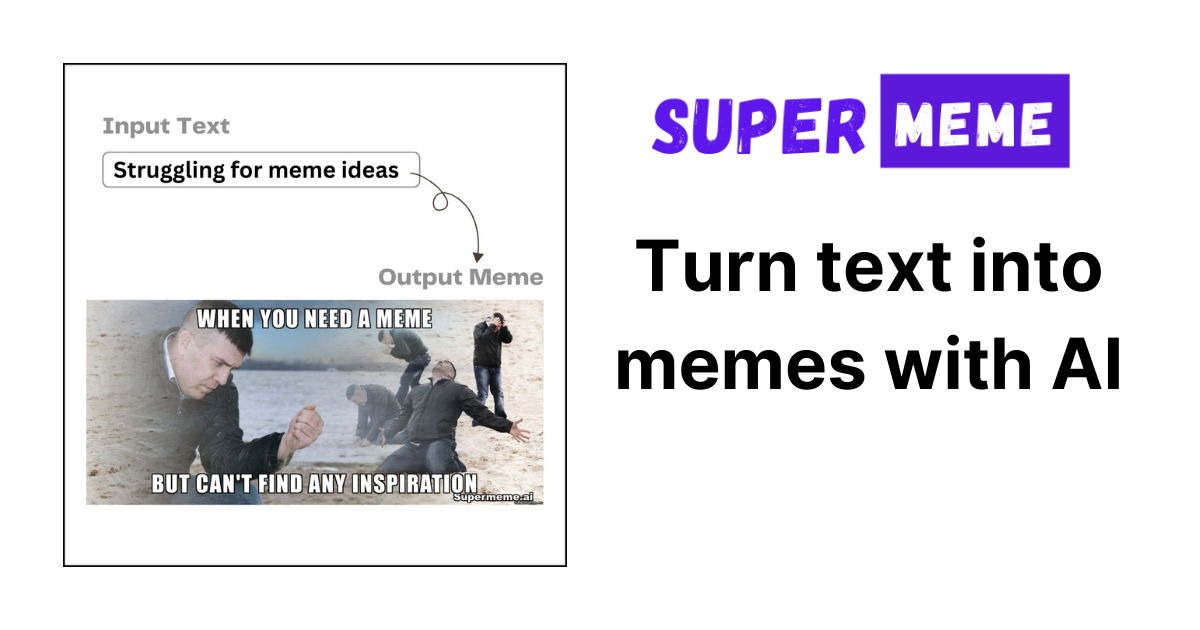
This niche is distinct from general design software because it prioritizes cultural latency over design precision. While a standard editor focuses on alignment and resolution, meme tools focus on rapid remixing of existing cultural artifacts. They provide direct access to libraries of trending templates (e.g., "Distracted Boyfriend," viral movie clips) and allow for the instant overlay of text in recognized meme formats. The specific workflow only this tool handles well is the "newsjacking" cycle: monitoring a trending topic, finding the relevant meme format, and customizing it with brand-specific humor in under 10 minutes. Buyers turn to this niche because general tools are often too rigid and lack the library of "low-fidelity" assets that signal authenticity to internet-native audiences. To explore the tools that master this cultural speed, read our guide to Social Media Meme & Trend Creation Tools.

Social Media Video Editing Tools

Unlike professional non-linear editors (NLEs) used for cinema, these tools are built for verticality and retention. They differ from generic video software by offering features specifically for social algorithms, such as auto-captions (which increase watch time), sticker overlays, and "safe zone" indicators that ensure text isn't hidden by TikTok's interface buttons. The workflow that only these tools handle well is the conversion of raw "talking head" footage into a dynamic, jump-cut heavy social clip with b-roll and transitions applied automatically. The pain point driving buyers here is the complexity of professional software; social managers need to edit video on their phones or browsers without needing a degree in film editing. For a detailed breakdown of these agile editors, visit our page on Social Media Video Editing Tools.

Caption and Copywriting Tools for Social Media

This subcategory differentiates itself by focusing on the psychology of the scroll. General writing assistants check for grammar, but these tools check for engagement. They are trained specifically on high-performing social posts, understanding nuances like emoji usage, hashtag density, and the "hook-value" of the first sentence. A unique workflow they support is "tone-shifting"—taking a single product announcement and rewriting it instantly as a professional LinkedIn update, a casual Tweet, and an energetic Instagram caption. Buyers leave general writing tools for this niche because they need help overcoming "blank page syndrome" specifically for social contexts where brevity and punchiness are the only metrics that matter. Learn more about optimizing your text with our guide to Caption and Copywriting Tools for Social Media.

Content Creation Tools for Social Media Managers

These platforms are the integrated workbenches of the industry. They differ from standalone design or video tools by combining creation with workflow management. They are not just about making the asset; they are about approvals, versioning, and often, scheduling. The specific workflow they master is the "calendar-view creation" process, where a manager can see a gap in next Tuesday's schedule and create a post directly within that slot, utilizing stored brand assets. The pain point driving adoption here is "tab fatigue"—the inefficiency of switching between a design app, a storage drive, and a scheduling tool. These suites unify the stack. For a comprehensive look at these all-in-one solutions, check out Content Creation Tools for Social Media Managers.

AI Social Media Content Generators

This is the frontier of the category, where the software moves from being a tool to a co-pilot. Unlike standard design tools where the user manipulates elements, here the user manipulates prompts. The genuine difference lies in the "text-to-post" capability—generating a full visual and textual asset from a single command. The unique workflow is rapid iteration: generating 50 variations of an ad concept in seconds to test which visual style resonates, a task that would take a human designer days. Buyers flock here to solve the "resource bottleneck," using AI to scale output without scaling headcount. To understand how automation is reshaping production, read our analysis of AI Social Media Content Generators.

Integration & API Ecosystem

In the enterprise stack, a social media content creation tool cannot exist as an island; it must function as a connected node in the broader marketing ecosystem. The "Content Supply Chain" concept relies heavily on robust integrations. According to Gartner’s 2025 Marketing Technology Survey, high-performing organizations are those that prioritize composable stacks where tools communicate seamlessly, yet utilization of these stacks has dropped to 49% due to integration complexities [7]. The most critical integration is with the Digital Asset Management (DAM) system. A robust API should allow for bi-directional syncing: metadata-tagged assets flow from the DAM to the creative tool, and finished social assets flow back to the DAM for archival.

Scenario: Consider a 50-person professional services firm. They buy a trendy content creation tool that lacks a native API for their project management system (e.g., Asana or Monday.com) and their invoicing software. The marketing team creates assets, but the hours spent are not tracked against client accounts, and the final assets are saved locally on desktops. When a client disputes a bill for "social media management," the firm cannot correlate the creative output with the billed hours because the systems don't talk. The firm ends up writing off revenue because they cannot prove the work was done, simply because the creation tool created a data silo.

Security & Compliance

As AI becomes central to content creation, security concerns have shifted from simple password protection to complex data governance and intellectual property rights. A major concern for buyers is whether their proprietary data is being used to train the vendor's public AI models. Adobe’s 2024 AI Creative Frontier Study highlights that 56% of creators feel existing laws are insufficient to protect their work from AI exploitation [8]. Security in this context means "Enterprise Shielding"—ensuring that generated images do not infringe on copyrights and that company brand kits are not accessible to unauthorized users.

Scenario: A healthcare provider uses a general-purpose AI content generator to create a social post about a patient success story. The marketing intern inputs raw patient notes into the public AI prompt to generate the caption. Because the tool lacks enterprise-grade "data masking" or private tenant architecture, that patient data is now part of the public model's learning set, constituting a massive HIPAA violation. A compliant tool would have detected the PII (Personally Identifiable Information) and blocked the prompt or used a localized, private instance of the AI model to ensure data never left the hospital's secure environment.

Pricing Models & TCO

The pricing landscape for social media tools is undergoing a tectonic shift from simple per-seat subscriptions to hybrid models that incorporate usage-based billing, particularly for AI features. Metronome's 2025 State of Usage-Based Pricing report indicates that 77% of large software companies have adopted some form of usage-based pricing to align revenue with customer value [9]. Buyers must now calculate Total Cost of Ownership (TCO) not just by headcount, but by "consumption units"—such as AI credits, storage gigabytes, or export minutes.

Scenario: A hypothetical marketing agency with a 25-person team evaluates two vendors. Vendor A offers a flat rate of $30/user/month ($750/month total). Vendor B offers a lower seat price of $15/user/month ($375/month) but charges for "AI credits" and premium stock exports. The agency initially chooses Vendor B to save money. However, their team heavily utilizes the AI background remover and premium video stock. By month three, they are racking up $600 in overage charges, bringing their total to $975/month—significantly higher than the flat-rate option. A proper TCO analysis would have modeled the team's consumption habits (e.g., number of assets generated per week) to reveal the hidden cost of the usage-based model.

Implementation & Change Management

The failure of new software is rarely due to the code; it is due to the culture. Implementation is where the "velocity" promised by these tools collides with the friction of human habit. Deloitte’s State of AI in the Enterprise report notes that the biggest barrier to scaling new tech is not the workers, who are often ready, but the lack of strategic steering from leadership to integrate these tools into workflows [10]. Successful implementation requires a phased approach: distinct "sandbox" periods for power users to build templates, followed by a wider rollout with strict governance settings enabled.

Scenario: A global retail brand rolls out a new centralized creative automation platform to its regional teams in 30 countries to replace local agencies. They do a single "lunch and learn" training session. The result is chaos: regional teams find the global templates too rigid for local cultural nuances (e.g., different holiday color palettes). Instead of using the tool, they go rogue, using free Canva accounts to make off-brand assets. The implementation fails not because the software was bad, but because the change management plan ignored the "localization" requirement. A better approach would have been to involve regional leads in the template design phase to ensure the "locked" elements still allowed for necessary cultural adaptation.

Vendor Evaluation Criteria

When selecting a vendor, buyers must look past the "demo dazzle" of cool features and interrogate the vendor's roadmap and support structure. A critical but often overlooked criterion is the vendor's ecosystem strategy. Is the vendor trying to be a "walled garden" (everything must be done inside their app) or an "open platform" (integrates easily with others)? According to Forrester, platform interoperability is now a top technology priority for 82% of enterprise marketers [11].

Scenario: A mid-sized manufacturing firm evaluates a video editing platform. The vendor shows impressive AI text-to-video capabilities. However, during the evaluation, the buyer asks, "How do we export the project file to Adobe Premiere if our senior editor needs to do fine-tuning?" The vendor admits it's a closed system; you can only export a flat MP4 video file, not an editable project file. This is a deal-breaker. It means the tool cannot fit into a professional workflow where assets move between junior creators (cutting clips) and senior editors (color grading). The firm realizes the tool is a dead-end for high-value assets and correctly disqualifies the vendor.

EMERGING TRENDS AND CONTRARIAN TAKE

Emerging Trends 2025-2026

The immediate future of this category is defined by Agentic AI. We are moving past "generative" tools that require prompts to "agentic" systems that can autonomously execute complex tasks. Imagine an AI agent that not only generates an image but autonomously monitors your brand's DAM for new product photos, places them into pre-approved seasonal templates, generates captions for three different platforms, and queues them for approval—all without human intervention. Gartner identifies "Agentic AI" as a top technology trend, creating a virtual workforce that enhances scalability [12]. Additionally, we will see the rise of "remixable" interoperability, where content is not just exported but synced live across platforms, allowing updates to a source file to propagate to social channels instantly.

Contrarian Take

The cost of content creation is approaching zero, which means the value of "efficiency" tools is about to collapse.

For a decade, the selling point of these tools has been "make more content, faster." But as AI makes high-volume production trivial, the bottleneck is no longer creation—it is curation and retention. In a world flooded with AI-generated sludge, the tools that will actually drive ROI are not the ones that help you post 50 times a day, but the ones that help you post less but with higher impact. The market is overvaluing "scale" features when it should be valuing "quality assurance" and "uniqueness" constraints. Buying a tool to "10x your output" in 2025 is likely a negative-ROI strategy because it simply accelerates your brand's contribution to the noise that algorithms are increasingly penalizing.

COMMON MISTAKES

One of the most frequent errors buyers make is overbuying for "future" needs. Teams often purchase the "Enterprise" tier for features like advanced analytics or multi-team partitioning that they realistically won't have the staffing to manage for another two years. This bloats the TCO and complicates the user interface for the actual daily users. Start with the tier that solves today's pain points; SaaS scales up easily, but rarely scales down without penalty.

Another critical mistake is ignoring the "approver" license count. Buyers often calculate the number of creators (designers/social managers) but forget that in a regulated or corporate environment, legal, compliance, and VP-level stakeholders need access to approve content. If the pricing model charges full seat price for a user who only logs in once a week to click "Approve," costs will explode. Failing to negotiate "reviewer" or "light user" licenses is a budget killer.

Finally, there is the mistake of workflow isolation. Teams implement a content creation tool without defining how it connects to the social scheduling tool. This results in the "download-upload shuffle," where assets are downloaded to a desktop folder and then re-uploaded to the scheduler. This breaks the metadata chain and creates version control nightmares. A tool must be bought as part of a workflow, not just for its canvas.

QUESTIONS TO ASK IN A DEMO

  • On Brand Control: "Show me exactly how a 'locked' template appears to a junior user. What elements can they not touch?" (If they can unlock it easily, the feature is useless).
  • On Interoperability: "Does your integration with [Our Scheduler/DAM] support two-way sync, or is it just a one-time push?"

  • On AI Ethics: "Can we upload our brand voice guidelines so the AI rewriting
Quick one question survey

Thanks for your input!
Your response has been recorded.