Prototyping & Wireframing Tools

Updated July 5, 2026

These are the specialized categories within Prototyping & Wireframing Tools. Looking for something broader? See all Design, Creative & Media Production Software categories.

Not sure which one is right for you?

Answer 4 quick questions and we'll match you with your best options

Find Your Best Match

How big is your team?

Just me
2 - 10
11 - 50
51 - 200
201 - 1,000
1,000+

What's your budget situation?

Free or open-source only
Free to start, pay later
Best value for money
Price isn't the main factor

What's your team's technical comfort level?

We want it to just work
We can handle some setup
We have developers who'll customize it

What's the ONE thing this tool must do well?

Step 1 of 4
1
9.1 / 10
EdrawMax

EdrawMax empowers photography studios with versatile prototyping and wireframing tools. It offers cross-platform support and AI-driven diagram generation, ideal for both engineers and business professionals.

Best for Prototyping & Wireframing Tools for Photography Studios

Expert Take

EdrawMax positions itself as a veritable 'Swiss army knife' of diagramming tools. It strikes a remarkable balance between the deep, technical specifications required by engineers and the intuitive, template-driven usability demanded by business professionals. We are particularly impressed by its aggressive integration of generative AI, which allows users to parse documents or text prompts directly into complex, editable diagrams, fundamentally accelerating visual workflows.

Pros

  • Supports over 280 diagram types
  • Massive library of 26,000+ vector symbols
  • Instant AI diagram generation from text prompts
  • Full Visio import and export support

Cons

  • Difficult auto-renewal cancellation process
  • Confusing pricing with separate AI tokens
  • Customer support is frequently reported as unhelpful

Best for teams that are

  • Users needing a versatile tool for various complex diagrams [cite: 22]
  • Business analysts and managers creating flowcharts regularly [cite: 23]

Skip if

  • Engineers needing advanced CAD drafting capabilities [cite: 24]
  • Design teams looking for dedicated UI/UX app prototyping [cite: 25]

Best for teams that are

  • Users needing a versatile tool for various complex diagrams [cite: 22]
  • Business analysts and managers creating flowcharts regularly [cite: 23]

Skip if

  • Engineers needing advanced CAD drafting capabilities [cite: 24]
  • Design teams looking for dedicated UI/UX app prototyping [cite: 25]

Pros

  • Supports over 280 diagram types
  • True cross-platform compatibility (Mac, Windows, Linux)
  • Massive library of 26,000+ vector symbols
  • Instant AI diagram generation from text prompts
  • Full Visio import and export support

Cons

  • Difficult auto-renewal cancellation process
  • Confusing pricing with separate AI tokens
  • Overwhelming interface for basic use cases
  • Customer support is frequently reported as unhelpful

Expert Take

EdrawMax positions itself as a veritable 'Swiss army knife' of diagramming tools. It strikes a remarkable balance between the deep, technical specifications required by engineers and the intuitive, template-driven usability demanded by business professionals. We are particularly impressed by its aggressive integration of generative AI, which allows users to parse documents or text prompts directly into complex, editable diagrams, fundamentally accelerating visual workflows.

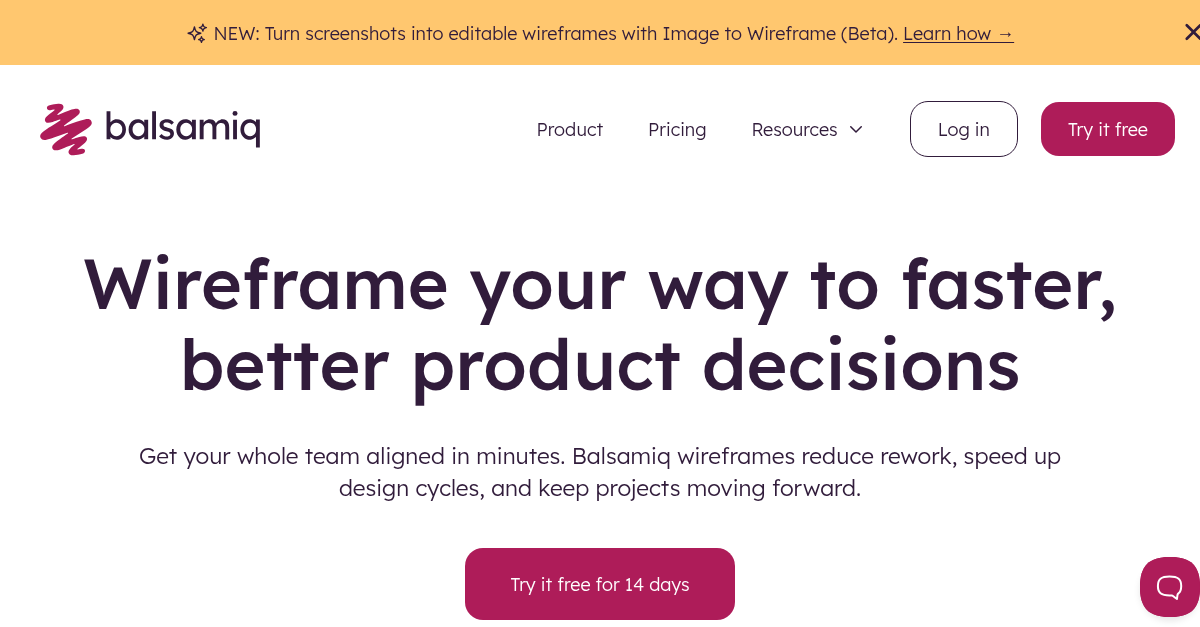
Balsamiq Wireframing Tool

Balsamiq is a highly efficient tool for SaaS companies that need to quickly generate low-fidelity wireframes. Its drag & drop functionality, combined with a vast library of pre-built UI components, allows the creation of functional designs focused on user flow. It specifically addresses the industry's need for fast, effective prototyping, thereby streamlining the product design process.

Best for Prototyping & Wireframing Tools for SaaS Companies

Expert Take

Balsamiq excels in providing efficient low-fidelity wireframing capabilities, crucial for SaaS companies needing rapid prototyping. Its extensive UI component library and collaborative features enhance usability, while its market credibility is supported by industry recognition. However, limitations in high-fidelity design options slightly impact its overall versatility.

Pros

  • Zero learning curve suitable for non-designers
  • Industry-standard tool for rapid low-fidelity wireframing
  • Deep native integration with Jira and Confluence
  • Extensive free educational resources and courses

Cons

  • Cannot produce high-fidelity or pixel-perfect designs
  • Desktop version sales ending in 2026
  • Limited interactive prototyping capabilities
  • Sketch style may feel unprofessional for some clients

Best for teams that are

  • Founders and PMs focused on early-stage ideation and structural layout.
  • Teams wanting a hand-drawn style to prevent premature focus on visual design.

Skip if

  • Teams looking to create high-fidelity, interactive, and polished prototypes.
  • Designers needing tools for detailed visual aesthetics like typography.

Best for teams that are

  • Founders and PMs focused on early-stage ideation and structural layout.
  • Teams wanting a hand-drawn style to prevent premature focus on visual design.

Skip if

  • Teams looking to create high-fidelity, interactive, and polished prototypes.
  • Designers needing tools for detailed visual aesthetics like typography.

Pros

  • Unlimited users included on all pricing plans
  • Zero learning curve suitable for non-designers
  • Industry-standard tool for rapid low-fidelity wireframing
  • Deep native integration with Jira and Confluence
  • Extensive free educational resources and courses

Cons

  • Cannot produce high-fidelity or pixel-perfect designs
  • Google Drive integration has been retired
  • Desktop version sales ending in 2026
  • Limited interactive prototyping capabilities
  • Sketch style may feel unprofessional for some clients

Expert Take

Balsamiq excels in providing efficient low-fidelity wireframing capabilities, crucial for SaaS companies needing rapid prototyping. Its extensive UI component library and collaborative features enhance usability, while its market credibility is supported by industry recognition. However, limitations in high-fidelity design options slightly impact its overall versatility.

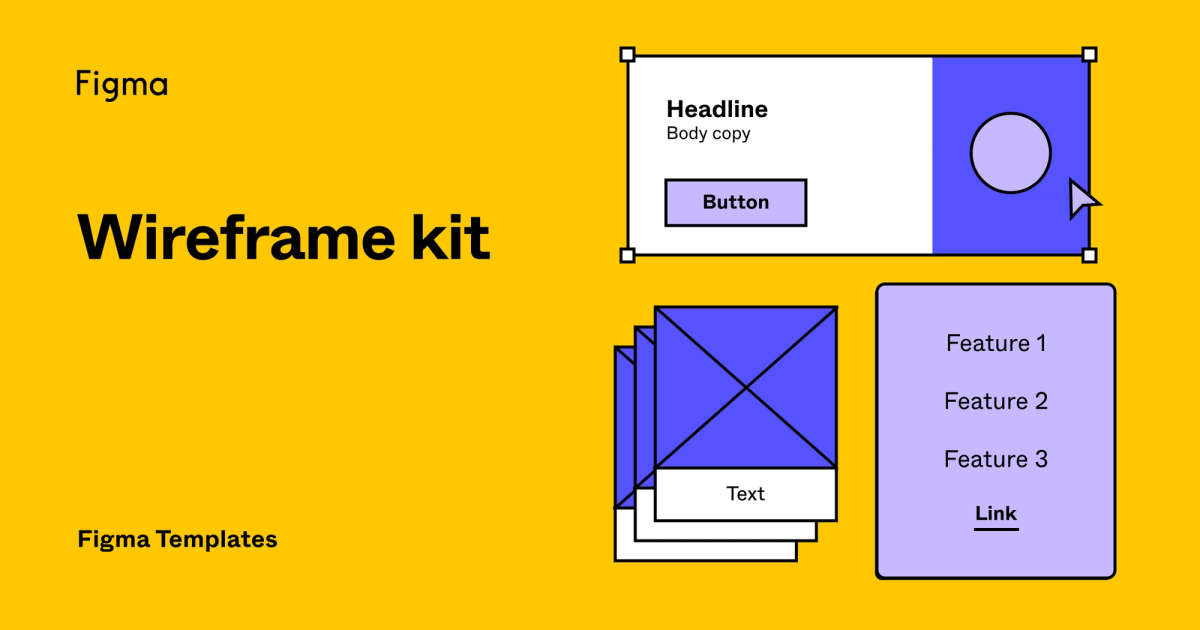
Figma Free Wireframe Kit

Figma's free wireframe kit is an ideal tool for SaaS companies, providing pre-built components and tools for web/mobile designs. It's browser-based, which eliminates the need for installation, and features a simple drag-and-drop interface, making it extremely user-friendly for industry professionals.

Best for Prototyping & Wireframing Tools for SaaS Companies

Expert Take

Figma's Free Wireframe Kit excels in usability and accessibility, offering a browser-based, drag-and-drop interface ideal for SaaS companies. While the free version has limitations, its integration with Figma's broader ecosystem and industry recognition make it a top choice for prototyping and wireframing.

Pros

  • Extensive library of free community-created kits
  • Seamless transition from wireframe to high-fidelity
  • Powerful Auto Layout for responsive designs
  • Completely free to access core resources

Cons

  • Steeper learning curve than simple tools
  • Requires internet connection for full functionality
  • No native wireframe components without kits
  • Overwhelming number of choices for beginners

Best for teams that are

  • Designers needing rapid, low-fidelity layouts for quick brainstorming.
  • Teams heavily using Figma looking for free, pre-built structural components.

Skip if

  • Teams seeking high-fidelity, pixel-perfect UI templates.
  • Users requiring complex, unique components outside the pre-designed kit.

Best for teams that are

  • Designers needing rapid, low-fidelity layouts for quick brainstorming.
  • Teams heavily using Figma looking for free, pre-built structural components.

Skip if

  • Teams seeking high-fidelity, pixel-perfect UI templates.
  • Users requiring complex, unique components outside the pre-designed kit.

Pros

  • Extensive library of free community-created kits
  • Real-time collaboration for teams
  • Seamless transition from wireframe to high-fidelity
  • Powerful Auto Layout for responsive designs
  • Completely free to access core resources

Cons

  • Steeper learning curve than simple tools
  • Requires internet connection for full functionality
  • Can lead to premature high-fidelity focus
  • No native wireframe components without kits
  • Overwhelming number of choices for beginners

Expert Take

Figma's Free Wireframe Kit excels in usability and accessibility, offering a browser-based, drag-and-drop interface ideal for SaaS companies. While the free version has limitations, its integration with Figma's broader ecosystem and industry recognition make it a top choice for prototyping and wireframing.

4
8.9 / 10

Mockitt is a cloud-based prototyping and wireframing tool designed for photography studios to streamline UI/UX design. Its generative AI enables users to create flowcharts and wireframes effortlessly from text prompts, while automated developer handoffs simplify code generation for multiple platforms.

Best for Prototyping & Wireframing Tools for Photography Studios

Expert Take

Wondershare Mockitt stands out by democratizing the UI/UX design process through its incredibly accessible, cloud-based platform. We love its seamless integration of generative AI, which allows users to instantly create flowcharts, mind maps, and wireframes from simple text prompts. Furthermore, its automated developer handoff—which generates CSS, Swift, and Android code—bridges the gap between designers and developers effortlessly, all at a highly competitive price point.

Pros

  • Highly intuitive drag-and-drop interface
  • Multi-language code generation for handoffs
  • Generative AI for rapid prototyping

Cons

  • Lacks complex conditional logic
  • Reported lag and connection issues

Best for teams that are

  • Small to mid-sized design teams needing an affordable solution [cite: 7]
  • Remote teams requiring fast, real-time collaboration features [cite: 7, 8]

Skip if

  • Professionals needing deep, highly specialized design features [cite: 7]
  • Designers who rely heavily on free-hand vector editing tools [cite: 8]

Best for teams that are

  • Small to mid-sized design teams needing an affordable solution [cite: 7]
  • Remote teams requiring fast, real-time collaboration features [cite: 7, 8]

Skip if

  • Professionals needing deep, highly specialized design features [cite: 7]
  • Designers who rely heavily on free-hand vector editing tools [cite: 8]

Pros

  • Highly intuitive drag-and-drop interface
  • Affordable pricing with a free tier
  • Multi-language code generation for handoffs
  • Generative AI for rapid prototyping

Cons

  • Lacks complex conditional logic
  • Reported lag and connection issues
  • Smaller third-party plugin ecosystem

Expert Take

Wondershare Mockitt stands out by democratizing the UI/UX design process through its incredibly accessible, cloud-based platform. We love its seamless integration of generative AI, which allows users to instantly create flowcharts, mind maps, and wireframes from simple text prompts. Furthermore, its automated developer handoff—which generates CSS, Swift, and Android code—bridges the gap between designers and developers effortlessly, all at a highly competitive price point.

Axure RP - UX Prototyping Tool

Axure RP is a powerful UX tool that enables photography studios to build high-fidelity, interactive prototypes. It allows professionals to create, test, and iterate on designs, enabling them to bring their creative vision to life while saving time and resources.

Best for Prototyping & Wireframing Tools for Photography Studios

Expert Take

Axure RP stands out as a leading UX prototyping tool for photography studios due to its comprehensive feature set and ability to create high-fidelity prototypes. Its market credibility is supported by industry recognition, and it offers a robust user experience despite a learning curve. The tool's adaptability and integration capabilities further enhance its value proposition.

Pros

  • Unmatched high-fidelity prototyping logic
  • Secure on-premises hosting options
  • Robust check-in/check-out version control
  • SOC 2 Type II and ISO 27001 certified

Cons

  • Steep learning curve for beginners
  • Interface can feel dated
  • No perpetual license option anymore
  • Enterprise pricing is not public

Best for teams that are

  • UX professionals needing highly interactive, high-fidelity prototypes [cite: 3, 4]
  • Enterprise teams handling large-scale, complex software projects [cite: 5, 6]

Skip if

  • Beginners or those seeking a tool with a low learning curve [cite: 3]
  • Visual designers wanting advanced graphic editing capabilities [cite: 4]

Best for teams that are

  • UX professionals needing highly interactive, high-fidelity prototypes [cite: 3, 4]
  • Enterprise teams handling large-scale, complex software projects [cite: 5, 6]

Skip if

  • Beginners or those seeking a tool with a low learning curve [cite: 3]
  • Visual designers wanting advanced graphic editing capabilities [cite: 4]

Pros

  • Unmatched high-fidelity prototyping logic
  • Data-driven repeaters for dynamic content
  • Secure on-premises hosting options
  • Robust check-in/check-out version control
  • SOC 2 Type II and ISO 27001 certified

Cons

  • Steep learning curve for beginners
  • Interface can feel dated
  • Mobile prototyping experience is clunky
  • No perpetual license option anymore
  • Enterprise pricing is not public

Expert Take

Axure RP stands out as a leading UX prototyping tool for photography studios due to its comprehensive feature set and ability to create high-fidelity prototypes. Its market credibility is supported by industry recognition, and it offers a robust user experience despite a learning curve. The tool's adaptability and integration capabilities further enhance its value proposition.

Justinmind Prototyping Tool

Justinmind is an all-encompassing design platform tailored to meet the needs of staffing agencies. It enables users to create detailed, interactive prototypes for web and mobile apps, streamlining the evaluation and presentation of potential digital solutions for clients.

Best for Prototyping & Wireframing Tools for Staffing Agencies

Expert Take

Justinmind Prototyping Tool excels in providing a comprehensive platform for creating interactive prototypes, particularly benefiting staffing agencies. Its extensive UI libraries and collaborative features enhance usability and design efficiency. However, the tool's performance issues and limited free version slightly impact its overall score.

Pros

  • Perpetual license option available
  • Robust free version with unlimited projects
  • Native Jira and Azure DevOps integrations
  • Simulates complex conditional logic without code

Cons

  • No browser-based editing (desktop download required)
  • Steeper learning curve than Figma
  • UI feels less modern than competitors
  • Collaboration requires syncing rather than real-time

Best for teams that are

  • Users designing responsive, data-driven prototypes [cite: 18]
  • Teams needing advanced conditional logic without code [cite: 18]

Skip if

  • Users seeking purely lightweight, cloud-only tools [cite: 19]
  • Beginners wanting minimalist, distraction-free UI [cite: 18]

Best for teams that are

  • Users designing responsive, data-driven prototypes [cite: 18]
  • Teams needing advanced conditional logic without code [cite: 18]

Skip if

  • Users seeking purely lightweight, cloud-only tools [cite: 19]
  • Beginners wanting minimalist, distraction-free UI [cite: 18]

Pros

  • Advanced data-driven prototyping with variables
  • Perpetual license option available
  • Robust free version with unlimited projects
  • Native Jira and Azure DevOps integrations
  • Simulates complex conditional logic without code

Cons

  • No browser-based editing (desktop download required)
  • Performance can lag with large files
  • Steeper learning curve than Figma
  • UI feels less modern than competitors
  • Collaboration requires syncing rather than real-time

Expert Take

Justinmind Prototyping Tool excels in providing a comprehensive platform for creating interactive prototypes, particularly benefiting staffing agencies. Its extensive UI libraries and collaborative features enhance usability and design efficiency. However, the tool's performance issues and limited free version slightly impact its overall score.

Marvel - Design Platform

Marvel is a holistic design platform tailored for photography studios. It simplifies wireframing, designing, and prototyping digital products, making it an indispensable tool for photographers who need to showcase their work digitally. Its intuitive design tools and integration capabilities make it fit seamlessly into the workflow of a photography studio.

Best for Prototyping & Wireframing Tools for Photography Studios

Expert Take

Marvel stands out as a top-tier design platform for photography studios, offering intuitive tools and seamless integration capabilities. Its ability to simplify wireframing and prototyping makes it an essential tool for photographers looking to showcase their work digitally. Despite some limitations in the free version and advanced features, its strengths in usability and integration justify its premium positioning.

Pros

  • Rapid prototyping from static images
  • Automated developer handoff (CSS/Swift)
  • Strong enterprise security (ISO 27001)
  • Free plan available for individuals

Cons

  • Lacks advanced vector editing tools
  • No Auto Layout or AI features
  • User testing removed from free tier
  • Rigid interface for complex projects

Best for teams that are

  • Designers wanting quick, simple prototyping without coding [cite: 1, 2]
  • Beginners and non-technical teams seeking intuitive interfaces [cite: 2]

Skip if

  • Teams needing highly complex prototypes or advanced animations [cite: 1]
  • Advanced users wanting fine control over component behaviors [cite: 2]

Best for teams that are

  • Designers wanting quick, simple prototyping without coding [cite: 1, 2]
  • Beginners and non-technical teams seeking intuitive interfaces [cite: 2]

Skip if

  • Teams needing highly complex prototypes or advanced animations [cite: 1]
  • Advanced users wanting fine control over component behaviors [cite: 2]

Pros

  • Rapid prototyping from static images
  • Extremely low learning curve
  • Automated developer handoff (CSS/Swift)
  • Strong enterprise security (ISO 27001)
  • Free plan available for individuals

Cons

  • Lacks advanced vector editing tools
  • No Auto Layout or AI features
  • Android companion app discontinued
  • User testing removed from free tier
  • Rigid interface for complex projects

Expert Take

Marvel stands out as a top-tier design platform for photography studios, offering intuitive tools and seamless integration capabilities. Its ability to simplify wireframing and prototyping makes it an essential tool for photographers looking to showcase their work digitally. Despite some limitations in the free version and advanced features, its strengths in usability and integration justify its premium positioning.

MockFlow - Wireframing Tool

MockFlow is a premier SaaS solution specifically designed for SaaS companies. It offers a user-friendly platform for prototyping and wireframing, helping streamline product design processes. Its collaborative features enable teams to work together in real-time, addressing the need for effective communication in remote and in-house teams.

Best for Prototyping & Wireframing Tools for SaaS Companies

Expert Take

MockFlow excels in providing a user-friendly wireframing solution tailored for SaaS companies, with strong collaborative features and broad compatibility. Its market credibility is supported by its presence in the industry and user base. While the free version is limited, the premium plans offer comprehensive features that enhance usability and integration.

Pros

  • Comprehensive suite for wireframing and whiteboarding
  • AI tools generate wireframes from text prompts
  • Enterprise-grade security with SOC 2 compliance
  • Easy learning curve for non-designers

Cons

  • Free plan limited to only 3 pages
  • Performance lag on large, complex projects
  • Less suitable for high-fidelity prototyping
  • HTML export quality criticized in older reviews

Best for teams that are

  • Small teams and product managers needing rapid, low-fidelity wireframing.
  • Non-designers looking for an intuitive UI to brainstorm early concepts.

Skip if

  • Teams requiring advanced high-fidelity prototyping and complex transitions.
  • Organizations needing deep third-party integration ecosystems.

Best for teams that are

  • Small teams and product managers needing rapid, low-fidelity wireframing.
  • Non-designers looking for an intuitive UI to brainstorm early concepts.

Skip if

  • Teams requiring advanced high-fidelity prototyping and complex transitions.
  • Organizations needing deep third-party integration ecosystems.

Pros

  • Comprehensive suite for wireframing and whiteboarding
  • Strong native integrations with Jira and Confluence
  • AI tools generate wireframes from text prompts
  • Enterprise-grade security with SOC 2 compliance
  • Easy learning curve for non-designers

Cons

  • Free plan limited to only 3 pages
  • Performance lag on large, complex projects
  • Interface feels dated compared to Figma
  • Less suitable for high-fidelity prototyping
  • HTML export quality criticized in older reviews

Expert Take

MockFlow excels in providing a user-friendly wireframing solution tailored for SaaS companies, with strong collaborative features and broad compatibility. Its market credibility is supported by its presence in the industry and user base. While the free version is limited, the premium plans offer comprehensive features that enhance usability and integration.

Moqups: Mockup & UI Prototyping

Moqups is specifically designed for SaaS companies, enabling the creation of wireframes, mockups, and interactive prototypes for UI/UX designs. It also has a robust feature for creating diagrams and flowcharts, making it an essential tool for planning and executing design strategies.

Best for Prototyping & Wireframing Tools for SaaS Companies

Expert Take

Moqups excels in providing a comprehensive suite of tools for UI/UX design, particularly for SaaS companies. Its real-time collaboration and extensive template library enhance usability, while flexible pricing options cater to different business needs. The product's market credibility is supported by its wide adoption and positive industry recognition.

Pros

  • Unified wireframing, diagramming, and whiteboarding
  • Strong Jira and Confluence integrations
  • Real-time collaboration for remote teams
  • Enterprise SSO and SCIM support

Cons

  • No offline editing mode available
  • Limited high-fidelity interaction capabilities
  • No native desktop application

Best for teams that are

  • Cross-functional teams wanting wireframing, diagramming, and whiteboards together.
  • Non-designers planning user flows for complex industrial or technical domains.

Skip if

  • Designers needing fully functional, pixel-perfect high-fidelity prototypes.
  • Teams seeking advanced micro-interaction and animation capabilities.

Best for teams that are

  • Cross-functional teams wanting wireframing, diagramming, and whiteboards together.
  • Non-designers planning user flows for complex industrial or technical domains.

Skip if

  • Designers needing fully functional, pixel-perfect high-fidelity prototypes.
  • Teams seeking advanced micro-interaction and animation capabilities.

Pros

  • Unified wireframing, diagramming, and whiteboarding
  • Shallow learning curve for non-designers
  • Strong Jira and Confluence integrations
  • Real-time collaboration for remote teams
  • Enterprise SSO and SCIM support

Cons

  • No offline editing mode available
  • Limited high-fidelity interaction capabilities
  • Restrictive free plan (400 objects)
  • No native desktop application

Expert Take

Moqups excels in providing a comprehensive suite of tools for UI/UX design, particularly for SaaS companies. Its real-time collaboration and extensive template library enhance usability, while flexible pricing options cater to different business needs. The product's market credibility is supported by its wide adoption and positive industry recognition.

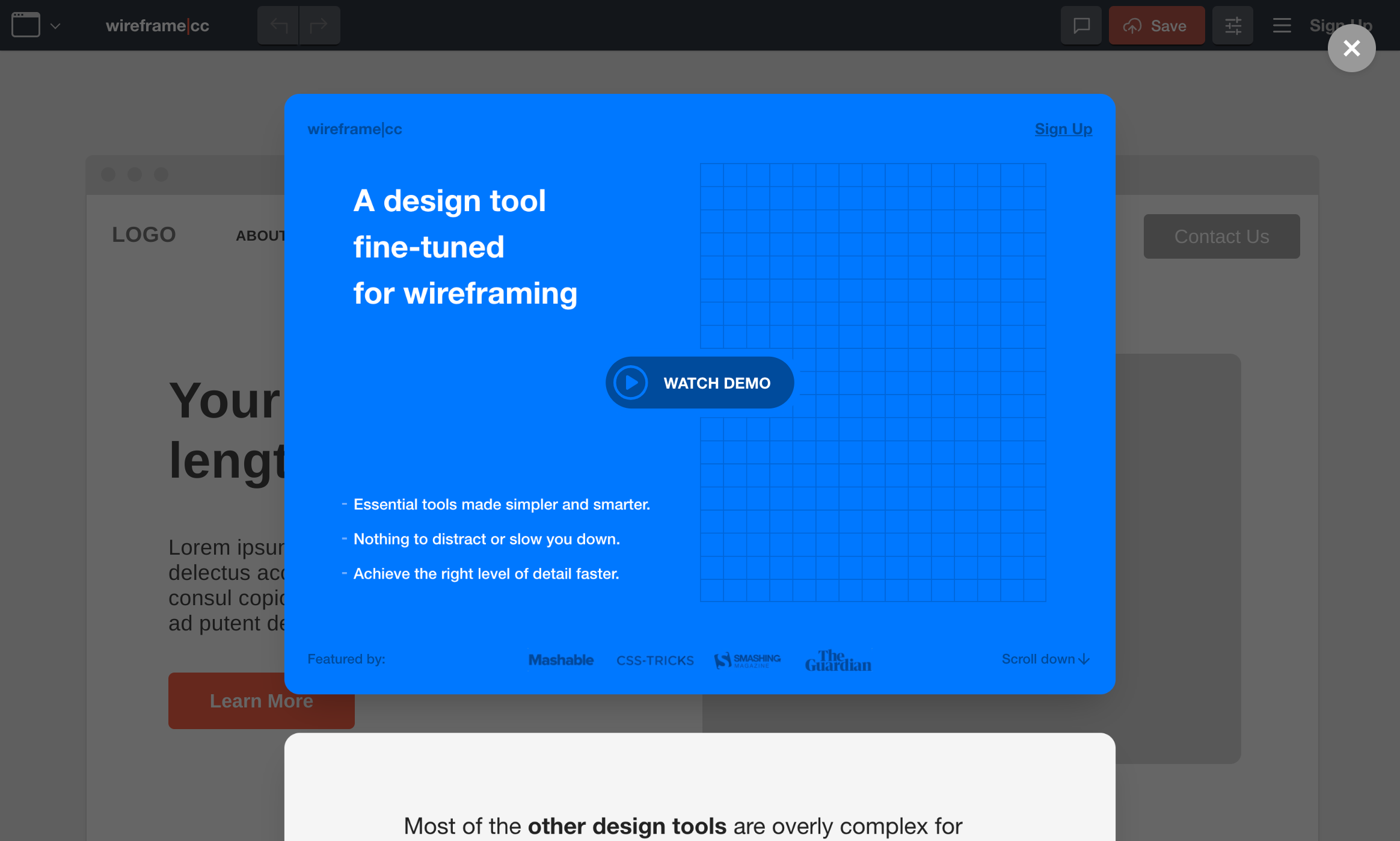
Wireframe.cc – Online Wireframing Tool

Wireframe.cc is a low-fidelity, minimalist wireframing tool specifically designed to meet the needs of SaaS companies. Its straightforward interface and powerful, intuitive tools enable designers to create, share, and collaborate on wireframes more efficiently, thus accelerating the design-to-development process.

Best for Prototyping & Wireframing Tools for SaaS Companies

Expert Take

Wireframe.cc is a minimalist wireframing tool that excels in usability and collaboration, making it ideal for SaaS companies. Its simplicity and focus on essential features support efficient design processes. While it lacks some advanced features, its strengths in core wireframing capabilities and user experience justify its position as a top tool in its category.

Pros

  • Zero learning curve; immediate usability
  • Smart guides and context-sensitive UI
  • Reusable master pages for efficient multi-page design
  • Free version available for public wireframes

Cons

  • Limited to low-fidelity; no high-fi design
  • Export options limited to PDF and PNG
  • Reported glitches with text box selection
  • No complex interactive prototyping capabilities

Best for teams that are

  • Individuals needing an ultra-minimalist tool for lightning-fast sketches.
  • Users wanting a friction-free, browser-based canvas without account setups.

Skip if

  • Teams requiring robust real-time collaboration or project management features.
  • Designers looking to build complex, interactive, or high-fidelity prototypes.

Best for teams that are

  • Individuals needing an ultra-minimalist tool for lightning-fast sketches.
  • Users wanting a friction-free, browser-based canvas without account setups.

Skip if

  • Teams requiring robust real-time collaboration or project management features.
  • Designers looking to build complex, interactive, or high-fidelity prototypes.

Pros

  • Extremely simple, distraction-free minimalist interface
  • Zero learning curve; immediate usability
  • Smart guides and context-sensitive UI
  • Reusable master pages for efficient multi-page design
  • Free version available for public wireframes

Cons

  • Limited to low-fidelity; no high-fi design
  • No native integrations with Jira or Slack
  • Export options limited to PDF and PNG
  • Reported glitches with text box selection
  • No complex interactive prototyping capabilities

Expert Take

Wireframe.cc is a minimalist wireframing tool that excels in usability and collaboration, making it ideal for SaaS companies. Its simplicity and focus on essential features support efficient design processes. While it lacks some advanced features, its strengths in core wireframing capabilities and user experience justify its position as a top tool in its category.

Loading comparison data…

How We Rank Products

Our Evaluation Process

Products in the Prototyping & Wireframing Tools category are evaluated based on their documented features, such as design capabilities and collaboration tools. Pricing transparency and the availability of scalable options are also critical factors. Compatibility with other software platforms plays a significant role, ensuring seamless integration into existing workflows. Third-party customer feedback is considered to gauge user satisfaction and practical performance in diverse professional settings.

Verification

  • Products evaluated through comprehensive research and analysis of user feedback and industry standards.
  • Rankings based on a thorough review of specifications, customer ratings, and expert recommendations.
  • Selection criteria focus on usability, integration capabilities, and design features unique to prototyping and wireframing tools.

Score Breakdown

0.0 / 10

About Prototyping & Wireframing Tools

What Is Prototyping & Wireframing Tools?

This category covers software used to visualize, test, and validate digital product concepts and user experiences across their pre-development lifecycle: outlining user flows, structuring information architecture, simulating interaction behaviors, and validating usability requirements before code implementation begins. It sits between abstract diagramming or whiteboarding tools (which focus on early-stage ideation and brainstorming) and Integrated Development Environments (IDEs) or production code (which focus on final implementation and deployment). It includes both general-purpose platforms designed for broad UI/UX design and vertical-specific tools tailored for industries like manufacturing HMI, e-commerce, and enterprise system planning.

At its core, this software solves the "translation gap" between business requirements and technical execution. By creating visual artifacts—ranging from skeletal wireframes to fully interactive, high-fidelity prototypes—these tools allow stakeholders to align on functionality and aesthetics without the high cost of engineering rework. The category encompasses solutions that handle low-fidelity structural sketching, high-fidelity interaction design, and the management of design systems (libraries of reusable UI components) that enforce consistency across large organizations.

For modern enterprises, this category is no longer just about drawing static screens; it is about simulating the "state" of an application. This matters because the cost of fixing a usability error during the design phase is significantly lower than fixing it after development. As digital ecosystems become more complex, involving cross-platform experiences and data-heavy interfaces, these tools have evolved from simple drawing applications into logic-based simulation engines that can replicate API responses, conditional logic, and responsive behaviors.

History of Prototyping & Wireframing Evolution

The evolution of Prototyping & Wireframing tools since the 1990s reflects a fundamental shift in software development methodologies, moving from rigid, linear waterfall processes to agile, iterative cycles. In the late 1990s and early 2000s, the gap that created this category was the lack of a dedicated medium for user interface design. At the time, teams largely relied on general-purpose vector illustration software or complex diagramming tools originally intended for network topology or floor plans. These tools treated software interfaces as static images, failing to capture the dynamic, state-based nature of the web. The output was often a "throwaway" artifact—a printed specification document that developers would interpret, often leading to significant discrepancies between the design intent and the shipped product.

The mid-2000s marked the first major wave of specialized software, driven by the rise of Web 2.0 and the need for rich internet applications. This era introduced the concept of "interaction design" as a distinct discipline. Tools emerged that allowed designers to define not just how an interface looked, but how it behaved—linking pages together, defining hover states, and simulating basic user flows. This was the era of the "clickable PDF" and the desktop-based proprietary file format. However, these tools were often siloed; design files lived on individual hard drives, creating version control nightmares where teams would struggle to determine which file was the "final" version.

The paradigm shift from on-premise to cloud computing in the 2010s fundamentally disrupted the category. As SaaS became the dominant delivery model for software, it also became the dominant delivery model for the tools used to build software. The market saw a massive consolidation wave where browser-based platforms began to outpace desktop-native applications. This shift was driven by a change in buyer expectations: organizations no longer wanted just a "drawing tool"; they demanded a "collaborative workspace." The ability for a product manager, a developer, and a designer to view and edit the same file simultaneously became a non-negotiable requirement. This period also saw the rise of the "Design System"—a centralized repository of code-aligned components—which transformed prototyping tools from artistic canvases into structural engineering platforms.

By the 2020s, the market had matured into a highly integrated ecosystem. The focus shifted from merely visualizing pixels to generating actionable intelligence. Modern platforms began bridging the gap between design and development (DevOps) by generating inspection code (CSS, Swift, React) directly from visual elements. The acquisition of major independent players by larger creative software conglomerates and tech giants during this period signaled the category's critical importance to the broader software supply chain. Today, the history of this category is defined by the move toward "logic-based prototyping," where tools can simulate variables, data inputs, and conditional logic, effectively mimicking a live application without writing production code.

What to Look For

Evaluating Prototyping & Wireframing tools requires looking beyond the superficial "look and feel" of the canvas and examining the structural capabilities that support scalable product development. The most critical evaluation criterion for enterprise teams is **fidelity control and interaction logic**. A robust tool must allow users to transition seamlessly from low-fidelity wireframing (boxes and arrows) to high-fidelity prototyping (realistic interactions) without requiring a platform switch. Look for "conditional logic" capabilities—the ability of the prototype to remember user inputs (e.g., typing a name into a form and seeing it appear on the next screen) and change states based on variables. Without this, you are merely presenting a slideshow, not a product simulation.

A major red flag is **proprietary lock-in with poor exportability**. If a vendor makes it difficult to extract assets, code snippets, or design tokens in a standardized format, you risk creating a silo where designs cannot easily translate into development. Warning signs include a lack of API access for design tokens or the inability to integrate with source-of-truth documentation platforms. In a modern workflow, the design tool must "talk" to the development repository; if the tool acts as a walled garden, it will eventually become a bottleneck for engineering teams.

When vetting vendors, buyers should prioritize **collaboration governance**. It is not enough for a tool to allow multiple users to edit a file; it must provide granular permissions, version history, and "branching" capabilities similar to software version control. Ask vendors specifically about how they handle conflict resolution when two designers edit the same component simultaneously. Furthermore, verify the **rendering engine performance**. Tools that perform well with 10 screens often crash or lag when a project scales to 500 screens or when utilizing complex nested components. Ask to see stress tests or case studies involving large-scale enterprise deployments.

Key Questions to Ask Vendors:

  • How does your platform handle "design tokens" and can they be synced bidirectionally with our code repository?
  • Does the prototype viewer support accessibility testing (e.g., screen reader compatibility and keyboard navigation) natively?
  • What is the data retention policy for version history, and can we restore a specific branch of a design from six months ago?
  • Can we simulate real data injection (e.g., JSON importing) into the prototype to test how layouts break with variable content lengths?
  • Does your security model support SSO (Single Sign-On) and strictly enforce role-based access control (RBAC) at the project level?

Industry-Specific Use Cases

Retail & E-commerce

In the retail and e-commerce sector, the primary evaluation priority is **conversion optimization and performance simulation**. Prototyping tools here must be able to replicate the exact "feel" of a checkout flow to identify friction points before development. Research indicates that mobile users are significantly more likely to abandon tasks if sites are not optimized, with abandonment rates spiking if load times exceed three seconds [1]. Therefore, retailers need tools that can simulate loading states, skeleton screens, and micro-interactions (like "add to cart" animations) to test perceived performance. Unlike general users, e-commerce teams specifically need features that support **A/B testing visualization**, allowing them to prototype multiple variations of a product detail page (PDP) side-by-side to present to stakeholders. A unique consideration for this industry is the management of massive asset libraries; the tool must integrate seamlessly with Digital Asset Management (DAM) systems to pull in real product photography rather than generic placeholders.

Healthcare

For healthcare organizations, the overriding requirement is **compliance and data security**. When prototyping patient portals, Electronic Medical Records (EMR) overlays, or telemedicine apps, designers must ensure that the tools they use do not inadvertently expose Protected Health Information (PHI) during user testing. High-fidelity prototypes in this sector often need to simulate complex workflows, such as multi-step insurance verifications or clinical decision support systems. Teams must look for tools that support **data de-identification** features or the ability to use "dummy" data sets that look realistic without being real. HIPAA compliance is a critical evaluation factor; creating design systems that enforce privacy-by-default is essential [2]. Healthcare buyers should prioritize tools that offer on-premise deployment options or strictly certified cloud environments (SOC 2 Type II) to ensure that even the *simulation* of patient data remains secure.

Financial Services

Financial services firms face the challenge of **data density and real-time visualization**. Prototyping tools for fintech, banking, and trading platforms must handle complex data grids, interactive charts, and dense tabular information without performance degradation. A generic tool often fails here because it cannot easily replicate the logic of a dynamic investment dashboard where changing one variable (e.g., interest rate) updates multiple visualizations instantly. Financial institutions require tools that support **API integration** or JSON data binding, allowing prototypes to display realistic, live-streaming market data during user testing [3]. Furthermore, security is paramount; banks often require "air-gapped" or private cloud solutions where the prototype hosting server is entirely within their control, preventing pre-release financial products from leaking to the public web.

Manufacturing

Manufacturing and industrial sectors use prototyping tools primarily for **Human-Machine Interface (HMI)** design. This is distinct from web design because the interface often lives on specialized hardware (embedded touchscreens) in harsh environments. The critical evaluation criterion here is the ability to simulate physical constraints, such as testing touch target sizes for operators wearing safety gloves or simulating screen visibility under high-glare lighting conditions [4]. Manufacturing teams need tools that bridge the gap between digital UI and physical hardware controls (buttons, dials). A unique consideration is the **latency simulation**; industrial interfaces often communicate with legacy PLCs (Programmable Logic Controllers), so the prototype must accurately reflect the lag or response time of the actual machinery, ensuring safety protocols are intuitive even when the system is slow to respond.

Professional Services

For agencies, consultancies, and professional services firms, the tool's value lies in **client presentation and approval workflows**. These users need robust "presentation modes" that guide a client through a design narrative without allowing them to get lost in the technical details. Evaluation priorities focus on versioning and comment management—specifically, the ability to freeze a version of a prototype for client sign-off while continuing internal work on the next iteration. Professional services firms often manage multiple distinct brands; therefore, they require tools with **multi-tenant design system capabilities**, allowing them to switch between the branding of Client A and Client B instantly. The ability to export "redline" specifications (detailed measurements and hex codes) to hand off to external development vendors is also a non-negotiable feature to ensure the final build matches the signed-off design.

Subcategory Overview

Prototyping & Wireframing Tools for Startups

This niche caters to early-stage companies where speed-to-market and investor communication are the primary drivers. Unlike enterprise tools that focus on governance and scalability, tools for startups prioritize rapid iteration and low barriers to entry. The specific differentiator is the inclusion of "pitch-ready" features—templates and export options specifically designed to drop wireframes into investor slide decks or grant applications. A workflow that only this specialized tool handles well is the "Napkin-to-MVP" pipeline, where a founder can input a rough text description or a photo of a hand-drawn sketch and generate a functional digital wireframe instantly using generative AI features. This addresses the specific pain point of limited runway: startups cannot afford to spend months on a high-fidelity prototype before validating the core business idea. For a detailed breakdown of tools that accelerate this specific lifecycle, see our guide to Prototyping & Wireframing Tools for Startups.

Prototyping & Wireframing Tools for Staffing Agencies

Staffing agencies require prototyping tools that specialize in high-volume data entry and candidate management workflows. The genuine difference here is the focus on "portal" architectures—interfaces designed for two distinct user types (recruiters and candidates) interacting with the same database. A workflow that only this niche handles well is the simulation of resume parsing and boolean search interface logic. General tools often struggle to mock up complex search filtering systems where a recruiter needs to sort thousands of candidates by tags or location. The specific pain point driving buyers to this niche is the need to visualize the "Candidate Experience" to reduce drop-off rates during application processes, which can be as high as 37% if the interface is cumbersome [5]. Agencies use these tools to build and test candidate dashboards before committing to expensive ATS custom development. Learn more about optimizing these portals in our guide to Prototyping & Wireframing Tools for Staffing Agencies.

Prototyping & Wireframing Tools for Photography Studios

Photography studios use prototyping tools to design client-facing proofing galleries and print ordering systems. The differentiator is the handling of **aspect ratios** and high-resolution image placeholders. Generic tools often force images into standard web containers (16:9 or 4:3), but photography tools must handle specific print ratios (2:3, 4:5, 1:1) accurately to show clients how a crop will look on a physical canvas. A workflow exclusive to this niche is the "Client Selection Flow," allowing studios to prototype how a client selects, favorites, and purchases images within a gallery interface. The specific pain point here is preventing "sticker shock" or confusion during the sales process; studios need to prototype the exact checkout experience for ordering large-format prints to ensure the user interface supports upselling. For tools that handle these visual-heavy requirements, visit our guide to Prototyping & Wireframing Tools for Photography Studios.

Prototyping & Wireframing Tools for SaaS Companies

SaaS companies represent the most technically demanding subcategory, requiring tools that support atomic design systems and continuous delivery. The distinguishing feature is the capability to document and maintain a "single source of truth" that syncs between the design file and the production codebase. A workflow unique to this niche is "Design Token Management," where changing a primary color in the prototyping tool automatically updates the documentation and triggers a pull request for the engineering team. The specific pain point driving SaaS buyers is "Design Debt"—the accumulation of inconsistent UI elements that slows down feature shipping. By using specialized tools that treat UI as code-aligned components, SaaS teams can scale their product without fragmenting the user experience. ROI studies have shown that implementing such systems can save millions in development time [6]. Explore the platforms that enable this scalability in our guide to Prototyping & Wireframing Tools for SaaS Companies.

Integration & API Ecosystem

In the modern software stack, a prototyping tool cannot exist in a vacuum; its value is largely determined by its ability to integrate with the downstream engineering ecosystem. A robust API ecosystem allows the design platform to act not just as a drawing board, but as a structural definition for the frontend codebase. Critical integrations to evaluate include connections to project management tools (Jira, Asana) for tracking design tickets, and direct sync with documentation platforms (Storybook, Confluence) to ensure that the "hand-off" to developers is automated rather than manual.

Expert analysis from Forrester suggests that integrating experience optimization solutions with digital analytics is a necessity, yet a frequent gap in current toolsets [7]. Without this integration, teams are designing in the dark, unable to pull real user behavior data into their iteration cycles.

Real-World Scenario: Consider a mid-sized professional services firm with 50 employees that creates custom client portals. They use a prototyping tool for client approval but track tasks in a separate project management system and manage billing in a third finance tool. When the integration is poorly designed (e.g., one-way sync only), a change approved by the client in the prototype—such as adding a "Request Quote" complex form—does not automatically update the scope in the project management tool. The developers build the old scope, missing the new form. This forces a costly hot-fix during the QA phase, delaying the launch by two weeks and eroding the project margin. A proper bidirectional integration would have automatically flagged the new component in the project management timeline the moment it was added to the master prototype.

Security & Compliance

Security in prototyping tools is often overlooked, yet it represents a significant vector for data leaks. Enterprise-grade tools must support **Single Sign-On (SSO)** via SAML or OIDC to ensure that access is tied to corporate identity providers (like Okta or Azure AD), instantly revoking access when an employee leaves. Furthermore, **Role-Based Access Control (RBAC)** is essential to ensure that freelance contractors can view specific project files without accessing the entire organization's intellectual property. Compliance with standards such as SOC 2 Type II and GDPR is non-negotiable for any tool hosting sensitive IP or user data.

According to Gartner, through 2025, 99% of all cloud security failures will be the customer's fault, often due to misconfiguration or human error [8]. This highlights the need for tools that enforce secure sharing defaults, preventing users from accidentally generating public "view" links for sensitive internal projects.

Real-World Scenario: A financial services company uses a cloud-based prototyping tool to design a new mobile banking flow. A junior designer, intending to share the design with an internal stakeholder for feedback, accidentally generates a "public link" (accessible to anyone with the URL) instead of an "invite-only" link. This link is pasted into a Slack channel that includes external marketing contractors. One contractor clicks the link and views unreleased features and realistic dummy customer data. While no malicious hack occurred, the proprietary design is now exposed outside the firewall. A tool with robust security governance would have disabled the creation of public links entirely at the admin level, preventing this accidental breach.

Pricing Models & TCO

Pricing for prototyping software has shifted largely to a per-seat SaaS model, but the Total Cost of Ownership (TCO) is often hidden in the "Enterprise" tier features. While entry-level pricing may hover around $12-$40 per editor/month, the costs for features required by larger teams—such as unlimited version history, advanced design system analytics, and SSO enforcement—often require custom enterprise quoting which can range significantly higher. Buyers must also calculate the cost of "Viewer" or "Developer" seats. Some vendors charge for these roles, while others offer them for free, which drastically alters the TCO for organizations with high developer-to-designer ratios.

Research into the ROI of design systems indicates that for a product team of 20 designers and 100 engineers, an efficient system can save approximately $4.6 million per year in labor by reducing redundant work [6]. This potential saving justifies a higher upfront spend on premium tooling that supports robust library management.

Real-World Scenario: A SaaS startup with a 25-person team (5 designers, 15 developers, 5 PMs) evaluates two vendors. Vendor A charges $30/month for every user type. Vendor B charges $50/month for "Editors" (designers) but offers free "Viewer" seats for developers and PMs. Vendor A Calculation: 25 users * $30 * 12 months = $9,000/year. Vendor B Calculation: 5 editors * $50 * 12 months = $3,000/year. Despite Vendor B having a higher "sticker price" for designers, the TCO is 66% lower because the organization has a high ratio of non-editing consumers. Failing to account for the "Viewer" tax is a common budgeting mistake.

Implementation & Change Management

Implementing a new prototyping tool is rarely a plug-and-play operation; it involves migrating legacy assets, retraining the design team, and updating the operational workflows of the engineering department. The biggest challenge is often **library migration**—converting existing UI kits from an old format (e.g., Sketch files) to the new platform's native component architecture. This process can take months for large teams. Successful implementation requires a phased approach: starting with a pilot team to define new standards (naming conventions, layer structures) before rolling out to the broader organization.

A report by McKinsey emphasizes that top-quartile design performers increase their revenues and shareholder returns at nearly twice the rate of their industry counterparts [9]. This performance gap is often driven by how effectively these companies implement and operationalize their design tools to foster cross-functional collaboration.

Real-World Scenario: A global manufacturing firm decides to switch prototyping tools to modernize their HMI design process. They mandate a "hard cutover" date where all 40 designers must switch tools on Monday morning. However, they failed to migrate the centralized library of industrial icons (safety symbols, gauges) beforehand. On Monday, designers are paralyzed; they have to recreate basic assets from scratch to do their work. Deadlines slip, and frustration mounts. A "shadow IT" problem emerges where designers secretly go back to using the old tool just to meet immediate deadlines, fracturing the file ecosystem. A proper implementation would have dedicated two weeks to "Library Reconstruction" prior to the rollout.

Vendor Evaluation Criteria

Beyond feature checklists, evaluating a vendor requires assessing their **product roadmap stability and community support**. In a rapidly consolidating market, buying from a vendor that is likely to be acquired or sunsetted is a strategic risk. Look for vendors with a vibrant third-party plugin ecosystem; this signals a healthy platform that extends beyond the vendor's own engineering capacity. Support SLAs (Service Level Agreements) are also critical—if the prototyping platform goes down during a critical sprint, what is the guaranteed response time? For enterprise buyers, the availability of a dedicated Customer Success Manager (CSM) to assist with quarterly business reviews and training is a key differentiator.

Gartner's analysis of GenAI projects predicts that 30% will be abandoned after proof-of-concept due to poor data quality or unclear value [10]. This statistic serves as a warning for evaluating prototyping vendors touting new AI features: look for practical utility over hype. Ask for evidence of how the feature improves workflow efficiency, not just novelty.

Real-World Scenario: An e-commerce company evaluates two tools. Tool X has slightly better vector drawing features but a quiet community forum and no plugin store. Tool Y has a massive community-contributed library of pre-built e-commerce flows (checkout, cart, PDP) and active developer plugins. The company chooses Tool X for its "drawing precision." Six months later, they realize their designers are spending 50% of their time drawing generic icons that Tool Y users simply drag-and-drop from the community library. The evaluation failed to value the "ecosystem leverage" that Tool Y provided, resulting in significantly lower team velocity.

Emerging Trends and Contrarian Take

Emerging Trends (2025-2026): The most significant shift is the rise of **AI Agents in Design**. Gartner predicts that by 2026, 40% of enterprise applications will feature task-specific AI agents, up from less than 5% today [11]. In prototyping, this means tools will move beyond "generative UI" (creating a screen from text) to "agentic workflows" where an AI can autonomously audit a prototype for accessibility violations, generate all necessary responsive breakpoints, or even "play" the prototype to find broken links. Another trend is **Platform Convergence**, where the line between "prototyping tool" and "frontend repository" blurs further, with tools offering code-quality React/Vue export that is production-ready, effectively removing the "hand-off" phase entirely.

Contrarian Take: Static wireframing is dead as a deliverable, but essential as a conversation. The industry obsession with "High Fidelity or Nothing" is actively harming product strategy. Many teams are skipping the low-fidelity structural phase because modern tools make high-fidelity design "too easy." The result is the "Pretty Bad Product" trap—interfaces that look polished but are fundamentally broken in their user flows. The contrarian insight is that **the most effective prototyping tool for the next 5 years will likely be the one that forces you to design with lower fidelity**, intentionally restricting color and typography to force stakeholders to focus on logic and flow. Teams that skip the "ugly" phase are simply polishing debris.

Common Mistakes

One of the most pervasive mistakes in buying prototyping software is **overbuying for fidelity**. Teams often purchase the most complex, feature-rich tool capable of Hollywood-style animations, only to use 10% of its capabilities for simple static mockups. This introduces a steep learning curve that hinders adoption. Another critical error is **ignoring "DesignOps" early on**. Organizations deploy a tool without defining naming conventions, folder structures, or library governance. Six months later, they face a "sprawl" crisis where thousands of files exist with names like "Final_Final_V2_Real," making it impossible to find the source of truth.

A third mistake is **poor change management regarding developers**. If the engineering team is not consulted during the selection process, they may reject the tool because it doesn't integrate with their workflow (e.g., it doesn't provide CSS inspection or React code snippets). A tool that designers love but developers hate will fail to deliver ROI because the friction occurs at the most expensive part of the process: the build.

Questions to Ask in a Demo

  • "Can you demonstrate the conflict resolution flow when two designers edit the same master component simultaneously?"

  • "Show me exactly how a developer extracts assets and code snippets from this view without having 'edit' access."
  • "Does the platform support 'branching and merging' for safe experimentation without altering the main design file?"
  • "What happens to our comments and version history if we downgrade or migrate our data out of your platform?"
  • "How does the tool handle real-data injection? Can I link a Google Sheet or JSON file to populate this list view?"
  • "Show me the accessibility audit features. Does it flag contrast violations automatically?"

Before Signing the Contract

Before committing to a contract, conduct a **"Pilot Project Stress Test."** Do not rely on a generic trial. Take a complex, real-world file from your organization—one with hundreds of screens and complex components—and import it into the vendor's environment. Many tools perform beautifully with 10 screens but grind to a halt with 100. Verify the **Exit Strategy**: ensure the contract explicitly states that you own all IP created and defines the format in which data will be returned if you cancel (e.g., SVG, PDF, or a proprietary format that requires a viewer).

Negotiate **"True-Up" clauses**. In a growing team, you may add users mid-year. Ensure the contract allows for flexible seat addition without triggering punitive rates or a full contract renegotiation. Finally, verify **Data Residency** if you are in a regulated industry (like Finance or Healthcare); ensure the vendor guarantees that your data stays hosted within your required jurisdiction (e.g., EU servers for GDPR compliance).

Closing

Selecting the right Prototyping & Wireframing tool is a strategic decision that dictates the velocity and quality of your digital product development. It is not just about picking a drawing app; it is about choosing the operating system for your product's definition. If you need personalized guidance on navigating these choices or have specific questions about your stack, feel free to reach out.

Email: albert@whatarethebest.com

Quick one question survey

Thanks for your input!
Your response has been recorded.