Sales Engagement & Outreach Platforms

Updated July 7, 2026

These are the specialized categories within Sales Engagement & Outreach Platforms. Looking for something broader? See all CRM & Sales Software categories.

Not sure which one is right for you?

Answer 4 quick questions and we'll match you with your best options

Find Your Best Match

How big is your team?

Just me
2 - 10
11 - 50
51 - 200
201 - 1,000
1,000+

What's your budget situation?

Free or open-source only
Free to start, pay later
Best value for money
Price isn't the main factor

What's your team's technical comfort level?

We want it to just work
We can handle some setup
We have developers who'll customize it

What's the ONE thing this tool must do well?

Step 1 of 4
AgencyBloc: Insurance Agency CRM

AgencyBloc is a growth platform custom-built for the insurance industry, providing an agency management system, commissions processing, quoting, and more. As the top recommended tool in this field, it addresses industry-specific needs like policy and claims management, document automation, and commission tracking, making it an all-encompassing solution for insurance agents.

Best for Sales Engagement Platforms for Insurance Agents

Expert Take

AgencyBloc excels as a specialized CRM for insurance agencies, offering comprehensive features like commission management and policy administration. Its market credibility is supported by industry-specific capabilities and integrations. While pricing transparency is limited, its tailored functionality and robust ecosystem make it a top choice for insurance professionals.

Pros

  • HIPAA & HITRUST certified security
  • Reduces commission processing time by 75%
  • Identifies missed carrier commission payments
  • Responsive US-based customer support

Cons

  • No native mobile app available
  • Interface can feel cluttered
  • Setup requires significant data entry
  • Email marketing features lack customization

Best for teams that are

  • Agencies needing automated commission tracking and processing
  • Small to mid-sized benefits agencies seeking an all-in-one AMS

Skip if

  • Property & Casualty (P&C) agencies (lacks specific features)
  • Agencies needing a generic CRM without insurance-specific logic

Best for teams that are

  • Agencies needing automated commission tracking and processing
  • Small to mid-sized benefits agencies seeking an all-in-one AMS

Skip if

  • Property & Casualty (P&C) agencies (lacks specific features)
  • Agencies needing a generic CRM without insurance-specific logic

Pros

  • Specialized for Health & Life agencies
  • HIPAA & HITRUST certified security
  • Reduces commission processing time by 75%
  • Identifies missed carrier commission payments
  • Responsive US-based customer support

Cons

  • No native mobile app available
  • Higher starting price ($109/user/mo)
  • Interface can feel cluttered
  • Setup requires significant data entry
  • Email marketing features lack customization

Expert Take

AgencyBloc excels as a specialized CRM for insurance agencies, offering comprehensive features like commission management and policy administration. Its market credibility is supported by industry-specific capabilities and integrations. While pricing transparency is limited, its tailored functionality and robust ecosystem make it a top choice for insurance professionals.

2
9.0 / 10
Insurance Agent CRM

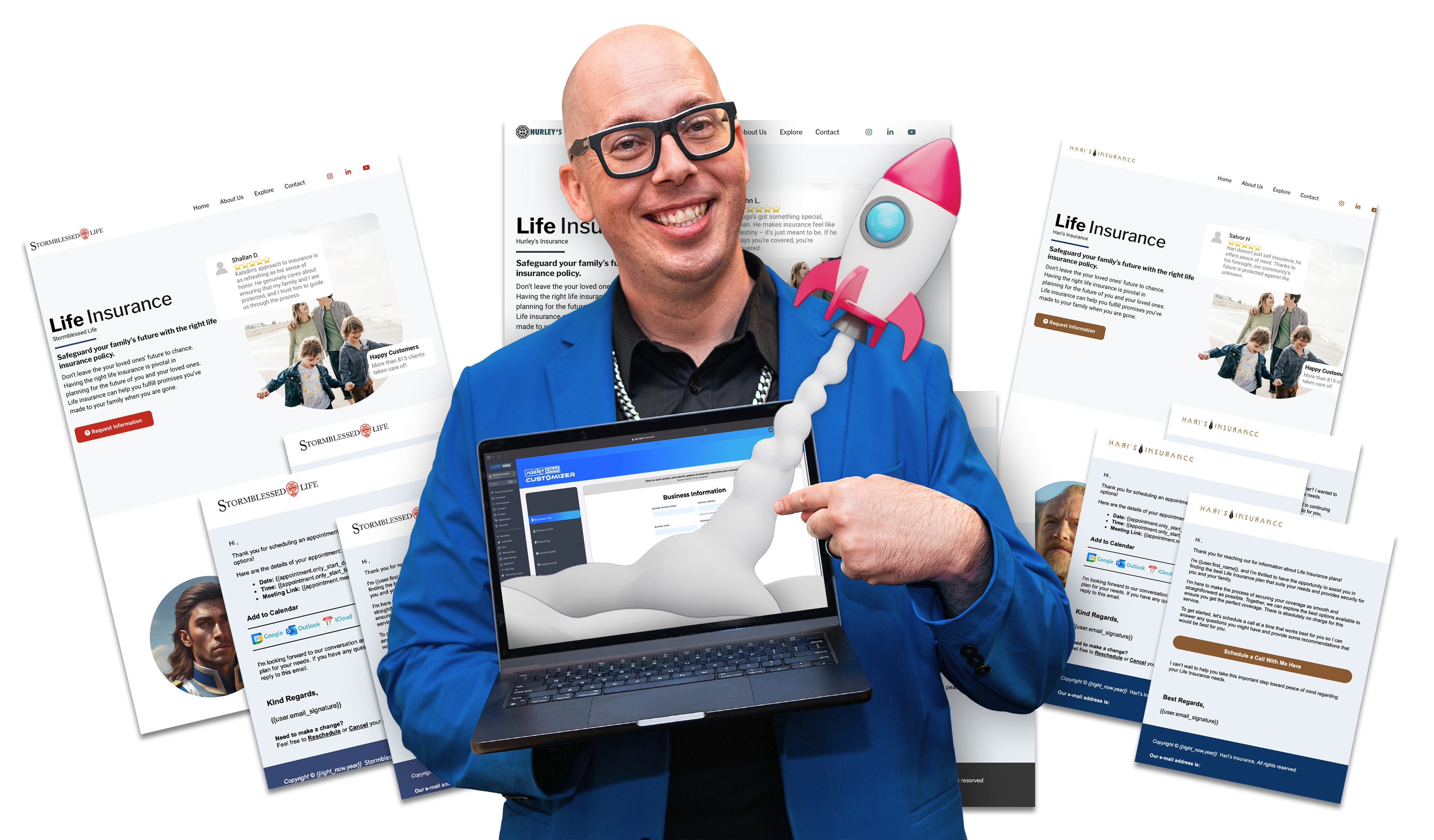
Insurance Agent CRM is a powerful, AI-powered, all-in-one automation system designed specifically for insurance agents. It streamlines appointment setting, follow-up processes, and sales conversion from existing leads, addressing key needs within the insurance industry.

Best for Sales Engagement Platforms for Insurance Agents

Expert Take

Insurance Agent CRM excels in providing industry-specific CRM solutions tailored for insurance agents. Its AI-powered automation and comprehensive sales management features make it a top choice. While its pricing model is not transparent, the product's capabilities and market credibility are well-supported by industry recognition.

Pros

  • Daily live Zoom support calls
  • Pre-built marketing assets for insurance
  • HIPAA compliance included
  • Built on robust GoHighLevel platform

Cons

  • Extra carrier fees for texts/calls
  • Support quality inconsistent per some reviews
  • Overwhelming feature set for non-techies

Best for teams that are

  • Users wanting GoHighLevel features tailored specifically for insurance
  • Agents seeking an all-in-one marketing and appointment booking tool

Skip if

  • Large agencies needing robust policy administration and servicing tools
  • Agencies requiring complex commercial lines underwriting workflows

Best for teams that are

  • Users wanting GoHighLevel features tailored specifically for insurance
  • Agents seeking an all-in-one marketing and appointment booking tool

Skip if

  • Large agencies needing robust policy administration and servicing tools
  • Agencies requiring complex commercial lines underwriting workflows

Pros

  • Unlimited contacts and funnels for $97/mo
  • Daily live Zoom support calls
  • Pre-built marketing assets for insurance
  • HIPAA compliance included
  • Built on robust GoHighLevel platform

Cons

  • Extra carrier fees for texts/calls
  • Reports of difficult cancellation process
  • Support quality inconsistent per some reviews
  • Overwhelming feature set for non-techies

Expert Take

Insurance Agent CRM excels in providing industry-specific CRM solutions tailored for insurance agents. Its AI-powered automation and comprehensive sales management features make it a top choice. While its pricing model is not transparent, the product's capabilities and market credibility are well-supported by industry recognition.

3
9.0 / 10
InsuredMine CRM

InsuredMine CRM is a highly specialized software solution for insurance agencies. It provides a comprehensive suite of tools designed to optimize and grow an agency by simplifying the process of managing insurance needs. With features tailored specifically for the industry, it addresses the unique needs of insurance brokers such as policy management, client engagement, and prospecting.

Best for Sales Engagement Platforms for Insurance Brokers

Expert Take

InsuredMine CRM excels in providing industry-specific CRM solutions for insurance brokers, with strong integration capabilities and a comprehensive feature set. Its market credibility is supported by third-party recognitions, and it offers a user-friendly experience with transparent pricing options.

Pros

  • SOC 2 Type II certified security
  • All-in-one CRM and marketing automation
  • Highly rated customer support and training
  • Transparent pricing vs enterprise alternatives

Cons

  • Mobile app stability and login issues
  • Steep learning curve for full configuration
  • High implementation fees for advanced setups
  • Complex setup requires significant time investment

Best for teams that are

  • Agencies seeking an all-in-one solution for CRM, marketing, and analytics
  • Commercial lines agencies needing robust management tools

Skip if

  • Users wanting a simple, lightweight tool with a minimal learning curve
  • Very small teams who might find the comprehensive feature set overwhelming

Best for teams that are

  • Agencies seeking an all-in-one solution for CRM, marketing, and analytics
  • Commercial lines agencies needing robust management tools

Skip if

  • Users wanting a simple, lightweight tool with a minimal learning curve
  • Very small teams who might find the comprehensive feature set overwhelming

Pros

  • Deep 2-way sync with Applied Epic/AMS360
  • SOC 2 Type II certified security
  • All-in-one CRM and marketing automation
  • Highly rated customer support and training
  • Transparent pricing vs enterprise alternatives

Cons

  • Mobile app stability and login issues
  • Internal email module can be slow
  • Steep learning curve for full configuration
  • High implementation fees for advanced setups
  • Complex setup requires significant time investment

Expert Take

InsuredMine CRM excels in providing industry-specific CRM solutions for insurance brokers, with strong integration capabilities and a comprehensive feature set. Its market credibility is supported by third-party recognitions, and it offers a user-friendly experience with transparent pricing options.

Nitrogen | Client Acquisition, Retention & Growth Platform

A SaaS solution for Sales Engagement Platforms for Financial Advisors

Best for Sales Engagement Platforms for Financial Advisors

Expert Take

Nitrogen excels as a comprehensive sales engagement platform tailored for financial advisors, offering robust features and scalability. Its market credibility is supported by third-party recognitions, though pricing transparency is limited due to a quote-based model. Overall, it stands out as a premium solution in its niche.

Pros

  • SOC 2 Type 2 certified security
  • Intuitive client-facing visual reports
  • Deep integration with major custodians
  • Command Center for compliance oversight

Cons

  • Strict contract cancellation policies
  • Invoicing and billing support issues
  • Manual updates needed for some models
  • Premium features require expensive upgrades

Best for teams that are

  • Advisors who use risk alignment as a primary method for converting prospects
  • Wealth firms needing specialized proposal generation to layer on top of their CRM

Skip if

  • Advisors seeking a standalone CRM to manage daily contact records and workflows
  • Firms that do not subscribe to risk-tolerance-based investment philosophies

Best for teams that are

  • Advisors who use risk alignment as a primary method for converting prospects
  • Wealth firms needing specialized proposal generation to layer on top of their CRM

Skip if

  • Advisors seeking a standalone CRM to manage daily contact records and workflows
  • Firms that do not subscribe to risk-tolerance-based investment philosophies

Pros

  • Industry-standard 'Risk Number' methodology
  • SOC 2 Type 2 certified security
  • Intuitive client-facing visual reports
  • Deep integration with major custodians
  • Command Center for compliance oversight

Cons

  • Strict contract cancellation policies
  • Significant price increases for premium tiers
  • Invoicing and billing support issues
  • Manual updates needed for some models
  • Premium features require expensive upgrades

Expert Take

Nitrogen excels as a comprehensive sales engagement platform tailored for financial advisors, offering robust features and scalability. Its market credibility is supported by third-party recognitions, though pricing transparency is limited due to a quote-based model. Overall, it stands out as a premium solution in its niche.

Showell Insurance Sales Enablement

Showell is a sales enablement tool designed specifically for the insurance industry, aiming to boost sales by up to 134%. It offers the ability to access content anywhere, enabling agents to train faster and more efficiently, ensuring that they're always ready to close deals.

Best for Sales Engagement Platforms for Insurance Agents

Expert Take

Showell Insurance Sales Enablement is tailored specifically for the insurance industry, offering features that enhance sales and training efficiency. Its focus on mobile access and content availability supports insurance agents in closing deals effectively. The product's market credibility is supported by its specialized design for insurance professionals.

Pros

  • ISO 27001:2022 certified security
  • Transparent pricing with free plan
  • Built-in LMS for agent training
  • Intuitive, app-like user interface

Cons

  • Learning curve for advanced features
  • Advanced branding requires higher tiers
  • Search complex for large libraries
  • LMS is a paid add-on

Best for teams that are

  • Marketing teams needing to control and update sales materials centrally
  • Sales teams wanting to track buyer engagement with shared content

Skip if

  • Agencies looking for a CRM to manage leads and sales pipelines
  • Teams needing policy administration or commission tracking features

Best for teams that are

  • Marketing teams needing to control and update sales materials centrally
  • Sales teams wanting to track buyer engagement with shared content

Skip if

  • Agencies looking for a CRM to manage leads and sales pipelines
  • Teams needing policy administration or commission tracking features

Pros

  • Full offline access for field agents
  • ISO 27001:2022 certified security
  • Transparent pricing with free plan
  • Built-in LMS for agent training
  • Intuitive, app-like user interface

Cons

  • Learning curve for advanced features
  • Fewer integrations than market leaders
  • Advanced branding requires higher tiers
  • Search complex for large libraries
  • LMS is a paid add-on

Expert Take

Showell Insurance Sales Enablement is tailored specifically for the insurance industry, offering features that enhance sales and training efficiency. Its focus on mobile access and content availability supports insurance agents in closing deals effectively. The product's market credibility is supported by its specialized design for insurance professionals.

Total Expert Engagement Platform

Total Expert Engagement Platform is purpose-built for mortgage brokers. It combines customer insights, automation, and sales tools to provide an all-in-one solution for engaging customers. It is particularly effective in managing complex mortgage sales processes, providing valuable CRM capabilities, and enabling seamless communication and follow-ups.

Best for Sales Engagement Platforms for Mortgage Brokers

Expert Take

Total Expert Engagement Platform excels in providing specialized CRM and sales engagement tools tailored for mortgage brokers. Its capabilities in automation and customer insights are well-documented, making it a top choice in its niche. While pricing transparency is limited, the platform's depth and industry-specific features justify its premium positioning.

Pros

  • Automated credit inquiry alerts
  • ISO 27001 & SOC 2 certified
  • Deep LOS integrations (Empower/Encompass)
  • Built-in RESPA/TCPA compliance tools

Cons

  • Mobile app navigation issues
  • Steep learning curve for some
  • Higher cost for customization
  • Email editor less robust than MailChimp

Best for teams that are

  • Lenders seeking pre-built customer journeys for multi-channel engagement
  • Enterprises needing to unify marketing, sales, and data on a single platform

Skip if

  • Small brokerages seeking a low-cost, simple CRM without enterprise features
  • Teams looking for a standalone dialer rather than a full engagement suite

Best for teams that are

  • Lenders seeking pre-built customer journeys for multi-channel engagement
  • Enterprises needing to unify marketing, sales, and data on a single platform

Skip if

  • Small brokerages seeking a low-cost, simple CRM without enterprise features
  • Teams looking for a standalone dialer rather than a full engagement suite

Pros

  • Purpose-built for financial services
  • Automated credit inquiry alerts
  • ISO 27001 & SOC 2 certified
  • Deep LOS integrations (Empower/Encompass)
  • Built-in RESPA/TCPA compliance tools

Cons

  • Mobile app navigation issues
  • Reporting features lack flexibility
  • Steep learning curve for some
  • Higher cost for customization
  • Email editor less robust than MailChimp

Expert Take

Total Expert Engagement Platform excels in providing specialized CRM and sales engagement tools tailored for mortgage brokers. Its capabilities in automation and customer insights are well-documented, making it a top choice in its niche. While pricing transparency is limited, the platform's depth and industry-specific features justify its premium positioning.

Recruiterflow ATS & CRM

Specifically designed for recruiting agencies, staffing agencies, and executive search firms, Recruiterflow is an AI-first Applicant Tracking System (ATS) and Customer Relationship Management (CRM) software. It provides a comprehensive solution for managing job applicants, improving hiring efficiency, and enhancing candidate relationships - all vital needs in the recruitment industry.

Best for Sales Engagement Platforms for Recruitment Agencies

Expert Take

Recruiterflow ATS & CRM excels in providing AI-driven recruitment solutions tailored for agencies, with strong capabilities in candidate management and analytics. While it offers comprehensive features, the initial complexity and limited integrations are noted tradeoffs. Its premium positioning is supported by its specialized focus and AI enhancements.

Pros

  • Unified ATS & CRM platform
  • One-click Chrome sourcing extension
  • SOC 2 & ISO 27001 certified
  • Responsive customer support

Cons

  • Mobile app functionality is limited
  • Steep learning curve for advanced features
  • Reporting customization could be better
  • Pricing structure can be complex

Best for teams that are

  • Modern staffing agencies seeking an all-in-one ATS and CRM solution
  • Small to mid-sized firms prioritizing ease of use and automation

Skip if

  • Large enterprises needing complex, custom ERP-level integrations
  • Recruiters who require a native mobile app for on-the-go management

Best for teams that are

  • Modern staffing agencies seeking an all-in-one ATS and CRM solution
  • Small to mid-sized firms prioritizing ease of use and automation

Skip if

  • Large enterprises needing complex, custom ERP-level integrations
  • Recruiters who require a native mobile app for on-the-go management

Pros

  • Unified ATS & CRM platform
  • Powerful 'Recipes' workflow automation
  • One-click Chrome sourcing extension
  • SOC 2 & ISO 27001 certified
  • Responsive customer support

Cons

  • Mobile app functionality is limited
  • Steep learning curve for advanced features
  • Limited VoIP integration options
  • Reporting customization could be better
  • Pricing structure can be complex

Expert Take

Recruiterflow ATS & CRM excels in providing AI-driven recruitment solutions tailored for agencies, with strong capabilities in candidate management and analytics. While it offers comprehensive features, the initial complexity and limited integrations are noted tradeoffs. Its premium positioning is supported by its specialized focus and AI enhancements.

ICE Mortgage Technology

ICE Mortgage Technology is a powerful sales engagement platform designed specifically for loan officers. It streamlines the mortgage application process by offering online application forms, instant engagement with loan officers, and secure document upload and e-Signing capabilities. The platform's robust CRM & sales software aids in managing customer relationships and boosting sales productivity.

Best for Sales Engagement Platforms for Loan Officers

Expert Take

ICE Mortgage Technology stands out as a specialized sales engagement platform for loan officers, offering features like online applications and secure document handling. Its integration of CRM capabilities enhances sales productivity, making it a top choice in its niche. Despite the lack of transparent pricing, its tailored functionality and industry focus justify its premium positioning.

Pros

  • End-to-end mortgage lifecycle management
  • Proven ROI of ~$1,056/loan
  • Strong TRID compliance & fee tools
  • Industry standard 'gold standard' platform

Cons

  • Steep learning curve for new users
  • Interface described as clunky/outdated
  • High integration & implementation costs
  • Requires significant training investment

Best for teams that are

  • Lenders needing a comprehensive end-to-end Loan Origination System
  • Companies requiring a system of record for compliance and funding

Skip if

  • Loan officers seeking only a front-end marketing CRM
  • Small brokerages unable to support complex enterprise software

Best for teams that are

  • Lenders needing a comprehensive end-to-end Loan Origination System
  • Companies requiring a system of record for compliance and funding

Skip if

  • Loan officers seeking only a front-end marketing CRM
  • Small brokerages unable to support complex enterprise software

Pros

  • End-to-end mortgage lifecycle management
  • Massive partner ecosystem & APIs
  • Proven ROI of ~$1,056/loan
  • Strong TRID compliance & fee tools
  • Industry standard 'gold standard' platform

Cons

  • Steep learning curve for new users
  • Interface described as clunky/outdated
  • Strict API concurrency limits (30 calls)
  • High integration & implementation costs
  • Requires significant training investment

Expert Take

ICE Mortgage Technology stands out as a specialized sales engagement platform for loan officers, offering features like online applications and secure document handling. Its integration of CRM capabilities enhances sales productivity, making it a top choice in its niche. Despite the lack of transparent pricing, its tailored functionality and industry focus justify its premium positioning.

Aaniie Home Care CRM

Aaniie's Home Care Marketing Automation & CRM is specifically designed for home care agencies. It offers a comprehensive platform to streamline sales and marketing operations, manage customer relationships, and improve client care services, tailored to meet the unique needs of the home care industry.

Best for Sales Engagement Platforms for Home Care Agencies

Expert Take

Aaniie Home Care CRM is a specialized platform tailored for home care agencies, offering robust CRM and marketing automation features. Its industry-specific capabilities and comprehensive support make it a standout choice in its niche, though pricing transparency could be improved.

Pros

  • Embedded caregiver gamification & rewards
  • SOC 2 Type 1 security certification
  • Integrated Applicant Tracking System (ATS)
  • Real-time KPI business intelligence dashboards

Cons

  • Mobile app stability issues reported
  • No direct caregiver-client link in UI
  • Limited custom reporting options
  • Occasional sync delays with EVV aggregators

Best for teams that are

  • Startups wanting to consolidate their tech stack
  • Providers needing integrated EVV and billing with CRM

Skip if

  • Agencies only looking for a standalone CRM overlay
  • Sales teams needing advanced, standalone sales engagement

Best for teams that are

  • Startups wanting to consolidate their tech stack
  • Providers needing integrated EVV and billing with CRM

Skip if

  • Agencies only looking for a standalone CRM overlay
  • Sales teams needing advanced, standalone sales engagement

Pros

  • Transparent 'all-inclusive' pricing model
  • Embedded caregiver gamification & rewards
  • SOC 2 Type 1 security certification
  • Integrated Applicant Tracking System (ATS)
  • Real-time KPI business intelligence dashboards

Cons

  • Mobile app stability issues reported
  • Invoicing workflow sensitive to schedule changes
  • No direct caregiver-client link in UI
  • Limited custom reporting options
  • Occasional sync delays with EVV aggregators

Expert Take

Aaniie Home Care CRM is a specialized platform tailored for home care agencies, offering robust CRM and marketing automation features. Its industry-specific capabilities and comprehensive support make it a standout choice in its niche, though pricing transparency could be improved.

Bolttech's Customer Engagement Platform

Bolttech's digital engagement platform is specifically designed for insurance providers to create personalized and seamless experiences throughout each stage of the customer journey. It addresses industry-specific needs such as customer retention, policy customization, and offers real-time analytics for data-driven decision making.

Best for Sales Engagement Platforms for Insurance Agents

Expert Take

Bolttech's Customer Engagement Platform excels in providing tailored solutions for the insurance industry, offering real-time analytics and policy customization. Its market credibility is supported by industry-specific features and integration capabilities, although pricing transparency could be improved.

Pros

  • No-code product configurator speeds up launch
  • Revenue-share pricing model minimizes risk
  • Strong AI sentiment analysis capabilities
  • Valued at $2.1B with top-tier investors

Cons

  • Repair logistics delays in some regions
  • Complex ecosystem requires management
  • SOC 2 citation specific to sub-brands
  • Reliance on third-party repair networks

Best for teams that are

  • Agencies seeking a digital platform with broad carrier market access
  • Partners looking to offer device protection and warranty products

Skip if

  • Traditional agents seeking a simple, standalone contact management list
  • Solo agents looking for a basic CRM without ecosystem connectivity

Best for teams that are

  • Agencies seeking a digital platform with broad carrier market access
  • Partners looking to offer device protection and warranty products

Skip if

  • Traditional agents seeking a simple, standalone contact management list
  • Solo agents looking for a basic CRM without ecosystem connectivity

Pros

  • Massive insurer library with 700+ partners
  • No-code product configurator speeds up launch
  • Revenue-share pricing model minimizes risk
  • Strong AI sentiment analysis capabilities
  • Valued at $2.1B with top-tier investors

Cons

  • Repair logistics delays in some regions
  • Service quality varies by geography
  • Complex ecosystem requires management
  • SOC 2 citation specific to sub-brands
  • Reliance on third-party repair networks

Expert Take

Bolttech's Customer Engagement Platform excels in providing tailored solutions for the insurance industry, offering real-time analytics and policy customization. Its market credibility is supported by industry-specific features and integration capabilities, although pricing transparency could be improved.

Loading comparison data…

How We Rank Products

Our Evaluation Process

Products in the Sales Engagement Platforms category are evaluated based on documented features like integration capabilities with existing CRM systems and scalability options. Pricing transparency is also a critical factor, as it affects budgeting and decision-making processes. Compatibility with other software tools and the ability to automate complex workflows are key evaluation criteria. Additionally, third-party customer feedback provides insights into user satisfaction and real-world application, helping potential buyers make informed decisions.

Verification

  • Products evaluated through comprehensive research and analysis of sales engagement features and performance metrics.
  • Rankings based on a thorough examination of user reviews, ratings, and industry expert insights.
  • Selection criteria focus on key functionalities such as CRM integration, automation capabilities, and user experience in sales engagement platforms.

Score Breakdown

0.0 / 10

About Sales Engagement & Outreach Platforms

What Is Sales Engagement & Outreach Platforms?

Sales Engagement & Outreach Platforms act as the operational "system of action" for revenue teams, distinct from the "system of record" provided by Customer Relationship Management (CRM) software. While CRMs are designed to store static data—contact details, account histories, and pipeline stages—Sales Engagement Platforms (SEPs) are engineered to execute, track, and optimize the interactions that move those deals forward. These platforms sit directly between the salesperson and the market, orchestrating communications across email, voice, social, and mobile channels into cohesive, measurable workflows.

The core problem these platforms solve is the "last mile" inefficiency of sales execution. Without an SEP, sales representatives spend valuable time manually logging activities, switching between disparate tools for dialing and emailing, and guessing which outreach strategies yield results. SEPs automate the administrative burden of outreach—logging every touchpoint back to the CRM automatically—while providing intelligence on *how* to engage. They guide sellers on whom to contact next, through which channel, and with what message, based on engagement data (opens, clicks, call duration) and predefined sequences (often called cadences or flows).

The user base has expanded beyond the traditional Sales Development Representative (SDR) aiming to book meetings. Today, full-cycle Account Executives use these tools to manage active deal cycles, Customer Success Managers use them for renewal and expansion campaigns, and marketing teams use them to ensure lead handoffs result in immediate action. It matters because it transforms sales from a chaotic art into a scientific, repeatable process. By enforcing standardized workflows, organizations can test messaging efficacy, onboard new reps faster, and ensure that no prospect slips through the cracks due to human error or forgetfulness.

Category Definition

Sales Engagement & Outreach Platforms cover software used to orchestrate, automate, and analyze high-volume interactions between revenue teams and prospects across multiple communication channels. This category manages the "execution layer" of the sales stack: facilitating outbound prospecting, managing multi-touch communication sequences (cadences), recording and transcribing calls, and syncing activity data bi-directionally with the system of record. It sits narrower than Revenue Operations (RevOps) Platforms (which include broader forecasting and compensation tools) but is broader than simple Email Automation Tools (which lack multi-channel telephony and deep CRM integration). It includes both horizontal, general-purpose platforms used by B2B technology companies and vertical-specific tools purpose-built for high-compliance industries like financial services, mortgage lending, and insurance.

History of the Category

The origins of the Sales Engagement category in the late 1990s and early 2000s were rooted in a fundamental gap left by the rapid adoption of CRM systems. As businesses moved from physical Rolodexes to digital databases like early on-premise CRM solutions, they gained a powerful way to store information but had no better way to act on it. Sales representatives were forced to act as data entry clerks, manually logging every call and email, while the actual workflow of selling remained fragmented across desk phones and standalone email clients.

The mid-2000s saw the rise of the first generation of "point solutions"—simple email tracking plugins and auto-dialers designed to solve specific inefficiencies. These tools were often disconnected, leading to "swivel-chair" workflows where reps managed data in one system and execution in another. However, the true birth of the modern Sales Engagement Platform occurred in the early 2010s, driven by the emergence of the predictable revenue model. This methodology decoupled prospecting (SDRs) from closing (AEs), creating a need for specialized tools that could handle high-volume, standardized outreach. Early innovators in this space focused on "cadence" automation—allowing managers to design rigid sequences of emails and calls that reps simply had to follow.

By 2015-2018, the market experienced a massive shift from "automation" to "engagement." Buyers became fatigued by robotic, template-heavy spam, forcing vendors to pivot. The category evolved from simple bulk-blasting tools into intelligent platforms that prioritized personalization at scale. This period saw significant consolidation as leading vendors acquired conversation intelligence technology (call recording and transcription) to capture voice data alongside email metrics. The goal shifted from "more activity" to "better activity."

The most recent wave, beginning around 2020, has been defined by the convergence of Sales Engagement, Revenue Intelligence, and Conversation Intelligence. Major acquisitions and mergers reshaped the landscape, as CRM giants began embedding engagement features directly into their core offerings, and standalone engagement unicorns expanded into forecasting and deal analytics. Today, buyer expectations have forced the category to mature into "Revenue Orchestration." Modern platforms are no longer just about sending emails; they are AI-driven command centers that ingest signals from across the buyer journey to recommend the next best action, blurring the lines between marketing automation and sales execution.

What to Look For

When evaluating Sales Engagement & Outreach Platforms, the priority must be on workflow fluidity over feature count. The most critical evaluation criterion is the quality of the "bi-directional sync" with your CRM. Many vendors claim seamless integration, but in practice, sync errors can create data silos where activity logs are delayed or overwritten. A robust platform must offer real-time conflict resolution, ensuring that if a record is updated in the CRM, the change is instantly reflected in the outreach sequence, and vice versa.

Multi-channel orchestration is another non-negotiable. The modern buyer journey is non-linear and occurs across email, phone, SMS, LinkedIn, and even direct mail. Look for platforms that allow "omnichannel" steps within a single sequence. For example, a workflow should allow a rep to send an email on Day 1, receive a reminder to connect on LinkedIn on Day 2, and trigger an SMS task on Day 4—all tracked within one dashboard. If a platform treats voice and email as separate modules that don't communicate, it will fracture your reporting.

Red Flags and Warning Signs:

  • The "Black Box" AI: Be wary of vendors promising "AI-driven" prioritization without explaining the logic. If the system tells a rep to call Prospect A instead of Prospect B but cannot provide the "why" (e.g., "Prospect A opened the proposal three times"), adoption will fail because sellers won't trust the machine.
  • Proprietary Data Lock-in: Some platforms make it difficult to export granular engagement data (e.g., call transcripts or sentiment analysis scores) back into your data warehouse. Ensure you own your interaction data.
  • Poor Mobile Experience: If your field sales team cannot easily execute a task or log a meeting from a mobile app, the platform will only serve your inside sales team, creating a two-tiered data structure.

Key Questions to Ask Vendors:

  • "How does your platform handle 'conflict resolution' when a contact's status changes in the CRM while they are active in a sequence?"
  • "Can we create 'trigger-based' entry and exit rules for sequences based on custom fields in our CRM, or are we limited to standard fields?"
  • "Does your dialer support 'Local Presence' with reputation management to prevent our numbers from being flagged as spam by carriers?"

Industry-Specific Use Cases

Retail & E-commerce

In Retail and E-commerce, Sales Engagement Platforms are rarely used for B2C consumer outreach (which is the domain of Marketing Automation), but are critical for the B2B wholesale and vendor onboarding sides of the business. Large retailers use these platforms to manage relationships with thousands of suppliers and distributors. The evaluation priority here is high-volume contact management and integration with ERP systems for inventory data. A unique consideration is the ability to handle "seasonality" in outreach cadences—ramping up supplier communication ahead of holiday spikes. Unlike typical B2B sales, the "product" being sold is often shelf space or distribution partnership, requiring content-heavy sequences that can share visual merchandising guidelines and bulk pricing sheets.

Healthcare

Healthcare organizations utilize these platforms for two distinct workflows: provider recruitment/sales (selling medical devices or software to hospitals) and patient outreach. For the latter, the platform must be HIPAA-compliant and capable of secure, encrypted communication. Evaluation priorities shift heavily toward security and "consent management" to ensure outreach adheres to strict regulatory frameworks. A unique use case is "care gap closure," where outreach platforms automate reminders for appointments or screenings. Unlike standard sales, "conversion" here means a patient outcome, not a purchase. Therefore, the platform must integrate with Electronic Health Records (EHR) rather than just traditional CRMs, a capability found mostly in vertical-specific tools.

Financial Services

For Financial Services, the primary driver is trust and compliance. Banks, wealth management firms, and insurance brokerages use SEPs to maintain high-touch relationships with clients while adhering to regulations like FINRA or SEC record-keeping rules. Critical evaluation criteria include immutable audit trails—every email and SMS must be archived and searchable. Unlike tech sales, where speed is key, financial services prioritize "relationship depth." Sequences are often longer, slower, and focused on educational content rather than aggressive closing. The platform must support "approval workflows" where junior advisors' outreach can be reviewed by compliance officers before sending.

Manufacturing

Manufacturing sales cycles are notoriously long and complex, often involving dealer and distributor networks rather than direct end-users. SEPs in this sector are used to keep these indirect channels engaged and informed about product updates. A specific need is "configure-price-quote" (CPQ) alignment—the engagement platform must recognize where a deal is in the engineering or quoting phase to avoid sending untimely "nudges" while a complex custom quote is being calculated. Evaluation priorities include the ability to track engagement with technical documents (CAD drawings, spec sheets) and offline interactions, such as trade show meetings or site visits.

Professional Services

Consultancies, law firms, and agencies use SEPs to manage partner-led business development. In these organizations, "sales" is often done by senior practitioners who are not full-time sellers. Consequently, the platform must be incredibly intuitive and low-friction; if it requires hours of training, partners will ignore it. The workflow focuses on "warm introductions" and nurturing referral networks rather than cold prospecting. A unique consideration is the integration with "Project Management" tools—once a bid is won, the engagement history needs to flow seamlessly to the delivery team so they understand the client's initial pain points and promises made during the sale.

Subcategory Overview

The market for Sales Engagement has bifurcated into generalist tools and highly specialized vertical solutions. While a generalist platform might serve a software company well, regulated industries often require purpose-built architectures that handle specific data types, compliance rules, and terminologies out of the box.

Sales Engagement Platforms for Financial Advisors Financial advisors operate in a high-stakes environment where "selling" is indistinguishable from "advising." Generic platforms often fail here because they lack the specific compliance guardrails required by the SEC and FINRA, such as automatic archiving of all electronic correspondence and pre-send compliance checks for marketing materials. A workflow unique to this niche is the "annual review cadence," which isn't about closing a deal but demonstrating fiduciary responsibility and retaining assets under management. Advisors flock to these tools to automate birthday wishes, market updates, and Required Minimum Distribution (RMD) reminders without triggering compliance violations. For a deeper look at these specialized tools, read our guide to Sales Engagement Platforms for Financial Advisors.

Sales Engagement Platforms for Roofing Companies This subcategory is distinct because it centers on "field sales" and geospatial data rather than digital prospecting. Generic tools assume the rep is sitting at a desk; roofing-specific platforms assume the rep is standing on a ladder or knocking on a door. These tools handle "storm tracking" workflows, where outreach is triggered by weather events (hail maps) overlaying territory data. The specific pain point driving buyers here is the disconnect between the office and the field—generic tools don't allow a rep to drop a pin on a map to log a "knock" or upload an inspection photo directly into a lead record from a mobile device. Learn more about these field-first solutions in our review of Sales Engagement Platforms for Roofing Companies.

Sales Engagement Platforms for Loan Officers Loan officers deal with a product that is transactional yet deeply personal and document-heavy. Unlike general sales tools, these platforms must integrate with Loan Origination Systems (LOS) to trigger updates based on loan status (e.g., "Appraisal Received" or "Underwriting Complete"). A generic tool cannot automate a "congratulations" SMS the second a loan is funded because it lacks visibility into the LOS data. The primary driver for this niche is the need for "milestone automation"—keeping borrowers and real estate agents informed at every step of the mortgage process to prevent the anxious phone calls that plague loan officers' days. Explore the top tools for this workflow in our guide to Sales Engagement Platforms for Loan Officers.

Sales Engagement Platforms for Insurance Agents Insurance sales combine high-volume lead churning with long-term retention strategies. The differentiator for these platforms is the ability to handle "renewal automation" effectively. A generic sales tool treats a "closed won" deal as the end of the line; insurance-specific tools treat it as the start of a renewal clock. They handle workflows like "X-dating" (tracking the expiration date of a prospect's current policy with a competitor) to trigger outreach exactly 60 days before that date. This predictive timing is the specific pain point that generic CRMs struggle to manage without complex customization. See our analysis of these tools in the section on Sales Engagement Platforms for Insurance Agents.

Sales Engagement Platforms for Mortgage Brokers While similar to loan officers, mortgage brokers have a distinct workflow: they shop loans across multiple lenders. Their engagement platforms need to manage relationships not just with borrowers, but with a network of wholesale lenders. A workflow unique to this niche is the "rate watch" alert, where the platform monitors interest rates and automatically engages past clients when refinancing becomes viable. Generic tools cannot ingest live rate data to trigger these contextual messages. The pain point driving this market is the need to aggregate lending options and present them visually to clients, something standard sales emails cannot do. Read more about broker-specific solutions in our guide to Sales Engagement Platforms for Mortgage Brokers.

Deep Dive: Integration & API Ecosystem

Integration is the single most common point of failure for sales technology stacks. According to [1] Forrester, data quality issues and lack of alignment with existing IT architecture are primary causes of CRM project failures, which often stem from poor integration with engagement layers. It is not enough for a vendor to claim they "integrate with Salesforce" or "connect to HubSpot." The depth and directionality of that integration matter.

Expert analysis reveals that the "API call limit" is a hidden killer in enterprise deployments. Every time your SEP updates a record in your CRM, it uses an API call. In a scenario involving a 50-person sales team sending 100 emails each per day, plus logging opens, clicks, and replies, the API volume can skyrocket to tens of thousands of calls daily. If the integration is poorly designed—syncing data in inefficient batches or redundant loops—companies can hit their CRM's API limits, causing the entire sync to freeze. This results in "ghost data," where reps are working leads that have already been closed or disqualified by another team member.

Scenario: Consider a mid-market logistics firm where the sales team uses an SEP, but the finance team uses an ERP for invoicing. A prospect replies to a sales email requesting a billing change. If the SEP only syncs with the CRM and not the ERP (or if the CRM-ERP sync is one-way), the sales rep might update the CRM, but the invoice goes out wrong. The "integration ecosystem" must be evaluated not just on direct connectors, but on the ability to support "middleware" like Zapier, MuleSoft, or Workato to bridge these complex, multi-system gaps.

Deep Dive: Security & Compliance

As sales engagement moves from "nice-to-have" to mission-critical infrastructure, security has moved to the forefront. Gartner notes that by 2025, [2] regulatory requirements will be a primary barrier to data quality and usage for many organizations. The stakes are financial and reputational. For example, GDPR fines have reached into the hundreds of millions, with [3] companies like Meta facing fines over €1.2 billion for data mishandling. While sales teams are rarely hit with billions, the principle applies: sending unsolicited outreach to a European prospect without a lawful basis, or failing to honor a "Right to be Forgotten" request across both the SEP and CRM, constitutes a violation.

Security compliance goes beyond GDPR. SOC 2 Type II certification is the baseline expectation for any SaaS vendor handling customer data. However, buyers must look deeper into "Data Residency" options. If you are a Canadian healthcare company, your data cannot reside on U.S. servers. Many generalist SEPs host all data in US-EAST-1 (AWS N. Virginia) by default.

Scenario: A financial services firm implements a new SEP. A junior rep builds a "nurture sequence" that includes a link to a generic market update. However, the SEP's tracking pixel, used to detect email opens, captures the IP addresses of the recipients. If this sequence is sent to a client in Germany, that IP collection is considered "Personal Identifiable Information" (PII) under GDPR. If the vendor does not have a Data Processing Agreement (DPA) in place or a mechanism to anonymize IP tracking, the firm is non-compliant immediately upon clicking "send."

Deep Dive: Pricing Models & TCO

Pricing in this category is undergoing a turbulent shift. Traditionally, SEPs utilized a "per-seat, per-month" model. However, the Total Cost of Ownership (TCO) is rarely just the license fee. Hidden costs often include "dialer credits" (per-minute charges for voice), "data credits" (for enriching contact details), and premium support tiers required to access API documentation. Research from [4] OpenView Partners indicates that usage-based pricing is gaining traction, with nearly 3 in 5 SaaS companies now adopting some form of usage capability. This aligns costs with value but makes budgeting unpredictable.

Scenario: Let's calculate the TCO for a hypothetical 25-person sales team.

  • Base License: $100/user/month = $30,000/year.
  • Voice Add-on: Reps average 500 minutes/month. If the vendor charges $0.03/min outbound, that's $15/rep/month = $4,500/year.
  • Recording Storage: "Unlimited" storage often has a retention cap of 6 months. To keep calls for 7 years (audit requirement), the vendor charges an extra platform fee of $5,000/year.
  • CRM Sandbox Sync: Connecting the SEP to a Salesforce Sandbox for testing often requires an "Enterprise" tier upgrade, bumping the base license to $150/user.
The "sticker price" of $30k quickly balloons to over $50k-$60k once operational realities set in. Buyers must ask for a "fully loaded" quote that includes telephony overages and storage retention.

Deep Dive: Implementation & Change Management

The failure rate of CRM and sales technology implementations remains staggeringly high, with estimates around 50% to 70% failing to meet objectives according to various studies [5]. In the context of Sales Engagement Platforms, failure rarely means the software "didn't work." It means the software merely digitized a broken process. "Digitizing chaos" results in faster chaos, not more revenue.

Successful implementation requires a "Content First, Tech Second" approach. Before a single user is provisioned, the "Rules of Engagement" must be defined. Who owns a lead? When does a lead transition from "Marketing Nurture" to "Sales Sequence"? What is the exact messaging for the "Break-up Email"?

Scenario: A 100-person tech company rolls out a new SEP. They train the reps on *how* to build sequences but not *what* to write. Within a month, eager reps create 500 different email templates, many with typos, off-brand messaging, or aggressive tactics. Domain reputation suffers, and the company's emails start landing in spam folders globally. The implementation failed not because of the tool, but because there was no "Governance Committee" established to approve content before it went live. Change management must include "Certification" steps where reps must prove they can build a compliant sequence before gaining full send permissions.

Deep Dive: Vendor Evaluation Criteria

When selecting a vendor, move beyond the feature matrix. Every major player has email sequencing, click tracking, and a dialer. The differentiation lies in Partner Ecosystem and Innovation Velocity. [6] Gartner emphasizes that Sales Engagement is becoming a "Level 1" technology, meaning it is as critical as the CRM itself. Therefore, the financial stability of the vendor matters.

Scenario: A buyer evaluates Vendor A (a large, public incumbent) vs. Vendor B (a nimble Series B startup). Vendor B has a cooler AI feature for writing emails. However, Vendor B has only 12 months of runway and a small support team. If the economy turns and Vendor B cuts staff, the buyer's support tickets might go unanswered for days. For a mission-critical tool where downtime means the sales team effectively stops working, the "boring" criteria of uptime SLAs (Service Level Agreements) and support hours (24/7 vs. 9-5 EST) become the deciding factors.

Emerging Trends and Contrarian Take

Emerging Trends 2025-2026: The market is barreling toward "Agentic AI" and autonomous revenue orchestration. We are moving past "Copilots" (which assist humans) to "Agents" (which act for them). By 2026, leading platforms will likely offer autonomous agents that can research a prospect, draft a hyper-personalized email, send it, and even negotiate scheduling times without human intervention, only alerting the rep when a meeting is booked. Additionally, we will see the Death of the "Standalone" SEP as the category collapses into broader "Revenue Platforms." The distinction between Sales Engagement, Conversation Intelligence, and Forecasting is vanishing; buyers want one pane of glass, not three.

Contrarian Take: The "Scale" Era is Over; The "Un-Scale" Era is Here. For the last decade, the value proposition of Sales Engagement Platforms was "do more with less"—send more emails, make more calls. The contrarian truth is that most sales teams are now suffering from "activity intoxication." They are using these platforms to spam their total addressable market into oblivion, destroying brand equity in the process. The highest ROI in 2025 will not come from the team that sends the most emails, but from the team that uses the SEP to slow down—using the platform to enforce mandatory research steps that prevent a rep from hitting "send" until they have customized the message. The tool should be a governor, not just an accelerator.

Common Mistakes

Over-Automation of the First Touch: The most fatal mistake is automating the very first interaction with a high-value prospect. Buyers are trained to spot templated "Hi [Name]" emails instantly. The mistake is using the SEP to automate everything rather than automating the administration so the human can personalize the connection.

Ignoring "Data Decay": Implementing an SEP without a concurrent Data Hygiene strategy is disastrous. [2] Gartner estimates bad data costs organizations $12.9 million annually. An SEP amplifies bad data; if 20% of your emails are invalid, an automated sequence will ruin your sender reputation 10x faster than manual sending ever could.

The "Set It and Forget It" Syndrome: Teams often build sequences during implementation and never audit them. Six months later, they are sending "Happy New Year" emails in March or referencing a competitor product that no longer exists. Content within an SEP requires quarterly audits.

Questions to Ask in a Demo

  • "Can you show me the exact steps to map a custom field from Salesforce to a variable in an email template? I want to count the clicks."
  • "Show me your 'Conflict Resolution' settings. If two reps add the same prospect to two different sequences, does the system block it?"
  • "Does your platform support 'Threaded' replies for automated follow-ups, or does every email send as a new subject line?"
  • "How does your system handle 'Out of Office' replies? Does it automatically pause the sequence, or will it keep emailing a person who is on vacation?"
  • "Can I see your 'Deliverability Dashboard'? How do you help us monitor our domain health?"
  • "What is your ' API Throttling' limit? What happens to our data sync if we exceed it during end-of-quarter pushes?"

Before Signing the Contract

Final Decision Checklist:

  • Security Review: Has your CISO or IT lead reviewed their SOC 2 report and Data Processing Addendum?
  • Sandbox Test: Have you actually connected the tool to a CRM sandbox and verified that data flows both ways without error?
  • Exit Clause: Does the contract allow you to export your data (activity logs, notes, call recordings) in a usable format if you leave?

Common Negotiation Points:

  • Ramp Period: Ask for a "ramp" in billing. If you buy 50 seats, you likely won't deploy all 50 on Day 1. Negotiate to pay for 25 in Q1 and the remaining 25 in Q2.
  • Sandbox Access: Vendors often charge extra for a "staging environment." Argue that testing updates is essential for stability and should be included.
  • Storage Fees: Negotiate longer retention periods for call recordings upfront; it's much more expensive to add later.

Deal-Breakers:

  • Lack of SSO (Single Sign-On): For any enterprise, if the tool doesn't support Okta/Azure AD, it's a security risk.
  • No "Reply Detection": If the tool cannot reliably stop a sequence when a prospect replies (even from a different email alias), it will cause embarrassing overlap.

Closing

The landscape of Sales Engagement & Outreach Platforms is shifting rapidly from "volume" to "value." The winners will be those who use these powerful tools to orchestrate relevant, timely, and data-backed conversations, rather than just faster noise. If you have specific questions about how these platforms fit your unique stack or industry vertical, reach out.

Email: albert@whatarethebest.com

Quick one question survey

Thanks for your input!
Your response has been recorded.