OKR & Performance Goal Platforms

These are the specialized categories within OKR & Performance Goal Platforms. Looking for something broader? See all Project Management & Productivity Tools categories.

1

BrightGauge Goal Management

Best for Goal Management Tools for Sales & Revenue Teams

Score
9.8 / 10
BrightGauge Goal Management

BrightGauge is a goal management dashboard specifically designed for sales and revenue teams. It allows organizations to set, track, and monitor sales goals across teams, providing real-time insights to drive revenue growth and inspire sales teams.

Best for Goal Management Tools for Sales & Revenue Teams

Expert Take

BrightGauge Goal Management excels in providing a comprehensive dashboard for sales and revenue teams, with strong capabilities in goal tracking and real-time data monitoring. Its integration with other tools and customizable features enhance its usability, though setup may require some technical expertise. The product's credibility is supported by its documented features and integrations.
Pros

  • Automated weekly goal check-in emails
  • Distinguishes Process vs. Outcome goals
  • Exceptional support with personalized video guides
  • Deep integration with ConnectWise ecosystem
  • Pre-built gauges for 40+ MSP tools

Cons

  • Expensive per-datasource add-on pricing
  • Limited historical data retention
  • Slow development of new integrations
  • Goals interface can be clunky
  • Reporting can be slow to load

Best for teams that are

  • Managed Service Providers (MSPs) using ConnectWise or Autotask
  • Service teams tracking tickets, utilization, and billable hours
  • IT leaders combining data from RMM, PSA, and finance tools

Skip if

  • Non-MSP sales teams (SaaS, Retail) lacking IT-specific integrations
  • Businesses not using ConnectWise or similar PSA platforms
  • Teams wanting modern sales gamification (UI is report-focused)

Best for teams that are

  • Managed Service Providers (MSPs) using ConnectWise or Autotask
  • Service teams tracking tickets, utilization, and billable hours
  • IT leaders combining data from RMM, PSA, and finance tools

Skip if

  • Non-MSP sales teams (SaaS, Retail) lacking IT-specific integrations
  • Businesses not using ConnectWise or similar PSA platforms
  • Teams wanting modern sales gamification (UI is report-focused)

Pros

  • Automated weekly goal check-in emails
  • Distinguishes Process vs. Outcome goals
  • Exceptional support with personalized video guides
  • Deep integration with ConnectWise ecosystem
  • Pre-built gauges for 40+ MSP tools

Cons

  • Expensive per-datasource add-on pricing
  • Limited historical data retention
  • Slow development of new integrations
  • Goals interface can be clunky
  • Reporting can be slow to load

Expert Take

BrightGauge Goal Management excels in providing a comprehensive dashboard for sales and revenue teams, with strong capabilities in goal tracking and real-time data monitoring. Its integration with other tools and customizable features enhance its usability, though setup may require some technical expertise. The product's credibility is supported by its documented features and integrations.

2
Score
9.8 / 10
2
9.8 / 10
HR Cloud HRIS

HR Cloud is a comprehensive HRIS solution, perfect for HR and People teams looking to streamline their processes. With tools for employee engagement, performance management, onboarding, and goal tracking, it addresses the critical needs of the HR industry, boosting productivity, ensuring compliance, and increasing ROI.

Best for Goal Tracking Tools for HR & People Teams

Expert Take

HR Cloud HRIS is a comprehensive solution for HR and People teams, offering robust goal tracking and HRIS features. Its integration capabilities and 24/7 support enhance usability, while its enterprise pricing model ensures value for large organizations. The product is well-regarded in the industry, justifying its premium positioning.
Pros

  • Seamless two-way integration with ADP
  • SOC 2 Type II security compliance
  • User-friendly and clean interface
  • Strong onboarding and engagement modules
  • Responsive in-house customer support

Cons

  • Mobile app lacks full desktop features
  • No native payroll processing
  • Reporting customization is limited
  • Initial setup can be complex
  • Pricing not transparent on main site

Best for teams that are

  • Mid-market companies (50-5,000 employees) needing a unified HRIS with strong onboarding
  • Organizations prioritizing social recognition and engagement alongside performance goals
  • HR teams wanting a mobile-first experience for deskless or remote workers

Skip if

  • Micro-businesses (under 50 employees) looking for a standalone, low-cost goal tool
  • Companies satisfied with their current HRIS who only want a niche performance add-on
  • Organizations needing complex, enterprise-grade ERP integrations beyond standard payroll

Best for teams that are

  • Mid-market companies (50-5,000 employees) needing a unified HRIS with strong onboarding
  • Organizations prioritizing social recognition and engagement alongside performance goals
  • HR teams wanting a mobile-first experience for deskless or remote workers

Skip if

  • Micro-businesses (under 50 employees) looking for a standalone, low-cost goal tool
  • Companies satisfied with their current HRIS who only want a niche performance add-on
  • Organizations needing complex, enterprise-grade ERP integrations beyond standard payroll

Pros

  • Seamless two-way integration with ADP
  • SOC 2 Type II security compliance
  • User-friendly and clean interface
  • Strong onboarding and engagement modules
  • Responsive in-house customer support

Cons

  • Mobile app lacks full desktop features
  • No native payroll processing
  • Reporting customization is limited
  • Initial setup can be complex
  • Pricing not transparent on main site

Expert Take

HR Cloud HRIS is a comprehensive solution for HR and People teams, offering robust goal tracking and HRIS features. Its integration capabilities and 24/7 support enhance usability, while its enterprise pricing model ensures value for large organizations. The product is well-regarded in the industry, justifying its premium positioning.

3

Perdoo OKR & Strategy Execution

Best for OKR Platforms with Performance Tracking

Score
9.8 / 10
Perdoo OKR & Strategy Execution

Perdoo is a comprehensive solution that enables businesses to effectively track, manage, and showcase their Objectives and Key Results (OKRs). It is particularly beneficial for teams focused on achieving quarterly goals, offering streamlined check-ins and collaborative features. The platform's design and ease of use make it stand out in the OKR and strategy execution industry.

Best for OKR Platforms with Performance Tracking

Expert Take

Perdoo excels in providing a comprehensive OKR management solution with a focus on usability and collaborative features. Its market credibility is supported by third-party validations, and the platform offers valuable integrations and ecosystem strength. While there are some limitations in customization, the overall offering positions Perdoo as a leading choice in the OKR platform space.

Pros

  • Unique Strategy Map visualizes alignment clearly
  • Combines OKRs and KPIs in one platform
  • Transparent pricing with generous free tier
  • SOC 2 Type II and GDPR compliant
  • Fast support response time (<20 mins)

Cons

  • Mobile app lacks full web functionality
  • Navigation can be clumsy (horizontal scrolling)
  • Default notifications can be overwhelming
  • Limited customization for reports and dashboards
  • Steep learning curve for Strategy Map

Best for teams that are

  • Mid-sized organizations wanting to directly link OKRs to long-term strategy and KPIs
  • Teams that need a clear visual roadmap of how daily work connects to company goals
  • Companies looking for a dedicated OKR tool without the bloat of full HR suites

Skip if

  • HR teams seeking a platform that centers primarily on performance reviews and 360 feedback
  • Very small teams who find strategy mapping features to be overkill
  • Organizations needing complex project management features built-in

Best for teams that are

  • Mid-sized organizations wanting to directly link OKRs to long-term strategy and KPIs
  • Teams that need a clear visual roadmap of how daily work connects to company goals
  • Companies looking for a dedicated OKR tool without the bloat of full HR suites

Skip if

  • HR teams seeking a platform that centers primarily on performance reviews and 360 feedback
  • Very small teams who find strategy mapping features to be overkill
  • Organizations needing complex project management features built-in

Pros

  • Unique Strategy Map visualizes alignment clearly
  • Combines OKRs and KPIs in one platform
  • Transparent pricing with generous free tier
  • SOC 2 Type II and GDPR compliant
  • Fast support response time (<20 mins)

Cons

  • Mobile app lacks full web functionality
  • Navigation can be clumsy (horizontal scrolling)
  • Default notifications can be overwhelming
  • Limited customization for reports and dashboards
  • Steep learning curve for Strategy Map

Expert Take

Perdoo excels in providing a comprehensive OKR management solution with a focus on usability and collaborative features. Its market credibility is supported by third-party validations, and the platform offers valuable integrations and ecosystem strength. While there are some limitations in customization, the overall offering positions Perdoo as a leading choice in the OKR platform space.

4

Teamflect OKR Software

Best for Team OKR Platforms with Collaboration

Score
9.7 / 10
Teamflect OKR Software

Teamflect OKR Software is a goal-tracking solution designed for Microsoft Teams users. It allows companies to create smart goals and a winning OKR framework, addressing the need for team collaboration and productivity in the SaaS industry.

Best for Team OKR Platforms with Collaboration

Expert Take

Teamflect OKR Software excels in integrating with Microsoft Teams, providing a collaborative environment for goal tracking. It offers a user-friendly interface and real-time tracking, making it a strong contender in the OKR platform space. However, its reliance on Microsoft Teams may limit its appeal to a broader audience.

Pros

  • Native Microsoft Teams & Outlook integration
  • Free full-feature plan for up to 10 users
  • Bi-directional sync with Microsoft Planner
  • SOC 2 Type 2 & GDPR certified
  • Advanced analytics via Power BI

Cons

  • Requires Microsoft 365 ecosystem
  • Mobile app less optimized than desktop
  • Review templates can be rigid
  • Native reporting is somewhat basic
  • No standalone web portal outside Microsoft

Best for teams that are

  • Organizations fully immersed in the Microsoft 365 and Teams ecosystem
  • Small teams (up to 10 users) looking for a free, full-featured solution
  • Managers wanting to conduct reviews and check-ins without leaving Teams

Skip if

  • Companies that do not use Microsoft Teams (it is a strict dependency)
  • Enterprises seeking a standalone web platform independent of Microsoft
  • Organizations needing core HRIS features like payroll or leave management

Best for teams that are

  • Organizations fully immersed in the Microsoft 365 and Teams ecosystem
  • Small teams (up to 10 users) looking for a free, full-featured solution
  • Managers wanting to conduct reviews and check-ins without leaving Teams

Skip if

  • Companies that do not use Microsoft Teams (it is a strict dependency)
  • Enterprises seeking a standalone web platform independent of Microsoft
  • Organizations needing core HRIS features like payroll or leave management

Pros

  • Native Microsoft Teams & Outlook integration
  • Free full-feature plan for up to 10 users
  • Bi-directional sync with Microsoft Planner
  • SOC 2 Type 2 & GDPR certified
  • Advanced analytics via Power BI

Cons

  • Requires Microsoft 365 ecosystem
  • Mobile app less optimized than desktop
  • Review templates can be rigid
  • Native reporting is somewhat basic
  • No standalone web portal outside Microsoft

Expert Take

Teamflect OKR Software excels in integrating with Microsoft Teams, providing a collaborative environment for goal tracking. It offers a user-friendly interface and real-time tracking, making it a strong contender in the OKR platform space. However, its reliance on Microsoft Teams may limit its appeal to a broader audience.

5

Ambition Sales Tracking Software

Best for Goal Management Tools for Sales & Revenue Teams

Score
9.7 / 10
Ambition Sales Tracking Software

Ambition is a robust sales tracking software designed for sales and revenue teams, providing a comprehensive solution to manage and track objectives and results. With an emphasis on goal management, this platform offers tools for setting, tracking, and achieving sales targets, making it highly beneficial for professionals in this sector.

Best for Goal Management Tools for Sales & Revenue Teams

Expert Take

Ambition Sales Tracking Software is a comprehensive tool for sales and revenue teams, excelling in goal management and real-time data visualization. Its integration with CRM platforms and robust analytics make it a valuable asset for professionals, though it may require training for optimal use.

Pros

  • Fantasy-sports style gamification
  • Structured coaching orchestration tools
  • Deep Salesforce & Slack integration
  • Real-time TV leaderboards
  • SOC 2 Type 2 compliant

Cons

  • No dedicated mobile app
  • Pricing not publicly available
  • Initial setup can be complex
  • UI reported as cluttered
  • Requires CRM data hygiene

Best for teams that are

  • Mid-to-enterprise sales teams focused on gamification and culture
  • Managers needing automated scorecards and coaching templates
  • Teams wanting TV leaderboards to visualize Salesforce or HubSpot data

Skip if

  • Small businesses or startups with limited budgets due to high costs
  • Teams looking for simple tracking without gamification features
  • Organizations without a supported CRM to feed performance data

Best for teams that are

  • Mid-to-enterprise sales teams focused on gamification and culture
  • Managers needing automated scorecards and coaching templates
  • Teams wanting TV leaderboards to visualize Salesforce or HubSpot data

Skip if

  • Small businesses or startups with limited budgets due to high costs
  • Teams looking for simple tracking without gamification features
  • Organizations without a supported CRM to feed performance data

Pros

  • Fantasy-sports style gamification
  • Structured coaching orchestration tools
  • Deep Salesforce & Slack integration
  • Real-time TV leaderboards
  • SOC 2 Type 2 compliant

Cons

  • No dedicated mobile app
  • Pricing not publicly available
  • Initial setup can be complex
  • UI reported as cluttered
  • Requires CRM data hygiene

Expert Take

Ambition Sales Tracking Software is a comprehensive tool for sales and revenue teams, excelling in goal management and real-time data visualization. Its integration with CRM platforms and robust analytics make it a valuable asset for professionals, though it may require training for optimal use.

6

Lattice OKR Software

Best for OKR Platforms with Performance Tracking

Score
9.7 / 10
Lattice OKR Software

Lattice OKR Software is a cutting-edge solution specifically designed to streamline the process of setting and tracking OKRs in a collaborative environment. Its focus on transparency and simplicity directly addresses the needs of industry professionals who require a frictionless, intuitive platform to drive business results and promote team synergy.

Best for OKR Platforms with Performance Tracking

Expert Take

Lattice OKR Software excels in providing a comprehensive platform for OKR management with a focus on transparency and collaboration. Its robust capabilities and user-friendly interface make it a top choice for businesses seeking to enhance goal setting and performance tracking. While it may have limitations in integration options, its strengths in reporting and customization justify its premium positioning.

Pros

  • Intuitive, user-friendly desktop interface
  • Deep Jira integration auto-updates goals
  • Cascading OKR alignment visualization
  • Modular pricing allows flexible adoption
  • SOC 2 Type II and ISO 27001 certified

Cons

  • Mobile app lacks full desktop functionality
  • No free tier available
  • Minimum annual contract requirements
  • Goal ratings don't sync to reviews
  • Outlook sync requires recurring events

Best for teams that are

  • HR-led organizations wanting an all-in-one platform for engagement, performance, and goals
  • Mid-market to enterprise companies focused on building a high-performance culture
  • Teams that want to seamlessly integrate goal tracking into 1:1 meetings and reviews

Skip if

  • Early-stage startups looking for a low-cost, standalone OKR tracking tool
  • Teams that do not need or want to pay for broader employee engagement features
  • Organizations looking for a simple, set-it-and-forget-it goal tracker

Best for teams that are

  • HR-led organizations wanting an all-in-one platform for engagement, performance, and goals
  • Mid-market to enterprise companies focused on building a high-performance culture
  • Teams that want to seamlessly integrate goal tracking into 1:1 meetings and reviews

Skip if

  • Early-stage startups looking for a low-cost, standalone OKR tracking tool
  • Teams that do not need or want to pay for broader employee engagement features
  • Organizations looking for a simple, set-it-and-forget-it goal tracker

Pros

  • Intuitive, user-friendly desktop interface
  • Deep Jira integration auto-updates goals
  • Cascading OKR alignment visualization
  • Modular pricing allows flexible adoption
  • SOC 2 Type II and ISO 27001 certified

Cons

  • Mobile app lacks full desktop functionality
  • No free tier available
  • Minimum annual contract requirements
  • Goal ratings don't sync to reviews
  • Outlook sync requires recurring events

Expert Take

Lattice OKR Software excels in providing a comprehensive platform for OKR management with a focus on transparency and collaboration. Its robust capabilities and user-friendly interface make it a top choice for businesses seeking to enhance goal setting and performance tracking. While it may have limitations in integration options, its strengths in reporting and customization justify its premium positioning.

7

Lattice HR Platform

Best for Goal Tracking Tools for HR & People Teams

Score
9.7 / 10
7
9.7 / 10
Lattice HR Platform

Lattice is a comprehensive HR platform designed to streamline people management, compensation, and performance tracking for HR and People Teams. With AI integration, it offers smart, data-driven insights to help industry professionals make strategic decisions and achieve their goals.

Best for Goal Tracking Tools for HR & People Teams

Expert Take

Lattice HR Platform excels in providing comprehensive HR solutions with AI-driven insights, making it a top choice for HR and People Teams. It offers a user-friendly interface and robust features for performance and people management, though it requires training to fully utilize its capabilities.

Pros

  • Intuitive, user-friendly interface drives high adoption
  • Deep integration with Slack and Microsoft Teams
  • Comprehensive suite for performance, goals, and engagement
  • Transparent, modular pricing structure
  • Strong security with SOC 2 and ISO certifications

Cons

  • Mobile app lacks full desktop functionality
  • Reporting tools can be rigid and basic
  • Lacks native payroll and benefits administration
  • Annual contracts required; no month-to-month option
  • Total cost increases significantly with add-ons

Best for teams that are

  • Mid-sized to large companies (100+ employees) building a high-performance culture
  • Teams needing robust OKR tracking integrated with continuous performance reviews
  • Organizations that want to combine engagement surveys with performance data

Skip if

  • Small businesses with limited budgets unable to meet the $4,000 annual minimum
  • Companies seeking a standalone payroll system without a focus on performance management
  • Very small teams (under 50) where manual processes are still sufficient

Best for teams that are

  • Mid-sized to large companies (100+ employees) building a high-performance culture
  • Teams needing robust OKR tracking integrated with continuous performance reviews
  • Organizations that want to combine engagement surveys with performance data

Skip if

  • Small businesses with limited budgets unable to meet the $4,000 annual minimum
  • Companies seeking a standalone payroll system without a focus on performance management
  • Very small teams (under 50) where manual processes are still sufficient

Pros

  • Intuitive, user-friendly interface drives high adoption
  • Deep integration with Slack and Microsoft Teams
  • Comprehensive suite for performance, goals, and engagement
  • Transparent, modular pricing structure
  • Strong security with SOC 2 and ISO certifications

Cons

  • Mobile app lacks full desktop functionality
  • Reporting tools can be rigid and basic
  • Lacks native payroll and benefits administration
  • Annual contracts required; no month-to-month option
  • Total cost increases significantly with add-ons

Expert Take

Lattice HR Platform excels in providing comprehensive HR solutions with AI-driven insights, making it a top choice for HR and People Teams. It offers a user-friendly interface and robust features for performance and people management, though it requires training to fully utilize its capabilities.

8

Weekdone OKR Software

Best for Team OKR Platforms with Collaboration

Score
9.7 / 10
Weekdone OKR Software

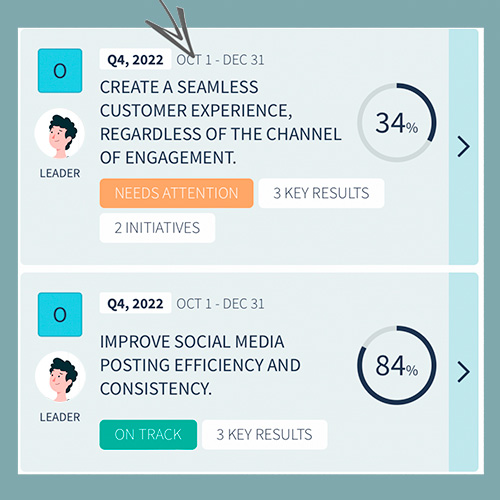
Weekdone is a leading OKR software designed specifically for organizations seeking to improve team alignment and goal tracking. With its structured goal-setting, weekly planning and real-time progress status features, it addresses the unique needs of industry professionals aiming to enhance collaboration and productivity.

Best for Team OKR Platforms with Collaboration

Expert Take

Weekdone OKR Software excels in providing structured goal-setting and real-time progress tracking, making it a top choice for team alignment and productivity enhancement. Its intuitive interface and collaboration tools are well-regarded, though the free version has limited features. The product's market credibility is supported by its focus on team-oriented OKR tracking.
Pros

  • Free for up to 3 users with full features
  • Unlimited OKR coaching included with paid plans
  • Combines quarterly OKRs with weekly PPP reporting
  • Visual hierarchy tree for goal alignment
  • Strong integrations with Slack, Teams, and Jira

Cons

  • Interface can feel cluttered for some users
  • Navigation described as tricky for beginners
  • May not scale well for large enterprises
  • Reporting customization can have a learning curve
  • Limited weighting options for Key Results

Best for teams that are

  • Startups and small teams (10-100 employees) adopting weekly check-ins
  • Managers combining OKRs with PPP (Plans, Progress, Problems) reporting
  • Teams needing a structured coaching approach to goal setting

Skip if

  • Large enterprises requiring complex hierarchy and scalability
  • Teams frustrated by cluttered interfaces or performance lags
  • Organizations needing deep native integration with Microsoft 365

Best for teams that are

  • Startups and small teams (10-100 employees) adopting weekly check-ins
  • Managers combining OKRs with PPP (Plans, Progress, Problems) reporting
  • Teams needing a structured coaching approach to goal setting

Skip if

  • Large enterprises requiring complex hierarchy and scalability
  • Teams frustrated by cluttered interfaces or performance lags
  • Organizations needing deep native integration with Microsoft 365

Pros

  • Free for up to 3 users with full features
  • Unlimited OKR coaching included with paid plans
  • Combines quarterly OKRs with weekly PPP reporting
  • Visual hierarchy tree for goal alignment
  • Strong integrations with Slack, Teams, and Jira

Cons

  • Interface can feel cluttered for some users
  • Navigation described as tricky for beginners
  • May not scale well for large enterprises
  • Reporting customization can have a learning curve
  • Limited weighting options for Key Results

Expert Take

Weekdone OKR Software excels in providing structured goal-setting and real-time progress tracking, making it a top choice for team alignment and productivity enhancement. Its intuitive interface and collaboration tools are well-regarded, though the free version has limited features. The product's market credibility is supported by its focus on team-oriented OKR tracking.

9

GFoundry OKR Performance Tracker

Best for OKR Platforms with Performance Tracking

Score
9.6 / 10
GFoundry OKR Performance Tracker

GFoundry's OKR software is a powerful tool designed to meet the specific needs of businesses seeking a comprehensive solution for tracking objectives and key results. The software offers performance feedback mechanisms and regular updates, making it an ideal choice for businesses aiming for transparency and constant improvement.

Best for OKR Platforms with Performance Tracking

Expert Take

GFoundry's OKR Performance Tracker excels in providing comprehensive OKR management with real-time feedback, making it a strong contender in the OKR platforms category. Its user-friendly interface and customization options enhance usability, while its enterprise pricing model aligns with industry standards for transparency.

Pros

  • Gamified OKR tracking with badges
  • Free plan for teams up to 5
  • Native iOS and Android mobile apps
  • Multi-container architecture for complex orgs
  • Integrates with SAP, Slack, and Teams

Cons

  • Minimum 250 users for paid plans
  • No standalone module purchasing
  • Gap for mid-sized businesses (6-249 users)
  • Brand name overlaps with other 'Foundry' tools

Best for teams that are

  • Organizations wanting to gamify goal achievement with badges and leaderboards
  • Teams with a mobile-first workforce needing on-the-go access to goals
  • Companies looking to boost engagement through competitive and social mechanics

Skip if

  • Traditional corporate cultures that may find gamification features unprofessional
  • Teams needing deep, complex strategy mapping or financial forecasting features
  • Users who prefer a minimalist, text-heavy interface over a visual, gamified one

Best for teams that are

  • Organizations wanting to gamify goal achievement with badges and leaderboards
  • Teams with a mobile-first workforce needing on-the-go access to goals
  • Companies looking to boost engagement through competitive and social mechanics

Skip if

  • Traditional corporate cultures that may find gamification features unprofessional
  • Teams needing deep, complex strategy mapping or financial forecasting features
  • Users who prefer a minimalist, text-heavy interface over a visual, gamified one

Pros

  • Gamified OKR tracking with badges
  • Free plan for teams up to 5
  • Native iOS and Android mobile apps
  • Multi-container architecture for complex orgs
  • Integrates with SAP, Slack, and Teams

Cons

  • Minimum 250 users for paid plans
  • No standalone module purchasing
  • Gap for mid-sized businesses (6-249 users)
  • Brand name overlaps with other 'Foundry' tools

Expert Take

GFoundry's OKR Performance Tracker excels in providing comprehensive OKR management with real-time feedback, making it a strong contender in the OKR platforms category. Its user-friendly interface and customization options enhance usability, while its enterprise pricing model aligns with industry standards for transparency.

10

OKR Software by Profit.co

Best for Goal Management Tools for Sales & Revenue Teams

Score
9.6 / 10
OKR Software by Profit.co

Designed specifically for sales and revenue teams, OKR Software by Profit.co provides a robust framework for setting, tracking, and achieving ambitious goals. Its collaborative features facilitate seamless team-wide communication and alignment, while its analytical capabilities offer crucial insights into performance metrics.

Best for Goal Management Tools for Sales & Revenue Teams

Expert Take

OKR Software by Profit.co excels in providing a comprehensive goal management solution tailored for sales and revenue teams. Its robust feature set, including goal-setting, collaboration, and analytics, is well-documented and supported by integration capabilities. The product's market credibility is bolstered by third-party recognition, making it a top choice in its category.

Pros

  • Comprehensive PEEL methodology for strategy execution
  • Deep Jira integration with Epic-to-KR linking
  • HIPAA, SOC 2, and ISO 27001 certified
  • Free plan available for up to 5 users
  • 24/7 live customer support

Cons

  • Steep learning curve for new users
  • Complex navigation and UI can be overwhelming
  • Notification overload for super users
  • Manual effort required for cloning OKRs
  • Customization options can be daunting

Best for teams that are

  • Organizations implementing the OKR framework across departments
  • Leadership aligning high-level strategy with daily execution
  • Companies linking sales goals to broader cross-functional objectives

Skip if

  • Sales-only teams looking for simple quota or commission tracking
  • Small teams finding the OKR methodology too complex or heavy
  • Users seeking dedicated sales gamification rather than strategic alignment

Best for teams that are

  • Organizations implementing the OKR framework across departments
  • Leadership aligning high-level strategy with daily execution
  • Companies linking sales goals to broader cross-functional objectives

Skip if

  • Sales-only teams looking for simple quota or commission tracking
  • Small teams finding the OKR methodology too complex or heavy
  • Users seeking dedicated sales gamification rather than strategic alignment

Pros

  • Comprehensive PEEL methodology for strategy execution
  • Deep Jira integration with Epic-to-KR linking
  • HIPAA, SOC 2, and ISO 27001 certified
  • Free plan available for up to 5 users
  • 24/7 live customer support

Cons

  • Steep learning curve for new users
  • Complex navigation and UI can be overwhelming
  • Notification overload for super users
  • Manual effort required for cloning OKRs
  • Customization options can be daunting

Expert Take

OKR Software by Profit.co excels in providing a comprehensive goal management solution tailored for sales and revenue teams. Its robust feature set, including goal-setting, collaboration, and analytics, is well-documented and supported by integration capabilities. The product's market credibility is bolstered by third-party recognition, making it a top choice in its category.

How We Rank Products

Our Evaluation Process

Products in the OKR & Goal Management Platforms category are evaluated based on documented features such as goal-setting frameworks, progress tracking, and reporting functionalities. Pricing transparency is also a critical factor, ensuring that businesses understand the cost implications of adopting a platform. Compatibility with existing software and system integrations is assessed to determine how well these platforms can be incorporated into current workflows. Additionally, third-party customer feedback provides insights into user satisfaction and real-world application, aiding buyers in making informed decisions.

Verification

  • Products evaluated through comprehensive research and analysis of goal-setting methodologies.
  • Rankings based on analysis of user feedback and expert reviews in the OKR management space.
  • Selection criteria focus on key features such as integration capabilities, ease of use, and performance metrics.

Score Breakdown

0.0 / 10

About OKR & Performance Goal Platforms

WHAT IS OKR & PERFORMANCE GOAL PLATFORMS?

The OKR & Performance Goal Platforms category covers software specifically architected to translate high-level organizational strategy into measurable, executable outcomes across an enterprise's full operational hierarchy. Unlike project management tools, which track activity (tasks, tickets, and hours), or Human Capital Management (HCM) systems, which track employment (payroll, benefits, and tenure), this category focuses strictly on alignment and achievement. It provides the digital infrastructure for the Objectives and Key Results (OKR) framework, bridging the "strategy-execution gap" by cascading corporate priorities down to departmental, team, and individual levels.

This software category sits distinctively between Strategic Portfolio Management (SPM)—which focuses on long-term resource allocation and financial forecasting—and Collaborative Work Management (CWM)—which focuses on day-to-day task execution. It includes both general-purpose platforms designed for agile enterprises and vertical-specific tools tailored for highly regulated industries like financial services or healthcare. The core function of these platforms is not merely to document goals, but to operationalize them through real-time progress tracking, cross-functional alignment visualization, and automated check-in cadences that keep strategy visible in daily workflows.

For buyers, the value proposition is precise: these tools solve the "silent killer" of strategic drift. In organizations without a dedicated platform, strategy lives in static presentation decks while work happens in disconnected silos. OKR platforms digitize the connective tissue between the two, ensuring that a software engineer's code commit or a sales representative's closed deal is explicitly linked to a broader corporate objective. This visibility matters because it transforms performance management from a retrospective annual assessment into a continuous, data-driven discipline that accelerates decision-making and course correction.

HISTORY

The lineage of modern OKR software traces back to the management theories of the mid-20th century, but the software category itself is a product of the post-2010 SaaS explosion. While Peter Drucker introduced Management by Objectives (MBOs) in 1954, the framework often devolved into a static, top-down bureaucratic exercise. The pivotal evolution occurred in the 1970s at Intel, where CEO Andy Grove refined MBOs into "iMBOs" (Intel Management by Objectives), introducing the critical distinction between the Objective (the direction) and the Key Result (the measurable milestone). Grove’s innovation was to demand aggression and agility, moving away from safe, annual targets toward ambitious, quarterly pulses [1].

However, for decades, this methodology lived on paper and spreadsheets. The true catalyst for the software category arrived in 1999, when John Doerr, a former Intel employee, introduced the OKR framework to a young Google. Google’s subsequent explosive growth validated the methodology, but for years, the "tool" of choice remained the shared spreadsheet. It wasn't until the 2010s, as the "Quantified Organization" movement gained traction, that a gap emerged in the enterprise stack. CRM managed customers, ERP managed resources, but no system managed intent. This void birthed the first generation of dedicated OKR SaaS platforms.

The market has since undergone significant consolidation and maturation. Early entrants focused on simple digitization—moving the spreadsheet to the cloud. The second wave, driven by the shift to remote work and agile methodologies, emphasized social features and transparency. We are now in a third wave, characterized by "actionable intelligence" and deep integration. Major acquisitions, such as Microsoft’s acquisition of Ally.io in 2021, signaled the category’s graduation from niche productivity tool to essential enterprise infrastructure. Today, buyer expectations have shifted fundamentally: they no longer want a passive database of goals; they demand a platform that integrates with their daily work tools (like Jira, Slack, and Salesforce) to automate progress tracking and provide predictive insights into strategic health [2].

WHAT TO LOOK FOR

Evaluating OKR platforms requires a discerning eye, as many tools offer superficial goal-tracking features that fail at scale. The most critical evaluation criterion is integration depth. A platform that requires manual data entry for every Key Result update will inevitably suffer from low adoption rates. Look for "native" integrations that allow a Key Result (e.g., "Close $1M in new ARR") to update automatically as opportunities are closed in your CRM. If the tool relies solely on Zapier or generic webhooks, it may lack the granular field mapping required for enterprise data integrity.

Flexibility in Goal Hierarchies is another non-negotiable. Real-world organizations rarely operate in a clean, vertical pyramid. Cross-functional teams, "dotted-line" reporting structures, and matrixed projects are the norm. Superior platforms allow for multi-directional alignment—goals that can belong to a "Squad" or "Tribe" as well as a department. A major red flag is a tool that forces a strict, rigid cascading structure where every child goal must mathematically roll up to a parent goal. This "strict cascade" often stifles agility and forces teams to create artificial goals just to satisfy the software's logic.

Buyers must also scrutinize the Check-in Experience. The platform should reduce the friction of reporting progress to near-zero. Look for features like "nudges" in communication tools (Slack/Teams) that allow users to update progress without logging into the platform. A warning sign is a complicated UI that requires more than three clicks to update a metric; if the friction is too high, your data will become stale within weeks. Finally, ask vendors about their Analytics and Health Reporting. Can the system predict which objectives are "at risk" based on current trajectory, or does it only show a static percentage? The ability to forecast failure before the quarter ends is what separates a strategic asset from a simple scoreboard.

Key Questions to Ask Vendors:

  • "Does your Salesforce integration support custom objects and fields, or only standard objects?"
  • "Can we link a single Key Result to multiple parent Objectives to reflect cross-functional initiatives?"
  • "How does your platform handle 'confidence scores' alongside quantitative progress?"
  • "Show me the specific workflow for a non-desk employee (e.g., retail or manufacturing) to update their goals on a mobile device."

INDUSTRY-SPECIFIC USE CASES

Retail & E-commerce

In the high-velocity world of retail and e-commerce, OKR platforms serve as the nervous system connecting corporate strategy with storefront execution. Unlike B2B sectors where goals might be set quarterly, retail demands faster cycles tied to seasonality and inventory flow. A critical use case here is omnichannel alignment. For example, an e-commerce giant might use an OKR platform to align a "Customer Experience" objective across logistics (shipping times), product (UI/UX), and customer support (ticket resolution). The platform must handle high-volume metrics, such as Net Promoter Score (NPS) and Average Order Value (AOV), often integrating directly with platforms like Shopify or Zendesk. A unique consideration for this industry is the frontline worker interface. The tool must be mobile-first and incredibly simple, allowing store managers to input daily sales targets or visual merchandising compliance scores without leaving the shop floor. Evaluation priorities should focus on mobile usability and the ability to visualize high-volume data streams [3].

Healthcare

Healthcare organizations utilize OKR platforms to navigate the tension between patient care quality and rigorous regulatory compliance. The "North Star" metrics here often revolve around patient outcomes and safety standards, such as Joint Commission compliance. A specific workflow unique to healthcare is the alignment of clinical protocols with operational efficiency. For instance, a hospital system might set an Objective to "Improve Patient Safety," with Key Results tracking the reduction of hospital-acquired infections or decreasing patient wait times in the ER. The software must support strict data governance and HIPAA compliance, ensuring that while performance data is transparent, sensitive patient health information (PHI) remains siloed. Healthcare buyers prioritize platforms that offer robust audit trails and the ability to link qualitative goals (like patient satisfaction surveys) with hard operational metrics (like bed utilization rates) [4].

Financial Services

For financial institutions, OKR platforms are pivotal in managing risk and driving digital transformation within a highly regulated framework. The distinct need here is Governance, Risk, and Compliance (GRC) integration. Banks use these platforms to cascade objectives related to regulatory standards like Basel III or local capital adequacy requirements. A typical use case involves aligning a "Digital Banking Adoption" objective with strict risk mitigation Key Results, ensuring that innovation does not outpace compliance. Security is the paramount evaluation criterion; these buyers require on-premise deployment options or single-tenant cloud environments with SOC 2 Type II and ISO 27001 certifications. Furthermore, the platform must handle complex, matrixed organizational structures common in global banks, where a compliance officer might report to both a regional head and a global functional lead [5].

Manufacturing

In manufacturing, the focus shifts from intangible knowledge work to physical production metrics. OKR platforms in this sector are heavily used to drive Operational Excellence (OpEx) and Lean initiatives. The software must integrate with ERP and MES (Manufacturing Execution Systems) to track real-time metrics like Overall Equipment Effectiveness (OEE), scrap rates, and "First Pass Yield." A unique workflow is the cascading of safety goals—such as "Zero Recordable Incidents"—from the C-suite down to the plant floor shift supervisor. Unlike tech companies that thrive on "stretch goals," manufacturers often require binary, non-negotiable targets for safety and quality. Therefore, the platform must distinguish between "aspirational" OKRs (e.g., innovation in R&D) and "committed" operational targets. Mobile accessibility for non-desk workers and the ability to display progress on factory floor dashboards are critical features [6].

Professional Services

Consultancies, agencies, and IT services firms use OKR platforms to balance utilization rates with project delivery quality. The core friction point in this industry is the "billable hour" versus "strategic growth." An OKR platform here helps leadership drive non-billable strategic initiatives (like "Develop a new AI practice") without sacrificing revenue targets. Key Results often track "Billable Utilization," "Project Margin," and "Client Net Promoter Score." Integration with Professional Services Automation (PSA) tools and time-tracking software is essential. A specific workflow involves aligning the "bench" (consultants awaiting projects) with upskilling objectives, ensuring that downtime is used to achieve certification goals that feed into the firm’s broader strategy. Evaluation focuses heavily on the platform's ability to segment data by client account, practice area, and individual consultant performance [7].

SUBCATEGORY OVERVIEW

Team OKR Platforms with Collaboration

This subcategory serves agile teams and startups that prioritize speed and social alignment over heavy-duty reporting. What makes this niche genuinely different is its emphasis on the social graph of work—features like "cheers," comments on check-ins, and newsfeeds of goal progress are central, not peripheral. Generic OKR tools often treat goals as static data points, whereas these platforms treat them as conversation starters. A workflow that ONLY this tool handles well is the weekly check-in ritual, where team members answer qualitative questions ("What blocked you this week?") alongside updating their metrics, fostering a continuous feedback loop directly tied to objectives. Buyers flee to this niche when they find enterprise tools too clunky or "soulless," craving a user experience that mimics consumer social apps to drive adoption. For a deeper look at these agile tools, see our guide to Team OKR Platforms with Collaboration.

OKR Platforms with Performance Tracking

These platforms are built for organizations that want to inextricably link strategy execution with individual employee evaluation. The differentiator here is the Performance Review Module. Unlike generic tools that isolate goals, these platforms pull OKR completion data directly into semi-annual performance reviews, 360-degree feedback forms, and calibration sessions. A unique workflow is the "Goal-Based Review," where a manager’s assessment screen automatically populates with the employee’s closed OKRs for the period, ensuring ratings are grounded in objective data rather than recency bias. Buyers choose this niche to solve the pain point of "disconnect"—where employees hit their goals but get a poor review, or vice versa, because the HR system and the Strategy system didn't talk to each other. Explore the top vendors in this space in our review of OKR Platforms with Performance Tracking.

Goal Management Tools for Sales & Revenue Teams

This niche caters specifically to the high-pressure, metric-driven environment of revenue organizations. What separates these from generic OKR tools is their native fluency in commission logic and quota rollups. They don't just track "percent complete"; they track "percent to quota," "weighted pipeline," and "forecast accuracy." A workflow exclusive to this category is the "Gamified Leaderboard," which visualizes real-time sales performance against targets on TV-ready dashboards to drive competition. Buyers are driven here by the pain point of "CRM data lag"—they need a tool that doesn't just mirror Salesforce but actively motivates reps to hit the numbers through contest automation and SPIFF tracking. For tools that specialize in revenue acceleration, check out our analysis of Goal Management Tools for Sales & Revenue Teams.

Goal Tracking Tools for HR & People Teams

While similar to performance tracking, this subcategory focuses broadly on employee development and culture rather than just execution. The distinct features here include skills matrices, career pathing, and engagement surveys linked to goals. A workflow that only these tools master is the "Developmental OKR," where an objective is tied to acquiring a soft skill (e.g., "Improve Public Speaking") rather than a business metric, tracked via peer feedback and course completion. Buyers migrate to this niche when they realize their current tool is too "cold" or business-centric and fails to capture the human element of growth, retention, and mentorship. These platforms often serve as a lightweight LMS (Learning Management System) hybrid. Read more about these people-centric solutions in our guide to Goal Tracking Tools for HR & People Teams.

Integration & API Ecosystem

In the modern enterprise stack, an OKR platform that operates in isolation is a "zombie" platform—alive in theory but dead in practice. The gold standard for integration is bi-directional sync, particularly with systems of record like Jira (for engineering), Salesforce (for sales), and Tableau/Looker (for data). Gartner highlights that "integration challenges impede AI adoption for 95% of organizations," underscoring that without seamless data flow, advanced features are useless [8].

Consider a practical scenario: A 50-person professional services firm connects their OKR tool to their invoicing software (e.g., QuickBooks) and project management tool (e.g., Asana). A "dumb" integration might simply trigger a "task complete" checkmark. However, a robust API integration will pull the dollar value of invoices sent from QuickBooks and map it against a "Quarterly Revenue" Key Result, automatically updating the percentage progress. Simultaneously, it will scan Asana for overdue tasks linked to that objective and flag the Key Result as "At Risk" in the dashboard. When this integration is poorly designed—for example, if the API token expires every 24 hours or if field mapping is rigid—the data desynchronizes. The CEO looks at the OKR dashboard and sees "80% revenue achieved," while the finance system shows "60%." Trust in the platform evaporates instantly, and teams revert to spreadsheets.

Security & Compliance

Security in OKR platforms is not just about password protection; it involves safeguarding the strategic blueprint of the entire organization. These platforms house sensitive data: future product roadmaps, confidential revenue targets, and M&A ambitions. Forrester reports that 58% of data breaches are linked to third-party vendors, making vendor risk assessment critical [9].

For a financial services buyer, the distinction between SOC 2 Type II and GDPR compliance is paramount. SOC 2 Type II is an audit of security controls over time (essential for US markets), while GDPR focuses on data privacy and individual rights (mandatory for EU operations) [10]. A concrete scenario involves a multinational bank implementing an OKR platform. They need "Field-Level Encryption" so that a Key Result regarding "Wealth Management Client Acquisition" is visible to the Wealth division but redacted for the Retail Banking division. If the platform only supports "Row-Level Security" (hiding the whole goal), cross-functional collaboration breaks. If it supports no granular security, the bank risks a compliance violation where a junior analyst inadvertently sees sensitive insider information regarding unreleased financial targets. Buyers must demand a "Security Whitepaper" detailing encryption in transit/at rest and specific penetration testing frequencies.

Pricing Models & TCO

The pricing landscape for OKR software is often opaque, with models split between "Per-User/Per-Month" and "Flat Platform Fees." The average market rate hovers between $7 and $18 per user per month for mid-market solutions, but enterprise contracts are almost always custom [11]. Understanding the Total Cost of Ownership (TCO) requires looking beyond the license fee.

Let’s walk through a TCO calculation for a hypothetical 25-person team. Option A (Per-User Model): At $12/user/month, the annual license cost is $3,600. However, if the vendor requires an "Implementation Package" (often mandatory for support) costing $3,000, and a "Data Connector Add-on" for Salesforce integration at $1,500/year, the Year 1 TCO jumps to $8,100—effectively $27/user/month. Option B (Flat Fee): Some vendors offer a flat "Team Plan" for up to 50 users at $500/month ($6,000/year). While the sticker price is higher initially, it includes all integrations and support. The hidden trap for buyers is the "scaling penalty." A per-user model that looks cheap for 25 people becomes punitive at 100 people ($12,000/year). Furthermore, "Contributor vs. Viewer" pricing is a critical negotiation point. If you have 200 employees but only 50 set goals, do you pay for 200 licenses? Vendors who force "all-or-nothing" licensing inflate TCO significantly compared to those offering free "Viewer" seats.

Implementation & Change Management

Implementing an OKR platform is 10% software installation and 90% cultural surgery. The failure rate is high; Bain & Company research indicates that companies with strong accountability cultures (a prerequisite for OKRs) are 50% more likely to outperform peers, yet many fail to establish this culture before rolling out the tool [12].

The most common failure mode is the "Big Bang" rollout. Imagine a 500-person manufacturing company deciding to launch OKRs on January 1st. They force every employee, from the CEO to the forklift operator, to log in and create 3 Objectives. The result is chaos: 1,500 poorly written goals ("Keep working hard"), massive confusion over the software interface, and total abandonment by February. A successful implementation scenario looks like a "Pilot Wave." The company selects one department—typically Product or Engineering—to adopt the platform for one quarter (Q1). They refine the "Check-in" cadence and define what a "good" Key Result looks like. In Q2, they expand to Sales and Marketing. By Q3, the platform is rolled out to the rest of the org, seeded with templates and "Champions" from the pilot teams who can coach their peers. This phased approach mitigates the "shock" of transparency and ensures the software configuration (permissions, teams, cycles) matches the actual organizational rhythm.

Vendor Evaluation Criteria

When selecting a vendor, standard feature checklists are insufficient. Buyers must evaluate the vendor's "Philosophy of Management." Some tools are opinionated, enforcing a strict methodology (e.g., "Objectives cannot have sub-objectives"), while others are agnostic canvases. Gartner advises that software engineering leaders must prioritize tools that accelerate innovation, hinting that rigid tools can stifle the very agility they promise [13].

A concrete evaluation scenario involves testing the "Re-org Resilience" of the tool. Ask the vendor: "If we move Team A from the Marketing Department to the Product Department mid-quarter, what happens to their active OKRs?" In many inferior tools, this breaks the data hierarchy—goals are orphaned or historical data is lost. A robust platform allows for flexible "Tag-based" reporting that survives organizational restructuring. Additionally, evaluate the "Coaching Capabilities." Does the software offer in-app guidance on how to write a good OKR (e.g., "This Key Result lacks a numerical value"), or is it just a text field? For a company with low OKR maturity, an "AI Goal Writing Assistant" is a critical evaluation criterion that separates modern platforms from legacy databases.

EMERGING TRENDS AND CONTRARIAN TAKE

Emerging Trends (2025-2026): The most significant shift is the rise of AI-Augmented Strategy. We are moving beyond "AI goal writing" (which is now table stakes) to "AI Strategy Simulation." By 2026, leading platforms will likely simulate the probability of achieving an annual objective based on historical velocity and resource allocation, effectively warning leaders, "You have allocated 20% of engineering hours to a goal that requires 40%." Another trend is the Dissolution of the Standalone Category. We are seeing Project Management tools (Asana, Monday) and HCM suites (Workday, Lattice) aggressively building native OKR capabilities, squeezing the market share of "pure-play" OKR vendors.

Contrarian Take: Most mid-market companies should ban "Individual OKRs." The conventional wisdom is to cascade goals all the way down to the individual contributor. This is a mistake. In practice, individual OKRs almost always devolve into a glorified to-do list ("Send 50 emails") or a duplication of the job description. The administrative burden of managing thousands of individual goals outweighs the alignment benefit. A surprising insight is that the "sweet spot" for OKRs stops at the Team Level. Companies would get 80% of the value with 20% of the effort by only setting OKRs for cross-functional Squads and Departments, leaving individuals to manage their tasks in project management tools. If a tool forces you to set individual OKRs to "work," it is likely designing for license revenue, not your strategic agility.

COMMON MISTAKES

The graveyard of failed OKR rollouts is filled with companies that made the same avoidable errors. The most fatal mistake is tying OKRs directly to compensation. When a bonus is contingent on hitting "100% of the Key Result," employees inevitably "sandbag"—they set safe, uninspired targets they know they can hit. This destroys the core purpose of OKRs, which is to encourage "stretch" thinking and innovation. A Harvard Business Review analysis suggests that decoupling measurement from judgment is essential to maintaining psychological safety and ambition in goal setting [14].

Another common error is "Set and Forget." Teams treat OKRs as a New Year's Resolution—written with enthusiasm in January and ignored until the panic of late March. Successful implementation requires a "Weekly Ritual" supported by the software. If the platform doesn't have a mobile app or Slack/Teams integration that prompts a 30-second Friday check-in, the data will rot. Finally, organizations often mistake tasks for results. A Key Result of "Launch the new website" is bad; it's binary and speaks nothing of value. A good Key Result is "Achieve 5,000 unique visitors on the new website." Buyers often purchase software hoping it will fix this "bad writing" problem, but software cannot fix a broken definition of success.

QUESTIONS TO ASK IN A DEMO

  • "Can you show me the 'Retrospective' view?" (You want to see how the tool handles closing out a quarter—does it force reflection and scoring, or just archive the data?)
  • "How does the platform handle 'Confidence Scores'?" (Progress isn't linear. A goal can be 50% complete but 90% at risk. The tool should track confidence separate from completion.)
  • "Demonstrate the 'orphan goal' alert." (Show me how the system identifies goals that are not aligned with any parent objective.)
  • "What happens to the data if we cancel our subscription?" (Can we export our entire history in a structured CSV/JSON format, or is it locked?)
  • "Show me the Salesforce integration 'live'." (Do not accept a slide. Ask them to update an Opportunity in a sandbox environment and watch the Key Result update in the OKR tool. Watch for the latency.)

BEFORE SIGNING THE CONTRACT

Before finalizing a purchase, execute a rigorous decision checklist. First, verify the Integration Maintenance SLA. APIs change; when Salesforce updates its API, does the vendor guarantee a fix within 24 hours? Second, check for "Viewer" License Costs. You may want your Board of Directors or investors to see the dashboard without editing it—this should be free. Common negotiation points include Multi-Year Price Locks (to avoid the standard 5-7% annual uplift) and Sandbox Access (essential for testing new cycles before rolling them out to the company).

A major deal-breaker to watch for is Proprietary Methodology Lock-in. Some tools are hard-coded to a specific consultant’s book or framework (e.g., "You must use this specific 4-level hierarchy"). Unless that methodology matches yours exactly, this will be a nightmare. Ensure the platform allows you to rename "Objectives" to "Goals" or "Priorities" if your culture demands it. Finally, ensure the contract includes a "Success Manager" clause for the first 90 days—adoption is lowest in the first quarter, and you need a dedicated human partner, not just a helpdesk email.

CLOSING

Navigating the landscape of OKR & Performance Goal Platforms requires balancing the need for structure with the imperative for agility. The right tool is not the one with the most features, but the one that best fits your organization's unique "operating rhythm." If you have specific questions about how these platforms fit your industry or stage of growth, or if you need a sounding board for your evaluation strategy, I invite you to reach out.

Email: albert@whatarethebest.com