1. Home
  2. Marketing & Advertising
  3. B2B Lead Generation & Marketing Automation

Category · Marketing & Advertising Platforms

B2B Lead Generation & Marketing Automation

B2B Marketing Automation Platforms are essential tools for businesses seeking to streamline their marketing efforts and improve lead generation and customer engagement. These platforms cater to professional buyers, such as marketing managers and digital strategists, who require robust systems to automate repetitive marketing tasks across multiple channels.

5 rankings26 products scored6 criteria eachUpdated Sep 1, 2026
01

Top picks across B2B Lead Generation & Marketing Automation

The highest scorer from each vendor across all 5 rankings. Six little boxes show each one against its ranking average, and the full review sits under each card.

1

Adtomic

helium10.com #1 of 6 in B2B Marketing Automation Tools for Lead Gen

Adtomic automates Amazon PPC, charges 2% over $10k

Best forActive Amazon FBA sellers with meaningful ad spend wanting AI automation.

Amazon PPCWalmart ConnectAI bid automation
Top of its ranking

AI-powered PPC automation for Amazon and Walmart sellers inside the Helium 10 suite.

Standout factAdtomic analyzes past campaign performance and adjusts bids to hold a target ACoS automatically. scribehow.com
Biggest catchA 2% fee applies to any PPC spend exceeding $10,000 per month, on top of the Helium 10 subscription. scaleinsights.com
$10,000/moFee thresholdscaleinsights.com
2%Overage feescaleinsights.com
4.2/5G2 ratingdemandsage.com

What changed

2%fee on ad spend over $10,000/mo

Source: scaleinsights.com

In their words

“Adtomic analyzes past performance and adjusts bids strategically to maintain your target ACOS.”

scribehow.com

Upside

  • Automates Amazon and Walmart PPC
  • AI bid adjustments target ACoS
  • Native Helium 10 integration

Catch

  • 2% fee on ad spend over $10k
  • No placement modifiers after setup
  • Support response delays reported
Pick it ifActive Amazon FBA sellers with meaningful ad spend wanting AI automation.
Skip it ifShopify, eBay, or multi-platform sellers outside Amazon and Walmart.
PricingIncluded in Platinum and Diamond Helium 10 plans, 2% fee over $10k ad spend

Editor's takeAdtomic ranks second among B2B marketing automation tools for lead gen with a 9.2 score. Its 9.5 integrations mark reflects native syncing across Helium 10's suite and expanded Walmart Connect support. The catch is cost, a 2% fee kicks in once monthly ad spend passes $10,000.

Does Adtomic charge extra fees?

Yes. Beyond the Helium 10 Platinum or Diamond subscription, Adtomic charges a 2% fee on any PPC spend exceeding $10,000 in a month.

Does Adtomic work with Walmart ads?

Yes. Adtomic, powered by Pacvue technology, now supports Walmart Connect advertising management alongside its original Amazon PPC automation.

The evidence: 6 criteria, 1 penalty
9.6
Product Capability & DepthLooked for: Comprehensive advertising management tools including campaign creation, keyword tracking, and flexible bid adjustments.Adtomic delivers advanced functionality like AI-powered bid suggestions, keyword harvesting, negative targeting, and dayparting, though it lacks some granular post-setup placement modifiers.scribehow.comreddit.com
9.4
Market Credibility & Trust SignalsLooked for: Strong industry reputation, reliable uptime, and verified user ratings on major software review platforms.Backed by the established Helium 10 brand and integrated with Pacvue technology, Adtomic holds generally favorable ratings but suffers from fragmented scores on some review sites.demandsage.com
8.7
Usability & Customer ExperienceLooked for: An intuitive interface that simplifies complex PPC data, accompanied by responsive customer support.While the dashboard provides clear, real-time visual insights and assists beginners, some users report a steep learning curve and unresponsive customer service regarding bugs.jordiob.comcapterra.com
9.2
Value, Pricing & TransparencyLooked for: Clear, transparent pricing structures without hidden fees that align with the value delivered to the user.While Adtomic is now included in Platinum and Diamond plans, users are frustrated by a secondary 2% fee applied to ad spend exceeding $10,000 per month.scaleinsights.comreddit.com
9.3
Advertising Automation & AILooked for: Sophisticated machine learning algorithms that reliably automate bids, budgets, and keyword targeting.Powered by Pacvue, the platform offers powerful rule-based automation, automated keyword harvesting, and AI-driven bid adjustments to efficiently hit target ACoS.revenuegeeks.comyoutube.com
9.5
Integrations & Ecosystem StrengthLooked for: Seamless connectivity with related e-commerce tools, marketplaces, and broader software suites.Adtomic integrates flawlessly into the larger Helium 10 ecosystem, syncing with tools like Cerebro and Profits, and has expanded its capabilities to Walmart Connect.daniks.aihelium10.com

Score adjustments−0.05 points in total

−0.05The platform charges an additional 2% fee on advertising spend exceeding $10,000 per month, which has caused documented user frustration regarding scaled pricing.scaleinsights.com · severity 65/100
2

Klaviyo

klaviyo.com #2 of 6 in B2B Marketing Automation Tools for Lead Gen

Klaviyo now counts 170,000+ businesses as customers.

Best forDTC and ecommerce brands prioritizing revenue attribution and LTV

Free tier From $20 per month free planSOC 2AI features
#2 in its ranking

An ecommerce-first marketing platform with 80+ prebuilt workflows and AI-driven customer segmentation.

Standout factKlaviyo offers 350+ prebuilt integrations and 80+ prebuilt workflows emailvendorselection.com
Biggest catchSupport access is limited and inconsistent, especially on lower-tier and free plans. g2.com
170,000+businesses using Klaviyowhop.com
80+prebuilt workflowsemailvendorselection.com

Standout number

170,000+businesses using Klaviyo

Source: whop.com

Connects to

ShopifyMagentoWooCommerceBigCommerce350+ total

Source: flatlineagency.com

Upside

  • 350+ prebuilt integrations
  • 80+ prebuilt workflows
  • AI predicts churn and best send times

Catch

  • Steep learning curve
  • Support limited on lower tiers
  • SMS needs separate credits
Pick it ifDTC and ecommerce brands prioritizing revenue attribution and LTV
Skip it ifTraditional B2B teams running offline, non-ecommerce sales cycles
PricingFrom $20/mo, free plan available, active-profile pricing

Editor's takeKlaviyo now serves more than 170,000 businesses, with native syncing into Shopify, Magento, and WooCommerce doing the heavy lifting behind 80-plus prebuilt workflows. Predictive analytics forecast purchase likelihood, churn risk, and optimal send times, cutting down manual segmentation work. Support is the recurring complaint. Reviewers describe access as limited and inconsistent, particularly on free or entry-tier plans.

How many businesses use Klaviyo?

Over 170,000 businesses use Klaviyo globally, according to industry data cited in third-party reviews of the platform.

Does Klaviyo work well for B2B companies?

Not typically. It is built around ecommerce store data and is best suited to DTC and ecommerce brands. Traditional B2B teams with offline sales cycles are better served by other tools, per the platform's own audience guidance.

The evidence: 6 criteria, 2 penalties
9.6
Product Capability & DepthLooked for: Comprehensive omnichannel marketing automation featuring advanced segmentation, pre-built workflows, and deep e-commerce functionality.Klaviyo provides powerful email and SMS tools with 350+ templates and 80+ prebuilt workflows, functioning as a complete customer data platform.emailvendorselection.com
9.5
Market Credibility & Trust SignalsLooked for: High adoption rates among businesses and strong, verified positive ratings on major software review platforms.The platform is used by over 170,000 businesses globally and maintains highly positive reputation metrics across G2, TrustRadius, and GetApp.whop.com
8.4
Usability & Customer ExperienceLooked for: An intuitive user interface, accessible onboarding, and highly responsive, effective customer support for all user tiers.While users praise the intuitive campaign builder, many struggle with a steep learning curve and report slow, limited customer support.g2.com
9.2
Value, Pricing & TransparencyLooked for: Transparent, scalable pricing models that offer strong ROI without hidden fees or disproportionate cost increases as businesses scale.Pricing is transparent but heavily criticized for scaling aggressively based on total active profiles, including unengaged users.sender.net
9.6
Integrations & Ecosystem StrengthLooked for: Deep, native connectivity with leading e-commerce platforms, CRMs, and essential third-party marketing tools.Klaviyo offers over 350 pre-built integrations, featuring robust, native syncing with platforms like Shopify, Magento, and WooCommerce.flatlineagency.com
9.4
AI & Predictive AnalyticsLooked for: Sophisticated artificial intelligence capabilities for predictive modeling, automated segmentation, and generative content creation.The platform leverages advanced AI to predict customer behavior, churn risk, and automatically generate hyper-targeted audience segments via text prompts.titanmarketingagency.com

Score adjustments−0.12 points in total

−0.05Users are charged based on total active profiles regardless of engagement, causing unexpected and aggressive cost scaling.sender.net · severity 70/100
−0.07Numerous users report limited, inconsistent, and slow customer support, specifically noting restricted access for lower-tier or free plans.g2.com · severity 65/100
3

Pubrio

pubrio.com · Pubrio Lead Generation Platform #3 of 6 in B2B Marketing Automation Tools for Lead Gen

Pubrio drains 3 credits per search on a 750-credit plan

Best forB2B sales teams specifically targeting the APAC market.

From $99 per year AI featuresAPAC dataB2B sales intelligence
#3 in its ranking

B2B sales intelligence platform with 500M+ contacts and deep APAC data coverage.

Standout factPubrio's database draws from over 1 billion public sources for APAC contact data. prospeo.io
Biggest catchEach search costs 3 credits, so a 750-credit monthly plan runs out after about 250 searches. prospeo.io
500M+Contact and company recordsleads-technologies.com
3Credits per searchprospeo.io

Standout number

500M+company and contact records in Pubrio's database

Source: leads-technologies.com

The thing people get wrong

Pubrio's credit plans cover unlimited daily searching

Each search costs 3 credits, so a 750-credit plan runs out after about 250 searches

Source: prospeo.io

Upside

  • Deep APAC region data coverage
  • 500M+ contact and company records
  • 50+ advanced filtering criteria

Catch

  • 3 credits consumed per search
  • Occasional stale or invalid emails
  • Reporting UI needs improvement
Pick it ifB2B sales teams specifically targeting the APAC market.
Skip it ifB2C companies or purely hyper-local businesses.
PricingFrom $99/year (Startup plan), credits deplete fast

Editor's takePubrio fills a gap most B2B databases miss, with deep APAC contact coverage across Hong Kong, Singapore and Japan. That data depth pairs with 500 million total contact records and 50-plus filtering criteria. Credits burn fast, though, since each search costs 3 credits and a 750-credit plan lasts only about 250 searches.

How does Pubrio's credit system work?

Each search consumes 3 credits. On a 750-credit monthly plan, that allows roughly 250 searches before the allotment runs out.

Does Pubrio cover the APAC region?

Yes, deeply. It focuses on Hong Kong, Singapore, India, Vietnam, Korea and Japan, drawing contact data from over 1 billion public sources.

The evidence: 6 criteria, 3 penalties
9.6
Product Capability & DepthLooked for: Comprehensive lead generation tools, advanced filtering, intent signals, and automated outreach capabilities suited for B2B sales teams.Pubrio offers a robust suite including access to over 500 million contact records, 50+ filtering criteria (firmographics, tech stack, hiring signals), intent tracking, and multichannel outreach automation across email, LinkedIn, and WhatsApp.leads-technologies.comsoftwareadvice.ie
9.3
Market Credibility & Trust SignalsLooked for: Verifiable customer reviews, industry recognition, transparent founding background, and established market presence.Founded in 2023 in Hong Kong, Pubrio is an early-stage startup that has gained traction through lifetime deals and holds positive initial reviews, though it lacks the extensive long-term track record of legacy competitors.prospeo.ioprospeo.io
8.4
Usability & Customer ExperienceLooked for: An intuitive interface, straightforward workflow automation, and responsive customer support for sales professionals.Users praise the clean interface and responsive support team for helping them find specific leads, though multiple reviewers note that the reporting and campaign sequence systems suffer from UI/UX friction.mexc.coappsumo.com
9.2
Value, Pricing & TransparencyLooked for: Clear, accessible pricing tiers with reasonable usage limits, offering good return on investment compared to industry alternatives.Pubrio offers a free tier (100 credits), an affordable Growth plan ($99/year), and Corporate plans; however, users report significant credit drain (e.g., 3 credits per search) that diminishes the perceived value.pubrio.comprospeo.io
9.5
Data Coverage & Regional FocusLooked for: Extensive, accurate B2B contact data with strong localization and validation mechanisms.Pubrio strongly differentiates itself with deep coverage in the Asia-Pacific (APAC) region (Hong Kong, Singapore, India, Japan, etc.) drawing from over 1 billion public sources, filling a significant gap left by Western-centric databases.g2.comprospeo.io
9.5
Integrations & Ecosystem StrengthLooked for: Seamless connectivity with major CRMs, email editors, and API access to fit smoothly into existing sales workflows.Pubrio integrates natively with major platforms like Salesforce, HubSpot, and Zoho, offers API access for higher tiers, and supports email builder exports from tools like Stripo.leads-technologies.comstripo.email

Score adjustments−0.19 points in total

−0.09Presence of stale data, including 404 pages and invalid email addresses, requiring users to independently QA generated lists.prospeo.io · severity 70/100
−0.05Fast credit consumption during searches (e.g., 3 credits per search), making the credit allotment run out quickly for active users.prospeo.io · severity 65/100
−0.05User Interface and User Experience (UI/UX) issues specifically within the reporting and automated campaign/sequence systems.appsumo.com · severity 45/100
4

ActiveCampaign

activecampaign.com · ActiveCampaign Marketing Automation #1 of 10 in Marketing Automation Platforms with CRM Integration

ActiveCampaign connects 1,000+ apps, but legacy plans got pulled

Best forSMBs and ecommerce teams needing advanced automation with a built-in CRM

From $9 per month SOC 2HIPAAAI features
Top of its ranking

Customer experience automation combining email, CRM and machine learning across 135+ workflow triggers.

Standout factActiveCampaign removed legacy grandfathered plans, forcing users onto pricier tiers slickbusiness.co
Biggest catchLegacy plans were discontinued, pushing long-term users to more expensive pricing. slickbusiness.co
180,000+Businesses servedenricher.io
$300M+Annual recurring revenuemiracuves.com
14,000+ at 4.5/5G2 reviewsactivecampaign.com

By the numbers

180,000+businesses served globally
$300M+annual recurring revenue
1,000+native integrations

Source: enricher.io

The thing people get wrong

Long-term ActiveCampaign customers keep their original discounted pricing

Legacy grandfathered plans were removed in 2023, moving long-term users onto newer, often pricier plans

Source: slickbusiness.co

Upside

  • Visual builder with 135+ automation triggers
  • 1,000+ integrations including Salesforce and Shopify
  • SOC 2 Type 2 certified, HIPAA available

Catch

  • Legacy plan removal raised costs for some
  • Transactional email needs a paid add-on
  • Pricing climbs steeply with contact growth
Pick it ifSMBs and ecommerce teams needing advanced automation with a built-in CRM
Skip it ifLarge enterprises with complex, multi-layered sales pipelines
PricingFrom $9/month, scales with contact count; transactional email is a paid add-on

Editor's takeActiveCampaign's automation depth, 135-plus triggers and 500-plus prebuilt recipes, is real and documented, and it backs that with over $300 million in ARR. The 2023 removal of legacy grandfathered plans is a genuine black mark though. Long-term customers were pushed onto pricier current tiers, and reviewers still bring it up as a trust issue.

Does ActiveCampaign charge extra for transactional email?

Yes. Transactional email runs through a separate Postmark-powered add-on, priced at $15 per month for up to 10,000 emails.

How does ActiveCampaign pricing scale?

Plans start at $9 a month but are charged by contact count, so the price rises as your list grows. Legacy discounted plans were phased out in 2023.

The evidence: 6 criteria, 3 penalties
9.3
Product Capability & DepthLooked for: We evaluate the breadth of automation features, CRM functionality, and AI capabilities available to users.ActiveCampaign offers a visual automation builder with over 135 triggers and 500+ pre-built recipes, combining email marketing with a built-in CRM and machine learning features like predictive sending.ventureharbour.compostalytics.combusinesseautomation.com
9.5
Market Credibility & Trust SignalsLooked for: We look for user adoption numbers, financial stability, and industry recognition to gauge reliability.ActiveCampaign serves over 180,000 businesses globally, generates over $300M in ARR, and consistently ranks as a leader in G2 reports with over 14,000 reviews.enricher.iomiracuves.comactivecampaign.com
8.8
Usability & Customer ExperienceLooked for: We assess the ease of use, onboarding process, and quality of customer support resources.While the interface is powerful, users report a steep learning curve for beginners; however, the company mitigates this with free migration services and extensive training resources.businesseautomation.comactivecampaign.comsaascrmreview.com
8.2
Value, Pricing & TransparencyLooked for: We analyze pricing structures, hidden costs, and the fairness of plan tiers relative to features.Pricing is contact-based and scales steeply; recent removal of legacy plans and extra costs for transactional email and SMS add-ons have caused user friction.slickbusiness.colandingi.comencharge.io
9.4
Integrations & Ecosystem StrengthLooked for: We examine the number and quality of third-party connections and the breadth of the partner ecosystem.The platform boasts over 1,000 integrations, including deep native connections with major tools like Salesforce, Shopify, and WordPress.activecampaign.comactivecampaign.com
9.1
Security, Compliance & Data ProtectionLooked for: We verify security certifications, compliance with regulations like GDPR/HIPAA, and data protection measures.ActiveCampaign is SOC 2 Type 2 certified and offers HIPAA compliance on specific plans, demonstrating a strong commitment to enterprise-grade security.prnewswire.comactivecampaign.com

Score adjustments−0.14 points in total

−0.05ActiveCampaign removed legacy 'grandfathered' plans, forcing long-term users onto newer, often more expensive pricing structures.slickbusiness.co · severity 65/100
−0.04Essential features like transactional emails (via Postmark) and SMS often require additional paid add-ons, increasing the total cost of ownership.landingi.com · severity 55/100
−0.05Users consistently report a steep learning curve, noting that the platform's depth can be overwhelming for beginners compared to simpler tools.businesseautomation.com · severity 45/100
5

Demandbase

demandbase.com · Demandbase ABM Platform #1 of 3 in Account Based Marketing Automation Platforms

Demandbase leads Gartner 5 years, costs $65k a year

Best forMid-to-enterprise B2B teams with budgets over $50k needing full-suite ABM

Quote only SOC 2enterprisequote-based pricing
Top of its ranking

Enterprise ABM platform unifying advertising, intent data, and sales orchestration with a built-in B2B ad platform.

Standout factDemandbase was named a Gartner Magic Quadrant Leader for ABM platforms for the fifth year running. demandbase.com
Biggest catchMedian cost runs about $65,000 a year, with onboarding fees near $29,000 on top. zenabm.com
5x runningGartner Magic Quadrant Leaderdemandbase.com
50+Pre-built integrationspartners.demandbase.com

Standout number

5xGartner Magic Quadrant Leader, ABM Platforms

Source: demandbase.com

What changed

$29Ktypical onboarding fee added to subscription cost

Source: zenabm.com

Upside

  • Gartner Leader 5 years running
  • Built-in B2B ad platform
  • 50+ bidirectional integrations

Catch

  • Median cost about $65k a year
  • Steep learning curve reported
  • Onboarding fees near $29k extra
Pick it ifMid-to-enterprise B2B teams with budgets over $50k needing full-suite ABM
Skip it ifSmall businesses or teams wanting a simple, lightweight ABM tool
PricingQuote-based, median cost about $65,000 a year

Editor's takeDemandbase has led Gartner's ABM Magic Quadrant for five years running, the top mark here. It bundles advertising, intent data, and sales orchestration into one platform, including a B2B-specific ad platform. Median cost runs about $65,000 a year, and onboarding can add $29,000 more.

How much does Demandbase cost?

Pricing is not public. Third-party data puts the median cost near $65,000 a year, with onboarding fees near $29,000 extra.

What is Demandbase's B2B ad platform?

It is an ad-buying platform built specifically to reach whole buying teams with ads, rather than targeting individuals.

The evidence: 6 criteria, 3 penalties
9.5
Product Capability & DepthLooked for: We evaluate the breadth of ABM features, including account identification, orchestration, advertising, and sales intelligence capabilities.Demandbase offers a comprehensive 'Smarter GTM' suite integrating ABM, advertising, sales intelligence, and data into a unified platform powered by 'Pipeline AI' for full-funnel orchestration.demandbase.comgetapp.com
9.6
Market Credibility & Trust SignalsLooked for: We assess market leadership, analyst rankings, and reputation among enterprise users in the B2B marketing space.Demandbase is a dominant market leader, recognized as a Leader in the Gartner Magic Quadrant for ABM Platforms for five consecutive years and ranking highly in Forrester Wave reports.demandbase.comb2bmarketing.net
8.6
Usability & Customer ExperienceLooked for: We examine user feedback regarding ease of use, implementation complexity, and the learning curve for marketing and sales teams.While powerful, the platform is frequently cited as having a steep learning curve and complex setup process, often requiring dedicated teams or external support to master.demandbase.comdemandbase.comg2.com
8.3
Value, Pricing & TransparencyLooked for: We analyze pricing structures, transparency, and total cost of ownership including hidden fees or implementation costs.Pricing is opaque and enterprise-focused, with median costs around $65k/year and potential hidden fees for onboarding and add-ons, making it a significant investment.zenabm.comzenabm.com
9.2
Integrations & Ecosystem StrengthLooked for: We evaluate the platform's ability to sync with CRMs, marketing automation systems, and other third-party data tools.Demandbase offers a robust marketplace with over 50 integrations, featuring deep bidirectional syncs with major platforms like Salesforce, HubSpot, Marketo, and Adobe.support.demandbase.compartners.demandbase.com
9.0
Data Quality & Account IntelligenceLooked for: We assess the accuracy of intent data, account identification, and the depth of firmographic and technographic insights.The platform leverages a proprietary 'Account Intelligence' engine combining 1st and 3rd party data, though some sources note dependencies on input data quality for maximum effectiveness.demandbase.comcuspera.com

Score adjustments−0.18 points in total

−0.05The pricing model is opaque with no public tiers, and users report significant 'hidden' costs for onboarding services (approx. $29k) and add-ons.zenabm.com · severity 65/100
−0.06Users consistently report a steep learning curve and complex initial setup that often requires dedicated internal resources or external consultants.g2.com · severity 60/100
−0.07Platform performance and intelligence are fundamentally constrained by the quality of the client's input data (CRM records), which can limit effectiveness if data hygiene is poor.derrick-app.com · severity 50/100
6

Salesforce

salesforce.com · Salesforce Account-Based Marketing #2 of 3 in Account Based Marketing Automation Platforms

Salesforce ABM add-ons can push cost past $15,000/mo

Best forExisting Salesforce customers wanting ABM built into their CRM.

From $1,250 per month Einstein AIenterpriseSOC 2
#2 in its ranking

An ABM platform built into Salesforce CRM, using Einstein AI to score and prioritize accounts.

Standout factMarketing Cloud Account Engagement editions range from $1,250 to $15,000 a month. twelverays.agency
Biggest catchDeep ABM insight often needs a $3,000-a-month analytics add-on. salesforce.com
22%Global CRM market sharezeeg.me
$1,250/moEntry edition pricetwelverays.agency
$15,000/moPremium edition pricetwelverays.agency

Standout number

22%share of the global CRM market

Source: zeeg.me

True monthly cost

Monthly cost example

Account Engagement (Growth)$1,250
B2B Marketing Analytics Plus$3,000
Total$4,250

Vendor pricing page

Upside

  • Native sync with Salesforce CRM data
  • Einstein AI scores and tiers accounts
  • Holds 22% of global CRM market

Catch

  • Steep learning curve, often needs SQL
  • Add-ons push cost past $15,000/mo
  • Interface can slow simple tasks
Pick it ifExisting Salesforce customers wanting ABM built into their CRM.
Skip it ifNon-Salesforce users or small teams avoiding complex CRM setup.
PricingFrom $1,250/mo, Premium edition $15,000/mo, add-ons cost extra.

Editor's takeSalesforce holds 22% of the global CRM market and ranks as a leader in ABM by Cloud Ratings. Einstein AI scores accounts by likelihood to buy, syncing directly with Sales Cloud data teams already use. Base editions start at $1,250 a month, and add-ons like B2B Analytics Plus can add $3,000 more.

How much does Salesforce ABM cost?

Marketing Cloud Account Engagement editions range from $1,250 to $15,000 a month. Add-ons like B2B Analytics Plus can cost $3,000 more a month.

Does Salesforce ABM need technical skills?

Often yes. Reviewers report needing AMPScript or SQL knowledge for advanced customization, per G2 reviews of Salesforce Marketing Cloud.

The evidence: 6 criteria, 2 penalties
9.2
Product Capability & DepthLooked for: We evaluate the breadth of ABM-specific features like account identification, multi-channel engagement, and orchestration capabilities.Salesforce delivers a comprehensive ABM suite anchored by 'Marketing Cloud Account Engagement' (formerly Pardot), featuring 'Einstein Key Account Identification' to score and tier accounts automatically.salesforce.comsalesforce.comsuperdrive.io
9.6
Market Credibility & Trust SignalsLooked for: We assess market share, analyst rankings, and user adoption rates to determine industry standing.Salesforce is a dominant market leader, consistently ranked as a 'Leader' in ABM and CRM categories by major analyst firms and review platforms like G2 and Cloud Ratings.cloudratings.comzeeg.me
8.3
Usability & Customer ExperienceLooked for: We examine ease of use, implementation complexity, and the learning curve for daily operators.While powerful, the platform is notorious for a steep learning curve, often requiring specialized technical skills (AMPScript, SQL) or developer support for advanced customization.salesforce.comg2.comg2.com
8.1
Value, Pricing & TransparencyLooked for: We analyze pricing structures, hidden costs, and the balance between feature set and total cost of ownership.Pricing is premium and complex, with base editions starting at $1,250/month but quickly escalating with necessary add-ons like B2B Marketing Analytics Plus ($3,000/month) and per-user fees.salesforce.comtwelverays.agencysalesforce.com
9.5
Integrations & Ecosystem StrengthLooked for: We evaluate the seamlessness of data flow between the ABM tool, CRM, and third-party applications.The platform offers unrivaled native integration with Salesforce CRM (Sales Cloud), allowing seamless data synchronization and sales-marketing alignment that third-party tools struggle to match.appexchange.salesforce.comelucidategroup.com.ausuperdrive.io
9.0
AI & Predictive AnalyticsLooked for: We assess the quality of AI features for account selection, predictive scoring, and intent analysis.Salesforce Einstein provides robust AI capabilities for ABM, including predictive lead scoring, behavior scoring, and key account identification, though some features are gated behind higher tiers.salesforce.comsalesforce.com

Score adjustments−0.12 points in total

−0.05The total cost of ownership is high due to a complex pricing model where essential ABM features (like B2B Analytics Plus) and AI capabilities often require expensive add-ons or top-tier editions.salesforce.com · severity 70/100
−0.07Users consistently report a steep learning curve and a need for technical expertise (SQL, AMPScript) to utilize the platform fully, making it difficult for non-technical marketers.g2.com · severity 65/100
7

Outfunnel

outfunnel.com · Outfunnel Lead Scoring #1 of 3 in Lead Scoring and Nurturing Tools for B2B

Outfunnel syncs Pipedrive and Mailchimp two ways, from $29/mo

Best forSMBs syncing sales and marketing data between Pipedrive or Copper and Mailchimp.

From $29 per month GDPRPipedrive integrationMailchimp integration
Top of its ranking

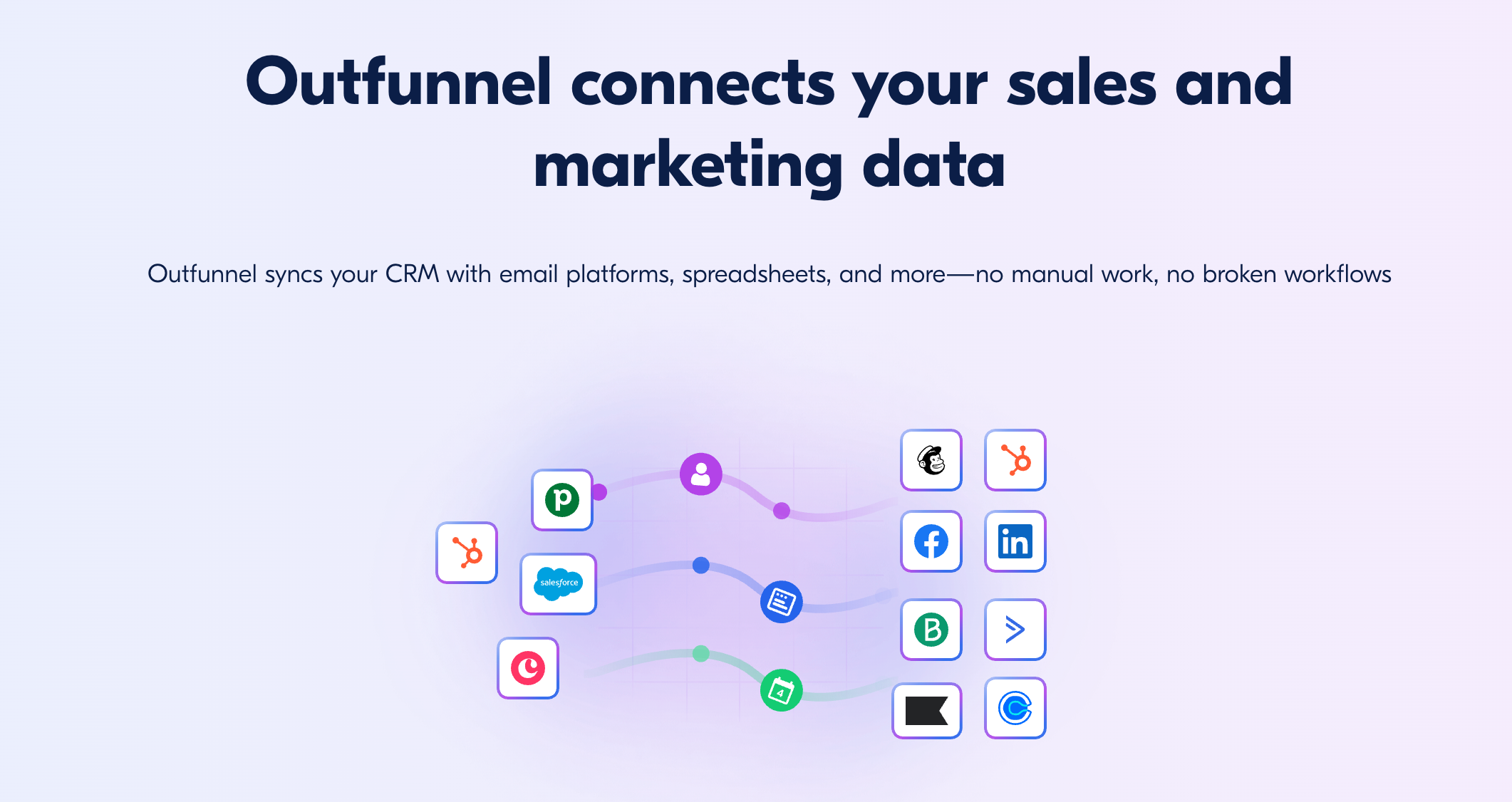
Lead scoring software that two-way syncs CRMs like Pipedrive with email tools like Mailchimp.

Standout factPlans start at $29/mo with lead scoring included and a 14-day free trial. outfunnel.com
Biggest catchCRM activity scoring works only with Pipedrive and Copper, not Salesforce or HubSpot. support.outfunnel.com
$29/moStarting priceoutfunnel.com
14 daysFree trial lengthoutfunnel.com

Starting price

$29/moLead scoring included, 14-day free trial

Connects to

PipedriveHubSpotCopperSalesforceMailchimpActiveCampaign

Source: outfunnel.com

Upside

  • Two-way sync between CRM and email tools
  • Lead scoring included from the base plan
  • GDPR compliant with EU-hosted servers

Catch

  • CRM activity scoring limited to Pipedrive/Copper
  • HTML email editor feels clumsy
  • Limited campaign customization
Pick it ifSMBs syncing sales and marketing data between Pipedrive or Copper and Mailchimp.
Skip it ifEnterprises needing a large, all-in-one automation suite.
PricingFrom $29/mo, lead scoring included, 14-day free trial.

Editor's takeOutfunnel two-way syncs contacts and engagement data between CRMs like Pipedrive and email tools like Mailchimp. Lead scoring is included from the $29-a-month base plan, with a 14-day free trial and no credit card required. CRM activity scoring, though, only works with Pipedrive and Copper, not Salesforce or HubSpot.

How much does Outfunnel cost?

Plans start at $29 a month with lead scoring included, and a 14-day free trial requires no credit card, per the pricing page.

Does Outfunnel work with Salesforce?

It syncs contacts with Salesforce, but CRM activity-based scoring, like meetings and calls, currently works only with Pipedrive and Copper.

The evidence: 4 criteria, 3 penalties
9.1
Usability & Customer ExperienceLooked for: We assess ease of setup, intuitiveness of the interface, and the quality of customer support interactions.Users consistently describe the setup as 'super easy' and 'intuitive,' with specific praise for the seamless nature of the 2-way sync and responsive support team.outfunnel.comoutfunnel.comg2.com
8.8
Value, Pricing & TransparencyLooked for: We evaluate pricing tiers, feature inclusion at lower levels, and the presence of hidden costs or contracts.Pricing is transparent, starting at $29/mo with a 14-day free trial, and the lead scoring feature is included even in basic plans, offering high value for SMBs.outfunnel.comoutfunnel.comoutfunnel.com
9.4
Integrations & Ecosystem StrengthLooked for: We examine the depth of 2-way sync capabilities, the variety of supported CRMs and marketing tools, and the reliability of data transfer.Outfunnel excels here, offering deep 2-way sync between major CRMs (Pipedrive, Copper, HubSpot, Salesforce) and marketing tools (Mailchimp, ActiveCampaign), surpassing native integration capabilities.outfunnel.comoutfunnel.com
8.9
Security, Compliance & Data ProtectionLooked for: We check for GDPR compliance, data residency options, and security standards regarding data handling.The company is fully GDPR compliant with servers hosted in the EU, and they maintain a high bar for data security, explicitly stating they do not sell or misuse data.outfunnel.comsupport.outfunnel.com

Score adjustments−0.18 points in total

−0.07Scoring leads based on 'CRM activities' (e.g., meetings, calls) is currently limited to Pipedrive and Copper integrations, excluding this specific data point for Salesforce or HubSpot users.support.outfunnel.com · severity 50/100
−0.06Users have reported that the HTML email editing functionality is clumsy and that there is a lack of pre-designed templates compared to dedicated email marketing tools.trustradius.com · severity 45/100
−0.05Some users find the customization options for campaigns and forms to be limited, which can stifle creative marketing efforts for complex needs.thecmo.com · severity 40/100
8

SalesWings

saleswingsapp.com · SalesWings Lead Nurturing #2 of 3 in Lead Scoring and Nurturing Tools for B2B

SalesWings starts at $599 a month for Salesforce teams

Best forB2B teams heavily invested in the Salesforce ecosystem

From $599 per month SOC 2GDPRSalesforce
#2 in its ranking

Behavioral lead scoring add-on with native integrations for Salesforce and Marketing Cloud ecosystems.

Standout factSalesWings is a 7x certified, registered Salesforce ISV partner. saleswingsapp.com
Biggest catchIt has no standalone email sending and needs a separate platform like SFMC for campaigns. saleswingsapp.com
$599/moStarting pricesaleswingsapp.com
7xSalesforce ISV certificationssaleswingsapp.com
20+ tagsTag clutter threshold reportedg2.com

Starting price

$599/motailored to use case and traffic volume

Compliance

✓ SOC2 Type 2✓ GDPR

Source: saleswingsapp.com

Upside

  • 7x certified Salesforce ISV partner
  • Granular behavioral tracking and intent data
  • SOC2 Type 2 and GDPR compliant

Catch

  • No standalone email sending
  • UI gets cluttered with many tags
  • Starting price high for small teams
Pick it ifB2B teams heavily invested in the Salesforce ecosystem
Skip it ifCompanies using CRMs other than Salesforce
PricingFrom $599 per month, tailored to use case

Editor's takeSalesWings focuses on the scoring and behavioral-intelligence layer rather than trying to replace a full marketing platform, feeding data natively into Salesforce Sales Cloud and Marketing Cloud. Its 7x Salesforce ISV certification and SOC2 Type 2 compliance with EU-hosted servers back its enterprise credibility. The catch is that it requires a separate tool for email delivery, and pricing starts at $599 a month.

How much does SalesWings cost?

Pricing starts at $599 per month and is tailored to traffic volume, functionality, and user count. Final pricing requires a custom quote.

Does SalesWings send emails on its own?

No. SalesWings functions as a behavioral scoring and intelligence layer that requires a separate marketing automation platform, such as Salesforce Marketing Cloud, for actual email delivery.

The evidence: 6 criteria, 3 penalties
8.8
Product Capability & DepthLooked for: We evaluate the depth of lead scoring, behavioral tracking, and nurturing triggers specifically for B2B sales cycles.SalesWings provides granular behavioral tracking and predictive lead scoring but functions as an intelligence layer rather than a standalone email sender.saleswingsapp.comsaleswingsapp.comsaleswingsapp.com
9.2
Market Credibility & Trust SignalsLooked for: We assess industry standing, partner certifications, and verified user sentiment in the Salesforce ecosystem.The company is a 7x certified Salesforce ISV partner with strong organic reviews and a clear focus on enterprise compliance.saleswingsapp.comg2.com
8.7
Usability & Customer ExperienceLooked for: We look for ease of setup, interface intuitiveness, and the quality of ongoing support resources.Users report exceptional support and easy setup, though the interface can become cluttered when managing complex tagging structures.saleswingsapp.comg2.comg2.com
8.5
Value, Pricing & TransparencyLooked for: We examine public pricing availability, contract flexibility, and feature-to-cost ratio for mid-market tools.Pricing is publicly listed starting at $599/month, which is transparent but positions it as a significant add-on cost for SMBs.saleswingsapp.comsaleswingsapp.comappexchange.salesforce.com
9.4
Integrations & Ecosystem StrengthLooked for: We evaluate how well the product integrates with major CRMs and marketing platforms, which is critical for this niche.This is the product's strongest area, with deep, native integrations for Salesforce, Marketing Cloud, Braze, and Slack.saleswingsapp.comappexchange.salesforce.com
9.5
Security, Compliance & Data ProtectionLooked for: We check for GDPR compliance, SOC2 certifications, and data handling practices relevant to behavioral tracking.SalesWings adheres to strict standards including SOC2 Type 2 and GDPR, with servers located in the EU.saleswingsapp.comsaleswingsapp.com

Score adjustments−0.15 points in total

−0.05Users report the UI becomes cluttered and difficult to organize when managing a large number (20+) of tags or scores.g2.com · severity 50/100
−0.06The tool lacks standalone email sending capabilities; it functions as a data/scoring layer requiring a separate Marketing Automation Platform (like SFMC) for actual campaign execution.saleswingsapp.com · severity 45/100
−0.04Filtering capabilities in the 'Cockpit' view are described as lacking fine-tuning and intuitive search for specific accounts.g2.com · severity 40/100
9

Madison Logic

madisonlogic.com · Madison Logic ABM Platform #3 of 3 in Account Based Marketing Automation Platforms

Madison Logic customers saw 507% ROI in a Forrester study

Best forEnterprise B2B marketers running multi-channel content syndication and ABM campaigns

Quote only SOC 2GDPRABM
#3 in its ranking

Enterprise ABM platform combining intent data from 20 million companies with LinkedIn, display, and CTV activation.

Standout factA Forrester Total Economic Impact study found a three-year 507% ROI for Madison Logic customers. madisonlogic.com
Biggest catchUsers describe the dashboard as clunky and difficult to navigate, with a steep learning curve. trustradius.com
20M+Companies tracked by ML Insightsmadisonlogic.com
507%3-year ROImadisonlogic.com
#3690Inc. 5000 rank (2022)madisonlogic.com

Standout number

507%3-year ROI, Forrester TEI study

Source: madisonlogic.com

In their words

“Users have found the dashboard of Logic to be clunky and difficult to navigate.”

trustradius.com

Upside

  • Intent data from 20M+ companies
  • 507% ROI in Forrester study
  • Unified LinkedIn, display, CTV activation

Catch

  • Clunky interface, steep learning curve
  • Opaque, high entry pricing
  • No shared platform for multi-entity billing
Pick it ifEnterprise B2B marketers running multi-channel content syndication and ABM campaigns
Skip it ifSmall businesses or lean teams unable to manage complex media platforms
PricingCustom quote, estimated around $3,000/mo plus media costs

Editor's takeMadison Logic ranks 3 of 3 in account-based marketing automation with an 8.8 score. Its documented 507% ROI and SOC 2 security anchor strong trust for enterprise buyers. New users should plan for structured training, since reviews consistently flag a steep learning curve.

What ROI does Madison Logic deliver?

A Forrester Total Economic Impact study found customers achieve a 507% return on investment over three years.

How much does Madison Logic cost?

Pricing is not public. Third-party listings have referenced a Professional plan around $3,000 a month plus media spend.

The evidence: 6 criteria, 3 penalties
9.1
Product Capability & DepthLooked for: We evaluate the breadth of ABM features, including intent data quality, channel coverage, and orchestration capabilities.The platform offers robust multi-channel activation (Display, LinkedIn, CTV) powered by 'ML Insights' proprietary intent data tracking over 20 million companies.madisonlogic.commadisonlogic.commadisonlogic.com
9.3
Market Credibility & Trust SignalsLooked for: We look for third-party validations, industry rankings, and documented ROI studies to establish market trust.Madison Logic is backed by a Forrester Total Economic Impact study claiming 507% ROI and has consistently appeared on the Inc. 5000 list.madisonlogic.commadisonlogic.com
8.4
Usability & Customer ExperienceLooked for: We assess user interface design, ease of use, and the learning curve reported by actual users.While powerful, users frequently report a 'clunky' interface and a steep learning curve, indicating a trade-off between power and usability.madisonlogic.comtrustradius.comg2.com
8.5
Value, Pricing & TransparencyLooked for: We analyze pricing structures, transparency, and the balance between cost and delivered value.Pricing is not public, with estimates around $3,000/month plus media; high ROI is promised, but the entry cost is significant and opaque.madisonlogic.comzenabm.comzenabm.com
9.0
Integrations & Ecosystem StrengthLooked for: We evaluate the depth and quality of integrations with major CRM, MAP, and social platforms.The platform features deep, bi-directional integrations with major ecosystems like Salesforce, Marketo, HubSpot, and Oracle Eloqua.madisonlogic.commadisonlogic.comecosystem.hubspot.com
9.4
Security, Compliance & Data ProtectionLooked for: We verify certifications like SOC 2, GDPR compliance, and data handling practices.Madison Logic maintains rigorous security standards, including annual SOC 2 Type 2 certification and full GDPR/CCPA compliance.madisonlogic.commadisonlogic.comtrust.madisonlogic.com

Score adjustments−0.16 points in total

−0.06Users consistently report a 'clunky' interface and steep learning curve, making initial adoption difficult without structured training.trustradius.com · severity 60/100
−0.07Global companies with different billing entities cannot share the platform, forcing them to maintain separate instances and integrations.g2.com · severity 50/100
−0.03Pricing is opaque and enterprise-focused, with sources suggesting a $3,000/month base fee plus media costs, creating a high barrier to entry.zenabm.com · severity 45/100
10

Dreamdata

dreamdata.io · Dreamdata B2B Attribution #2 of 4 in B2B Marketing Automation Tools with Attribution

Dreamdata's free tier jumps to $750 a month

Best forB2B go-to-market teams needing multi-touch revenue attribution.

Free tier From $750 per month free planSOC 2data warehouse export
#2 in its ranking

B2B attribution platform exporting modeled revenue data straight to Snowflake and BigQuery.

Standout factDreamdata has held SOC 2 Type II compliance for three consecutive years. trust.dreamdata.io
Biggest catchPaid plans jump to $750-$999 a month right after the free tier, a steep gap for small teams. zenabm.com
4.8/5 (55 reviews)G2 ratinggetapp.com
5Free plan seatsdreamdata.io

Free vs paid

Free plan

$0
  • 5 seats
  • 2 months of history
  • Account-level revenue analytics

Activation Starter from

$750/mo
  • Full attribution modeling
  • Data warehouse export

Source: dreamdata.io

What changed

$750-$999/mojump from free plan to first paid tier

Source: zenabm.com

Upside

  • Free plan includes revenue analytics
  • Exports clean data to Snowflake and BigQuery
  • SOC 2 Type II for 3 years running

Catch

  • Paid tier jumps to $750+/mo
  • Steep learning curve for setup
  • Interface can feel clunky
Pick it ifB2B go-to-market teams needing multi-touch revenue attribution.
Skip it ifB2C companies with short, transactional sales cycles.
PricingFree plan for 5 seats, paid from about $750/mo

Editor's takeDreamdata treats attribution as a data pipeline problem, exporting modeled revenue data directly into Snowflake and BigQuery. Its free plan is genuinely useful, with 5 seats and account-level revenue analytics included. The jump to paid, though, lands at $750 to $999 a month, a steep step for small teams.

Does Dreamdata have a free plan?

Yes. The free plan includes 5 seats, 2 months of history and account-level revenue analytics, enough for B2B teams to test the platform.

How much does Dreamdata cost after the free plan?

Paid plans start around $750 to $999 a month, according to G2 and TrustRadius listings, since enterprise pricing itself is not published.

The evidence: 6 criteria, 3 penalties
8.9
Product Capability & DepthLooked for: We evaluate the platform's ability to track complex B2B customer journeys, attribute revenue across multiple touchpoints, and provide actionable insights.Dreamdata offers comprehensive multi-touch attribution specifically designed for B2B, connecting ad spend, content, and user activity directly to revenue. It features a "Reveal" tool for intent data, an Audience Hub for activation, and unique capabilities to export cleaned data models to data warehouses like BigQuery and Snowflake.dreamdata.iodreamdata.iodreamdata.io
9.2
Market Credibility & Trust SignalsLooked for: We assess the vendor's reputation, user reviews, industry certifications, and established presence in the B2B SaaS market.The company holds strong trust signals including SOC2 Type II certification and GDPR compliance. It maintains high ratings across review platforms like G2 (4.8/5) and Capterra, with users frequently praising the support team and the platform's ability to act as a single source of truth.trust.dreamdata.iogetapp.com
8.4
Usability & Customer ExperienceLooked for: We look for ease of setup, interface intuitiveness, quality of customer support, and the learning curve for new users.While users praise the customer support as 'class-leading,' many report a steep learning curve and a setup process that requires significant data cleaning. Some users describe the interface as clunky or requiring excessive clicks to navigate.dreamdata.iog2.comdreamdata.io
8.5
Value, Pricing & TransparencyLooked for: We analyze pricing structures, the value of free tiers, transparency of costs, and contract flexibility compared to competitors.Dreamdata offers a generous free plan that includes revenue analytics and 5 seats. However, paid plans start at a high price point ($750-$999/month), creating a significant gap for small businesses ready to upgrade. Enterprise pricing is hidden behind a 'contact us' wall.dreamdata.iodreamdata.iozenabm.com
9.1
Integrations & Ecosystem StrengthLooked for: We examine the breadth and depth of connections with CRMs, ad platforms, and data warehouses essential for B2B attribution.The platform boasts an extensive ecosystem, integrating with major CRMs (Salesforce, HubSpot, Pipedrive), ad platforms (LinkedIn, Google, Meta), and uniquely strong connections to data warehouses (Snowflake, BigQuery) and reverse ETL tools (Hightouch, Census).dreamdata.iodreamdata.iodreamdata.io
9.4
Security, Compliance & Data ProtectionLooked for: We verify adherence to industry standards for data security, privacy regulations, and encryption protocols.Dreamdata demonstrates top-tier security posture with SOC 2 Type II certification, full GDPR compliance (EU data storage), and US Privacy compliance. It employs AES-256 encryption and supports Single Sign-On (SSO) for business plans.dreamdata.iodreamdata.iodreamdata.io

Score adjustments−0.13 points in total

−0.05Users consistently report a steep learning curve and a setup process that requires significant technical effort to clean and map data correctly.g2.com · severity 50/100
−0.03The jump from the Free plan to the first paid tier is significant (starting at ~$750-$999/mo), making it expensive for smaller teams compared to alternatives.factors.ai · severity 45/100
−0.05Some users find the built-in reporting customization limited, often requiring SQL knowledge or external BI tools to generate specific custom reports.g2.com · severity 40/100
02

Every ranking in B2B Lead Generation & Marketing Automation

Each card shows the top three. The eye opens a quick look. Open a ranking for every product, the evidence and the comparison table.

1 DemandbaseDemandbase leads Gartner 5 years, costs $65k a year 8.9/10
Visit ↗
2 SalesforceSalesforce ABM add-ons can push cost past $15,000/mo 8.9/10
Visit ↗
3 Madison LogicMadison Logic customers saw 507% ROI in a Forrester study 8.8/10
Visit ↗
See all 3 ranked
1 AdtomicAdtomic automates Amazon PPC, charges 2% over $10k 9.2/10
Visit ↗
2 KlaviyoKlaviyo now counts 170,000+ businesses as customers. 9.2/10
Visit ↗
3 PubrioPubrio drains 3 credits per search on a 750-credit plan 9.1/10
Visit ↗
See all 6 ranked
1 Salesforce Marketing CloudSalesforce ties marketing to CRM, add-ons cost $3,000 8.9/10
Visit ↗
2 DreamdataDreamdata's free tier jumps to $750 a month 8.8/10
Visit ↗
3 Marketo MeasureSix attribution models, but pricing tops $100k a year 8.7/10
Visit ↗
See all 4 ranked
1 OutfunnelOutfunnel syncs Pipedrive and Mailchimp two ways, from $29/mo 8.9/10
Visit ↗
2 SalesWingsSalesWings starts at $599 a month for Salesforce teams 8.9/10
Visit ↗
3 PubrioPubrio claims 70% broader data coverage across APAC markets. 8.8/10
Visit ↗
See all 3 ranked
1 ActiveCampaignActiveCampaign connects 1,000+ apps, but legacy plans got pulled 9.0/10
Visit ↗
2 KlaviyoKlaviyo bills active profiles, even ones you rarely email 8.9/10
Visit ↗
3 ClickDimensionsClickDimensions bills by email volume, not by contact count 8.8/10
Visit ↗
See all 10 ranked
03

About B2B Lead Generation & Marketing Automation

What the category is, how it developed, and what to look for. Two minutes, or the long read.

B2B Lead Generation & Marketing Automation covers software used to manage the early-to-mid stages of the business-to-business revenue cycle: identifying potential buyers, capturing their interest, and nurturing them until they are qualified for sales engagement. This category encompasses the strategic orchestration of digital touchpoints—email, social media, web behavior, and advertising—to score prospect intent and trigger automated workflows. It sits strictly upstream from Customer Relationship Management (CRM) systems, which manage established opportunities and ongoing client relationships, and operates distinctly from Enterprise Resource Planning (ERP) systems, which handle back-office operations like inventory and finance. It includes both general-purpose marketing suites and specialized tools designed for account-based marketing (ABM), attribution, or vertical-specific compliance needs. This software bridges the "execution gap" between raw traffic acquisition and sales pipeline creation.

Read the full category guide

What Is B2B Lead Generation & Marketing Automation?

For modern enterprises, this category is the operational backbone of revenue growth. It replaces manual, disjointed outreach with algorithmic precision, allowing teams to engage thousands of prospects simultaneously while maintaining personalized context. It matters because B2B buying cycles are long, complex, and involve multiple stakeholders; without automation, marketing teams cannot maintain the persistent, relevant communication required to guide a buying committee toward a decision. The primary problem it solves is "lead leakage"—the loss of potential revenue caused by slow follow-up, irrelevant messaging, or the inability to identify high-intent signals amidst noise.

History of the Category

The trajectory of B2B marketing automation is a story of moving from static databases to dynamic intelligence. In the 1990s, the landscape was dominated by "database marketing" and early contact management tools. Marketers relied on list brokers and batch-and-blast email tactics that were functionally no different from digital direct mail. The gap that created this category was the inability of CRM systems—then primarily digital Rolodexes for sales reps—to handle the volume of top-of-funnel nurturing required before a lead was "sales-ready." Sales teams were overwhelmed by unqualified leads, while marketing lacked visibility into what happened after a handoff.

The true genesis of the modern category began around 1999 with the founding of Eloqua. This marked the shift toward tracking digital body language rather than just demographic data. By the mid-2000s, the market saw the emergence of competitors like Marketo (2006), HubSpot (2006), and Pardot (2007), which coincided with the rise of "Inbound Marketing." This era fundamentally shifted buyer expectations from "give me a database" to "give me actionable intelligence." Marketers moved from buying lists to earning attention through content, requiring software that could trigger actions based on user behavior (e.g., downloading a whitepaper) rather than just time-based schedules.

The 2010s were defined by massive market consolidation, shaping the platform-centric landscape we see today. Between 2012 and 2018, major enterprise software incumbents swallowed the pioneers to build comprehensive "marketing clouds." Oracle acquired Eloqua in 2012 for approximately $871 million; Salesforce acquired ExactTarget (which owned Pardot) in 2013 for $2.5 billion; and Adobe acquired Marketo in 2018 for $4.75 billion. This wave of M&A signaled that marketing automation was no longer a niche tool but a critical layer of the enterprise technology stack, sitting equal to CRM and ERP. Today, the market has evolved further into vertical SaaS and AI-driven orchestration, where the software is expected not just to automate tasks, but to predict outcomes and autonomously optimize campaigns.

What to Look For

Evaluating B2B Lead Generation & Marketing Automation software requires looking beyond feature checklists to the underlying data architecture and scalability. The most critical criterion is the flexibility of the data model. Many legacy platforms are built around a "contact-centric" model, which struggles to support B2B sales where the unit of business is an "account" or "buying committee." Buyers must verify if the platform can score and trigger actions based on account-level aggregates—for example, spiking the score of a target company if three different employees visit the pricing page on the same day.

Buyers should also scrutinize the depth of "closed-loop" reporting capabilities. A robust system must do more than track email opens; it must be able to ingest opportunity data back from the CRM to attribute revenue to specific campaigns. Look for native integrations that support bi-directional syncing of custom objects, not just standard fields. If a platform requires middleware or expensive third-party connectors to sync basic custom fields from your CRM, it will likely create long-term data silos.

Red Flags and Warning Signs: Be wary of vendors that obscure their API call limits or charge exorbitant fees for API access. High-volume automation can hit standard API caps quickly, halting your operations. Another red flag is a lack of "sandbox" environments in lower-tier plans. Testing complex workflows in a live database is a recipe for disaster; a vendor that gates testing environments behind enterprise walls often does not prioritize operational safety for mid-market clients.

Key Questions to Ask Vendors:

  • "How does your platform handle lead-to-account matching out of the box, and does it require third-party enrichment to function effectively?"
  • "Can you walk me through the exact process of retroactively changing a lead scoring model? Will it re-score historical data automatically?"
  • "What are the hard limits on active automations, and how does pricing scale if our contact volume doubles next year?"

Industry-Specific Use Cases

Retail & E-commerce

In the B2B retail and e-commerce sector, marketing automation serves a distinct function: bridging the gap between wholesale ordering workflows and digital marketing. Unlike B2C, where transactions are often impulsive, B2B retail involves bulk orders, repeat restocking cycles, and dynamic pricing tiers. Platforms here must integrate deeply with inventory management systems to trigger "stock low" reorder reminders automatically. A critical evaluation priority is the ability to handle abandoned cart workflows that are context-aware—recognizing that a B2B cart might sit empty because a buyer is waiting for internal procurement approval, not because they lost interest. Tools in this space must support "quote-to-order" automation, where a marketing email leads to a pre-filled quote rather than a simple checkout page.

Healthcare

For healthcare organizations, B2B marketing automation is dominated by two non-negotiable realities: HIPAA compliance and the distinction between patient recruitment and provider outreach. When marketing to other businesses (e.g., medical device sales to hospitals), the software must segment audiences based on complex professional credentials and specialties. The evaluation priority here is data security and "walled garden" architecture that prevents Protected Health Information (PHI) from accidentally leaking into marketing segments. Unique considerations include the need for consent management that adheres to strict regulatory frameworks, ensuring that automated outreach to healthcare providers does not violate solicitation laws. Workflow automation often focuses on educational nurturing sequences that last months or years, mirroring the slow adoption cycles of medical technology.

Financial Services

Financial services firms use B2B automation to empower advisors and secure institutional clients while navigating a minefield of regulations like FINRA and SEC rules. The unique need here is "compliant automation." Every automated email or social touchpoint often needs to be archived and auditable. Consequently, buyers in this sector prioritize platforms with robust audit trails and approval workflows that can route content to compliance officers before distribution. Unlike other industries where speed is key, financial services prioritize accuracy and governance. Automation is often used to distribute personalized market analysis or regulatory updates to intermediaries and institutional investors, requiring high-deliverability infrastructure that is trusted by stringent corporate firewalls.

Manufacturing

Manufacturing marketing automation focuses on managing complex, indirect sales channels. Manufacturers often sell through distributors, dealers, or value-added resellers (VARs) rather than directly to end-users. Therefore, the software must support "through-channel marketing automation" (TCMA), allowing the manufacturer to distribute co-branded campaigns to their partners' leads without owning the data directly. Evaluation priorities include portal capabilities where distributors can access pre-approved assets. The unique consideration is the reliance on technical specifications; workflows are often triggered by CAD file downloads or sample requests, requiring the automation platform to distinguish between a student downloading a spec sheet and a procurement engineer scoping a new production line.

Professional Services

In professional services (law, consulting, architecture), the "product" is expertise, and the sales cycle is relationship-driven. Automation here is less about volume and more about "staying top of mind" without being annoying. The specific need is for high-touch, low-volume nurturing that leverages partner expertise. Platforms must integrate with Outlook/Gmail to ensure that automated marketing emails do not conflict with personal one-to-one emails sent by partners. Evaluation often focuses on the ability to gate high-value thought leadership content (whitepapers, legal alerts) and seamlessly pass those signals to partners for personal follow-up. The primary metric is often "influence on pipeline" rather than direct lead generation.

Subcategory Overview

Marketing Automation Platforms with CRM Integration This subcategory represents the foundational layer of the martech stack, where the primary value proposition is the seamless synchronization of data between marketing and sales. Unlike generic email tools, marketing automation platforms with CRM integration are engineered to maintain a "single source of truth" across departments. The specific differentiator is bi-directional syncing that goes beyond contact details to include activity history, opportunity stages, and custom object data. A workflow that ONLY this specialized tool handles well is the "sales handoff" automation: identifying when a prospect crosses a scoring threshold, creating a task in the CRM for a specific sales rep, and simultaneously suppressing the prospect from further top-of-funnel marketing emails to avoid message collision. Buyers are driven toward this niche by the pain point of "misalignment," where sales teams ignore marketing leads because they lack context or visibility into the prospect's digital journey.

Account Based Marketing Automation Platforms These platforms flip the traditional funnel by focusing on targeting specific high-value companies rather than a volume of individual leads. What makes account based marketing automation platforms genuinely different is their architecture, which aggregates data at the account level. They allow marketers to trigger campaigns based on the collective behavior of a buying committee—for example, if the CIO, CFO, and a user from the same company all visit your site in the same week. A workflow unique to this niche is "orchestrated outbound," where digital ad impressions are synchronized with direct mail drops and SDR outreach tasks for a specific list of 50 target accounts. The specific pain point driving buyers here is "waste," specifically the inefficiency of spending budget on unqualified audiences who will never buy, prompting a shift toward hyper-targeted precision.

B2B Marketing Automation Tools with Attribution While many platforms offer basic reporting, B2B marketing automation tools with attribution specialize in connecting the dots between spend and revenue across long, complex sales cycles. The differentiator is the ability to apply multi-touch attribution models (W-shaped, U-shaped, time decay) to understand which touchpoints influenced a deal months or years after the initial click. One workflow these tools handle exceptionally well is "journey mapping," visualizing every interaction a closed-won customer had with your brand to identify the most effective content assets. Buyers move toward this niche due to the pain point of "unproven ROI," where marketing leaders struggle to justify budgets to the CFO because they cannot definitively prove that a specific webinar or email campaign contributed to bottom-line revenue.

Lead Scoring and Nurturing Tools for B2B This niche focuses on the qualitative assessment of prospects. Lead scoring and nurturing tools for B2B distinguish themselves through advanced logic capabilities that go beyond simple "points for clicks." They incorporate fit (firmographics), intent (behavior), and recency to calculate dynamic scores that decay over time. A workflow unique to this category is "predictive prioritization," where the system automatically surfaces the top 5% of leads most likely to convert today based on historical pattern matching, enabling sales reps to focus their energy efficiently. The driving pain point here is "sales efficiency"—specifically, sales teams wasting time on tire-kickers while ignoring high-potential prospects who are ready to buy but haven't raised their hand explicitly.

B2B Marketing Automation Tools for Lead Gen These tools focus on the very top of the funnel: capture and enrichment. B2B marketing automation tools for lead gen are differentiated by their ability to identify anonymous website traffic (deanonymization) and enrich incomplete form data in real-time. Unlike broader suites that assume you already have the lead, these tools help you find the lead. A workflow specific to this niche is "instant enrichment," where a user enters just their email address, and the tool automatically fills in company size, industry, and role data in the background to route the lead correctly. Buyers choose this niche to solve the pain point of "low conversion rates" on long forms, allowing them to shorten forms without sacrificing the data needed for segmentation.

Deep Dive: Integration & API Ecosystem

Integration is the single most common point of failure in marketing automation deployments. In a modern stack, your automation platform is the "central nervous system," and if it cannot communicate fluently with the "brain" (CRM) or the "limbs" (advertising, webinars, enrichment), the system fails. The MuleSoft Connectivity Benchmark Report reveals a staggering reality: the average enterprise now has 897 applications, yet only 29% are integrated [1]. This fragmentation leads to data silos where marketing acts on incomplete information.

Expert Insight: As Andrew Comstock from MuleSoft notes, "The key to any successful digital strategy is integration," yet 80% of organizations cite data silos as the biggest barrier to automation [2]. Buyers must prioritize platforms with robust, pre-built connectors that support bi-directional data flow, rather than relying on brittle, one-way pushes or expensive custom API developments.

Real-World Scenario: Consider a 50-person professional services firm that attempts to connect its new marketing automation tool to a legacy invoicing system and a project management tool. They rely on a cheap "connector" tool (like Zapier) rather than a native integration. The problem arises when a client updates their billing contact in the invoicing system. Because the integration is one-way, the marketing tool keeps sending emails to the old contact, who has left the company. Simultaneously, the project management tool flags a client as "at-risk," but this data never reaches the marketing system. The result? The firm’s automation sends a "happy anniversary" upsell email to a client who is currently furious about a project delay, causing a relationship rupture that costs the firm a $50,000 retainer. A properly designed integration would have utilized a bi-directional sync to suppress marketing messages instantly when a "red flag" field was updated in the operational system.

Deep Dive: Security & Compliance

Security in marketing automation is no longer just an IT concern; it is a financial imperative. Marketing databases contain some of the most sensitive Personally Identifiable Information (PII) an organization holds. According to the 2024 IBM Cost of a Data Breach Report, the average cost of a data breach globally has reached $4.88 million, a 10% spike from the previous year [3]. For B2B companies, a breach does not just mean fines; it means the loss of trust from partners and enterprise clients who demand robust supply chain security.

Expert Insight: The IBM report further highlights that breaches involving stolen credentials took the longest to identify and contain—292 days on average [4]. This emphasizes the need for platforms that support Multi-Factor Authentication (MFA) and Single Sign-On (SSO) enforcement to prevent unauthorized access.

Real-World Scenario: Imagine a mid-sized healthcare technology vendor that uses a general-purpose marketing automation platform to nurture leads for a new patient management system. The marketing team creates a "referral" form where doctors can input patient case studies as part of a contest. They fail to realize their automation platform is not HIPAA compliant and stores data in a non-encrypted public cloud server. A hacker exploits a weak password from a marketing intern (no MFA enforced) and downloads the database. The vendor is hit with a HIPAA violation fine, but the real damage is reputational: their hospital clients, seeing the vendor cannot protect basic form data, cancel contracts en masse. The vendor loses 20% of its annual recurring revenue overnight because they chose a tool based on email features rather than security compliance.

Deep Dive: Pricing Models & TCO

Pricing transparency in this category is notoriously low, and Total Cost of Ownership (TCO) often exceeds the license fee by 3-4x. Most vendors operate on a "per contact" model, where costs scale as your database grows. However, buyers often overlook "hidden" costs such as sandbox environments, API call overages, dedicated IP addresses, and the mandatory "success packages" for onboarding. According to MarketsandMarkets, the marketing automation market is projected to reach $81 billion by 2030 [5], driven partly by these expanding revenue models that capture more value from growing enterprises.

Expert Insight: Gartner analysts have noted that "CMOs reported allocating a quarter of their entire marketing expense budgets to marketing technologies," yet utilization rates have dropped to 42% [6]. This signals that companies are vastly overpaying for shelfware—features and capacity they never use.

Real-World Scenario: Let’s calculate the TCO for a hypothetical 25-person B2B SaaS team. They buy a platform listed at $1,500/month for 10,000 contacts. Year 1 License: $18,000. Mandatory Onboarding Fee: $5,000 (one-time). CRM Integration Middleware: $300/month ($3,600/year) because the native sync was too slow. Database Bloat: By month 8, they accidentally import a trade show list of 20,000 bad leads. The vendor automatically upgrades them to the next tier ($2,500/month) for the remainder of the year. (+ $4,000 unbudgeted). Consultant: They hire an expert for 10 hours a month at $150/hr to fix the scoring model ($18,000/year). Total Year 1 Cost: $48,600. The "sticker price" was $18,000, but the TCO was 2.7x higher. This calculation is crucial for budgeting accurately.

Deep Dive: Implementation & Change Management

Implementation is where the ROI of marketing automation is won or lost. It is rarely a technology problem; it is a people and process problem. A common statistic cited in the industry is that bad data alone costs organizations an average of $12.9 million per year [7]. If you implement a new automation tool on top of "dirty data," you are simply automating chaos at scale. Successful implementation requires a dedicated "cleanup" phase before a single email is sent.

Expert Insight: Forrester and other firms frequently highlight that "lack of expertise" is a top barrier to success. As companies like Roketto note, "The high level of failure is not because automation tools are inherently flawed. It is because strategies, people, and processes often lag behind the technology" [8].

Real-World Scenario: A manufacturing distributor implements a top-tier automation platform. The marketing team spends three months building a sophisticated lead scoring model that assigns points for web visits and downloads. However, they never consulted the sales team. When they "flip the switch," the sales team receives 500 alerts a week for "hot leads" that turn out to be students downloading CAD files or competitors doing research. The sales team, frustrated by the noise, creates an email filter to send all automation alerts to the trash. The implementation is technically "live," but functionally dead. The failure wasn't the software; it was the lack of Change Management—specifically, failing to agree on a definition of a "Qualified Lead" with the receiving team before launch.

Deep Dive: Vendor Evaluation Criteria

When selecting a vendor, buyers must rigorously assess the partner ecosystem and support structure, not just the software features. The "shiny object" syndrome often leads buyers to select platforms with AI features they aren't ready to use, while ignoring foundational needs like support responsiveness. Gartner’s research on martech utilization dropping to 42% reinforces that capability sprawl is a major issue [9]. Evaluation should prioritize usability and "time to value" over feature count.

Expert Insight: According to TrustRadius and G2 market reports, support quality is consistently the number one differentiator for satisfaction in this category. Buyers should look for vendors who offer "strategic" support (how to grow) rather than just "break/fix" support (how to reset a password).

Real-World Scenario: A VP of Marketing evaluates Vendor A (market leader, expensive, hundreds of features) vs. Vendor B (challenger, focused feature set, highly rated support). Vendor A dazzles with an AI content generator during the demo. The VP chooses Vendor A. Six months later, the team is struggling to set up a basic nurture stream because the interface is overly complex. They file a support ticket and wait 48 hours for a generic link to a knowledge base article. Meanwhile, the AI feature requires a data volume they don't possess. They are paying a premium for a Ferrari but are stuck in the driveway reading the manual. Vendor B, despite lacking the AI feature, would have had the team launching campaigns in week two with live chat support guiding them. The criterion missed here was "organizational fit."

Emerging Trends and Contrarian Take

Emerging Trends 2025-2026: The market is shifting rapidly from "automation" to "autonomy." We are seeing the rise of AI Agents that don't just follow rules (if X, then Y) but actively reason to achieve goals (e.g., "nurture this lead until they book a meeting"). Instead of building rigid workflow trees, marketers will define objectives, and the software will dynamically generate the path, content, and timing for each prospect. Additionally, Signal-Based Marketing is replacing traditional lead forms; platforms are evolving to capture intent from "dark social" and third-party data ecosystems rather than waiting for a form fill.

Contrarian Take: The mid-market is mostly automating waste. While the industry pushes for more complex, multi-channel orchestration, the hard truth is that most B2B companies would generate more revenue by deleting 80% of their automation workflows and replacing them with a single, human-verified "hand-raiser" process. We have reached a point of diminishing returns where the complexity of managing the automation software costs more in staff hours and technical debt than the marginal lift in conversion it provides. The most successful companies of the next decade will likely be those that use automation less for nurturing and more for background data enrichment, leaving the actual communication to humans or highly sophisticated AI agents that don't sound like robots.

Common Mistakes

1. The "Dirty Data" Flywheel The most prevalent mistake is importing thousands of old, unverified contacts into a new system to "populate the database." This immediately destroys sender reputation and skews reporting. As noted, bad data costs companies heavily; treating your automation platform as a landfill for every email address you've ever collected ensures failure. Automation acts as a multiplier: it will multiply the impact of your bad data, sending irrelevant messages to thousands of people instantly.

2. Automating Before Validating Many teams build complex, 10-step nurture sequences for a buyer persona they haven't actually spoken to. They automate a process that hasn't been proven to work manually. If you can't close a lead with a manual email and a phone call, automating that bad pitch 1,000 times will not solve the problem. It will just burn through your total addressable market faster.

3. The "Set It and Forget It" Fallacy There is a dangerous misconception that once a workflow is live, the job is done. In reality, market conditions, buyer pain points, and product features change. A nurture sequence written in 2023 may reference economic conditions or features that are irrelevant in 2025. Failing to audit active workflows quarterly leads to embarrassing "zombie" emails that damage brand credibility.

Questions to Ask in a Demo

When you have the vendor on the line, skip the generic "can it send email?" questions and ask these stress-testers:

  • "Show me the error log or sync failure report. How will I know if the connection to my CRM breaks?"
  • "Can I score leads based on the absence of activity (e.g., visited pricing page but didn't convert) combined with firmographic data, without writing custom code?"
  • "Show me how to build a report that attributes revenue to a specific email campaign. I want to see the number of clicks required to build that view."
  • "What happens to my data if I decide to leave your platform next year? Show me the export schema."
  • "Do you charge for 'stored' contacts that are unsubscribed or inactive? (Many vendors do, inflating your bill for useless data)."

Before Signing the Contract

Final Decision Checklist: Does the platform have a native, deep integration with your current CRM (not the one you hope to buy someday)? Have you interviewed a current customer of similar size and industry? Do you have a dedicated internal owner for this tool (if not, do not buy it)?

Negotiation Points: Vendors are often flexible on "onboarding fees" and "support tiers" even if license costs are fixed. Push to have the mandatory training fees waived or converted into consulting hours. Ask for a "ramp" deal where you pay for fewer contacts in the first 6 months while you build your database, rather than paying for full capacity on day one.

Deal-Breakers: Walk away if the vendor refuses to define "API limits" clearly in the contract. Walk away if they cannot provide a Service Level Agreement (SLA) for uptime. Walk away if they require a multi-year lock-in without a 60-day "opt-out" clause for failed implementation.

Closing

Mastering B2B Lead Generation & Marketing Automation is a journey of operational discipline, not just software acquisition. The right tool will amplify your strategy, but it cannot create one for you. If you have questions about specific vendors or need help auditing your current stack, feel free to reach out.

Email: albert@whatarethebest.com

04

Research

Original reporting on this corner of the market.

All research

B2B SaaS customer acquisition costs rose 222% between 2016 and 2024

Mar 5, 2026

Marketing tools multiplied from 150 in 2011 to 15,384 applications by 2024

May 19, 2026

Automated campaigns generate 320% more revenue than manual execution

May 14, 2026
05

Questions people ask

Which B2B Lead Generation & Marketing Automation is best?

Adtomic holds the highest score in the category at 9.2, in B2B Marketing Automation Tools for Lead Gen. The right pick depends on the ranking that matches your use case, so start with the ranking list above.

Why are there 5 separate rankings?

Buyers in B2B Lead Generation & Marketing Automation have different jobs, so each ranking is scoped to one of them and weights the six criteria for that job. The same product can hold different ranks in different rankings.

How are the scores produced?

Documentation, pricing pages, security pages and third-party reviews are reviewed against six criteria. Each criterion records what was found and links its sources. Penalties pull the score down and are shown with their evidence. Rank follows the score. Full methodology.

06

More in Marketing & Advertising

The whole group