AI Content & Copywriting Tools

Updated July 12, 2026

These are the specialized categories within AI Content & Copywriting Tools. Looking for something broader? See all AI, Automation & Machine Learning Tools categories.

Not sure which one is right for you?

Answer 4 quick questions and we'll match you with your best options

Find Your Best Match

How big is your team?

Just me
2 - 10
11 - 50
51 - 200
201 - 1,000
1,000+

What's your budget situation?

Free or open-source only
Free to start, pay later
Best value for money
Price isn't the main factor

What's your team's technical comfort level?

We want it to just work
We can handle some setup
We have developers who'll customize it

What's the ONE thing this tool must do well?

Step 1 of 4
1
9.4 / 10
Skywork AI

Skywork AI is a powerful content generation tool designed for marketing agencies. It excels in transforming AI processing into polished professional outputs with its DeepResearch engine, which cross-validates data and provides auditable citations. Ideal for agencies, it combines research, writing, and design into one seamless platform, replacing multiple specialized subscriptions.

Best for AI Writing & Content Generation Tools for Marketing Agencies

Expert Take

Skywork AI stands out by successfully bridging the gap between raw AI processing and polished, professional workflows. Instead of acting as a simple conversational chatbot, it functions as a comprehensive task orchestrator that retains context across mediums. We love its DeepResearch engine, which mitigates hallucinations by embedding transparent citations and cross-validating up to 600 web pages per query. By combining research, writing, and design into a single workspace, Skywork effectively e

Pros

  • Generates professional slides and documents instantly
  • Replaces multiple specialized AI subscriptions
  • Maintains contextual memory across outputs

Cons

  • Free tier credits burn rapidly
  • Mobile app experience lacks refinement

Best for teams that are

  • Users needing multi-format generation like slides, docs, and podcasts.
  • Consultants and students needing deep research with citations.

Skip if

  • Users only looking for a basic, straightforward text editor.
  • Enterprise teams needing rigid brand templates for slides.

Best for teams that are

  • Users needing multi-format generation like slides, docs, and podcasts.
  • Consultants and students needing deep research with citations.

Skip if

  • Users only looking for a basic, straightforward text editor.
  • Enterprise teams needing rigid brand templates for slides.

Pros

  • Generates professional slides and documents instantly
  • Auditable citations prevent AI hallucinations
  • Replaces multiple specialized AI subscriptions
  • Maintains contextual memory across outputs

Cons

  • Free tier credits burn rapidly
  • Mobile app experience lacks refinement
  • Aesthetics trail dedicated design tools

Expert Take

Skywork AI stands out by successfully bridging the gap between raw AI processing and polished, professional workflows. Instead of acting as a simple conversational chatbot, it functions as a comprehensive task orchestrator that retains context across mediums. We love its DeepResearch engine, which mitigates hallucinations by embedding transparent citations and cross-validating up to 600 web pages per query. By combining research, writing, and design into a single workspace, Skywork effectively e

2
9.3 / 10
Listing Builder

Listing Builder empowers marketing agencies with AI-driven Amazon SEO optimization. It merges ChatGPT-5.1 with Amazon search data for high-converting copy, syncing with Seller Central for seamless workflow integration.

Best for AI Writing & Content Generation Tools for Marketing Agencies

Expert Take

Helium 10's Listing Builder transforms the tedious process of Amazon SEO into a streamlined, data-backed workflow. By merging ChatGPT-5.1 capabilities with real Amazon search volume data, it generates high-converting, compliant copy in seconds. Its ability to sync directly with Seller Central and evaluate text via a proprietary Listing Quality Score makes it an indispensable asset for established brands looking to scale their ASIN portfolio without sacrificing listing quality.

Pros

  • Integrates ChatGPT-5.1 tailored for Amazon
  • Seamlessly imports data from Cerebro
  • Features a 1-10 Listing Quality Score

Cons

  • Full AI tools require Diamond plan
  • Steep learning curve for beginners

Best for teams that are

  • Amazon FBA sellers needing to optimize product listings quickly.
  • E-commerce merchants tracking keyword ranking and performance.

Skip if

  • General content marketers, social media managers, or bloggers.
  • E-commerce sellers operating exclusively outside of Amazon.

Best for teams that are

  • Amazon FBA sellers needing to optimize product listings quickly.
  • E-commerce merchants tracking keyword ranking and performance.

Skip if

  • General content marketers, social media managers, or bloggers.
  • E-commerce sellers operating exclusively outside of Amazon.

Pros

  • Integrates ChatGPT-5.1 tailored for Amazon
  • Directly syncs to Amazon Seller Central
  • Seamlessly imports data from Cerebro
  • Features a 1-10 Listing Quality Score

Cons

  • Full AI tools require Diamond plan
  • Steep learning curve for beginners
  • Documented billing and support complaints

Expert Take

Helium 10's Listing Builder transforms the tedious process of Amazon SEO into a streamlined, data-backed workflow. By merging ChatGPT-5.1 capabilities with real Amazon search volume data, it generates high-converting, compliant copy in seconds. Its ability to sync directly with Seller Central and evaluate text via a proprietary Listing Quality Score makes it an indispensable asset for established brands looking to scale their ASIN portfolio without sacrificing listing quality.

3
9.2 / 10
AI Assistant

Designed for marketing agencies, this AI Assistant simplifies WordPress management with seamless Gutenberg and Yoast SEO integration. It empowers users to generate high-quality, optimized content directly from their dashboard, backed by Google Cloud hosting and an automated PageSpeed Booster.

Best for AI Writing & Content Generation Tools for Marketing Agencies

Expert Take

10Web bridges the gap between complex WordPress management and effortless AI site generation. We love how it natively integrates with Gutenberg and Yoast SEO, allowing users to generate content, optimize meta tags, and fix readability errors without leaving their WordPress dashboard. Coupled with Google Cloud hosting and an automated PageSpeed Booster, it offers a robust all-in-one ecosystem that empowers both novices and seasoned developers to build high-ranking websites with remarkable speed.

Pros

  • Deep native integration with WordPress and Gutenberg
  • Highly responsive and hands-on customer support
  • Google Cloud hosting with 90+ PageSpeed guarantee

Cons

  • AI-generated layouts often require manual cleanup
  • Free plan is limited to 2,000 words per month

Best for teams that are

  • WordPress users wanting native editor AI integration.
  • SEO professionals optimizing content via Yoast or Rank Math.

Skip if

  • Users on non-WordPress platforms like Shopify or Wix.
  • Writers wanting a standalone web-based writing application.

Best for teams that are

  • WordPress users wanting native editor AI integration.
  • SEO professionals optimizing content via Yoast or Rank Math.

Skip if

  • Users on non-WordPress platforms like Shopify or Wix.
  • Writers wanting a standalone web-based writing application.

Pros

  • Deep native integration with WordPress and Gutenberg
  • Automatically fixes SEO errors via Yoast integration
  • Highly responsive and hands-on customer support
  • Google Cloud hosting with 90+ PageSpeed guarantee

Cons

  • AI-generated layouts often require manual cleanup
  • Free plan is limited to 2,000 words per month
  • Reports of billing and refund issues after trials

Expert Take

10Web bridges the gap between complex WordPress management and effortless AI site generation. We love how it natively integrates with Gutenberg and Yoast SEO, allowing users to generate content, optimize meta tags, and fix readability errors without leaving their WordPress dashboard. Coupled with Google Cloud hosting and an automated PageSpeed Booster, it offers a robust all-in-one ecosystem that empowers both novices and seasoned developers to build high-ranking websites with remarkable speed.

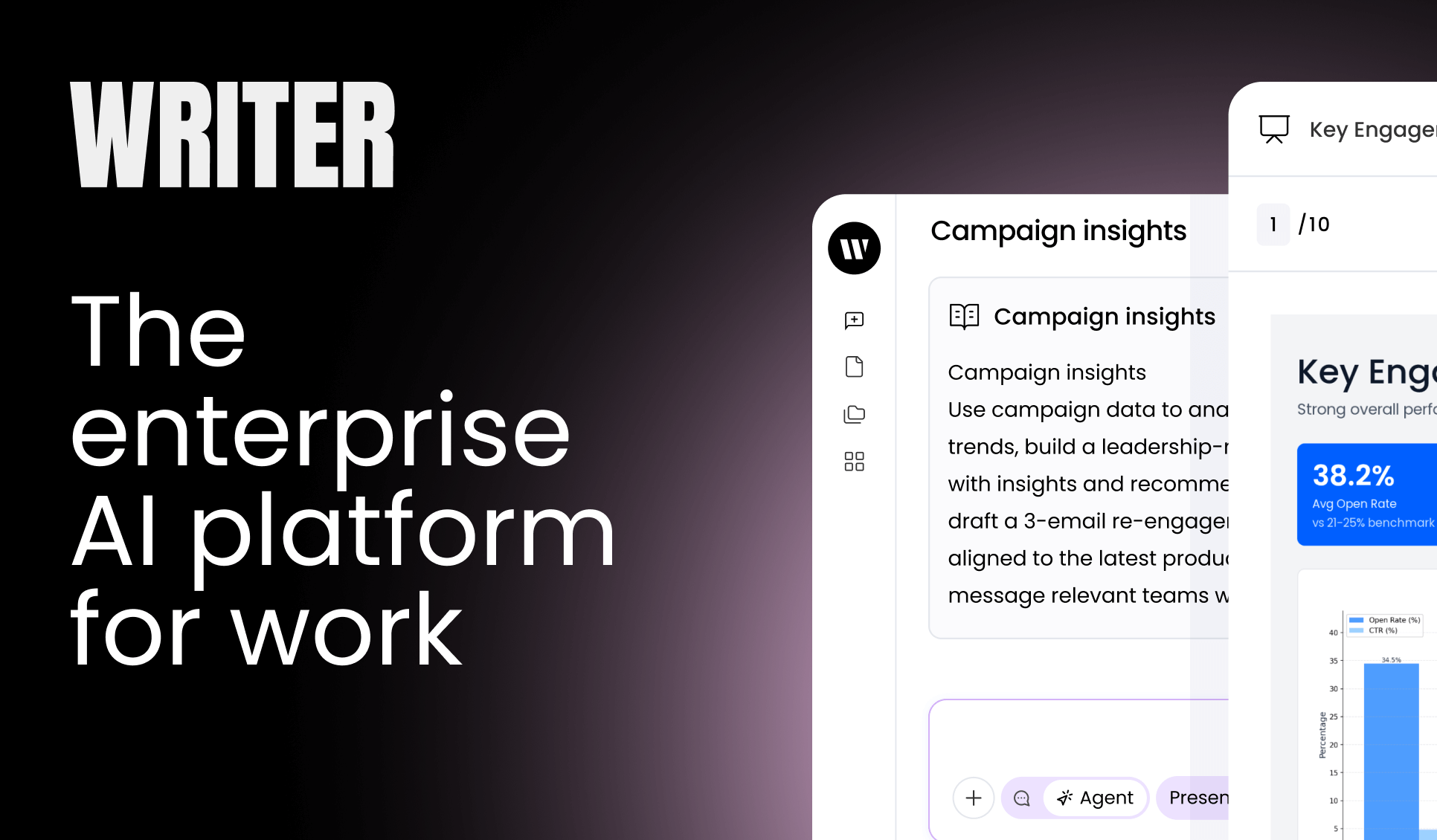
WRITER - AI Writing Platform

WRITER is a transformative SaaS solution tailored for contractors. It understands their need for optimized and personalized communication, making it an ideal tool for creating campaigns, RFPs and comms. It uses AI to level-up what basic automation tools can't handle, ensuring high-quality content generation.

Best for AI Writing & Content Generation Tools for Contractors

Expert Take

WRITER is a premium AI writing platform tailored for contractors, offering advanced content generation capabilities. Its integration with popular tools and customizable features make it a top choice for creating high-quality, personalized content. Despite its higher price point, it delivers significant value for enterprise users.

Pros

  • Proprietary Palmyra LLM with 1M token context
  • Zero data retention policy for training
  • Knowledge Graph connects to internal data
  • Granular brand voice enforcement

Cons

  • Steep learning curve for configuration
  • High starting price ($29/user/mo)
  • Complex enterprise implementation process
  • Limited templates for niche creativity

Best for teams that are

  • Enterprises requiring strict brand governance and security
  • Large organizations managing consistent brand voice

Skip if

  • Individual freelancers seeking a low-cost creative tool
  • Small teams wanting a simple, generic text generator

Best for teams that are

  • Enterprises requiring strict brand governance and security
  • Large organizations managing consistent brand voice

Skip if

  • Individual freelancers seeking a low-cost creative tool
  • Small teams wanting a simple, generic text generator

Pros

  • Proprietary Palmyra LLM with 1M token context
  • ISO 42001, SOC 2 Type II & HIPAA certified
  • Zero data retention policy for training
  • Knowledge Graph connects to internal data
  • Granular brand voice enforcement

Cons

  • Steep learning curve for configuration
  • High starting price ($29/user/mo)
  • Conservative 'vanilla' creative output
  • Complex enterprise implementation process
  • Limited templates for niche creativity

Expert Take

WRITER is a premium AI writing platform tailored for contractors, offering advanced content generation capabilities. Its integration with popular tools and customizable features make it a top choice for creating high-quality, personalized content. Despite its higher price point, it delivers significant value for enterprise users.

5
9.1 / 10
AI Dental Scribe

Denti.AI Scribe is a software solution designed specifically for dentists, leveraging AI to generate structured clinical notes from patient-clinician conversations in real-time. It greatly simplifies note-taking and ensures comprehensive, accurate documentation, addressing the industry's need for efficient record-keeping.

Best for AI Writing & Content Generation Tools for Dentists

Expert Take

AI Dental Scribe excels in providing a specialized solution for dentists, leveraging AI to streamline clinical documentation. Its real-time transcription and tailored note-taking capabilities address specific industry needs, making it a top choice for dental professionals. While it requires high-quality audio and internet connectivity, its benefits in accuracy and efficiency are significant.

Pros

  • FDA-cleared radiograph analysis available
  • Supports 50+ languages
  • Includes Voice Perio charting
  • SOC 2 Type 1 certified

Cons

  • No self-serve free trial
  • Higher entry price than basic scribes
  • Desktop setup needed for full sync

Best for teams that are

  • Dental practices seeking a combined solution for notes and perio charts
  • Clinics using major PMS like Dentrix or Eaglesoft needing direct integration

Skip if

  • Practices looking for a free or very low-cost basic dictation tool
  • Solo dentists who do not perform periodontal charting

Best for teams that are

  • Dental practices seeking a combined solution for notes and perio charts
  • Clinics using major PMS like Dentrix or Eaglesoft needing direct integration

Skip if

  • Practices looking for a free or very low-cost basic dictation tool
  • Solo dentists who do not perform periodontal charting

Pros

  • Direct write-back to 10+ PMS
  • FDA-cleared radiograph analysis available
  • Supports 50+ languages
  • Includes Voice Perio charting
  • SOC 2 Type 1 certified

Cons

  • No self-serve free trial
  • Requires demo for onboarding
  • Higher entry price than basic scribes
  • Desktop setup needed for full sync

Expert Take

AI Dental Scribe excels in providing a specialized solution for dentists, leveraging AI to streamline clinical documentation. Its real-time transcription and tailored note-taking capabilities address specific industry needs, making it a top choice for dental professionals. While it requires high-quality audio and internet connectivity, its benefits in accuracy and efficiency are significant.

Semrush Content Marketing Toolkit

Semrush Content Marketing Toolkit empowers marketing agencies with a comprehensive content workflow, combining data-driven SEO research with AI-driven content creation. It excels in topic discovery, competitor analysis, and offers real-time optimization through Google Docs and WordPress integration, ideal for enterprises seeking robust content strategies.

Best for AI Writing & Content Generation Tools for Marketing Agencies

Expert Take

The Semrush Content Marketing Toolkit stands out by seamlessly bridging the gap between deep, data-driven SEO research and practical content creation. We love how it unifies topic discovery, competitor analysis, and AI-driven drafting into a single, cohesive workflow. The SEO Writing Assistant’s integration with Google Docs and WordPress provides invaluable real-time optimization right where you type. While the premium pricing presents a barrier for smaller teams, its robust, enterprise-grade ca

Pros

  • Comprehensive end-to-end content workflow
  • Extensive free training via Semrush Academy
  • AI-powered article generation with ContentShake

Cons

  • Content toolkit locked behind expensive Guru plan
  • Steep learning curve for beginners
  • Costly fees for extra user seats

Best for teams that are

  • Data-driven SEO content writers and marketing agencies.
  • Teams already invested in the broader Semrush ecosystem.

Skip if

  • Users wanting one-click, fully autonomous content generation.
  • Solo bloggers seeking a budget-friendly writing tool.

Best for teams that are

  • Data-driven SEO content writers and marketing agencies.
  • Teams already invested in the broader Semrush ecosystem.

Skip if

  • Users wanting one-click, fully autonomous content generation.
  • Solo bloggers seeking a budget-friendly writing tool.

Pros

  • Comprehensive end-to-end content workflow
  • Real-time Google Docs and WordPress integration
  • Extensive free training via Semrush Academy
  • AI-powered article generation with ContentShake

Cons

  • Content toolkit locked behind expensive Guru plan
  • Steep learning curve for beginners
  • Cluttered interface due to vast feature set
  • Costly fees for extra user seats

Expert Take

The Semrush Content Marketing Toolkit stands out by seamlessly bridging the gap between deep, data-driven SEO research and practical content creation. We love how it unifies topic discovery, competitor analysis, and AI-driven drafting into a single, cohesive workflow. The SEO Writing Assistant’s integration with Google Docs and WordPress provides invaluable real-time optimization right where you type. While the premium pricing presents a barrier for smaller teams, its robust, enterprise-grade ca

7
9.1 / 10
Sider AI

Sider AI revolutionizes browser-based research for marketing agencies by integrating over 20 elite AI models into a single sidebar. It excels in on-the-fly summarization, translation, and analysis, making it a vital tool for power users seeking efficiency and comprehensive insights.

Best for AI Writing & Content Generation Tools for Marketing Agencies

Expert Take

Sider AI completely transforms browser-based research by consolidating over 20 top-tier AI models—including GPT-4o, Claude 3.5, and Gemini—into a single, context-aware sidebar. Its Deep Research agent and ability to simultaneously query multiple models for comparison save massive amounts of time. While it lacks deep conversation organization, its sheer utility for on-the-fly summarization, translation, and analysis makes it an indispensable tool for power users.

Pros

  • Access 20+ premium AI models
  • Excellent Deep Research agent
  • Instant side-by-side model comparison

Cons

  • Concerning privacy data tracking
  • No chat folder organization

Best for teams that are

  • Multitaskers wanting an AI assistant directly in their browser sidebar.
  • Users wanting to compare responses from multiple AI models at once.

Skip if

  • Teams needing complex collaborative workspaces for shared projects.
  • Users wanting dedicated long-form document editors.

Best for teams that are

  • Multitaskers wanting an AI assistant directly in their browser sidebar.
  • Users wanting to compare responses from multiple AI models at once.

Skip if

  • Teams needing complex collaborative workspaces for shared projects.
  • Users wanting dedicated long-form document editors.

Pros

  • Access 20+ premium AI models
  • Context-aware browser sidebar
  • Excellent Deep Research agent
  • Instant side-by-side model comparison

Cons

  • Concerning privacy data tracking
  • No chat folder organization
  • Unused credits don't roll over

Expert Take

Sider AI completely transforms browser-based research by consolidating over 20 top-tier AI models—including GPT-4o, Claude 3.5, and Gemini—into a single, context-aware sidebar. Its Deep Research agent and ability to simultaneously query multiple models for comparison save massive amounts of time. While it lacks deep conversation organization, its sheer utility for on-the-fly summarization, translation, and analysis makes it an indispensable tool for power users.

8
9.0 / 10
PopAi

PopAi streamlines content creation for marketing agencies by integrating GPT-4, Claude, and DeepSeek into one platform. It's perfect for students, researchers, and professionals needing to transform complex PDFs into presentations quickly.

Best for AI Writing & Content Generation Tools for Marketing Agencies

Expert Take

PopAi functions as a versatile 'Swiss Army Knife' for AI productivity. Instead of paying for separate subscriptions for GPT-4, Claude, and DeepSeek, users get all these frontier models in one unified workspace. Its ability to instantly convert lengthy, complex PDFs into structured presentations or visual mind maps makes it an exceptionally powerful tool for students, researchers, and professionals looking to accelerate their content workflows.

Pros

  • Access to GPT-4o, Claude, and DeepSeek
  • Handles up to 5000-page PDFs
  • Supports multilingual OCR for scanned files

Cons

  • Difficult subscription cancellation process
  • Unresponsive customer support reported
  • Presentation layouts can feel generic

Best for teams that are

  • Individuals needing fast, automated slide deck generation.
  • Users wanting quick summaries of large PDF files or documents.

Skip if

  • Enterprise teams needing strict brand control and collaboration.
  • Users requiring highly advanced slide design and formatting tools.

Best for teams that are

  • Individuals needing fast, automated slide deck generation.
  • Users wanting quick summaries of large PDF files or documents.

Skip if

  • Enterprise teams needing strict brand control and collaboration.
  • Users requiring highly advanced slide design and formatting tools.

Pros

  • Access to GPT-4o, Claude, and DeepSeek
  • Generates instant slide decks from documents
  • Handles up to 5000-page PDFs
  • Supports multilingual OCR for scanned files

Cons

  • Difficult subscription cancellation process
  • Unresponsive customer support reported
  • Free tier is heavily feature-gated
  • Presentation layouts can feel generic

Expert Take

PopAi functions as a versatile 'Swiss Army Knife' for AI productivity. Instead of paying for separate subscriptions for GPT-4, Claude, and DeepSeek, users get all these frontier models in one unified workspace. Its ability to instantly convert lengthy, complex PDFs into structured presentations or visual mind maps makes it an exceptionally powerful tool for students, researchers, and professionals looking to accelerate their content workflows.

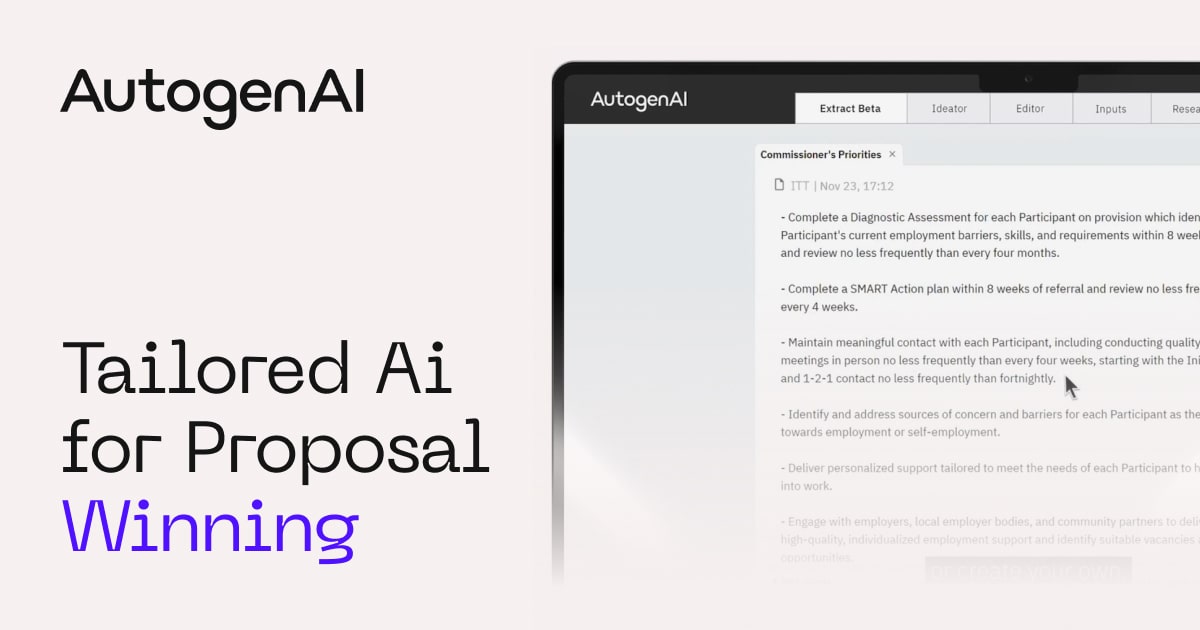
AutogenAI Proposal Writing

AutogenAI provides AI-driven solutions tailored to help contractors write winning proposals faster and with less effort. It's a revolutionary tool that understands the unique needs and language of the contracting industry, helping professionals create industry-specific content that boosts their success rate.

Best for AI Writing & Content Generation Tools for Contractors

Expert Take

AutogenAI Proposal Writing excels in providing AI-driven solutions tailored for the contracting industry, enhancing proposal success rates. Its user-friendly interface and industry-specific features make it a valuable tool for contractors. However, pricing transparency and customization options are areas with room for improvement.

Pros

  • Custom language engines trained on client data
  • Backed by Salesforce Ventures and Spark Capital
  • Dedicated 'Federal' version for government contractors
  • Claims 70% faster drafting speed

Cons

  • High estimated entry cost ($30k+/year)
  • No public pricing or self-service option
  • Limited native integrations vs. competitors
  • Minimum seat requirement (5+ licenses)

Best for teams that are

  • Enterprises managing high-volume, complex bid responses
  • Large teams needing scalable proposal automation

Skip if

  • Small businesses or freelancers with limited budgets
  • Users needing simple, creative marketing content

Best for teams that are

  • Enterprises managing high-volume, complex bid responses
  • Large teams needing scalable proposal automation

Skip if

  • Small businesses or freelancers with limited budgets
  • Users needing simple, creative marketing content

Pros

  • Custom language engines trained on client data
  • DoD IL5 and FedRAMP High security controls
  • Backed by Salesforce Ventures and Spark Capital
  • Dedicated 'Federal' version for government contractors
  • Claims 70% faster drafting speed

Cons

  • High estimated entry cost ($30k+/year)
  • No public pricing or self-service option
  • Steep learning curve for some users
  • Limited native integrations vs. competitors
  • Minimum seat requirement (5+ licenses)

Expert Take

AutogenAI Proposal Writing excels in providing AI-driven solutions tailored for the contracting industry, enhancing proposal success rates. Its user-friendly interface and industry-specific features make it a valuable tool for contractors. However, pricing transparency and customization options are areas with room for improvement.

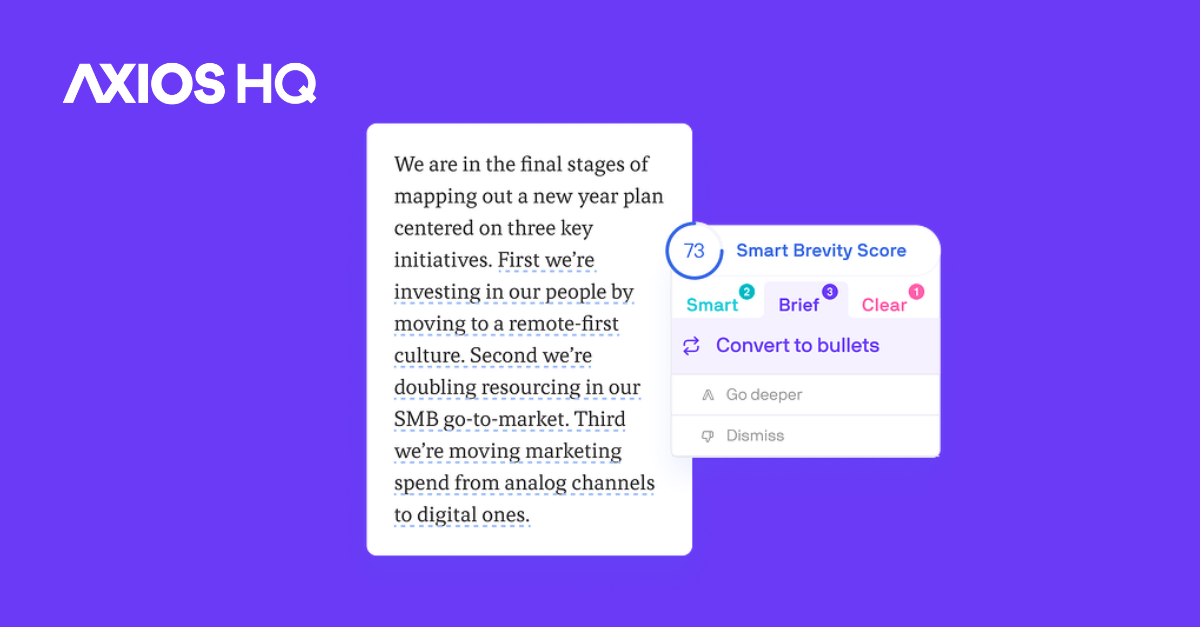
AxiosHQ AI Content Generation

AxiosHQ's AI Writing Help Tool is specifically designed to aid contractors in streamlining their written communications. This tool simplifies the creation of emails, proposals, and other correspondence, saving valuable time and reducing the risk of errors or misunderstandings.

Best for AI Writing & Content Generation Tools for Contractors

Expert Take

AxiosHQ AI Content Generation excels in providing tailored AI-driven writing solutions for contractors, offering significant time savings and error reduction. Its market credibility is bolstered by industry recognition, and it integrates well within existing contractor workflows, though pricing transparency is limited.

Pros

  • Converts 12,000 words to summaries
  • No AI training on customer data
  • Used by Walmart and JPMorgan
  • Integrates with Slack and Teams

Cons

  • High starting price (~$15k/year)
  • Limited design/font customization
  • Rigid formatting templates
  • Not suitable for small teams

Best for teams that are

  • Leaders and HR teams managing internal employee comms
  • Teams needing to align staff on strategy and goals

Skip if

  • Marketers creating external SEO blogs or sales copy
  • Sales teams needing proposal automation software

Best for teams that are

  • Leaders and HR teams managing internal employee comms
  • Teams needing to align staff on strategy and goals

Skip if

  • Marketers creating external SEO blogs or sales copy
  • Sales teams needing proposal automation software

Pros

  • Converts 12,000 words to summaries
  • SOC 2 Type II compliant
  • No AI training on customer data
  • Used by Walmart and JPMorgan
  • Integrates with Slack and Teams

Cons

  • High starting price (~$15k/year)
  • Limited design/font customization
  • Directory sync can be complex
  • Rigid formatting templates
  • Not suitable for small teams

Expert Take

AxiosHQ AI Content Generation excels in providing tailored AI-driven writing solutions for contractors, offering significant time savings and error reduction. Its market credibility is bolstered by industry recognition, and it integrates well within existing contractor workflows, though pricing transparency is limited.

Loading comparison data…

How We Rank Products

Our Evaluation Process

Products in the AI Writing & Content Generation Tools category are evaluated based on features like natural language processing capabilities, customization options, and integration potential with other software. Pricing transparency and compatibility with different platforms are also considered. Third-party customer feedback provides insight into user satisfaction and reliability, aiding in comprehensive assessment.

Verification

  • Products evaluated through comprehensive research and analysis of AI writing capabilities.
  • Rankings based on in-depth analysis of user reviews and expert insights in content generation.
  • Selection criteria focus on the effectiveness, usability, and innovation of AI writing tools.

Score Breakdown

0.0 / 10

About AI Content & Copywriting Tools

What Is AI Content & Copywriting Tools?

This category covers software used to generate, optimize, and manage written text assets across their full operational lifecycle: ideation, drafting, editing, compliance checking, and performance optimization. It sits between basic word processing (which focuses on document creation) and Content Management Systems (CMS, which focus on publishing and storage). It includes both general-purpose platforms capable of drafting varied content types and vertical-specific tools built for highly regulated or technical industries like legal, insurance, and healthcare.

Unlike traditional writing assistants that offer reactive corrections for grammar or style, this category is defined by proactive generation and strategic intelligence. These tools leverage Large Language Models (LLMs) and Natural Language Processing (NLP) to autonomously produce drafts based on brief inputs, rewrite content for specific tones or audiences, and analyze existing text for gap analysis. For enterprise buyers, the value lies not merely in speed, but in the ability to enforce brand governance, ensure regulatory compliance at scale, and decouple content production volume from headcount growth.

History of the Category

The trajectory of AI Content & Copywriting tools has evolved from rigid, rules-based error correction to fluid, generative intelligence. While the underlying concepts of NLP existed earlier, the commercial history relevant to modern buyers begins in the late 1990s and early 2000s.

Phase 1: The Rules-Based Era (1990s–2010) Initially, software in this space was limited to "writing assistance." Tools relied on hard-coded linguistic rules to flag spelling and basic grammatical errors. This was the era of the "red squiggly line." The utility was strictly reactive; the software could not create, only critique. It served as a safety net rather than a production engine. Market consolidation was minimal, as these features were largely viewed as add-ons to word processors rather than standalone products.

Phase 2: The Predictive & Editorial Era (2010–2019) With the advent of cloud computing and early machine learning, the category shifted from correcting errors to improving style and tone. SaaS platforms emerged that could analyze clarity, engagement, and delivery. This period saw the rise of vertical SaaS in adjacent categories (like CRM), which highlighted the need for specialized content tools. Buyers began to expect "actionable intelligence"—suggestions on how to improve a sentence to sell more or sound more professional, rather than just fixing a typo.

Phase 3: The Generative Explosion (2020–Present) The release of transformer-based models marked the decisive shift to the current era. The gap that created this modern category was the inability of human teams to keep pace with the content demands of digital channels without linear headcount increases. The market is now undergoing a massive wave of consolidation and verticalization. General-purpose "wrapper" applications are being absorbed or outcompeted by platforms offering deep, industry-specific workflows (e.g., specialized tools for legal contracts or medical documentation). Buyer expectations have fundamentally pivoted from "give me a tool to write better" to "give me a system that writes for me while adhering to my enterprise guardrails."

What to Look For

Evaluating AI content tools requires moving beyond the "wow" factor of text generation. Since most vendors access similar underlying models, the differentiation lies in the workflow, governance, and integration layers surrounding the AI.

Critical Evaluation Criteria

  • Context Window & Memory: Does the tool "remember" your brand guidelines, previous inputs, and specific terminology across sessions? High-performing tools allow you to upload style guides and negative prompt lists (what not to say) that persist globally.
  • Output Control & Steering: Look for "steerability"—the ability to refine outputs through granular controls (length, format, tone sliders) rather than just reprompting.
  • Sourcing & Fact-Checking: For professional use, the tool must minimize hallucinations. Superior platforms offer citation features that link generated claims back to uploaded source documents or verified web sources.
  • Fine-Tuning Capabilities: Can the model be fine-tuned on your organization's historical high-performing content? This is essential for enterprise teams needing a distinct brand voice rather than a generic AI tone.

Red Flags and Warning Signs

  • Lack of Data Segregation: Avoid vendors who cannot explicitly guarantee that your proprietary data will not be used to train their public models. This is a critical security flaw for any enterprise.
  • "Black Box" Pricing: Be wary of opaque token-based pricing that makes predicting monthly spend impossible. If a vendor cannot help you forecast TCO based on your estimated volume, financial risk is high.
  • No Citation/Reference Mechanism: Tools that generate facts or technical claims without the ability to reference a source are dangerous for industries like finance, healthcare, or engineering.

Key Questions to Ask Vendors

  • "How do you handle 'hallucinations,' and what mechanisms allow users to verify the accuracy of generated content against our internal knowledge base?"
  • "Can we deploy this in a private cloud or single-tenant environment to ensure our data remains isolated?"
  • "What indemnity do you offer regarding intellectual property rights for the content generated on your platform?"

Industry-Specific Use Cases

Retail & E-commerce

For retail and e-commerce, the primary driver is scale. The specific need is generating thousands of unique, SEO-optimized product descriptions and personalized marketing messages rapidly. Evaluation priorities should focus on the tool's ability to ingest structured product data (SKUs, specs, dimensions) and output diverse, compelling narrative copy. A unique consideration is the prevention of "duplicate content" penalties from search engines; the tool must be able to spin multiple distinct variations of text for similar products without sounding robotic. Retailers also require deep integration with PIM (Product Information Management) systems to automate the flow from spec sheet to storefront.

Healthcare

In healthcare, the priority is accuracy and empathy. AI tools are used to draft patient education materials, discharge summaries, and administrative appeals. The critical evaluation priority is HIPAA compliance and data privacy—vendors must sign Business Associate Agreements (BAA). A unique consideration is the "human-in-the-loop" workflow; the software must be designed to facilitate easy medical review rather than fully autonomous publishing. Unlike retail, where a wrong adjective is a branding issue, a wrong medical term is a liability. Tools here often need to translate complex clinical jargon into plain language (6th-grade reading level) for patient comprehension.

Financial Services

Financial institutions prioritize compliance and risk management. Use cases include drafting earnings reports, personalized investment summaries, and regulatory disclosures. Evaluation must focus on "explainability" and audit trails—knowing exactly which data source informed a specific sentence. Unique considerations include pre-baked compliance checks; the best tools for this sector have built-in lexicons of "risky" terms (e.g., guaranteeing returns) that are automatically flagged or blocked. The workflow often involves multi-stage approval processes, so the tool must support role-based access control (RBAC) deeply integrated with compliance software.

Manufacturing

Manufacturing buyers look for technical precision and standardization. The primary use cases are generating Standard Operating Procedures (SOPs), maintenance logs, and technical manuals. The evaluation priority is the ability to ingest complex technical diagrams, CAD data, or messy field notes and convert them into structured, standardized documentation. A unique consideration is "multimodality"—the ability to interpret an image of a machine part or a schematic and generate text describing it. These tools must also handle version control rigorously, as an outdated safety manual can lead to physical harm.

Professional Services

For law firms, consultancies, and agencies, the focus is on efficiency and persuasion. Use cases include proposal writing, contract drafting, and client updates. Evaluation priorities center on the tool's ability to mimic the specific "voice" of a senior partner or the brand's authoritative tone. A unique consideration is the integration with knowledge management systems; the AI needs to pull from a firm's repository of past successful proposals to draft new ones. Security is paramount here as well, specifically regarding client privilege and confidentiality.

Subcategory Overview

AI Writing & Content Generation Tools for Contractors This niche serves general contractors, subcontractors, and construction firms who need to minimize administrative time to focus on field work. What makes this genuinely different is the tool's training on construction terminology, local code requirements, and bid formatting. A generic tool might draft a "proposal," but specialized software for contractors handles the specific workflow of converting rough job site notes and measurements into polished, legally sound bid proposals and scope-of-work documents. The pain point driving buyers here is the "field-to-office" gap—contractors often lose bids because they are too busy on-site to draft professional paperwork in the evenings. Specialized tools bridge this by often including mobile-first inputs or voice-to-text features optimized for noisy job sites. For more details, see our guide to AI Writing & Content Generation Tools for Contractors.

AI Writing & Content Generation Tools for Marketing Agencies Marketing agencies face the unique challenge of managing distinct "brand voices" for dozens of different clients simultaneously. Unlike generic tools, software in this subcategory focuses heavily on "Brand Voice Management"—allowing agencies to toggle between a "playful B2C tech tone" and a "somber B2B financial tone" instantly. The workflow only this tool handles well is the high-volume repurposing of content assets (e.g., turning one webinar transcript into 20 social posts, 3 emails, and a blog post) while maintaining strict client-specific guardrails. The driving pain point is margin compression; agencies need to deliver more content without hiring more copywriters. These tools act as force multipliers for existing creative teams. Explore our in-depth analysis of AI Writing & Content Generation Tools for Marketing Agencies.

AI Writing & Content Generation Tools for Dentists Dental practices require tools that balance clinical accuracy with approachable patient communication. This niche differs from generic tools by including libraries of dental-specific procedure descriptions (e.g., root canals, Invisalign) that are pre-vetted for accuracy and readability. A workflow unique to this group is the automation of patient education emails and post-care instructions that are personalized to specific treatments. The specific pain point driving adoption is "chairside time"—dentists want to focus on patients, not marketing. Generic tools often produce content that is too technical (scaring patients) or too salesy (violating medical ethics). Specialized tools navigate this nuance effectively. Read more in our review of AI Writing & Content Generation Tools for Dentists.

AI Writing & Content Generation Tools for Freelance Marketers Freelancers operate with limited budgets and a need for extreme versatility. This subcategory is distinct because it prioritizes cost-efficiency and "all-in-one" capabilities (SEO, image generation, and writing) over enterprise-grade security or team collaboration features. The workflow these tools excel at is the "solopreneur sprint"—rapidly iterating on headlines, outlines, and drafts to clear a backlog of client work in hours rather than days. The pain point driving buyers here is burnout and income caps; freelancers use these tools to break the ceiling of how many billable hours they can physically work. Unlike agency tools, these focus on single-user ease of use. Learn more about AI Writing & Content Generation Tools for Freelance Marketers.

AI Writing & Content Generation Tools for Insurance Agents Insurance agents deal with complex products that are difficult to explain and highly regulated. This niche differentiates itself by offering compliance-first content generation. The models are often trained to avoid guaranteeing outcomes or using prohibited language that could trigger audits. A specific workflow this niche handles well is the generation of "policy explanation" scripts and emails that simplify legalese into benefits for customers without misrepresenting the coverage. The pain point driving buyers away from generic tools is the risk of regulatory fines; a generic AI might promise "total coverage" where a specialized tool knows to say "comprehensive options," protecting the agent's license. See our guide on AI Writing & Content Generation Tools for Insurance Agents.

Deep Dive: Integration & API Ecosystem

For AI content tools to generate ROI, they cannot exist in a vacuum; they must inhabit the workflows where work actually happens. The effectiveness of an AI writing tool is often determined less by its creative output and more by its connectivity. In a modern stack, "integration" means more than a simple login connector; it requires bi-directional data flow.

According to [1] HubSpot's State of Marketing Report, 38% of marketers report having technology they are not using to its full potential due to poor integration, a figure that highlights the friction of disconnected tools. A robust AI tool should pull context from your CRM (e.g., Salesforce), draft content within your workspace (e.g., Google Docs or Slack), and push finalized assets to your CMS or marketing automation platform.

Expert Insight: [2] Forrester's analysts note that in 2024, the business demand for GenAI-powered applications will cascade to IT, who must ensure these tools work safely at scale within existing operating models. This implies that API openness is now a security and operational mandate, not just a feature.

Real-World Scenario: Consider a mid-sized marketing agency with 50 employees. If their AI writing tool requires copywriters to copy-paste prompts into a separate browser tab, generate text, and then paste it back into a project management tool like Asana, the context switching costs are massive. However, if the integration is designed well, the AI tool sits inside their project management software. When a task is created for a "Client X Email Campaign," the AI automatically reads the attached creative brief and client brand guidelines from the system and pre-populates a draft in the description field. Without this deep integration, the "swivel chair" effect of moving between apps destroys the efficiency gains the AI promised.

Deep Dive: Security & Compliance

Security in AI content generation is the primary barrier to enterprise adoption. The risks are twofold: data leakage (your proprietary data training public models) and output liability (the model producing biased, plagiarized, or false content). "Shadow AI"—the unsanctioned use of AI tools by employees—is a growing threat vector.

Data from [3] IBM's Cost of a Data Breach Report reveals that organizations with high levels of "shadow AI" usage faced an average of $670,000 in higher breach costs compared to those with managed AI governance. Furthermore, 20% of organizations reported breaches specifically linked to shadow AI usage.

Expert Insight: [4] Gartner's Ryan Polk emphasizes that leaders who build a foundation now through a focus on data quality, privacy, and risk management will reap new levels of strategic value. This suggests that security is not just a defensive measure, but a prerequisite for unlocking the tool's advanced capabilities.

Real-World Scenario: A financial services firm tasks an employee with summarizing sensitive internal meeting notes regarding a pending merger. If the employee pastes these notes into a free, public-facing AI tool to generate a summary, that data may become part of the model's training set, potentially leaking insider information to the public domain. A compliant AI tool for this sector would offer a "zero-retention" mode, where inputs are processed ephemerally and never stored or used for model training. Without this feature, the firm faces catastrophic regulatory and competitive risks.

Deep Dive: Pricing Models & TCO

The pricing landscape for AI tools is shifting rapidly from simple monthly subscriptions to complex hybrid models. Buyers must distinguish between Seat-Based pricing (paying per user) and Usage-Based (paying per word, token, or generation) pricing. Understanding this distinction is vital for calculating Total Cost of Ownership (TCO).

According to [5] Growth Unhinged's State of B2B Monetization report, pure seat-based pricing dropped from 21% to 15% of companies in just 12 months, while hybrid pricing surged to 41%. This reflects the reality that in an AI-native world, value is generated by the compute power consumed, not just the number of humans logged in.

Expert Insight: [6] OpenView Partners highlights that usage-based pricing helps align costs with value, allowing customers to start small and scale. However, for buyers, this introduces budget unpredictability if usage is not capped or monitored.

Real-World Scenario: Imagine a 25-person content team evaluating two vendors. Vendor A charges $50/seat/month (Fixed $1,250/month). Vendor B charges $20/seat/month plus $0.05 per 1,000 words generated. At first glance, Vendor B looks cheaper. However, if the team uses the tool to generate high-volume SEO pages, producing 2 million words a month, the usage fees ($100) are negligible. But if they use it for complex research tasks consuming 50 million tokens, the cost skyrockets. A TCO calculation must model "peak usage" scenarios—such as a major product launch month—to avoid budget shock. The "unlimited" plans of the past are disappearing; buyers must now forecast their consumption, not just their headcount.

Deep Dive: Implementation & Change Management

Buying the tool is easy; getting a team to use it effectively is the hard part. Implementation failure usually stems from treating AI as a "magic button" rather than a complex workflow change. Successful rollout requires a shift in mindset from "writing" to "editing and curating."

Research from [7] McKinsey's State of AI report indicates that while 88% of organizations are using AI, most are stuck in "pilot purgatory" and haven't scaled. The primary blocker is often a lack of workflow redesign—companies layer AI on top of old processes instead of reinventing the process for AI.

Expert Insight: [8] Forrester analysts advise that organizations must invest in "AI literacy" and specific skills training, noting that "coding is a classroom" for how GenAI will require changes in other work processes.

Real-World Scenario: A large publishing house introduces an AI tool to its editorial team of 100 writers. Without change management, the writers view the tool as a threat to their jobs and passively resist using it, or use it only to generate low-quality drafts that require more time to fix than to write from scratch. A successful implementation would involve appointing "AI Champions" within the team who develop prompt libraries specific to the company's beat. Instead of "write an article," the new workflow is "use the AI to outline and research, then human writers add voice and interview quotes." This redefinition of roles is the difference between shelfware and ROI.

Deep Dive: Vendor Evaluation Criteria

When selecting a vendor, standard SaaS metrics like uptime are insufficient. You must evaluate the AI-specific maturity of the vendor. This includes their model agility (are they locked into one model like GPT-3.5, or are they model-agnostic?), their approach to bias, and their roadmap for "agentic" capabilities.

According to [9] Bain & Company, leading performers are eight times more likely to use AI-powered, customizable tech for specific use cases rather than generic off-the-shelf solutions. This suggests that "customizability" should be a top weighted criteria in your scorecard.

Expert Insight: [10] Gartner identifies "Agentic Reasoning" as a key advancement. Buyers should ask vendors not just "can it write?" but "can it reason and execute actions?"

Real-World Scenario: A global retailer is evaluating two AI copy tools. Vendor A offers a slick interface but relies solely on a single, older OpenAI model. Vendor B is "model agnostic," allowing the retailer to route simple tasks to cheaper, faster models and complex creative tasks to state-of-the-art models (like GPT-4 or Claude 3). Furthermore, Vendor B allows the retailer to upload their past 5 years of high-converting email copy to "fine-tune" a custom model. Vendor A might be easier to start with, but Vendor B offers a sustainable competitive advantage. The evaluation criteria must heavily weight model flexibility and fine-tuning over simple UI convenience.

Emerging Trends and Contrarian Take

Emerging Trends 2025-2026 The market is shifting from "Co-pilots" to "Agents." Current tools assist a human writer; future tools (appearing now) will act as autonomous agents that can receive a high-level goal ("increase organic traffic to X page") and execute the entire chain: keyword research, drafting, internal linking, and even publishing. Another trend is Platform Convergence: standalone AI writing tools are increasingly being swallowed by broader platforms. Why buy a separate writing tool when your CRM, Project Management tool, and email provider all have "AI Writer" buttons built-in?

Contrarian Take The era of the standalone "AI Writer" is ending. Most businesses are overpaying for "AI Writing" software that is essentially just a wrapper around OpenAI's API. The contrarian insight is that you likely do not need a dedicated AI writing platform. Instead, the capability to generate text will become a commodity feature embedded in every other piece of software you already own (HubSpot, Salesforce, Microsoft 365, Google Workspace). The only standalone vendors that will survive are those that offer deep, vertical-specific workflows (e.g., a tool only for patent law or only for clinical trials) that generalist platforms cannot replicate. If you are buying a general-purpose AI writer today on a 3-year contract, you are likely buying a depreciating asset.

Common Mistakes

Overbuying "Enterprise" Features for Small Teams Many buyers get upsold on complex "Brand Voice" fine-tuning and API access when their team of three simply needs a good first-draft generator. Complexity creates friction. If the tool takes 2 weeks to configure, your team will likely revert to using ChatGPT directly.

Ignoring the "Human-in-the-Loop" Workflow A fatal mistake is assuming the tool replaces the editor. Companies that fire their copywriters and replace them with AI tools often see a degradation in content quality and SEO performance. The mistake is viewing AI as a replacement for labor rather than an accelerator of labor.

Neglecting Training and Adoption Buying the tool is 10% of the work; training the team is 90%. Most tools become "shelfware" because leadership did not mandate training on prompt engineering. Users try it once, get a generic result, and assume the tool is bad, when in reality, their prompt was poor.

Questions to Ask in a Demo

Cut through the sales script with these targeted questions:

  • On Data Privacy: "Show me the specific clause in your Terms of Service that guarantees our input data is not used to train your foundational models. Is this default or opt-in?"
  • On Differentiation: "Since you likely use the same underlying models (like GPT-4) as your competitors, what specific workflow features or proprietary data layers make your output better than me just using ChatGPT Plus?"
  • On Pricing: "If our usage scales by 5x next year, how does the pricing scale? Walk me through the tier jumps."
  • On Lock-in: "If we build custom templates and fine-tuned models with you, can we export them if we leave?" (The answer is usually no, but it's good to know).

Before Signing the Contract

Final Decision Checklist

  • Security Audit: Has your IT/Security team reviewed their SOC 2 Type II report?
  • Integration Test: Have you actually connected it to your CMS/CRM in a trial, or just seen a slide saying it connects?
  • Exit Strategy: Do you have a plan for exporting your content history if the vendor pivots or raises prices?

Common Negotiation Points

  • Seat Swapping: Ensure you aren't paying for named seats that can't be transferred if an employee leaves. Ask for "floating" seats.
  • AI Credit Rollover: If you are on a usage-based plan, ensure unused credits/tokens roll over to the next month rather than expiring.

Deal-Breakers

  • Lack of indemnification against copyright claims (the vendor should stand behind their output to a reasonable degree).
  • Inability to opt-out of data training.

Closing

Navigating the AI software landscape requires distinguishing between temporary hype and genuine infrastructure. If you need help evaluating specific vendors or validating your shortlist against your industry's unique requirements, feel free to reach out.

Email: albert@whatarethebest.com

Quick one question survey

Thanks for your input!
Your response has been recorded.