Ecommerce Email & Marketing Automation

These are the specialized categories within Ecommerce Email & Marketing Automation. Looking for something broader? See all Marketing & Advertising Platforms categories.

1

Omnisend Email Marketing

Best for Email and SMS Automation for Ecommerce

Score
9.9 / 10
Omnisend Email Marketing

Omnisend specializes in ecommerce email and SMS marketing automation, enabling brands to optimize their outreach strategies. Its seamless integrations with ecommerce platforms and robust automation capabilities help businesses drive more revenue while reducing manual effort.

Best for Email and SMS Automation for Ecommerce

Expert Take

Omnisend excels in providing ecommerce-focused email and SMS marketing automation with strong integration capabilities and sophisticated automation features. Its market credibility is supported by industry recognition, and it offers a user-friendly experience with transparent pricing. These attributes position Omnisend as a leading solution in its category.

Pros

  • 24/7 live support on all plans
  • Free plan includes automation features
  • User-friendly drag-and-drop editor
  • Bundled SMS credits on Pro plan
  • Deep Shopify & BigCommerce integration

Cons

  • Limited A/B testing capabilities
  • Analytics less detailed than Klaviyo
  • Fewer third-party integrations available
  • Data retention capped at 18 months
  • SMS expensive at very high volume

Best for teams that are

  • Ecommerce stores needing combined email and SMS automation
  • Small to mid-sized merchants wanting easy-to-use workflows
  • Brands migrating from Yotpo needing a similar feature set

Skip if

  • Non-ecommerce businesses like B2B or service providers
  • Enterprise brands requiring highly complex custom integrations

Best for teams that are

  • Ecommerce stores needing combined email and SMS automation
  • Small to mid-sized merchants wanting easy-to-use workflows
  • Brands migrating from Yotpo needing a similar feature set

Skip if

  • Non-ecommerce businesses like B2B or service providers
  • Enterprise brands requiring highly complex custom integrations

Pros

  • 24/7 live support on all plans
  • Free plan includes automation features
  • User-friendly drag-and-drop editor
  • Bundled SMS credits on Pro plan
  • Deep Shopify & BigCommerce integration

Cons

  • Limited A/B testing capabilities
  • Analytics less detailed than Klaviyo
  • Fewer third-party integrations available
  • Data retention capped at 18 months
  • SMS expensive at very high volume

Expert Take

Omnisend excels in providing ecommerce-focused email and SMS marketing automation with strong integration capabilities and sophisticated automation features. Its market credibility is supported by industry recognition, and it offers a user-friendly experience with transparent pricing. These attributes position Omnisend as a leading solution in its category.

2

Recombee: AI-powered Recommendations

Best for Product Recommendation Engines for Ecommerce

Score
9.9 / 10
Recombee: AI-powered Recommendations

Recombee is an AI-based software solution that provides real-time personalized product recommendations across all platforms. Designed for ecommerce businesses, it uses advanced machine learning to analyze user behavior and preferences, delivering precise suggestions to boost customer engagement and sales.

Best for Product Recommendation Engines for Ecommerce

Expert Take

Recombee excels in delivering AI-driven, real-time personalized product recommendations for ecommerce platforms. It offers robust analytics and multi-platform compatibility, making it a valuable tool for businesses aiming to enhance customer engagement and sales. While it may require technical expertise for setup, its capabilities justify its premium positioning.

Pros

  • Real-time hybrid AI models (Content + Collaborative)
  • Extensive SDK support (Python, Node.js, PHP, Go)
  • Generous free tier (100k requests/month)
  • Granular business rules via ReQL
  • Proven scalability for billions of requests

Cons

  • Steep price jump from $99 to $899
  • Processing large datasets can be slow
  • Lack of transparency in model logic
  • Dashboard analytics could be more interactive
  • Next.js integration reported as complex

Best for teams that are

  • Media, video, and publishing platforms (content focus)
  • Tech teams needing granular control over recommendation logic
  • Complex platforms requiring real-time scenario customization

Skip if

  • Merchants seeking a simple, one-click ecommerce plugin
  • Non-technical users unable to manage API integrations
  • Small stores sensitive to usage-based API pricing

Best for teams that are

  • Media, video, and publishing platforms (content focus)
  • Tech teams needing granular control over recommendation logic
  • Complex platforms requiring real-time scenario customization

Skip if

  • Merchants seeking a simple, one-click ecommerce plugin
  • Non-technical users unable to manage API integrations
  • Small stores sensitive to usage-based API pricing

Pros

  • Real-time hybrid AI models (Content + Collaborative)
  • Extensive SDK support (Python, Node.js, PHP, Go)
  • Generous free tier (100k requests/month)
  • Granular business rules via ReQL
  • Proven scalability for billions of requests

Cons

  • Steep price jump from $99 to $899
  • Processing large datasets can be slow
  • Lack of transparency in model logic
  • Dashboard analytics could be more interactive
  • Next.js integration reported as complex

Expert Take

Recombee excels in delivering AI-driven, real-time personalized product recommendations for ecommerce platforms. It offers robust analytics and multi-platform compatibility, making it a valuable tool for businesses aiming to enhance customer engagement and sales. While it may require technical expertise for setup, its capabilities justify its premium positioning.

3

Rejoiner Cart Abandonment Software

Best for Abandoned Cart Automation Tools

Score
9.9 / 10
Rejoiner Cart Abandonment Software

Rejoiner is a SaaS solution that specifically targets the eCommerce industry where cart abandonment is a major issue. It uses a combination of email and SMS automation to re-engage customers who have left items in their carts, turning potential losses into profitable conversions. The software also offers expert support for each step of the process, making it an ideal tool for businesses looking to minimize cart abandonment and increase sales.

Best for Abandoned Cart Automation Tools

Expert Take

Rejoiner excels in providing a specialized solution for eCommerce cart abandonment, with strong capabilities in email and SMS automation. It is recognized for its expert support and customizable campaigns, making it a top choice for businesses aiming to improve conversion rates. However, its pricing model may not be ideal for smaller businesses.
Pros

  • Pre-submit tracking identifies anonymous visitors
  • Managed services include design and strategy
  • Transparent pricing with no hidden fees
  • Unlimited email sends on all plans
  • High client retention (6+ years average)

Cons

  • Analytics interface can be difficult to use
  • Pricing is steep for small businesses
  • Smaller integration ecosystem than competitors
  • Limited to email and SMS channels
  • Fewer third-party reviews than market leaders

Best for teams that are

  • E-commerce brands seeking a "done-for-you" managed service for email strategy
  • Companies wanting to outsource creative design and deliverability optimization
  • Mid-market to enterprise retailers focused on maximizing revenue lift

Skip if

  • Small businesses or hobbyists with very low transaction volumes
  • DIY marketers who prefer full hands-on control without agency support
  • Budget-constrained startups looking for a cheap, standalone software tool

Best for teams that are

  • E-commerce brands seeking a "done-for-you" managed service for email strategy
  • Companies wanting to outsource creative design and deliverability optimization
  • Mid-market to enterprise retailers focused on maximizing revenue lift

Skip if

  • Small businesses or hobbyists with very low transaction volumes
  • DIY marketers who prefer full hands-on control without agency support
  • Budget-constrained startups looking for a cheap, standalone software tool

Pros

  • Pre-submit tracking identifies anonymous visitors
  • Managed services include design and strategy
  • Transparent pricing with no hidden fees
  • Unlimited email sends on all plans
  • High client retention (6+ years average)

Cons

  • Analytics interface can be difficult to use
  • Pricing is steep for small businesses
  • Smaller integration ecosystem than competitors
  • Limited to email and SMS channels
  • Fewer third-party reviews than market leaders

Expert Take

Rejoiner excels in providing a specialized solution for eCommerce cart abandonment, with strong capabilities in email and SMS automation. It is recognized for its expert support and customizable campaigns, making it a top choice for businesses aiming to improve conversion rates. However, its pricing model may not be ideal for smaller businesses.

4

Enhencer AI Ads & Orphex

Best for Segmentation and Targeting Tools for Ecommerce

Score
9.8 / 10
Enhencer AI Ads & Orphex

Enhencer AI Ads and Orphex offers a powerful combination for ecommerce businesses to elevate their segmentation and targeting strategies using AI. This solution specifically caters to the unique needs of ecommerce by providing granular customer segmentation and personalized targeting, enabling businesses to deliver more relevant and effective marketing campaigns.

Best for Segmentation and Targeting Tools for Ecommerce

Expert Take

Enhencer AI Ads & Orphex excels in providing AI-driven segmentation and targeting capabilities tailored for ecommerce, offering significant value in personalized marketing. While the lack of transparent pricing and potential learning curve are noted, the product's core functionalities and market credibility make it a top choice in its category.

Pros

  • AI-driven lookalike and remarketing audiences
  • Centralized analytics for 30+ platforms
  • Automated ad creative generation
  • Real-time performance anomaly alerts
  • Fast integration with Shopify stores

Cons

  • High starting price ($149-$199/mo)
  • Reports of wasted ad budget
  • Orphex lacks Shopify app reviews
  • Support responsiveness complaints
  • Requires significant ad spend to optimize

Best for teams that are

  • Ecommerce stores wanting to improve ROAS on Facebook and Google Ads
  • Advertisers seeking AI-generated lookalike audiences to reduce wasted spend
  • Marketers who want to automate audience targeting without manual testing

Skip if

  • Businesses not actively running paid social or search advertising campaigns
  • Users looking for email marketing automation or organic traffic tools
  • Zero-budget startups unable to fund consistent ad spend

Best for teams that are

  • Ecommerce stores wanting to improve ROAS on Facebook and Google Ads
  • Advertisers seeking AI-generated lookalike audiences to reduce wasted spend
  • Marketers who want to automate audience targeting without manual testing

Skip if

  • Businesses not actively running paid social or search advertising campaigns
  • Users looking for email marketing automation or organic traffic tools
  • Zero-budget startups unable to fund consistent ad spend

Pros

  • AI-driven lookalike and remarketing audiences
  • Centralized analytics for 30+ platforms
  • Automated ad creative generation
  • Real-time performance anomaly alerts
  • Fast integration with Shopify stores

Cons

  • High starting price ($149-$199/mo)
  • Reports of wasted ad budget
  • Orphex lacks Shopify app reviews
  • Support responsiveness complaints
  • Requires significant ad spend to optimize

Expert Take

Enhencer AI Ads & Orphex excels in providing AI-driven segmentation and targeting capabilities tailored for ecommerce, offering significant value in personalized marketing. While the lack of transparent pricing and potential learning curve are noted, the product's core functionalities and market credibility make it a top choice in its category.

5

Omnisend Ecommerce Segmentation

Best for Segmentation and Targeting Tools for Ecommerce

Score
9.8 / 10
Omnisend Ecommerce Segmentation

Omnisend, a segmentation and targeting tool specifically designed for ecommerce businesses, offers real-time customer segmentation based on behaviors like purchases, clicks, or sign-ups. It ensures that your targeting and messaging strategies are highly personalized and timely, addressing the industry's need for effective, data-driven customer engagement.

Best for Segmentation and Targeting Tools for Ecommerce

Expert Take

Omnisend Ecommerce Segmentation excels in providing real-time, behavior-based segmentation tailored for ecommerce businesses. Its seamless integration with popular ecommerce platforms and robust customer support further enhance its value. Despite a steep learning curve for beginners, its comprehensive feature set and pricing transparency make it a top choice in its category.

Pros

  • 24/7 live support on all plans
  • Advanced segmentation included in Free plan
  • Unified Email, SMS, and Push workflows
  • Visual Customer Lifecycle Map
  • Free SMS credits on Pro plan

Cons

  • Fewer integrations than Mailchimp/Klaviyo
  • Smaller email template library
  • Strict sending limits on Free plan
  • No multivariate testing features
  • SMS costs can be high at volume

Best for teams that are

  • Ecommerce merchants seeking unified Email, SMS, and Push automation
  • Brands wanting powerful segmentation that is easier to master than Klaviyo
  • Stores on Shopify, BigCommerce, or WooCommerce needing quick integration

Skip if

  • B2B companies or non-retail businesses (features are heavily ecom-focused)
  • Enterprises requiring highly complex, custom-coded CRM integrations
  • Users looking for a general-purpose newsletter tool without sales features

Best for teams that are

  • Ecommerce merchants seeking unified Email, SMS, and Push automation
  • Brands wanting powerful segmentation that is easier to master than Klaviyo
  • Stores on Shopify, BigCommerce, or WooCommerce needing quick integration

Skip if

  • B2B companies or non-retail businesses (features are heavily ecom-focused)
  • Enterprises requiring highly complex, custom-coded CRM integrations
  • Users looking for a general-purpose newsletter tool without sales features

Pros

  • 24/7 live support on all plans
  • Advanced segmentation included in Free plan
  • Unified Email, SMS, and Push workflows
  • Visual Customer Lifecycle Map
  • Free SMS credits on Pro plan

Cons

  • Fewer integrations than Mailchimp/Klaviyo
  • Smaller email template library
  • Strict sending limits on Free plan
  • No multivariate testing features
  • SMS costs can be high at volume

Expert Take

Omnisend Ecommerce Segmentation excels in providing real-time, behavior-based segmentation tailored for ecommerce businesses. Its seamless integration with popular ecommerce platforms and robust customer support further enhance its value. Despite a steep learning curve for beginners, its comprehensive feature set and pricing transparency make it a top choice in its category.

6

Algolia AI Recommendations

Best for Product Recommendation Engines for Ecommerce

Score
9.7 / 10
Algolia AI Recommendations

Algolia AI Recommendations is a powerful SaaS tool for ecommerce professionals, designed to enhance customer experience and boost sales. By leveraging AI, it intelligently recommends products and content based on user affinities and granular preferences, making it a vital tool for personalized marketing within the ecommerce sector.

Best for Product Recommendation Engines for Ecommerce

Expert Take

Algolia AI Recommendations stands out in the ecommerce product recommendation space due to its AI-driven personalization, seamless integration capabilities, and strong market credibility. While it may present a complex initial setup, its advanced features and reliable support make it a top choice for enterprise-level ecommerce platforms.

Pros

  • AI-powered recommendations
  • Personalized user experience
  • Advanced filtering options
  • Easy integration with existing systems
  • Reliable support

Cons

  • Potentially complex initial setup
  • Pricing may be prohibitive for small businesses

Best for teams that are

  • Developers building custom, API-first commerce experiences
  • Companies already using Algolia for high-speed search
  • High-traffic sites capable of meeting data thresholds

Skip if

  • Non-technical teams needing ready-made UI widgets
  • Low-traffic sites with fewer than 1,000 conversion events
  • Businesses avoiding usage-based pricing models

Best for teams that are

  • Developers building custom, API-first commerce experiences
  • Companies already using Algolia for high-speed search
  • High-traffic sites capable of meeting data thresholds

Skip if

  • Non-technical teams needing ready-made UI widgets
  • Low-traffic sites with fewer than 1,000 conversion events
  • Businesses avoiding usage-based pricing models

Pros

  • AI-powered recommendations
  • Personalized user experience
  • Advanced filtering options
  • Easy integration with existing systems
  • Reliable support

Cons

  • Potentially complex initial setup
  • Pricing may be prohibitive for small businesses

Expert Take

Algolia AI Recommendations stands out in the ecommerce product recommendation space due to its AI-driven personalization, seamless integration capabilities, and strong market credibility. While it may present a complex initial setup, its advanced features and reliable support make it a top choice for enterprise-level ecommerce platforms.

7

Attentive | AI-Powered Marketing Platform

Best for Email and SMS Automation for Ecommerce

Score
9.7 / 10
Attentive | AI-Powered Marketing Platform

Attentive is a robust AI-powered SMS and email marketing platform specifically designed to cater to the needs of ecommerce industry professionals. It delivers personalized 1:1 experiences across multiple channels like SMS, RCS, and email. Utilizing advanced AI, it captures, stores, and activates data to provide optimized ecommerce marketing solutions.

Best for Email and SMS Automation for Ecommerce

Expert Take

Attentive excels in delivering AI-driven, personalized marketing solutions tailored for the ecommerce sector. With robust capabilities across SMS and email channels, it provides a comprehensive platform for targeted customer engagement. While pricing transparency is limited, its specialized features and industry recognition affirm its status as a top-tier solution.

Pros

  • Proven 181% ROI (Forrester study)
  • AI trained on 1.4 trillion datapoints
  • Litigator Defender prevents TCPA lawsuits
  • Seamless Shopify & Salesforce integrations
  • Patented two-tap mobile sign-up

Cons

  • High quarterly minimum spend ($2k-$3k)
  • Opaque pricing (no public tiers)
  • Restrictive long-term contracts
  • Frequent session timeouts (10 mins)
  • Reporting lacks deep customization

Best for teams that are

  • Large enterprise brands with high SMS volume and budget
  • Brands needing a dedicated CSM and strategic support

Skip if

  • Small businesses with low volume or limited budget
  • Brands wanting a simple pay-as-you-go model

Best for teams that are

  • Large enterprise brands with high SMS volume and budget
  • Brands needing a dedicated CSM and strategic support

Skip if

  • Small businesses with low volume or limited budget
  • Brands wanting a simple pay-as-you-go model

Pros

  • Proven 181% ROI (Forrester study)
  • AI trained on 1.4 trillion datapoints
  • Litigator Defender prevents TCPA lawsuits
  • Seamless Shopify & Salesforce integrations
  • Patented two-tap mobile sign-up

Cons

  • High quarterly minimum spend ($2k-$3k)
  • Opaque pricing (no public tiers)
  • Restrictive long-term contracts
  • Frequent session timeouts (10 mins)
  • Reporting lacks deep customization

Expert Take

Attentive excels in delivering AI-driven, personalized marketing solutions tailored for the ecommerce sector. With robust capabilities across SMS and email channels, it provides a comprehensive platform for targeted customer engagement. While pricing transparency is limited, its specialized features and industry recognition affirm its status as a top-tier solution.

8

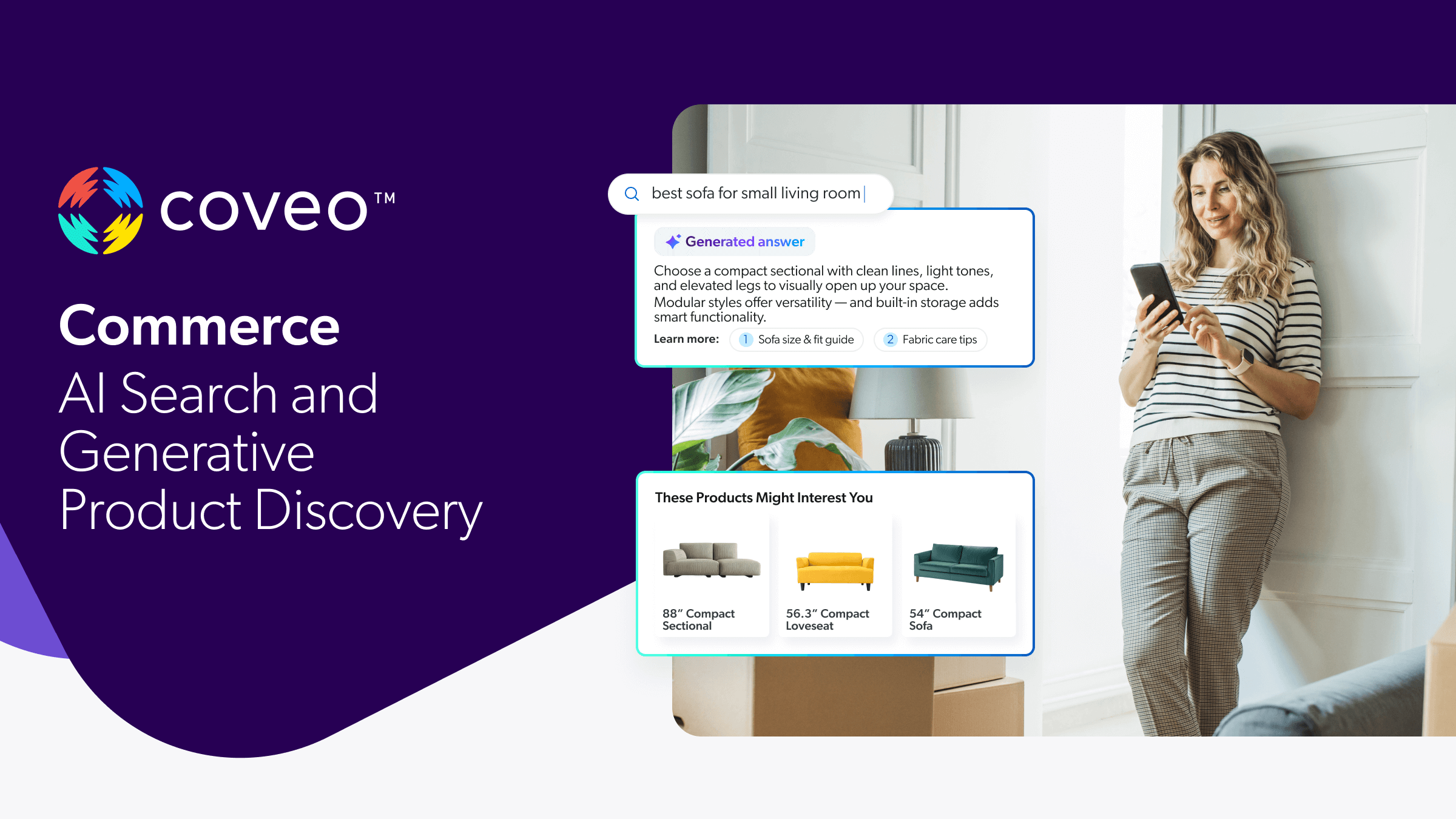
Coveo AI Product Recommendations

Best for Product Recommendation Engines for Ecommerce

Score
9.7 / 10
Coveo AI Product Recommendations

Coveo's AI recommendation tool is built specifically for eCommerce platforms, seeking to maximize cart size and boost average order value (AOV). Utilizing artificial intelligence, the software employs intent-aware recommendations, ensuring that your entire product catalog is effectively utilized, rather than focusing only on top products.

Best for Product Recommendation Engines for Ecommerce

Expert Take

Coveo AI Product Recommendations excels in providing tailored, intent-aware product suggestions for eCommerce platforms. It leverages AI to maximize cart size and average order value by utilizing the entire product catalog. While it offers robust capabilities and easy integration, its enterprise pricing model may be less accessible for smaller businesses.

Pros

  • 12+ specialized AI models available
  • Leader in Gartner Magic Quadrant
  • Native Salesforce & Sitecore integrations
  • Real-time session-based personalization
  • HIPAA & SOC 2 Type II compliant

Cons

  • Steep technical learning curve
  • Unpredictable consumption-based pricing
  • Requires developer resources to implement
  • Admin interface lacks intuitiveness
  • No public pricing transparency

Best for teams that are

  • B2B enterprises with complex pricing and entitlement needs
  • Large organizations requiring unified search and recommendations
  • Companies with developer resources for custom implementation

Skip if

  • Small businesses with limited budget or IT resources
  • Simple B2C stores wanting an instant, plug-and-play setup
  • Teams unable to manage a steep learning curve

Best for teams that are

  • B2B enterprises with complex pricing and entitlement needs
  • Large organizations requiring unified search and recommendations
  • Companies with developer resources for custom implementation

Skip if

  • Small businesses with limited budget or IT resources
  • Simple B2C stores wanting an instant, plug-and-play setup
  • Teams unable to manage a steep learning curve

Pros

  • 12+ specialized AI models available
  • Leader in Gartner Magic Quadrant
  • Native Salesforce & Sitecore integrations
  • Real-time session-based personalization
  • HIPAA & SOC 2 Type II compliant

Cons

  • Steep technical learning curve
  • Unpredictable consumption-based pricing
  • Requires developer resources to implement
  • Admin interface lacks intuitiveness
  • No public pricing transparency

Expert Take

Coveo AI Product Recommendations excels in providing tailored, intent-aware product suggestions for eCommerce platforms. It leverages AI to maximize cart size and average order value by utilizing the entire product catalog. While it offers robust capabilities and easy integration, its enterprise pricing model may be less accessible for smaller businesses.

9

Klaviyo: AI Email & SMS Marketing

Best for Email and SMS Automation for Ecommerce

Score
9.7 / 10
Klaviyo: AI Email & SMS Marketing

Klaviyo is a B2C CRM designed specifically for Ecommerce businesses. It leverages AI to power email and SMS marketing campaigns, driving growth and retention. Klaviyo's strength lies in its ability to build personalized, omnichannel experiences that deliver measurable results, aligning with the unique needs of Ecommerce businesses.

Best for Email and SMS Automation for Ecommerce

Expert Take

Klaviyo excels in providing AI-driven personalization and omnichannel marketing capabilities specifically tailored for Ecommerce businesses. Its integration with popular platforms and robust analytics further enhance its value. While it may present a learning curve for beginners, its comprehensive feature set justifies its positioning as a leading solution in its category.

Pros

  • Deep Shopify integration & investment
  • Built-in predictive analytics (CLV, Churn)
  • Omnichannel (Email, SMS, Push, Reviews)
  • Massive ecosystem (350+ integrations)
  • High deliverability & domain reputation tools

Cons

  • Billing includes non-emailed active profiles
  • Expensive compared to competitors
  • No phone support for standard plans
  • Steep learning curve for beginners
  • Support response times can be slow

Best for teams that are

  • Data-driven brands needing advanced segmentation
  • Fast-growing Shopify stores requiring deep integration
  • Marketers wanting detailed predictive analytics

Skip if

  • Small businesses with very simple needs or low budgets
  • Non-ecommerce businesses (better options exist)

Best for teams that are

  • Data-driven brands needing advanced segmentation
  • Fast-growing Shopify stores requiring deep integration
  • Marketers wanting detailed predictive analytics

Skip if

  • Small businesses with very simple needs or low budgets
  • Non-ecommerce businesses (better options exist)

Pros

  • Deep Shopify integration & investment
  • Built-in predictive analytics (CLV, Churn)
  • Omnichannel (Email, SMS, Push, Reviews)
  • Massive ecosystem (350+ integrations)
  • High deliverability & domain reputation tools

Cons

  • Billing includes non-emailed active profiles
  • Expensive compared to competitors
  • No phone support for standard plans
  • Steep learning curve for beginners
  • Support response times can be slow

Expert Take

Klaviyo excels in providing AI-driven personalization and omnichannel marketing capabilities specifically tailored for Ecommerce businesses. Its integration with popular platforms and robust analytics further enhance its value. While it may present a learning curve for beginners, its comprehensive feature set justifies its positioning as a leading solution in its category.

10

Emotive Abandoned Cart Recovery

Best for Abandoned Cart Automation Tools

Score
9.6 / 10
Emotive Abandoned Cart Recovery

Emotive Abandoned Cart Recovery is a SaaS solution designed specifically to help e-commerce businesses recover lost revenue from abandoned carts. Its powerful AI-driven messaging platform provides a distinct advantage over traditional email methods, boasting a 99% open rate and a guaranteed 5X return on investment.

Best for Abandoned Cart Automation Tools

Expert Take

Emotive Abandoned Cart Recovery excels in providing a specialized solution for e-commerce businesses to address cart abandonment. Its AI-driven messaging platform is well-documented and offers significant ROI, making it a top choice in its niche. However, the lack of transparent pricing and potential intrusiveness of messaging are noted tradeoffs.

Pros

  • Two-way conversational SMS capabilities
  • 5X ROI guarantee on ad spend
  • Dedicated 'TextPros' managed service team
  • Proprietary 'Litigator Filter' for compliance
  • Integrates with Gorgias and Zendesk

Cons

  • Reports of hidden carrier fees
  • Difficult cancellation process reported
  • Support responsiveness concerns in reviews
  • Minimum spend requirements on Pro plans
  • Higher base cost than basic tools

Best for teams that are

  • Mobile-first e-commerce brands prioritizing SMS and 2-way conversations
  • High-margin merchants who can justify higher costs for SMS recovery
  • Stores wanting to use human-to-human conversational tactics to close sales

Skip if

  • Businesses looking primarily for an email marketing solution
  • Low-margin stores where per-message SMS costs erode profitability
  • Audiences that may find aggressive SMS outreach intrusive

Best for teams that are

  • Mobile-first e-commerce brands prioritizing SMS and 2-way conversations
  • High-margin merchants who can justify higher costs for SMS recovery
  • Stores wanting to use human-to-human conversational tactics to close sales

Skip if

  • Businesses looking primarily for an email marketing solution
  • Low-margin stores where per-message SMS costs erode profitability
  • Audiences that may find aggressive SMS outreach intrusive

Pros

  • Two-way conversational SMS capabilities
  • 5X ROI guarantee on ad spend
  • Dedicated 'TextPros' managed service team
  • Proprietary 'Litigator Filter' for compliance
  • Integrates with Gorgias and Zendesk

Cons

  • Reports of hidden carrier fees
  • Difficult cancellation process reported
  • Support responsiveness concerns in reviews
  • Minimum spend requirements on Pro plans
  • Higher base cost than basic tools

Expert Take

Emotive Abandoned Cart Recovery excels in providing a specialized solution for e-commerce businesses to address cart abandonment. Its AI-driven messaging platform is well-documented and offers significant ROI, making it a top choice in its niche. However, the lack of transparent pricing and potential intrusiveness of messaging are noted tradeoffs.

How We Rank Products

Our Evaluation Process

Products in the ecommerce-focused marketing automation category are evaluated based on documented features such as automation capabilities, integration options, and data analytics tools. Pricing transparency is assessed to ensure clarity around subscription costs and any additional fees. Compatibility with popular ecommerce and CRM platforms is also examined, alongside user feedback from third-party sources to gauge customer satisfaction and reliability.

Verification

  • Products evaluated through comprehensive research and analysis of automation features and user experiences.
  • Rankings based on analysis of expert reviews and customer feedback regarding ecommerce marketing effectiveness.
  • Selection criteria focus on integration capabilities, user interface design, and overall functionality in ecommerce environments.

Score Breakdown

0.0 / 10

About Ecommerce Email & Marketing Automation

What Is Ecommerce Email & Marketing Automation?

Ecommerce Email & Marketing Automation is a specialized category of software designed to execute, manage, and optimize communications with customers throughout their entire buying lifecycle—from browsing and cart addition to post-purchase retention and loyalty. This category covers the specific functions of tracking shopper behavior (web tracking, purchase history), triggering personalized messages based on that behavior (abandoned carts, welcome series, win-back flows), and segmenting audiences for high-precision targeting. It sits squarely between Customer Relationship Management (CRM) systems, which primarily focus on sales pipeline and static contact records, and Enterprise Resource Planning (ERP) systems, which handle back-office inventory and financials. Unlike generic marketing automation tools, this category includes native, deep integrations with ecommerce platforms (such as Shopify, Magento, or BigCommerce) to synchronize product catalogs, order data, and customer events in real-time. It includes both general-purpose platforms adaptable for retail and vertical-specific tools built explicitly for direct-to-consumer (DTC) brands and online retailers.

The core problem this software solves is the "relevance gap." In the early days of digital commerce, businesses relied on "batch-and-blast" newsletters—sending the same message to every subscriber regardless of their interest or purchase history. This approach is no longer viable in a market where consumers expect hyper-personalized experiences. Ecommerce Email & Marketing Automation bridges this gap by utilizing behavioral data to send the right message to the right person at the exact moment of highest intent. For example, rather than sending a generic sale email, the system detects a customer viewing a specific pair of running shoes and automatically triggers an email highlighting those shoes, perhaps with a limited-time discount or social proof reviews, significantly increasing the likelihood of conversion.

Who uses it? While it is mission-critical for online retailers and DTC brands, its utility extends to B2B distributors, wholesalers, and manufacturers selling direct. Marketing managers use it to build revenue-generating workflows without constant manual intervention. Founders and owners use it to maximize Customer Lifetime Value (CLTV) and reduce Customer Acquisition Costs (CAC). Data analysts use it to understand attribution—determining exactly which email or SMS led to a purchase. Ultimately, it matters because it is often the single highest ROI channel for ecommerce businesses, turning one-time buyers into repeat customers through automated, data-driven stewardship.

History of the Category

The lineage of modern Ecommerce Email & Marketing Automation traces back to the 1990s, emerging from the limitations of early database marketing. In 1992, Unica introduced the concept of enterprise marketing management, attempting to organize the chaos of customer data. However, the true precursor to modern automation arrived with Eloqua in 1999. Originally designed to support sales teams, Eloqua pioneered the concept of "digital body language"—tracking user activity to gauge intent. This marked the shift from static contact lists to dynamic, behavior-based engagement.

Throughout the 2000s, the market was dominated by Email Service Providers (ESPs) like ExactTarget, Silverpop, and Responsys. These platforms moved the industry from on-premise software to the cloud (SaaS), enabling marketers to manage campaigns via a web browser rather than installed software. Yet, a gap remained: these tools were excellent at sending emails but lacked deep connectivity with the burgeoning ecommerce platforms. Buyers were forcing data into these systems manually, leading to data silos where purchase history lived in the ERP and email lists lived in the ESP.

The early 2010s witnessed a massive wave of market consolidation that shaped the current landscape. Major enterprise software players recognized that owning the "customer record" required owning the marketing execution layer. This triggered a multi-billion dollar acquisition spree:

  • IBM acquired Unica (2010) and later Silverpop (2014) to build its marketing cloud.
  • Oracle acquired Eloqua for $871 million in 2012 and Responsys in 2013 to form the Oracle Marketing Cloud [1].
  • Salesforce made the defining move of the era, acquiring ExactTarget for $2.5 billion in 2013 (which had previously acquired Pardot), effectively birthing the Salesforce Marketing Cloud [2].
  • Adobe acquired Neolane for $600 million in 2013 and later Marketo for $4.75 billion in 2018, cementing its position in the B2B and B2C automation space [3].

While these giants battled for the enterprise, a new gap opened in the mid-market. The "Marketing Clouds" were powerful but complex, expensive, and often required dedicated technical teams to operate. This created a vacuum for vertical-specific SaaS solutions like Klaviyo, Omnisend, and Drip to emerge in the mid-to-late 2010s. These platforms were built specifically for ecommerce, offering one-click integrations with Shopify and Magento. They shifted the buyer's expectation from "give me a database I can query" to "give me actionable intelligence I can use instantly." Today, the market has evolved further into omnichannel orchestration, where email is just one node in a network that includes SMS, push notifications, and direct mail, all triggered by a unified customer data profile.

What to Look For

Evaluating Ecommerce Email & Marketing Automation software requires a discerning eye, as many platforms claim "automation" capabilities that amount to little more than scheduled email blasts. True automation requires deep data integration and logic capability.

Critical Evaluation Criteria:

  • Deep Integration with Ecommerce Platforms: The tool must do more than just import contacts. It must sync the entire product catalog, order history, and real-time events (like "Added to Cart" or "Viewed Product"). If the system cannot trigger an email based on the specific variant (size/color) a customer viewed, it is insufficient for modern ecommerce.
  • Identity Resolution & Tracking: Look for "identity stitching" capabilities. Can the platform recognize that the mobile user browsing your site today is the same person who bought from their desktop last month? Effective tools merge these sessions into a single profile to prevent disjointed messaging.
  • Omnichannel Orchestration: Automation should not be limited to email. The best platforms allow you to build workflows that mix channels—sending an email first, then following up with an SMS if the email isn't opened, or retargeting via social media ads.
  • Predictive Analytics: Look for features that go beyond reporting what happened to predicting what will happen. This includes predicted date of next order, churn risk scores, and estimated customer lifetime value.

Red Flags and Warning Signs:

  • Data Latency: If the vendor says inventory data syncs "every few hours" or "overnight," walk away. In high-volume retail, a 15-minute delay can lead to overselling out-of-stock items in automated campaigns, creating a customer service nightmare.
  • Black Box Deliverability: If a vendor cannot provide transparent reporting on bounce rates, spam complaints, and domain reputation, they are likely hiding poor infrastructure. You need granular visibility into your sender reputation.
  • "Add-on" Pricing Structures: Be wary of contracts where essential features like "transactional emails" or "advanced segmentation" are expensive add-ons. TCO can double if you aren't careful.

Key Questions to Ask Vendors:

  • "Does your platform support custom events, and is there a limit on how many we can track?" (Crucial for tracking non-standard actions like 'took a quiz' or 'saved to wishlist').
  • "How do you handle IP warming for a list of our size, and is a dedicated IP included or extra?"
  • "Can I trigger automations based on changes in customer properties (e.g., VIP status change) in real-time, or only based on transactional events?"

Industry-Specific Use Cases

Retail & E-commerce

For pure-play retailers and DTC brands, the priority is minimizing Cart Abandonment and maximizing Repurchase Rate. A generic automation tool might send a standard reminder, but retail-specific tools allow for dynamic content insertion—showing the exact image of the abandoned item in the correct color. Retailers also heavily utilize "browse abandonment" workflows, which target users who viewed a category but didn't add to cart. Evaluation priorities include the speed of catalog syncing (to avoid promoting out-of-stock items) and the ability to generate unique, dynamic discount codes for each recipient to prevent coupon leakage. Visual product recommendation engines—"Complete the Look" or "You May Also Like"—are standard requirements here.

Healthcare

In the healthcare and wellness ecommerce sector (e.g., supplements, medical devices), HIPAA compliance and data privacy are paramount. Marketing automation here is less about aggressive sales and more about adherence and education. A key workflow is the "replenishment reminder," timed exactly to when a customer's supply of vitamins or medication should run out. Unlike retail, healthcare marketers must be extremely cautious about Personal Identifiable Information (PII). A unique consideration is "content masking"—ensuring that sensitive condition-specific information doesn't appear in subject lines. Evaluation must focus on security certifications (SOC2, HIPAA) and the ability to segment based on health goals without violating privacy standards [4].

Financial Services

For fintech and banking ecommerce (e.g., selling insurance, credit cards, or loans online), the primary use case is Application Recovery. Similar to cart abandonment, this targets users who started a loan application or quote process but dropped off. Security is the absolute highest priority; data encryption and audit logs are non-negotiable. These organizations often require "on-premise" style security even in cloud environments. Another specific need is regulatory compliance automation—ensuring that marketing messages automatically include the correct disclaimers based on the user's location and product interest. Cross-selling is also critical; for example, automating an email sequence offering home insurance 30 days after a mortgage application is approved [5].

Manufacturing

Manufacturers selling B2B (e.g., spare parts, wholesale supplies) use marketing automation to streamline Reordering and Account Management. Unlike B2C consumers who buy on impulse, B2B buyers have long, complex approval cycles. Automation workflows here are often triggered by contract renewal dates or usage thresholds rather than browsing behavior. A unique requirement is "Quote-to-Order" automation—following up on open quotes with automated reminders to procurement officers. Evaluation priorities include deep integration with ERP systems (like SAP or Oracle) and the ability to handle complex pricing tiers where different customers see different prices for the same SKU [6].

Professional Services

Firms selling digital products, courses, or consultancy packages rely heavily on Lead Nurturing and Content Gating. The purchase journey is educational. Automation tools must excel at "drip campaigns"—releasing content over weeks to build authority before asking for a sale. A specific workflow is the "webinar funnel," where attendance (or non-attendance) triggers different follow-up paths. Unlike retail, visual product recommendations are irrelevant. Instead, the focus is on "Lead Scoring"—assigning points for opening emails or clicking links to identify when a prospect is "sales ready." Evaluation focuses on CRM integration (e.g., Salesforce, HubSpot) to pass qualified leads to human sales agents seamlessly [7].

Subcategory Overview

Segmentation and Targeting Tools for Ecommerce

While general marketing platforms offer basic lists (e.g., "all customers in New York"), specialized segmentation tools dive deep into behavioral and transactional data to create dynamic, real-time cohorts. This niche differs because it leverages models like RFM (Recency, Frequency, Monetary value) to automatically categorize customers as "Champions," "At Risk," or "Whales" without manual sorting. Only these tools can handle complex queries like "Customers who bought a winter coat in the last 2 years but haven't purchased this season, excluding those who returned more than 50% of orders." The specific pain point driving buyers here is the "batch-and-blast fatigue"—generic emails that result in high unsubscribe rates and low engagement. By using specialized segmentation and targeting tools for ecommerce, brands can increase revenue per recipient by ensuring every message is hyper-relevant.

Product Recommendation Engines for Ecommerce

This subcategory focuses on the "intelligence" layer of what product to show next. Unlike generic tools that might just show "popular items," these engines use sophisticated machine learning algorithms to analyze individual user paths and predict the next likely purchase. A workflow that ONLY this tool handles well is the "Complete the Look" or "Frequently Bought Together" dynamic block inside an order confirmation email, which is generated in real-time at the moment the email is opened, not when it is sent. The pain point driving adoption is low Average Order Value (AOV). Retailers turn to product recommendation engines for ecommerce to automatically cross-sell and upsell without manual merchandising, often seeing revenue uplifts of 10-30% simply by showing the right related products.

Email and SMS Automation for Ecommerce

This niche combines two distinct channels into a single, unified workflow builder. It differs from standalone SMS or email tools by preventing "channel collision"—where a customer gets a text and an email about the same thing simultaneously, annoying them. A workflow only this tool handles well is the "smart channel cascade": sending an email first, waiting 4 hours, and if the email remains unopened, triggering an SMS. If the email is opened, the SMS is suppressed to save costs. The specific pain point is the disjointed customer experience and high cost of sending SMS to users who would have converted via free email. Buyers choose unified email and SMS automation for ecommerce platforms to manage communication frequency and costs efficiently across devices.

Abandoned Cart Automation Tools

While many platforms offer a basic abandoned cart trigger, specialized tools in this category offer "recovery suites" that go far beyond a simple reminder. They include features like persistent carts across devices (restoring the cart when a user switches from mobile to desktop), checkout friction analysis, and dynamic offer generation that increases the discount over time (e.g., 5% off in hour 1, 10% off in hour 24). A unique workflow is the "browser push notification" recovery, which attempts to capture the sale before the user even checks their email. The driving pain point is revenue leakage; with abandonment rates averaging nearly 70%, businesses turn to specialized abandoned cart automation tools to recover the highest possible percentage of lost sales through aggressive, multi-channel pursuit.

Integration & API Ecosystem

The lifeblood of any ecommerce automation strategy is data fluidity. If your marketing tool doesn't know exactly what is in your inventory or customer database in real-time, you risk automated disasters. Integration quality is often the difference between a successful campaign and a customer service crisis. The gold standard is a bi-directional sync: marketing data flows into the ecommerce platform (tagging high-value customers), and ecommerce data flows into the marketing platform (orders, inventory, tracking).

Expert Insight: A common pitfall is relying on "batch" integrations that sync every few hours rather than real-time webhooks. According to a 2025 analysis by Eposly, latency in inventory syncing can lead to significant overselling issues, which damages brand integrity in luxury retail sectors specifically [8]. Forrester analysts have noted that "integration complexity" is a top reason for marketing technology replacement.

Scenario: Imagine a 50-person professional services firm selling digital training courses. They use a CRM for sales, a separate learning management system (LMS) for the courses, and an invoicing tool. They attempt to integrate these with a generic automation tool. A customer buys a course (Invoicing), but the automation tool syncs only every 24 hours. The "Welcome & Access" email is delayed by a day. The customer, frustrated, emails support. Meanwhile, the sales CRM doesn't get the purchase data, so a salesperson calls the new customer to "sell" them the course they just bought. A poorly designed integration creates a disjointed, embarrassing customer experience.

Security & Compliance

In the era of GDPR, CCPA, and increasing cyber threats, security is not just an IT concern—it's a marketing one. Ecommerce marketing automation platforms house your most valuable asset: your customer list and their behavioral data. A breach here is catastrophic.

Expert Insight: The financial stakes are incredibly high. The IBM Cost of a Data Breach Report 2024 reveals that the global average cost of a data breach has reached $4.88 million, with costs in the financial sector even higher at over $6 million [5]. Furthermore, improperly managing consent (e.g., emailing users who unsubscribed) can lead to massive regulatory fines.

Scenario: A mid-sized healthcare ecommerce brand collects "health goals" via a quiz to segment their audience. They store this data in a marketing automation platform that is not HIPAA compliant or SOC2 certified. A phishing attack compromises an employee's login, and the attacker exports the list of customers tagged with specific health conditions. The company now faces not only the $4.88 million average breach cost but potentially class-action lawsuits and a complete loss of consumer trust. Proper evaluation would have flagged the lack of Multi-Factor Authentication (MFA) and data encryption at rest.

Pricing Models & TCO

Pricing in this category is notoriously complex and often designed to scale aggressively as you grow. The two most common models are Contact-Based (pay per subscriber) and Volume-Based (pay per email sent). There are also "Revenue Share" models, though less common in pure SaaS.

Expert Insight: Gartner research highlights that organizations often underestimate the Total Cost of Ownership (TCO) by failing to account for "add-on" costs like dedicated IP addresses, SMS carrier fees (which are distinct from platform fees), and premium support. Mid-market companies spend an average of $3,800 monthly on marketing automation, a figure that varies wildly based on contact count [9].

Scenario: Let's calculate TCO for a hypothetical DTC brand with 25,000 email contacts and 5,000 SMS subscribers. Platform A (Contact Tier): Charges $350/mo for up to 25k contacts with unlimited email. SMS is an add-on at $0.01/msg. Platform B (Volume Tier): Charges $200/mo for 25k contacts but caps emails at 100k/mo (4 sends per person). Overages are expensive. If the brand sends 8 emails a month (newsletters + flows), they send 200,000 emails. Platform A Cost: $350 base + (5,000 SMS * 4 campaigns * $0.01) = $350 + $200 = $550/mo. Platform B Cost: $200 base + (100k email overage @ $0.50/1k) = $200 + $50 = $250... BUT wait. If Platform B has poor deliverability or lacks the revenue-generating features of A, the "cheaper" price is a trap. The TCO must include the cost of lost revenue.

Implementation & Change Management

Buying the software is the easy part; getting it to work is where companies fail. Implementation involves technical setup (DNS records, tracking scripts), data migration (cleaning lists, mapping fields), and strategic setup (rebuilding workflows). "Change management" refers to the human side: getting your team to actually use the tool.

Expert Insight: Historical data from analysts like Gartner and Forrester has consistently placed CRM and marketing automation implementation failure rates between 50% and 70% [10]. The primary cause is not software bugs, but a lack of strategy and poor data hygiene during migration.

Scenario: An established retailer migrates from a legacy ESP to a modern automation platform. They decide to "bring everything" and import 500,000 contacts, 40% of whom haven't opened an email in 3 years. They immediately turn on their high-volume campaigns. The result? ISPs (Gmail, Yahoo) see a massive spike in volume to inactive accounts, flagging the new IP as spam. Their open rates plummet to 2%, and they are blocked during Black Friday week. A proper implementation would have involved a "warming schedule" and strict list cleaning prior to migration [11].

Vendor Evaluation Criteria

When selecting a vendor, look beyond the feature list. Every vendor has a "workflow builder." The differentiator is in the ecosystem and support. Does the vendor have a robust marketplace of plugins (e.g., integration with your specific loyalty app or review platform)?

Expert Insight: According to the Antavo Global Customer Loyalty Report 2026, marketers are spending more than half their budgets on loyalty retention, meaning your automation vendor must integrate seamlessly with loyalty tech [12]. Forrester emphasizes that "vertical capability" (features built specifically for your industry) is a stronger predictor of success than generic feature breadth.

Scenario: A fashion brand evaluates Vendor X and Vendor Y. Vendor X has 500 features, but Vendor Y has a native integration with the brand's specific Returns Management software (e.g., Loop Returns). This integration allows Vendor Y to trigger a "Sorry it didn't fit—here's $10 off your next order" email immediately when a return is scanned. Vendor X cannot do this without custom API work. Vendor Y is the superior choice despite having fewer total features, because it solves a specific, high-value operational use case.

Emerging Trends and Contrarian Take

Emerging Trends 2025-2026: We are seeing a shift toward Autonomous AI Agents rather than just "AI writing assistants." These agents don't just write the email; they decide when to send it, who should receive it, and via which channel (SMS vs. Email) without marketer intervention. Another massive trend is the impact of Google's Privacy Sandbox and the deprecation of third-party cookies. This makes first-party data (the data you own in your automation platform) the single most valuable asset for marketers, as ad targeting becomes less precise [13]. Finally, Hyper-personalization at Scale is moving from "Hi [Name]" to dynamically generating entire email body content based on the user's predicted affinity.

Contrarian Take: Your email list size is a vanity metric that is actively hurting your revenue. Most businesses celebrate hitting "100,000 subscribers" as a milestone. In reality, having 100,000 subscribers where only 10,000 are engaged is far worse than having a clean list of 15,000. Why? Because the "dead weight" drags down your sender reputation with Gmail and Outlook, causing your emails to land in the Spam folder even for your active buyers. Aggressively deleting 30-50% of your list (the non-openers) often results in higher total revenue because your deliverability improves, and your most valuable customers actually see your messages. Stop paying for hosting dead contacts who will never buy.

Common Mistakes

One of the most frequent mistakes is Over-Automation without human oversight. Marketers set up complex "spaghetti" workflows that sound genius on a whiteboard but result in customers receiving three conflicting emails in one day. Start simple: a Welcome Series, an Abandoned Cart, and a Post-Purchase Thank You. Master those before building 15-step nurture tracks.

Another critical error is ignoring the "Reply-To" address. Sending emails from "no-reply@brand.com" tells customers you don't want to hear from them. It creates a barrier. Monitoring replies can be a goldmine for customer service and actually improves email deliverability because ISPs see two-way communication as a signal of trust.

Finally, treating SMS like Email is a recipe for high opt-out rates. You cannot send an SMS every time you send a newsletter. SMS is for urgency and high-value transactional updates (e.g., "Your order is out for delivery" or "Flash sale ends in 1 hour"). Overusing this intimate channel will burn your list faster than any other mistake.

Questions to Ask in a Demo

  • "Can you show me the exact steps to create a segment of customers who bought Product X but NOT Product Y?" (Tests ease of use and logic capability).
  • "How does your platform handle attribution? If a user clicks an email, waits 3 days, clicks a Facebook ad, and then buys—who gets the credit?" (Tests analytics maturity).
  • "What is your historical uptime during Black Friday/Cyber Monday for the last three years?" (Tests infrastructure reliability).
  • "Do you have a dedicated deliverability team that will help me if I hit a spam trap or get blocklisted?" (Tests support quality).
  • "Is the SMS functionality native, or are you white-labeling a third-party tool? If third-party, who supports it?" (Tests platform unity).

Before Signing the Contract

Final Decision Checklist:

  • Data Ownership: Ensure that if you leave the platform, you can easily export all your data, including interaction history, not just contact details.
  • Scalability Costs: Model out what the pricing looks like if your business doubles next year. Does the price double, or quadruple? Watch out for steep "cliffs" between pricing tiers.
  • Support SLAs: Demand a Service Level Agreement that guarantees response times. "24/7 Support" often means "24/7 Chatbot" unless specified otherwise.

Common Negotiation Points:

  • Implementation Fees: These are often the most negotiable part of the contract. Ask for them to be waived or swapped for extra training hours.
  • Contract Length: Try to avoid locking into a 3-year deal unless there is a significant discount and a "break clause" after year 1 if performance metrics aren't met.
  • True-Up Clauses: Ensure you aren't automatically charged a penalty rate the second you go 1 contact over your limit. Negotiate a grace period or a "true-up" quarterly review.

Deal-Breakers:

  • Lack of Single Sign-On (SSO) for enterprise teams.
  • No audit logs to see who changed a workflow and when.
  • Inability to throttle send speeds (crucial for managing website traffic spikes).

Closing

Choosing the right Ecommerce Email & Marketing Automation platform is one of the most leveraged decisions you will make. The right tool acts as a force multiplier for your revenue, working silently in the background 24/7 to nurture leads and retain customers. The wrong tool becomes a source of friction, data silos, and wasted budget. If you have questions about specific vendors or need help auditing your current stack, I invite you to reach out.

Email: albert@whatarethebest.com