


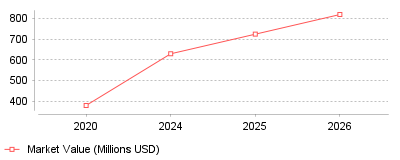
| Year | Market Value (Millions USD) |
|---|---|
| 2020 | 379.4 |
| 2024 | 630.1 |
| 2025 | 725.2 |
| 2026 | 820.5 |
The data illustrates a rapid evolution in the landing page builder category, where simple standalone design tools are being outpaced by comprehensive, AI-driven marketing automation platforms. Specifically, all-in-one platforms like GoHighLevel have seen astronomical user adoption, growing their active domains by 12,000x since 2020 and capturing a significant 4.63% share of the marketing automation market [source]. Additionally, the overall market for landing page software continues to boom, growing from roughly $379 million in 2020 to an estimated $820 million by 2026 [source].
On a micro level, individual agencies and service-based businesses are no longer content with simply capturing leads; they require unified systems that automatically nurture those leads through SMS, email, and pipeline management. By consolidating multiple subscriptions into a single platform, businesses reduce overhead costs and eliminate the integration errors associated with connecting disparate software tools [source]. On a macro level, the software industry is witnessing a shift toward unified ecosystems that combine CRM functionalities with funnel building [source]. This dynamic is forcing legacy funnel builders like ClickFunnels and Unbounce to heavily invest in new AI-generation features to stay relevant against these rapidly scaling all-in-one platforms [source].
This trend is critically important because it redefines the baseline technological requirements for digital marketing success in 2025 and beyond. Traditional, static sales funnels follow a rigid one-size-fits-all approach that fails to meet modern consumer expectations, resulting in declining conversion rates and wasted ad spend [source]. Conversely, AI-powered funnel builders can analyze thousands of data points in real-time, personalizing the customer journey and historically boosting conversion rates by up to 30 percent [source].
The primary catalyst for this shift is likely the widespread commoditization of basic website and landing page design. Since anyone can now generate a high-quality landing page using drag-and-drop or AI templates, the true bottleneck for business growth has shifted to post-capture lead follow-up and CRM integration [source]. Furthermore, rising digital advertising costs have made it imperative for companies to maximize the return on every click, pushing them toward tools that leverage machine learning to optimize traffic routing and deploy conversational AI chatbots [source]. I suspect that the proliferation of white-label SaaS models also played a massive role; by allowing agencies to resell these platforms as their own software, companies effectively outsourced their sales forces to thousands of highly motivated agency owners, creating viral adoption loops [source].
The era of the standalone landing page builder is rapidly closing, giving way to the age of the intelligent, all-in-one automated growth system. As artificial intelligence continues to handle real-time personalization, predictive analytics, and automated follow-ups, the software stack for marketers is becoming more consolidated but immensely more powerful [source]. The most prominent takeaway is that businesses must now evaluate funnel platforms not just on their page design capabilities, but on how effectively they integrate CRM, automate workflows, and adapt to individual user behaviors.
Global spending on digital page creation software exceeded $3.8 billion in 2025, with analysts projecting a compound annual growth rate of 10.8% through 2034 [1]. Other tracking firms analyze narrower platform definitions, placing the standalone market at $725 million in 2025 and forecasting expansion to $2.83 billion by 2035 [2]. North America commands the largest share of this capital expenditure, generating $1.5 billion in software revenue during 2025 alone [1].
Small and medium enterprises generated 45.8% of global market revenue in 2025. Cloud deployments account for 73.2% of operations, allowing firms to launch campaigns without managing server infrastructure [1]. This reliance on remote hosting accelerated software adoption across retail, financial, and educational sectors. Virtue Market Research identified business services and retail as the primary verticals driving product demand [3].
Integration capabilities dictate modern software purchasing decisions. Vendors increasingly connect their page editors to broader marketing and advertising platforms to prevent data silos. Companies no longer view landing pages as isolated assets but as individual nodes within larger automation networks. Demand for these encompassing automation tools is expected to push category spending to $13.97 billion by 2030 [4].
Information technology and telecommunications firms represent the largest end-user segment at 24.1%, followed closely by online retail at 21.3% [1]. The shift toward performance-based advertising forces these sectors to iterate their user experiences constantly. Organizations require software that allows marketers to publish pages without submitting requests to engineering departments. This operational independence reduces deployment times and allows teams to test multiple promotional angles simultaneously.
Software proliferation did not make acquiring customers cheaper. Customer acquisition costs rose 60% over the past five years across major industries [5]. Digital advertising prices climbed steadily as brands saturated popular social channels. Global ad spend is forecast to reach $836 billion by 2026, forcing marketers to optimize post-click experiences to maintain profitability [6].
Business-to-business technology startups spend an average of $536 to acquire a single customer. Specific sectors face steeper penalties for inefficient sales funnels. Financial technology companies spend $1,450 per acquisition on average, with enterprise-focused software providers exceeding $14,000 [7]. Organic search and content channels typically cost between $50 and $150 per customer, but paid search campaigns command an average of $802 per acquired account [7].
Consumer markets experience similar financial pressures. Real estate firms pay an average of $2,830 per paid acquisition, while financial services companies pay $1,751 [5]. These capital requirements force marketing teams to extract maximum value from every paid visitor. A minimal increase in conversion rates directly offsets rising media costs. A landing page that converts traffic at 4% instead of 2% effectively halves the media acquisition cost.
Agencies managing outsourced advertising budgets feel this financial pressure acutely. They frequently seek platforms designed for client management to build, test, and duplicate high-converting assets across multiple accounts. The ability to deploy proven page templates reduces labor costs and accelerates campaign launches. Organizations report a $5.44 return for every dollar spent on marketing automation software, provided they implement proper tracking systems [8].

Apple released iOS 17 in late 2023, introducing a feature called Link Tracking Protection. This update fundamentally altered how digital marketers track user behavior across mobile devices. The operating system automatically strips user-identifiable tracking parameters from URLs accessed through Safari Private Browsing, Apple Mail, and Messages [9].
Marketers historically relied on these URL additions to pass click information between advertising networks and web properties. When a user clicked an advertisement, unique text strings appended to the destination link. Link Tracking Protection intercepts the click and removes the identifier before the browser loads the destination page [10]. Web analytics software registers the site visit but loses the exact campaign attribution data.
Attribution gaps widened immediately following the software rollout. Companies running email marketing campaigns experienced artificial declines in measured revenue because final sales lost their connection to specific email clicks. This technical blind spot forces a return to native reporting tools. It also accelerates the need for secure, consent-based data collection strategies [11]. Funnel builders must capture explicit user consent and manage communication preferences immediately upon lead capture.
Email service providers enacted complementary network restrictions. Gmail and Yahoo implemented strict authentication rules requiring high-volume senders to configure specific domain records and maintain low spam complaints. Future requirements taking effect in November 2025 will mandate even tighter list hygiene protocols [11]. Senders must implement Sender Policy Framework and DomainKeys Identified Mail across all sending domains. Organizations cannot rely on third-party software to mask poor sender reputations. They must integrate their landing page and funnel builders directly with verified sending domains to ensure message deliverability.
Software platforms evolved from single utilities into unified operational suites over the past three years. ClickFunnels launched its 2.0 version in 2022 to shift from a single page editor to a business management platform. The company updated page speed algorithms, integrated advanced analytics, and expanded its electronic commerce functionality [1]. This product pivot illustrates a broader industry move toward connected software. Buyers prefer integrated systems over disjointed applications.
Retail operations require specialized funnel dynamics to process transactions efficiently. Online stores converting visitors at 1.4% to 1.8% represent the median performance threshold, while elite retail brands achieve rates above 4.7% [12]. Mobile users account for 78% of retail site visits but generate lower conversion rates than desktop users [13]. Friction during mobile checkout causes severe revenue leakage. Operators searching for cart optimization tools prioritize immediate load times and minimal form fields.
Software developers target specific retail networks to capture distinct market segments. Shopify processed over $500 billion in gross merchandise volume globally, establishing an enormous user base for third-party developers. Merchants looking for native store integrations seek direct inventory synchronization and centralized checkout processing. Standalone platforms that fail to read native retail inventory data create operational bottlenecks for store owners. Integrating funnel logic directly into existing digital architecture reduces data conflicts and simplifies order fulfillment.
Independent marketing professionals face different software constraints. They require multi-account management tools to separate client assets securely. Using consumer-grade software for enterprise client work creates permission management issues and billing complications. Digital firms require multi-tenant architectures to restrict user access based on organizational roles. This administrative control prevents unauthorized design changes and protects sensitive conversion data from unauthorized viewing.
Artificial intelligence features transitioned from experimental concepts to standard operational tools in 2024. Unbounce released Smart Traffic, a machine-learning algorithm that analyzes incoming visitors and routes them to the specific page variant most likely to trigger a conversion. The company reported a 30% increase in average conversion rates for users deploying the feature properly [14].
Seventy-seven percent of marketing professionals used automation tools to create personalized audience content in 2024 [8]. Dynamic text replacement alters page headlines based on search query parameters, providing immediate relevance to ad-clickers. Generative intelligence assistants now draft page copy, suggest structural layouts, and construct entire sales sequences based on brief text prompts. These tools reduce page deployment time by approximately 50% compared to manual design processes.
Algorithmic systems accelerate the traditional testing cycle. Standard split testing requires thousands of visitors to achieve statistical significance. Smaller companies often abandon tests before gathering enough data to make informed decisions. Machine learning models bypass this limitation by identifying performance patterns early and shifting traffic allocation in real time as data accumulates. This continuous optimization model prevents companies from sending paid traffic to underperforming pages during lengthy test periods.
Design limitations remain a persistent problem despite algorithmic advancements. Some builders force users to maintain separate desktop and mobile page designs. This dual-editing requirement doubles the labor needed to launch a single campaign. Furthermore, users report frustration when artificial intelligence suggests layouts that contradict established brand guidelines. Human oversight remains necessary to ensure automated designs maintain visual consistency with broader corporate identities.
Marketing teams face a permanent reality of high advertising costs and strict privacy regulations. The era of cheap web traffic ended definitively. Profitability requires exceptional post-click optimization and precise audience measurement.
Zero-party data collection will dominate future funnel strategies. Quizzes, surveys, and interactive forms encourage users to volunteer specific preference data willingly. Funnel builders that integrate interactive assessments natively will capture market share from static page editors. This explicit data exchange builds trust and circumvents the technical tracking limitations imposed by device manufacturers and browser developers.
Server-side tracking offers another vital technical adaptation. Browsers block third-party cookies aggressively, forcing businesses to transmit conversion data directly from their server to advertising networks. Funnel software must provide simple application programming interfaces to facilitate this server-to-server communication. Platforms lacking native event tracking will cause their users to suffer severe advertising performance degradation. The data transfer must happen securely without exposing personally identifiable information to unauthorized third parties.
Vendor consolidation will accelerate through 2035. Major marketing platforms will acquire independent page builders to expand their native product suites. Niche funnel software will survive by targeting specific industries. Products serving distinct operational needs will maintain pricing power against generalized software suites. Providers must transition from building simple web pages to engineering complete data capture systems to remain relevant in the coming decade.
| Year | Market Value (Millions USD) |
|---|---|
| 2020 | 379.4 |
| 2024 | 630.1 |
| 2025 | 725.2 |
| 2026 | 820.5 |
The data illustrates a rapid evolution in the landing page builder category, where simple standalone design tools are being outpaced by comprehensive, AI-driven marketing automation platforms. Specifically, all-in-one platforms like GoHighLevel have seen astronomical user adoption, growing their active domains by 12,000x since 2020 and capturing a significant 4.63% share of the marketing automation market [source]. Additionally, the overall market for landing page software continues to boom, growing from roughly $379 million in 2020 to an estimated $820 million by 2026 [source].
On a micro level, individual agencies and service-based businesses are no longer content with simply capturing leads; they require unified systems that automatically nurture those leads through SMS, email, and pipeline management. By consolidating multiple subscriptions into a single platform, businesses reduce overhead costs and eliminate the integration errors associated with connecting disparate software tools [source]. On a macro level, the software industry is witnessing a shift toward unified ecosystems that combine CRM functionalities with funnel building [source]. This dynamic is forcing legacy funnel builders like ClickFunnels and Unbounce to heavily invest in new AI-generation features to stay relevant against these rapidly scaling all-in-one platforms [source].
This trend is critically important because it redefines the baseline technological requirements for digital marketing success in 2025 and beyond. Traditional, static sales funnels follow a rigid one-size-fits-all approach that fails to meet modern consumer expectations, resulting in declining conversion rates and wasted ad spend [source]. Conversely, AI-powered funnel builders can analyze thousands of data points in real-time, personalizing the customer journey and historically boosting conversion rates by up to 30 percent [source].
The primary catalyst for this shift is likely the widespread commoditization of basic website and landing page design. Since anyone can now generate a high-quality landing page using drag-and-drop or AI templates, the true bottleneck for business growth has shifted to post-capture lead follow-up and CRM integration [source]. Furthermore, rising digital advertising costs have made it imperative for companies to maximize the return on every click, pushing them toward tools that leverage machine learning to optimize traffic routing and deploy conversational AI chatbots [source]. I suspect that the proliferation of white-label SaaS models also played a massive role; by allowing agencies to resell these platforms as their own software, companies effectively outsourced their sales forces to thousands of highly motivated agency owners, creating viral adoption loops [source].
The era of the standalone landing page builder is rapidly closing, giving way to the age of the intelligent, all-in-one automated growth system. As artificial intelligence continues to handle real-time personalization, predictive analytics, and automated follow-ups, the software stack for marketers is becoming more consolidated but immensely more powerful [source]. The most prominent takeaway is that businesses must now evaluate funnel platforms not just on their page design capabilities, but on how effectively they integrate CRM, automate workflows, and adapt to individual user behaviors.