


| Year | Market Size ($B) |
|---|---|
| 2020 | 9.7 |
| 2023 | 21.1 |
| 2024 | 24 |
| 2025 | 32.55 |
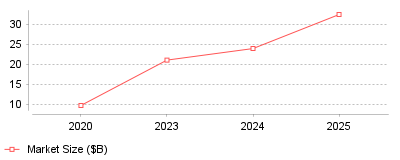
The data illustrates an exponential increase in both the financial footprint of the global influencer marketing industry and the technological infrastructure that supports it. Specifically, the total market size is ballooning from $9.7 billion in 2020 to $32.55 billion in 2025 [source]. In parallel, the number of dedicated influencer marketing platforms, software tools, and service providers has surged dramatically, growing from 1,360 platforms in 2020 to an estimated 6,939 platforms by 2025 [source].
On a macro level, this rapid growth signifies that influencer marketing has fully transitioned from an experimental side-channel to a core, permanent pillar of modern digital advertising budgets, with social media now serving as the world's largest advertising medium [source]. As brands allocate increasingly larger shares of their advertising spend to the creator economy, the demand for sophisticated tracking, relationship management, and data analytics has never been higher. At the micro industry level, this proliferation of platforms indicates fierce competition among software providers aiming to solve complex campaign logistics, such as fraud detection, payment processing, and cross-channel attribution. Ultimately, it means brands are no longer managing creators via manual spreadsheets, but instead require robust, AI-driven software to efficiently identify, manage, and scale partnerships with niche nano- and micro-influencers [source].
This trend is critically important because it reflects a broader shift in consumer trust and digital commerce, where peer-driven recommendations continue to outpace traditional advertising formats in both engagement and effectiveness. Furthermore, the massive influx of new software platforms underscores a desperate industry need for standardization, billing transparency, and data privacy compliance across the creator economy. For marketers, agencies, and venture capital investors alike, this signals that the real financial opportunity may not just be in creating content, but in providing the technological "picks and shovels" that power the rapidly expanding, $32.55 billion global creator ecosystem [source].
Several interconnected market factors are likely driving this exponential growth in influencer software platforms. First, the algorithm-driven dominance of short-form video networks like TikTok, YouTube Shorts, and Instagram Reels has fragmented audiences, making it harder for brands to achieve mass reach without partnering with dozens or hundreds of specialized micro-influencers [source]. Second, the integration of artificial intelligence and machine learning into marketing tech has dramatically lowered the barrier to entry for developing new influencer discovery tools and predictive analytics features [source]. Additionally, as modern privacy updates limit the effectiveness of traditional targeted digital ads, brands are heavily pivoting their budgets toward individual creators to regain access to highly engaged, niche demographics in an organic way. Finally, the rise of social commerce—where users purchase directly within social applications—has transformed influencers from mere brand awareness vehicles into direct sales channels, necessitating highly advanced software to calculate exact return on investment (ROI) and seamlessly process affiliate payouts [source].
The remarkable expansion of the influencer marketing platform sector from 2020 to 2025 highlights a maturing industry that is cementing its place at the center of global digital advertising strategy. As the market size breaches the $32 billion mark and nearly 7,000 distinct service providers compete for market share, the technological ecosystem supporting it has grown exponentially more complex and indispensable [source]. The prominent takeaway is that while the sheer number of online creators continues to rise, the brands that will dominate the next decade are those utilizing the most sophisticated platform technologies to turn creative chaos into measurable, data-driven revenue.
Advertisers spent $8.14 billion on creator campaigns in 2024. This total represents a 16% year-over-year increase [1]. The broader creator economy sits at $250 billion. Goldman Sachs projects that figure will approach $480 billion by 2027 [2]. Vendors respond to this capital influx through rapid consolidation. Sprout Social acquired Tagger Media for $140 million in cash to integrate campaign management into its suite [3]. Buyers want unified systems. They prefer software that handles discovery, contracting, and payment in one interface. This demand forces standalone applications to mature into enterprise marketing and advertising platforms.
Investment flows into the technology layer outpace the ad spend itself. The global platform software market reached $25.44 billion in 2024 [4]. Grand View Research projects this software segment will reach $97.55 billion by 2030. Private equity firms fund mergers to capture this revenue. NeoReach acquired Influencers.com in late 2024 to expand its data pool [5]. Meltwater purchased Klear to bridge traditional public relations with social media management. These transactions indicate a maturing software category. The market no longer tolerates fragmented tools. Marketing teams refuse to use one application for finding creators and another for issuing payments.
Software providers face intense pressure to deliver measurable returns. Engagement rates dropped from 1.85% in 2023 to 1.59% in 2024 [6]. Organic reach is declining across major networks. Creators struggle to maintain audience growth without paid promotion. Brands shift their budgets away from awareness campaigns. They demand conversion data instead. Technology companies like CreatorIQ and GRIN build specialized integrations with Shopify to track specific sales [7]. They map the user journey from a social media view directly to a completed checkout.
The Federal Trade Commission implemented a final rule on October 21, 2024. This regulation bans fake reviews and undisclosed testimonials [8]. Violators face civil penalties of $51,744 per incident [9]. The mandate prohibits brands from buying false engagement metrics. It outlaws compensation tied to specific review sentiments. Marketers cannot suppress negative feedback. They must disclose material connections clearly within the content itself. Built-in platform toggles do not satisfy the legal requirement alone. A written disclosure remains mandatory.
Enforcement actions are public and aggressive. The FTC sent formal warning letters to 12 health creators in November 2023. These individuals failed to disclose paid partnerships regarding aspartame products [8]. A separate wave of letters in early 2025 targeted undisclosed employee reviews [10]. The legal liability falls on both the creator and the brand. If an agency hires an individual who buys fake followers, the agency shares the legal fault. Compliance teams require software that archives content history. System administrators need proof that partners included required hashtags. Top influencer networks now include automated text recognition to flag missing disclosures before payment release.
The 2024 rule expands the definition of a material connection. A brand does not need to exchange cash to trigger disclosure requirements. Gifting a product creates a material connection. Providing early access to a software beta constitutes an incentive. Even personal relationships with company executives fall under the FTC purview. Software platforms must adapt their contract generation features. They include mandatory disclosure clauses in every digital agreement. The tools force creators to check compliance boxes before they can submit their final deliverables for brand approval.

Fake followers cost advertisers $1.3 billion in 2019 [11]. The problem persists despite advanced detection algorithms. A 2021 HypeAuditor study found that 41% of Instagram followers in the United States were bots or inactive accounts [12]. Malicious actors use automated software to inflate subscriber counts. This deception drives up their partnership rates artificially. Brands waste thousands of dollars buying impressions from non-existent users. Fraudulent engagement pods manipulate the algorithms further. Groups of creators agree to like and comment on each other's posts automatically to simulate viral interest.
Platform engineers deploy machine learning to identify suspicious patterns. HypeAuditor tracks sudden follower spikes and repetitive comment structures. Upfluence filters discovery results based on authentic engagement ratios. Software categorizes audiences by their actual activity rather than static follower counts. It identifies accounts that leave identical emoji comments across hundreds of disparate posts. Brand managers rely on these authentication scores to eliminate fraudulent partners during the initial vetting phase.
Social network APIs change constantly, however. Facebook and X restrict access to their internal data feeds. This volatility breaks third-party tracking tools. Developers must rebuild their scraping methods frequently. When connections fail, marketers lose visibility into campaign performance. Twitter severely limited its API access in 2023, forcing many analytics platforms to drop the network entirely. TikTok maintains strict control over its user data. Software vendors negotiate custom access agreements to pull basic demographic information. This technical instability creates operational blind spots for global marketing campaigns.
High follower counts often yield low sales. Nano-influencers generate engagement rates near 10.3% on TikTok, while accounts with over 500,000 followers average 7.1% [13]. Savvy procurement teams focus on micro-communities. They target specific hobbies rather than broad lifestyle categories. This segmentation requires specialized creator discovery software tailored for digital marketing agencies. Account managers need bulk outreach capabilities. They handle hundreds of small contracts simultaneously. Manual spreadsheet tracking becomes impossible at this volume.
Agency workflows differ significantly from internal brand operations. An agency manages distinct budgets for separate clients. The software must partition data securely to prevent cross-contamination. White-label reporting is a mandatory feature. External marketing agencies rely on collaboration portals to share campaign progress without revealing the underlying software vendor. The platform serves as the central communication hub. It logs every email, contract revision, and payment receipt across multiple client accounts.
B2B implementations trail consumer markets but show distinct growth patterns. Corporate software companies use LinkedIn to reach niche professional audiences. The metrics for success differ completely. A consumer brand wants immediate purchases. A B2B firm wants webinar registrations or whitepaper downloads. Influencer software platforms struggle to track these longer sales cycles. The time between a sponsored post and a finalized enterprise software contract can exceed 12 months. Vendors build integrations with Salesforce and HubSpot to connect initial social media impressions to eventual closed revenue.
Consumer exhaustion limits traditional endorsement effectiveness. McKinsey data shows 68% of shoppers feel frustrated by the sheer volume of sponsored posts [13]. Trust drops when viewers see repetitive promotional scripts. Brands combat this fatigue through performance-based affiliate models. Creators earn commissions on actual sales rather than flat posting fees. This shift drives demand for creator management systems built specifically for ecommerce brands. These systems issue unique discount codes automatically. They track pixel data from the social feed directly to the checkout page.
Proving return on investment remains a severe operational hurdle. Brand leaders want revenue attribution. Vanity metrics like impressions satisfy no one. Industry groups suggest the channel delivers $6.50 for every dollar spent [14]. Verifying that figure requires complex data architecture. Multi-touch attribution models remain flawed. A customer might see a sponsored video on Monday but buy the product directly through search on Thursday. The creator rarely gets credit for that delayed conversion. First-click and last-click attribution models fail to capture the full financial impact of social media exposure.
Vendors attempt to bridge this gap through commerce integrations. Traackr added Shopify support to automate product seeding [4]. The application pulls inventory data and ships samples directly to creators. Influencity provides audience overlap analysis. Marketers use it to ensure they do not pay twice to reach the same demographic. The software highlights unique reach. Storefront operators and ecommerce businesses need seamless creator hubs to manage massive affiliate networks. The software calculates custom commission rates, handles tax documentation, and issues payments across international borders.
TikTok captures a massive share of creator budgets. Marketers spent $1.25 billion on TikTok creator content in 2024 [1]. The platform forces structural changes in how software manages deliverables. Instagram campaigns rely heavily on static images. TikTok requires vertical video. Video files are large and difficult to manage. Software platforms had to upgrade their asset libraries to handle 4K video uploads. The review and approval process changed. Brands cannot easily edit a completed video. They require storyboard approval features before the creator records the content.
YouTube maintains a stronghold for educational content. Advertisers spent $1.07 billion on YouTube creator campaigns in 2024 [1]. The platform attracts high-value product reviews. Consumer electronics and automotive brands prefer YouTube for its detailed format. The integration between YouTube Shorts and long-form videos complicates tracking. Software must separate the metrics. A vertical video behaves differently than a 20-minute tutorial. The analytics dashboards distinguish between formats to calculate accurate engagement rates.
Meta continues to adjust its algorithms to combat TikTok. Instagram emphasizes Reels over static grid posts. Influencer marketing software updates its internal metrics to match these changes. Reach replaces follower count as the primary performance indicator. The algorithm serves content to non-followers based on engagement probability. A creator with 10,000 followers might reach 500,000 viewers if the algorithm promotes the video. Software platforms analyze average view duration and completion rates to predict algorithmic success.
Salesforce integrated predictive scoring into Sales Cloud. Influencer software providers followed a similar path. Aspire uses algorithm-driven matching to pair brands with relevant personalities. Meltwater applies sentiment analysis to monitor comment sections. These applications score audience reactions as positive or negative automatically. Natural language processing parses video transcripts. It ensures creators mention required talking points. This technology reduces manual moderation hours significantly. The software flags videos that omit key regulatory phrases.
Artificial intelligence introduces new complications. Programmers generate realistic photos and videos without human intervention. These virtual avatars accumulate followers rapidly. Advertisers inadvertently pay for impressions delivered entirely to other bots. Software engineers must train their fraud detection models to spot AI-generated content. State regulators draft rules to govern synthetic personalities [15]. Transparency is mandatory. Consumers must know when a recommendation comes from a computer rather than a person. Virtual influencers blur the lines of liability. If an AI avatar makes a false claim, the legal responsibility falls squarely on the brand.
Generative text tools accelerate the outreach process. Software platforms embed writing assistants to draft personalized pitch emails. Marketers generate hundreds of unique messages based on a creator's recent post history. This automation increases response rates. It also risks alienating creators who receive poorly generated templates. High-tier creators use software to filter their inboxes. They employ AI assistants to decline low-paying offers automatically. The interaction becomes a negotiation between two autonomous software agents.
Managing payments for independent contractors creates severe administrative bottlenecks. A global campaign requires transacting in dozens of different currencies. Tax compliance varies drastically by region. United States tax law mandates W-9 collection and 1099 reporting for any creator earning over $600 annually. Corporate accounting teams struggle to process hundreds of individual invoices. Influencer marketing platforms solve this through integrated payment gateways. They collect tax documentation during the initial onboarding sequence. The software blocks payment releases until the creator provides valid legal information.
Cross-border transactions incur heavy processing fees. Software platforms batch payments to reduce these overhead costs. They integrate with global payment processors to handle currency conversion automatically. Contract negotiation occurs directly within the platform interface. Brands upload legal templates. Creators review, redline, and sign documents electronically. The system locks the final agreement and ties the payment schedule to specific deliverables. If a creator fails to post a required video, the software halts the escrow release. This automation protects the advertising budget from unfulfilled commitments.
Sending physical merchandise to creators remains a logistical challenge. Brands historically managed shipping addresses in isolated spreadsheets. Packages went missing. Creators moved without updating their contact information. Warehouses shipped duplicate items accidentally. Modern platforms integrate directly with fulfillment centers. The software treats a creator collaboration like a standard e-commerce transaction. It generates a trackable shipping label and monitors the delivery status. Marketers know exactly when a product arrives.
Luxury merchandise requires additional security protocols. Consumer electronics companies cannot afford to send $2,000 laptops to unverified addresses. Software platforms verify identity through bank-level authentication. They require creators to link their primary social accounts to prove ownership. The systems track product receipt against content publication. If a creator receives a luxury item but ignores the brand, the software flags the profile. This internal rating system warns other marketing managers about unreliable partners. Platform vendors share this negative reputation data across their entire customer base to protect the broader network.
Pay disparity plagues the creator economy. Brands often pay minority creators significantly less than their white counterparts for identical deliverables. The lack of standardized pricing models exacerbates this inequality. Influencer marketing platforms introduce wage transparency. They aggregate payment data across thousands of campaigns to establish baseline market rates. Account managers see the average cost per post for a specific demographic and follower tier. This visibility helps brands audit their compensation practices.
Corporate mandates require diversity in advertising. Marketing teams must prove their campaigns reach varied demographics. Software platforms use image recognition to estimate audience demographics. They analyze the creator's follower base to determine age, gender, and geographic distribution. Marketers use these analytics to build inclusive campaign rosters. The software generates diversity reports automatically. Executives review these documents to ensure the brand meets its internal equity goals. If a campaign skews heavily toward a single demographic, the platform suggests alternative creators to balance the distribution.
Brands face a stark choice regarding operational execution. They can license software and run campaigns internally, or they can hire external agencies. Software vendors blur this line by offering managed services alongside their technology. A brand might purchase an annual SaaS license but pay an additional fee for campaign execution. The software company provides dedicated account managers to handle creator outreach. This hybrid model appeals to companies with limited internal headcount.
Enterprise organizations prefer to keep data in-house. They integrate the influencer software with their internal customer relationship management systems. The marketing platform feeds engagement data directly into Salesforce or Adobe Experience Cloud. This integration builds a unified customer profile. The brand tracks how a user interacts with creator content before clicking an email newsletter. Mid-market companies lack the technical resources for custom API connections. They rely on the influencer platform as a standalone tool. They export basic spreadsheet reports for executive presentations.
Marketing directors require performance guarantees before allocating budget. Historical data alone fails to predict future success. Social media algorithms shift constantly, rendering past engagement metrics obsolete. Software platforms integrate predictive analytics to solve this forecasting problem. The tools analyze millions of past posts to identify performance variables. They evaluate posting time, video length, audio tracks, and text sentiment. The software generates an expected return profile for each creator before the brand signs a contract.
This predictive modeling changes how procurement departments evaluate proposals. They demand specific cost-per-acquisition targets. If the software predicts a campaign will fail to meet the internal threshold, the brand cancels the initiative. Predictive analytics also identify breakout creators early. The software flags accounts with accelerating growth trajectories. Brands secure long-term contracts with these individuals before their rates increase. This early identification strategy stretches the advertising budget further. It allows mid-market companies to compete with global enterprises for creator attention.
Privacy regulations threaten the current data collection models. Europe enforces the Digital Markets Act. The legislation restricts how platforms track users across third-party websites. Influencer marketing platforms lose access to precise conversion data. They must rely on aggregate modeling rather than individual tracking. First-party data becomes the most valuable asset. Brands use influencer campaigns to collect email addresses rather than immediate sales. The software captures this information through exclusive landing pages.
The friction between social network data privacy and third-party analytics will escalate. Platforms like TikTok want to keep transactions inside their native interfaces. They restrict external tracking to force brands into their proprietary advertising networks. TikTok Shop allows users to purchase items without leaving the app. Influencer software must connect directly to the TikTok Shop API to register the sale. If the social network revokes that access, the third-party platform becomes useless.
Advertisers face a maturing industry. The early days of unregulated bartering are over. Government oversight requires strict financial reporting. Procurement departments demand standardized pricing models. Software remains the only viable method to manage these concurrent pressures. Teams must evaluate their technology vendors carefully. They need systems that adapt to sudden regulatory shifts and API closures. The successful platforms will prioritize legal compliance and verifiable revenue attribution above simple follower counts.
| Year | Market Size ($B) |
|---|---|
| 2020 | 9.7 |
| 2023 | 21.1 |
| 2024 | 24 |
| 2025 | 32.55 |
The data illustrates an exponential increase in both the financial footprint of the global influencer marketing industry and the technological infrastructure that supports it. Specifically, the total market size is ballooning from $9.7 billion in 2020 to $32.55 billion in 2025 [source]. In parallel, the number of dedicated influencer marketing platforms, software tools, and service providers has surged dramatically, growing from 1,360 platforms in 2020 to an estimated 6,939 platforms by 2025 [source].
On a macro level, this rapid growth signifies that influencer marketing has fully transitioned from an experimental side-channel to a core, permanent pillar of modern digital advertising budgets, with social media now serving as the world's largest advertising medium [source]. As brands allocate increasingly larger shares of their advertising spend to the creator economy, the demand for sophisticated tracking, relationship management, and data analytics has never been higher. At the micro industry level, this proliferation of platforms indicates fierce competition among software providers aiming to solve complex campaign logistics, such as fraud detection, payment processing, and cross-channel attribution. Ultimately, it means brands are no longer managing creators via manual spreadsheets, but instead require robust, AI-driven software to efficiently identify, manage, and scale partnerships with niche nano- and micro-influencers [source].
This trend is critically important because it reflects a broader shift in consumer trust and digital commerce, where peer-driven recommendations continue to outpace traditional advertising formats in both engagement and effectiveness. Furthermore, the massive influx of new software platforms underscores a desperate industry need for standardization, billing transparency, and data privacy compliance across the creator economy. For marketers, agencies, and venture capital investors alike, this signals that the real financial opportunity may not just be in creating content, but in providing the technological "picks and shovels" that power the rapidly expanding, $32.55 billion global creator ecosystem [source].
Several interconnected market factors are likely driving this exponential growth in influencer software platforms. First, the algorithm-driven dominance of short-form video networks like TikTok, YouTube Shorts, and Instagram Reels has fragmented audiences, making it harder for brands to achieve mass reach without partnering with dozens or hundreds of specialized micro-influencers [source]. Second, the integration of artificial intelligence and machine learning into marketing tech has dramatically lowered the barrier to entry for developing new influencer discovery tools and predictive analytics features [source]. Additionally, as modern privacy updates limit the effectiveness of traditional targeted digital ads, brands are heavily pivoting their budgets toward individual creators to regain access to highly engaged, niche demographics in an organic way. Finally, the rise of social commerce—where users purchase directly within social applications—has transformed influencers from mere brand awareness vehicles into direct sales channels, necessitating highly advanced software to calculate exact return on investment (ROI) and seamlessly process affiliate payouts [source].
The remarkable expansion of the influencer marketing platform sector from 2020 to 2025 highlights a maturing industry that is cementing its place at the center of global digital advertising strategy. As the market size breaches the $32 billion mark and nearly 7,000 distinct service providers compete for market share, the technological ecosystem supporting it has grown exponentially more complex and indispensable [source]. The prominent takeaway is that while the sheer number of online creators continues to rise, the brands that will dominate the next decade are those utilizing the most sophisticated platform technologies to turn creative chaos into measurable, data-driven revenue.