
Territory Mapping & Quota Planning Tools
These are the specialized categories within Territory Mapping & Quota Planning Tools. Looking for something broader? See all CRM & Sales Software categories.

How big is your team?
What's your budget situation?
What's your team's technical comfort level?
What's the ONE thing this tool must do well?
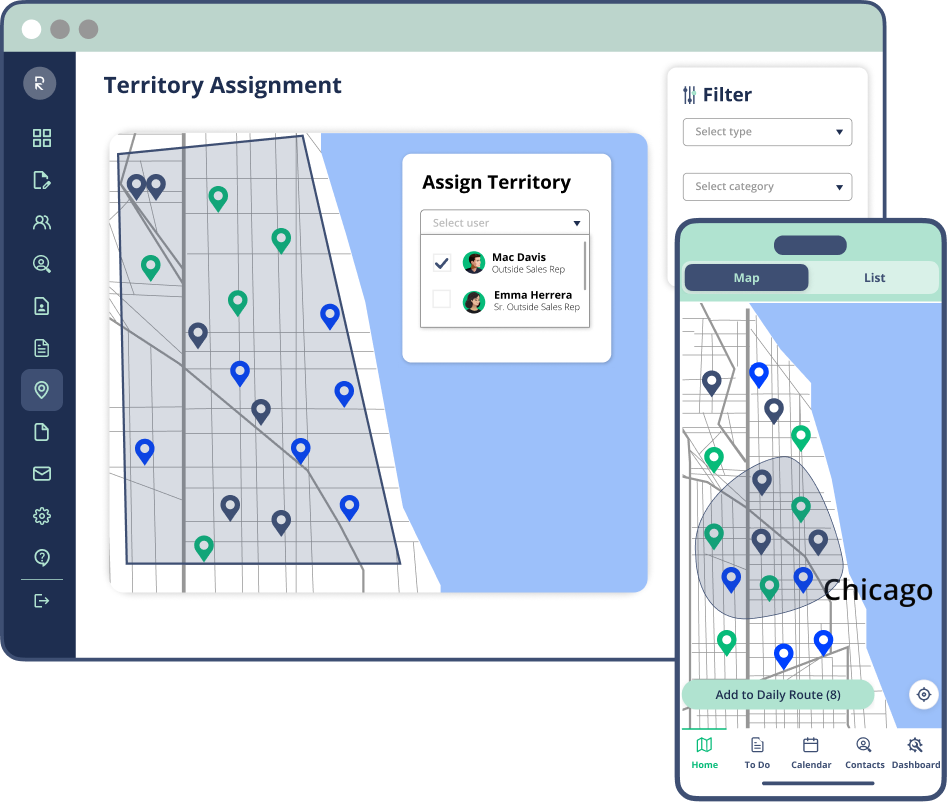
RepMove is a game-changer for field sales teams, providing them with an intuitive tool to manage sales territories. It transforms raw location data into a customized Google Map, offering a clear visualization of your sales territories in seconds. It's perfect for this industry as it helps professionals to plan, monitor, and make data-driven decisions.
Best for Territory Management Tools for Field Sales Teams
Expert Take
RepMove excels in providing field sales teams with a tailored solution for territory management, leveraging customized Google Map visualizations. Its intuitive interface and data-driven decision-making capabilities position it as a leading tool in its category, despite the lack of transparent pricing information.
Pros
- Mobile-first design for field sales
- Multi-stop route optimization included
- Transparent and affordable pricing
- Native integrations with Salesforce/HubSpot
- High user satisfaction (4.9/5 G2)
Cons
- 10,000 record limit on mid-tier
- No public API documentation found
- Steep learning curve for some
- Occasional slow performance reported
- Time-consuming initial data entry
Best for teams that are
- Field sales teams wanting an easy-to-use, all-in-one mobile CRM and router
- Sales leaders needing simple visibility into territories and pipelines
- Teams needing a standalone solution that can also integrate with CRMs
Skip if
- Enterprises requiring complex territory modeling and hierarchy management
- Teams needing deep, native integration inside Salesforce (vs. bolt-on)
- Office-based sales teams who don't need route optimization
Best for teams that are
- Field sales teams wanting an easy-to-use, all-in-one mobile CRM and router
- Sales leaders needing simple visibility into territories and pipelines
- Teams needing a standalone solution that can also integrate with CRMs
Skip if
- Enterprises requiring complex territory modeling and hierarchy management
- Teams needing deep, native integration inside Salesforce (vs. bolt-on)
- Office-based sales teams who don't need route optimization
Pros
- Mobile-first design for field sales
- Multi-stop route optimization included
- Transparent and affordable pricing
- Native integrations with Salesforce/HubSpot
- High user satisfaction (4.9/5 G2)
Cons
- 10,000 record limit on mid-tier
- No public API documentation found
- Steep learning curve for some
- Occasional slow performance reported
- Time-consuming initial data entry
Expert Take
RepMove excels in providing field sales teams with a tailored solution for territory management, leveraging customized Google Map visualizations. Its intuitive interface and data-driven decision-making capabilities position it as a leading tool in its category, despite the lack of transparent pricing information.

Forma Architect is a territory planning and quota management solution specifically designed for growing sales teams. It provides intelligent tools to balance workloads, align targets, and drive predictable growth with data-driven quota setting and territory planning. This is essential for industries where accurate sales forecasting and efficient territory management are key to successful revenue generation.
Best for Lightweight Territory and Quota Tools for Growing Teams
Expert Take
Forma Architect excels in providing data-driven insights for territory planning and quota management, crucial for growing sales teams. Its integration capabilities and market credibility are supported by third-party validations, making it a top choice in its category.
Pros
- AI-driven 'Workload Index' for territory balancing
- Real-time scenario modeling with financial impact
- Unified territory planning and incentive execution
- Automated ASC 606 compliance and audit trails
- 200+ pre-built integrations with robust ETL
Cons
- Steep learning curve for initial setup
- Rigid custom reporting capabilities
- No public pricing transparency
- Complex implementations may require vendor support
- Limited brand awareness compared to legacy giants
Best for teams that are
- Mid-to-large enterprises with complex sales and incentive structures
- Teams wanting to unify territory planning directly with incentive compensation
Skip if
- Small businesses or startups with simple compensation needs
- Organizations looking for a standalone mapping tool without incentive management
Best for teams that are
- Mid-to-large enterprises with complex sales and incentive structures
- Teams wanting to unify territory planning directly with incentive compensation
Skip if
- Small businesses or startups with simple compensation needs
- Organizations looking for a standalone mapping tool without incentive management
Pros
- AI-driven 'Workload Index' for territory balancing
- Real-time scenario modeling with financial impact
- Unified territory planning and incentive execution
- Automated ASC 606 compliance and audit trails
- 200+ pre-built integrations with robust ETL
Cons
- Steep learning curve for initial setup
- Rigid custom reporting capabilities
- No public pricing transparency
- Complex implementations may require vendor support
- Limited brand awareness compared to legacy giants
Expert Take
Forma Architect excels in providing data-driven insights for territory planning and quota management, crucial for growing sales teams. Its integration capabilities and market credibility are supported by third-party validations, making it a top choice in its category.

CARTO is the go-to SaaS solution for professionals in the territory management industry. Its unparalleled geospatial analysis tools and mapping capabilities empower teams to visualize, analyze and make data-driven decisions. Importantly, it ensures your spatial data remains within your cloud, ensuring security and control.
Best for Territory Management Tools with Mapping and Geo Intelligence
Expert Take
CARTO excels as a 'best-of-the-best' product in the territory management industry due to its advanced geospatial analysis tools and secure cloud-based infrastructure. It is recognized for its scalability and ease of use, despite requiring some technical expertise for full utilization. The platform's capabilities are well-documented and supported by third-party validations.
Pros
- Cloud-native architecture eliminates ETL
- Seamless integration with Snowflake/BigQuery
- Access to 10,000+ spatial datasets
- SOC 2 Type II certified
- Stunning deck.gl based visualizations
Cons
- SQL skills needed for advanced use
- Enterprise pricing is opaque
- Performance lags on massive datasets
- Documentation gaps for updates
- Usage-based pricing can scale costs
Best for teams that are
- Data scientists and developers building custom spatial applications
- Enterprises requiring SQL-based analysis and complex data visualization
- Industries like logistics and telecom needing heavy spatial data processing
Skip if
- Non-technical sales managers looking for out-of-the-box territory mapping
- Small businesses wanting a simple, no-code visual interface
- Teams without internal data science or development resources
Best for teams that are
- Data scientists and developers building custom spatial applications
- Enterprises requiring SQL-based analysis and complex data visualization
- Industries like logistics and telecom needing heavy spatial data processing
Skip if
- Non-technical sales managers looking for out-of-the-box territory mapping
- Small businesses wanting a simple, no-code visual interface
- Teams without internal data science or development resources
Pros
- Cloud-native architecture eliminates ETL
- Seamless integration with Snowflake/BigQuery
- Access to 10,000+ spatial datasets
- SOC 2 Type II certified
- Stunning deck.gl based visualizations
Cons
- SQL skills needed for advanced use
- Enterprise pricing is opaque
- Performance lags on massive datasets
- Documentation gaps for updates
- Usage-based pricing can scale costs
Expert Take
CARTO excels as a 'best-of-the-best' product in the territory management industry due to its advanced geospatial analysis tools and secure cloud-based infrastructure. It is recognized for its scalability and ease of use, despite requiring some technical expertise for full utilization. The platform's capabilities are well-documented and supported by third-party validations.

eSpatial CRM Mapping is a SaaS solution that provides detailed geographical visualization of CRM data. It's ideal for sales and revenue operations, enabling effective sales territory and quota management. Its integration capabilities with various CRM systems make it versatile and adaptable to various industry needs.
Best for Territory Alignment Tools Integrated with CRM
Expert Take
eSpatial CRM Mapping is a top-tier solution for sales territory and quota management, offering robust integration with CRM systems and advanced geographical visualization. Its capabilities in transforming CRM data into interactive maps make it a valuable tool for sales operations. Despite a learning curve, its comprehensive features justify its premium positioning.
Pros
- Bi-directional Salesforce integration
- ISO 27001:2022 security certified
- Dedicated Customer Success Manager included
- Advanced territory balancing tools
- Transparent public pricing structure
Cons
- High starting price ($1,495/yr)
- System lagging with large data
- Limited advanced GIS functions
- Closed ecosystem for integrations
- No monthly billing option
Best for teams that are
- Mid-market to enterprise sales teams needing robust territory optimization
- Users requiring strong route planning and optimization features
- Organizations valuing high-touch, 'white glove' customer support
Skip if
- Micro-businesses with minimal budgets
- Users seeking a free or basic mapping tool for simple visualization
- Teams not needing deep CRM integration or optimization features
Best for teams that are
- Mid-market to enterprise sales teams needing robust territory optimization
- Users requiring strong route planning and optimization features
- Organizations valuing high-touch, 'white glove' customer support
Skip if
- Micro-businesses with minimal budgets
- Users seeking a free or basic mapping tool for simple visualization
- Teams not needing deep CRM integration or optimization features
Pros
- Bi-directional Salesforce integration
- ISO 27001:2022 security certified
- Dedicated Customer Success Manager included
- Advanced territory balancing tools
- Transparent public pricing structure
Cons
- High starting price ($1,495/yr)
- System lagging with large data
- Limited advanced GIS functions
- Closed ecosystem for integrations
- No monthly billing option
Expert Take
eSpatial CRM Mapping is a top-tier solution for sales territory and quota management, offering robust integration with CRM systems and advanced geographical visualization. Its capabilities in transforming CRM data into interactive maps make it a valuable tool for sales operations. Despite a learning curve, its comprehensive features justify its premium positioning.
Canidium Territory and Quota Planning
Best for Lightweight Territory and Quota Tools for Growing Teams

Canidium is a powerful SaaS solution that offers territory optimization and quota planning. It is designed specifically to balance workloads across sales territories and establish effective sales targets. Its tailored solutions help growing teams in the sales industry to boost efficiency and productivity.
Best for Lightweight Territory and Quota Tools for Growing Teams
Expert Take
Canidium Territory and Quota Planning is a specialized SaaS solution designed to optimize sales territories and quotas for growing teams. It excels in workload balancing and sales target setting, which are crucial for efficiency and productivity. The product's tailored approach for expanding sales teams positions it as a top choice in its category.
Pros
- Tailored workload balancing for sales teams
- Deep integration with SAP and Xactly
- Comprehensive managed services and support
- Focus on measurable ROI and revenue
- Real-time data adaptation capabilities
Cons
- Long implementation timeline (12-36 weeks)
- No public pricing transparency
- Dependent on third-party software ecosystems
- Low volume of public user reviews
- Complex setup for smaller organizations
Best for teams that are
- Enterprises needing expert consulting to design and implement complex strategies
- Organizations looking for managed services to implement tools like SAP or Varicent
Skip if
- DIY users looking for an out-of-the-box, self-service software subscription
- Small teams with limited budgets seeking a quick plug-and-play tool
Best for teams that are
- Enterprises needing expert consulting to design and implement complex strategies
- Organizations looking for managed services to implement tools like SAP or Varicent
Skip if
- DIY users looking for an out-of-the-box, self-service software subscription
- Small teams with limited budgets seeking a quick plug-and-play tool
Pros
- Tailored workload balancing for sales teams
- Deep integration with SAP and Xactly
- Comprehensive managed services and support
- Focus on measurable ROI and revenue
- Real-time data adaptation capabilities
Cons
- Long implementation timeline (12-36 weeks)
- No public pricing transparency
- Dependent on third-party software ecosystems
- Low volume of public user reviews
- Complex setup for smaller organizations
Expert Take
Canidium Territory and Quota Planning is a specialized SaaS solution designed to optimize sales territories and quotas for growing teams. It excels in workload balancing and sales target setting, which are crucial for efficiency and productivity. The product's tailored approach for expanding sales teams positions it as a top choice in its category.
Esri Sales Territory Optimization
Best for Territory Management Tools with Mapping and Geo Intelligence

Esri's Sales Territory Optimization software is a powerful tool specifically designed for the manufacturing industry. The software taps into the location elements of existing data, allowing businesses to visualize how sales are distributed across product lines, territories, and channels. This helps companies identify underperforming territories and realign their resources effectively.
Best for Territory Management Tools with Mapping and Geo Intelligence
Expert Take
Esri Sales Territory Optimization excels in providing location intelligence and mapping capabilities tailored for the manufacturing industry. Its integration with existing data sources and ability to visualize sales distribution make it a standout tool. While it offers significant strategic benefits, its enterprise pricing and technical requirements may limit accessibility for smaller businesses.
Pros
- Automated territory balancing algorithms
- Access to 15,000+ demographic variables
- Advanced barrier and constraint handling
- Global data coverage (135+ countries)
- Seamless integration with ArcGIS ecosystem
Cons
- Steep learning curve for non-GIS users
- Complex credit-based pricing model
- Requires high-performance hardware
- Occasional stability issues in new releases
- Expensive for small businesses
Best for teams that are
- Manufacturing and supply chain organizations needing complex network visualization
- Enterprises already invested in the Esri ArcGIS ecosystem
- Operations leaders requiring data-driven territory realignment for fluctuating markets
Skip if
- Small businesses with simple, static territory lists
- Sales teams without access to GIS technical expertise or analysts
- Users seeking a standalone, lightweight mobile CRM app
Best for teams that are
- Manufacturing and supply chain organizations needing complex network visualization
- Enterprises already invested in the Esri ArcGIS ecosystem
- Operations leaders requiring data-driven territory realignment for fluctuating markets
Skip if
- Small businesses with simple, static territory lists
- Sales teams without access to GIS technical expertise or analysts
- Users seeking a standalone, lightweight mobile CRM app
Pros
- Automated territory balancing algorithms
- Access to 15,000+ demographic variables
- Advanced barrier and constraint handling
- Global data coverage (135+ countries)
- Seamless integration with ArcGIS ecosystem
Cons
- Steep learning curve for non-GIS users
- Complex credit-based pricing model
- Requires high-performance hardware
- Occasional stability issues in new releases
- Expensive for small businesses
Expert Take
Esri Sales Territory Optimization excels in providing location intelligence and mapping capabilities tailored for the manufacturing industry. Its integration with existing data sources and ability to visualize sales distribution make it a standout tool. While it offers significant strategic benefits, its enterprise pricing and technical requirements may limit accessibility for smaller businesses.

Varicent's Territory Planning Software is a data-driven solution for designing balanced territories, perfect for sales teams looking to maximize each rep's potential. It is designed to address the needs of growing teams in the sales industry, with a focus on maximizing revenue and sales enablement.
Best for Lightweight Territory and Quota Tools for Growing Teams
Expert Take
Varicent Territory Planning excels in providing data-driven solutions for sales territory management, making it a top choice for growing sales teams. Its advanced analytics and intuitive interface are well-documented, supporting its premium positioning. While onboarding is required, the platform's capabilities justify its use for maximizing sales potential.
Pros
- Leader in Forrester Wave Q1 2025
- Advanced AI modeling via Symon.AI
- ISO 27001 and SOC 2 certified
- Native Salesforce & Snowflake connectors
- Handles complex territory hierarchies
Cons
- Pricing is expensive and opaque
- Steep learning curve for backend
- Slow performance with large datasets
- Implementation often requires consultants
- Complex configuration for admins
Best for teams that are
- Large enterprises requiring a robust, integrated Sales Performance Management suite
- Teams managing complex, matrixed territory hierarchies and data sources
Skip if
- Small businesses with simple territory lists
- Users seeking a lightweight, standalone tool without broader SPM infrastructure
Best for teams that are
- Large enterprises requiring a robust, integrated Sales Performance Management suite
- Teams managing complex, matrixed territory hierarchies and data sources
Skip if
- Small businesses with simple territory lists
- Users seeking a lightweight, standalone tool without broader SPM infrastructure
Pros
- Leader in Forrester Wave Q1 2025
- Advanced AI modeling via Symon.AI
- ISO 27001 and SOC 2 certified
- Native Salesforce & Snowflake connectors
- Handles complex territory hierarchies
Cons
- Pricing is expensive and opaque
- Steep learning curve for backend
- Slow performance with large datasets
- Implementation often requires consultants
- Complex configuration for admins
Expert Take
Varicent Territory Planning excels in providing data-driven solutions for sales territory management, making it a top choice for growing sales teams. Its advanced analytics and intuitive interface are well-documented, supporting its premium positioning. While onboarding is required, the platform's capabilities justify its use for maximizing sales potential.
Specifically designed for life sciences, Veeva Vault Align offers a comprehensive solution for field planning, including roster management, territory assignment, and engagement plans. Its integration with CRM systems allows for seamless data flow, ensuring accurate, up-to-date information for strategic decision-making.
Best for Territory Alignment Tools Integrated with CRM
Expert Take
Veeva Vault Align excels as a specialized tool for the life sciences industry, offering robust integration with CRM systems and comprehensive field planning capabilities. Its market credibility is supported by industry-specific features and third-party recognition, making it a top choice for territory alignment in this sector.
Pros
- Reduces territory alignment time by up to 75%
- Native seamless integration with Veeva CRM
- Integrated Territory Feedback for direct rep input
- Full GDPR and 21 CFR Part 11 compliance
- Scalable for global enterprise deployments
Cons
- High licensing and implementation costs
- Integration jobs interrupted during maintenance windows
- Steep learning curve for administrators
- Pricing is not publicly disclosed
- Sync errors possible with high data volumes
Best for teams that are
- Life sciences and pharmaceutical companies managing field forces
- Organizations already using the Veeva Vault CRM ecosystem
- Teams needing strict compliance, roster management, and engagement planning
Skip if
- Companies outside the life sciences or pharmaceutical industries
- Small businesses looking for a generic, low-cost mapping tool
- Sales teams not utilizing Veeva CRM
Best for teams that are
- Life sciences and pharmaceutical companies managing field forces
- Organizations already using the Veeva Vault CRM ecosystem
- Teams needing strict compliance, roster management, and engagement planning
Skip if
- Companies outside the life sciences or pharmaceutical industries
- Small businesses looking for a generic, low-cost mapping tool
- Sales teams not utilizing Veeva CRM
Pros
- Reduces territory alignment time by up to 75%
- Native seamless integration with Veeva CRM
- Integrated Territory Feedback for direct rep input
- Full GDPR and 21 CFR Part 11 compliance
- Scalable for global enterprise deployments
Cons
- High licensing and implementation costs
- Integration jobs interrupted during maintenance windows
- Steep learning curve for administrators
- Pricing is not publicly disclosed
- Sync errors possible with high data volumes
Expert Take
Veeva Vault Align excels as a specialized tool for the life sciences industry, offering robust integration with CRM systems and comprehensive field planning capabilities. Its market credibility is supported by industry-specific features and third-party recognition, making it a top choice for territory alignment in this sector.

A cloud-based territory management software that seamlessly integrates with popular CRMs like Salesforce and Hubspot. It's designed to help sales professionals build, maintain, and adjust sales territories based on their specific variables, thus optimizing sales and revenue.
Best for Territory Alignment Tools Integrated with CRM
Expert Take
Linen Territory Management excels in integrating with popular CRM systems, offering robust territory management capabilities tailored to sales variables. Its market credibility is supported by integration with leading platforms like Salesforce and Hubspot, although pricing transparency is limited due to the enterprise model. The product's usability is enhanced by its CRM integration, but setup may require time.
Pros
- Native Salesforce integration with one-click publish
- No-code framework for easy rule adjustments
- AI-driven continuous territory optimization
- Proven scalability with Fortune 500 clients
- Drastic reduction in planning cycle time
Cons
- Limited public pricing for enterprise modules
- Fewer third-party reviews than legacy competitors
- Brand confusion with 'Linen Tech' laundry software
- Requires annual plan for hierarchy management
- Niche focus on complex enterprise needs
Best for teams that are
- Sales Ops teams aligning territories with quotas and compensation
- Salesforce or HubSpot users wanting a no-code, drag-and-drop interface
- Companies needing to manage complex sales hierarchies
Skip if
- Field reps primarily needing route optimization and navigation
- Small businesses without complex quota or compensation planning needs
- Teams not using Salesforce or HubSpot for CRM
Best for teams that are
- Sales Ops teams aligning territories with quotas and compensation
- Salesforce or HubSpot users wanting a no-code, drag-and-drop interface
- Companies needing to manage complex sales hierarchies
Skip if
- Field reps primarily needing route optimization and navigation
- Small businesses without complex quota or compensation planning needs
- Teams not using Salesforce or HubSpot for CRM
Pros
- Native Salesforce integration with one-click publish
- No-code framework for easy rule adjustments
- AI-driven continuous territory optimization
- Proven scalability with Fortune 500 clients
- Drastic reduction in planning cycle time
Cons
- Limited public pricing for enterprise modules
- Fewer third-party reviews than legacy competitors
- Brand confusion with 'Linen Tech' laundry software
- Requires annual plan for hierarchy management
- Niche focus on complex enterprise needs
Expert Take
Linen Territory Management excels in integrating with popular CRM systems, offering robust territory management capabilities tailored to sales variables. Its market credibility is supported by integration with leading platforms like Salesforce and Hubspot, although pricing transparency is limited due to the enterprise model. The product's usability is enhanced by its CRM integration, but setup may require time.

MapBusinessOnline is a unique SaaS solution that allows businesses to integrate business and sales mapping with their CRM software. This fits perfectly for sales-oriented industries where territory alignment and quota management are essential. It enhances CRM effectiveness by adding a spatial, geographical perspective to your data.
Best for Territory Alignment Tools Integrated with CRM
Expert Take
MapBusinessOnline CRM Integration is a specialized tool that enhances CRM systems with geospatial capabilities, making it highly relevant for sales territory management. Its integration capabilities and unique geographical perspective provide significant value, although the complexity for beginners and lack of public pricing are noted tradeoffs.
Pros
- Affordable alternative to Salesforce Maps
- No daily plotting limits for data
- Advanced hierarchical territory management
- Includes US Census demographic data
- Responsive US-based customer support
Cons
- Outdated user interface design
- Steep learning curve for advanced features
- Manual import needed for non-Salesforce CRMs
- Mobile app lacks full desktop parity
- Limited map visualization customization
Best for teams that are
- Small to mid-sized businesses seeking an affordable, value-driven solution
- Former Microsoft MapPoint users needing a reliable replacement
- Teams needing to plot large datasets (up to 250k records) without limits
Skip if
- Enterprises requiring advanced automated territory optimization algorithms
- Users needing a mobile-first native app experience (it is browser-based)
- Teams needing complex hierarchy management features
Best for teams that are
- Small to mid-sized businesses seeking an affordable, value-driven solution
- Former Microsoft MapPoint users needing a reliable replacement
- Teams needing to plot large datasets (up to 250k records) without limits
Skip if
- Enterprises requiring advanced automated territory optimization algorithms
- Users needing a mobile-first native app experience (it is browser-based)
- Teams needing complex hierarchy management features
Pros
- Affordable alternative to Salesforce Maps
- No daily plotting limits for data
- Advanced hierarchical territory management
- Includes US Census demographic data
- Responsive US-based customer support
Cons
- Outdated user interface design
- Steep learning curve for advanced features
- Manual import needed for non-Salesforce CRMs
- Mobile app lacks full desktop parity
- Limited map visualization customization
Expert Take
MapBusinessOnline CRM Integration is a specialized tool that enhances CRM systems with geospatial capabilities, making it highly relevant for sales territory management. Its integration capabilities and unique geographical perspective provide significant value, although the complexity for beginners and lack of public pricing are noted tradeoffs.




Loading comparison data…