
In-App Survey & User Feedback Tools
These are the specialized categories within In-App Survey & User Feedback Tools. Looking for something broader? See all Project Management & Productivity Tools categories.

SimpleSat is a powerful CSAT and NPS tool designed for MSPs and service-oriented professionals. Besides delivering one-click surveys, it integrates seamlessly with popular platforms like ConnectWise, Autotask, and Zendesk, addressing the immediate need in the industry for easy-to-use, efficient feedback tools.
Best for User Feedback Tools with NPS and CSAT
Expert Take
SimpleSat excels as a user feedback tool with its seamless integration capabilities and robust reporting features. Its focus on MSPs and service-oriented professionals, combined with ease of use, positions it as a top choice in its category. Despite some limitations in support and pricing transparency, it remains a highly credible and effective solution.
Pros
- SOC 2 Type II Certified
- Deep MSP tool integrations
- AI-driven sentiment analysis
- High G2 user rating (4.8/5)
- Responsive customer support
Cons
- Entry price ($109/mo) is high
- Recent pricing increases noted
- Occasional integration disconnects
- Custom dashboards gated on Pro
- Setup complexity for some
Best for teams that are
- MSPs using ConnectWise or Autotask for ticketing
- Service desks requiring embedded email signature surveys
- Teams prioritizing high response rates via one-click feedback
Skip if
- Enterprises needing complex market research surveys
- Businesses without a ticketing system workflow
- Users requiring advanced branching logic
Best for teams that are
- MSPs using ConnectWise or Autotask for ticketing
- Service desks requiring embedded email signature surveys
- Teams prioritizing high response rates via one-click feedback
Skip if
- Enterprises needing complex market research surveys
- Businesses without a ticketing system workflow
- Users requiring advanced branching logic
Pros
- SOC 2 Type II Certified
- Deep MSP tool integrations
- AI-driven sentiment analysis
- High G2 user rating (4.8/5)
- Responsive customer support
Cons
- Entry price ($109/mo) is high
- Recent pricing increases noted
- Occasional integration disconnects
- Custom dashboards gated on Pro
- Setup complexity for some
Expert Take
SimpleSat excels as a user feedback tool with its seamless integration capabilities and robust reporting features. Its focus on MSPs and service-oriented professionals, combined with ease of use, positions it as a top choice in its category. Despite some limitations in support and pricing transparency, it remains a highly credible and effective solution.

Sleekplan's Feedback Widget is a robust SaaS solution specifically tailored for professionals seeking a reliable way to gather user feedback and suggestions directly from their websites or apps. It offers a platform to foster community discussions, prioritize customer ideas and streamline product development processes.
Best for In App Feedback Widgets for Web Apps
Expert Take
Sleekplan Feedback Widget excels in providing an interactive platform for user feedback, fostering community discussions, and prioritizing customer ideas. Its integration capabilities and support resources enhance usability, making it a top choice for professionals seeking in-app feedback solutions.
Pros
- Unlimited tracked users and feedback on all plans
- All-in-one feedback, roadmap, changelog, and CSAT tool
- Two-way status sync with Jira and GitHub
- Strict GDPR compliance with EU-based hosting
- Highly customizable embeddable widget
Cons
- No automated duplicate post detection
- Limited bulk editing for feedback management
- Missing SOC 2 or ISO 27001 certifications
- Support response times can be slow
- Post merging restricted to higher tier plans
Best for teams that are
- Early-stage startups and SaaS teams needing an affordable all-in-one solution
- Companies wanting to combine feedback boards, roadmaps, and changelogs in one widget
- Teams looking for a simple, budget-friendly alternative to enterprise suites
Skip if
- Enterprise companies requiring advanced prioritization matrices or complex custom workflows
- Teams prioritizing modern, cutting-edge UI/UX design over core functionality
- Organizations needing extensive integrations beyond standard tools like Slack or Zapier
Best for teams that are
- Early-stage startups and SaaS teams needing an affordable all-in-one solution
- Companies wanting to combine feedback boards, roadmaps, and changelogs in one widget
- Teams looking for a simple, budget-friendly alternative to enterprise suites
Skip if
- Enterprise companies requiring advanced prioritization matrices or complex custom workflows
- Teams prioritizing modern, cutting-edge UI/UX design over core functionality
- Organizations needing extensive integrations beyond standard tools like Slack or Zapier
Pros
- Unlimited tracked users and feedback on all plans
- All-in-one feedback, roadmap, changelog, and CSAT tool
- Two-way status sync with Jira and GitHub
- Strict GDPR compliance with EU-based hosting
- Highly customizable embeddable widget
Cons
- No automated duplicate post detection
- Limited bulk editing for feedback management
- Missing SOC 2 or ISO 27001 certifications
- Support response times can be slow
- Post merging restricted to higher tier plans
Expert Take
Sleekplan Feedback Widget excels in providing an interactive platform for user feedback, fostering community discussions, and prioritizing customer ideas. Its integration capabilities and support resources enhance usability, making it a top choice for professionals seeking in-app feedback solutions.

Delighted provides a streamlined solution for soliciting and managing customer feedback using popular CX metrics like NPS, CSAT, and CES. This SaaS tool is ideal for the industry as it allows businesses to automate their feedback programs, providing real-time insights into customer satisfaction and enabling timely action on feedback data.
Best for User Feedback Tools with NPS and CSAT
Expert Take
Delighted excels in providing a comprehensive feedback solution with strong integration capabilities and real-time insights. Its user-friendly design and support for multiple CX metrics make it a top choice for businesses seeking to enhance customer satisfaction. While pricing may be a consideration for smaller businesses, the tool's overall value and functionality position it as a leading product in its category.
Pros
- Extremely intuitive 'set-and-forget' interface
- High response rates due to simplicity
- SOC 2 Type II and GDPR compliant
- Strong Shopify and Slack integrations
- Transparent pricing with free tier
Cons
- Product sunsetting in June 2026
- No new features being developed
- Limited branching logic for surveys
- Premium integrations require $249/mo plan
- Annual renewals ending July 2025
Best for teams that are
- Teams seeking the simplest, fastest NPS setup
- Non-technical users needing 'set and forget' feedback
- Businesses prioritizing ease of use over customization
Skip if
- Users requiring complex branching logic or deep analysis
- Teams looking for a long-term tool (sunsetting 2026)
- Enterprises needing extensive custom reporting
Best for teams that are
- Teams seeking the simplest, fastest NPS setup
- Non-technical users needing 'set and forget' feedback
- Businesses prioritizing ease of use over customization
Skip if
- Users requiring complex branching logic or deep analysis
- Teams looking for a long-term tool (sunsetting 2026)
- Enterprises needing extensive custom reporting
Pros
- Extremely intuitive 'set-and-forget' interface
- High response rates due to simplicity
- SOC 2 Type II and GDPR compliant
- Strong Shopify and Slack integrations
- Transparent pricing with free tier
Cons
- Product sunsetting in June 2026
- No new features being developed
- Limited branching logic for surveys
- Premium integrations require $249/mo plan
- Annual renewals ending July 2025
Expert Take
Delighted excels in providing a comprehensive feedback solution with strong integration capabilities and real-time insights. Its user-friendly design and support for multiple CX metrics make it a top choice for businesses seeking to enhance customer satisfaction. While pricing may be a consideration for smaller businesses, the tool's overall value and functionality position it as a leading product in its category.
Mentimeter Interactive Survey Maker

Mentimeter's Interactive Survey Maker is a robust SaaS solution designed for professionals who require efficient user targeting and segmentation. It allows you to create live, interactive surveys to gather real-time feedback from your audience, thereby addressing the need for immediate customer insights and data analysis in the industry.
Best for User Survey Tools with Targeting and Segmentation
Expert Take
Mentimeter Interactive Survey Maker excels in providing real-time feedback and interactive presentations, making it a valuable tool for professionals requiring immediate insights. Its audience segmentation capabilities enhance its utility in targeted survey distribution. However, limitations in the free plan and lack of offline mode are noted tradeoffs.
Pros
- Engaging 'Survey Mode' for asynchronous use
- ISO 27001:2022 certified security
- Unlimited slides on free plan
- Integrates with Teams and Zoom
- High ease of use ratings
Cons
- No advanced branching/skip logic
- Strict 50-participant limit on free plan
- PowerPoint integration can be glitchy
- Annual billing only for paid plans
- No SOC 2 report for app itself
Best for teams that are
- Educators and trainers seeking to boost live audience engagement and participation
- Presenters wanting real-time feedback via polls and word clouds during meetings
- Facilitators looking for anonymous, instant feedback tools for workshops
Skip if
- Researchers requiring deep data analysis, complex logic, or detailed segmentation
- Users looking for lead generation tools to collect detailed participant contact info
- Budget-conscious users needing unlimited questions or participants for free
Best for teams that are
- Educators and trainers seeking to boost live audience engagement and participation
- Presenters wanting real-time feedback via polls and word clouds during meetings
- Facilitators looking for anonymous, instant feedback tools for workshops
Skip if
- Researchers requiring deep data analysis, complex logic, or detailed segmentation
- Users looking for lead generation tools to collect detailed participant contact info
- Budget-conscious users needing unlimited questions or participants for free
Pros
- Engaging 'Survey Mode' for asynchronous use
- ISO 27001:2022 certified security
- Unlimited slides on free plan
- Integrates with Teams and Zoom
- High ease of use ratings
Cons
- No advanced branching/skip logic
- Strict 50-participant limit on free plan
- PowerPoint integration can be glitchy
- Annual billing only for paid plans
- No SOC 2 report for app itself
Expert Take
Mentimeter Interactive Survey Maker excels in providing real-time feedback and interactive presentations, making it a valuable tool for professionals requiring immediate insights. Its audience segmentation capabilities enhance its utility in targeted survey distribution. However, limitations in the free plan and lack of offline mode are noted tradeoffs.

Refiner is a dedicated in-app survey tool designed to meet the needs of SaaS and mobile app companies. It allows product and Customer Experience (CX) teams to gather contextual user feedback efficiently, aiding in product improvement and user experience enhancement.
Best for In App Survey Tools for SaaS Products
Expert Take
Refiner excels as a specialized tool for SaaS and mobile app companies seeking in-app user feedback. Its customizable surveys and real-time analytics provide valuable insights for product teams. While it offers strong capabilities, limitations such as language options and offline mode are noted.
Pros
- Two-way data sync with Segment/HubSpot
- SOC 2 Type II & HIPAA compliant
- Native Mobile SDKs (iOS/Android/Flutter)
- Intuitive no-code survey builder
- Hosted in EU (GDPR friendly)
Cons
- Starting price ($99/mo) is high
- Free plan limited to 25 responses
- Advanced logic can be complex
- Limited design customization options
- Lower review volume vs competitors
Best for teams that are
- SaaS product teams using data stacks like Segment, Amplitude, or Mixpanel
- Companies needing highly customizable in-app micro-surveys for web and mobile
- Growth teams focused on precise user targeting and behavioral triggers
Skip if
- Small businesses with very low budgets (plans start at $99/mo)
- Non-SaaS businesses requiring offline survey capabilities
- Users looking for complex academic research tools rather than micro-surveys
Best for teams that are
- SaaS product teams using data stacks like Segment, Amplitude, or Mixpanel
- Companies needing highly customizable in-app micro-surveys for web and mobile
- Growth teams focused on precise user targeting and behavioral triggers
Skip if
- Small businesses with very low budgets (plans start at $99/mo)
- Non-SaaS businesses requiring offline survey capabilities
- Users looking for complex academic research tools rather than micro-surveys
Pros
- Two-way data sync with Segment/HubSpot
- SOC 2 Type II & HIPAA compliant
- Native Mobile SDKs (iOS/Android/Flutter)
- Intuitive no-code survey builder
- Hosted in EU (GDPR friendly)
Cons
- Starting price ($99/mo) is high
- Free plan limited to 25 responses
- Advanced logic can be complex
- Limited design customization options
- Lower review volume vs competitors
Expert Take
Refiner excels as a specialized tool for SaaS and mobile app companies seeking in-app user feedback. Its customizable surveys and real-time analytics provide valuable insights for product teams. While it offers strong capabilities, limitations such as language options and offline mode are noted.

Aha!’s In-app feedback widget is an indispensable tool specifically designed for web app developers, product managers, and UX designers who are keen on gathering real-time user feedback within their applications. This tool addresses the industry's need for an easy, efficient way of understanding user experiences, behaviors, and expectations, thereby informing product improvements and enhancements.
Best for In App Feedback Widgets for Web Apps
Expert Take
Aha!'s In-app Feedback Widget is a top-tier tool for web app developers and product managers, offering real-time user feedback capabilities and seamless integration with Aha! Ideas. While it requires some technical skills for installation, its value in enhancing user engagement and product development is significant.
Pros
- Seamless integration with Aha! Roadmaps
- Dynamic forms with conditional logic
- Secure JWT authentication support
- Unlimited portal users included
- Centralized feedback management
Cons
- Not optimized for mobile devices
- Minimum 3 paid seats required
- Steep platform learning curve
- Requires higher-tier Advanced plan
Best for teams that are
- Product teams already using Aha! Roadmaps who want integrated feedback loops
- Mid-to-large organizations needing a complete product management suite
- Teams focused on desktop web applications rather than mobile-first experiences
Skip if
- Mobile-first applications as the widgets are not optimized for mobile screens
- Small startups or individuals with limited budgets due to minimum seat requirements
- Teams needing a standalone feedback tool without a full product management ecosystem
Best for teams that are
- Product teams already using Aha! Roadmaps who want integrated feedback loops
- Mid-to-large organizations needing a complete product management suite
- Teams focused on desktop web applications rather than mobile-first experiences
Skip if
- Mobile-first applications as the widgets are not optimized for mobile screens
- Small startups or individuals with limited budgets due to minimum seat requirements
- Teams needing a standalone feedback tool without a full product management ecosystem
Pros
- Seamless integration with Aha! Roadmaps
- Dynamic forms with conditional logic
- Secure JWT authentication support
- Unlimited portal users included
- Centralized feedback management
Cons
- Not optimized for mobile devices
- Minimum 3 paid seats required
- Steep platform learning curve
- Requires higher-tier Advanced plan
Expert Take
Aha!'s In-app Feedback Widget is a top-tier tool for web app developers and product managers, offering real-time user feedback capabilities and seamless integration with Aha! Ideas. While it requires some technical skills for installation, its value in enhancing user engagement and product development is significant.
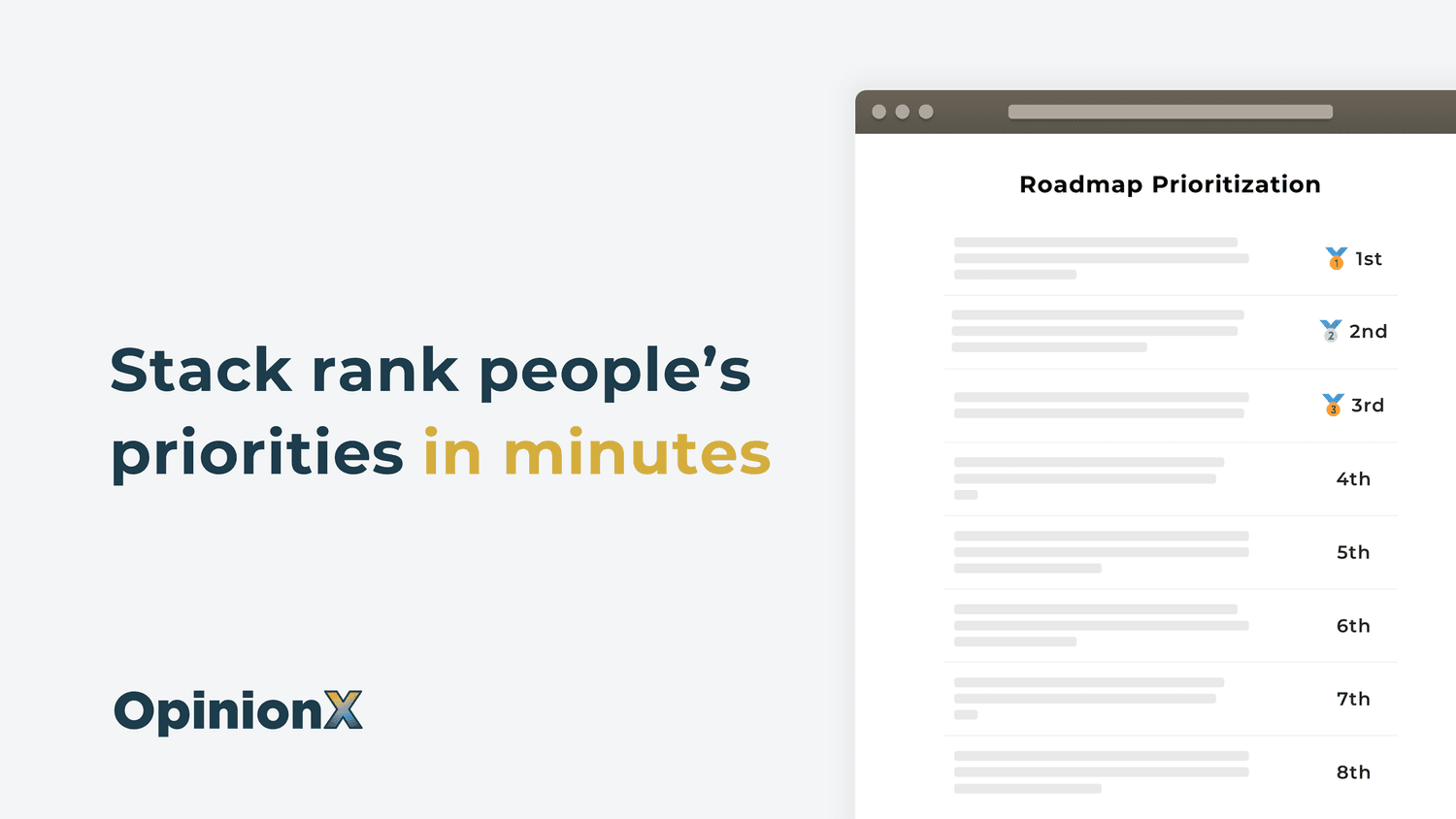
OpinionX is a potent tool specifically designed to help industry professionals understand their target market better. It addresses the crucial need to identify who your biggest fans are and why, letting you make more informed decisions when developing or enhancing products.
Best for User Survey Tools with Targeting and Segmentation
Expert Take
OpinionX PMF Surveys excels in providing targeted user feedback and segmentation capabilities, crucial for understanding product/market fit. While it offers a user-friendly interface and a free plan, its relatively new market presence and limited customization options slightly impact its overall score. Its focus on preference ranking and segmentation makes it a valuable tool for startups and small businesses.
Pros
- Unlimited surveys and participants on free tier
- Specialized 'Pair Rank' and 'Order Rank' methods
- Flexible 'Pay Per Survey' pricing option
- Automated segmentation and PMF score calculation
- Used by 13,000+ teams including Google
Cons
- No monthly subscription option available
- Analysis limited to 10 participants on free plan
- SSO and 2FA locked to Enterprise tier
- Limited native integrations (relies on Zapier)
- Advanced analysis features require paid upgrade
Best for teams that are
- Product teams and founders validating product-market fit or prioritizing roadmaps
- Researchers requiring comparative ranking data like stack ranking or pair comparisons
- Startups needing a free tool with unlimited participants for voting surveys
Skip if
- Users seeking simple standard forms or quizzes without ranking features
- Live presentation hosts prioritizing visual engagement over deep research data
- Users needing advanced segmentation analysis on a strictly free budget
Best for teams that are
- Product teams and founders validating product-market fit or prioritizing roadmaps
- Researchers requiring comparative ranking data like stack ranking or pair comparisons
- Startups needing a free tool with unlimited participants for voting surveys
Skip if
- Users seeking simple standard forms or quizzes without ranking features
- Live presentation hosts prioritizing visual engagement over deep research data
- Users needing advanced segmentation analysis on a strictly free budget
Pros
- Unlimited surveys and participants on free tier
- Specialized 'Pair Rank' and 'Order Rank' methods
- Flexible 'Pay Per Survey' pricing option
- Automated segmentation and PMF score calculation
- Used by 13,000+ teams including Google
Cons
- No monthly subscription option available
- Analysis limited to 10 participants on free plan
- SSO and 2FA locked to Enterprise tier
- Limited native integrations (relies on Zapier)
- Advanced analysis features require paid upgrade
Expert Take
OpinionX PMF Surveys excels in providing targeted user feedback and segmentation capabilities, crucial for understanding product/market fit. While it offers a user-friendly interface and a free plan, its relatively new market presence and limited customization options slightly impact its overall score. Its focus on preference ranking and segmentation makes it a valuable tool for startups and small businesses.

Qualtrics Website & App Insights is an excellent tool for businesses that need to gauge their website and mobile app performance. It specifically addresses the industry's need for real-time user feedback and behavior analysis, offering insights that can enhance user experience and overall product quality.
Best for In App Feedback Widgets for Web Apps
Expert Take
Qualtrics Website & App Insights excels in providing real-time user feedback and behavioral analytics, crucial for enhancing user experience. Its integration capabilities and advanced reporting make it a top choice for enterprises. While it requires some technical knowledge, its comprehensive features justify its premium positioning.
Pros
- FedRAMP High and HITRUST certified security
- Integrated session replay and frustration detection
- Advanced targeting logic for feedback intercepts
- Used by 85% of Fortune 500 companies
- Seamless integration with broader XM platform
Cons
- Expensive and opaque pricing model
- Steep learning curve for new users
- Complex user interface can be overwhelming
- Performance lags with large datasets
- Requires sales contact for pricing
Best for teams that are
- Large enterprises with dedicated research teams and significant budgets
- Organizations needing deep data analysis and complex targeting logic for intercepts
- Companies requiring comprehensive Experience Management (XM) across multiple channels
Skip if
- Small businesses or startups due to high costs and complex pricing models
- Teams seeking a simple, quick-setup suggestion box without complex configuration
- Users without technical or research expertise due to the steep learning curve
Best for teams that are
- Large enterprises with dedicated research teams and significant budgets
- Organizations needing deep data analysis and complex targeting logic for intercepts
- Companies requiring comprehensive Experience Management (XM) across multiple channels
Skip if
- Small businesses or startups due to high costs and complex pricing models
- Teams seeking a simple, quick-setup suggestion box without complex configuration
- Users without technical or research expertise due to the steep learning curve
Pros
- FedRAMP High and HITRUST certified security
- Integrated session replay and frustration detection
- Advanced targeting logic for feedback intercepts
- Used by 85% of Fortune 500 companies
- Seamless integration with broader XM platform
Cons
- Expensive and opaque pricing model
- Steep learning curve for new users
- Complex user interface can be overwhelming
- Performance lags with large datasets
- Requires sales contact for pricing
Expert Take
Qualtrics Website & App Insights excels in providing real-time user feedback and behavioral analytics, crucial for enhancing user experience. Its integration capabilities and advanced reporting make it a top choice for enterprises. While it requires some technical knowledge, its comprehensive features justify its premium positioning.
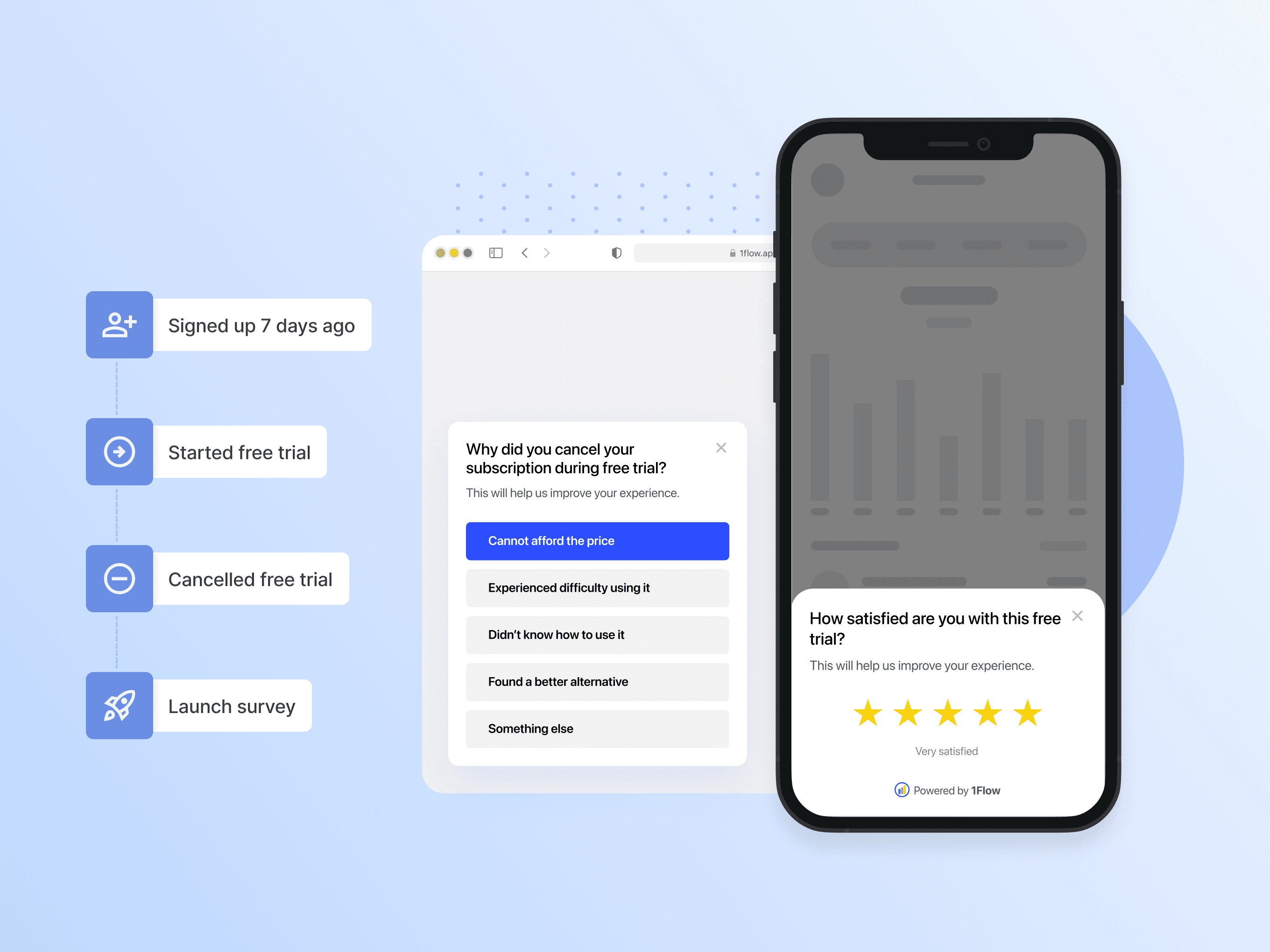
1Flow's in-app survey solution is a powerful tool for SaaS and mobile app businesses. It allows you to create contextually relevant surveys, targeting specific users at the right time, leading to an impressive 38% average response rate. This aspect is particularly critical in the SaaS industry, where user feedback and insights drive product development and improvements.
Best for In App Survey Tools for SaaS Products
Expert Take
1Flow In-App Surveys stands out in the SaaS industry for its ability to capture real-time user feedback with high response rates. Its contextual survey capabilities and integration options make it a valuable tool for product development. However, the lack of transparent pricing and potential technical integration challenges slightly impact its overall usability.
Pros
- AI-generated surveys in 5 seconds
- Unlimited surveys, responses, and seats
- Native iOS, Android, Flutter SDKs
- Two-way sync with Amplitude/Mixpanel
- GDPR compliant with EU hosting
Cons
- High starting price ($150/mo)
- Steep upgrade cost to Pro plan
- Low public review volume
- SOC 2 limited to Enterprise
- No free permanent plan (trial only)
Best for teams that are
- Mobile app and SaaS product teams prioritizing high response rates
- User researchers needing lightweight in-app SDKs for quick feedback
- Teams looking for a modern, mobile-first user experience
Skip if
- Users needing complex offline data collection capabilities
- Teams looking for a completely free solution for high response volumes
- Non-digital product businesses requiring email-only surveys
Best for teams that are
- Mobile app and SaaS product teams prioritizing high response rates
- User researchers needing lightweight in-app SDKs for quick feedback
- Teams looking for a modern, mobile-first user experience
Skip if
- Users needing complex offline data collection capabilities
- Teams looking for a completely free solution for high response volumes
- Non-digital product businesses requiring email-only surveys
Pros
- AI-generated surveys in 5 seconds
- Unlimited surveys, responses, and seats
- Native iOS, Android, Flutter SDKs
- Two-way sync with Amplitude/Mixpanel
- GDPR compliant with EU hosting
Cons
- High starting price ($150/mo)
- Steep upgrade cost to Pro plan
- Low public review volume
- SOC 2 limited to Enterprise
- No free permanent plan (trial only)
Expert Take
1Flow In-App Surveys stands out in the SaaS industry for its ability to capture real-time user feedback with high response rates. Its contextual survey capabilities and integration options make it a valuable tool for product development. However, the lack of transparent pricing and potential technical integration challenges slightly impact its overall usability.

Alchemer is a powerful SaaS solution specifically tailored for the needs of industry professionals seeking robust and versatile in-app survey tools. It offers user-friendly ways to collect and analyze feedback during crucial moments, be they in a survey or directly on your app or website, enabling you to improve product development and user experience.
Best for In App Survey Tools for SaaS Products
Expert Take
Alchemer excels in providing a versatile and robust platform for in-app surveys, supported by strong integration capabilities and comprehensive data analysis tools. Its market credibility is reinforced by third-party recognitions and a user-friendly interface, making it a top choice for industry professionals.
Pros
- Includes Conjoint and MaxDiff analysis
- ISO 27001 and HIPAA compliant
- 43+ diverse question types
- Responsive customer support team
- Regional data residency options
Cons
- Steep learning curve for beginners
- Interface feels outdated to some
- API access restricted to high tiers
- Mobile survey creation can be difficult
- Phone support only on premium plans
Best for teams that are
- Enterprise and market research teams needing complex survey logic
- Organizations requiring offline data collection and robust security
- Teams needing broad survey capabilities beyond just in-app contexts
Skip if
- Small teams with limited budgets due to higher pricing tiers
- Product teams wanting a lightweight, modern in-app specific interface
- Users looking for a simple micro-survey tool for quick feedback
Best for teams that are
- Enterprise and market research teams needing complex survey logic
- Organizations requiring offline data collection and robust security
- Teams needing broad survey capabilities beyond just in-app contexts
Skip if
- Small teams with limited budgets due to higher pricing tiers
- Product teams wanting a lightweight, modern in-app specific interface
- Users looking for a simple micro-survey tool for quick feedback
Pros
- Includes Conjoint and MaxDiff analysis
- ISO 27001 and HIPAA compliant
- 43+ diverse question types
- Responsive customer support team
- Regional data residency options
Cons
- Steep learning curve for beginners
- Interface feels outdated to some
- API access restricted to high tiers
- Mobile survey creation can be difficult
- Phone support only on premium plans
Expert Take
Alchemer excels in providing a versatile and robust platform for in-app surveys, supported by strong integration capabilities and comprehensive data analysis tools. Its market credibility is reinforced by third-party recognitions and a user-friendly interface, making it a top choice for industry professionals.