1. Home
  2. Project Management & Productivity
  3. Community & Forum Platforms

Category · Project Management & Productivity Tools

Community & Forum Platforms

The 4 community platforms we scored have a median listed price of $89, though costs climb once you add transaction fees or a managed hosting plan. Decide first whether you need a classic forum, a paid membership space or a community widget inside your product, because each tool here leans toward one.

4 products scoredup to 6 criteriaUpdated Oct 27, 2026
What our research found
01

Top picks

The highest scorer from each vendor in Community & Forum Platforms. The six boxes compare each one with the average. The first card is open; open any other card's full review for its evidence.

1
Engagement HubCustomizable Space

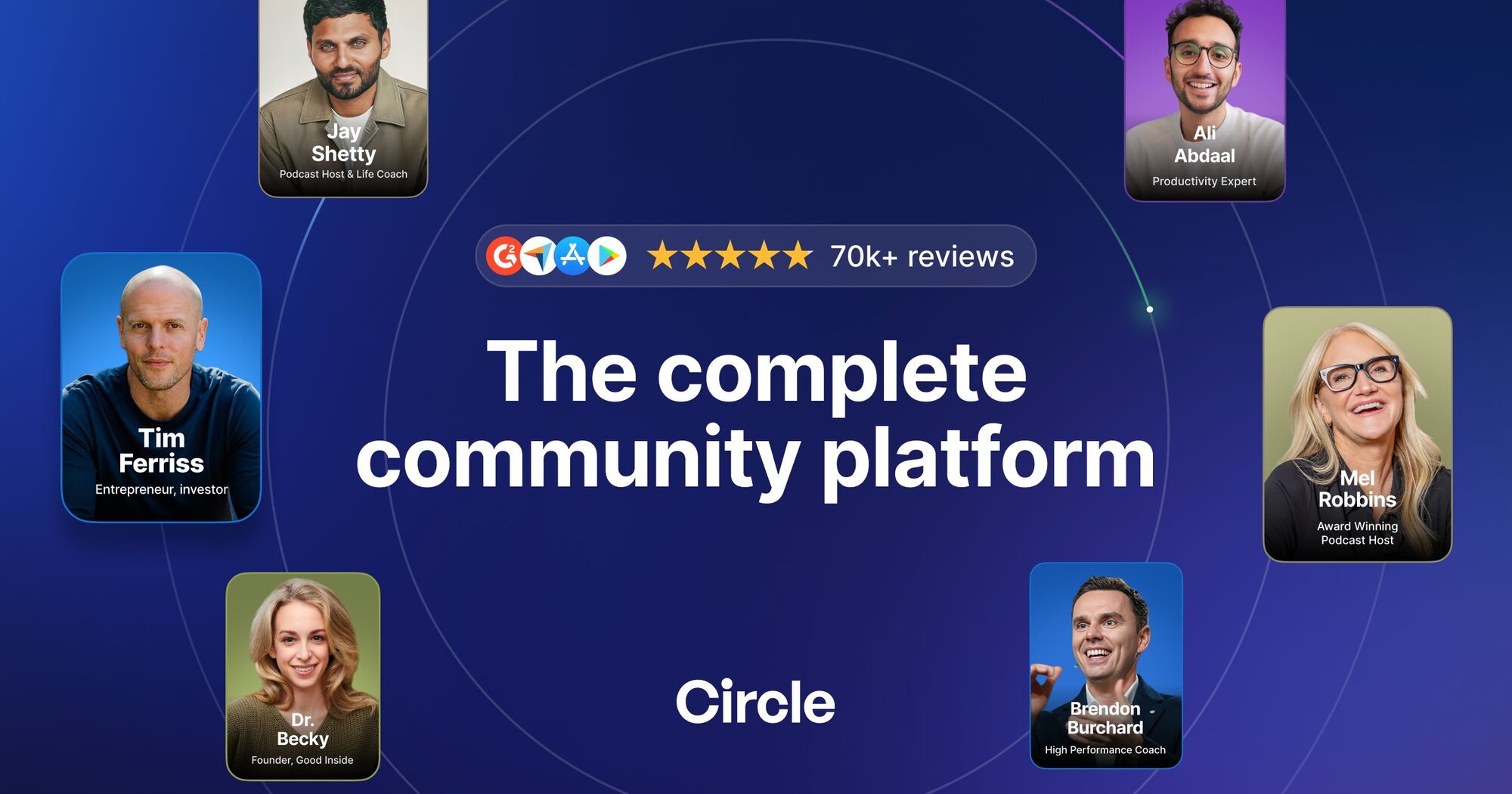
Circle

circle.so · Circle Community Platform

Circle powers Harvard's community, taxes every transaction

Best forCreators and coaches building paid memberships and courses in one place.

From $89 per month all-in-one communitySOC 2transaction fees
Above the category average on 2 of 5 criteriaScore minus the average of 4 scored products. Blue is above, amber below.
ProductProduct Capability & Depth: 9.1 vs category average 9.0+0.1MarketMarket Credibility & Trust Signals: 9.4 vs category average 9.2+0.2UsabilityUsability & Customer Experience: 8.8 vs category average 8.9−0.1ValueValue, Pricing & Transparency: 8.5 vs category average 8.6−0.1SecuritySecurity, Compliance & Data Protection: 9.0 vs category average 9.3−0.3

All-in-one community platform combining discussions, courses, events and payments in one interface.

Standout factMore than 15,000 communities run on Circle, including Harvard's CrimsonConnect cbsnews.com
Biggest catchCharges a 0.5% to 2% transaction fee on every plan, on top of Stripe fees. circle.so
15,000+Communities on Circlecbsnews.com
$89/moProfessional plancircle.so

Standout number

15,000+communities run on Circle

Source: cbsnews.com

Plans

Professional$89/mo

2% transaction fee

Business$199/mo

1% transaction fee

Enterprise$419/mo

0.5% transaction fee

Source: circle.so

Upside

  • Combines courses, events and discussions in one
  • SOC 2 certified, GDPR and CCPA compliant
  • Trusted by Harvard, SpaceX and Tim Ferriss

Catch

  • Transaction fees on top of subscription
  • Starting price $89/mo is high for beginners
  • Notification volume can overwhelm new users
Pick it ifCreators and coaches building paid memberships and courses in one place.
Skip it ifFree communities with zero budget, since there is no free tier.
PricingProfessional $89/mo, Business $199/mo, Enterprise $419/mo

Editor's takeCircle replaces a fragmented stack of separate discussion, course and event tools with one platform for discussions, courses, events and payments, now running more than 15,000 communities including Harvard's CrimsonConnect. SOC 2 certification and GDPR and CCPA compliance back its enterprise credibility. The Professional plan starts at $89 a month, and every tier layers on a 0.5% to 2% transaction fee on top of standard Stripe processing costs.

Does Circle charge transaction fees?

Yes, 0.5% to 2% depending on plan tier, charged in addition to standard Stripe payment processing fees, according to Circle's pricing page.

Who uses Circle?

More than 15,000 communities, including Harvard's CrimsonConnect and coaching programs run by Tim Ferriss, according to CBS News coverage of the platform.

The evidence: 5 criteria, 19 cited findings, 3 penalties
9.1
Product Capability & DepthLooked for: We evaluate whether the platform delivers a comprehensive suite of tools for community building, including discussions, content hosting, and engagement features without requiring external plugins.Circle consolidates community discussions, courses, live streams, and events into a single platform, recently adding AI agents and workflows to automate engagement.
  1. Documented in official product documentation, Circle supports live events and course launches, enhancing community engagement.
  2. Highly customizable spaces and interactive discussions are core features outlined in platform documentation.
  3. Platform combines discussions, courses, events, live streams, and payments in one place.From a branded website to discussions, courses, events, payments, email marketing, AI agents, and more, Circle gives you everything you need
  4. Includes native course hosting with video, quizzes, and drip content.Courses... Sections and lessons (drag-and-drop builder) Multimedia lessons (video, audio, PDFs)circle.so · vendor's claim
  5. Recent addition of AI Agents and automated workflows for member engagement.Everything in Business, and: AI Agents. AI workflows. Unlimited workflows.circle.so · vendor's claim
9.4
Market Credibility & Trust SignalsLooked for: We look for adoption by industry leaders, verified user reviews, and sustained market presence to ensure the platform is reliable and scalable.Circle demonstrates exceptional market trust, powering communities for high-profile entities like Harvard, SpaceX, and Tim Ferriss, alongside maintaining Leader status on G2.
  1. Referenced by TechCrunch, Circle is noted for its focus on community engagement for SaaS companies.
  2. Trusted by major organizations and creators including Harvard, SpaceX, and Tim Ferriss.Today, more than 15,000 communities run on Circle, from Harvard's CrimsonConnect to coaching programs led by Jay Shetty, Dr. Becky and Tim Ferriss.cbsnews.com
  3. Maintains a high rating on G2 with 'Leader' recognition.4.7 out of 5 stars... Recognized as a G2 Leaderg2.com
8.8
Usability & Customer ExperienceLooked for: We assess the interface design, ease of navigation for end-users, and the quality of administrative controls.Users consistently praise the clean, 'Apple-like' interface that is superior to clunky forums, though notification overload remains a documented friction point for members.
  1. Easy-to-use interface with integration capabilities documented in the official product site.
  2. Users praise the interface for being clean, modern, and intuitive compared to competitors.The UI doesn't allow much customisation. Honestly, this hasn't been a big deal for me personally, as I find the UI tremendously intuitive.tomross.co
  3. Documented user complaints regarding overwhelming default notifications.Sometimes the notifications can be overwhelming, especially on busy servers.circle.so · vendor's claim
8.5
Value, Pricing & TransparencyLooked for: We analyze the pricing structure, hidden fees, and feature gating to determine if the cost aligns with the value provided.Pricing is premium starting at $89/mo, and the platform charges transaction fees (0.5% - 2%) on top of payment processor fees, which is a notable cost factor.
  1. Pricing starts at $89/month (Professional) /month with custom enterprise options, limiting upfront cost visibility.circle.so · vendor's claim
  2. Transaction fees range from 2% to 0.5% depending on the plan level.Transaction fees. 2% 1% 0.5% 0.5%circle.so · vendor's claim
  3. Base plan starts at $89/month, which is higher than many competitors.Professional $89/mo... Business $199/mo... Enterprise $419/mocircle.so · vendor's claim
9.0
Security, Compliance & Data ProtectionLooked for: We examine the availability of native integrations, API access, and third-party workflow support.Offers strong native integrations with SSO providers and a deep Zapier connection, plus a Headless API for custom enterprise builds.
  1. Integration with platforms like Zapier, Slack, and Discourse enhances workflow flexibility.circle.so · vendor's claim
  2. Platform is SOC 2 Certified and GDPR/CCPA Compliant.GDPR Compliant. CCPA Compliant. PCI SAQ Compliant. SOC 2 Certified.circle.so · vendor's claim
  3. Data processing agreements and privacy measures are explicitly detailed for EU customers.Circle is responsible and the data controller for processing your personal data.circle.so · vendor's claim
  4. Provides native integrations for WordPress, Memberstack, and Stripe.Memberstack. Zapier, Native. Automate access to Circle based on membership payments... WordPress. Native.circle.so · vendor's claim
  5. Offers Headless API for custom frontend experiences on higher plans.Integrations APIs & Headless... Included Headless API requests.circle.so · vendor's claim

Score adjustments−0.14 points in total

−0.04Circle charges a platform transaction fee (0.5% to 2%) on all plans, which is levied in addition to standard Stripe processing fees.circle.so · severity 60/100
−0.05Users frequently report that default notification settings are aggressive, leading to 'notification overload' for community members.circle.so · severity 45/100
−0.05Design customization is limited to branding basics (colors, logos); users cannot alter the structural layout without custom CSS or headless API.tomross.co · severity 40/100
2
Open-Source FlexibilityLive Event Ready

Discourse

discourse.org · Discourse Community Platform

Free to self-host, but managed plans jump to $500/month.

Best forTechnical communities and developers who prefer open-source software.

Free tier open sourceself-hostedJSON API
Full review and evidence: Discourse

Open-source community platform powering forums for OpenAI, Docker, and GitLab.

Standout factDiscourse powers over 22,000 online communities, including OpenAI, Zoom, and GitLab. discourse.org
Biggest catchManaged hosting jumps from $100/month on the Pro plan to $500/month on the Business plan. discourse.org
22,000+Communities powereddiscourse.org
35.8M+Monthly views hosteddiscourse.org
$100 to $500/moPro to Business jumpdiscourse.org

Adoption

22,000+communities powered

Source: discourse.org

Plans

Pro$100/mo
Business$500/mo

Source: discourse.org

Upside

  • 100% open source, free to self-host
  • Used by OpenAI, Docker, GitLab
  • Complete JSON API access

Catch

  • Steep price jump, $100 to $500
  • No custom plugins on standard hosting
  • Requires HTML/CSS for deep design
Pick it ifTechnical communities and developers who prefer open-source software.
Skip it ifNon-technical users seeking a simple, plug-and-play setup.
PricingFree to self-host, managed hosting Pro $100/mo, Business $500/mo

Editor's takeDiscourse's open-source foundation, free to self-host, backs the widest adoption in the category, powering over 22,000 communities including OpenAI and GitLab. Its trust-level system automates moderation as users prove themselves, cutting admin overhead. The pricing curve is steep for managed hosting, though: Pro costs $100 a month but jumps to $500 for Business, and custom plugins are locked to the Enterprise tier or self-hosting.

Is Discourse free?

Yes, if self-hosted. Discourse is 100% free and open source software for self-hosting. Managed hosting starts around $20 a month, with Pro at $100 and Business at $500.

Can I install custom plugins on Discourse's managed hosting?

Only on the Enterprise plan or a self-hosted instance. Standard managed hosting tiers (Starter, Pro, Business) do not allow custom or third-party plugins.

The evidence: 6 criteria, 17 cited findings, 3 penalties
9.1
Product Capability & DepthLooked for: We evaluate the breadth of community features, moderation tools, and content management capabilities available to administrators.Discourse offers an exceptionally deep feature set including a unique 'Trust Level' system that automates moderation, flat threading with infinite scroll, and built-in gamification (badges). It supports rich media, real-time chat, and AI-powered moderation tools.
  1. Documented in official product documentation, Discourse offers extensive customization options due to its open-source nature, allowing tailored community solutions.discourse.org · vendor's claim
  2. Features robust moderation tools that facilitate effective community management, as outlined in the platform's feature set.discourse.org · vendor's claim
  3. Discourse includes a trust-level system that automatically grants experienced users more rights to help moderate the community.Discourse includes a trust-level system that automatically limits the impact of new users, helping moderators manage risk with less effort.discourse.org · vendor's claim
  4. The platform features AI automation that detects toxic content, applies tags, and flags NSFW posts.AI automation efficiently detects toxic content, applies tags, flags NSFW posts, and more.discourse.org · vendor's claim
9.6
Market Credibility & Trust SignalsLooked for: We look for adoption by major enterprises, open-source transparency, and the longevity of the platform in the market.Discourse is the dominant choice for technical communities, powering forums for major tech giants like OpenAI, Docker, GitLab, and Atlassian. It is 100% open-source software with a massive active developer community.
  1. Discourse powers over 22,000 online communities including OpenAI, Zoom, and GitLab.Discourse now powers over 22,000 online communities of all shapes and sizes, including: Gitlab logo; Sailpoint logo; OpenAI logodiscourse.org · vendor's claim
  2. The platform serves over 35 million monthly views across its hosted network.We host individual sites with... 35.8M+ monthly views.
8.7
Usability & Customer ExperienceLooked for: We assess the ease of use for end-users and the complexity of administration and setup for community managers.The end-user experience is modern and responsive, featuring a 'Discobot' for interactive onboarding. However, backend administration is complex, and visual customization often requires CSS/HTML knowledge rather than drag-and-drop tools.
  1. Discourse uses an interactive bot named Discobot to onboard new users and teach them platform features.A built-in bot helps users learn the system, while the overall layout supports quick adoption for all skill levels.blog.discourse.org · vendor's claim
  2. Visual customization is limited out-of-the-box and often requires developer intervention.Limited Customization options: Many visual and layout changes require developer effort. If you're hoping for no-code editing or drag-and-drop controls, you'll hit limits fast.innoloft.com
8.5
Value, Pricing & TransparencyLooked for: We evaluate the cost-to-value ratio of hosted plans and the viability of the free self-hosted option.The software is free to self-host, offering immense value. Managed hosting starts at $20/mo but jumps steeply to $100/mo and then $500/mo. Significant feature gating (plugins) exists on lower managed tiers.
  1. Pricing transparency is evident with a free basic plan and a business plan starting at $100/month, as listed on the official site.discourse.org · vendor's claim
  2. Managed hosting plans have a significant price jump from Pro ($100/mo) to Business ($500/mo).Pro: $100 per month... Business: $500 per month.discourse.org · vendor's claim
  3. Discourse is 100% free and open source for those who choose to self-host.Discourse is, and will always be, 100% free and open source software.discourse.org · vendor's claim
8.9
Integrations & Ecosystem StrengthLooked for: We analyze the quality of the API, the breadth of the plugin library, and the ease of connecting with other tools.Discourse has a 'complete' JSON API where every frontend action is available via API. It has a vast plugin ecosystem, though managed hosting customers are restricted from installing custom plugins on non-Enterprise plans.
  1. Appears in the vendor's integration directory, Discourse supports integrations with popular tools like Slack and WordPress, enhancing its ecosystem.discourse.org · vendor's claim
  2. Every action available in the Discourse web interface is also accessible via its JSON API.Discourse is backed by a complete JSON api. Anything you can do on the site you can also do using the JSON api.
  3. Official hosting restricts custom plugins to the Enterprise plan only.Official Discourse hosting only allows custom plugins on the Enterprise planmeta.discourse.org · vendor's claim
9.3
Security, Compliance & Data ProtectionLooked for: We examine certifications, data handling practices, and compliance with global standards like GDPR and SOC 2.Discourse maintains high security standards with SOC 2 Type II certification, GDPR compliance, and a public bug bounty program. It offers enterprise-grade features like SAML SSO and rigorous penetration testing.
  1. Outlined in published security documentation, Discourse adheres to modern security practices, ensuring data protection and compliance.discourse.org · vendor's claim
  2. Discourse Enterprise hosting is SOC 2 Type II and ISO27001 compliant.ISO27001 & SOC 2 Type II; GDPR & CCPA compliant hostingdiscourse.org · vendor's claim
  3. The platform supports advanced authentication methods including SAML and SSO.Discourse supports popular social login methods as well as local logins, custom OAuth2, and SAML.discourse.org · vendor's claim

Score adjustments−0.17 points in total

−0.08Managed hosting customers on Starter, Pro, and Business plans cannot install custom or third-party plugins; this capability is reserved for Enterprise plans or self-hosted instances.meta.discourse.org · severity 70/100
−0.04There is a steep pricing cliff between the Pro plan ($100/mo) and the Business plan ($500/mo), forcing growing communities to pay significantly more for higher limits or specific features.discourse.org · severity 50/100
−0.05Advanced visual customization requires technical knowledge of HTML and CSS, as there is no comprehensive drag-and-drop visual builder.innoloft.com · severity 45/100
3
AI-EnhancedSubcommunity Support

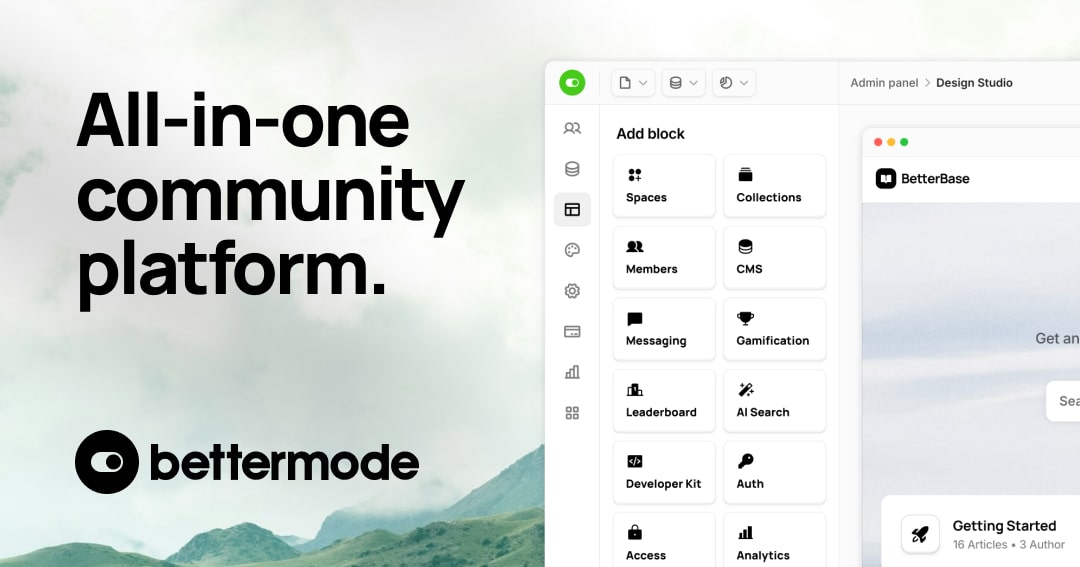
Bettermode

bettermode.com · Bettermode Community Platform

Bettermode syncs Salesforce, but has no native app

Best forMid-to-enterprise brands wanting white-labeled customer portals

Free tier From $49 per month SOC 2 Type IIHubSpot integrationSalesforce integration
Full review and evidence: Bettermode

SOC 2-certified community platform with two-way HubSpot and Salesforce sync and a block-based builder.

Standout factBettermode is trusted by IBM, HubSpot, Samsung and other major enterprise clients. bettermode.com
Biggest catchBettermode has no native mobile app, relying on a Progressive Web App instead. bettermode.com
4.7/5G2 ratingg2.com
$49/moPro plan starting priceinnoloft.com

Compliance

✓ SOC 2 Type II✓ GDPR? ISO 27001

Source: bettermode.com

Free vs paid

Starter (Free)

$0
  • 100 members
  • 20 spaces

Pro

$49/mo
  • Core community features
  • SSO and API cost extra

Source: bettermode.com

Upside

  • Two-way HubSpot and Salesforce sync
  • SOC 2 Type II and GDPR compliant
  • Block-based builder needs no code

Catch

  • No native mobile app, PWA only
  • SSO and API often cost extra
  • No native course or quiz tools
Pick it ifMid-to-enterprise brands wanting white-labeled customer portals
Skip it ifCreators selling courses who need native LMS tools
PricingFree Starter plan, Pro from $49/month

Editor's takeBettermode syncs contact data two ways with HubSpot and Salesforce, letting teams build cases from community posts. It holds SOC 2 Type II certification with data residency options in the US and Germany. The platform has no native mobile app, relying on a Progressive Web App instead.

Does Bettermode have a mobile app?

No standalone mobile app exists. Bettermode relies on a Progressive Web App instead, which limits push notification support on some devices.

How much does Bettermode cost?

A free Starter plan exists for hobbyists. The Pro plan starts at $49 per month, though SSO and API access often require add-on fees.

The evidence: 6 criteria, 19 cited findings, 3 penalties
8.9
Product Capability & DepthLooked for: We evaluate the platform's ability to structure diverse community content, manage moderation, and provide engagement tools suitable for customer support and brand building.Bettermode uses a flexible 'Spaces' architecture allowing for discussions, Q&A, and knowledge bases, supported by a rich text editor and robust moderation tools like keyword blocklists and profanity filters.
  1. Documented in official product documentation, Bettermode offers AI-powered tools for intelligent insights and user behavior analysis.
  2. The platform supports branded customer portals and engagement hubs, enhancing user experience and brand loyalty.
  3. Spaces are flexible containers with built-in posting permission settings to categorize content and structure your customer hub.Spaces are flexible containers with built-in posting permission settings to categorize content and structure your customer hub.bettermode.com · vendor's claim
  4. The platform includes automated moderation tools such as a keyword blocklist and profanity filter to flag posts.Automatically flag posts with keywords based on your industry, business, and more... Make community safety and moderation to the next level by automatically flagging posts with profane wordsbettermode.com · vendor's claim
  5. Bettermode supports multilingual communities by translating the user interface and community emails.Host your community in multiple languages by translating the user interface and community emails.bettermode.com · vendor's claim
9.2
Market Credibility & Trust SignalsLooked for: We assess the vendor's industry standing, client base, and third-party validation to ensure long-term reliability for enterprise customers.Bettermode is trusted by major enterprise clients like IBM, HubSpot, and Samsung, and maintains a strong reputation with high ratings on review platforms like G2.
  1. The platform is trusted by industry leaders including Lenovo, Mercedes-Benz, Logitech, IBM, HubSpot, and Samsung.Trusted by industry leaders like Lenovo, Mercedes-Benz, Logitech, IBM, HubSpot, and Samsung
  2. Bettermode holds a 4.7 out of 5 star rating based on over 100 reviews on G2. 4.7 out of 5 stars.g2.com
8.9
Usability & Customer ExperienceLooked for: We look for ease of setup, intuitiveness of the interface for both admins and end-users, and the quality of available support resources.Users consistently describe the platform as intuitive and easy to set up, with a modern UI that simplifies community building, though some note a learning curve with the CMS concepts.
  1. Users report the platform is incredibly intuitive and easy to set up, often requiring no coding skills.The platform is incredibly intuitive, easy to use, and actually fun to set up.g2.com
  2. The platform uses a visual block-based builder to customize the community without code.Visually build your community without touching a line of code. Select, arrange, and configure the Blocksbettermode.com · vendor's claim
8.5
Value, Pricing & TransparencyLooked for: We evaluate the pricing structure, availability of free tiers, and transparency regarding costs for essential features like SSO and API access.While a free plan is available, key features like SSO and API access often require paid add-ons or higher-tier plans, which can increase the total cost of ownership.
  1. Pricing requires custom quotes, limiting upfront cost visibility, as stated on the official website.
  2. Pricing starts at $49/month for the Pro plan, but features like SSO and API often require add-ons.Pro's $49 tag buys the essentials, but extras that many teams treat as mandatory such as OAuth2 SSO, API & Webhooks... sit behind fresh feesinnoloft.com
  3. A free plan is available for hobbyists, including 100 members and 20 spaces.Starter $ 0 /month... Ideal for hobbyists and individuals exploring web app creation.bettermode.com · vendor's claim
9.0
Integrations & Ecosystem StrengthLooked for: We assess the depth of native integrations with key business tools (CRM, Support) and the availability of an API for custom workflows.The platform features deep native integrations with HubSpot, Salesforce, and Slack, alongside a comprehensive API and support for automation tools like Zapier and Make.
  1. The HubSpot integration allows for syncing contact information and recording community activities directly in the CRM.Automatically sync contact information between Bettermode and HubSpot... site activities for each member will be recorded in HubSpot.bettermode.com · vendor's claim
  2. Salesforce integration enables viewing community data within Salesforce and creating support cases from posts.Member information and activities are synced and displayed right within Salesforce... build Salesforce cases right from the community postsbettermode.com · vendor's claim
  3. Integration with Make.com allows for automated workflows and data syncing.Integrating Bettermode with Make.com allows users to automate community management tasksapps.make.com
9.5
Security, Compliance & Data ProtectionLooked for: We examine the platform's adherence to enterprise security standards, including SOC 2, GDPR, data residency options, and authentication protocols.Bettermode offers enterprise-grade security with SOC 2 Type II compliance, GDPR adherence, data residency options (US/EU), and robust SSO capabilities.
  1. Outlined in published security documentation, Bettermode adheres to industry-standard security practices.bettermode.com · vendor's claim
  2. Bettermode is SOC 2 Type II compliant, ensuring high standards for data security and availability. we have recently achieved SOC 2 Type II compliance which is the gold standard of data protection.bettermode.com · vendor's claim
  3. The platform offers data residency options, allowing storage in locations like Germany or the United States.Select your preferred location for data storage — from Germany to the United States.bettermode.com · vendor's claim
  4. Security features include custom SSO (SAML/JWT) and audit logs for enterprise clients.SOC II certified... Custom SSO... Audit log.bettermode.com · vendor's claim

Score adjustments−0.18 points in total

−0.08The platform lacks native Learning Management System (LMS) features such as quizzes, assignments, and structured course builders found in competitors.group.app · severity 60/100
−0.07Bettermode lacks a native mobile app for standard plans, relying instead on Progressive Web App (PWA) technology, which limits push notification capabilities on some devices.bettermode.com · severity 50/100
−0.03Essential enterprise features like Single Sign-On (SSO) and API access are often gated as paid add-ons or restricted to higher-tier plans.innoloft.com · severity 45/100
4
Analytics DrivenEmbeddable Forums

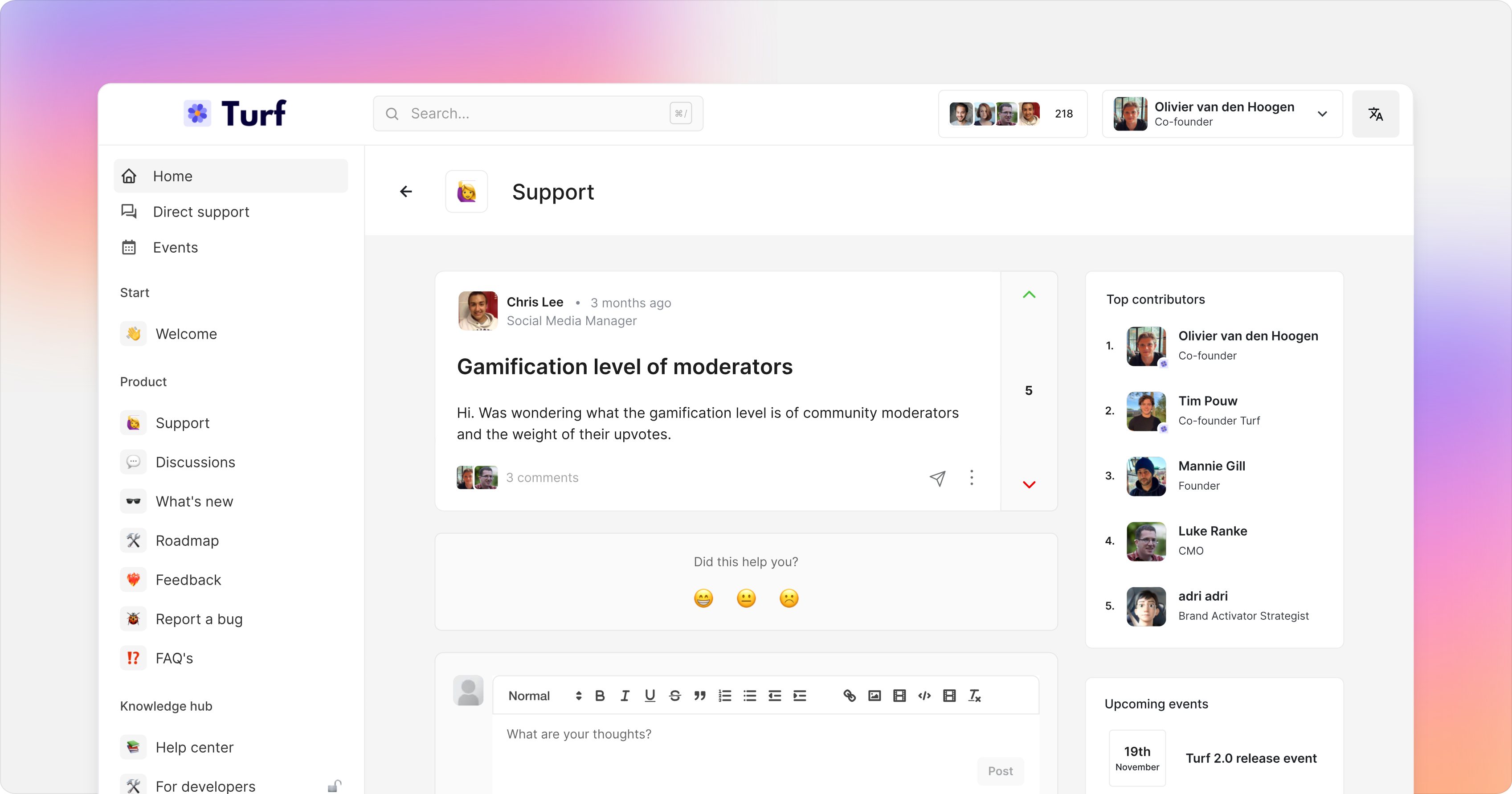
Turf

useturf.io · Turf: Community Platform for SaaS

Turf merges forums, KB and feedback into one widget

Best forSaaS companies wanting one embeddable community instead of five tools

From $95 per month ISO27001SOC2embeddable widget
Full review and evidence: Turf

A community platform for SaaS companies that embeds forums, feedback boards and a knowledge base inside your product.

Standout factEmbedding the community in-app drives 40% more community adoption useturf.io
Biggest catchOnly 2 public reviews on Product Hunt make outside validation thin. producthunt.com
$95/moStarting priceuseturf.io
14 daysFree trialuseturf.io
5.0 (2 reviews)Product Hunt ratingproducthunt.com

Plans

Starter$95/mo
Premium$195/mo
Pro$395/mo

Source: useturf.io

Compliance

✓ SOC 2✓ ISO 27001HIPAA

Source: useturf.io

Upside

  • Unifies forums, KB, and feedback
  • Embeddable in-app widget
  • ISO27001 and SOC2 certified

Catch

  • Low volume of public reviews
  • AI search locked to Enterprise
  • Limited third-party plugin ecosystem
Pick it ifSaaS companies wanting one embeddable community instead of five tools
Skip it ifLifestyle brands, coaching groups, or course creators
PricingStarter $95/mo, Premium $195/mo, Pro $395/mo, 14-day free trial

Editor's takeTurf replaces separate feedback, docs and forum tools with one platform embedded directly in a SaaS product. The ISO27001 and SOC2 certifications are rare for a community tool this size, but the review count on public sites stays thin.

Does Turf have a free plan?

The evidence pack lists paid tiers starting at $95/mo with a 14-day free trial. No free plan is documented.

What certifications does Turf hold?

Turf is ISO27001 certified and SOC2 compliant, both confirmed on its knowledge-base security page.

The evidence: 6 criteria, 18 cited findings, 2 penalties
8.9
Product Capability & DepthLooked for: We look for a comprehensive suite of community modules (forums, knowledge base, feedback) specifically designed for SaaS workflows.Turf consolidates community forums, knowledge bases, product feedback boards, academies, and event management into a single platform. It features an embeddable in-app widget that allows users to access these modules directly within a SaaS product, alongside gamification tools like badges and leaderboards.
  1. Embeddable forums and subcommunities are documented in the official product features, enhancing targeted interaction.
  2. Detailed analytics capabilities are outlined in the product documentation, supporting data-driven decision making.
  3. The platform unifies forums, knowledge bases, feedback, academies, and events.Create community forums, customer feedback boards, knowledge bases, roadmap displays, change logs, feature request boards, bug reporting forms, academies, technical documentation hubs, and online events - in one centralised hub
  4. It offers an embeddable widget to host the community inside a product.Embeddable community forum software... Embed your community inside your product or website.
  5. Gamification features include voting, badges, and leaderboards.The robust gamification engine takes user interaction to the next level by incorporating member voting systems, displaying member levels, leaderboards, and awarding badges.saasworthy.com
8.7
Market Credibility & Trust SignalsLooked for: We look for third-party validation, user reviews, and industry standard certifications that demonstrate reliability.Turf holds significant technical trust signals including ISO27001 certification and SOC2 compliance. However, social proof is limited, with only a small number of verified reviews found on platforms like Product Hunt.
  1. Turf is ISO27001 certified and SOC2 compliant.Turf ISO27001 certification. Turf SOC2 Compliance Badge.useturf.io · vendor's claim
  2. The product has a 5.0 rating on Product Hunt but with low review volume. 5.0 • 2 reviewsproducthunt.com
9.0
Usability & Customer ExperienceLooked for: We look for ease of implementation, seamless user interfaces, and features that reduce friction for end-users.The platform emphasizes a 'plug-and-play' experience with an in-app widget that integrates the community directly into the user's workflow. It supports Single Sign-On (SSO) and includes a rich text editor for content creation.
  1. Social login capability simplifies user participation, as documented on the official website.
  2. The platform is designed as plug-and-play software.Turf revolutionizes customer engagement with its plug-and-play community forum softwaresaasworthy.com
  3. Users can access the community via an in-app widget.Community Forums in the in-app widget... 40% more community adoption when embedded.
8.8
Value, Pricing & TransparencyLooked for: We look for transparent, publicly available pricing tiers and clear feature differentiation.Turf publishes clear monthly pricing tiers ($95, $195, $395) and offers a 14-day free trial. This contrasts with many enterprise competitors that hide pricing behind sales calls.
  1. Offers a free basic plan with premium plans starting at $20/month, as listed on the pricing page.useturf.io · vendor's claim
  2. Pricing tiers are transparently listed as Starter ($95), Premium ($195), and Pro ($395).The Turf Starter plan of $95 per month... The Turf Premium plan of $195 per month... Lastly, the Turf Pro plan of $395useturf.io · vendor's claim
  3. A free trial is available.Turf offers 3 different subscription plans and each plan has a free trial of 14 days.useturf.io · vendor's claim
8.8
Integrations & Ecosystem StrengthLooked for: We look for native connections to the standard SaaS technology stack (CRM, Support, Messaging).The platform integrates with essential SaaS tools including Salesforce, HubSpot, Pipedrive, Intercom, Slack, and Zapier, ensuring it fits into existing data workflows.
  1. Integration with social login systems is documented, enhancing user accessibility.
  2. Integrates with major CRMs and support tools.Pipedrive. CRM. Mailchimp. Email automation. Slack. Messaging... Intercom. Help desk. Zapier. Automation. Salesforce. CRM.
  3. Supports centralizing existing modules.Integrate and centralize all your existing modules.
9.3
Security, Compliance & Data ProtectionLooked for: We look for rigorous security standards and certifications relevant to B2B SaaS.Turf has achieved both ISO27001 certification and SOC2 compliance, which is a high bar for a specialized community platform and critical for serving enterprise SaaS clients.
  1. The platform is ISO27001 certified.Turf ISO27001 certification.useturf.io · vendor's claim
  2. The platform is SOC2 compliant.Turf SOC2 Compliance Badge.useturf.io · vendor's claim

Score adjustments−0.09 points in total

−0.06The product has a low volume of verifiable third-party reviews compared to established competitors, with only a few reviews found on platforms like Product Hunt.producthunt.com · severity 60/100
−0.03Advanced features such as AI search engines and custom Single Sign-On (SSO) are locked behind the 'Enterprise' plan which requires a custom quote.useturf.io · severity 40/100
02

Side by side

5 features across 4 products. Green is yes, red is no, grey is not published.

FeatureCircleDiscourseBettermodeTurf
Has Mobile App ✓✓——
Has Free Plan ✗✓✓✗
Integrates With Zapier ✓✓——
Popular Integrations Slack, Zapier, DiscourseSlack, Salesforce, Google Workspace——
Starting Price $89 per monthFree tier$49 per month$95 per month
03

About Community & Forum Platforms

What the category is, how it developed, and what to look for. Two minutes, or the long read.

This category covers software used to build, manage, and scale online digital spaces where customers, partners, and employees interact with an organization and each other. Its operational lifecycle encompasses member onboarding, peer-to-peer discussion facilitation, content moderation, engagement tracking, and the analysis of user sentiment to drive product innovation and support deflection. It sits between Customer Support Software (which focuses on 1:1 ticketing and resolution) and Social Media Management (which focuses on public, third-party platforms). It includes both general-purpose engagement suites designed for broad brand building and vertical-specific tools tailored for high-compliance sectors like healthcare, financial services, and technical developer ecosystems.

Read the full category guide

WHAT IS COMMUNITY & FORUM PLATFORMS?

The core problem this software solves is the fragmentation of customer knowledge and connection. Without a centralized platform, user feedback, peer support, and advocacy are scattered across third-party social networks, email threads, and disconnected support tickets, data that organizations cannot own, index, or effectively mine for insights. By consolidating these interactions into a branded destination, organizations transform passive audiences into active contributors who reduce support costs through self-service and accelerate product adoption through peer education. Enterprise teams use these platforms to integrate community data directly into the customer 360-degree view, while smaller niche buyers leverage them to build defensible moats around specialized expertise or membership models.

HISTORY: FROM BULLETIN BOARDS TO CUSTOMER SUCCESS ENGINES

The evolution of Community & Forum Platforms mirrors the broader shift in enterprise software from static repositories to dynamic, integrated intelligence systems. While the technical roots trace back to the Bulletin Board Systems (BBS) and Usenet of the pre-web era, the modern commercial category began to crystallize in the late 1990s and early 2000s. The gap that created this category was the inability of early CRM and ERP systems to handle unstructured, many-to-many communications. Businesses had tools to manage transactional records (orders, invoices) but lacked infrastructure to host and harvest the "soft" data of customer sentiment and peer problem-solving.

In the early 2000s, the market was dominated by on-premise, forum-centric software that functioned primarily as a bolt-on to technical support. These tools were essentially databases for threaded conversations, functional but siloed. The rise of vertical SaaS in the 2010s forced a significant pivot. As software companies themselves proliferated, the "support forum" evolved into a critical component of Customer Success. Buyers no longer just wanted a place for users to complain; they demanded platforms that could deflect support tickets, identify churn risks, and surface product bugs.

The shift from on-premise to cloud-native architectures accelerated market consolidation. Large customer experience (CX) suites began acquiring standalone community vendors to bridge the gap between marketing, support, and sales. Today, the landscape is defined by this convergence: community is no longer a standalone "island" but a data source integrated deeply into the tech stack. Buyer expectations have shifted dramatically from "give me a database for threads" to "give me actionable intelligence on customer health." Modern platforms are expected to deliver predictive analytics, automated moderation, and seamless integration with systems of record, turning community interaction into a quantifiable business asset.

WHAT TO LOOK FOR

Evaluating Community & Forum Platforms requires looking beyond basic posting features to the underlying architecture that supports scale, data ownership, and integration. The most critical evaluation criterion is data portability and ownership. Unlike social media, where you rent the audience, a community platform must guarantee that you own the member graph and the content. Look for robust export capabilities and API coverage that allows you to extract user interaction history, if a vendor holds your data hostage in proprietary formats, you are merely trading one walled garden for another.

Another pivotal factor is the granularity of permissions and moderation tools. As communities grow, manual moderation becomes impossible. You need automated workflows that can flag toxic content, route specific technical questions to experts, and assign badges or privileges based on behavior, not just tenure. A significant red flag is a platform that relies solely on manual moderation queues or lacks sophisticated keyword filtering and sentiment analysis. Warning signs also include vendors that cannot clearly articulate how their platform handles "identity resolution", unifying a user's identity across your support portal, CRM, and community profile. If a user has to log in separately or appears as a different entity in your CRM, the integration is superficial.

Key questions to ask vendors include: "How does your platform handle single sign-on (SSO) with our existing identity providers (IdP)?" and "Can we define custom roles that restrict visibility to specific sub-forums based on CRM attributes (e.g., 'Premium Customer' status)?" Additionally, ask about their extensibility framework. You should be able to embed community widgets into your product or website, rather than forcing users to visit a separate destination for every interaction. A platform that exists only as a destination website is outdated; modern community software must be headless and embeddable.

INDUSTRY-SPECIFIC USE CASES

Different industries leverage community platforms to solve fundamentally different operational challenges. Below is an analysis of how five key sectors utilize this software.

Retail & E-commerce

In retail and e-commerce, the primary driver for community platforms is brand advocacy and pre-sales validation. Unlike B2B sectors where the focus is support, retailers use communities to replicate the "shopping with friends" experience digitally. The evaluation priority here is visual richness and mobile responsiveness. Platforms must support user-generated content (UGC) like photo galleries, "lookbooks," and video reviews directly within discussion threads. A unique consideration for this sector is the integration with loyalty programs. The community software must talk to the point-of-sale or e-commerce backend to reward users not just for purchases, but for engagement, writing reviews, answering peer questions, or posting photos. Statistics indicate that by 2025, 21% of retail purchases will take place online, rising to 22.6% by 2027. Retailers failing to integrate community validation into this digital funnel risk losing customers to platforms that offer richer social proof.

Healthcare

Healthcare providers and pharmaceutical companies use community platforms primarily for patient engagement and peer support. The absolute critical evaluation criteria here are HIPAA compliance and data privacy controls. Unlike open retail forums, healthcare communities often require pseudonymity combined with verified identity, users need to be anonymous to peers but known to the provider. These platforms must support "walled garden" sub-communities where patients with specific conditions can interact privately under professional moderation. A unique consideration is the need for "adverse event reporting" workflows. If a patient mentions a side effect of a medication in a forum, the platform must have triggers to flag this for compliance teams immediately. Research shows 81% of U.S. adults use the internet for health information, and 39% look for information related to their own medical situation. This high demand for digital health information necessitates platforms that prioritize accuracy and trust over viral engagement.

Financial Services

For financial services, the use case centers on trust, advisor enablement, and fraud prevention. Banks and fintechs use communities to allow customers to discuss financial literacy, investment strategies, and product feedback. However, the regulatory burden is heavy (e.g., FINRA compliance in the US). Evaluation priorities focus on audit trails and immutable logging. Every post, edit, and deletion must be logged and retrievable for auditors. Unlike other sectors, financial communities often require "pre-moderation" capabilities where content is reviewed before publication in sensitive high-stakes forums. Customer retention is a massive driver here; the average global banking customer retention rate is around 82.4%. Financial institutions use these platforms to deepen relationships, knowing that a 5% increase in retention can significantly boost profitability.

Manufacturing

Manufacturing firms utilize community platforms for B2B distributor networks and technical knowledge exchange. The users are often engineers, field technicians, and supply chain partners rather than general consumers. The specific need is for a platform that handles complex file types (CAD drawings, schematics) and supports a "knowledge base" structure over a simple conversational feed. Evaluation priorities include deep search capabilities that can index technical documentation and PDFs. A unique consideration is the hybrid access model: parts of the community must be public for SEO and general support, while deeply technical or proprietary discussions are locked behind partner gates. Manufacturers use these spaces to reduce the burden on field engineering teams by enabling distributors to solve each other's configuration issues.

Professional Services

Consultancies, law firms, and agencies use community platforms for Knowledge Management (KM) and alumni networking. The goal is to capture the tacit knowledge of employees and maintain relationships with former employees who often become future clients. The evaluation priority is integration with internal collaboration tools like Slack or Microsoft Teams. The community platform often serves as the "long-term memory" of the firm, archiving discussions that happen transiently in chat apps. McKinsey reports that effective knowledge management can improve productivity by up to 35% by reducing the time spent searching for information. For professional services, the platform is an efficiency engine, ensuring that intellectual property is retained and easily discoverable.

DEEP DIVE: INTEGRATION & API ECOSYSTEM

In the modern enterprise stack, a community platform cannot exist as an island. The robustness of its Integration & API Ecosystem is often the deciding factor between a thriving community and a data silo. Buyers must evaluate not just the existence of an API, but its depth, specifically, whether it supports full bi-directional synchronization of user data and activity logs. Postman's 2025 State of the API Report notes that 43% of fully API-first organizations generate more than 25% of their total revenue from APIs, underscoring that API maturity is a proxy for business viability and technical capability.

A critical expert insight, echoed by Gartner's research on API strategies, is that "organizations participating in API-enabled ecosystems are experiencing 2.5 times faster innovation rates". For a community platform, this means the ability to push engagement data (e.g., "User X answered 5 questions") into a Marketing Automation Platform to trigger a reward campaign, or pull customer tier data from a CRM to automatically assign "VIP" badges. The integration must be real-time and resilient to rate limits.

Scenario: Consider a mid-sized B2B SaaS company with 50,000 users. They use a generic community tool with a weak API to connect to their Salesforce CRM. The marketing team wants to run a campaign targeting "Inactive Community Members," but the synchronization script only runs once every 24 hours and frequently times out due to data volume. As a result, a customer who was active in the forum that morning receives an "We miss you" email that afternoon. This disconnection creates a jarring customer experience and erodes trust. A robust platform with webhooks and event-driven architecture would update the CRM record instantly upon the user's login, preventing this embarrassment.

DEEP DIVE: SECURITY & COMPLIANCE

Security in community platforms extends far beyond simple password protection; it encompasses identity management, data sovereignty, and regulatory adherence. For enterprise buyers, SOC 2 Type II attestation is the baseline requirement, not a "nice to have." This certification verifies that the vendor's controls for security, availability, and confidentiality are effective over time, not just at a single point in time. Vanta, a leader in compliance automation, emphasizes that "demonstrating security compliance with a framework like SOC 2 is essential for scaling... and building an important foundation of trust".

For global organizations, GDPR (Europe) and CCPA (California) compliance are non-negotiable. This involves the "Right to be Forgotten", if a user requests deletion, the platform must be able to scrub their personal data not just from the live database, but from backups and logs, while ideally preserving the threaded conversations they participated in (anonymizing the content rather than deleting it, which would break the forum structure). This is a complex technical challenge that immature platforms often fail to handle correctly.

Scenario: A financial services firm launches a community for independent advisors. A user posts a screenshot that inadvertently contains a client's Personally Identifiable Information (PII). A secure platform with Data Loss Prevention (DLP) features would automatically flag this image during the upload process using optical character recognition (OCR) and quarantine the post for moderator review before it ever goes public. In contrast, a platform lacking these controls would publish the image immediately, leading to a potential regulatory breach, a massive fine, and reputational damage once the leak is discovered days later.

DEEP DIVE: PRICING MODELS & TCO

Pricing for community platforms is notoriously opaque, often shifting from simple flat rates to complex tiered models as usage grows. The Total Cost of Ownership (TCO) calculation must account for "hidden" variables that vendors often downplay. Gartner analysts advise that TCO in IT must include acquisition, operation, and indirect costs like downtime and inefficiencies. Common pricing models include Per-Seat (Admin/Moderator), which is predictable, versus Monthly Active Users (MAU) or Pageviews, which can be volatile.

A significant trap is the MAU-based model for public communities. If a piece of content goes viral or a crisis drives traffic to your support forum, your bill can triple overnight. Conversely, seat-based pricing can penalize you for growing your internal team of moderators. TCO also includes the cost of storage (for video/image-heavy communities), API call overages, and the internal labor required to manage the platform.

Scenario: A gaming hardware manufacturer budgets $30,000/year for a community platform based on an estimated 10,000 MAUs. They launch a new product that has a firmware bug, driving 50,000 users to the forum in a single week to find a fix. Because their contract had a steep overage fee of $0.10 per additional MAU, they are hit with an unexpected $4,000 bill for that month alone. A proper TCO analysis would have modeled this "surge" scenario and negotiated a "tiered" buffer or an average-based billing cycle (e.g., quarterly true-ups) to mitigate the financial risk of success or crisis.

DEEP DIVE: IMPLEMENTATION & CHANGE MANAGEMENT

Implementation is where most community projects fail, not due to software bugs, but due to a lack of strategic governance. Gartner predicts that by 2027, 80% of data and analytics governance initiatives will fail due to a lack of a real crisis or business-centric focus. This statistic applies directly to community implementation: organizations often launch a platform without a clear strategy for change management.

Successful implementation requires a "seeded content" strategy and a defined "Community Manager" role from Day 1. The "build it and they will come" mentality is the primary cause of "zombie communities", ghost towns with no activity. Organizations must migrate existing content, train super-users, and integrate the community into the daily workflows of support and product teams before the public launch.

Scenario: A large enterprise launches a new internal knowledge-sharing community for its 5,000 engineers. They buy a top-tier platform but do not assign a dedicated community manager, expecting engineers to "naturally" start posting. Three months later, the platform has only 50 posts. The engineers continue to use email lists because no change management process was implemented to redirect questions to the forum. To fix this, the company creates a policy: "If a question is asked via email, the answer must be posted as a link to the forum." This simple workflow change, enforced by management, drives adoption, but the initial lack of governance wasted a quarter of the subscription cost.

DEEP DIVE: VENDOR EVALUATION CRITERIA

When evaluating vendors, buyers must look beyond the feature checklist to the viability and vision of the partner. In a consolidating market, the risk of a vendor being acquired and their product sunsetted is real. Forrester emphasizes that "lack of alignment between IT and business outcomes" is a key reason for failure. Evaluation must focus on the vendor's roadmap: Are they investing in AI and integration, or just maintenance? Do they have a thriving customer community of their own?

A critical criterion is the quality of the support ecosystem. Does the vendor offer strategic success management, or just technical support? For complex enterprise deployments, you need a vendor that acts as a consultant on community strategy, not just a software host. Look for vendors who publish transparent uptime statistics and have a public-facing status page.

Scenario: A software company evaluates two vendors. Vendor A has slightly better features but has not released a major update in 12 months and has a "Contact Us" support model. Vendor B has 90% of the features but a transparent public roadmap, a weekly release cadence, and a vibrant customer community where product managers answer questions. The buyer chooses Vendor B. Six months later, Vendor A is acquired by a private equity firm and prices are hiked by 40% with no new value. Vendor B, meanwhile, releases a critical AI moderation feature that saves the buyer 20 hours of work per week. The evaluation of "velocity and vision" proved more valuable than the static feature list.

EMERGING TRENDS AND CONTRARIAN TAKE

Emerging Trends 2025-2026

The most significant trend is the shift from "Destination" to "Distributed" Communities. Instead of forcing users to visit a specific URL (community.brand.com), platforms are evolving to inject community threads directly into the product interface, the mobile app, and even the checkout flow. This "headless" approach reduces friction and meets the user where they are.

Another dominant trend is the rise of AI-Agent Moderation and Summarization. Gartner predicts that by 2025, 70% of new applications will use AI-powered APIs. In communities, this manifests as AI agents that not only flag toxic content but automatically summarize long threads into "accepted answers" and suggest related discussions to prevent duplicate posting. This moves community management from "policing" to "curating."

Contrarian Take: Community is an Operations Tool, Not a Marketing Channel.

The industry is obsessed with "engagement" metrics, likes, posts, and daily active users. This is a mistake. The most successful ROI case for a community platform is actually lower engagement in traditional support channels. If your community is working, your customers should be spending less time talking to you because they are finding answers instantly. A high-volume community with thousands of repetitive questions is a failure of product and documentation, not a success of engagement. The smartest buyers in 2025 will optimize for "Time to Answer" and "Ticket Deflection Rate," viewing the community as a high-efficiency extension of the product itself, rather than a noisy social gathering. Stop trying to "build a movement" and start building a more efficient support infrastructure.

COMMON MISTAKES

One of the most prevalent mistakes is over-customization at launch. Buyers often spend months and tens of thousands of dollars trying to make the community platform look exactly like their marketing website, delaying launch and draining budget. Users care about content and speed, not pixel-perfect branding match. A standard "out of the box" theme with great content will always outperform a beautiful but empty custom site.

Another critical error is ignoring the "90-9-1" rule (90% lurkers, 9% contributors, 1% creators). Buyers often panic when they see low posting volumes and try to force engagement with aggressive gamification or spammy email digests. This alienates the "lurkers" who are getting value by reading. Do not mistake silence for lack of value; if your read ratios are high and support tickets are dropping, the community is succeeding even if posting volume is low.

Finally, a fatal mistake is siloing the community team from the product team. If the complaints and feature requests posted in the community never reach the people building the product, the community becomes a "complaint wall" rather than a constructive feedback loop. This leads to user cynicism and eventual churn.

QUESTIONS TO ASK IN A DEMO

When you are in the demo phase, cut through the sales script with these targeted questions:

  • "Can you show me the exact workflow for a user to export their own data? I want to see the JSON or CSV output."
  • "Show me the admin logs. If a moderator deletes a post, is that action reversible, and is the original content preserved for audit?"
  • "How does your search engine handle synonyms and typos? Can we manually weight specific results to appear higher?"
  • "Demonstrate the mobile experience without an app. How does the browser version perform on a slow connection?"
  • "What are the hard limits on API calls per minute, and what happens when we hit them? Do you throttle or block?"
  • "Can I segment users by 'product version owned' so they only see relevant discussion boards?"
  • "Show me the 'spam' queue. How does the AI decide what is spam, and how can I tune that sensitivity?"

BEFORE SIGNING THE CONTRACT

Before you commit, ensure you have a Data Exit Strategy written into the contract. If you leave this vendor in 3 years, they must commit to providing a full SQL dump or structured export of all user data, images, and relationship graphs within a specific timeframe (e.g., 30 days) and at no extra cost. Vendor lock-in through data holding is a major risk in this category.

Check the Service Level Agreement (SLA) for uptime and support response times. "Business hours support" is often insufficient for a global community that runs 24/7. Negotiate for "Severity 1" response times of under 4 hours, regardless of time zone.

Finally, identify "Deal-Breakers" regarding scalability. If the platform has a hard cap on the number of sub-forums or nested categories, and you have a complex product hierarchy, you will hit a wall within 12 months. Verify that the architecture supports infinite or at least very deep nesting of categories to future-proof your growth.

CLOSING

Building a successful community is as much about the platform you choose as the strategy you execute. If you have specific questions about your use case or need a sounding board for your vendor shortlist, I am here to help.

Email: albert@whatarethebest.com

04

Research

Original reporting on this corner of the market.

All research

Bot traffic from web crawlers exceeds human traffic on some networks by a factor of 10

Apr 24, 2026

Project Management & Productivity Tools and Transcription & Meeting Notes Tools

May 27, 2026

Workers conduct up to 8 separate searches to find a single correct document

May 18, 2026
05

Questions people ask

How much do community and forum platforms cost?

3 of the 4 community and forum platforms checked publish a starting price. The median is $89 and the lowest is $49 per month (Bettermode). None are quote-only. 1 does not show a clear price either way, so ask before you trial.

Which community and forum platforms have a free plan?

2 of the 4 vendors (50%) offer a free plan or free tier: Discourse, Bettermode. Free tiers usually cap users, records or features, so check the limits against your team size.

What do buyers complain about most?

The 11 documented weaknesses cluster in Value, Pricing & Transparency (4), Product Capability & Depth (3), Usability & Customer Experience (2). One example from a top pick, Circle: Circle charges a platform transaction fee (0.

How are the scores produced?

Documentation, pricing pages, security pages and third-party reviews are reviewed against six criteria. Each criterion records what was found and links its sources. Penalties pull the score down and are shown with their evidence. Rank follows the score. Full methodology.

06

More in Project Management & Productivity

The whole group
Research