Time Tracking & Productivity Tools

These are the specialized categories within Time Tracking & Productivity Tools. Looking for something broader? See all Project Management & Productivity Tools categories.

1

Atto - Time Tracking for Plumbing

Best for Time Tracking & Productivity Tools for Plumbers

Score
9.9 / 10
Atto - Time Tracking for Plumbing

Atto is a SaaS solution specifically designed for plumbing and heating companies to streamline their operations. It's designed to keep track of plumbers' time and locations throughout their workday, minimizing time spent on administrative tasks and payroll processing, and enabling quicker responses to emergency calls.

Best for Time Tracking & Productivity Tools for Plumbers

Expert Take

Atto excels in providing a specialized time tracking solution for plumbing companies, with features like real-time tracking and GPS location that cater to industry-specific needs. While it offers strong usability and value, its limited integrations and lack of offline mode are notable tradeoffs.

Pros

  • Real-time GPS tracking and geofencing
  • One-tap clock-in for non-tech users
  • Automated IRS-compliant mileage tracking
  • Offline mode for remote job sites
  • Job codes for precise labor costing

Cons

  • Web dashboard lacks key features
  • No free plan for small teams
  • Limited payroll integrations (QB/Xero only)
  • Support slow on lower tiers
  • API access gated to Expert plan

Best for teams that are

  • Mobile-first teams needing simple time and mileage tracking
  • Small businesses wanting a clean, user-friendly app
  • Companies needing basic location history for field staff

Skip if

  • Managers who rely on desktop tools for scheduling
  • Large teams where per-user pricing becomes costly
  • Businesses needing extensive payroll integrations

Best for teams that are

  • Mobile-first teams needing simple time and mileage tracking
  • Small businesses wanting a clean, user-friendly app
  • Companies needing basic location history for field staff

Skip if

  • Managers who rely on desktop tools for scheduling
  • Large teams where per-user pricing becomes costly
  • Businesses needing extensive payroll integrations

Pros

  • Real-time GPS tracking and geofencing
  • One-tap clock-in for non-tech users
  • Automated IRS-compliant mileage tracking
  • Offline mode for remote job sites
  • Job codes for precise labor costing

Cons

  • Web dashboard lacks key features
  • No free plan for small teams
  • Limited payroll integrations (QB/Xero only)
  • Support slow on lower tiers
  • API access gated to Expert plan

Expert Take

Atto excels in providing a specialized time tracking solution for plumbing companies, with features like real-time tracking and GPS location that cater to industry-specific needs. While it offers strong usability and value, its limited integrations and lack of offline mode are notable tradeoffs.

2

Jibble Roofer Timesheet App

Best for Time Tracking & Productivity Tools for Roofing Companies

Score
9.9 / 10
Jibble Roofer Timesheet App

Jibble is a free timesheet app specifically tailored for roofers. It streamlines work hour tracking, payroll management, and project scheduling, addressing the unique need for accurate time management and budget control in the roofing industry.

Best for Time Tracking & Productivity Tools for Roofing Companies

Expert Take

Jibble Roofer Timesheet App excels in providing a specialized, free solution for time tracking in the roofing industry. Its industry-specific features and ease of use make it a valuable tool for roofing professionals. While it lacks some advanced features, its focus on core functionalities and cost-effectiveness positions it as a top choice for its niche.

Pros

  • Free forever plan for unlimited users
  • Offline mode for remote job sites
  • GPS geofencing ensures on-site clock-ins
  • Facial recognition prevents buddy punching
  • Seamless QuickBooks and Xero integrations

Cons

  • No built-in mileage tracking feature
  • Limited advanced shift scheduling options
  • Reports export to CSV/XLS only (no PDF)
  • Occasional mobile-to-web sync delays

Best for teams that are

  • Startups and small teams seeking a completely free time-tracking solution
  • Businesses needing facial recognition to ensure accurate attendance

Skip if

  • Large enterprises requiring advanced project management features
  • Teams in poor signal areas concerned about offline sync reliability

Best for teams that are

  • Startups and small teams seeking a completely free time-tracking solution
  • Businesses needing facial recognition to ensure accurate attendance

Skip if

  • Large enterprises requiring advanced project management features
  • Teams in poor signal areas concerned about offline sync reliability

Pros

  • Free forever plan for unlimited users
  • Offline mode for remote job sites
  • GPS geofencing ensures on-site clock-ins
  • Facial recognition prevents buddy punching
  • Seamless QuickBooks and Xero integrations

Cons

  • No built-in mileage tracking feature
  • Limited advanced shift scheduling options
  • Reports export to CSV/XLS only (no PDF)
  • Occasional mobile-to-web sync delays

Expert Take

Jibble Roofer Timesheet App excels in providing a specialized, free solution for time tracking in the roofing industry. Its industry-specific features and ease of use make it a valuable tool for roofing professionals. While it lacks some advanced features, its focus on core functionalities and cost-effectiveness positions it as a top choice for its niche.

3

Knowify Construction Time Tracker

Best for Time Tracking & Productivity Tools for Plumbers

Score
9.8 / 10
Knowify Construction Time Tracker

Knowify's Construction Time Tracker is tailor-made for trade contractors, specifically plumbers. It offers precise tracking for payroll and job costing, alongside flexible tools for reviewing and approving employee and equipment time across jobs, ensuring optimal productivity and resource allocation.

Best for Time Tracking & Productivity Tools for Plumbers

Expert Take

Knowify Construction Time Tracker excels in providing industry-specific solutions for plumbers, with strong capabilities in time tracking and job costing. Its market credibility is supported by its specialized focus, although some usability aspects like the interface could be improved. Overall, it stands out as a premium tool in its niche.

Pros

  • Deep bi-directional QuickBooks integration
  • Built-in AIA billing and retainage
  • Real-time job costing features
  • Excellent U.S.-based customer support
  • Transparent pricing with free trial

Cons

  • Mobile app sync and GPS bugs
  • Per-user pricing scales costs high
  • Limited report customization options
  • Not optimized for paving/tonnage
  • Steep learning curve for some

Best for teams that are

  • Plumbing contractors focused on construction projects
  • Businesses needing detailed job costing and AIA billing
  • Companies requiring strong QuickBooks integration

Skip if

  • Service-only plumbers focused on quick dispatch/repair
  • Teams wanting a simple app with a low learning curve
  • Businesses needing extensive mobile app functionality

Best for teams that are

  • Plumbing contractors focused on construction projects
  • Businesses needing detailed job costing and AIA billing
  • Companies requiring strong QuickBooks integration

Skip if

  • Service-only plumbers focused on quick dispatch/repair
  • Teams wanting a simple app with a low learning curve
  • Businesses needing extensive mobile app functionality

Pros

  • Deep bi-directional QuickBooks integration
  • Built-in AIA billing and retainage
  • Real-time job costing features
  • Excellent U.S.-based customer support
  • Transparent pricing with free trial

Cons

  • Mobile app sync and GPS bugs
  • Per-user pricing scales costs high
  • Limited report customization options
  • Not optimized for paving/tonnage
  • Steep learning curve for some

Expert Take

Knowify Construction Time Tracker excels in providing industry-specific solutions for plumbers, with strong capabilities in time tracking and job costing. Its market credibility is supported by its specialized focus, although some usability aspects like the interface could be improved. Overall, it stands out as a premium tool in its niche.

4

Replicon Time Tracking Software

Best for Time Tracking & Productivity Tools for Staffing Agencies

Score
9.8 / 10
Replicon Time Tracking Software

Replicon is a robust time tracking software designed specifically for project-oriented staffing agencies. It allows for efficient tracking of time across projects, teams, and clients, providing real-time insights, streamlined billing, and labor support. Its features are tailored to the unique needs of the staffing industry, enabling businesses to optimize productivity, manage resources effectively, and improve profitability.

Best for Time Tracking & Productivity Tools for Staffing Agencies

Expert Take

Replicon Time Tracking Software is tailored for staffing agencies, offering industry-specific features that enhance project management and productivity. It provides real-time insights and streamlined billing, making it a valuable tool for optimizing resource management and ensuring labor compliance. These capabilities position it as a leading solution in its category.

Pros

  • FedRAMP Moderate authorized security
  • Compliance library for 145+ jurisdictions
  • AI-powered ZeroTime™ automated tracking
  • Seamless integration with SAP/Oracle
  • Scalable for global enterprises

Cons

  • Mobile app reported as clunky
  • Outdated user interface design
  • Minimum 10 user requirement
  • Complex reporting customization
  • Higher cost for small teams

Best for teams that are

  • Large enterprises with complex compliance and payroll needs.
  • Global organizations requiring multi-currency and multi-location support.
  • Companies needing strict audit trails and labor law compliance.

Skip if

  • Small businesses or freelancers with simple tracking needs.
  • Teams with limited budgets or no dedicated IT/HR resources.
  • Users seeking a modern, lightweight, and quick-to-setup interface.

Best for teams that are

  • Large enterprises with complex compliance and payroll needs.
  • Global organizations requiring multi-currency and multi-location support.
  • Companies needing strict audit trails and labor law compliance.

Skip if

  • Small businesses or freelancers with simple tracking needs.
  • Teams with limited budgets or no dedicated IT/HR resources.
  • Users seeking a modern, lightweight, and quick-to-setup interface.

Pros

  • FedRAMP Moderate authorized security
  • Compliance library for 145+ jurisdictions
  • AI-powered ZeroTime™ automated tracking
  • Seamless integration with SAP/Oracle
  • Scalable for global enterprises

Cons

  • Mobile app reported as clunky
  • Outdated user interface design
  • Minimum 10 user requirement
  • Complex reporting customization
  • Higher cost for small teams

Expert Take

Replicon Time Tracking Software is tailored for staffing agencies, offering industry-specific features that enhance project management and productivity. It provides real-time insights and streamlined billing, making it a valuable tool for optimizing resource management and ensuring labor compliance. These capabilities position it as a leading solution in its category.

5

ExakTime for Plumbing Business

Best for Time Tracking & Productivity Tools for Plumbers

Score
9.7 / 10
ExakTime for Plumbing Business

ExakTime is a specialized time tracking software designed for the plumbing industry. It addresses the need for accurate time-keeping and job tracking, eliminating the inefficiencies of manual tracking. This streamlines operations, improves productivity and ensures accurate billing.

Best for Time Tracking & Productivity Tools for Plumbers

Expert Take

ExakTime excels in providing specialized time tracking solutions for the plumbing industry, with a strong focus on accurate billing and productivity improvements. Its market credibility is supported by industry-specific features and third-party recognition, making it a top choice for plumbing businesses seeking efficiency in operations.

Pros

  • FaceFront biometrics prevents buddy punching
  • Rugged JobClock hardware available
  • Integrates with Sage, Foundation, QuickBooks
  • Offline mode for low-signal areas
  • Strong geofencing and GPS breadcrumbing

Cons

  • Mandatory monthly base fee ($40-$50)
  • Low iOS app store ratings
  • GPS tracking drains phone battery
  • Advanced analytics cost extra
  • No free trial available

Best for teams that are

  • Mid-to-large contractors needing strict compliance tools
  • Companies requiring facial recognition to prevent time theft
  • Businesses needing robust job costing features

Skip if

  • Small businesses with limited software budgets
  • Teams seeking a modern, lightweight user interface
  • Companies with primarily office-based staff

Best for teams that are

  • Mid-to-large contractors needing strict compliance tools
  • Companies requiring facial recognition to prevent time theft
  • Businesses needing robust job costing features

Skip if

  • Small businesses with limited software budgets
  • Teams seeking a modern, lightweight user interface
  • Companies with primarily office-based staff

Pros

  • FaceFront biometrics prevents buddy punching
  • Rugged JobClock hardware available
  • Integrates with Sage, Foundation, QuickBooks
  • Offline mode for low-signal areas
  • Strong geofencing and GPS breadcrumbing

Cons

  • Mandatory monthly base fee ($40-$50)
  • Low iOS app store ratings
  • GPS tracking drains phone battery
  • Advanced analytics cost extra
  • No free trial available

Expert Take

ExakTime excels in providing specialized time tracking solutions for the plumbing industry, with a strong focus on accurate billing and productivity improvements. Its market credibility is supported by industry-specific features and third-party recognition, making it a top choice for plumbing businesses seeking efficiency in operations.

6

Hubstaff Time Tracking Tool

Best for Time Tracking & Productivity Tools for Contractors

Score
9.7 / 10
Hubstaff Time Tracking Tool

Hubstaff is a robust time tracking and productivity tool specifically designed for contractors who need to manage remote teams, monitor productivity, and streamline payroll and billing processes. Its features like timesheets, in-depth reports, and activity levels help contractors to improve efficiency and project profitability.

Best for Time Tracking & Productivity Tools for Contractors

Expert Take

Our analysis shows Hubstaff strikes a rare balance between rigorous proof-of-work monitoring and employee privacy through features like screenshot blurring and a strict no-keystroke-logging policy. Research indicates it is particularly strong for remote teams due to its seamless automated payroll integrations with platforms like Wise and Deel. Based on documented features, it offers enterprise-grade compliance (SOC 2 Type II) that is often missing in competitor tools.

Pros

  • SOC 2 Type II and GDPR compliant
  • Automated payroll via Wise and PayPal
  • Screenshot blurring protects employee privacy
  • GPS tracking and geofencing for field teams
  • Integrates with 30+ major business tools

Cons

  • Mobile app lacks admin management features
  • HIPAA compliance requires Enterprise plan
  • Paid plans have a 2-seat minimum
  • Insights feature is an extra paid add-on
  • Support response times can be slow

Best for teams that are

  • Remote or hybrid teams requiring proof of work via screenshots
  • Companies needing to automate payroll and invoicing for hourly staff
  • Managers wanting detailed activity levels and app usage reports

Skip if

  • Field teams needing specialized workflows like equipment tracking
  • Privacy-conscious teams who find screenshots and monitoring intrusive
  • Users wanting a simple interface, as it can be overwhelming

Best for teams that are

  • Remote or hybrid teams requiring proof of work via screenshots
  • Companies needing to automate payroll and invoicing for hourly staff
  • Managers wanting detailed activity levels and app usage reports

Skip if

  • Field teams needing specialized workflows like equipment tracking
  • Privacy-conscious teams who find screenshots and monitoring intrusive
  • Users wanting a simple interface, as it can be overwhelming

Pros

  • SOC 2 Type II and GDPR compliant
  • Automated payroll via Wise and PayPal
  • Screenshot blurring protects employee privacy
  • GPS tracking and geofencing for field teams
  • Integrates with 30+ major business tools

Cons

  • Mobile app lacks admin management features
  • HIPAA compliance requires Enterprise plan
  • Paid plans have a 2-seat minimum
  • Insights feature is an extra paid add-on
  • Support response times can be slow

Expert Take

Our analysis shows Hubstaff strikes a rare balance between rigorous proof-of-work monitoring and employee privacy through features like screenshot blurring and a strict no-keystroke-logging policy. Research indicates it is particularly strong for remote teams due to its seamless automated payroll integrations with platforms like Wise and Deel. Based on documented features, it offers enterprise-grade compliance (SOC 2 Type II) that is often missing in competitor tools.

7

Atto Roofing Timesheet Software

Best for Time Tracking & Productivity Tools for Roofing Companies
Score
9.7 / 10
Atto Roofing Timesheet Software

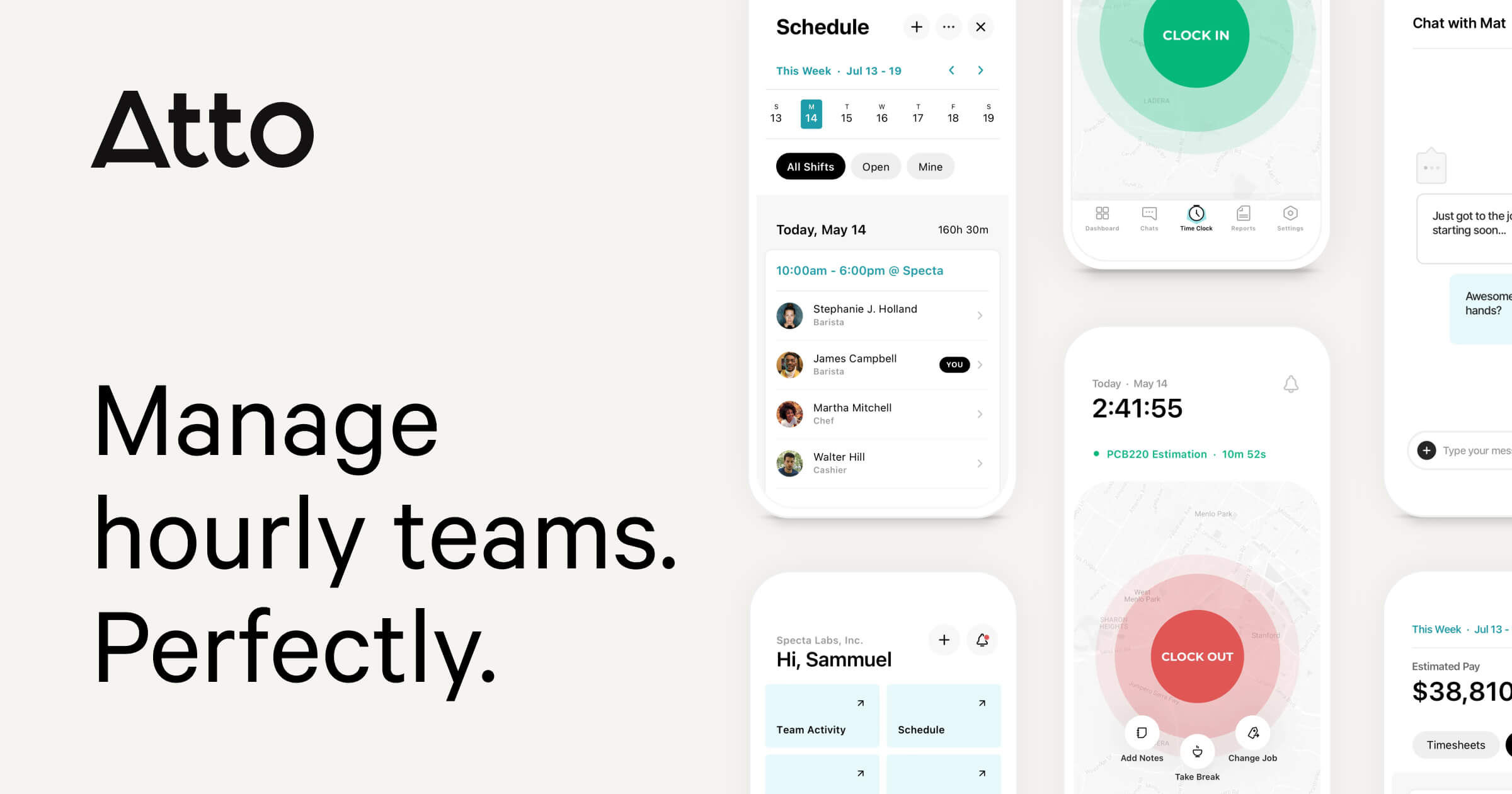
Atto is specifically designed to meet the needs of roofing companies by providing precise time tracking for field workers. Its real-time location tracking feature ensures that the time recorded is accurate and that workers are at the job site, helping to streamline payroll and administrative tasks.

Best for Time Tracking & Productivity Tools for Roofing Companies

Expert Take

Atto Roofing Timesheet Software excels in providing specialized time tracking solutions tailored for roofing companies. Its real-time location tracking and geofencing capabilities enhance accountability and streamline payroll processes. While it lacks a desktop version and advanced project management features, its focus on field worker time tracking makes it a top choice in its niche.

Pros

  • Mobile-first design ideal for field crews
  • Real-time GPS tracking and location history
  • Automated overtime and break compliance tools
  • Simple setup with high user ratings
  • Seamless Xero and QuickBooks integrations

Cons

  • Web app lacks scheduling and chat features
  • No phone support for standard plans
  • Charges apply to view-only admin users
  • Payroll processing limited to US businesses
  • Geofencing allows clock-ins at wrong sites

Best for teams that are

  • Small roofing businesses needing simple, mobile-first time tracking
  • Crews requiring real-time GPS location monitoring for field staff

Skip if

  • Managers needing to schedule shifts or chat via a desktop computer
  • Large companies needing integrations with payroll systems like ADP or Gusto

Best for teams that are

  • Small roofing businesses needing simple, mobile-first time tracking
  • Crews requiring real-time GPS location monitoring for field staff

Skip if

  • Managers needing to schedule shifts or chat via a desktop computer
  • Large companies needing integrations with payroll systems like ADP or Gusto

Pros

  • Mobile-first design ideal for field crews
  • Real-time GPS tracking and location history
  • Automated overtime and break compliance tools
  • Simple setup with high user ratings
  • Seamless Xero and QuickBooks integrations

Cons

  • Web app lacks scheduling and chat features
  • No phone support for standard plans
  • Charges apply to view-only admin users
  • Payroll processing limited to US businesses
  • Geofencing allows clock-ins at wrong sites

Expert Take

Atto Roofing Timesheet Software excels in providing specialized time tracking solutions tailored for roofing companies. Its real-time location tracking and geofencing capabilities enhance accountability and streamline payroll processes. While it lacks a desktop version and advanced project management features, its focus on field worker time tracking makes it a top choice in its niche.

8

BusyBusy GPS Time Tracker

Best for Time Tracking & Productivity Tools for Contractors

Score
9.6 / 10
BusyBusy GPS Time Tracker

BusyBusy is specifically designed for contractors, providing an easy and efficient way to track field employee time and location. It fills the industry need for accurate labor costing, simplifies time card management, and offers real-time insights on project progress.

Best for Time Tracking & Productivity Tools for Contractors

Expert Take

Our analysis shows BusyBusy stands out for its 'Fair Billing Policy,' which automatically stops charging for inactive users—a critical feature for seasonal construction businesses. Research indicates it offers robust liability protection through daily injury sign-offs and specific California break compliance tools. While the mandatory admin fee is a drawback for very small teams, the inclusion of native equipment tracking and reliable offline capabilities makes it a powerful tool for mid-sized contractors.

Pros

  • Fair Billing Policy adjusts for seasonality
  • Reliable offline mode for remote sites
  • Native equipment tracking and assignment
  • California break compliance tools included
  • 90-day money-back guarantee

Cons

  • Mandatory $40 monthly admin fee
  • Cluttered user interface reported
  • Battery drain on mobile devices
  • Web interface lacks auto-timer
  • No free plan for equipment tracking

Best for teams that are

  • Construction crews needing to track both employee time and equipment
  • Field teams requiring reliable offline mode and GPS verification
  • Supervisors wanting to clock in entire crews at once

Skip if

  • Office-only businesses that do not need equipment or location tracking
  • Users wanting free payroll integrations, as these are often paid add-ons
  • Teams wanting a general-purpose tracker not focused on construction

Best for teams that are

  • Construction crews needing to track both employee time and equipment
  • Field teams requiring reliable offline mode and GPS verification
  • Supervisors wanting to clock in entire crews at once

Skip if

  • Office-only businesses that do not need equipment or location tracking
  • Users wanting free payroll integrations, as these are often paid add-ons
  • Teams wanting a general-purpose tracker not focused on construction

Pros

  • Fair Billing Policy adjusts for seasonality
  • Reliable offline mode for remote sites
  • Native equipment tracking and assignment
  • California break compliance tools included
  • 90-day money-back guarantee

Cons

  • Mandatory $40 monthly admin fee
  • Cluttered user interface reported
  • Battery drain on mobile devices
  • Web interface lacks auto-timer
  • No free plan for equipment tracking

Expert Take

Our analysis shows BusyBusy stands out for its 'Fair Billing Policy,' which automatically stops charging for inactive users—a critical feature for seasonal construction businesses. Research indicates it offers robust liability protection through daily injury sign-offs and specific California break compliance tools. While the mandatory admin fee is a drawback for very small teams, the inclusion of native equipment tracking and reliable offline capabilities makes it a powerful tool for mid-sized contractors.

9

Connecteam Plumbing Management

Best for Time Tracking & Productivity Tools for Plumbers

Score
9.6 / 10
Connecteam Plumbing Management

Connecteam’s Plumbing Job Management Software is designed specifically with plumbers in mind. It provides a comprehensive suite of features like job dispatching, time tracking, digital forms, and inspection checklists that streamline operations and boost productivity.

Best for Time Tracking & Productivity Tools for Plumbers

Expert Take

Connecteam Plumbing Management excels in providing industry-specific tools tailored for plumbers, with strong capabilities in job dispatching and time tracking. The product demonstrates credibility through its comprehensive feature set and market positioning, although it faces minor usability challenges due to its mobile interface learning curve.

Pros

  • Free for up to 10 users
  • Mobile-first design for deskless teams
  • GPS breadcrumbs and geofencing available
  • Easy-to-use digital forms and checklists
  • All-in-one communication and scheduling

Cons

  • Constant upselling and confusing pricing
  • Limited integrations compared to competitors
  • Advanced GPS features locked behind tiers
  • No built-in mileage tracking
  • HIPAA compliance costs extra

Best for teams that are

  • Small-to-mid teams needing all-in-one ops and comms
  • Businesses looking for a free plan for small teams
  • Managers wanting to centralize training and forms

Skip if

  • Companies needing complex route optimization or dispatch
  • Large enterprises requiring deep industry-specific integrations
  • Businesses needing advanced inventory management

Best for teams that are

  • Small-to-mid teams needing all-in-one ops and comms
  • Businesses looking for a free plan for small teams
  • Managers wanting to centralize training and forms

Skip if

  • Companies needing complex route optimization or dispatch
  • Large enterprises requiring deep industry-specific integrations
  • Businesses needing advanced inventory management

Pros

  • Free for up to 10 users
  • Mobile-first design for deskless teams
  • GPS breadcrumbs and geofencing available
  • Easy-to-use digital forms and checklists
  • All-in-one communication and scheduling

Cons

  • Constant upselling and confusing pricing
  • Limited integrations compared to competitors
  • Advanced GPS features locked behind tiers
  • No built-in mileage tracking
  • HIPAA compliance costs extra

Expert Take

Connecteam Plumbing Management excels in providing industry-specific tools tailored for plumbers, with strong capabilities in job dispatching and time tracking. The product demonstrates credibility through its comprehensive feature set and market positioning, although it faces minor usability challenges due to its mobile interface learning curve.

10

Jobber Roofing Contractor Software

Best for Time Tracking & Productivity Tools for Roofing Companies

Score
9.6 / 10
Jobber Roofing Contractor Software

Jobber is a comprehensive SaaS solution designed specifically to streamline the workflow of roofing contractors. It addresses the industry's needs by offering time tracking, job scheduling, invoicing, and customer management features all in one place, promoting a more organized and efficient operation.

Best for Time Tracking & Productivity Tools for Roofing Companies

Expert Take

Jobber Roofing Contractor Software stands out as a specialized solution for roofing companies, offering comprehensive features tailored to industry needs. It excels in usability and integration capabilities, making it a top choice for efficient workflow management in the roofing sector.

Pros

  • Seamless EagleView integration for measurements
  • Intuitive mobile app for field crews
  • Real-time job costing and profitability tracking
  • Consumer financing options via Wisetack
  • Robust integration ecosystem (CompanyCam, QuickBooks)

Cons

  • Job costing locked to expensive plans
  • Offline mobile functionality is limited
  • Cancellation process reported as difficult
  • No native roof measurement tool
  • Price increases significantly for larger teams

Best for teams that are

  • Residential roofing contractors focused on customer experience and sales workflows
  • Growing businesses needing an all-in-one platform for quoting and invoicing

Skip if

  • Commercial contractors needing specialized heavy construction project management
  • Small startups unable to afford premium plans for essential quoting features

Best for teams that are

  • Residential roofing contractors focused on customer experience and sales workflows
  • Growing businesses needing an all-in-one platform for quoting and invoicing

Skip if

  • Commercial contractors needing specialized heavy construction project management
  • Small startups unable to afford premium plans for essential quoting features

Pros

  • Seamless EagleView integration for measurements
  • Intuitive mobile app for field crews
  • Real-time job costing and profitability tracking
  • Consumer financing options via Wisetack
  • Robust integration ecosystem (CompanyCam, QuickBooks)

Cons

  • Job costing locked to expensive plans
  • Offline mobile functionality is limited
  • Cancellation process reported as difficult
  • No native roof measurement tool
  • Price increases significantly for larger teams

Expert Take

Jobber Roofing Contractor Software stands out as a specialized solution for roofing companies, offering comprehensive features tailored to industry needs. It excels in usability and integration capabilities, making it a top choice for efficient workflow management in the roofing sector.

How We Rank Products

Our Evaluation Process

Products in the Time Tracking & Productivity Tools category are evaluated based on documented features such as real-time analytics, task management capabilities, and user interface design. Pricing transparency, including subscription costs and licensing options, is assessed to ensure buyers can make informed decisions. Compatibility with other software tools and platforms is considered crucial for seamless integration into existing workflows, while third-party customer feedback provides insights into user satisfaction and tool reliability.

Verification

  • Products evaluated through comprehensive research and analysis of features and user feedback.
  • Rankings based on an in-depth analysis of specifications, customer ratings, and expert opinions.
  • Selection criteria focus on productivity-enhancing capabilities and integration with popular tools.

Score Breakdown

0.0 / 10

About Time Tracking & Productivity Tools

What Is Time Tracking & Productivity Software?

Time Tracking & Productivity Tools cover the digital capture, classification, and analysis of workforce hours and activity across the employee lifecycle: from recording billable increments and shift attendance to analyzing work patterns and ensuring labor law compliance. This category sits between Human Capital Management (HCM), which manages the broad administrative record of employment, and Project Management, which focuses on task completion and forward-looking planning. It includes both general-purpose platforms used for basic timesheets and specialized, vertical-specific solutions built for complex regulatory environments like government contracting, healthcare, and field services.

The core problem this software solves is the "blind spot" between payroll and operations. Without it, organizations pay for labor without visibility into how that labor translates into output, revenue, or compliance risk. For a law firm, it is the cash register; for a manufacturer, it is the instrument of efficiency; and for a healthcare provider, it is the shield against federal audits. Usage spans from freelancers logging minutes for invoices to enterprise COOs monitoring global utilization rates across thousands of employees.

History of the Category

While the mechanical time clock dates back to 1888, the modern software category emerged in the 1990s as businesses sought to move away from error-prone physical punch cards and mainframe dependencies. In the early 90s, on-premise solutions appeared, designed primarily to digitize the "punch" and feed data into payroll systems. These early tools were essentially digital databases—electronic versions of paper timesheets that reduced calculation errors but offered little insight. [1]

The rise of the cloud in the mid-2000s marked the second major wave. The shift from on-premise servers to SaaS (Software as a Service) democratized access, allowing small businesses to track time without heavy IT infrastructure. This era saw the birth of mobile time tracking, driven by the ubiquity of smartphones, which allowed field workers to clock in from job sites rather than returning to a central depot. The "anywhere access" model solved the logistical gap for decentralized workforces but created a new challenge: data volume.

By the 2010s, the market began to consolidate and specialize. Generalist tools could no longer satisfy the complex needs of vertical industries. This led to the rise of vertical SaaS—platforms built specifically for construction (integrating with blueprints), IT (integrating with tickets), or healthcare (integrating with patient records). Simultaneously, buyer expectations shifted from "give me a database" to "give me actionable intelligence." It was no longer enough to know when someone worked; businesses needed to know what they worked on and how efficient they were. Today, the category is defined by this demand for intelligence, utilizing AI to categorize work automatically and predict burnout before it happens. [2] [3]

What to Look For

When evaluating Time Tracking & Productivity Tools, the primary differentiator is the mechanism of capture. Does the tool require active manual entry (start/stop timers), or does it use passive monitoring (background activity logging)? High-trust environments like creative agencies typically favor manual entry to preserve culture, while high-security or high-volume transaction environments often require passive logging to ensure audit trails. A critical evaluation criterion is granularity vs. friction. The more detailed the data requirement (e.g., tracking down to the 6-minute increment per task), the higher the friction for the end-user. The best tools automate this categorization to provide granularity without the administrative burden.

Red flags in this category often appear in the data export capabilities. Many vendors make it easy to ingest data but difficult to extract it in a format compatible with ERPs or payroll engines. Watch out for "proprietary data formats" that lock you into their ecosystem. Another warning sign is a lack of "offline mode" for mobile apps. For field services, internet connectivity is never guaranteed; a tool that cannot queue data offline and sync later is functionally useless in remote areas.

Key questions to ask vendors include: "How does your system handle time zone crossings for overnight shifts?" (critical for global teams), "Can we configure different overtime rules for employees in different states/countries within the same tenant?" (essential for compliance), and "What is the exact latency between a user logging time and that data appearing in the reporting dashboard?" Real-time visibility is often a marketing claim that falls short in practice.

Industry-Specific Use Cases

Retail & E-commerce

In retail, time tracking is less about billable hours and more about labor law compliance and optimizing coverage. A massive pain point here is "clopening"—scheduling an employee to close the store late at night and open it early the next morning. Several jurisdictions have enacted predictive scheduling laws that penalize this practice without adequate rest periods or premium pay. [4] Retail-specific tools must include automated "clopening" alerts that block managers from accidentally scheduling these shifts or flag them for penalty pay. Additionally, they often integrate with Point of Sale (POS) data to overlay sales peaks with staffing levels, ensuring the floor is staffed not just by headcount, but by revenue potential. [5]

Healthcare

Healthcare providers, particularly in long-term care, face a unique federal mandate: Payroll-Based Journal (PBJ) reporting. The Centers for Medicare & Medicaid Services (CMS) requires facilities to submit staffing data that proves they are meeting care standards. This is not just a timesheet; it requires mapping hours to specific job codes (e.g., RN vs. LPN) and ensuring data consistency between payroll and the clinical record. [6] General-purpose tools rarely handle these codes correctly, leading to rejected submissions and potential fines. Healthcare time tracking must also handle complex shift differentials (e.g., weekend night pay) and cross-department floating, where a nurse might work two hours in the ER and six in the ICU, billed to different cost centers.

Financial Services

For broker-dealers and investment firms, time tracking is a regulatory safeguard. Under FINRA rules, firms must maintain rigorous supervision of their associated persons, a challenge compounded by remote work. [7] The priority here is the audit trail. Regulators may demand proof that supervisors are actively reviewing the activities of traders and advisors. Tools in this sector often focus on "digital exhaust"—tracking login times, active windows, and communication logs to prove that oversight is happening. The evaluation priority is immutability; can a record be altered after the fact without a trace? If yes, the tool is a compliance liability.

Manufacturing

Manufacturing time tracking happens on the shop floor, often integrated with Machine Execution Systems (MES). The critical metric here is Overall Equipment Effectiveness (OEE), which combines availability, performance, and quality. [8] Time tracking tools must capture "downtime reason codes" (e.g., machine jam vs. operator break) to distinguish between human and mechanical inefficiency. [9] Unlike office environments, data collection often occurs via ruggedized kiosks or tablets where workers punch in against specific work orders. A unique consideration is the "gang punch," allowing a supervisor to clock in an entire crew at once to a specific production line.

Professional Services

Firms selling time (lawyers, consultants, architects) live and die by the Realization Rate—the percentage of recorded billable time that actually gets paid by the client. [10] If an employee logs 10 hours but the partner writes off 2 hours before invoicing, the realization drops. Tools for this industry must support complex billing workflows: "Work In Progress" (WIP) aging, retainer management, and split billing (dividing one invoice among multiple clients). The evaluation priority is the "leakage" prevention—features that prompt users to log time for emails and calls that often go unbilled in generic systems.

Subcategory Overview

Time Tracking & Productivity Tools for Plumbers

Plumbing businesses operate in a high-velocity, dispatch-driven environment where the "office" is a moving van. Generic time tools fail here because they lack the geospatial context required for emergency service calls. Specialized tools for plumbers integrate time tracking directly with dispatching and inventory. They handle the "windshield time" dilemma—tracking travel time separately from billable job time, which is critical for accurate profitability analysis. A unique workflow these tools handle is the "emergency call-out" where a technician must be clocked into a job immediately upon accepting a dispatch notification, often in the middle of the night. The specific pain point driving buyers to this niche is the disconnect between the invoice and the timesheet; generic tools don't prompt the plumber to associate used parts with the labor hours, leading to lost revenue. For a deeper look at these specialized features, read our guide to Time Tracking & Productivity Tools for Plumbers.

Time Tracking & Productivity Tools for Staffing Agencies

Staffing agencies face a massive reconciliation problem. They pay workers based on one set of rules (W2/1099) and bill clients based on another (contract rates), often managing hundreds of placements across dozens of client sites. Generic tools crumble under the weight of "multi-client/multi-rate" complexity. Specialized staffing software integrates with Vendor Management Systems (VMS) to reconcile the hours the worker claims versus the hours the client approves. [11] The workflow that only these tools handle well is the "split week" calculation, where a worker might cross overtime thresholds mid-week while working for two different clients, requiring complex logic to determine who pays the premium. The pain point driving this purchase is billing leakage—agencies losing 1-2% of revenue simply because they cannot match timesheets to client approvals fast enough. Learn more about navigating these VMS challenges in our guide to Time Tracking & Productivity Tools for Staffing Agencies.

Time Tracking & Productivity Tools for Roofing Companies

Roofing is a weather-dependent, insurance-heavy trade. Crews often move between multiple sites in a single day based on rain or material availability. Specialized roofing tools include features like weather-stamped clock-ins and photo verification, where a worker must snap a photo of the completed roof section to clock out. [12] This creates an indisputable record for insurance claims and project milestones. Generic tools rarely offer image-based validation. The specific workflow unique to this niche is the "production rate" tracking—calculating labor hours per square of shingle installed, rather than just hours worked. The driving pain point is liability and fraud; roofing owners buy these tools to prove exactly who was on the roof and when, protecting themselves against injury claims and disputes. Explore these field-specific solutions in our guide to Time Tracking & Productivity Tools for Roofing Companies.

Time Tracking & Productivity Tools for Contractors

For general contractors, especially those working on government projects, the stakes are legal compliance. The Davis-Bacon Act requires contractors to pay prevailing wages and submit Certified Payroll reports (Form WH-347). [13] Generic tools do not track the intricate "work classification" data needed for these reports (e.g., tracking an employee as a carpenter for 4 hours and a laborer for 4 hours, each with different mandated pay rates). Specialized contractor tools automate the generation of these federal forms. The workflow that only these tools handle is the "fringe benefit" calculation credit, ensuring that contributions to health plans are correctly deducted from the prevailing wage obligation. The pain point is the risk of debarment—contractors move to this niche software because a single manual error on a federal payroll report can ban them from government contracts for three years. Detail on these compliance features is available in our guide to Time Tracking & Productivity Tools for Contractors.

Deep Dive: Integration & API Ecosystem

In the modern stack, a time tracking tool that stands alone is a data silo. The strength of an integration ecosystem is often the deciding factor for enterprise buyers. The most critical integration point is usually the ERP or General Ledger, followed closely by Project Management and CRM systems. However, buyers often overlook the quality of the API. A common limitation is API rate limiting. For example, Salesforce APIs can impose strict limits (e.g., 100,000 calls per day), which sounds high until a bulk sync of 5,000 timesheets triggers a cascade of individual updates that hits the ceiling, causing the sync to fail silently. [14]

Scenario: Consider a 50-person professional services firm using a generic time tool connected to Jira (for project management) and QuickBooks (for invoicing). The firm relies on a "bi-directional" sync. An employee updates a task status in Jira, which should theoretically update the time log. However, if the integration is poorly designed, it might overwrite the "billable" flag in the time tool with a default value from Jira, accidentally changing $5,000 worth of billable senior consultant time to "non-billable." The finance team only catches this month-end, requiring days of manual reconciliation. This "data overwriting" risk is a classic failure mode of shallow integrations.

Expert insight reinforces the need for robust connectivity. As noted by analysts at Gartner, organizations that fail to integrate time and attendance with broader workforce management ecosystems often face "margin leakage" due to data transfer errors. [15] When evaluating vendors, ask for their API documentation and specifically look for "webhooks" support. Webhooks allow the system to push updates in real-time, rather than relying on periodic polling that can miss data or hit rate limits.

Deep Dive: Security & Compliance

Security in time tracking has moved beyond basic password protection to become a central issue of employee privacy and regulatory adherence. The rise of biometric clocks (fingerprint, facial recognition) has triggered a wave of legal challenges under laws like Illinois' BIPA (Biometric Information Privacy Act). Furthermore, GDPR in Europe has set a high bar for "employee monitoring." It is no longer legal in many jurisdictions to indefinitely store screenshots or keystroke logs without a specific, documented business purpose.

Scenario: A logistics company operates a warehouse in France. To boost efficiency, they implement a time tracking system that uses handheld scanners to log every minute of worker inactivity. The data is stored on a US-based server. This setup is a compliance time bomb. In fact, in 2024, the French Data Protection Authority (CNIL) fined Amazon France Logistique €32 million for an "excessively intrusive" monitoring system that measured interruptions as short as one minute. [16] The regulator ruled that such granular tracking was disproportionate to the business need. Buyers must ensure their tools allow for "data minimization"—configuring the system to not collect data that isn't strictly necessary.

According to Forrester, privacy regulations are increasingly targeting employee data, treating it with the same sensitivity as consumer data. [17] When evaluating security, look for SOC 2 Type II certification, which validates that the vendor's security controls have been tested over time, not just at a single point. Also, verify "data residency" options—can the vendor guarantee that your EU employee data never leaves EU servers? For multinational companies, this is often a non-negotiable requirement.

Deep Dive: Pricing Models & TCO

Pricing in this category is deceptively complex. The headline price is usually a "per user/per month" fee, typically ranging from $5 to $20. However, the Total Cost of Ownership (TCO) often includes hidden layers: "base fees" for the platform, extra costs for advanced features like "scheduling" or "GPS tracking," and implementation fees. A significant hidden cost is the "archived user" fee. Many vendors charge to keep the data of former employees accessible, which is legally required for audit purposes.

Scenario: Let's calculate the TCO for a hypothetical 25-person consulting team. Vendor A offers $8/user/month. Vendor B offers $12/user/month. On the surface, Vendor A is cheaper ($200 vs. $300/month). However, Vendor A charges an additional $50/month base fee and requires a $5/user add-on for "client invoicing" and "expense tracking," which are included in Vendor B. Vendor A also charges full price for "archived" users. If the firm turns over 5 employees a year, after 3 years, they are paying for 15 ghost users just to keep their records. Real Calculation Year 3 Monthly Cost: Vendor A: $200 (active) + $50 (base) + $125 (add-ons) + $120 (15 archived users @ $8) = $495/month. Vendor B: $300 (active) + $0 (base) + $0 (add-ons) + $30 (nominal storage fee) = $330/month. The "cheaper" option is actually 50% more expensive in the long run.

Research from G2 indicates that hidden costs are a primary driver of dissatisfaction in software purchases, with buyers often exceeding their initial budget by over 25% due to unforeseen add-ons. [18] Always ask for the "fully loaded" price sheet and negotiate the "archived user" rate upfront. A fair vendor will charge a nominal storage fee for inactive users, not a full license.

Deep Dive: Implementation & Change Management

The technical implementation of time tracking software is rarely the failure point; the failure point is almost always human adoption. Employees naturally view time tracking with suspicion, fearing micromanagement or "big brother" surveillance. Without a structured change management strategy, resistance will manifest as "malicious compliance"—logging hours inaccurately or delaying entry until the last possible moment, rendering the data useless.

Scenario: A mid-sized marketing agency rolls out a new time tracking tool with passive screenshot monitoring to "boost productivity." They announce it via email on a Monday morning. The result? Mutiny. Senior creatives feel distrusted and morale plummets. Within two months, three top performers resign. The agency is forced to roll back the screenshot feature, but the cultural damage is done. A better approach would have been a pilot program with a "champions group" of employees who help configure the tool, focusing the messaging on "fairness in workload distribution" and "preventing burnout" rather than "monitoring."

According to Prosci, a leader in change management research, projects with excellent change management effectiveness are six times more likely to meet objectives than those with poor change management. [19] Furthermore, Gartner estimates that 55% to 75% of ERP and major software projects fail to meet their original objectives, often due to poor user adoption. [20] Implementation plans must include a "Why" narrative for the staff, not just a "How" manual.

Deep Dive: Vendor Evaluation Criteria

Evaluating vendors requires looking past the glossy demo. A critical criterion is Support & SLA (Service Level Agreement). Time tracking is mission-critical for payroll; if the system goes down on payroll Tuesday, can you afford to wait 24 hours for an email response? Enterprise buyers should demand a guaranteed uptime SLA (e.g., 99.9%) with financial penalties for breaches.

Scenario: A construction firm evaluates two vendors. Vendor X has a sleek mobile app but only offers email support during business hours (EST). Vendor Y has a slightly dated interface but offers 24/7 phone support and a dedicated account manager. The firm chooses Vendor X. Six months later, a server update by Vendor X glitches on a Monday morning, locking out 200 crew members on the West Coast who cannot clock in. The support team is offline. The firm loses thousands of dollars in disputed hours and administrative chaos. Vendor Y's "dated" reliable service would have been the superior choice.

McKinsey research highlights that the "customer experience" and post-sales support are increasingly becoming the primary differentiators in B2B software satisfaction, outpacing feature sets. [21] Buyers should test the support channel before buying—submit a technical ticket during the trial and measure the response time and quality.

Emerging Trends and Contrarian Take

Looking toward 2025-2026, the dominant trend is the shift from "tracking" to "AI-driven Agency." We are seeing the emergence of AI Agents that don't just record time but actively manage it—blocking out focus time on calendars, auto-drafting timesheets based on email activity, and flagging "meeting fatigue" risks to HR. [22] Another trend is Consolidation. Large holding companies (like Bending Spoons or private equity firms) are aggressively acquiring standalone productivity tools, suggesting a future where time tracking is just a feature within a larger "Work OS" rather than a standalone category. [23]

Contrarian Take: The obsession with "utilization rates" is backfiring. While most firms aim for 80%+ utilization, data suggests that maximizing billable hours is actually compressing margins in the long run. By squeezing out non-billable time (training, innovation, rest), firms are eroding their "intellectual capital," leading to higher churn and lower quality work. The smartest firms in 2025 will likely optimize for lower utilization (e.g., 70%) to preserve the capacity for high-value strategic thinking that AI cannot replicate. As SPI Research notes, billable utilization has actually dropped to 68.9% in recent benchmarks, hinting that the market is already correcting itself away from the burnout-inducing 80% standard. [24]

Common Mistakes

The most frequent buying mistake is overbuying complexity. Small agencies often purchase enterprise-grade tools with complex resource planning features they don't need, creating friction that kills adoption. They pay for a Ferrari to drive to the grocery store. Conversely, growing firms often underestimate data migration. They stay on a "free" or basic tool too long, and when they finally switch, they realize they cannot export their historical project data, losing years of benchmarking insights.

Another critical mistake is ignoring the "approver" workflow. Buyers focus on how easy it is for employees to enter time, but forget to test how easy it is for managers to approve it. If a manager has to open 50 individual tabs to approve 50 timesheets, they will rubber-stamp them without review, defeating the purpose of tracking. "Rubber-stamping" is a leading cause of billing errors and revenue leakage. [25]

Questions to Ask in a Demo

  • "Show me the exact steps a manager takes to reject a timesheet and the notification the employee receives. Is it seamless or clunky?"
  • "Can I backdate a pay rate change? If an employee gets a raise mid-month, will the system recalculate project costs retroactively or only forward?" (Critical for accurate job costing).
  • "How do you handle 'unaccounted time'? Does the system highlight gaps in the workday, or only track what is entered?"
  • "Show me your API documentation for 'Rate Limits' and 'Webhooks'. Do not just tell me you have an API; show me the constraints."
  • "What happens to my data if I cancel? Can I export the raw SQL/CSV file with all historical metadata, or just a PDF summary?"

Before Signing the Contract

Before committing, run a "Pilot with Skeptics." Do not pilot the software with your most tech-savvy enthusiasts. Pilot it with the grumpy senior partner or the resistant field foreman. If they can use it, the rollout will succeed. Check the contract for "Data Retention" clauses—ensure you own your data in perpetuity. Negotiate the "Implementation Support" package; ask for a dedicated onboarding specialist rather than a generic webinar. Finally, verify the "Exit Clause." Ensure you are not locked into a multi-year auto-renewal without a performance-out clause. The software landscape changes fast; you need the agility to switch if the vendor is acquired or sunsets the product.

Closing

This guide aims to arm you with the nuance required to navigate a crowded and critical software market. If you have specific questions about your unique use case or need a sounding board for your vendor shortlist, I invite you to reach out.

Email: albert@whatarethebest.com