What Is Sales Proposal & Quote Generation Tools?
The category of Sales Proposal & Quote Generation Tools encompasses software designed to bridge the critical gap between identifying a sales opportunity and finalizing a legally binding agreement. Unlike Customer Relationship Management (CRM) systems, which primarily function as databases of record for tracking pipeline and contact history, or Enterprise Resource Planning (ERP) systems, which handle post-sale fulfillment and accounting, this category focuses specifically on the "middle mile" of the revenue cycle: the construction, presentation, negotiation, and execution of the commercial offer.
This software manages the creation of complex documents—proposals, quotes, statements of work (SOWs), and contracts—by combining dynamic data (pricing, product configurations, terms) with static brand assets (marketing collateral, legal disclaimers). It sits functionally downstream from the CRM (pulling opportunity data) and upstream from the ERP (pushing order data). The category includes both general-purpose document automation platforms suitable for rapid, high-volume sales, and vertical-specific Configure, Price, Quote (CPQ) engines built to handle the intricate logic of manufacturing, healthcare, or financial services.
The core problem this software solves is the "friction of finalization." Without these tools, sales teams rely on disconnected spreadsheets, manual calculations, and copy-pasted Word documents, leading to pricing errors, rogue discounting, brand inconsistency, and extended sales cycles. By digitizing this process, organizations transform static documents into intelligent, trackable assets that enforce governance while accelerating revenue capture.
History of Sales Proposal & Quote Generation Tools
The evolution of Sales Proposal and Quote Generation Tools is a narrative of moving from back-office containment to front-office empowerment. In the 1990s, the precursors to today's tools were essentially digital gatekeepers—rigid, on-premise product configurators tied exclusively to ERP systems [1]. These early systems were designed for engineers and operations teams, not salespeople. Their primary function was to prevent manufacturing errors by validating that complex machinery or hardware configurations were technically feasible. They were "constraint engines" rather than sales enablement tools, often requiring a salesperson to fax requirements to a back-office specialist who would manually input data and generate a quote days later.
The landscape shifted dramatically in the late 1990s and early 2000s with the advent of Sales Force Automation (SFA) and the internet boom. As e-commerce began to normalize the idea of digital self-service, the "configurator" moved from the back office to the sales desk. The launch of the first major SaaS CRM platforms in 1999 created a vacuum: while CRM could track the status of a deal, it lacked the sophisticated logic to build the content of the deal [2]. This gap birthed the first generation of dedicated Quote-to-Cash solutions—standalone software that could handle complex pricing rules that flat CRM database tables could not.
Between 2010 and 2015, a wave of market consolidation occurred as major CRM providers acquired leading CPQ and document generation vendors. This era marked the transition from "software as a database" to "software as a workflow." Buyers no longer wanted just a repository for price lists; they demanded "actionable intelligence"—tools that could not only calculate a price but also suggest upsells, enforce discount approval hierarchies, and generate visually compelling HTML5 proposals instead of static PDFs. The market bifurcated into two distinct streams that are only recently re-converging: heavy-duty CPQ for logic-heavy industries (manufacturing, telecom) and lighter, design-focused proposal management software for narrative-heavy industries (agencies, SaaS). Today, the modern stack merges these capabilities, leveraging cloud architecture to support dynamic, collaborative "deal rooms" rather than mere document generation.
What to Look For
Evaluating Sales Proposal and Quote Generation Tools requires a disciplined focus on how the software handles the intersection of logic, design, and data. The market is crowded with tools that look similar in a screenshot but behave drastically differently under the stress of a complex deal. A primary evaluation criterion must be the "logic engine" versus the "design engine." Some tools excel at beautiful, drag-and-drop document creation but fail when asked to calculate tiered volume discounts across multiple currencies. Others can handle infinite product dependencies but output ugly, rigid documents that damage the buyer experience.
One critical factor is the depth of the object-model mapping. A robust tool does not just "integrate" with your CRM; it maps to custom objects and parent-child relationships. Ask specifically if the tool can write data back to the CRM line items, or if it only attaches a PDF to the record. The difference determines whether your forecasting data is accurate or merely a placeholder. Furthermore, look for "guardrails with flexibility." The system must enforce pricing floors and margin requirements while allowing sales reps enough autonomy to negotiate without triggering an arduous approval chain for every minor adjustment.
Red flags during evaluation often appear in the "last mile" of the workflow. Be wary of vendors that cannot demonstrate a seamless mobile experience. In many industries, the final approval happens on a phone; if the proposal requires a desktop to render the pricing table correctly, the deal stalls. Another warning sign is a reliance on proprietary coding languages for template customization. If changing a font size or adding a new product image requires a developer or a statement of work (SOW) with the vendor, the Total Cost of Ownership (TCO) will skyrocket.
Key questions to ask vendors include: "How does your system handle version control when multiple stakeholders leverage redlining simultaneously?" and "Can you demonstrate the exact workflow for a rep to bundle three disparate products with different revenue recognition schedules?" The answer to the latter often separates true enterprise-grade solutions from SMB document generators.
Industry-Specific Use Cases
Retail & E-commerce
In the retail and e-commerce sector, Sales Proposal and Quote Generation Tools are often deployed in a "headless" capacity or integrated into B2B wholesale portals. Unlike B2C transactions which are instant, B2B retail involves complex grid ordering (matrix ordering for size/color variants) and volume-based pricing tiers. The software here must function as a visual merchandising engine, allowing wholesale buyers to build orders that visually represent how stock will look on a shelf [3]. The priority is speed and high-volume SKU handling. A proposal for a seasonal buy might contain thousands of line items; the tool must generate this without latency. Integration with inventory management systems is non-negotiable to prevent selling out-of-stock items.
Healthcare
For healthcare and medical device companies, the primary drivers are regulatory compliance and Group Purchasing Organization (GPO) contract management. Proposal tools in this space must manage complex "tier jumping" logic, where a hospital system's price changes dynamically based on their aggregate purchasing volume across multiple facilities [4]. The software must automatically validate that a quote complies with anti-kickback statutes and FDA regulations regarding product claims. Security is paramount; the tool must be HIPAA-compliant and capable of redacting Sensitive Personal Information (SPI) automatically if patient data is inadvertently included in service agreements.
Financial Services
Financial services firms utilize these tools to generate wealth management proposals, commercial lending agreements, and insurance quotes. The critical need here is auditability and error-free calculation. A "proposal" in this sector is often a binding financial illustration. The software must integrate with Know Your Customer (KYC) and Anti-Money Laundering (AML) databases to validate the recipient before a document is even generated. Workflow automation is used to route approvals through risk and compliance officers based on deal size or risk profile. The ability to archive every version of a quote for seven to ten years to satisfy SEC or FINRA requirements is a standard evaluation priority.
Manufacturing
Manufacturing represents the heaviest use case for the "Configure" and "Price" elements of the category. Manufacturers require tools that integrate deeply with Computer-Aided Design (CAD) systems. When a sales rep configures a custom piece of machinery, the proposal software must not only calculate the price but also dynamically generate a Bill of Materials (BOM) and a routing list for the production floor [5]. The "red flag" here is a tool that allows invalid configurations—selling a motor that is incompatible with the selected chassis. The evaluation priority is the "constraint solver"—the logic engine that prevents these engineering conflicts in real-time.
Professional Services
For professional services firms (consultancies, agencies, legal), the proposal tool functions as a Scope of Work (SOW) generator. The complexity lies not in SKUs, but in human capital management. The tool must calculate profitability based on blended hourly rates, resource utilization, and project milestones. A unique workflow for this industry is the "good/better/best" packaging of intangible services to anchor buyers to a higher price point. Buyers in this space evaluate tools based on their ability to library effective narrative content—case studies, bios, and methodology sections—that can be tailored rapidly to demonstrate specific industry expertise.
Subcategory Overview
Proposal and Quote Tools for Field and Home Services
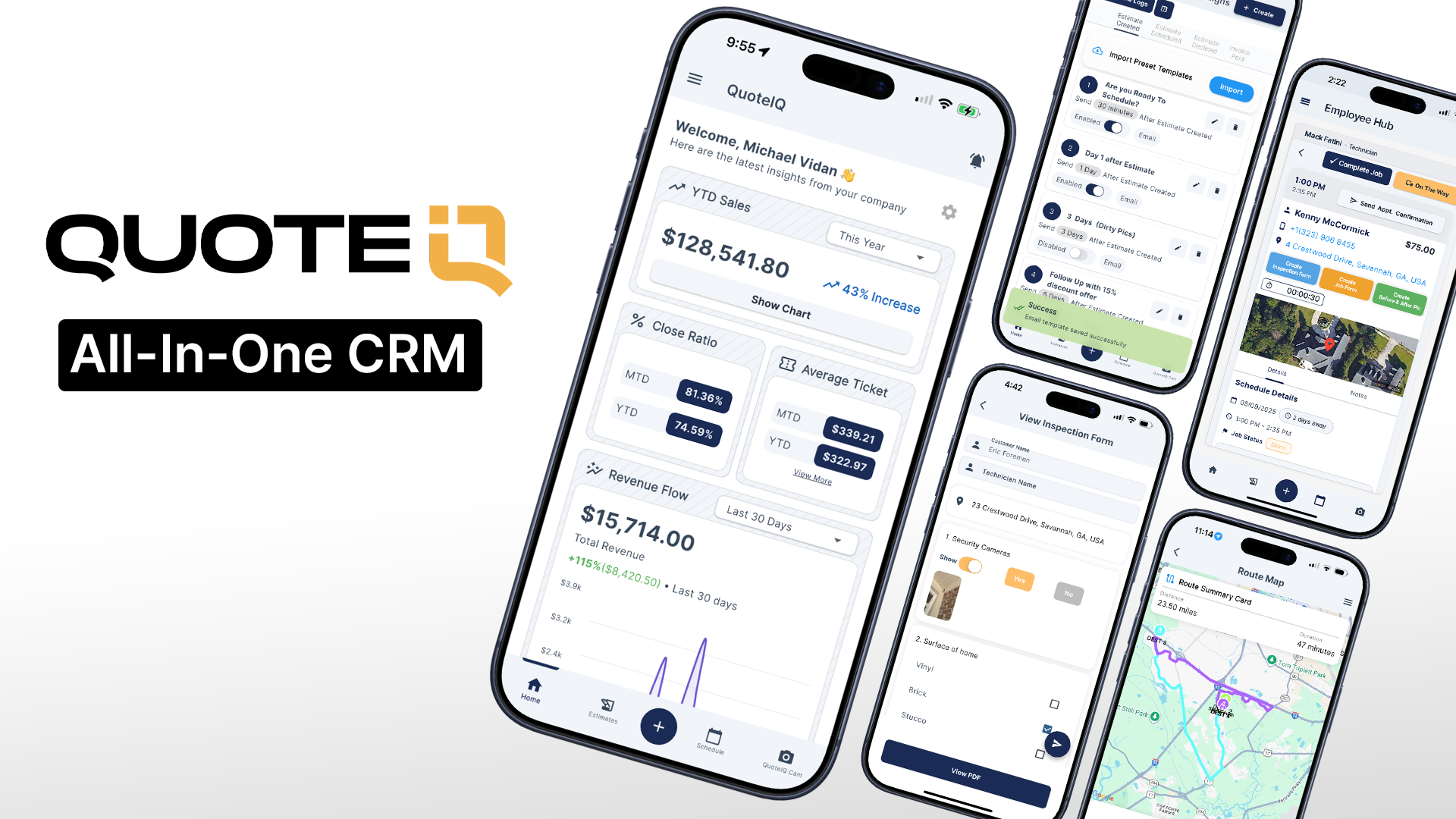
This niche is genuinely distinct because it serves a mobile-first, decentralized workforce that often operates in environments with poor connectivity. Unlike office-based sales teams that work from desktops, field service technicians (HVAC, plumbing, landscaping) need to generate quotes on a tablet or phone while standing in a customer's basement or backyard. The specific workflow that only this tool handles well is the "kitchen table close"—the ability to calculate labor and materials instantly, present the quote, and capture a digital signature and deposit on-site in a single interaction [6]. General-purpose tools often fail here because their mobile interfaces are clunky or require a stable internet connection to render pricing tables. The pain point driving buyers to this niche is the "transcription gap"—the delay and errors caused by technicians writing notes on paper pads to be entered into a system later. For a detailed breakdown of features like offline mode and map-based dispatch integration, consult our guide to Proposal and Quote Tools for Field and Home Services.
Proposal Tools with Content and Template Libraries
This subcategory caters to marketing and sales enablement teams that prioritize brand consistency and narrative control over complex pricing logic. What makes this niche different is its architectural focus on "content modularity." These tools treat proposals not as static documents, but as assemblies of pre-approved content blocks (legal terms, case studies, product descriptions). The workflow that only these tools handle well is "marketing-governed personalization," where a sales rep can personalize an executive summary but is physically locked out of changing the legal disclaimer or the brand color palette. The pain point driving buyers here is "content chaos"—sales reps using outdated logos, old pricing, or non-compliant language saved on their local hard drives. To understand how these libraries streamline governance, read our analysis of Proposal Tools with Content and Template Libraries.
Quote Generation Tools Integrated with CRM
This segment is defined by its symbiotic relationship with the CRM database. While many tools "connect" to CRM, tools in this niche are often "native" or deeply embedded, meaning they share the same data architecture and user interface. The differentiator is data latency and accuracy; because the quote lives inside the CRM object, there is no sync error or delay. The workflow unique to this niche is the "opportunity-to-quote conversion," where a rep clicks one button on a CRM record, and customer data pre-populates a quote with zero manual entry [7]. The specific pain point is "data silo syndrome," where the forecasted revenue in the CRM doesn't match the actual quotes sent to customers because the systems don't talk to each other. For a deep dive into data mapping and bi-directional sync, see our guide on Quote Generation Tools Integrated with CRM.
Proposal Tools with Interactive Pricing Tables
This subcategory focuses on the psychology of buying. These tools move beyond static PDF price lists to offer dynamic, web-based pricing grids that allow the buyer to toggle quantities, select add-ons, and see the total price update in real-time. The unique workflow here is "buyer-led configuration," where the customer essentially upsells themselves by interacting with the proposal options (e.g., toggling a "Platinum Support" checkbox) without needing to call the sales rep for a revised quote [8]. The driving pain point is the "negotiation lag"—the back-and-forth email chain required to adjust a quote by small increments. Buyers choose this niche to reduce sales cycle friction and increase average deal size through psychological anchoring. Learn more about the mechanics of upselling in our review of Proposal Tools with Interactive Pricing Tables.
Sales Proposal Tools for B2B SaaS Companies
B2B SaaS tools are specialized to handle the unique financial metrics of the subscription economy: Annual Recurring Revenue (ARR), Monthly Recurring Revenue (MRR), coterminous add-ons, and renewals. Unlike generic tools, these platforms understand the concept of "time" in a contract—prorating a seat added in month six of a twelve-month term. The workflow only these tools handle well is "subscription lifecycle management," managing not just the initial sale but the complexity of mid-term amendments and auto-renewals [9]. The pain point is "revenue leakage," where finance teams struggle to reconcile what was sold with what is being billed because the quoting tool couldn't handle complex subscription logic. For insights into managing recurring revenue workflows, visit our page on Sales Proposal Tools for B2B SaaS Companies.
Integration & API Ecosystem
In the modern enterprise, a Sales Proposal tool that functions as an island is a liability. The strength of an integration ecosystem is often the deciding factor in enterprise procurement. It is not enough to ask "Does it integrate with Salesforce?" The necessary question is about the depth and direction of that integration. A robust integration utilizes RESTful APIs to handle bi-directional data flow: customer data flows from CRM to Proposal, and pricing/status data flows from Proposal back to CRM.
According to research by Mulesoft and Deloitte, 84% of digital transformation projects fail due to integration challenges, specifically the inability to connect disparate systems seamlessly [10]. In a practical scenario, consider a 50-person professional services firm. They use a CRM for sales, a project management tool for delivery, and an accounting system for billing. If the proposal tool does not write the "sold scope" directly into the project management tool via API, the delivery team must manually re-enter the project details. This manual handoff is where scope creep begins. A well-designed integration triggers a webhook upon signature that automatically creates the project in the PM tool and generates the invoice in the accounting system, ensuring the "sold" reality matches the "delivered" reality.
Security & Compliance
As proposal tools increasingly host sensitive commercial and legal data, they become prime targets for security scrutiny. Security is no longer just about encryption; it is about data sovereignty, access governance, and compliance with frameworks like SOC 2 Type II, ISO 27001, and GDPR. For industries like healthcare and finance, the ability to demonstrate a granular audit trail—who opened the document, who edited the pricing, and who signed it—is a regulatory requirement, not a feature.
The cost of negligence is staggering. The IBM Cost of a Data Breach Report 2024 reveals that the average cost of a data breach globally has reached $4.88 million, with breaches involving third-party software vulnerabilities being significantly costlier and taking longer to identify [11]. In a real-world scenario, a financial services vendor sending a proposal containing a high-net-worth individual's portfolio details via an unsecured PDF attachment risks a massive compliance violation. A secure proposal generation tool mitigates this by keeping the document behind a secure link with multi-factor authentication (MFA) and expiring access after a set period, ensuring that sensitive data never sits permanently in an email inbox.
Pricing Models & TCO
Pricing in this category typically falls into two buckets: per-seat subscriptions (common in SaaS and general proposal tools) and transaction/volume-based pricing (common in enterprise CPQ). Buyers often underestimate the Total Cost of Ownership (TCO) by looking only at the license fee. The true TCO includes implementation costs, training, middleware for integrations, and the "admin tax"—the internal hours required to maintain product catalogs and pricing rules.
Gartner research highlights that for enterprise software, the 5-year TCO is often 3.2x to 4.5x the initial implementation cost due to ongoing maintenance and optimization [12]. Let's walk through a TCO calculation for a 25-person sales team. A "per-seat" model might cost $50/user/month, totaling $15,000 annually. However, if the tool requires a dedicated administrator (0.25 FTE at $100k/year = $25,000) and a third-party consultant for initial setup ($10,000), the first-year cost is actually $50,000—more than triple the license fee. Conversely, a tool with a higher upfront license but "no-code" admin features might have a lower TCO over three years because it eliminates the need for specialized technical support.
Implementation & Change Management
The most common cause of failure in deploying Sales Proposal software is not technical incompetence but cultural resistance. Sales teams are notoriously protective of their workflows. If a new tool requires more clicks than their old Excel spreadsheet, they will reject it. Successful implementation requires a strategy that prioritizes "time-to-quote" reduction. The goal is to show a sales rep that the new tool gives them back time, rather than just giving management better data.
According to Bain & Company, 88% of business transformations fail to achieve their original ambitions, often due to a failure to manage the human element of change [13]. Consider a scenario where a manufacturing company implements a new CPQ system. The technical team spends months building a perfect pricing engine but fails to train the sales reps on how to use the guided selling features. The result is "shelfware"—the company pays for the licenses, but reps continue to email the engineering team for manual quotes. A successful rollout involves "champion" users—respected sales reps who are involved in the beta testing phase and advocate for the tool's speed and accuracy to their peers.
Vendor Evaluation Criteria
When selecting a vendor, look beyond the feature list to the vendor's viability and support structure. In a consolidating market, the risk of your vendor being acquired and the product being sunsetted is real. Evaluate the vendor's "completeness of vision"—are they investing in AI and mobile capabilities, or is the product in maintenance mode? Support Service Level Agreements (SLAs) are critical; if the quoting engine goes down on the last day of the quarter, can you get a human on the phone within 15 minutes?
Forrester emphasizes that buyers should evaluate vendors based on their ability to support "future-fit" technology strategies, such as AI-driven insights and platform adaptability, rather than just current feature sets [14]. A practical evaluation step is to ask for a "live" proof of concept (POC) using your own data. Don't settle for a generic demo. Give the vendor your most complex pricing scenario—the one with the weird discount rules and the bundled SKUs—and ask them to build it in front of you. If they hesitate or say "that will require custom scripting," you have identified a major friction point.
Emerging Trends and Contrarian Take
Emerging Trends 2025-2026: The immediate future of this category is dominated by the shift from "documents" to "data rooms." The static PDF proposal is being replaced by the Digital Sales Room (DSR)—a persistent, secure web portal where buyers and sellers collaborate, chat, and negotiate in real-time. Furthermore, "Agentic AI" is moving from hype to reality. We are seeing the emergence of autonomous agents that can not only generate a quote but also proactively suggest pricing optimizations based on win/loss data from thousands of previous deals, effectively acting as a digital deal desk.
Contrarian Take: The obsession with "End-to-End" platforms is a trap for the mid-market. While enterprise vendors push massive, all-in-one Revenue Lifecycle Management suites, the reality is that most mid-sized businesses would achieve higher ROI by using a "best-of-breed" stack connected by modern middleware than by buying a bloated suite. The complexity and implementation cost of a monolithic "Quote-to-Cash" platform often crush the agility of a mid-market sales team. A lighter, specialized proposal tool that integrates well often outperforms a heavy, expensive suite that takes 12 months to deploy and requires a team of consultants to maintain.
Common Mistakes
The most pervasive mistake in buying Sales Proposal software is over-engineering the first phase. Companies often try to automate 100% of their pricing complexity on day one. They spend months building rules for edge cases that happen only once a year. The result is a system that is delayed, over budget, and too rigid for the 80% of standard deals. The better approach is to automate the "fat middle"—the standard, high-volume deals—and leave the complex edge cases to a manual approval workflow for phase two.
Another critical error is ignoring the end-customer experience. Buyers focus entirely on "how easy is it for my sales rep to make the quote?" and forget to ask "how easy is it for my customer to read and sign it?" A proposal that looks like a spreadsheet on a mobile device or requires a login to view will kill conversion rates. The buying experience is part of the product; if the proposal is hard to navigate, the customer assumes your product will be hard to use.
Questions to Ask in a Demo
- "Show me the mobile experience for the buyer, not just the seller. How does this pricing table render on an iPhone?"
- "If I need to change a product bundle or pricing rule next month, can I do it myself via a UI, or do I need to write code/hire you?"
- "How does your system handle 'coterminous' additions? If a customer adds a license halfway through a contract, does the system automatically prorate the cost to align with the renewal date?"
- "Can you show me the API documentation? Specifically, show me how I can pull line-item data out of your system to push into my ERP."
- "What happens to my data if I decide to leave your platform in three years? In what format can I export my signed contracts and audit trails?"
Before Signing the Contract
Before committing, execute a final decision checklist. Verify the Sandbox capabilities: does the vendor provide a full testing environment that mirrors production? This is essential for testing pricing rule changes without breaking live quotes. Negotiate the renewal caps: ensure your contract creates a cap on how much the vendor can raise the price at renewal (e.g., CPI + 2%).
Watch for the "Storage and Archival" trap. Some vendors charge extra for storing historical proposals beyond a certain data limit. Ensure your contract includes sufficient storage for at least 5-7 years of deal history. Finally, define "Support" clearly. "24/7 Support" often means a chatbot. If your team closes deals at end-of-quarter, ensure you have a contract that guarantees access to human support during your critical business hours.
Closing
Navigating the complex landscape of Sales Proposal & Quote Generation tools requires looking beyond the glossy brochures to the underlying logic and workflows. By focusing on integration depth, user adoption, and TCO, you can select a platform that not only generates documents but generates revenue. If you have specific questions about your unique use case or need a sounding board for your evaluation strategy, I invite you to reach out.
Email: albert@whatarethebest.com