Marketing Attribution & Analytics Platforms

These are the specialized categories within Marketing Attribution & Analytics Platforms. Looking for something broader? See all Business Intelligence & Analytics Software categories.

1

Recurly Subscription Management

Best for Analytics Tools for Subscription and Recurring Revenue Brands

Score
9.9 / 10
Recurly Subscription Management

Recurly is an advanced subscription management software designed specifically for brands with subscription and recurring revenue models. It automates ASC-606 and IFRS-15 compliance, provides real-time reporting and analytics, and comes with prepackaged reports built for subscriptions, addressing the unique needs of the industry.

Best for Analytics Tools for Subscription and Recurring Revenue Brands

Expert Take

Recurly excels in subscription management with automated compliance and real-time analytics, making it a top choice for subscription-based brands. Its industry-specific features and robust reporting capabilities justify its premium positioning.

Pros

  • Recovered $794M in revenue (2021)
  • Supports 140+ currencies globally
  • PCI-DSS Level 1 & SOC 2
  • Intelligent machine-learning retry logic
  • Separates dunning from retry process

Cons

  • Reporting features lack depth
  • Expensive for early-stage startups
  • Transaction fees apply to plans
  • Limited reporting customization options
  • Enterprise pricing is not transparent

Best for teams that are

  • Mid-to-large subscription businesses scaling globally with complex needs
  • Companies requiring advanced churn management and revenue recovery tools
  • Enterprises needing robust multi-currency and gateway support

Skip if

  • Early-stage startups with low revenue due to high monthly costs
  • Businesses with highly complex usage-based billing models
  • Simple projects not needing enterprise-grade compliance features

Best for teams that are

  • Mid-to-large subscription businesses scaling globally with complex needs
  • Companies requiring advanced churn management and revenue recovery tools
  • Enterprises needing robust multi-currency and gateway support

Skip if

  • Early-stage startups with low revenue due to high monthly costs
  • Businesses with highly complex usage-based billing models
  • Simple projects not needing enterprise-grade compliance features

Pros

  • Recovered $794M in revenue (2021)
  • Supports 140+ currencies globally
  • PCI-DSS Level 1 & SOC 2
  • Intelligent machine-learning retry logic
  • Separates dunning from retry process

Cons

  • Reporting features lack depth
  • Expensive for early-stage startups
  • Transaction fees apply to plans
  • Limited reporting customization options
  • Enterprise pricing is not transparent

Expert Take

Recurly excels in subscription management with automated compliance and real-time analytics, making it a top choice for subscription-based brands. Its industry-specific features and robust reporting capabilities justify its premium positioning.

2

Supermetrics B2B SaaS Marketing

Best for Marketing Analytics Tools for B2B SaaS Companies

Score
9.8 / 10
Supermetrics B2B SaaS Marketing

Supermetrics is designed specifically for B2B SaaS companies seeking to consolidate their marketing data. It auto-fetches data from over 150 platforms and brings it to your preferred reporting tool, providing a holistic view of the sales funnel. This addresses the industry need for streamlined data management and in-depth analytics.

Best for Marketing Analytics Tools for B2B SaaS Companies

Expert Take

Our analysis shows Supermetrics remains the gold standard for B2B SaaS marketers needing to centralize fragmented data from platforms like LinkedIn, HubSpot, and Google Ads without engineering support. Research indicates it processes 15% of global ad spend, a testament to its reliability and scale. While pricing can be steep, its SOC 2 Type II compliance and ability to automate complex data blending into Google Sheets or Looker Studio make it indispensable for data-driven teams.

Pros

  • 100+ data source connectors
  • SOC 2 Type II compliant
  • Automated data refreshing
  • No-code BI integration
  • Extensive template library

Cons

  • Rapidly escalating add-on costs
  • Per-user pricing model
  • Occasional connector instability
  • Complex UI for some users
  • Variable support response times

Best for teams that are

  • Marketers needing to automate data pulls into Sheets, Excel, or BI tools
  • Agencies managing multi-channel reporting for multiple clients
  • Teams wanting to build custom dashboards in Looker Studio or Power BI

Skip if

  • Teams needing built-in attribution modeling without external BI tools
  • Users looking for a standalone analytics dashboard interface
  • Companies needing deep product behavior or user journey tracking

Best for teams that are

  • Marketers needing to automate data pulls into Sheets, Excel, or BI tools
  • Agencies managing multi-channel reporting for multiple clients
  • Teams wanting to build custom dashboards in Looker Studio or Power BI

Skip if

  • Teams needing built-in attribution modeling without external BI tools
  • Users looking for a standalone analytics dashboard interface
  • Companies needing deep product behavior or user journey tracking

Pros

  • 100+ data source connectors
  • SOC 2 Type II compliant
  • Automated data refreshing
  • No-code BI integration
  • Extensive template library

Cons

  • Rapidly escalating add-on costs
  • Per-user pricing model
  • Occasional connector instability
  • Complex UI for some users
  • Variable support response times

Expert Take

Our analysis shows Supermetrics remains the gold standard for B2B SaaS marketers needing to centralize fragmented data from platforms like LinkedIn, HubSpot, and Google Ads without engineering support. Research indicates it processes 15% of global ad spend, a testament to its reliability and scale. While pricing can be steep, its SOC 2 Type II compliance and ability to automate complex data blending into Google Sheets or Looker Studio make it indispensable for data-driven teams.

3

Emplifi: AI-Powered Social Media Management

Best for Marketing Analytics Platforms for Ecommerce Brands

Score
9.7 / 10
Emplifi: AI-Powered Social Media Management

Tailored for ecommerce brands, Emplifi optimizes your social media marketing strategies with its advanced AI-powered tool. It not only boosts engagement but also scales with your business goals, offering comprehensive marketing, commerce, and care solutions to fully leverage social media platforms.

Best for Marketing Analytics Platforms for Ecommerce Brands

Expert Take

Emplifi excels in providing AI-driven social media management solutions tailored for ecommerce brands. Its comprehensive capabilities, market credibility, and usability make it a top choice in its category. While pricing may be a consideration for smaller businesses, its value proposition remains strong for its target audience.

Pros

  • Unlimited user seats (no per-seat fees)
  • Unified Marketing, Care & Commerce platform
  • Leader in Forrester Wave™ Q4 2024
  • ISO 27001 & SOC 2 Type II certified
  • Bi-directional Salesforce & Oracle integrations

Cons

  • No public pricing (Custom quotes only)
  • High entry cost (Not for SMBs)
  • Steep learning curve for advanced tools
  • Reporting can be complex to customize
  • Longer sales cycle due to enterprise focus

Best for teams that are

  • Enterprise brands needing unified social media management and customer care
  • Teams focused on social commerce, live shopping, and influencer management
  • Large organizations with high volumes of customer interactions across channels

Skip if

  • Small businesses or startups with limited budgets (high entry cost)
  • Brands seeking website traffic analytics or general ad attribution
  • Teams needing transparent, low-tier pricing (custom quotes only)

Best for teams that are

  • Enterprise brands needing unified social media management and customer care
  • Teams focused on social commerce, live shopping, and influencer management
  • Large organizations with high volumes of customer interactions across channels

Skip if

  • Small businesses or startups with limited budgets (high entry cost)
  • Brands seeking website traffic analytics or general ad attribution
  • Teams needing transparent, low-tier pricing (custom quotes only)

Pros

  • Unlimited user seats (no per-seat fees)
  • Unified Marketing, Care & Commerce platform
  • Leader in Forrester Wave™ Q4 2024
  • ISO 27001 & SOC 2 Type II certified
  • Bi-directional Salesforce & Oracle integrations

Cons

  • No public pricing (Custom quotes only)
  • High entry cost (Not for SMBs)
  • Steep learning curve for advanced tools
  • Reporting can be complex to customize
  • Longer sales cycle due to enterprise focus

Expert Take

Emplifi excels in providing AI-driven social media management solutions tailored for ecommerce brands. Its comprehensive capabilities, market credibility, and usability make it a top choice in its category. While pricing may be a consideration for smaller businesses, its value proposition remains strong for its target audience.

4

Discern B2B Marketing Analytics

Best for Marketing Analytics Tools for B2B SaaS Companies

Score
9.7 / 10
Discern B2B Marketing Analytics

Discern is a performance and spend analytics tool designed specifically for B2B SaaS businesses. It centralizes marketing data into a powerful tool, enabling precise measurement of campaign effectiveness. This answers the industry's need for a comprehensive, focused solution for performance tracking and ROI analysis.

Best for Marketing Analytics Tools for B2B SaaS Companies

Expert Take

Our analysis shows Discern stands out for its specialized 'Reverse Funnel Modeling' and 'Lead Cohort Analytics' designed specifically for B2B SaaS revenue optimization. Research indicates it effectively consolidates fragmented data from major platforms like Salesforce and LinkedIn Ads, offering a 'single source of truth' that replaces manual spreadsheet reconciliation. Based on documented features, the platform's ability to automate 200+ metric calculations provides significant operational efficiency compared to building internal solutions.

Pros

  • Automated reverse funnel modeling
  • Consolidates CRM and ad data
  • 200+ pre-built metric calculations
  • Intuitive, high-quality dashboards
  • Responsive customer support team

Cons

  • Limited dashboard customization
  • Steep learning curve for non-tech users
  • Marketing pricing not public
  • Implementation depends on connector complexity
  • Nuanced metrics may confuse executives

Best for teams that are

  • Mid-market B2B teams needing revenue and pipeline intelligence
  • Marketing Ops teams struggling with manual Salesforce or spreadsheet reporting
  • CXOs needing a unified view of sales, marketing, and finance KPIs

Skip if

  • Small businesses with simple data needs and limited budgets
  • Teams wanting a self-serve tool without implementation support
  • Users needing deep product usage analytics vs revenue intelligence

Best for teams that are

  • Mid-market B2B teams needing revenue and pipeline intelligence
  • Marketing Ops teams struggling with manual Salesforce or spreadsheet reporting
  • CXOs needing a unified view of sales, marketing, and finance KPIs

Skip if

  • Small businesses with simple data needs and limited budgets
  • Teams wanting a self-serve tool without implementation support
  • Users needing deep product usage analytics vs revenue intelligence

Pros

  • Automated reverse funnel modeling
  • Consolidates CRM and ad data
  • 200+ pre-built metric calculations
  • Intuitive, high-quality dashboards
  • Responsive customer support team

Cons

  • Limited dashboard customization
  • Steep learning curve for non-tech users
  • Marketing pricing not public
  • Implementation depends on connector complexity
  • Nuanced metrics may confuse executives

Expert Take

Our analysis shows Discern stands out for its specialized 'Reverse Funnel Modeling' and 'Lead Cohort Analytics' designed specifically for B2B SaaS revenue optimization. Research indicates it effectively consolidates fragmented data from major platforms like Salesforce and LinkedIn Ads, offering a 'single source of truth' that replaces manual spreadsheet reconciliation. Based on documented features, the platform's ability to automate 200+ metric calculations provides significant operational efficiency compared to building internal solutions.

5

Switchboard Subscription Analytics

Best for Analytics Tools for Subscription and Recurring Revenue Brands

Score
9.7 / 10
Switchboard Subscription Analytics

Switchboard Subscription Analytics is a robust SaaS solution designed for subscription and recurring revenue businesses. It provides vital analytics infrastructure that supports Monthly Recurring Revenue (MRR), Annual Recurring Revenue (ARR), cohort analysis, churn prediction, expansion revenue, and lifecycle tracking, all crucial for optimizing revenue streams in this industry.

Best for Analytics Tools for Subscription and Recurring Revenue Brands

Expert Take

Switchboard Subscription Analytics excels in providing comprehensive analytics for subscription-based businesses, with features like churn prediction and cohort analysis. While it requires technical expertise, its industry-specific capabilities make it a top choice for optimizing recurring revenue streams.

Pros

  • Automates API schema updates
  • Unifies 200+ data sources
  • Scales to billions of rows
  • Saves 5,000+ engineering hours
  • Backfills data with one click

Cons

  • High entry cost (~$230k/yr)
  • UI reported as non-intuitive
  • Opaque pricing structure
  • Steep learning curve for complex setups
  • Limited to enterprise budgets

Best for teams that are

  • Large media publishers and brands with fragmented data sources
  • RevOps teams unifying advertising and subscription revenue data
  • Companies needing to automate complex data engineering workflows

Skip if

  • Small SaaS startups needing simple, plug-and-play MRR dashboards
  • Teams without data engineering resources or complex data needs
  • Businesses looking for a standalone billing platform

Best for teams that are

  • Large media publishers and brands with fragmented data sources
  • RevOps teams unifying advertising and subscription revenue data
  • Companies needing to automate complex data engineering workflows

Skip if

  • Small SaaS startups needing simple, plug-and-play MRR dashboards
  • Teams without data engineering resources or complex data needs
  • Businesses looking for a standalone billing platform

Pros

  • Automates API schema updates
  • Unifies 200+ data sources
  • Scales to billions of rows
  • Saves 5,000+ engineering hours
  • Backfills data with one click

Cons

  • High entry cost (~$230k/yr)
  • UI reported as non-intuitive
  • Opaque pricing structure
  • Steep learning curve for complex setups
  • Limited to enterprise budgets

Expert Take

Switchboard Subscription Analytics excels in providing comprehensive analytics for subscription-based businesses, with features like churn prediction and cohort analysis. While it requires technical expertise, its industry-specific capabilities make it a top choice for optimizing recurring revenue streams.

6

Integrate Marketing Analytics

Best for Cross Channel Marketing Analytics Dashboards

Score
9.7 / 10
Integrate Marketing Analytics

Integrate Marketing Analytics is a data-driven SaaS solution designed to provide real-time answers and insights for cross-channel marketing professionals. It enables users to highlight campaign performance for stakeholders and make informed decisions, catering to the need for transparency and accountability in the industry.

Best for Cross Channel Marketing Analytics Dashboards

Expert Take

Integrate Marketing Analytics excels in providing real-time, data-driven insights for cross-channel marketing, making it a top choice for professionals needing comprehensive campaign performance analysis. Its integration capabilities and usability are well-documented, supporting its premium positioning.

Pros

  • AI-driven buying group insights
  • SOC 2 Type 2 & ISO 27001
  • Universal API & deep CRM integrations
  • Automated lead governance & compliance
  • High ROI for enterprise volume

Cons

  • Steep learning curve for setup
  • No public pricing transparency
  • Renewal costs can increase significantly
  • Complex for smaller teams
  • Advanced features require training

Best for teams that are

  • B2B enterprise teams executing complex Account-Based Marketing (ABM) strategies
  • Demand generation marketers needing centralized lead governance and data validation
  • Organizations managing multiple lead sources like events and content syndication

Skip if

  • B2C or direct-to-consumer brands focused on transactional sales
  • Small businesses with simple lead flows or limited marketing technology stacks
  • Teams looking for a standalone visualization tool without lead management features

Best for teams that are

  • B2B enterprise teams executing complex Account-Based Marketing (ABM) strategies
  • Demand generation marketers needing centralized lead governance and data validation
  • Organizations managing multiple lead sources like events and content syndication

Skip if

  • B2C or direct-to-consumer brands focused on transactional sales
  • Small businesses with simple lead flows or limited marketing technology stacks
  • Teams looking for a standalone visualization tool without lead management features

Pros

  • AI-driven buying group insights
  • SOC 2 Type 2 & ISO 27001
  • Universal API & deep CRM integrations
  • Automated lead governance & compliance
  • High ROI for enterprise volume

Cons

  • Steep learning curve for setup
  • No public pricing transparency
  • Renewal costs can increase significantly
  • Complex for smaller teams
  • Advanced features require training

Expert Take

Integrate Marketing Analytics excels in providing real-time, data-driven insights for cross-channel marketing, making it a top choice for professionals needing comprehensive campaign performance analysis. Its integration capabilities and usability are well-documented, supporting its premium positioning.

7

RightRev Recurring Revenue Management

Best for Analytics Tools for Subscription and Recurring Revenue Brands

Score
9.7 / 10
RightRev Recurring Revenue Management

RightRev provides a comprehensive solution for managing recurring revenue by automating revenue recognition. It's designed for the unique needs of subscription and recurring revenue brands, with capabilities to adapt to the most complex models. It simplifies the revenue cycle and provides detailed analytics for informed decision-making.

Best for Analytics Tools for Subscription and Recurring Revenue Brands

Expert Take

RightRev excels in managing complex recurring revenue models with automated revenue recognition and detailed analytics. It is well-suited for subscription-based businesses, offering robust capabilities that simplify revenue management. Despite limited pricing transparency, its industry-specific features and 24/7 support reinforce its premium positioning.

Pros

  • Native Salesforce Revenue Cloud integration
  • Automates ASC 606 & IFRS 15
  • Handles high-volume consumption models
  • Real-time revenue forecasting
  • Backed by Snowflake & Salesforce

Cons

  • Reports of UI bugs/glitches
  • Custom pricing (no public tiers)
  • ERP integrations require API setup
  • Steep learning curve for complex rules
  • Limited public user reviews (G2)

Best for teams that are

  • Finance teams requiring automated ASC 606 revenue recognition
  • High-growth companies running revenue operations on Salesforce
  • Enterprises managing complex contract modifications and bundles

Skip if

  • Small businesses with simple cash-basis accounting needs
  • Companies not using Salesforce as their primary CRM
  • Teams looking for marketing analytics rather than financial compliance

Best for teams that are

  • Finance teams requiring automated ASC 606 revenue recognition
  • High-growth companies running revenue operations on Salesforce
  • Enterprises managing complex contract modifications and bundles

Skip if

  • Small businesses with simple cash-basis accounting needs
  • Companies not using Salesforce as their primary CRM
  • Teams looking for marketing analytics rather than financial compliance

Pros

  • Native Salesforce Revenue Cloud integration
  • Automates ASC 606 & IFRS 15
  • Handles high-volume consumption models
  • Real-time revenue forecasting
  • Backed by Snowflake & Salesforce

Cons

  • Reports of UI bugs/glitches
  • Custom pricing (no public tiers)
  • ERP integrations require API setup
  • Steep learning curve for complex rules
  • Limited public user reviews (G2)

Expert Take

RightRev excels in managing complex recurring revenue models with automated revenue recognition and detailed analytics. It is well-suited for subscription-based businesses, offering robust capabilities that simplify revenue management. Despite limited pricing transparency, its industry-specific features and 24/7 support reinforce its premium positioning.

8

Tableau Marketing Dashboards

Best for Cross Channel Marketing Analytics Dashboards

Score
9.7 / 10
Tableau Marketing Dashboards

Tableau's marketing dashboard solution provides a comprehensive analytics platform for cross channel marketing analytics. It is specifically designed to cater to the needs of marketers, allowing them to explore and interact with data, and derive insights across different marketing channels.

Best for Cross Channel Marketing Analytics Dashboards

Expert Take

Tableau Marketing Dashboards excels in providing comprehensive analytics for cross-channel marketing, supported by its robust visualization tools and interactive data exploration capabilities. Despite a steep learning curve, its market credibility and integration ecosystem make it a top choice for marketers.

Pros

  • Industry-leading visualization capabilities
  • Pre-built 'Accelerators' for marketing
  • Tableau Pulse AI insights included
  • Deep Salesforce ecosystem integration
  • Massive user community & resources

Cons

  • No native social ad connectors
  • Steep learning curve for creators
  • Expensive Creator licenses ($75/mo)
  • Premium AI features cost extra
  • Complex data prep for beginners

Best for teams that are

  • Organizations with dedicated data analysts capable of building custom visualizations
  • Enterprises needing to aggregate and blend data from many disparate sources
  • Teams requiring highly complex, custom data reporting beyond standard templates

Skip if

  • Non-technical marketers seeking an out-of-the-box attribution solution
  • Small teams with limited budgets due to high licensing and implementation costs
  • Users needing built-in marketing automation or lead management features

Best for teams that are

  • Organizations with dedicated data analysts capable of building custom visualizations
  • Enterprises needing to aggregate and blend data from many disparate sources
  • Teams requiring highly complex, custom data reporting beyond standard templates

Skip if

  • Non-technical marketers seeking an out-of-the-box attribution solution
  • Small teams with limited budgets due to high licensing and implementation costs
  • Users needing built-in marketing automation or lead management features

Pros

  • Industry-leading visualization capabilities
  • Pre-built 'Accelerators' for marketing
  • Tableau Pulse AI insights included
  • Deep Salesforce ecosystem integration
  • Massive user community & resources

Cons

  • No native social ad connectors
  • Steep learning curve for creators
  • Expensive Creator licenses ($75/mo)
  • Premium AI features cost extra
  • Complex data prep for beginners

Expert Take

Tableau Marketing Dashboards excels in providing comprehensive analytics for cross-channel marketing, supported by its robust visualization tools and interactive data exploration capabilities. Despite a steep learning curve, its market credibility and integration ecosystem make it a top choice for marketers.

9
Score
9.7 / 10
9
9.7 / 10
Triple Whale

Triple Whale is a focused Marketing Analytics Platform tailored for Ecommerce Brands, addressing their need for accurate and unified data sourcing. It provides brands with crucial insights faster, eliminating scattered data, and ensuring a single source of truth for all data-related decisions.

Best for Marketing Analytics Platforms for Ecommerce Brands

Expert Take

Triple Whale excels as a marketing analytics platform specifically designed for ecommerce brands, offering unified data sourcing and fast insights. Its tailored features and comprehensive analytics capabilities make it a standout choice for businesses seeking a single source of truth for data-driven decisions.

Pros

  • Unified data sourcing
  • Fast insights
  • Tailored for Ecommerce Brands
  • Comprehensive analytics tool

Cons

  • Pricing not transparent
  • May require data analysis skills

Best for teams that are

  • DTC Shopify brands spending heavily on paid ads (Meta, TikTok, Google)
  • Founders wanting a mobile-first, real-time dashboard for profit and ROAS
  • Teams needing a centralized view of creative performance and attribution

Skip if

  • Non-Shopify merchants (e.g., WooCommerce, Magento, BigCommerce)
  • Early-stage stores with low ad spend or revenue under $1M GMV
  • Enterprise brands requiring complex custom data warehousing outside DTC models

Best for teams that are

  • DTC Shopify brands spending heavily on paid ads (Meta, TikTok, Google)
  • Founders wanting a mobile-first, real-time dashboard for profit and ROAS
  • Teams needing a centralized view of creative performance and attribution

Skip if

  • Non-Shopify merchants (e.g., WooCommerce, Magento, BigCommerce)
  • Early-stage stores with low ad spend or revenue under $1M GMV
  • Enterprise brands requiring complex custom data warehousing outside DTC models

Pros

  • Unified data sourcing
  • Fast insights
  • Tailored for Ecommerce Brands
  • Comprehensive analytics tool

Cons

  • Pricing not transparent
  • May require data analysis skills

Expert Take

Triple Whale excels as a marketing analytics platform specifically designed for ecommerce brands, offering unified data sourcing and fast insights. Its tailored features and comprehensive analytics capabilities make it a standout choice for businesses seeking a single source of truth for data-driven decisions.

10

Mixpanel: Product Analytics

Best for Marketing Analytics Platforms for Ecommerce Brands

Score
9.6 / 10
Mixpanel: Product Analytics

Mixpanel enables Ecommerce brands to track, analyze, and act on user behavior. It offers a detailed understanding of customer activity across various digital touchpoints, assisting in driving acquisition, growth, and retention. Its robust event tracking capabilities provide insights into user interactions, critical for optimizing marketing strategies in the Ecommerce industry.

Best for Marketing Analytics Platforms for Ecommerce Brands

Expert Take

Mixpanel is recognized for its comprehensive analytics capabilities tailored for Ecommerce brands. It provides detailed insights into customer behavior, supported by real-time data and customizable reports. While it may present a learning curve for beginners, its robust features justify its standing as a top-tier product in its category.

Pros

  • Generous free plan (1M events/month)
  • Warehouse Connectors for direct data sync
  • Native Session Replay integration
  • HIPAA, GDPR, and SOC2 compliant
  • Advanced Metric Trees for KPI visualization

Cons

  • Steep learning curve for setup
  • Expensive at high event volumes
  • Support limited on lower tiers
  • Requires strict data governance
  • Complex implementation for advanced features

Best for teams that are

  • Product teams needing deep user segmentation, retention, and cohort analysis
  • Companies with engineering resources to implement precise event tracking
  • SaaS and App-heavy ecommerce brands focused on user engagement

Skip if

  • Teams wanting 'autocapture' of events without manual coding (unlike Heap)
  • Marketers looking primarily for multi-touch ad attribution across channels
  • Small teams without technical resources to maintain tracking implementation

Best for teams that are

  • Product teams needing deep user segmentation, retention, and cohort analysis
  • Companies with engineering resources to implement precise event tracking
  • SaaS and App-heavy ecommerce brands focused on user engagement

Skip if

  • Teams wanting 'autocapture' of events without manual coding (unlike Heap)
  • Marketers looking primarily for multi-touch ad attribution across channels
  • Small teams without technical resources to maintain tracking implementation

Pros

  • Generous free plan (1M events/month)
  • Warehouse Connectors for direct data sync
  • Native Session Replay integration
  • HIPAA, GDPR, and SOC2 compliant
  • Advanced Metric Trees for KPI visualization

Cons

  • Steep learning curve for setup
  • Expensive at high event volumes
  • Support limited on lower tiers
  • Requires strict data governance
  • Complex implementation for advanced features

Expert Take

Mixpanel is recognized for its comprehensive analytics capabilities tailored for Ecommerce brands. It provides detailed insights into customer behavior, supported by real-time data and customizable reports. While it may present a learning curve for beginners, its robust features justify its standing as a top-tier product in its category.

How We Rank Products

Our Evaluation Process

Products in the Marketing Analytics & Attribution Tools category are evaluated based on their documented features such as data processing capabilities and the sophistication of attribution models. Pricing transparency is also considered, alongside the ease of integration with other software platforms. Additionally, third-party customer feedback is analyzed to provide insights into user satisfaction and reliability.

Verification

  • Products evaluated through comprehensive research and analysis of marketing performance metrics.
  • Selection criteria focus on key features such as attribution accuracy and reporting capabilities.
  • Comparison methodology analyzes expert reviews and user feedback on analytics tools in the marketing sector.

Score Breakdown

0.0 / 10

About Marketing Attribution & Analytics Platforms

WHAT IS MARKETING ATTRIBUTION & ANALYTICS PLATFORMS?

Marketing Attribution & Analytics Platforms are sophisticated software solutions designed to quantify the influence of specific marketing touchpoints on business outcomes, such as lead generation, sales opportunities, and revenue. This category covers software used to measure and assign credit to marketing interactions across the full customer acquisition lifecycle: tracking user behavior across channels (online and offline), modeling conversion paths, calculating return on ad spend (ROAS), and optimizing budget allocation based on performance data. It sits between Web Analytics (which focuses on site-level behavior and traffic) and Business Intelligence (BI) (which focuses on broader organizational data visualization). It includes both general-purpose cross-channel measurement solutions and vertical-specific platforms built for complex sectors like B2B SaaS or mobile commerce.

The core problem these platforms solve is the "black box" of marketing performance. In a fragmented media landscape where a single customer may interact with a brand via social media, paid search, email, and connected TV before converting, traditional "last-click" measurement is insufficient. These platforms ingest data from ad networks, CRMs, and site pixels to create a unified view of the customer journey. They utilize deterministic matching (linking known user IDs) and probabilistic modeling (using machine learning to estimate connections) to answer the fundamental question: "Which half of my marketing budget is wasted?"

Usage extends beyond the marketing department. While performance marketers use these tools for daily bid optimization, Finance teams rely on them for verifying Customer Acquisition Costs (CAC), and Sales leaders use the data to understand lead quality and pipeline velocity. For enterprise teams, these platforms serve as the single source of truth for media efficacy, replacing disjointed spreadsheets and platform-specific reports that often inflate performance numbers due to double-counting.

HISTORY

The evolution of Marketing Attribution & Analytics Platforms mirrors the increasing complexity of the internet itself. In the late 1990s and early 2000s, measurement was largely confined to server logs and basic hit counters. The launch of web analytics giants in the mid-2000s standardized the "session" as the primary unit of measurement. During this era, the "last-click" model reigned supreme because the user journey was relatively linear: a user searched, clicked, and bought. Attribution was a feature of web analytics, not a standalone software category. The gap that created this specific category emerged with the explosion of programmatic advertising and the proliferation of mobile devices in the late 2000s.

By the early 2010s, marketers faced a crisis of fragmentation. A user might see a display ad on a desktop, research on a mobile device, and convert via a direct type-in days later. CRM systems tracked the close, and ad platforms tracked the click, but nothing connected the two. This gap birthed the first wave of dedicated Multi-Touch Attribution (MTA) vendors. These early vertical SaaS providers promised to track every single touchpoint, giving rise to algorithmic models that moved beyond arbitrary rules like "first-touch" or "time-decay." This period saw significant market consolidation, as major marketing clouds acquired independent attribution pioneers to bolster their suites.

However, the narrative shifted dramatically around 2018-2020. The introduction of GDPR in Europe and CCPA in California, followed by major browser privacy updates (like Intelligent Tracking Prevention) and mobile operating system changes (App Tracking Transparency), shattered the deterministic tracking model. The "golden age" of tracking individual users across the entire web ended. This forced a massive pivot in the category [1]. Buyer expectations evolved from "give me a database of every user interaction" to "give me actionable intelligence despite signal loss." Today, the market is defined by "Unified Marketing Measurement" (UMM), which blends the granular tracking of MTA with the aggregate statistical methods of Marketing Mix Modeling (MMM) to provide insights that respect privacy while delivering strategic value [2].

WHAT TO LOOK FOR

Evaluating Marketing Attribution & Analytics Platforms requires a skeptical eye, as the market is filled with "black box" solutions that promise AI-driven magic without explaining the methodology. The most critical evaluation criterion is Identity Resolution and Graph Quality. You must ask how the vendor identifies users across devices and browsers without third-party cookies. Do they rely on a proprietary device graph? Do they use fingerprinting (which is increasingly blocked)? Or do they rely on first-party data integrations? A platform that cannot articulate its identity resolution strategy in a post-cookie world is a liability.

A major red flag is a vendor that claims 100% accuracy. In the current privacy landscape, perfect deterministic attribution is impossible. Honest vendors will discuss "modeled conversions" and "statistical significance" rather than claiming to track every single penny perfectly. Another warning sign is a lack of Walled Garden visibility. Google, Meta (Facebook/Instagram), and Amazon are notoriously protective of their data. If a platform claims to have perfect insight into impression-level data inside these gardens without a certified partnership or API integration, they are likely overpromising or scraping data in non-compliant ways.

Key questions to ask vendors include: "How does your model handle view-through conversions versus click-through conversions?" View-through (credit for seeing an ad without clicking) is notoriously difficult to measure and easy to manipulate to inflate ROI. Ask for their specific methodology on "incrementality"—how do they prove the ad caused the sale, rather than just correlating with it? Furthermore, inquire about Data Portability. Can you export the raw event-level data to your own data warehouse (like Snowflake or BigQuery), or is the data locked inside their dashboard? The ability to own your attribution data is critical for long-term analysis and avoiding vendor lock-in.

INDUSTRY-SPECIFIC USE CASES

Retail & E-commerce

For Retail and E-commerce brands, the primary driver for attribution is Return on Ad Spend (ROAS) at the SKU or category level. Unlike B2B, transaction volumes are high, and sales cycles are relatively short (minutes to days). The specific need here is granular, impression-level tracking that can handle high-velocity data and attribute revenue to dynamic creative elements (e.g., which color of the shoe in the ad drove the sale?). Evaluation priorities focus heavily on integrations with shopping cart platforms (Shopify, Magento, BigCommerce) and inventory management systems. A unique consideration is the treatment of marketplaces; brands need to know if a sale occurred on their Direct-to-Consumer (DTC) site or via Amazon, as the margin implications are drastically different. They also heavily utilize probabilistic modeling to account for cross-device behavior, such as browsing on mobile but purchasing on desktop [3].

Healthcare

Healthcare marketing attribution operates under the strictest constraints due to HIPAA in the US and GDPR in Europe. The unique consideration here is Privacy-First Measurement. Healthcare marketers cannot use standard tracking pixels that might leak Protected Health Information (PHI) to ad networks (e.g., retargeting a user based on a "cancer treatment" page visit is a major violation). Evaluation priorities shift from granularity to compliance; vendors must sign Business Associate Agreements (BAAs) and utilize clean rooms or aggregate measurement methods. The specific need is to attribute patient acquisition costs without ever exposing individual patient identities. This often means relying heavily on call tracking attribution (for appointment booking) and Marketing Mix Modeling (MMM) rather than user-level multi-touch attribution [4].

Financial Services

Financial Services (banking, insurance, wealth management) face a "long cycle, high value" challenge combined with regulatory compliance (e.g., Fair Lending laws). The customer journey for a mortgage or life insurance policy can take months and involve both digital research and offline branch visits or agent phone calls. A unique consideration is Offline-to-Online Reconciliation. These institutions need platforms that can ingest secure offline conversion files (e.g., a loan being funded) and match them back to anonymous digital identifiers from months prior. Evaluation priorities include enterprise-grade security certifications (SOC 2 Type II, ISO 27001) and the ability to audit the algorithmic models to ensure they aren't inadvertently targeting or excluding protected demographics in violation of compliance standards [5].

Manufacturing

Manufacturing marketing is often characterized by a B2B2C (Business to Business to Consumer) model, where the manufacturer markets to the end-user but sells through a dealer or distributor network. The specific need is attributing brand advertising (TV, Digital Display) to sales that happen in third-party retail locations where the manufacturer has no Point of Sale (POS) visibility. Evaluation priorities focus on "warranties and registrations" attribution—matching post-sale warranty registrations back to pre-sale media exposure. Unique considerations involve "channel conflict" and sharing data with dealer networks. Manufacturers often require platforms that can ingest unstructured data from disparate dealer systems to form a cohesive picture of demand generation [6].

Professional Services

For Professional Services (law firms, consultancies, agencies), the "product" is expertise, and the sales cycle is relationship-driven and non-linear. The volume of conversions is low, but the value is extremely high. Specific needs revolve around Account-Based Attribution rather than lead-based attribution. They need to know if *anyone* from a target client company visited the website, read a whitepaper, or attended a webinar, even if they didn't fill out a form. Evaluation priorities include deep integration with CRM platforms (Salesforce, HubSpot) to track "soft" touchpoints like email opens and LinkedIn engagement. A unique consideration is the heavy reliance on "dark social" (peer-to-peer sharing via email/Slack), which is notoriously hard to track but critical in this sector [7].

SUBCATEGORY OVERVIEW

Cross Channel Marketing Analytics Dashboards

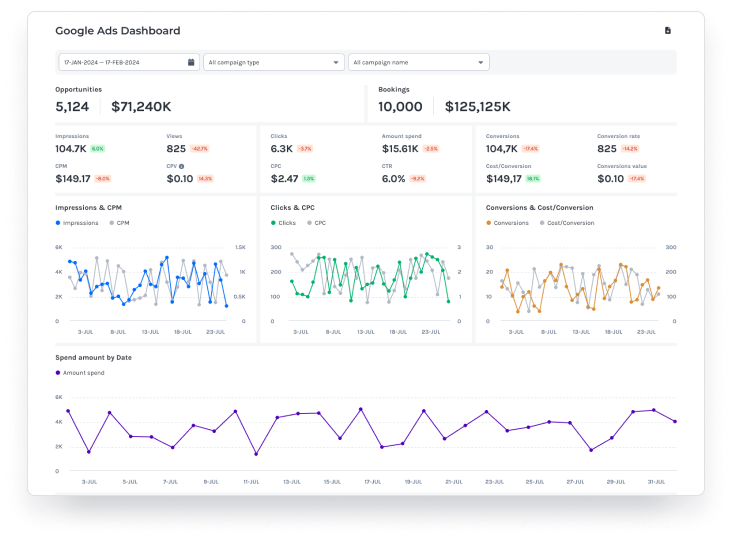
This subcategory serves as the central command center for generalist marketing teams. What makes these tools genuinely different is their focus on data visualization and aggregation rather than deep algorithmic modeling. Unlike specialized attribution tools that might run complex machine learning to assign fractional credit, dashboard tools prioritize the breadth of connections—pulling API data from Facebook, Google, LinkedIn, TikTok, and SEO tools into a single pane of glass. The specific workflow that ONLY these tools handle well is the "Monday Morning Report"—automating the consolidation of disparate spend and performance metrics into a client-facing or executive-facing presentation. The pain point driving buyers here is "Excel Hell"—the manual labor of copying and pasting data from ten different login screens. For teams needing a unified view without the complexity of data science, our guide to Cross Channel Marketing Analytics Dashboards offers a detailed breakdown of the best visualization-focused platforms.

Analytics Tools for Subscription and Recurring Revenue Brands

This niche differs from generic platforms by shifting the primary metric from "Acquisition" to "Lifetime Value" (LTV) and "Churn." A generic attribution tool stops caring once the conversion happens. However, for a subscription box or SaaS tool, the first transaction is just the beginning. These specialized tools handle Cohort Analysis and Revenue Recognition workflows that general tools cannot touch. They answer questions like, "Do customers acquired via Facebook Ads churn faster than those acquired via SEO?" rather than just "How much did it cost to acquire them?" The specific pain point driving buyers here is the "leaky bucket"—spending money to acquire customers who cancel after one month, which looks like success in a standard tool but is a failure in a subscription model. To explore tools that understand MRR (Monthly Recurring Revenue) movements, see our guide to Analytics Tools for Subscription and Recurring Revenue Brands.

Marketing Analytics Tools for B2B SaaS Companies

The defining characteristic of this subcategory is the shift from "Individual" measurement to "Account" measurement. In B2B SaaS, a junior employee might research a tool, a manager might demo it, and a VP might sign the contract. Generic tools see this as three separate people; specialized B2B tools recognize this as one "Buying Committee" or Account. The workflow that ONLY these tools handle well is Pipeline Attribution—connecting top-of-funnel marketing touches (like reading a blog) to bottom-of-funnel sales activities (like a closed-won opportunity in Salesforce) months later. The pain point driving buyers here is the "Sales-Marketing Divide," where Marketing claims they sent leads, but Sales claims the leads were junk. These platforms provide the indisputable evidence of which campaigns influenced revenue. For deep dives into account-based measurement, refer to Marketing Analytics Tools for B2B SaaS Companies.

Marketing Analytics Platforms for Ecommerce Brands

These platforms are distinct because they integrate deeply with inventory and Cost of Goods Sold (COGS) data. While a generic tool tracks "Revenue," an ecommerce-specific platform tracks "Contribution Margin"—revenue minus ad spend, shipping, transaction fees, and product cost. The unique workflow they enable is Profit-Based Bidding. Instead of optimizing ads for the highest revenue (which might be low-margin products), these tools help marketers bid on products that actually drive bottom-line profit. The pain point driving buyers here is "Empty Calories"—scaling revenue while bleeding profit due to hidden costs that standard analytics tools ignore. For brands that need to optimize for net profit rather than just gross revenue, check out our guide to Marketing Analytics Platforms for Ecommerce Brands.

Integration & API Ecosystem

The efficacy of any attribution platform is capped by the quality of its integrations. It is not enough for a vendor to claim they "integrate with Salesforce"; the depth and directionality of that integration matter. A robust API ecosystem must handle Data Normalization—the grueling process of making sure "Campaign A" in Google Ads matches "Campaign_A" in your internal database. Inconsistent naming conventions can render analytics useless.

According to Gartner, poor data quality costs organizations an average of $12.9 million annually [8]. This financial bleed often stems from integration failures where data is lost or corrupted during transfer. Gartner’s analysts note that "D&A leaders must take pragmatic and targeted actions to improve their enterprise data quality if they want to accelerate their organizations' digital transformation" [9].

Real-World Scenario: Consider a mid-sized professional services firm with 50 employees using HubSpot for marketing and a legacy ERP for invoicing. They purchase an attribution tool to measure ROI. The tool integrates with HubSpot via API but requires flat-file uploads for the ERP. When the firm tries to match a "Closed Won" deal in the ERP to a "Lead" in HubSpot, the integration breaks because the ERP uses "Client ID 123" and HubSpot uses email addresses. Without a common key (Identity Resolution) or a middleware integration that cleanses this data automatically, the attribution tool reports $0 revenue for the campaign. The firm ends up paying for a "dashboard" that is empty, requiring them to hire a data engineer to build a custom ETL (Extract, Transform, Load) pipeline, effectively doubling the implementation cost.

Security & Compliance

Security in marketing analytics is no longer just an IT concern; it is a C-suite liability. Platforms must be evaluated on their ability to handle Personally Identifiable Information (PII) without exposing the organization to regulatory fines. The critical standard is Data Residency—knowing exactly where your customer data is physically stored, especially for companies operating in the EU (GDPR) or California (CCPA).

The stakes are high. IBM's 2024 Cost of a Data Breach Report found that the global average cost of a data breach reached $4.88 million, a 10% increase from the previous year [10]. Forrester further emphasizes that "inadequate data protection severely impacts customer trust," creating long-term brand damage beyond immediate fines [11].

Real-World Scenario: A financial services company implements a marketing analytics pixel on their mortgage application page. The marketing team, eager to optimize for "completed applications," configures the tool to scrape form fields. Unknowingly, the tool captures the applicant's income and social security number in the URL parameters or metadata. This data is then sent to the analytics vendor's server, which is not configured for PHI/PII encryption standards required by financial regulations. During a routine audit, this leak is discovered. The company faces a massive compliance violation, not because of a hacker, but because the attribution tool's default configuration was not compliant with the industry's strict data governance standards. This highlights the necessity of "Privacy by Design" in vendor selection.

Pricing Models & TCO

Pricing for attribution software is notoriously opaque and complex. The most common model is Event-Based Pricing (or Monthly Tracked Users - MTU), where costs scale with the volume of traffic or interactions. However, Total Cost of Ownership (TCO) often balloons due to hidden fees for data retention, additional seats, or "premium" integrations. Buyers must calculate TCO based on future growth, not current volume.

Analysts warn that the "sticker price" is deceptive. As noted in industry analyses of TCO, operational costs—such as maintenance, upgrades, and support contracts—can vary significantly depending on complexity, often exceeding the license fee itself [12]. Amplitude suggests that implementation and ongoing maintenance often comprise a larger portion of the TCO than the software license [13].

Real-World Scenario: A fast-growing B2B SaaS company with a 25-person marketing team buys an attribution platform quoted at $30,000/year based on their current web traffic of 100,000 visitors/month. The contract includes a "Data Overage" fee of $0.01 per event. Six months later, the company launches a successful viral campaign and high-frequency product usage tracking. Their event volume spikes to 10 million events/month. The next invoice is not $2,500, but $102,500 due to overages. Furthermore, the platform charges per "seat" for analysis. As the team grows and 10 more analysts need access, the license fees jump another $20,000. The calculated TCO moves from a manageable $30k to a crippling $150k+, forcing the company to rip and replace the tool mid-year—a disastrous waste of resources.

Implementation & Change Management

The primary cause of failure for attribution projects is not technology, but Change Management. Implementing these platforms requires a rigid adherence to UTM taxonomy and tagging standards. If one agency uses "cpc" and another uses "paid_search," the attribution model breaks. Success requires a cultural shift where every marketer agrees to follow strict data entry protocols.

Gartner predicts that by 2027, 80% of data and analytics governance initiatives will fail due to a lack of a real or manufactured crisis that forces adherence [14]. Saul Judah, VP Analyst at Gartner, explicitly states that "A D&A governance program that does not enable prioritized business outcomes fails."

Real-World Scenario: A large retail conglomerate rolls out a new Multi-Touch Attribution platform. The technical implementation takes three months. However, the social media team continues to use their own "internal shorthand" for campaign tagging, while the email team uses a different automated tagging system. The attribution platform reports that "Direct Traffic" is driving 80% of revenue because it cannot recognize the malformed tags from social and email. The VP of Marketing declares the tool "broken" and the team reverts to last-click Google Analytics. The failure wasn't the software; it was the lack of a unified governance council to enforce tagging standards across the 50-person marketing department. The tool becomes shelfware.

Vendor Evaluation Criteria

When selecting a vendor, buyers must distinguish between "Glass Box" (transparent) and "Black Box" (opaque) methodologies. A Glass Box vendor allows you to see the weighting logic (e.g., "we give 20% credit here because of X time decay factor"). A Black Box vendor says "our AI figured it out, trust us." In an era of scrutiny, transparency is non-negotiable.

A staggering statistic from the MarTech stack utilization report highlights that marketers utilize just 49% of their martech stack capabilities [15]. This underutilization is often due to buying features that are too complex ("Black Box") for the team to understand or trust.

Real-World Scenario: An ecommerce brand evaluates two vendors. Vendor A offers a "proprietary AI engine" that promises 20% ROI lift but offers no visualization of the customer journey paths—just a final report. Vendor B offers a linear and time-decay model where the math is visible and adjustable. The brand chooses Vendor A. Three months later, the CEO asks, "Why did we attribute $50k to this podcast campaign?" The marketing director checks Vendor A's dashboard and cannot explain why the AI assigned that credit. The CEO loses trust in the data. Had they chosen Vendor B, they could have shown the specific touchpoint timestamps that justified the credit. The ability to explain the data is often more valuable than the sophistication of the algorithm itself.

EMERGING TRENDS AND CONTRARIAN TAKE

Emerging Trends 2025-2026: The dominant trend is the shift toward Hybrid Measurement or "Triangulation." This involves blending three distinct methodologies: Multi-Touch Attribution (MTA) for granular digital tracking, Marketing Mix Modeling (MMM) for holistic macro-level budgeting, and Incrementality Testing (lift studies) to validate the truth [16]. As signal loss continues, "AI Agents" are also emerging within these platforms—autonomous bots that don't just report data but actively suggest budget shifts (e.g., "Move $5k from Meta to TikTok") based on predictive outcomes [17].

Contrarian Take: The pursuit of "perfect accuracy" in attribution is a financial trap. Most businesses would get significantly higher ROI by abandoning the quest for a "Single Source of Truth" and instead accepting a "Margin of Error" approach. The mid-market is severely over-tooled; companies earning under $50M often buy enterprise-grade attribution suites when they simply lack the data volume to make the statistical models valid. For these companies, simple "last-click" combined with post-purchase surveys ("How did you hear about us?") often outperforms a $50,000/year algorithmic platform. The industry pushes complexity because complexity sells software, but for many, simplicity yields faster, clearer decisions.

COMMON MISTAKES

Over-Reliance on a Single Model: Far too many buyers set their platform to "Last Touch" or "First Touch" and never look back. This creates a self-fulfilling prophecy where you optimize only for the bottom or top of the funnel, eventually starving the other parts of your growth engine [18]. Relying on a single model distorts the understanding of what truly drives conversions.

Ignoring View-Through Data: In a privacy-conscious world, click-based attribution is dying. Buyers often make the mistake of ignoring "View-Through" (impressions that didn't click but converted later) because they think it's "fluff." In reality, for channels like YouTube, Connected TV, and social, view-through is the primary value driver. Ignoring it leads to cutting high-performing awareness channels [19].

Buying Before Data Readiness: The most expensive mistake is purchasing a platform before having a clean data infrastructure. If your UTM taxonomy is messy, your CRM data is full of duplicates, and your website events are untagged, an attribution tool will only accelerate the speed at which you make bad decisions. Fix the data layer first; buy the tool second.

QUESTIONS TO ASK IN A DEMO

  • "How do you specifically handle the data gaps caused by iOS 14+ and Safari ITP?" (If they say "we use AI to fill the gaps," ask for a whitepaper on the specific modeling methodology.) [20]
  • "Can you show me a report of the discrepancy between your platform's reported conversions and the ad platform's (e.g., Meta/Google) reported conversions?" (There will always be a discrepancy; you want to know if they are transparent about it.)
  • "What is the level of support included in the base price vs. premium support?" (Attribution tools break often due to site changes; you need to know if fixing a broken pixel costs extra.) [21]
  • "Do you offer raw data export to our data warehouse, and is there an extra fee for this?" (This is crucial for future-proofing your stack.) [20]
  • "How does your platform handle offline conversions and how are they matched to online users?" (Vital for B2B and Omnichannel retail.)

BEFORE SIGNING THE CONTRACT

Final Decision Checklist:

  • Data Ownership: Ensure the contract states that you own the computed attribution data, not just the raw input data. If you leave the vendor, you should be able to take your historical attribution reports with you.
  • Implementation SLA: Negotiate a "Go-Live" clause. If the implementation takes longer than 60 days due to vendor issues, you should have the right to pause billing or exit the contract.
  • Overage Protection: Hard-cap your event volume fees. Negotiate a clause that alerts you when you reach 80% of your tier limit, preventing surprise bills.
  • Deal-Breaker: Lack of Historical Data Replay. If the tool can't process your past 6-12 months of data to give you immediate insights on day one, you will be flying blind for months while the new data accumulates. Demand historical backfilling.

CLOSING

Choosing the right Marketing Attribution & Analytics Platform is one of the most complex decisions a marketing leader will make. It requires balancing technical constraints, budget realities, and team capabilities. If you need help navigating this landscape or want a sounding board for your specific use case, feel free to reach out.

Email: albert@whatarethebest.com