Customer Advocacy & Reference Management Platforms

These are the specialized categories within Customer Advocacy & Reference Management Platforms. Looking for something broader? See all Customer Support & Success Software categories.

1

Userpilot Customer Advocacy

Best for Customer Advocacy Platforms for B2B SaaS Companies

Score
9.9 / 10
Userpilot Customer Advocacy

Userpilot is a powerful tool designed to drive customer advocacy for SaaS and B2B businesses. It offers a comprehensive set of features to engage customers, transform them into loyal advocates, and ultimately increase product adoption and retention.

Best for Customer Advocacy Platforms for B2B SaaS Companies

Expert Take

Userpilot Customer Advocacy excels in providing specialized tools for B2B SaaS companies, focusing on transforming customers into advocates. Its market credibility is supported by third-party recognitions, and it offers a user-friendly experience with a free trial. However, it may require technical knowledge, which slightly impacts usability.
Pros

  • Advanced NPS segmentation & tagging
  • SOC 2 Type II & HIPAA compliant
  • No-code survey builder with logic
  • Real-time behavioral triggering
  • Excellent customer support reputation

Cons

  • High starting price ($299/mo)
  • Mobile support is a paid add-on
  • Steep learning curve for analytics
  • UI can be complex or laggy

Best for teams that are

  • Product teams using in-app experiences to identify promoters (e.g., NPS)
  • SaaS companies wanting to drive advocacy directly inside their application
  • Teams focused on product adoption and user sentiment analysis

Skip if

  • Marketers needing a dedicated external portal for advocate rewards
  • Companies looking for complex referral commission management
  • Non-SaaS businesses without a digital product interface

Best for teams that are

  • Product teams using in-app experiences to identify promoters (e.g., NPS)
  • SaaS companies wanting to drive advocacy directly inside their application
  • Teams focused on product adoption and user sentiment analysis

Skip if

  • Marketers needing a dedicated external portal for advocate rewards
  • Companies looking for complex referral commission management
  • Non-SaaS businesses without a digital product interface

Pros

  • Advanced NPS segmentation & tagging
  • SOC 2 Type II & HIPAA compliant
  • No-code survey builder with logic
  • Real-time behavioral triggering
  • Excellent customer support reputation

Cons

  • High starting price ($299/mo)
  • Mobile support is a paid add-on
  • Steep learning curve for analytics
  • UI can be complex or laggy

Expert Take

Userpilot Customer Advocacy excels in providing specialized tools for B2B SaaS companies, focusing on transforming customers into advocates. Its market credibility is supported by third-party recognitions, and it offers a user-friendly experience with a free trial. However, it may require technical knowledge, which slightly impacts usability.

2
Score
9.9 / 10
2
9.9 / 10
ReferenceEdge

ReferenceEdge is a customer advocacy platform integrated with Salesforce CRM, providing automated reference management to streamline the buyer's journey and track ROI. It's designed specifically for professionals seeking a robust, CRM-integrated advocacy platform, making it a powerful asset for businesses that aim to improve customer engagement and strengthen relationships.

Best for Customer Advocacy Platforms Integrated with CRM Systems

Expert Take

ReferenceEdge excels as a customer advocacy platform with its native Salesforce integration and automated reference management capabilities. It is recognized for enhancing customer engagement and streamlining the buyer's journey, making it a valuable tool for businesses seeking to improve customer relationships.

Pros

  • 100% Salesforce native architecture
  • Transparent pricing ($4-$16/user/mo)
  • No external data hosting required
  • Automated reference recruitment workflows
  • High AppExchange user ratings (4.96/5)

Cons

  • Implementation can be time-consuming
  • Manual data entry for some tasks
  • Reporting logic has minor limitations
  • Requires Salesforce licenses for users
  • Learning curve for complex features

Best for teams that are

  • B2B enterprises using Salesforce needing native reference management
  • Teams wanting to track reference usage and prevent advocate burnout
  • Sales organizations needing reference data directly in opportunities

Skip if

  • Companies that do not use Salesforce as their primary CRM
  • B2C brands looking for consumer loyalty or influencer tools
  • Small teams without a dedicated customer reference function

Best for teams that are

  • B2B enterprises using Salesforce needing native reference management
  • Teams wanting to track reference usage and prevent advocate burnout
  • Sales organizations needing reference data directly in opportunities

Skip if

  • Companies that do not use Salesforce as their primary CRM
  • B2C brands looking for consumer loyalty or influencer tools
  • Small teams without a dedicated customer reference function

Pros

  • 100% Salesforce native architecture
  • Transparent pricing ($4-$16/user/mo)
  • No external data hosting required
  • Automated reference recruitment workflows
  • High AppExchange user ratings (4.96/5)

Cons

  • Implementation can be time-consuming
  • Manual data entry for some tasks
  • Reporting logic has minor limitations
  • Requires Salesforce licenses for users
  • Learning curve for complex features

Expert Take

ReferenceEdge excels as a customer advocacy platform with its native Salesforce integration and automated reference management capabilities. It is recognized for enhancing customer engagement and streamlining the buyer's journey, making it a valuable tool for businesses seeking to improve customer relationships.

3
Score
9.7 / 10
3
9.7 / 10
UserEvidence

UserEvidence is a customer evidence platform designed specifically for B2B software companies. It helps industry professionals collect feedback, curate success stories, and create convincing content demonstrating the value of their products, thus addressing a critical need for demonstrating product value and gathering evidence.

Best for Customer Advocacy Platforms with Case Study and Story Capture
Expert Take

UserEvidence excels in providing a specialized platform for B2B companies to collect and leverage customer feedback effectively. Its focus on creating compelling success stories is well-documented, and its usability is noted for being straightforward. However, the lack of transparent pricing and integration details slightly impacts its overall score.

Pros

  • Automates verified customer evidence generation
  • Exceptional support (10.0 G2 rating)
  • Integrates with Salesforce, HubSpot, Slack
  • High ease of use and setup
  • Blind-but-verified methodology builds trust

Cons

  • Lacks community/gamification features
  • Reporting less advanced than competitors
  • Pricing not publicly available
  • Success depends on survey response rates
  • Narrower scope than advocacy suites

Best for teams that are

  • B2B SaaS companies with 500+ active users
  • Product marketers needing verified ROI stats and charts
  • Teams wanting to generate asset libraries from surveys

Skip if

  • Early-stage startups with small customer bases
  • Teams focused solely on emotional video storytelling
  • Companies unable to survey a large user pool

Best for teams that are

  • B2B SaaS companies with 500+ active users
  • Product marketers needing verified ROI stats and charts
  • Teams wanting to generate asset libraries from surveys

Skip if

  • Early-stage startups with small customer bases
  • Teams focused solely on emotional video storytelling
  • Companies unable to survey a large user pool

Pros

  • Automates verified customer evidence generation
  • Exceptional support (10.0 G2 rating)
  • Integrates with Salesforce, HubSpot, Slack
  • High ease of use and setup
  • Blind-but-verified methodology builds trust

Cons

  • Lacks community/gamification features
  • Reporting less advanced than competitors
  • Pricing not publicly available
  • Success depends on survey response rates
  • Narrower scope than advocacy suites

Expert Take

UserEvidence excels in providing a specialized platform for B2B companies to collect and leverage customer feedback effectively. Its focus on creating compelling success stories is well-documented, and its usability is noted for being straightforward. However, the lack of transparent pricing and integration details slightly impacts its overall score.

4

Advocacy Maven Customer Programs

Best for Customer Advocacy Platforms with Reference Recruitment Workflows

Score
9.7 / 10
Advocacy Maven Customer Programs

A comprehensive solution for customer advocacy management, Advocacy Maven ensures a seamless integration of advocacy programs with CRM and sales tools. It specifically addresses industry needs by offering process mapping, building reference workflows, and providing metrics for scalable and measurable impact, which are crucial for customer support and success.

Best for Customer Advocacy Platforms with Reference Recruitment Workflows

Expert Take

Advocacy Maven Customer Programs excels in providing a comprehensive solution for customer advocacy management, with strong CRM integration and customizable workflows. It is recognized for its ability to deliver measurable impact metrics, making it a valuable tool for customer success. While the setup may require technical knowledge, its overall capabilities position it as a leader in its category.

Pros

  • Proprietary CARE → SPEAK → SCALE™ framework
  • Deep expertise in Influitive & Base
  • Transparent pricing starting at $1,500/mo
  • Near-perfect 4.9/5 G2 client rating
  • Comprehensive strategy and content services

Cons

  • Reliance on small core team
  • Time zone constraints for US West Coast
  • Hourly rates ($190/h) can accumulate
  • Not a standalone software platform
  • Limited benchmarking data availability

Best for teams that are

  • Organizations needing expert strategy and managed services for advocacy
  • Teams looking to outsource program management or content creation
  • Companies needing help implementing or optimizing platforms like Influitive

Skip if

  • Businesses looking for a standalone software tool to buy and self-manage
  • Teams with zero budget for professional services or consulting
  • Those seeking a quick, automated software fix without strategic oversight

Best for teams that are

  • Organizations needing expert strategy and managed services for advocacy
  • Teams looking to outsource program management or content creation
  • Companies needing help implementing or optimizing platforms like Influitive

Skip if

  • Businesses looking for a standalone software tool to buy and self-manage
  • Teams with zero budget for professional services or consulting
  • Those seeking a quick, automated software fix without strategic oversight

Pros

  • Proprietary CARE → SPEAK → SCALE™ framework
  • Deep expertise in Influitive & Base
  • Transparent pricing starting at $1,500/mo
  • Near-perfect 4.9/5 G2 client rating
  • Comprehensive strategy and content services

Cons

  • Reliance on small core team
  • Time zone constraints for US West Coast
  • Hourly rates ($190/h) can accumulate
  • Not a standalone software platform
  • Limited benchmarking data availability

Expert Take

Advocacy Maven Customer Programs excels in providing a comprehensive solution for customer advocacy management, with strong CRM integration and customizable workflows. It is recognized for its ability to deliver measurable impact metrics, making it a valuable tool for customer success. While the setup may require technical knowledge, its overall capabilities position it as a leader in its category.

5
Score
9.7 / 10
5
9.7 / 10
Testimonial Hero

Testimonial Hero is a customer storytelling tool specially designed for businesses to capture, showcase and leverage customer testimonials. It addresses the pressing industry need for effective customer advocacy and reference management by simplifying the process of collecting and sharing customer stories, thus building trust and credibility.

Best for Customer Advocacy Platforms with Case Study and Story Capture

Expert Take

Testimonial Hero excels in capturing and showcasing customer testimonials through professional video production, making it a standout in customer advocacy platforms. Its focus on video testimonials and in-depth analytics provides businesses with a powerful tool to enhance customer trust and measure advocacy efforts effectively.

Pros

  • 100% done-for-you filming and editing service
  • Global network of videographers for on-site shoots
  • High-quality remote capture with producer guidance
  • Dedicated project managers handle all coordination
  • Includes written case studies via Case Study Buddy

Cons

  • High annual starting cost (~$6,500+)
  • Unused service credits may expire
  • Less creative control than in-house editing
  • No free trial or low-cost tier
  • Dependent on customer availability for interviews

Best for teams that are

  • Marketing teams requiring broadcast-quality video assets
  • Companies with budget to outsource production ($3k+/video)
  • B2B brands wanting polished, done-for-you case studies

Skip if

  • DIY teams looking for a software-only subscription
  • Businesses with limited budgets for video production
  • Teams needing immediate turnaround (service vs software)

Best for teams that are

  • Marketing teams requiring broadcast-quality video assets
  • Companies with budget to outsource production ($3k+/video)
  • B2B brands wanting polished, done-for-you case studies

Skip if

  • DIY teams looking for a software-only subscription
  • Businesses with limited budgets for video production
  • Teams needing immediate turnaround (service vs software)

Pros

  • 100% done-for-you filming and editing service
  • Global network of videographers for on-site shoots
  • High-quality remote capture with producer guidance
  • Dedicated project managers handle all coordination
  • Includes written case studies via Case Study Buddy

Cons

  • High annual starting cost (~$6,500+)
  • Unused service credits may expire
  • Less creative control than in-house editing
  • No free trial or low-cost tier
  • Dependent on customer availability for interviews

Expert Take

Testimonial Hero excels in capturing and showcasing customer testimonials through professional video production, making it a standout in customer advocacy platforms. Its focus on video testimonials and in-depth analytics provides businesses with a powerful tool to enhance customer trust and measure advocacy efforts effectively.

6

impact.com Partnership Platform

Best for Customer Advocacy Platforms Integrated with CRM Systems

Score
9.6 / 10
impact.com Partnership Platform

impact.com is a robust SaaS solution specifically designed to simplify the management of affiliates, influencers, and referral programs. It addresses the needs of industry professionals by integrating seamlessly with existing CRM systems, enabling brands and publishers to streamline partnerships, track performance, and optimize marketing strategies.

Best for Customer Advocacy Platforms Integrated with CRM Systems

Expert Take

impact.com Partnership Platform excels in providing a comprehensive solution for managing partnerships, with strong CRM integration and robust analytics. It is recognized for its market credibility and usability, making it a top choice for professionals seeking to optimize their affiliate and influencer programs.

Pros

  • Unified affiliate, creator & referral platform
  • Marketplace with 90,000+ vetted partners
  • SOC 2 Type II & ISO 27001 certified
  • Transparent Starter pricing ($30/mo)
  • Deep integrations with Shopify & BigCommerce

Cons

  • Steep learning curve for beginners
  • Support response times can be slow
  • Interface described as non-intuitive
  • Large price jump to Essentials tier
  • Client-side tracking vulnerable to ad-blockers

Best for teams that are

  • Brands managing diverse partnerships (affiliates, influencers, B2B) at scale
  • E-commerce and SaaS companies needing robust tracking and attribution
  • Enterprises looking to consolidate all partner types into one platform

Skip if

  • Small businesses with minimal budget or low transaction volume
  • Teams looking specifically for a customer support community platform
  • Nonprofits focused strictly on legislative advocacy

Best for teams that are

  • Brands managing diverse partnerships (affiliates, influencers, B2B) at scale
  • E-commerce and SaaS companies needing robust tracking and attribution
  • Enterprises looking to consolidate all partner types into one platform

Skip if

  • Small businesses with minimal budget or low transaction volume
  • Teams looking specifically for a customer support community platform
  • Nonprofits focused strictly on legislative advocacy

Pros

  • Unified affiliate, creator & referral platform
  • Marketplace with 90,000+ vetted partners
  • SOC 2 Type II & ISO 27001 certified
  • Transparent Starter pricing ($30/mo)
  • Deep integrations with Shopify & BigCommerce

Cons

  • Steep learning curve for beginners
  • Support response times can be slow
  • Interface described as non-intuitive
  • Large price jump to Essentials tier
  • Client-side tracking vulnerable to ad-blockers

Expert Take

impact.com Partnership Platform excels in providing a comprehensive solution for managing partnerships, with strong CRM integration and robust analytics. It is recognized for its market credibility and usability, making it a top choice for professionals seeking to optimize their affiliate and influencer programs.

7

Ambassador's Customer Advocacy Platform

Best for Customer Advocacy Platforms for B2B SaaS Companies

Score
9.6 / 10
Ambassador's Customer Advocacy Platform

Specifically designed for SaaS companies, cloud providers, and B2B tech brands, Ambassador's platform facilitates seamless customer advocacy at scale. With its capability to create custom referral programs, it directly addresses the industry's need for enhanced customer engagement and retention.

Best for Customer Advocacy Platforms for B2B SaaS Companies

Expert Take

Ambassador's Customer Advocacy Platform excels in providing customizable and scalable solutions specifically for B2B SaaS companies. Its integration capabilities with CRM software and comprehensive analytics are well-documented, enhancing its usability and customer experience. While the pricing model may limit transparency, the platform's market credibility is supported by its targeted design for SaaS and tech brands.

Pros

  • Unified referral, affiliate, and loyalty platform
  • Advanced 'Vaults' for financial governance
  • Deep Salesforce and HubSpot integrations
  • Predictive AI (Hiro) for engagement
  • Automated payouts via PayPal and gift cards

Cons

  • Steep learning curve for new users
  • High monthly cost for SMBs
  • Complex setup requiring implementation support
  • Annual commitment often required
  • Limited lower-tier features

Best for teams that are

  • Companies focused heavily on referral marketing and affiliate revenue
  • Brands needing robust automated payout and commission management
  • Hybrid B2B/B2C companies wanting to scale word-of-mouth programs

Skip if

  • Teams looking for a community-first engagement hub like Influitive
  • Organizations focused solely on non-monetary advocacy (e.g., reference calls)
  • Companies wanting a purely gamified advocate experience without referral focus

Best for teams that are

  • Companies focused heavily on referral marketing and affiliate revenue
  • Brands needing robust automated payout and commission management
  • Hybrid B2B/B2C companies wanting to scale word-of-mouth programs

Skip if

  • Teams looking for a community-first engagement hub like Influitive
  • Organizations focused solely on non-monetary advocacy (e.g., reference calls)
  • Companies wanting a purely gamified advocate experience without referral focus

Pros

  • Unified referral, affiliate, and loyalty platform
  • Advanced 'Vaults' for financial governance
  • Deep Salesforce and HubSpot integrations
  • Predictive AI (Hiro) for engagement
  • Automated payouts via PayPal and gift cards

Cons

  • Steep learning curve for new users
  • High monthly cost for SMBs
  • Complex setup requiring implementation support
  • Annual commitment often required
  • Limited lower-tier features

Expert Take

Ambassador's Customer Advocacy Platform excels in providing customizable and scalable solutions specifically for B2B SaaS companies. Its integration capabilities with CRM software and comprehensive analytics are well-documented, enhancing its usability and customer experience. While the pricing model may limit transparency, the platform's market credibility is supported by its targeted design for SaaS and tech brands.

8

Forescout Customer Advocacy Program

Best for Customer Advocacy Platforms with Case Study and Story Capture
Score
9.6 / 10
Forescout Customer Advocacy Program

Forescout's Customer Advocacy Program is a valuable tool for professionals in the customer support industry, enabling them to provide real-world insights to improve Forescout products. The platform is unique in its ability to strengthen professional networks while enhancing the quality of customer advocacy.

Best for Customer Advocacy Platforms with Case Study and Story Capture

Expert Take

Forescout's Customer Advocacy Program excels in enhancing professional networks and providing real-world insights for product improvement. It is well-regarded within its niche for its unique approach to customer advocacy, though it is limited to Forescout products and lacks pricing transparency.

Pros

  • Explicit focus on advocate career advancement
  • Opportunities for high-profile conference speaking
  • Vendor handles content production workload
  • Access to valuable certification training
  • Direct influence on product roadmap

Cons

  • Core product implementation is complex
  • Technical support response times vary
  • Integration documentation can be sparse
  • High price point for core product
  • Monetary rewards limited to partners

Best for teams that are

  • Existing Forescout cybersecurity customers
  • Users wanting to network with Forescout peers
  • Customers seeking rewards for advocacy activities

Skip if

  • Companies looking to buy advocacy software
  • Non-Forescout users (it is a specific loyalty program)
  • Marketers seeking a tool to manage their own references

Best for teams that are

  • Existing Forescout cybersecurity customers
  • Users wanting to network with Forescout peers
  • Customers seeking rewards for advocacy activities

Skip if

  • Companies looking to buy advocacy software
  • Non-Forescout users (it is a specific loyalty program)
  • Marketers seeking a tool to manage their own references

Pros

  • Explicit focus on advocate career advancement
  • Opportunities for high-profile conference speaking
  • Vendor handles content production workload
  • Access to valuable certification training
  • Direct influence on product roadmap

Cons

  • Core product implementation is complex
  • Technical support response times vary
  • Integration documentation can be sparse
  • High price point for core product
  • Monetary rewards limited to partners

Expert Take

Forescout's Customer Advocacy Program excels in enhancing professional networks and providing real-world insights for product improvement. It is well-regarded within its niche for its unique approach to customer advocacy, though it is limited to Forescout products and lacks pricing transparency.

9

Higher Logic Customer Advocacy Software

Best for Customer Advocacy Platforms Integrated with CRM Systems

Score
9.6 / 10
Higher Logic Customer Advocacy Software

Higher Logic is a comprehensive solution designed to boost customer advocacy for marketing teams. It integrates seamlessly with popular CRM platforms, marketing automation, and customer advocacy tools, making it a highly versatile tool for businesses that want to leverage their customer base to drive growth and brand recognition. It addresses the industry's need for a centralized, easy-to-use platform to manage all aspects of customer advocacy.

Best for Customer Advocacy Platforms Integrated with CRM Systems

Expert Take

Higher Logic excels in providing a comprehensive customer advocacy platform with seamless CRM integration and robust automation capabilities. Its user-friendly interface and customizable features make it adaptable for various business needs. The product's market credibility is reinforced by its integration capabilities and industry recognition.

Pros

  • Deep integration with SlapFive for advocacy
  • Robust native gamification and automation rules
  • Extensive AMS and CRM integration ecosystem
  • Enterprise-grade security (SOC 2, ISO 27001)
  • Highly customizable community themes and layouts

Cons

  • Complex and dated administrative interface
  • Opaque and potentially high pricing
  • Steep learning curve for administrators
  • Mixed customer support responsiveness
  • Advanced advocacy requires third-party integration

Best for teams that are

  • Associations and B2B/B2C orgs building branded online communities
  • Teams seeking to deflect support tickets via peer-to-peer discussions
  • Organizations wanting to centralize knowledge sharing and engagement

Skip if

  • Small businesses needing simple, low-cost referral tools
  • Sales teams looking strictly for reference management automation
  • Companies wanting a plug-and-play influencer marketing platform

Best for teams that are

  • Associations and B2B/B2C orgs building branded online communities
  • Teams seeking to deflect support tickets via peer-to-peer discussions
  • Organizations wanting to centralize knowledge sharing and engagement

Skip if

  • Small businesses needing simple, low-cost referral tools
  • Sales teams looking strictly for reference management automation
  • Companies wanting a plug-and-play influencer marketing platform

Pros

  • Deep integration with SlapFive for advocacy
  • Robust native gamification and automation rules
  • Extensive AMS and CRM integration ecosystem
  • Enterprise-grade security (SOC 2, ISO 27001)
  • Highly customizable community themes and layouts

Cons

  • Complex and dated administrative interface
  • Opaque and potentially high pricing
  • Steep learning curve for administrators
  • Mixed customer support responsiveness
  • Advanced advocacy requires third-party integration

Expert Take

Higher Logic excels in providing a comprehensive customer advocacy platform with seamless CRM integration and robust automation capabilities. Its user-friendly interface and customizable features make it adaptable for various business needs. The product's market credibility is reinforced by its integration capabilities and industry recognition.

10
Score
9.6 / 10
Rival Customer Stories

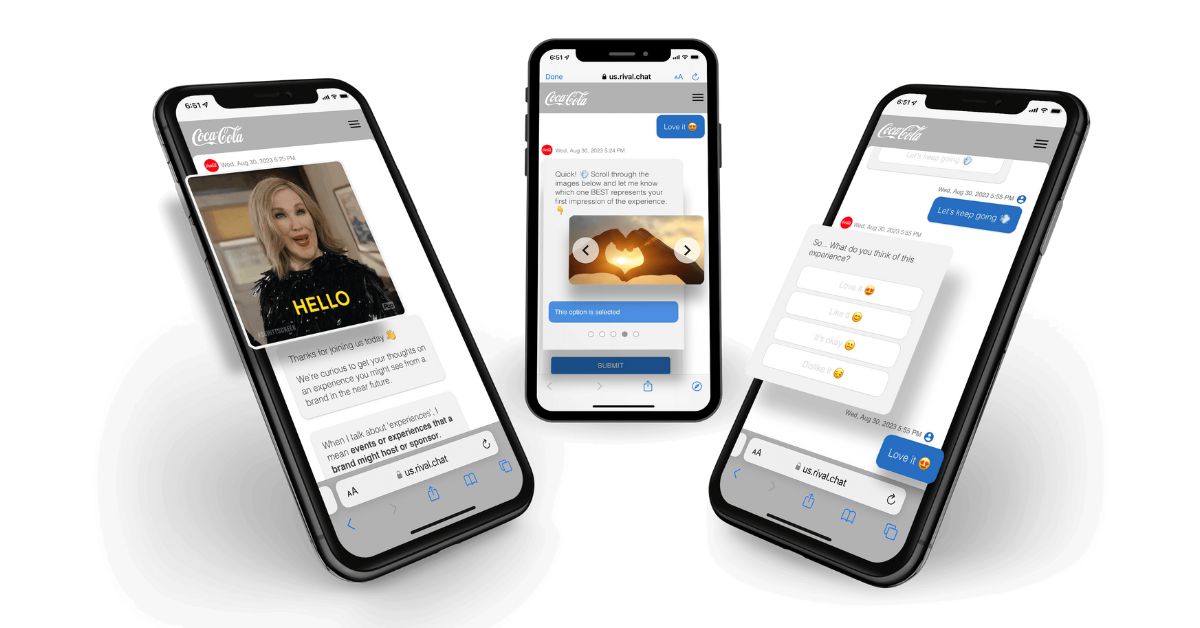
Rival Customer Stories is a market research platform that leverages case studies and customer stories to increase customer engagement. It's a game-changing tool for the SaaS industry, where client testimonials and case studies play a crucial role in acquiring new customers. It offers a quick route to gain insights and understand customer needs, making it vital for customer advocacy and reference management.

Best for Customer Advocacy Platforms with Case Study and Story Capture
Expert Take

Rival Customer Stories excels in leveraging customer stories and case studies for market research, which is crucial for customer advocacy in the SaaS industry. Its focus on customer engagement and insights makes it a standout platform, though it has some limitations in pricing transparency and customization.

Pros

  • 87% average survey completion rate
  • SOC 2, ISO 27001 & HIPAA certified
  • Mobile-first chat interface boosts engagement
  • AI-driven video transcription and analysis
  • Trusted by Coca-Cola and Warner Bros

Cons

  • High entry price ($29k/year minimum)
  • Reporting workflow can be fragmented
  • Steep learning curve for complex features
  • Limited export options for some reports
  • Not suitable for small budget projects

Best for teams that are

  • Market research teams seeking authentic consumer insights
  • Brands engaging Gen Z via mobile-first chat surveys
  • Companies wanting to capture video feedback at scale

Skip if

  • B2B teams needing dedicated reference management tools
  • Users looking for traditional long-form case study writing
  • Companies avoiding chat-style or mobile-first interfaces

Best for teams that are

  • Market research teams seeking authentic consumer insights
  • Brands engaging Gen Z via mobile-first chat surveys
  • Companies wanting to capture video feedback at scale

Skip if

  • B2B teams needing dedicated reference management tools
  • Users looking for traditional long-form case study writing
  • Companies avoiding chat-style or mobile-first interfaces

Pros

  • 87% average survey completion rate
  • SOC 2, ISO 27001 & HIPAA certified
  • Mobile-first chat interface boosts engagement
  • AI-driven video transcription and analysis
  • Trusted by Coca-Cola and Warner Bros

Cons

  • High entry price ($29k/year minimum)
  • Reporting workflow can be fragmented
  • Steep learning curve for complex features
  • Limited export options for some reports
  • Not suitable for small budget projects

Expert Take

Rival Customer Stories excels in leveraging customer stories and case studies for market research, which is crucial for customer advocacy in the SaaS industry. Its focus on customer engagement and insights makes it a standout platform, though it has some limitations in pricing transparency and customization.

How We Rank Products

Our Evaluation Process

Products in the Customer Advocacy & Reference Management Platforms category are evaluated based on documented features like user experience and integration capabilities. Pricing transparency is also assessed to ensure clear understanding of cost structures. Compatibility with other software systems, such as CRM tools, is a critical factor. Additionally, third-party customer feedback is analyzed to gauge user satisfaction and platform reliability.

Verification

  • Products evaluated through comprehensive research and analysis of customer feedback and expert reviews.
  • Rankings based on a thorough examination of platform features, user satisfaction, and industry benchmarks.
  • Selection criteria focus on key metrics such as integration capabilities, user experience, and customer support effectiveness.

Score Breakdown

0.0 / 10

About Customer Advocacy & Reference Management Platforms

What Are Customer Advocacy & Reference Management Platforms?

This category covers software used to identify, mobilize, and manage satisfied customers to support sales and marketing efforts across the buyer's journey: sourcing references, automating testimonial capture, managing advocate communities, and tracking the revenue impact of customer-led growth. It sits downstream of Customer Success platforms (which focus on retention and health) and feeds directly into CRM and Marketing Automation systems (which focus on acquisition). It includes both general-purpose advocacy hubs that gamify engagement and vertical-specific reference management databases designed for complex B2B sales cycles.

At its core, this software solves the "favors bank" problem. In the absence of a dedicated platform, customer references are managed via chaotic spreadsheets, ad-hoc emails ("Does anyone know a customer in fintech who uses our reporting module?"), and political maneuvering between sales reps who hoard their best relationships. This manual approach leads to advocate burnout, where the same three "friendly" clients are asked to speak to every prospect, while hundreds of other potential advocates remain silent and unengaged. Customer Advocacy & Reference Management Platforms operationalize this process, turning random acts of advocacy into a scalable revenue engine.

These platforms are primarily used by Customer Marketing, Reference Managers, and Sales Enablement teams. For enterprise organizations, they provide a governance layer that ensures compliance and prevents reference overuse. For high-growth SaaS companies, they function as a content engine, automating the generation of reviews, case studies, and social proof that grease the wheels of the sales cycle. The value lies in speed and trust: giving buyers the peer validation they crave without the administrative burden of manually brokering every connection.

History of the Category

The origins of Customer Advocacy & Reference Management Platforms can be traced back to the late 1990s and early 2000s, emerging as a necessary patch for the limitations of early Customer Relationship Management (CRM) systems. While the CRM boom, led by Siebel and later Salesforce, digitized the rolodex and tracked the sales pipeline, it created a significant blind spot: it tracked who bought, but not who was willing to speak. As databases grew, marketing and sales teams found themselves data-rich but insight-poor, unable to easily identify which customers were happy, referenceable, or relevant to a specific prospect's use case.

In the 2000s, the "reference gap" was largely filled by manual processes—spreadsheets and favors. Dedicated "Reference Managers" in large IT hardware and software firms acted as human librarians, manually vetting requests to protect key accounts. The first wave of software in this category appeared as glorified databases—on-premise or early hosted solutions designed simply to log reference activity and prevent burnout. These tools were reactive, static repositories that relied heavily on manual data entry.

The market shifted dramatically around 2010-2012 with the rise of the Subscription Economy and the transition to cloud. As retention became as critical as acquisition, the passive "reference database" model evolved into the proactive "advocacy" model. Companies like Influitive pioneered the idea of "Advocate Marketing," introducing gamification to keep customers engaged continuously, not just when a favor was needed. This marked a philosophical shift from "extracting value" (asking for a reference) to "exchanging value" (offering status, education, and community). Forrester Research noted this pivot in 2014, advising marketers to "tip the balance" from purely reactive reference management to proactive advocacy [1].

The late 2010s saw a wave of consolidation and verticalization. Generalist platforms began to acquire or build features for specific workflows like user-generated content (UGC) and video testimonials. The market bifurcated into two distinct streams that exist today: heavy-duty B2B reference management for complex enterprise sales (focused on governance and sales mapping) and broader advocacy platforms for volume-based businesses (focused on reviews, social shares, and community). Today, the category is undergoing another transformation driven by AI, moving from "managing lists" to "mining intelligence"—automatically surfacing potential advocates based on usage data and sentiment analysis rather than manual nomination.

What to Look For

Evaluating this software requires looking beyond the "shiny" features of gamification and focusing on workflow integration and data governance. The most common failure mode in this category is buying a platform that Sales refuses to check and Marketing forgets to update.

Critical Evaluation Criteria:

  • Integration Depth: Does the platform write back to your CRM in real-time? Sales reps will not log into a separate portal to find a reference. The "Request a Reference" button must live inside the Opportunity record in Salesforce, HubSpot, or Microsoft Dynamics.
  • Nomination Workflow: How easy is it for a Customer Success Manager (CSM) to nominate a new advocate? Look for tools that automate this via triggers (e.g., a high NPS score or renewal event) rather than relying on manual data entry.
  • Burnout Protection: The system must have automated "cool-down" periods. If a customer does a reference call today, the system should automatically block them from being requested again for a set period (e.g., 90 days). This governance is non-negotiable for enterprise teams.
  • Content Flexibility: Can the platform handle various forms of advocacy? You need a tool that can manage high-touch activities (reference calls, speaking slots) alongside low-touch activities (G2 reviews, social shares) within a single customer profile.

Red Flags and Warning Signs:

  • No "Closed-Loop" Reporting: If the vendor cannot demonstrate how to attribute revenue influence to specific advocacy acts (e.g., "Reference Call X influenced Deal Y"), walk away. ROI reporting is essential for preserving budget.
  • Manual Reward Fulfillment: Avoid platforms that require you to manually purchase and email gift cards or swag. Look for integrated fulfillment centers that handle the logistics of rewards globally.
  • Over-reliance on Gamification: While points and badges work for some audiences, they can alienate executive-level buyers. Ensure the platform allows for "white-glove" advocacy tracks that don't look like a video game.

Key Questions to Ask Vendors:

  • "How does your platform handle 'gatekeepers' or account managers who want to approve every request before it goes to their client?"
  • "Can we segment advocacy challenges so that C-level executives see different asks than end-users?"
  • "Show me the exact workflow a sales rep follows to request a reference. Count the clicks."

Industry-Specific Use Cases

Retail & E-commerce

In the retail and e-commerce sector, the "reference call" is virtually non-existent. Instead, the focus is entirely on volume and User-Generated Content (UGC). Platforms here must operate at massive scale, automating the collection of photo reviews, unboxing videos, and social media mentions. The critical evaluation priority is the "authenticity" engine—how the software verifies that a reviewer actually purchased the item to prevent fraud.

Retailers should look for advocacy tools that integrate directly with the shopping cart and email service providers (ESPs) to trigger requests post-purchase. Unlike B2B tools that gate access, e-commerce advocacy platforms must be open and indexable by search engines to drive SEO. A unique consideration here is the legal right to use content; the platform must have robust Digital Rights Management (DRM) workflows that automate the "permission to repost" process for Instagram or TikTok content [2].

Healthcare

Healthcare organizations face a unique paradox: patient stories are their most powerful marketing asset, yet they are governed by the strictest privacy regulations (HIPAA in the US, GDPR in Europe). Customer advocacy platforms in this space must prioritize consent management and data segregation above all else. You are not just managing a "reference"; you are managing Protected Health Information (PHI).

Evaluation must focus on security compliance. Does the platform offer "blind" references where prospects can see aggregated data without PII? Can it manage complex release forms for video testimonials that expire after a certain date? Case studies in healthcare often require multi-stage approval workflows involving legal and compliance teams; the software must support these rigid governance structures rather than bypassing them [3]. Security breaches here are not just embarrassing; they are illegal.

Financial Services

Similar to healthcare, Financial Services (FinServ) operates under intense regulatory scrutiny (SEC, FINRA, FCA). However, the added layer here is "competitive intelligence" protection. A bank or hedge fund may be willing to be a reference, but never publicly. FinServ buyers need platforms that excel in "anonymized advocacy"—creating assets that verify results without naming the client explicitly (e.g., "Top 5 Global Bank saves $50M").

The "trust" factor is paramount. Advocacy tools for FinServ must include features for managing "Inner Circles" or Customer Advisory Boards (CABs) where secure, private peer-to-peer exchange happens. Public gamification is often culturally mismatched here; instead, look for platforms that facilitate exclusive networking and high-value educational content access. Compliance logging is critical—every interaction between a customer and a prospect must be auditable [4].

Manufacturing

Manufacturing sales cycles are long, capital-intensive, and involve multiple stakeholders (procurement, engineering, plant management). Advocacy in this sector is not about a quick review; it is about facilitating site visits and deep-dive technical reference calls. The software must be able to map references by specific machinery, configuration, or use case. A prospect looking at a $5M assembly line needs to speak to a customer with that exact configuration, not just a generic user.

Unique considerations include "Site Visit Management." Does the platform have workflows to schedule, manage, and reimburse logistics for physical reference visits? Furthermore, because manufacturers often sell through distributors, the platform may need to support a "partner portal" view, allowing dealers to access approved references without giving them full access to the customer database [5].

Professional Services

In law firms, consultancies, and agencies, the "product" is the people, and clients are often guarded jealously by partners. The biggest hurdle here is the "Partner Gatekeeper" dynamic. Partners often hoard client relationships, refusing to enter them into a central system for fear of overuse or poaching. Advocacy software for this sector must offer " mediated access"—allowing partners to approve or deny a reference request before the client is ever contacted.

The evaluation priority is internal permissioning. Can the system send a "request to contact" email to the relationship partner first? If this step is missing or clunky, the software will be rejected by the partnership. Additionally, the focus is often on producing high-quality written case studies and "tombstones" (deal announcements) rather than gamified community engagement [6].

Subcategory Overview

Customer Advocacy Platforms with Reference Recruitment Workflows This subcategory is distinct because it focuses specifically on the *supply chain* of advocacy. While general tools focus on what to do with an advocate (e.g., rewards), these tools focus on finding them in the first place. They differ from generic platforms by offering deep integrations with survey tools (like Qualtrics or Medallia) and CS platforms (like Gainsight) to automatically trigger recruitment invitations based on "moments of delight" (e.g., a 9/10 NPS score or a successful implementation milestone). The specific workflow that only these tools handle well is the "nomination-to-approval" loop, where a CSM nominates a client, the relationship manager approves it, and the system automates the invitation sequence. This addresses the pain point of "database decay," where reference lists become stale because no fresh names are being added. For a deeper look at these recruitment-centric tools, explore our guide to Customer Advocacy Platforms with Reference Recruitment Workflows.

Customer Advocacy Platforms with Case Study and Story Capture General advocacy platforms treat content as a byproduct; this niche treats it as the primary output. These tools are built to solve the "blank page problem" marketing teams face when trying to write case studies. They differentiate themselves through automated interview bots, video capture capabilities, and templated story builders that structure raw customer feedback into polished marketing assets. A unique workflow they handle is the "approval chain"—automating the tedious back-and-forth legal review process required to get a case study signed off for public use. Buyers choose this niche when their primary pain point is a content bottleneck—sales needs stories faster than marketing can interview, write, and approve them. To learn more about tools that automate this production, read our analysis of Customer Advocacy Platforms with Case Study and Story Capture.

Customer Advocacy Platforms for B2B SaaS Companies This subcategory is tailored to the high-velocity, subscription-based model of B2B SaaS. Unlike general tools, these platforms are designed to integrate with product telemetry (usage data). They allow you to segment advocates not just by industry, but by "features used" or "login frequency." The workflow that only these tools master is "in-app recruitment"—triggering advocacy challenges (e.g., "Write a review on G2") directly inside the SaaS application while the user is active. The driving pain point here is "review volume"—SaaS companies live and die by their presence on third-party review sites (G2, Capterra), and these tools are purpose-built to drive that traffic at scale. For SaaS-specific solutions, see our guide to Customer Advocacy Platforms for B2B SaaS Companies.

Customer Advocacy Platforms Integrated with CRM Systems While most platforms claim integration, this niche refers to tools that are often "native" or deeply embedded within ecosystems like Salesforce or Microsoft Dynamics. They differ by allowing sales reps to search, request, and fulfill references without ever leaving the CRM interface. The distinct workflow here is "Opportunity Mapping"—automatically suggesting the best reference for a specific deal based on matching criteria (e.g., same industry, same competitor being displaced) directly on the Opportunity record. Buyers flock to this niche when their sales adoption of external portals is near zero; if it's not in Salesforce, it doesn't exist. To see platforms that live where your sales team lives, visit Customer Advocacy Platforms Integrated with CRM Systems.

Deep Dive: Integration & API Ecosystem

In the modern tech stack, an advocacy platform on an island is a dead platform. The value of reference management is realized only when data flows seamlessly between the system of record (CRM), the system of action (Marketing Automation), and the system of sentiment (CS/Survey tools). Gartner notes that lack of integration is a primary cause of failure for advocacy initiatives, with data silos leading to "advocate fatigue" where customers are solicited inappropriately [7].

Real-World Scenario: Consider a mid-sized professional services firm with 50 partners using Salesforce for CRM and Marketo for marketing. They purchase a standalone advocacy tool. Without a bi-directional sync, a Partner might mark a client as "At Risk" in Salesforce after a botched project delivery. However, the advocacy platform doesn't "see" this update. The marketing team, using the advocacy tool, automatically sends a "Refer a Friend" campaign to that same client the next day. The result is not just an awkward email; it is a damaged client relationship that could cost the firm millions in renewal revenue. A properly integrated system would check the "Health Score" or "Sentiment Status" field in the CRM via API before triggering any advocacy request, automatically suppressing the campaign for the at-risk client.

When evaluating integration, demand to see the API documentation. Look for pre-built connectors for your specific stack (e.g., a native Salesforce AppExchange app vs. a generic Zapier connection). Ask specifically about field mapping: can the system pull custom fields (like "Product Version" or "Contract Value") from your CRM to use for reference matching? If the answer is "we can build that for you," it means it doesn't exist yet.

Deep Dive: Security & Compliance

As advocacy platforms effectively become databases of Personal Identifiable Information (PII)—containing names, contact info, and often detailed behavioral data of your best customers—security is not a "nice to have." The rise of data privacy regulations like GDPR and CCPA has turned reference management into a compliance minefield. According to IBM's research, the global average cost of a data breach reached $4.44 million in 2025, highlighting the catastrophic financial risk of insecure third-party platforms [8].

Real-World Scenario: A HealthTech company wants to launch a video testimonial campaign. They use a general-purpose advocacy tool to collect videos from doctors discussing patient outcomes. The platform stores these videos on a standard cloud server that is SOC 2 compliant but not HIPAA compliant. A breach exposes these videos, which inadvertently reveal patient names on a computer screen in the background of a doctor's video. The HealthTech company is now liable for a HIPAA violation, facing massive fines and reputational ruin. A security-first evaluation would have identified the need for a platform that offers specific "Private/Public" toggle controls, data residency options (keeping EU data in the EU), and HIPAA-compliant storage buckets.

Expert Quote: "SOC 2 mandates audit trails and evidence to show control effectiveness... The best compliance strategies don't separate them, they align them." [9]. When evaluating vendors, ask for their SOC 2 Type II report (not just Type I) and specifically query their data retention policies. Can you "forget" a user instantly upon request? If the platform cannot automate a GDPR "Right to be Forgotten" request, it is a liability waiting to explode.

Deep Dive: Pricing Models & TCO

Pricing in this category generally falls into two camps: Flat-Rate Platform Fees (common for enterprise reference databases) and User-Based/Seat-Based Pricing (common for advocacy hubs). Understanding the Total Cost of Ownership (TCO) requires looking beyond the license fee to implementation and administration costs. Forrester research highlights that organizations typically invest 3 to 5 times the software cost in implementation and training, meaning a $50k license could really cost $200k to deploy effectively [10].

Real-World Scenario: A SaaS scale-up with a 25-person marketing and sales team evaluates two vendors. Vendor A offers a flat rate of $30,000/year for unlimited users. Vendor B charges $100/user/month. * Vendor A Calculation: $30,000 fixed. * Vendor B Calculation: $100 * 25 users * 12 months = $30,000. On paper, they look identical. However, the company plans to double its sales team next year. * Year 2 Vendor A: $30,000. * Year 2 Vendor B (50 users): $60,000. Suddenly, the per-seat model becomes a penalty on growth. Furthermore, Vendor A includes a dedicated Customer Success Manager (CSM) for setup, while Vendor B charges $5,000 for an "onboarding package." The true TCO analysis must account for headcount growth and support costs over a 3-year horizon, not just the Year 1 contract.

Be wary of "hidden" costs such as reward fulfillment fees (some vendors charge a % markup on every gift card sent) and storage fees for video-heavy libraries. Always negotiate a "price cap" on renewal increases to protect against your own success.

Deep Dive: Implementation & Change Management

The most sophisticated software cannot fix a broken culture. The failure rate for CRM and adjacent implementation projects hovers around 50-55%, primarily due to poor user adoption rather than technical flaws [10]. In the context of advocacy, "adoption" means two things: Sales reps using the tool to find references, and Customers logging in to participate.

Real-World Scenario: A global manufacturing firm buys a top-tier Reference Management Platform. The marketing team spends months populating it with data. They launch it to the sales team with a single email: "Here is the new tool, please use this for all reference requests." The sales team, under pressure to close deals at quarter-end, ignores the new login and continues to email the product manager for "favors." The platform sits empty of activity. Marketing blames Sales for being "lazy," while Sales blames Marketing for creating "admin work." The implementation failed because it lacked a WIIFM (What's In It For Me) strategy for Sales. A successful rollout would have integrated the tool into the CRM (so no new login was needed) and gamified usage (e.g., "The rep who uses the tool gets double points for President's Club").

Expert Insight: "Strategy before software" is a mantra echoed by industry leaders. Nataly Kelly emphasizes that automating a broken process just makes you inefficient faster [11]. Implementation must be treated as a change management project, not an IT install. Identify "Reference Champions" within the sales team early—reps who carry weight with their peers—and involve them in the vendor selection process. If they build it, they will use it.

Deep Dive: Vendor Evaluation Criteria

When creating a scorecard for vendors, weight your criteria based on your "Must-Haves" versus "Nice-to-Haves." Forrester suggests dividing the landscape into four distinct approaches: Advocate Management, Community Management, Reference Management, and CRM-based monitoring [12].

Real-World Scenario: An enterprise software company evaluates Vendor X and Vendor Y. * Vendor X: Has a beautiful, mobile-friendly app for advocates and unparalleled gamification features. * Vendor Y: Has a clunky UI but offers granular "governance" controls that allow mapping references to specific SKU-level purchases and enforcing "cool-down" periods. The buying committee, dazzled by the UI, chooses Vendor X. Six months later, they realize Vendor X cannot handle their complex product hierarchy. Sales reps are finding "happy customers" but for the wrong products (e.g., a customer happy with Module A is being asked to reference for Module B, which they don't own). The project stalls. The evaluation criteria failed to prioritize *data structure* over *user interface*.

Expert Quote: Forrester's research advises that "Purpose-built reference platforms have a tighter focus than advocate management," and mixing the two without clarity leads to failure [12]. Your scorecard must ask: "Are we trying to generate volume (reviews) or precision (deal support)?" You rarely get both in one tool at equal excellence.

Emerging Trends and Contrarian Take

Emerging Trends (2025-2026): The category is rapidly moving toward Agentic AI. We are moving past "predictive" suggestions (e.g., "This customer might be a good reference") to "autonomous" action. Expect to see AI agents that not only identify potential advocates based on usage patterns and support ticket sentiment but also autonomously draft and send the recruitment email, schedule the briefing call, and even generate the first draft of the case study from the transcript [13]. Another shift is the Video-First workflow, where platforms are pivoting from text-based testimonials to automated video capture as the primary unit of social proof [14].

Contrarian Take: Most mid-market companies should not buy a standalone Reference Management Platform. The "hard truth" is that until you have over 500 customers and 50+ sales reps, a dedicated platform is overkill. The overhead of populating and maintaining a standalone reference database often exceeds the value it provides. For the mid-market, the future is likely CRM-native functionality. As Salesforce and HubSpot improve their own internal tagging and "relationship intelligence" features, the standalone reference platform category may hollow out, leaving only high-end enterprise governance tools at the top and lightweight plugin widgets at the bottom. If you are a $20M ARR company, you likely need a better CRM process, not another software contract.

Common Mistakes

1. The "Empty Party" Syndrome: Buying a platform and expecting advocates to just show up. An advocacy program is a community, not a vending machine. If you don't have a dedicated resource (Community Manager) to feed the beast with content, rewards, and engagement, your expensive software will become a digital ghost town.

2. Over-Gating References: Implementing such strict governance that sales reps find it easier to go "rogue" than to use the system. If it takes 4 days and 3 approvals to get a reference name, a rep will just text their favorite client instead. Governance must balance protection with speed.

3. Confusing Satisfaction with Advocacy: Just because a customer has a high NPS score doesn't mean they want to do a webinar for you. A common mistake is bulk-uploading all "Promoters" into the advocacy platform without an opt-in step. This leads to awkward interactions where customers feel spammed rather than valued.

Questions to Ask in a Demo

  • "Show me the admin view for 'Reference Burnout'." Don't just ask if they have it. Ask to see how the system flags a customer who has been used too often. Is it a hard block or a soft warning?
  • "How does the data get IN to the system initially?" If the answer involves "CSV upload," be careful. You want to see a live connector that pulls contacts from Salesforce/CRM based on criteria (e.g., "Status = Active" AND "NPS > 8").
  • "Can I customize the 'Ask' workflow based on the customer's seniority?" You should not treat a CIO the same way you treat a SysAdmin. Ask if the platform supports different "tracks" or experiences for different personas.
  • "What happens to the data if we leave?" Ask about data portability. Can you export your entire history of reference activities and rewards data easily, or is it locked in a proprietary format?

Before Signing the Contract

Final Decision Checklist:

  • CRM Admin Sign-off: Has your CRM administrator vetted the integration? Do not sign until they confirm the API won't break your existing workflows.
  • Content Audit: Do you have enough "exclusive" content to offer advocates in exchange for their time? If your "Rewards" catalog is empty, delay the purchase until you have assets to share.
  • Pilot Group Commitment: Have you identified 5-10 sales reps who agree to beta test the reference request workflow? Do not launch to the whole team on day one.

Negotiation Points:

  • Implementation Fees: These are often the most negotiable part of the contract. Push for them to be waived or converted into training hours.
  • "Sandbox" Environment: Ensure your contract includes a staging environment so you can test CRM syncs without corrupting your live sales data.
  • Opt-Out Clauses: Ask for a 6-month "break clause" if adoption metrics (e.g., % of sales reps active) do not hit a certain threshold. This puts the onus on the vendor to help drive internal adoption.

Closing

Selecting the right Customer Advocacy & Reference Management Platform is not just about features; it is about choosing the operating system for your customer relationships. The right tool turns your customer base into your most effective sales team. The wrong tool becomes expensive shelfware. Focus on integration, governance, and user adoption, and you will build an engine that drives sustainable growth.

If you have specific questions about your use case or need a sounding board for your vendor shortlist, feel free to reach out to me directly at albert@whatarethebest.com.