
Marketing Attribution & Analytics Platforms
These are the specialized categories within Marketing Attribution & Analytics Platforms. Looking for something broader? See all Business Intelligence & Analytics Software categories.

How big is your team?
What's your budget situation?
What's your team's technical comfort level?
What's the ONE thing this tool must do well?
Recurly Subscription Management
Best for Analytics Tools for Subscription and Recurring Revenue Brands

Recurly is an advanced subscription management software designed specifically for brands with subscription and recurring revenue models. It automates ASC-606 and IFRS-15 compliance, provides real-time reporting and analytics, and comes with prepackaged reports built for subscriptions, addressing the unique needs of the industry.
Best for Analytics Tools for Subscription and Recurring Revenue Brands
Expert Take
Recurly excels in subscription management with automated compliance and real-time analytics, making it a top choice for subscription-based brands. Its industry-specific features and robust reporting capabilities justify its premium positioning.
Pros
- Recovered $794M in revenue (2021)
- Supports 140+ currencies globally
- PCI-DSS Level 1 & SOC 2
- Intelligent machine-learning retry logic
- Separates dunning from retry process
Cons
- Reporting features lack depth
- Expensive for early-stage startups
- Transaction fees apply to plans
- Limited reporting customization options
- Enterprise pricing is not transparent
Best for teams that are
- Mid-to-large subscription businesses scaling globally with complex needs
- Companies requiring advanced churn management and revenue recovery tools
- Enterprises needing robust multi-currency and gateway support
Skip if
- Early-stage startups with low revenue due to high monthly costs
- Businesses with highly complex usage-based billing models
- Simple projects not needing enterprise-grade compliance features
Best for teams that are
- Mid-to-large subscription businesses scaling globally with complex needs
- Companies requiring advanced churn management and revenue recovery tools
- Enterprises needing robust multi-currency and gateway support
Skip if
- Early-stage startups with low revenue due to high monthly costs
- Businesses with highly complex usage-based billing models
- Simple projects not needing enterprise-grade compliance features
Pros
- Recovered $794M in revenue (2021)
- Supports 140+ currencies globally
- PCI-DSS Level 1 & SOC 2
- Intelligent machine-learning retry logic
- Separates dunning from retry process
Cons
- Reporting features lack depth
- Expensive for early-stage startups
- Transaction fees apply to plans
- Limited reporting customization options
- Enterprise pricing is not transparent
Expert Take
Recurly excels in subscription management with automated compliance and real-time analytics, making it a top choice for subscription-based brands. Its industry-specific features and robust reporting capabilities justify its premium positioning.

MyDataNinja is a marketing analytics platform designed for e-commerce brands, offering accurate ad attribution in a post-iOS 14 landscape. By consolidating data from ad platforms, CRMs, and stores into a single dashboard, it provides true insights into ROAS and profit margins. Ideal for marketers seeking a cost-effective solution to streamline data analysis.
Best for Marketing Analytics Platforms for Ecommerce Brands
Expert Take
MyDataNinja stands out by solving the notoriously difficult problem of accurate ad attribution in a post-iOS 14 world. By unifying data from major ad platforms, e-commerce stores, and CRMs into a single dashboard, it eliminates the guesswork of conflicting metrics. We especially love its robust server-side tracking capabilities, which ensure marketers see true return on ad spend (ROAS) and profit margins rather than inflated, platform-reported figures. It is a highly cost-effective alternative t
Pros
- Consolidates multiple ad platforms into one unified dashboard.
- Server-side tracking bypasses modern third-party cookie restrictions.
- Provides real-time profit and loss tracking for individual ads.
- Highly responsive and dedicated customer support team.
Cons
- Noticeable learning curve for beginners during initial setup.
- Lacks comprehensive onboarding videos and instructional knowledge base.
- Low overall review volume on major B2B software platforms.
Best for teams that are
- Ecommerce marketers running ads across Meta, Google, and TikTok
- Small to mid-sized businesses wanting simplified ROAS tracking
- Teams needing a unified marketing data dashboard
Skip if
- Large enterprises needing highly customized data warehousing
- Companies relying solely on offline marketing or retail
- Users wanting deep product behavior analytics instead of ad metrics
Best for teams that are
- Ecommerce marketers running ads across Meta, Google, and TikTok
- Small to mid-sized businesses wanting simplified ROAS tracking
- Teams needing a unified marketing data dashboard
Skip if
- Large enterprises needing highly customized data warehousing
- Companies relying solely on offline marketing or retail
- Users wanting deep product behavior analytics instead of ad metrics
Pros
- Consolidates multiple ad platforms into one unified dashboard.
- Server-side tracking bypasses modern third-party cookie restrictions.
- Provides real-time profit and loss tracking for individual ads.
- Highly responsive and dedicated customer support team.
Cons
- Noticeable learning curve for beginners during initial setup.
- Lacks comprehensive onboarding videos and instructional knowledge base.
- Low overall review volume on major B2B software platforms.
Expert Take
MyDataNinja stands out by solving the notoriously difficult problem of accurate ad attribution in a post-iOS 14 world. By unifying data from major ad platforms, e-commerce stores, and CRMs into a single dashboard, it eliminates the guesswork of conflicting metrics. We especially love its robust server-side tracking capabilities, which ensure marketers see true return on ad spend (ROAS) and profit margins rather than inflated, platform-reported figures. It is a highly cost-effective alternative t

Supermetrics is designed specifically for B2B SaaS companies seeking to consolidate their marketing data. It auto-fetches data from over 150 platforms and brings it to your preferred reporting tool, providing a holistic view of the sales funnel. This addresses the industry need for streamlined data management and in-depth analytics.
Best for Marketing Analytics Tools for B2B SaaS Companies
Expert Take
Our analysis shows Supermetrics remains the gold standard for B2B SaaS marketers needing to centralize fragmented data from platforms like LinkedIn, HubSpot, and Google Ads without engineering support. Research indicates it processes 15% of global ad spend, a testament to its reliability and scale. While pricing can be steep, its SOC 2 Type II compliance and ability to automate complex data blending into Google Sheets or Looker Studio make it indispensable for data-driven teams.
Pros
- 100+ data source connectors
- SOC 2 Type II compliant
- Automated data refreshing
- No-code BI integration
- Extensive template library
Cons
- Rapidly escalating add-on costs
- Per-user pricing model
- Occasional connector instability
- Complex UI for some users
- Variable support response times
Best for teams that are
- Marketers needing to automate data pulls into Sheets, Excel, or BI tools
- Agencies managing multi-channel reporting for multiple clients
- Teams wanting to build custom dashboards in Looker Studio or Power BI
Skip if
- Teams needing built-in attribution modeling without external BI tools
- Users looking for a standalone analytics dashboard interface
- Companies needing deep product behavior or user journey tracking
Best for teams that are
- Marketers needing to automate data pulls into Sheets, Excel, or BI tools
- Agencies managing multi-channel reporting for multiple clients
- Teams wanting to build custom dashboards in Looker Studio or Power BI
Skip if
- Teams needing built-in attribution modeling without external BI tools
- Users looking for a standalone analytics dashboard interface
- Companies needing deep product behavior or user journey tracking
Pros
- 100+ data source connectors
- SOC 2 Type II compliant
- Automated data refreshing
- No-code BI integration
- Extensive template library
Cons
- Rapidly escalating add-on costs
- Per-user pricing model
- Occasional connector instability
- Complex UI for some users
- Variable support response times
Expert Take
Our analysis shows Supermetrics remains the gold standard for B2B SaaS marketers needing to centralize fragmented data from platforms like LinkedIn, HubSpot, and Google Ads without engineering support. Research indicates it processes 15% of global ad spend, a testament to its reliability and scale. While pricing can be steep, its SOC 2 Type II compliance and ability to automate complex data blending into Google Sheets or Looker Studio make it indispensable for data-driven teams.

Attribuly Attribution is a cost-effective attribution engine for Shopify merchants, addressing iOS 14 data-loss with server-side tracking and identity resolution. It de-anonymizes up to 45% of visitors and syncs enriched customer profiles to platforms like Klaviyo and Meta, enhancing marketing efforts.
Best for Cross Channel Marketing Analytics Dashboards
Expert Take
Attribuly stands out as an incredibly cost-effective attribution engine tailored specifically for Shopify merchants. We love how it elegantly solves the iOS 14 data-loss problem by combining server-side tracking with powerful identity resolution, actively de-anonymizing up to 45% of site visitors. Unlike static dashboards, it makes data actionable by instantly syncing enriched customer profiles straight to Klaviyo and Meta, driving measurable recoveries in abandoned carts without breaking the ba
Pros
- Highly accurate server-side tracking
- More affordable than Triple Whale
- Seamless Klaviyo cart recovery integration
- Outstanding customer support team
Cons
- Credit-based pricing can be confusing
- Occasional UI grammatical errors
- Historically gated features on lifetime deals
Best for teams that are
- Shopify DTC brands needing accurate server-side attribution.
- Ecommerce marketers scaling Meta and TikTok ad campaigns.
- Brands using Klaviyo wanting to recover abandoned carts.
Skip if
- Non-Shopify e-commerce stores or B2B lead generation.
- Marketers needing view-through attribution for unclicked ads.
Best for teams that are
- Shopify DTC brands needing accurate server-side attribution.
- Ecommerce marketers scaling Meta and TikTok ad campaigns.
- Brands using Klaviyo wanting to recover abandoned carts.
Skip if
- Non-Shopify e-commerce stores or B2B lead generation.
- Marketers needing view-through attribution for unclicked ads.
Pros
- Highly accurate server-side tracking
- More affordable than Triple Whale
- Seamless Klaviyo cart recovery integration
- Outstanding customer support team
Cons
- Credit-based pricing can be confusing
- Occasional UI grammatical errors
- Historically gated features on lifetime deals
Expert Take
Attribuly stands out as an incredibly cost-effective attribution engine tailored specifically for Shopify merchants. We love how it elegantly solves the iOS 14 data-loss problem by combining server-side tracking with powerful identity resolution, actively de-anonymizing up to 45% of site visitors. Unlike static dashboards, it makes data actionable by instantly syncing enriched customer profiles straight to Klaviyo and Meta, driving measurable recoveries in abandoned carts without breaking the ba
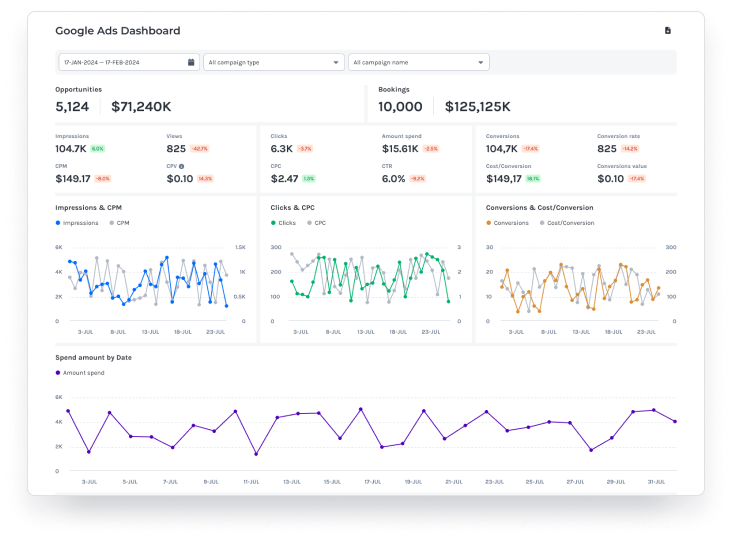
Discern is a performance and spend analytics tool designed specifically for B2B SaaS businesses. It centralizes marketing data into a powerful tool, enabling precise measurement of campaign effectiveness. This answers the industry's need for a comprehensive, focused solution for performance tracking and ROI analysis.
Best for Marketing Analytics Tools for B2B SaaS Companies
Expert Take
Our analysis shows Discern stands out for its specialized 'Reverse Funnel Modeling' and 'Lead Cohort Analytics' designed specifically for B2B SaaS revenue optimization. Research indicates it effectively consolidates fragmented data from major platforms like Salesforce and LinkedIn Ads, offering a 'single source of truth' that replaces manual spreadsheet reconciliation. Based on documented features, the platform's ability to automate 200+ metric calculations provides significant operational efficiency compared to building internal solutions.
Pros
- Automated reverse funnel modeling
- Consolidates CRM and ad data
- 200+ pre-built metric calculations
- Intuitive, high-quality dashboards
- Responsive customer support team
Cons
- Limited dashboard customization
- Steep learning curve for non-tech users
- Marketing pricing not public
- Implementation depends on connector complexity
- Nuanced metrics may confuse executives
Best for teams that are
- Mid-market B2B teams needing revenue and pipeline intelligence
- Marketing Ops teams struggling with manual Salesforce or spreadsheet reporting
- CXOs needing a unified view of sales, marketing, and finance KPIs
Skip if
- Small businesses with simple data needs and limited budgets
- Teams wanting a self-serve tool without implementation support
- Users needing deep product usage analytics vs revenue intelligence
Best for teams that are
- Mid-market B2B teams needing revenue and pipeline intelligence
- Marketing Ops teams struggling with manual Salesforce or spreadsheet reporting
- CXOs needing a unified view of sales, marketing, and finance KPIs
Skip if
- Small businesses with simple data needs and limited budgets
- Teams wanting a self-serve tool without implementation support
- Users needing deep product usage analytics vs revenue intelligence
Pros
- Automated reverse funnel modeling
- Consolidates CRM and ad data
- 200+ pre-built metric calculations
- Intuitive, high-quality dashboards
- Responsive customer support team
Cons
- Limited dashboard customization
- Steep learning curve for non-tech users
- Marketing pricing not public
- Implementation depends on connector complexity
- Nuanced metrics may confuse executives
Expert Take
Our analysis shows Discern stands out for its specialized 'Reverse Funnel Modeling' and 'Lead Cohort Analytics' designed specifically for B2B SaaS revenue optimization. Research indicates it effectively consolidates fragmented data from major platforms like Salesforce and LinkedIn Ads, offering a 'single source of truth' that replaces manual spreadsheet reconciliation. Based on documented features, the platform's ability to automate 200+ metric calculations provides significant operational efficiency compared to building internal solutions.
Switchboard Subscription Analytics
Best for Analytics Tools for Subscription and Recurring Revenue Brands
Switchboard Subscription Analytics is a robust SaaS solution designed for subscription and recurring revenue businesses. It provides vital analytics infrastructure that supports Monthly Recurring Revenue (MRR), Annual Recurring Revenue (ARR), cohort analysis, churn prediction, expansion revenue, and lifecycle tracking, all crucial for optimizing revenue streams in this industry.
Best for Analytics Tools for Subscription and Recurring Revenue Brands
Expert Take
Switchboard Subscription Analytics excels in providing comprehensive analytics for subscription-based businesses, with features like churn prediction and cohort analysis. While it requires technical expertise, its industry-specific capabilities make it a top choice for optimizing recurring revenue streams.
Pros
- Automates API schema updates
- Unifies 200+ data sources
- Scales to billions of rows
- Saves 5,000+ engineering hours
- Backfills data with one click
Cons
- High entry cost (~$230k/yr)
- UI reported as non-intuitive
- Opaque pricing structure
- Steep learning curve for complex setups
- Limited to enterprise budgets
Best for teams that are
- Large media publishers and brands with fragmented data sources
- RevOps teams unifying advertising and subscription revenue data
- Companies needing to automate complex data engineering workflows
Skip if
- Small SaaS startups needing simple, plug-and-play MRR dashboards
- Teams without data engineering resources or complex data needs
- Businesses looking for a standalone billing platform
Best for teams that are
- Large media publishers and brands with fragmented data sources
- RevOps teams unifying advertising and subscription revenue data
- Companies needing to automate complex data engineering workflows
Skip if
- Small SaaS startups needing simple, plug-and-play MRR dashboards
- Teams without data engineering resources or complex data needs
- Businesses looking for a standalone billing platform
Pros
- Automates API schema updates
- Unifies 200+ data sources
- Scales to billions of rows
- Saves 5,000+ engineering hours
- Backfills data with one click
Cons
- High entry cost (~$230k/yr)
- UI reported as non-intuitive
- Opaque pricing structure
- Steep learning curve for complex setups
- Limited to enterprise budgets
Expert Take
Switchboard Subscription Analytics excels in providing comprehensive analytics for subscription-based businesses, with features like churn prediction and cohort analysis. While it requires technical expertise, its industry-specific capabilities make it a top choice for optimizing recurring revenue streams.

AdBeacon empowers media buyers and marketing agencies by consolidating Google, Meta, Amazon, and TikTok campaigns into a unified dashboard, solving attribution challenges with precise first-party data tracking. Its familiar interface and deep Shopify integration make it ideal for scaling budgets effectively.
Best for Cross Channel Marketing Analytics Dashboards
Expert Take
AdBeacon stands out by directly solving the post-iOS14 attribution crisis using robust first-party data tracking straight from your e-commerce store. We love how it consolidates fragmented ad campaigns from Google, Meta, Amazon, and TikTok into a single unified dashboard that remarkably mimics Meta's familiar interface. It gives media buyers and marketing agencies the exact data confidence they need to scale budgets effectively, proving which specific creatives drive actual revenue.
Pros
- Precise first-party data tracking
- Familiar Meta-like user interface
- Deep native Shopify integrations
- Comprehensive multi-channel ad attribution
- Excellent agency-focused features
Cons
- Revenue-based pricing scales costs
- High starting price of $299/mo
- Newer platform with less history
Best for teams that are
- Digital marketing agencies managing e-commerce clients.
- E-commerce media buyers optimizing Meta and Google Ads.
- Brands seeking first-party data and custom audience building.
Skip if
- B2B companies focused on long enterprise sales cycles.
- Businesses wanting a free trial or entry-level free tier.
Best for teams that are
- Digital marketing agencies managing e-commerce clients.
- E-commerce media buyers optimizing Meta and Google Ads.
- Brands seeking first-party data and custom audience building.
Skip if
- B2B companies focused on long enterprise sales cycles.
- Businesses wanting a free trial or entry-level free tier.
Pros
- Precise first-party data tracking
- Familiar Meta-like user interface
- Deep native Shopify integrations
- Comprehensive multi-channel ad attribution
- Excellent agency-focused features
Cons
- Revenue-based pricing scales costs
- High starting price of $299/mo
- Newer platform with less history
Expert Take
AdBeacon stands out by directly solving the post-iOS14 attribution crisis using robust first-party data tracking straight from your e-commerce store. We love how it consolidates fragmented ad campaigns from Google, Meta, Amazon, and TikTok into a single unified dashboard that remarkably mimics Meta's familiar interface. It gives media buyers and marketing agencies the exact data confidence they need to scale budgets effectively, proving which specific creatives drive actual revenue.

Market Tracker 360 empowers Amazon sellers with real-time competitor insights and historical data tracking. Ideal for ecommerce brands, it consolidates key analytics into an automated dashboard, enabling swift, informed decisions.
Best for Marketing Analytics Platforms for Ecommerce Brands
Expert Take
Market Tracker 360 stands out for its panoramic, real-time intelligence capabilities, allowing serious Amazon sellers to deeply monitor competitor movements, track unlimited ASINs, and view two years of historical data. We love that it eliminates spreadsheet fatigue by consolidating keyword performance, market share, and revenue trends into a single, automated dashboard, empowering brands to make swift, data-driven decisions.
Pros
- Access to 2 years of historical data
- Real-time competitor tracking and pricing alerts
- Seamless integration with Cerebro and Magnet
- Dedicated Customer Success Manager included
Cons
- Extremely expensive $500/month starting price
- Excluded from all standard subscription plans
- Limited custom data visualization capabilities
Best for teams that are
- High-volume Amazon FBA sellers with 6+ figure revenues
- Brands needing real-time market share and competitor insights
- Sellers wanting up to 2 years of historical Amazon market data
Skip if
- Direct-to-consumer brands running purely on Shopify
- Helium 10 Free, Starter, or Platinum plan users
- New Amazon sellers with minimal product listings or budget
Best for teams that are
- High-volume Amazon FBA sellers with 6+ figure revenues
- Brands needing real-time market share and competitor insights
- Sellers wanting up to 2 years of historical Amazon market data
Skip if
- Direct-to-consumer brands running purely on Shopify
- Helium 10 Free, Starter, or Platinum plan users
- New Amazon sellers with minimal product listings or budget
Pros
- Access to 2 years of historical data
- Real-time competitor tracking and pricing alerts
- Seamless integration with Cerebro and Magnet
- Dedicated Customer Success Manager included
Cons
- Extremely expensive $500/month starting price
- Excluded from all standard subscription plans
- Limited custom data visualization capabilities
Expert Take
Market Tracker 360 stands out for its panoramic, real-time intelligence capabilities, allowing serious Amazon sellers to deeply monitor competitor movements, track unlimited ASINs, and view two years of historical data. We love that it eliminates spreadsheet fatigue by consolidating keyword performance, market share, and revenue trends into a single, automated dashboard, empowering brands to make swift, data-driven decisions.
ChartMogul Subscription Analytics
Best for Analytics Tools for Subscription and Recurring Revenue Brands
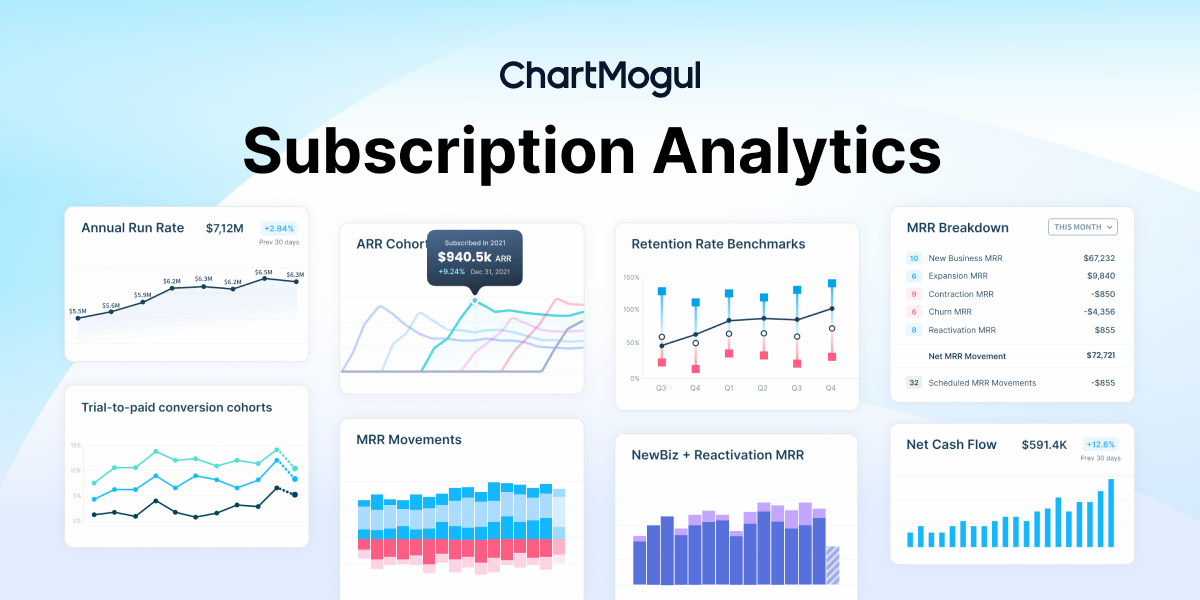
ChartMogul is a comprehensive SaaS solution designed for subscription and recurring revenue brands. It imports, cleanses, and analyzes data from various billing sources to calculate all core SaaS metrics. It addresses the industry's need for accurate and insightful analytics to drive decision-making and strategy planning.
Best for Analytics Tools for Subscription and Recurring Revenue Brands
Expert Take
ChartMogul Subscription Analytics excels in providing comprehensive insights for subscription-based businesses. Its robust integration capabilities, customizable dashboards, and revenue recognition features make it a top choice for analytics in this niche. While it requires some technical expertise for advanced features, its overall value and market credibility are strong.
Pros
- Free for <$10k MRR startups
- SOC 2 Type II certified
- Advanced data cleaning & editing tools
- Extensive billing & warehouse integrations
- Deep cohort analysis & segmentation
Cons
- No built-in dunning/revenue recovery
- Data syncs may require manual fixes
- Costs scale up with revenue
- Learning curve for advanced features
- Mobile app functionality is limited
Best for teams that are
- Early-stage SaaS startups (free plan for under $10k MRR)
- Growth teams needing deep customer segmentation and cohort analysis
- SaaS founders wanting industry-standard metrics without spreadsheets
Skip if
- Businesses wanting a single tool for both billing and analytics
- Non-subscription businesses or one-time sale models
- Users needing complex predictive AI capabilities beyond core metrics
Best for teams that are
- Early-stage SaaS startups (free plan for under $10k MRR)
- Growth teams needing deep customer segmentation and cohort analysis
- SaaS founders wanting industry-standard metrics without spreadsheets
Skip if
- Businesses wanting a single tool for both billing and analytics
- Non-subscription businesses or one-time sale models
- Users needing complex predictive AI capabilities beyond core metrics
Pros
- Free for <$10k MRR startups
- SOC 2 Type II certified
- Advanced data cleaning & editing tools
- Extensive billing & warehouse integrations
- Deep cohort analysis & segmentation
Cons
- No built-in dunning/revenue recovery
- Data syncs may require manual fixes
- Costs scale up with revenue
- Learning curve for advanced features
- Mobile app functionality is limited
Expert Take
ChartMogul Subscription Analytics excels in providing comprehensive insights for subscription-based businesses. Its robust integration capabilities, customizable dashboards, and revenue recognition features make it a top choice for analytics in this niche. While it requires some technical expertise for advanced features, its overall value and market credibility are strong.

Amplitude is an advanced analytics platform tailored for B2B SaaS businesses, providing account and user-level insights to boost product engagement, adoption, and sign-ups. It helps businesses understand their users' behavior, optimize product experiences and ultimately retain and grow their customer base.
Best for Marketing Analytics Tools for B2B SaaS Companies
Expert Take
Our analysis shows Amplitude distinguishes itself in the B2B SaaS market through its dedicated 'Accounts' add-on, which allows teams to analyze behavior at the company level rather than just the user level—a critical requirement for B2B. Research indicates it pairs this with enterprise-grade security (SOC 2, HIPAA) and a robust ecosystem of 130+ integrations. While the learning curve is steeper than competitors, the depth of insight for product-led growth is unmatched.
Pros
- Dedicated B2B 'Accounts' analytics
- Generous free plan (10k MTUs)
- SOC 2 Type II & HIPAA compliant
- 130+ integrations including Salesforce
- EU data residency options
Cons
- Steep learning curve for beginners
- Session replay is web-only
- Pricing scales sharply with growth
- Support slow on lower tiers
- Complex setup for non-technical users
Best for teams that are
- Product teams needing deep behavioral insights and retention analysis
- Data-mature organizations requiring advanced segmentation
- Enterprise B2B SaaS companies analyzing complex user journeys
Skip if
- Early-stage startups with limited budgets due to cost scaling
- Non-technical teams wanting simple, out-of-the-box marketing reporting
- Teams focused solely on ad spend attribution rather than product usage
Best for teams that are
- Product teams needing deep behavioral insights and retention analysis
- Data-mature organizations requiring advanced segmentation
- Enterprise B2B SaaS companies analyzing complex user journeys
Skip if
- Early-stage startups with limited budgets due to cost scaling
- Non-technical teams wanting simple, out-of-the-box marketing reporting
- Teams focused solely on ad spend attribution rather than product usage
Pros
- Dedicated B2B 'Accounts' analytics
- Generous free plan (10k MTUs)
- SOC 2 Type II & HIPAA compliant
- 130+ integrations including Salesforce
- EU data residency options
Cons
- Steep learning curve for beginners
- Session replay is web-only
- Pricing scales sharply with growth
- Support slow on lower tiers
- Complex setup for non-technical users
Expert Take
Our analysis shows Amplitude distinguishes itself in the B2B SaaS market through its dedicated 'Accounts' add-on, which allows teams to analyze behavior at the company level rather than just the user level—a critical requirement for B2B. Research indicates it pairs this with enterprise-grade security (SOC 2, HIPAA) and a robust ecosystem of 130+ integrations. While the learning curve is steeper than competitors, the depth of insight for product-led growth is unmatched.




Loading comparison data…