
Marketplace Management Software
These are the specialized categories within Marketplace Management Software. Looking for something broader? See all Ecommerce & Retail Software categories.

How big is your team?
What's your budget situation?
What's your team's technical comfort level?
What's the ONE thing this tool must do well?
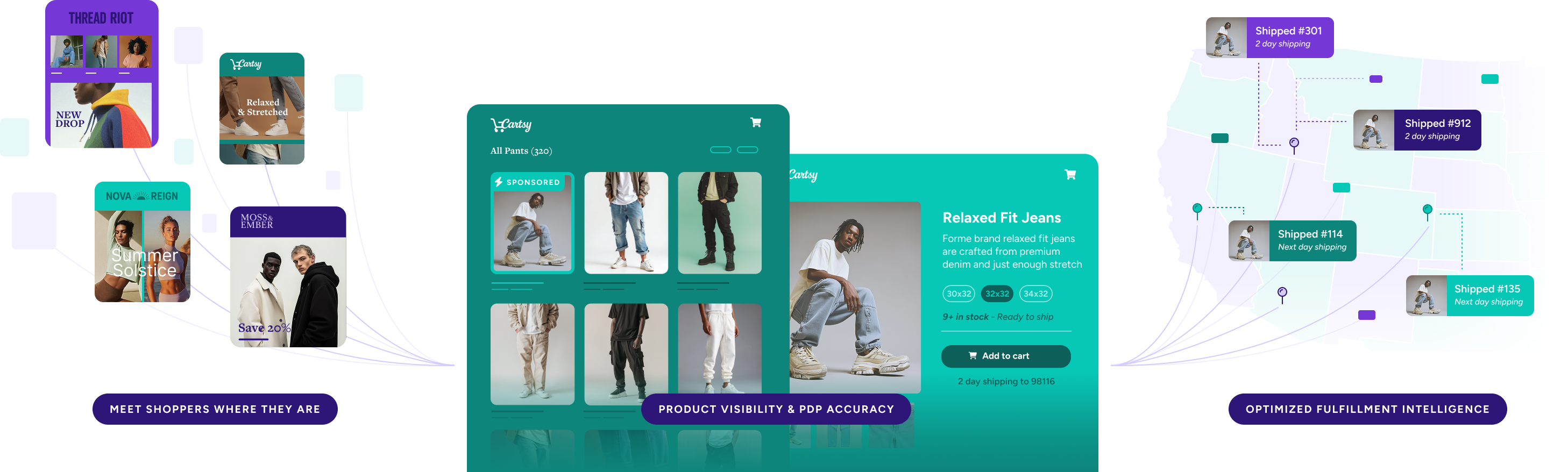
Rithum is a robust solution designed for retailers looking to launch and manage third-party marketplaces. It offers full control over sellers, their offerings, and order fulfillment, addressing the need for customization and control in the retail industry. It leverages AI technology for a fully automated, error-free pricing strategy.
Best for Marketplace Management Software for Retail Stores
Expert Take
Rithum Commerce Operations stands out in the marketplace management software category for its comprehensive control features, AI-driven pricing automation, and robust third-party integrations. It is recognized for its ability to empower retailers with significant customization and operational efficiency, making it a top choice for retail stores.
Pros
- Connects to 420+ global marketplaces
- Unified dropship and marketplace management
- SOC 2 Type II certified security
- Processes $50B+ in annual GMV
- Direct ERP integrations (SAP, NetSuite)
Cons
- Reports of significant post-merger price hikes
- Support quality criticized in recent reviews
- Onboarding can be slow and complex
- No public pricing transparency
- Interface described as clunky by some
Best for teams that are
- Mid-to-large brands managing listings across many channels like Amazon and Walmart
- Retailers requiring complex dropship network management and logic
- Companies needing to synchronize inventory across hundreds of global channels
Skip if
- Small businesses unable to afford high onboarding fees and long contracts
- Sellers needing a primary inventory system (it requires an external data feed)
- Merchants seeking a simple, low-cost tool for a single marketplace
Best for teams that are
- Mid-to-large brands managing listings across many channels like Amazon and Walmart
- Retailers requiring complex dropship network management and logic
- Companies needing to synchronize inventory across hundreds of global channels
Skip if
- Small businesses unable to afford high onboarding fees and long contracts
- Sellers needing a primary inventory system (it requires an external data feed)
- Merchants seeking a simple, low-cost tool for a single marketplace
Pros
- Connects to 420+ global marketplaces
- Unified dropship and marketplace management
- SOC 2 Type II certified security
- Processes $50B+ in annual GMV
- Direct ERP integrations (SAP, NetSuite)
Cons
- Reports of significant post-merger price hikes
- Support quality criticized in recent reviews
- Onboarding can be slow and complex
- No public pricing transparency
- Interface described as clunky by some
Expert Take
Rithum Commerce Operations stands out in the marketplace management software category for its comprehensive control features, AI-driven pricing automation, and robust third-party integrations. It is recognized for its ability to empower retailers with significant customization and operational efficiency, making it a top choice for retail stores.

Mirakl offers AI-powered eCommerce solutions specifically tailored for marketing agencies looking to optimize their marketplace management. With AI and real-time analytics, it assists in efficiently monetizing core brands or long-tail marketplaces. In this industry, where effective ad placements and performance are crucial, Mirakl delivers strategic insights and actions.
Best for Marketplace Management Software for Marketing Agencies
Expert Take
Mirakl eCommerce Solution is recognized for its AI-powered analytics and real-time performance optimization, making it a top choice for marketing agencies managing eCommerce platforms. Its robust API and customization options enhance its adaptability, while its market credibility is supported by third-party validations.
Pros
- Unified marketplace & dropship platform
- AI-powered catalog categorization
- ISO 22301 & SOC 2 certified
- Scales to 600M+ SKUs
- 162% documented ROI (Forrester)
Cons
- No built-in storefront (Headless)
- High initial implementation cost
- Steep learning curve for operators
- Complex B2B onboarding
- Support responsiveness varies
Best for teams that are
- Mid-to-large enterprises launching scalable third-party marketplaces.
- Retailers and distributors adopting dropship business models.
Skip if
- Small businesses or entrepreneurs needing built-in storefronts.
- Companies seeking an inexpensive out-of-the-box ecommerce site.
Best for teams that are
- Mid-to-large enterprises launching scalable third-party marketplaces.
- Retailers and distributors adopting dropship business models.
Skip if
- Small businesses or entrepreneurs needing built-in storefronts.
- Companies seeking an inexpensive out-of-the-box ecommerce site.
Pros
- Unified marketplace & dropship platform
- AI-powered catalog categorization
- ISO 22301 & SOC 2 certified
- Scales to 600M+ SKUs
- 162% documented ROI (Forrester)
Cons
- No built-in storefront (Headless)
- High initial implementation cost
- Steep learning curve for operators
- Complex B2B onboarding
- Support responsiveness varies
Expert Take
Mirakl eCommerce Solution is recognized for its AI-powered analytics and real-time performance optimization, making it a top choice for marketing agencies managing eCommerce platforms. Its robust API and customization options enhance its adaptability, while its market credibility is supported by third-party validations.

LOC Software delivers a best-in-class solution tailored to the unique needs of retail store operations. From optimizing vendor relationships, managing perishable inventory, to forecasting sales and setting prices, this platform empowers retail professionals to streamline processes and maximize efficiency.
Best for Marketplace Management Software for Retail Stores
Expert Take
LOC Retail Management Software excels in providing a comprehensive suite of tools tailored for retail operations, including vendor management and inventory control. Its market credibility is supported by industry-specific features and scalability, making it a top choice for retail businesses.
Pros
- 40+ specialized modules (Fuel, Pharmacy)
- Hardware-agnostic browser-based option (ThriVersA)
- Deep loyalty and promotion capabilities
- Strong enterprise scalability (1-500+ stores)
- Robust security (PCI, Fingerprint)
Cons
- Steep learning curve and complex interface
- Pricing not transparent (quote-based)
- Support quality varies by reseller
- Documentation described as poor by users
- High cost barrier for small businesses
Best for teams that are
- Independent grocery stores and supermarkets managing physical lanes
- Pharmacies requiring specialized POS, compliance, and inventory tools
- Multi-store chains needing unified back-office and point-of-sale management
Skip if
- Pure e-commerce businesses without physical retail locations
- General retailers not needing grocery-specific features like weight scales
- Small hobbyist sellers looking for cloud-based dropshipping software
Best for teams that are
- Independent grocery stores and supermarkets managing physical lanes
- Pharmacies requiring specialized POS, compliance, and inventory tools
- Multi-store chains needing unified back-office and point-of-sale management
Skip if
- Pure e-commerce businesses without physical retail locations
- General retailers not needing grocery-specific features like weight scales
- Small hobbyist sellers looking for cloud-based dropshipping software
Pros
- 40+ specialized modules (Fuel, Pharmacy)
- Hardware-agnostic browser-based option (ThriVersA)
- Deep loyalty and promotion capabilities
- Strong enterprise scalability (1-500+ stores)
- Robust security (PCI, Fingerprint)
Cons
- Steep learning curve and complex interface
- Pricing not transparent (quote-based)
- Support quality varies by reseller
- Documentation described as poor by users
- High cost barrier for small businesses
Expert Take
LOC Retail Management Software excels in providing a comprehensive suite of tools tailored for retail operations, including vendor management and inventory control. Its market credibility is supported by industry-specific features and scalability, making it a top choice for retail businesses.

Productive.io is built specifically for marketing agencies and consultancies to streamline operations, improve visibility, and manage resources, projects, and finances all in one platform. It addresses the industry's needs for easy project management, efficient time tracking, and accurate profit forecasting.
Best for Marketplace Management Software for Marketing Agencies
Expert Take
Productive.io stands out as a comprehensive solution tailored for marketing agencies, offering robust project management, time tracking, and profit forecasting capabilities. Its industry-specific design and all-in-one platform approach make it a strong contender in the marketplace management software category.
Pros
- All-in-one agency management combining projects and financials
- Real-time profitability tracking and forecasting
- SOC 2 Type II and GDPR compliant
- Responsive customer support and clean desktop UI
- Open API and strong accounting integrations
Cons
- Minimum of 3 user seats required
- Mobile app reported as clunky and buggy
- Steep learning curve due to feature depth
- No free plan for single users
- Limited native integrations compared to larger competitors
Best for teams that are
- Professional service agencies needing end-to-end project management.
- Mid-sized marketing teams tracking billable hours and profitability.
Skip if
- Small teams needing only a basic task tracker like Trello.
- E-commerce businesses managing physical product inventory.
Best for teams that are
- Professional service agencies needing end-to-end project management.
- Mid-sized marketing teams tracking billable hours and profitability.
Skip if
- Small teams needing only a basic task tracker like Trello.
- E-commerce businesses managing physical product inventory.
Pros
- All-in-one agency management combining projects and financials
- Real-time profitability tracking and forecasting
- SOC 2 Type II and GDPR compliant
- Responsive customer support and clean desktop UI
- Open API and strong accounting integrations
Cons
- Minimum of 3 user seats required
- Mobile app reported as clunky and buggy
- Steep learning curve due to feature depth
- No free plan for single users
- Limited native integrations compared to larger competitors
Expert Take
Productive.io stands out as a comprehensive solution tailored for marketing agencies, offering robust project management, time tracking, and profit forecasting capabilities. Its industry-specific design and all-in-one platform approach make it a strong contender in the marketplace management software category.

Webkul MultiVendor Marketplace is a versatile solution for retail store owners looking to transform their eCommerce environment into a thriving marketplace. The software accommodates diverse business models, including B2C, B2B, Auction, Booking, Hyperlocal, RFQ and more, addressing the unique needs of different retail operations.
Best for Marketplace Management Software for Retail Stores
Expert Take
Webkul MultiVendor Marketplace excels in providing a versatile and customizable solution for retail store owners looking to expand into various marketplace models. Its integration with Shopify and 24/7 support are significant strengths, although advanced customization requires technical expertise. The product's capabilities and market credibility position it as a top choice in its category.
Pros
- Supports Auctions, Booking, and Hyperlocal models
- Connectors for Etsy, Magento, and WooCommerce
- Flexible global and product-wise commissions
- Affordable entry-level pricing ($15/mo)
- Highly responsive support team
Cons
- Many features require paid monthly add-ons
- UI can be overwhelming and clumsy
- Support hours limited to IST timezone
- 1,000 variant/day limit for large stores
- No native Calendly integration
Best for teams that are
- Shopify merchants wanting to transform their store into a multi-vendor marketplace
- Startups and SMBs looking for a low-cost entry into marketplace management
- Niche marketplaces needing specific booking, auction, or digital product features
Skip if
- High-volume enterprises restricted by Shopify API call limits
- Businesses not hosted on the Shopify e-commerce platform
- Companies needing a standalone platform independent of an existing store ecosystem
Best for teams that are
- Shopify merchants wanting to transform their store into a multi-vendor marketplace
- Startups and SMBs looking for a low-cost entry into marketplace management
- Niche marketplaces needing specific booking, auction, or digital product features
Skip if
- High-volume enterprises restricted by Shopify API call limits
- Businesses not hosted on the Shopify e-commerce platform
- Companies needing a standalone platform independent of an existing store ecosystem
Pros
- Supports Auctions, Booking, and Hyperlocal models
- Connectors for Etsy, Magento, and WooCommerce
- Flexible global and product-wise commissions
- Affordable entry-level pricing ($15/mo)
- Highly responsive support team
Cons
- Many features require paid monthly add-ons
- UI can be overwhelming and clumsy
- Support hours limited to IST timezone
- 1,000 variant/day limit for large stores
- No native Calendly integration
Expert Take
Webkul MultiVendor Marketplace excels in providing a versatile and customizable solution for retail store owners looking to expand into various marketplace models. Its integration with Shopify and 24/7 support are significant strengths, although advanced customization requires technical expertise. The product's capabilities and market credibility position it as a top choice in its category.

Marketplacer is a comprehensive SaaS solution designed specifically for retailers to manage their online marketplaces efficiently. A web-based software, it centralizes operations, making multi-vendor management streamlined and simplified, thus addressing the complex needs of retail industry professionals.
Best for Marketplace Management Software for Retail Stores
Expert Take
Marketplacer excels in providing a comprehensive solution for retail marketplace management, with strong capabilities in multi-vendor support and API integrations. Its market credibility is bolstered by third-party recognitions, although pricing transparency is limited due to custom quotes. Overall, it stands out as a premium offering in its category.
Pros
- Robust connectors for Salesforce, Adobe, Shopify
- ISO 27001 and SOC 2 Type II certified
- Automated seller onboarding via MConnect
- Used by tier-1 retailers like Woolworths
- Supports dropship and range extension models
Cons
- Pricing is not public (quote-based)
- Transaction fees charged on top of subscription
- Implementation fees required
- Terminology may lean towards Australian English
- Can be cost-prohibitive for SMBs
Best for teams that are
- Large retailers wanting to launch their own third-party marketplace
- Enterprises looking to expand product range without holding inventory
- Brands needing a white-label solution to onboard external sellers
Skip if
- Small businesses with limited budgets due to high enterprise pricing
- Merchants looking solely to list products on existing marketplaces like Amazon
- Startups needing a quick, out-of-the-box solution without custom configuration
Best for teams that are
- Large retailers wanting to launch their own third-party marketplace
- Enterprises looking to expand product range without holding inventory
- Brands needing a white-label solution to onboard external sellers
Skip if
- Small businesses with limited budgets due to high enterprise pricing
- Merchants looking solely to list products on existing marketplaces like Amazon
- Startups needing a quick, out-of-the-box solution without custom configuration
Pros
- Robust connectors for Salesforce, Adobe, Shopify
- ISO 27001 and SOC 2 Type II certified
- Automated seller onboarding via MConnect
- Used by tier-1 retailers like Woolworths
- Supports dropship and range extension models
Cons
- Pricing is not public (quote-based)
- Transaction fees charged on top of subscription
- Implementation fees required
- Terminology may lean towards Australian English
- Can be cost-prohibitive for SMBs
Expert Take
Marketplacer excels in providing a comprehensive solution for retail marketplace management, with strong capabilities in multi-vendor support and API integrations. Its market credibility is bolstered by third-party recognitions, although pricing transparency is limited due to custom quotes. Overall, it stands out as a premium offering in its category.

Accio is a cutting-edge marketplace management tool for marketing agencies, leveraging AI to transform B2B procurement processes. It automates up to 70% of sourcing tasks, offering real-time supplier negotiations and comprehensive market trend analysis, ideal for e-commerce sellers and SME founders.
Best for Marketplace Management Software for Marketing Agencies
Expert Take
Accio represents a massive leap forward in B2B procurement, transitioning from standard search directories to true agentic AI. Backed by Alibaba’s vast ecosystem, it functions as an autonomous sourcing co-founder that can analyze market trends, generate production-ready RFQs, and negotiate with global suppliers in real-time. By compressing weeks of manual supplier vetting into minutes, it offers an unparalleled competitive advantage for e-commerce sellers and SME founders looking to scale physic
Pros
- Automates up to 70% of sourcing workflows
- Access to 1.5 million verified global suppliers
- Generates multi-platform supplier comparisons instantly
- Free tier available for initial testing
- Creates production-ready Request For Quotations
Cons
- Android app has reported bugs and glitches
- Credit-based pricing obscures exact monthly costs
- Proprietary black-box reasoning process
- Data routes through central servers
Best for teams that are
- SMEs needing AI-driven product sourcing and global trade automation.
- E-commerce sellers seeking cross-border suppliers and market research.
Skip if
- Local service businesses that do not source physical products.
- Enterprises lacking digital maturity for AI-powered procurement.
Best for teams that are
- SMEs needing AI-driven product sourcing and global trade automation.
- E-commerce sellers seeking cross-border suppliers and market research.
Skip if
- Local service businesses that do not source physical products.
- Enterprises lacking digital maturity for AI-powered procurement.
Pros
- Automates up to 70% of sourcing workflows
- Access to 1.5 million verified global suppliers
- Generates multi-platform supplier comparisons instantly
- Free tier available for initial testing
- Creates production-ready Request For Quotations
Cons
- Android app has reported bugs and glitches
- Credit-based pricing obscures exact monthly costs
- Proprietary black-box reasoning process
- Data routes through central servers
Expert Take
Accio represents a massive leap forward in B2B procurement, transitioning from standard search directories to true agentic AI. Backed by Alibaba’s vast ecosystem, it functions as an autonomous sourcing co-founder that can analyze market trends, generate production-ready RFQs, and negotiate with global suppliers in real-time. By compressing weeks of manual supplier vetting into minutes, it offers an unparalleled competitive advantage for e-commerce sellers and SME founders looking to scale physic

Spocket is designed for marketing agencies seeking to optimize ecommerce operations with fast shipping and reliable US and EU suppliers. Its strict supplier acceptance rate ensures high-quality products with 2-5 day delivery, enhancing brand equity and customer satisfaction.
Best for Marketplace Management Software for Marketing Agencies
Expert Take
Spocket fundamentally upgrades the dropshipping model by abandoning the long shipping times associated with overseas suppliers in favor of a curated, high-quality US and EU network. Their incredibly strict 5% supplier acceptance rate and absolute ban on third-party warehouses ensure reliable product quality and 2-5 day delivery times. This enables ecommerce entrepreneurs to build real brand equity rather than dealing with the traditional headaches of cheap, slow-shipping inventory.
Pros
- 80% of suppliers based in US and EU
- Strict 5% supplier acceptance rate
- Native integrations with major ecommerce platforms
- Automated order fulfillment and inventory sync
Cons
- Products are 30-60% more expensive
- Severe complaints about billing and cancellations
- Free plan does not allow product importing
- Premium products locked behind expensive tiers
Best for teams that are
- Dropshipping entrepreneurs needing fast US and EU supplier shipping.
- Shopify or WooCommerce store owners expanding product catalogs.
Skip if
- Sellers wanting millions of ultra-cheap products like AliExpress.
- Businesses that manufacture and fulfill their own physical goods.
Best for teams that are
- Dropshipping entrepreneurs needing fast US and EU supplier shipping.
- Shopify or WooCommerce store owners expanding product catalogs.
Skip if
- Sellers wanting millions of ultra-cheap products like AliExpress.
- Businesses that manufacture and fulfill their own physical goods.
Pros
- 80% of suppliers based in US and EU
- Strict 5% supplier acceptance rate
- Native integrations with major ecommerce platforms
- Automated order fulfillment and inventory sync
Cons
- Products are 30-60% more expensive
- Severe complaints about billing and cancellations
- Free plan does not allow product importing
- Premium products locked behind expensive tiers
Expert Take
Spocket fundamentally upgrades the dropshipping model by abandoning the long shipping times associated with overseas suppliers in favor of a curated, high-quality US and EU network. Their incredibly strict 5% supplier acceptance rate and absolute ban on third-party warehouses ensure reliable product quality and 2-5 day delivery times. This enables ecommerce entrepreneurs to build real brand equity rather than dealing with the traditional headaches of cheap, slow-shipping inventory.

Vendasta Marketplace is a robust marketplace management software tailored for marketing agencies, media companies, and IT providers. It offers a plethora of apps and features to extend your platform, streamline operations, and drive growth. It efficiently addresses the need for a unified platform for managing marketplace activities, vendor relationships and marketing strategies.
Best for Marketplace Management Software for Marketing Agencies
Expert Take
Vendasta Marketplace stands out as a comprehensive solution for marketing agencies, offering a wide range of integrations and features tailored to streamline marketplace management. Its extensive app selection and 24/7 support enhance its usability, though the complexity and potential additional costs are noted tradeoffs.
Pros
- Access to 250+ resellable apps
- Unified white-label client dashboard
- Automated 'Snapshot' sales intelligence reports
- Consolidated billing for all vendors
- Single sign-on for end clients
Cons
- Mandatory onboarding fees ($500+)
- White-labeling gated to expensive tiers
- Steep learning curve for agencies
- Variable quality of third-party vendors
- Locked 12-month contracts on pro plans
Best for teams that are
- Marketing agencies seeking to resell white-labeled software solutions.
- Tech providers wanting a unified platform for CRM and client billing.
Skip if
- Direct-to-consumer retailers selling physical goods.
- Companies wanting a standalone consumer-facing shopping marketplace.
Best for teams that are
- Marketing agencies seeking to resell white-labeled software solutions.
- Tech providers wanting a unified platform for CRM and client billing.
Skip if
- Direct-to-consumer retailers selling physical goods.
- Companies wanting a standalone consumer-facing shopping marketplace.
Pros
- Access to 250+ resellable apps
- Unified white-label client dashboard
- Automated 'Snapshot' sales intelligence reports
- Consolidated billing for all vendors
- Single sign-on for end clients
Cons
- Mandatory onboarding fees ($500+)
- White-labeling gated to expensive tiers
- Steep learning curve for agencies
- Variable quality of third-party vendors
- Locked 12-month contracts on pro plans
Expert Take
Vendasta Marketplace stands out as a comprehensive solution for marketing agencies, offering a wide range of integrations and features tailored to streamline marketplace management. Its extensive app selection and 24/7 support enhance its usability, though the complexity and potential additional costs are noted tradeoffs.

MerchantSpring is a robust marketplace analytics and reporting tool specifically designed for agencies, vendors, and investors in the e-commerce industry. It streamlines authorized brand management operations and provides deep insights to optimize client services.
Best for Marketplace Management Software for Ecommerce Brands
Expert Take
MerchantSpring Marketplace Management excels in providing deep analytics and streamlined brand management tailored for e-commerce. Its integration capabilities and comprehensive reporting tools make it a valuable asset for agencies and vendors. While it lacks a free plan, its pricing transparency and 24/7 support enhance its appeal as a premium product.
Pros
- Connects to 120+ global marketplaces
- White-label reporting for agencies
- Unified dashboard for all channels
- No credit card required for trial
- Official Amazon & Walmart partner
Cons
- No PPC bid automation features
- No listing optimization tools
- Higher starting price ($99/mo)
- Setup can be complex
- Read-only data for some metrics
Best for teams that are
- Agencies and aggregators managing performance across multiple seller accounts
- Brands needing a unified analytics dashboard for sales and profitability
- Amazon Vendors needing detailed retail analytics and reporting
Skip if
- Sellers needing tools to create listings or sync inventory (analytics only)
- Single-channel sellers who can rely on their marketplace's native reporting
Best for teams that are
- Agencies and aggregators managing performance across multiple seller accounts
- Brands needing a unified analytics dashboard for sales and profitability
- Amazon Vendors needing detailed retail analytics and reporting
Skip if
- Sellers needing tools to create listings or sync inventory (analytics only)
- Single-channel sellers who can rely on their marketplace's native reporting
Pros
- Connects to 120+ global marketplaces
- White-label reporting for agencies
- Unified dashboard for all channels
- No credit card required for trial
- Official Amazon & Walmart partner
Cons
- No PPC bid automation features
- No listing optimization tools
- Higher starting price ($99/mo)
- Setup can be complex
- Read-only data for some metrics
Expert Take
MerchantSpring Marketplace Management excels in providing deep analytics and streamlined brand management tailored for e-commerce. Its integration capabilities and comprehensive reporting tools make it a valuable asset for agencies and vendors. While it lacks a free plan, its pricing transparency and 24/7 support enhance its appeal as a premium product.


Loading comparison data…