
Sales Compensation & Commission Software

These are the specialized categories within Sales Compensation & Commission Software. Looking for something broader? See all CRM & Sales Software categories.

1

Core Commissions Integration

Best for Commission Tools Integrated with CRM and Billing

Score
9.8 / 10
Core Commissions Integration

Core Commissions Integration is a SaaS solution specifically designed to streamline sales commission management for businesses. It effortlessly integrates with existing CRM and billing software, simplifying the complex process of tracking and managing sales commissions.

Best for Commission Tools Integrated with CRM and Billing

Expert Take

Core Commissions Integration excels in providing a comprehensive solution for sales commission management with strong integration capabilities. It is recognized for its robust reporting features and customization options, making it a top choice for businesses seeking to streamline commission processes. While the setup may require technical assistance, the overall value and efficiency it offers justify its premium positioning.

Pros

  • Transparent pricing ($20-$35/payee/month)
  • SOC 2 Type 2 certified security
  • Drag-and-drop 'Building Block' rule engine
  • Highly rated customer support team
  • Quick Start implementation package available

Cons

  • Steep learning curve for new users
  • Reporting customization can be difficult
  • Minimum of 10-15 payees required
  • Limited integrations for niche tools
  • Mobile app functionality limitations

Best for teams that are

  • Businesses wanting a managed service to outsource processing
  • Companies needing affordable automation for complex rules
  • Teams requiring a robust rule engine for intricate calculations

Skip if

  • Users prioritizing a modern, intuitive interface over function
  • Teams needing extensive native integrations beyond major CRMs
  • Users unwilling to navigate a steeper learning curve

Best for teams that are

  • Businesses wanting a managed service to outsource processing
  • Companies needing affordable automation for complex rules
  • Teams requiring a robust rule engine for intricate calculations

Skip if

  • Users prioritizing a modern, intuitive interface over function
  • Teams needing extensive native integrations beyond major CRMs
  • Users unwilling to navigate a steeper learning curve

Pros

  • Transparent pricing ($20-$35/payee/month)
  • SOC 2 Type 2 certified security
  • Drag-and-drop 'Building Block' rule engine
  • Highly rated customer support team
  • Quick Start implementation package available

Cons

  • Steep learning curve for new users
  • Reporting customization can be difficult
  • Minimum of 10-15 payees required
  • Limited integrations for niche tools
  • Mobile app functionality limitations

Expert Take

Core Commissions Integration excels in providing a comprehensive solution for sales commission management with strong integration capabilities. It is recognized for its robust reporting features and customization options, making it a top choice for businesses seeking to streamline commission processes. While the setup may require technical assistance, the overall value and efficiency it offers justify its premium positioning.

2

Online Rewards Sales Incentives

Best for Sales Incentive Tools with SPIFF and Bonus Programs

Score
9.8 / 10
Online Rewards Sales Incentives

Online Rewards Sales Incentives is a SaaS solution designed specifically to drive sales in various industries. It uses SPIFF and bonus programs to provide immediate rewards to sales reps for achieving designated sales goals, resulting in increased motivation and productivity. The software is ideal for businesses looking to incentivize their sales team and boost specific product or service sales.

Best for Sales Incentive Tools with SPIFF and Bonus Programs
Expert Take

Online Rewards Sales Incentives is a specialized tool in the sales incentive space, offering comprehensive SPIFF and bonus programs. Its real-time tracking and reporting capabilities, combined with 24/7 customer support, make it a strong contender in its category. However, the lack of readily available pricing information and potential implementation time are noted tradeoffs.

Pros

  • Global catalog covering 150+ countries
  • Patented reward platform technology
  • 20+ years of industry experience
  • Turnkey SPIFF and rebate management
  • High user ratings for ease of use

Cons

  • Low volume of public user reviews
  • Weaker integration capabilities vs competitors
  • Pricing not publicly transparent
  • Budget management tools rated lower
  • Limited self-serve customization options

Best for teams that are

  • Channel partners and dealer distributor networks
  • Programs utilizing non-cash rewards like travel or merchandise
  • Companies wanting gamification and leaderboards

Skip if

  • Managing complex internal payroll-based commissions
  • Companies strictly paying cash or salary incentives
  • Teams needing deep sales performance management analytics

Best for teams that are

  • Channel partners and dealer distributor networks
  • Programs utilizing non-cash rewards like travel or merchandise
  • Companies wanting gamification and leaderboards

Skip if

  • Managing complex internal payroll-based commissions
  • Companies strictly paying cash or salary incentives
  • Teams needing deep sales performance management analytics

Pros

  • Global catalog covering 150+ countries
  • Patented reward platform technology
  • 20+ years of industry experience
  • Turnkey SPIFF and rebate management
  • High user ratings for ease of use

Cons

  • Low volume of public user reviews
  • Weaker integration capabilities vs competitors
  • Pricing not publicly transparent
  • Budget management tools rated lower
  • Limited self-serve customization options

Expert Take

Online Rewards Sales Incentives is a specialized tool in the sales incentive space, offering comprehensive SPIFF and bonus programs. Its real-time tracking and reporting capabilities, combined with 24/7 customer support, make it a strong contender in its category. However, the lack of readily available pricing information and potential implementation time are noted tradeoffs.

3

TIG SPIFF Program Management

Best for Sales Incentive Tools with SPIFF and Bonus Programs

Score
9.7 / 10
TIG SPIFF Program Management

TIG's SPIFF Program Management is a robust SaaS solution specifically designed for sales teams looking for efficient ways to track and manage their incentive programs. It caters to the unique needs of sales professionals by offering features like real-time tracking, flexible payment options, and detailed reporting, all consistently contributing to enhancing productivity and boosting sales.

Best for Sales Incentive Tools with SPIFF and Bonus Programs

Expert Take

TIG SPIFF Program Management excels in providing a comprehensive solution for sales incentive management, offering features like real-time tracking and detailed reporting. Its market credibility is supported by its specialized focus and integration capabilities. While pricing transparency is limited, the product's robust functionality and adaptability make it a top choice in its category.

Pros

  • 30+ years of industry experience
  • In-house reward fulfillment services
  • Seamless Salesforce CRM integration
  • White-label 'inGauge' platform
  • Dedicated account management support

Cons

  • Participant fees on debit cards
  • Opaque pricing (requires demo)
  • Low volume of third-party reviews
  • Mixed feedback on support helpfulness
  • Interface may feel legacy vs modern SaaS

Best for teams that are

  • Manufacturers incentivizing dealer or distributor networks
  • Companies seeking fully managed program administration
  • B2B brands needing reloadable debit card rewards

Skip if

  • Internal SaaS sales teams managing payroll commissions
  • DIY teams wanting only a software platform
  • Companies avoiding outsourced management services

Best for teams that are

  • Manufacturers incentivizing dealer or distributor networks
  • Companies seeking fully managed program administration
  • B2B brands needing reloadable debit card rewards

Skip if

  • Internal SaaS sales teams managing payroll commissions
  • DIY teams wanting only a software platform
  • Companies avoiding outsourced management services

Pros

  • 30+ years of industry experience
  • In-house reward fulfillment services
  • Seamless Salesforce CRM integration
  • White-label 'inGauge' platform
  • Dedicated account management support

Cons

  • Participant fees on debit cards
  • Opaque pricing (requires demo)
  • Low volume of third-party reviews
  • Mixed feedback on support helpfulness
  • Interface may feel legacy vs modern SaaS

Expert Take

TIG SPIFF Program Management excels in providing a comprehensive solution for sales incentive management, offering features like real-time tracking and detailed reporting. Its market credibility is supported by its specialized focus and integration capabilities. While pricing transparency is limited, the product's robust functionality and adaptability make it a top choice in its category.

4

CaptivateIQ Sales Commission Software

Best for Commission Tools for Complex Enterprise Plans

Score
9.7 / 10
CaptivateIQ Sales Commission Software

CaptivateIQ is specifically tailored for complex enterprise plans in need of effective sales commission management. It offers robust sales compensation plans that easily integrate with existing CRM and payroll systems, addressing the need for accuracy, transparency, and efficiency in sales commission calculations and tracking.

Best for Commission Tools for Complex Enterprise Plans

Expert Take

CaptivateIQ excels in managing complex enterprise sales commission structures with its robust integration capabilities and transparent reporting. It is recognized for its adaptability and efficiency, making it a top choice for enterprises seeking accuracy in commission tracking.

Pros

  • SmartGrid engine processes 50M+ records rapidly
  • Flexible no-code logic similar to spreadsheets
  • Real-time commission visibility for payees
  • Strong native integrations with Snowflake & Salesforce
  • SOC 2 Type II and SOC 1 compliant

Cons

  • Steep learning curve for complex admin tasks
  • Occasional slow loading with large datasets
  • Pricing requires custom quote (no public list)
  • Reporting customization can be challenging
  • Minimum contract value around $10,000

Best for teams that are

  • Finance and Ops professionals who prefer spreadsheet-like logic building
  • High-growth tech companies with frequently changing comp plans
  • Teams needing flexibility to ingest data from any source

Skip if

  • Users looking to move completely away from spreadsheet paradigms
  • Teams wanting a rigid, template-based wizard for setup
  • Small businesses with very simple, static commission plans

Best for teams that are

  • Finance and Ops professionals who prefer spreadsheet-like logic building
  • High-growth tech companies with frequently changing comp plans
  • Teams needing flexibility to ingest data from any source

Skip if

  • Users looking to move completely away from spreadsheet paradigms
  • Teams wanting a rigid, template-based wizard for setup
  • Small businesses with very simple, static commission plans

Pros

  • SmartGrid engine processes 50M+ records rapidly
  • Flexible no-code logic similar to spreadsheets
  • Real-time commission visibility for payees
  • Strong native integrations with Snowflake & Salesforce
  • SOC 2 Type II and SOC 1 compliant

Cons

  • Steep learning curve for complex admin tasks
  • Occasional slow loading with large datasets
  • Pricing requires custom quote (no public list)
  • Reporting customization can be challenging
  • Minimum contract value around $10,000

Expert Take

CaptivateIQ excels in managing complex enterprise sales commission structures with its robust integration capabilities and transparent reporting. It is recognized for its adaptability and efficiency, making it a top choice for enterprises seeking accuracy in commission tracking.

5

Repfabric: Sales CRM & Data Management

Best for Commission Tools Integrated with CRM and Billing

Score
9.7 / 10
Repfabric: Sales CRM & Data Management

Repfabric provides a comprehensive sales data management platform specifically designed for sales representatives. It integrates seamlessly with CRM and billing systems, providing solutions for tracking quotes, purchase orders, invoices, and payments, including commissions. This is crucial in the sales rep industry where commission tracking and effective CRM use are pivotal to revenue generation.

Best for Commission Tools Integrated with CRM and Billing

Expert Take

Repfabric excels as a sales data management platform by integrating CRM and billing systems, which is crucial for commission tracking in sales. Its comprehensive features and third-party validations position it as a leading solution in its category.

Pros

  • Automated commission tracking & splits
  • CRMSync eliminates double data entry
  • Voice-to-text for rapid call logging
  • Geolocation 'Nearby' client finder
  • Deep Outlook & Gmail integration

Cons

  • Reporting tools can be confusing
  • Desktop interface appears dated
  • No public pricing transparency
  • Occasional Outlook sync glitches
  • Mobile app can be slow

Best for teams that are

  • Manufacturers' representatives and multi-line sales agencies
  • Teams tracking commissions across multiple principals/lines
  • Reps needing a combined CRM and commission tracking tool

Skip if

  • Direct sales teams selling a single product line or service
  • SaaS or tech companies; the tool is built for physical goods
  • Enterprises needing a standalone commission tool, not a CRM

Best for teams that are

  • Manufacturers' representatives and multi-line sales agencies
  • Teams tracking commissions across multiple principals/lines
  • Reps needing a combined CRM and commission tracking tool

Skip if

  • Direct sales teams selling a single product line or service
  • SaaS or tech companies; the tool is built for physical goods
  • Enterprises needing a standalone commission tool, not a CRM

Pros

  • Automated commission tracking & splits
  • CRMSync eliminates double data entry
  • Voice-to-text for rapid call logging
  • Geolocation 'Nearby' client finder
  • Deep Outlook & Gmail integration

Cons

  • Reporting tools can be confusing
  • Desktop interface appears dated
  • No public pricing transparency
  • Occasional Outlook sync glitches
  • Mobile app can be slow

Expert Take

Repfabric excels as a sales data management platform by integrating CRM and billing systems, which is crucial for commission tracking in sales. Its comprehensive features and third-party validations position it as a leading solution in its category.

6

Qobra - Sales Compensation Tracker

Best for Commission Tools for Complex Enterprise Plans

Score
9.7 / 10
Qobra - Sales Compensation Tracker

Qobra is a comprehensive SaaS solution for enterprises seeking to optimize their sales compensation and commission tracking. The software excels in enabling users to analyze, monitor, test, and simulate complex compensation plan scenarios, thereby avoiding scenarios of overpayment or under-compensation. Catering specifically to the needs of sales enablement and revenue operations, Qobra offers a robust, industry-specific toolset for precise, data-driven decision making.

Best for Commission Tools for Complex Enterprise Plans

Expert Take

Qobra stands out as a leading solution for enterprises needing advanced sales compensation tracking and simulation. Its ability to handle complex compensation plans with precision and real-time monitoring makes it a top choice for sales enablement and revenue operations. Despite the lack of disclosed pricing, its robust feature set and industry-specific capabilities justify its premium positioning.

Pros

  • No-code commission plan editor
  • Real-time visibility for sales reps
  • Transparent pricing starting at €39/mo
  • Strong CRM & Data Warehouse integrations
  • SOC 2 Type 2 Certified

Cons

  • Poor mobile experience (no app)
  • Occasional data sync delays
  • Steep initial learning curve
  • Fewer native integrations than legacy tools
  • Limited reporting customization options

Best for teams that are

  • Tech scale-ups and RevOps teams using HubSpot, Salesforce, or Snowflake
  • Companies prioritizing a modern UI and high sales rep adoption
  • European companies needing strong local support and compliance

Skip if

  • US-centric enterprises relying on legacy on-premise systems
  • Very small teams with simple needs (under 20 reps)
  • Organizations needing extensive non-SaaS ERP integrations

Best for teams that are

  • Tech scale-ups and RevOps teams using HubSpot, Salesforce, or Snowflake
  • Companies prioritizing a modern UI and high sales rep adoption
  • European companies needing strong local support and compliance

Skip if

  • US-centric enterprises relying on legacy on-premise systems
  • Very small teams with simple needs (under 20 reps)
  • Organizations needing extensive non-SaaS ERP integrations

Pros

  • No-code commission plan editor
  • Real-time visibility for sales reps
  • Transparent pricing starting at €39/mo
  • Strong CRM & Data Warehouse integrations
  • SOC 2 Type 2 Certified

Cons

  • Poor mobile experience (no app)
  • Occasional data sync delays
  • Steep initial learning curve
  • Fewer native integrations than legacy tools
  • Limited reporting customization options

Expert Take

Qobra stands out as a leading solution for enterprises needing advanced sales compensation tracking and simulation. Its ability to handle complex compensation plans with precision and real-time monitoring makes it a top choice for sales enablement and revenue operations. Despite the lack of disclosed pricing, its robust feature set and industry-specific capabilities justify its premium positioning.

7

CaptivateIQ Commission Automation

Best for Commission Tools Integrated with CRM and Billing

Score
9.6 / 10
CaptivateIQ Commission Automation

CaptivateIQ is a powerful commission automation tool designed specifically to streamline and simplify the calculation, tracking, and management of sales commissions. Its robust data integrations with CRM and billing systems make it particularly suited to industries where accurate and timely commission calculations are crucial.

Best for Commission Tools Integrated with CRM and Billing

Expert Take

CaptivateIQ Commission Automation excels as a leading solution in the sales commission tracking space due to its robust integration capabilities and real-time tracking features. It is recognized for its adaptability to complex commission structures and its ability to streamline administrative tasks, making it a top choice for businesses seeking efficiency in commission management.

Pros

  • Automated commission calculations
  • CRM and billing integrations
  • Real-time tracking and reporting
  • Flexible and customizable
  • Scalable solution

Cons

  • Might be complex for beginners
  • Relatively higher price point

Best for teams that are

  • Mid-market to Enterprise teams comfortable with spreadsheet logic
  • Companies with highly complex, bespoke commission structures
  • Finance teams needing flexibility to model custom plans

Skip if

  • Small teams wanting instant, template-based setup
  • Users who dislike spreadsheet interfaces and prefer wizards
  • Organizations needing a quick, low-touch implementation

Best for teams that are

  • Mid-market to Enterprise teams comfortable with spreadsheet logic
  • Companies with highly complex, bespoke commission structures
  • Finance teams needing flexibility to model custom plans

Skip if

  • Small teams wanting instant, template-based setup
  • Users who dislike spreadsheet interfaces and prefer wizards
  • Organizations needing a quick, low-touch implementation

Pros

  • Automated commission calculations
  • CRM and billing integrations
  • Real-time tracking and reporting
  • Flexible and customizable
  • Scalable solution

Cons

  • Might be complex for beginners
  • Relatively higher price point

Expert Take

CaptivateIQ Commission Automation excels as a leading solution in the sales commission tracking space due to its robust integration capabilities and real-time tracking features. It is recognized for its adaptability to complex commission structures and its ability to streamline administrative tasks, making it a top choice for businesses seeking efficiency in commission management.

8

Spiff: Sales Commission Software

Best for Sales Incentive Tools with SPIFF and Bonus Programs

Score
9.6 / 10
Spiff: Sales Commission Software

Spiff is a robust sales commission software tailored for businesses that want to automate the process of calculating and tracking sales commissions. It is designed to meet the specific needs of sales professionals who require accuracy, transparency, and efficiency in commission management. Its features foster motivation and performance in sales teams.

Best for Sales Incentive Tools with SPIFF and Bonus Programs

Expert Take

Spiff stands out as a leading sales commission software due to its automation capabilities and real-time visibility features. It is recognized for enhancing sales team motivation and performance through transparent commission tracking. While it requires some learning curve, its comprehensive analytics and reporting tools make it a valuable asset for sales-driven organizations.

Pros

  • Native Salesforce integration
  • Automated ASC 606 compliance
  • Real-time commission visibility
  • Spreadsheet-style plan designer
  • SOC 2 security compliant

Cons

  • Steep learning curve
  • Requires clean CRM data
  • Limited reporting customization
  • Expensive for small teams
  • No offline access

Best for teams that are

  • Finance teams moving from spreadsheets to automation
  • High-growth companies needing audit-ready transparency
  • Sales cultures valuing trust and real-time data

Skip if

  • Companies with tight budgets as it can be pricey
  • Organizations with static, simple compensation needs
  • Teams needing extensive initial training support

Best for teams that are

  • Finance teams moving from spreadsheets to automation
  • High-growth companies needing audit-ready transparency
  • Sales cultures valuing trust and real-time data

Skip if

  • Companies with tight budgets as it can be pricey
  • Organizations with static, simple compensation needs
  • Teams needing extensive initial training support

Pros

  • Native Salesforce integration
  • Automated ASC 606 compliance
  • Real-time commission visibility
  • Spreadsheet-style plan designer
  • SOC 2 security compliant

Cons

  • Steep learning curve
  • Requires clean CRM data
  • Limited reporting customization
  • Expensive for small teams
  • No offline access

Expert Take

Spiff stands out as a leading sales commission software due to its automation capabilities and real-time visibility features. It is recognized for enhancing sales team motivation and performance through transparent commission tracking. While it requires some learning curve, its comprehensive analytics and reporting tools make it a valuable asset for sales-driven organizations.

9

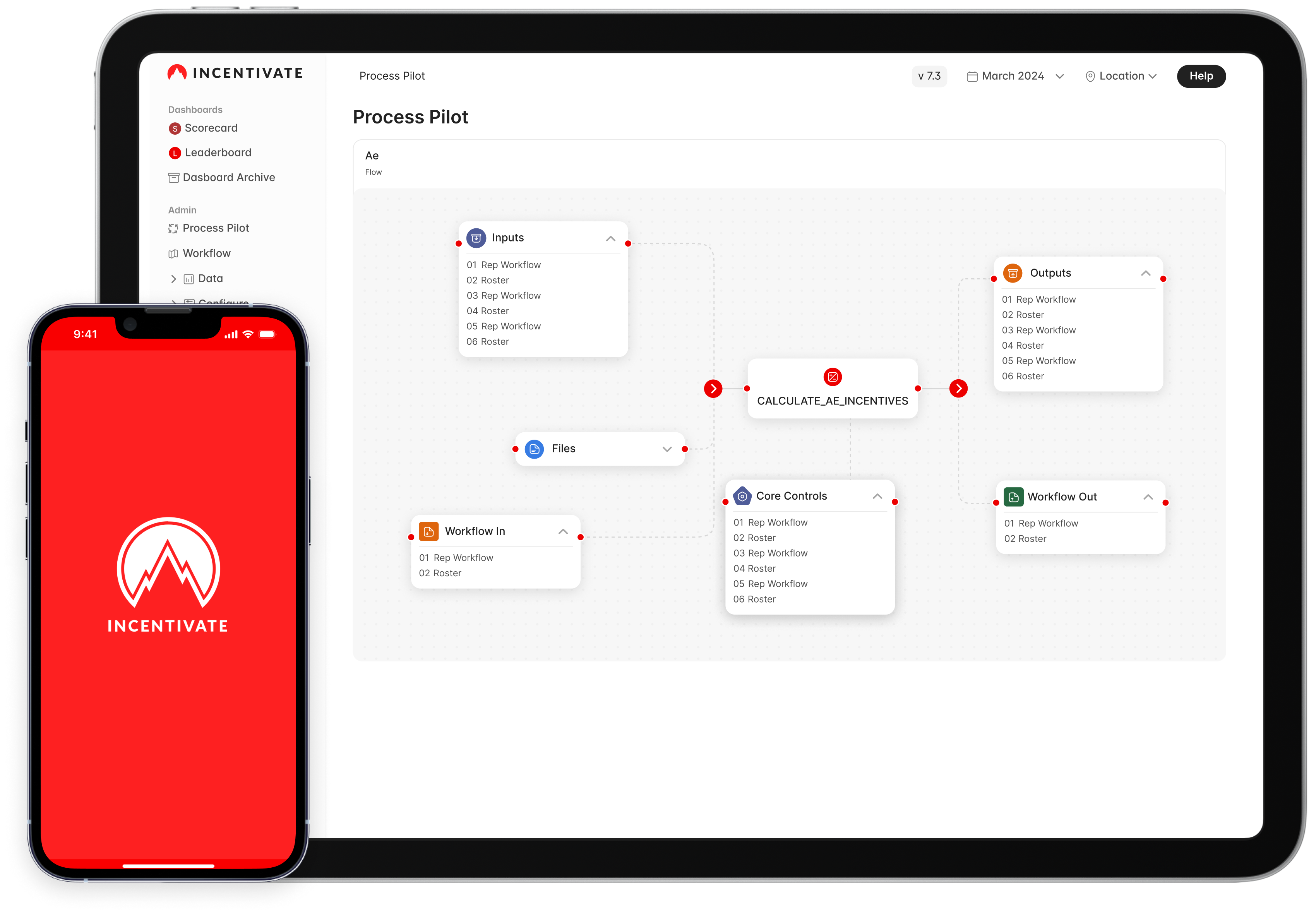
Incentivate Sales Commission Software

Best for Sales Incentive Tools with SPIFF and Bonus Programs
Score
9.6 / 10
Incentivate Sales Commission Software

Incentivate is a robust SaaS solution specifically designed to streamline sales compensation management for businesses in various industries. It offers an automated, intuitive platform that tracks payouts, manages compensation plans, and enhances team performance with real-time analytics. This solution directly addresses the industry's need for accuracy, efficiency, and transparency in managing sales incentives.

Best for Sales Incentive Tools with SPIFF and Bonus Programs

Expert Take

Incentivate excels in automating sales compensation management with real-time analytics and customizable features, making it a top choice for businesses seeking efficiency and accuracy. Its market credibility is supported by its adaptability across industries, though initial setup and training requirements are noted.

Pros

  • No-code incentive plan builder
  • Transparent pricing ($9/user/mo)
  • Real-time performance visibility
  • Automates complex multi-tiered calculations
  • SOC 2 Type II & GDPR compliant

Cons

  • Reporting customization could be improved
  • UI visuals described as limited
  • Initial setup requires detailed planning
  • Fewer public reviews than market leaders
  • Mobile app support historically limited

Best for teams that are

  • Enterprises with complex, multi-tiered commission structures
  • Industries like BFSI, Pharma, and Manufacturing
  • Teams needing a flexible no-code rule builder

Skip if

  • Small businesses seeking a simple plug-and-play tool
  • Users requiring a native iOS mobile application
  • Teams with very basic, flat-rate commission plans

Best for teams that are

  • Enterprises with complex, multi-tiered commission structures
  • Industries like BFSI, Pharma, and Manufacturing
  • Teams needing a flexible no-code rule builder

Skip if

  • Small businesses seeking a simple plug-and-play tool
  • Users requiring a native iOS mobile application
  • Teams with very basic, flat-rate commission plans

Pros

  • No-code incentive plan builder
  • Transparent pricing ($9/user/mo)
  • Real-time performance visibility
  • Automates complex multi-tiered calculations
  • SOC 2 Type II & GDPR compliant

Cons

  • Reporting customization could be improved
  • UI visuals described as limited
  • Initial setup requires detailed planning
  • Fewer public reviews than market leaders
  • Mobile app support historically limited

Expert Take

Incentivate excels in automating sales compensation management with real-time analytics and customizable features, making it a top choice for businesses seeking efficiency and accuracy. Its market credibility is supported by its adaptability across industries, though initial setup and training requirements are noted.

10

Core Commissions Software

Best for Commission Tools for Complex Enterprise Plans

Score
9.6 / 10
Core Commissions Software

Core Commissions is a highly efficient sales commission software solution designed specifically for complex enterprise plans. The software fully automates the calculation and management of intricate sales commission structures, significantly reducing manual errors and saving valuable time.

Best for Commission Tools for Complex Enterprise Plans

Expert Take

Core Commissions Software excels in automating complex commission structures for enterprise-level organizations. Its robust reporting and customization capabilities make it a standout choice in its category. Despite the lack of transparent pricing, its comprehensive feature set and industry recognition justify its premium positioning.

Pros

  • Transparent pricing ($20-$35/payee/mo)
  • SOC 2 Type 2 certified security
  • Handles complex splits and overrides
  • Affordable $500 Quick Start implementation
  • Drag-and-drop RuleBots engine

Cons

  • Steep learning curve for complex rules
  • Minimum 10-15 payee requirement
  • Reporting setup can be complex
  • No dedicated mobile app (web only)
  • Limited third-party review volume

Best for teams that are

  • Cost-conscious companies needing to automate complex calculation rules
  • Finance teams who prioritize auditability and formula power over UI
  • Organizations needing a value-focused solution for complex plans

Skip if

  • Users who need a modern, sleek, and intuitive user interface
  • Sales teams expecting a mobile-first experience
  • Users wanting a simple plug-and-play tool without rule building

Best for teams that are

  • Cost-conscious companies needing to automate complex calculation rules
  • Finance teams who prioritize auditability and formula power over UI
  • Organizations needing a value-focused solution for complex plans

Skip if

  • Users who need a modern, sleek, and intuitive user interface
  • Sales teams expecting a mobile-first experience
  • Users wanting a simple plug-and-play tool without rule building

Pros

  • Transparent pricing ($20-$35/payee/mo)
  • SOC 2 Type 2 certified security
  • Handles complex splits and overrides
  • Affordable $500 Quick Start implementation
  • Drag-and-drop RuleBots engine

Cons

  • Steep learning curve for complex rules
  • Minimum 10-15 payee requirement
  • Reporting setup can be complex
  • No dedicated mobile app (web only)
  • Limited third-party review volume

Expert Take

Core Commissions Software excels in automating complex commission structures for enterprise-level organizations. Its robust reporting and customization capabilities make it a standout choice in its category. Despite the lack of transparent pricing, its comprehensive feature set and industry recognition justify its premium positioning.

How We Rank Products

Our Evaluation Process

Evaluation of Sales Commission Tracking & Incentive Tools involves examining documented features such as the flexibility of commission structures and analytics capabilities. Pricing transparency is crucial, as businesses need to understand the cost implications of adopting a new tool. Compatibility with existing CRM systems and other integrations play a significant role in the decision-making process. Additionally, third-party customer feedback provides insights into user satisfaction and potential implementation challenges.

Verification

  • Products evaluated through comprehensive research and analysis of sales commission structures and user experiences.
  • Rankings based on a thorough analysis of features, user ratings, and expert reviews in the incentive tools sector.
  • Selection criteria focus on key factors such as scalability, integration capabilities, and customer support for sales commission tracking solutions.

Score Breakdown

0.0 / 10

About Sales Compensation & Commission Software

What Is Sales Compensation & Commission Software?

Sales Compensation and Commission Software creates the operational infrastructure for the most critical financial transaction in a sales organization: the exchange of performance for pay. This category covers software used to automate the calculation, reporting, and administration of variable incentive pay for revenue-generating teams across their full audit lifecycle: ingesting performance data, applying complex crediting logic, calculating payouts, managing disputes and adjustments, and ensuring regulatory compliance. It sits downstream from CRM (which records the transaction) and upstream from ERP/Payroll (which disperses the funds). It includes both general-purpose calculation engines capable of handling agnostic logic and vertical-specific platforms designed for high-regulation industries like healthcare and financial services.

At its core, this software solves the "Spreadsheet Ceiling"—the point where manual Excel-based management becomes a liability due to error rates, lack of auditability, and administrative drag. While often bundled under the broader umbrella of Sales Performance Management (SPM), Commission Software is distinct in its financial rigor. It is not merely a tool for motivation; it is a system of record. For enterprise buyers, it serves as a governance tool to prevent the estimated 3% to 5% of annual incentive spend lost to overpayments [1]. for niche buyers, it acts as a trust engine, providing the transparency required to keep high-performing talent focused on selling rather than "shadow accounting" their own paychecks.

History: From "Row 45 Error" to Revenue Intelligence

The evolution of Sales Compensation Software is effectively a history of the war against the spreadsheet. In the 1990s and early 2000s, as ERP systems solidified their place in the back office, a functional gap emerged. ERPs were excellent at paying a fixed salary to thousands of employees but failed miserably at processing the conditional, logic-heavy mathematics of variable sales comp. The initial market response was the on-premise "calculation engine"—heavy, code-intensive databases that required IT intervention for even minor plan changes. These systems solved the calculation volume problem but created a new one: agility paralysis.

The mid-2000s to early 2010s saw the rise of the first generation of vertical SaaS solutions. This era was defined by the "lift and shift" of on-premise logic to the cloud. Vendors focused on moving the database online, allowing for better access and slightly improved user interfaces. However, the underlying architecture remained rigid. Market consolidation defined this period, as major ERP players acquired standalone commission vendors to bolster their customer experience suites. This wave of consolidation validated the category but often left customers trapped in "zombie platforms"—software that was technically supported but functionally stagnant.

The modern era, beginning roughly around 2018, shifted the paradigm from "database management" to "actionable intelligence." The driver was a change in buyer expectation: Sales Operations leaders stopped asking "Can you calculate this?" and started asking "Can you model the impact of this change before we deploy it?" Today's landscape is characterized by no-code/low-code flexibility that returns control to business users, integration-first architectures that pull data directly from CRMs and data warehouses, and the emergence of AI for detecting anomalies and forecasting accruals.

What to Look For

Evaluating Sales Compensation Software requires a forensic approach to your own data complexity. The most common failure mode in this category is buying for the plan you have today, rather than the plan you will inevitably design tomorrow. When assessing vendors, prioritize the following critical evaluation criteria:

Logic Transparency and Auditability: Can the system show its work? A "black box" calculation engine is useless when a top performer disputes a payout. Look for "traceability"—the ability to click on a final commission dollar amount and drill down through the specific deal, the split percentage, the currency conversion rate, and the tier threshold that generated it. If the vendor cannot demonstrate this lineage in three clicks or fewer, they will fail the user adoption test.

The "Frankenplan" Stress Test: Every organization has exceptions—guarantees, draws, non-standard splits, and retroactive adjustments. Do not accept a "happy path" demo where data flows perfectly. Ask the vendor to demonstrate a retroactive change: "If we change the commission rate for Product X in February, but it is now May, how does the system handle the clawbacks and adjustments for the impacted reps without manual intervention?" If the answer involves "exporting to CSV," it is a red flag.

Data Ingestion Flexibility: Your commission data lives in more places than just your CRM. It exists in billing systems, spreadsheets, calendar appointments (for activity-based pay), and customer success platforms. The ability to ingest, clean, and map data from disparate sources without a third-party ETL (Extract, Transform, Load) tool is a critical differentiator. Warning signs include vendors that charge significant professional services fees for every new data connector.

Key Questions to Ask Vendors:

  • "How does your system handle 'effective dating' for plan changes?" (i.e., changing a rule today that applies to transactions from two months ago).
  • "Can I build and model a new compensation plan in a sandbox environment using real historical data to see the financial impact before going live?"
  • "What is the specific workflow for dispute resolution? Does the rep initiate it in the portal, and does it route to the manager or comp admin?"

Retail & E-commerce

In the retail sector, the primary challenge for Sales Compensation Software is omnichannel attribution. The classic "who gets credit?" conflict between the in-store associate who demoed the product and the e-commerce cart where the transaction finalized is a massive source of friction. Retailers require software that can ingest data from Point of Sale (POS) systems, e-commerce platforms, and clienteling apps simultaneously. The evaluation priority here is high-volume transaction processing capability. Unlike B2B sales with fewer, high-value deals, a retail commission engine must process millions of transaction lines with relatively simple logic but extreme speed.

A unique consideration for retail is the "return window" clawback. Retailers face high return rates, and the software must automatically deduct commissions paid on returned items in the subsequent pay period. Without automation, this becomes a manual reconciliation nightmare. Furthermore, commission structures in retail often involve "spiffs" (immediate bonuses) to move specific inventory. The software must be agile enough to launch a "weekend special" incentive on Friday and pay it out by Tuesday, a velocity that legacy enterprise tools often struggle to match. [2]

Healthcare

For healthcare, particularly medical device and pharmaceutical sales, the defining requirement is regulatory compliance. The Physician Payments Sunshine Act (Open Payments) requires manufacturers to track and report any transfer of value to physicians. While commission software primarily pays reps, it often tracks the expenses and "value transfers" associated with the sales process. The software must maintain an immutable audit trail. If a commission is based on usage (e.g., how many implants a hospital used) rather than purchase orders, the system must integrate with inventory management systems rather than just a standard CRM.

Evaluation priorities must focus on data privacy (HIPAA compliance if patient data is tangentially touched, though rare in comp) and the ability to handle complex "GPO" (Group Purchasing Organization) contract pricing which affects the margin-based commissions common in the industry. A red flag in this sector is a vendor that lacks experience with "chargeback" processing, where the distributor sells at a contract price and the manufacturer reimburses the difference, affecting the rep's net sales credit. [3]

Financial Services

Financial Services (Wealth Management, Insurance, Banking) utilizes compensation software as a risk management tool. The critical feature here is the clawback and liability management. Financial products often have long tails; an insurance policy sold today might lapse in six months, triggering a pro-rated commission repayment. The software must track this "negative balance" and manage it against future earnings. Furthermore, compliance with regulations like the SEC's clawback rules or Regulation Best Interest (Reg BI) requires that incentive structures do not encourage unethical selling behaviors.

Evaluation must center on the "hierarchical split" capability. In insurance and wealth management, a single transaction might pay a percentage to the agent, the agency manager, the regional director, and a referrer. This "override" logic is often 5-10 layers deep. General-purpose tools often break after 3 layers of hierarchy. Buyers must verify the vendor's ability to handle "complex hierarchies" and "retroactive hierarchy changes" (e.g., a manager leaves, and the override tree must be rebuilt retroactively). [4]

Manufacturing

Manufacturing sales compensation is distinct because it relies heavily on indirect channel management (distributors and resellers). Manufacturers often do not sell directly to the end user, meaning they lack perfect visibility into the final sale price. Commission software here must handle "Rebates" and "Sell-Through" data. A rep might be paid not when the manufacturer ships to the distributor (sell-in), but when the distributor sells to the customer (sell-through). This requires the software to ingest messy, non-standardized reports from distributors.

Additionally, manufacturing plans are often margin-driven to prevent reps from discounting heavily to move volume. The software must integrate with the ERP's costing module to calculate gross margin accurately at the time of invoicing. A unique consideration is "split shipment" logic—if a large machine ships in three parts over six months, the commission system must accrue and pay out partially upon each milestone, tracking the "WIP" (Work in Progress) commission status. [5]

Professional Services

In Professional Services (legal, consulting, agencies), the "product" is time, and compensation is often tied to billable utilization and realization rates. Unlike selling a widget, the "sale" is only the beginning. Partners or Principals are often compensated on a complex formula of "origination" (bringing in the business) and "execution" (managing the billable hours). Commission software must integrate with Time & Billing software (like Harvest or OpenAir) rather than just a CRM.

The evaluation priority is the ability to handle "conditional payouts." For example, a commission is only paid if the project achieves a 20% margin or if the client pays the invoice within 45 days. This requires the software to constantly poll the accounts receivable ledger. A common pain point is "shared credit" where five partners touch a deal; the software must handle non-100% sum splits (e.g., double crediting for leaderboard status but 100% split for payout) without corrupting the financial data. [6]

Subcategory Overview

Commission Tools for Complex Enterprise Plans

This subcategory serves large-scale organizations (typically 500+ payees) where the primary challenge is not just calculation, but plan modeling and governance. What makes this niche genuinely different is its architectural ability to handle "n-tier" complexity—logic that involves multi-dimensional lookups, such as paying a different rate based on the product group, the customer's industry, the rep's tenure, and the discount level, all simultaneously. Only specialized enterprise tools can process "retroactive plan changes" at scale, where a rule change in December must accurately re-calculate payouts from January without crashing the system.

One workflow that strictly belongs to this category is the Territory and Quota Planning (TQP) integration. Enterprise buyers don't just need to pay commissions; they need to design the territories that generate them. These tools allow operations teams to model "what-if" scenarios—e.g., "If we carve out the Northeast region and add three reps, how does that impact the payout attainment for the existing senior reps?" Generalist tools cannot handle this predictive modeling alongside actual payouts. The pain point driving buyers here is the "audit failure"—when finance cannot explain to auditors exactly why $50M was paid out due to spreadsheet opacity. For a deeper look, refer to our guide to Commission Tools for Complex Enterprise Plans.

Commission Tools Integrated with CRM and Billing

This niche targets mid-market companies where speed and "single source of truth" are paramount. These tools differ from enterprise legacy systems by prioritizing native data residency or near-native integration. Rather than functioning as a separate data silo, these tools often embed their user interface directly within the CRM (e.g., Salesforce or HubSpot). The differentiation is "operational velocity"—the ability to calculate commissions in real-time as a deal closes, rather than waiting for a monthly batch process.

A workflow specific to this group is the invoice-triggered commission. Many SaaS and subscription businesses only pay commissions when the customer pays the invoice (to protect cash flow). These tools sync directly with billing platforms (like Stripe, Xero, or NetSuite) to trigger a commission release instantly upon payment confirmation. Generalist tools often lack this tight, two-way sync with billing ledgers. The pain point driving buyers here is "rep visibility"—sales reps wasting hours manually tracking their own deals because they don't trust the monthly spreadsheet report. These tools provide a "commission sidebar" on the opportunity record itself. To explore these options, see our analysis of Commission Tools Integrated with CRM and Billing.

Sales Incentive Tools with SPIFF and Bonus Programs

This subcategory focuses on short-term behavioral modification rather than long-term compensation governance. While commission software calculates the "salary" of sales, these tools manage the "contests." The genuine difference lies in gamification and instant gratification. These platforms are built to launch, track, and close incentive programs (e.g., "Sell 5 units this week to win $500") in a matter of days. Traditional commission engines are too rigid to spin up a temporary logic set for a 72-hour contest.

The workflow unique to this niche is the digital rewards fulfillment marketplace. Instead of adding $100 to a paycheck (which gets taxed and delayed), these tools allow reps to redeem points immediately for gift cards, experiences, or merchandise within the platform. The pain point driving buyers here is "engagement latency." If a rep wins a contest in March but doesn't see the money until the April 30th paycheck, the dopamine loop is broken. These tools fix that loop. Learn more about maximizing motivation in our guide to Sales Incentive Tools with SPIFF and Bonus Programs.

Integration & API Ecosystem

The "dirty secret" of commission software is that it is only as accurate as the data it ingests. Gartner analysts have noted that data quality issues are a primary cause of failure in Sales Performance Management implementations [7]. A robust API ecosystem is not a luxury; it is the plumbing of the entire system. Buyers must look beyond "logo matching" (e.g., a vendor website showing a Salesforce logo) and verify the directionality and depth of the integration. Can the system write data back to the CRM? Can it handle custom objects?

Expert Insight: A common pitfall is the "ETL Trap." Buyers assume a native integration exists, but the vendor actually relies on a third-party connector or manual CSV uploads. Forrester Research emphasizes that modern SPM solutions must reduce manual work by connecting performance to rewards seamlessly [8].

Scenario: Consider a 50-person professional services firm. They track deals in HubSpot but track billable hours in Harvest. A poorly designed integration might pull the "Deal Amount" from HubSpot upon closing. However, if the project scope changes in Harvest three weeks later, the commission software has no way of knowing the revenue basis has changed. The result is an overpayment that finance must manually catch. A proper API ecosystem would listen for "invoice updated" events in the billing system to automatically adjust the commission accrual.

Security & Compliance

Sales compensation data is effectively payroll data—it is highly sensitive PII (Personally Identifiable Information). Security goes beyond just SOC 2 Type II compliance, which is now table stakes. Buyers must evaluate field-level security and role-based access control (RBAC). Can you ensure that a regional manager can see their team's commissions but not the override rates of their peers? In industries like Financial Services, compliance with SEC clawback rules (adopted in 2023) is non-negotiable [9].

Expert Insight: According to the Association of Certified Fraud Examiners, organizations lose 5% of revenue to fraud annually, and sales commission fraud (e.g., gaming the system or creating fake accounts) is a significant subset. Automated audit trails are the primary defense.

Scenario: A healthcare manufacturer is subject to the Sunshine Act. They use a general-purpose commission tool. When the CMS (Centers for Medicare & Medicaid Services) audits them, they need to produce a report of all incentives paid to physician-consultants. If the software lumps these payments under generic "commissions" without tagging the recipient's NPI (National Provider Identifier), the firm faces massive fines. A compliant system would force tag every payee with their regulatory status before issuing a cent.

Pricing Models & TCO

Pricing in this category is notoriously opaque. The two dominant models are "Per User Per Month" (PUPM) and "Percent of Revenue/Transaction Volume." PUPM is standard for SaaS, typically ranging from $30 to $125 per payee depending on feature depth. However, Total Cost of Ownership (TCO) often balloons due to "Managed Services" fees. Many legacy vendors charge hefty professional services fees (often $200+/hour) for any plan logic change.

Expert Insight: Gartner advises that application leaders must assess the skill set of the commission team against the product's requirements [1]. If the tool is too complex for your internal admin, your TCO includes a permanent external consultant.

Scenario: A hypothetical 25-person sales team buys a platform for $50/user/month ($15,000/year). However, they have a high turnover rate and a complex quarterly bonus structure. They lack an internal RevOps admin. Every quarter, they pay the vendor $2,500 to update the quotas and add new hires. The annual TCO effectively doubles to $25,000. Conversely, a more expensive "self-serve" platform at $75/user/month ($22,500/year) that allows the Sales Manager to make these changes via a drag-and-drop UI would actually be cheaper and faster.

Implementation & Change Management

Implementation is where most projects fail. The failure rate for CRM and related sales technology implementations hovers around 50-70%, often due to poor change management rather than software bugs [10]. In commission software, the "parallel run" is the valley of death. This is the period where the new system and the old spreadsheets run simultaneously to verify accuracy. If discrepancies arise (and they will), the team often loses faith in the new tool.

Expert Insight: Forrester notes that poor change management is a primary killer of sales tech success [11]. Successful implementation requires "cleaning the closet" before moving—simplifying the compensation plan before trying to automate it.

Scenario: A logistics company implements a new tool in January. Their comp plan has a rule: "Drivers get a bonus if on-time delivery is >95%." The spreadsheet calculated this based on "delivery date." The new software pulls data from the ERP based on "invoice date." The numbers don't match. The reps revolt, claiming the software is "stealing" their bonus. The implementation fails not because of math, but because of undefined definitions. A successful rollout would have involved a data dictionary definition phase months prior.

Vendor Evaluation Criteria

When scoring vendors, move beyond feature checklists. All vendors will check "Yes" for "Can you handle tiers?" The differentiator is how they handle them. Focus on "Agility" and "Transparency." Can a business user audit the logic, or does it require SQL knowledge?

Expert Insight: A key trend identified by Gartner is the shift toward "Agility" as a primary differentiator. Vendors are no longer competing on "can we calculate it," but "how fast can we change it?" [12].

Scenario: A buyer asks two vendors to demonstrate a "split commission." Vendor A shows a hard-coded field where you type "50%." Vendor B shows a rule builder where you can say "If Deal Type = Joint, automatically split 50/50, unless Senior Rep is involved, then 70/30." Vendor A is a calculator; Vendor B is a logic engine. Vendor B is the superior choice for scaling, even if Vendor A is cheaper.

Emerging Trends and Contrarian Take

Emerging Trends 2025-2026: The market is rapidly moving toward "Plan-to-Pay" convergence. Historically, quota planning (finance) and commission calculation (sales ops) were separate silos. We are seeing a merger of these functions, powered by AI agents that don't just calculate pay but recommend plan optimizations. For example, AI might suggest, "Increasing the accelerator on Product Y by 2% will likely yield a 10% revenue lift based on historical elasticity." Additionally, the integration of Generative AI is moving beyond chatbots to actual logic generation, allowing admins to type "Create a kicker for Q4 renewals" and having the system draft the logic structure [13].

Contrarian Take: Software often masks a trust deficit, it doesn't cure it. Companies frequently buy expensive commission software to solve "shadow accounting" (reps tracking their own pay). However, the surprising insight is that shadow accounting is a feature, not a bug. High-performing reps will always track their own numbers, regardless of how good your software is. The goal shouldn't be to eliminate their spreadsheet, but to ensure your number matches theirs instantly. If you spend $100k on software and your reps still keep a side ledger, you haven't failed; you've just met a conscientious salesperson. The failure is only when the numbers disagree.

Common Mistakes

Buying for the Exception, Not the Rule: Buyers often obsess over the 5% of "edge cases" (e.g., complex cross-border split transfers) and select a heavy, expensive enterprise tool that makes the 95% of standard payouts cumbersome. It is often better to automate the standard rules and handle the rare edge cases manually than to over-engineer the system [14].

Ignoring Data Sanitation: The most fatal mistake is plugging a new commission engine into a "dirty" CRM. If your Opportunity fields are inconsistent, your payouts will be wrong. Automation accelerates the mess; it doesn't clean it. 56% of companies encounter commission errors regularly, often stemming from bad data inputs [15].

Underestimating Change Management: Rolling out comp software is an emotional event for sales teams. It touches their livelihood. A mistake here is treating it as an "IT Upgrade." It is a "Trust Upgrade." Failing to run a transparent parallel testing period where reps can see the old and new numbers side-by-side is a recipe for mutiny.

Questions to Ask in a Demo

  • "Show me exactly how I would handle a retroactive commission adjustment for a closed period. Do I have to reopen the period, or does the system handle the delta in the current period?"
  • "If I have a sales rep with a guarantee for the first 3 months, show me how the system automatically transitions them to the standard plan in month 4 without me remembering to flip a switch."
  • "Can you show me the 'audit log' for a specific calculation rule change? I want to see who changed the commission rate, when, and what the value was before."
  • "How does your system handle 'effective dating' on hierarchical changes? If a manager moves teams mid-month, how are the overrides calculated?"
  • "Do not show me a slide. Show me the data ingestion screen. How do I map a CSV file column to a system field?"

Before Signing the Contract

Final Decision Checklist:

  • Data Readiness: Is your CRM data clean enough to automate? If not, do you have a plan to fix it before implementation starts?
  • Resource Availability: Do you have a dedicated admin (or at least a committed part-time owner) for this tool? "Set it and forget it" does not exist in compensation software.
  • Exit Strategy: If you leave this vendor in 3 years, how do you get your historical payout data out? Is it a usable format?

Negotiation Points:

  • Sandbox Access: Ensure a full sandbox environment is included in the base price, not an add-on. You cannot test comp changes in production.
  • Implementation Fees: Push for a fixed-fee implementation rather than time-and-materials. This shifts the risk of delay onto the vendor.
  • Support SLAs: Compensation is time-sensitive. A "48-hour response time" is unacceptable during payroll week. Negotiate for critical response times during end-of-month windows.

Deal-Breaker: If the vendor cannot demonstrate a working integration with your specific ERP/Payroll system (not just "we have an API," but "we have done this for X customer"), walk away. The "last mile" of getting the money to payroll is often where the hardest breaks occur.

Closing

Sales Compensation Software is a powerful lever for trust and efficiency, but it demands respect for the complexity of the process it automates. By focusing on data lineage, auditability, and agility, you can build a system that not only pays your team but motivates them.

If you have specific questions about your compensation complexity or need a sounding board for your vendor shortlist, feel free to reach out to me directly.

Email: albert@whatarethebest.com