
Online Whiteboard & Brainstorming Tools
These are the specialized categories within Online Whiteboard & Brainstorming Tools. Looking for something broader? See all Project Management & Productivity Tools categories.
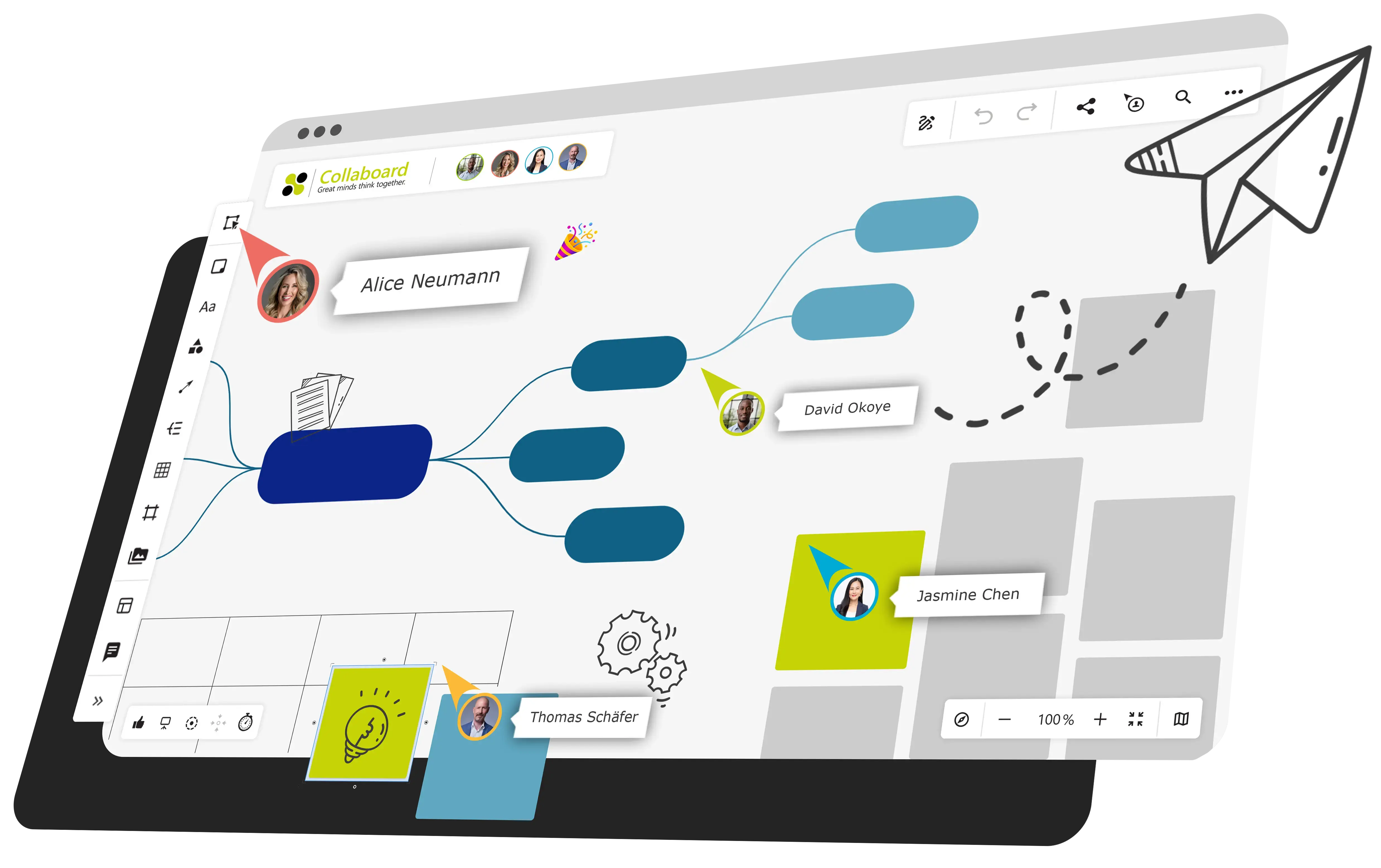
Collaboard is an online whiteboarding solution designed specifically for SaaS companies. It offers robust data protection and secure collaboration features, making it an ideal tool for brainstorming, planning, and creativity within the industry. Its unique moderation features ensure smooth and efficient sessions, meeting the collaborative needs of SaaS professionals.
Best for Online Whiteboard & Brainstorming Tools for SaaS Companies
Expert Take
Collaboard excels as a specialized online whiteboarding tool for SaaS companies, offering strong security features and effective collaboration tools. Its focus on data protection and moderation capabilities makes it a top choice for industry professionals, despite some limitations in its free plan.
Pros
- Unmatched data sovereignty with Swiss/German hosting
- On-premises and air-gapped deployment options
- Full GDPR compliance for regulated industries
- Infinite canvas with broad media support
- Competitive pricing with free guest access
Cons
- Interface design feels dated compared to leaders
- Fewer third-party integrations than Miro
- Smaller template library than major competitors
- Mobile app functionality is limited
- Occasional performance lags on complex boards
Best for teams that are
- Government or defense sectors requiring high security
- Organizations needing on-premise or self-hosted options
- European companies prioritizing strict data sovereignty
Skip if
- Casual users prioritizing vast template libraries over security
- Teams wanting a simple, low-security free tool
- Users needing extensive integrations with US-based SaaS tools
Best for teams that are
- Government or defense sectors requiring high security
- Organizations needing on-premise or self-hosted options
- European companies prioritizing strict data sovereignty
Skip if
- Casual users prioritizing vast template libraries over security
- Teams wanting a simple, low-security free tool
- Users needing extensive integrations with US-based SaaS tools
Pros
- Unmatched data sovereignty with Swiss/German hosting
- On-premises and air-gapped deployment options
- Full GDPR compliance for regulated industries
- Infinite canvas with broad media support
- Competitive pricing with free guest access
Cons
- Interface design feels dated compared to leaders
- Fewer third-party integrations than Miro
- Smaller template library than major competitors
- Mobile app functionality is limited
- Occasional performance lags on complex boards
Expert Take
Collaboard excels as a specialized online whiteboarding tool for SaaS companies, offering strong security features and effective collaboration tools. Its focus on data protection and moderation capabilities makes it a top choice for industry professionals, despite some limitations in its free plan.
Collaboard Online Whiteboard
Best for Online Whiteboard & Brainstorming Tools for Private Equity Firms

Tailored for Private Equity Firms, Collaboard offers an expansive, limitless online whiteboard for brainstorming and collaboration. Its features support visualizing and communicating complex financial models, strategic planning, and investment assessments, with the ability to incorporate text, images, videos, and various other elements. Its real-time collaboration feature is a game-changer for remote teams and cross-border collaborations.
Best for Online Whiteboard & Brainstorming Tools for Private Equity Firms
Expert Take
Collaboard Online Whiteboard excels in providing a versatile and expansive platform tailored for Private Equity Firms, with strong capabilities in real-time collaboration and integration with common tools. While it offers significant value, the need for a stable internet connection and a learning curve for advanced features are noted tradeoffs.
Pros
- 100% GDPR compliant with Swiss/EU hosting
- Supports air-gapped and on-premises deployment
- Infinite canvas with rich media support
- Competitive pricing with generous free plan
- Exceptional customer support and responsiveness
Cons
- Fewer native integrations than market leaders
- Interface design described as slightly dated
- Smaller template library than major competitors
- Mobile navigation can be occasionally challenging
- Steeper learning curve for advanced features
Best for teams that are
- Highly regulated industries like finance, defense, or government
- Organizations requiring on-premise or GDPR-compliant hosting
- Teams prioritizing data sovereignty and high security
Skip if
- Casual users seeking a free, feature-rich public tool
- Teams prioritizing vast third-party app integrations
- Users wanting a simple, instant-access tool without setup
Best for teams that are
- Highly regulated industries like finance, defense, or government
- Organizations requiring on-premise or GDPR-compliant hosting
- Teams prioritizing data sovereignty and high security
Skip if
- Casual users seeking a free, feature-rich public tool
- Teams prioritizing vast third-party app integrations
- Users wanting a simple, instant-access tool without setup
Pros
- 100% GDPR compliant with Swiss/EU hosting
- Supports air-gapped and on-premises deployment
- Infinite canvas with rich media support
- Competitive pricing with generous free plan
- Exceptional customer support and responsiveness
Cons
- Fewer native integrations than market leaders
- Interface design described as slightly dated
- Smaller template library than major competitors
- Mobile navigation can be occasionally challenging
- Steeper learning curve for advanced features
Expert Take
Collaboard Online Whiteboard excels in providing a versatile and expansive platform tailored for Private Equity Firms, with strong capabilities in real-time collaboration and integration with common tools. While it offers significant value, the need for a stable internet connection and a learning curve for advanced features are noted tradeoffs.
Mural: Visual Collaboration AI
Best for Online Whiteboard & Brainstorming Tools for Recruitment Agencies

Mural is a dynamic visual collaboration tool designed to streamline brainstorming and feedback analysis for recruitment agencies. Its AI functionality optimizes project management, keeping workflow efficient and innovative, while its digital workspace encourages team collaboration and idea sharing.
Best for Online Whiteboard & Brainstorming Tools for Recruitment Agencies
Expert Take
Mural excels as a visual collaboration tool tailored for recruitment agencies, offering AI-enhanced features that streamline brainstorming and feedback processes. Its capabilities in real-time collaboration and project management optimization position it as a leading solution in its category. While it requires training and has a higher price point, its innovative features and industry-specific design justify its premium status.
Pros
- Microsoft 365 Certified security
- Intuitive interface for beginners
- AI-powered clustering & mind mapping
- Deep Microsoft Teams integration
- Strong facilitation features (Private Mode)
Cons
- Performance lag with large groups
- Limited advanced diagramming tools
- Mobile app experience limitations
- Fewer templates than competitors
- No interactive charts or tables
Best for teams that are
- Consultants and facilitators running structured design thinking workshops
- Enterprise teams prioritizing guided collaboration and strict access controls
- Organizations needing a dedicated transformation partner for deployment
Skip if
- Small teams or individuals seeking a low-cost, flexible tool for quick sketches
- Users who prefer an open-ended canvas over structured, template-heavy workflows
Best for teams that are
- Consultants and facilitators running structured design thinking workshops
- Enterprise teams prioritizing guided collaboration and strict access controls
- Organizations needing a dedicated transformation partner for deployment
Skip if
- Small teams or individuals seeking a low-cost, flexible tool for quick sketches
- Users who prefer an open-ended canvas over structured, template-heavy workflows
Pros
- Microsoft 365 Certified security
- Intuitive interface for beginners
- AI-powered clustering & mind mapping
- Deep Microsoft Teams integration
- Strong facilitation features (Private Mode)
Cons
- Performance lag with large groups
- Limited advanced diagramming tools
- Mobile app experience limitations
- Fewer templates than competitors
- No interactive charts or tables
Expert Take
Mural excels as a visual collaboration tool tailored for recruitment agencies, offering AI-enhanced features that streamline brainstorming and feedback processes. Its capabilities in real-time collaboration and project management optimization position it as a leading solution in its category. While it requires training and has a higher price point, its innovative features and industry-specific design justify its premium status.
Mural Online Whiteboard
Best for Online Whiteboard & Brainstorming Tools for Contractors

Mural enables contractors to work together on a shared virtual whiteboard, plan projects visually, and run workshops with ease. It caters to the industry-specific needs of visualizing project plans, brainstorming construction ideas, and promoting team collaboration.
Best for Online Whiteboard & Brainstorming Tools for Contractors
Expert Take
Mural Online Whiteboard excels in providing a collaborative platform tailored for contractors, with strong integration capabilities and a user-friendly interface. Its market credibility is supported by external recognitions, and it offers good value with transparent pricing options. The product stands out in its category due to its adaptability and comprehensive feature set.
Pros
- Trusted by 95% of Fortune 100
- Microsoft 365 Certified security
- Unlimited members on Free plan
- Advanced facilitation tools (Summon, Timer)
- Intuitive interface for non-technical users
Cons
- Performance lag on large boards
- Limited technical diagramming depth
- Mobile experience needs improvement
- Fewer templates than main competitor
- Steep price jump to Business plan
Best for teams that are
- Enterprise facilitators running structured workshops
- Large corporate teams practicing Design Thinking methodologies
- Consultants needing advanced facilitation features like voting
Skip if
- Casual users looking for a simple, quick sketching tool
- Small teams with zero budget (steep learning curve for free tier)
- Solo users who do not need collaborative features
Best for teams that are
- Enterprise facilitators running structured workshops
- Large corporate teams practicing Design Thinking methodologies
- Consultants needing advanced facilitation features like voting
Skip if
- Casual users looking for a simple, quick sketching tool
- Small teams with zero budget (steep learning curve for free tier)
- Solo users who do not need collaborative features
Pros
- Trusted by 95% of Fortune 100
- Microsoft 365 Certified security
- Unlimited members on Free plan
- Advanced facilitation tools (Summon, Timer)
- Intuitive interface for non-technical users
Cons
- Performance lag on large boards
- Limited technical diagramming depth
- Mobile experience needs improvement
- Fewer templates than main competitor
- Steep price jump to Business plan
Expert Take
Mural Online Whiteboard excels in providing a collaborative platform tailored for contractors, with strong integration capabilities and a user-friendly interface. Its market credibility is supported by external recognitions, and it offers good value with transparent pricing options. The product stands out in its category due to its adaptability and comprehensive feature set.

Conceptboard is a digital whiteboard solution specifically designed for SaaS companies. It offers real-time visual collaboration, providing a secure, central platform for brainstorming and decision-making. Given its GDPR-compliance and German hosting, it addresses the data security concerns of SaaS firms.
Best for Online Whiteboard & Brainstorming Tools for SaaS Companies
Expert Take
Conceptboard excels as a digital whiteboard solution tailored for SaaS companies, offering robust real-time collaboration and strong data security measures. Its GDPR compliance and secure hosting in Germany enhance its appeal. While the free plan has limitations, its overall capabilities make it a top choice in its category.
Pros
- Hosted in Germany with full GDPR compliance
- ISO 27001, 27017, and 27018 certified
- Infinite canvas with real-time collaboration
- Used by high-security clients like U.S. Air Force
- Competitive pricing with free plan available
Cons
- No native mobile apps (web-only)
- Fewer integrations than competitors like Miro
- No built-in charting or graphing tools
- Performance lag on very large boards
- Limited language support (English/German)
Best for teams that are
- Privacy-conscious organizations requiring GDPR compliance
- Remote teams needing a secure, infinite canvas workspace
- Enterprises requiring on-premise or dedicated server hosting
Skip if
- Teams heavily reliant on extensive third-party app ecosystems
- Users prioritizing a mobile-first editing experience
- Small teams wanting a simple tool without enterprise security
Best for teams that are
- Privacy-conscious organizations requiring GDPR compliance
- Remote teams needing a secure, infinite canvas workspace
- Enterprises requiring on-premise or dedicated server hosting
Skip if
- Teams heavily reliant on extensive third-party app ecosystems
- Users prioritizing a mobile-first editing experience
- Small teams wanting a simple tool without enterprise security
Pros
- Hosted in Germany with full GDPR compliance
- ISO 27001, 27017, and 27018 certified
- Infinite canvas with real-time collaboration
- Used by high-security clients like U.S. Air Force
- Competitive pricing with free plan available
Cons
- No native mobile apps (web-only)
- Fewer integrations than competitors like Miro
- No built-in charting or graphing tools
- Performance lag on very large boards
- Limited language support (English/German)
Expert Take
Conceptboard excels as a digital whiteboard solution tailored for SaaS companies, offering robust real-time collaboration and strong data security measures. Its GDPR compliance and secure hosting in Germany enhance its appeal. While the free plan has limitations, its overall capabilities make it a top choice in its category.
Boardmix: AI Online Whiteboard Making Collaboration a Breeze
Best for Online Whiteboard & Brainstorming Tools for Private Equity Firms

A SaaS solution for Online Whiteboard & Brainstorming Tools for Private Equity Firms
Best for Online Whiteboard & Brainstorming Tools for Private Equity Firms
Expert Take
Boardmix is a feature-rich, cloud-based solution tailored for private equity firms, offering comprehensive online whiteboard and brainstorming capabilities. Despite a learning curve and variable pricing, its scalability and depth make it a strong contender in its category.
Pros
- Lifetime deal option avoids recurring subscriptions
- AI generates diagrams, code, and presentations
- Real-time collaboration for 500+ users
- Private deployment available for enterprises
- Infinite canvas with versatile templates
Cons
- Customer support reported as slow/unresponsive
- Critical bugs on Chromebook devices
- AI credits are capped/finite
- Email server deliverability issues reported
- Free plan has limited export options
Best for teams that are
- Startups and teams seeking AI-powered content generation
- Budget-conscious users looking for lifetime deal options
- Users wanting automated mind-mapping and flowchart tools
Skip if
- Large enterprises requiring established support and stability
- Users needing extensive third-party ecosystem integrations
- Teams wary of newer tools with less market history
Best for teams that are
- Startups and teams seeking AI-powered content generation
- Budget-conscious users looking for lifetime deal options
- Users wanting automated mind-mapping and flowchart tools
Skip if
- Large enterprises requiring established support and stability
- Users needing extensive third-party ecosystem integrations
- Teams wary of newer tools with less market history
Pros
- Lifetime deal option avoids recurring subscriptions
- AI generates diagrams, code, and presentations
- Real-time collaboration for 500+ users
- Private deployment available for enterprises
- Infinite canvas with versatile templates
Cons
- Customer support reported as slow/unresponsive
- Critical bugs on Chromebook devices
- AI credits are capped/finite
- Email server deliverability issues reported
- Free plan has limited export options
Expert Take
Boardmix is a feature-rich, cloud-based solution tailored for private equity firms, offering comprehensive online whiteboard and brainstorming capabilities. Despite a learning curve and variable pricing, its scalability and depth make it a strong contender in its category.
Web Whiteboard: Online Collaboration
Best for Online Whiteboard & Brainstorming Tools for Contractors

The Web Whiteboard is a perfect fit for contractors given its instant collaboration feature that aids in brainstorming, sharing ideas, and managing projects. The tool addresses the industry's need for real-time, remote collaboration, without the hurdle of sign-up processes.
Best for Online Whiteboard & Brainstorming Tools for Contractors
Expert Take
Web Whiteboard excels in providing a user-friendly, instant collaboration platform tailored for contractors. Its simplicity and lack of sign-up barriers make it ideal for quick brainstorming and project discussions. However, the absence of a mobile app and limited features compared to competitors are notable tradeoffs.
Pros
- No sign-up required to start
- Instant real-time collaboration
- Powered by robust Miro engine
- Free to use for 24 hours
- Export to PDF/Image available
Cons
- Boards lock after 24 hours
- Not supported on Safari browser
- Not supported in Incognito mode
- Fewer features than full Miro
- Must sign up to save long-term
Best for teams that are
- Educators and students needing a simple, instant drawing surface
- One-off meetings requiring a disposable collaboration space
- Users who want to start immediately without creating an account
Skip if
- Teams needing to save work permanently without signing up
- Complex project management or detailed technical diagramming
- Enterprises requiring audit logs or advanced permissions
Best for teams that are
- Educators and students needing a simple, instant drawing surface
- One-off meetings requiring a disposable collaboration space
- Users who want to start immediately without creating an account
Skip if
- Teams needing to save work permanently without signing up
- Complex project management or detailed technical diagramming
- Enterprises requiring audit logs or advanced permissions
Pros
- No sign-up required to start
- Instant real-time collaboration
- Powered by robust Miro engine
- Free to use for 24 hours
- Export to PDF/Image available
Cons
- Boards lock after 24 hours
- Not supported on Safari browser
- Not supported in Incognito mode
- Fewer features than full Miro
- Must sign up to save long-term
Expert Take
Web Whiteboard excels in providing a user-friendly, instant collaboration platform tailored for contractors. Its simplicity and lack of sign-up barriers make it ideal for quick brainstorming and project discussions. However, the absence of a mobile app and limited features compared to competitors are notable tradeoffs.
Weje Brainstorming Tool
Best for Online Whiteboard & Brainstorming Tools for Venture Capital Firms
Weje is a cloud-based brainstorming tool designed to cater to the unique needs of remote teams in Venture Capital firms. It offers a real-time collaboration platform on an infinite whiteboard, complete with mind-mapping and brainstorming features, enabling seamless idea generation, decision making, and strategy formulation.
Best for Online Whiteboard & Brainstorming Tools for Venture Capital Firms
Expert Take
Weje Brainstorming Tool excels as a cloud-based platform tailored for remote teams in Venture Capital firms. It offers robust real-time collaboration and infinite whiteboard capabilities, crucial for strategic planning and decision-making. Its market credibility is supported by its unique features and competitive pricing.
Pros
- Entirely free for all teams
- Infinite canvas with nested cards
- Real-time collaboration & voice chat
- GDPR and CCPA compliant
- AES-256 data encryption
Cons
- Product development officially halted
- Relies on donations for hosting
- No new features expected
- Mobile app is PWA only
- Long-term availability uncertain
Best for teams that are
- Individuals organizing research and mixed media data
- Small teams needing flexible knowledge management
- Students or researchers collecting web content
Skip if
- Large enterprises needing advanced security/SSO
- Teams running complex Agile or Scrum ceremonies
- Users needing extensive third-party integrations
Best for teams that are
- Individuals organizing research and mixed media data
- Small teams needing flexible knowledge management
- Students or researchers collecting web content
Skip if
- Large enterprises needing advanced security/SSO
- Teams running complex Agile or Scrum ceremonies
- Users needing extensive third-party integrations
Pros
- Entirely free for all teams
- Infinite canvas with nested cards
- Real-time collaboration & voice chat
- GDPR and CCPA compliant
- AES-256 data encryption
Cons
- Product development officially halted
- Relies on donations for hosting
- No new features expected
- Mobile app is PWA only
- Long-term availability uncertain
Expert Take
Weje Brainstorming Tool excels as a cloud-based platform tailored for remote teams in Venture Capital firms. It offers robust real-time collaboration and infinite whiteboard capabilities, crucial for strategic planning and decision-making. Its market credibility is supported by its unique features and competitive pricing.
Mural Brainstorming Tool
Best for Online Whiteboard & Brainstorming Tools for Venture Capital Firms

Mural is a dynamic brainstorming and ideation tool specifically designed for venture capital firms. It simplifies collaboration, allowing teams to brainstorm virtually in real time or asynchronously, which is crucial for the fast-paced venture capital industry where swift decision-making is key. Its rich feature set facilitates well-structured ideation sessions, enhancing the quality of investment strategies.
Best for Online Whiteboard & Brainstorming Tools for Venture Capital Firms
Expert Take
Mural excels as a brainstorming tool for venture capital firms by offering robust collaboration features, both in real-time and asynchronously. Its industry-specific capabilities and intuitive interface make it a valuable asset for strategic decision-making. While it requires an internet connection and has a learning curve, its overall functionality and integration options justify its premium positioning.
Pros
- Trusted by 95% of Fortune 100
- Microsoft 365 Certified security
- Free plan allows unlimited members
- Advanced facilitation tools (voting, timer)
- Deep two-way Jira integration
Cons
- Performance lag on large boards
- Mobile app has limited features
- Limited offline functionality
- Steep learning curve for some
- No self-hosting option
Best for teams that are
- Facilitators running workshops and design sprints
- Large enterprises needing advanced admin controls
- Consultants requiring 'facilitator superpower' features
Skip if
- Solo freelancers needing a low-cost, simple tool
- Teams focused solely on technical diagramming
- Users wanting a free plan with extensive features
Best for teams that are
- Facilitators running workshops and design sprints
- Large enterprises needing advanced admin controls
- Consultants requiring 'facilitator superpower' features
Skip if
- Solo freelancers needing a low-cost, simple tool
- Teams focused solely on technical diagramming
- Users wanting a free plan with extensive features
Pros
- Trusted by 95% of Fortune 100
- Microsoft 365 Certified security
- Free plan allows unlimited members
- Advanced facilitation tools (voting, timer)
- Deep two-way Jira integration
Cons
- Performance lag on large boards
- Mobile app has limited features
- Limited offline functionality
- Steep learning curve for some
- No self-hosting option
Expert Take
Mural excels as a brainstorming tool for venture capital firms by offering robust collaboration features, both in real-time and asynchronously. Its industry-specific capabilities and intuitive interface make it a valuable asset for strategic decision-making. While it requires an internet connection and has a learning curve, its overall functionality and integration options justify its premium positioning.
tldraw Free Whiteboard
Best for Online Whiteboard & Brainstorming Tools for Recruitment Agencies
tldraw is a highly suited SaaS tool for recruitment agencies due to its instant, free, and user-friendly whiteboarding feature. It facilitates seamless brainstorming and collaboration, allowing users to visualize ideas, map out recruitment strategies, or present candidate profiles without any sign-up hassles. Its compatibility with all devices makes it more convenient for recruiters who are always on the go.
Best for Online Whiteboard & Brainstorming Tools for Recruitment Agencies
Expert Take
tldraw Free Whiteboard excels in providing a user-friendly, device-compatible platform for recruitment agencies to collaborate in real-time without the need for sign-ups. While it lacks advanced features and dedicated support, its simplicity and accessibility make it a top choice in its category.
Pros
- Make Real AI turns sketches into code
- Free for personal use without login
- 44k+ GitHub stars and strong community
- Robust SDK for custom canvas apps
- VS Code extension for offline work
Cons
- Commercial SDK license costs $6,000/year
- AI features require personal API key
- External contributions currently paused
- Fewer enterprise templates than Miro
Best for teams that are
- Developers wanting to build custom canvas experiences or use the React SDK
- Innovators using AI to turn sketches into functional code or UIs
- Users seeking a fast, simple, open-source tool for napkin sketching
Skip if
- Non-technical teams needing extensive pre-made templates and facilitation tools
- Enterprise users requiring robust administrative controls and support
Best for teams that are
- Developers wanting to build custom canvas experiences or use the React SDK
- Innovators using AI to turn sketches into functional code or UIs
- Users seeking a fast, simple, open-source tool for napkin sketching
Skip if
- Non-technical teams needing extensive pre-made templates and facilitation tools
- Enterprise users requiring robust administrative controls and support
Pros
- Make Real AI turns sketches into code
- Free for personal use without login
- 44k+ GitHub stars and strong community
- Robust SDK for custom canvas apps
- VS Code extension for offline work
Cons
- Commercial SDK license costs $6,000/year
- AI features require personal API key
- External contributions currently paused
- Fewer enterprise templates than Miro
Expert Take
tldraw Free Whiteboard excels in providing a user-friendly, device-compatible platform for recruitment agencies to collaborate in real-time without the need for sign-ups. While it lacks advanced features and dedicated support, its simplicity and accessibility make it a top choice in its category.
Explore Categories
- Online Whiteboard & Brainstorming Tools for Contractors
- Online Whiteboard & Brainstorming Tools for Private Equity Firms
- Online Whiteboard & Brainstorming Tools for Recruitment Agencies
- Online Whiteboard & Brainstorming Tools for SaaS Companies
- Online Whiteboard & Brainstorming Tools for Venture Capital Firms