
HR Compliance & Policy Management Tools
These are the specialized categories within HR Compliance & Policy Management Tools. Looking for something broader? See all HR & People Management Software categories.
ComplianceHR is a versatile, self-service solution for SaaS companies looking to streamline their HR compliance and policy management. By offering a comprehensive range of tools, the software ensures that HR professionals, compliance teams, and attorneys can effectively maintain fair and legal treatment of the workforce.
Best for HR Compliance & Policy Management Tools for SaaS Companies
Expert Take
ComplianceHR excels in providing specialized HR compliance solutions for SaaS companies. It combines legal expertise with user-friendly tools, making it a valuable asset for HR professionals. Despite its custom pricing model, its comprehensive features and industry focus justify its premium positioning.
Pros
- Backed by Littler Mendelson legal expertise
- Real-time updates for all 50 states
- AI-driven overtime & contractor risk assessments
- Generates compliant handbooks & policies instantly
- Significantly cheaper than outside legal counsel
Cons
- No public API or native integrations
- High starting price ($5,000/year)
- Not a full HRIS or payroll system
- Requires manual data entry for assessments
- Overkill for very simple local businesses
Best for teams that are
- US-based HR and legal teams needing automated employment law guidance
- Companies with complex workforce classifications (independent contractors vs employees)
- Organizations needing rapid, expert-backed analysis of overtime exemption risks
Skip if
- International organizations needing global compliance management
- Small businesses seeking a full-service HRIS or payroll system
- Teams looking for general policy storage without legal logic automation
Best for teams that are
- US-based HR and legal teams needing automated employment law guidance
- Companies with complex workforce classifications (independent contractors vs employees)
- Organizations needing rapid, expert-backed analysis of overtime exemption risks
Skip if
- International organizations needing global compliance management
- Small businesses seeking a full-service HRIS or payroll system
- Teams looking for general policy storage without legal logic automation
Pros
- Backed by Littler Mendelson legal expertise
- Real-time updates for all 50 states
- AI-driven overtime & contractor risk assessments
- Generates compliant handbooks & policies instantly
- Significantly cheaper than outside legal counsel
Cons
- No public API or native integrations
- High starting price ($5,000/year)
- Not a full HRIS or payroll system
- Requires manual data entry for assessments
- Overkill for very simple local businesses
Expert Take
ComplianceHR excels in providing specialized HR compliance solutions for SaaS companies. It combines legal expertise with user-friendly tools, making it a valuable asset for HR professionals. Despite its custom pricing model, its comprehensive features and industry focus justify its premium positioning.
NAVEX One HR Compliance
Best for HR Compliance & Policy Management Tools for Recruitment Agencies

NAVEX One is an excellent choice for recruitment agencies due to its emphasis on HR compliance. It ensures secured data handling, streamlined reporting, and timely regulation updates, addressing the industry's need for confidentiality, efficiency, and legal compliance. Its clear training tools also enhance the agency's performance by boosting HR competence.
Best for HR Compliance & Policy Management Tools for Recruitment Agencies
Expert Take
Our analysis shows NAVEX One stands out for its ability to unify fragmented GRC data—connecting policy management, training, and incident reporting into a single view. Research indicates it is the platform of choice for 75% of the Fortune 100, backed by robust AI capabilities like the Compliance Assistant that automates employee inquiries. While pricing is opaque, the depth of its 'EthicsPoint' incident management and ISO 27001-certified security makes it a powerhouse for enterprise HR compliance.
Pros
- Unified GRC & HR platform
- AI-powered Compliance Assistant
- ISO 27001 & SOC 2 certified
- Industry-standard whistleblowing tools
- Used by 75% of Fortune 100
Cons
- Opaque, complex pricing
- Slow customer support response
- Steep implementation learning curve
- Expensive for smaller businesses
- Limited UI customization
Best for teams that are
- Large enterprises managing complex governance, risk, and compliance (GRC) programs
- Organizations needing robust ethics hotlines and incident management systems
- Companies requiring unified oversight of third-party risks and employee training
Skip if
- Small businesses with simple HR needs and limited budgets
- Companies seeking a core HRIS for payroll and benefits administration
- Organizations looking for a standalone recruiting or performance tool
Best for teams that are
- Large enterprises managing complex governance, risk, and compliance (GRC) programs
- Organizations needing robust ethics hotlines and incident management systems
- Companies requiring unified oversight of third-party risks and employee training
Skip if
- Small businesses with simple HR needs and limited budgets
- Companies seeking a core HRIS for payroll and benefits administration
- Organizations looking for a standalone recruiting or performance tool
Pros
- Unified GRC & HR platform
- AI-powered Compliance Assistant
- ISO 27001 & SOC 2 certified
- Industry-standard whistleblowing tools
- Used by 75% of Fortune 100
Cons
- Opaque, complex pricing
- Slow customer support response
- Steep implementation learning curve
- Expensive for smaller businesses
- Limited UI customization
Expert Take
Our analysis shows NAVEX One stands out for its ability to unify fragmented GRC data—connecting policy management, training, and incident reporting into a single view. Research indicates it is the platform of choice for 75% of the Fortune 100, backed by robust AI capabilities like the Compliance Assistant that automates employee inquiries. While pricing is opaque, the depth of its 'EthicsPoint' incident management and ISO 27001-certified security makes it a powerhouse for enterprise HR compliance.
StarCompliance Private Investments Software
Best for HR Compliance & Policy Management Tools for Private Equity Firms
StarCompliance's software is a tailor-made solution for private equity firms, designed to streamline and automate the private investments request process. With its highly configurable rules engine, the software can adapt to your firm's unique rules and policies, ensuring rigorous financial compliance and risk management.
Best for HR Compliance & Policy Management Tools for Private Equity Firms
Expert Take
StarCompliance Private Investments Software excels in compliance and risk management for private equity firms. Its configurable rules engine and automation capabilities streamline complex processes, ensuring adherence to firm-specific policies. The software's comprehensive audit trails enhance transparency and accountability, making it a top choice in its category.
Pros
- Automated pre-clearance decisions in seconds
- ISO 27001 and SOC 2 Type II certified
- Integrates with Snowflake and broker feeds
- Robust, highly configurable rules engine
- Global support across 114 countries
Cons
- Strict auto-renewal contract enforcement
- Pricing is not publicly transparent
- Some UI elements are hardcoded
- Implementation can be complex for smaller firms
- Requires quote for detailed pricing
Best for teams that are
- Financial firms needing to automate employee personal trading pre-clearance
- Compliance teams monitoring conflicts of interest and private investments
- Asset managers requiring strict adherence to SEC/regulatory codes of ethics
Skip if
- Non-financial companies without strict employee trading regulations
- Small businesses seeking general HR or payroll software
- Firms looking for general labor law guidance rather than trade monitoring
Best for teams that are
- Financial firms needing to automate employee personal trading pre-clearance
- Compliance teams monitoring conflicts of interest and private investments
- Asset managers requiring strict adherence to SEC/regulatory codes of ethics
Skip if
- Non-financial companies without strict employee trading regulations
- Small businesses seeking general HR or payroll software
- Firms looking for general labor law guidance rather than trade monitoring
Pros
- Automated pre-clearance decisions in seconds
- ISO 27001 and SOC 2 Type II certified
- Integrates with Snowflake and broker feeds
- Robust, highly configurable rules engine
- Global support across 114 countries
Cons
- Strict auto-renewal contract enforcement
- Pricing is not publicly transparent
- Some UI elements are hardcoded
- Implementation can be complex for smaller firms
- Requires quote for detailed pricing
Expert Take
StarCompliance Private Investments Software excels in compliance and risk management for private equity firms. Its configurable rules engine and automation capabilities streamline complex processes, ensuring adherence to firm-specific policies. The software's comprehensive audit trails enhance transparency and accountability, making it a top choice in its category.
HR Hero Compliance Solutions
Best for HR Compliance & Policy Management Tools for Staffing Agencies
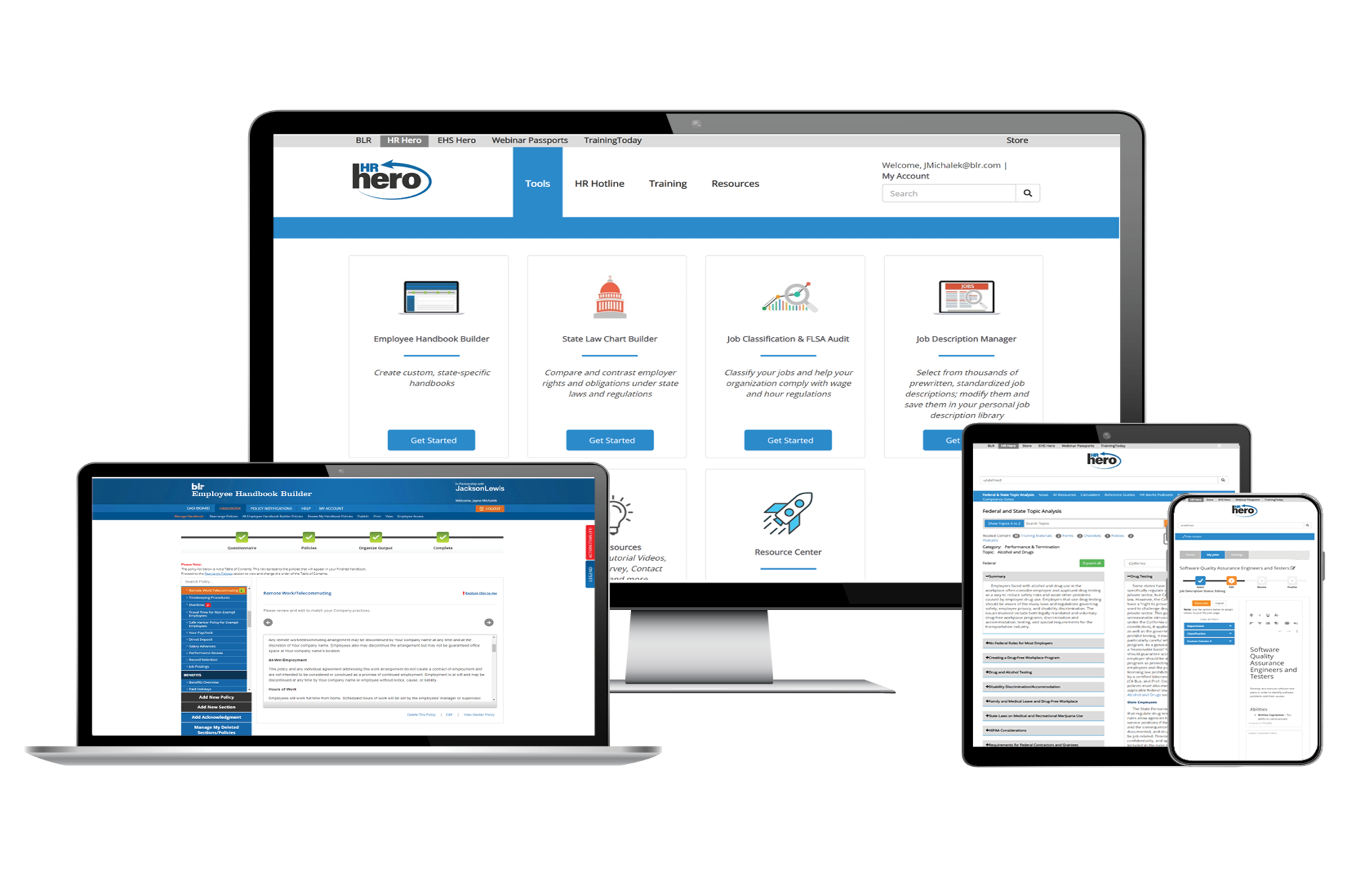
HR Hero is a comprehensive SaaS solution designed specifically for staffing agencies. Its features are geared towards managing handbooks, salary benchmarking, regulatory analysis, and job description management, allowing agencies to streamline their HR processes and ensure compliance at all times.
Best for HR Compliance & Policy Management Tools for Staffing Agencies
Expert Take
HR Hero Compliance Solutions is recognized for its specialized features tailored to staffing agencies, offering comprehensive compliance management tools. The product excels in regulatory analysis and salary benchmarking, crucial for maintaining competitiveness and compliance. Despite limited pricing transparency, its robust capabilities position it as a leader in its niche.
Pros
- Direct access to legal experts via HR Hotline
- Instant side-by-side state vs. federal law comparisons
- Automated Employee Handbook Builder with alerts
- Library of 2,000+ customizable job descriptions
- High customer renewal rate of 5.7x
Cons
- Pricing is hidden and requires a custom quote
- Interface described as outdated by some users
- Document editing can be tedious and slow
- Handbook builder costs may be high for multi-state
- Search functionality sometimes lacks precision
Best for teams that are
- HR generalists needing state-specific legal charts and training
- SMBs requiring an 'HR Hotline' for legal questions
- Teams needing a custom employee handbook builder
Skip if
- Global enterprises needing international legal content
- Companies wanting automated transaction workflows
- Large legal teams who already have internal resources
Best for teams that are
- HR generalists needing state-specific legal charts and training
- SMBs requiring an 'HR Hotline' for legal questions
- Teams needing a custom employee handbook builder
Skip if
- Global enterprises needing international legal content
- Companies wanting automated transaction workflows
- Large legal teams who already have internal resources
Pros
- Direct access to legal experts via HR Hotline
- Instant side-by-side state vs. federal law comparisons
- Automated Employee Handbook Builder with alerts
- Library of 2,000+ customizable job descriptions
- High customer renewal rate of 5.7x
Cons
- Pricing is hidden and requires a custom quote
- Interface described as outdated by some users
- Document editing can be tedious and slow
- Handbook builder costs may be high for multi-state
- Search functionality sometimes lacks precision
Expert Take
HR Hero Compliance Solutions is recognized for its specialized features tailored to staffing agencies, offering comprehensive compliance management tools. The product excels in regulatory analysis and salary benchmarking, crucial for maintaining competitiveness and compliance. Despite limited pricing transparency, its robust capabilities position it as a leader in its niche.
ComplianceHR PolicySmart
Best for HR Compliance & Policy Management Tools for Contractors
ComplianceHR PolicySmart is a focused HR compliance tool for contractors, offering both national and state-specific templates. It's designed to streamline and simplify adherence to HR policies, rules and regulations, making it a critical tool for contractors who need to remain compliant with ever-changing laws.
Best for HR Compliance & Policy Management Tools for Contractors
Expert Take
ComplianceHR PolicySmart excels as a specialized HR compliance tool for contractors, offering tailored templates and expert-backed content. Its focus on state-specific regulations and intuitive interface makes it a valuable asset for maintaining compliance. However, the lack of pricing transparency and potential complexity for non-HR professionals are noted tradeoffs.
Pros
- Backed by Littler Mendelson attorneys
- Covers all 50 U.S. states
- Real-time legal content updates
- Dedicated Customer Success Manager
- Intelligent compliance timeline features
Cons
- No native HRIS integrations
- High starting price ($5,000/year)
- Manual data entry required
- Limited to U.S. jurisdictions
- Custom pricing for enterprise APIs
Best for teams that are
- Multi-state employers needing handbooks that automatically update with local laws
- HR professionals wanting Littler Mendelson's legal expertise without hourly legal fees
- Companies needing to rapidly generate compliant policies for new jurisdictions
Skip if
- Single-state small businesses with very simple policy requirements
- Organizations looking for a full HRIS rather than a specialized policy tool
Best for teams that are
- Multi-state employers needing handbooks that automatically update with local laws
- HR professionals wanting Littler Mendelson's legal expertise without hourly legal fees
- Companies needing to rapidly generate compliant policies for new jurisdictions
Skip if
- Single-state small businesses with very simple policy requirements
- Organizations looking for a full HRIS rather than a specialized policy tool
Pros
- Backed by Littler Mendelson attorneys
- Covers all 50 U.S. states
- Real-time legal content updates
- Dedicated Customer Success Manager
- Intelligent compliance timeline features
Cons
- No native HRIS integrations
- High starting price ($5,000/year)
- Manual data entry required
- Limited to U.S. jurisdictions
- Custom pricing for enterprise APIs
Expert Take
ComplianceHR PolicySmart excels as a specialized HR compliance tool for contractors, offering tailored templates and expert-backed content. Its focus on state-specific regulations and intuitive interface makes it a valuable asset for maintaining compliance. However, the lack of pricing transparency and potential complexity for non-HR professionals are noted tradeoffs.
Aspen HR Suite
Best for HR Compliance & Policy Management Tools for Private Equity Firms

Aspen HR Suite provides a specialized toolkit designed to empower emerging fund managers in private equity, independent sponsors, and search funds. Its focus on practical HR tools and insights specifically tailored for the launch and growth of funds makes it an invaluable asset to the industry. It addresses critical HR compliance and policy management issues that are unique to private equity firms.
Best for HR Compliance & Policy Management Tools for Private Equity Firms
Expert Take
Aspen HR Suite is tailored for the HR compliance needs of private equity firms, offering specialized tools for emerging fund managers. Its focus on compliance and policy management, combined with industry-specific insights, positions it as a top-tier solution in its niche.
Pros
- IRS Certified PEO (CPEO) status
- ESAC accredited financial assurance
- White-glove dedicated support team
- Specialized for Private Equity/VC
- Comprehensive benefits access
Cons
- Pricing not publicly available
- Can be expensive for small businesses
- Integration friction reported by users
- Manual data entry for some flows
- Limited flexibility for customization
Best for teams that are
- PE and VC firms requiring high-touch, white-glove PEO services
- Portfolio companies needing rapid HR infrastructure setup during carve-outs
- Firms wanting Fortune 500-level benefits for small, high-value teams
Skip if
- Large enterprises that have scaled beyond the PEO model
- Companies seeking a low-cost, self-service software-only solution
- Businesses outside the investment sector not needing specialized benefits
Best for teams that are
- PE and VC firms requiring high-touch, white-glove PEO services
- Portfolio companies needing rapid HR infrastructure setup during carve-outs
- Firms wanting Fortune 500-level benefits for small, high-value teams
Skip if
- Large enterprises that have scaled beyond the PEO model
- Companies seeking a low-cost, self-service software-only solution
- Businesses outside the investment sector not needing specialized benefits
Pros
- IRS Certified PEO (CPEO) status
- ESAC accredited financial assurance
- White-glove dedicated support team
- Specialized for Private Equity/VC
- Comprehensive benefits access
Cons
- Pricing not publicly available
- Can be expensive for small businesses
- Integration friction reported by users
- Manual data entry for some flows
- Limited flexibility for customization
Expert Take
Aspen HR Suite is tailored for the HR compliance needs of private equity firms, offering specialized tools for emerging fund managers. Its focus on compliance and policy management, combined with industry-specific insights, positions it as a top-tier solution in its niche.
Mitratech HR Compliance Products
Best for HR Compliance & Policy Management Tools for Contractors
Mitratech’s HR Compliance Products are a comprehensive suite of tools designed specifically for contractors. They address industry-specific needs through workforce management, performance reviews, I-9 compliance, and more. The products, including AssureHire, HotDocs and Trakstar, ensure regulatory compliance and efficient HR processes.
Best for HR Compliance & Policy Management Tools for Contractors
Expert Take
Mitratech HR Compliance Products offer a comprehensive suite tailored for contractors, ensuring regulatory compliance and efficient HR processes. The product's adaptability and industry-specific features make it a top choice for HR compliance management. However, the need for training and lack of transparent pricing are noted tradeoffs.
Pros
- Zero client fines record for Tracker I-9 (20+ years)
- SOC 2 Type 2 and ISO 27001 certified security
- Seamless integrations with Workday, ADP, and iCIMS
- Mobile-first design for remote employee onboarding
- Proactive monitoring of 3,000+ employment laws
Cons
- No public pricing transparency
- PolicyHub interface described as dated by users
- Occasional glitches in I-9 Section 2 submission
- Support response times can be inconsistent
- Complex setup for some enterprise features
Best for teams that are
- Federal contractors requiring strict OFCCP and affirmative action compliance
- High-volume hiring organizations needing automated I-9 and background checks
- Large enterprises managing complex immigration case management
Skip if
- Small businesses needing a simple, all-in-one HR platform
- Companies without federal contracts or high-volume hiring risks
Best for teams that are
- Federal contractors requiring strict OFCCP and affirmative action compliance
- High-volume hiring organizations needing automated I-9 and background checks
- Large enterprises managing complex immigration case management
Skip if
- Small businesses needing a simple, all-in-one HR platform
- Companies without federal contracts or high-volume hiring risks
Pros
- Zero client fines record for Tracker I-9 (20+ years)
- SOC 2 Type 2 and ISO 27001 certified security
- Seamless integrations with Workday, ADP, and iCIMS
- Mobile-first design for remote employee onboarding
- Proactive monitoring of 3,000+ employment laws
Cons
- No public pricing transparency
- PolicyHub interface described as dated by users
- Occasional glitches in I-9 Section 2 submission
- Support response times can be inconsistent
- Complex setup for some enterprise features
Expert Take
Mitratech HR Compliance Products offer a comprehensive suite tailored for contractors, ensuring regulatory compliance and efficient HR processes. The product's adaptability and industry-specific features make it a top choice for HR compliance management. However, the need for training and lack of transparent pricing are noted tradeoffs.
HRlogics for Staffing Agencies
Best for HR Compliance & Policy Management Tools for Recruitment Agencies

HRlogics is a SaaS solution specifically designed for staffing agencies, offering a streamlined process for handling I-9s, managing UI claims, and capturing tax credits. It offers robust HR compliance tools to ensure smooth operations, addressing industry-specific challenges like high turnover rates, diverse clientele, and complex compliance requirements.
Best for HR Compliance & Policy Management Tools for Recruitment Agencies
Expert Take
Our analysis shows HRlogics effectively consolidates critical staffing compliance needs—specifically Unemployment Claims Management (UCM) and WOTC—into a single 'Compliance Hive.' Research indicates their UCM module (formerly Unemployment Tracker) is a market leader with a documented 98.7% protest win rate, directly protecting staffing margins. We appreciate the deep integration with industry-standard ATS platforms like Bullhorn and Avionté, which allows compliance data to sync automatically without disrupting recruiter workflows.
Pros
- 98.7% unemployment protest win rate
- Zero-cost employment verification tool
- Integrates with Bullhorn and Avionté
- Automated WOTC screening
- Mobile-friendly I-9 for field talent
Cons
- Strict non-refundable policy
- No public pricing for core modules
- Complex multi-module ecosystem
- Requires contact for implementation
- Legacy interface on some tools
Best for teams that are
- Staffing agencies managing high-volume, high-turnover onboarding
- Firms needing integrated WOTC, I-9, and unemployment claims tools
- Organizations requiring bulk processing for compliance documentation
Skip if
- Corporate employers with low hiring volume and stable workforces
- Companies seeking a generalist HRIS or payroll system
- Small businesses that do not qualify for significant tax credits
Best for teams that are
- Staffing agencies managing high-volume, high-turnover onboarding
- Firms needing integrated WOTC, I-9, and unemployment claims tools
- Organizations requiring bulk processing for compliance documentation
Skip if
- Corporate employers with low hiring volume and stable workforces
- Companies seeking a generalist HRIS or payroll system
- Small businesses that do not qualify for significant tax credits
Pros
- 98.7% unemployment protest win rate
- Zero-cost employment verification tool
- Integrates with Bullhorn and Avionté
- Automated WOTC screening
- Mobile-friendly I-9 for field talent
Cons
- Strict non-refundable policy
- No public pricing for core modules
- Complex multi-module ecosystem
- Requires contact for implementation
- Legacy interface on some tools
Expert Take
Our analysis shows HRlogics effectively consolidates critical staffing compliance needs—specifically Unemployment Claims Management (UCM) and WOTC—into a single 'Compliance Hive.' Research indicates their UCM module (formerly Unemployment Tracker) is a market leader with a documented 98.7% protest win rate, directly protecting staffing margins. We appreciate the deep integration with industry-standard ATS platforms like Bullhorn and Avionté, which allows compliance data to sync automatically without disrupting recruiter workflows.
ComplyFlow Compliance Management
Best for HR Compliance & Policy Management Tools for Contractors

ComplyFlow is a perfect fit for contractors in industries that require stringent compliance standards. The software uses AI to meticulously review documents against individual compliance criteria, streamlining the process and reducing the risk of human error. It's ideal for HR and project managers in the construction, engineering, and utilities sectors, who need to manage contractor compliance effectively.
Best for HR Compliance & Policy Management Tools for Contractors
Expert Take
ComplyFlow excels in providing AI-driven compliance management tailored for contractors in high-regulation industries. Its capabilities in document review and customizable compliance criteria make it a leader in its niche. Despite limited pricing transparency, its comprehensive feature set and industry relevance justify its premium positioning.
Pros
- Free Starter plan for enterprises
- AI-automated document reviews
- ISO 27001 certified security
- Transparent public pricing
- Modular 'pick-and-choose' tools
Cons
- Suppliers pay worker license fees
- Limited support on free plans
- Steep learning curve for beginners
- Low third-party review volume
Best for teams that are
- High-risk industries like mining, construction, and logistics managing contractor safety
- Companies operating in Australia/NZ needing specific WHS compliance tools
- Enterprises requiring strict supplier prequalification and site access control
Skip if
- US-based office environments with low physical safety risks
- Small businesses that do not manage a complex supply chain of contractors
Best for teams that are
- High-risk industries like mining, construction, and logistics managing contractor safety
- Companies operating in Australia/NZ needing specific WHS compliance tools
- Enterprises requiring strict supplier prequalification and site access control
Skip if
- US-based office environments with low physical safety risks
- Small businesses that do not manage a complex supply chain of contractors
Pros
- Free Starter plan for enterprises
- AI-automated document reviews
- ISO 27001 certified security
- Transparent public pricing
- Modular 'pick-and-choose' tools
Cons
- Suppliers pay worker license fees
- Limited support on free plans
- Steep learning curve for beginners
- Low third-party review volume
Expert Take
ComplyFlow excels in providing AI-driven compliance management tailored for contractors in high-regulation industries. Its capabilities in document review and customizable compliance criteria make it a leader in its niche. Despite limited pricing transparency, its comprehensive feature set and industry relevance justify its premium positioning.
LogicManager HR Policy Management
Best for HR Compliance & Policy Management Tools for Contractors
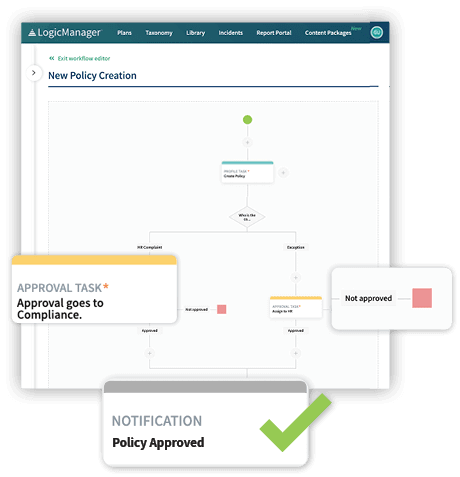
LogicManager's HR Policy Management is a unique solution designed to cater to contractors in need of robust HR compliance and policy management. It streamlines and automates HR workflows, ensuring adaptability and regulatory compliance, specifically addressing the unique challenges faced by contractors.
Best for HR Compliance & Policy Management Tools for Contractors
Expert Take
LogicManager HR Policy Management excels in providing a comprehensive solution tailored for contractors, with strong capabilities in automating HR workflows and ensuring compliance. Its market credibility is supported by external validations, and it offers a user-friendly experience despite its complexity. Pricing transparency is limited due to enterprise-level customization.
Pros
- Unlimited user licensing model
- AI-driven 'Risk Ripple' intelligence
- 90-day unconditional money-back guarantee
- Deep Office 365 integration
- Automated 'One-Click Compliance' mapping
Cons
- Reporting interface can be complex
- No public pricing transparency
- Steep learning curve for some
- Implementation may require support
- Outdated UI elements noted by users
Best for teams that are
- Highly regulated industries (finance, healthcare) managing HR as a corporate risk
- Enterprises needing to link HR policies directly to risk controls and audit trails
- Organizations requiring robust governance and attestation tracking for compliance
Skip if
- Small to mid-sized businesses needing only basic handbook distribution
- HR teams looking for a standalone HRIS or payroll solution
Best for teams that are
- Highly regulated industries (finance, healthcare) managing HR as a corporate risk
- Enterprises needing to link HR policies directly to risk controls and audit trails
- Organizations requiring robust governance and attestation tracking for compliance
Skip if
- Small to mid-sized businesses needing only basic handbook distribution
- HR teams looking for a standalone HRIS or payroll solution
Pros
- Unlimited user licensing model
- AI-driven 'Risk Ripple' intelligence
- 90-day unconditional money-back guarantee
- Deep Office 365 integration
- Automated 'One-Click Compliance' mapping
Cons
- Reporting interface can be complex
- No public pricing transparency
- Steep learning curve for some
- Implementation may require support
- Outdated UI elements noted by users
Expert Take
LogicManager HR Policy Management excels in providing a comprehensive solution tailored for contractors, with strong capabilities in automating HR workflows and ensuring compliance. Its market credibility is supported by external validations, and it offers a user-friendly experience despite its complexity. Pricing transparency is limited due to enterprise-level customization.
Explore Categories
- HR Compliance & Policy Management Tools for Contractors
- HR Compliance & Policy Management Tools for Private Equity Firms
- HR Compliance & Policy Management Tools for Recruitment Agencies
- HR Compliance & Policy Management Tools for SaaS Companies
- HR Compliance & Policy Management Tools for Staffing Agencies