


Recent research into Omnichannel Marketing Automation Platforms reveals a decisive shift toward "Mobile-First" engagement strategies, specifically the resurgence of SMS as a dominant channel over traditional email automation. The data indicates that while email remains a staple for detailed communication, consumer preference for texting has steadily climbed year-over-year, driving a massive increase in business adoption of SMS marketing software—from 55% in 2022 to 80% in 2024. This trend is particularly interesting because it highlights a widening "engagement gap," where SMS boasts a 98%
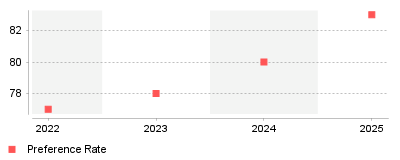
| Year | Preference Rate |
|---|---|
| 2022 | 77 |
| 2023 | 78 |
| 2024 | 80 |
| 2025 | 83 |
The data illustrates a relentless upward trajectory in mobile consumer behavior, where texting has solidified its position as the primary activity on mobile devices, rising from 77% in 2022 to 83% in 2025 [1]. Concurrently, consumer willingness to engage with brands via this channel has surged, with opt-in rates jumping to 84% in 2025, a significant increase from 79% just a year prior [1]. This signals a market correction where automation platforms are moving away from email-exclusive strategies to hybrid models that prioritize SMS for immediate reach.
For the marketing automation industry, this trend signifies the end of "spray and pray" email tactics and the rise of high-stakes, high-permission mobile marketing. Micro-level implications include the need for stricter data compliance and "smart" sending windows, as SMS is more intrusive than email; however, the macro implication is a revaluation of digital real estate, where a phone number is now arguably more valuable than an email address due to the immediacy of access [2]. Platforms that fail to offer robust, native SMS integration—beyond simple plug-ins—risk obsolescence as businesses demand tools that can handle the 98% open rates and 45% response rates associated with texting [3]. We are witnessing a bifurcation in channel purpose: email is becoming the channel for "storage" and long-form education, while SMS is becoming the channel for "action" and instant conversion [4].
This shift is critical because the efficiency gap between channels has become too large to ignore; SMS marketing delivers response rates nearly seven times higher than email (45% vs. 6%) [5]. In an economic environment demanding efficiency, the ability of SMS to drive a 7100% ROI makes it an indispensable asset for revenue generation rather than just a support channel [2]. Furthermore, with 90% of messages read within three minutes, SMS offers the only reliable "real-time" connection to consumers in an increasingly fragmented digital landscape [2].
The primary driver is likely the saturation and filtering of email inboxes; as providers like and Apple aggressively categorize promotional emails into "spam" or "promotions" folders, brands have been forced to seek direct access to the lock screen [4]. Additionally, the pandemic accelerated mobile dependency, solidifying the smartphone as the remote control for daily life, from delivery notifications to appointment reminders [1]. We can also speculate that the "cookie-less" future and privacy changes have made first-party data (like phone numbers) a safer, more stable investment for marketers than third-party ad targeting [6].
The "mobile-first" automation trend is not merely a feature update but a fundamental restructuring of how brands initiate consumer contact. As business adoption of SMS software hits 80%, the competitive advantage will soon shift from having SMS capabilities to optimizing them with AI and personalization to prevent fatigue [3]. The key takeaway for omnichannel strategies in 2025 is clear: if your automation flow does not start or intervene with SMS, you are likely missing 98% of your audience's attention [5].
The evolution of customer engagement has forced a paradigm shift from simple multichannel presence to complex omnichannel orchestration. Unlike multichannel strategies, which allow channels to operate in silos, omnichannel marketing automation requires the seamless synchronization of data, messaging, and inventory across every touchpoint—digital and physical. As enterprises face tightening budgets and heightened consumer expectations in 2024 and 2025, the operational demands of these platforms have intensified. The industry is currently characterized by a dichotomy: the immense potential of AI-driven personalization versus the stark reality of technical debt, data fragmentation, and underutilization of existing technology stacks.
Market projections underscore the criticality of this sector. The global marketing automation market is projected to grow from approximately $47 billion in 2025 to over $81 billion by 2030, driven largely by the integration of artificial intelligence and predictive analytics [1]. However, this growth trajectory masks significant operational friction. Chief Marketing Officers (CMOs) are operating in an "era of less," with marketing budgets falling to just 7.7% of overall company revenue in 2024, down from 9.1% the previous year [2]. Consequently, the focus has shifted from acquiring expansive new marketing and advertising platforms to optimizing current infrastructure and solving the persistent challenges of data quality and integration.
While the promise of omnichannel automation is a unified customer view, the operational reality is often a fragmented ecosystem that hinders execution. The following challenges represent the most significant barriers to value realization in 2024 and 2025.

Data is the fuel for automation, yet it remains the most significant choke point for omnichannel efficacy. Without accurate, real-time data, automation engines misfire, sending irrelevant or conflicting messages that damage brand equity. Research indicates that poor data quality costs organizations an average of $12.9 million annually [3]. This financial impact manifests through wasted media spend, lost productivity, and the "emotional tax" of correcting avoidable errors [4].
The challenge is exacerbated by the sheer volume of data sources. As brands integrate more channels—from SMS and social media to IoT and in-store POS systems—maintaining a "single source of truth" becomes exponentially difficult. Inconsistent data standards across legacy systems often result in identity resolution failures, where a high-value customer on mobile is treated as a stranger on desktop. This disconnect directly undermines the core value proposition of multichannel marketing automation platforms, which rely on unified profiles to trigger contextually relevant actions.
A critical operational inefficiency facing the industry is the widening gap between technology capability and actual usage. Gartner’s 2025 Marketing Technology Survey reveals a startling statistic: marketing technology utilization has dropped to just 49% [5]. This figure suggests that organizations are paying for sophisticated capabilities—such as advanced attribution modeling, AI-driven journey orchestration, and predictive scoring—that sit dormant.
This underutilization is rarely due to a lack of desire but rather a lack of operational readiness. Complex platforms often require specialized skills that internal teams lack, leading to "trigger fatigue" and over-engineered workflows that fail to deliver ROI [6]. Furthermore, the complexity of managing these massive stacks has led to a "radical reprioritization," where CMOs are cutting spend on technology and labor to protect paid media investments [7]. The operational challenge, therefore, is not acquiring more tools, but simplifying the stack to ensure that deployed omnichannel automation tools for ecommerce and other sectors are actually usable by the average marketer.
For retail and direct-to-consumer (DTC) brands, the separation between marketing data and operational data (inventory, logistics) is a fatal flaw. True omnichannel automation requires real-time visibility into inventory levels to prevent promoting out-of-stock items—a scenario that alienates customers. However, disparate systems often result in data latency.
The operational hurdle lies in connecting the marketing automation layer with Enterprise Resource Planning (ERP) and Order Management Systems (OMS). Without this integration, brands cannot execute high-value use cases like "Buy Online, Pick Up In-Store" (BOPIS) notifications or automated back-in-stock alerts effectively. This is particularly acute for retailers relying on legacy architectures that were never designed for real-time data exchange [8]. Modern omnichannel automation tools for ecommerce must bridge this gap, serving as the connective tissue between demand generation and fulfillment logic.
In response to these operational challenges, the market is evolving. Vendors and practitioners are moving away from rigid, all-in-one suites toward more flexible, intelligent architectures. Three dominant trends are reshaping the sector.
The debate between monolithic suites and composable architecture has moved to the forefront of strategic planning. Monolithic platforms, while offering stability, often lack the flexibility to adapt to new channels quickly. In contrast, composable architecture allows organizations to assemble "best-of-breed" solutions—combining a specialized email engine, a separate Customer Data Platform (CDP), and a distinct mobile messaging tool—connected via APIs [9].
This trend is driven by the need for agility. A composable approach enables businesses to swap out underperforming modules without ripping and replacing the entire stack. By 2025, this modularity is expected to be a standard requirement for enterprise deployments, allowing brands to tailor their multichannel marketing automation platforms to specific business needs rather than adapting their business to the software's limitations [10]. However, this approach shifts the burden of integration onto the customer, requiring robust internal technical resources to manage the connections between components [11].
Artificial Intelligence has graduated from basic segmentation to "agentic" workflows. Generative AI is now being embedded directly into marketing platforms to not only create content but to autonomously plan and execute campaigns. For example, AI agents can now analyze customer intent in real-time and determine the next best action—whether that be a support intervention, a promotional offer, or silence—without explicit rule-setting by a human marketer [12].
This capability unlocks hyper-personalization at scale. Research from McKinsey highlights that fast-growing companies generate 40% more revenue from personalization than their slower-growing counterparts [13]. The trend is moving toward predictive personalization, where the system anticipates needs based on subtle behavioral signals (e.g., dwell time, scroll depth) rather than just transactional history [14]. This shifts automation from a reactive stance (triggered by a click) to a proactive stance (triggered by a probability score).
Traditionally, advertising technology (paid media) and marketing technology (owned channels like email/app) operated in silos. A significant trend in 2024 is the convergence of these disciplines within omnichannel platforms. By feeding first-party data from automation platforms into advertising ecosystems (like Google or Meta), brands can suppress ads for customers who have already purchased or create lookalike audiences based on high-value segments [15].
This convergence is essential for budget efficiency. With customer acquisition costs rising, utilizing first-party data to refine ad targeting ensures that limited media budgets are not wasted on low-quality prospects. Advanced omnichannel automation tools for ecommerce are increasingly acting as the "brain" that directs both paid and owned channel execution, ensuring a consistent narrative regardless of where the interaction occurs [16].
The operational and technical shifts described above have profound implications for business strategy and financial performance. The correlation between advanced omnichannel maturity and revenue growth is becoming undeniable.
Implementing targeted, personalized promotions through automation does more than just drive top-line revenue; it protects margins. By using data to determine the minimum incentive required to convert a specific customer, brands can avoid blanket discounting. McKinsey notes that companies deploying smart, targeted offers can see a 1% to 3% improvement in margins and a 1% to 2% lift in sales [17]. In an environment where every percentage point of margin is scrutinized, this efficiency is a primary driver for automation investment.
Organizations that delay addressing their data quality and integration challenges face compounding costs. The "1-10-100 rule" of data quality suggests that preventing a data error costs $1, correcting it effectively costs $10, and letting it reach the customer costs $100 in lost revenue and reputation [4]. Therefore, the business case for modernizing marketing and advertising platforms is not just about new features; it is about risk mitigation and operational hygiene. Legacy governance frameworks, designed for compliance rather than velocity, are breaking under the pressure of real-time data demands, creating financial risks that regulators may penalize in 2025 [4].
For buyers, the criteria for selecting vendors have shifted. The focus is less on the breadth of features (which are often underutilized) and more on "time to value" and ease of integration. Vendors are being evaluated on their ability to ingest data from cloud data warehouses (like Snowflake or Databricks) directly, without complex copying or synchronization processes (Zero Copy architecture) [18]. This "warehouse-native" approach reduces implementation time and ensures that marketing data is always consistent with the broader enterprise data strategy.
As we look toward 2025, the trajectory of omnichannel marketing automation points toward increased autonomy and invisibility. Automation will move from being a tool that marketers "drive" to an engine that marketers "supervise."
In conclusion, while the technology powering omnichannel marketing is advancing rapidly, success in 2025 will depend on operational fundamentals. Brands that prioritize data quality, simplify their tech stacks to improve utilization, and break down the silos between marketing and operations will emerge as leaders. Those that continue to layer complex tools atop broken data foundations will struggle to realize the promised ROI of automation.
Recent research into Omnichannel Marketing Automation Platforms reveals a decisive shift toward "Mobile-First" engagement strategies, specifically the resurgence of SMS as a dominant channel over traditional email automation. The data indicates that while email remains a staple for detailed communication, consumer preference for texting has steadily climbed year-over-year, driving a massive increase in business adoption of SMS marketing software—from 55% in 2022 to 80% in 2024. This trend is particularly interesting because it highlights a widening "engagement gap," where SMS boasts a 98%
| Year | Preference Rate |
|---|---|
| 2022 | 77 |
| 2023 | 78 |
| 2024 | 80 |
| 2025 | 83 |
The data illustrates a relentless upward trajectory in mobile consumer behavior, where texting has solidified its position as the primary activity on mobile devices, rising from 77% in 2022 to 83% in 2025 [1]. Concurrently, consumer willingness to engage with brands via this channel has surged, with opt-in rates jumping to 84% in 2025, a significant increase from 79% just a year prior [1]. This signals a market correction where automation platforms are moving away from email-exclusive strategies to hybrid models that prioritize SMS for immediate reach.
For the marketing automation industry, this trend signifies the end of "spray and pray" email tactics and the rise of high-stakes, high-permission mobile marketing. Micro-level implications include the need for stricter data compliance and "smart" sending windows, as SMS is more intrusive than email; however, the macro implication is a revaluation of digital real estate, where a phone number is now arguably more valuable than an email address due to the immediacy of access [2]. Platforms that fail to offer robust, native SMS integration—beyond simple plug-ins—risk obsolescence as businesses demand tools that can handle the 98% open rates and 45% response rates associated with texting [3]. We are witnessing a bifurcation in channel purpose: email is becoming the channel for "storage" and long-form education, while SMS is becoming the channel for "action" and instant conversion [4].
This shift is critical because the efficiency gap between channels has become too large to ignore; SMS marketing delivers response rates nearly seven times higher than email (45% vs. 6%) [5]. In an economic environment demanding efficiency, the ability of SMS to drive a 7100% ROI makes it an indispensable asset for revenue generation rather than just a support channel [2]. Furthermore, with 90% of messages read within three minutes, SMS offers the only reliable "real-time" connection to consumers in an increasingly fragmented digital landscape [2].
The primary driver is likely the saturation and filtering of email inboxes; as providers like and Apple aggressively categorize promotional emails into "spam" or "promotions" folders, brands have been forced to seek direct access to the lock screen [4]. Additionally, the pandemic accelerated mobile dependency, solidifying the smartphone as the remote control for daily life, from delivery notifications to appointment reminders [1]. We can also speculate that the "cookie-less" future and privacy changes have made first-party data (like phone numbers) a safer, more stable investment for marketers than third-party ad targeting [6].
The "mobile-first" automation trend is not merely a feature update but a fundamental restructuring of how brands initiate consumer contact. As business adoption of SMS software hits 80%, the competitive advantage will soon shift from having SMS capabilities to optimizing them with AI and personalization to prevent fatigue [3]. The key takeaway for omnichannel strategies in 2025 is clear: if your automation flow does not start or intervene with SMS, you are likely missing 98% of your audience's attention [5].