
SIEM & Security Analytics Platforms

These are the specialized categories within SIEM & Security Analytics Platforms. Looking for something broader? See all Cybersecurity, Privacy & Compliance Software categories.

1
Score
9.9 / 10
1
9.9 / 10
LRQA SIEM Services

LRQA's Security Information and Event Management (SIEM) Services is a next-gen solution tailored for marketing agencies, emphasizing the detection, analysis, and response to security events and threats. It addresses the industry's unique needs by securing sensitive data, enabling compliance and offering unrivalled visibility into potential cybersecurity threats.

Best for Security Information & Event Management (SIEM) for Marketing Agencies

Expert Take

LRQA SIEM Services offers advanced threat detection and compliance support tailored for marketing agencies, making it a top choice in its niche. Its strong market credibility and robust capabilities are supported by industry recognition and comprehensive documentation.

Pros

  • Full suite of CREST accreditations
  • NCSC CIR Level 2 Assured
  • Microsoft Solutions Partner for Security
  • Transparent G-Cloud base pricing
  • Integrated Threat Intelligence (6.5T signals)

Cons

  • Heavy reliance on Microsoft Sentinel
  • Ambiguous 'unit' pricing definition
  • Manual scoping required for final cost
  • Limited user control over integrations
  • Complex setup for non-Azure clients

Best for teams that are

  • Organizations seeking a fully managed SIEM service with 24/7 SOC monitoring
  • Businesses needing CREST-accredited compliance and threat detection expertise
  • Companies wanting to outsource security operations rather than build in-house

Skip if

  • Teams wanting to purchase and manage their own SIEM software in-house
  • Organizations with small budgets not requiring a full managed security service
  • Enterprises preferring to keep all security data and operations internal

Best for teams that are

  • Organizations seeking a fully managed SIEM service with 24/7 SOC monitoring
  • Businesses needing CREST-accredited compliance and threat detection expertise
  • Companies wanting to outsource security operations rather than build in-house

Skip if

  • Teams wanting to purchase and manage their own SIEM software in-house
  • Organizations with small budgets not requiring a full managed security service
  • Enterprises preferring to keep all security data and operations internal

Pros

  • Full suite of CREST accreditations
  • NCSC CIR Level 2 Assured
  • Microsoft Solutions Partner for Security
  • Transparent G-Cloud base pricing
  • Integrated Threat Intelligence (6.5T signals)

Cons

  • Heavy reliance on Microsoft Sentinel
  • Ambiguous 'unit' pricing definition
  • Manual scoping required for final cost
  • Limited user control over integrations
  • Complex setup for non-Azure clients

Expert Take

LRQA SIEM Services offers advanced threat detection and compliance support tailored for marketing agencies, making it a top choice in its niche. Its strong market credibility and robust capabilities are supported by industry recognition and comprehensive documentation.

2
Score
9.8 / 10
CrowdStrike Falcon SIEM

CrowdStrike Falcon SIEM is designed specifically for digital marketing agencies that need to protect their clients' data and respond to security threats in real-time. Its AI-powered threat detection and response, along with deep visibility into all network events, enable agencies to maintain the utmost data integrity and confidentiality.

Best for Security Information & Event Management (SIEM) for Digital Marketing Agencies

Expert Take

CrowdStrike Falcon SIEM is positioned as a leading solution for digital marketing agencies, offering AI-powered threat detection and real-time response capabilities. Its design caters specifically to the needs of these agencies, ensuring data integrity and security. The product's strong market credibility and comprehensive feature set justify its high scores.

Pros

  • 150x faster search speed via index-free architecture
  • Scales to over 1 petabyte of daily data ingestion
  • Unified agent for EDR, identity, and SIEM data
  • Ecosystem supports 500+ ISV data source integrations
  • AI-native automation with Charlotte AI integration

Cons

  • Steep learning curve for CrowdStrike Query Language (CQL)
  • Custom log parsing requires manual tuning
  • Premium pricing for heavy log retention
  • Reporting customization can be complex for new users
  • UI performance can lag under very high query loads

Best for teams that are

  • Organizations already consolidated on the CrowdStrike Falcon platform
  • Enterprises requiring high-speed search and petabyte-scale log management
  • Teams needing unified endpoint, identity, and cloud telemetry

Skip if

  • Small businesses seeking a low-cost, standalone log tool
  • Organizations not interested in the broader CrowdStrike ecosystem
  • Teams needing extensive support for legacy on-premise data sources

Best for teams that are

  • Organizations already consolidated on the CrowdStrike Falcon platform
  • Enterprises requiring high-speed search and petabyte-scale log management
  • Teams needing unified endpoint, identity, and cloud telemetry

Skip if

  • Small businesses seeking a low-cost, standalone log tool
  • Organizations not interested in the broader CrowdStrike ecosystem
  • Teams needing extensive support for legacy on-premise data sources

Pros

  • 150x faster search speed via index-free architecture
  • Scales to over 1 petabyte of daily data ingestion
  • Unified agent for EDR, identity, and SIEM data
  • Ecosystem supports 500+ ISV data source integrations
  • AI-native automation with Charlotte AI integration

Cons

  • Steep learning curve for CrowdStrike Query Language (CQL)
  • Custom log parsing requires manual tuning
  • Premium pricing for heavy log retention
  • Reporting customization can be complex for new users
  • UI performance can lag under very high query loads

Expert Take

CrowdStrike Falcon SIEM is positioned as a leading solution for digital marketing agencies, offering AI-powered threat detection and real-time response capabilities. Its design caters specifically to the needs of these agencies, ensuring data integrity and security. The product's strong market credibility and comprehensive feature set justify its high scores.

3
Score
9.8 / 10
Imperva SIEM Solution

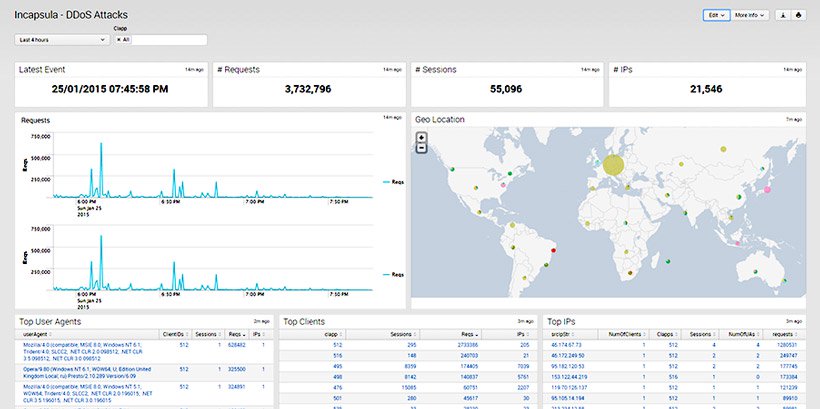
Imperva's Security Information and Event Management (SIEM) Solution offers a comprehensive view of an organization's cybersecurity landscape. Designed specifically for cybersecurity firms, it addresses their need for real-time monitoring, trend analysis, and incident response, thus enabling them to identify and mitigate security threats more effectively.

Best for Security Information & Event Management (SIEM) for Cybersecurity Firms
Expert Take

Imperva SIEM Solution is recognized for its comprehensive capabilities in real-time threat detection and compliance with industry standards, making it a top choice for cybersecurity firms. While the implementation process may be complex, its robust features and scalability justify its premium positioning.

Pros

  • Reduces SIEM ingestion costs by ~90%
  • AI correlates millions of events into narratives
  • Low false positive rate for web threats
  • Deep visibility into database activity
  • 260+ out-of-the-box integrations

Cons

  • Expensive enterprise pricing model
  • Steep learning curve for new users
  • UI can be laggy and confusing
  • Support sometimes relies on documentation
  • Not a standalone general IT SIEM

Best for teams that are

  • Existing Imperva WAF or Database Security customers
  • Teams needing to integrate application attack data into Splunk or Sentinel
  • Enterprises requiring granular visibility into web and database threats

Skip if

  • Organizations looking for a standalone, general-purpose SIEM
  • Non-Imperva customers as it requires Imperva products to function
  • Small businesses without an existing primary SIEM platform

Best for teams that are

  • Existing Imperva WAF or Database Security customers
  • Teams needing to integrate application attack data into Splunk or Sentinel
  • Enterprises requiring granular visibility into web and database threats

Skip if

  • Organizations looking for a standalone, general-purpose SIEM
  • Non-Imperva customers as it requires Imperva products to function
  • Small businesses without an existing primary SIEM platform

Pros

  • Reduces SIEM ingestion costs by ~90%
  • AI correlates millions of events into narratives
  • Low false positive rate for web threats
  • Deep visibility into database activity
  • 260+ out-of-the-box integrations

Cons

  • Expensive enterprise pricing model
  • Steep learning curve for new users
  • UI can be laggy and confusing
  • Support sometimes relies on documentation
  • Not a standalone general IT SIEM

Expert Take

Imperva SIEM Solution is recognized for its comprehensive capabilities in real-time threat detection and compliance with industry standards, making it a top choice for cybersecurity firms. While the implementation process may be complex, its robust features and scalability justify its premium positioning.

4
Score
9.8 / 10
Securonix SIEM Solution

Securonix SIEM Solution is a specifically designed system for contractors seeking to improve their cybersecurity measures. It is capable of ingesting all data across the enterprise, normalizing it to make it more understandable, and then applying analytics and threat detection algorithms to identify potential risks. It fills the industry's need for a robust, comprehensive, and efficient cybersecurity tool.

Best for Security Information & Event Management (SIEM) for Contractors
Expert Take

Securonix SIEM Solution is recognized for its comprehensive data ingestion, advanced analytics, and customizable threat detection, making it a top choice for contractors in the cybersecurity sector. Its market credibility is reinforced by industry certifications and partnerships, while its usability is supported by an intuitive interface and 24/7 support.

Pros

  • Built on Snowflake for massive scalability
  • 365 days of 'Hot' searchable data
  • Pioneering UEBA and behavioral analytics
  • 6-time Gartner Magic Quadrant Leader
  • AI-Reinforced threat detection (Agentic AI)

Cons

  • High starting price (approx. $67k/year)
  • Support response times can be slow
  • Custom data parsing is complex
  • Report generation performance issues
  • Steep learning curve for advanced features

Best for teams that are

  • Large enterprises dealing with massive data volumes and complex insider threats
  • Organizations prioritizing advanced User and Entity Behavior Analytics (UEBA)
  • Security teams needing a scalable solution built on Snowflake Data Cloud

Skip if

  • Small businesses with simple logging and compliance requirements
  • Organizations with low security maturity looking for basic tools
  • Teams with small budgets unable to support an enterprise-grade analytics platform

Best for teams that are

  • Large enterprises dealing with massive data volumes and complex insider threats
  • Organizations prioritizing advanced User and Entity Behavior Analytics (UEBA)
  • Security teams needing a scalable solution built on Snowflake Data Cloud

Skip if

  • Small businesses with simple logging and compliance requirements
  • Organizations with low security maturity looking for basic tools
  • Teams with small budgets unable to support an enterprise-grade analytics platform

Pros

  • Built on Snowflake for massive scalability
  • 365 days of 'Hot' searchable data
  • Pioneering UEBA and behavioral analytics
  • 6-time Gartner Magic Quadrant Leader
  • AI-Reinforced threat detection (Agentic AI)

Cons

  • High starting price (approx. $67k/year)
  • Support response times can be slow
  • Custom data parsing is complex
  • Report generation performance issues
  • Steep learning curve for advanced features

Expert Take

Securonix SIEM Solution is recognized for its comprehensive data ingestion, advanced analytics, and customizable threat detection, making it a top choice for contractors in the cybersecurity sector. Its market credibility is reinforced by industry certifications and partnerships, while its usability is supported by an intuitive interface and 24/7 support.

5
Score
9.7 / 10
Bridewell Managed SIEM

Bridewell's Managed SIEM is tailored for marketing agencies, providing real-time visibility into threats and anomalies. It supports incident response and forensics, crucial for data-driven sectors like marketing where data security is paramount.

Best for Security Information & Event Management (SIEM) for Marketing Agencies
Expert Take

Bridewell Managed SIEM is a specialized solution for marketing agencies, offering robust capabilities in threat detection and incident response. Its market credibility is supported by third-party recognitions, and it provides a strong user experience with 24/7 support. However, its enterprise pricing may limit accessibility for smaller agencies.

Pros

  • NCSC Assured & CREST Accredited
  • Specialized in Critical National Infrastructure
  • Proprietary Cybiquity Defend portal
  • 24/7 UK-based Security Operations Centre
  • Rapid "Deployment as Code" methodology

Cons

  • Potential SaaS API integration limitations
  • Deployment costs charged separately
  • Heavily centered on Microsoft Sentinel
  • Variable pricing based on scope

Best for teams that are

  • Highly regulated sectors like critical infrastructure needing 24/7 managed detection
  • Organizations adopting Microsoft Sentinel but lacking in-house SOC staff
  • Enterprises requiring a hybrid or co-managed SOC model

Skip if

  • Companies seeking a standalone software license to manage themselves
  • Small businesses with low security maturity not needing enterprise services
  • Organizations not interested in using Microsoft Sentinel as the underlying tech

Best for teams that are

  • Highly regulated sectors like critical infrastructure needing 24/7 managed detection
  • Organizations adopting Microsoft Sentinel but lacking in-house SOC staff
  • Enterprises requiring a hybrid or co-managed SOC model

Skip if

  • Companies seeking a standalone software license to manage themselves
  • Small businesses with low security maturity not needing enterprise services
  • Organizations not interested in using Microsoft Sentinel as the underlying tech

Pros

  • NCSC Assured & CREST Accredited
  • Specialized in Critical National Infrastructure
  • Proprietary Cybiquity Defend portal
  • 24/7 UK-based Security Operations Centre
  • Rapid "Deployment as Code" methodology

Cons

  • Potential SaaS API integration limitations
  • Deployment costs charged separately
  • Heavily centered on Microsoft Sentinel
  • Variable pricing based on scope

Expert Take

Bridewell Managed SIEM is a specialized solution for marketing agencies, offering robust capabilities in threat detection and incident response. Its market credibility is supported by third-party recognitions, and it provides a strong user experience with 24/7 support. However, its enterprise pricing may limit accessibility for smaller agencies.

6
Score
9.7 / 10
Deloitte SIEM Technology

Deloitte's Security Information and Event Management (SIEM) Technology is a powerful tool specifically designed for accountants to detect and respond to security threats promptly. The software addresses the industry's need for robust cybersecurity measures and compliance with privacy laws while managing vast amounts of sensitive financial data.

Best for Security Information & Event Management (SIEM) for Accountants
Expert Take

Deloitte SIEM Technology is tailored for the financial sector, offering advanced threat detection and compliance support. Its market credibility is reinforced by Deloitte's established reputation in cybersecurity. While pricing transparency is limited, the product's depth and usability for accountants handling sensitive data justify its premium positioning.

Pros

  • Tailored for financial sector
  • Advanced threat detection
  • Compliance support
  • In-depth security insights

Cons

  • No clear pricing structure
  • May be complex for beginners

Best for teams that are

  • Large organizations looking to outsource security operations via a Managed Service (MXDR)
  • Enterprises with complex regulatory requirements needing expert consulting and risk advisory
  • Companies wanting 24/7 threat monitoring without hiring and training internal SOC staff

Skip if

  • IT teams looking to purchase and manage their own standalone SIEM software license
  • Small businesses with low budgets unable to afford premium managed consulting services
  • Organizations that prefer keeping all security data and operations strictly in-house

Best for teams that are

  • Large organizations looking to outsource security operations via a Managed Service (MXDR)
  • Enterprises with complex regulatory requirements needing expert consulting and risk advisory
  • Companies wanting 24/7 threat monitoring without hiring and training internal SOC staff

Skip if

  • IT teams looking to purchase and manage their own standalone SIEM software license
  • Small businesses with low budgets unable to afford premium managed consulting services
  • Organizations that prefer keeping all security data and operations strictly in-house

Pros

  • Tailored for financial sector
  • Advanced threat detection
  • Compliance support
  • In-depth security insights

Cons

  • No clear pricing structure
  • May be complex for beginners

Expert Take

Deloitte SIEM Technology is tailored for the financial sector, offering advanced threat detection and compliance support. Its market credibility is reinforced by Deloitte's established reputation in cybersecurity. While pricing transparency is limited, the product's depth and usability for accountants handling sensitive data justify its premium positioning.

7
Score
9.7 / 10
Rapid7 SIEM Solution

Rapid7's SIEM solution is specifically tailored for marketing agencies needing to handle large volumes of security data. With its ability to collect, correlate, and analyze security data in real-time, it provides comprehensive visibility, threat detection, and response, ensuring the safety of sensitive marketing data.

Best for Security Information & Event Management (SIEM) for Marketing Agencies
Expert Take

Rapid7's SIEM solution is highly regarded for its real-time data analysis and comprehensive threat detection capabilities, particularly tailored for marketing agencies. Its strong market credibility and usability make it a top choice, despite the need for technical expertise and a higher price point.

Pros

  • Deploys in days, not months
  • Includes UBA and deception technology
  • 8,000+ curated detection rules
  • Transparent asset-based pricing
  • Cloud-native SaaS architecture

Cons

  • Minimum 500 asset purchase required
  • Less customizable than legacy SIEMs
  • Dashboard lag under high load
  • ITSM API integrations can be complex
  • Data retention costs for long-term

Best for teams that are

  • Mid-sized to large enterprises seeking an easy-to-deploy cloud SIEM
  • Teams prioritizing User and Entity Behavior Analytics (UEBA) for detection
  • Organizations wanting a high-visibility tool with minimal maintenance overhead

Skip if

  • Organizations requiring deep customization of correlation rules like legacy SIEMs
  • Businesses mandating strict on-premise data storage without cloud connectivity
  • Teams needing a highly complex, programmable correlation engine

Best for teams that are

  • Mid-sized to large enterprises seeking an easy-to-deploy cloud SIEM
  • Teams prioritizing User and Entity Behavior Analytics (UEBA) for detection
  • Organizations wanting a high-visibility tool with minimal maintenance overhead

Skip if

  • Organizations requiring deep customization of correlation rules like legacy SIEMs
  • Businesses mandating strict on-premise data storage without cloud connectivity
  • Teams needing a highly complex, programmable correlation engine

Pros

  • Deploys in days, not months
  • Includes UBA and deception technology
  • 8,000+ curated detection rules
  • Transparent asset-based pricing
  • Cloud-native SaaS architecture

Cons

  • Minimum 500 asset purchase required
  • Less customizable than legacy SIEMs
  • Dashboard lag under high load
  • ITSM API integrations can be complex
  • Data retention costs for long-term

Expert Take

Rapid7's SIEM solution is highly regarded for its real-time data analysis and comprehensive threat detection capabilities, particularly tailored for marketing agencies. Its strong market credibility and usability make it a top choice, despite the need for technical expertise and a higher price point.

8
Score
9.7 / 10
Secuinfra SIEM Solution

Secuinfra's SIEM solution is a sophisticated cybersecurity tool specifically tailored for the insurance industry. It provides comprehensive and real-time analysis of security alerts generated by applications and network hardware. This solution effectively addresses the industry's need for advanced protection against cyber threats, given the vast amount of sensitive data insurance agents handle.

Best for Security Information & Event Management (SIEM) for Insurance Agents

Expert Take

Secuinfra SIEM Solution stands out in the cybersecurity domain for the insurance industry with its tailored threat detection and real-time monitoring capabilities. Despite the complex setup, its comprehensive log analysis and industry-specific focus justify its premium positioning.

Pros

  • Proprietary MITRE ATT&CK use case library
  • Client retains ownership of SIEM content
  • Data stays in customer network (Co-Managed)
  • ISO 27001 certified German provider
  • Supports Splunk, ArcSight, and Sentinel

Cons

  • Initial onboarding guidance needs improvement
  • Proactivity on infrastructure maintenance could be better
  • Pricing requires consultation (not public)
  • Primary focus on DACH region

Best for teams that are

  • Companies needing expert consulting for Splunk/Sentinel
  • Organizations requiring co-managed SOC services
  • Enterprises in the DACH region needing local support

Skip if

  • Buyers looking to purchase standalone software licenses
  • Small businesses outside the service region
  • Teams wanting a plug-and-play SaaS tool without service

Best for teams that are

  • Companies needing expert consulting for Splunk/Sentinel
  • Organizations requiring co-managed SOC services
  • Enterprises in the DACH region needing local support

Skip if

  • Buyers looking to purchase standalone software licenses
  • Small businesses outside the service region
  • Teams wanting a plug-and-play SaaS tool without service

Pros

  • Proprietary MITRE ATT&CK use case library
  • Client retains ownership of SIEM content
  • Data stays in customer network (Co-Managed)
  • ISO 27001 certified German provider
  • Supports Splunk, ArcSight, and Sentinel

Cons

  • Initial onboarding guidance needs improvement
  • Proactivity on infrastructure maintenance could be better
  • Pricing requires consultation (not public)
  • Primary focus on DACH region

Expert Take

Secuinfra SIEM Solution stands out in the cybersecurity domain for the insurance industry with its tailored threat detection and real-time monitoring capabilities. Despite the complex setup, its comprehensive log analysis and industry-specific focus justify its premium positioning.

9
Score
9.6 / 10
Emerson's SIEM Solution

Emerson's SIEM is a cybersecurity tool designed specifically for contractors in need of advanced, consistent monitoring for their control system layer. It provides correlated access to security events, ensuring any potential threats are identified and dealt with promptly, thus minimizing potential damage to the system.

Best for Security Information & Event Management (SIEM) for Contractors

Expert Take

Emerson's SIEM Solution is tailored for contractors, offering advanced monitoring and threat detection capabilities specifically for control systems. Its focus on securing critical infrastructure and providing real-time event correlation makes it a top choice in its category. While pricing and integration complexity may be considerations, its specialized features and industry relevance justify its premium positioning.

Pros

  • Deep integration with DeltaV DCS
  • ISASecure SSA Level 1 certified
  • Real-time OT threat correlation
  • Seamless SOC and IT integration
  • Automated compliance reporting tools

Cons

  • Limited to 500 EPS (virtual)
  • Requires certified professional for install
  • Physical hardware requires separate purchase
  • Max 50 data sources (virtual)
  • Opaque custom pricing model

Best for teams that are

  • Industrial facilities using Emerson's DeltaV distributed control systems
  • OT environments requiring specialized monitoring separate from IT SIEMs
  • Plants needing to bridge the gap between IT security and OT operational data

Skip if

  • Standard corporate IT environments without industrial control systems
  • Organizations not using Emerson DeltaV automation technology
  • Small businesses looking for general office network security

Best for teams that are

  • Industrial facilities using Emerson's DeltaV distributed control systems
  • OT environments requiring specialized monitoring separate from IT SIEMs
  • Plants needing to bridge the gap between IT security and OT operational data

Skip if

  • Standard corporate IT environments without industrial control systems
  • Organizations not using Emerson DeltaV automation technology
  • Small businesses looking for general office network security

Pros

  • Deep integration with DeltaV DCS
  • ISASecure SSA Level 1 certified
  • Real-time OT threat correlation
  • Seamless SOC and IT integration
  • Automated compliance reporting tools

Cons

  • Limited to 500 EPS (virtual)
  • Requires certified professional for install
  • Physical hardware requires separate purchase
  • Max 50 data sources (virtual)
  • Opaque custom pricing model

Expert Take

Emerson's SIEM Solution is tailored for contractors, offering advanced monitoring and threat detection capabilities specifically for control systems. Its focus on securing critical infrastructure and providing real-time event correlation makes it a top choice in its category. While pricing and integration complexity may be considerations, its specialized features and industry relevance justify its premium positioning.

10
9.6 / 10
MPGSOC Managed SIEM

MPGSOC's Managed SIEM offers digital marketing agencies a tailored approach to security, providing detailed visibility into the complex risk landscape. Its proactive monitoring and threat detection capabilities ensure the security of digital assets, customer data, and intellectual property, which are crucial to the marketing industry.

Best for Security Information & Event Management (SIEM) for Digital Marketing Agencies

Expert Take

MPGSOC Managed SIEM is tailored for digital marketing agencies, offering industry-specific security solutions with proactive threat detection and 24/7 support. Its focus on protecting digital assets and customer data aligns with the needs of marketing agencies, positioning it as a top choice in its niche.

Pros

  • FedRAMP 3PAO accredited provider
  • Bundled Sumo Logic software licensing
  • 24/7 certified security experts
  • Designated Customer Success Manager
  • Supports multi-cloud environments

Cons

  • Pricing requires sales consultation
  • Core bundle tied to Sumo Logic
  • Full remediation requires SOCaaS upgrade
  • No free trial advertised

Best for teams that are

  • US Federal agencies and government contractors requiring FedRAMP compliance
  • Organizations needing a managed service wrapping CrowdStrike or Sumo Logic
  • Entities requiring 24/7 monitoring by US-based analysts

Skip if

  • Small businesses looking for a simple, self-managed software tool
  • Companies outside regulated sectors seeking low-cost generic logging
  • Organizations wanting to manage their own SIEM infrastructure

Best for teams that are

  • US Federal agencies and government contractors requiring FedRAMP compliance
  • Organizations needing a managed service wrapping CrowdStrike or Sumo Logic
  • Entities requiring 24/7 monitoring by US-based analysts

Skip if

  • Small businesses looking for a simple, self-managed software tool
  • Companies outside regulated sectors seeking low-cost generic logging
  • Organizations wanting to manage their own SIEM infrastructure

Pros

  • FedRAMP 3PAO accredited provider
  • Bundled Sumo Logic software licensing
  • 24/7 certified security experts
  • Designated Customer Success Manager
  • Supports multi-cloud environments

Cons

  • Pricing requires sales consultation
  • Core bundle tied to Sumo Logic
  • Full remediation requires SOCaaS upgrade
  • No free trial advertised

Expert Take

MPGSOC Managed SIEM is tailored for digital marketing agencies, offering industry-specific security solutions with proactive threat detection and 24/7 support. Its focus on protecting digital assets and customer data aligns with the needs of marketing agencies, positioning it as a top choice in its niche.

How We Rank Products

Our Evaluation Process

Products in the Security Information & Event Management (SIEM) category are evaluated based on their documented features such as real-time monitoring, alerting capabilities, and the breadth of supported integrations. Pricing transparency is crucial, as it helps businesses understand the total cost of ownership. Compatibility with existing systems and ease of integration are key considerations, alongside third-party customer feedback which provides insights into user satisfaction and practical performance.

Verification

  • Products evaluated through comprehensive research and analysis of security features and functionalities.
  • Rankings based on an analysis of user reviews, expert opinions, and industry ratings in the SIEM category.
  • Selection criteria focus on key performance indicators and compliance capabilities relevant to Security Information & Event Management solutions.

Score Breakdown

0.0 / 10

About SIEM & Security Analytics Platforms

What Is SIEM & Security Analytics Platforms?

This category covers software designed to aggregate, normalize, and analyze security event data from across an organization's entire digital infrastructure—including networks, endpoints, applications, and cloud services—to detect threats, support incident response, and ensure regulatory compliance. Its lifecycle scope encompasses the real-time collection of log data, the correlation of that data against threat intelligence and behavioral baselines, the alerting of security operations teams to prioritized incidents, and the long-term retention of data for forensic investigation and auditing.

It sits between Log Management (which focuses primarily on storage and basic indexing without advanced security context) and SOAR (Security Orchestration, Automation, and Response, which focuses on automating the downstream actions taken after a threat is detected). While it often feeds data into XDR (Extended Detection and Response) systems, SIEM & Security Analytics Platforms are broader, ingesting data from any source rather than just specific vendor-controlled sensors.

The category includes both general-purpose platforms used by enterprise Security Operations Centers (SOCs) and vertical-specific tools tailored for highly regulated industries. It covers solutions that range from on-premises legacy software to cloud-native security data lakes that decouple storage from compute.

At its core, a SIEM (Security Information and Event Management) platform solves the problem of data fragmentation and signal-to-noise ratio in cybersecurity. Without a SIEM, security analysts must manually check the logs of dozens of disparate systems—firewalls, antivirus, active directory, and cloud consoles—to find signs of a breach. A SIEM acts as a centralized nervous system, ingesting these millions of daily events, translating them into a common language, and applying analytics to identify patterns that no human could spot in isolation, such as a user logging in from two continents simultaneously (impossible travel) or a slow-drip data exfiltration attempt.

The primary users of these platforms are Security Operations Center (SOC) analysts, compliance officers, and incident responders. For the CISO, the SIEM is the system of record for the organization's security posture. It matters because it is often the only tool capable of correlating a seemingly harmless event in one system (e.g., a badge swipe) with a suspicious event in another (e.g., a server login), revealing complex, multi-stage attacks that would otherwise go unnoticed until data is stolen or systems are ransomed.

History of the Category

The origins of the modern SIEM market trace back to the late 1990s and early 2000s, born out of a specific gap: the inability of network administrators to manage the sheer volume of alerts generated by Intrusion Detection Systems (IDS) and firewalls. Initially, the market was split into two distinct sub-disciplines: SIM (Security Information Management), which focused on long-term storage and reporting for historical analysis, and SEM (Security Event Management), which focused on real-time monitoring and correlation of events [1].

In 2005, Gartner analysts Amrit Williams and Mark Nicollet coined the term "SIEM" to describe the convergence of these two capabilities into a single platform [2]. The early market (SIEM 1.0) was dominated by heavy, on-premises "database-centric" solutions like ArcSight and QRadar. Buyers in this era were primarily driven by the explosion of regulatory compliance mandates—specifically Sarbanes-Oxley (SOX) and PCI DSS—which required organizations to prove they were logging access to sensitive data [3]. These early tools were notoriously difficult to scale; they relied on rigid correlation rules and relational databases that choked under high event volumes.

The 2010s marked a significant shift with the "Big Data" era. As data volumes grew from gigabytes to terabytes per day, rigid schemas failed. This gap allowed vendors like Splunk to rise, shifting buyer expectations from "give me a database" to "give me a search engine." This era emphasized flexibility and speed of investigation over rigid compliance reporting. However, this also introduced the problem of "alert fatigue," where analysts were buried under thousands of false positives [4].

From 2015 to the present, the market has been shaped by two forces: the migration to the cloud and the integration of advanced analytics (UEBA). The "lift and shift" of on-prem SIEMs to the cloud proved too costly, leading to the rise of cloud-native platforms designed to separate storage costs from compute costs. Simultaneously, the market has seen massive consolidation. Major tech conglomerates have acquired standalone SIEM vendors to integrate them into broader security clouds—examples include Cisco acquiring Splunk and Palo Alto Networks acquiring IBM's QRadar SaaS assets [5]. Today, the category is evolving into "Security Analytics Platforms," where the focus is no longer just on collecting logs, but on applying machine learning to predict and automatically respond to threats.

What to Look For

Evaluating a SIEM platform is one of the most high-stakes procurement decisions a security leader will make. The wrong choice can result in a six-figure "shelfware" implementation that provides no visibility. When assessing vendors, prioritize the following critical criteria.

Data Normalization and Parsing Capabilities: A SIEM is only as good as its ability to understand the data it ingests. Look for a platform with a massive, actively maintained library of "parsers" (the code that translates raw logs into structured fields). If a vendor claims to support "custom" log sources but requires you to write Regex code for weeks to ingest a standard CRM log, that is a failure of the product. Ask specifically about their parser update frequency—threat actors change tactics daily, and your SIEM needs to recognize new attack signatures immediately.

Correlation and Analytics Engine: Traditional rule-based correlation ("If X happens 5 times in 1 minute, alert") is necessary but insufficient. You need "behavioral" analytics (UEBA) that establish a baseline of normal activity for every user and device. Look for systems that can detect "unknown unknowns"—threats that do not match a known signature but represent a statistical deviation, such as a marketing intern accessing the payroll database at 3 AM.

Incident Investigation Workspace: How easy is it to pivot from an alert to the raw data? A superior SIEM provides a "timeline view" that stitches together disparate events into a cohesive narrative. If your analysts have to run fifteen separate manual queries to verify if an IP address is malicious, the platform is failing to support the workflow. The interface should facilitate hunting, not just viewing alerts.

Red Flags and Warning Signs: Beware of "Black Box" analytics. Vendors often tout "AI-driven" detection, but if they cannot explain why an alert was triggered or show you the underlying logic, you cannot trust it. Another major red flag is a proprietary query language that requires months of training to master. In a market with high analyst turnover, a tool that requires niche certification to operate becomes a liability.

Key Questions to Ask Vendors:

  • "Does your pricing model penalize me for collecting 'context' data (like DNS logs) that is high-volume but low-value for alerts?"
  • "Show me the process for creating a custom parser for an in-house application. Let's do it live right now."
  • "How does your platform handle 'rehydration' of archived data? If I need to search logs from a year ago for a legal investigation, how long does it take to make that data searchable?"
  • "What is the average 'Events Per Second' (EPS) limit before we need to upgrade our infrastructure or license tier?"

Industry-Specific Use Cases

Retail & E-commerce

For retailers, the SIEM is the first line of defense against payment fraud and the guardian of PCI DSS compliance. Unlike B2B enterprises, retailers face high-volume, low-value transactions and massive seasonal spikes in traffic. A critical evaluation priority is the platform's ability to handle "burst" licensing—can the SIEM ingest 500% more data during Black Friday without triggering punitive overage fees? Retailers specifically use SIEMs to correlate Point of Sale (POS) logs with video surveillance and inventory systems to detect internal shrinkage and "skimming" attacks.

The unique consideration here is the distributed nature of the infrastructure. Retailers often have thousands of physical locations with limited bandwidth. The SIEM architecture must support "edge collection," where logs are compressed or filtered locally at the store level before being sent to the central cloud, preventing network saturation. Furthermore, specific threat detection rules must be tuned for e-commerce fraud, such as "credential stuffing" attacks against customer loyalty accounts.

Healthcare

In healthcare, the SIEM serves a dual purpose: protecting patient safety and ensuring HIPAA compliance. The attack surface in healthcare is uniquely complex due to the Internet of Medical Things (IoMT)—connected MRI machines, infusion pumps, and patient monitors that often run outdated, unpatchable operating systems [6]. A generic SIEM often fails here because it lacks the context to understand medical protocols (e.g., HL7 traffic). Healthcare buyers must prioritize platforms that can ingest and normalize data from these non-standard medical devices.

Privacy monitoring is the paramount workflow. Healthcare SIEMs must detect "snooping"—unauthorized access to medical records by staff who have valid credentials but no medical reason to view a specific file (e.g., viewing a celebrity's health record). This requires advanced User Entity and Behavior Analytics (UEBA) that understands clinical workflows, distinguishing between a doctor's normal rounds and an anomaly.

Financial Services

Financial institutions operate under the strictest regulatory pressure (GLBA, SOX, SWIFT CSP) and face the most sophisticated adversaries. Here, speed is the currency. A delay of seconds in detecting a fraudulent transfer can result in irrevocable loss. Consequently, financial services demand "real-time" stream processing capabilities rather than batch processing. They prioritize the integration of Threat Intelligence Platforms (TIPs) to block indicators of compromise (IOCs) used by nation-state actors targeting SWIFT networks.

A unique consideration is "insider threat" detection. Financial SIEMs are heavily tuned to monitor privileged users—traders, swift operators, and database admins. The evaluation criteria focus heavily on the granularity of "Tamper Proofing." Financial auditors require mathematical proof that the logs stored in the SIEM have not been altered, necessitating features like blockchain-based log verification or WORM (Write Once, Read Many) storage compliance.

Manufacturing

Manufacturing and industrial sectors use SIEMs to bridge the gap between IT (Information Technology) and OT (Operational Technology). The core problem is visibility into the factory floor—SCADA systems, PLCs, and industrial controllers. A standard SIEM expects logs in Syslog or Windows Event formats; however, a manufacturing floor speaks Modbus, DNP3, and BACnet. The evaluation priority is the availability of OT-specific collectors that can passively sniff industrial networks without disrupting production.

The unique need is "uptime" preservation. In a bank, blocking a port might stop a transaction; in a factory, it might stop a production line costing millions per hour or causing physical safety risks. Therefore, manufacturing SIEMs are often configured in "passive monitoring" mode rather than "active blocking" mode. Alerts focus on anomalies in process commands (e.g., a command to spin a turbine 20% faster than historical norms) rather than just malware signatures.

Professional Services

For law firms, consultancies, and accounting agencies, the "product" is sensitive client data/IP. The reputation damage from a leak is existential. Unlike banks or hospitals where data is structured (transactions, records), professional services firms deal in unstructured data (documents, emails, spreadsheets). The SIEM use case here revolves around Data Loss Prevention (DLP) integration—tracking the movement of sensitive documents to personal email addresses or USB drives [7].

A specific evaluation priority is "Client Matter Security." Firms often need to report security posture to their own clients. The SIEM must be able to segment data logically, allowing the firm to prove to Client A that their data is isolated and monitored, without revealing the data of Client B. This "multi-tenancy" within a single organization is a critical requirement that drives buyers toward platforms with robust role-based access control (RBAC).

Subcategory Overview

Security Information & Event Management (SIEM) for Accountants

While generic SIEMs focus on broad enterprise threats, Security Information & Event Management (SIEM) for Accountants is specifically architected to address the FTC Safeguards Rule under the Gramm-Leach-Bliley Act (GLBA). This regulation explicitly requires financial institutions—which now includes tax preparers and accountants—to implement log monitoring and retention. A generic tool might require weeks of customization to generate the specific "access activity" reports required by an FTC audit. In contrast, specialized tools in this niche come with pre-built "GLBA Compliance Dashboards" that map specific log events directly to Safeguards Rule requirements.

The workflow that only this specialized tool handles well is the automated correlation of Tax Preparation Software logs (like CCH Axcess or Thomson Reuters UltraTax) with email and file system activity. Generic SIEMs do not have parsers for these niche accounting platforms. The specific pain point driving buyers here is the "audit panic"—small accounting firms lack the dedicated security engineering staff to build custom rules. They move toward this niche to get an "audit-in-a-box" solution that satisfies the requirement for a "Qualified Individual" to oversee monitoring without hiring a full-time CISO.

Security Information & Event Management (SIEM) for Contractors

The driving force for Security Information & Event Management (SIEM) for Contractors is the CMMC (Cybersecurity Maturity Model Certification) 2.0 requirements for doing business with the Department of Defense (DoD). Unlike commercial businesses, defense contractors must adhere to DFARS 252.204-7012, which mandates the reporting of cyber incidents to the DoD within 72 hours and the preservation of malicious code [8]. A generic SIEM is often hosted in a standard public cloud that does not meet "FedRAMP Moderate" or "High" impact level standards required for handling Controlled Unclassified Information (CUI).

A workflow unique to this niche is the SPRS (Supplier Performance Risk System) score calculation. These tools often include modules that help contractors self-assess their logging maturity against NIST 800-171 controls, directly influencing their eligibility for government contracts. The pain point is strict data residency; general platforms may replicate data globally for performance, whereas tools for contractors guarantee data remains on US soil in FedRAMP-authorized data centers.

Security Information & Event Management (SIEM) for Digital Marketing Agencies

Digital marketing agencies face a unique threat model: they manage high-value social media accounts and ad spend budgets for global brands. Security Information & Event Management (SIEM) for Digital Marketing Agencies focuses on brand reputation and ad fraud rather than just infrastructure security. A generic SIEM monitors servers; this niche monitors access to Facebook Business Manager, Google Ads, and LinkedIn Campaign Manager.

One workflow only this tool handles well is Ad Account Takeover Detection. By correlating login locations with "high-spend" changes (e.g., a user logging in from a new country and immediately increasing daily ad spend by 500%), these tools prevent financial loss that generic tools would miss because they don't ingest "marketing platform" API logs. The pain point is "Client Trust"—agencies hold the keys to their clients' public image. A generic SIEM is too focused on IT assets; these agencies need tools that understand the difference between a creative director uploading a video and a hacker launching a scam ad campaign.

Security Information & Event Management (SIEM) for Insurance Agents

This category is heavily influenced by state-level regulations, specifically the Security Information & Event Management (SIEM) for Insurance Agents requirements driven by the NYDFS (New York Department of Financial Services) Cybersecurity Regulation (23 NYCRR 500). This regulation is a bellwether for the insurance industry, mandating strict audit trails for any access to non-public information. Generic platforms are often too complex and expensive for independent insurance agencies.

The specialized workflow here is Agency Management System (AMS) Integration. These tools are built to parse logs from specific insurance software like Vertafore or Applied Systems, correlating them with email communications to detect data exfiltration. The pain point driving buyers here is the requirement for "Certification of Compliance." Insurance agents must annually certify their cybersecurity posture; these niche tools provide the exact reports needed to sign that certification without fear of perjury or regulatory fines, often packaged in a "managed" service model that removes the technical burden.

Security Information & Event Management (SIEM) for Cybersecurity Firms

This subcategory serves Managed Security Service Providers (MSSPs) and boutique consultancies. Security Information & Event Management (SIEM) for Cybersecurity Firms is distinguished by true multi-tenancy. A generic SIEM is built for one organization to view its own data. Tools in this niche allow a single SOC team to view, manage, and hunt for threats across 50 different client environments simultaneously from a single pane of glass, while keeping data strictly segregated.

The unique workflow is Cross-Customer Threat Intelligence Application. If the cybersecurity firm detects a new ransomware strain hitting "Client A," this specialized tool allows them to instantly apply a detection rule to "Clients B through Z" with one click. Generic tools would require updating each instance individually. The pain point is "Margin Pressure"—MSSPs operate on thin margins. They cannot afford the licensing overhead or the administrative time of managing 50 separate SIEM instances; they need a unified platform designed for service delivery [9].

Integration & API Ecosystem

The efficacy of a SIEM is inextricably linked to its integration ecosystem. A SIEM does not generate its own data; it is entirely dependent on the quality and breadth of the APIs and connectors it supports. According to the 2024 MuleSoft Connectivity Benchmark Report, the average enterprise now has over 990 applications, but only 28% of them are integrated [10]. This "integration gap" is where SIEM projects often fail. Buyers must look beyond the sheer number of claimed integrations and evaluate the depth of those integrations. Does the connector merely pull "flat" text logs, or does it utilize the API to enrich data with context like user department, device health status, or asset criticality?

Expert Insight: As noted by Gartner, organizations that fail to treat integration as a strategic capability within their security architecture will face a "visibility tax," spending disproportionate resources on manual data normalization rather than threat hunting. The firm predicts that by 2027, 80% of governance initiatives will fail due to poor integration and data quality [11].

Real-World Scenario: Consider a 50-person professional services firm that integrates its SIEM with its Active Directory (for user context) and its firewall (for traffic logs). However, they use a niche, vertical-specific Project Management tool to handle sensitive client blueprints. The SIEM vendor claims to support "custom API integration," but in practice, the API token refreshes every hour, breaking the connection repeatedly. When a disgruntled employee downloads the entire project database, the SIEM is blind because the API connector had silently failed three days prior. The firm only discovers the breach when the client complains, realizing too late that a "supported API" on a datasheet does not guarantee a resilient, production-grade connection.

Security & Compliance

While SIEMs are security tools, they are also massive repositories of sensitive data, making them prime targets for attackers. A compromised SIEM provides a roadmap of the organization's defenses and blind spots. Compliance is often the primary budget driver for SIEM adoption, with frameworks like GDPR, HIPAA, and PCI DSS explicitly requiring the logging and monitoring of access to sensitive data. The challenge is ensuring the "chain of custody" for these logs.

Expert Insight: The Verizon 2024 Data Breach Investigations Report (DBIR) highlights that 15% of breaches involved third-party software vulnerabilities [12]. This underscores the risk that the SIEM itself—often a third-party SaaS platform—could be the vector. Security leaders must evaluate the vendor's own compliance certifications (SOC 2 Type II, FedRAMP) and their features for data immutability.

Real-World Scenario: A regional healthcare provider uses a SIEM to monitor patient record access. An insider threat—a billing administrator—decides to sell patient data. Knowing the organization logs access, the administrator uses compromised credentials of a system engineer to access the SIEM's backend storage and delete the specific log entries showing their activity. If the SIEM lacks "WORM" (Write Once, Read Many) storage technology or rigorous integrity monitoring, this deletion goes unnoticed. The provider fails their HIPAA audit not because they weren't logging, but because they couldn't prove the logs hadn't been tampered with. This failure results in a multi-million dollar fine and a loss of patient trust.

Pricing Models & TCO

Pricing is the most contentious aspect of the SIEM market. The traditional model is based on Data Ingestion (measured in GB/day or Events Per Second). This model creates a perverse incentive: the more data you collect to secure your environment, the more you are penalized financially. In response, newer models have emerged, including Workload Pricing (based on the compute power used to search data) and Node-Based Pricing (based on the number of users or devices, regardless of data volume) [13]. Understanding the Total Cost of Ownership (TCO) requires modeling "peak" traffic, not just average usage.

Expert Insight: A study by Ponemon Institute found that the average enterprise SOC spends over $5.3 million annually, with the SIEM often being the single largest line item [4]. Furthermore, analysts note that "hidden" costs—such as the storage fees for "hot" (searchable) vs. "cold" (archive) data—can double the invoice if not carefully negotiated.

Real-World Scenario: A mid-market manufacturing company budgets for a SIEM based on their average log volume of 50GB/day. They choose an Ingestion-Based pricing model. Three months later, they deploy a new set of firewalls that, by default, log every "Denied" packet. This is "noise"—high volume, low value. Their daily ingestion spikes to 400GB/day over a weekend. The vendor's cloud platform automatically scales to handle the load, and the company receives a surprise "true-up" bill for $45,000 at the end of the month. To fix this, they are forced to turn off logging on the firewall, blinding them to actual reconnaissance scans, solely to save money. A workload-based model would have absorbed the surge without a direct financial penalty.

Implementation & Change Management

SIEM implementation is notoriously difficult, with industry lore often citing high failure rates where projects are abandoned or significantly descoped. The primary cause is rarely the software itself, but rather the lack of process and staffing. A SIEM is not a "set it and forget it" tool; it requires constant tuning of correlation rules to adapt to the changing environment. "Change Management" here refers to the organizational discipline of managing the SIEM content lifecycle.

Expert Insight: Gartner has historically noted that up to 50% of SIEM deployments are "failed" or "stalled" due to a lack of resources to operate them [14]. The complexity of these systems means that without a dedicated engineer or a managed service wrapper, the tool becomes a noise generator that is eventually ignored by the security team.

Real-World Scenario: A fast-growing fintech startup buys a top-tier SIEM. They have two security analysts. During implementation, they turn on all 500 "out-of-the-box" detection rules provided by the vendor to maximize protection. The next morning, the analysts arrive to find 14,000 alerts in the queue. Most are false positives (e.g., a "brute force" alert triggered by a messy script, or a "malware" alert triggered by a developer tool). Overwhelmed, the analysts stop checking the SIEM console entirely, relying instead on email alerts for only "Critical" issues. Six months later, a real attacker moves laterally through the network. The SIEM logged it, but the alert was buried in a pile of 50,000 unreviewed notifications. The implementation failed because the organization prioritized "coverage" over "capacity" to respond.

Vendor Evaluation Criteria

When selecting a SIEM, buyers must move beyond the feature checklist and evaluate the Vendor's Vision and Ecosystem. In a consolidating market, buying a standalone tool from a vendor that is losing market share is a risk; the product may be sunset or acquired (and prices raised). Evaluation should focus on the "Time to Value"—how fast can the tool ingest data and produce a meaningful alert? Proof of Concept (POC) exercises should be mandatory and based on the buyer's own data, not sanitized vendor demo data.

Expert Insight: Forrester's evaluation of Security Analytics Platforms emphasizes the importance of "Platformization," noting that vendors who integrate native endpoint (EDR) and identity data into their analytics without charging extra for that specific ingestion are gaining a strategic advantage [15]. They recommend buyers scrutinize the vendor's roadmap for AI automation features that tangibly reduce analyst workload.

Real-World Scenario: A retail chain evaluates two vendors. Vendor A has every feature imaginable but a complex, legacy interface. Vendor B has fewer features but a robust community marketplace of "Content Packs" (pre-built rules and dashboards) for the retailer's specific Point-of-Sale system. During the POC, the team struggles to connect Vendor A to their POS network, taking three weeks of custom coding. With Vendor B, they download a plugin and see POS transaction logs flowing in 30 minutes. Although Vendor A looked better on paper (RFP), Vendor B is chosen because the "Time to Value" allows the small team to actually use the product effectively. The evaluation criteria shifted from "What can it do?" to "What can we do with it?"

Emerging Trends and Contrarian Take

Emerging Trends 2025-2026: The most significant shift is the "Decoupling of Storage and Compute." Historically, you had to keep data in the SIEM's expensive hot storage to search it. New architectures allow data to sit in cheap cloud object storage (like Amazon S3 or Azure Blob), with the SIEM only "hydrating" it when a query is run. Additionally, AI Agents are moving beyond simple chatbots to become "Tier 1 Analysts," capable of autonomously triaging alerts, enriching them with context, and even closing false positives without human intervention.

Contrarian Take: The "Single Pane of Glass" is a myth that is actually hurting security teams. For years, the industry promised that the SIEM would be the one screen to rule them all. The reality is that specialized tools (EDR for endpoints, Cloud Security Posture Management for cloud) will always be deeper and faster than a generalist SIEM. The contrarian insight is that the modern SIEM should not try to be the "primary" interface for every analyst. Instead, it should recede into the background, acting as a "system of record" and a correlation engine that pushes high-fidelity signals to other tools or ticketing systems. Organizations that stop trying to force every workflow into the SIEM console and instead treat it as a backend data brain will see higher ROI and happier analysts.

Common Mistakes

The most pervasive mistake in buying SIEM is the "Collect Everything" fallacy. Driven by fear of missing an attack, organizations ingest every debug log, print server log, and firewall deny log. This bloats the license cost, slows down search performance, and creates a deafening amount of noise. Successful teams practice "Data Tiering"—sending critical security logs to the SIEM and operational/debug logs to a cheaper, separate data lake.

Another critical error is ignoring the "Parser Maintenance" burden. Buyers assume that once a data source is connected, it stays connected. But when the firewall vendor updates their firmware and changes the log format, the SIEM stops understanding the data. Without a process to monitor "unparsed" logs, organizations can fly blind for months. Finally, failing to define Use Cases before purchase leads to failure. Buying a SIEM to "find bad stuff" is not a strategy; buying a SIEM to "detect lateral movement in the server segment" is a testable use case.

Questions to Ask in a Demo

Cut through the sales script with these specific questions that reveal the maturity of the platform:

  • "Can you show me the exact steps to build a correlation rule that triggers only if a user fails login 5 times and then successfully logs in from a different country within 10 minutes?" (Tests the flexibility of the logic engine).
  • "Does your threat intelligence feed update in real-time, and can I automatically apply it to retrospective data? If a new IP is identified as malicious today, will you alert me if it accessed my network last week?" (Tests 'Retroactive Hunting' capabilities).
  • "Show me how to exclude a specific 'noisy' event ID from a specific host without dropping the rest of the logs from that server." (Tests the granularity of filtering and cost control).
  • "If I exceed my daily license limit, do you drop the logs, buffer them, or charge me an overage fee immediately?" (Tests the licensing 'soft limits').
  • "How do you handle 'schema changes'? If Microsoft changes the format of Office 365 logs tomorrow, who fixes the parser—you or me?" (Tests the support model).

Before Signing the Contract

Before the final signature, ensure your Final Decision Checklist covers the "Exit Strategy." SIEM vendors are sticky; moving terabytes of historical data out of one platform to another is technically difficult and expensive. Ensure the contract explicitly states the format and cost of data export upon termination.

Negotiation Points: Push for "Ingestion Buffers." If you buy a 100GB/day license, ask for a "seasonal buffer" that allows you to spike to 150GB/day for up to 5 days a month without penalty. This protects you during incident investigations or seasonal traffic spikes. Also, negotiate the definition of "Hot" vs. "Cold" storage retention to align with your compliance needs (e.g., 90 days hot, 1 year cold) to optimize costs.

Deal-Breakers: Avoid any vendor that charges for "Custom Parsers" or "Content Packs" as professional services. In a modern platform, the ability to support new log sources should be part of the core subscription. Additionally, lack of "Role-Based Access Control (RBAC)" down to the log-level is a deal-breaker for any organization that handles sensitive data across different departments.

Closing

Selecting the right SIEM & Security Analytics Platform is about balancing visibility with operability. The best tool is not the one with the most features, but the one that your team can actually use to tell a coherent story about an attack. If you have specific questions about your architecture or need an unbiased second opinion on a quote, feel free to reach out.

Email: albert@whatarethebest.com