
Podcasting & Audio Editing Tools

These are the specialized categories within Podcasting & Audio Editing Tools. Looking for something broader? See all Design, Creative & Media Production Software categories.

1
Score
9.9 / 10
Descript Podcast Editor

Descript Podcast Editor is a comprehensive, AI-powered podcast software specifically designed for recruitment agencies. Its advanced AI capabilities allow for quick and efficient editing of audio content, making it an invaluable tool for creating high-quality recruitment podcasts or audio ads to attract potential candidates.

Best for Podcasting & Audio Editing Tools for Recruitment Agencies

Expert Take

Descript Podcast Editor excels as a comprehensive tool for recruitment agencies, offering AI-powered editing, transcription services, and multi-track recording. Its market credibility is supported by third-party recognition, and it provides strong usability and value with its tiered pricing model.

Pros

  • Edit audio/video by editing text
  • Studio Sound regenerates poor audio
  • Overdub creates realistic voice clones
  • Automated removal of filler words
  • Cloud-based real-time collaboration

Cons

  • Performance lag on long projects
  • Complex credit-based pricing model
  • No rollover for unused credits
  • Frequent UI changes confuse users
  • Steep learning curve for editors

Best for teams that are

  • Creators who prefer editing audio and video by modifying text transcripts
  • Recruitment agencies repurposing interview clips for social media or internal review
  • Teams needing collaborative tools for script-based editing and feedback

Skip if

  • Audio engineers requiring precise spectral editing or traditional DAW workflows
  • Users with older hardware as the application can be resource-intensive
  • Those needing a primary tool for high-fidelity remote recording reliability

Best for teams that are

  • Creators who prefer editing audio and video by modifying text transcripts
  • Recruitment agencies repurposing interview clips for social media or internal review
  • Teams needing collaborative tools for script-based editing and feedback

Skip if

  • Audio engineers requiring precise spectral editing or traditional DAW workflows
  • Users with older hardware as the application can be resource-intensive
  • Those needing a primary tool for high-fidelity remote recording reliability

Pros

  • Edit audio/video by editing text
  • Studio Sound regenerates poor audio
  • Overdub creates realistic voice clones
  • Automated removal of filler words
  • Cloud-based real-time collaboration

Cons

  • Performance lag on long projects
  • Complex credit-based pricing model
  • No rollover for unused credits
  • Frequent UI changes confuse users
  • Steep learning curve for editors

Expert Take

Descript Podcast Editor excels as a comprehensive tool for recruitment agencies, offering AI-powered editing, transcription services, and multi-track recording. Its market credibility is supported by third-party recognition, and it provides strong usability and value with its tiered pricing model.

2

Podcastle: Video & Podcast Tool

Best for Podcasting & Audio Editing Tools for Staffing Agencies

Score
9.8 / 10
Podcastle: Video & Podcast Tool

Podcastle is an exceptional tool for staffing agencies looking to create engaging audio and video content. Its easy-to-use interface allows for seamless creation and editing of podcasts, making it a vital tool for marketing, communications, and HR teams wanting to consolidate tasks and produce professional-quality content swiftly.

Best for Podcasting & Audio Editing Tools for Staffing Agencies

Expert Take

Podcastle stands out as a top-tier tool for staffing agencies due to its user-friendly interface, collaborative features, and cost-effective pricing. It is recognized for enabling efficient content production and distribution, making it a valuable asset for marketing and HR teams. While it lacks some advanced editing tools, its overall capabilities and market positioning justify its high scores.

Pros

  • One-click 'Magic Dust' AI audio enhancement
  • Intuitive text-based audio editing interface
  • Local 4K video recording for 10 guests
  • Generative AI voice cloning (Revoice)
  • Integrated hosting and publishing hub

Cons

  • Reports of audio/video sync drift
  • Strict dependency on Google Chrome browser
  • Storage limits reduced on lower-tier plans
  • Advanced editing features lack DAW depth
  • Occasional artifacts from AI processing

Best for teams that are

  • Internal communications teams needing an all-in-one recording and editing tool
  • Beginners wanting a simple, browser-based workflow for audio and video

Skip if

  • High-volume creators on a budget due to restrictive storage limits
  • Professional video editors needing advanced color grading or motion graphics

Best for teams that are

  • Internal communications teams needing an all-in-one recording and editing tool
  • Beginners wanting a simple, browser-based workflow for audio and video

Skip if

  • High-volume creators on a budget due to restrictive storage limits
  • Professional video editors needing advanced color grading or motion graphics

Pros

  • One-click 'Magic Dust' AI audio enhancement
  • Intuitive text-based audio editing interface
  • Local 4K video recording for 10 guests
  • Generative AI voice cloning (Revoice)
  • Integrated hosting and publishing hub

Cons

  • Reports of audio/video sync drift
  • Strict dependency on Google Chrome browser
  • Storage limits reduced on lower-tier plans
  • Advanced editing features lack DAW depth
  • Occasional artifacts from AI processing

Expert Take

Podcastle stands out as a top-tier tool for staffing agencies due to its user-friendly interface, collaborative features, and cost-effective pricing. It is recognized for enabling efficient content production and distribution, making it a valuable asset for marketing and HR teams. While it lacks some advanced editing tools, its overall capabilities and market positioning justify its high scores.

3
Score
9.8 / 10
3
9.8 / 10
Cleanfeed

Cleanfeed is an advanced audio software tailored for photography studios involved in podcasting or long-distance audio sessions. It provides seamless, high-quality audio recording and live interviews, bolstering the studio's ability to create compelling multimedia content.

Best for Podcasting & Audio Editing Tools for Photography Studios

Expert Take

Cleanfeed excels in providing high-quality audio solutions for photography studios engaged in podcasting and audio editing. Its capabilities in multitrack recording and live editing, combined with a user-friendly interface, make it a top choice in its niche. While the free version is limited, its paid plans offer substantial value for professional use.

Pros

  • Won 2022 Engineering Emmy Award
  • Free tier includes commercial use
  • No account required for guests
  • No audio data stored on servers
  • Low latency suitable for live broadcast

Cons

  • No progressive cloud upload (data loss risk)
  • Cannot host sessions from mobile devices
  • Video recording requires expensive Cinema tier
  • Interface is functional but dated
  • No local backup recording engine

Best for teams that are

  • Broadcasters requiring pristine live remote audio
  • Podcasters needing low-latency, high-fidelity web recording
  • Audio engineers wanting granular control over codecs

Skip if

  • Users needing a built-in editor for post-production
  • Beginners worried about browser crashes (no auto-save)
  • Creators needing mobile app hosting capabilities

Best for teams that are

  • Broadcasters requiring pristine live remote audio
  • Podcasters needing low-latency, high-fidelity web recording
  • Audio engineers wanting granular control over codecs

Skip if

  • Users needing a built-in editor for post-production
  • Beginners worried about browser crashes (no auto-save)
  • Creators needing mobile app hosting capabilities

Pros

  • Won 2022 Engineering Emmy Award
  • Free tier includes commercial use
  • No account required for guests
  • No audio data stored on servers
  • Low latency suitable for live broadcast

Cons

  • No progressive cloud upload (data loss risk)
  • Cannot host sessions from mobile devices
  • Video recording requires expensive Cinema tier
  • Interface is functional but dated
  • No local backup recording engine

Expert Take

Cleanfeed excels in providing high-quality audio solutions for photography studios engaged in podcasting and audio editing. Its capabilities in multitrack recording and live editing, combined with a user-friendly interface, make it a top choice in its niche. While the free version is limited, its paid plans offer substantial value for professional use.

4

Descript – AI Video & Podcast Editor

Best for Podcasting & Audio Editing Tools for SaaS Companies

Score
9.8 / 10
Descript – AI Video & Podcast Editor

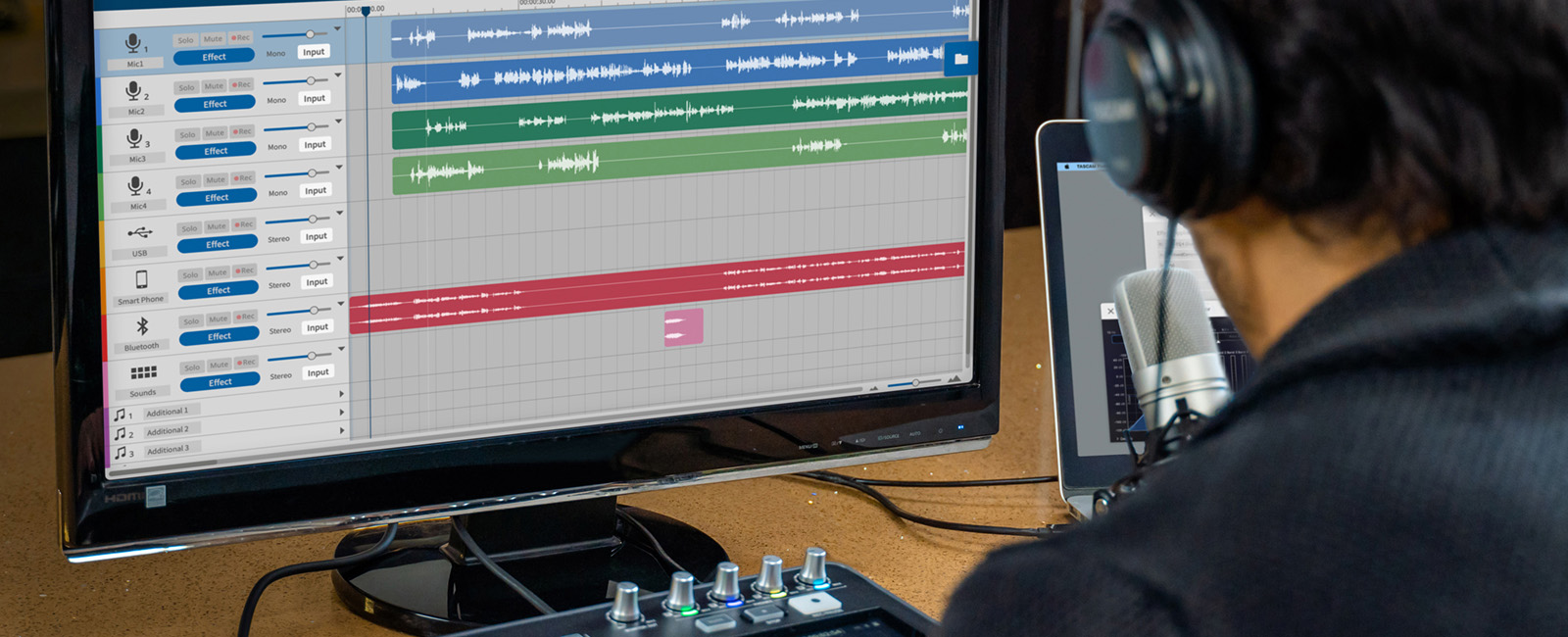
Descript is a one-stop solution specifically designed for SaaS companies looking to create podcasts or video content. It delivers a streamlined process from recording to publishing, including editing and promotional clips creation. Its AI capabilities make the process more efficient and less time-consuming.

Best for Podcasting & Audio Editing Tools for SaaS Companies

Expert Take

Descript excels as a comprehensive tool for SaaS companies in podcasting and video content creation. Its AI-driven features streamline the editing process, and its cloud-based platform supports remote collaboration. While the free plan has limitations, the overall offering justifies its premium positioning.
Pros

  • Edit video/audio by editing text
  • Studio Sound removes noise instantly
  • Overdub creates realistic voice clones
  • Underlord AI automates editing tasks
  • Backed by OpenAI technology

Cons

  • Lag/crashes on large projects
  • Buggy FCPXML/XML timeline exports
  • Complex AI credit system
  • Requires stable internet connection
  • Steep learning curve for editors

Best for teams that are

  • Creators who prefer editing audio and video by editing text
  • Teams needing strong collaboration and AI voice cloning tools

Skip if

  • Traditional audio engineers who prefer waveform-based editing
  • Users with low-spec computers due to high resource usage

Best for teams that are

  • Creators who prefer editing audio and video by editing text
  • Teams needing strong collaboration and AI voice cloning tools

Skip if

  • Traditional audio engineers who prefer waveform-based editing
  • Users with low-spec computers due to high resource usage

Pros

  • Edit video/audio by editing text
  • Studio Sound removes noise instantly
  • Overdub creates realistic voice clones
  • Underlord AI automates editing tasks
  • Backed by OpenAI technology

Cons

  • Lag/crashes on large projects
  • Buggy FCPXML/XML timeline exports
  • Complex AI credit system
  • Requires stable internet connection
  • Steep learning curve for editors

Expert Take

Descript excels as a comprehensive tool for SaaS companies in podcasting and video content creation. Its AI-driven features streamline the editing process, and its cloud-based platform supports remote collaboration. While the free plan has limitations, the overall offering justifies its premium positioning.

5
Score
9.7 / 10
TASCAM Podcast Editor

The TASCAM Podcast Editor is a specialized tool for SaaS companies that need to produce high-quality voice content. This software is particularly effective at podcast and internet radio production, audiobook creation, and other voice work, helping SaaS companies boost their audience engagement and brand visibility.

Best for Podcasting & Audio Editing Tools for SaaS Companies

Expert Take

The TASCAM Podcast Editor stands out as a specialized tool for SaaS companies focused on voice content production. Its user-friendly interface and rich audio editing features make it accessible for beginners, while its free-to-use model provides significant value. However, the lack of advanced features and integrated hosting service are notable limitations.

Pros

  • Completely free to use
  • Seamless integration with Mixcast 4
  • Supports VST3/AU plugins
  • Direct MP4 export for YouTube
  • Intuitive waveform editing interface

Cons

  • Significant Android recording limitations
  • Reported instability on iOS 17
  • Clunky file transfer speeds
  • Limited external file import on mobile
  • Requires TASCAM ID registration

Best for teams that are

  • Owners of the TASCAM Mixcast 4 interface
  • Beginners needing a simple, free tool for local audio editing

Skip if

  • Podcasters needing built-in remote guest recording capabilities
  • Professionals requiring advanced DAW plugins and mixing tools

Best for teams that are

  • Owners of the TASCAM Mixcast 4 interface
  • Beginners needing a simple, free tool for local audio editing

Skip if

  • Podcasters needing built-in remote guest recording capabilities
  • Professionals requiring advanced DAW plugins and mixing tools

Pros

  • Completely free to use
  • Seamless integration with Mixcast 4
  • Supports VST3/AU plugins
  • Direct MP4 export for YouTube
  • Intuitive waveform editing interface

Cons

  • Significant Android recording limitations
  • Reported instability on iOS 17
  • Clunky file transfer speeds
  • Limited external file import on mobile
  • Requires TASCAM ID registration

Expert Take

The TASCAM Podcast Editor stands out as a specialized tool for SaaS companies focused on voice content production. Its user-friendly interface and rich audio editing features make it accessible for beginners, while its free-to-use model provides significant value. However, the lack of advanced features and integrated hosting service are notable limitations.

6

Boris FX Post-Production Tools

Best for Podcasting & Audio Editing Tools for Photography Studios

Score
9.7 / 10
Boris FX Post-Production Tools

Boris FX is a comprehensive suite of post-production tools designed specifically for the audio-visual industry. Their AI-powered audio restoration and Optics photo effects & editing tools provide creatives with a one-stop solution for enhancing audio and transforming still images into cinematic art.

Best for Podcasting & Audio Editing Tools for Photography Studios

Expert Take

Boris FX offers a robust suite of post-production tools with advanced AI-powered features for audio restoration and photo editing, making it a top choice for photography studios. Its industry recognition and comprehensive capabilities justify its premium positioning.

Pros

  • Includes Academy Award-winning Mocha planar tracking
  • Massive library of 5000+ presets across suite
  • Industry-standard tools used in major Hollywood films
  • Comprehensive AI audio and video restoration tools
  • Multi-host support for Adobe, Avid, and OFX

Cons

  • Steep learning curve for beginners
  • High price point for perpetual licenses
  • Reported stability issues in Premiere Pro 2025
  • Hardware intensive requiring powerful GPU
  • Complex interface for some modules

Best for teams that are

  • Video editors using NLEs needing pro audio repair plugins
  • Professionals fixing difficult audio issues like wind or rustle
  • Post-production engineers requiring high-end noise reduction

Skip if

  • Hobbyists looking for a standalone podcast recording platform
  • Users on a strict budget seeking free tools
  • Beginners wanting a simple all-in-one editor

Best for teams that are

  • Video editors using NLEs needing pro audio repair plugins
  • Professionals fixing difficult audio issues like wind or rustle
  • Post-production engineers requiring high-end noise reduction

Skip if

  • Hobbyists looking for a standalone podcast recording platform
  • Users on a strict budget seeking free tools
  • Beginners wanting a simple all-in-one editor

Pros

  • Includes Academy Award-winning Mocha planar tracking
  • Massive library of 5000+ presets across suite
  • Industry-standard tools used in major Hollywood films
  • Comprehensive AI audio and video restoration tools
  • Multi-host support for Adobe, Avid, and OFX

Cons

  • Steep learning curve for beginners
  • High price point for perpetual licenses
  • Reported stability issues in Premiere Pro 2025
  • Hardware intensive requiring powerful GPU
  • Complex interface for some modules

Expert Take

Boris FX offers a robust suite of post-production tools with advanced AI-powered features for audio restoration and photo editing, making it a top choice for photography studios. Its industry recognition and comprehensive capabilities justify its premium positioning.

7

Cleanvoice AI Podcast Editor

Best for Podcasting & Audio Editing Tools for Staffing Agencies

Score
9.7 / 10
Cleanvoice AI Podcast Editor

Cleanvoice AI is a highly effective tool for staffing agencies that produce podcasts for talent acquisition or human resources education. It helps reduce the time and resources spent on audio editing by automating the removal of background noise, filler words, and long pauses, allowing agencies to focus more on content creation and recruitment strategies.

Best for Podcasting & Audio Editing Tools for Staffing Agencies

Expert Take

Cleanvoice AI Podcast Editor excels in automating audio editing tasks, making it ideal for staffing agencies focused on podcasting. Its AI capabilities, ease of use, and focus on efficiency position it as a top choice in its niche. While subscription-based pricing may limit accessibility, the product's overall value and functionality justify its premium status.

Pros

  • Unused subscription credits roll over
  • Exports timelines to Audacity/Premiere
  • Supports multiple languages and accents
  • Pay-as-you-go option available
  • Removes mouth sounds and dead air

Cons

  • Can produce unnatural or robotic pacing
  • Support responsiveness issues reported
  • Stutter removal can be inconsistent
  • Limited refund policy for subscriptions
  • Occasional processing lag times

Best for teams that are

  • Agencies needing to clean up stutters in multilingual interview recordings
  • Audio engineers needing a fast 'cleanup pass' before detailed editing

Skip if

  • Users needing a full-featured video editor (focus is audio cleanup)
  • Mobile-first users as there is no dedicated mobile app

Best for teams that are

  • Agencies needing to clean up stutters in multilingual interview recordings
  • Audio engineers needing a fast 'cleanup pass' before detailed editing

Skip if

  • Users needing a full-featured video editor (focus is audio cleanup)
  • Mobile-first users as there is no dedicated mobile app

Pros

  • Unused subscription credits roll over
  • Exports timelines to Audacity/Premiere
  • Supports multiple languages and accents
  • Pay-as-you-go option available
  • Removes mouth sounds and dead air

Cons

  • Can produce unnatural or robotic pacing
  • Support responsiveness issues reported
  • Stutter removal can be inconsistent
  • Limited refund policy for subscriptions
  • Occasional processing lag times

Expert Take

Cleanvoice AI Podcast Editor excels in automating audio editing tasks, making it ideal for staffing agencies focused on podcasting. Its AI capabilities, ease of use, and focus on efficiency position it as a top choice in its niche. While subscription-based pricing may limit accessibility, the product's overall value and functionality justify its premium status.

8

Riverside: Podcast & Video Tool

Best for Podcasting & Audio Editing Tools for Recruitment Agencies

Score
9.5 / 10
Riverside: Podcast & Video Tool

Riverside is a specialized software for recruitment agencies, streamlining the process of high-quality podcast and video recording and editing. Its AI-powered technology ensures human-like conversations, making it ideal for agencies looking to connect with potential candidates in a more engaging, personalized way.

Best for Podcasting & Audio Editing Tools for Recruitment Agencies

Expert Take

Riverside excels in providing high-quality podcast and video recording tools tailored for recruitment agencies. Its AI-powered features enhance user experience by ensuring natural-sounding conversations. The platform's usability and pricing transparency further solidify its position as a leading tool in its niche.

Pros

  • Local 4K video & 48kHz audio recording
  • Separate tracks for up to 10 participants
  • Text-based video editing & Magic Clips
  • Used by Spotify, NYT, and NPR
  • Mobile app for iOS and Android

Cons

  • Strictly requires Chrome or Edge browsers
  • Frequent reports of audio/video sync drift
  • Free plan has watermarks & lower resolution
  • Uploads fail if tab closed early
  • Support response times can be slow

Best for teams that are

  • Professional podcasters prioritizing 4K video and uncompressed audio quality
  • Remote interviewers needing reliable local recording separate from internet quality
  • Social media teams needing to quickly generate clips and AI show notes

Skip if

  • Users seeking advanced text-based video editing features (better suited for Descript)
  • Hobbyists on a strict budget due to watermarks on free plans and higher tier costs
  • Guests using mobile browsers or older hardware that may struggle with high-res recording

Best for teams that are

  • Professional podcasters prioritizing 4K video and uncompressed audio quality
  • Remote interviewers needing reliable local recording separate from internet quality
  • Social media teams needing to quickly generate clips and AI show notes

Skip if

  • Users seeking advanced text-based video editing features (better suited for Descript)
  • Hobbyists on a strict budget due to watermarks on free plans and higher tier costs
  • Guests using mobile browsers or older hardware that may struggle with high-res recording

Pros

  • Local 4K video & 48kHz audio recording
  • Separate tracks for up to 10 participants
  • Text-based video editing & Magic Clips
  • Used by Spotify, NYT, and NPR
  • Mobile app for iOS and Android

Cons

  • Strictly requires Chrome or Edge browsers
  • Frequent reports of audio/video sync drift
  • Free plan has watermarks & lower resolution
  • Uploads fail if tab closed early
  • Support response times can be slow

Expert Take

Riverside excels in providing high-quality podcast and video recording tools tailored for recruitment agencies. Its AI-powered features enhance user experience by ensuring natural-sounding conversations. The platform's usability and pricing transparency further solidify its position as a leading tool in its niche.

9
Score
9.5 / 10
Audacity Audio Editor

Audacity is a powerful, free audio editing tool that's essential for staffing agencies creating podcasts and audio content. With its robust features and ease of use, it's the perfect platform for recording interviews, editing audio files, and creating professional-grade content. Its capabilities meet the unique audio production needs of staffing agencies.

Best for Podcasting & Audio Editing Tools for Staffing Agencies
Expert Take

Audacity is a premium open-source audio editing tool known for its comprehensive features and ease of use. It is widely recognized for its value, being free with optional donations, and is suitable for staffing agencies producing audio content. Despite lacking some advanced features of paid software, it remains a top choice for budget-conscious users.

Pros

  • Completely free and open-source software
  • Supports VST3, LADSPA, and Nyquist plugins
  • Real-time non-destructive effects stack
  • Cross-platform on Windows, macOS, and Linux
  • Massive user community and documentation

Cons

  • Destructive editing for basic cuts/trims
  • Lacks MIDI sequencing and virtual instruments
  • Interface can feel dated and cluttered
  • No native multi-track real-time monitoring
  • Cloud features require separate account

Best for teams that are

  • Budget-conscious agencies needing a free tool for simple audio trimming
  • Technical staff comfortable with traditional, older software interfaces

Skip if

  • Teams needing to record remote interviews (no built-in capability)
  • Users who prefer non-destructive editing (Audacity is destructive by default)

Best for teams that are

  • Budget-conscious agencies needing a free tool for simple audio trimming
  • Technical staff comfortable with traditional, older software interfaces

Skip if

  • Teams needing to record remote interviews (no built-in capability)
  • Users who prefer non-destructive editing (Audacity is destructive by default)

Pros

  • Completely free and open-source software
  • Supports VST3, LADSPA, and Nyquist plugins
  • Real-time non-destructive effects stack
  • Cross-platform on Windows, macOS, and Linux
  • Massive user community and documentation

Cons

  • Destructive editing for basic cuts/trims
  • Lacks MIDI sequencing and virtual instruments
  • Interface can feel dated and cluttered
  • No native multi-track real-time monitoring
  • Cloud features require separate account

Expert Take

Audacity is a premium open-source audio editing tool known for its comprehensive features and ease of use. It is widely recognized for its value, being free with optional donations, and is suitable for staffing agencies producing audio content. Despite lacking some advanced features of paid software, it remains a top choice for budget-conscious users.

10
Score
9.4 / 10
10
9.4 / 10
SquadCast

SquadCast is a SaaS tool designed specifically for podcast creators and audio editing professionals. It provides an intuitive, remote recording studio that ensures high-quality audio and video content. The in-browser software ensures premium, auto-saved recordings with cloud storage, addressing the need for seamless collaboration and high-quality production in the podcasting industry.

Best for Podcasting & Audio Editing Tools for SaaS Companies

Expert Take

SquadCast stands out in the podcasting and audio editing tools category for its focus on high-quality remote recording and seamless collaboration. Its features like cloud storage and multi-track recording cater specifically to podcast creators, ensuring efficient content management. Despite some limitations in editing features, its core capabilities make it a top choice for professionals.

Pros

  • Included free with Descript subscription
  • Progressive uploads prevent data loss
  • No software download required for guests
  • High-quality local WAV and MP4 recording
  • Integrated Dolby.io audio mastering

Cons

  • 4K recording limited on Windows
  • Backstage feature recently retired
  • Bluetooth devices may cause audio drift
  • Browser tab must remain in focus
  • Mobile support is web-based beta

Best for teams that are

  • Professional podcasters prioritizing recording reliability and backups
  • Descript users who get this tool bundled with their subscription

Skip if

  • Live streamers needing native broadcasting features
  • Creators wanting a fully browser-based editing suite

Best for teams that are

  • Professional podcasters prioritizing recording reliability and backups
  • Descript users who get this tool bundled with their subscription

Skip if

  • Live streamers needing native broadcasting features
  • Creators wanting a fully browser-based editing suite

Pros

  • Included free with Descript subscription
  • Progressive uploads prevent data loss
  • No software download required for guests
  • High-quality local WAV and MP4 recording
  • Integrated Dolby.io audio mastering

Cons

  • 4K recording limited on Windows
  • Backstage feature recently retired
  • Bluetooth devices may cause audio drift
  • Browser tab must remain in focus
  • Mobile support is web-based beta

Expert Take

SquadCast stands out in the podcasting and audio editing tools category for its focus on high-quality remote recording and seamless collaboration. Its features like cloud storage and multi-track recording cater specifically to podcast creators, ensuring efficient content management. Despite some limitations in editing features, its core capabilities make it a top choice for professionals.

How We Rank Products

Our Evaluation Process

Evaluation of podcasting and audio editing tools focuses on documented features like multi-track support, effects libraries, and user interface design. Pricing transparency is assessed, considering both subscription models and pay-per-use options. Compatibility with other software and hardware is crucial, especially for integration into existing workflows. Third-party customer feedback provides insights into real-world usability and support experiences.

Verification

  • Products evaluated through comprehensive research and analysis of user feedback and expert opinions.
  • Rankings based on a thorough examination of feature sets, customer ratings, and industry benchmarks.
  • Selection criteria focus on audio quality, editing capabilities, and user experience as reported in expert reviews.

Score Breakdown

0.0 / 10

About Podcasting & Audio Editing Tools

WHAT IS PODCASTING & AUDIO EDITING TOOLS?

Podcasting and Audio Editing Tools form a specialized software category designed to facilitate the end-to-end lifecycle of spoken-word audio content. Unlike broad multimedia suites, these tools are purpose-built to address the unique technical and distributional requirements of episodic audio. At its core, this category solves the problem of transforming raw voice recordings into polished, syndicatable assets that can be distributed globally or securely within an organization. The software typically encompasses three distinct but integrated functional areas: recording and post-production (editing, mixing, noise reduction), hosting and distribution (RSS feed management, bandwidth allocation), and analytics (listener attribution, engagement tracking).

The operational scope of this category begins at the point of capture—whether remote interviews via VoIP or local studio recording—and extends through the "last mile" of delivery to listener devices. It sits firmly between Digital Audio Workstations (DAWs), which focus purely on signal processing and music production, and Content Management Systems (CMS), which handle web publishing but lack the specific infrastructure for RSS enclosure handling and audio streaming. While general-purpose audio tools allow for manipulation of sound waves, true Podcasting & Audio Editing platforms include the critical infrastructure to push that content to directories and measure its impact. This distinction is vital for buyers: a standard audio editor cannot host your file or tell you who listened, while a dedicated podcasting platform integrates these workflows to serve marketing, internal communications, and audience engagement goals.

The primary users of this software have evolved significantly. Initially the domain of hobbyists and media organizations, this category is now essential infrastructure for enterprises leveraging audio for internal training, secure executive communications, and brand journalism. Marketing teams use these tools to drive top-of-funnel awareness; HR departments utilize secure private podcasting for onboarding and culture building; and sales teams rely on audio enablement to consume training on the go. The strategic importance of this software lies in its ability to capture attention in "screenless" moments—during commutes or workouts—providing a depth of engagement that text and video cannot replicate.

HISTORY

The trajectory of Podcasting & Audio Editing Tools is a case study in how a decentralized, open protocol matured into a centralized, data-driven enterprise software market. In the early 2000s, the category did not exist as a cohesive software market; it was a patchwork of disjointed utilities. "Audioblogging" scripts allowed users to attach media files to RSS feeds, but the process required technical proficiency in server management and XML coding. The gap that created this category was the disconnect between content creation (recording) and content delivery (syndication). Early adopters were forced to use complex enterprise server tools or general-purpose file hosting solutions that lacked the specific "enclosure" tags required for audio syndication.

By the mid-2000s, the first wave of vertical SaaS emerged to bridge this gap. These early platforms abstracted the complexity of RSS feeds, allowing non-technical users to upload a file and have the software generate the necessary code. However, the market remained fragmented. Editing was largely done in on-premise software designed for music production, which was overkill for voice, while hosting was handled by separate web-based vendors. This era was characterized by a "do-it-yourself" integration approach, where organizations had to cobble together disparate tools for recording, editing, and hosting.

The pivot point occurred in the late 2010s, driven by the shift from on-premise infrastructure to cloud-based workflows. As bandwidth costs plummeted and browser capabilities improved, a new generation of tools allowed for high-fidelity recording and editing directly within a web browser. This democratization coincided with a massive wave of market consolidation. Major streaming platforms and media conglomerates began acquiring independent hosting and production tools, effectively integrating the supply chain. These acquisitions transformed the landscape from a collection of point solutions into comprehensive ecosystems where a single login could handle recording, AI-assisted editing, hosting, and monetization.

Simultaneously, buyer expectations shifted dramatically. In the early days, organizations simply wanted "a database for audio files." By 2020, the demand had moved to "actionable intelligence." The rise of vertical SaaS for enterprise audio meant that buyers now demanded granular analytics comparable to web traffic data—listener drop-off rates, firmographic data (who is listening from which company), and attribution models. This evolution forced vendors to move beyond simple file hosting to become sophisticated data platforms, capable of integrating with CRM and marketing automation systems. Today, the history of this category is defined by the move away from the "open web" toward walled gardens that offer superior data but require tighter vendor lock-in, reflecting the broader maturation of digital media software.

WHAT TO LOOK FOR

Evaluating Podcasting & Audio Editing Tools requires a disciplined approach that prioritizes workflow efficiency and data ownership over flashy, superficial features. The most critical evaluation criterion is infrastructure reliability and scalability. Buyers must assess whether a platform can handle sudden spikes in traffic without throttling bandwidth or crashing the RSS feed. For enterprise buyers, look for "unmetered bandwidth" guarantees and specific Service Level Agreements (SLAs) regarding uptime. If a tool limits your monthly downloads or charges exorbitant overage fees for successful content, it penalizes growth—a fundamental misalignment with business goals.

Another pivotal factor is the sophistication of the editing workflow. Modern tools should offer "text-based editing," where the audio is transcribed, and the user edits the text document to cut the underlying audio. This feature drastically reduces the technical barrier to entry and speeds up production times. However, beware of tools that rely solely on AI automation without allowing manual fine-tuning. Automated noise reduction and leveling are excellent for speed, but a professional-grade tool must allow granular control over cross-fades and EQ settings when the AI gets it wrong. A system that locks you into a "black box" automated output is a red flag for any team caring about brand perception.

Data portability and ownership are the most significant areas of risk. A major warning sign is any vendor that obfuscates your RSS feed ownership or makes it difficult to implement a 301 redirect. If you cannot easily leave the platform and take your audience with you, you do not own your show; the vendor does. Ensure that the platform supports "pass-through" analytics and does not inject unremovable dynamic advertising unless explicitly requested. Ask vendors directly: "If we cancel our contract today, exactly how do we migrate our existing subscriber base, and do you mask the listener data from third-party attribution tools?"

Finally, examine the security and access control features. For internal corporate communications, simple password protection is insufficient. The gold standard is Single Sign-On (SSO) integration (e.g., Okta, Microsoft Azure AD) and individual listener authentication. This ensures that when an employee leaves the company, their access to the internal audio feed is automatically revoked. Vendors that lack SOC 2 Type II compliance or offer only "magic link" access should be viewed with skepticism for enterprise deployments.

INDUSTRY-SPECIFIC USE CASES

Retail & E-commerce

In the fast-paced retail sector, Podcasting & Audio Editing Tools are primarily deployed for frontline workforce enablement and brand storytelling. Unlike desk-bound employees, retail associates and warehouse staff cannot watch videos or read long PDFs during their shifts. Retailers use internal audio tools to deliver "shift-start" briefings—short, 5-minute audio segments covering daily promotions, inventory updates, and safety protocols. This allows staff to consume critical information hands-free while prepping the floor or restocking shelves.

From an external perspective, e-commerce brands utilize these tools to build "lifestyle" content that increases dwell time and brand affinity. Evaluation priorities for this industry focus heavily on mobile accessibility and low-bandwidth performance. Since store Wi-Fi can be spotty and associates often use personal devices, the chosen platform must compress audio efficiently without quality loss. Furthermore, integration with learning management systems (LMS) is crucial to track whether store managers have actually listened to compliance updates.

Healthcare

The healthcare industry utilizes audio tools for two distinct, high-stakes purposes: clinical education and patient adherence. Hospitals and medical device companies use secure, private podcasting platforms to disseminate information about new protocols, drug interactions, and compliance standards to doctors and nurses who are constantly mobile. The ability to consume continuing medical education (CME) content during a commute is a significant value add for overworked medical professionals.

The absolute non-negotiable requirement here is HIPAA compliance and data sovereignty. Healthcare buyers must verify that the hosting platform does not harvest listener data for ad retargeting and that all audio data is encrypted at rest and in transit. Unique to this sector is the need for "chapterization" and searchable transcripts, allowing a clinician to quickly find a specific reference to a dosage or procedure within a 40-minute episode without listening to the whole file.

Financial Services

Financial institutions rely on Podcasting & Audio Editing Tools for market agility and investor relations. Wealth management firms and banks use these platforms to record and distribute daily market briefings to advisors and high-net-worth clients. Speed is the currency here; the tool must allow an analyst to record a market update at 6:00 AM and have it distributed securely to thousands of client apps by 6:15 AM. The editing tools must be robust enough to clean up audio quickly but simple enough for financial analysts to use without a sound engineer.

Security is paramount. Financial services buyers prioritize information barriers and audit trails. They need to know exactly which client listened to a compliance-mandated disclosure. Furthermore, tools used in this sector often need to integrate with archiving solutions (like Smarsh or Global Relay) to meet FINRA or SEC record-keeping requirements. A tool that cannot automatically push a copy of every published episode to a compliance archive is a non-starter.

Manufacturing

Manufacturing firms use audio tools to bridge the gap between corporate headquarters and the factory floor. These tools facilitate safety training and shift handovers. Instead of written logs that may be ignored, a plant manager can record a quick audio summary of machine maintenance issues or safety incidents, which the incoming shift listens to on their headsets. This "voice-first" approach respects the physical nature of the work and improves information retention.

Unique considerations for manufacturing include offline playback capabilities and multi-language support. Factories often have dead zones where cellular signal is weak, so the app must allow for content caching. Additionally, global manufacturing teams require tools that can automatically transcribe and translate audio into multiple languages for a diverse workforce. Evaluation criteria should focus on ruggedness of the mobile app and ease of use for non-desk workers.

Professional Services

Law firms, consultancies, and accounting firms utilize Podcasting & Audio Editing Tools for thought leadership and business development. In an industry where time is billed by the hour, partners use audio to demonstrate expertise on complex topics—like tax law changes or M&A trends—without requiring a prospective client to read a 20-page white paper. The goal is to build trust and authority ("share of ear") with decision-makers.

For professional services, the key evaluation metric is integration with CRM and marketing automation platforms. Firms need to know if a prospect at a target account listened to the episode on "Corporate Restructuring" so that a partner can follow up with a relevant call. High-fidelity audio quality is also critical here; a poorly produced podcast reflects poorly on the firm's brand. Therefore, tools with advanced, automated post-production features (like removing "ums" and background hiss) are highly prioritized to ensure partners sound polished with minimal effort.

SUBCATEGORY OVERVIEW

Podcasting & Audio Editing Tools for SaaS Companies

This subcategory is distinct because it focuses on the intersection of product education and customer retention. Unlike general tools designed for broad entertainment, Podcasting & Audio Editing Tools for SaaS Companies are engineered to handle "changelog" audio and technical deep dives. The core differentiation lies in the metadata and player embeddability; these tools allow product teams to embed specific audio snippets directly into help documentation or dashboard widgets, contextually relevant to the user's screen.

A workflow unique to this niche is the "audio release note" pipeline. A product manager can record a voiceover explaining a new feature, which the software automatically syncs with a screen recording or a scrolling transcript, and then pushes directly to the user's notification center within the SaaS application. This solves the pain point of low engagement with written release notes. Buyers gravitate toward this niche because general podcast hosts lack the API flexibility to trigger audio playback based on user behavior within a software application.

Podcasting & Audio Editing Tools for Recruitment Agencies

Recruitment agencies require tools that function less like a broadcast tower and more like a magnet for talent pipelines. Podcasting & Audio Editing Tools for Recruitment Agencies prioritize employer branding and candidate engagement features. Genuine differentiation here comes from integration with Applicant Tracking Systems (ATS). These tools allow recruiters to tag listeners who engage with "Day in the Life" episodes and score them as warmer candidates.

The specialized workflow here involves "candidate conversion" audio. Recruiters use these tools to create private, personalized audio playlists for shortlisted candidates—featuring interviews with their potential future team members—to increase offer acceptance rates. The specific pain point driving buyers to this niche is the inability of generic tools to segment audiences by "candidate status." General tools treat every listener as anonymous; these specialized tools help recruiters identify who is ready to apply.

Podcasting & Audio Editing Tools for Photography Studios

While photography is visual, the business of running a studio relies heavily on client education and connection. Podcasting & Audio Editing Tools for Photography Studios are optimized for marketing workflows that pair audio with visual portfolios. These tools often include enhanced "visual soundbite" creators that automatically generate video clips from audio specifically formatted for Instagram Reels or TikTok, which are primary marketing channels for photographers.

A workflow unique to this group is the "session prep" audio guide. Photographers use these tools to record and deliver automated audio guides that clients listen to before a shoot, covering wardrobe tips and posing advice. This replaces repetitive phone consultations. The pain point driving this choice is the time-consuming nature of educating every client individually; these tools automate that intimacy, allowing the studio to scale client service without adding hours to the day.

Podcasting & Audio Editing Tools for Staffing Agencies

Staffing agencies operate at a volume and velocity that differs significantly from boutique recruitment. Podcasting & Audio Editing Tools for Staffing Agencies are built for mass broadcast and shift management. The differentiator is the "broadcast capability"—the ability to push urgent audio notifications about shift availability to thousands of temporary workers simultaneously via SMS or app integration, rather than RSS feeds.

The workflow that only this specialized tool handles well is the "shift blast." A staffing coordinator records a 30-second detail of a warehouse shift opening, and the tool distributes it instantly to a segmented list of workers in a specific zip code. The pain point driving buyers here is the inefficiency of text-only messages, which often lack the nuance or urgency to drive immediate action. Audio cuts through the noise and builds a stronger connection with a transient workforce.

Integration & API Ecosystem

In the modern enterprise stack, a podcasting tool cannot exist as an island. The robustness of its Integration & API Ecosystem is often the deciding factor for technical buyers. High-performing organizations require their audio data to flow seamlessly into Customer Relationship Management (CRM) systems like Salesforce or HubSpot, and Marketing Automation Platforms (MAP) like Marketo. According to a [1] study by Forrester, enterprise organizations achieve a 299% ROI over three years when they successfully integrate data streams like media engagement into their primary CRM, highlighting the financial imperative of connectivity.

Expert opinion reinforces this necessity. Analysts at Gartner note that "Integration capabilities are no longer a 'nice-to-have' but a critical component of the MarTech stack, as siloed data leads to fragmented customer experiences." The real value lies in bidirectional sync: the audio platform sends listener data to the CRM, and the CRM controls access to the audio content based on customer status.

Scenario: Consider a 50-person professional services firm that uses a podcasting tool to share confidential market analysis with premium clients. They attempt to connect their podcast host to their client management system. Without a native, robust API, they rely on a fragile Zapier connection. When a client's contract expires in the CRM, the "zap" fails to trigger a revocation of access in the podcast tool. Consequently, the former client continues to access proprietary intelligence for months, leaking valuable IP. A purpose-built integration would have polled the CRM status daily and automatically revoked the unique RSS feed token, protecting the firm’s assets without manual intervention.

Security & Compliance

As audio becomes a vector for internal corporate strategy, Security & Compliance have moved from IT checklists to boardroom requirements. The standard for enterprise audio is no longer just "password protection," which is easily shared, but authenticated streaming that ties listening rights to a verified corporate identity. Research from [2] emphasizes that compliance frameworks like GDPR and HIPAA now explicitly extend to voice data, mandating strict controls over how audio is processed and stored, particularly when it involves employee or patient information.

Industry experts warn that audio is frequently overlooked in security audits. A cybersecurity analyst might note, "Organizations lock down their documents and emails but often leave executive town halls hosted on unencrypted public servers, relying on 'security by obscurity' which is a failed strategy." The risks involve not just unauthorized access, but also data residency issues where European employee data might be illegally processed on US servers.

Scenario: A global healthcare manufacturer uses an internal podcast to discuss upcoming drug patent filings. They select a tool that lacks Single Sign-On (SSO) and SOC 2 Type II certification. An employee leaves the company to join a competitor but retains the "private" RSS link on their personal phone. Because the system lacks continuous authentication, the former employee listens to a strategic episode about a new product launch. The competitor gains months of lead time. A secure tool would have required a fresh SSO login token every session, instantly blocking the ex-employee’s access the moment their corporate email was deactivated.

Pricing Models & TCO

The Pricing Models & Total Cost of Ownership (TCO) in this category can be deceptive. While entry-level tiers often appear cheap (e.g., $15/month), enterprise pricing is distinct and often usage-based. Pricing structures typically bifurcate into "public" models (based on downloads/bandwidth) and "private" models (based on active users/seats). Data from [3] indicates that bandwidth overages for high-fidelity audio can be a significant hidden cost, with transcription services adding an additional $1-$3 per minute, blowing up budgets unexpectedly.

Experts advise scrutiny of "unlimited" claims. As noted in [4], enterprise pricing involves negotiation on volume and multi-year terms, whereas SMB pricing is static. A common pitfall is failing to account for "seat expansion." A flat fee might cover 100 listeners, but the jump to 101 listeners could trigger a tier upgrade costing thousands of dollars.

Scenario: A mid-sized tech company budgets $500/month for a public podcast, assuming a flat hosting fee. Their show goes viral, hitting 50,000 downloads in a week. Their hosting provider’s "fair use" bandwidth policy kicks in, charging $0.05 per GB of overage. Simultaneously, they decide to transcribe their back catalog for SEO, unaware that their plan charges $2/minute for AI transcription. Their actual bill for the month spikes to $3,500. A proper TCO calculation would have modeled a "viral success" scenario and chosen a provider with unmetered bandwidth, even if the base monthly fee was higher.

Implementation & Change Management

Successful Implementation & Change Management is less about the software installation and more about cultural adoption. Unlike installing Microsoft Office, deploying a podcasting tool requires teaching employees how to listen in a work context. Research [5] suggests that "failing to involve end users" is a primary cause of software shelfware. If the content is hard to access, adoption flatlines.

Change management experts emphasize the "friction of the first listen." As one organizational design consultant puts it, "If an employee has to download a separate, clunky app to hear the CEO, they won't do it. The audio must meet them where they are—in their existing daily workflow." This means the technical implementation must prioritize seamless integration with existing apps (like Slack, Teams, or an intranet) over standalone destinations.

Scenario: A manufacturing firm rolls out an audio safety briefing tool. The implementation team focuses entirely on the content creator's dashboard, ensuring the HR team can easily upload files. However, they neglect the listener experience. Factory workers are told to download a new app and scan a QR code. The app requires a complex password reset every 30 days. Frustrated by the login barrier during a busy shift, workers stop listening. Safety incidents rise. A better implementation plan would have involved testing the "login flow" on the factory floor and opting for a tool that delivered audio links via SMS, which required zero login friction for the end user.

Vendor Evaluation Criteria

Developing robust Vendor Evaluation Criteria is the final safeguard against a poor investment. Buyers must look beyond the feature list to the vendor's roadmap and financial stability. According to [6], a critical risk factor is a vendor’s reliance on ad-tech versus subscription revenue; vendors heavily reliant on ad markets are more prone to volatility and shutting down services. Stability is a feature.

Gartner analysts often advise evaluating "ecosystem lock-in." A key evaluation question is: "How portable is our data?" If a vendor uses proprietary audio formats or non-standard RSS tags, leaving them becomes technically impossible without losing your audience history. Evaluation should prioritize open standards compliance (like RSS 2.0) and exportable analytics data.

Scenario: A marketing agency evaluates three vendors. Vendor A has the slickest interface and AI editing but uses a proprietary "walled garden" app for listening. Vendor B is clunkier but supports open RSS standards and allows raw data export. The agency chooses Vendor A. Two years later, they want to switch to a tool with better Salesforce integration. They discover they cannot migrate their 10,000 subscribers because Vendor A owns the audience relationship inside their proprietary app. The agency is forced to start from scratch. A proper evaluation framework would have flagged "proprietary distribution" as a deal-breaker, steering them toward the interoperable Vendor B.

EMERGING TRENDS AND CONTRARIAN TAKE

Emerging Trends 2025-2026

The Podcasting & Audio Editing landscape is rapidly shifting toward Agentic AI Workflows. By 2026, we expect to see "AI Agents" that do not just edit audio but actively manage the entire production chain. [7] These agents will autonomously monitor recording levels, flag compliance violations in real-time (e.g., detecting a HIPAA breach during a recording), and auto-generate localized versions of content for global teams. We are also witnessing a massive convergence of "Video-First" audio, where tools are pivoting to treat video as the primary asset, stripping the audio for podcast feeds secondarily. This is driven by the dominance of YouTube as a primary podcast listening platform.

Contrarian Take: The "Studio" is Dead; The "Phone" Won.

The industry is obsessed with "studio-quality" sound, but the contrarian reality is that audio fidelity is no longer a competitive advantage—it is a commodity. Most businesses would get significantly higher ROI from investing in distribution logistics than in microphones or high-end editing suites. The obsession with removing every breath and achieving "broadcast quality" is a relic of the radio era. In a corporate context, a raw, authentic voice memo recorded on a phone that is delivered instantly to the right employee's Slack channel is infinitely more valuable than a polished studio production that takes three days to approve and publish. The future belongs to tools that prioritize speed of delivery over perfection of sound. If your editing process takes longer than the recording itself, you are already obsolete.

COMMON MISTAKES

One of the most pervasive mistakes organizations make is overbuying production features while underinvesting in distribution. Companies frequently purchase expensive, complex DAWs (Digital Audio Workstation) capable of producing orchestral scores, only to use them for simple voice editing. This steep learning curve creates a bottleneck where only one "expert" knows how to edit the show. If that person leaves, the show dies. Research [8] highlights that inconsistency is a primary failure mode; complex tools breed inconsistency.

Another critical error is ignoring the "First Mile" of user adoption. In internal podcasting, leaders often assume that "if we build it, they will listen." They fail to account for the friction of installing a new app. A common mistake is launching a private podcast without a clear "how-to-listen" guide or an SSO integration, leading to 5% adoption rates. Buyers also frequently neglect exit strategies. They sign contracts with hosting providers without testing the "redirect" capability, effectively holding their own audience hostage to a vendor they might outgrow.

Finally, there is the trap of vanity metrics. Many teams focus solely on "downloads," which is a shallow metric easily manipulated by auto-download scripts. A mistake is failing to configure the tool to measure consumption rates (how much of the episode was actually heard) or attribution (did the listener take action?). Buying a tool that provides big numbers but zero insight into behavior is a strategic failure.

QUESTIONS TO ASK IN A DEMO

When evaluating vendors, move beyond the standard feature checklist. Ask these specific questions to uncover the reality of the platform:

  • "Can you demonstrate the exact process for migrating our RSS feed away from your platform, and does it support a 301 redirect at the show level?" (Tests data ownership and lock-in risk).
  • "Show me the listener experience for a user who has forgotten their password. How many clicks does it take to recover access and resume playing?" (Tests friction and adoption viability).
  • "Do you charge for bandwidth overages, and if so, at what threshold? Can we cap our spend to prevent a surprise bill if an episode goes viral?" (Tests pricing transparency and risk).
  • "How does your platform handle 'pass-through' analytics? Can we connect a third-party prefix URL (like Chartable or Podsights) to verify your data?" (Tests data integrity and openness).
  • "Is your AI transcription proprietary, or do you send our audio data to a third-party API (like OpenAI) for processing? If so, is our data used to train their models?" (Tests security and data sovereignty).
  • "For internal users, does your app support background play and offline caching on both iOS and Android without requiring a mobile device management (MDM) profile?" (Tests usability for the average employee).

BEFORE SIGNING THE CONTRACT

Before committing to a contract, conduct a final due diligence pass to ensure no critical liabilities remain. Use this checklist to validate the agreement:

Deal-Breakers to Watch For:

  • Ownership Clauses: Ensure the contract explicitly states that you retain 100% ownership of the RSS feed, the subscriber list, and the intellectual property of the content. Avoid any vendor that claims "co-ownership" of the feed URI.
  • Data Retention Policies: Check how long the vendor retains analytics data. Some lower-tier plans delete listener data after 90 days. For enterprise compliance, you may need 3-7 years of retention.
  • Uptime SLAs: For business-critical communications, demand a Service Level Agreement (SLA) with financial credits for downtime exceeding 99.9%.
  • Scalability Limits: Verify that there are no hard caps on the number of episodes or total storage that would force a migration in year two.

Common Negotiation Points:

  • Implementation Fees: Vendors often waive "onboarding" or "setup" fees for multi-year commitments.
  • Sandbox Access: Ask for a free "sandbox" or test account included in the contract so your IT team can test integrations without affecting the live show.
  • transcription Minutes: If the plan includes AI credits, negotiate for a pool of "rollover" minutes so unused credits in quiet months aren't lost.

CLOSING

Selecting the right Podcasting & Audio Editing Tools is a strategic decision that impacts how effectively your organization communicates its most human element—its voice. By focusing on integration, security, and genuine data ownership rather than just audio effects, you build a resilient infrastructure for the future. If you have specific questions about a vendor or need a sounding board for your implementation strategy, I invite you to reach out.

Email: albert@whatarethebest.com