Customer Journey & Experience Orchestration Tools

These are the specialized categories within Customer Journey & Experience Orchestration Tools. Looking for something broader? See all Marketing & Advertising Platforms categories.

1

Braze Journey Orchestration

Best for Journey Orchestration Platforms with Real Time Triggers

Score
9.9 / 10
Braze Journey Orchestration

Braze is a powerful Journey Orchestration Platform with real-time triggers. It's designed to help marketers execute campaigns in real time and at scale, ensuring no customer interaction is missed. It's an ideal solution for businesses looking to create personalized, dynamic customer journeys and improve overall customer engagement.

Best for Journey Orchestration Platforms with Real Time Triggers

Expert Take

Braze Journey Orchestration excels in providing real-time campaign execution and advanced trigger-based automation, making it a top choice for large businesses seeking scalable and personalized customer journey solutions. Its comprehensive analytics and market credibility further solidify its position as a leading platform in its category.

Pros

  • Unified cross-channel visual journey orchestration
  • Real-time data streaming and triggering
  • Massive scalability (14M+ API calls/min)
  • HIPAA, ISO 27001, and SOC 2 compliant
  • Extensive 'Alloys' integration ecosystem

Cons

  • High cost with opaque enterprise pricing
  • Native reporting lacks deep analytical features
  • Steep learning curve for advanced personalization
  • Support quality can be inconsistent
  • Complex 'data point' billing model

Best for teams that are

  • Mobile-first B2C brands like gaming, on-demand services, and media apps
  • Agile marketing teams needing real-time cross-channel messaging (SMS, Push, In-App)
  • Companies prioritizing speed of execution and modern API-first architecture

Skip if

  • Organizations looking for a built-in enterprise Customer Data Platform (CDP)
  • Teams with a primary focus on traditional, simple email marketing only
  • Legacy enterprises requiring on-premise hosting or heavy custom coding

Best for teams that are

  • Mobile-first B2C brands like gaming, on-demand services, and media apps
  • Agile marketing teams needing real-time cross-channel messaging (SMS, Push, In-App)
  • Companies prioritizing speed of execution and modern API-first architecture

Skip if

  • Organizations looking for a built-in enterprise Customer Data Platform (CDP)
  • Teams with a primary focus on traditional, simple email marketing only
  • Legacy enterprises requiring on-premise hosting or heavy custom coding

Pros

  • Unified cross-channel visual journey orchestration
  • Real-time data streaming and triggering
  • Massive scalability (14M+ API calls/min)
  • HIPAA, ISO 27001, and SOC 2 compliant
  • Extensive 'Alloys' integration ecosystem

Cons

  • High cost with opaque enterprise pricing
  • Native reporting lacks deep analytical features
  • Steep learning curve for advanced personalization
  • Support quality can be inconsistent
  • Complex 'data point' billing model

Expert Take

Braze Journey Orchestration excels in providing real-time campaign execution and advanced trigger-based automation, making it a top choice for large businesses seeking scalable and personalized customer journey solutions. Its comprehensive analytics and market credibility further solidify its position as a leading platform in its category.

2

Cordial Cross-Channel Orchestration

Best for Cross Channel Journey Orchestration Tools

Score
9.8 / 10
Cordial Cross-Channel Orchestration

Cordial's Cross-Channel Orchestration Builder is a comprehensive tool designed specifically for marketing professionals seeking to streamline and enhance their cross-platform campaigns. Its capabilities allow synchronizing email, text, and push notifications from a single campaign, addressing the industry’s need for efficient, multi-channel communication.

Best for Cross Channel Journey Orchestration Tools

Expert Take

Cordial Cross-Channel Orchestration excels in providing a comprehensive solution for managing multi-platform marketing campaigns. Its capabilities in synchronizing communications across channels, combined with real-time data insights, make it a valuable tool for marketers. Despite some limitations in integrations and pricing transparency, it remains a top choice in its category.

Pros

  • Real-time data activation and triggering
  • Advanced 'Sculpt' visual message builder
  • Identity+ resolves anonymous site visitors
  • 369% ROI verified by Forrester study
  • SOC 2 Type II and GDPR compliant

Cons

  • Steep learning curve for new users
  • Reporting features can be buggy
  • No public pricing available
  • Perceived as expensive by some users
  • Complex initial setup process

Best for teams that are

  • Agile marketing teams wanting real-time data triggers
  • Mid-market to enterprise brands in retail or media
  • Teams needing flexible data handling without rigid schemas

Skip if

  • Small businesses with absolutely no technical resources
  • Teams needing a purely drag-and-drop tool without code
  • Users intimidated by HTML or data mapping requirements

Best for teams that are

  • Agile marketing teams wanting real-time data triggers
  • Mid-market to enterprise brands in retail or media
  • Teams needing flexible data handling without rigid schemas

Skip if

  • Small businesses with absolutely no technical resources
  • Teams needing a purely drag-and-drop tool without code
  • Users intimidated by HTML or data mapping requirements

Pros

  • Real-time data activation and triggering
  • Advanced 'Sculpt' visual message builder
  • Identity+ resolves anonymous site visitors
  • 369% ROI verified by Forrester study
  • SOC 2 Type II and GDPR compliant

Cons

  • Steep learning curve for new users
  • Reporting features can be buggy
  • No public pricing available
  • Perceived as expensive by some users
  • Complex initial setup process

Expert Take

Cordial Cross-Channel Orchestration excels in providing a comprehensive solution for managing multi-platform marketing campaigns. Its capabilities in synchronizing communications across channels, combined with real-time data insights, make it a valuable tool for marketers. Despite some limitations in integrations and pricing transparency, it remains a top choice in its category.

3

Blueshift Journey Orchestration

Best for Journey Orchestration Platforms with Real Time Triggers

Score
9.7 / 10
Blueshift Journey Orchestration

Blueshift is a cutting-edge journey orchestration platform, specifically designed for marketing professionals who need to create engaging, personalized campaigns across various customer touchpoints. It masterfully adapts to real-time triggers, ensuring dynamic and responsive campaign experiences that are crucial in the ever-evolving marketing industry.

Best for Journey Orchestration Platforms with Real Time Triggers

Expert Take

Blueshift Journey Orchestration excels in providing personalized, real-time marketing campaign capabilities, supported by strong AI features and integration options. While it offers significant value for enterprise users, the pricing model may be less accessible for smaller businesses. Its industry recognition and robust feature set position it as a leading solution in journey orchestration platforms.

Pros

  • Unified SmartHub CDP architecture
  • Bi-directional Snowflake integration
  • Visual omnichannel journey builder
  • AI-powered predictive segmentation
  • HIPAA and SOC 2 Type 2 compliant

Cons

  • Steep learning curve for new users
  • Reporting customization limitations
  • Expensive for small businesses
  • Mobile app lacks desktop features
  • Initial setup can be complex

Best for teams that are

  • Marketers seeking a combined Smart Hub CDP and orchestration platform
  • B2C retail and app-centric brands relying on AI-driven recommendations
  • Teams wanting to unify data and execute campaigns without IT dependency

Skip if

  • Companies with an established separate CDP they do not wish to replace
  • Teams needing only basic email automation features
  • Small businesses with low data volume or simple segmentation needs

Best for teams that are

  • Marketers seeking a combined Smart Hub CDP and orchestration platform
  • B2C retail and app-centric brands relying on AI-driven recommendations
  • Teams wanting to unify data and execute campaigns without IT dependency

Skip if

  • Companies with an established separate CDP they do not wish to replace
  • Teams needing only basic email automation features
  • Small businesses with low data volume or simple segmentation needs

Pros

  • Unified SmartHub CDP architecture
  • Bi-directional Snowflake integration
  • Visual omnichannel journey builder
  • AI-powered predictive segmentation
  • HIPAA and SOC 2 Type 2 compliant

Cons

  • Steep learning curve for new users
  • Reporting customization limitations
  • Expensive for small businesses
  • Mobile app lacks desktop features
  • Initial setup can be complex

Expert Take

Blueshift Journey Orchestration excels in providing personalized, real-time marketing campaign capabilities, supported by strong AI features and integration options. While it offers significant value for enterprise users, the pricing model may be less accessible for smaller businesses. Its industry recognition and robust feature set position it as a leading solution in journey orchestration platforms.

4

Relay42 Audience Segmentation

Best for Journey Tools with Segment and Audience Insights

Score
9.7 / 10
Relay42 Audience Segmentation

Relay42's Audience Segmentation software is a robust solution designed to address the diverse needs of this industry, providing AI-driven segmentation and real-time marketing capabilities. It empowers professionals to build dynamic audience segments and activate personalized customer journeys, fulfilling the unique demands of marketers and digital strategists.

Best for Journey Tools with Segment and Audience Insights

Expert Take

Relay42 Audience Segmentation is recognized for its advanced AI-driven segmentation and real-time marketing capabilities, making it a top choice for marketers seeking dynamic audience insights. Its integration flexibility and insightful analytics further solidify its position as a premium tool in customer journey orchestration.
Pros

  • Real-time activation under 200 milliseconds
  • ISO 27001 and ISAE 3000 Type II certified
  • Predictive AI for churn and conversion scoring
  • Server-side identity resolution for anonymous users
  • Acquired by Supermetrics for enhanced data intelligence

Cons

  • Occasional technical instability during high usage
  • Interface delays and buggy performance reported
  • Limited customization options for some users
  • High entry cost (~$150k/year listed)
  • Steep learning curve for advanced features

Best for teams that are

  • Enterprises in travel, finance, or telecom needing real-time speed
  • Teams orchestrating complex journeys across paid and owned channels

Skip if

  • Small businesses looking for low-cost, simple segmentation
  • Teams without IT or data resources to support implementation

Best for teams that are

  • Enterprises in travel, finance, or telecom needing real-time speed
  • Teams orchestrating complex journeys across paid and owned channels

Skip if

  • Small businesses looking for low-cost, simple segmentation
  • Teams without IT or data resources to support implementation

Pros

  • Real-time activation under 200 milliseconds
  • ISO 27001 and ISAE 3000 Type II certified
  • Predictive AI for churn and conversion scoring
  • Server-side identity resolution for anonymous users
  • Acquired by Supermetrics for enhanced data intelligence

Cons

  • Occasional technical instability during high usage
  • Interface delays and buggy performance reported
  • Limited customization options for some users
  • High entry cost (~$150k/year listed)
  • Steep learning curve for advanced features

Expert Take

Relay42 Audience Segmentation is recognized for its advanced AI-driven segmentation and real-time marketing capabilities, making it a top choice for marketers seeking dynamic audience insights. Its integration flexibility and insightful analytics further solidify its position as a premium tool in customer journey orchestration.

5

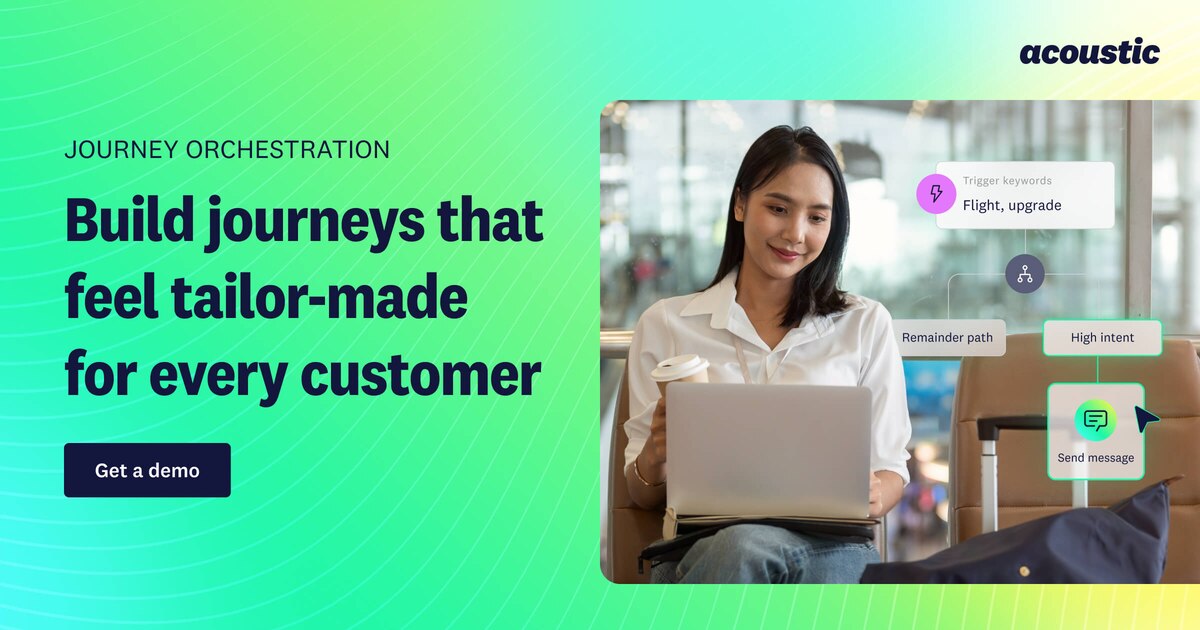
Acoustic Journey Orchestration

Best for Cross Channel Journey Orchestration Tools

Score
9.7 / 10
Acoustic Journey Orchestration

Acoustic Journey Orchestration is a premier solution for professionals seeking to automate cross-channel campaigns at scale. It is designed to accommodate the complex needs of large-scale marketers, with robust automation for email, SMS, and WhatsApp, allowing for efficient scheduling of recurring communications.

Best for Cross Channel Journey Orchestration Tools

Expert Take

Acoustic Journey Orchestration excels in automating cross-channel marketing campaigns, offering robust capabilities for large-scale marketers. Its integration with multiple communication channels and comprehensive automation features position it as a top-tier solution in its category. However, the need for technical proficiency and lack of transparent pricing are notable considerations.

Pros

  • Drag-and-drop journey builder for non-technical users
  • Real-time behavioral triggers and AI insights
  • Strong security compliance (ISO, SOC 2, GDPR)
  • Unified cross-channel orchestration (Email, SMS, WhatsApp)
  • Partnership with Snowflake for data management

Cons

  • Reporting can be slow with large datasets
  • Limited to one CRM instance per subscription
  • Support resolution times can be lengthy
  • Pricing is not transparently listed online
  • Advanced features require higher tier editions

Best for teams that are

  • Mid-market B2C brands needing an integrated marketing cloud
  • Teams wanting pre-built journey templates and AI optimization
  • Users familiar with the legacy IBM marketing ecosystem

Skip if

  • Large enterprises needing best-in-class mobile capabilities
  • Users seeking a modern, highly intuitive interface
  • Teams requiring extensive third-party integrations

Best for teams that are

  • Mid-market B2C brands needing an integrated marketing cloud
  • Teams wanting pre-built journey templates and AI optimization
  • Users familiar with the legacy IBM marketing ecosystem

Skip if

  • Large enterprises needing best-in-class mobile capabilities
  • Users seeking a modern, highly intuitive interface
  • Teams requiring extensive third-party integrations

Pros

  • Drag-and-drop journey builder for non-technical users
  • Real-time behavioral triggers and AI insights
  • Strong security compliance (ISO, SOC 2, GDPR)
  • Unified cross-channel orchestration (Email, SMS, WhatsApp)
  • Partnership with Snowflake for data management

Cons

  • Reporting can be slow with large datasets
  • Limited to one CRM instance per subscription
  • Support resolution times can be lengthy
  • Pricing is not transparently listed online
  • Advanced features require higher tier editions

Expert Take

Acoustic Journey Orchestration excels in automating cross-channel marketing campaigns, offering robust capabilities for large-scale marketers. Its integration with multiple communication channels and comprehensive automation features position it as a top-tier solution in its category. However, the need for technical proficiency and lack of transparent pricing are notable considerations.

6

Braze Segment Insights

Best for Journey Tools with Segment and Audience Insights

Score
9.7 / 10
Braze Segment Insights

Braze Segment Insights is a robust tool designed specifically for marketing professionals, enabling them to gain an in-depth understanding of audience behaviors. It simplifies the interpretation, sharing, and utilization of segment insights, thus providing data-driven strategies to meet industry-specific objectives.

Best for Journey Tools with Segment and Audience Insights

Expert Take

Braze Segment Insights excels in providing comprehensive audience insights and real-time tracking capabilities, making it a valuable tool for marketing professionals. Its robust features and data-driven approach position it as a premium product in the customer journey orchestration category.
Pros

  • Seamless integration with Amplitude/Segment
  • Real-time segment performance tracking
  • Intuitive UI for basic workflows
  • Strong predictive churn & LTV metrics
  • Extensive Braze Academy learning resources

Cons

  • Expensive enterprise-focused pricing ($60k+)
  • Limited native custom reporting
  • Steep learning curve for advanced features
  • No public pricing transparency
  • Inconsistent customer support quality

Best for teams that are

  • Mobile-first brands heavily invested in the Braze ecosystem
  • Marketers wanting to compare segment performance like LTV

Skip if

  • Companies not using Braze for customer engagement
  • Teams needing standalone analytics for non-messaging data

Best for teams that are

  • Mobile-first brands heavily invested in the Braze ecosystem
  • Marketers wanting to compare segment performance like LTV

Skip if

  • Companies not using Braze for customer engagement
  • Teams needing standalone analytics for non-messaging data

Pros

  • Seamless integration with Amplitude/Segment
  • Real-time segment performance tracking
  • Intuitive UI for basic workflows
  • Strong predictive churn & LTV metrics
  • Extensive Braze Academy learning resources

Cons

  • Expensive enterprise-focused pricing ($60k+)
  • Limited native custom reporting
  • Steep learning curve for advanced features
  • No public pricing transparency
  • Inconsistent customer support quality

Expert Take

Braze Segment Insights excels in providing comprehensive audience insights and real-time tracking capabilities, making it a valuable tool for marketing professionals. Its robust features and data-driven approach position it as a premium product in the customer journey orchestration category.

7

Listrak Journey Orchestration

Best for Journey Orchestration Tools for Ecommerce

Score
9.7 / 10
Listrak Journey Orchestration

Listrak's Journey Orchestration is a highly tailored solution for retail e-commerce businesses. It allows marketers to automate personalized, cross-channel engagement based on real customer behavior, helping to optimize customer journey and boost conversion rates.

Best for Journey Orchestration Tools for Ecommerce

Expert Take

Listrak Journey Orchestration excels in providing a tailored solution for retail e-commerce businesses with its advanced automation and cross-channel capabilities. Its focus on personalized customer engagement and real-time behavior tracking makes it a standout in its category, despite the custom pricing model.

Pros

  • Unified cross-channel orchestration (Email, SMS, Push)
  • AI Channel Affinity optimizes delivery path
  • Exceptional dedicated account management support
  • Deep native integrations with Shopify/Magento
  • High potential for ROAS (46x claimed)

Cons

  • Steep learning curve for new users
  • Interface described as dated or complex
  • High annual cost (avg ~$83k)
  • Long contract commitments (often 2 years)
  • Opaque pricing requires sales contact

Best for teams that are

  • Retail and ecommerce brands seeking revenue-focused automation
  • Mid-market to enterprise companies needing agency-style support
  • Marketers wanting unified email and SMS for shopping journeys

Skip if

  • B2B companies or non-retail industries like SaaS
  • Users prioritizing a modern, cutting-edge user interface
  • Small businesses wanting a cheap, self-service tool

Best for teams that are

  • Retail and ecommerce brands seeking revenue-focused automation
  • Mid-market to enterprise companies needing agency-style support
  • Marketers wanting unified email and SMS for shopping journeys

Skip if

  • B2B companies or non-retail industries like SaaS
  • Users prioritizing a modern, cutting-edge user interface
  • Small businesses wanting a cheap, self-service tool

Pros

  • Unified cross-channel orchestration (Email, SMS, Push)
  • AI Channel Affinity optimizes delivery path
  • Exceptional dedicated account management support
  • Deep native integrations with Shopify/Magento
  • High potential for ROAS (46x claimed)

Cons

  • Steep learning curve for new users
  • Interface described as dated or complex
  • High annual cost (avg ~$83k)
  • Long contract commitments (often 2 years)
  • Opaque pricing requires sales contact

Expert Take

Listrak Journey Orchestration excels in providing a tailored solution for retail e-commerce businesses with its advanced automation and cross-channel capabilities. Its focus on personalized customer engagement and real-time behavior tracking makes it a standout in its category, despite the custom pricing model.

8

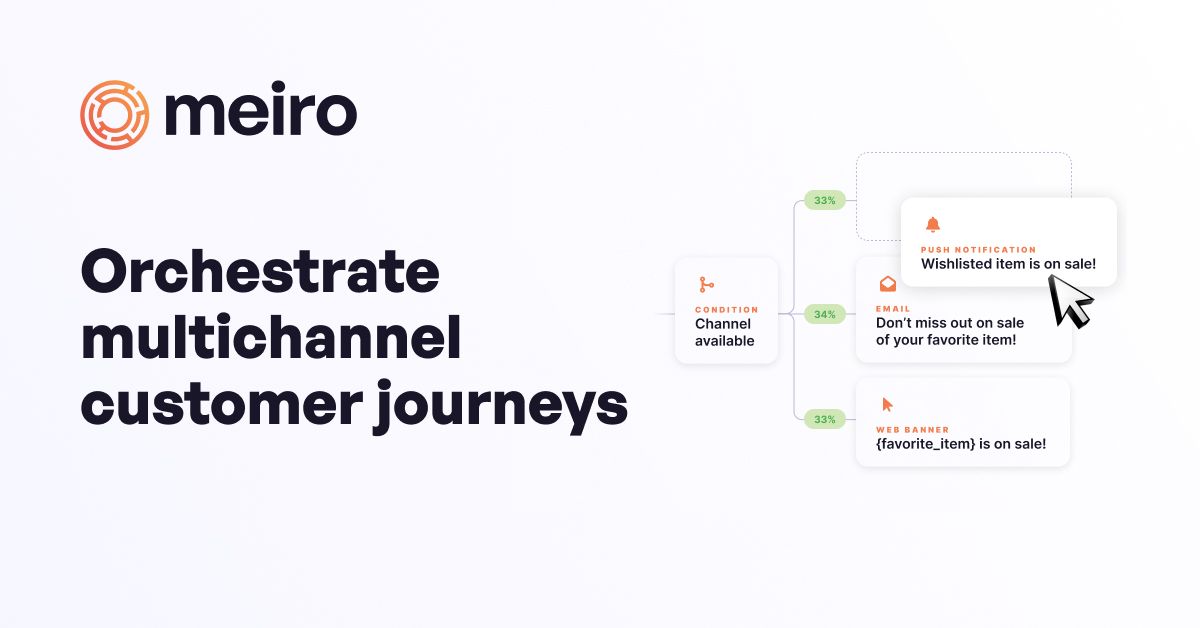
Meiro Customer Journey Orchestration

Best for Journey Orchestration Tools for Ecommerce

Score
9.6 / 10
Meiro Customer Journey Orchestration

Meiro's Customer Journey Orchestration tool is an advanced, real-time data analysis and visualization tool designed for ecommerce businesses. It provides a comprehensive view of the customer journey, tracking conversion rates across different campaigns, and delivering insightful data that can improve marketing strategies.

Best for Journey Orchestration Tools for Ecommerce

Expert Take

Meiro's Customer Journey Orchestration tool excels in providing real-time data analysis and visualization specifically for ecommerce businesses. Its ability to deliver actionable insights and track conversion rates enhances marketing strategies. While pricing and complexity may pose challenges for smaller businesses, the tool's capabilities justify its premium positioning.

Pros

  • Private cloud & on-premise deployment
  • Native ETL & Reverse ETL included
  • Transparent pricing with no hidden fees
  • Real-time identity resolution across devices
  • Banking-grade security & compliance

Cons

  • Setup takes longer than plug-and-play tools
  • Requires technical resources for initial implementation
  • Missing some niche platform integrations
  • Smaller market presence than Segment
  • Documentation can be technical for marketers

Best for teams that are

  • Enterprises with strict data compliance or on-premise needs
  • Technical teams wanting full control over their data platform
  • Organizations needing to unify fragmented data in a private cloud

Skip if

  • Small businesses or non-technical marketing teams
  • Companies looking for a quick, out-of-the-box SaaS solution
  • Teams not needing deep data warehousing capabilities

Best for teams that are

  • Enterprises with strict data compliance or on-premise needs
  • Technical teams wanting full control over their data platform
  • Organizations needing to unify fragmented data in a private cloud

Skip if

  • Small businesses or non-technical marketing teams
  • Companies looking for a quick, out-of-the-box SaaS solution
  • Teams not needing deep data warehousing capabilities

Pros

  • Private cloud & on-premise deployment
  • Native ETL & Reverse ETL included
  • Transparent pricing with no hidden fees
  • Real-time identity resolution across devices
  • Banking-grade security & compliance

Cons

  • Setup takes longer than plug-and-play tools
  • Requires technical resources for initial implementation
  • Missing some niche platform integrations
  • Smaller market presence than Segment
  • Documentation can be technical for marketers

Expert Take

Meiro's Customer Journey Orchestration tool excels in providing real-time data analysis and visualization specifically for ecommerce businesses. Its ability to deliver actionable insights and track conversion rates enhances marketing strategies. While pricing and complexity may pose challenges for smaller businesses, the tool's capabilities justify its premium positioning.

9

Progress Sitefinity Insight

Best for Journey Tools with Segment and Audience Insights

Score
9.6 / 10
Progress Sitefinity Insight

Progress Sitefinity Insight is an AI-driven SaaS solution that automatically generates audience segments based on visitor activities. It's tailored for professionals in the marketing automation platforms industry who need a deep understanding of their audience's journey. This software provides valuable insights about which content resonates with their customers, helping to enhance targeted marketing strategies.

Best for Journey Tools with Segment and Audience Insights

Expert Take

Progress Sitefinity Insight stands out in the marketing automation industry with its AI-driven audience segmentation and real-time data analytics. It provides deep insights into customer interactions, aiding in the creation of targeted marketing strategies. Its integration capabilities and enterprise-level features position it as a top-tier solution.

Pros

  • SOC2 & HIPAA compliant security
  • AI-driven propensity scoring
  • Native Salesforce & HubSpot connectors
  • GDPR consent management tools
  • Multi-touch attribution modeling

Cons

  • High licensing costs ($20k+)
  • Steep learning curve for beginners
  • Requires developers for deep customization
  • Opaque pricing (quote-based)
  • Upgrade process can be complex

Best for teams that are

  • Organizations using Sitefinity CMS for digital experiences
  • B2B/B2C firms needing integrated content personalization

Skip if

  • Companies using a different CMS without plans to migrate
  • Teams needing a best-of-breed CDP for complex app data

Best for teams that are

  • Organizations using Sitefinity CMS for digital experiences
  • B2B/B2C firms needing integrated content personalization

Skip if

  • Companies using a different CMS without plans to migrate
  • Teams needing a best-of-breed CDP for complex app data

Pros

  • SOC2 & HIPAA compliant security
  • AI-driven propensity scoring
  • Native Salesforce & HubSpot connectors
  • GDPR consent management tools
  • Multi-touch attribution modeling

Cons

  • High licensing costs ($20k+)
  • Steep learning curve for beginners
  • Requires developers for deep customization
  • Opaque pricing (quote-based)
  • Upgrade process can be complex

Expert Take

Progress Sitefinity Insight stands out in the marketing automation industry with its AI-driven audience segmentation and real-time data analytics. It provides deep insights into customer interactions, aiding in the creation of targeted marketing strategies. Its integration capabilities and enterprise-level features position it as a top-tier solution.

10

Algonomy Journey Orchestration

Best for Journey Orchestration Tools for Ecommerce

Score
9.5 / 10
Algonomy Journey Orchestration

Algonomy's Journey Orchestration is a powerful tool for ecommerce marketers looking to provide hyper-personalized customer experiences. By enabling the creation of tailored omnichannel journeys, it directly addresses the industry's need for improved customer engagement and increased conversion rates.

Best for Journey Orchestration Tools for Ecommerce

Expert Take

Algonomy Journey Orchestration excels in providing hyper-personalized customer experiences, crucial for ecommerce marketers. Its omnichannel support and advanced analytics enhance customer engagement and conversion rates. While pricing transparency is limited, its capabilities and market credibility position it as a leading solution in its category.

Pros

  • 150+ pre-built personalization strategies
  • Specialized AI for retail verticals
  • Orchestration across 12+ channels
  • High documented ROI (749%)
  • Strong analyst recognition (Gartner Visionary)

Cons

  • Interface reported as confusing
  • Implementation can be chaotic
  • Steep learning curve for users
  • Premium pricing barrier
  • Opaque methodology for some modules

Best for teams that are

  • Retailers requiring algorithmic personalization and supply chain data
  • Consumer brands focused on 1:1 omnichannel shopping experiences
  • Enterprises needing to integrate demand forecasting with marketing

Skip if

  • Non-retail sectors like B2B, healthcare, or manufacturing
  • Small businesses with low data volume or simple needs
  • Teams seeking a general-purpose marketing automation tool

Best for teams that are

  • Retailers requiring algorithmic personalization and supply chain data
  • Consumer brands focused on 1:1 omnichannel shopping experiences
  • Enterprises needing to integrate demand forecasting with marketing

Skip if

  • Non-retail sectors like B2B, healthcare, or manufacturing
  • Small businesses with low data volume or simple needs
  • Teams seeking a general-purpose marketing automation tool

Pros

  • 150+ pre-built personalization strategies
  • Specialized AI for retail verticals
  • Orchestration across 12+ channels
  • High documented ROI (749%)
  • Strong analyst recognition (Gartner Visionary)

Cons

  • Interface reported as confusing
  • Implementation can be chaotic
  • Steep learning curve for users
  • Premium pricing barrier
  • Opaque methodology for some modules

Expert Take

Algonomy Journey Orchestration excels in providing hyper-personalized customer experiences, crucial for ecommerce marketers. Its omnichannel support and advanced analytics enhance customer engagement and conversion rates. While pricing transparency is limited, its capabilities and market credibility position it as a leading solution in its category.

How We Rank Products

Our Evaluation Process

Products in the Customer Journey Orchestration Tools category are evaluated based on their documented features, such as automation capabilities and data integration options. Pricing transparency is also a key factor, allowing buyers to assess cost-effectiveness relative to their needs. Compatibility with existing systems is crucial, as it affects the ease of implementation and ongoing operations. Additionally, third-party customer feedback is considered to gauge user satisfaction and real-world performance.

Verification

  • Products evaluated through comprehensive research and analysis of customer feedback and expert opinions.
  • Rankings based on a thorough review of specifications, industry standards, and user ratings.
  • Selection criteria focus on integration capabilities, user experience, and customer support effectiveness.

Score Breakdown

0.0 / 10

About Customer Journey & Experience Orchestration Tools

Customer Journey & Experience Orchestration Tools: Category Overview

This category covers software designed to centrally manage, visualize, and automate customer interactions across multiple touchpoints in real-time, functioning as the "decisioning brain" of the customer experience stack. It tracks individual customer behaviors across channels (web, mobile, in-store, call center), interprets their intent using logic or AI, and triggers the next-best action or message in the most appropriate channel. It sits between Customer Data Platforms (which unify and store data) and engagement execution layers (like Marketing Automation, CCaaS, or CMS). It includes both general-purpose decisioning engines and vertical-specific solutions tailored for complex service industries like healthcare, financial services, and telecommunications.

What Are Customer Journey & Experience Orchestration Tools?

Customer Journey & Experience Orchestration (CJO) tools represent the shift from static campaign management to dynamic, intent-driven engagement. While a Customer Relationship Management (CRM) system acts as a system of record (storing who the customer is) and a Marketing Automation Platform (MAP) acts as a system of execution (sending the email), a CJO platform acts as the system of intelligence. It answers the critical question: "Given everything we know about this customer right now, what is the single best thing to do next?"

The core problem these tools solve is the "fragmentation of context." In most enterprises, the contact center does not know what the customer just looked at on the website, and the email marketing team does not know that the customer has an open support ticket. CJO tools bridge these silos by listening to event streams from all systems, applying central logic, and instructing the edge systems on how to behave. According to Forrester, these platforms serve as the "nerve center" for journey-centric firms, identifying friction points and driving data-driven decision-making to orchestrate seamless experiences [1].

Who uses these tools? Primarily, they are utilized by Customer Experience (CX) leaders, Digital Transformation teams, and specialized "Journey Managers"—a role that has emerged specifically to operate this software. Unlike marketing tools used solely by marketers, CJO platforms are often shared infrastructure, governed by a cross-functional center of excellence that includes service, sales, and operations stakeholders.

History of the Category

The lineage of Customer Journey Orchestration traces back to the database marketing era of the 1990s, but its modern form was born out of the failure of "Customer Journey Mapping" to drive actual operational change. In the early 2010s, enterprises spent millions on consulting engagements to create beautiful, static visualizations of customer journeys. These maps, often printed and stuck to boardroom walls, described the "happy path" a customer should take. However, they were disconnected from the actual systems interacting with customers. There was a profound gap between the designed journey and the executed journey [2].

The CJO category emerged to close this gap by turning those static maps into executable code. Early innovators in this space focused on "Real-Time Interaction Management" (RTIM), a concept championed by analysts to describe centralized decision engines. Initially, these were heavy, on-premise solutions reserved for banking and telecom giants with mainframes. As cloud computing matured, a wave of agile, API-first startups appeared between 2015 and 2020, promising to overlay existing tech stacks rather than replace them. This era saw a shift in buyer expectations from "give me a database to store history" (the CDP promise) to "give me a brain to decide the future."

Recent years have been defined by significant market consolidation. Large Customer Experience (CX) and Contact Center as a Service (CCaaS) providers have aggressively acquired standalone CJO vendors to embed orchestration capabilities directly into their suites. This integration signals a market maturity where orchestration is increasingly viewed not just as a standalone tool, but as the connective tissue essential for any enterprise stack. By 2024, the market had evolved to prioritize AI-driven predictive capabilities, moving beyond simple "if-this-then-that" rules to probabilistic modeling of customer intent [3].

What to Look For

When evaluating Customer Journey & Experience Orchestration tools, the primary criterion is latency and data freshness. A true orchestration engine must operate in milliseconds. If a customer abandons a cart or fails a credit check, the system must receive that signal, process the decision logic, and trigger an intervention before the customer leaves the session. Buyers should look for "event-based architectures" rather than "batch-based architectures." Batch processing, which updates data overnight or hourly, is insufficient for modern orchestration [4].

Another critical factor is the Vendor Neutrality of the Ecosystem. The tool must sit agnostically above your existing stack. Warning signs appear when a vendor claims to orchestrate journeys but only works seamlessly with their own proprietary email or CRM tools. The best CJO platforms act as a "Switzerland" layer—connecting a CRM from Vendor A, an email platform from Vendor B, and a commerce engine from Vendor C without bias.

Key Questions to Ask Vendors:

  • "Does your platform ingest data via streaming APIs (real-time) or does it rely on batch file uploads?"
  • "Can I test a journey logic change in a 'sandbox' environment using real historical customer data before pushing it live?"
  • "How does your identity resolution handle an anonymous user browsing on mobile who later logs in on a desktop? Do you merge the sessions retrospectively in real-time?"
  • "What is the 'time-to-decision'? Once an event hits your API, how many milliseconds does it take to return a next-best-action payload?"

Industry-Specific Use Cases

Retail & E-Commerce

In retail, the primary driver for orchestration is inventory-aware personalization and price sensitivity management. Unlike generic marketing, retail orchestration must account for stock levels in real-time—there is no value in orchestrating a journey toward a product that just sold out. Advanced tools use orchestration to manage "price drop" workflows where interest is captured during a browsing session, and a trigger is fired instantly when the SKU price changes, but only if inventory is sufficient [5]. Evaluation priorities here focus heavily on the speed of ingestion for catalog data and the ability to handle massive spikes in event volume during peak seasons like Black Friday. Retailers also look for "hybrid" orchestration that connects digital behavior (viewing a shoe online) with physical actions (entering a geofence around a store).

Healthcare

Healthcare orchestration is distinct because the "customer" is a patient, and the "conversion" is often adherence to a care plan rather than a sale. Use cases focus on closing "gaps in care," such as identifying a patient who missed a prescription refill and orchestrating a supportive intervention via SMS or a nurse call [6]. Unique considerations include strict HIPAA compliance and data residency requirements. The orchestration logic here is often clinical rather than commercial; for example, a "journey" might be a 90-day post-surgery recovery plan where triggers are based on reported pain levels or appointment attendance. Payer-provider interoperability is a massive evaluation factor—can the tool ingest claims data to trigger a wellness journey [7]?

Financial Services

For banking and insurance, the high-stakes use case is application abandonment recovery—specifically for complex products like mortgages or business loans. These journeys are not simple shopping carts; they involve document uploads, credit checks, and compliance steps. Orchestration tools are used to detect exactly where a user stalled (e.g., at the document upload screen) and trigger a specific help intervention, such as a banker outreach with context on the specific error encountered [8]. Security is the paramount evaluation criterion; financial institutions require on-premise or private cloud deployment options and granular audit trails for every automated decision made by the system to satisfy regulatory bodies.

Manufacturing

Manufacturing orchestration increasingly revolves around the Internet of Things (IoT) and the "servitization" of products. Instead of just selling a machine, manufacturers orchestrate the ownership experience. A key workflow involves ingesting telemetry data from connected devices (e.g., a tractor or industrial printer). If a device sends a "low toner" or "vibration warning" signal, the orchestration tool automatically triggers a service ticket, orders a part, and notifies the customer—bypassing manual support entirely [9]. Buyers in this sector prioritize high-volume event processing (handling millions of sensor pings) over complex marketing profile attributes.

Professional Services

In legal, consulting, and B2B agencies, orchestration focuses on the "Client Onboarding" and "Stakeholder Alignment" phase. The purchase cycle is long and involves multiple decision-makers. Orchestration tools here are used to sync the sales promise with the delivery reality—ensuring that once a contract is signed, the onboarding team receives the correct briefing materials and the client receives a structured "Welcome" sequence that adapts based on their engagement with kickoff materials [10]. The unique consideration is CRM integration; the orchestration tool must read/write deeply into platforms like Salesforce to align the Partner, the Account Manager, and the Project Delivery team.

Subcategory Overview

Journey Orchestration Platforms with Real Time Triggers This subcategory is defined by its architectural obsession with speed—specifically, sub-second latency. Unlike general orchestration tools that might poll for data every few minutes, these platforms utilize event-driven architecture to react instantly. A workflow unique to this niche is the "location-based intercept," where a customer entering a physical geofence triggers a push notification within seconds—a feat impossible for batch-based tools. The specific pain point driving buyers here is the "missed micro-moment," where a brand sends a relevant offer five minutes too late, after the customer has already left the store or closed the app. For a detailed breakdown of these high-velocity tools, see our guide to Journey Orchestration Platforms with Real Time Triggers.

Cross Channel Journey Orchestration Tools The differentiator here is "channel continuity." While many tools can send emails and SMS, this niche specializes in bridging the gap between digital and human-assisted channels. A workflow only these tools handle well is the "Web-to-Voice Handoff," where a customer struggling on a support page clicks "Call Now," and the orchestration tool instantly passes their browsing history to the agent's screen before the phone rings. The driving pain point is the "siloed conversation," where customers are forced to repeat their problems to agents because the call center software is deaf to the website's data. To understand how to bridge these silos, read more about Cross Channel Journey Orchestration Tools.

Journey Orchestration Tools for Ecommerce This niche is distinguished by deep, native integrations with commerce catalogs and merchandising logic. Generic tools treat a "product" as just a text string, but these specialized tools understand inventory counts, variant sizing, and margin data. A workflow specific to this group is the "margin-aware recovery," where the system decides whether to offer a discount to a cart abandoner based on the real-time profit margin of the items in the basket. The pain point driving buyers here is "unprofitable personalization"—using generic tools that offer discounts on low-margin goods, eroding profitability. For tools that understand the economics of the cart, visit our page on Journey Orchestration Tools for Ecommerce.

Journey Tools with Segment and Audience Insights These platforms lean heavily into the "Analytics" and "Planning" side of orchestration rather than just the execution. They excel at visualizing complex paths to identify bottlenecks before automating them. A unique workflow is "Counterfactual Analysis," where a user can simulate "what if" scenarios (e.g., "What if we removed this email step?") to predict impact before changing the live journey. The pain point driving buyers here is "black box automation," where teams have automated journeys running but no visibility into whether they are actually improving lifetime value or just generating noise. For deeper insight into analytics-first platforms, explore Journey Tools with Segment and Audience Insights.

Deep Dive: Integration & API Ecosystem

The efficacy of a Customer Journey Orchestration tool is mathematically limited by the quality of its integrations. If the orchestration "brain" cannot sense signals or move "limbs" (execution tools), it is useless. The gold standard in this category is a pre-built connector library combined with a robust webhook infrastructure. According to a Quadient report, 97% of executives agree that operational silos actively prohibit collaboration, citing disparate legacy systems as a primary barrier [11]. Analysts note that buyers must evaluate not just the existence of an API, but its rate limits and payload flexibility.

Gartner highlights that successful implementation relies heavily on integrating with function-specific tools (like CCaaS) rather than trying to replace them [12]. A robust API ecosystem allows for bi-directional data flow: reading events (ingestion) and triggering actions (activation). The best tools offer "low-code" integration builders that allow non-technical journey managers to map data fields between systems without writing Python scripts.

Scenario: Consider a 50-person professional services firm that attempts to connect their CJO tool to a legacy invoicing system and a modern project management tool (e.g., Jira). They design a journey to trigger a "Project Kickoff" email only after the "Deposit Paid" signal is received. However, the invoicing system only processes data in nightly batches. Consequently, the "Deposit Paid" signal is delayed by 24 hours. The client pays instantly but receives no welcome communication for a full day, creating anxiety. A well-designed integration strategy would have identified this latency gap during the evaluation phase, perhaps opting for a middleware solution or a different trigger (e.g., "Contract Signed") to ensure the experience felt real-time.

Deep Dive: Security & Compliance

In the context of journey orchestration, security is not just about encryption; it is about consent governance. Orchestration tools act on data from multiple sources, meaning they inherit the compliance risks of all those sources. If a customer opts out of marketing in the CRM, the orchestration engine must respect that immediately across all channels. Forrester emphasizes that facilitating the adoption of responsible AI and data privacy is a key differentiator for top vendors [3].

G2 market reports and industry analyses frequently cite GDPR (Europe) and CCPA (California) compliance as top buyer concerns. Specifically, the "Right to be Forgotten" is technically difficult to execute in an orchestration engine that may have cached behavioral data to calculate a "churn risk score." Vendors must provide automated mechanisms to purge user profiles from the decision engine upon request.

Scenario: A regional bank implements a CJO tool to reduce mortgage application abandonment. They set up a trigger: if a user uploads a document but doesn't submit, send an SMS reminder. However, they fail to configure the "Quiet Hours" and "Do Not Disturb" logic correctly within the compliance settings. A prospective borrower uploads a pay stub at 11:30 PM on a Tuesday. The system immediately triggers a "Can we help?" SMS at 11:31 PM. This violates telemarketing regulations (TCPA in the US) regarding contact hours, potentially exposing the bank to massive class-action fines. A compliant tool would have a built-in "wait until next valid window" logic applied to all communications by default.

Deep Dive: Pricing Models & TCO

Pricing for CJO tools has shifted away from "per-seat" licensing (common in CRM) toward usage-based metrics. The most common metrics are "Monthly Active Profiles" (MAPs) or "Events Per Month" (EPM). This shift aligns cost with value but can introduce unpredictability. Research indicates that companies implementing advanced journey orchestration can achieve significant ROI—a Forrester TEI study found a 251% ROI over three years for composite organizations [13]—but this return depends on controlling the "noise" of data ingestion.

Total Cost of Ownership (TCO) calculations must include not just the software license, but the storage costs of high-volume event streams. Some vendors charge for every API call made to the decision engine. This penalizes high-frequency use cases like IoT monitoring, where a sensor might ping the system every second.

Scenario: A mid-sized e-commerce retailer with a small team (25 people) evaluates a leading CJO vendor. The vendor quotes a price based on "10 million events per month." The team calculates their web traffic and estimates they only generate 5 million events. They sign the contract. However, they decide to track "mouse hovers" and "scroll depth" to gauge interest intensity. Suddenly, a single user session generates 500 events instead of 50. Their monthly bill triples in the first quarter because they failed to distinguish between "meaningful business events" (Add to Cart) and "noisy telemetry" (Scroll). A proper TCO analysis would have filtered the data stream before ingestion to avoid paying for noise.

Deep Dive: Implementation & Change Management

The most common cause of failure in CJO projects is not software bugs, but organizational inertia. CJO is inherently cross-functional; it requires Marketing to agree with Sales and Service on a unified logic for the customer. This creates political friction. According to Quadient, lack of a collaborative culture is a primary hindrance; operational silos actively prohibit the collaboration necessary for orchestration [11].

Industry experts like those at McKinsey suggest adopting a "crawl, walk, run" approach: starting with a single journey (e.g., onboarding) rather than trying to "boil the ocean" by orchestrating the entire lifecycle at once [7]. Implementation is less about installing software and more about "Data Readiness"—cleaning and unifying the data layer so the orchestration engine has a truthful view of the world.

Scenario: A healthcare provider decides to implement journey orchestration to improve patient appointment adherence. The software is installed technically within two weeks. However, the "Appointment Scheduling" system uses a different Patient ID format than the "Email Marketing" system. The IT team spends six months writing scripts to match IDs (Identity Resolution). Meanwhile, the CJO tool sits unused, burning license fees. The "change management" failure here was underestimating the data unification requirement. A successful implementation would have started with a data audit, ensuring that a "Golden Record" of the patient existed before attempting to orchestrate their experience.

Deep Dive: Vendor Evaluation Criteria

When selecting a vendor, buyers must look beyond the glossy "Journey Builder" interface—the drag-and-drop canvas is often a commodity. The real differentiator is the Decision Engine. How complex can the logic be? Can it handle nested conditions ("If X AND Y, but NOT Z, unless it's Tuesday")? Forrester advises buyers to prioritize providers that expedite seamless data integration and facilitate responsible AI adoption [3].

Another critical criterion is Testing & Simulation. Orchestration logic can have unintended consequences (e.g., creating an infinite loop of emails). Strong vendors provide "Digital Twin" capabilities where you can run a year's worth of historical data through a new journey design to see what would have happened, allowing you to debug logic without risking actual customer relationships.

Scenario: An insurance company evaluates two vendors. Vendor A has a beautiful, easy-to-use interface but limited logic capabilities. Vendor B has a clunky interface but a powerful Python-based decision engine. The buying team, composed mostly of marketers, chooses Vendor A. Six months later, they try to implement a complex renewal journey that varies based on "risk tier" and "state regulations." Vendor A's simple rule builder cannot support the complexity. The team is forced to build "workarounds" using spreadsheets, defeating the purpose of the tool. A proper evaluation would have included a "Proof of Concept" (POC) where the vendors were required to build the company's most complex journey, not just the simplest one.

Emerging Trends and Contrarian Take

Emerging Trends (2025-2026): The most significant trend is the infusion of Generative AI into the Orchestration Layer. Instead of just triggering a pre-written email template, the orchestration engine will prompt an LLM to generate the content on the fly based on the customer's specific context, creating truly dynamic 1:1 communication [14]. Additionally, we are seeing a shift toward "Edge Orchestration," where decision logic sits on the user's device (app or browser) to ensure privacy and zero latency, rather than sending data back to a central cloud server.

Contrarian Take: The "Orchestration Engine" market is dying because the "Brain" is moving to the Data Warehouse. For years, vendors sold CJO tools as the necessary "brain" of the stack. However, with the rise of the "Composable CDP" and "Reverse ETL" (streaming data directly from a data warehouse like Snowflake to activation tools), the need for a separate, expensive orchestration middleware is diminishing. Smart engineering teams are realizing they can build the decision logic directly into their data infrastructure using SQL, bypassing the CJO vendor entirely. The contrarian insight here is that for many businesses, your "database" is becoming smart enough to be your "orchestrator," and buying a standalone tool might be redundant infrastructure in 5 years.

Common Mistakes

One of the most frequent buying mistakes is "Overbuying for Maturity." Companies often purchase an enterprise-grade CJO platform capable of complex, multi-variate, real-time AI decisioning when their actual organizational maturity is stuck at "sending a birthday email." They pay for a Ferrari to drive to the grocery store. The complexity of the tool overwhelms the team, leading to low adoption.

Another implementation error is "The Big Bang Launch." Teams try to map and orchestrate the entire customer lifecycle (Acquisition to Advocacy) before going live. This project inevitably stalls due to its size. The mistake is treating orchestration as a "Project" with an end date, rather than a "Product" that is iteratively improved. Successful teams launch one micro-journey (e.g., "Second Purchase Nudge"), prove the value, and then expand.

Questions to Ask in a Demo

  • "Show me exactly how your system handles a 'conflict'. If a customer qualifies for three different journeys simultaneously (e.g., 'Welcome', 'Win-back', and 'Service Alert'), how does the engine decide which one wins? Show me the prioritization screen."
  • "Open the 'Data Ingestion' settings. How do we map a custom field from our proprietary backend to your system? Is this a drag-and-drop exercise for a marketer, or a JSON mapping exercise for a developer?"
  • "Can you demonstrate a 'Simulation'? I want to see what happens if I run this new logic against last month's data. Will it tell me how many people would have received a message?"
  • "What happens when your system goes down? Does the customer experience break, or is there a 'default fallback' mode that allows our web/app to keep functioning without personalization?"

Before Signing the Contract

Final Decision Checklist:

  • Data Readiness: Is your data actually accessible and clean enough to feed this engine? If not, pause the contract and fix the data first.
  • Team Capacity: Do you have a dedicated "Journey Manager" or "Technologist" who will own this tool? If it's just "part of someone's job," it will fail.
  • Latency SLAs: Does the contract guarantee specific processing times (e.g., <500ms)? "Real-time" is a marketing term; "milliseconds" is a contractual term.

Deal-Breakers:

  • Proprietary Lock-in: If the vendor says, "This feature only works if you also use our Email Sending Tool," walk away. Orchestration must be channel-agnostic.
  • Black Box AI: If the vendor cannot explain why the AI made a specific decision (Explainability), you cannot use it in regulated industries like Finance or Healthcare.

Closing

Customer Journey & Experience Orchestration is the difference between a brand that happens to a customer and a brand that adapts to a customer. It is a powerful capability, but it requires a foundation of clean data, clear strategy, and organizational courage to break down silos. If you have questions about which tool fits your specific stack maturity, feel free to reach out.

Email: albert@whatarethebest.com