
Creative Collaboration & Review Tools

These are the specialized categories within Creative Collaboration & Review Tools. Looking for something broader? See all Design, Creative & Media Production Software categories.

1

Capture One Pro Photo Editing

Best for Creative Collaboration & Review Tools for Photography Studios
Score
9.8 / 10
Capture One Pro Photo Editing

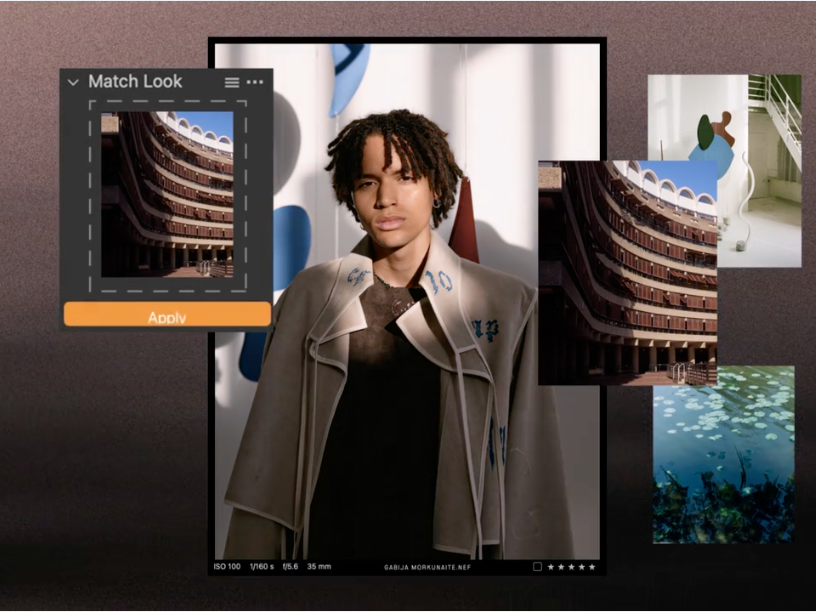
Capture One Pro is a top-tier photo editing software designed for professional photographers and photo studios. It offers advanced tools for collaboration, automation, and precision, streamlining high-volume workflows and enabling faster, more efficient editing processes.

Best for Creative Collaboration & Review Tools for Photography Studios

Expert Take

Capture One Pro excels in providing advanced photo editing capabilities tailored for professional photographers and studios. Its robust feature set, including high-volume processing and collaboration tools, justifies its premium positioning. While the learning curve is steep, the software's customization and efficiency enhancements make it a top choice for professionals.

Pros

  • Industry-leading tethered shooting reliability
  • Superior RAW rendering and color science
  • Advanced Skin Tone uniformity tools
  • Highly customizable professional workspace
  • Session-based workflow for project management

Cons

  • Significantly more expensive than competitors
  • Steep learning curve for beginners
  • Perpetual license excludes feature updates
  • Lacks generative AI noise reduction
  • Mobile app requires separate subscription

Best for teams that are

  • Professional studio photographers requiring reliable tethered shooting
  • Editors needing high-volume RAW processing and advanced color grading

Skip if

  • Casual photographers or beginners who may find the steep learning curve overwhelming
  • Teams seeking a purely cloud-native ecosystem for asset management

Best for teams that are

  • Professional studio photographers requiring reliable tethered shooting
  • Editors needing high-volume RAW processing and advanced color grading

Skip if

  • Casual photographers or beginners who may find the steep learning curve overwhelming
  • Teams seeking a purely cloud-native ecosystem for asset management

Pros

  • Industry-leading tethered shooting reliability
  • Superior RAW rendering and color science
  • Advanced Skin Tone uniformity tools
  • Highly customizable professional workspace
  • Session-based workflow for project management

Cons

  • Significantly more expensive than competitors
  • Steep learning curve for beginners
  • Perpetual license excludes feature updates
  • Lacks generative AI noise reduction
  • Mobile app requires separate subscription

Expert Take

Capture One Pro excels in providing advanced photo editing capabilities tailored for professional photographers and studios. Its robust feature set, including high-volume processing and collaboration tools, justifies its premium positioning. While the learning curve is steep, the software's customization and efficiency enhancements make it a top choice for professionals.

2

Creative Force Photo Studio Management

Best for Creative Collaboration & Review Tools for Photography Studios

Score
9.6 / 10
Creative Force Photo Studio Management

Creative Force is an ideal tool for e-commerce businesses that require high-volume photography workflows. It streamlines the entire project lifecycle, from planning to post-production, and offers customized workflows, flexible review, and approval processes to meet the unique needs of the industry.

Best for Creative Collaboration & Review Tools for Photography Studios

Expert Take

Creative Force Photo Studio Management is a leading solution in the photography studio management space, offering comprehensive workflow automation and real-time collaboration tailored for high-volume e-commerce operations. Its integration capabilities and robust analytics further enhance its value proposition, although the lack of upfront pricing and potential training requirements are notable considerations.

Pros

  • End-to-end flow production automation
  • Deep Capture One & Adobe integration
  • Real-time production visibility
  • Used by top enterprise retailers
  • Excellent 24/5 customer support

Cons

  • High starting price (~$2,900/mo)
  • Steep learning curve for new users
  • No contract downgrades allowed
  • Occasional performance lag reported
  • Onboarding can be time-consuming

Best for teams that are

  • High-volume e-commerce studios managing mass product photography and video
  • Retailers needing end-to-end sample tracking and automated workflows

Skip if

  • Low-volume boutique photographers or freelancers without complex operations
  • Wedding or event photographers not dealing with standardized product assets

Best for teams that are

  • High-volume e-commerce studios managing mass product photography and video
  • Retailers needing end-to-end sample tracking and automated workflows

Skip if

  • Low-volume boutique photographers or freelancers without complex operations
  • Wedding or event photographers not dealing with standardized product assets

Pros

  • End-to-end flow production automation
  • Deep Capture One & Adobe integration
  • Real-time production visibility
  • Used by top enterprise retailers
  • Excellent 24/5 customer support

Cons

  • High starting price (~$2,900/mo)
  • Steep learning curve for new users
  • No contract downgrades allowed
  • Occasional performance lag reported
  • Onboarding can be time-consuming

Expert Take

Creative Force Photo Studio Management is a leading solution in the photography studio management space, offering comprehensive workflow automation and real-time collaboration tailored for high-volume e-commerce operations. Its integration capabilities and robust analytics further enhance its value proposition, although the lack of upfront pricing and potential training requirements are notable considerations.

3

ReviewStudio: Online Creative Workflow

Best for Creative Collaboration & Review Tools for Photography Studios

Score
9.6 / 10
ReviewStudio: Online Creative Workflow

ReviewStudio is an online proofing and creative workflow software designed specifically for the needs of photography studios. It streamlines the review and approval process, enabling seamless collaboration and efficient project management, which is crucial in the fast-paced photography industry.

Best for Creative Collaboration & Review Tools for Photography Studios

Expert Take

ReviewStudio excels as a creative collaboration tool tailored for photography studios. Its robust features, including real-time collaboration and multi-format support, make it a standout in its category. While it may be more than smaller studios need, its capabilities justify its premium positioning.

Pros

  • Smart Compare for side-by-side versioning
  • Supports video, HTML, and 3D proofing
  • ISO 27001 and SOC 2 compliant
  • Unlimited guests on paid plans
  • Transparent pricing with free tier

Cons

  • Mobile interface has usability limitations
  • Menu navigation can be cumbersome
  • Notification delivery sometimes inconsistent
  • Onboarding new clients can be challenging
  • UI described as unintuitive by some

Best for teams that are

  • Marketing teams and agencies needing centralized feedback on video, images, and web content
  • Remote teams requiring synchronous review sessions and approval tracking

Skip if

  • Solo freelancers or very small teams who may find the cost prohibitive
  • Teams needing extensive project management features beyond proofing

Best for teams that are

  • Marketing teams and agencies needing centralized feedback on video, images, and web content
  • Remote teams requiring synchronous review sessions and approval tracking

Skip if

  • Solo freelancers or very small teams who may find the cost prohibitive
  • Teams needing extensive project management features beyond proofing

Pros

  • Smart Compare for side-by-side versioning
  • Supports video, HTML, and 3D proofing
  • ISO 27001 and SOC 2 compliant
  • Unlimited guests on paid plans
  • Transparent pricing with free tier

Cons

  • Mobile interface has usability limitations
  • Menu navigation can be cumbersome
  • Notification delivery sometimes inconsistent
  • Onboarding new clients can be challenging
  • UI described as unintuitive by some

Expert Take

ReviewStudio excels as a creative collaboration tool tailored for photography studios. Its robust features, including real-time collaboration and multi-format support, make it a standout in its category. While it may be more than smaller studios need, its capabilities justify its premium positioning.

4

Iconik Collaboration & Review

Best for Creative Collaboration & Review Tools for Photography Studios
Score
9.4 / 10
Iconik Collaboration & Review

Iconik Collaboration & Review is specifically designed for photography studios. It provides a platform for seamless media sharing, editing, reviewing, and approval, making collaboration easy from anywhere. Its industry-specific features address the unique need of photography studios for efficient project management and seamless remote collaboration.

Best for Creative Collaboration & Review Tools for Photography Studios

Expert Take

Iconik Collaboration & Review excels in providing a tailored solution for photography studios, with strong capabilities in media collaboration and remote access. It is recognized for its usability and industry-specific features, although its subscription model may be less accessible for smaller studios.

Pros

  • Hybrid cloud 'Bring Your Own Storage'
  • Deep Adobe Premiere Pro panel integration
  • Synchronized real-time review (CineSync tech)
  • SOC 2 Type II enterprise security
  • Unlimited free external collaborator users

Cons

  • Steep learning curve for admins
  • Complex pricing when scaling up
  • Integration setup can be technical
  • Occasional slow performance with large files

Best for teams that are

  • Organizations with hybrid storage needs (cloud + on-premise) requiring a unified view
  • Media-heavy teams needing AI auto-tagging and scalable asset management

Skip if

  • Small teams looking for a simple tool without configuration requirements
  • Users who do not need complex metadata management or hybrid infrastructure

Best for teams that are

  • Organizations with hybrid storage needs (cloud + on-premise) requiring a unified view
  • Media-heavy teams needing AI auto-tagging and scalable asset management

Skip if

  • Small teams looking for a simple tool without configuration requirements
  • Users who do not need complex metadata management or hybrid infrastructure

Pros

  • Hybrid cloud 'Bring Your Own Storage'
  • Deep Adobe Premiere Pro panel integration
  • Synchronized real-time review (CineSync tech)
  • SOC 2 Type II enterprise security
  • Unlimited free external collaborator users

Cons

  • Steep learning curve for admins
  • Complex pricing when scaling up
  • Integration setup can be technical
  • Occasional slow performance with large files

Expert Take

Iconik Collaboration & Review excels in providing a tailored solution for photography studios, with strong capabilities in media collaboration and remote access. It is recognized for its usability and industry-specific features, although its subscription model may be less accessible for smaller studios.

5

PhotoShelter Real-time Collaboration

Best for Creative Collaboration & Review Tools for Photography Studios
Score
9.3 / 10
PhotoShelter Real-time Collaboration

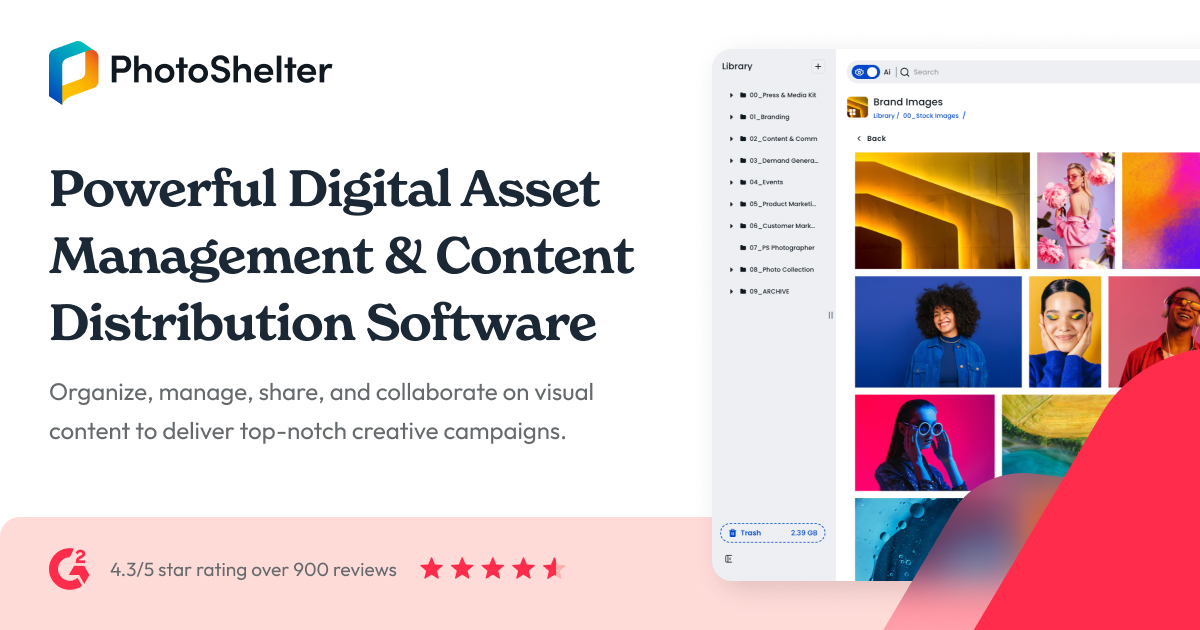
PhotoShelter's Real-time Content Collaboration solution is a unique tool specifically designed for photography studios. It enables seamless collaboration on image, video and branded design projects without leaving the platform, ensuring the team stays in sync and productivity is maximized.

Best for Creative Collaboration & Review Tools for Photography Studios

Expert Take

PhotoShelter Real-time Collaboration excels as a specialized tool for photography studios, offering unique real-time collaboration features tailored to industry needs. Its market credibility is supported by its focused toolset and integration capabilities, though pricing transparency is limited due to its enterprise model.

Pros

  • Real-time wireless FTP from camera
  • Workspaces for seamless team collaboration
  • Robust AI visual search & tagging
  • Trusted by major enterprise brands
  • Strong Adobe & Slack integrations

Cons

  • Expensive for smaller teams
  • Steep learning curve for admins
  • Extra costs for add-on seats
  • Limited customization options
  • Search functionality can be complex

Best for teams that are

  • Mid-to-large marketing teams needing to organize and distribute brand assets
  • Organizations like sports teams requiring instant access to live event photos

Skip if

  • Individual photographers, who should use the specific photographer product
  • Very small organizations or those requiring federal security certifications

Best for teams that are

  • Mid-to-large marketing teams needing to organize and distribute brand assets
  • Organizations like sports teams requiring instant access to live event photos

Skip if

  • Individual photographers, who should use the specific photographer product
  • Very small organizations or those requiring federal security certifications

Pros

  • Real-time wireless FTP from camera
  • Workspaces for seamless team collaboration
  • Robust AI visual search & tagging
  • Trusted by major enterprise brands
  • Strong Adobe & Slack integrations

Cons

  • Expensive for smaller teams
  • Steep learning curve for admins
  • Extra costs for add-on seats
  • Limited customization options
  • Search functionality can be complex

Expert Take

PhotoShelter Real-time Collaboration excels as a specialized tool for photography studios, offering unique real-time collaboration features tailored to industry needs. Its market credibility is supported by its focused toolset and integration capabilities, though pricing transparency is limited due to its enterprise model.

6

Hightail Creative Collaboration

Best for Creative Collaboration & Review Tools for Photography Studios

Score
9.2 / 10
Hightail Creative Collaboration

Hightail is a SaaS solution designed specifically for creative and marketing teams in the photography industry. It enables seamless file sharing, efficient feedback collection, and streamlined approval processes, addressing the unique needs of creative project management within a photography studio.

Best for Creative Collaboration & Review Tools for Photography Studios

Expert Take

Hightail Creative Collaboration excels in providing tailored solutions for photography studios, with strong capabilities in file sharing and feedback collection. It is recognized for its usability and industry-specific features, though some limitations exist in its free plan. Overall, it stands out as a top choice in its category.

Pros

  • Unlimited storage on all paid plans
  • Upload individual files up to 500GB
  • Enterprise-grade AES-256 encryption
  • Visual version control and approval routing
  • Backed by OpenText security infrastructure

Cons

  • Adobe and Outlook plugins paused (2025)
  • Free plan limited to 100MB uploads
  • No Camera-to-Cloud video integration
  • Support limited to paid subscribers
  • Reports of slow upload speeds

Best for teams that are

  • Creative teams needing to securely send and track very large files
  • Agencies requiring simple feedback on visual assets without complex NLE sync

Skip if

  • Video editors needing deep integration with software like Premiere Pro
  • Teams requiring advanced project management or complex metadata tagging

Best for teams that are

  • Creative teams needing to securely send and track very large files
  • Agencies requiring simple feedback on visual assets without complex NLE sync

Skip if

  • Video editors needing deep integration with software like Premiere Pro
  • Teams requiring advanced project management or complex metadata tagging

Pros

  • Unlimited storage on all paid plans
  • Upload individual files up to 500GB
  • Enterprise-grade AES-256 encryption
  • Visual version control and approval routing
  • Backed by OpenText security infrastructure

Cons

  • Adobe and Outlook plugins paused (2025)
  • Free plan limited to 100MB uploads
  • No Camera-to-Cloud video integration
  • Support limited to paid subscribers
  • Reports of slow upload speeds

Expert Take

Hightail Creative Collaboration excels in providing tailored solutions for photography studios, with strong capabilities in file sharing and feedback collection. It is recognized for its usability and industry-specific features, though some limitations exist in its free plan. Overall, it stands out as a top choice in its category.

7
Score
8.9 / 10
Canva Collaboration Tools

Canva's suite of collaboration tools are designed to streamline the creative process for photography studios. The software provides a shared space for design, review, and approval, enabling seamless teamwork on visual content, from inception to completion.

Best for Creative Collaboration & Review Tools for Photography Studios
Expert Take

Canva Collaboration Tools excel in providing an intuitive and accessible platform for photography studios to streamline their creative processes. The product is recognized for its user-friendly interface, extensive template library, and real-time collaboration features, making it a top choice for creative teams.

Pros

  • Real-time collaboration on infinite whiteboards
  • Used by 95% of Fortune 500 companies
  • ISO 27001 and SOC 2 Type II certified
  • Integrates with Slack, Salesforce, and Google Workspace
  • Intuitive interface for non-designers

Cons

  • Teams pricing increased significantly for new users
  • Cannot trademark logos made with stock elements
  • Lacks professional vector editing capabilities
  • No native CMYK color mode for print
  • Templates can result in generic branding

Best for teams that are

  • Marketing teams and non-designers creating social graphics and presentations
  • Teams needing real-time collaboration on simple designs without complex software

Skip if

  • Professional designers requiring pixel-perfect control or advanced vector tools
  • Complex print workflows requiring CMYK accuracy and precise color management

Best for teams that are

  • Marketing teams and non-designers creating social graphics and presentations
  • Teams needing real-time collaboration on simple designs without complex software

Skip if

  • Professional designers requiring pixel-perfect control or advanced vector tools
  • Complex print workflows requiring CMYK accuracy and precise color management

Pros

  • Real-time collaboration on infinite whiteboards
  • Used by 95% of Fortune 500 companies
  • ISO 27001 and SOC 2 Type II certified
  • Integrates with Slack, Salesforce, and Google Workspace
  • Intuitive interface for non-designers

Cons

  • Teams pricing increased significantly for new users
  • Cannot trademark logos made with stock elements
  • Lacks professional vector editing capabilities
  • No native CMYK color mode for print
  • Templates can result in generic branding

Expert Take

Canva Collaboration Tools excel in providing an intuitive and accessible platform for photography studios to streamline their creative processes. The product is recognized for its user-friendly interface, extensive template library, and real-time collaboration features, making it a top choice for creative teams.

8
Score
8.6 / 10
Adobe's Next-Gen Frame.io

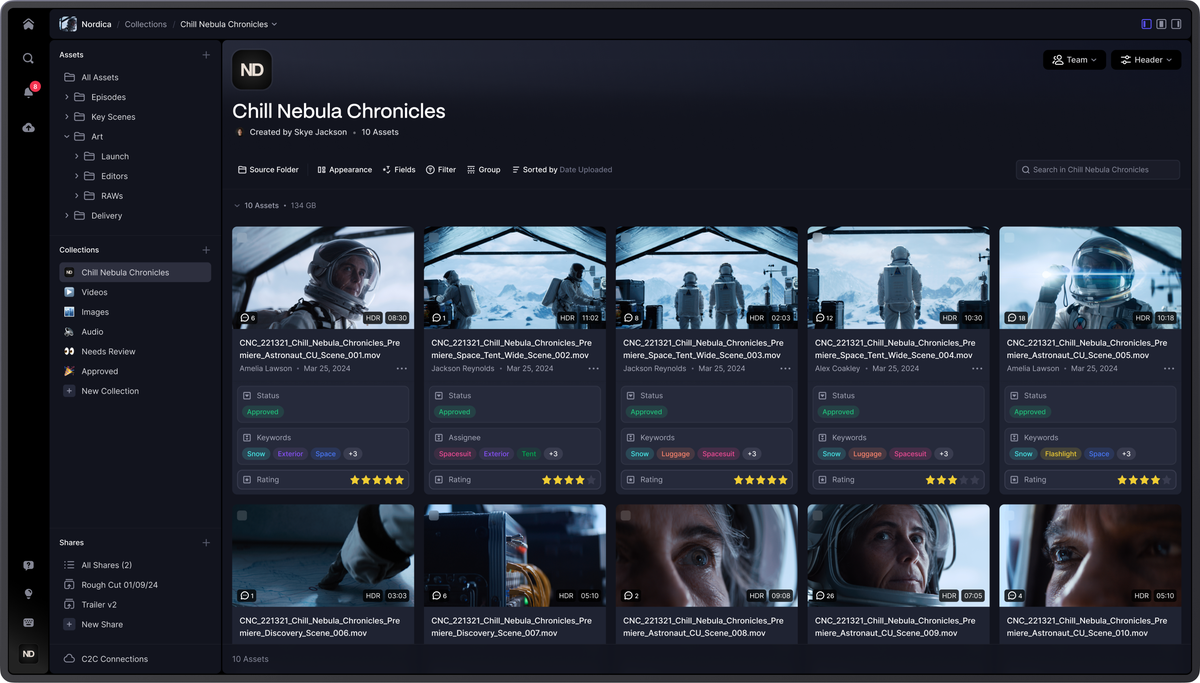
Frame.io is an innovative solution designed specifically for photography studios. It empowers teams by offering a centralized platform for organizing, navigating, and reviewing media assets. Its custom workflows and a tight feedback system directly address the complex needs of creative collaboration in this industry.

Best for Creative Collaboration & Review Tools for Photography Studios

Expert Take

Adobe's Next-Gen Frame.io excels in providing a comprehensive solution for photography studios, with strong integration capabilities and a focus on creative collaboration. Its market credibility is supported by Adobe's reputation, and it offers robust usability and value for enterprise users. However, its complexity and pricing may pose challenges for smaller teams.

Pros

  • TPN Gold Shield security
  • Custom metadata & Collections
  • Camera to Cloud integration
  • Generous free tier
  • Forensic watermarking (Enterprise)

Cons

  • V4 performance complaints
  • Broken version stacking
  • Removed Dropbox/Vimeo integrations
  • Steep V4 learning curve
  • Premiere panel bugs

Best for teams that are

  • Multi-disciplinary teams managing video, photo, and design assets in one place
  • Teams needing custom metadata workflows rather than rigid folder structures

Skip if

  • Users who prefer simple, rigid folder hierarchies over dynamic organization
  • Teams strictly focused on document management rather than creative media

Best for teams that are

  • Multi-disciplinary teams managing video, photo, and design assets in one place
  • Teams needing custom metadata workflows rather than rigid folder structures

Skip if

  • Users who prefer simple, rigid folder hierarchies over dynamic organization
  • Teams strictly focused on document management rather than creative media

Pros

  • TPN Gold Shield security
  • Custom metadata & Collections
  • Camera to Cloud integration
  • Generous free tier
  • Forensic watermarking (Enterprise)

Cons

  • V4 performance complaints
  • Broken version stacking
  • Removed Dropbox/Vimeo integrations
  • Steep V4 learning curve
  • Premiere panel bugs

Expert Take

Adobe's Next-Gen Frame.io excels in providing a comprehensive solution for photography studios, with strong integration capabilities and a focus on creative collaboration. Its market credibility is supported by Adobe's reputation, and it offers robust usability and value for enterprise users. However, its complexity and pricing may pose challenges for smaller teams.

How We Rank Products

Our Evaluation Process

Products in the Creative Collaboration & Review Tools category are evaluated based on their documented features and specifications, focusing on their integration capabilities and scalability. Pricing transparency is also a key consideration, helping buyers understand the cost implications of adoption. Third-party customer feedback provides insights into user experience and satisfaction, further informing purchasing decisions.

Verification

  • Products evaluated through comprehensive research and analysis of user feedback and expert insights.
  • Selection criteria focus on collaborative features, usability, and integration capabilities within creative workflow tools.
  • Comparison methodology analyzes customer ratings and reviews to ensure informed recommendations for creative collaboration solutions.

Score Breakdown

0.0 / 10

About Creative Collaboration & Review Tools

What Is Creative Collaboration & Review Tools?

Creative Collaboration and Review Tools is a software category dedicated to the specific workflow of gathering feedback, managing version control, and securing approval on visual and audio-visual assets. This category covers the "review and approve" phase of the content supply chain, sitting distinctly between content creation software (like Adobe Creative Cloud) and project management or work management platforms (like Asana or Monday.com).

While general project management tools track *who* is doing *what* and *when*, Creative Collaboration and Review Tools manage the *asset itself* as it evolves. These platforms provide a centralized environment where stakeholders—ranging from creative directors to external clients and legal compliance officers—can view high-resolution proofs (images, videos, PDFs, websites) and leave frame-accurate or pixel-specific annotations. The core functionality includes markups, version comparison (side-by-side or overlay), automated routing of proofs for sign-off, and maintaining an immutable audit trail of decisions.

This software is critical for organizations that produce high volumes of creative content or operate in regulated industries. It bridges the gap between "I think this looks wrong" and "Change the hex code on the logo in frame 00:14." By replacing disjointed email chains and Slack threads with structured visual feedback, these tools reduce rework cycles and ensure brand consistency. They include both general-purpose platforms suitable for marketing agencies and vertical-specific tools designed for complex sectors like film production, packaging manufacturing, and healthcare.

History of Creative Collaboration & Review Tools

The evolution of this category is a story of moving from physical constraints to digital chaos, and finally to structured intelligence. In the 1990s and early 2000s, creative review was largely analog or disjointed. "Collaboration" meant physical printouts marked with red pens, couriered tapes, or—as the internet matured—FTP sites and email attachments. This era was defined by the "version control nightmare," where file names like Final_Final_v3_REAL.jpg became industry jokes but operational hazards.

The first major shift occurred in the mid-2000s with the rise of the cloud. Early movers like Basecamp introduced the concept of centralized project communication, but they lacked the specialized visualization tools needed for creative work. You could comment on a file, but you couldn't draw on it. This gap led to the emergence of dedicated online proofing solutions around 2008–2010. These early vertical SaaS pioneers realized that video editors needed frame-accurate commenting, not just a file repository. This period marked the separation of "storage" (Dropbox) from "workflow" (proofing tools).

By the mid-2010s, market consolidation began to shape the landscape. Large work management platforms realized that creative teams were a massive user base. We saw a wave of acquisitions and integrations, where generalist platforms sought to buy or build proofing capabilities to keep creatives inside their ecosystems. This era also saw the rise of the "marketing technology stack," where buyers stopped asking for a simple database and started demanding actionable intelligence: automated version comparison and compliance audit trails.

Today, the market has matured into an ecosystem of hyper-specialized tools. The shift is now driven by the need for speed and compliance in a remote-first world. As noted by industry analysis, the surge in remote work during the 2020s transformed these tools from "nice-to-haves" for agencies into critical infrastructure for global enterprises [1]. The modern expectation is not just viewing a file, but integrating seamlessly with the creator's native environment (e.g., Adobe Premiere or InDesign) to eliminate context switching entirely.

What to Look For

When evaluating Creative Collaboration and Review Tools, the stakes are higher than simply "ease of use." You are selecting the system of record for your intellectual property and brand compliance. Buyers must look beyond the user interface to the underlying architecture of the workflow engine.

Critical Evaluation Criteria:

  • Asset Fidelity and Support: Does the platform support your specific file types natively? For video teams, this means supporting professional codecs, high frame rates, and color profiles without degrading playback quality. For print and packaging, this means handling high-resolution PDFs with separation support and densitometer tools.
  • Granular Version Control: The system must do more than stack files. Look for "ghosting" or overlay comparison features that allow reviewers to see exactly what changed between Version 1 and Version 2. This is the only way to verify that requested edits were actually made.
  • Audit Trail Immutability: In regulated industries, knowing who approved what and when is a legal necessity. Ensure the tool locks comments and approvals once a decision is made, preventing historical revisionism.

Red Flags and Warning Signs:

  • The "All-in-One" Trap: Be wary of general project management tools that claim to have "proofing" as a tick-box feature. Often, these are lightweight image viewers that lack the deep technical capabilities (like time-code accuracy or color separation) required for professional production.
  • Proprietary File Lock-in: Avoid vendors that make it difficult to export your feedback data or original assets. If you leave the platform, you should be able to take your approval history with you.

Key Questions to Ask Vendors:

  • "How does your system handle complex file types like 3D models or HTML5 banner ads, and can we annotate directly on the live asset?"
  • "Can we create conditional approval workflows where Legal must approve only after Brand has signed off?"
  • "Show me the exact experience for an external client who does not have a login. How much friction is there for them to leave a comment?"

Industry-Specific Use Cases

Retail & E-commerce

For Retail and E-commerce, the primary driver is volume and velocity. These teams are not reviewing one TV spot; they are reviewing thousands of SKUs, social media variations, and personalized web assets simultaneously. The "content velocity" challenge is acute here, where disjointed systems lead to bottlenecks. Research indicates that marketing teams often waste up to 40% of their time managing approval chaos rather than creating [2]. Evaluation must focus on bulk-approval capabilities and dynamic content support. Can the tool handle a "batch review" of 50 web banners at once? Furthermore, integration with PIM (Product Information Management) and DAM (Digital Asset Management) systems is non-negotiable to ensure that the approved asset is metadata-tagged and immediately pushed to the e-commerce storefront.

Healthcare

In Healthcare and Life Sciences, the creative review process is synonymous with the MLR (Medical, Legal, Regulatory) workflow. The priority here is not speed, but risk mitigation. The consequences of a non-compliant claim in a pharmaceutical ad can be catastrophic. The market for software managing these regulatory assessments is massive, valued at over $5.9 billion in the U.S. alone [3]. Buyers in this sector must look for "claims linking"—the ability to hyperlink a specific sentence in a marketing asset to the supporting medical reference document. The tool must support rigorous permission controls, ensuring that a creative asset cannot physically be downloaded or published until the Regulatory Approver has digitally signed the record.

Financial Services

Similar to healthcare, Financial Services prioritize auditability and compliance. With global regulatory fines hitting record highs of over $19 billion in 2024, the cost of error is tangible [4]. Marketing teams in banking and insurance need tools that enforce disclaimer usage and track every interaction. A unique requirement here is the ability to manage "expiration" and "renewal" of assets. Financial regulations often dictate how long an offer is valid. The review tool should trigger alerts when an in-market asset is nearing its compliance expiration date. Evaluation should focus on security certifications (SOC 2, ISO 27001) and the ability to integrate with archival systems for SEC/FINRA record-keeping.

Manufacturing

Manufacturing use cases revolve around Packaging and Technical Accuracy. A typo on a digital banner can be fixed in seconds; a typo on a printed circuit board or a food label triggers a product recall. Rework in construction and manufacturing can account for up to 20% of total project costs [5]. Creative collaboration tools in this sector must include advanced "pre-flight" capabilities. Key features to evaluate include text inspection (comparing the artwork text against the approved copy document to find deviations), color separation views (to check Pantone matching), and barcode readability checks. The software must handle 3D CAD files and allow stakeholders to rotate and inspect packaging models virtually.

Professional Services

For Agencies and Professional Services, the tool is a Client Experience (CX) differentiator. The feedback process is often the primary touchpoint between the agency and the client. If the tool is clunky, the client perceives the agency as difficult to work with. Delays in client feedback are a major profitability killer; waiting days for a response stalls resource allocation. Agency-focused tools need to prioritize a "frictionless" external user experience—no logins required for clients, intuitive markup tools, and mobile-friendly interfaces for approvals on the go. Additionally, "white-labeling" (branding the portal with the agency's logo) is a critical feature to maintain brand authority.

Subcategory Overview

Creative Collaboration & Review Tools for Photography Studios

While generic creative collaboration tools handle a wide breadth of file types, software built specifically for photography studios addresses a fundamentally different workflow: the selection (culling) and proofing process. In a general marketing workflow, a designer submits one asset for approval. In a photography workflow, a photographer may upload 500 raw images, from which the client must select 50 for retouching. A generic tool like Dropbox or Frame.io is ill-equipped for this high-volume "selects" process.

Specialized tools for photography studios introduce features like "star ratings," "color labels," and side-by-side comparison that are specifically designed to help clients narrow down choices rapidly. They also often integrate directly with Lightroom or Capture One, allowing the photographer to sync the client’s selections back to their editing software automatically. This eliminates the painful administrative work of matching filenames from an email list to the raw files on a hard drive.

The specific pain point driving buyers to this niche is client-side friction in high-volume selection. Asking a bride or a corporate headshot client to write down 50 filenames in an email is a recipe for error and delay. Dedicated proofing galleries present the images in a beautiful, branded grid that facilitates emotional buy-in and rapid decision-making. For a deeper analysis of the tools that dominate this niche, refer to our guide to Creative Collaboration & Review Tools for Photography Studios.

Integration & API Ecosystem

In the modern tech stack, a creative collaboration tool that stands alone is a data silo waiting to cause a bottleneck. The value of these tools is multiplied when they act as the connective tissue between creation and distribution. Research by MuleSoft and Salesforce indicates that 84% of IT leaders say integration challenges slow down digital transformation initiatives [6]. This statistic highlights that even the best features fail if the software cannot talk to the rest of the business.

Gartner's research emphasizes that application leaders must prioritize integration capabilities to modernize work practices [7]. In practice, this means looking for deep, native integrations with the "creation" layer (Adobe Creative Cloud, Canva) and the "management" layer (Asana, Jira, Monday.com). A robust API is not optional; it is the engine of automation.

Scenario: Consider a mid-sized marketing agency with 50 employees. They use Asana for project tracking and Adobe InDesign for creation. Without integration, the account manager must manually download a PDF from email, upload it to the proofing tool, wait for feedback, download the comments, and type them into Asana tasks. This manual handling introduces three points of failure where data can be lost or files mixed up. With a properly designed integration, the designer pushes a button in InDesign, the proof appears in the collaboration tool, and when the client leaves a comment, that comment automatically generates a sub-task in Asana linked to the specific project. If the integration breaks or is poorly designed, the "source of truth" fractures, leading to designers working on the wrong version because the Asana task wasn't updated.

Security & Compliance

Security in creative collaboration is no longer just about password protection; it is about protecting high-value intellectual property from pre-release leaks and ensuring regulatory adherence. For the media and entertainment industry, the gold standard is the Trusted Partner Network (TPN), a global initiative owned by the Motion Picture Association (MPA). The MPA Content Security Best Practices establish the minimum security preparedness required for vendors handling pre-release content [8]. Failure to meet these standards can disqualify a vendor from working with major studios.

Beyond entertainment, data privacy regulations like GDPR and CCPA impose strict fines for mishandling client data. As noted earlier, global regulatory fines reached record highs in 2024, signaling zero tolerance for compliance failures [4]. Buyers must evaluate features like watermarking (visual and forensic), expiring links, and Single Sign-On (SSO).

Scenario: A financial services firm is launching a rebranding campaign. They send a video file via a generic file-sharing link to an external agency. The link is forwarded to a freelancer, who downloads the video to a personal laptop. That laptop is stolen. Because the file was not hosted in a secure collaboration environment with "view-only" permissions and session watermarking, the unreleased brand assets leak to the press. A secure tool would have prevented the download, watermarked the stream with the freelancer's IP address and name, and allowed the administrator to kill the active session immediately upon the breach.

Pricing Models & TCO

Pricing in this category is notoriously opaque, often splitting into "per seat" costs and "storage/usage" costs. While basic enterprise collaboration platforms might start around $8 to $10 per user per month, the Total Cost of Ownership (TCO) often hides in the details of storage tiers and guest licenses [9]. Usage-based pricing is becoming more common, particularly for platforms leveraging AI features.

It is crucial to understand that "unlimited users" often comes with a cap on active projects or storage, while "unlimited storage" usually requires a high per-seat fee. Additionally, many agencies operate on thin margins where excessive revision rounds can destroy profitability. Contracts that do not account for the administrative time of managing the tool itself can lead to budget overruns.

Scenario: A 25-person creative team selects a tool with a low "per-seat" cost of $15/month. On paper, the cost is $4,500/year. However, the plan caps storage at 1TB. As they produce 4K video content, they hit this cap in month three. The vendor's overage charges are $50 per additional 500GB. Furthermore, the "free" guest licenses for clients turn out to be "view-only," but the agency needs clients to comment. The vendor requires a paid license for commenters. Suddenly, the agency is paying for 50 client seats plus storage overages, ballooning the TCO to over $15,000/year—triple the initial estimate.

Implementation & Change Management

The most common cause of failure for creative software is not technical; it is cultural. Creatives are creatures of habit who often resist tools that feel like "administrative overhead." Resistance to change is a well-documented barrier, often stemming from a lack of clear governance or training. Deloitte highlights that "implementation risk" often arises when tools don't fit the creative team's actual workflow, leading to low adoption [10].

Successful implementation requires a "champion" model—identifying a power user within the creative team who advocates for the tool. It also requires acknowledging the "shadow IT" problem: if the new tool is slower than email, creatives will go back to email.

Scenario: A retail brand implements a robust Enterprise DAM with built-in proofing. The rollout is managed by IT, who configures strict metadata requirements—every image upload requires filling out 15 form fields. The creative team, under deadline pressure, finds this too slow. They secretly start using a personal WeTransfer account to send files to vendors for quick approval. The official system shows "zero activity," while the actual work happens in an unsecured, un-auditable channel. The implementation fails because it solved for *data structure* (IT's goal) but ignored *velocity* (the Creative's goal).

Vendor Evaluation Criteria

Evaluating a vendor goes beyond the feature list. It involves assessing the vendor's financial stability, support structure, and product roadmap. Gartner emphasizes that application leaders should evaluate vendors based on their ability to support hybrid work patterns and modernize workflows [7]. A key differentiator is the vendor's Customer Success (CS) model. Do they offer onboarding support? Do they have a dedicated CSM for your account size?

Scenario: A fast-growing tech company chooses a startup vendor because they have a slick UI and low price. Six months later, the vendor pivots their roadmap to focus solely on video, deprecating the PDF annotation features the tech company relied on for whitepapers. Because the buyer didn't scrutinize the roadmap or the vendor's long-term strategic focus, they are now forced to migrate their entire asset library to a new platform—a disruption that costs months of productivity.

Emerging Trends and Contrarian Take

Emerging Trends 2025-2026: Agentic AI

The dominant trend reshaping this sector is the shift from "Generative AI" (which makes images) to "Agentic AI" (which performs tasks). We are moving toward systems where AI agents actively participate in the workflow. According to Metrigy's research, agentic AI will go mainstream by 2026, with systems capable of autonomously reasoning, planning, and adapting to changing environments [11]. In a creative context, this means software that doesn't just host the proof, but pre-screens it for compliance, tags it with metadata, and even suggests revisions based on historical feedback data before a human ever sees it.

Contrarian Take: The "Single Source of Truth" is a Myth

The industry loves to sell the idea of a "Single Source of Truth" (SSOT)—one platform that holds all data and assets. This is a fallacy. In complex enterprise ecosystems, a static SSOT is usually a myth because real networks have multiple authoritative systems [12]. The attempt to force everything into one monolith usually results in a system that is mediocre at everything and excellent at nothing. The contrarian insight here is that you should stop trying to buy one tool to rule them all. Instead, embrace a "Federated Truth" model where your Creative Collaboration tool is the master of *work-in-progress*, while your DAM is the master of *finished assets*, and they are loosely coupled via APIs. The goal is connectivity, not centralization.

Common Mistakes

One of the most pervasive mistakes buyers make is prioritizing internal management over external experience. Buyers often select a tool because it has great reporting dashboards for their managers, failing to test the experience for the external client who has to approve the work. If the client finds the tool frustrating—requiring a login, struggling to load on mobile, or having a confusing interface—they will revert to email feedback. This defeats the entire purpose of the software. As noted in industry reports, delays in client feedback are a primary "invisible cost" that drains agency profitability [13].

Another common error is overbuying complexity. Teams often purchase enterprise-grade systems with rigid workflows (Stage 1 -> Stage 2 -> Stage 3) for teams that operate in an agile, chaotic manner. If the tool forces a linear process on a non-linear creative culture, adoption will stall. It is often better to buy a flexible tool and add structure later than to buy a structured tool and try to force flexibility.

Questions to Ask in a Demo

  • The "Client Friction" Test: "Can you demonstrate exactly what my client sees when I send them a proof? Do not show me the admin view. Send a link to my phone right now."
  • The "Storage" Clarification: "Is your storage limit based on active files only, or does it count archived versions? If I archive a project, does it free up my quota?"
  • The "Uptime" Guarantee: "What is your SLA (Service Level Agreement) for uptime, and do you offer financial credits if you go down during a critical launch window?"
  • The "Export" Question: "If we leave your platform in two years, in what format can we export our comment history? Is it a usable CSV/PDF, or a proprietary JSON blob that we can't read?"
  • The "Integration" Reality: "You claim to integrate with Asana/Jira. Is this a native, two-way sync maintained by you, or does it rely on a third-party connector like Zapier that might incur extra costs?"

Before Signing the Contract

Before you commit to a contract, execute a final decision checklist. Ensure you have defined your exit strategy. Vendor lock-in is real; ensure your contract explicitly states that you own your data and metadata. Negotiate adoption clauses—ask for a 6-month check-in where you can adjust seat counts if adoption is lower than expected.

Check the compliance fine print. If you are in a regulated industry, ensure their liability insurance and indemnification clauses match your company's risk profile. Finally, verify the support tier. "Standard support" often means email-only with a 48-hour turnaround. If your team works on tight deadlines, this is a deal-breaker. You may need to negotiate for "Premium" support to get a phone number to call when the server hangs at 5 PM on a Friday.

Closing

The landscape of Creative Collaboration and Review Tools is complex, balancing the need for creative freedom with the rigors of operational efficiency. Choosing the right tool is not just about software; it is about defining how your organization values its creative output. If you have questions about specific vendors or need help navigating the nuances of your industry's requirements, feel free to reach out.

Email: albert@whatarethebest.com