
AI Chatbots & Conversational AI
These are the specialized categories within AI Chatbots & Conversational AI. Looking for something broader? See all AI, Automation & Machine Learning Tools categories.
EliseAI for Housing and Healthcare
Best for AI Chatbots & Virtual Assistants for Rental Agencies
EliseAI is a unique AI-powered platform specifically designed for property management and healthcare sectors. It uses advanced AI techniques to automate routine tasks and provide conversational AI support, making property management and healthcare services more efficient and responsive to customer needs.
Best for AI Chatbots & Virtual Assistants for Rental Agencies
Expert Take
EliseAI excels in providing industry-specific AI automation for property management and healthcare. Its capabilities in conversational AI and task automation make it a valuable tool for enhancing efficiency and customer experience. The product's integration capabilities and market credibility are supported by third-party validations.
Pros
- Automates 95% of routine inquiries 24/7
- Omnichannel support including VoiceAI and SMS
- Deep bi-directional integrations with PMS/EHRs
- SOC 2 Type II and HIPAA compliant
- Backed by $250M Series E funding
Cons
- VoiceAI can sound robotic to some users
- Limited customization for complex workflows
- Setup requires significant integration effort
- Pricing transparency is limited (custom quotes)
- Risk of user frustration without human fallback
Best for teams that are
- Large multifamily housing operators and enterprise portfolios
- Healthcare organizations needing patient communication automation
- Companies requiring deep integration with major property management systems
Skip if
- Small independent landlords with few units
- Single-family home owners with low inquiry volume
- Users seeking a low-cost, basic plugin solution
Best for teams that are
- Large multifamily housing operators and enterprise portfolios
- Healthcare organizations needing patient communication automation
- Companies requiring deep integration with major property management systems
Skip if
- Small independent landlords with few units
- Single-family home owners with low inquiry volume
- Users seeking a low-cost, basic plugin solution
Pros
- Automates 95% of routine inquiries 24/7
- Omnichannel support including VoiceAI and SMS
- Deep bi-directional integrations with PMS/EHRs
- SOC 2 Type II and HIPAA compliant
- Backed by $250M Series E funding
Cons
- VoiceAI can sound robotic to some users
- Limited customization for complex workflows
- Setup requires significant integration effort
- Pricing transparency is limited (custom quotes)
- Risk of user frustration without human fallback
Expert Take
EliseAI excels in providing industry-specific AI automation for property management and healthcare. Its capabilities in conversational AI and task automation make it a valuable tool for enhancing efficiency and customer experience. The product's integration capabilities and market credibility are supported by third-party validations.

ChiroAI is a dedicated virtual assistant for chiropractic practices, providing in-depth answers to common queries. It's designed to streamline patient interactions and manage patient inquiries efficiently, a need specific to the chiropractic industry.
Best for AI Chatbots & Virtual Assistants for Chiropractors
Expert Take
ChiroAI stands out as a specialized AI chatbot tailored for chiropractic practices, offering significant efficiency improvements in patient interaction management. Its market credibility is supported by its niche focus, although limited external validation restricts higher scores in trust categories. Usability is strong, but the lack of disclosed pricing impacts transparency.
Pros
- Free for all US chiropractors
- Specialized compliance & coding guidance
- Generates blogs & social content
- Backed by ChiroHealthUSA network
- Instant answers to clinical queries
Cons
- May not achieve 100% accuracy
- Requires human verification of facts
- Limited to training data knowledge
- Not a replacement for legal advice
- Generic chat interface limitations
Best for teams that are
- Providers needing instant answers on coding and compliance
- ChiroHealthUSA members seeking business guidance
- Doctors wanting a virtual assistant for clinical questions
Skip if
- Clinics looking for a patient-facing website chatbot
- Automating patient appointment booking
- Practices needing after-hours patient support
Best for teams that are
- Providers needing instant answers on coding and compliance
- ChiroHealthUSA members seeking business guidance
- Doctors wanting a virtual assistant for clinical questions
Skip if
- Clinics looking for a patient-facing website chatbot
- Automating patient appointment booking
- Practices needing after-hours patient support
Pros
- Free for all US chiropractors
- Specialized compliance & coding guidance
- Generates blogs & social content
- Backed by ChiroHealthUSA network
- Instant answers to clinical queries
Cons
- May not achieve 100% accuracy
- Requires human verification of facts
- Limited to training data knowledge
- Not a replacement for legal advice
- Generic chat interface limitations
Expert Take
ChiroAI stands out as a specialized AI chatbot tailored for chiropractic practices, offering significant efficiency improvements in patient interaction management. Its market credibility is supported by its niche focus, although limited external validation restricts higher scores in trust categories. Usability is strong, but the lack of disclosed pricing impacts transparency.
Rheo AI Chiropractic Assistant

Rheo, a part of ChiroTouch's EHR, is an AI assistant specifically designed for chiropractors. It automates SOAP notes and patient intake, reducing the chances of burnout and ensuring smoother clinic operations. The software streamlines administrative tasks, allowing chiropractors to focus more on patient care.
Best for AI Chatbots & Virtual Assistants for Chiropractors
Expert Take
Rheo AI Chiropractic Assistant excels in automating critical administrative tasks for chiropractors, enhancing productivity and patient care. Its integration with ChiroTouch's EHR system ensures seamless operations without additional tools. While it may require some training, its targeted functionality and industry-specific design make it a top choice in its niche.
Pros
- Included free with ChiroTouch subscription
- Native integration (no copy-paste needed)
- Real-time compliance & billing scans
- Automates intake-to-note workflow
- HIPAA compliant; no user data training
Cons
- Not available on mobile phones
- Struggles in open bay environments
- Templates not yet customizable
- Requires ChiroTouch subscription
- Limited to one EHR ecosystem
Best for teams that are
- Current ChiroTouch users wanting AI documentation
- Doctors seeking voice-to-text SOAP note automation
- Practices needing real-time compliance checks on notes
Skip if
- Practices not using the ChiroTouch EHR system
- Patient communication or website engagement
- Clinics needing a standalone scheduling bot
Best for teams that are
- Current ChiroTouch users wanting AI documentation
- Doctors seeking voice-to-text SOAP note automation
- Practices needing real-time compliance checks on notes
Skip if
- Practices not using the ChiroTouch EHR system
- Patient communication or website engagement
- Clinics needing a standalone scheduling bot
Pros
- Included free with ChiroTouch subscription
- Native integration (no copy-paste needed)
- Real-time compliance & billing scans
- Automates intake-to-note workflow
- HIPAA compliant; no user data training
Cons
- Not available on mobile phones
- Struggles in open bay environments
- Templates not yet customizable
- Requires ChiroTouch subscription
- Limited to one EHR ecosystem
Expert Take
Rheo AI Chiropractic Assistant excels in automating critical administrative tasks for chiropractors, enhancing productivity and patient care. Its integration with ChiroTouch's EHR system ensures seamless operations without additional tools. While it may require some training, its targeted functionality and industry-specific design make it a top choice in its niche.
Hyro's Conversational AI
Best for AI Chatbots & Virtual Assistants for Medical Offices

Hyro's Conversational AI for Healthcare is a powerful solution specifically designed to address the limitations of traditional patient communication methods in health systems. The HIPAA-compliant AI software can be utilized across multiple channels, enhancing patient access and engagement even in the event of staffing shortages.
Best for AI Chatbots & Virtual Assistants for Medical Offices
Expert Take
Hyro's Conversational AI excels in the healthcare sector by addressing communication challenges with HIPAA-compliant solutions, enhancing patient engagement, and supporting multichannel integration. Its specialization in healthcare and adaptability to staffing shortages make it a leading choice for medical offices.
Pros
- Deploys in 3 days without training data
- Resolves 85% of calls automatically
- Deep Epic and Salesforce integrations
- Triple C Responsible AI framework
- Zero maintenance knowledge graph architecture
Cons
- High starting price excludes small practices
- Dashboard UI requires UX improvements
- Assistant changes can face review delays
- Limited customization compared to dev tools
Best for teams that are
- Large health systems and hospitals with high call volumes
- Organizations using Epic EHR needing seamless integration
- Enterprises automating complex tasks like Rx management
Skip if
- Small private practices with limited budgets (starts ~$90k/yr)
- Users seeking a simple, free, or low-cost chatbot
- Organizations not needing enterprise-grade security
Best for teams that are
- Large health systems and hospitals with high call volumes
- Organizations using Epic EHR needing seamless integration
- Enterprises automating complex tasks like Rx management
Skip if
- Small private practices with limited budgets (starts ~$90k/yr)
- Users seeking a simple, free, or low-cost chatbot
- Organizations not needing enterprise-grade security
Pros
- Deploys in 3 days without training data
- Resolves 85% of calls automatically
- Deep Epic and Salesforce integrations
- Triple C Responsible AI framework
- Zero maintenance knowledge graph architecture
Cons
- High starting price excludes small practices
- Dashboard UI requires UX improvements
- Assistant changes can face review delays
- Limited customization compared to dev tools
Expert Take
Hyro's Conversational AI excels in the healthcare sector by addressing communication challenges with HIPAA-compliant solutions, enhancing patient engagement, and supporting multichannel integration. Its specialization in healthcare and adaptability to staffing shortages make it a leading choice for medical offices.
Stan AI Property Management Chatbot
Best for AI Chatbots & Virtual Assistants for Rental Agencies

Stan AI is a specialized AI-powered chatbot designed specifically for property managers. It automates resident communication, drastically improving response times and reducing costs. This SaaS solution addresses the industry's need for efficient, reliable, and cost-effective communication solutions.
Best for AI Chatbots & Virtual Assistants for Rental Agencies
Expert Take
Stan AI is a leading solution in the AI chatbots space for rental agencies, offering specialized capabilities that enhance communication efficiency and resident satisfaction. Its integration capabilities and industry-specific functions make it a top choice for property managers.
Pros
- Deep integrations with Vantaca & Buildium
- No app download required for residents
- Generates meeting minutes & legal notices
- 24/7 automated response via text/voice
- Reduces manager call & email volume
Cons
- Occasional AI inaccuracies requiring oversight
- Pricing may not scale for small HOAs
- Setup can be time-consuming
- Lack of outbound calling features
- Public pricing transparency is limited
Best for teams that are
- Homeowner Associations (HOAs) and Community Association Managers
- Small to mid-sized property management businesses
- Managers needing automated text responses for residents
Skip if
- Large commercial enterprises requiring complex custom workflows
- Businesses needing extensive non-HOA specific features
- Users looking for a voice-first AI assistant
Best for teams that are
- Homeowner Associations (HOAs) and Community Association Managers
- Small to mid-sized property management businesses
- Managers needing automated text responses for residents
Skip if
- Large commercial enterprises requiring complex custom workflows
- Businesses needing extensive non-HOA specific features
- Users looking for a voice-first AI assistant
Pros
- Deep integrations with Vantaca & Buildium
- No app download required for residents
- Generates meeting minutes & legal notices
- 24/7 automated response via text/voice
- Reduces manager call & email volume
Cons
- Occasional AI inaccuracies requiring oversight
- Pricing may not scale for small HOAs
- Setup can be time-consuming
- Lack of outbound calling features
- Public pricing transparency is limited
Expert Take
Stan AI is a leading solution in the AI chatbots space for rental agencies, offering specialized capabilities that enhance communication efficiency and resident satisfaction. Its integration capabilities and industry-specific functions make it a top choice for property managers.
Dahreply AI Healthcare Chatbot
Best for AI Chatbots & Virtual Assistants for Medical Offices

Dahreply AI Healthcare Chatbot is an AI-powered solution specifically designed to automate administrative tasks in medical offices. It handles FAQs, triages requests, and manages appointment bookings, thereby reducing front desk staff workload and enhancing patient experience.
Best for AI Chatbots & Virtual Assistants for Medical Offices
Expert Take
Dahreply AI Healthcare Chatbot excels in providing healthcare-specific automation, enhancing patient experience through efficient task management. Its market credibility is supported by industry-specific capabilities and third-party validations. While it offers substantial value, potential integration challenges and the need for technical understanding are noted.
Pros
- Supports 'Manglish', Bahasa Malaysia, and Mandarin
- Automated 24/7 appointment booking and reminders
- PDPA compliant with private cloud options
- Backed by publicly listed Agmo Group
- Affordable entry pricing at RM39/month
Cons
- Struggles with complex or ambiguous queries
- Limited deep customization options
- Reporting features can be basic
- Primary focus is regional (Malaysia)
- Requires human handover for complex issues
Best for teams that are
- Clinics and pharmacies in Southeast Asia (Malaysia)
- Practices relying on WhatsApp for patient engagement
- SMEs needing automated appointment booking and reminders
Skip if
- Large US/EU health systems with strict data residency needs
- Providers needing deep clinical EHR integration
- Businesses not utilizing social media channels
Best for teams that are
- Clinics and pharmacies in Southeast Asia (Malaysia)
- Practices relying on WhatsApp for patient engagement
- SMEs needing automated appointment booking and reminders
Skip if
- Large US/EU health systems with strict data residency needs
- Providers needing deep clinical EHR integration
- Businesses not utilizing social media channels
Pros
- Supports 'Manglish', Bahasa Malaysia, and Mandarin
- Automated 24/7 appointment booking and reminders
- PDPA compliant with private cloud options
- Backed by publicly listed Agmo Group
- Affordable entry pricing at RM39/month
Cons
- Struggles with complex or ambiguous queries
- Limited deep customization options
- Reporting features can be basic
- Primary focus is regional (Malaysia)
- Requires human handover for complex issues
Expert Take
Dahreply AI Healthcare Chatbot excels in providing healthcare-specific automation, enhancing patient experience through efficient task management. Its market credibility is supported by industry-specific capabilities and third-party validations. While it offers substantial value, potential integration challenges and the need for technical understanding are noted.
S.A.R.A.H - AI Resource Assistant
Best for AI Chatbots & Virtual Assistants for Medical Offices

S.A.R.A.H is an advanced AI chatbot solution designed specifically for healthcare professionals. It leverages generative AI to provide nuanced responses on a range of health topics such as nutrition, stress reduction, and smoking cessation. Its ability to interact in multiple languages makes it a versatile tool for medical offices that deal with diverse patient populations.
Best for AI Chatbots & Virtual Assistants for Medical Offices
Expert Take
S.A.R.A.H is a specialized AI chatbot designed for medical offices, offering multilingual support and healthcare-focused responses. Its free availability through the World Health Organization adds significant credibility. The product excels in providing accessible health information, although its reliance on internet connectivity and predefined topics are noted limitations.
Pros
- Free 24/7 access on any device
- Supports 8 languages including Hindi and Spanish
- Empathetic avatar simulates human facial expressions
- Anonymous sessions ensure high user privacy
- Backed by World Health Organization credibility
Cons
- Training data outdated (cutoff September 2021)
- Prone to AI hallucinations and inaccuracies
- Not a substitute for professional medical advice
- Prototype status limits reliability and depth
- Cannot perform medical diagnoses
Best for teams that are
- General public seeking lifestyle and wellness advice
- Public health researchers studying AI engagement
- Users looking for non-clinical health education
Skip if
- Patients seeking medical diagnosis or treatment
- Hospitals requiring administrative workflow automation
- Emergency medical support situations
Best for teams that are
- General public seeking lifestyle and wellness advice
- Public health researchers studying AI engagement
- Users looking for non-clinical health education
Skip if
- Patients seeking medical diagnosis or treatment
- Hospitals requiring administrative workflow automation
- Emergency medical support situations
Pros
- Free 24/7 access on any device
- Supports 8 languages including Hindi and Spanish
- Empathetic avatar simulates human facial expressions
- Anonymous sessions ensure high user privacy
- Backed by World Health Organization credibility
Cons
- Training data outdated (cutoff September 2021)
- Prone to AI hallucinations and inaccuracies
- Not a substitute for professional medical advice
- Prototype status limits reliability and depth
- Cannot perform medical diagnoses
Expert Take
S.A.R.A.H is a specialized AI chatbot designed for medical offices, offering multilingual support and healthcare-focused responses. Its free availability through the World Health Organization adds significant credibility. The product excels in providing accessible health information, although its reliance on internet connectivity and predefined topics are noted limitations.
Ginger Desk for Chiropractors

Ginger Desk's medical virtual assistants are designed specifically for chiropractors, to enhance practice efficiency and streamline patient interactions. The AI-driven platform handles scheduling and patient queries, freeing up valuable time for professionals to focus on patient care.
Best for AI Chatbots & Virtual Assistants for Chiropractors
Expert Take
Ginger Desk excels in providing AI-driven virtual assistant services tailored for chiropractors, enhancing practice efficiency and patient interaction. While it offers strong capabilities and usability, the lack of upfront pricing transparency and language limitations slightly affect its overall score.
Pros
- HIPAA and PIPEDA compliant workflows
- "VA Buddy" system ensures no downtime
- Pre-trained in chiropractic EMR software
- Costs ~25% of in-house staff
- Founded by a medical practitioner
Cons
- Pricing requires a discovery call
- Live phone answering is an extra cost
- No bookkeeping services offered
- Standard hours limited to Mon-Fri
Best for teams that are
- Doctors preferring human virtual assistants over AI
- Handling complex admin tasks like billing and claims
- Practices needing a dedicated virtual office manager
Skip if
- Clinics seeking a low-cost, fully automated AI tool
- Practices needing instant 24/7 response times
- Those wanting a software-only solution
Best for teams that are
- Doctors preferring human virtual assistants over AI
- Handling complex admin tasks like billing and claims
- Practices needing a dedicated virtual office manager
Skip if
- Clinics seeking a low-cost, fully automated AI tool
- Practices needing instant 24/7 response times
- Those wanting a software-only solution
Pros
- HIPAA and PIPEDA compliant workflows
- "VA Buddy" system ensures no downtime
- Pre-trained in chiropractic EMR software
- Costs ~25% of in-house staff
- Founded by a medical practitioner
Cons
- Pricing requires a discovery call
- Live phone answering is an extra cost
- No bookkeeping services offered
- Standard hours limited to Mon-Fri
Expert Take
Ginger Desk excels in providing AI-driven virtual assistant services tailored for chiropractors, enhancing practice efficiency and patient interaction. While it offers strong capabilities and usability, the lack of upfront pricing transparency and language limitations slightly affect its overall score.
AI-Powered Healthcare Chatbot
Best for AI Chatbots & Virtual Assistants for Medical Offices

SmartData's AI-Powered Healthcare Chatbot & Virtual Assistant Solutions offer an innovative approach to patient care management, specifically tailored for medical offices. These AI chatbots not only send medication reminders and check adherence but also provide follow-up prompts and deliver personalised messages, effectively addressing the need for efficient and consistent patient communication in the healthcare industry.
Best for AI Chatbots & Virtual Assistants for Medical Offices
Expert Take
The AI-Powered Healthcare Chatbot by SmartData excels in providing tailored solutions for medical offices, enhancing patient communication and adherence. Its integration capabilities and industry-specific focus make it a standout product in the healthcare chatbot market.
Pros
- HIPAA & GDPR compliant architecture
- Custom IBM Watson AI integration
- 24/7 patient support availability
- Integrates with EHR & IoT
- Verified strong market reputation
Cons
- High upfront development costs
- Time zone communication delays
- Not a plug-and-play solution
- Requires ongoing maintenance contracts
Best for teams that are
- Enterprises requiring custom-built software solutions
- Startups wanting full ownership of their AI code/IP
- Organizations with complex workflows not met by SaaS
Skip if
- Small clinics needing an instant plug-and-play product
- Users with low budgets (custom development is costly)
- Those needing immediate deployment without dev time
Best for teams that are
- Enterprises requiring custom-built software solutions
- Startups wanting full ownership of their AI code/IP
- Organizations with complex workflows not met by SaaS
Skip if
- Small clinics needing an instant plug-and-play product
- Users with low budgets (custom development is costly)
- Those needing immediate deployment without dev time
Pros
- HIPAA & GDPR compliant architecture
- Custom IBM Watson AI integration
- 24/7 patient support availability
- Integrates with EHR & IoT
- Verified strong market reputation
Cons
- High upfront development costs
- Time zone communication delays
- Not a plug-and-play solution
- Requires ongoing maintenance contracts
Expert Take
The AI-Powered Healthcare Chatbot by SmartData excels in providing tailored solutions for medical offices, enhancing patient communication and adherence. Its integration capabilities and industry-specific focus make it a standout product in the healthcare chatbot market.
CentriPe AI Medical Assistant
Best for AI Chatbots & Virtual Assistants for Medical Offices
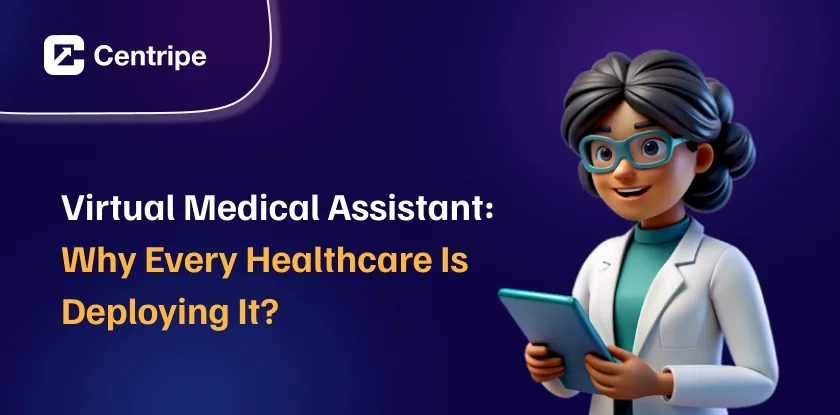
CentriPe's AI-Powered Virtual Medical Assistant is an innovative solution designed to streamline healthcare operations. This tool uses artificial intelligence to handle patient queries, manage appointments, and enhance workflows, addressing the specific needs of busy medical offices aiming for better efficiency and patient service.
Best for AI Chatbots & Virtual Assistants for Medical Offices
Expert Take
CentriPe AI Medical Assistant excels in automating healthcare operations with its AI-driven capabilities, enhancing efficiency and patient service. It is recognized for its robust integration in medical workflows, though it requires initial setup and training. The product's market credibility is supported by its innovative approach and industry relevance.
Pros
- All-in-one CRM & Marketing Suite
- HIPAA & SOC 2 Compliant
- 24/7 AI Voice & Chat Agents
- White-label Reseller Options
- Transparent Flat-Rate Pricing
Cons
- Requires Own OpenAI API Key
- Limited Independent User Reviews
- Essentials Plan Sub-account Cap
- Learning Curve for Advanced Features
- Dependency on Third-Party AI Models
Best for teams that are
- Small to mid-sized clinics needing affordable CRM automation
- Practices seeking virtual administrative support staff
- Marketing agencies managing healthcare clients
Skip if
- Large hospital systems requiring on-premise infrastructure
- Providers needing deep clinical EHR integration over CRM
- Users looking for a purely free tool without subscription
Best for teams that are
- Small to mid-sized clinics needing affordable CRM automation
- Practices seeking virtual administrative support staff
- Marketing agencies managing healthcare clients
Skip if
- Large hospital systems requiring on-premise infrastructure
- Providers needing deep clinical EHR integration over CRM
- Users looking for a purely free tool without subscription
Pros
- All-in-one CRM & Marketing Suite
- HIPAA & SOC 2 Compliant
- 24/7 AI Voice & Chat Agents
- White-label Reseller Options
- Transparent Flat-Rate Pricing
Cons
- Requires Own OpenAI API Key
- Limited Independent User Reviews
- Essentials Plan Sub-account Cap
- Learning Curve for Advanced Features
- Dependency on Third-Party AI Models
Expert Take
CentriPe AI Medical Assistant excels in automating healthcare operations with its AI-driven capabilities, enhancing efficiency and patient service. It is recognized for its robust integration in medical workflows, though it requires initial setup and training. The product's market credibility is supported by its innovative approach and industry relevance.



Loading comparison data…