
Subscription Billing & Recurring Revenue Tools
These are the specialized categories within Subscription Billing & Recurring Revenue Tools. Looking for something broader? See all Accounting & Finance Software categories.
Recurly Subscription Management
Best for Subscription Billing Platforms for Usage-Based Pricing Models

Recurly is an ideal solution for businesses with usage-based pricing models, offering a robust subscription management and recurring billing platform. It integrates seamlessly with leading ERP, CRM, and payment gateways, addressing the needs for streamlined billing and financial management in this industry.
Best for Subscription Billing Platforms for Usage-Based Pricing Models
Expert Take
Recurly excels in providing a comprehensive subscription management platform tailored for usage-based pricing models. Its integration capabilities with major ERP, CRM, and payment gateways, along with detailed financial analytics, make it a top choice for businesses seeking robust billing solutions. While it may present a learning curve for beginners, its extensive features and adaptability justify its premium positioning.
Pros
- Recovers ~70% of failed transactions
- Supports 20+ global payment gateways
- PCI Level 1 & SOC 2 compliant
- Native NetSuite & Salesforce integrations
- Advanced revenue recognition automation
Cons
- Starter plan lacks backup payments
- Expensive for mid-market volume
- Transaction fees on top of sub
- Reporting customization can be limited
- Gateway failover has technical limits
Best for teams that are
- Subscription-first businesses focused on churn reduction
- B2C or DTC brands with high transaction volumes
- Mid-market companies with standard recurring billing models
Skip if
- Complex usage-based or metered pricing models
- B2B enterprises with highly customized contracts
- Teams needing deep usage analytics and granular reporting
Best for teams that are
- Subscription-first businesses focused on churn reduction
- B2C or DTC brands with high transaction volumes
- Mid-market companies with standard recurring billing models
Skip if
- Complex usage-based or metered pricing models
- B2B enterprises with highly customized contracts
- Teams needing deep usage analytics and granular reporting
Pros
- Recovers ~70% of failed transactions
- Supports 20+ global payment gateways
- PCI Level 1 & SOC 2 compliant
- Native NetSuite & Salesforce integrations
- Advanced revenue recognition automation
Cons
- Starter plan lacks backup payments
- Expensive for mid-market volume
- Transaction fees on top of sub
- Reporting customization can be limited
- Gateway failover has technical limits
Expert Take
Recurly excels in providing a comprehensive subscription management platform tailored for usage-based pricing models. Its integration capabilities with major ERP, CRM, and payment gateways, along with detailed financial analytics, make it a top choice for businesses seeking robust billing solutions. While it may present a learning curve for beginners, its extensive features and adaptability justify its premium positioning.
BillingPlatform
Best for Subscription Billing Platforms for Consumer Subscription Services

BillingPlatform is a specialized solution designed to manage and scale complex subscription models, making it well suited for businesses in the Consumer Subscription Services industry. It offers a flexible, cloud-based platform that simplifies the process of handling recurring billing, invoicing, and revenue recognition.
Best for Subscription Billing Platforms for Consumer Subscription Services
Expert Take
BillingPlatform excels in managing complex subscription models with its flexible, cloud-based platform. It supports global currencies and provides real-time reporting, making it a top choice for consumer subscription services. Its comprehensive capabilities and industry recognition position it as a best-of-the-best solution.
Pros
- Leader in Gartner & Forrester reports
- Supports complex usage & hybrid billing
- Native Salesforce & NetSuite integrations
- PCI Level 1 & HIPAA compliant
- Highly configurable data model
Cons
- Long, complex implementation cycles
- Steep learning curve for users
- Slow non-production environment performance
- High total cost of ownership
- Reliance on professional services
Best for teams that are
- Large enterprises with complex, hybrid, or usage-based billing models
- Companies needing a highly customizable platform for quote-to-cash
Skip if
- Small businesses or startups looking for a plug-and-play solution
- Teams with limited technical resources for complex implementation
Best for teams that are
- Large enterprises with complex, hybrid, or usage-based billing models
- Companies needing a highly customizable platform for quote-to-cash
Skip if
- Small businesses or startups looking for a plug-and-play solution
- Teams with limited technical resources for complex implementation
Pros
- Leader in Gartner & Forrester reports
- Supports complex usage & hybrid billing
- Native Salesforce & NetSuite integrations
- PCI Level 1 & HIPAA compliant
- Highly configurable data model
Cons
- Long, complex implementation cycles
- Steep learning curve for users
- Slow non-production environment performance
- High total cost of ownership
- Reliance on professional services
Expert Take
BillingPlatform excels in managing complex subscription models with its flexible, cloud-based platform. It supports global currencies and provides real-time reporting, making it a top choice for consumer subscription services. Its comprehensive capabilities and industry recognition position it as a best-of-the-best solution.
Zuora Billing Software
Best for Subscription Billing Platforms for Consumer Subscription Services

Zuora Billing is a top-tier SaaS solution specifically designed for subscription-based businesses. It provides a dynamic platform to manage recurring payments, unify revenue streams, and monetize services, addressing the industry's need for efficient revenue management and customer retention.
Best for Subscription Billing Platforms for Consumer Subscription Services
Expert Take
Zuora Billing Software excels in managing complex billing scenarios for subscription-based businesses. Its robust features in pricing flexibility, revenue recognition, and global tax management make it a leader in its category. However, its high-end pricing and setup complexity may not suit smaller businesses.
Pros
- 50+ out-of-the-box pricing models
- Native Salesforce & NetSuite integrations
- ISO 27001 & PCI DSS Level 1
- Scales to 300k+ invoices/hour
- Advanced usage-based billing logic
Cons
- Entry pricing starts ~$75k/year
- Steep learning curve for users
- No transparent public pricing
- Complex, lengthy implementation process
- UI can be non-intuitive
Best for teams that are
- Large enterprises with complex, high-volume recurring revenue models
- Companies needing advanced revenue recognition (ASC 606) and compliance
Skip if
- Early-stage startups or small businesses due to high cost and complexity
- Teams needing a quick, self-service setup without implementation partners
Best for teams that are
- Large enterprises with complex, high-volume recurring revenue models
- Companies needing advanced revenue recognition (ASC 606) and compliance
Skip if
- Early-stage startups or small businesses due to high cost and complexity
- Teams needing a quick, self-service setup without implementation partners
Pros
- 50+ out-of-the-box pricing models
- Native Salesforce & NetSuite integrations
- ISO 27001 & PCI DSS Level 1
- Scales to 300k+ invoices/hour
- Advanced usage-based billing logic
Cons
- Entry pricing starts ~$75k/year
- Steep learning curve for users
- No transparent public pricing
- Complex, lengthy implementation process
- UI can be non-intuitive
Expert Take
Zuora Billing Software excels in managing complex billing scenarios for subscription-based businesses. Its robust features in pricing flexibility, revenue recognition, and global tax management make it a leader in its category. However, its high-end pricing and setup complexity may not suit smaller businesses.
Recurly Subscription & Billing

Recurly offers a robust platform specifically designed to manage subscriptions and recurring billing for both B2B and B2C SaaS companies. It provides the essential tools required to grow their customer base, manage complex billing structures, and minimize churn, addressing the unique needs of the subscription-based SaaS industry.
Best for Subscription Billing Platforms for SaaS Companies
Expert Take
Recurly is a comprehensive subscription billing platform tailored for SaaS companies, offering flexible billing models and robust dunning management. It integrates with multiple payment gateways and provides valuable analytics, making it a top choice for managing recurring revenue. However, it may require technical expertise and lacks support for all currencies.
Pros
- Recovered $1.2B in revenue (2023)
- Supports 30+ payment gateways
- PCI-DSS Level 1 & SOC 2 compliant
- Native Salesforce & NetSuite integrations
- Handles 140+ currencies globally
Cons
- Reporting features can be rigid
- Expensive for small businesses
- Opaque pricing for upper tiers
- Complex usage-based billing setup
- Limited non-admin user access
Best for teams that are
- Mid-market to enterprise companies with high transaction volumes
- Subscription box businesses requiring hybrid checkout for physical goods
- Companies prioritizing advanced churn reduction and revenue recovery
Skip if
- Early-stage startups with low revenue due to higher costs
- Businesses needing a Merchant of Record solution
- Simple B2B SaaS with very basic flat-rate pricing needs
Best for teams that are
- Mid-market to enterprise companies with high transaction volumes
- Subscription box businesses requiring hybrid checkout for physical goods
- Companies prioritizing advanced churn reduction and revenue recovery
Skip if
- Early-stage startups with low revenue due to higher costs
- Businesses needing a Merchant of Record solution
- Simple B2B SaaS with very basic flat-rate pricing needs
Pros
- Recovered $1.2B in revenue (2023)
- Supports 30+ payment gateways
- PCI-DSS Level 1 & SOC 2 compliant
- Native Salesforce & NetSuite integrations
- Handles 140+ currencies globally
Cons
- Reporting features can be rigid
- Expensive for small businesses
- Opaque pricing for upper tiers
- Complex usage-based billing setup
- Limited non-admin user access
Expert Take
Recurly is a comprehensive subscription billing platform tailored for SaaS companies, offering flexible billing models and robust dunning management. It integrates with multiple payment gateways and provides valuable analytics, making it a top choice for managing recurring revenue. However, it may require technical expertise and lacks support for all currencies.
Ordway Billing & Revenue Automation
Best for Subscription Billing Platforms with Revenue Recognition Automation

Ordway is a comprehensive platform designed for SaaS, cloud, and fintech businesses, tackling their unique billing and revenue management needs. It automates complex billing and revenue recognition processes, streamlines subscription management, and simplifies invoicing, making it a powerful tool for rapidly scaling businesses in these sectors.
Best for Subscription Billing Platforms with Revenue Recognition Automation
Expert Take
Ordway excels in automating billing and revenue processes for SaaS and fintech businesses, offering scalability and robust reporting. Its market credibility is bolstered by third-party integrations and recognition. While pricing transparency is limited, its capabilities and customer experience remain strong.
Pros
- Automated ASC 606 revenue recognition
- Flexible hybrid billing models
- Strong Salesforce & NetSuite integrations
- SOC 2 Type 2 compliant
- Startup-friendly pricing tier available
Cons
- Custom reporting can be difficult
- Occasional UI glitches after updates
- Integration setup may require effort
- Enterprise pricing not public
Best for teams that are
- Scaling B2B SaaS and cloud companies with complex, hybrid, or usage-based billing
- Finance teams requiring automated ASC 606 revenue recognition and multi-entity support
- Businesses outgrowing manual spreadsheets but not ready for heavy enterprise ERPs
Skip if
- Small businesses or early-stage startups with simple billing needs and limited budgets
- Companies needing a mobile app for billing management or simple B2C e-commerce
- Teams wanting a plug-and-play solution without configuration for complex logic
Best for teams that are
- Scaling B2B SaaS and cloud companies with complex, hybrid, or usage-based billing
- Finance teams requiring automated ASC 606 revenue recognition and multi-entity support
- Businesses outgrowing manual spreadsheets but not ready for heavy enterprise ERPs
Skip if
- Small businesses or early-stage startups with simple billing needs and limited budgets
- Companies needing a mobile app for billing management or simple B2C e-commerce
- Teams wanting a plug-and-play solution without configuration for complex logic
Pros
- Automated ASC 606 revenue recognition
- Flexible hybrid billing models
- Strong Salesforce & NetSuite integrations
- SOC 2 Type 2 compliant
- Startup-friendly pricing tier available
Cons
- Custom reporting can be difficult
- Occasional UI glitches after updates
- Integration setup may require effort
- Enterprise pricing not public
Expert Take
Ordway excels in automating billing and revenue processes for SaaS and fintech businesses, offering scalability and robust reporting. Its market credibility is bolstered by third-party integrations and recognition. While pricing transparency is limited, its capabilities and customer experience remain strong.
Recharge Subscriptions for Ecommerce

Recharge is a dominant SaaS subscription billing platform, trusted by 71% of subscriptions on Shopify stores. Its strengths lie in its flexibility, allowing you to start, scale, and manage your subscription business effortlessly. The platform is tailored to address the unique needs of SaaS companies, providing an efficient platform for recurring payments and subscriptions.
Best for Subscription Billing Platforms for SaaS Companies
Expert Take
Recharge Subscriptions for Ecommerce is a leading platform in the subscription billing space, particularly for Shopify stores. It offers robust capabilities for managing recurring payments, with strong market credibility and a user-friendly experience. The platform's integration with Shopify and its flexible features make it a top choice for SaaS companies.
Pros
- Powers 20,000+ merchants with high reliability
- Robust API for headless and custom builds
- Deep integrations with Klaviyo and Gorgias
- No-code customer portal reduces support tickets
- Advanced churn prevention with 'Flows' feature
Cons
- High starting price of $99/month
- Transaction fees of 1.25% + 19¢ apply
- Advanced features locked behind $499/mo plan
- Reports of legacy code bugs
- Support response times can be slow
Best for teams that are
- E-commerce merchants selling physical subscription products
- Shopify or BigCommerce stores looking to add recurring billing
- DTC brands wanting to increase LTV through subscribe and save models
Skip if
- SaaS companies selling digital software subscriptions
- Businesses not using Shopify, BigCommerce, or similar platforms
- Companies needing a standalone billing system for complex B2B contracts
Best for teams that are
- E-commerce merchants selling physical subscription products
- Shopify or BigCommerce stores looking to add recurring billing
- DTC brands wanting to increase LTV through subscribe and save models
Skip if
- SaaS companies selling digital software subscriptions
- Businesses not using Shopify, BigCommerce, or similar platforms
- Companies needing a standalone billing system for complex B2B contracts
Pros
- Powers 20,000+ merchants with high reliability
- Robust API for headless and custom builds
- Deep integrations with Klaviyo and Gorgias
- No-code customer portal reduces support tickets
- Advanced churn prevention with 'Flows' feature
Cons
- High starting price of $99/month
- Transaction fees of 1.25% + 19¢ apply
- Advanced features locked behind $499/mo plan
- Reports of legacy code bugs
- Support response times can be slow
Expert Take
Recharge Subscriptions for Ecommerce is a leading platform in the subscription billing space, particularly for Shopify stores. It offers robust capabilities for managing recurring payments, with strong market credibility and a user-friendly experience. The platform's integration with Shopify and its flexible features make it a top choice for SaaS companies.
BillingPlatform's Usage-Based Billing
Best for Subscription Billing Platforms for Usage-Based Pricing Models

BillingPlatform is a SaaS solution designed specifically for businesses that require advanced usage-based billing models. Its unparalleled flexibility allows businesses to apply intricate pricing rules, automate invoicing, and generate detailed reports, thus making it an ideal choice for businesses with complex billing needs.
Best for Subscription Billing Platforms for Usage-Based Pricing Models
Expert Take
BillingPlatform's Usage-Based Billing is recognized for its advanced capabilities in handling complex billing models, making it a top choice for businesses with intricate pricing needs. Its flexibility, automation, and integration capabilities are well-documented, supporting its position as a premium product in its category.
Pros
- Built-in mediation for raw usage data
- Leader in 2024 Gartner Magic Quadrant
- Supports complex hybrid billing models
- PCI Level 1 and SOC 2 certified
- Native integration with Salesforce and NetSuite
Cons
- Slow performance in non-production environments
- Pricing is quote-based and opaque
- Steep learning curve for implementation
- Limited debugging tools for errors
- Complex configuration for simple use cases
Best for teams that are
- Large enterprises with complex, hybrid monetization models
- Global companies requiring multi-currency and multi-lingual support
- Industries like telecom, utilities, and media with high volumes
Skip if
- Early-stage startups with simple billing requirements
- Teams needing rapid, self-service implementation without support
- Businesses with low transaction volumes or simple pricing
Best for teams that are
- Large enterprises with complex, hybrid monetization models
- Global companies requiring multi-currency and multi-lingual support
- Industries like telecom, utilities, and media with high volumes
Skip if
- Early-stage startups with simple billing requirements
- Teams needing rapid, self-service implementation without support
- Businesses with low transaction volumes or simple pricing
Pros
- Built-in mediation for raw usage data
- Leader in 2024 Gartner Magic Quadrant
- Supports complex hybrid billing models
- PCI Level 1 and SOC 2 certified
- Native integration with Salesforce and NetSuite
Cons
- Slow performance in non-production environments
- Pricing is quote-based and opaque
- Steep learning curve for implementation
- Limited debugging tools for errors
- Complex configuration for simple use cases
Expert Take
BillingPlatform's Usage-Based Billing is recognized for its advanced capabilities in handling complex billing models, making it a top choice for businesses with intricate pricing needs. Its flexibility, automation, and integration capabilities are well-documented, supporting its position as a premium product in its category.
BillingPlatform Subscription Management

BillingPlatform is a robust SaaS solution designed to manage recurring revenue streams and user-based pricing. The platform is tailored to the needs of SaaS companies, offering regular feature upgrades and a flexible, intuitive interface to streamline subscription and billing processes.
Best for Subscription Billing Platforms for SaaS Companies
Expert Take
BillingPlatform excels in managing recurring revenue for SaaS companies with its flexible and intuitive interface. It is recognized for regular feature upgrades and tailored solutions for subscription-based models. Despite limited pricing transparency and integrations, it remains a top choice for its comprehensive capabilities.
Pros
- Supports hybrid, usage-based, and subscription billing models
- Leader in Forrester Wave and Gartner Magic Quadrant
- Native revenue recognition (ASC 606) and CPQ
- High security standards including HIPAA and PCI Level 1
- Highly configurable without requiring custom code
Cons
- Complex and time-consuming implementation process
- Slow performance reported in non-production environments
- No public pricing; high average contract value
- Steep learning curve for advanced configurations
- Geared primarily toward large enterprises, not SMBs
Best for teams that are
- Enterprises with highly complex, hybrid, or usage-based billing models
- Companies wanting a flexible, no-code platform to configure unique logic
- Large organizations needing to consolidate diverse revenue streams
Skip if
- Small businesses or startups with standard subscription needs
- Companies looking for a simple, out-of-the-box solution
- Businesses needing a Merchant of Record solution
Best for teams that are
- Enterprises with highly complex, hybrid, or usage-based billing models
- Companies wanting a flexible, no-code platform to configure unique logic
- Large organizations needing to consolidate diverse revenue streams
Skip if
- Small businesses or startups with standard subscription needs
- Companies looking for a simple, out-of-the-box solution
- Businesses needing a Merchant of Record solution
Pros
- Supports hybrid, usage-based, and subscription billing models
- Leader in Forrester Wave and Gartner Magic Quadrant
- Native revenue recognition (ASC 606) and CPQ
- High security standards including HIPAA and PCI Level 1
- Highly configurable without requiring custom code
Cons
- Complex and time-consuming implementation process
- Slow performance reported in non-production environments
- No public pricing; high average contract value
- Steep learning curve for advanced configurations
- Geared primarily toward large enterprises, not SMBs
Expert Take
BillingPlatform excels in managing recurring revenue for SaaS companies with its flexible and intuitive interface. It is recognized for regular feature upgrades and tailored solutions for subscription-based models. Despite limited pricing transparency and integrations, it remains a top choice for its comprehensive capabilities.
Stripe Usage-Based Billing
Best for Subscription Billing Platforms for Usage-Based Pricing Models

Stripe's Usage-Based Billing is an ideal solution for businesses seeking a fast, flexible and code-free billing system. Its powerful features like real-time metering, credit management, and flexible pricing models cater specifically to AI service providers and other industries with usage-based pricing needs.
Best for Subscription Billing Platforms for Usage-Based Pricing Models
Expert Take
Stripe Usage-Based Billing stands out as a leading solution in the subscription billing platforms category, particularly for usage-based pricing models. Its comprehensive features, including real-time metering and flexible pricing, cater to the needs of AI service providers and other industries. The platform's scalability and extensive API support further enhance its appeal, making it a top choice for businesses seeking a robust billing solution.
Pros
- 99.999% historical uptime reliability
- Includes 100M usage events per month
- Supports up to 100k events/second (V2)
- Native Salesforce and NetSuite integrations
- Handles complex graduated and tiered pricing
Cons
- 0.7% fee on recurring billing volume
- Standard API limited to 1,000 events/sec
- Support often cited as slow/automated
- Native reporting lacks deep SaaS analytics
- Complex setup for non-technical users
Best for teams that are
- Startups and businesses already using Stripe for payments
- Companies with simple usage models like per-unit or tiered pricing
- Teams with developer resources to manage API integrations
Skip if
- Enterprise B2B companies with complex, custom negotiated contracts
- Businesses requiring high-volume real-time event ingestion
- Non-technical teams needing a no-code billing solution
Best for teams that are
- Startups and businesses already using Stripe for payments
- Companies with simple usage models like per-unit or tiered pricing
- Teams with developer resources to manage API integrations
Skip if
- Enterprise B2B companies with complex, custom negotiated contracts
- Businesses requiring high-volume real-time event ingestion
- Non-technical teams needing a no-code billing solution
Pros
- 99.999% historical uptime reliability
- Includes 100M usage events per month
- Supports up to 100k events/second (V2)
- Native Salesforce and NetSuite integrations
- Handles complex graduated and tiered pricing
Cons
- 0.7% fee on recurring billing volume
- Standard API limited to 1,000 events/sec
- Support often cited as slow/automated
- Native reporting lacks deep SaaS analytics
- Complex setup for non-technical users
Expert Take
Stripe Usage-Based Billing stands out as a leading solution in the subscription billing platforms category, particularly for usage-based pricing models. Its comprehensive features, including real-time metering and flexible pricing, cater to the needs of AI service providers and other industries. The platform's scalability and extensive API support further enhance its appeal, making it a top choice for businesses seeking a robust billing solution.
Maxio Billing for B2B SaaS
Best for Subscription Billing Platforms for B2B Invoiced Subscriptions
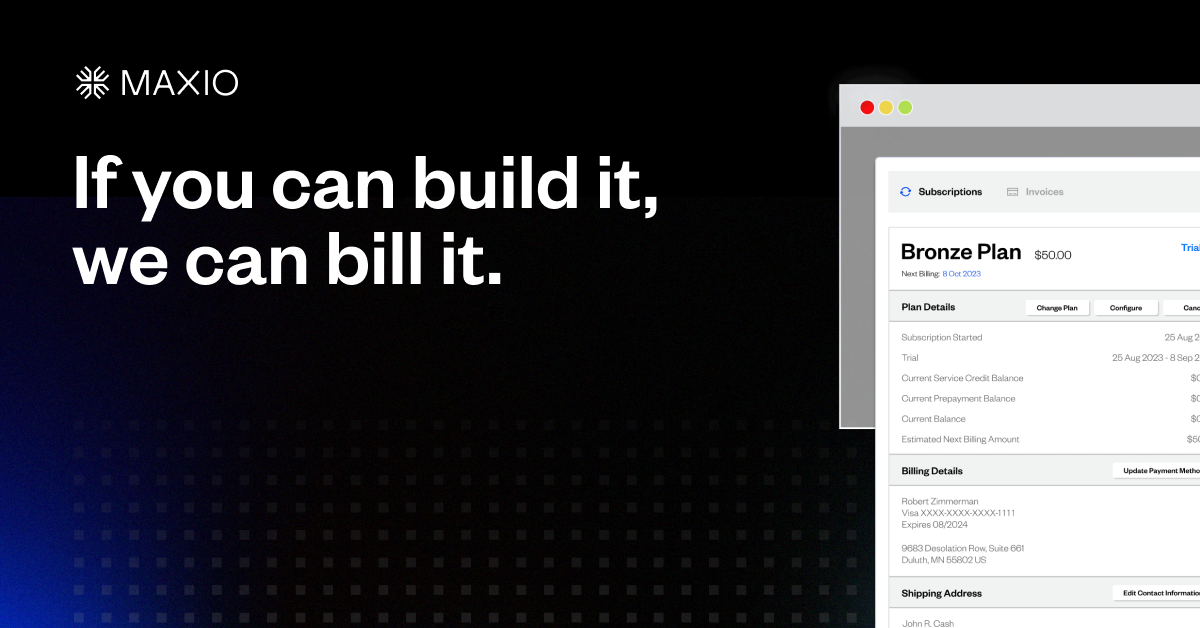
Maxio's subscription billing software is a specialized solution for B2B SaaS companies looking to automate their invoicing and subscription management. It is designed to streamline the billing process and provide key metrics to help companies track their financial health and understand customer behavior.
Best for Subscription Billing Platforms for B2B Invoiced Subscriptions
Expert Take
Maxio Billing excels in automating invoicing and subscription management for B2B SaaS companies. Its specialized focus on this niche, combined with robust automation features, positions it as a leading solution in its category. However, the lack of transparent pricing and limited integrations are notable considerations.
Pros
- Native ASC 606 revenue recognition
- Handles complex usage-based billing
- SOC 1, SOC 2 & ISO 27001 certified
- Bi-directional Salesforce & HubSpot sync
- Transparent pricing for mid-market
Cons
- Reporting interface can be rigid
- Support response times vary
- Implementation can be complex
- Occasional slow platform performance
- Expensive for early-stage startups
Best for teams that are
- B2B SaaS companies managing sales-negotiated contracts
- Finance teams requiring built-in ASC 606 revenue recognition
- Scaling companies ($1M-$100M ARR) needing financial metrics
Skip if
- B2C companies with high-volume, low-value transactions
- Simple e-commerce or physical goods businesses
- Early-stage startups with simple, standard pricing
Best for teams that are
- B2B SaaS companies managing sales-negotiated contracts
- Finance teams requiring built-in ASC 606 revenue recognition
- Scaling companies ($1M-$100M ARR) needing financial metrics
Skip if
- B2C companies with high-volume, low-value transactions
- Simple e-commerce or physical goods businesses
- Early-stage startups with simple, standard pricing
Pros
- Native ASC 606 revenue recognition
- Handles complex usage-based billing
- SOC 1, SOC 2 & ISO 27001 certified
- Bi-directional Salesforce & HubSpot sync
- Transparent pricing for mid-market
Cons
- Reporting interface can be rigid
- Support response times vary
- Implementation can be complex
- Occasional slow platform performance
- Expensive for early-stage startups
Expert Take
Maxio Billing excels in automating invoicing and subscription management for B2B SaaS companies. Its specialized focus on this niche, combined with robust automation features, positions it as a leading solution in its category. However, the lack of transparent pricing and limited integrations are notable considerations.
Explore Categories
-
 Subscription Billing Platforms for B2B Invoiced Subscriptions
-
 Subscription Billing Platforms for Consumer Subscription Services
-
 Subscription Billing Platforms for Media and Digital Content
-
 Subscription Billing Platforms for SaaS Companies
-
 Subscription Billing Platforms for Usage-Based Pricing Models
-
 Subscription Billing Platforms with Revenue Recognition Automation
Loading comparison data…
Subscription Billing Platforms for B2B Invoiced Subscriptions
Subscription Billing Platforms for Consumer Subscription Services
Subscription Billing Platforms for Media and Digital Content
Subscription Billing Platforms for SaaS Companies
Subscription Billing Platforms for Usage-Based Pricing Models
Subscription Billing Platforms with Revenue Recognition Automation