
SEO Tools & Platforms
These are the specialized categories within SEO Tools & Platforms. Looking for something broader? See all Marketing & Advertising Platforms categories.

How big is your team?
What's your budget situation?
What's your team's technical comfort level?
What's the ONE thing this tool must do well?

Simply Be Found is a tailored SEO solution for contractors, allowing them to enhance their online visibility and attract more customers. It offers effective SEO strategies that cater to the unique needs of the industry, enabling contractors to easily bridge the gap between their services and potential clients.
Best for SEO Tools & Platforms for Contractors
Expert Take
Simply Be Found SEO is a tailored solution for contractors, offering industry-specific SEO strategies that enhance online visibility. It provides a user-friendly experience with expert guidance, making it a valuable tool for contractors. Despite its lack of transparent pricing, its specialized focus and usability make it a top choice in its category.
Pros
- Listings remain live after cancellation
- Optimizes for Voice Search (Siri/Alexa)
- No long-term contracts required
- Includes AI search optimization (ChatGPT)
- Simple interface for non-tech users
Cons
- No API for custom integrations
- Very low review volume on SaaS directories
- Free plan limited to Google only
- Marketing coaching requires paid add-on
Best for teams that are
- Small local business owners lacking technical SEO skills.
- Contractors needing an easy dashboard to manage local maps and directories.
- Multi-location businesses seeking consistent local profiles and reviews.
Skip if
- Enterprise businesses needing highly complex, technical SEO software.
- E-commerce brands without physical locations or local service areas.
Best for teams that are
- Small local business owners lacking technical SEO skills.
- Contractors needing an easy dashboard to manage local maps and directories.
- Multi-location businesses seeking consistent local profiles and reviews.
Skip if
- Enterprise businesses needing highly complex, technical SEO software.
- E-commerce brands without physical locations or local service areas.
Pros
- Listings remain live after cancellation
- Optimizes for Voice Search (Siri/Alexa)
- No long-term contracts required
- Includes AI search optimization (ChatGPT)
- Simple interface for non-tech users
Cons
- No API for custom integrations
- Very low review volume on SaaS directories
- Free plan limited to Google only
- Marketing coaching requires paid add-on
Expert Take
Simply Be Found SEO is a tailored solution for contractors, offering industry-specific SEO strategies that enhance online visibility. It provides a user-friendly experience with expert guidance, making it a valuable tool for contractors. Despite its lack of transparent pricing, its specialized focus and usability make it a top choice in its category.

Cerebro is an SEO powerhouse for Shopify sellers, offering unparalleled Amazon reverse ASIN research with 93.5% accuracy. Ideal for brands aiming to scale, it enables strategic keyword analysis against up to 10 competitors and integrates seamlessly with Helium 10 tools.
Best for SEO Tools & Platforms for Shopify Sellers
Expert Take
Cerebro stands out as the undisputed heavyweight in Amazon reverse ASIN research due to its independently verified 93.5% data accuracy against Amazon Brand Analytics. We love how it eliminates guesswork by allowing sellers to cross-reference up to 10 competitors simultaneously. The seamless handoff of keyword data into Helium 10's listing optimization and PPC automation tools makes it an indispensable, data-driven engine for scaling an e-commerce brand.
Pros
- Analyzes up to 10 ASINs simultaneously for gap analysis
- Industry-leading 93.5% search volume accuracy
- Integrates perfectly with Helium 10's 30+ tools
- Supports 12 global Amazon marketplaces and Walmart
Cons
- High entry price starting at $99/month
- Steep learning curve for e-commerce beginners
- Strict daily search limits on lower tiers
Best for teams that are
- Amazon and Walmart private-label sellers needing competitor keyword research.
- Mid-to-large FBA businesses aiming to reverse-engineer competitor ASIN strategies.
Skip if
- Casual resellers, dropshippers, or new sellers on a very tight budget.
- Merchants selling exclusively on Shopify without an Amazon or Walmart presence.
- Sellers who only need basic keyword research and won't use the full Helium 10 suite.
Best for teams that are
- Amazon and Walmart private-label sellers needing competitor keyword research.
- Mid-to-large FBA businesses aiming to reverse-engineer competitor ASIN strategies.
Skip if
- Casual resellers, dropshippers, or new sellers on a very tight budget.
- Merchants selling exclusively on Shopify without an Amazon or Walmart presence.
- Sellers who only need basic keyword research and won't use the full Helium 10 suite.
Pros
- Analyzes up to 10 ASINs simultaneously for gap analysis
- Industry-leading 93.5% search volume accuracy
- Integrates perfectly with Helium 10's 30+ tools
- Supports 12 global Amazon marketplaces and Walmart
Cons
- High entry price starting at $99/month
- Steep learning curve for e-commerce beginners
- Strict daily search limits on lower tiers
Expert Take
Cerebro stands out as the undisputed heavyweight in Amazon reverse ASIN research due to its independently verified 93.5% data accuracy against Amazon Brand Analytics. We love how it eliminates guesswork by allowing sellers to cross-reference up to 10 competitors simultaneously. The seamless handoff of keyword data into Helium 10's listing optimization and PPC automation tools makes it an indispensable, data-driven engine for scaling an e-commerce brand.
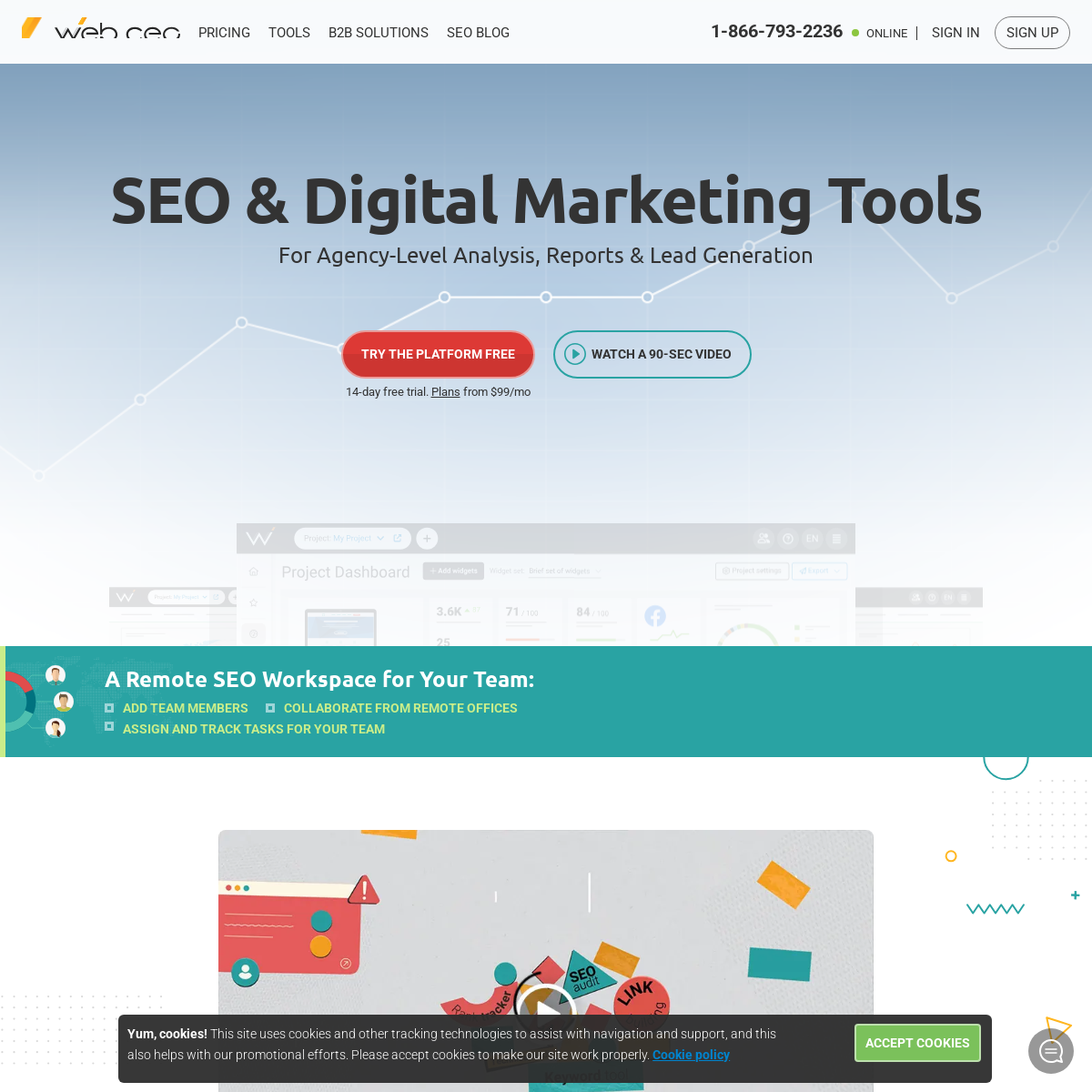
WebCEO is a comprehensive SEO platform specifically designed for digital marketing agencies. It provides a robust set of 24 SEO tools, including keyword research, link building, and rank tracking, which cater to the unique needs of SEO professionals and enable them to effectively manage and optimize their clients' online presence.
Best for SEO Tools & Platforms for Digital Marketing Agencies
Expert Take
WebCEO is a comprehensive SEO platform tailored for digital marketing agencies, offering a wide array of tools and client management features. Its capabilities are well-documented, and it provides value through features like white label reporting and multi-user functionality. While it excels in many areas, its interface complexity and limited backlink analysis are noted tradeoffs.
Pros
- Full white-label tools on custom domains
- Unlimited projects on Agency Unlimited plan
- Excellent customer support and training
- Lower base cost than major competitors
- Comprehensive automated client reporting
Cons
- Variable scanning fees cause billing uncertainty
- Smaller data database than market leaders
- Interface design feels somewhat dated
- API access restricted to specific plans
- Steep learning curve for advanced features
Best for teams that are
- Digital agencies needing white-label reports and lead gen widgets
- Marketing teams requiring strong collaboration and task management
- Businesses managing local SEO across multiple locations
Skip if
- Users requiring the absolute largest keyword databases available
- Advanced users seeking highly specialized technical data
- Freelancers who do not need client reporting features
Best for teams that are
- Digital agencies needing white-label reports and lead gen widgets
- Marketing teams requiring strong collaboration and task management
- Businesses managing local SEO across multiple locations
Skip if
- Users requiring the absolute largest keyword databases available
- Advanced users seeking highly specialized technical data
- Freelancers who do not need client reporting features
Pros
- Full white-label tools on custom domains
- Unlimited projects on Agency Unlimited plan
- Excellent customer support and training
- Lower base cost than major competitors
- Comprehensive automated client reporting
Cons
- Variable scanning fees cause billing uncertainty
- Smaller data database than market leaders
- Interface design feels somewhat dated
- API access restricted to specific plans
- Steep learning curve for advanced features
Expert Take
WebCEO is a comprehensive SEO platform tailored for digital marketing agencies, offering a wide array of tools and client management features. Its capabilities are well-documented, and it provides value through features like white label reporting and multi-user functionality. While it excels in many areas, its interface complexity and limited backlink analysis are noted tradeoffs.

Placester is a tailored solution for the real estate industry, providing agents with an easy-to-use website builder, 5000+ customization options, and built-in SEO and IDX integration. Its lead capture feature helps in enhancing customer engagement and increases potential sales conversions.
Best for SEO Tools & Platforms for Real Estate Agents
Expert Take
Placester Real Estate Builder is a specialized platform for real estate professionals, offering a comprehensive suite of tools including website building, SEO, and IDX integration. Its customization options and lead capture features make it a strong choice for agents looking to enhance their online presence. While the lack of a free plan and some learning curve are noted, its tailored features and scalability justify its premium positioning.
Pros
- Codeless drag-and-drop website builder
- Direct IDX integration with 600+ MLSs
- Mobile app for site and lead management
- Built-in CRM with mobile access
- Services marketplace for 'Do It For Me' help
Cons
- Strict no-refund policy on subscriptions
- Extra fees for MLS connections
- Mixed reviews on customer support responsiveness
- Templates can feel generic without customization
- Advanced SEO features require higher tiers
Best for teams that are
- Agents needing a professional, IDX-integrated website without coding skills
- Realtors looking for a template-based, maintenance-free web presence
- NAR members seeking compliant, standard real estate websites
Skip if
- Advanced marketers needing full control over backend code and technical SEO
- Users wanting highly custom, unique designs beyond standard templates
- Those seeking a standalone SEO audit tool rather than a website builder
Best for teams that are
- Agents needing a professional, IDX-integrated website without coding skills
- Realtors looking for a template-based, maintenance-free web presence
- NAR members seeking compliant, standard real estate websites
Skip if
- Advanced marketers needing full control over backend code and technical SEO
- Users wanting highly custom, unique designs beyond standard templates
- Those seeking a standalone SEO audit tool rather than a website builder
Pros
- Codeless drag-and-drop website builder
- Direct IDX integration with 600+ MLSs
- Mobile app for site and lead management
- Built-in CRM with mobile access
- Services marketplace for 'Do It For Me' help
Cons
- Strict no-refund policy on subscriptions
- Extra fees for MLS connections
- Mixed reviews on customer support responsiveness
- Templates can feel generic without customization
- Advanced SEO features require higher tiers
Expert Take
Placester Real Estate Builder is a specialized platform for real estate professionals, offering a comprehensive suite of tools including website building, SEO, and IDX integration. Its customization options and lead capture features make it a strong choice for agents looking to enhance their online presence. While the lack of a free plan and some learning curve are noted, its tailored features and scalability justify its premium positioning.

Ahrefs is a powerful SEO tool that marketing agencies use to increase their visibility online. Its extensive AI and search databases provide in-depth data, comprehensive keyword research, and competitive analysis, making it ideal for the evolving needs of marketing agencies.
Best for SEO Tools & Platforms for Marketing Agencies
Expert Take
Ahrefs excels in providing comprehensive SEO tools tailored for marketing agencies, with robust capabilities in keyword research and competitive analysis. Its market credibility is supported by third-party recognition, and its user-friendly interface enhances customer experience. While pricing may be a consideration for smaller firms, the platform's value and transparency remain strong.
Pros
- World's largest active backlink index (35T links)
- Tracks brand visibility in ChatGPT & Gemini
- Trusted by 44% of Fortune 500 companies
- Massive database of 28.7 billion keywords
- Clean, professional UI for complex data
Cons
- Strict credit limits on report filtering
- No free trial for paid subscriptions
- Daily rank tracking requires expensive add-on
- High entry price for small businesses
- Steep learning curve for beginners
Best for teams that are
- Users needing powerful backlink analysis and deep prospecting features.
- Professionals looking for comprehensive SEO and competitor data.
Skip if
- Small businesses prioritizing simple, automated client reporting.
- Users on a very tight budget needing basic entry-level tools.
Best for teams that are
- Users needing powerful backlink analysis and deep prospecting features.
- Professionals looking for comprehensive SEO and competitor data.
Skip if
- Small businesses prioritizing simple, automated client reporting.
- Users on a very tight budget needing basic entry-level tools.
Pros
- World's largest active backlink index (35T links)
- Tracks brand visibility in ChatGPT & Gemini
- Trusted by 44% of Fortune 500 companies
- Massive database of 28.7 billion keywords
- Clean, professional UI for complex data
Cons
- Strict credit limits on report filtering
- No free trial for paid subscriptions
- Daily rank tracking requires expensive add-on
- High entry price for small businesses
- Steep learning curve for beginners
Expert Take
Ahrefs excels in providing comprehensive SEO tools tailored for marketing agencies, with robust capabilities in keyword research and competitive analysis. Its market credibility is supported by third-party recognition, and its user-friendly interface enhances customer experience. While pricing may be a consideration for smaller firms, the platform's value and transparency remain strong.

Search Atlas is an ideal solution for contractors seeking to enhance their online presence and increase organic traffic. It offers comprehensive SEO tools such as content optimization, site audits, and competitor analysis, tailored to meet the specific needs of contractors and boost their sales.
Best for SEO Tools & Platforms for Contractors
Expert Take
Search Atlas excels in providing specialized SEO tools tailored for contractors, enhancing their online presence and organic traffic. Its comprehensive features, market credibility, and usability make it a top choice in its category.
Pros
- OTTO agent autonomously fixes technical SEO issues
- Entry price ($99) includes 2 user seats
- Tracks visibility in LLMs (ChatGPT, Claude)
- Claimed 100 trillion backlink database
- Automated Google Business Profile management
Cons
- Keyword database smaller than Semrush/Ahrefs
- Reports of automation breaking site sitemaps
- Extra costs for 'Deep Freeze' feature
- Steep learning curve for interface
- Per-site pricing can get expensive
Best for teams that are
- Large agencies managing multiple high-volume SEO campaigns.
- Enterprise teams needing advanced AI content and backlink tools.
- Advanced SEO professionals seeking comprehensive technical data.
Skip if
- Small local contractors looking for a simple, beginner-friendly tool.
- Businesses with a tight budget seeking basic local directory management.
Best for teams that are
- Large agencies managing multiple high-volume SEO campaigns.
- Enterprise teams needing advanced AI content and backlink tools.
- Advanced SEO professionals seeking comprehensive technical data.
Skip if
- Small local contractors looking for a simple, beginner-friendly tool.
- Businesses with a tight budget seeking basic local directory management.
Pros
- OTTO agent autonomously fixes technical SEO issues
- Entry price ($99) includes 2 user seats
- Tracks visibility in LLMs (ChatGPT, Claude)
- Claimed 100 trillion backlink database
- Automated Google Business Profile management
Cons
- Keyword database smaller than Semrush/Ahrefs
- Reports of automation breaking site sitemaps
- Extra costs for 'Deep Freeze' feature
- Steep learning curve for interface
- Per-site pricing can get expensive
Expert Take
Search Atlas excels in providing specialized SEO tools tailored for contractors, enhancing their online presence and organic traffic. Its comprehensive features, market credibility, and usability make it a top choice in its category.

A SaaS solution for SEO Tools & Platforms for Insurance Agents
Best for SEO Tools & Platforms for Insurance Agents
Expert Take
This product stands out in its niche by offering specialized SEO tools tailored for insurance agents. Its comprehensive feature set and cloud-based scalability make it a strong contender in its category, though the learning curve and variable pricing are noted tradeoffs.
Pros
- Leads priced at $0.10 each
- Free iPipeline & quoting tools
- Comprehensive Empower University training
- Support for Google Business Profile
- Access to 130+ carriers
Cons
- Variable lead quality off-season
- Carrier release process difficulties
- Strict requirements for free leads
- Communication delays reported
- Tools require carrier contracting
Best for teams that are
- Independent health/life agents seeking an FMO partner with marketing training
- Agents willing to contract carriers through Empower to access free tools
- New agents needing guidance on setting up basic profiles like Google Business
Skip if
- Agents seeking a standalone SEO agency without FMO partnership requirements
- Captive agents or those unable to move their carrier contracts
- Established agencies needing advanced technical SEO or managed services
Best for teams that are
- Independent health/life agents seeking an FMO partner with marketing training
- Agents willing to contract carriers through Empower to access free tools
- New agents needing guidance on setting up basic profiles like Google Business
Skip if
- Agents seeking a standalone SEO agency without FMO partnership requirements
- Captive agents or those unable to move their carrier contracts
- Established agencies needing advanced technical SEO or managed services
Pros
- Leads priced at $0.10 each
- Free iPipeline & quoting tools
- Comprehensive Empower University training
- Support for Google Business Profile
- Access to 130+ carriers
Cons
- Variable lead quality off-season
- Carrier release process difficulties
- Strict requirements for free leads
- Communication delays reported
- Tools require carrier contracting
Expert Take
This product stands out in its niche by offering specialized SEO tools tailored for insurance agents. Its comprehensive feature set and cloud-based scalability make it a strong contender in its category, though the learning curve and variable pricing are noted tradeoffs.
Search Atlas is the best tool for real estate because it specializes in local SEO, a critical aspect of real estate marketing. It streamlines your SEO tasks and replaces fragmented tool collections, saving time and upkeeping market competitiveness for real estate professionals.
Best for SEO Tools & Platforms for Real Estate Agents
Expert Take
Search Atlas for Real Estate excels in providing specialized SEO tools tailored for the real estate industry, focusing on local SEO which is vital for property marketing. It consolidates multiple SEO functionalities into a single platform, enhancing efficiency and competitiveness for real estate professionals.
Pros
- OTTO AI automates technical fixes directly
- Hyperlocal heatmaps track block-by-block rankings
- Includes unlimited Google Search Console projects
- Cost-effective compared to Ahrefs/Semrush
- Automated 'Wildfire' link building network
Cons
- Reports of persistent interface glitches
- Steep learning curve for beginners
- Search volume data differs from competitors
- Backlink freshness lags behind Ahrefs
- Slow loading times reported by users
Best for teams that are
- Agencies and brokerages managing multiple complex real estate SEO campaigns
- Teams requiring advanced technical tools like schema markup and competitor gap analysis
- Data-driven marketers comfortable with complex analytics dashboards
Skip if
- Individual agents seeking a simple, low-cost 'set it and forget it' tool
- Users with zero budget (plans start at $99/mo)
- Non-technical users intimidated by deep SEO metrics and technical audits
Best for teams that are
- Agencies and brokerages managing multiple complex real estate SEO campaigns
- Teams requiring advanced technical tools like schema markup and competitor gap analysis
- Data-driven marketers comfortable with complex analytics dashboards
Skip if
- Individual agents seeking a simple, low-cost 'set it and forget it' tool
- Users with zero budget (plans start at $99/mo)
- Non-technical users intimidated by deep SEO metrics and technical audits
Pros
- OTTO AI automates technical fixes directly
- Hyperlocal heatmaps track block-by-block rankings
- Includes unlimited Google Search Console projects
- Cost-effective compared to Ahrefs/Semrush
- Automated 'Wildfire' link building network
Cons
- Reports of persistent interface glitches
- Steep learning curve for beginners
- Search volume data differs from competitors
- Backlink freshness lags behind Ahrefs
- Slow loading times reported by users
Expert Take
Search Atlas for Real Estate excels in providing specialized SEO tools tailored for the real estate industry, focusing on local SEO which is vital for property marketing. It consolidates multiple SEO functionalities into a single platform, enhancing efficiency and competitiveness for real estate professionals.

Simply Be Found provides real estate professionals with a tool to optimize their organic local SEO. This platform offers expert tips and strategies to enhance their local visibility, generate leads, and drive traffic to their listings. It specifically targets the needs of realtors, understanding their industry-specific challenges.
Best for SEO Tools & Platforms for Real Estate Agents
Expert Take
Simply Be Found's SEO for Realtors is a specialized tool tailored for real estate professionals, enhancing local SEO visibility and lead generation. Its industry-specific focus and documented capabilities make it a strong contender in its niche, though pricing transparency is limited.
Pros
- Listings remain live after cancellation
- Optimizes for Voice Search (Siri/Alexa)
- No long-term contracts (Month-to-month)
- Includes marketing coaching support
- Syncs to 1,000+ networks
Cons
- Lacks IDX/MLS property integration
- Pricing is per-location (costs scale)
- Manual review response recommended
- Web design is an add-on cost
Best for teams that are
- Agents focusing specifically on Local SEO, Google Maps, and Voice Search
- Non-technical users wanting a simple 'to-do list' approach to marketing
- Small businesses needing to sync listings across many networks easily
Skip if
- Users needing deep technical website audits or on-page HTML optimization
- Large enterprises requiring complex, multi-national SEO strategies
- Those looking for comprehensive content marketing or blog generation tools
Best for teams that are
- Agents focusing specifically on Local SEO, Google Maps, and Voice Search
- Non-technical users wanting a simple 'to-do list' approach to marketing
- Small businesses needing to sync listings across many networks easily
Skip if
- Users needing deep technical website audits or on-page HTML optimization
- Large enterprises requiring complex, multi-national SEO strategies
- Those looking for comprehensive content marketing or blog generation tools
Pros
- Listings remain live after cancellation
- Optimizes for Voice Search (Siri/Alexa)
- No long-term contracts (Month-to-month)
- Includes marketing coaching support
- Syncs to 1,000+ networks
Cons
- Lacks IDX/MLS property integration
- Pricing is per-location (costs scale)
- Manual review response recommended
- Web design is an add-on cost
Expert Take
Simply Be Found's SEO for Realtors is a specialized tool tailored for real estate professionals, enhancing local SEO visibility and lead generation. Its industry-specific focus and documented capabilities make it a strong contender in its niche, though pricing transparency is limited.

Surfer is a SaaS solution specifically designed to optimize SEO content for digital marketing agencies. It provides an integrated research, audit, and content creation platform which addresses the needs of time and quality in this industry. Furthermore, it allows agencies to generate SEO-optimized articles within 20 minutes, saving time and improving productivity.
Best for SEO Tools & Platforms for Digital Marketing Agencies
Expert Take
Surfer excels as a premium SEO tool for digital marketing agencies, offering comprehensive SEO data and fast content creation capabilities. Its integration with Google Docs and detailed reporting further enhance its usability and value, though the absence of a mobile app and complexity for beginners are noted limitations.
Pros
- Analyzes 500+ on-page ranking signals
- Seamless Google Docs & WordPress integrations
- Gen-3 AI writer optimized for E-E-A-T
- High G2 (4.8) and Capterra (4.9) ratings
- Real-time Content Score correlates with rankings
Cons
- No permanent free plan or trial
- Entry-level pricing ($89/mo) is high
- AI Humanizer fails some detection tests
- Limited backlink and off-page SEO data
- API access restricted to Enterprise plans
Best for teams that are
- Content writers focusing on on-page optimization and rankings
- Agencies looking to scale high-quality SEO content production
- Marketers wanting data-driven content briefs and outlines
Skip if
- Users needing technical SEO audits or backlink analysis
- Those looking for a standalone all-in-one SEO platform
- Budget-conscious users who only need basic keyword research
Best for teams that are
- Content writers focusing on on-page optimization and rankings
- Agencies looking to scale high-quality SEO content production
- Marketers wanting data-driven content briefs and outlines
Skip if
- Users needing technical SEO audits or backlink analysis
- Those looking for a standalone all-in-one SEO platform
- Budget-conscious users who only need basic keyword research
Pros
- Analyzes 500+ on-page ranking signals
- Seamless Google Docs & WordPress integrations
- Gen-3 AI writer optimized for E-E-A-T
- High G2 (4.8) and Capterra (4.9) ratings
- Real-time Content Score correlates with rankings
Cons
- No permanent free plan or trial
- Entry-level pricing ($89/mo) is high
- AI Humanizer fails some detection tests
- Limited backlink and off-page SEO data
- API access restricted to Enterprise plans
Expert Take
Surfer excels as a premium SEO tool for digital marketing agencies, offering comprehensive SEO data and fast content creation capabilities. Its integration with Google Docs and detailed reporting further enhance its usability and value, though the absence of a mobile app and complexity for beginners are noted limitations.
Explore Categories
-
 SEO Tools & Platforms for Contractors
-
 SEO Tools & Platforms for Digital Marketing Agencies
-
 SEO Tools & Platforms for Ecommerce Brands
-
 SEO Tools & Platforms for Insurance Agents
-
 SEO Tools & Platforms for Marketing Agencies
-
 SEO Tools & Platforms for Real Estate Agents
-
 SEO Tools & Platforms for Shopify Sellers
Loading comparison data…
SEO Tools & Platforms for Contractors
SEO Tools & Platforms for Digital Marketing Agencies
SEO Tools & Platforms for Ecommerce Brands
SEO Tools & Platforms for Insurance Agents
SEO Tools & Platforms for Marketing Agencies
SEO Tools & Platforms for Real Estate Agents
SEO Tools & Platforms for Shopify Sellers