
Affiliate Marketing Software
These are the specialized categories within Affiliate Marketing Software. Looking for something broader? See all Marketing & Advertising Platforms categories.

How big is your team?
What's your budget situation?
What's your team's technical comfort level?
What's the ONE thing this tool must do well?
Impact Affiliate Marketing Platform
Best for Affiliate Marketing Software for Digital Marketing Agencies

Impact.com's all-in-one platform is an ideal solution for digital marketing agencies looking to streamline their affiliate marketing efforts. It addresses industry needs by automating program tasks such as recruiting, payouts, and reporting, freeing up more time for strategy and execution.
Best for Affiliate Marketing Software for Digital Marketing Agencies
Expert Take
Impact Affiliate Marketing Platform is a comprehensive solution for digital marketing agencies, offering robust automation and reporting tools. It is recognized for its secure payout system and 24/7 customer support, making it a reliable choice for managing affiliate programs. The platform's capabilities and industry relevance justify its premium positioning.
Pros
- Unified management for affiliates and influencers
- Enterprise-grade security (SOC 1, ISO 27001)
- Advanced cross-device tracking technology
- Marketplace with 90,000+ vetted partners
- Native integrations with Shopify and HubSpot
Cons
- Steep learning curve for new users
- Interface can be overwhelming and complex
- Significant price jump to Pro tier
- Reporting may require customization
- Occasional technical bugs and timeouts
Best for teams that are
- Large enterprises managing diverse partner types at scale
- Brands needing advanced cross-device attribution
- Companies requiring complex contracting and compliance
Skip if
- Small businesses with limited budgets
- Beginners wanting a simple, plug-and-play tool
- Teams with low transaction volumes
Best for teams that are
- Large enterprises managing diverse partner types at scale
- Brands needing advanced cross-device attribution
- Companies requiring complex contracting and compliance
Skip if
- Small businesses with limited budgets
- Beginners wanting a simple, plug-and-play tool
- Teams with low transaction volumes
Pros
- Unified management for affiliates and influencers
- Enterprise-grade security (SOC 1, ISO 27001)
- Advanced cross-device tracking technology
- Marketplace with 90,000+ vetted partners
- Native integrations with Shopify and HubSpot
Cons
- Steep learning curve for new users
- Interface can be overwhelming and complex
- Significant price jump to Pro tier
- Reporting may require customization
- Occasional technical bugs and timeouts
Expert Take
Impact Affiliate Marketing Platform is a comprehensive solution for digital marketing agencies, offering robust automation and reporting tools. It is recognized for its secure payout system and 24/7 customer support, making it a reliable choice for managing affiliate programs. The platform's capabilities and industry relevance justify its premium positioning.

Impact.com is a uniquely tailored SaaS solution for ecommerce businesses, providing an all-in-one platform for managing affiliates, influencers, and referrals. Its comprehensive features allow for streamlined partnerships, making it an optimal choice for brands and publishers looking to improve their affiliate marketing strategies.
Best for Affiliate Marketing Software for Ecommerce Businesses
Expert Take
Impact.com excels as a comprehensive affiliate marketing solution for ecommerce businesses, offering advanced automation, real-time analytics, and customizable workflows. Its market credibility is supported by third-party recognitions, while its integration capabilities enhance its ecosystem strength. The platform's complexity may pose a challenge for beginners, but its robust feature set justifies its premium positioning.
Pros
- Unified management for affiliates & influencers
- Top-tier security (SOC 2, ISO 27001)
- Extensive integrations (Shopify, HubSpot, Salesforce)
- Cross-device tracking & fraud protection
- Accessible Starter plan for small businesses
Cons
- Steep learning curve for new users
- Slow support response times reported
- Opaque pricing for enterprise tiers
- Interface can feel overwhelming initially
- Monthly fees apply even without sales
Best for teams that are
- Enterprise brands with complex partnership ecosystems
- Companies managing influencers, B2B, and affiliates
- Brands needing advanced fraud protection and automation
Skip if
- Small businesses with limited technical resources
- Startups wanting a low-cost, simple solution
- Users wanting to avoid long-term contracts or setup fees
Best for teams that are
- Enterprise brands with complex partnership ecosystems
- Companies managing influencers, B2B, and affiliates
- Brands needing advanced fraud protection and automation
Skip if
- Small businesses with limited technical resources
- Startups wanting a low-cost, simple solution
- Users wanting to avoid long-term contracts or setup fees
Pros
- Unified management for affiliates & influencers
- Top-tier security (SOC 2, ISO 27001)
- Extensive integrations (Shopify, HubSpot, Salesforce)
- Cross-device tracking & fraud protection
- Accessible Starter plan for small businesses
Cons
- Steep learning curve for new users
- Slow support response times reported
- Opaque pricing for enterprise tiers
- Interface can feel overwhelming initially
- Monthly fees apply even without sales
Expert Take
Impact.com excels as a comprehensive affiliate marketing solution for ecommerce businesses, offering advanced automation, real-time analytics, and customizable workflows. Its market credibility is supported by third-party recognitions, while its integration capabilities enhance its ecosystem strength. The platform's complexity may pose a challenge for beginners, but its robust feature set justifies its premium positioning.
PartnerStack Ecosystem Platform
Best for Affiliate Marketing Software for Digital Marketing Agencies

PartnerStack is a top-rated SaaS solution specially designed for Digital Marketing Agencies looking to grow their brand. It addresses the industry's needs by providing a platform for recruiting, engaging, and scaling entire partner ecosystems, ranging from affiliates to referral partners.
Best for Affiliate Marketing Software for Digital Marketing Agencies
Expert Take
PartnerStack Ecosystem Platform excels as a comprehensive solution for digital marketing agencies, offering robust partner management capabilities and integrations with popular CRMs. Its ability to automate partner payments and provide customizable portals enhances operational efficiency. Despite the lack of transparent pricing, it remains a top choice for agencies seeking to scale their partner ecosystems.
Pros
- Access to 80,000+ active B2B partners
- Automated partner payments and tax compliance
- SOC 2 Type 2 security certified
- Supports affiliate, referral, and reseller models
- Deep integrations with Salesforce and HubSpot
Cons
- High annual cost (approx. $12k reported)
- Transaction fees on partner commissions
- No public pricing transparency
- Implementation documentation criticized by developers
- Withdrawal fees charged to partners
Best for teams that are
- B2B SaaS companies with reseller and referral programs
- Businesses looking to recruit via a B2B marketplace
- Companies needing automated partner payouts
Skip if
- Early-stage startups with limited budgets
- eCommerce brands selling physical goods
- Simple affiliate programs not needing an ecosystem
Best for teams that are
- B2B SaaS companies with reseller and referral programs
- Businesses looking to recruit via a B2B marketplace
- Companies needing automated partner payouts
Skip if
- Early-stage startups with limited budgets
- eCommerce brands selling physical goods
- Simple affiliate programs not needing an ecosystem
Pros
- Access to 80,000+ active B2B partners
- Automated partner payments and tax compliance
- SOC 2 Type 2 security certified
- Supports affiliate, referral, and reseller models
- Deep integrations with Salesforce and HubSpot
Cons
- High annual cost (approx. $12k reported)
- Transaction fees on partner commissions
- No public pricing transparency
- Implementation documentation criticized by developers
- Withdrawal fees charged to partners
Expert Take
PartnerStack Ecosystem Platform excels as a comprehensive solution for digital marketing agencies, offering robust partner management capabilities and integrations with popular CRMs. Its ability to automate partner payments and provide customizable portals enhances operational efficiency. Despite the lack of transparent pricing, it remains a top choice for agencies seeking to scale their partner ecosystems.
Partnerize Partnership Software
Best for Affiliate Marketing Software for Digital Marketing Agencies

Partnerize is an AI-powered partnership automation platform specifically designed for digital marketing agencies. It provides a comprehensive solution for managing, tracking, and paying online sales partners, offering a more efficient and streamlined approach to affiliate marketing.
Best for Affiliate Marketing Software for Digital Marketing Agencies
Expert Take
Partnerize Partnership Software excels in providing a comprehensive AI-powered solution tailored for digital marketing agencies. Its strengths lie in its robust partner management capabilities, real-time analytics, and flexible payment solutions, making it a top choice in affiliate marketing software.
Pros
- Payments to 214 countries in 60 currencies
- Integrated BrandVerity for brand safety
- Dynamic commissioning on unlimited data points
- Flexible licensing or performance pricing
- Mobile app tracking (web-to-app)
Cons
- Steep learning curve for new users
- Interface described as outdated/complex
- No transparent public pricing
- Reporting can be difficult to navigate
- Withdrawal process can be slow
Best for teams that are
- Global enterprises managing complex partner programs
- Brands needing advanced automation and global payments
- Companies requiring AI-driven performance insights
Skip if
- Small to mid-sized businesses with limited budgets
- Teams wanting a simple, plug-and-play solution
- Brands with low complexity in commission structures
Best for teams that are
- Global enterprises managing complex partner programs
- Brands needing advanced automation and global payments
- Companies requiring AI-driven performance insights
Skip if
- Small to mid-sized businesses with limited budgets
- Teams wanting a simple, plug-and-play solution
- Brands with low complexity in commission structures
Pros
- Payments to 214 countries in 60 currencies
- Integrated BrandVerity for brand safety
- Dynamic commissioning on unlimited data points
- Flexible licensing or performance pricing
- Mobile app tracking (web-to-app)
Cons
- Steep learning curve for new users
- Interface described as outdated/complex
- No transparent public pricing
- Reporting can be difficult to navigate
- Withdrawal process can be slow
Expert Take
Partnerize Partnership Software excels in providing a comprehensive AI-powered solution tailored for digital marketing agencies. Its strengths lie in its robust partner management capabilities, real-time analytics, and flexible payment solutions, making it a top choice in affiliate marketing software.
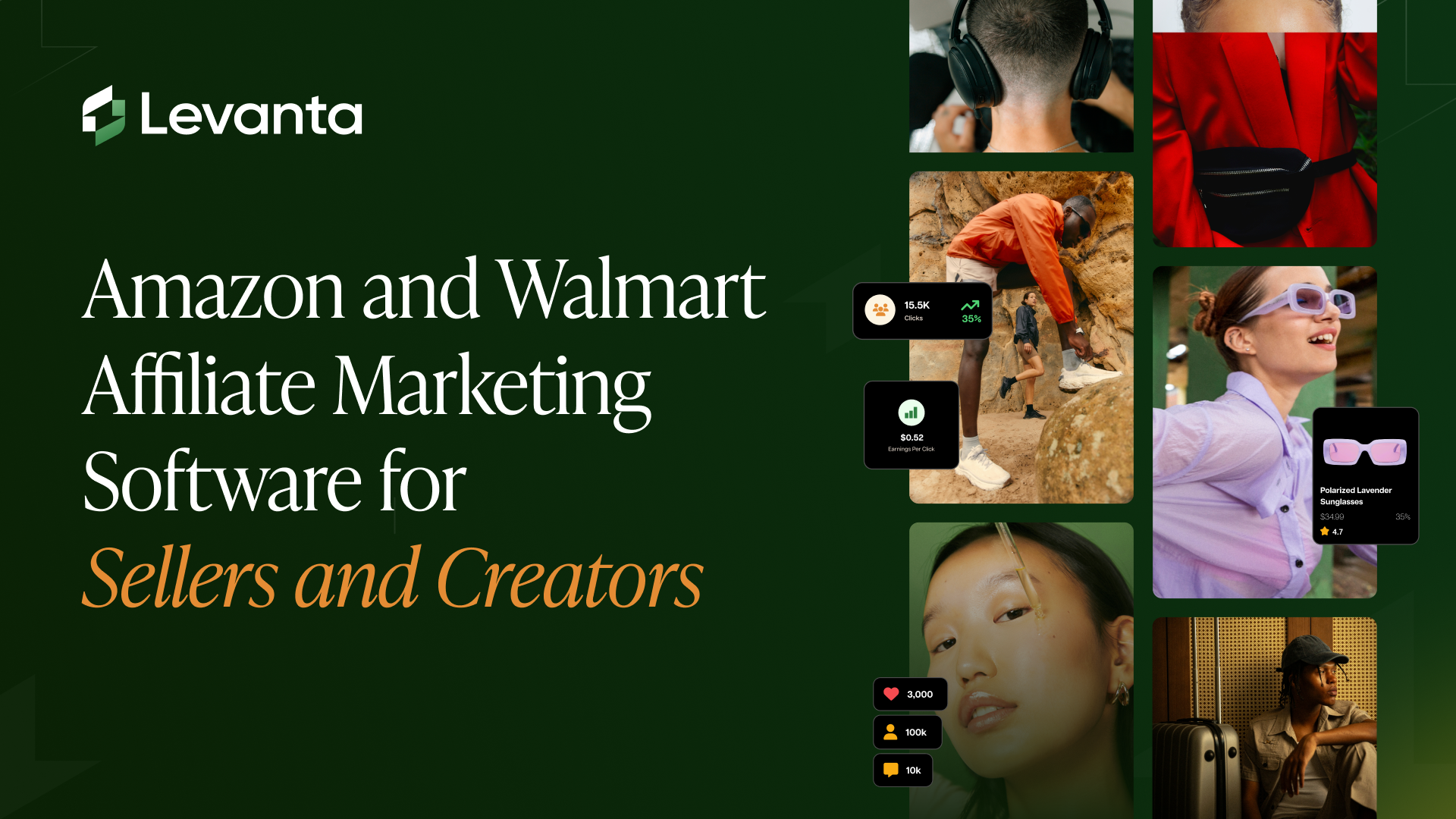
Levanta is a specialized affiliate marketing platform designed for sellers on Amazon and Walmart. It allows sellers to build profitable partnerships with creators and influencers, driving increased revenue and brand visibility. By catering to the specific needs of this industry, it provides a streamlined, efficient solution for affiliate marketing.
Best for Affiliate Marketing Software for Influencers
Expert Take
Levanta excels in providing a tailored affiliate marketing solution for Amazon and Walmart sellers, focusing on influencer partnerships to drive sales. While it lacks pricing transparency, its specialized capabilities and market focus make it a strong contender in its niche.
Pros
- Unlocks ~10% Amazon Brand Referral Bonus
- Automated 14-day attribution window tracking
- Handles affiliate payments and 1099 taxes
- Direct Amazon Seller Central integration
- Custom commission rates per product/creator
Cons
- No bulk creator invite feature
- Gold plan has strict annual lock-in
- Monthly fee plus revenue share model
- Payouts limited to Stripe only
- Messaging system lacks advanced features
Best for teams that are
- Amazon and Walmart sellers driving external traffic
- Brands looking to earn the Amazon Brand Referral Bonus
- Sellers wanting to automate affiliate attribution for marketplaces
Skip if
- D2C brands selling exclusively on their own websites
- Brands looking for general brand awareness campaigns
- Users needing a multi-platform social influencer CRM
Best for teams that are
- Amazon and Walmart sellers driving external traffic
- Brands looking to earn the Amazon Brand Referral Bonus
- Sellers wanting to automate affiliate attribution for marketplaces
Skip if
- D2C brands selling exclusively on their own websites
- Brands looking for general brand awareness campaigns
- Users needing a multi-platform social influencer CRM
Pros
- Unlocks ~10% Amazon Brand Referral Bonus
- Automated 14-day attribution window tracking
- Handles affiliate payments and 1099 taxes
- Direct Amazon Seller Central integration
- Custom commission rates per product/creator
Cons
- No bulk creator invite feature
- Gold plan has strict annual lock-in
- Monthly fee plus revenue share model
- Payouts limited to Stripe only
- Messaging system lacks advanced features
Expert Take
Levanta excels in providing a tailored affiliate marketing solution for Amazon and Walmart sellers, focusing on influencer partnerships to drive sales. While it lacks pricing transparency, its specialized capabilities and market focus make it a strong contender in its niche.

Rewardful is a dedicated affiliate and customer referral tracking software for SaaS businesses. It offers seamless integration with your existing SaaS platform, enabling you to launch a comprehensive affiliate program within minutes. Its features are tailored to meet the unique needs of e-commerce businesses, including customizable commission structures, real-time analytics, and fraud detection.
Best for Affiliate Marketing Software for Ecommerce Businesses
Expert Take
Rewardful Affiliate Software stands out as a top-tier solution for e-commerce businesses seeking to implement affiliate marketing programs. Its seamless integration capabilities, customizable commission structures, and robust analytics make it highly effective for SaaS platforms. While it requires some technical setup, its features and security measures justify its premium positioning.
Pros
- 0% transaction fees on all plans
- Deep 2-way Stripe integration
- Automated recurring commission handling
- Fast 15-minute setup process
- Mass payouts via PayPal and Wise
Cons
- Revenue caps force plan upgrades
- No support for Paddle Billing (Classic only)
- Live chat support weekdays only
- Limited reporting customization options
- No native crypto payout support
Best for teams that are
- SaaS companies using Stripe or Paddle for payments
- Businesses wanting a simple, quick setup process
- Subscription-based services needing recurring commissions
Skip if
- E-commerce stores selling physical products
- Businesses not using Stripe or Paddle
- Enterprises needing complex, custom integration workflows
Best for teams that are
- SaaS companies using Stripe or Paddle for payments
- Businesses wanting a simple, quick setup process
- Subscription-based services needing recurring commissions
Skip if
- E-commerce stores selling physical products
- Businesses not using Stripe or Paddle
- Enterprises needing complex, custom integration workflows
Pros
- 0% transaction fees on all plans
- Deep 2-way Stripe integration
- Automated recurring commission handling
- Fast 15-minute setup process
- Mass payouts via PayPal and Wise
Cons
- Revenue caps force plan upgrades
- No support for Paddle Billing (Classic only)
- Live chat support weekdays only
- Limited reporting customization options
- No native crypto payout support
Expert Take
Rewardful Affiliate Software stands out as a top-tier solution for e-commerce businesses seeking to implement affiliate marketing programs. Its seamless integration capabilities, customizable commission structures, and robust analytics make it highly effective for SaaS platforms. While it requires some technical setup, its features and security measures justify its premium positioning.

Skimlinks is a top-tier affiliate marketing software specifically designed for marketing agencies. The platform's technology focuses on monetizing commerce-related content through the automatic monetization of product links, addressing the need for seamless and efficient content monetization in the marketing industry.
Best for Affiliate Marketing Software for Marketing Agencies
Expert Take
Skimlinks excels in affiliate marketing for agencies with its automatic link monetization and data-driven insights, making it a top choice in its category. Its market credibility is supported by third-party validations, and its usability is tailored for agency needs, despite requiring some technical knowledge.
Pros
- Instant access to 48,500+ merchants
- Automated link affiliation via script
- Negotiated exclusive higher commission rates
- No upfront costs to join
- Detailed reporting by page and merchant
Cons
- Long Net-90 day payment terms
- Takes 25% cut of commissions
- Strict 3% publisher acceptance rate
- Slow customer support response times
- Risk of unexplained account suspensions
Best for teams that are
- Editorial publishers and content blogs
- Content sites wanting automated monetization
- Publishers wanting access to many merchants at once
Skip if
- Merchants looking for direct affiliate software
- Publishers wanting 100% commission (25% cut)
- Coupon or cashback sites (often restricted)
Best for teams that are
- Editorial publishers and content blogs
- Content sites wanting automated monetization
- Publishers wanting access to many merchants at once
Skip if
- Merchants looking for direct affiliate software
- Publishers wanting 100% commission (25% cut)
- Coupon or cashback sites (often restricted)
Pros
- Instant access to 48,500+ merchants
- Automated link affiliation via script
- Negotiated exclusive higher commission rates
- No upfront costs to join
- Detailed reporting by page and merchant
Cons
- Long Net-90 day payment terms
- Takes 25% cut of commissions
- Strict 3% publisher acceptance rate
- Slow customer support response times
- Risk of unexplained account suspensions
Expert Take
Skimlinks excels in affiliate marketing for agencies with its automatic link monetization and data-driven insights, making it a top choice in its category. Its market credibility is supported by third-party validations, and its usability is tailored for agency needs, despite requiring some technical knowledge.

Trackdesk is the ultimate affiliate tracking solution tailored for ecommerce businesses. It offers an unparalleled reliability, unlimited click tracking, and a transparent revenue-based pricing model. Its performance-oriented features address the unique needs of ecommerce businesses, efficiently tracking and managing affiliate marketing efforts.
Best for Affiliate Marketing Software for Ecommerce Businesses
Expert Take
Trackdesk Affiliate Tracking excels in providing a robust solution for ecommerce businesses with its reliable tracking capabilities and transparent pricing model. It is recognized for its performance-oriented features and real-time reporting, making it a top choice in the affiliate marketing software category.
Pros
- Free for up to $5,000 monthly revenue
- Unlimited clicks and conversions on all plans
- ISO 27001 certified and GDPR compliant
- Automated bulk payouts via Wise and PayPal
- Modern, clutter-free user interface
Cons
- No in-platform messaging for affiliates
- Cancellation process reported as difficult
- No built-in affiliate recruitment marketplace
- Limited native CRM integrations (relies on Zapier)
- Manual outreach required for partner recruitment
Best for teams that are
- Affiliate networks and agencies managing multiple offers
- SaaS and e-commerce brands wanting unlimited tracking
- Startups needing a generous free tier to scale
Skip if
- Brands relying solely on a marketplace to find partners
- Users needing extensive native integrations beyond Zapier
- Companies requiring built-in influencer discovery tools
Best for teams that are
- Affiliate networks and agencies managing multiple offers
- SaaS and e-commerce brands wanting unlimited tracking
- Startups needing a generous free tier to scale
Skip if
- Brands relying solely on a marketplace to find partners
- Users needing extensive native integrations beyond Zapier
- Companies requiring built-in influencer discovery tools
Pros
- Free for up to $5,000 monthly revenue
- Unlimited clicks and conversions on all plans
- ISO 27001 certified and GDPR compliant
- Automated bulk payouts via Wise and PayPal
- Modern, clutter-free user interface
Cons
- No in-platform messaging for affiliates
- Cancellation process reported as difficult
- No built-in affiliate recruitment marketplace
- Limited native CRM integrations (relies on Zapier)
- Manual outreach required for partner recruitment
Expert Take
Trackdesk Affiliate Tracking excels in providing a robust solution for ecommerce businesses with its reliable tracking capabilities and transparent pricing model. It is recognized for its performance-oriented features and real-time reporting, making it a top choice in the affiliate marketing software category.

ClickBank is a powerful e-commerce and affiliate marketing platform specifically designed for Shopify Sellers. It serves as a crucial link between product owners, affiliate marketers, and end customers, providing an integrated solution to drive sales and increase revenue.
Best for Affiliate Marketing Software for Shopify Sellers
Expert Take
ClickBank Affiliate Marketplace excels as a comprehensive platform for Shopify sellers, offering a vast network of affiliate marketers and a wide range of products. Its high commission rates and global reach make it a preferred choice for professionals. Despite the activation fee, its user-friendly interface and flexible payment options enhance its appeal.
Pros
- Never missed a payment since 1999
- Weekly payouts available via direct deposit
- No approval process for new affiliates
- High commissions (up to 75-90%)
- Marketplace with 4,000+ products
Cons
- Dormant fees drain inactive account balances
- High transaction fees (7.5% + $1)
- Variable product quality control
- Paycheck processing fee increased to $5.00
- Support can be impersonal or automated
Best for teams that are
- Creators of digital products like courses and eBooks seeking a vast affiliate network
- Vendors who want the platform to handle payments and tax compliance globally
- Affiliates looking for high-commission digital offers to promote
Skip if
- Physical product sellers with low profit margins due to high transaction fees
- Brands wanting full control over their affiliate relationships and data
- Merchants who want to manage their own private affiliate team
Best for teams that are
- Creators of digital products like courses and eBooks seeking a vast affiliate network
- Vendors who want the platform to handle payments and tax compliance globally
- Affiliates looking for high-commission digital offers to promote
Skip if
- Physical product sellers with low profit margins due to high transaction fees
- Brands wanting full control over their affiliate relationships and data
- Merchants who want to manage their own private affiliate team
Pros
- Never missed a payment since 1999
- Weekly payouts available via direct deposit
- No approval process for new affiliates
- High commissions (up to 75-90%)
- Marketplace with 4,000+ products
Cons
- Dormant fees drain inactive account balances
- High transaction fees (7.5% + $1)
- Variable product quality control
- Paycheck processing fee increased to $5.00
- Support can be impersonal or automated
Expert Take
ClickBank Affiliate Marketplace excels as a comprehensive platform for Shopify sellers, offering a vast network of affiliate marketers and a wide range of products. Its high commission rates and global reach make it a preferred choice for professionals. Despite the activation fee, its user-friendly interface and flexible payment options enhance its appeal.

Influencer Hero is a SaaS solution specifically designed for influencer marketing. It offers features like influencer search, automated outreach, CRM, and affiliate marketing, addressing the unique needs of industry professionals for targeted and efficient marketing campaigns.
Best for Affiliate Marketing Software for Influencers
Expert Take
Influencer Hero excels in providing a comprehensive suite of tools tailored for influencer marketing, including AI-powered search and integrated CRM. Its market credibility is supported by its innovative features and industry relevance, though pricing transparency is limited due to its enterprise model.
Pros
- Transparent pricing with no annual lock-in
- All-in-one workflow from discovery to payment
- Deep Shopify integration for sales tracking
- Automated drip campaigns for outreach
- Visual Kanban-style CRM boards
Cons
- Can be overwhelming for beginners
- Data may require manual verification
- Interface can feel clunky at scale
- Limited export capabilities mentioned by users
- Fewer integrations outside Shopify ecosystem
Best for teams that are
- D2C brands wanting an all-in-one tool with monthly billing
- Teams needing automated outreach and CRM at a mid-range price
- Brands looking for UGC collection and affiliate tracking combined
Skip if
- Enterprise brands requiring dedicated account management
- Users looking for a completely free tool for brands
- Companies needing complex B2B partnership management
Best for teams that are
- D2C brands wanting an all-in-one tool with monthly billing
- Teams needing automated outreach and CRM at a mid-range price
- Brands looking for UGC collection and affiliate tracking combined
Skip if
- Enterprise brands requiring dedicated account management
- Users looking for a completely free tool for brands
- Companies needing complex B2B partnership management
Pros
- Transparent pricing with no annual lock-in
- All-in-one workflow from discovery to payment
- Deep Shopify integration for sales tracking
- Automated drip campaigns for outreach
- Visual Kanban-style CRM boards
Cons
- Can be overwhelming for beginners
- Data may require manual verification
- Interface can feel clunky at scale
- Limited export capabilities mentioned by users
- Fewer integrations outside Shopify ecosystem
Expert Take
Influencer Hero excels in providing a comprehensive suite of tools tailored for influencer marketing, including AI-powered search and integrated CRM. Its market credibility is supported by its innovative features and industry relevance, though pricing transparency is limited due to its enterprise model.



Loading comparison data…